Tag Archives: Lake St Clair

Where is the source of the Derwent River?

This question was on the minds of the new settlers to Van Diemens Land in the early 1800s.

In 1835 George Frankland, Surveyor General to the government of the time, organised a ‘search’ party to locate the source. After the expedition he wrote a report for despatch to the ‘mother country’, England.  The brief text has been published as The Narrative of an Expedition to the Head of the Derwent and to the Countries bordering the Huon in 1835.  The small book was reprinted by Nags Head Press for the publisher Sullivan’s Cove in 1983.

No description exists of how Frankland and his party travelled inland until they reached a property or area then known then as Marlborough (now known as Bronte) in the Lake country, located west of Lake Echo and directly east of Lake St Clair by over 30 kilometres. Marlborough was a probation station for North American prisoners in the 1830s/40s.

Map of probation stations including Marlborough

The map above can be seen in the story: ‘They left Jefferson County forever…’

The Marlborough district was discovered by Surveyor Sharland who also found Lake St Clair, in 1832, only three years before Frankland felt compelled to find the source of the Derwent.  It seems Sharland did not realise it was the Derwent River that flowed from the southern end of Lake St Clair. Further information can be read in G. H. Stancombe’s paper Notes on the History of The Central Plateau.

The Lyell Highway, according to the Highland Lakes Settlement Strategy has been known as the Marlborough Road where it runs westwards of Ouse and towards the area around Bronte.

Information, which is totally irrelevant to my writings about the Derwent but nevertheless interesting, concerns an earthquake near Marlborough that was recorded in The Courier, a Hobart newspaper on 25 April 1854. Thomas Bellinger reported ‘I beg to inform you of a very strange occurrence on the evening of the 24th of March last. A shock like that of an earthquake was felt in almost every part of the Marlborough District. Two shepherds were gathering sheep the other day and discovered the cause of it.  I went to the place yesterday: there has been some fearful volcanic eruption, rocks of enormous size have been driven about, the face of the earth appears to have been hoisted in the air and pitched surface downwards. I cannot describe to you the appearance, but if you will come up I am sure you will be highly gratified – the distance is about ten miles from this.’  I have no information about where Thomas Bellinger was writing from but I am curious to hunt out the location of this upheaval.

After that information detour, let’s go back to the expedition to find the source of the Derwent River.

Following a ‘difficult journey from the settled Districts’, all members of George Frankland’s party assembled at Marlborough on the 7 February 1835.  The record shows that George Frankland did not follow the edges of the Derwent, rather he crossed the Nive River (which empties into the Derwent River much further south), then travelled north-westwards. Initially densely forested hills stymied progress with horses, and then the boggy plains ahead slowed him down.  He continued generally in a westward direction and after almost five days, found Lake St Clair; ‘we suddenly found ourselves on the edge of a beautiful Lake in the heart of Scenery of the most picturesque Character’.  After further walking around parts of the lake, Frankland reports ‘It was a fine summers day and the Air was so serene that the surface of the Water was scarcely ruffled but the sandy beaches bore evidence of the Lake being at times as rough as the Sea. I will not here dilate on the extreme beauty of this scenery as it might be considered out of place in an official report, but … I feel it difficult to avoid expressing the impressions of delight which were inspired by first discovering of such a romantic Country…’

On the 14th February, Frankland despatched two of his party to return to the source of the Derwent and follow it downstream on the left bank while he set out to explore the country on the right bank.  Both parties walked across open plains where Lake King William now fills the area.  They reunited the next day.  One of the party, a Mister Calder was despatched to continue along the edge of the river until he met the entrance of the Nive, which he successfully achieved (although details are absent).  Meanwhile Frankland tried to continue following after Calder but was only able to proceed for 3 miles. ‘At that point we plainly perceived that the Country had … become such a thick forest that to take the horses any further was out of the question.’  The result was that Frankland split the party further with the horses taking an easier route to Marlborough.

On their first day trying to walk the edge of the Derwent, Frankland recorded ‘This day was consumed by a laborious march of two miles through a most obstinate scrub – and we bivouacked on the steep edge of the Derwent after wading for a considerable distance through the torrent, up to the middle, as the easiest mode of travelling.’  The forest is as dense in 2015 as it was then, so regular blog followers can appreciate why walking some sections of the rest of the way to Lake St Clair concerns me.

At this point Frankland was for giving up. ‘On the 18th February I determined on leaving the Derwent and accordingly struck away to the N.E. The forests continued depressingly thick – but by dint of labour we accomplished about four miles this day’.  Only four miles in a day for strong men!  What chance do I have of walking this part quickly or easily?

A couple of days later Frankland reached Marlborough and from there he set off to cross the Derwent River and explore the Huon River area further south.

Thank you Andrew for alerting me to this report and for the loan of the book.

Dams on the Derwent River

The potential of the volume of water passing down the Derwent River for hydro-electricity generation was seen over a century ago.  While a few power stations were built in the early decades of the 20th century, with an influx of migrants from war ravaged Europe in the 1940s-50s, the numbers of dams and power stations increased quickly.  Overall, many dams and approximately 30 power stations have been built across central Tasmania.

On my way to Lake St Clair, I will reach and walk past each of the following 7 markers along the River:

  • Meadowbank
  • Cluny
  • Repulse
  • Catagunya
  • Wayatinah
  • Tarraleah
  • Butlers Gorge

One of the Hydro websites provides detailed information about these and others which feed into the Derwent River catchment.  In addition, the site includes the diagram below.

Derwent dams

Award winning buildings edging or overlooking the Derwent River 2015

Recently the Master Builders of Tasmania Association announced Housing and Construction Excellence Award winners.  Here are a selection.

  • The winner of the Unique Achievement in Construction was project MONA Turrell Amarna. This massive sculptural structure was designed by artist James Turrell and titled Amarna. Its construction needed extraordinary creativity and engineering nous to build.
  • The winner of the Excellence in Heritage Listed or Period Home Restoration/Renovation – Open Value was the ‘Colonial Cottage’, Sorell Creek, New Norfolk. The original building was constructed around 1870.
  • The winner of Heritage Listed or Period Building Restoration / Renovation – Open Value was ‘Pumphouse Point’  which overlooks both Lake St Clair and Derwent Basin.
  • The winner of New Construction – $5 million to $10 million was ‘Brooke Street Pier’. This innovative floating structure almost next to Salamanca, replaced a series of tiny old ferry offices, and is now the gateway for ferrying visitors to MONA, supplying interesting locally produced Tasmanian souvenirs of quality, and providing a welcome drink or two.

Brilliant bird’s eye view

Thankyou blog follower Ju.  Recently Ju connected me with a woman with a husband who has a Private Pilot’s Licence.  Once I made contact, Michelle and Dave were delighted to fly me in their four seater plane, a Cirrus SR20 which Michelle referred to as the BMW of the skies.

Today we flew.  Not a cloud in the sky.  Clean blue sky. Hardly a breeze.  The landscape rich and varied.  The Derwent River sparkled from start to finish.

The experience was stunningly magnificent.  I love words but I find it difficult to express my excitement, my pleasure, and the sheer joy of the flight in the depth which I felt.  There below me was the river I have come to love and know a little more. There below me were the tracks, paths, roads and landscape over which I have walked – and I laughed occasionally remembering certain experiences during my walks. There below me were logging tracks, dam roads, and fading vehicular pathways.  And then we were flying over impenetrable sections which may not be walkable.

We left Hobart airport and flew to Storm Bay by rounding the Iron Pot, then we followed the river upstream to the source. Dave flew on until we reached the northern most point of Lake St Clair. The return journey was equally as beautiful and engaging. The light had changed presenting us with a ‘new’ landscape.

Of the hundreds of photos taken by Michelle, friend Chantale and myself, I include a tiny selection here.

OLYMPUS DIGITAL CAMERA

The photo above taken by Michelle caught me totally preoccupied by the view.

OLYMPUS DIGITAL CAMERA

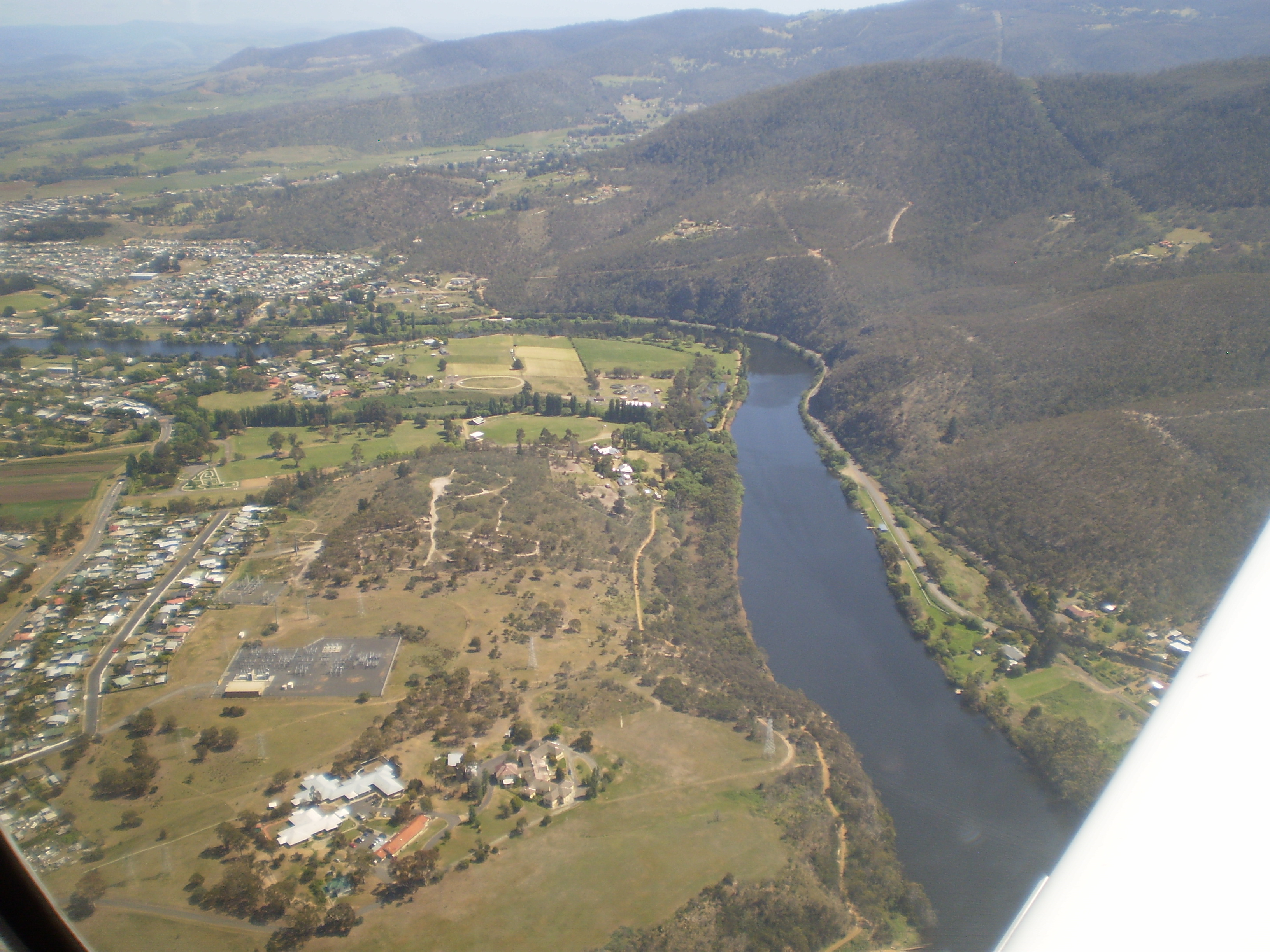
MIchelle’s photo above shows the Derwent River snaking around the Claremont Golf course with Cadbury’s Chocolate Manufacturing buildings in white to the left.

OLYMPUS DIGITAL CAMERA

The photo above shows a straight section of the Derwent River before the township of New Norfolk on the upper left.

OLYMPUS DIGITAL CAMERA

The photo above shows the Derwent River circling part of Reid’s cherry orchards.

IMG_3864

Chantale’s photo of the Pumphouse Point accommodation projecting into Lake St Clair, also shows the dam across the Derwent Basin where the water enters St Clair Lagoon.  The source of the Derwent River starts to the right of the photo.

OLYMPUS DIGITAL CAMERA

Michelle’s photo above shows part of sprawling Hobart set against the Derwent Harbour.

Those photos taken while flying over the river westwards of Gretna will be incorporated into the stories of my walks from Gretna onwards, in future posts.  From now on, you can expect both ground-based and aerial photos to enrich the stories.
I feel like the luckiest person in the world for the opportunity to travel in a smooth flying small plane, to see the Derwent River winding through the landscape in glorious blueness, and to be reminded Tasmania is a superb place. A truly wonderful and memorable day. Thankyou to all concerned.

Derwent River Wildlife Guide

This booklet titled Derwent River Wildlife Guide, by Veronica Thorp and published in 2000, is a 73 page listing with colour photographs and basic information about all the environments, the flora and the fauna which can be seen at some point along the Derwent River. The booklet is available for loan through the Tasmanian State Library system.

I am sorry that my discovery of this information has come after I have walked so far – it would have been most useful for me to walk with this booklet from day 1 of the entire project. Having said this, there is only one photograph per item and a tiny paragraph of information so that identifying plants and fungi correctly would have been a challenge.  While some entries indicate a location where a plant could be expected, most do not have this information. I have a sneaking suspicion that the listings in the booklet may only cover the areas that I have walked which are easiest to access.  I suspect that intensive investigation of the Derwent River shoreline and general vicinity between Gretna and Lake St Clair might not have been studied so rigorously.

A Visitor Guide (http://www.parks.tas.gov.au/file.aspx?id=16546) to Tasmania offers a limited selection of animals and environments compared to the comprehensive catalogue available in the Derwent River Wildlife Guide.  The Visitor Guide covers all Tasmania which is much broader.

Who am I?

Increasingly blog followers have questioned my enigmatic no-name status.  I have been secretive about my identity to protect myself from predators and weirdos. My surname is so rare that I wouldn’t want someone to track me to my house. When the walk was over I intended to reveal and explain more about myself so everyone could understand why I presented myself only as Tasmanian Traveller.

Despite this approach, for people who have emailed me, I have opened up a little more.  For the woman from upstate New York who visited me and asked to walk on some of the sections she had read about in my blog,  of course she got to learn so much more about me.  And she, and others, have been most respectful and careful to keep my gender and characteristics neutral and non-identifying. Thank you.

Now that the process for my walk from the mouth to the source of the Derwent River is evolving, I no longer see a need to retain my protective shell.  From now on, there will be safety in numbers as I walk with one or more friends.

So who am I?  My name is Helen Tyzack and I come from a working history in the visual arts and museology industries, plus an overlay of working in or for many different types of education institutions, government agencies and not-for-profit organisations.  All my life I have walked to get around, keep costs down, to be kinder to the climate, and to experience the beauties of the natural environment at close quarters. A few years ago I sold my car and have walked or used public transport ever since.  As a female, I have wanted to walk alone in remote and isolated country and by maintaining my anonymity this has been comfortably possible.  I am on the mature side of 60 years of age, short in stature with an overweight body, various health challenges and perpetual problems with my feet.  But I refuse to let these characteristics and impediments prevent me living; they slow me but they do not stop me. I will not let them stop me. I am energised by the possibilities of discovering new places, and my walk along the Derwent River has exceeded all my expectations. In recent years I have flown off to different countries around the world to learn and experience new adventures.  It has been one of the greatest surprises that the Derwent has offered so many revelations that the thought of overseas travel has been halted.  I guess it is always easier to think somewhere else will be more interesting yet a place right on your own doorstep can offer ‘the world’.

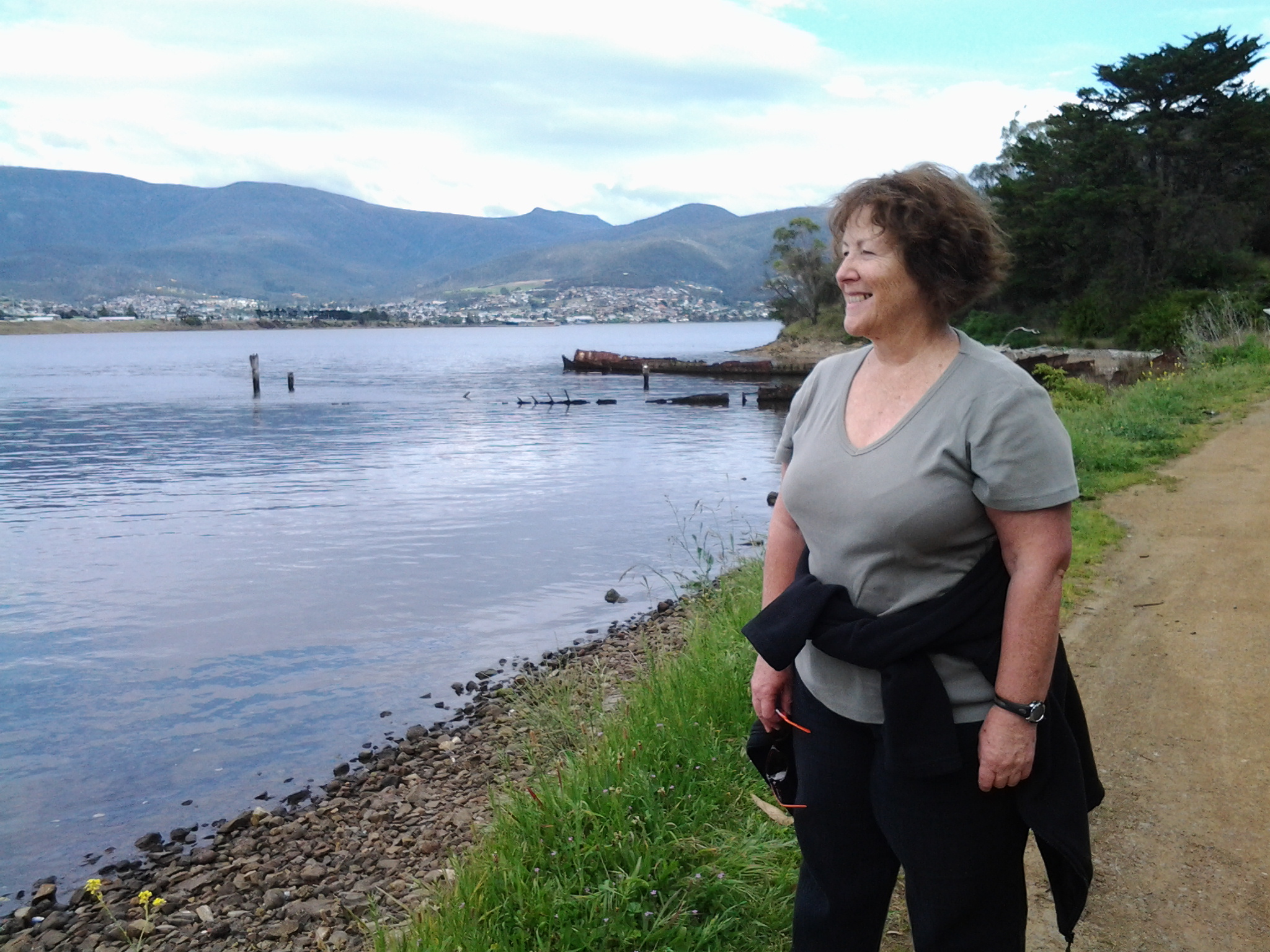
Helen at Otago Bay 2014

The photo of me above was taken by a passer-by as I walked past Otago Bay at the end of last year on Stage 7 of my walk along the Derwent River.

For each of the 15 walking stages completed so far, I have walked alone and independently, and have only been supported by public transport when buses deposited me at a starting point and collected me from each walk’s destination. I have realised this practice cannot continue because of the limited public transport options available in central Tasmania. As an alternative, I have decided to try a UBER-style approach to transport – friends are offering to be my chauffeur and in some cases they are offering to walk with me.

To cope with the constraints of private property restrictions, I am working with locals and others to obtain various kinds of alternative access to the Derwent River.  No project ever goes totally to plan and that is the joy of exploration: discovering new ways to meet changing personal expectations keeps my brain active and my mind vitally alive.

During my last walk, I reached the township of Gretna. From now on, as I head inland towards Lake St Clair, I expect to be accompanied by a friend who will drive me to key locations. Whenever we ‘touch’ the river I will walk north and south along the edge to the extent that the river and the landscape allow.  Gradually, I will walk past the river until I sink down with pleasure on the dam wall at the southern end of St Clair Lagoon with my goal achieved.  The next stages of my walk will represent the collection of the final pieces of a fabulous patchwork quilt – and once I have all the pieces, I will stitch them together into my blog to record a sequential and seamless walk from Gretna to Lake St Clair.  And then I will write two books: one will be a how-to-do-it publication for tourists and locals who want to understand how to use public transport to discover the river edges, and the second book will be a fictionalised account of my walk.

Possible locations where the Derwent River can be ‘touched’

I have compiled a list of those locations where I believe, with a vehicle, it will be possible to ‘touch’ the Derwent River occasionally along its length between Gretna and Lake St Clair.  Please let me know if any section listed below takes your fancy and if you would be interested to try it out.

Almost all sections include driving on bitumen highway, gravel roads and poor tracks. Some of these may be forestry roads.  If you wish to volunteer to take me to one of these sections (let me know on walkingthederwent@gmail.com), please feel comfortable that your car can handle the different conditions.  Of course, common sense will prevail and we will never push on if a road is too rough for your vehicle and your peace of mind.

If you are happy to help me reach my goal, albeit differently than originally expected, I would like to fill up your tank with petrol as some compensation.  You know my ‘walking the Derwent’ is a non-commercial project, but since I do not own a car nor drive, I need transport – and therefore, I am happy to cover the cost.

  1. On eastern shore – From New Norfolk drive along the Lyell Highway and then, not far past Gretna’s Sports ground, take a left turn into Clarendon Road and drive to farmstead buildings about 250 metres from the river on a hill. Perhaps 140km return trip.
  2. On western shore – From New Norfolk drive along Glenora Road, and turn left at Bushy Park then right onto Meadowbank Road over the Tyenna River then next to Derwent, then on over Meadowbank Creek to a hill top with buildings. It may be possible to continue quite a way on this road. Minimum 130 and maybe up to 160kms return trip
  3. On eastern shore – From New Norfolk drive along the Lyell Highway and turn left off the Highway onto Meadowbank Dam Road. Continue to dam and southern end of Meadowbank Lake. At least 170 kms for round trip.
  4. On western shore – Travel from New Norfolk and turn left into Gordon River Road at Bushy Park, then turn right off Gordon River Rd into Ellendale Rd and then right onto Rockmount Road before you reach the township of Ellendale. There seem to be many dirt forestry tracks to Meadowbank Lake. At least 170kms return trip and maybe 200kms return or more depending on roads.
  5. On western shore – Travel from New Norfolk and turn left into Gordon River Road at Bushy Park, then turn right off Gordon River Rd into Ellendale Rd and drive on through the township of Ellendale until you reach Dawson Rd / Dunrobin bridge over Meadowbank Lake. Turn left before bridge and it seems we can drive 2kms further up along the Lake edge. Return to Ellendale Road, cross bridge and connect with the Lyell Highway. At least 170kms return trip and maybe 200kms return or more depending on roads.
  6. On eastern shore – From New Norfolk drive up Lyell Highway and continue past the left turn off to Dunrobin bridge and afterwards and to the left there are a number of dirt tracks seemingly without gates. After a while these tracks/roads only extend to the Ouse River and not the Derwent River so map consultation is crucial. At least 180kms return and maybe over 200kms return depending on how many side roads/tracks can be driven along.
  7. On eastern shore – Drive up Lyell Highway past Ouse then turn left at Lake Repulse Road. Continue to intersection with Cluny Lagoon Road and turn left and go to Cluny Dam. Return to intersection and continue on Lake Repulse Road to the Repulse Dam. Can cross a bridge and continue back south around Cluny Lagoon to a ‘settlement’ named Cluny.  Perhaps could access this road from the Ellendale Rd on the western shore? By driving north from Repulse Dam along Dawson Road/then renamed Thunderbolt Road it seems we can take right hand detours to Lake Repulse. Over 200kms maybe 250kms or more minimum round trip.
  8. On eastern shore – Drive up Lyell Highway past Ouse, over the Dee River until the sign appears for a left turn at Catagunya Road. Drive down to Catagunya Dam. 200kms minimum return trip
  9. On eastern shore – Drive up Lyell Highway past Ouse, over the Dee River, past Black Bobs and turn left at Long Spur Road. This runs around Wayatinah Lagoon. Go past the intersection to Wayatinah Dam, turn left and travel to Wayatinah Power Station on Lake Catagunya. Return to intersection and turn left and travel to Wayatinah Dam. Cross bridge and continue on to Wayatinah township. Access dirt tracks in the vicinity of all. Drive south from the Wayatinah Dam on the western shore along the Florentine Road but don’t bother crossing the Florentine River because the road goes inland away from the river. Minimum of 230kms but most likely  at least 300kms round trip.
  10. On eastern shore – Drive up Lyell Highway and when you reach a canal passing under the road, and where the road turns right to go to Tarraleah, go straight ahead on Butlers Gorge Road. Note there are limited roads off and around going closer to the river near that intersection. Continue along Butlers Gorge Road for 10-15 kms heading for Lake King William. Reach Clark Dam and Power Station. Continue onto Switchback Track along side of Lake King William. This track stops and you have to return the same way – swamp separates you from the track north about 500 metres away. This would be a big day and I suggest take overnight accommodation at Tarraleah before setting out. PERHAPS it is possible to walk across the swamp and then walk about 7 kms to Derwent Bridge. Unknown over 300 kms return trip.
  11. On eastern shore – Drive up Lyell Highway to Derwent Bridge and continue past to left hand turn off on the western side of Lake King William and drive the track to the lake. 360 kms return trip minimum.
  12. On eastern shore – Drive up Lyell Highway to Derwent Bridge. Walk from the bridge over the Derwent River near the township of Derwent Bridge to St Clair Dam at the bottom of Lake St Clair Lagoon where the Derwent River starts. Walk to Pump House Point and St Clair Weir at the southern end of the Derwent Basin. 350kms return trip minimum.


Touching the River

Blog followers know that electrified and barbed wire fences, unenterable gates, tangles of thorny blackberry canes and impassable private property have limited my direct access to walk against the Derwent River.  Since my project is not to walk on the highways and byways, and knowing I cannot start out from Gretna and go further by the River as I have hoped and wanted, I believe I need to change my ‘rules’ about this project.

The changes must happen because I am determined to get to the source of the River at Lake St Clair, even if it means doing so by using transport provided by friends, and if it means I can’t be near the river every metre of its length.  I feel I must accept what is possible rather than wailing about the impossible.

Therefore, I am researching all the main roads, backroads and tracks that go towards the river with its dams and lakes, and which do not have locked gates across them preventing access. I plan to create a list of these opportunities and then ask friends whether they would like to volunteer to drive me to one or more of the options.  In the next few days I will post the list on this blog – perhaps there may be other southern Tasmanian blog followers who would like to volunteer to drive me to one or more of these ‘touchings of the river’ – if so, when you see the list please email me at walkingthederwent@gmail.com.

Wherever I ‘touch’ the river I hope to be able to walk north and/or south as far as possible simply to feel more comfortable about saying, in the future, that “I did my best to walk from the mouth to the source”.  That is, I want to limit the amount of qualification I will have to give to that statement.  Quite possibly when I reach one of the touch points, I may determine a longer walk can be achieved. If I find this to be the situation, then I will return with backpack and tent if necessary.  In this way, the touchings of the river will amount to a reconnaissance.

Another option that I am investigating is whether I might fly either in a small plane or helicopter and follow the curves of the Derwent River, photograph it from on high and then incorporate the photos into stories about those edges of the river on which I cannot walk or otherwise reach.  I suspect flying may be out of reach financially so the thought of crowd funding has crossed my mind.  But before then, more research will be needed.

The option to canoe/kayak along sections of the River scares me half to death.  A family friend recently travelled in this way over a short section and has never been so frightened.  Apart from the dangers of the Derwent River’s water levels being unexpectedly changed as the water volume in upstream dams are managed, the dozens of rapids that punctuate so many stretches of the river present unsupportable dangers. I guess I lack the courage to try.  Or maybe it’s the unbelievably cold water I don’t want to fall into.

What haven’t I thought of? Any suggestions will be welcome. This idea is too much fun to be stymied by physical barriers.

Tassie Link back to Hobart

When the Tassie Link bus rolled to a halt at Gretna, I was surprised it was only a small one designed to carry approximately 20 people. I later learnt that if there are minimal bookings the small bus is used but with more bookings a standard larger bus is put into service.  This is the main bus line that links the historic west coast to Hobart via Lake St Clair.  Previously, I had been surprised that the service only runs four days a week, making the development of travel plans more challenging for tourists and locals alike.  Obviously most people drive.

As the driver got out to collect my fare, the side door was swung open by a happy guy and everyone on the bus called out a friendly “Hi” followed by the command, “Give us y’ pack”.  My pack joined a high pile at the back of the bus and once I sat, the happy chat began and lasted through to Hobart.  Everyone was on holiday from different part of mainland Australia and they had all just finished walking the Overland Track from the famed Cradle Mountain to Lake St Clair. Similarly to me they had been at the Derwent Bridge pub for a few hours waiting for the bus to arrive. So we were all very merry regaling each other with the stories of our walks.  It was the perfect ending to a brilliant two days of discovery.

When I walked in through my front door at 11pm, a warm glow spread across my face.  I was home!

Water Treatment Plant

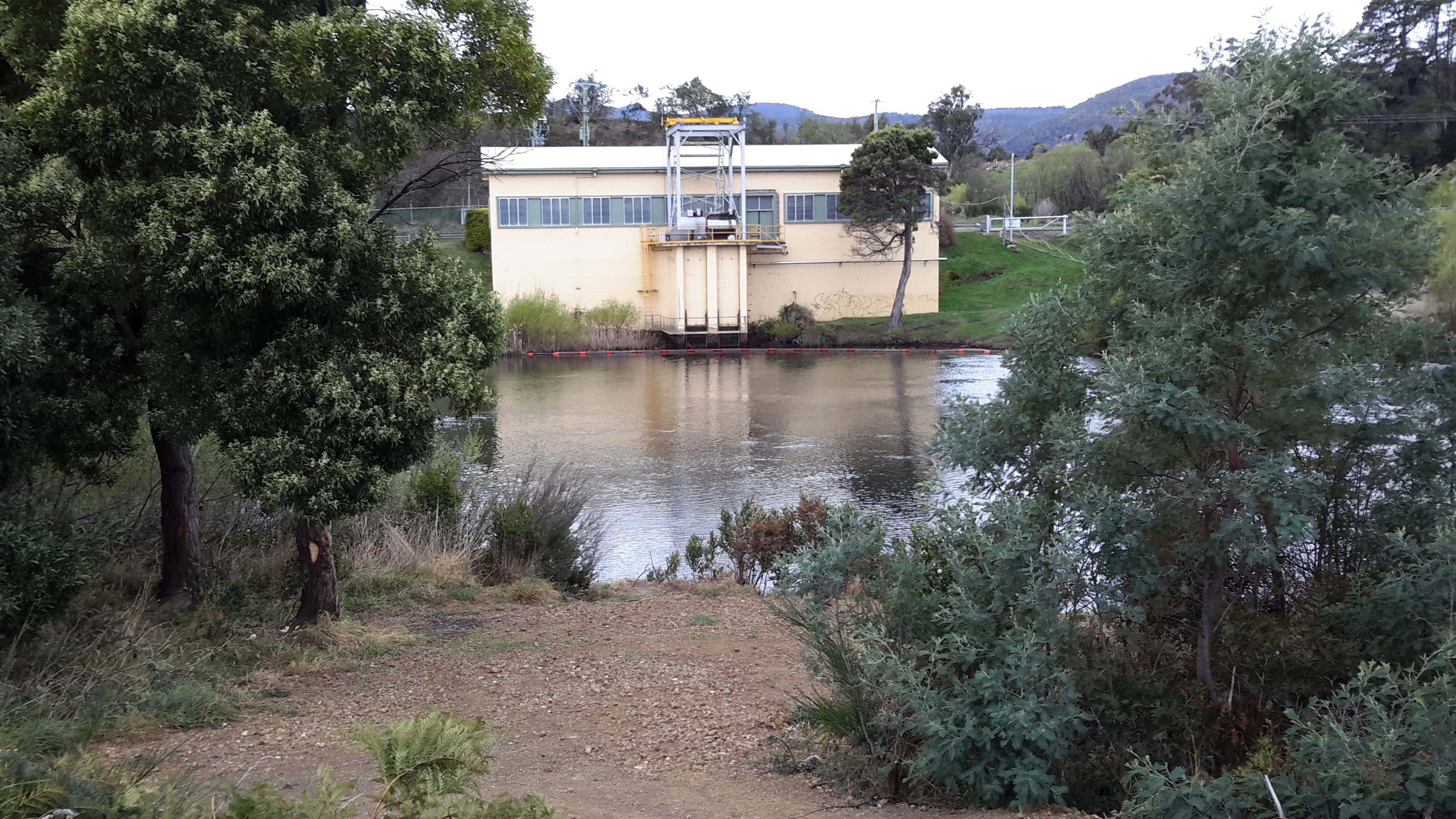
I continued on from Atherfield House and, after passing the Glenfern Rd turn off, I walked westwards until a clearing gave me unexpected access to the river and a full view of a heavy building on the other side. I have not been able to determine the function of this stand-alone structure, however I suspect the building somehow connects with structures soon encountered on my side of the river further along.

20150917_100148 20150917_100916

On the non-river side of the road some acres had been circled with high protective fences.

20150917_100959

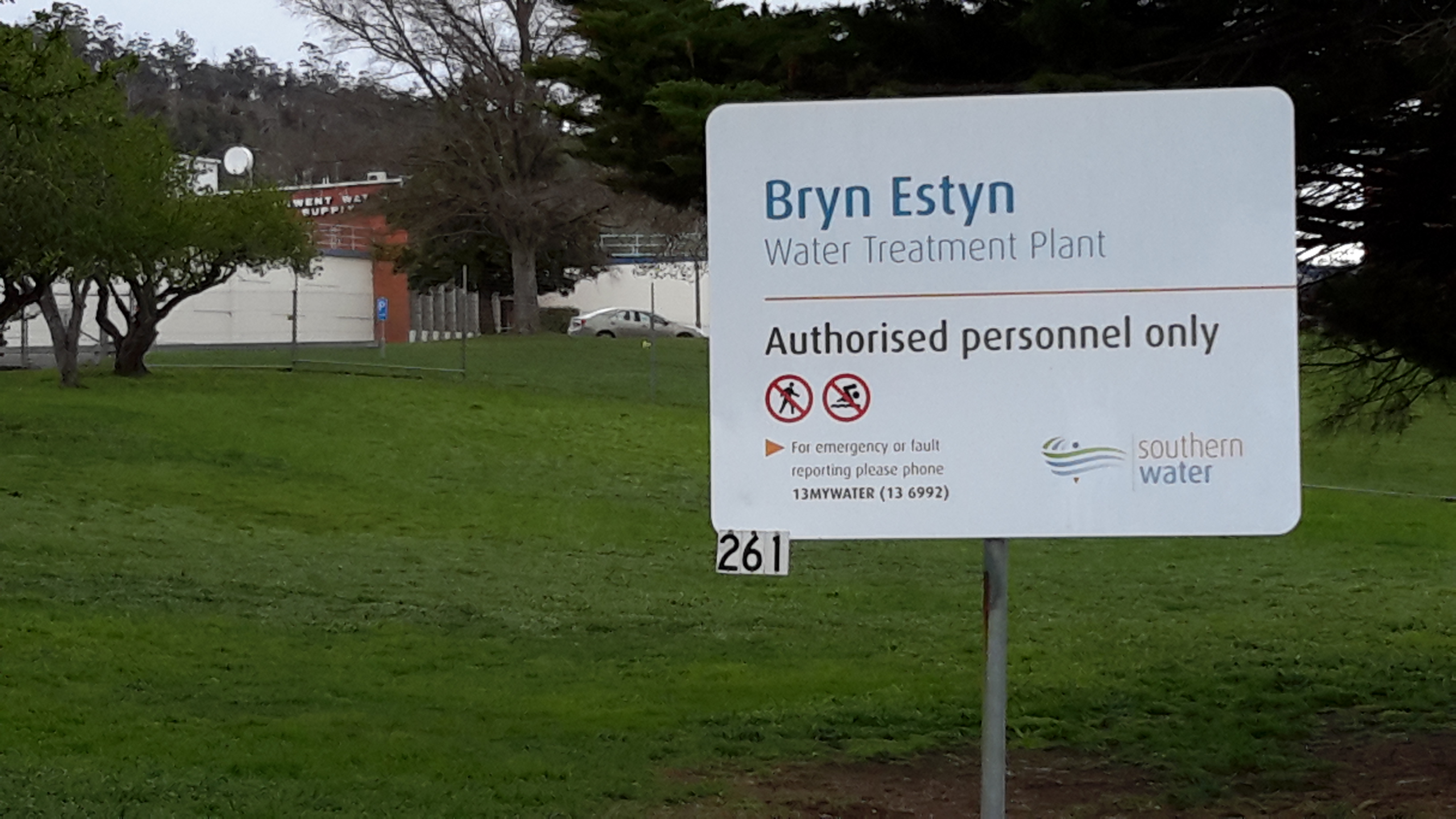
This was Bryn Estyn, a Water Treatment Plant.

20150917_101347 20150917_101550

I wondered if I was dreaming; were the two golden projections on top of the building simulated sheep?

Fences and limited or non-existent river access were the most memorable features of my walk. A good example of these barriers is shown below.

20150917_101738

In the photo above you can see the Lyell Highway on the other side of the river. This road sits close to the river for many kilometres then turns inland away as it wends its way to Tasmania’s west coast towns of Queenstown, Strahan, Zeehan and Rosebery – via Derwent Bridge at Lake St Clair.

From the sea to the source; stories of a river on the other side of the globe

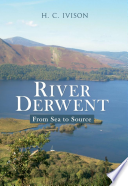
Two years ago, Helen Ivison published River Derwent: From Sea to Source (Amberley Publishing).

 Ivison River Derwent

 The promotional puff declares this book ‘brings to light tales and stories of fascinating events, landmarks and people. River Derwent: From Sea to Source is essential reading for anyone who knows this river well, and also for those who are visiting the River Derwent for the first time.’  But what is the author referring to?

Hers is the Derwent River in the Cumbrian region of England which flows from the mountainous Lakes District in two strands, one of which starts near Styhead Tarn. The two strands meet at Grains Gill, and continue in a north easterly direction as a single river towards an expanse known as Derwent Water. The river passes through this ‘lake’ then eases into a north westerly direction across country before flowing onwards through Bassenthwaite Lake. Finally, the English Derwent River turns westwards and empties into the Irish Sea.

By contrast Tasmania’s Derwent River flows generally in a south easterly direction from Lake St Clair, through steep narrow gorges, curving around farmlands, before passing between the two sides of the Greater Hobart Area into Storm Bay. The man-made lakes of Lake King William, Wayatinah Lagoon, Lake Catagunya, Lake Repulse, Cluny Lagoon and Meadowbank Lake all disrupt the progress of the River. These lakes have resulted from dam building as part of hydro-electricity generating projects over the past century.

Internet records of measurements may be dodgy

Since my last post, some readers found Google has revealed the length of the Derwent River.  It gives the number of 249km without any indication of where that number was found or how it was calculated. Immediately below this information box are two listings both giving alternative conflicting distances.

My measurement of 214kms was from an arbitrary line between Cape Direction and Pearsons Point to mark the mouth of the Derwent River, and I stopped at the point where the river starts from the southern end of the Lake St Clair Lagoon.

I have noticed that one source indicates the measurement ought to be taken from the point where Lake St Clair meets the Lake St Clair Lagoon.  I have found another source which seems to indicate the mouth might be where Storm Bay meets the sea.  Even if the length of the Lagoon and the width of Storm Bay were added to my 214km, the Google number would not be reached.  I have asked Google to identify its sources because I cannot believe their number can be accurate. Unfortunately, I have not received any feedback.

STOP PRESS – JUST DISCOVERED THE AUTHORITATIVE LENGTH IS 215KMS.  Read my new November 2015 post.

Religious wildernesses

I remember childhood Bible stories referred to the Wilderness. These days I find it interesting to consider most if not all religions link with the concept of the wilderness. Laura Feldt covered this topic in “Wilderness in Mythology and Religion”: ‘Wilderness is one of the most abiding creations in the history of religions.’ Her book ‘addresses the need for cross-cultural anthropological and history of religions analyses by offering in-depth case studies of the use and functions of wilderness spaces in a diverse range of contexts including, but not limited to, ancient Greece, early Christian asceticism, Old Norse religion, the shamanism-Buddhism encounter in Mongolia, contemporary paganism, and wilderness spirituality in the US.’

In her 2014 article ‘Religions need wilderness’, Kathleen Braden wrote “The three monotheistic religions based on a common root – Judaism, Christianity, and Islam – have an expression of nature and wilderness as places that allow perception of God’s sovereignty. … Wilderness is a territory (both on land and sea) where one encounters God, and it is not always an easy geography. For the ancient Israelites, it may be a place of repentance coupled with renewal. When the Israelites leave Egypt and displease God, they must wander in hostile lands before reaching a promised place. Abraham casts the slave woman, Hagar, into the wilderness, but she is saved by God, who renews her spirit and gives her a vision that she will build a great nation. Similarly, in the New Testament, the gospel of Mark begins with John the Baptist proclaiming God in the wilderness, foretelling the Christ who is to come, and calling for, again, repentance. Jesus has his own time in the wilderness being tested and honed for his ministry. For believing Muslims, creation is a gift from God and a sign of God’s grace. Similar to Judaic and Christian traditions, in Islam, nature reflects the dominion of God, not the hubris of human control. For these three monotheistic faiths that began in the Middle East, groups of believers through history have set themselves apart in monastic communities, often seeking out the wild places in self-imposed exile to allow the voice of God to be understood more clearly.

In other religions, nature and the sacred helps bring humanity into a right relationship with creation. Baha’i traditions hold that nature reflects the perfection of God and thus, sacred spaces help create a sense of harmony, transformation, and wholeness. In Hinduism and Jainism, nature reflects the abundance that the earth provides and also reminds us of the wholeness of humanity with all other life forms: there should be no barriers or separation.

Likewise, Buddhism suggests that nothing that exists is in isolation, but the sacred can lead us to understand the interdependence of all living things and help us express compassion for creation. Some sects of Buddhism also have, like the desert Christian communities, an ascetic tradition, adherents who must be removed from the material world. Their spiritual quests may be best realized in wilderness.

Religions or traditions with cultural hearths further east in Asia – Shintoism, Confucianism, Daoism – also have expressions of harmony and continuity with nature, but perhaps more in a cosmological view, although places, such as sacred stands of trees with shrines in Shintoism, may be manifest of the need to have a holy place of contemplation and refreshment.

Finally, Indigenous religious traditions are so varied and numerous that outlining them in a short essay might risk stereotyping these faiths. But in many regions, Indigenous spiritual traditions connect the wild with a worldview that interweaves humanity with nature in an unbroken relationship. Whether the shamanistic traditions of Central Asia, Native American religions of North and South America, pre-Christian European practices, animistic faiths of the African continent, or contemporary paganism, none are devoid of practices and stories related to the human relationship with nature. 

While the sacred does not have to be wilderness, wild places must be sacred. Religion needs wilderness. Whether we call this hunger an expression of God’s sovereignty or evidence of the union of all living things or connection with ancestors and a world of spirits, religion requires the wild – the not-us – to show a crucial interrelationship. The threats to wilderness, therefore, also pose a danger to the heart of humanity’s most treasured faith doctrines.”

As an atheist I don’t believe a God or other deities exist, whatever name is given by any religion. However, I am happy to be playful with one ancient Greek god who came out of retirement to meet me. A recent comment by my sister about the danger of snakes when I walk in the Tasmanian bush (all Tasmanian snakes inject their venom poisonously), reminded me of my meeting with Zeus last year. While walking in the visitor-less grounds of one of his temples located in Dion, northern eastern Greece, he and I surprised each other. Zeus has the ability to transform himself and appear as a snake. There he was basking in the sun near the end of the path I was following. Having welcomed me, he slipped away quickly.  I felt very safe then, as I will do when walking along the Derwent River. Besides, Tasmania’s Mt Olympus overlooks Lake St Clair on its western flank, and we all know Zeus’s home is Mt Olympus, albeit the one in Greece. I suspect Zeus will look out for me in some form, and make sure I reach Lake St Clair.

Despite not believing in a God, I do believe in the personally transformative power of the bush, wilderness, forests, whatever you may call those bunches of trees and natural collections of flora and fauna.

When with friends I have talked about walking, particularly in the bush, as a meditative practice. Sometimes the impact of the bush and its flora and fauna is so great that a well of great happiness is tapped – as evidenced, for example, by my bursting into song as described in an earlier post . At the end of any walk, words such as reinvigorated, revitalised, relaxed, uplifted, satisfied and at peace always come to mind. In addition, the power of the bush allows me to put the rest of life and living into perspective. Nature and its forces are so much stronger and more beautiful than any one of us, and it is a delight to be reminded of this in such profound ways. The rich rare world out there, rather than any religious connection, draws me to our wilderness.

Wilderness – what is it?

The word ‘wilderness’ has different meanings depending on context. Dictionaries offer a range of similar meanings:

  • An uncultivated, uninhabited, and inhospitable region. Neglected or abandoned.  A large area of land that has never been developed or used for growing crops because it is difficult to live there. (Oxford)
  • An unsettled, uncultivated region, especially a large tract of land that has not been significantly affected by human activities. A barren or desolate area; a wasteland. Something characterised by bewildering vastness, perilousness, or unchecked profusion. (The Free Dictionary)
  • A wild, uncultivated region, usually where humans do not live. Any desolate tract or area. (WordReference.com)
  • A tract or region uncultivated and uninhabited by human beings. An area essentially undisturbed by human activity together with its naturally developed life community. An empty or pathless area or region. (Mirriam Webster dictionary)

From Old English used in the 13th century, the word ‘wilderness’ is derived from wild dēor ‘wild deer’, wilddēoren ‘wild beasts’, and from wildēornes, ‘land inhabited only by wild animals’. From Middle English, wildern is ‘wild’.

Reflecting on these varying definitions, I realise some of the meanings ring true particularly in relation to the land along the Derwent River between Lake Catagunya and Derwent Bridge (I anticipate this part of the River will take at least 8 days to walk, over three stages).

Lake Catagunya to Derwent Bridge

The sides of the River will be uncultivated and uninhabited. Its dense forest, littered with generations of massive tree falls, will make some sections relatively inhospitable.  The only markers of human kind will be parts where old growth logging has or is occurring, and where the infrastructure associated with dam construction across the Derwent River has occurred and is being maintained.  The area will not be barren, desolate (although I might feel desolate when penetrating some of the denser bush hour after hour), and it is not neglected, abandoned nor a wasteland.  This wilderness will be rich with flourishing flora and fauna, have profound connections with the original indigenous population pre-European settlement of Van Diemen’s Land, hold a social history with the settlers who moved inland in the 1800s and 1900s, and include an occasional contemporary history with photographers, tourists and fishermen.

The United States of America has proclaimed special legislation. ‘The Wilderness Act bans all kinds of motors, roads, and permanent structures from large tracts of American territory. It provides a legal definition of wilderness, as land that’s “untrammelled by man” with a “primeval character and influence”.’  You can read more at this site.  What is the Australian situation?

The Wilderness Society of Aus logo

The Wilderness Society of Australia summarises our state-based rather than national legislation in relation to the wilderness. ‘Dedicated wilderness legislation exists in NSW and SA, which allows the nomination, assessment, declaration and management of wilderness. In other States, such as Victoria, Queensland, WA and the ACT, management of wilderness is provided for under general nature conservation legislation, with varying degrees of usefulness in terms of actually ensuring identification and appropriate protection.’

In Tasmania we have a range of legislation including the most recent Tasmanian Forest Agreement Act that was negotiated to include the requirements of the Tasmanian Wilderness World Heritage Area (TWWHA) – that is, those parts of Tasmania which have been recognised with World Heritage listing for their natural and cultural heritage that is important to the world community.  Tasmania’s Nature Conservation Act talks about biological and geological diversity, and historic sites and provides regulation for our fauna (and strangely it also covers animals which do not live in Tasmania such as dingos and wolves) and flora. The word ‘wilderness’ does not appear.

stock-photo-64271807-walking-boot-and-bike-tread-marks-on-muddy-trail(Image is a free iStock photo)

The land on which I will walk has been walked for thousands of years originally by our indigenous ancestors and more recently by their descendants and European settlers. However, there will be parts on my trek which will not have had many footfalls because of the isolation and the forest density.  Unless there was a purpose such as surveying the Derwent River as part of planning to build dams, sensible people would travel from Lake St Clair towards the coast  via the region around the township of Ouse, or by more hospitable routes. With or without the word ‘wilderness’ being written into our state legislation, much of the inland edges of the Derwent River edge are undoubtedly genuine wilderness.

Australian stamping grounds

Blog reader, Ju, surprised me with an unexpected gift; a freshly minted set of postal stamps.  Recently Australia Post released the set noting 4 Great Australian Walks: The National Pass in New South Wales, the Cape to Cape Track in Western Australia, the Larapinta Trail in the Northern Territory, and the Overland Track in Tasmania.

20150804_173448

On each of the four gloriously coloured stamps, a photograph of an iconic landscape represents each Walk. On the edge of each stamp, a white featureless body with a pack-on-the-back shape represents one or more people walking. Mentally you can pop yourself into the body and become that walker.

20150804_173629

The image for Tasmania’s Overland Track is Cradle Mountain. This marks the commencement in northern Tasmania for the 60km walk which winds southwards and ends at Lake St Clair (regular blog readers know the southern end of that Lake is where the Derwent River commences its life).  I walked the Overland Track in 2006 and strongly recommend it to others; leisurely – over 6 days with walks off the main path and plenty of time to soak in the atmosphere.  I remember that when I saw some of the mountains on the west coast of Tasmania way in the distance, I realised Tasmania was not so large. I thought it would be possible to walk across this state from the east to the west but I have not pursued that idea. Yet.

20150804_174429

Looking across to Cradle Mountain and beyond, and at its reflection in the pristine Dove Lake at its feet, I can see a light powdering of snow.  Currently, snow is very topical.

Over the past few days, Hobart and the rest of Tasmania have received loads of snow the likes of which hasn’t been seen here for 30 years.  News and social media are brimming with sensational photos many showing the thrill of this unusual flurry: for example, http://www.abc.net.au/news/2015-08-03/snow-across-tasmania-forces-many-key-road-closures/6666838 and http://www.news.com.au/national/tasmania/cold-brings-warnings-and-snow-wonder/story-fnn32rbc-1227467164313.

Most appropriate for this blog about Walking the Derwent, is the photo I found of The Hungry Wombat Café at Derwent Bridge (the township at the southern end of Lake St Clair to which I will walk sooner or later). When you look at the photo below (taken from the website above), you will understand why I am not walking inland at the moment.

Snow at The Hungry Wombat Cafe Derwent Bridge 030815