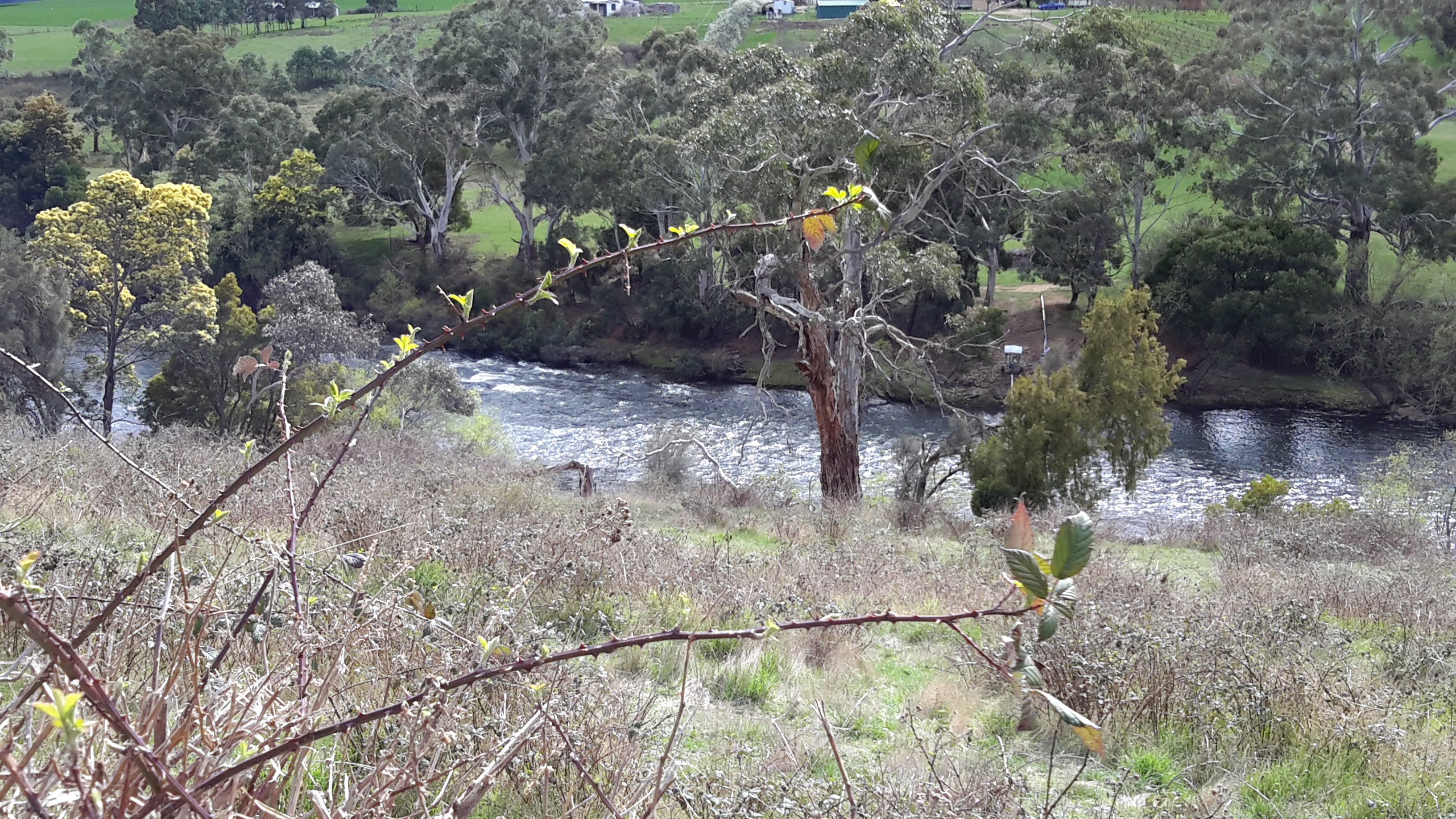
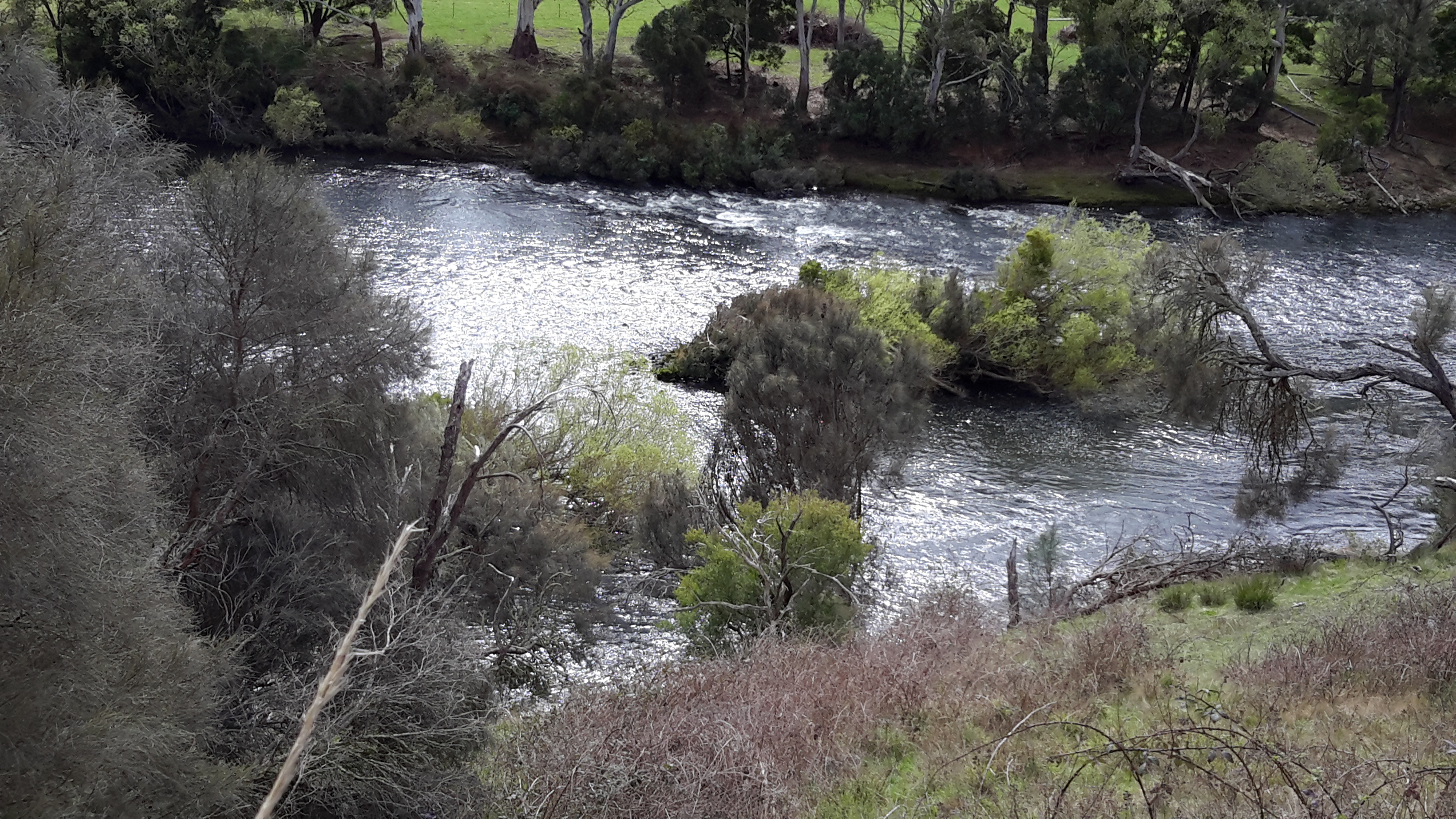
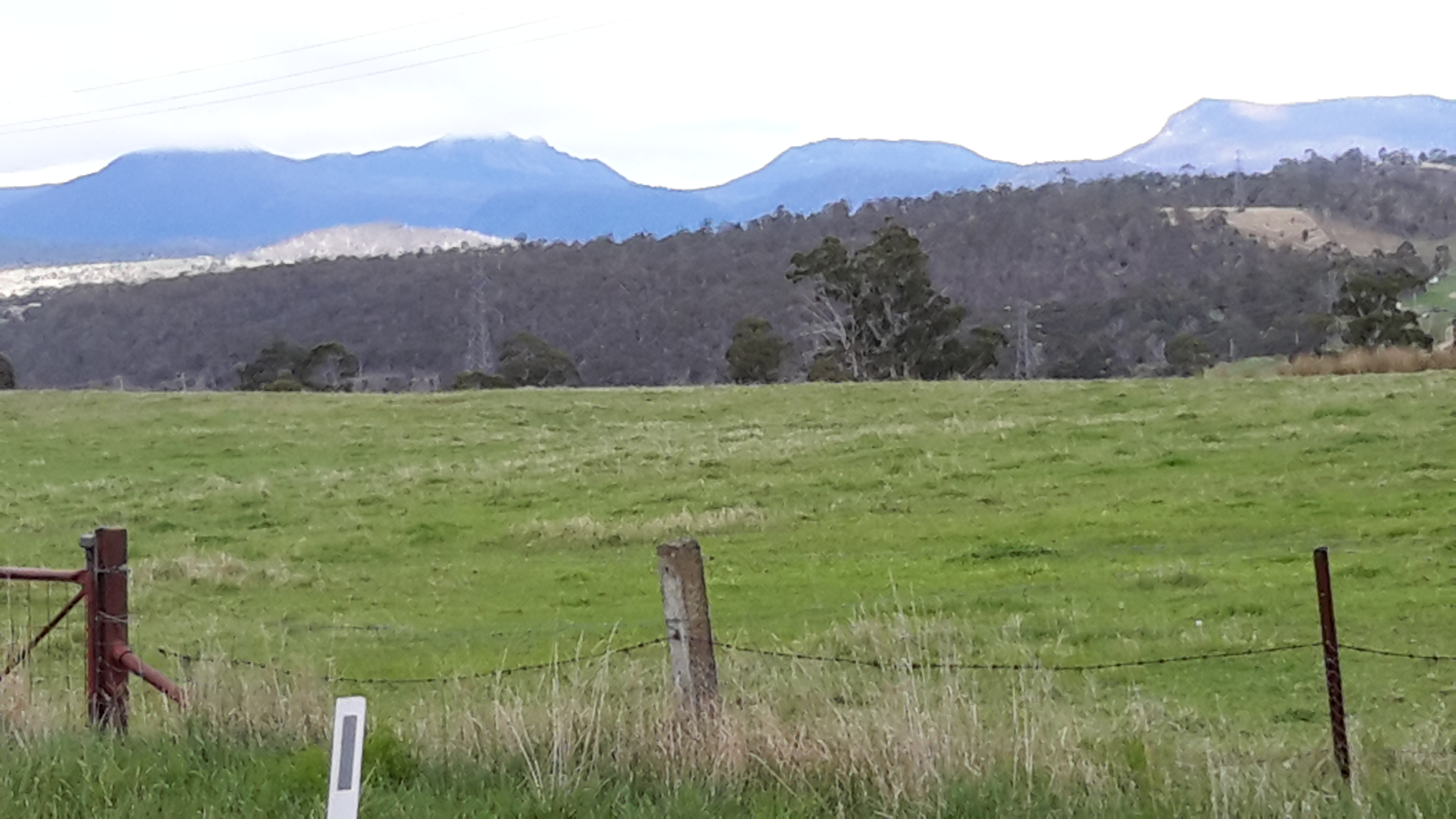
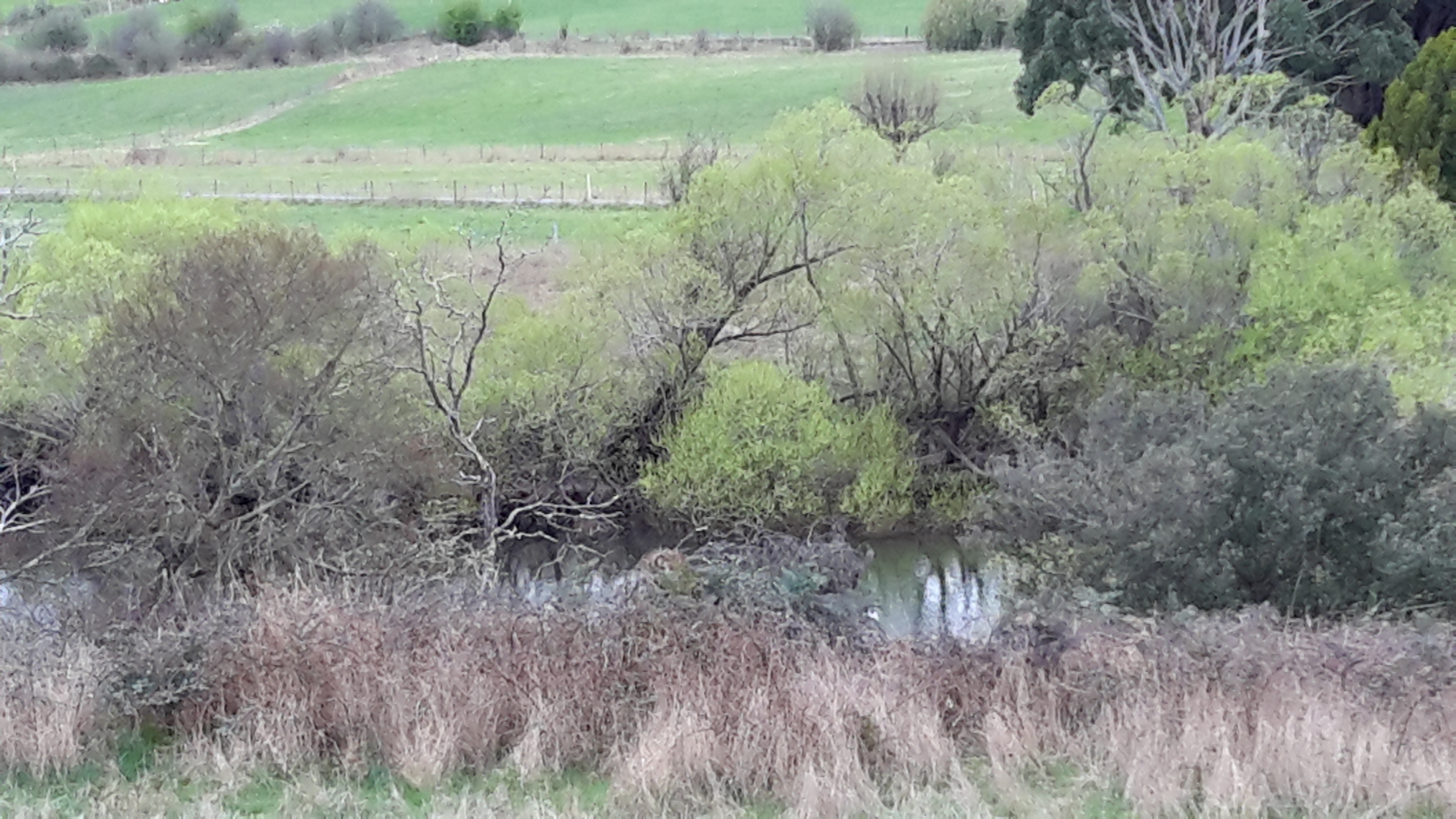
Tag Archives: Tasmania

Plea as lost walker is found

My recent post Personal Locator Beacon explained how taking only a mobile phone when you walk in our Tassie wilderness isn’t smart: the batteries will go flat over time and any GPS location function may not operate.

A couple of days ago a man phoned the Police to say he was lost in some of Tasmania’s most inhospitable territory.  He carried only a mobile phone and had left his camping gear at a spot while he took off on a solo day walk. Thankfully, after two near freezing nights, the man who was described as an “experienced day walker”, found his way to Tasmania Police and their searchers.

If anyone is planning a walk in remote areas in any part of the world, please protect yourself and make it easy for emergency services in the event of an injury, illness or getting lost. Remember in some parts of Tasmania you can be 10 metres away from another person and not be able to see or hear them because of the density and size of the bush.

Tasmania Police made a plea for everyone to carry an EPIRB location device; a Personal Locator Beacon. “With a mobile phone you can only communicate with us, until the battery fails. AN EPIRB tells us where you are.”

Who am I?

Increasingly blog followers have questioned my enigmatic no-name status.  I have been secretive about my identity to protect myself from predators and weirdos. My surname is so rare that I wouldn’t want someone to track me to my house. When the walk was over I intended to reveal and explain more about myself so everyone could understand why I presented myself only as Tasmanian Traveller.

Despite this approach, for people who have emailed me, I have opened up a little more.  For the woman from upstate New York who visited me and asked to walk on some of the sections she had read about in my blog,  of course she got to learn so much more about me.  And she, and others, have been most respectful and careful to keep my gender and characteristics neutral and non-identifying. Thank you.

Now that the process for my walk from the mouth to the source of the Derwent River is evolving, I no longer see a need to retain my protective shell.  From now on, there will be safety in numbers as I walk with one or more friends.

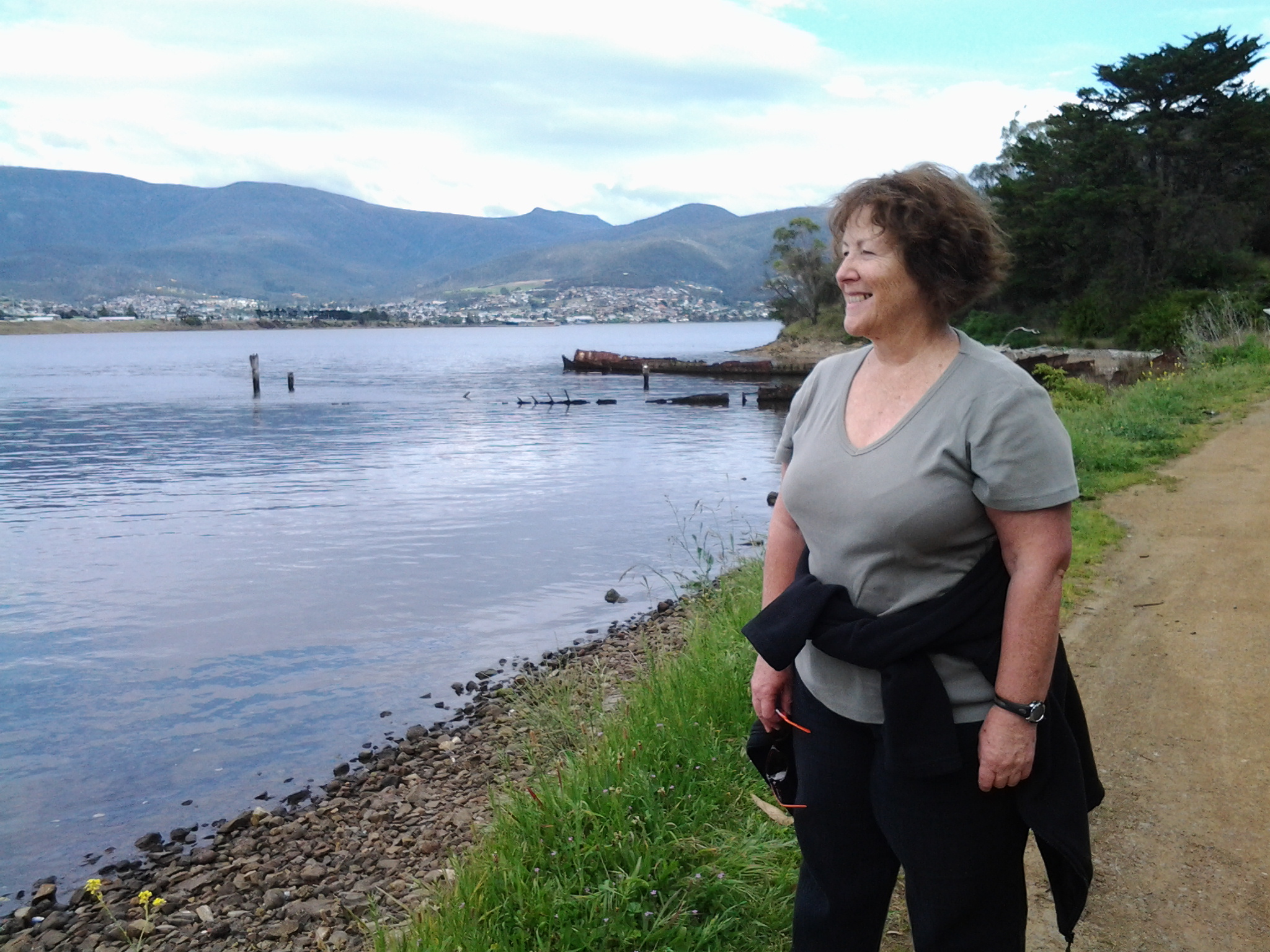
So who am I?  My name is Helen Tyzack and I come from a working history in the visual arts and museology industries, plus an overlay of working in or for many different types of education institutions, government agencies and not-for-profit organisations.  All my life I have walked to get around, keep costs down, to be kinder to the climate, and to experience the beauties of the natural environment at close quarters. A few years ago I sold my car and have walked or used public transport ever since.  As a female, I have wanted to walk alone in remote and isolated country and by maintaining my anonymity this has been comfortably possible.  I am on the mature side of 60 years of age, short in stature with an overweight body, various health challenges and perpetual problems with my feet.  But I refuse to let these characteristics and impediments prevent me living; they slow me but they do not stop me. I will not let them stop me. I am energised by the possibilities of discovering new places, and my walk along the Derwent River has exceeded all my expectations. In recent years I have flown off to different countries around the world to learn and experience new adventures.  It has been one of the greatest surprises that the Derwent has offered so many revelations that the thought of overseas travel has been halted.  I guess it is always easier to think somewhere else will be more interesting yet a place right on your own doorstep can offer ‘the world’.

Helen at Otago Bay 2014

The photo of me above was taken by a passer-by as I walked past Otago Bay at the end of last year on Stage 7 of my walk along the Derwent River.

For each of the 15 walking stages completed so far, I have walked alone and independently, and have only been supported by public transport when buses deposited me at a starting point and collected me from each walk’s destination. I have realised this practice cannot continue because of the limited public transport options available in central Tasmania. As an alternative, I have decided to try a UBER-style approach to transport – friends are offering to be my chauffeur and in some cases they are offering to walk with me.

To cope with the constraints of private property restrictions, I am working with locals and others to obtain various kinds of alternative access to the Derwent River.  No project ever goes totally to plan and that is the joy of exploration: discovering new ways to meet changing personal expectations keeps my brain active and my mind vitally alive.

During my last walk, I reached the township of Gretna. From now on, as I head inland towards Lake St Clair, I expect to be accompanied by a friend who will drive me to key locations. Whenever we ‘touch’ the river I will walk north and south along the edge to the extent that the river and the landscape allow.  Gradually, I will walk past the river until I sink down with pleasure on the dam wall at the southern end of St Clair Lagoon with my goal achieved.  The next stages of my walk will represent the collection of the final pieces of a fabulous patchwork quilt – and once I have all the pieces, I will stitch them together into my blog to record a sequential and seamless walk from Gretna to Lake St Clair.  And then I will write two books: one will be a how-to-do-it publication for tourists and locals who want to understand how to use public transport to discover the river edges, and the second book will be a fictionalised account of my walk.

Attention all dromomaniacs

Have you heard of the medical condition known as”mad travellers’ disease” or more officially as “dromomania”? What a lovely word! This condition describes people who are driven to wander long distances due to irresistible impulses. They have an exaggerated desire to wander or travel.

The word is derived from Ancient Greek dromosa running/race, and mania-insanity.

Wikipedia offers the following: Dromomania, also travelling fugue, is an uncontrollable psychological urge to wander. People with this condition spontaneously depart from their routine; they may travel long distances and take up different identities and occupations. Months may pass before they return to their former identities. In the common English vernacular this is often rendered simply as ‘wanderlust’ (directly from the German), although dromomania does imply a psychological compulsion, usually on one’s own and often without one’s conscious knowledge, rather than a more generalised desire to travel. The most famous case was that of Jean-Albert Dadas, a Bordeaux gas-fitter. Dadas would suddenly set out on foot and reach cities as far away as Prague, Vienna or Moscow with no memory of his travels. Jean-Martin Charcot presented a case he called automatisme ambulatoire, French for ‘ambulatory automatism’, or ‘walking around without being in control of one’s own actions.’ More generally, the term is sometimes used to describe people who have a strong emotional or even physical need to be constantly traveling and experiencing new places, often at the expense of their normal family, work, and social lives.”

Rachael Jones constructed her own fiction based on dromomania. How many of us feel driven to travel around our own countries or abroad as often as our finances can manage? Are you a dromomaniac? Am I a dromomaniac because I feel driven to walk the length of the Derwent River, while I hope more dollars will find their way into my bank account so I can travel overseas again?

The Styx River

In ancient Greece, the Styx was a deity and also a river that formed a boundary between earth and the underworld, and was one which had miraculous powers. In texts such as Dante’s The Divine Comedy, the Styx figures as a metaphor for Hell. I suspect many countries in the world contain a river named the Styx and that for some people, their river connects with Hell or with an earlier characteristic from Greek mythology. There are a number of Styx rivers across Australia.

Tasmania’s Styx river feeds the Derwent when it flows into that River along the edges of the Bushy Park Sports Oval. Our Styx River, a wild one racing through narrow gorges and bristling over rapids in many sections, starts its life in the wilderness near Mount Mueller further west and south of Maydena before travelling past dense ancient forests. I can imagine for our early settlers, the inaccessibility of the river, the rugged surrounding landscape, and the virtual impenetrability of the vegetation would have made this territory seem like hell.  To compound their problems, constant heavy rain falls, cold miserable conditions in winter and fiendishly hot days in summer would have made their lives hell. Yet, over time, the forestry industry found ways near the Styx River to log old-growth forests. Regrettably.

Back to my walk.

20150918_114313

I survived a quick jog over the Styx River road bridge without being mown down by vehicular traffic, and stopped to look at the water rustling beneath.

20150918_114425

I rested nearby to enjoy the sound of the water and the comparatively cool air.

A splendid hidden world

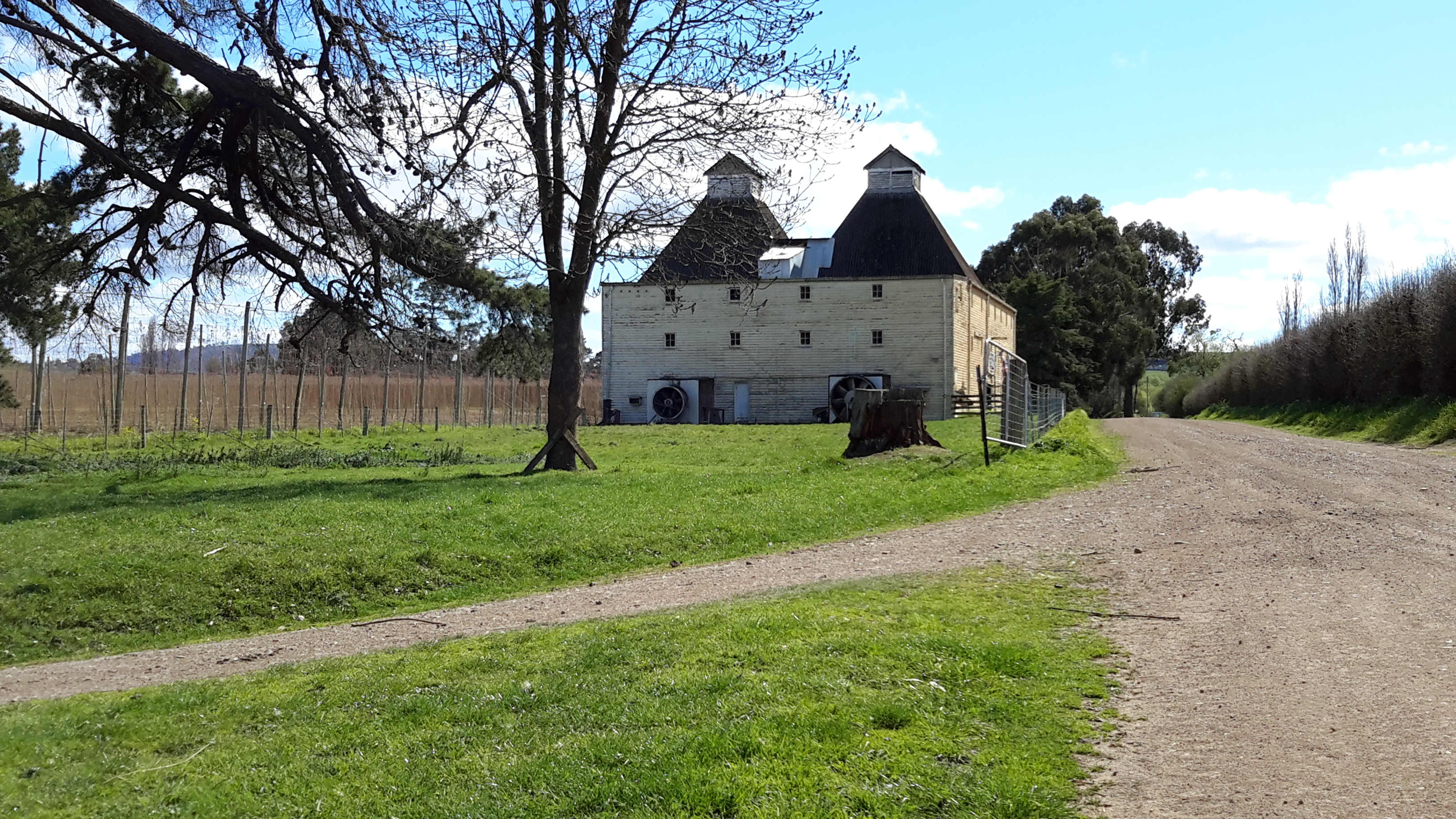
The shuffling walk down 1 Acre Lane with the wheelie bins was well worth it. The old lady answered my many questions before she continued on to her house when I stopped to admire the first of many extraordinary buildings.

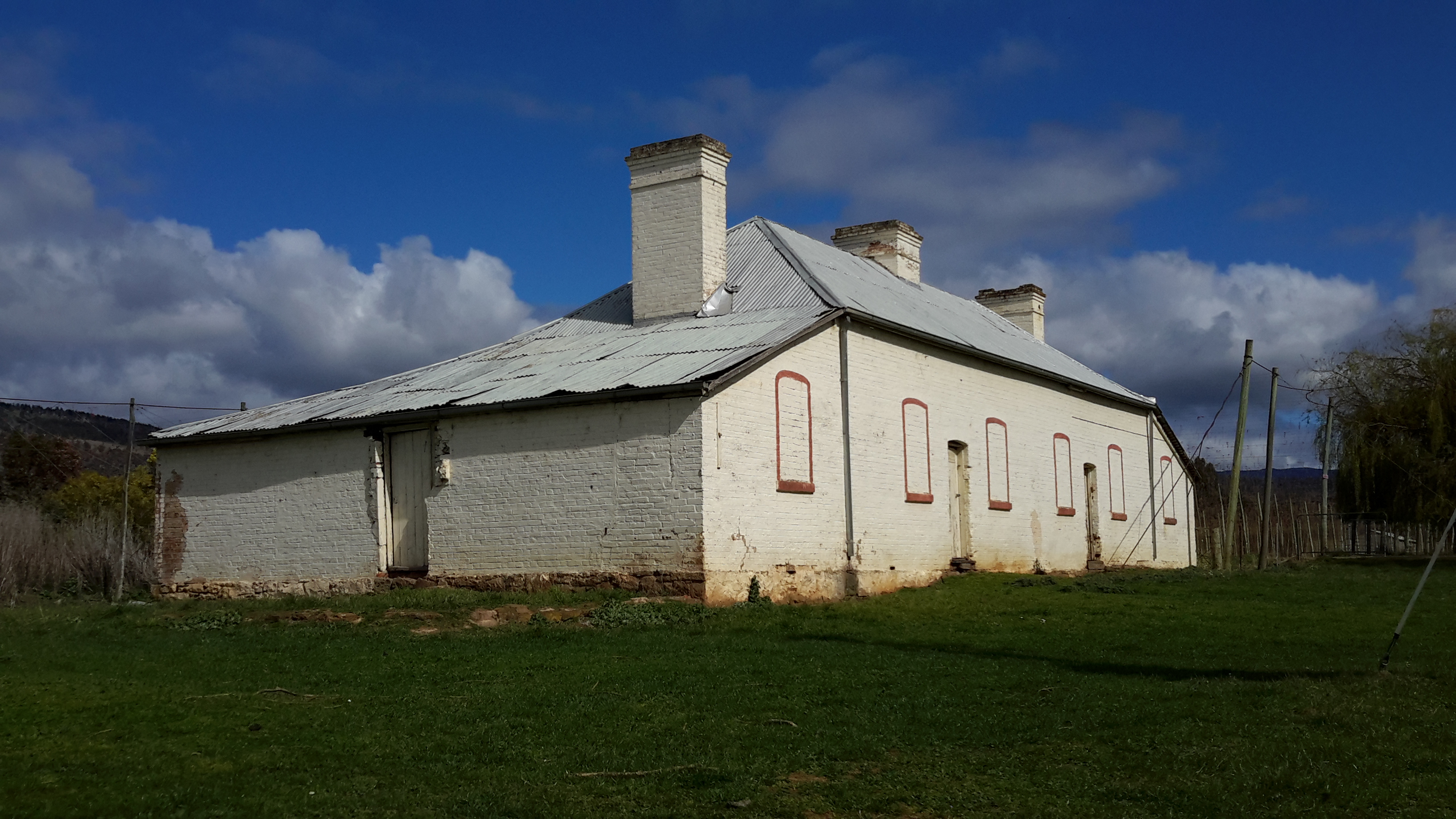
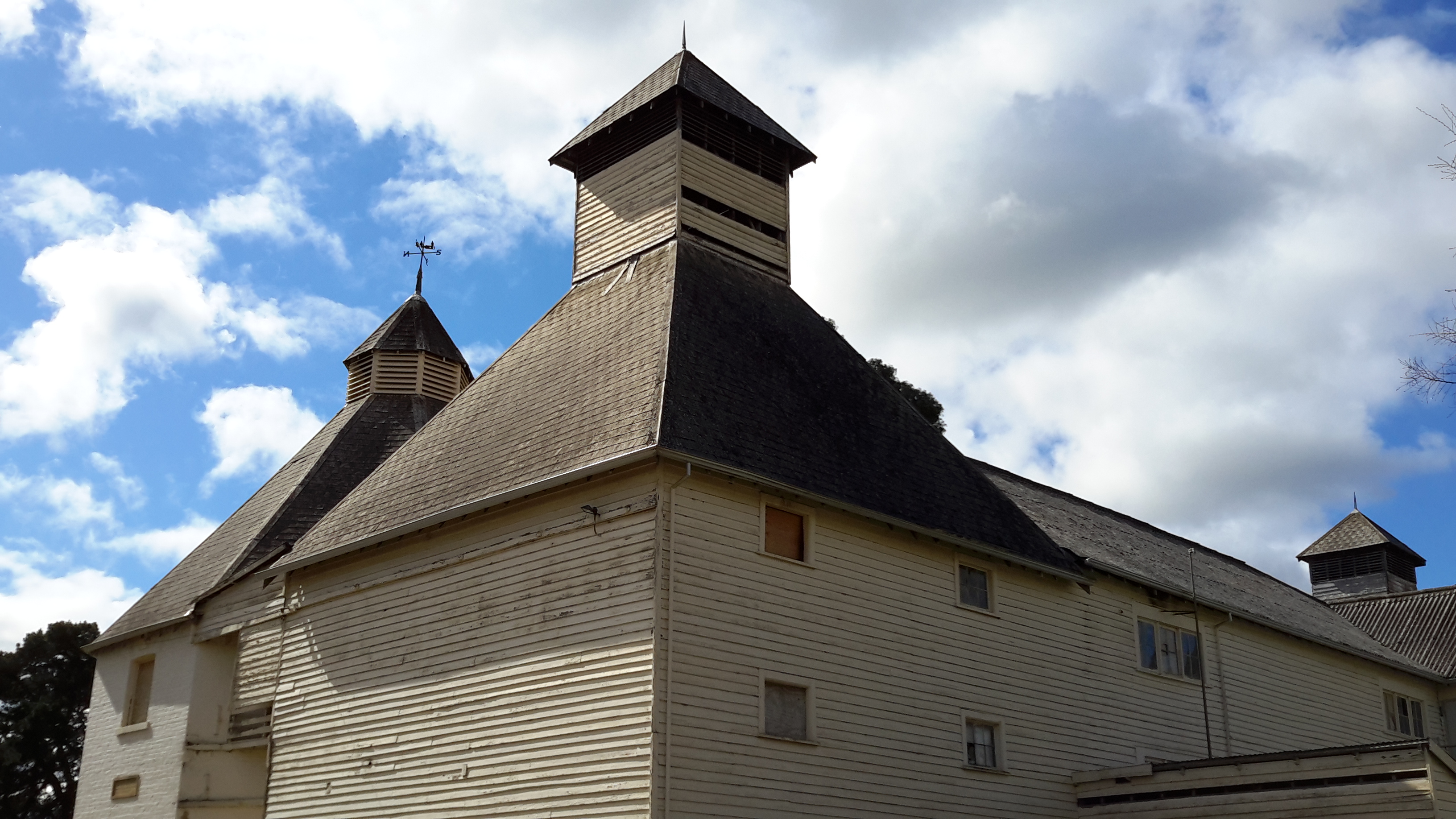
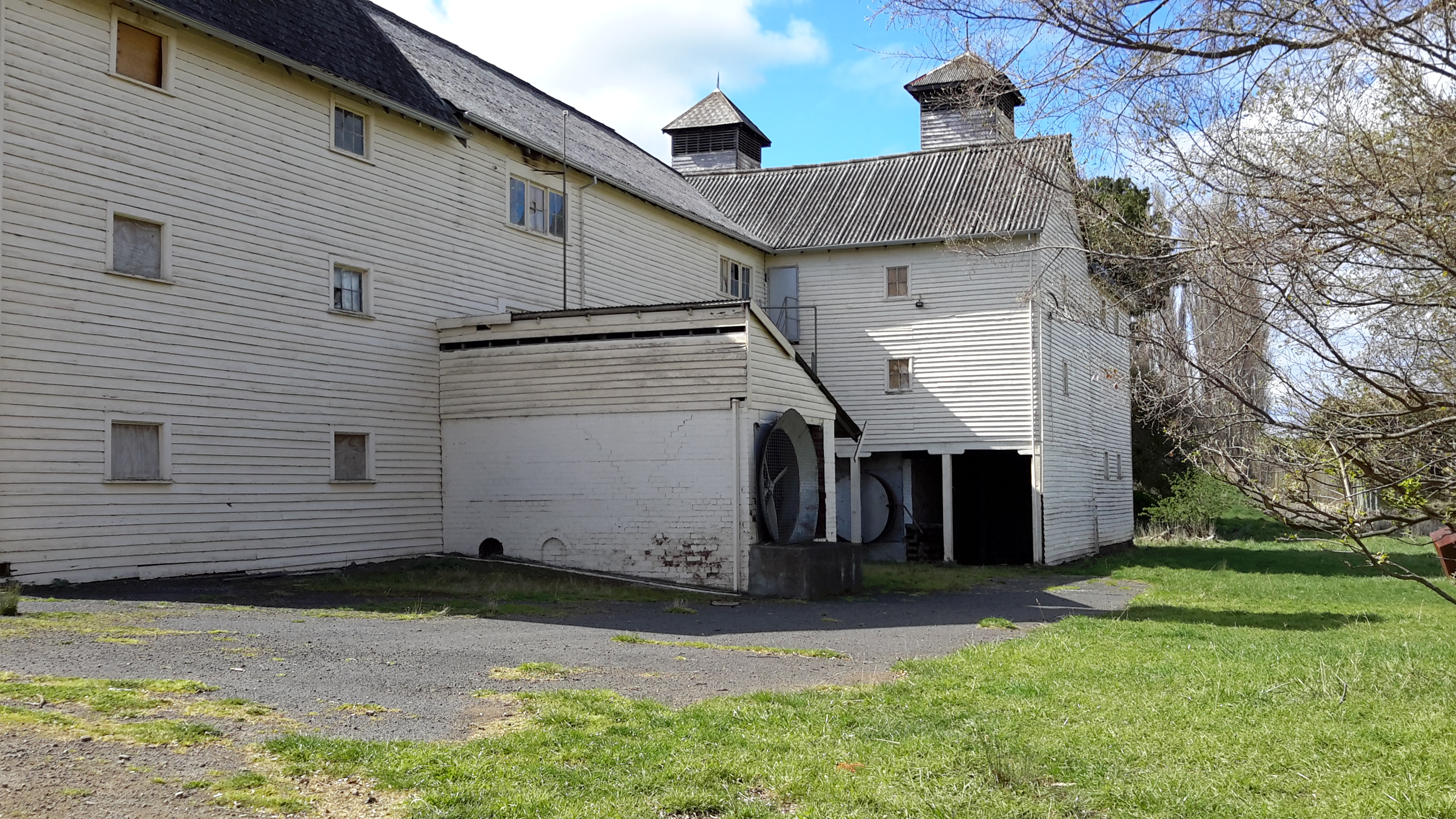
When I look back over this two day walk along the Derwent River, finding an historic precinct at the end of a dusty lane was my greatest joy.  An absolute treasure.  In Europe such a place would attract hundreds of coaches disgorging thousands of people each day to visit. Yet in Bushy Park Tasmania, I was the only visitor. Extraordinary. Some of my blog followers are brilliant photographers and would, if they visited, create amazing pictures.  I hope my photos are sufficient to whet everyone’s appetite for a visit and to have their own experience of this historic site.

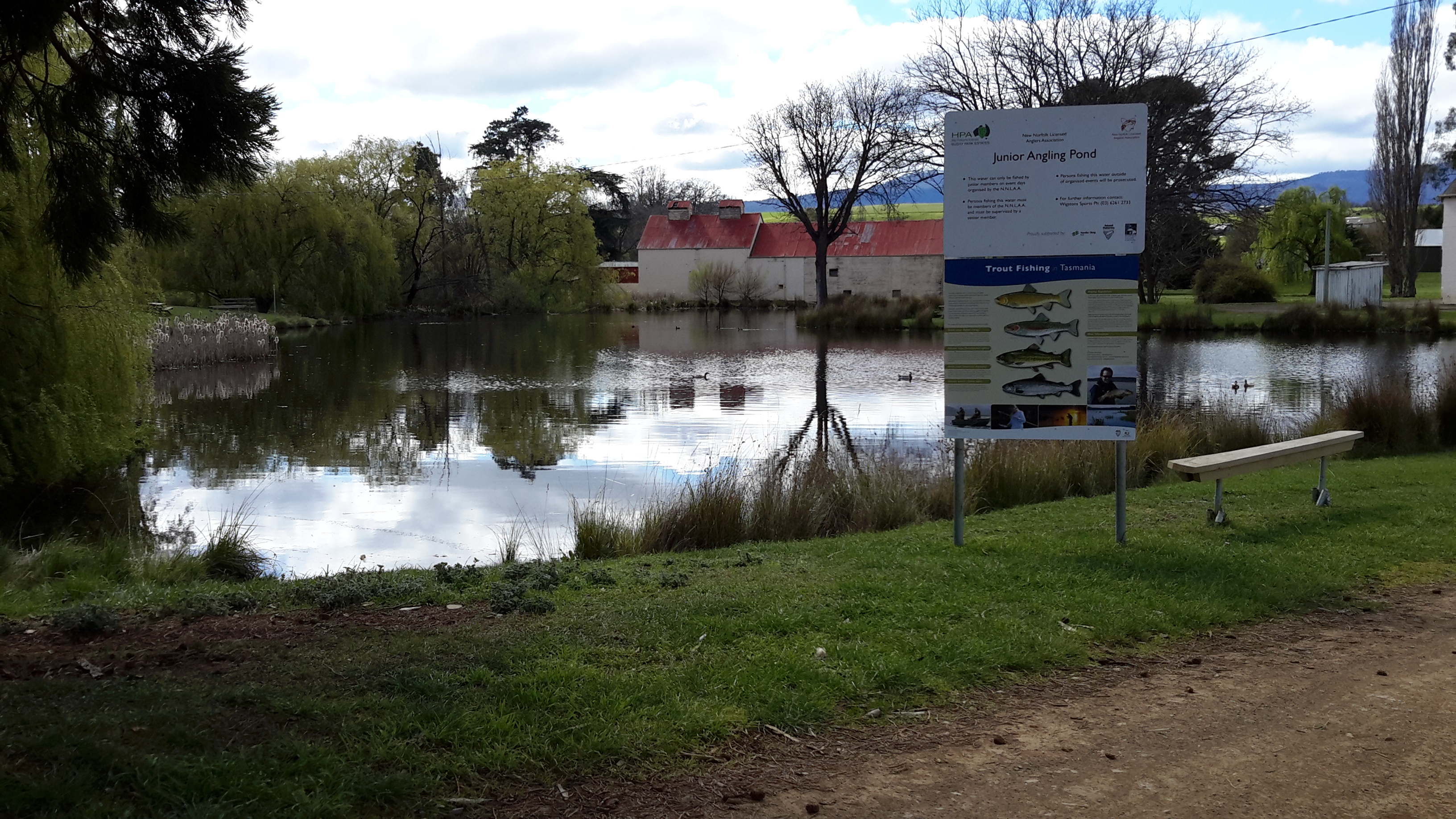
The precinct contains an innovative and more recent initiative – a Junior Angling Pond.  Perhaps fishing is the main hobby of locals and what better way to lure new devotees than to offer children their own safe experience.

20150918_110949 20150918_110931

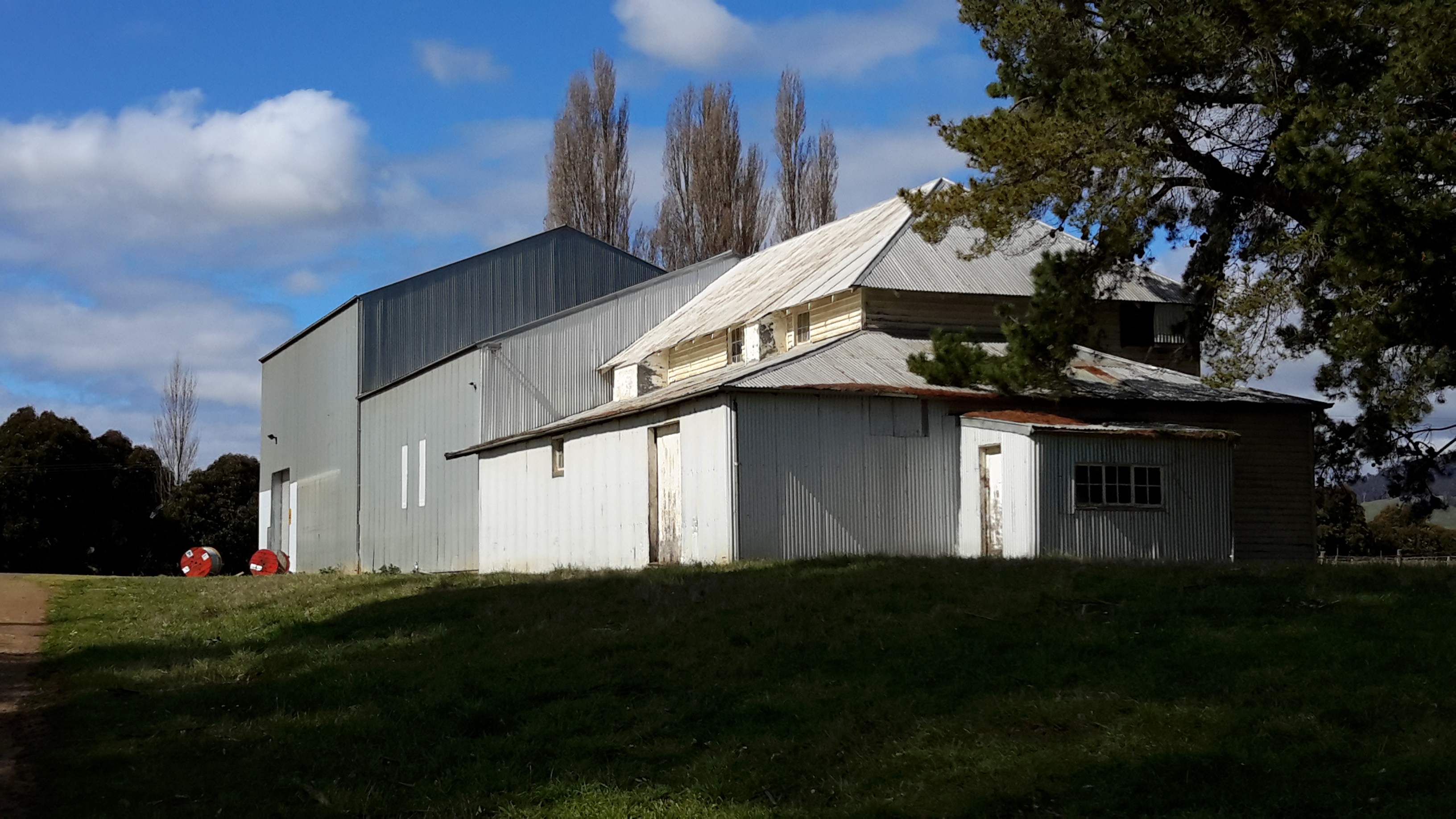
The buildings had no or limited signage, therefore identifying the purpose of most was impossible for me.

20150918_110540 20150918_111534

20150918_111352 20150918_111015

The photo below looks like a large unusual house but apparently this was the bakery feeding the hundreds of workers involved with the hop industry in the past.

20150918_110919 20150918_111059

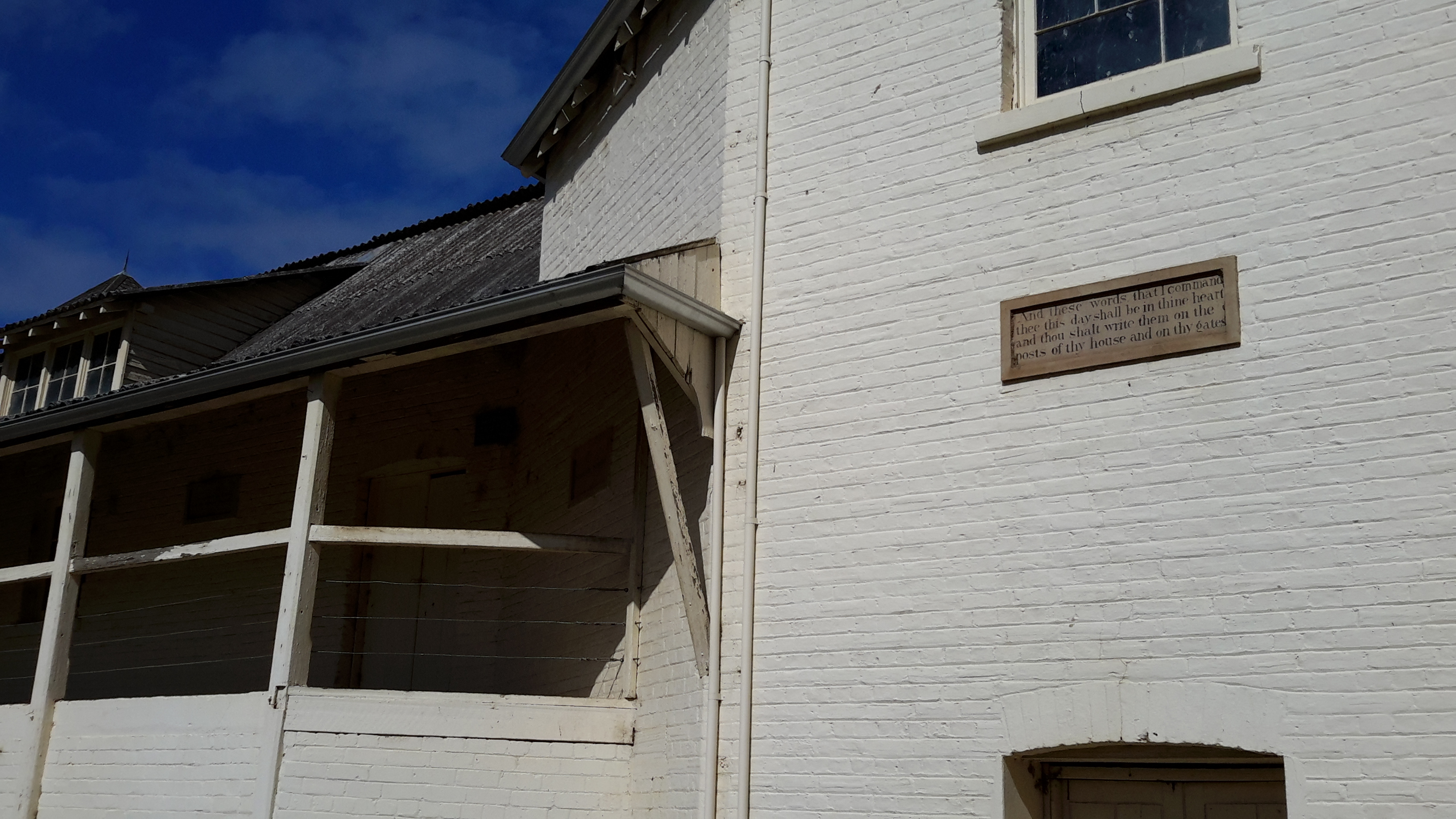
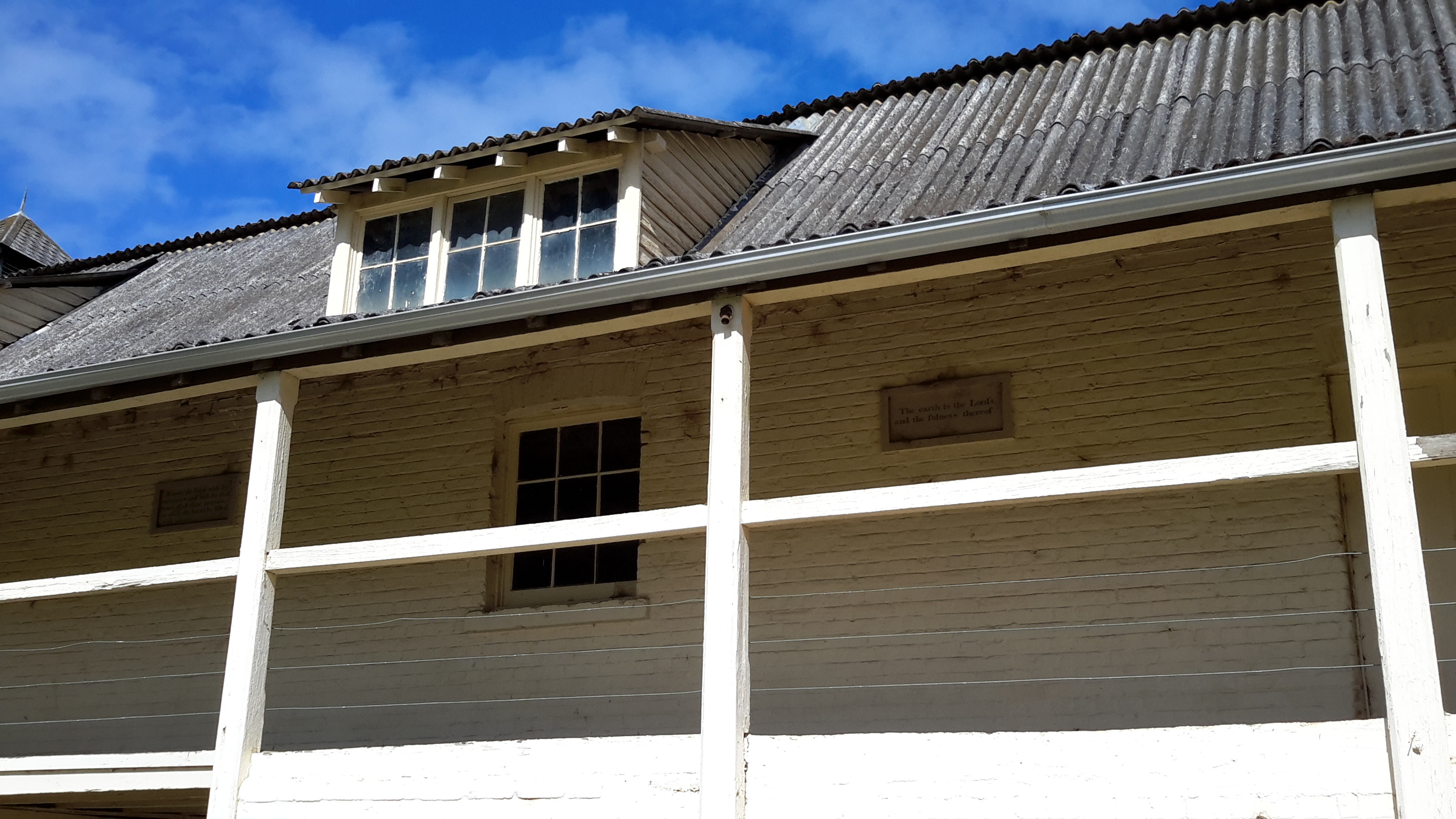
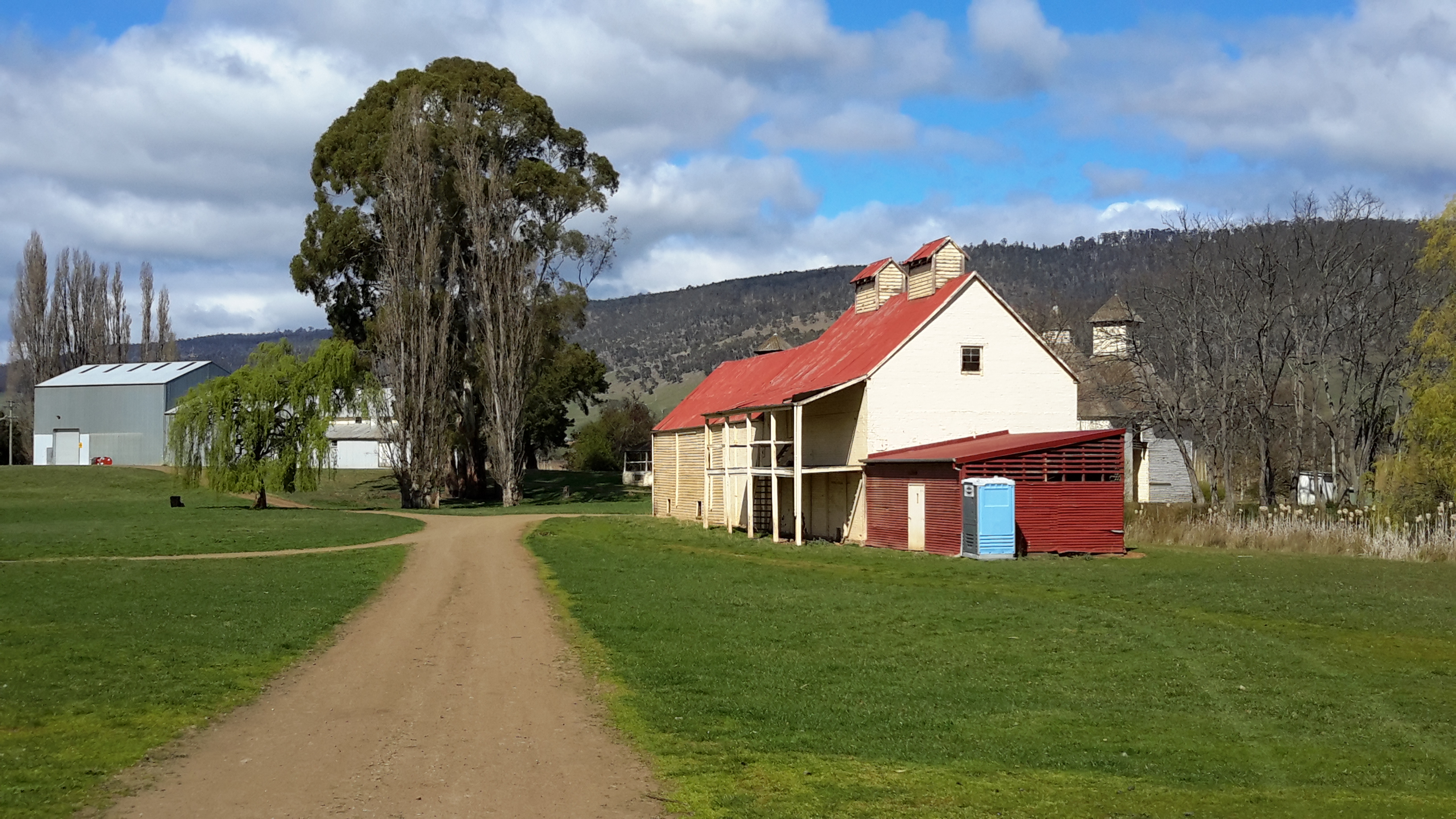
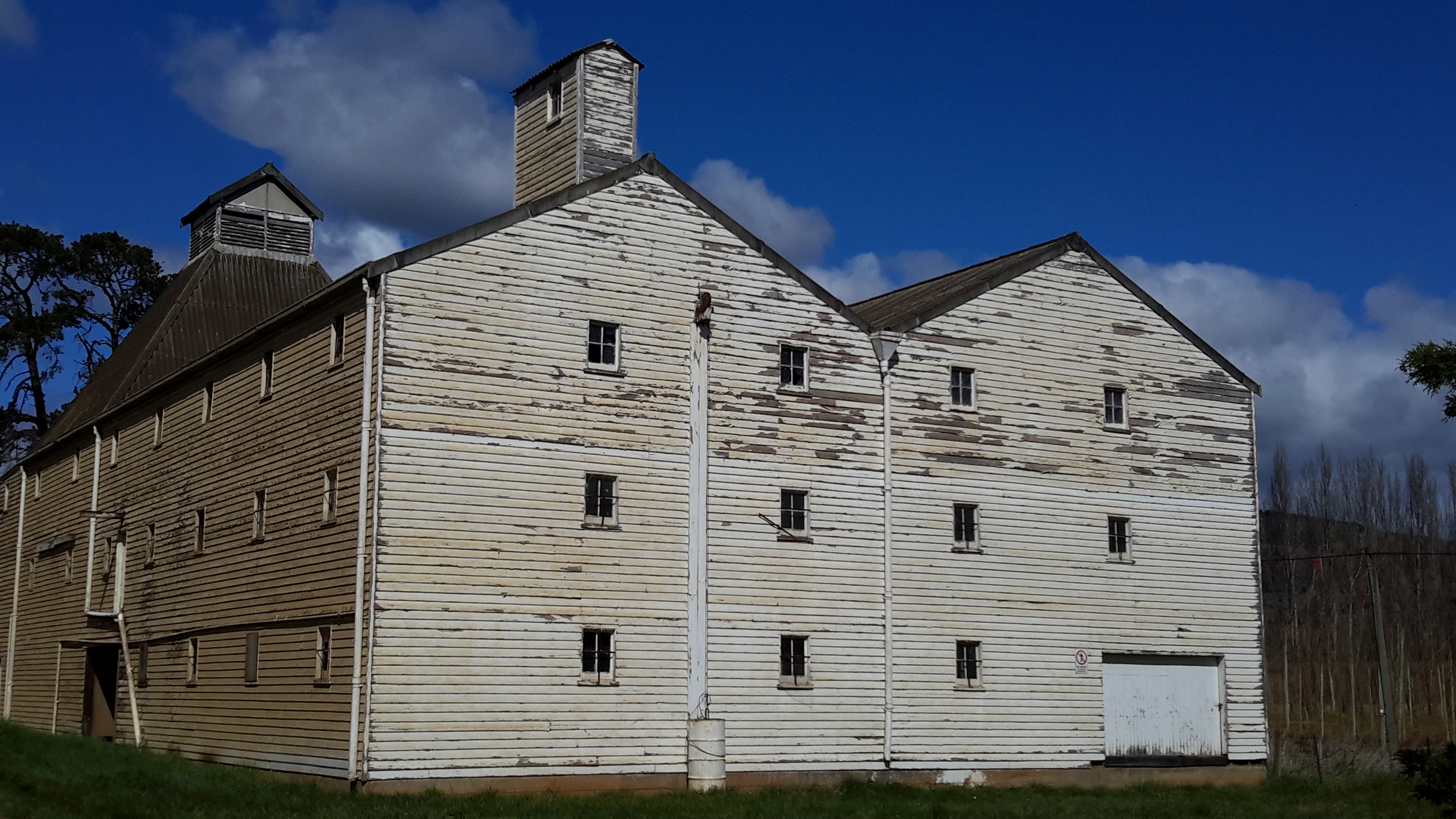
The most surprising structure was, what is now known as, the Text Kiln, built in 1867. As I approached the building I did not know this name or the year. Immediately I loved the shapes of the structures then suddenly I was stunned see a sandstone plaque embedded high up on a wooden wall. This was a biblical text.  And nearby was a second text. My mouth dropped open; I wrinkled my forehead and shook my head.  What am I seeing? What is going on here? In this remote location, clearly the early hop growers placed a great deal of importance on the Christian scriptures. I wondered if this text indicated a puritanical god-fearing way of living in the 19th century in Bushy Park. What was that community like?

20150918_111152 20150918_111201

20150918_111250  20150918_111239

Beneath a window one text offers: ‘God so loved the world that he gave his only begotten son that whosoever believeth in him should not perish but have everlasting life’.  In a triangular alley another plaque exhorts us to ‘Have faith in God’.

As I walked around the building, I saw many more texts .

20150918_111239 20150918_111338 20150918_111400 20150918_111441 20150918_111521 20150918_111605

In all, approximately 13 different texts exist on three sides of this magnificent building.

20150918_111648 20150918_111752

Eventually I left the Text Kiln and wandered further around the precinct.

20150918_111923

The old lady, owner of the wheelie rubbish bins, lived on-site in the red-roofed house.

20150918_112259

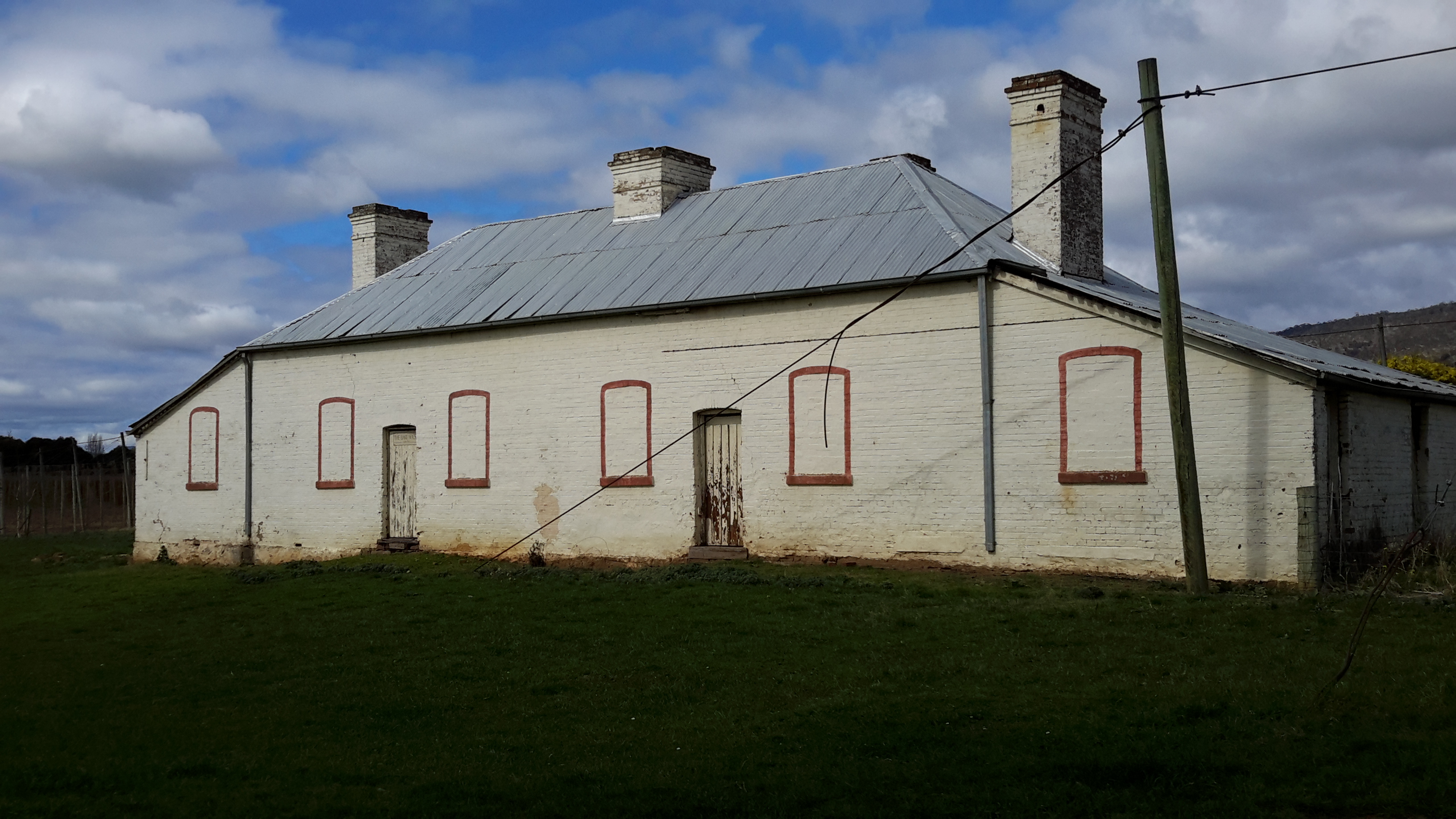
I guess the red bricks have been painted over in the building named the Red Brick Kiln, shown in the photos below.

20150918_112237 20150918_112041 20150918_112024

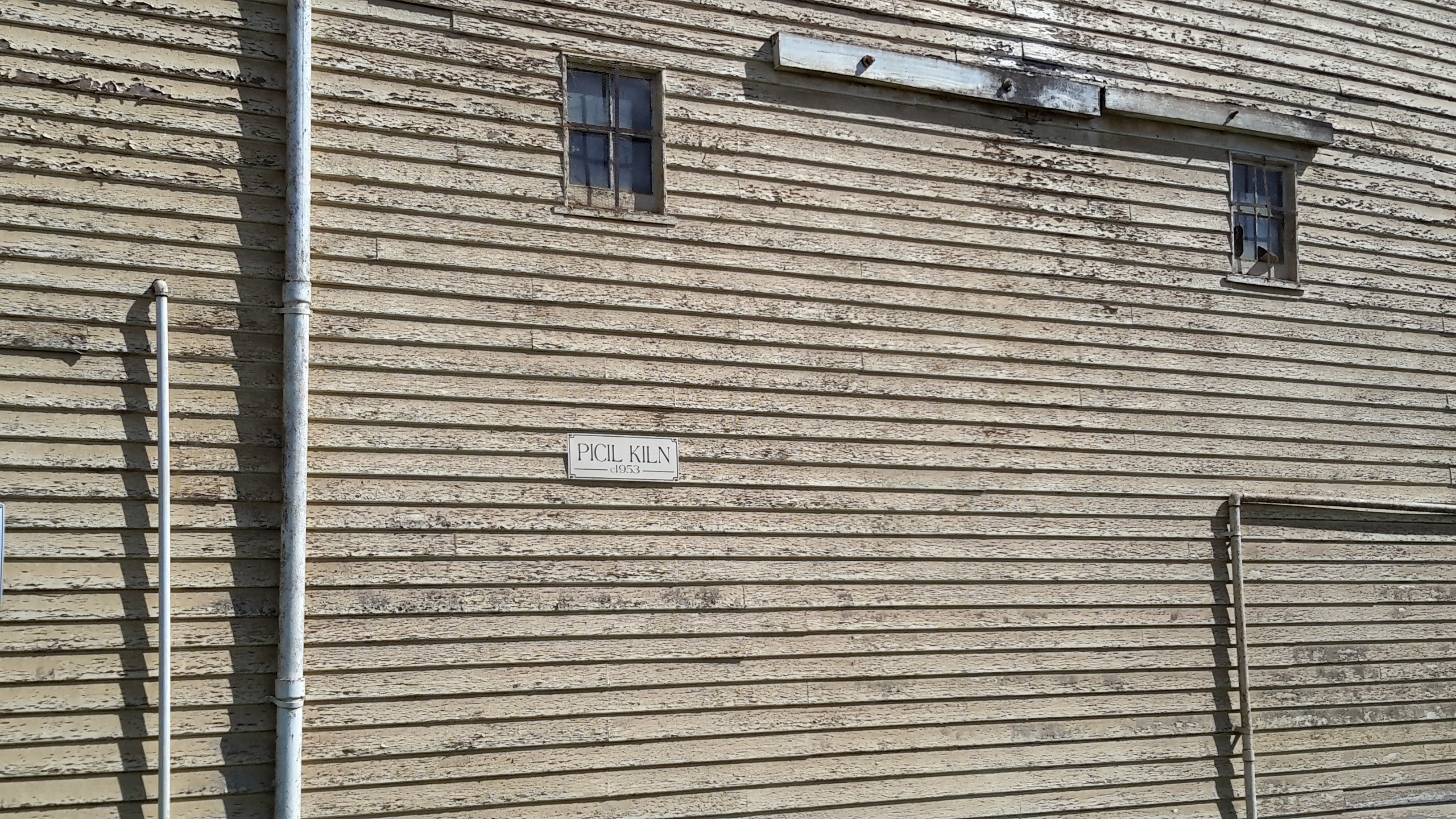
The last building I looked at before following another dirt road to the main road, was the Picil Kiln as pictured below.

20150918_112213 20150918_112449 20150918_112410 20150918_112621

I hope to bring friends here with a picnic hamper and perhaps a bottle of bubbly in order to relax and soak in the quietness, and to be pleasantly stunned by the scale and dramatic shapes of the buildings.  Perhaps I will see you there one day.

Hop farms

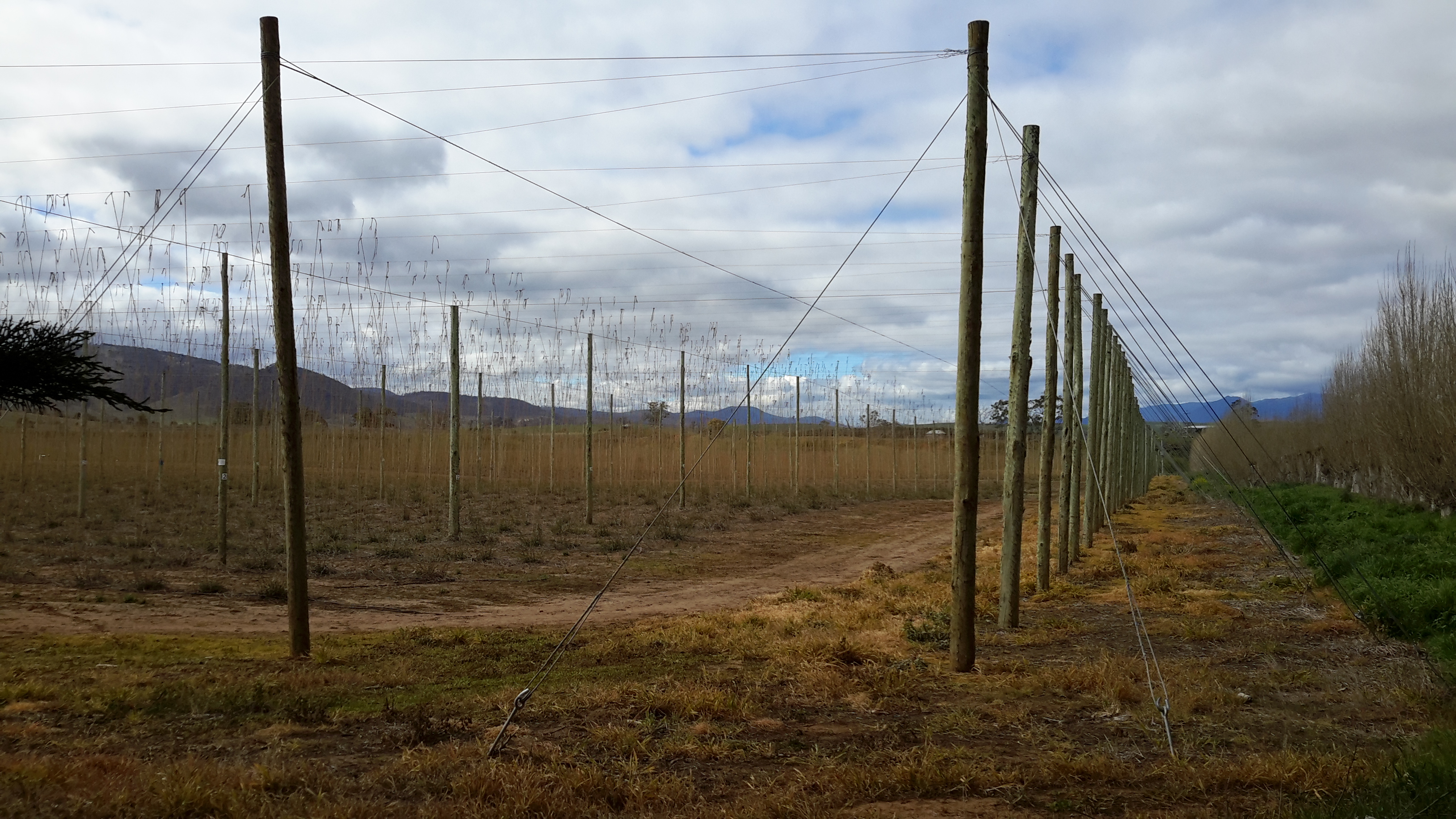
Suddenly, I was on the outskirts of the tiny town of Bushy Park and hop fields began to edge the road.  In case you don’t know, hops are the raw material for beer so the agricultural activity in this area is serious business. In Tasmania we have two mainstream brewers; the Cascade and Boags breweries plus other interesting boutique beer makers.

20150918_104145 20150918_104214

The Beer Pilgrim  has lots of photographic information to offer. An ABC news item includes photos of the hops and some processes. In addition, information about the growing patterns of hops, their harvests and other details are located at Hop Products Australia abbreviated to HPA.   I was fascinated when I read ‘The hop plant originated in China, but it was the Germans – way back in the 11th century – who first discovered the crop’s potential as an ingredient for beer, and they’ve been at it ever since.’ I wondered whether the world would be a different place if the Chinese had made that discovery first.  What would be the Chinese equivalent of an Oktoberfest?

20150918_104512

When I read the sign in the photo above, I felt good that I hadn’t found a way to walk on the river edge on the other side of these hop fields – if I had, then the soles of my shoes might have delivered exotic seeds or destructive pests to the ground.

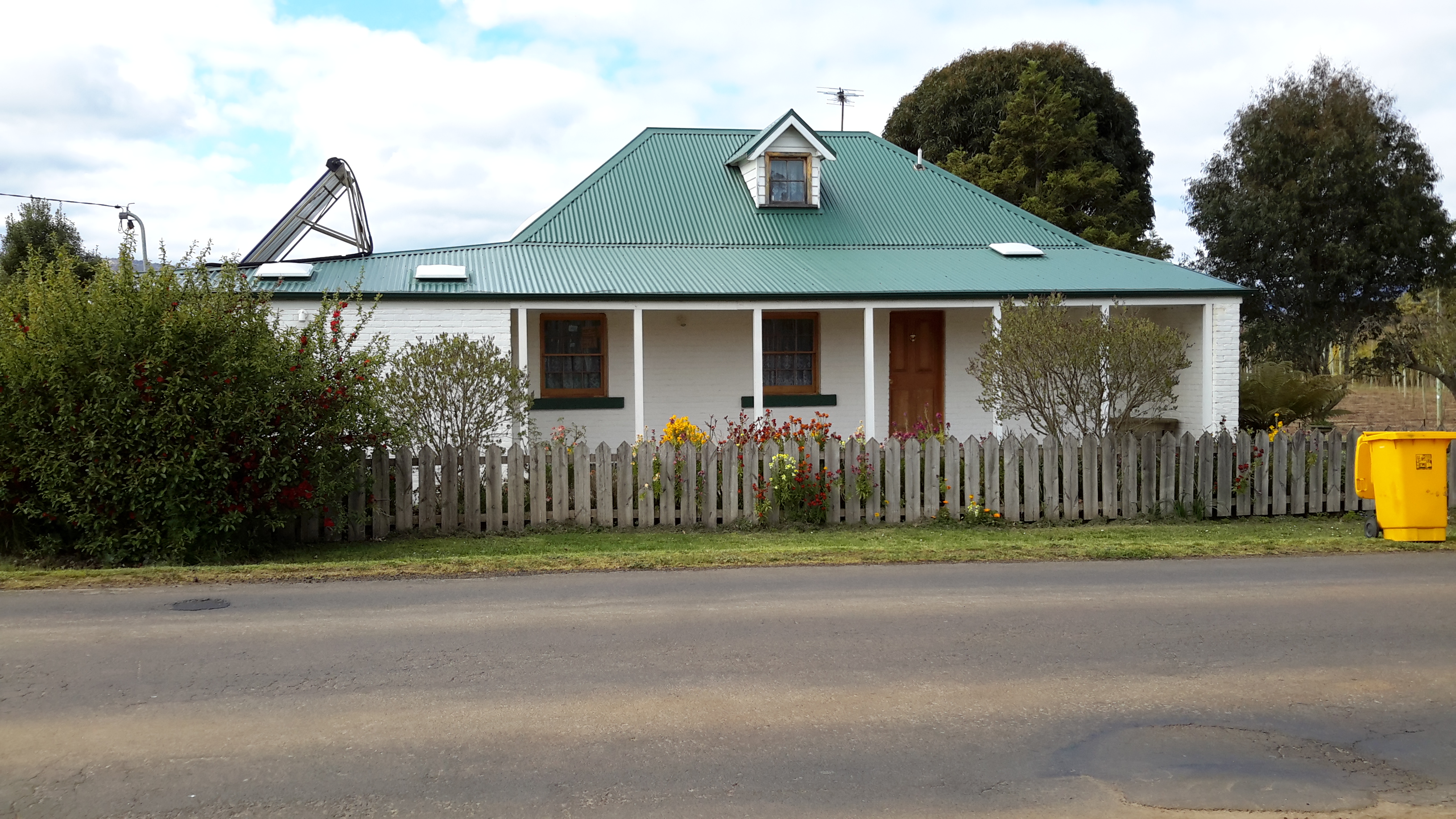
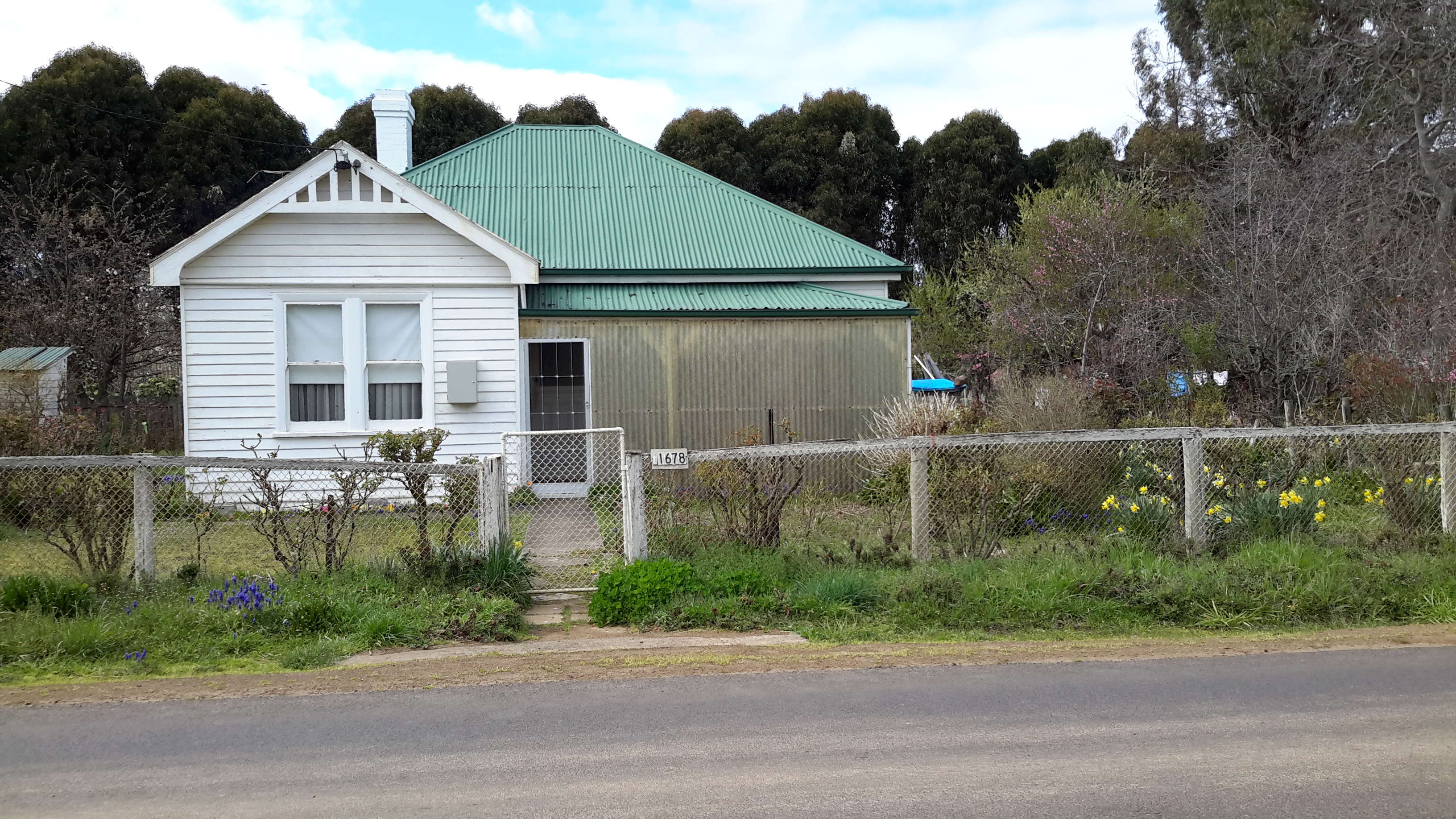
As I continued walking, I enjoyed looking at properties and different vintages of houses.

20150918_104908 20150918_104945

20150918_105413 20150918_105504

20150918_105631 20150918_105841

20150918_105603

The hop vines were not yet growing up the lines so the views across the paddocks were relatively uninterrupted. Before long, across a hop field I could see specialised hop buildings near private houses.

20150918_105817

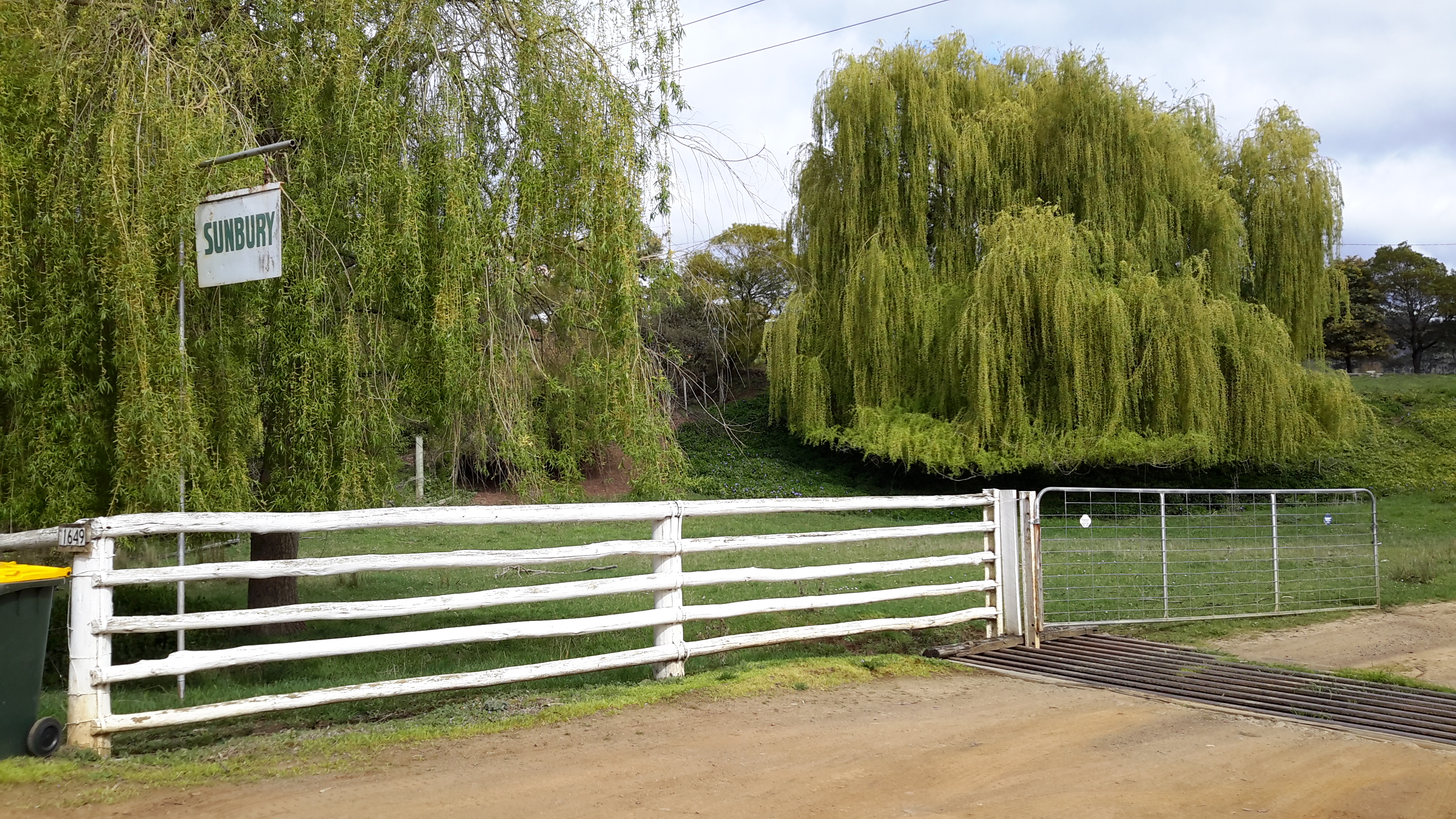
Then, as I reached 1 Acre Lane, at the far end I could see Oast Houses and other large buildings.  In the Google Map photo below the hops have grown up the vines on the left and they obliterate the views I had over the empty paddocks – but this is the lane if you are visiting Bushy Park and looking for what I could see. On the street view of Google maps no sign naming the lane is in evidence, but since that street view was made a sign has been attached to a pole on the non-lane side of the road.

Bushy Park lane to oast houses

My feet were aching and touchy at each step. I wondered whether I had it in me to walk down the lane to see whether there was public access and have a look around, and then have the feet to walk back to the road.  I still had quite a few kilometres to go to reach my day’s destination at Gretna and I felt rationing my steps could be a good idea.

Just then an old woman, on the main road, was dragging two large empty rubbish wheelie bins towards me and the lane.  A tiny lady, I felt she could have fitted inside one of these.  It looked like a massive effort for her. She was pleased to rest and chat with me. I asked if public access was available and she told me that I could look around the buildings but not in them, and that most were heritage buildings and no longer operational. She headed off down that very lane. That long lane.  After she had taken a few steps she stopped for a rest. I realised this was a weekly challenge for her after the rubbish had been collected. I had no idea how far she had to walk with the bins, and since I could not see any residential houses I guessed that somewhere at the end of the lane in the precinct with the Oast Houses and other specialist hop buildings, she had a house. I called out ‘Can I give you a hand and take one of them?’  She didn’t have the energy to look grateful and simply said, ‘Yes’.

With apologies to The Beatles – The long and straightened road / That leads to her door / Will never disappear / I have not seen the road before / It will always lead me there / Lead me to her door

A Swallows Nest

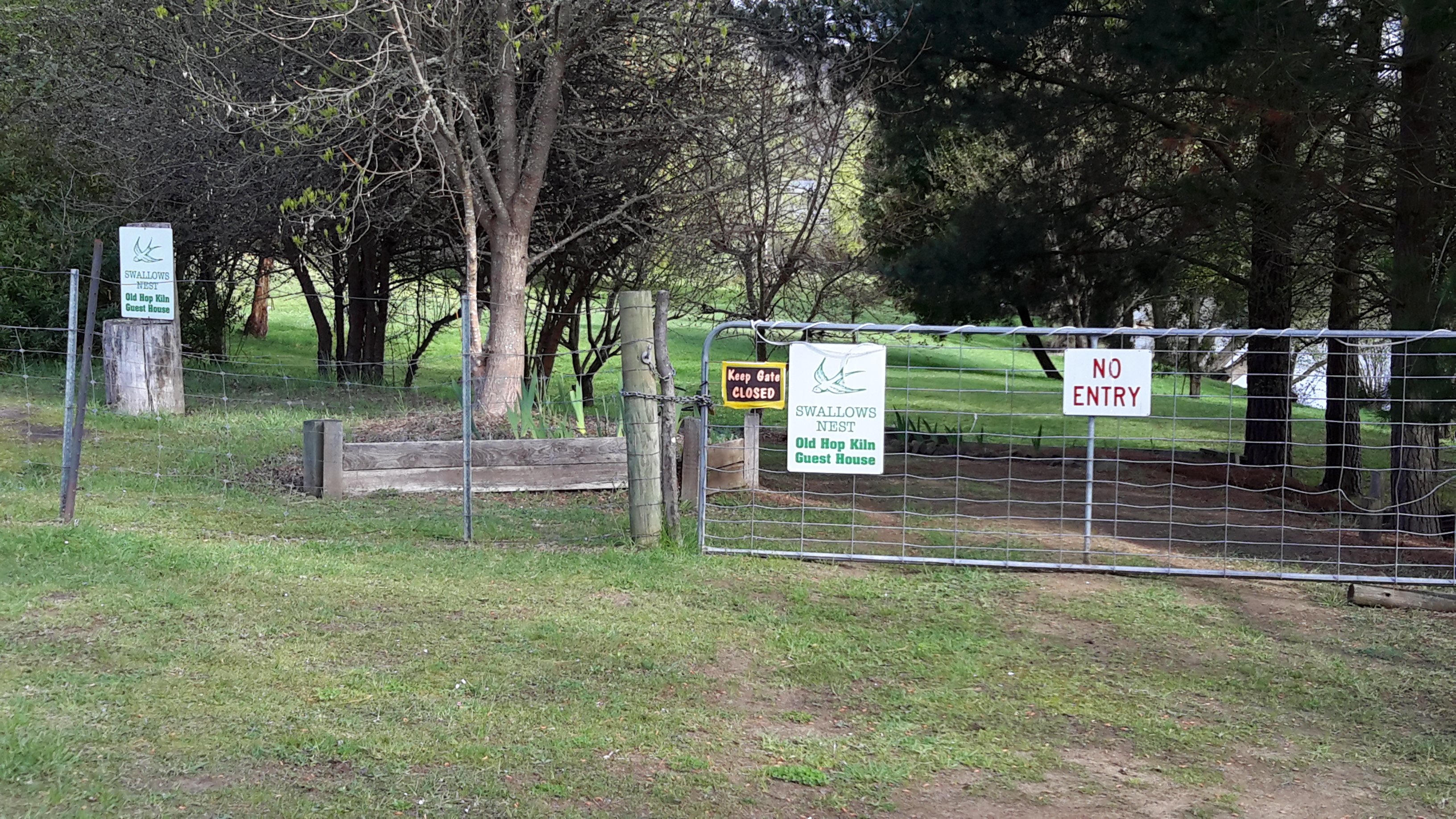
We have a saying, ‘one swallow does not a summer make’ indicating many of these birds need to be spotted before any declaration can be made that the seasons have changed to true summer.  So it is not surprising that I saw no sign of a swallow when I walked past the property titled Swallows Nest – I knew it was cool spring and so did those clever birds which must have been off somewhere much warmer at this time of year.  We have 6 swallows and martins that spend time in Tasmania, and depending on which is being considered, the birds may have migrated to Queensland, Indonesia or even to the Arctic Circle for our winters.

20150918_090514 20150918_090532

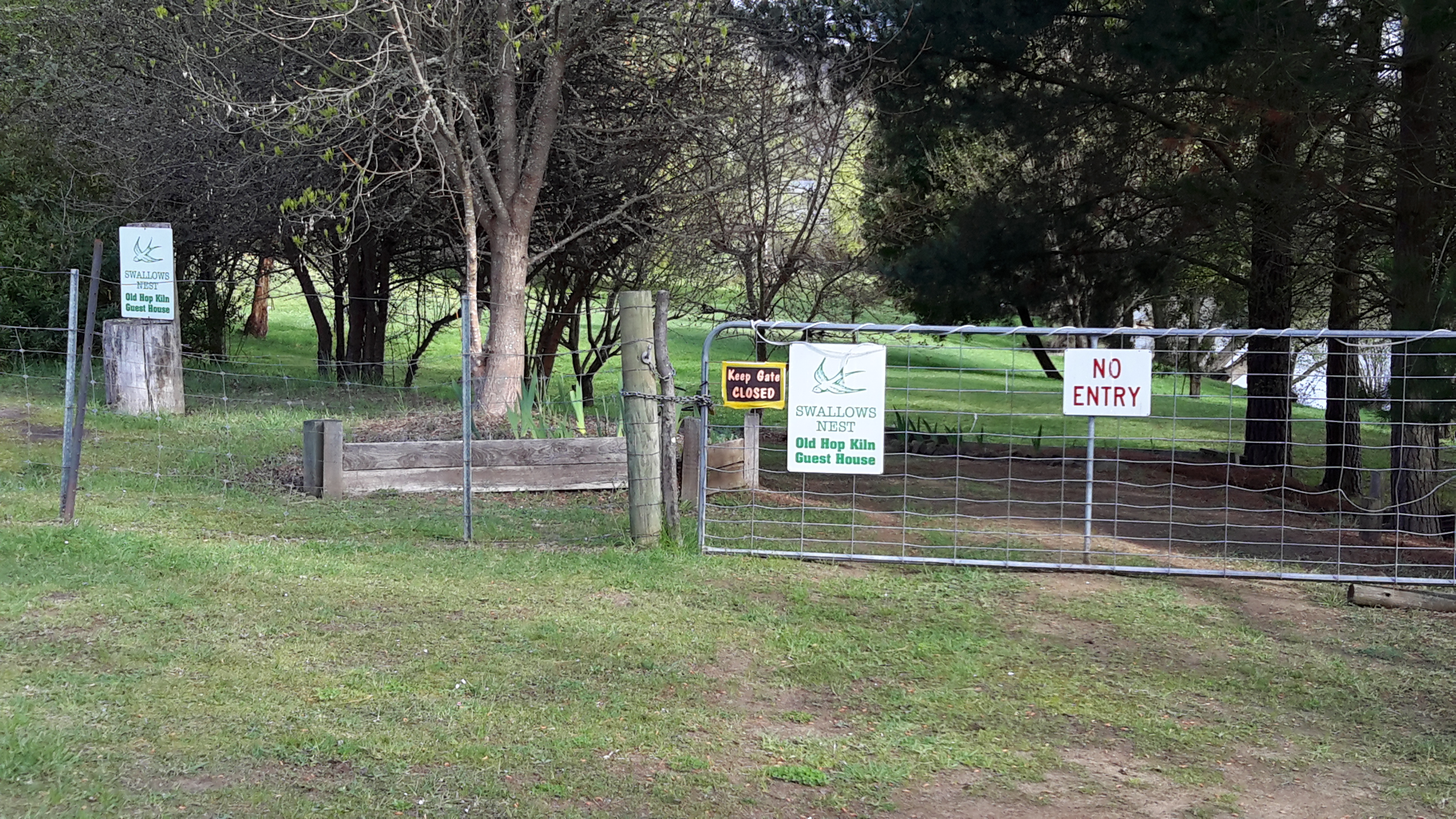
The property, Swallows Nest on the road to Bushy Park, seems to offer accommodation for people (but where were the swallows’ nests?) however the property was locked up and looked peopleless. When I read that an old Hop Kiln Guest House was ahead, I imagined seeing a fascinating historic building and therefore I looked forward to discovering it.

The renovated building below apparently first started its life as a Hop Kiln.

20150918_090742 20150918_091006

More information is located here.

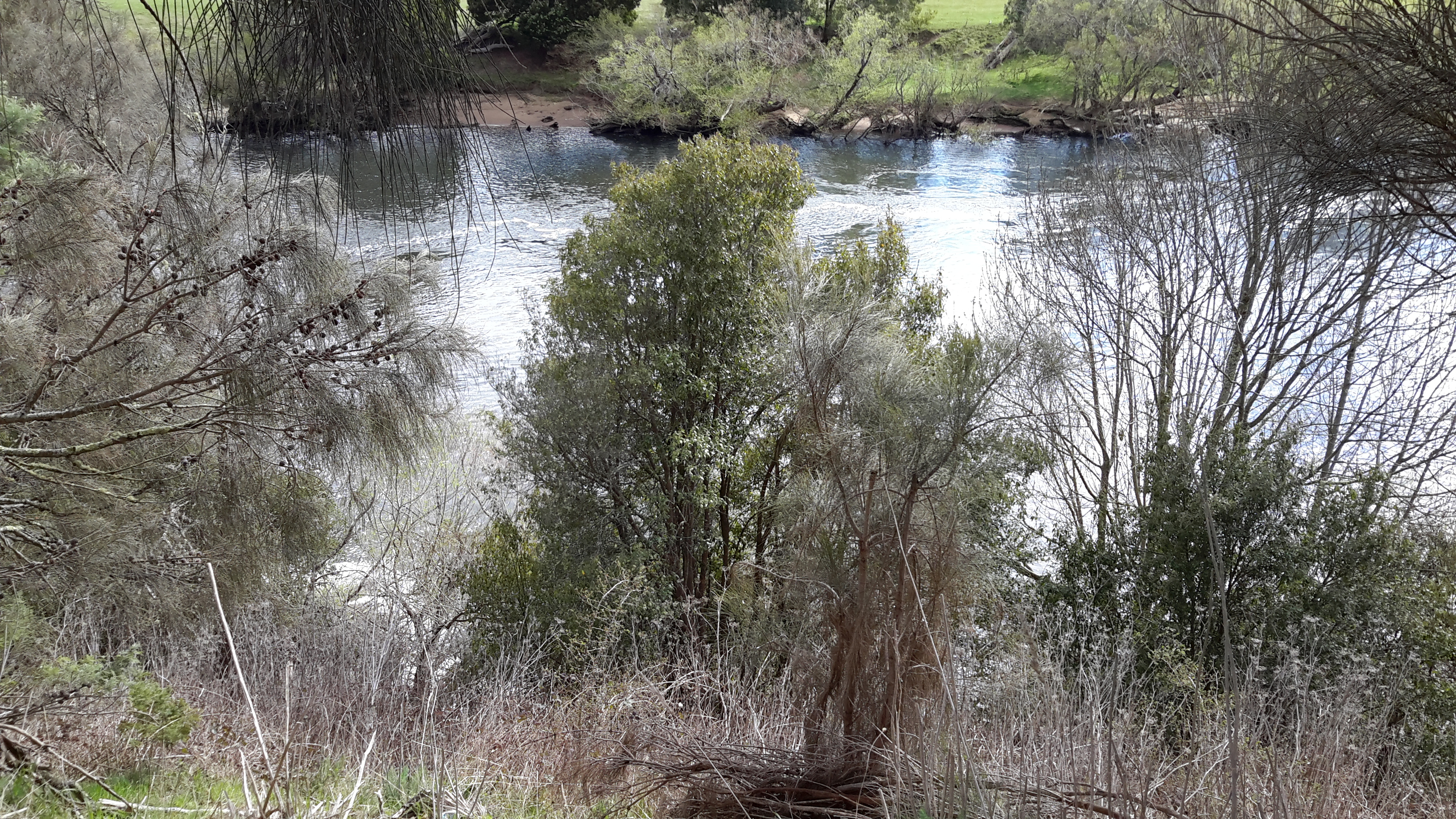
Not far below, the Derwent River poured by.

20150918_091924

Heading westwards

20150918_080020 20150918_081336 

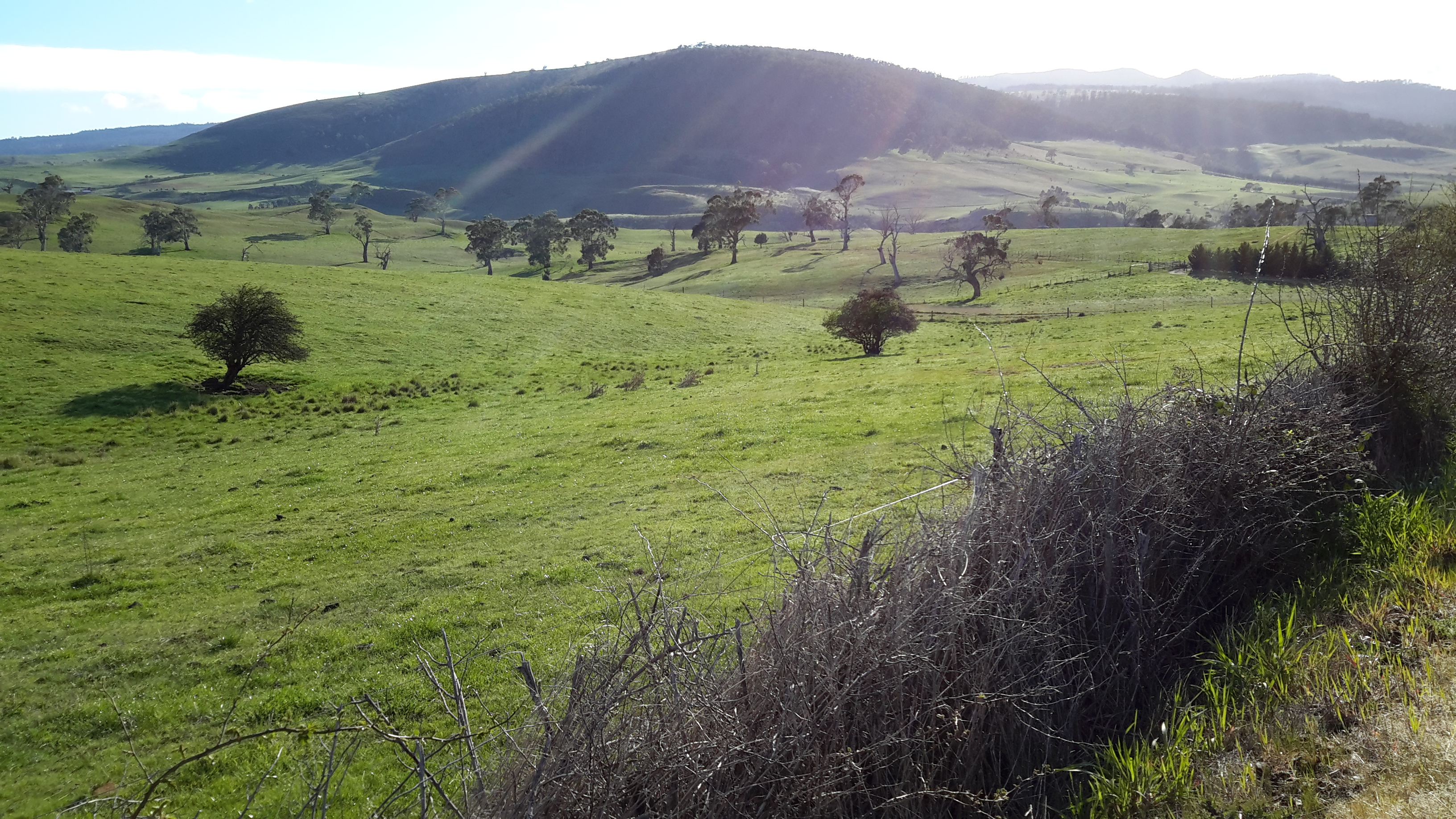
Back on Glenora Road, I loved the landscape in every direction. I am curious- have any city people slotted a green landscape view as background on their computers? When I open my computer and see green vistas it lifts my spirits particularly when I look out of my house window at bricks and mortar everywhere.

20150918_080350 20150918_080724 20150918_081256

Before long I was passing the expanses of Kinvarra Estate wines. My photos are quite tame compared to those taken by Alphaluma and presented on their website. His are sweeping and dramatic.

20150918_081851 20150918_081406  20150918_082213

A kilometre or so later I was surprised to see a lycra-clad man walking uphill around a corner and pushing his bicycle towards me.

20150918_082849

He looked exhausted and so I called out a friendly ‘hello’ and asked him where he had come from so early in the day.  ‘Bushy Park’, he replied.  Then he explained that for the past 12 days he had been on the comparatively new Tasmania Trail which extends from the north-west coast to the south-east margins of Tasmania. In addition, he offered that 13 days ago he hadn’t ridden a bike for years, had bought the new bike that day, then started out immediately. Now he was eager to get home and was headed for Hobart where he would finish his trek and family would pick him up.  This man, who looked like someone’s father, didn’t have the time or strength to continue to Dover much further south but I congratulated him on his achievement.  Whatever means of transport you take through central Tasmania, the challenges are great and he had overcome much to be close to his goal.  So I thought about my sore feet after only one day’s walking, and worked hard to dismiss any negative thoughts.

Meditation and peacefulness

I find that listening and looking from within the natural environment revives my soul and lifts my spirits. Partly this comes from the rhythm of taking each step, the regular intake and exhaling of breath, and then the quality of the fresh air touching all parts of me.

Here are a couple of small videos I made when skirting around Reids Fruits property.  These offer the sounds that most relax me.

https://vimeo.com/140865664   and https://vimeo.com/140869887

The photographs below show a selection of river views taken as I continued walking around the edge of the Reids Fruits property.

20150917_125210 20150917_125217 20150917_125412 20150917_125820

I kept walking and  soon found the railway line was fenced off close by. As I looked back over the route I had taken, unfamiliar parts of Mount Wellington could be spotted on the horizon.

20150917_130004

While I understand the need for fences, if they were taken away then this place on the river bank near Plenty Tasmania would be truly idyllic.

Linden

20150917_110024

The name Linden is used to name streets, roads and courts in the Derwent Valley and elsewhere across Tasmania perhaps as a marker of someone with that surname who made an impact on the community in the past. But I could not find a Linden family history, or any other historical reason to justify the naming of the property I passed at approximately 5 kilometres west of New Norfolk.

Perhaps the naming was related to Linden trees native to England from where an early property owner may have travelled.  I cannot recognise this tree so I cannot say whether the trees on the property were lindens.

Alternatively, does Elena Gover’s account in Tasmania through Russian eyes (Nineteenth and early twentieth centuries) create another possibility? Was this property named after crew member Lieutenant Vilgelm Andreevich Linden of the Russian corvette Boyerin which arrived in Hobart in 1870 at a time of goodwill in terms of Australia-Russia relations? Linden wrote notes and collected extensive information about many aspects of Tasmania. ‘As well as chapters on geography, he made an analysis of the aftermath of transportation on the economic development of the island. Linden collected interesting information about the government and electoral system of Tasmania, and of the system of land allocation which allowed an influx of free settlers…

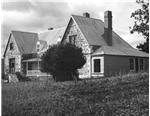
I did not walk down the driveway so I did not see existing residences at Linden. Apparently ‘Bryn Estyn’ homestead was built on the property in the 1840s, and named after the family home of new settler Lieutenant Henry Lloyd who had relocated from Wales. The State Library of Tasmania holds a photograph of the building:

Bryn Estyn

You may recall an earlier posting showed the Water Treatment Plant named ‘Bryn Estyn’. I can only assume the original land grants for Lloyd included the acres for the Treatment Plant.

A sandstone quarry on the property was the centre of attention when the building of Tasmania’s High Court in Hobart was being planned. Back in 1982, when A. A. Ashbolt owned the mineral lease, the quarry on the Linden property was surveyed to determine whether sufficient stone of ‘acceptable quality’ existed that would be suitable for cladding the new Court. Previously this stone was used on the Supreme Court of Tasmania. The stone was found to have been laid down in the Triassic period (about 3 million years ago), a time when the early dinosaurs were roaming the earth.

I suspect the property, marked with Linden at the entrance, is now known as Ashbolt Farm. The farm specialises in producing products from elderflower and olive trees and additional information is located here.  I wish I had known about this property prior to walking because I would have made arrangements to visit and enjoy a cup of hot elderberry tea.  When I passed this property last Thursday, there was no sign of life and no welcome sign posted.

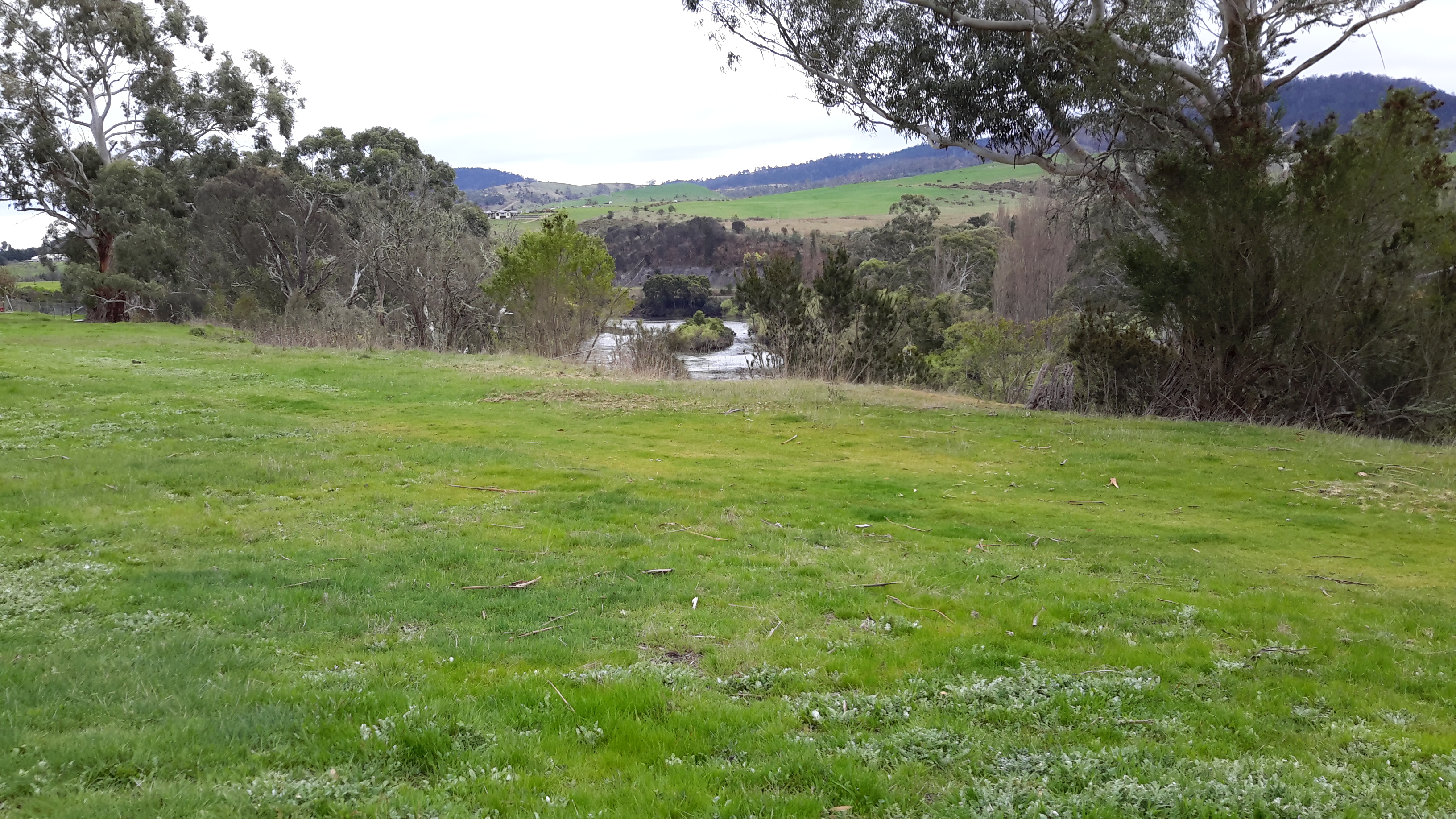
Immediately past and in the vicinity of the property ‘Linden’, the racing Derwent River was visible from the road.

20150917_111214 20150917_111338 20150917_111407 20150917_111617

A trotting track in the middle of nowhere

Once past the Water Treatment Plant, the country views were expansive.  I looked across green paddocks and could see the back of Mount Wellington with a drift of cloud obscuring its peak.

20150917_102908

The river views were, as ever, seductive.

20150917_102931 20150917_103910

Then suddenly I was surprised to find a property with its own horse racing track.

20150917_104156

During the time it took for me to walk past, a trainer with his horse in harness pulled a two wheeled cart and trotted around and around the track. Last Sunday a harness race was held in Launceston in Tasmania’s north, and the next race meeting in Hobart will be on the 27th September so I guess the horse ran a few days ago or will be running soon.

Race track on Glenora Road

Water Treatment Plant

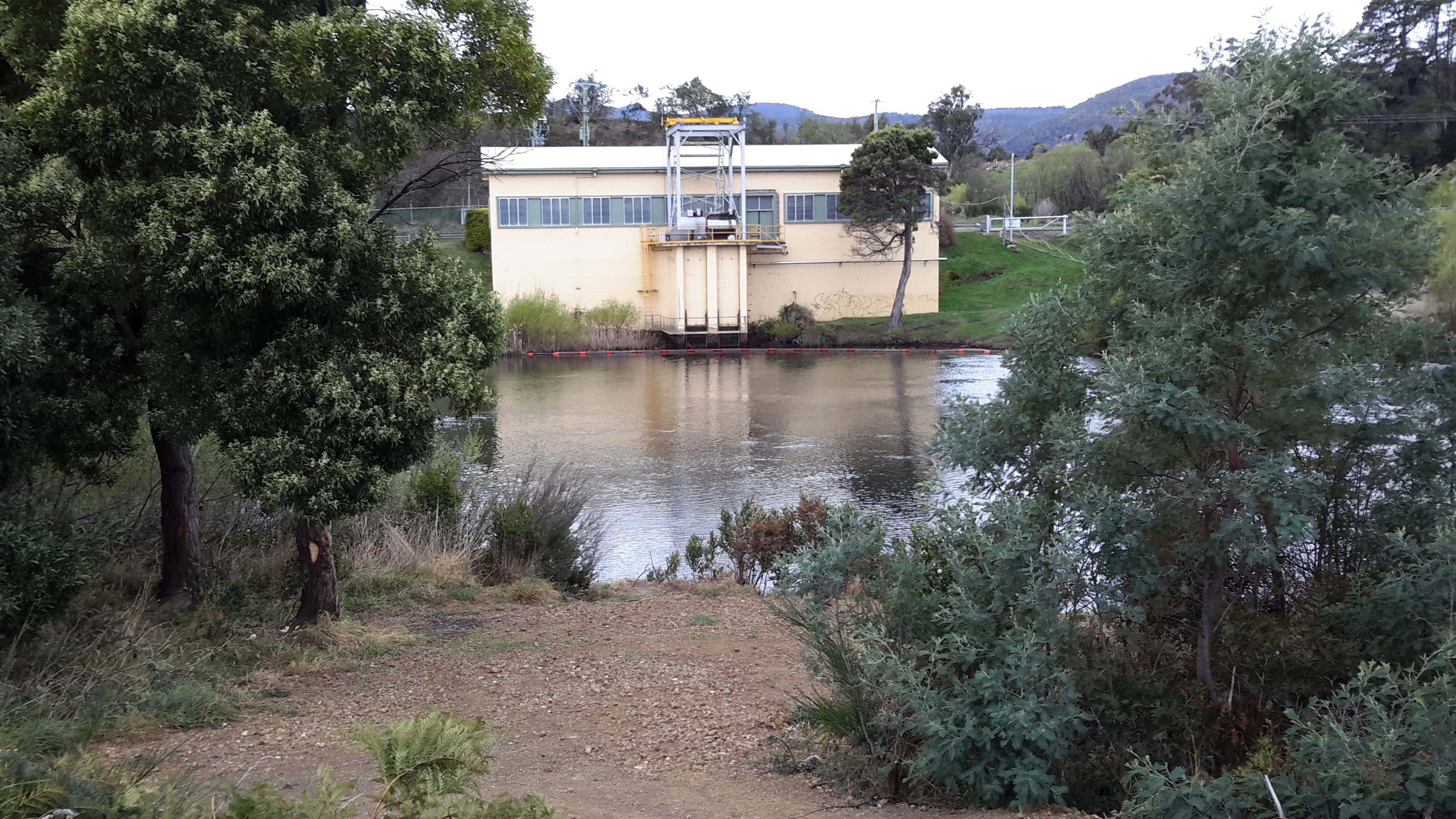
I continued on from Atherfield House and, after passing the Glenfern Rd turn off, I walked westwards until a clearing gave me unexpected access to the river and a full view of a heavy building on the other side. I have not been able to determine the function of this stand-alone structure, however I suspect the building somehow connects with structures soon encountered on my side of the river further along.

20150917_100148 20150917_100916

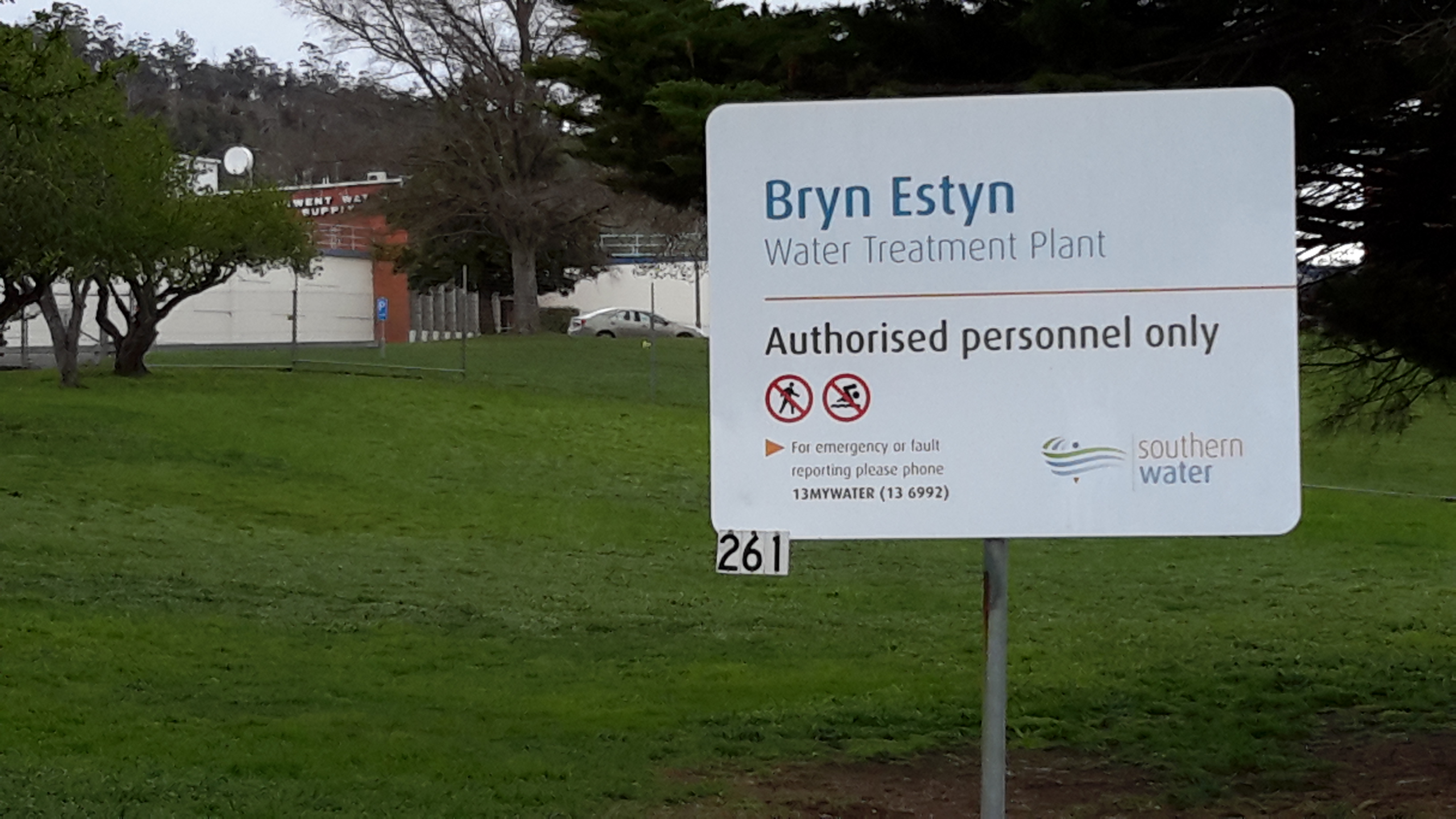
On the non-river side of the road some acres had been circled with high protective fences.

20150917_100959

This was Bryn Estyn, a Water Treatment Plant.

20150917_101347 20150917_101550

I wondered if I was dreaming; were the two golden projections on top of the building simulated sheep?

Fences and limited or non-existent river access were the most memorable features of my walk. A good example of these barriers is shown below.

20150917_101738

In the photo above you can see the Lyell Highway on the other side of the river. This road sits close to the river for many kilometres then turns inland away as it wends its way to Tasmania’s west coast towns of Queenstown, Strahan, Zeehan and Rosebery – via Derwent Bridge at Lake St Clair.

Thwarted by barriers

I am deeply dispirited. I have some sad news. My impulsive project to walk from the mouth to the source of the Derwent River will be thwarted by greed and other human characteristics of a negative nature. Despite this situation, I am working on a new plan to reach the source of the Derwent River at Lake St Clair Lagoon in a physical and meaningful way and, once I have fleshed out the details, a future post will offer an explanation.  Meanwhile, after you read the following, your suggestions will be most welcome.

During stages 1-14, from time to time I recorded how access to the actual river edge was sometimes denied me because properties were fenced and gated.  I bemoaned the fact that across Tasmania, in many instances the law provides that property owners own land and water to half way across rivers. While a ‘grace and favour access’ or by ‘a permission granted approval’ process exists in some places, much of our river edges cannot be walked freely.  Yet in so many European countries ‘right of way’ paths and walking trails across the land have been taken for granted for centuries so there is much more freedom to simply enjoy being outdoors.  Non-indigenous settlement is too recent in Tasmania so a criss-cross of ‘ancient’ walking paths has not been established, and the pathways of the inhabitants prior to settlement, the aborigines, either have been obliterated or knowledge of their location is not easily available to the non-indigenous population.

20150917_092218

Photo of the Derwent River taken through a house block on the western edge of the town of New Norfolk.

The damage is done and to repeal laws and ‘take away’ land from owners would be political suicide, and cries of unfairness and for expensive compensation would abound. I can imagine the legislation arose partly from consideration of the practicality as to who or which organisation would maintain the thousands of kilometres of river edges across Tasmania and keep them clear from bracken, blackberry brambles and exotic weeds.
20150918_092244 20150918_102532

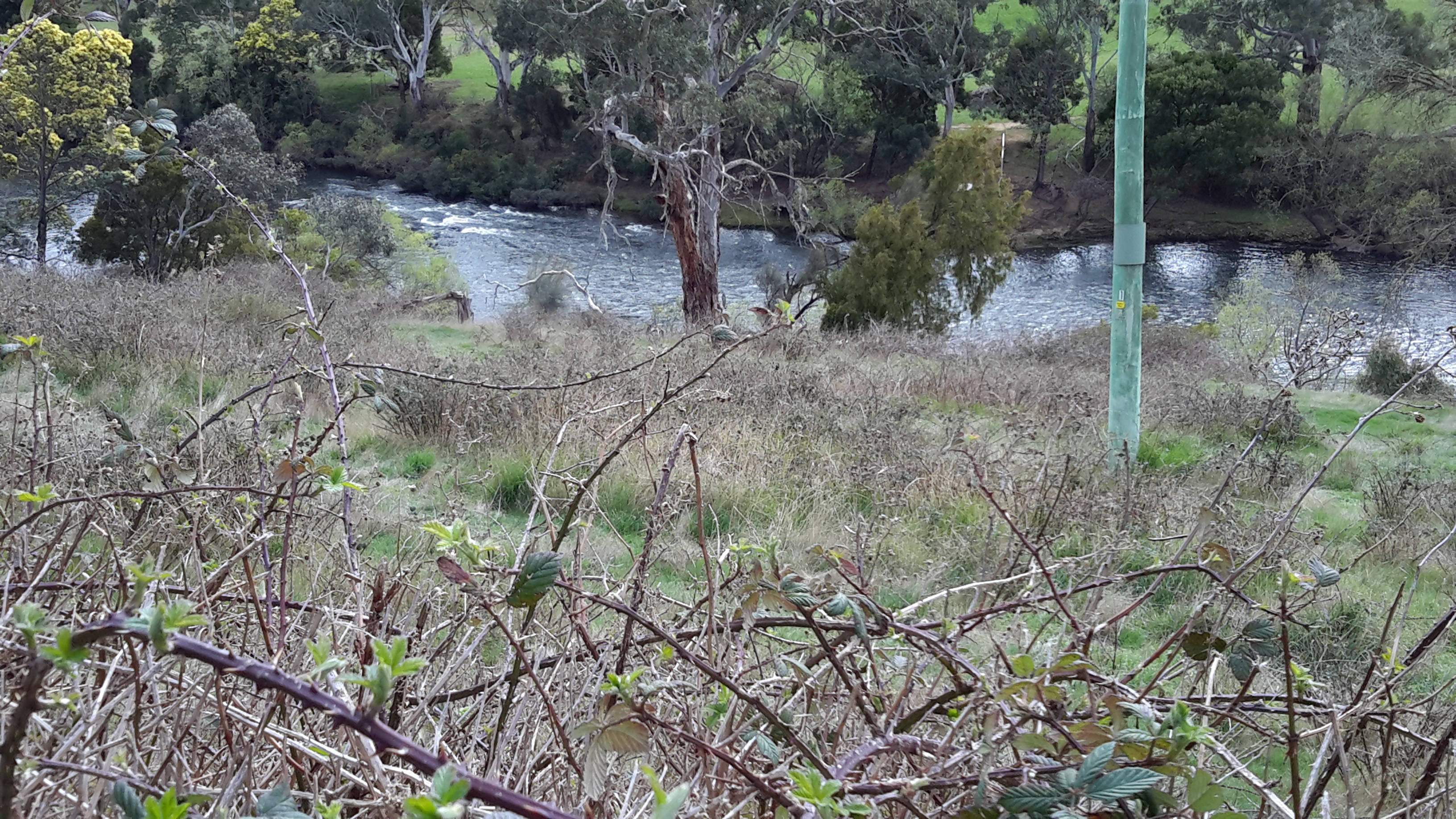
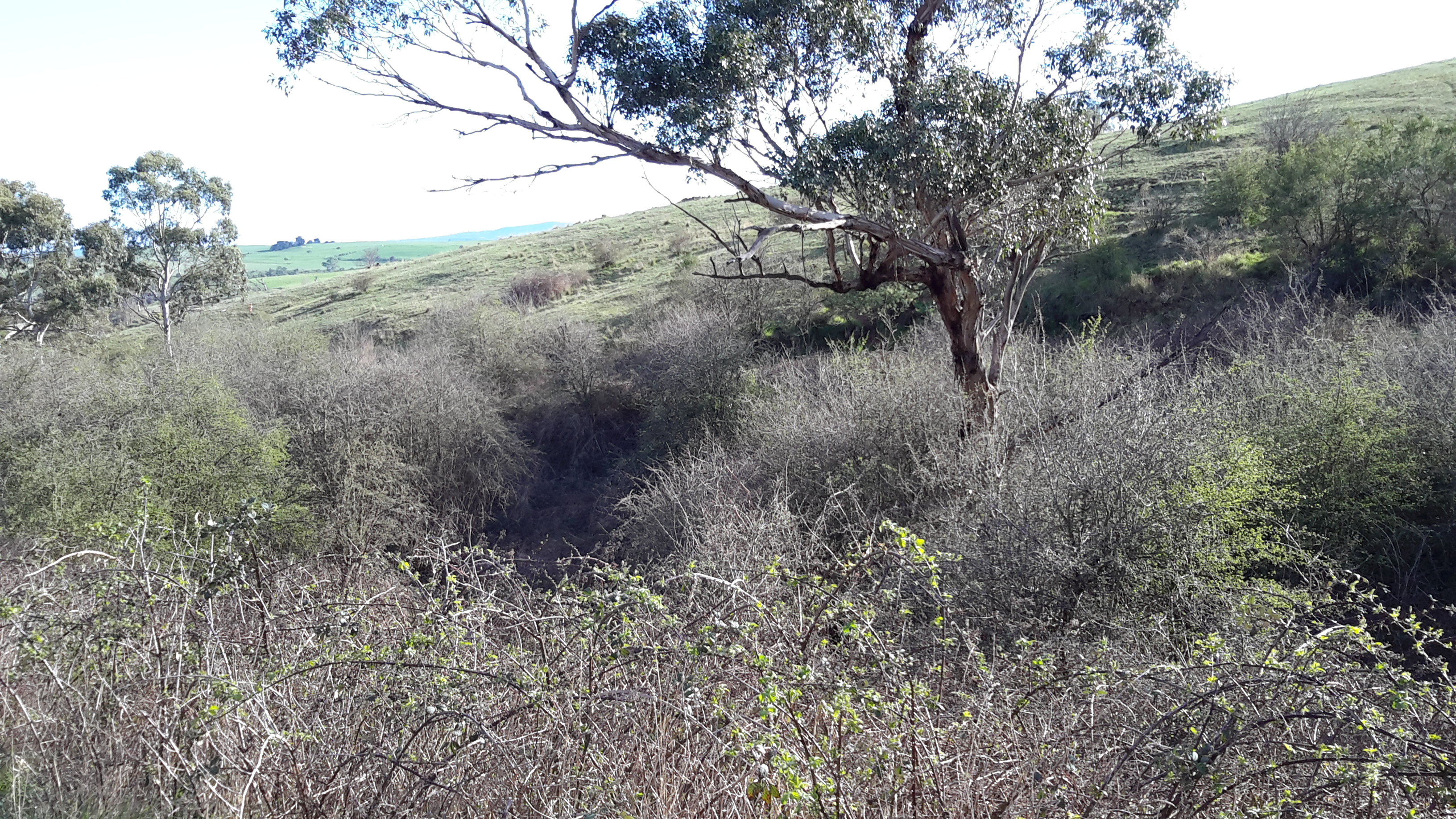
Can you spot the River through these profusely growing weeds?

While walking for leisure purposes has a history in Tasmania since the beginning of European settlement, our early legislators did not have a crystal ball to see that the 21st century is one in which many people want a healthy lifestyle that involves exploring and accessing our natural environment without barriers.

Unfortunately, a damaging minority of people are greedy, thoughtless, and cannot be trusted to meet their promises.  The consequence is what I found during Stage 15 and what I can foresee for Stage 16.  I soon realised that almost no free/public access to the River exists between New Norfolk and Gretna, and it seems this will also be true for any future inland push along the River.

After leaving New Norfolk on the westward proceeding Glenora Road on the southern/western side of the Derwent River, I soon registered paddocks and more paddocks had been recently re-fenced with fresh spiky barbed-wire.
20150917_104811

Note second fence line inside and parallel to the barbed wire fence line.

This year, the Australian Federal Government budget made a concession for small business owners and granted an immediate full tax deduction for expenses up to $20,000.  My conclusion was that farmers in the Derwent Valley grabbed this opportunity and used it to protect the limits of their properties.

As a child my father showed me how to pass through barbed wire fences. The process is best with two people but one can do it. You put your shoed foot on a lower strand of wire to hold it down, then pull the next one up and slip through the enlarged space hoping not to be spiked by the barbs.  But today’s farmers in the Derwent Valley know this trick. Since they don’t want people on their land, the wires are now extremely taut and the spacing between many lines of wire is only about 10-15cm.  If an adult expects to pass through the barbed wire fences of Derwent Valley farmers then Dad’s technique cannot work.

Barbed wire fences were not my only barrier to accessing the Derwent River.  Gates presented insurmountable challenges.  Almost all gates that I arrived at were padlocked. That hasn’t always stopped people accessing a property because the use of strong square wires or other metals in gate construction usually helps you with a footing to lift up and over the top.  Not so with many Derwent Valley farmers’ gates.  The new gates either are ringed in barbed wire or are wrought iron with high straight verticals which provide no place for feet.  For me these were unclimbable.

20150918_075938

Very occasionally I came across older fencing that had minimal or no barbed wire and seemed very climbable. But alas. These fences had an additional strand attached; an electrified line. Intended to keep the cattle in and from trampling fence lines, these electric fences were an absolute barrier for walkers like me.

20150918_091409

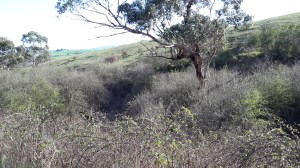
In places, farmers had cleverly left overgrown tangles of thorny blackberry canes that extended down paddocks and into the river, as an impossible barrier near their fence lines.
20150918_082523

I came across signs such as ‘Private Property’ and on one occasion the sign warned that ‘Trespassers would be prosecuted’.

20150917_140110 20150918_090514

Even access was limited to the very open Sports Ground at Bushy Park, one which contains almost no infrastructure. This Sports Ground edges the Styx River as it flows into the Derwent River.

20150918_114143

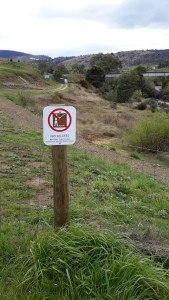
The sign pictured below was particularly annoying because it was suggesting that permission might be given if a request was made. However, I couldn’t get access to ask for permission to walk across the land.  Once on the spot, there was no way to discover who the landowner was and then to somehow connect with them using technology.
20150917_114101

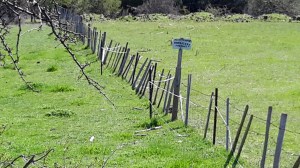
On a particularly wonderful luscious green hill that wound around the Derwent heading for Gretna, one where walking close to the river would have been a great pleasure, the sign ‘Trespassers will be shot’ was a strong deterrent.
20150918_125443

During my walk I had decided that perhaps anglers had not respected the limited access they were given to the River at key points, via styles over fences. I mused that perhaps fishermen had strayed further than permitted, wrecked fences and generally not left the land as they found it.

20150918_083233

Blog follower Jo told me a story of how a few men had prearranged with a landowner to come and fish in his dam. After their weekend of fishing they emailed the landowner with thanks for the opportunity to take home 50kgs of fish. Needless to say, this greed was rewarded by the owner telling the fishing party never again to ask for permission to enter his land.

Later at the Gretna Green Hotel where I waited for the bus back to Hobart after completing the Stage 15 walk, I talked with a local about the reason for the impenetrable barriers to properties.  Apparently wood lifting, and cattle and sheep rustling used to be rife in the Derwent Valley until farmers closed their borders.  Not only would people drive onto properties to chop down trees and collect sufficient fire wood for their own personal needs, they would bring trucks in and take loads away to sell.  All without the permission of the land owner.  Similarly, whole cows and sheep would disappear in their droves overnight.  Regularly.  Modern day farmers’ costs are high, their income comparatively low for the hard work they put in, and so they were unprepared to subsidise the living of others. Their fences and gates have become good barriers – not perfect, because occasionally some unscrupulous wanderers bring bolt and fence cutters.  Nevertheless, as a walker with no intent to leave my mark on the land, I cannot proceed.

In my last steps walking into Gretna, I passed the two paddocks through which I envisaged Stage 16 would start. But both had impassable fences and gates with padlocks.  For the next stage, which was expected to cover the area from Gretna to Hamilton via the river, there are at least 4 property owners and who knows how many padlocked gates, bramble congested river edges, barbed wire and electric fences. It is not realistic to ask owners to come and unlock the padlocks and then relock them after I pass through.
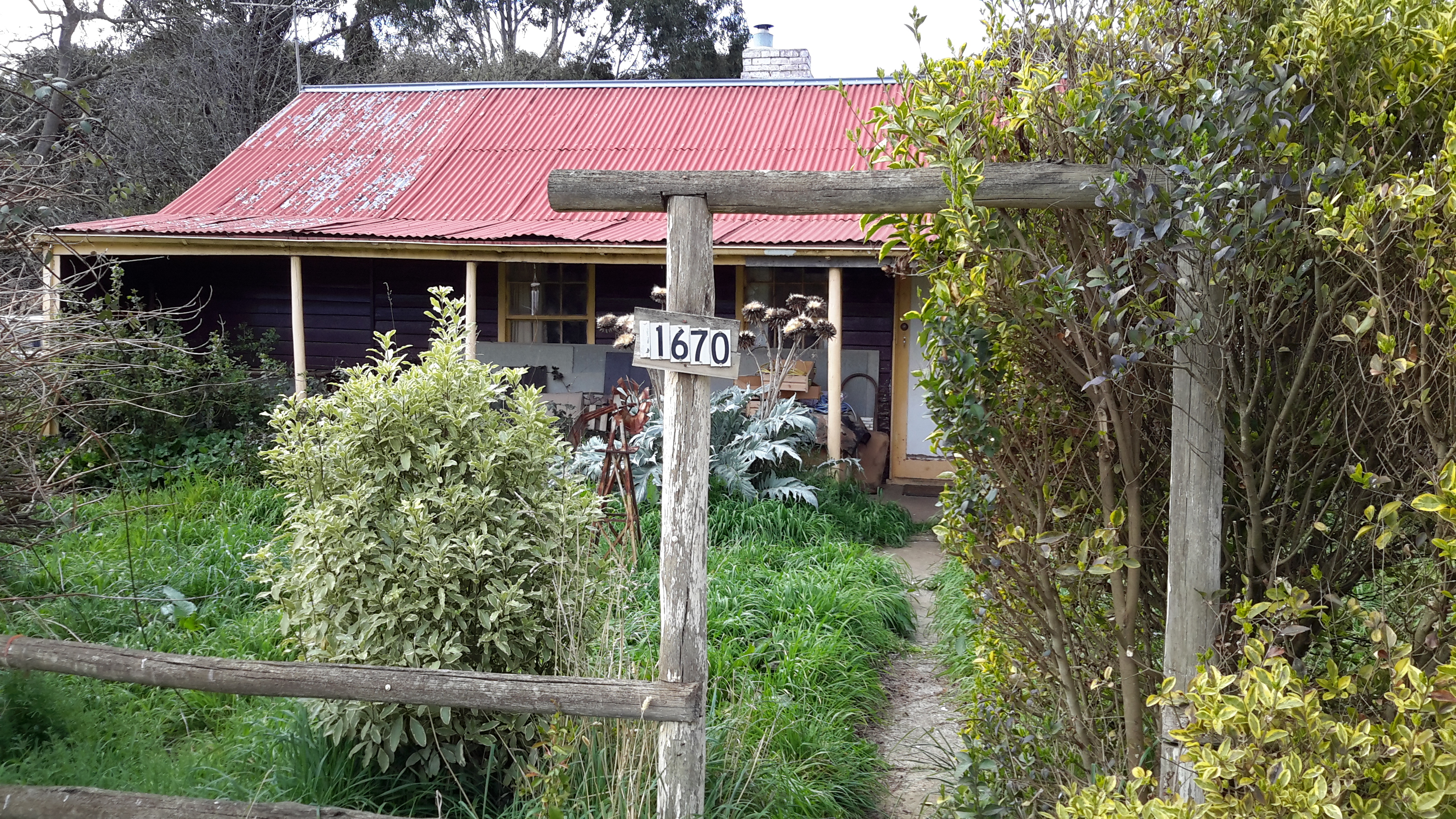
While it is true, and you will read details in future posts, that I did access the river from time to time during Stage 15 and experienced some wonderful locations, for most of the walk I was deeply depressed about the limitations under which my project is being placed. I am pleased that writing this post has helped purge some of that anger and frustration. Now that the situation has been recorded, I feel much more ready to be positive again and determine a new way  to reach my goal.  The goal remains the same, but the process must be modified.

Maps

The Derwent River will always be your guide if you choose to walk along its length, but sometimes it is difficult to walk directly next to the river; for example structures may be built to the edge, steep drop down cliffs may raise you many metres above the water, and gates and fences may make access impossibly impassable.  In addition, when the terrain forces you away from the river, the vegetation may be sufficiently dense so that you can get lost (without map and compass – and GPS if your technology allows).

If you choose to walk the entire length of Tasmania’s Derwent River you might consult one or more of the 17 maps which cover the territory. One value is that you learn the name and shape of landmarks. Have a look at the list below:

Maps

The Derwent River at night

Tasmania’s bush, its coast and urban areas offer a photographer’s paradise at all times of day and night across the four seasons.

This Amazing Planet  is one of many blogs that show spectacular photographs of Tasmania’s flora, fauna and landscape. Go to Nightscape-Hobart for a stunning visual treat. Enjoy looking at part of the glorious Greater Hobart Area, at night, photographed from on top of Mount Wellington. Between the two sides of the city, the rich blue Derwent River passes on its way to Stormy Bay and then the sea. The brightly lit Tasman Bridge can be seen to join the two shore lines.