Tag Archives: New Norfolk

Seeing the paper mill at Boyer for the first time during the Stage 14 walk, was a thrill

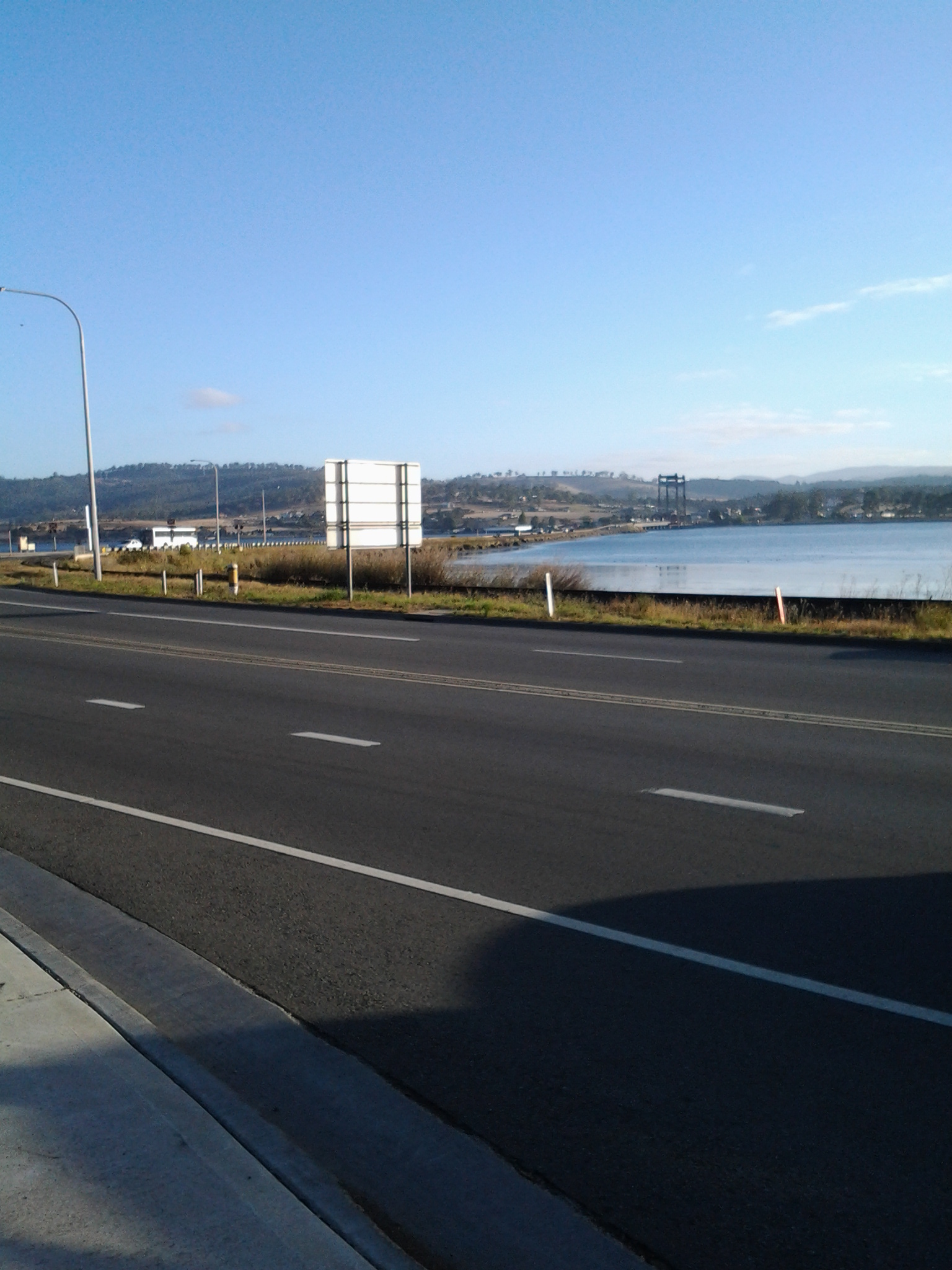
After 15 minutes of walking, following my departure from the powerboat racing arena, the tarred road verges disappeared and weedy grass grew over lumpy and uneven ground to the edge of the Highway. I was forced to stand clear as cars and trucks approached, but there were moments when I could step out a rhythm walking on the Lyell Highway tarmac.  This situation continued for half an hour, however I was pleased that before and after this section I had a good metre or more width of road verge to walk along safely.

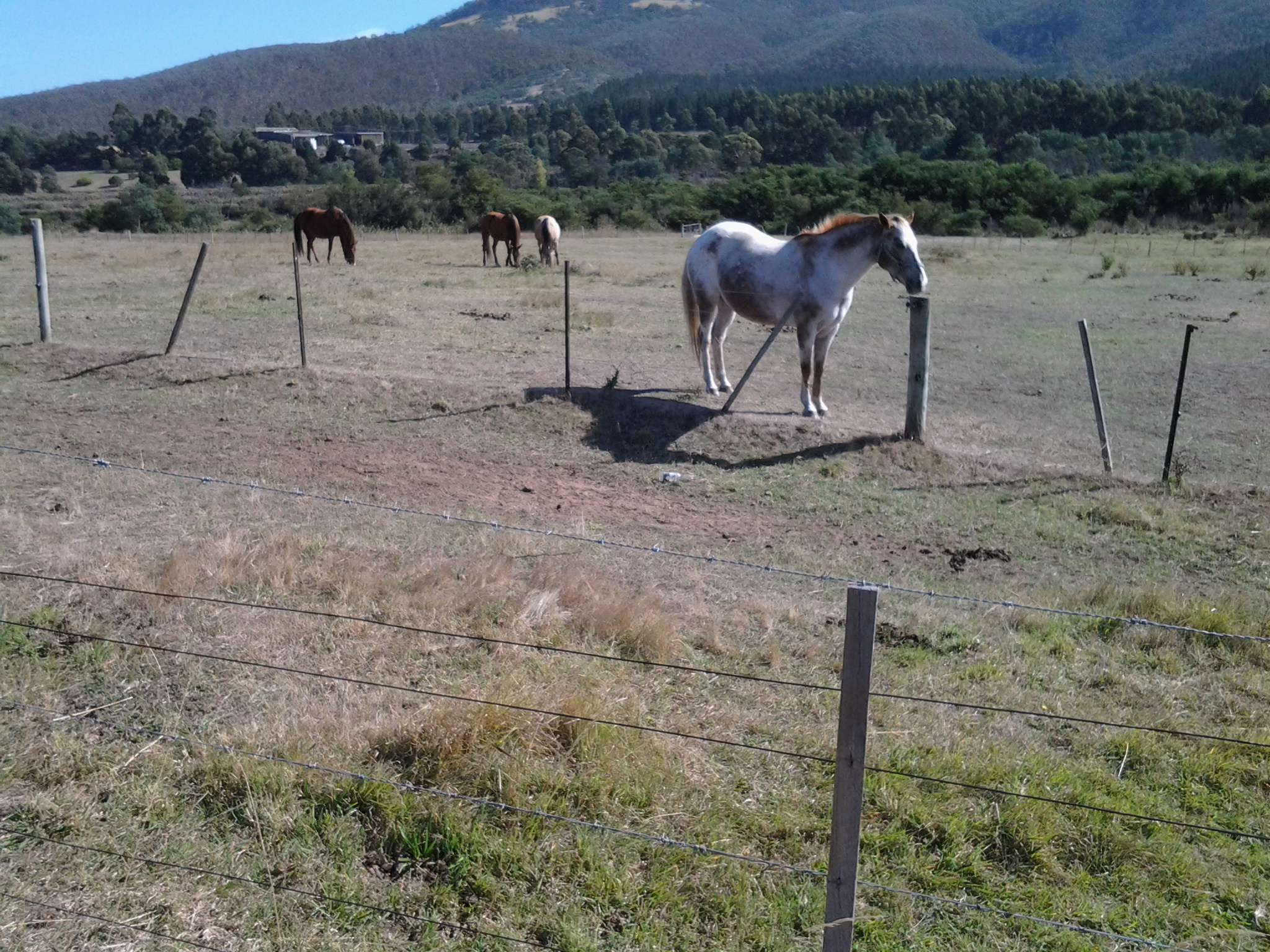
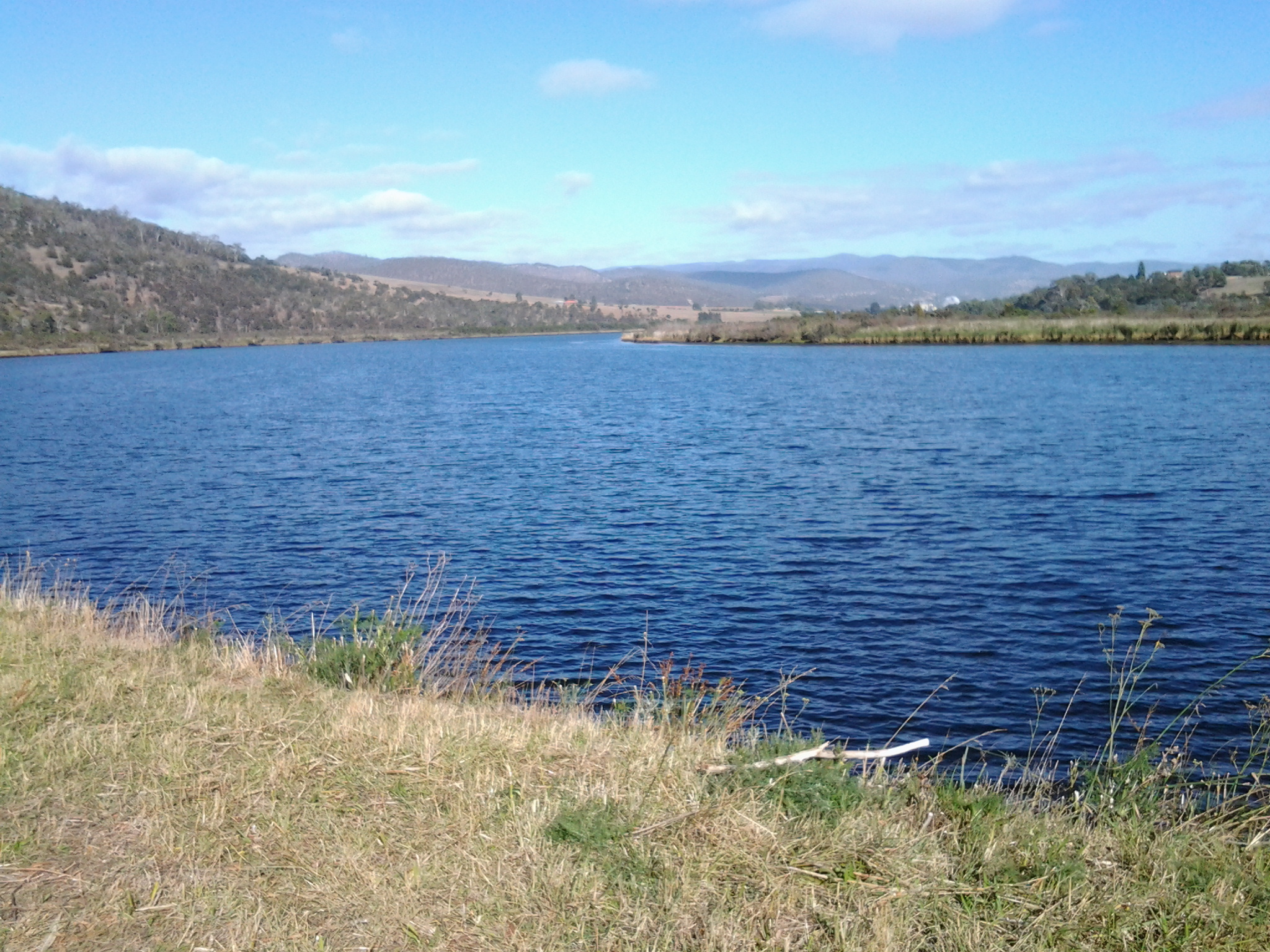
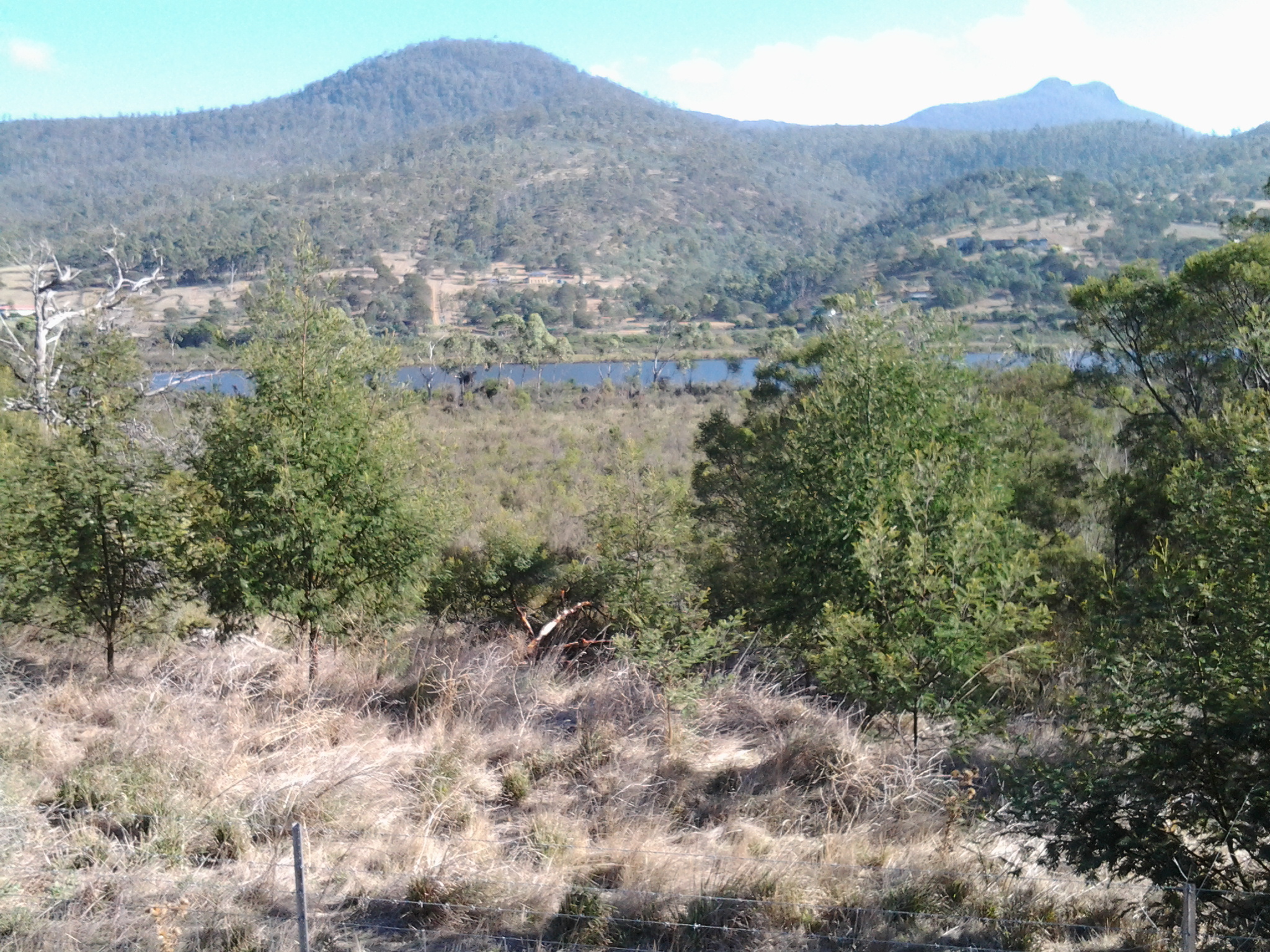
The features that could be seen from the Highway were varied: a feeding family of pelicans across the water; prominent Mt Terra on the other side of the Derwent River with Mt Dromedary behind; occasional tiny creeks lost in verdant grasses passing under the road; vehicle pull-offs at the edge of the road so boats could be entered into the water; corrugated iron cut-out full sized cows standing in a paddock; and a paddock full of horses their heads turned towards the sun.

20150413_100618 20150413_101444

20150413_104129 20150413_110252

20150413_110707 20150413_110741

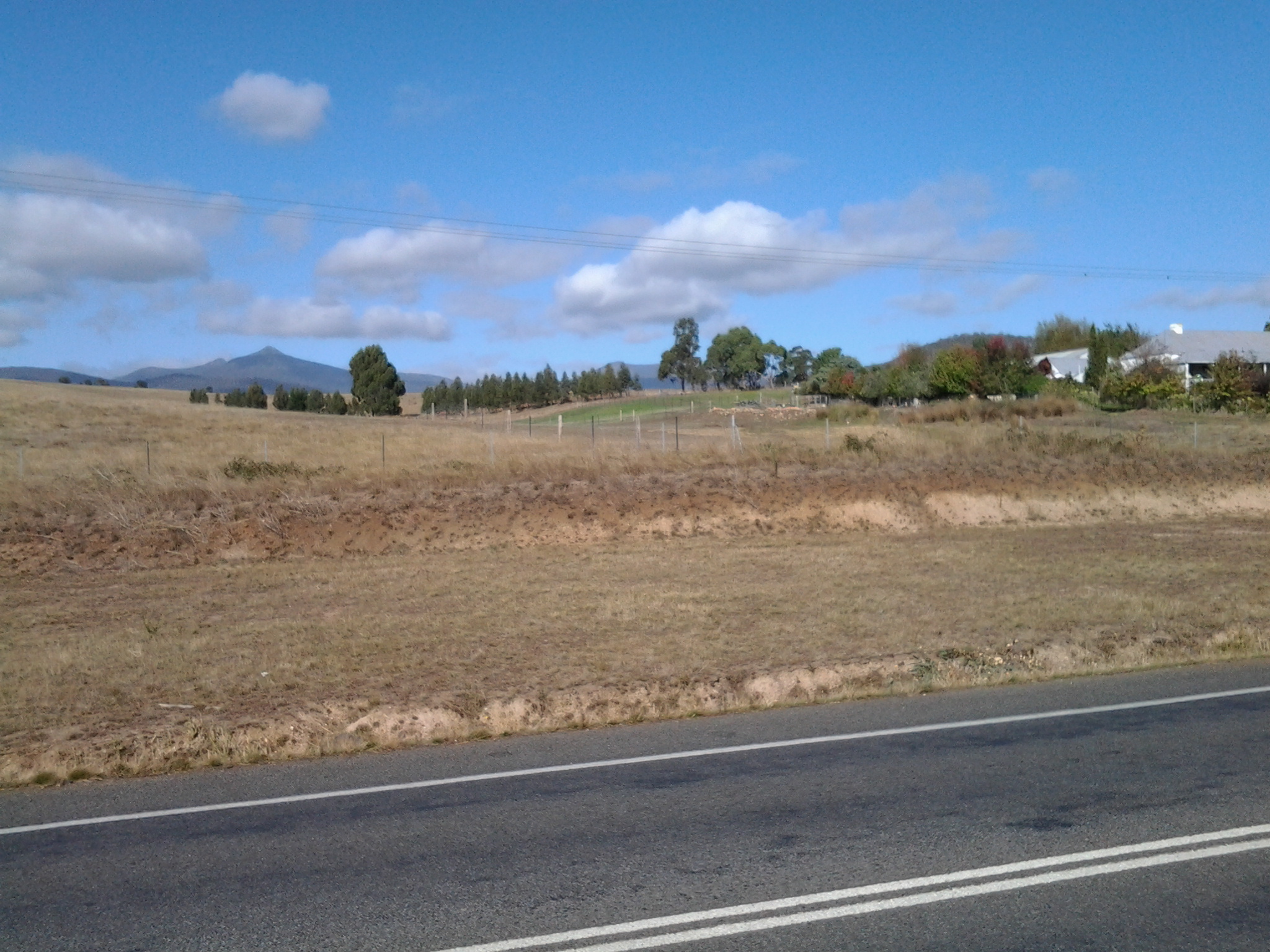
At one part of the walk, in the distance and way south, the peak ‘Collins Cap’ pointed into the autumn sky.

20150413_105456

The distant paper making mills at Boyer showed their steaming stacks – an expanse of water, farming land or thickets of trees kept me separated. I knew these mills were very close to New Norfolk so that the larger the buildings seemed, the closer I was to reaching my destination.

20150413_100955 20150413_110604

By 10.50am I had a sense that I was returning to peopled land. Firstly I walked passed a long drive leading to a private house at the bottom of the hill; with long rows of old Radiata pines edging the highway.

A few moments later I passed the sheep grazing property named ‘Sunnyside’ on the western side of the road – a sign announced ‘Sunnyside’ was for sale.  You can make an expression of interest at http://www.domain.com.au/property/for-sale/rural/tas/sorell-creek/?adid=2010785567&sp=1 if interested. In the write up on that site, mention is made that the soils are based on limestone – makes the establishment of the lime kilns further south understandable.

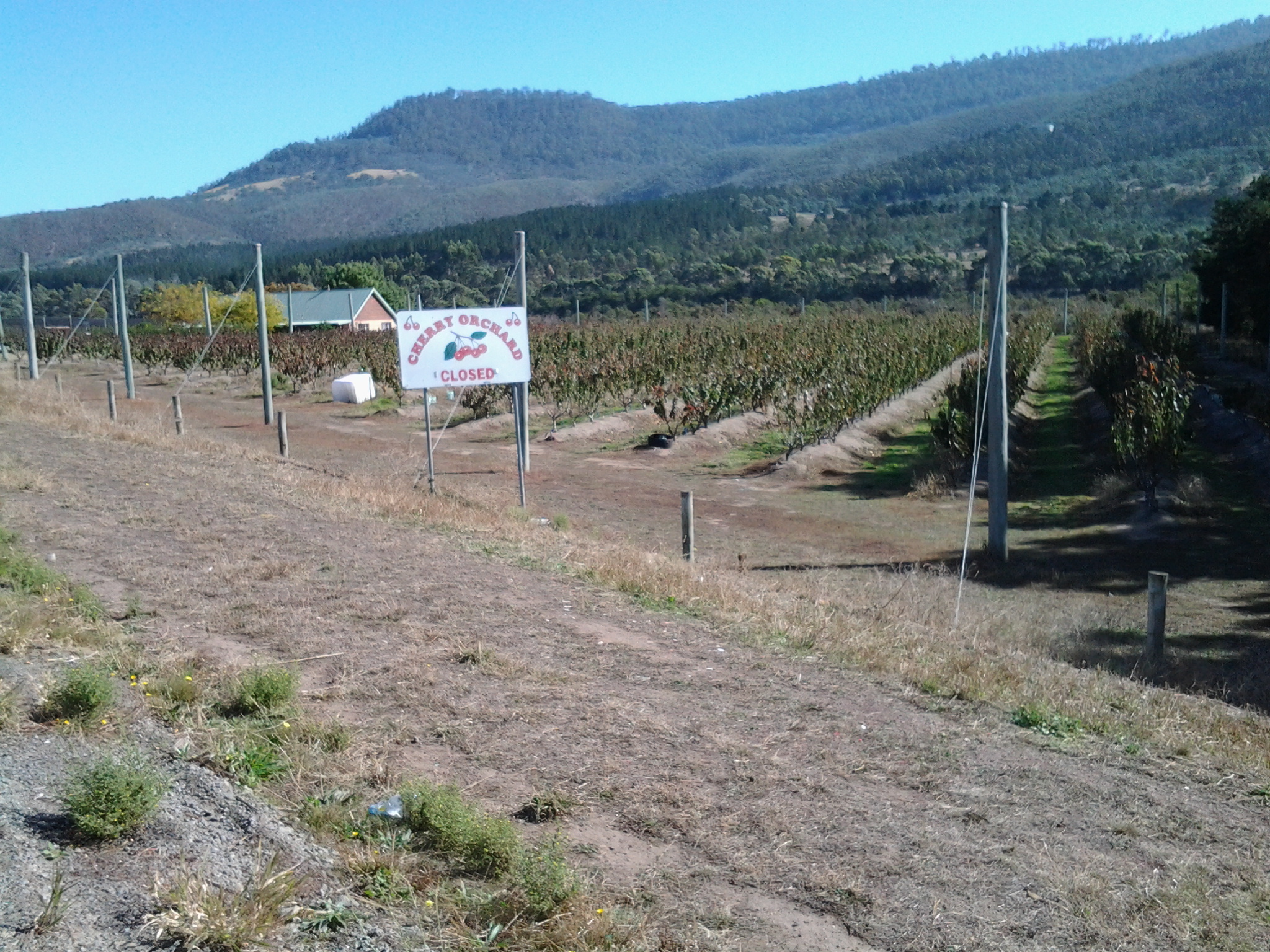
At 10.54 am I reached a large cherry growing orchard on my right.

20150413_105358

Over the road to my left, on the property named ‘Scottsdale’ sat two old buildings which seemed late 19th century in architectural style. The sign on the gate declared this was the Derwent Dorper Stud (Rams), however this seems not to have a presence on the internet.

20150413_105407 20150413_105628

I noticed a Derwent Valley Link bus stop outside Scottsdale and the cherry orchard – for fruit pickers or shearers???  Certainly not for me. I had many kilometres yet to walk. New Norfolk was my destination, and so onwards I continued.

Powerboat racing on the Derwent River

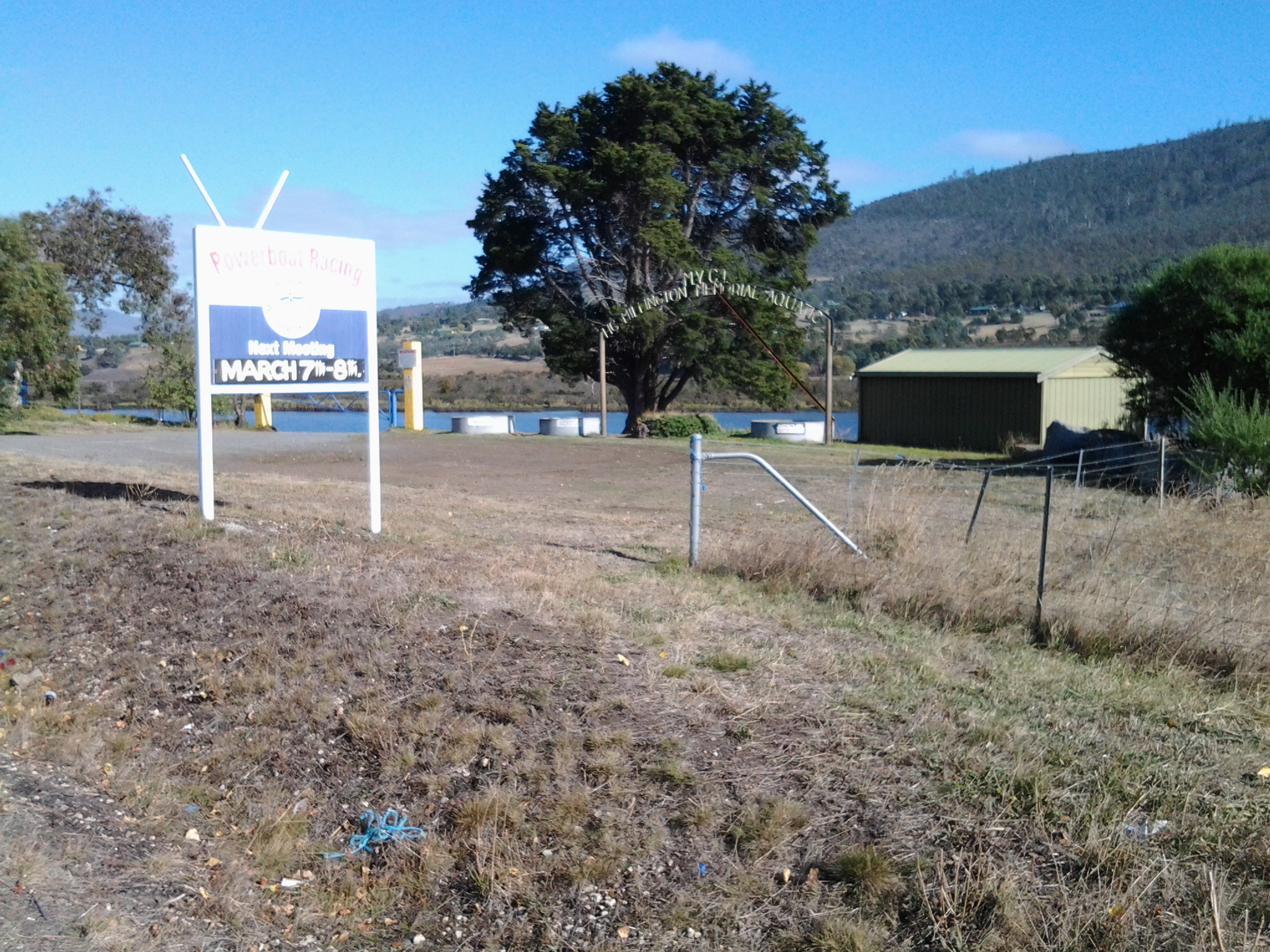
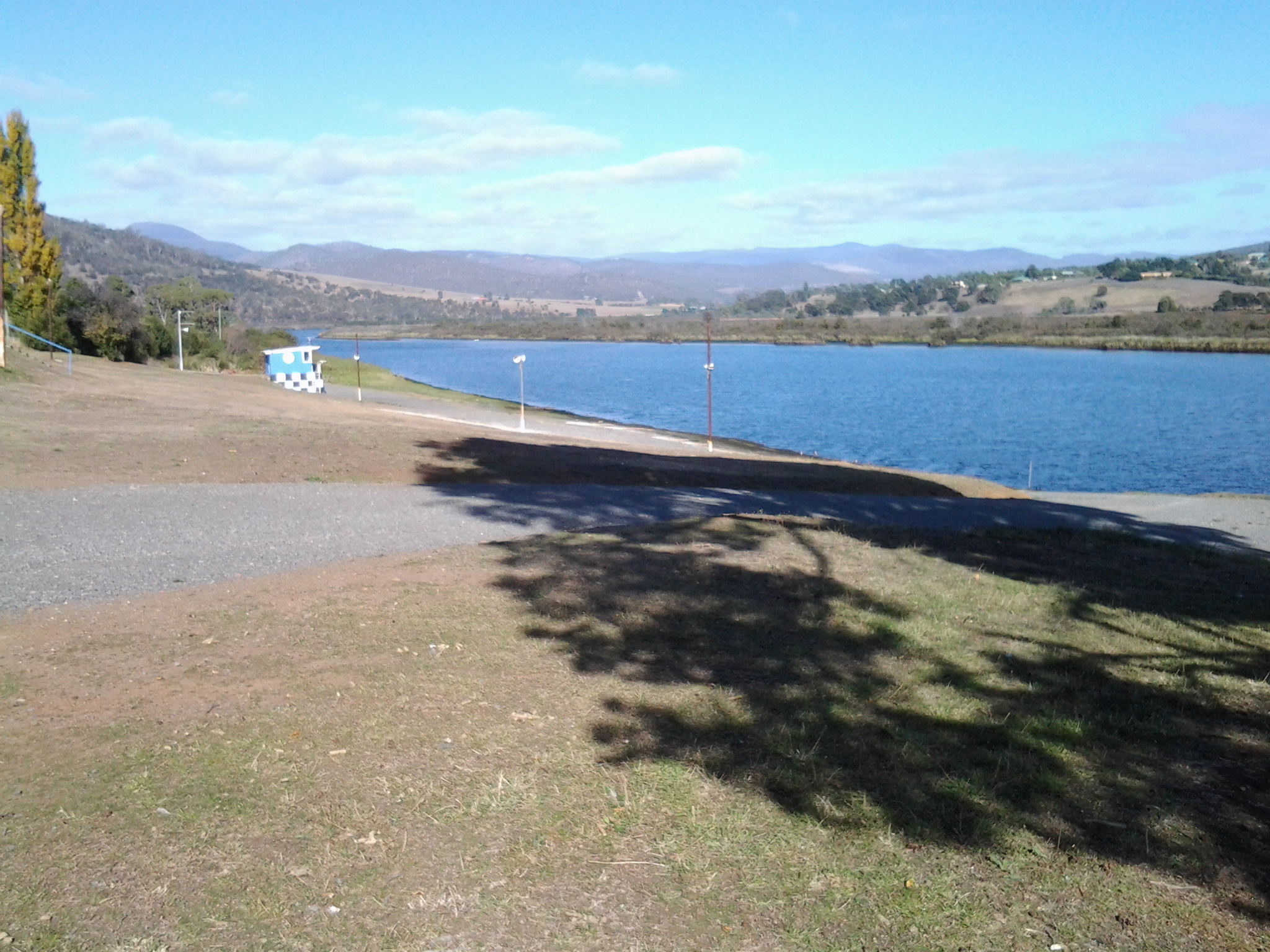
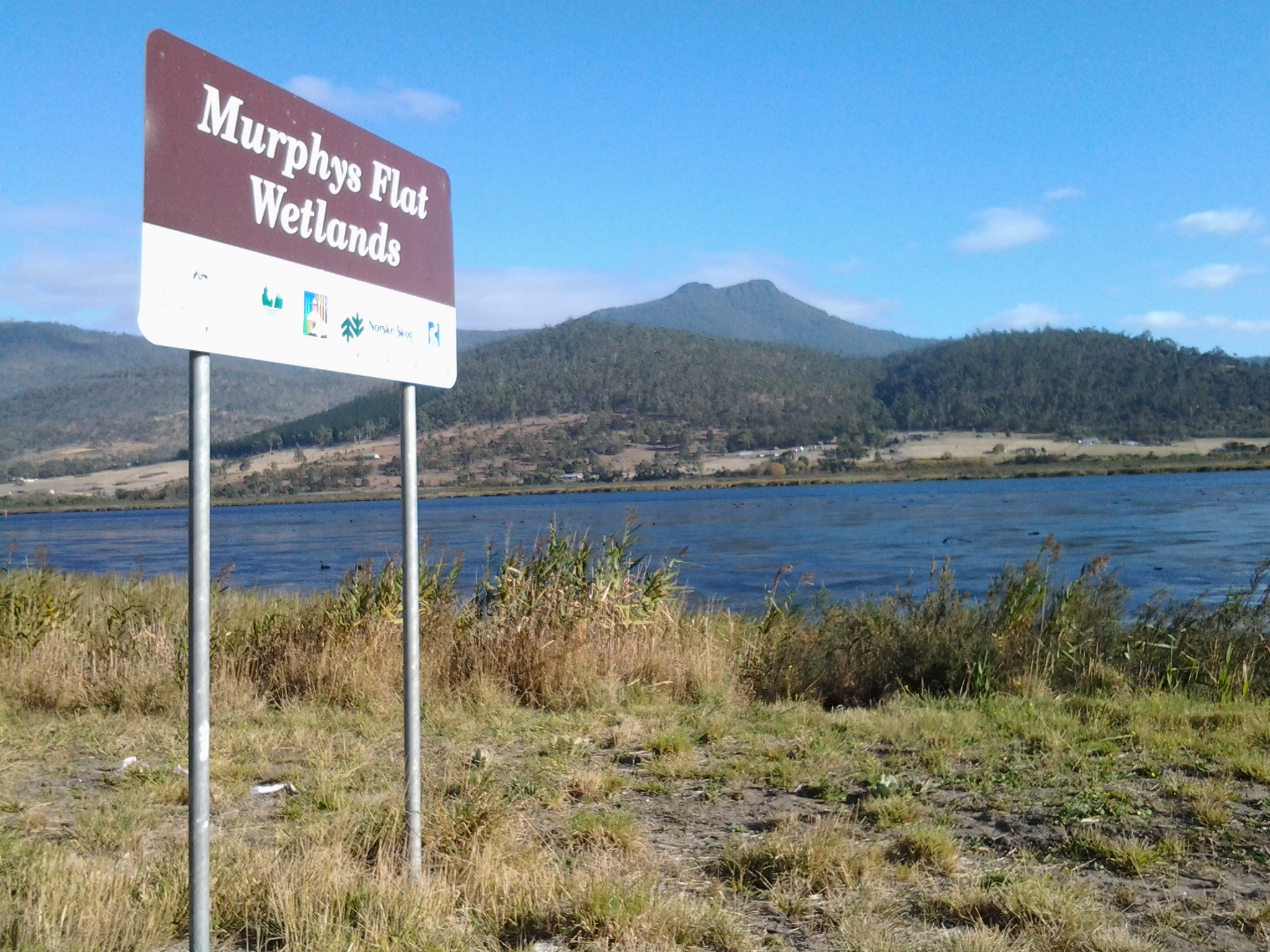
I discovered the northern end of the Murphys Flat wetlands area came abruptly to a stop at the competition grounds for the Motor Yacht Club of Tasmania’s (MYCT) powerboat racing events (more information further below).

The area has a bland, functional entrance and I guess all the action and beauty happens on the Derwent River.

20150413_095502

The site is shared with another aspect of local community history.

20150413_095539

A metal arch over nothing and through which you don’t seem to be directed to walk, features the words HC MILLINGTON MEMORIAL AQUATIC with the letters MYCT over the top of the arch.  Millington’s Funeral Directors are well known in Hobart and it seems that the archway refers to Mr Harold Charles Millington who started out as a sometime professional cyclist and a wood craftsman before entering the funeral industry when, during the 1930s depression, people couldn’t afford new furniture but they died and were in need of burial coffins.  He died in 1969 so I am guessing the archway was built in the 1960s. I found Australian Powerboat Racing Association records for 2012 indicating the HC Millington perpetual trophy was no longer in use or destroyed. Was the dramatic archway and the trophy philanthropy, pure sponsorship or the result of lots of business arising from the area?  Why such an arch in an area where there are no houses and people would seldom visit?  Does anyone know the answer?

The area has been well cleared for vehicles and their boat trailers to be parked. This provided a dramatic contrast after the density of vegetation along Murphys Flat.

20150413_095628 20150413_095621

Even though the MYCT is based in Lindisfarne (I passed its club house during an  earlier walking stage), it runs powerboat racing competitions in conjunction with the Tasmanian Council of the Australian Power Boats Association, around Tasmania including at this Derwent River side facility between Granton and New Norfolk. Interested? Want to know more? Go to http://tasapba.com/about_us.html and at least one or two photos look like they were taken on the Derwent River.

As I researched information about the site, seeking the quirky and unexpected, I found that a Dianas on the Derwent race meeting is scheduled annually. No idea what that really means but I have taken a fancy to the title. In Roman mythology Diana was a virgin goddess of the hunt, the moon and childbirth with the power to talk with and control wild animals.  Perhaps the Dianas on the Derwent is a very young women’s racing event, where they hunt a winner’s trophy by racing at night, and their boats are their wild animals that require taming.  But childbirth?  Where does that fit?  Then I discovered a couple of You Tube videos and a related Facebook page. For example, https://www.youtube.com/watch?v=bs15dNuhMcw. In the video note the hands look male – so my theory about living goddesses driving speedboats seems to have flown. So what is this Diana thing about? Anyone know?

A 10 am I was back walking on the Lyell Highway having discovered that access to the road northwards along the Derwent River shoreline was impossible with barbed wires fences blocking the way.

20150413_100035

Did I feel uneasy walking alone past Murphys Flat on Stage 14 of my walk along the Derwent River? Answers and extraordinary stories.

Yesterday one of my posts introduced Addington Lodge as a Haunted House and since then a few readers have wanted to know more.

Photo of Addington Lodge

The photograph above is of Addington Lodge, Granton, apparently a former residence of Governor Arthur – from the collection of Linc Tasmania

In Hobart’s The Mercury newspaper of Saturday 6 July 1935 (http://trove.nla.gov.au/ndp/del/article/30094484?searchTerm=Anthony+Geiss), J Moore-Robinson wrote his version of the history of the House and area (then not known as Murphys Flat rather as Marsh Farm). A few descriptions and some extraordinary stories of what happened to a hop picker and others, create a feeling of how the crumbling remains of Addington seemed at that time.

The author talked about people “who visit southern Tasmania who have not seen the Haunted House but have been intrigued by its shady reputation and shadowy tradition. Empty and forlorn it stands to-day near the road-side on the way to New Norfolk, a gaunt spectre of a vague past, a meet  and fitting rendezvous for apparitions which, if the poets speak truly, steal at the witching hour of midnight, from yawning graves and uneasy vaults, to curdle the blood of humans. Motorists roll by unthinking at all hours of the day and night, but pedestrians, I am told, walk warily, or walk not at all past the place.”

Did I walk warily? Well yes I did. But my caution was the result of the stream of traffic pouring down the highway a couple of feet next to me.  Sometimes, in some situations, my body can feel ’something’ about a location, but with the incessant roar of vehicles close to my left ear, the brittle wind in my face, and the chilly temperatures I was charging on northwards and gave no thought to ghosts of the past.  Perhaps the bright hard sunlight kept them at bay.

The newspaper article continued: “The existing owner, Mr. F. B. Rathbone of Mt. Nassau, tells me that the place has been rather a bane and an expense to him, and he will not be sorry when nothing remains but a heap of rubble foundations. I asked him why. ‘I have lived in the place myself for weeks at a time,’ he said. ‘My son lived in it for more than a year. Neither of us saw anything uncanny, yet nobody will take it. It has a bad name, and I think it better to let it fall to ruins’. It appears that long before the war, folk were apprehensive and the Haunted House, lacking regular tenants, frequently was empty. Mr. Rathbone said that there are no spectres, never were any and that the noises and apparitions came from a loose board in the roof and from rats, rolling-apples and potatoes in a cupboard.”

But is this true? The newspaper article continued and included a number of stories which might explain the haunting reputation, and which might even be factual.

The hop-picker story

“Shortly before the embers of discontent of South Africa burst into the flames of war, a hop-picker having drawn his cash at Bushy Park was ’Waltzing Matilda’ to Hobart.  He was weary with tramping the hot and dusty road but, doubtless he looked forward, with unfeigned pleasure to the flesh pots and foaming tankards, of the city. As the sun set, he came, unaware of its story, to the Haunted House.  Shadows deepened on the nearby river as the hop picker, pushed open an unfastened door, entered the fateful house, ate his cold mutton and bread, washed it down with part of a billy-can of beer purchased at New Norfolk, spread his blanket on the floor, and slept the sleep of the weary. Presently he stirred and rubbed his eyes and, as he looked, the very marrow froze in his bones. His hair stood on end and his heart seemed to stay its pulsing, for rising before him in the doorway he saw a ghastly thing. ‘Thing’ is the right word, for the hop-picker had not seen or dreamed of anything like it. Thin legs, curved, and bent, supported an enormous body which, though it seemed to be clothed, was still visible to the trembling mortal who saw the apparition’s internal organs hideously pulsing and distended. Its neck, gashed from ear to ear, was unable to support the head which sagged horribly from one side to the other. Blood dropped from the severed jugular and the baleful gleams from the staring eyes pierced the semi-darkness and seemed to impale the terrified watcher. A butcher’s knife was clasped tightly in the spectre’s right hand, and hand and knife were horribly red.

In a crouching pose, the creature swayed toward the ‘hopper’, whose limbs seemed fettered by unseen manacles, from which he writhed and struggled to free himself as the menacing and blood stained figure approached. A foul smelling breath stung his nostrils and the knife was within striking distance of his heart, when, with a wrench that would have done credit to Samson, the ‘hopper’ broke free, dodged the ghost, darted through the doorway and, looking neither right nor left, sped down the road, a white and terror-stricken figure clad only in a shirt. Feeling rather than seeing the ‘thing’ close behind him, he essayed a short cut over a bank, slipped on a stone, gashed his head on a sharp rock, and lapsed into blessed insensibility. When he came to, he found himself prone on the cold floor of the room in which he supped. His blanket lay in a disordered heap. His fingers bled where he had scratched and torn at the floorboards. A lump on the side of his head betokened a meeting with some foreign body. Looking around cautiously the ‘hopper’ could see nothing of his ghastly visitor but, thinking discretion the better part of valour, gathered his belongings, moved tremulously through the door to spend the remaining hours of darkness in vigil by the roadside.”

The hopper’s ghost

“It is said that the hopper’s ghost is the spiritual remnant of a whaler, who, wandering further afield than usual, met at the Golden Fleece (for that was the sign of the haunted house 100 years ago) a bushranger disguised as an honest man. The pair spent some happy hours until the Tasmanian Robin Hood, seeing his chance expertly slit the throat of his ‘friend’ and disappeared with his wallet.”

Lady with the broken heart

Another story has to do with a young and beautiful woman who, betrayed by the usual dashing cavalier, languished in spite of the kindly protection of the landlady until, with a broken heart and saying a prayer for bitter revenge, she stabbed herself, and so went away to brighter, and, I hope, happier fields.

The landlord and his landlady

Still another tale is told about the landlord and the landlady, when the place was the William the Fourth hostelry. This couple, having decided to essay life together without bothering the clergy lived happily for a while, but only for a while. Quarrel followed quarrel, and in these the woman usually came out on top for she was bigger, quicker and stronger, although the landlord had been a soldier and had seen wars, having been with that army which ‘swore terribly in Flanders’, he became tired of being the vanquished, and one day finding his ‘wife’ asleep, stabbed her.  Not content with that, he drove a spike into her head, cut out her tongue, slit her throat and not being quite sure at this stage that she was really dead, and poured some poison down her throat. He then tenderly buried her and was caught and duly hanged which seems to be the only really proper and moral part of the story.”

The Golden Fleece’s reputation as an Inn

“It was during Fitzgerald’s term as licensee that, according to legend and tradition, the place achieved its notoriety, which, considering the grounds on which he was later pilloried is not surprising. It is certain that the ‘Golden Fleece’ had an evil reputation, and that the name was truly descriptive of the ‘fleecing’ accomplished within its walls, and the ‘golden’ results which accrued to the enterprising landlord.”

Kelvin Markham (http://www.km.com.au/tasmania/ch14.htm) has a different view on why the House was haunted.

During the twenty one mile journey to New Norfolk, I had the company of a ghost – one Denis McCarty. To you who follow me along this road, the first made in Tasmania, I present this Irish ghost, ex-convict, constable, farmer and grazier, road-maker, Deputy Provost Marshal and much more. My assertion is that Denis, after all his troubles in constructing the road, drinking his share of the 500 gallons of rum that were to be part payment, and then dying whilst his claims for final settlement were being considered by Governor Sorell and Macquarie, perambulates this unpaid-for road, and, when he finds it necessary to take shelter, rests in the old Golden Fleece.  If you dive into the history of this road, you will learn a number of things. For example You will stand at his deathbed, seeing it only as through a glass darkly, and wonder what Jemott and Broadribb had to do with it – if anything. Contemporary records refer mysteriously to these persons as knowing more than they should of McCarty’s end.”

These background stories and reasons for Addington House or Lodge/Golden Fleece Inn/William the Fourth hostelry to be haunted make for wonderful fiction-writing and movie-making opportunities.  Anyone interested?

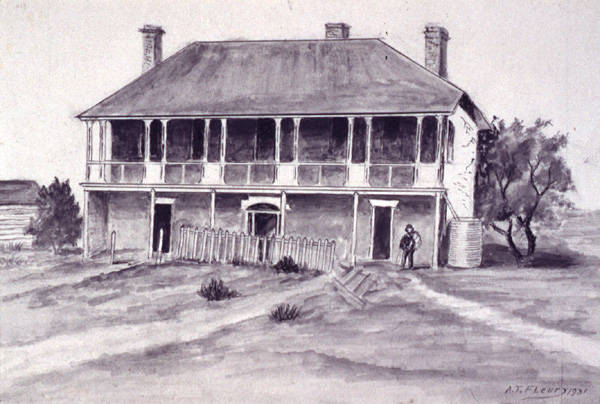
Add Lodge drawing -UTAS library

The image above is a drawing of ‘Addington Lodge Colonel Arthur’s Marsh Farm between Bridgewater and Sorell Creek Derwent Valley’/’The Haunted House on the Granton New-Norfolk Road’ by artist A. T. Fleury c1931 – from the collection of Linc Tasmania

Only 10kms to go

20150413_092119

I blinked and double blinked. I almost missed the tiny green sign, probably no larger than my hand, on a pole opposite me as I walked from Granton to New Norfolk.

This tiny sign indicated that if I stayed on the Lyell Highway, I would only need to walk a further 10 kilometres to arrive in the town of New Norfolk. At that moment the end of the walk seemed so close, it was not yet 9.30am, and in a split second I thought the remainder of my walk for the day wouldn’t take long and I could reach my destination at lunchtime. But there was still a lot more walking to do, and later I would be walking off the main road following tracks – which would extend the journey. And later I would stop and chat with people – which would extend the time it took to reach New Norfolk.

Why are these wetlands called Murphy’s Flats? Who was Murphy?

20150413_090953

Thanks to http://www.parks.tas.gov.au/file.aspx?id=17347  I know that “Murphys Flat Conservation Area historically formed a portion of the property locally referred to as Marsh Farm, which was established through an ambitious land reclamation endeavour begun by Governor Arthur in 1824. The property was hailed as an agricultural “show place” throughout Tasmania and was one of the earliest land reclamations in Australia.”

The site http://www.derwentestuary.org.au/assets/NIE_-_wetlands.pdf provides the information that “In 1997 we nearly lost 40% of these wetlands when a farmer started draining the 66 hectare marsh known as Murphy’s Flat.”  This action was the catalyst for various tiers of government to step in and fund the process to purchase the land and retain it as a conservation area. The area known locally as Murphys Flat was acquired on 1 May 2001 by the Tasmanian Parks and Wildlife Service.

20150413_103930

The 2010 Management Statement at (http://www.parks.tas.gov.au/file.aspx?id=17347) is informative.

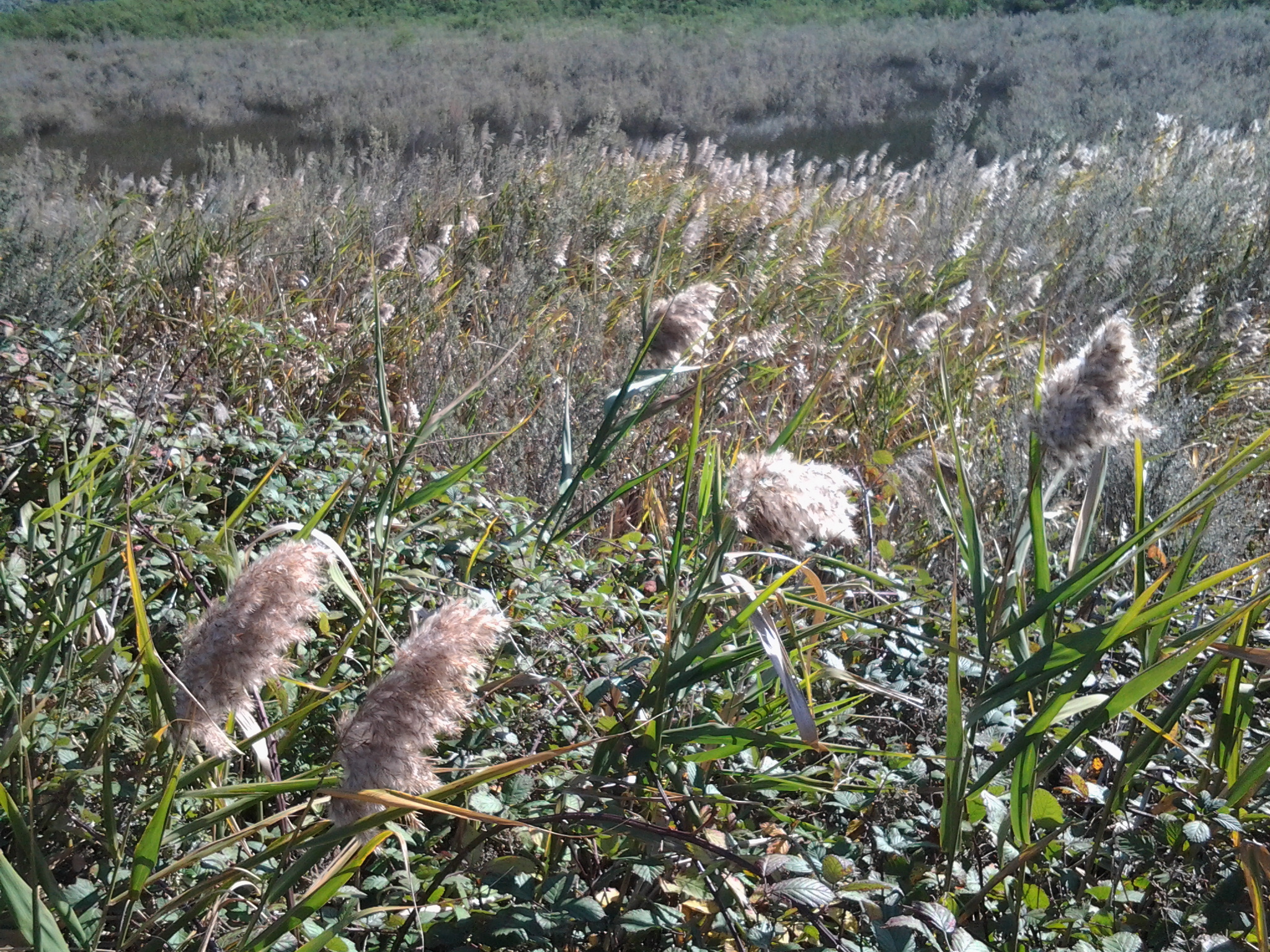
Murphys Flat Conservation Area is located within a wetland complex on the southern shore of the River Derwent beside the Lyell Highway between Granton and New Norfolk. The area has been recognised as being particularly species rich, with expansive areas of marshes, underwater grasses, tidal flats and reed beds that provide habitat and breeding areas for large populations of fish, platypus and waterfowl. Murphys Flat Conservation Area comprises 25 to 30 per cent of remaining wetlands in the River Derwent. It is listed within both the Directory of Wetlands of National Significance and the Tasmanian Geoconservation Database.

Birds are particularly abundant in the reserve due largely to the diverse habitat. The vicinity is well known for its large population of black swans and it is a likely hunting and foraging area for five significant bird species including the wedge-tailed eagle, white-bellied sea-eagle, swift parrot, masked owl and great crested grebe. The secretive, little-known Australasian bittern is also known to occur there.

Murphys Flat Conservation Area serves as a nursery for the sandy flathead and also provides important shelter for other juvenile native fish. Backwater areas of the reserve are of particular biological significance with unique botanical assemblages and an abundance of gastropod molluscs.

Until the early years of this century, “Murphys Flat was used as a dump site for domestic rubbish, garden waste and for overburden from road and earthworks. As a result, the area of wetland vegetation communities has decreased and its condition has been further compromised through the spread of weeds, largely from this source.” Now a weed control program has been instituted. “The vision for Murphys Flat Conservation Area is that it will contribute significantly to regional biodiversity and geodiversity in the upper River Derwent estuary, provide water quality services and research opportunities and be a vehicle for increasing public awareness of wetland values.”

In addition to the natural history and situation, Murphy’s Flat has a cultural history.

Firstly, the site is reported to have been on a travelling route for two Aboriginal tribes (http://www.parks.tas.gov.au/file.aspx?id=17347).

Then, according to Kelvin Markham at http://www.km.com.au/tasmania/ch14.htmFour miles beyond Granton stood a derelict grey stone house, known to all and sundry as The Haunted House. No one can tell why it received its name, though it is popularly (and wrongly) supposed to have been the country seat of early governors. The haunted house was originally the Golden Fleece Inn, licensed on 22 October 1824 to one Henry Fitzgerald. It did not long cater for travellers and in 1837 was on the market. This building was also called Addington Lodge Villa at one time.”

Add Lodge drawing -UTAS library

The image above is a drawing of ‘Addington Lodge Colonel Arthur’s Marsh Farm between Bridgewater and Sorell Creek Derwent Valley’ / ‘The Haunted House on the Granton New-Norfolk Road’ by artist A. T. Fleury c1931 – from the collection of Linc Tasmania
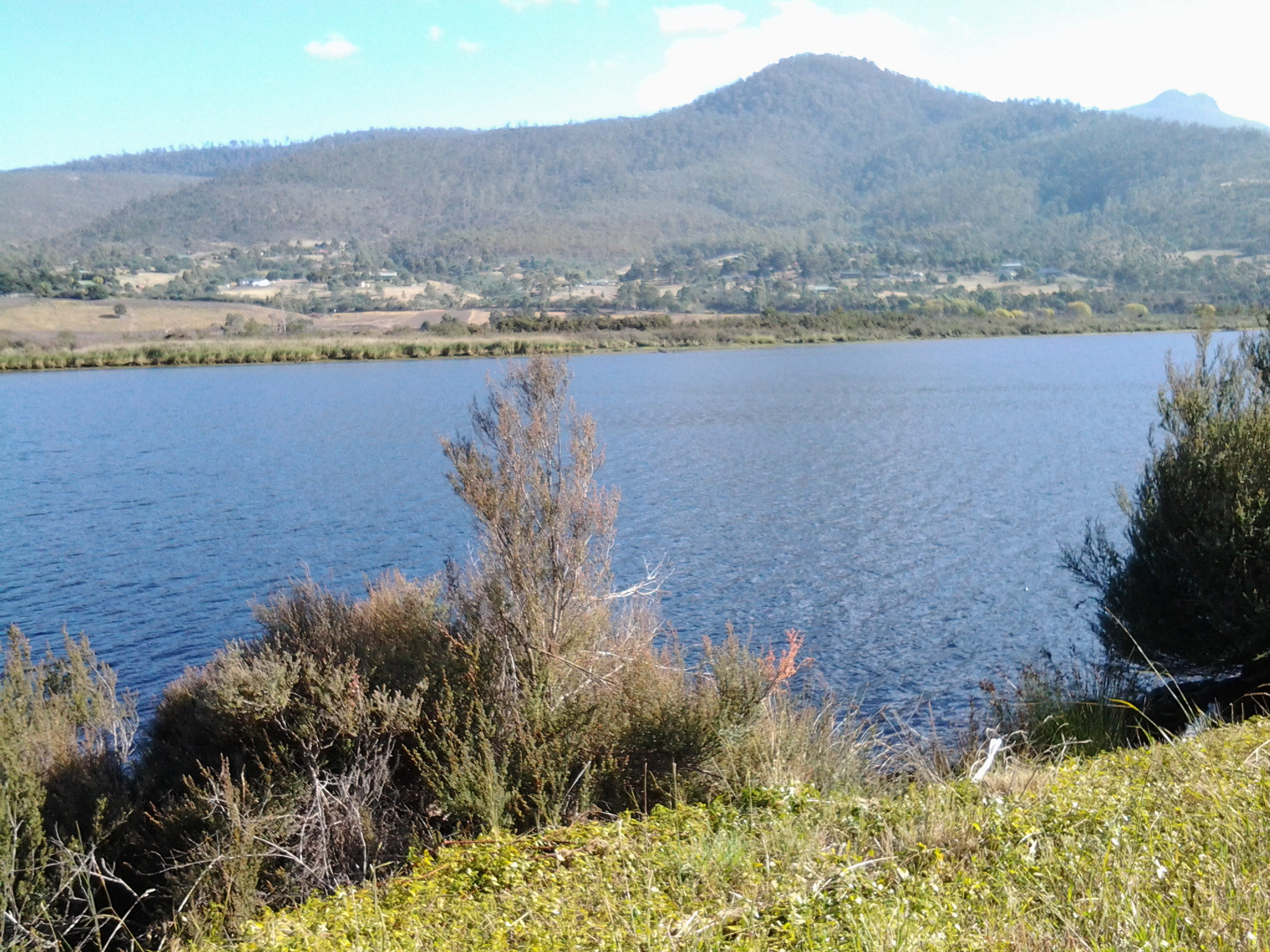
Photo of Addington Lodge

The photograph above is of ‘Addington Lodge, Granton, apparently a former residence of Governor Arthur’ – from the collection of Linc Tasmania
The National Library of Australia (http://trove.nla.gov.au/ndp/del/article/30094484?searchTerm=Anthony+Geiss) offers the information that “Addington Lodge was named after Mr. J.H. Addington, the Secretary to the British Treasury at the time. It was constructed by Governor Sorell to serve as a country house in 1820, a year after the construction of the Hobart to New Norfolk Road. The lodge was a double storey brick house with an architectural style typical of a late Georgian villa with symmetrical doors and windows and a wide fan-lit front door. The lodge was renamed the Golden Fleece Inn and opened to the public after a Mr Barker sold it to Mr. Henry Thomas Fitzgerald in 1824 having owned it for 4 years only. Addington Lodge at Murphys Flat became a popular half-way house for travellers between Hobart and New Norfolk and earned an unsavoury reputation.”

If remains of this house still exist they are now obscured from view by the lush vegetation  growing across the wetlands.  I saw no sign of it as I walked past Murphy’s Flat.

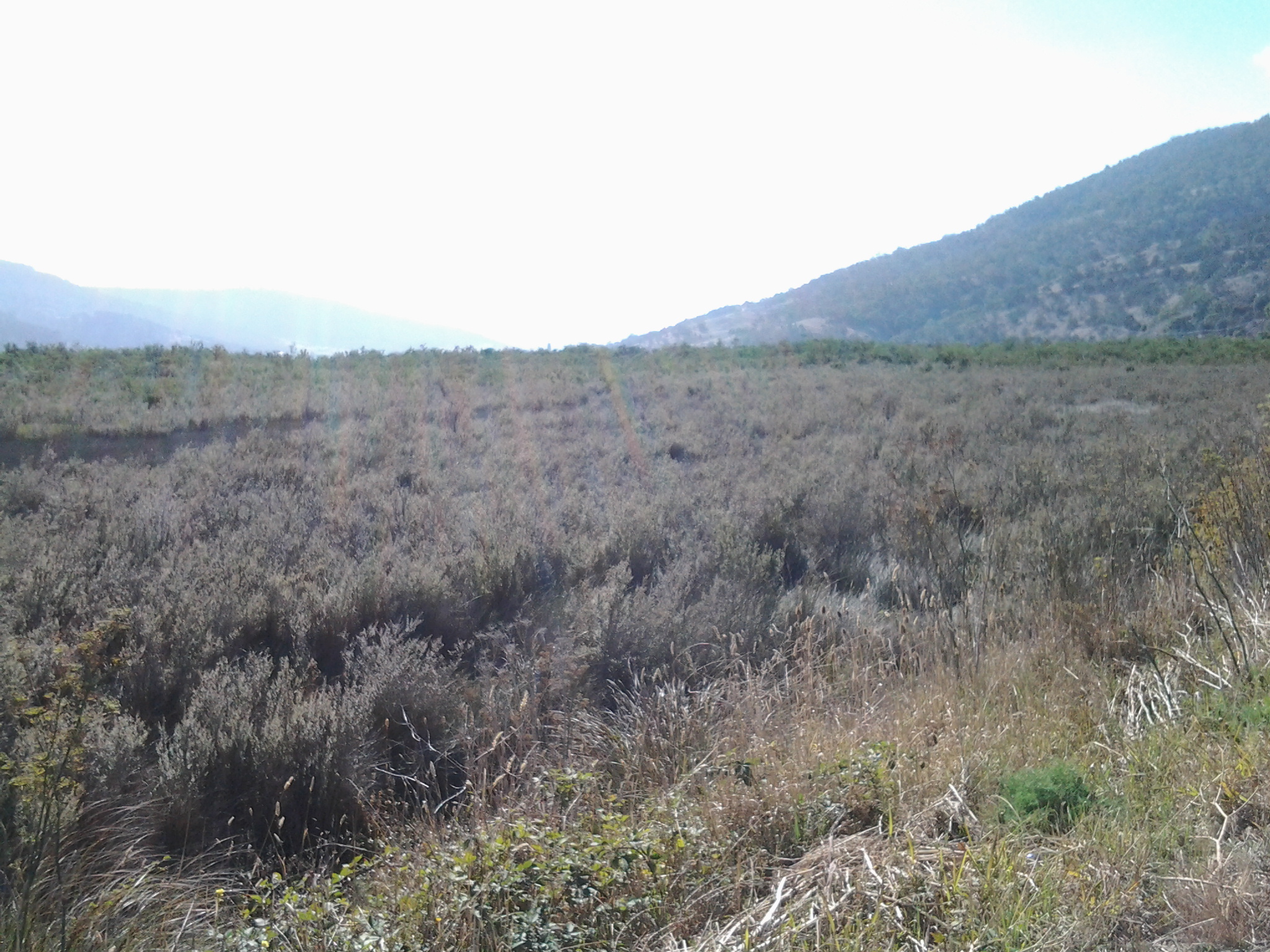
To give you some idea about the look of the wetlands from the Highway, the photo below shows the landscape when I looked back over the road just walked.

20150413_103926

The wetlands looking toward the road yet to be walked.

20150413_103940

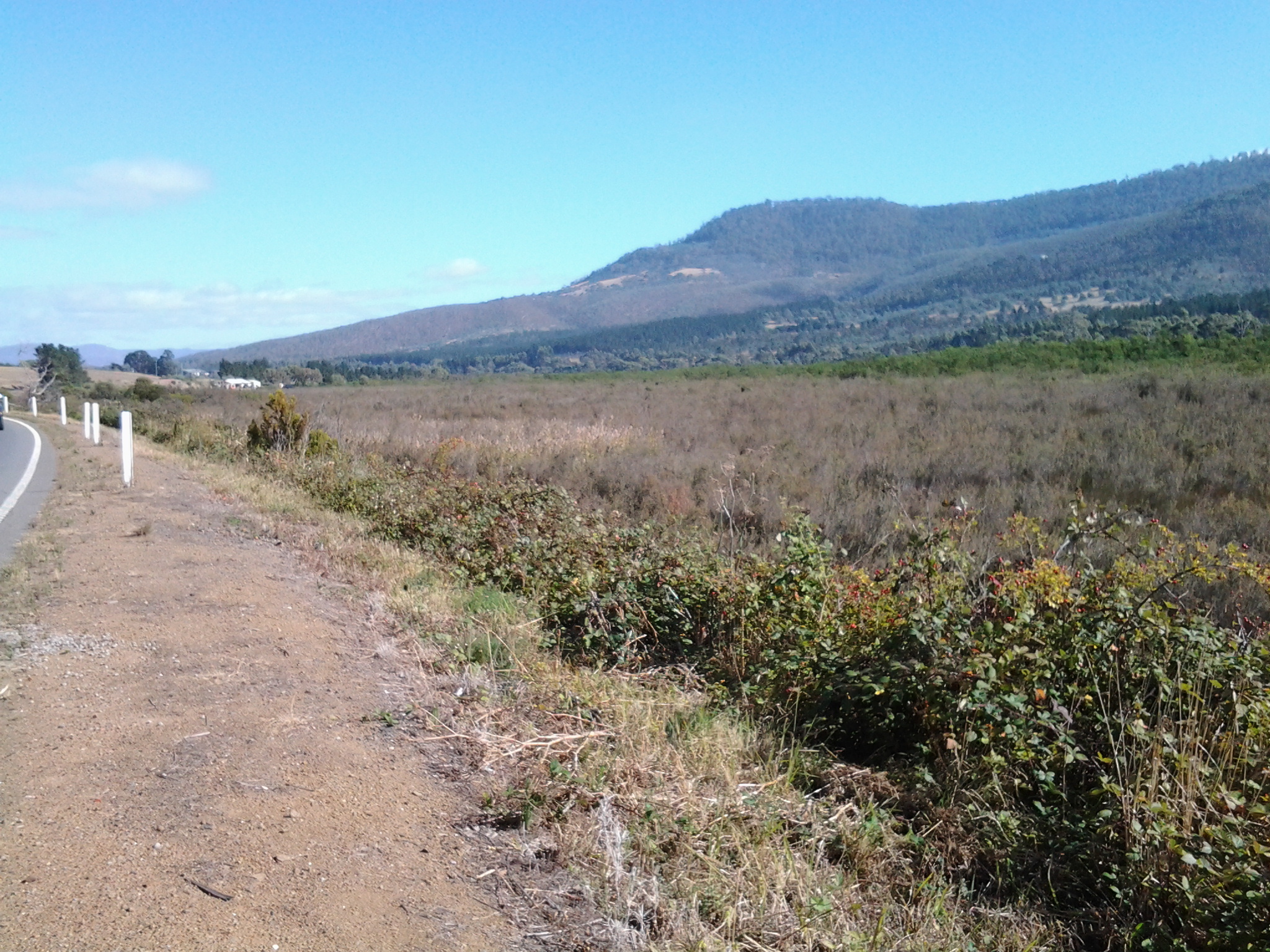
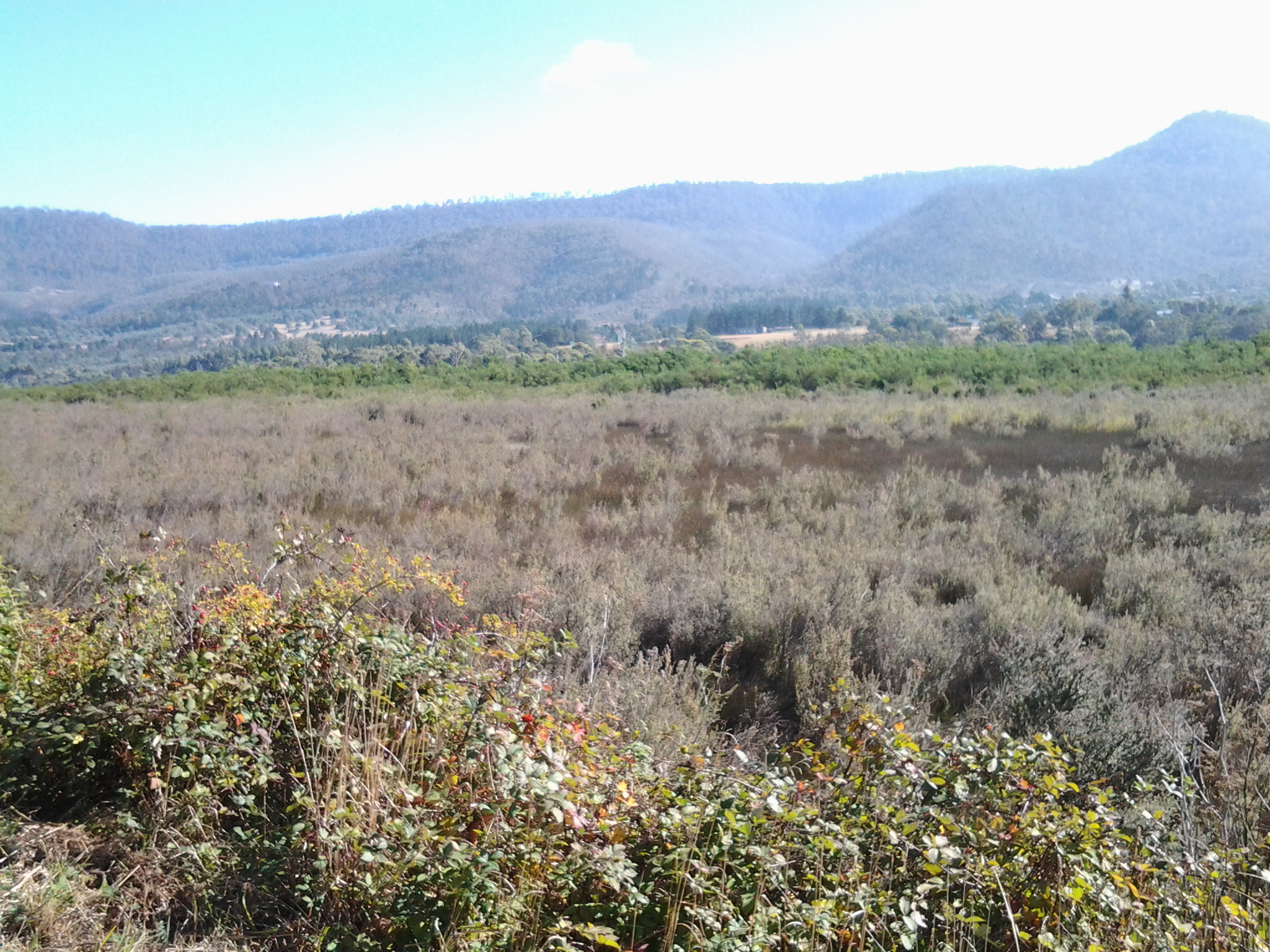
Along the kilometres (Murphys Flat Conservation Area is approximately 2.7 kilometres long and 550 metres wide at its maximum width) of Murphy’s Flat Wetlands, the vista consisted of subtle variations of the following:

20150413_091605  20150413_103937

When I walked, most of the landscape between the Lyell Highway and the smoothly flowing Derwent River seemed impenetrable. I can only imagine this is a very safe place for water birds and fishlings to breed, and for native grasses and other plants to re-establish.

This posting started with a question which I have been unable to answer. I cannot discover who Murphy was. Regrettably.

Murphy’s law is a commonly heard saying which is typically stated as: Anything that can go wrong, will go wrong.  I wondered if the land now known as Murphy’s Flat had been purchased for the purpose of grazing animals and growing crops without due checking, and then found the wet soggy land to be useless in the days when preservation of native flora and fauna was not considered – I wondered if someone bought the land without really checking how it was and having spent all their money decided Anything that can go wrong, will go wrong. BUT according to the definitive book The History of Murphy’s Law written by Nick Spark, this adage was named after an American aerospace engineer Captain Edward Murphy who said as much around 1950. The naming of Murphy’s Flat at Granton seems to have preceded this ‘law’ so the area must have been named after a local – but who was it?  More research required.

Map of Murphys Flat 20150413_095018

Google maps cannot locate Murphy’s Flat so I have attempted to indicate the location this posting has referred to.  Within the hand drawn oval above, the Murphys Flat Conservation Area sits contained between the Derwent River and the Lyell Highway.

From Lime Kiln Point northwards towards Murphy’s Flat

Away from the Lyell Highway in southern Tasmania, while looking at the lime kilns, I had enjoyed relative silence, but once back on the road the endless traffic continued to roar past and box my ears.

Have a look below at the video of a car coming towards and passing me. Listen to that sound. Imagine this noise multiplied many times over and over, and then deeper and more invasive when the many trucks passed. For most of the day’s walk.

There was a pleasant moment when a scattering of comparatively slow moving vintage cars were interspersed in long lines of suffering traffic.  I smiled at all of them and they waved back glad to have someone appreciating their passing.

I loved the geological drama exposed by road cuttings.

20150413_090926

Along the way I enjoyed signs such as the one in the photo below. Has anyone ever seen a kangaroo lifting a car?  Before you send me an email indicating your outrage at my ignorance, I know the sign’s message is for motorists to beware of kangaroos hopping across the road and doing great damage to their car and perhaps injury to themselves.  But I also realise it’s not the fault of kangaroos and wallabies that mankind built roadways in their normal travelling routes.

Kangaroo and car sign

By the time the day was heading towards mid-morning,  the bright quality of the sunlight still indicated the air was still hard and cold.  At this stage I was setting a steady pace, and had great ambitions of reaching New Norfolk very quickly. Before long I reached the start of a long marshy area known as Murphy’s Flat.

Arriving in Granton for Stage 14 of the walk along the Derwent River

Since walking along the Derwent River in the northern suburbs on the western shore earlier this year, I have revisited MONA at Berriedale on a number of occasions but I have not been further north. So it was a great delight when my X1 Metro bus, which departed from Hobart city at 7.17am, used the old main road after the Glenorchy bus mall to travel through Berriedale, Claremont and Austins Ferry before reaching Granton.  I was able to see the acres of majestic gold and red leafed vines of Moorilla Wines, to observe Cadbury’s chocolate factory puffing plumes of white steam into the crisp blue sky morning, to identify a range of native birds that were using Goulds Lagoon as a safe resting place, and to recognise various bays and other features that I had passed previously.  Everything seemed edged with the early sunlight which glowed strongly through rain washed, impeccably clean air.

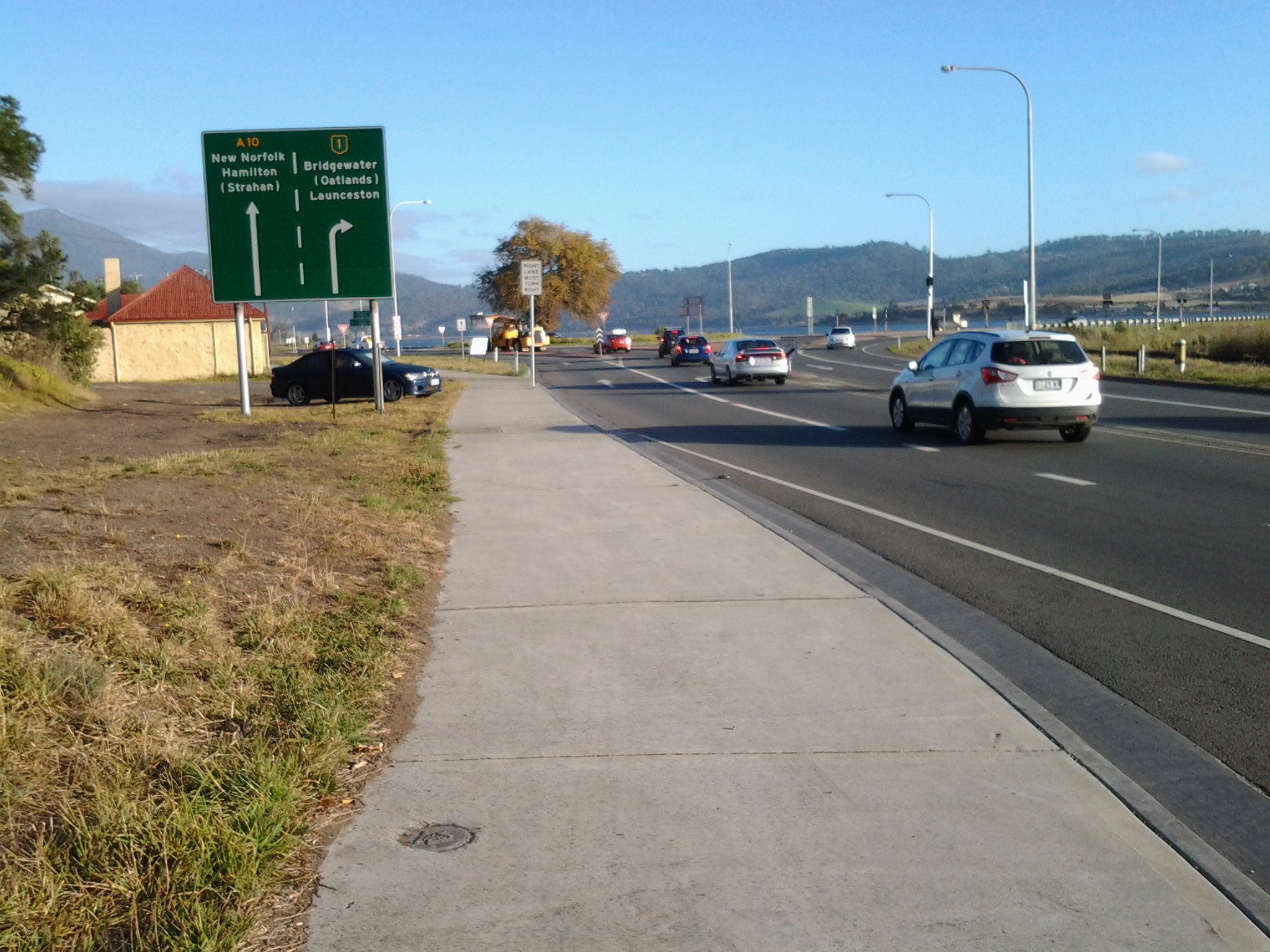
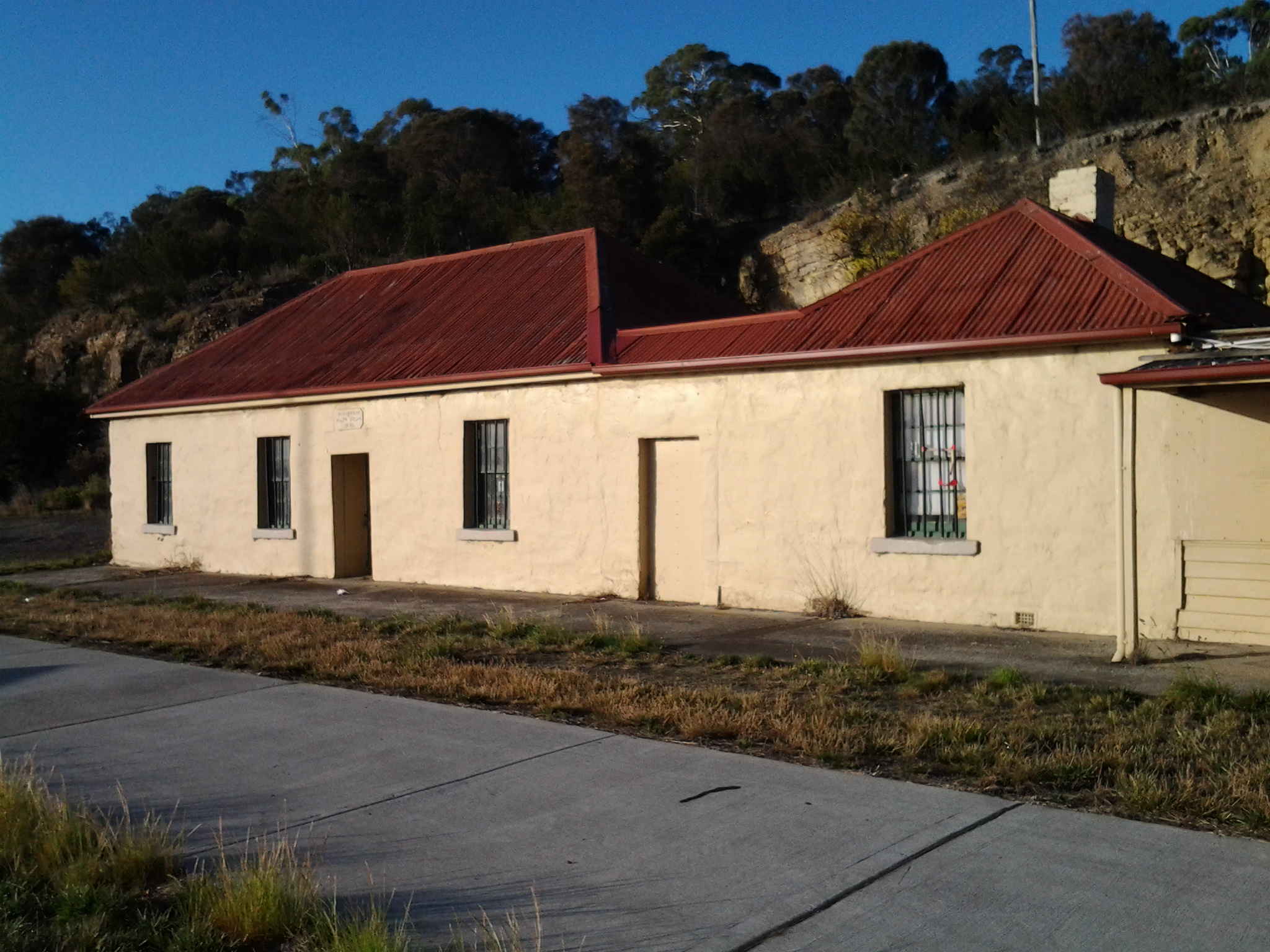
I was off the bus at stop 49 on the last of the Brooker Highway at 7.50am.  Looking northwards, the sign made it clear the direction to take was straight ahead. An earlier post introduced the history of the old Granton watch house (search Historic Granton, Tasmania) – that’s the low yellow building on the left in the first photo below, and then the second photo shows the sun-struck front of the building.

20150413_074858 20150413_075049

I was aware New Norfolk, over last weekend, had been celebrating the glories of its autumn foliage as indicated by the sign below. The sign served to increase my anticipation of those colourful delights.

20150413_075028

The unmemorable architecture of the Granton Memorial Hall solidly facing the morning sun, seemed very out of place in this beautiful area.

20150413_075136

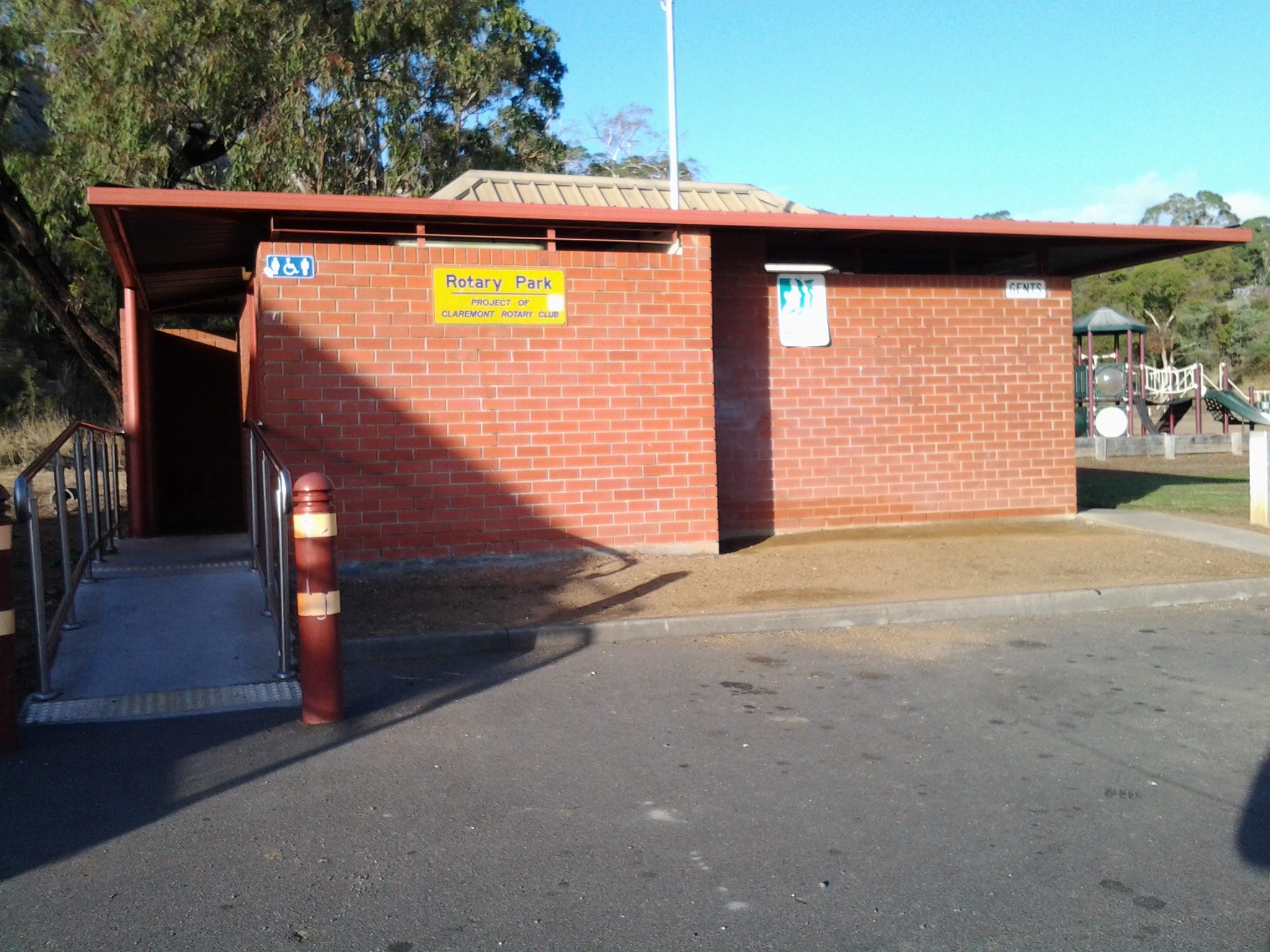
Equally solid and immediately serviceable was the public toilet block at the edge of the carpark used by many city bus commuters.

20150413_075231

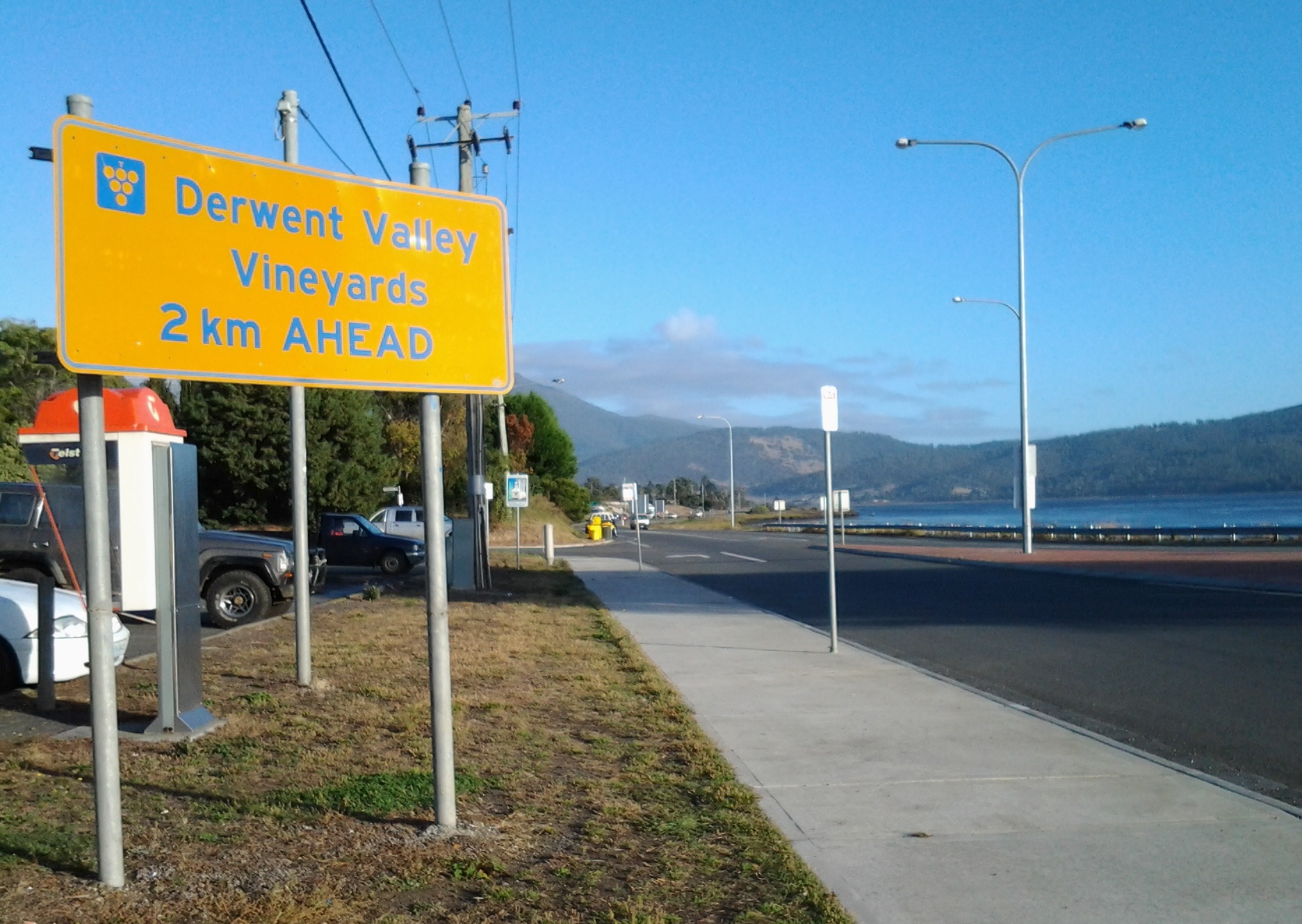
In front of the carpark a sign reminded me of the importance of grape growing in Tasmania – not the least because the wine from our vineyards is very drinkable (as agreed by wine judges from around the world).

Vineyards ahead

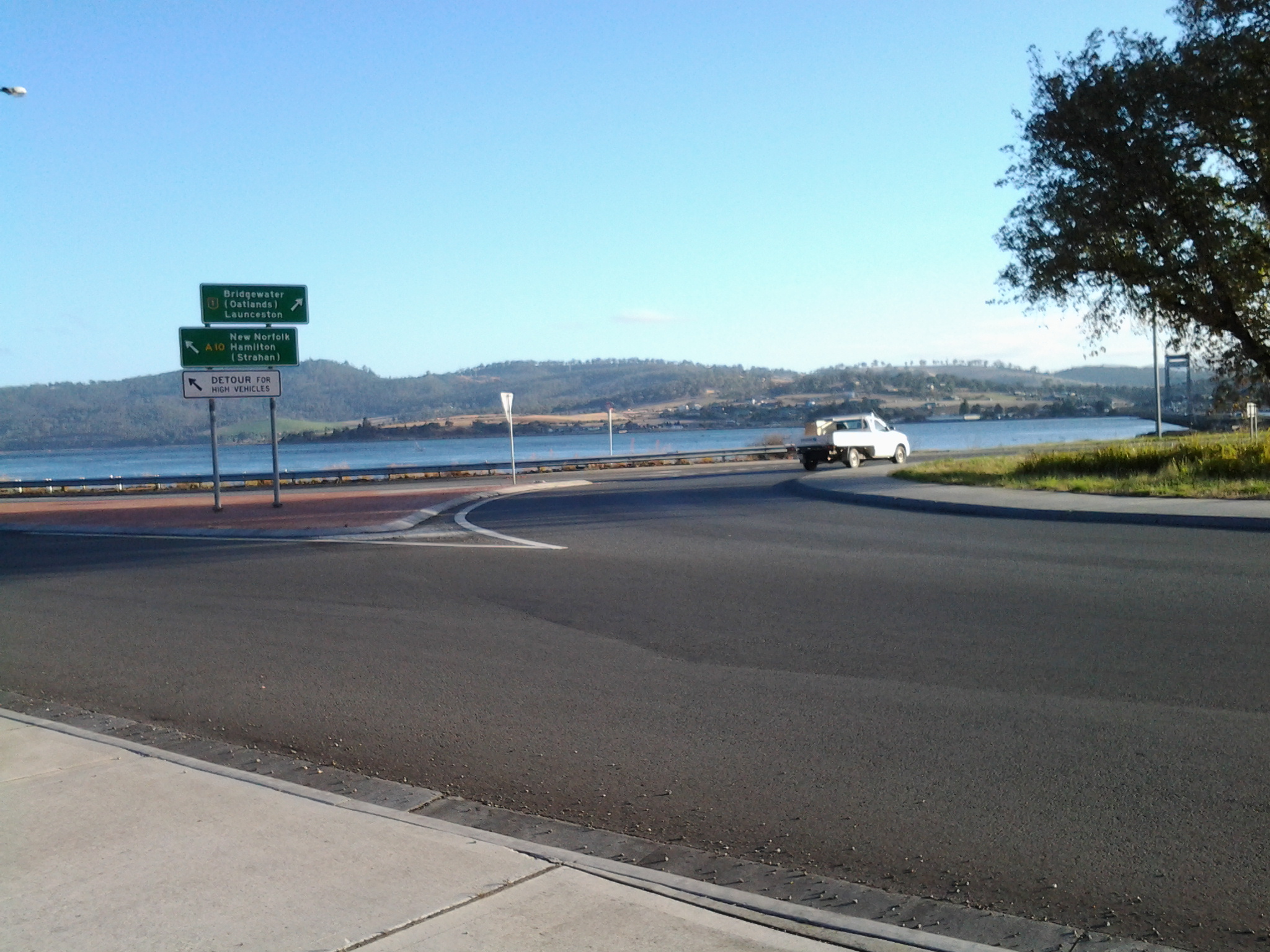
My eyes swung across to the roundabout for vehicles travelling north on the Midlands Highway to Launceston via many rural towns. In the distance, the vertical towers of the Bridgewater Bridge marked the Derwent River crossing.  The calmness of the day, and the quality of the light was sublime.

20150413_075150

I hadn’t walked far along the Lyell Highway when I saw the sign below which indicated that 16 kilometres further along the highway I would reach New Norfolk.  But could I trust the sign? Two or so kilometres further back, when I was still bussing on the Brooker Highway, I had seen a sign indicating the distance was 16 kilometres.

Leaving Granton

Not far away another roadside sign alerted motorists (and the occasional pedestrian): Welcome to The Rivers Run Touring Route.

The Rivers Run

Walking on the right hand side of the road facing oncoming traffic and with the Derwent River on my right, I continued into the icy breeze heading towards New Norfolk.  It wasn’t much after 8am when I left the (comparatively) built up area of Granton on the first leg of Stage 14.

Between the bridges: Stage 14 of my walk along the Derwent River

The achievement yesterday was to walk from the Bridgewater Bridge to the New Norfolk bridge on the western shore of the Derwent River.

I set off from home before the sun was up and I found Hobart was quiet when I arrived at the city bus mall.

20150413_070843

Then I bussed to Granton and alighted from the bus at the intersection with the Bridgewater Bridge causeway.

20150413_074852

From Granton I walked north-west then west towards the inland town of New Norfolk walking mostly along the Lyell Highway and then on a walking track for the last 5 or so kilometres. The morning was freezing and the afternoon warm.  But the sun was out; its hard autumn light made the world seem alive and sparkling. The Derwent River was splendid, often still and reflecting the trees and hills on its surface, under a bright blue sky with the sun shining gloriously.

20150413_140121

I finished my walk at the bridge crossing the Derwent River in New Norfolk.

20150413_145514

During the walk, I covered about 15½km of the length of the Derwent River.  By my reckoning, the total distance of the Derwent River on the western shore from the mouth of the River to New Norfolk is 54¼ km.

My walking distance was approximately 20¼kms.  I have now walked approximately 191¼ kms not counting getting to and from buses, as part of this project to walk along the Derwent River.

The highlights of the walk to New Norfolk were finding the remnants of two clearly visible heritage lime kilns, seeing a family of 6 pelicans, finding the track along the river leading to New Norfolk, and being mesmerised by the spectacular autumn foliage along the walk and especially in New Norfolk.

20150413_140030

I started walking from Granton around 8am and, despite wearing a thick woollen beanie plus a thermal top under my windproof jacket, I was frozen for the first two and a half hours.  It was 8 degrees Celsius at Bellerive when I left home, 6 degrees at Glenorchy and I suspect much less with a wind chill factor along the first part of the walk.  On this basis, I will not be walking further inland until sometime in Spring, and the timing of starting again towards Lake St Clair will depend on the air temperature.

Over the coming week I plan to enjoy writing up the journey and the discoveries of Stage 14’s walk in a series of different postings.

The Lyell Highway between Bridgewater Bridge and New Norfolk

History

In the first couple of decades of the 19th century, when increasingly the small Van Diemens Land colony demanded more roads and better river crossings, the first road from Hobart Town to New Norfolk was built by McCarty under contract to the government. By 1840, the road to New Norfolk had extended to Ouse and Marlborough (Nive River) to serve remote settlers. During the next forty years the road was further extended for tourist purposes to Lake St Clair (Refer http://www.utas.edu.au/library/companion_to_tasmanian_history/R/Roads.htm).

Wikipedia offers the information that the highway did not reach Queenstown until the 1930s and was not properly surfaced for some time after that. In post cards of the 1940s and 1950s it is called the West Coast Road. When Tasmania’s hydro-electric system was expanding and their works were under construction at Tarraleah in the mid-1940s, the highway was re-aligned to follow the Derwent River until it passed Tarraleah to provide better access to the area for construction vehicles.

Lyell Highway on map

2008 details

A 2008 government report (http://www.parliament.tas.gov.au/ctee/Joint/Reports/Lyell%20Hway.pdf), which recommended major changes be made to the road between Bridgewater Bridge and New Norfolk in order to create a safer highway, provided lots of information which added to my knowledge about this strip of road and its environment.  I will be looking to see if the recommendations were acted upon when I walk (the temperature plummeted today, and wintry weather yet again made the walking of Stage 14 impossible).

The report explained The Lyell Highway between Granton and New Norfolk is a two lane road with a sealed pavement width that varies in the range of 6.5m to 7.2m wide with unsealed shoulders. The highway follows the southern bank of the Derwent River. The highway is often located at the base of the hillside adjacent to the river flats and as a result has tight curves and sharp crests. The high, steep terrain on the southern side of the highway and deep soft silts on the northern side pose significant design challenges due to cost management and the environmental impact of the proposed works. The abutting land use is rural, dominated by rural residential with some horticulture (vineyards, tomatoes, cherries) and one private recreational facility, the Motor Yacht Club of Tasmania (MYCT). The Derwent River is a conservation area. On the southern side of the highway most of the land is hilly, mainly cleared with some trees along the roadside and a few scattered in the paddocks. There are some properties which remain untouched and vegetated by woodland. There are also rows of trees along the side of the road which form windbreaks and/or landscape features.’
Vegetation

According to the same report, the following three vegetation communities of conservation significance occur in the area:

  • Phragmites australis grassland (generally referred to as a common reed): considered vulnerable and inadequately reserved at the state level.
  • Acacia verticillata dry scrub (commonly known as Prickly Moses): of bioregional significance.
  • Leptospermum lanigerum scrub (sometimes named the Woolly Tea Tree): of bioregional significance.

The trees of Potential Cultural Significance along that stretch of the Lyell highway include

  • A stand of white gums between the roadside rest area and the Derwent River at Chain 7760 – 7860.
  • Two weeping willows on the northern side of the highway at Chain 8215 – 8220.
  • A row of old radiata pines on the southern side of the highway at Chain 10250 – 10350.

The following two significant flora species, listed on the Threatened Species Protection Act 1995, occur in the area:

  • Austrostipa scabra (rough spear grass): southern side of the highway Chain 3300 – 3400, 6430 and 6610 – 6640; northern side of the highway at Chain 6940 – 7010.
  • Vittadinia gracilis (woolly new holland daisy): southern side of the highway at Chain 3300 – 3400.

Social history

There are a number of additional features in the immediate area that are considered to have some cultural heritage significance. Project 3 Lime kiln, Chain 3250 – 3540, is located on the northern side of highway. This is currently listed on the Tasmanian Heritage Register (THR) (R701)(http://www.heritage.tas.gov.au/thr.html) and hence is subject to the provisions of the Historic Cultural Heritage Act 1995. There are a number of additional features in the immediate area that are considered to have some cultural heritage significance, such as the Marsh Farm and a redundant section of the old main road.

Fish dying in the Derwent River

In early March Tasmania’s Inland Fisheries Service received a report of dead fish in the Derwent River between upstream New Norfolk and the area downstream near the industrial mill Norska Skog. For further reading refer to http://www.ifs.tas.gov.au/news/river-derwent-fish-kill-restricted-to-barracouta.  The thinking was that “The most likely cause is that barracouta have followed the salt wedge with the high tide in the river and killed by their sudden entrapment in freshwater.”

One of this week’s news stories reported on monitoring the unexpected numbers of fish dying in groups. The story can be read at http://www.abc.net.au/news/2015-03-27/more-monitors-on-river-derwent-as-fish-kills-continue/6354950. In an earlier article http://www.themercury.com.au/news/tasmania/experts-examine-mass-fish-kill-in-upper-derwent-estuary/story-fnj4f7k1-1227256722478, the thinking was that “Water quality in the lower saline layer is typically poor in summer.

Quite separately another story was running and I can find no-one publically connecting the two: “Fish kills could occur if the large algal bloom in the River Derwent near the Murphys Flat wetlands grows.”  For further information read http://themercury-au.newspaperdirect.com/epaper/viewer.aspx.

I expect to be walking past Murphy’s Flat in the next day or so and I hope not to smell dying fish or see the silvery scales of dead fish littering the River’s edges.

The question has been asked: when will I walk the New Norfolk leg?

The answer is that I don’t know because this year’s style of autumn weather is making decisions difficult.

Last year it was mid-May before I removed the summer cotton sheets from my bed and changed to the fleecy flannelette sheets for winter warmth. Until that time I wasn’t wearing thermal tops. But this year before the end of March, I am rugging up and friends are lighting warming fires.

With this drop in temperature, we have continued to have light or heavy rain, not for all the day but off and on unpredictably. The idea of walking with a raincoat on and off or an umbrella up and down all day does not thrill me.  I want an uninterrupted view of everything around me.  I want to be able to hear the sounds of the Derwent River and the birds without the distortion of pattering raindrops.

For my walks from the mouth to the mouth of the Derwent River via the Bridgewater Bridge, routinely I consulted the Bureau of Meteorology (BOM) for their forecasts. Then, typically, I adjusted these predictions according to what I could see happening in the air over Mount Wellington.  Unfortunately, the leg from Bridgewater Bridge to New Norfolk is out of sight of the mountain and so I need to trust the BOM.  At this stage both next Monday and Tuesday look promising weather-wise in the New Norfolk area. Hopefully I will have fresh new stories of lived experience to post mid next week.

Winemaking along the Derwent River

Very soon, when the weather is right, I will be off walking the next stage along the Derwent River.  On that day I will pass by vineyards (without stopping for a sample) on route to New Norfolk. Wine Tasmania (http://winetasmania.com.au) promotes touring routes to the dozens of vineyards established across the State.
Soon after passing the Bridgewater Bridge and close to the Derwent River at Granton, a couple of well-established vineyards with cellar doors can be accessed easily by the public.  More about the Derwent Estate Wines can be read at http://www.derwentestate.com.au/home/ .  I like the sound of the approach taken by their viticulturist– ‘We do not use any Insecticides or nasty Pesticides at all. We prefer a softer Integrated Pest Management approach to disease control.’

The Stephano Lubiana Wines estate (http://www.slw.com.au/slw/index.html) offers a food menu to complement their wines, which uses fresh produce from their bio dynamically run vegetable garden. At the end of March, a Festa di Pomodori will focus on the tomato. Sounds like the place to be for healthy food and a great drop of wine.  Any local blog followers interested to join me at this festival? The winery has organised a return bus from Hobart; great thinking I am thinking!

Historic Granton, Tasmania

The northern suburb of Granton on the western shore of the Derwent River adjacent to and extending from the Bridgewater Bridge has significant history in relation to transport and communications across Van Diemens Land/Tasmania. Two heritage buildings, which still stand, are introduced below.

The Black Snake Inn

On stage 8 of my walk along the Derwent River, after I had crossed the Bridgewater Bridge from the eastern shore, I continued south into the start of the suburb of Granton. On that route I soon passed the house in the photo below.

20141111_134404

Located at 650 Main Road, what I was seeing was the building that started life as the Black Snake Inn, apparently Australia’s earliest ferry inn, which was built by the convicts who constructed the Bridgewater Causeway. The Google maps street view of this remarkable building can be seen at https://www.google.com.au/maps/place/650+Main+Rd,+Granton+TAS+7030/@-42.751047,147.229129,3a,52.5y,209h,90t/data=!3m4!1e1!3m2!1sTcT1xn5QTiR_rSA4AsFFbg!2e0!4m7!1m4!3m3!1s0xaa6e12713b1bfcbb:0x1a0841b5479abad1!2s650+Main+Rd,+Granton+TAS+7030!3b1!3m1!1s0xaa6e12713b1bfcbb:0x1a0841b5479abad1!6m1!1e1?hl=en

According to http://www.werelate.org/wiki/Person:George_Robinson_%2838%29, Rhode Island born George Robinson erected a new Black Snake Inn on an earlier ferry Inn in 1833 and continued his business at the Black Snake until 1837.  Robinson showed his enterprising ability in a newspaper notice: “MR. G. W. Robinson has this day started a Van with two splendid horses for the immediate accommodation of persons travelling up and down from the Ferries. The Van will leave the Black Snake at half past nine every morning, and leave Hobart Town at 2 o’clock every afternoon…

Charles F Tomkins

Artist Charles F Tomkins (1798-1844) produced a hand coloured lithograph titled The Black Snake Inn and this was published in London by Smith & Elder in 1833 (Reference: http://catalogue.statelibrary.tas.gov.au/item/?id=98999)

According to the http://www.heritage.gov.au/cgi-bin/ahpi/record.pl?RNE10944 record (of March 2015), The Black Snake Inn ‘is significant for its association with Derwent River ferry and road crossings. Until 1836, when the Bridgewater Causeway was completed and before a bridge completed the crossing in 1849, ferry transport was the only means of crossing the Derwent River. It is significant for its initial function as a ferry inn accommodating passengers using the commercial ferry services run by the Inn’s operator. In addition, the Inn is significant for providing accommodation for travellers on the Main Road between Hobart Town and New Norfolk, and those using the Bridgewater Causeway. Between 1819 and 1825 the diary of Reverend “Bobby” Knopwood noted frequent visits to the Black Snake Inn which was often referred to as the “half way” house. Governor Arthur’s Land Commissioners visited the Black Snake Inn in 1826, remarking that its licensee, Presnell, was in the “true Style of a selfish Settler” giving all who passed “all the trouble in his power”. By 1833, the Inn was acquired by George Robinson. By August he had built a “new house’ at Black Snake and advertised the lease for the old inn premises as a possible store. His new Inn was drawn by Louisa Meredith, probably in the mid-1840s and the structure depicted is almost certainly the building known as the Black Snake Inn today, showing the same form. It is possible that a new facade was erected some decades later because the Victorian Rustic Gothic style became more common after the 1840s.’ This website provides extensive additional historical, architectural and social information.

The site http://www.watersideaccommodation.com/downloads/HistoricalSummarytheClaremontAustinsFerryArea04May07.pdf contains an alternative photograph of the building.

I am grateful to Tasmanian collector and historian George Burrows for his reminder to create a posting about the Black Snake Inn.  In addition, he told me… “I am probably one of the few people who have canoed the river from source to Hobart BEFORE the dams were built.”  How remarkable is that!  Very impressive.

The Old Granton Watchhouse

The building, located at the junction of the Brooker Highway, Lyell Highway and the Bridgewater Causeway, was built by convicts in 1838. Extensive information and photographs can be seen at http://ontheconvicttrail.blogspot.com.au/2014/10/old-watch-house-granton.html

The starting point for Stage 14 of my walk along the Derwent River will be near this Watchhouse.

From Wrest Point to New Norfolk on the Derwent River

‘Have you got a red hat?’ friend An asked me. Recently she became Princess Pollyanna, an esteemed member of Hobart’s Scarlatt O’Hatters (http://www.hobartredhats.com/), and urged me to join particular excursions that have a connection with my walking project.  The delicious carrot being wriggled before my eyes was a ferry trip from Hobart to New Norfolk on the Derwent River.  I paid my membership fee to Queen Poppi and then found a common red beach hat (although others were wearing all manner of superb creations on their heads – are these the modern day ‘mad hatters’, I wondered). I donned a range of purple clothes and, as the newly appointed Lady Walkabout, jumped on the tiny water taxi ferry with 20 colourful new friends to be.

20150304_093216

The wind was strong and some swell across the River kept us bobbing.  However, the ride was comfortable and no one needed to bark at the fish over the side.  Sprays of salt water marked the windows and there were few opportunities to move outside into the clear moist air.  But the day was beautiful, the wind chopped waves dramatic and the panoramic scenery majestic.

What a thrill the journey was. After we left the jetty at Wrest Point Casino in Sandy Bay, a southern suburb of Hobart, we motored with commentary from our driver.  He pointed out environmental and historical features. This was a wonderful reminder of research and findings I made while walking the edges of the Derwent between the mouth of the River and Bridgewater Bridge, and I learned a few new details.

20150304_093514

The surprise sighting of a white sea eagle perched in a high tree against the cliffs in Shag Bay (an inlet between the Bedlam Walls – refer to my Stage 6 report) inspired the driver to stop and allow us outside to get a privileged view of this large bird.

20150304_095143

One of the great treats of the day was motoring underneath the very low Bridgewater Bridge (reminded me of travelling on some flat top boats in Paris where you feel sure the boat will become wedged against the bridge metal) and passing through without a bump or grind.

During our trip, at one stage hundreds of coots flew up from the water, we were accompanied for part of the journey by a small flock of sleek long necked swans, and in a small inlet a large family of pelicans were flying around.  Our eyes focused on all these birds.

As we continued on the Derwent River against landscape which I am yet to see on foot, it was clear my earlier belief that marshlands will prevent me from walking directly next to the River for most of the way from the Bridgewater Bridge to New Norfolk, is correct.  Occasionally it will be possible to walk on paths and grass, but mostly I will be tramping the hard road verges.  I was not aware the remains of a historic Lime Kiln sits beside the water, and it was good to see that I should be able to walk pass this on my way northwards.

As a result of this one-day excursion and from many car trips up and back to New Norfolk, I have a good understanding of the route. However, I realise that at foot level the world looks completely different and I look forward to finding out more in the near future.

understanding of the route. However, I realise that at foot level the world looks completely different and I look forward to finding out more in the near future.

A new milestone marking the 13th stage of my walk along the Derwent River: I reached the mouth on the western shore. Whoppee Doo!!

Yesterday, I completed the first part of my walk along the Derwent River: an exciting achievement.

Last August I started walking from the mouth of the River at Cape Direction on the tip of the South Arm peninsula and now, at the end of February, I have completed the distance from that mouth to the Bridgewater Bridge and back on the western shore to Pearson’s Point near the settlement of Tinderbox.

On the 8th stage mid-November, I had the first major milestone when I finished the walk from Cape Direction to the Bridgewater Bridge. This 13th stage was the culmination of walks from the Bridge back to the mouth on the western side of the River.

During yesterday’s walk, I covered about 5km of the length of the Derwent River.  By my reckoning, the total distance of the Derwent River on the western shore from the Bridgewater Bridge to the mouth is 38 3/4 km.

For Stage 13 yesterday, I needed to walk to Pearson’s Point from the bus stop where I finished on Stage 12 and then, on reaching my goal, I needed to retrace my steps back to Blackmans Bay to connect with a bus that could return me to Hobart.  This distance was approximately 17 kms. I have now walked at least 171km not counting getting to and from buses.  But when the walks are staggered over time, this number does not mean much.

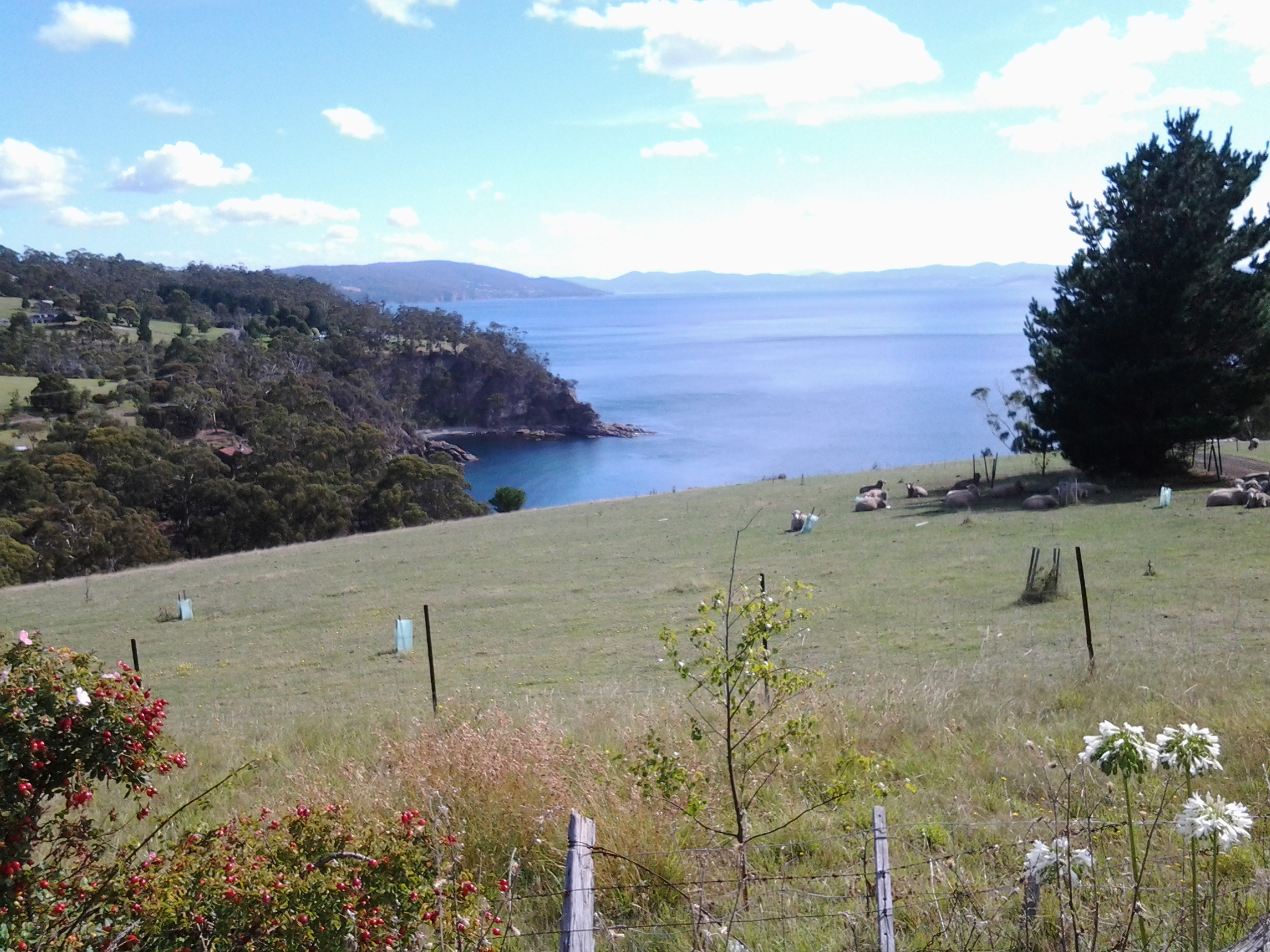
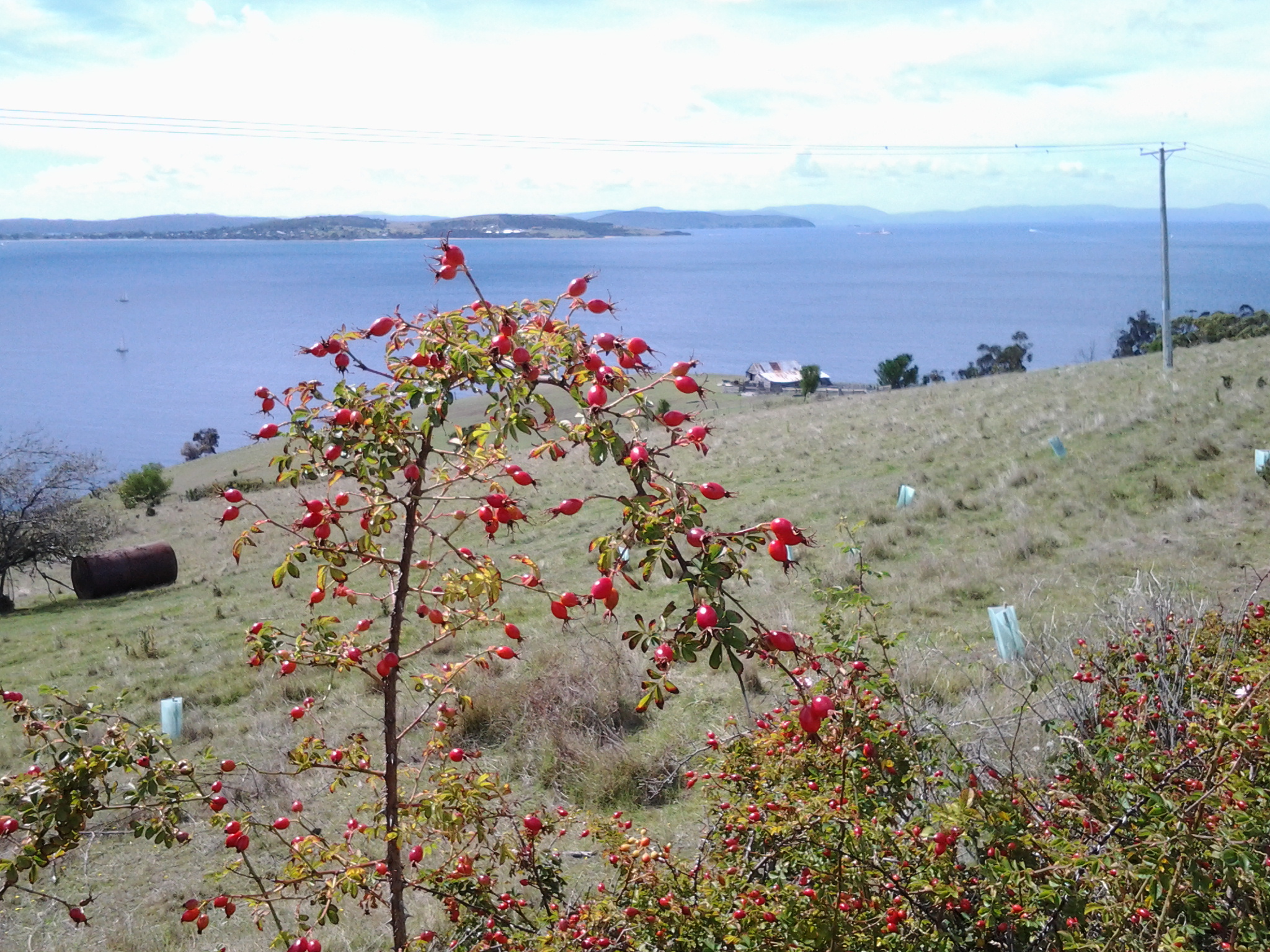
The highlights of the walk to Pearson’s Point were mostly small and natural: rosehips, green rosellas, hum of bees, resting sheep, and the taste of delicious ripe blackberries along the way.

20150224_103540

I was surprised how close the northern part of Bruny Island was to the mainland of Tasmania (almost felt like I could swim across the D’entrecasteaux Channel) and I felt overwhelmed by the staggeringly expansive and grand views across and up and down the Derwent River.

20150224_114137

The fun part was singing (including mixing up the words in my excitement) Handel’s Hallelujah chorus (from The Messiah) at the top of my voice when I passed a large sign with the words SING. You can listen to a superb version performed in 2012 by the Royal Choral Society at the Royal Albert Hall in London England at https://www.youtube.com/watch?v=IUZEtVbJT5c

https://www.youtube.com/watch?v=IUZEtVbJT5c

Over the next few days I will write up the journey and the discoveries of Stage 13’s walk.  Then I will be looking towards a long main road walk from the Bridgewater Bridge at Granton to New Norfolk which I expect to undertake in the next couple of weeks.  Once I have reached New Norfolk I will be on the way to Lake St Clair, the source of the Derwent River.