Tag Archives: Derwent River

40 degrees south

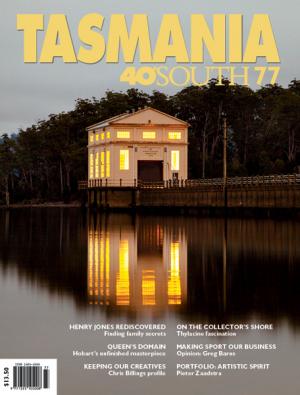
The iconic magazine produced in, by and about Tasmania is Tasmania 40° South.

Details about the latest issue can be read at http://www.fortysouth.com.au/back-issues/issue/77. One current story highlights the cleverly re-purposed Pumphouse at Lake St Clair (the end goal for my walk along the Derwent River). The accompanying photos include mirror quality reflections across the lake – simply stunning.
Tas 40deg south mag cover

Each issue of the magazine showcases the wonders and diversity of Tasmania, the stories are always well written and accompanied by magical photographs.

It is possible to subscribe and receive each quarterly issue through the post, or purchase electronic issues – go to (http://www.magzter.com/AU/Forty-South-Publishing-Pty-Ltd/Tasmania-40%C2%B0South). For people planning to visit or to move to and live in this state, obtaining copies of this glossy magazine is a must. The information will inspire and orient you. Also, it will provide something wonderful to show friends and relatives.

While Tasmania may be located remotely at one edge of the world before the southern polar cap, it is an Australian state with startling natural beauty, a flurry of surprising international and community festivals throughout the year, clean air, the freshest of sea and land food, a rich and complex cultural scene, beautiful remnants of heritage listed architecture, and short travel times with easy access within the cities and throughout regional areas. In addition, Tasmania boasts valuable educational institutions (for example, our University of Tasmania is ranked in the world top 100 universities in the disciplines of Earth and marine sciences, top 150 for Agriculture and forestry, top 300 for Law and top 400 for Medicine).

Many residents and visitors to the state are lifted by a sense of vibrancy and vitality from the opportunities which Tasmania offers.  Technological and communication access to the world is a given from Tasmania, and a number of airlines fly in and out of Tasmania all day throughout the year.  In other words, we are easily connected to the world – when we are not out and about in Tasmania eating world class meals, participating in all manner of sports, or discovering more of the natural environment by walking, cycling, driving, swimming, diving, fishing or flying. Oh yes … and some of us work.

If you are wondering where the magazine title came from, consult your maps or have a look at https://en.wikipedia.org/wiki/40th_parallel_south.  You will see that the latitude of 40 degrees south passes through King and Flinders Islands the two most northern islands of Tasmania and therefore that line of latitude marks the northern extremity of this Australian state.

I wonder who of my blog readers, apart from Tasmanians, live somewhere near 40 degrees South (New Zealand, Chile, Argentina?).  And how many readers are living at 40 degrees North?

Bear Grylls guidance

Barely a newspaper or magazine doesn’t publish a story about Bear Grylls, so it seemed only reasonable that I find a way to incorporate him into this blog. His is a life of extreme adventures and fighting for survival in tough environments, so a peaceful walk along a placid river seems a long way from his favoured pursuits.  And none are documented.  However, it is Bear Grylls guidelines for daily life which are useful for me to recall even if the going is easy.  Some of these ideas are recorded below.

  • Make the first step – that should empower you to take more steps. ‘There’s great power in just beginning and committing to action, even when you don’t feel like it.’
  • Challenge yourself – ‘I believe we are like grapes and it is only when we are squeezed that we can see what we are really made of.’
  • Try something you’re afraid of – ‘My Dad inspired me not to be afraid to go for things and take a few risks.’ ‘Failure is never failure rather it is a stepping stone to success.’
  • Energise your day – ‘a little fresh air can do the world of good.’ ‘Almost all cities have some great iconic open spaces and parks. Use them.’

After reading this list, hopefully blog readers will be inspired to get out and about. I found another blogger at http://cdeanblog.blogspot.com.au/2012/04/derwent-river-flows-and-present-people.html referenced Bear Grylls when she faced her fears and descended the cliffs into the Blowhole at Blackmans Bay, located a few kilometres short of the mouth of the Derwent River near Hobart.  Good for her!

Piguenit – artist extraordinaire in southern Tasmania

The 19th century lady who wrote her story of a walk from Trial Harbour to Ouse (refer https://walkingthederwent.com/2015/06/20/a-story-of-a-walk-in-19th-century-tasmania/) mentioned Tasmanian artist William Charles Piguenit in her record of the events.

‘… had our first near view of the various peaks of the West Coast Range. From here we kept on rising till we reached the Government hut, 1,500 ft above and 15 miles from Strahan.  Here the first of a series of magnificent views met our eyes; beneath us lay a deep valley, forest clad for miles, and beyond, stretching as far away as the eye could reach, lay the range, its rugged peaks standing out sharply against the sky.

How it makes one long for the brush of a ready painter, to be able to place on canvas at least something to keep one’s mind fresh with the remembrance of all this beauty. Mr Piguenit is, I believe, the only artist who has devoted his time and labour to this district, and the results of his work are to be seen in the pictures now hanging in the Art Gallery of the Hobart Museum, and certainly the next best thing to visiting the West Coast is to see Mr Piguenit’s pictures of different scenes in that region.’

The collection of the Tasmanian Museum and Art Gallery (TMAG) contains a substantial number of his oil paintings.  Years ago I was employed by TMAG as an attendant and stationed in the upstairs ‘colonial’ gallery where the 19th century paintings were hung adjacent to marble sculptures and rare examples of early Tasmanian wood furniture. Back then I was a student of art history, and the establishment deemed me to be the expert amongst their collection of gallery attendants. They felt sure I would be able to help any visitor with enquiries about the collection on show.  One whole end of that 19th century gallery space was devoted to the work of Piguenit.  With much time on my hands to study each work of art, I fell in love with his dramatic descriptions of remote Tasmanian wilderness. But most surprising was that many of the very large oils, surrounded by beautiful carved frames, were compositions of the landscape in many gradations of grey when Piguenit had only chosen to use black and white paint.  Gloriously glossy. Unexpectedly stunning.  Tasmania’s inland environment had never been seen by most people (and still hasn’t been).

It was a surprise to me that I can only find online reproductions of these great paintings in a TMAG published catalogue raisonne of the work of William Charles Piguenit (http://www.tmag.tas.gov.au/__data/assets/pdf_file/0017/73142/piguenit_catalogue.pdf). Unfortunately, the document is incomplete and the images are very poorly reproduced – this booklet does the artist a great disservice. When faced with the paintings, the oils are truly majestic and have a similar power to mountainous work by artists such as Eugen von Guerard, Casper David Friedrich, and those from the Hudson River School such as Frederick Edwin Church.

The collection of the Art Gallery of New South Wales in Sydney holds some of his work including the following paintings (in coloured oils) which show aspects of Lake St Clair (the source of the Derwent River and the goal of my walk).

Mount Ida, Lake St Clair, Tasmania c1881

AGNSW Mount Ida Lake St Clair Tasmaniac1881

Mount Olympus, Lake St Clair, Tasmania, the source of the Derwent 1875

AGNSW Mount Olympus Lake St Clair Tasmania the source of the Derwent 1875

Have the invading Seastars been discovered by a mortal enemy?
Today I watched a family of Dominican Gulls at Howrah Beach on the Derwent River.

When the temperature rose, I meandered off towards the Derwent River beckoned by the thought of a peaceful walk along a beach (albeit one that I walked on an earlier stage of my trek from the mouth to the source of the River). By the time I reached the end of Bellerive Beach I was feeling very good about the world and so I continued around the point and down onto the people-less Howrah Beach.

The only life was a pair of adult Dominican Gulls and their three immature offspring fishing.

Two surprised me.  From a distance I could see that one adult and one immature were active on the sand where the wash of gentle waves covered their feet from time to time. Each had food of some sort which they couldn’t seem to swallow.  How they tried!  When I walked closer, it was clear both birds were playing with exotic Seastars, with their five brightly orange-coloured arms.

20140904_094156

The immature bird played with a tiny starfish, while the adult focused on a much larger version.  While I watched, both birds battled with their prey, sometimes getting it into their mouth then usually it was disgorged immediately. The shape of bird throats and the shape of the food source were seemingly incompatible. Apart from the challenge of five thick arms which are not particularly pliable, the surface of the starfish is a little knobbly, so I could not believe the birds would have any success getting them ‘down the hatch’.

But then my mouth dropped open in amazement. The immature bird suddenly swallowed his Seastar.   Gulp.  And s/he waded off looking for more. Now that was a feat!

You can read more about these invading starfish in earlier postings at: https://walkingthederwent.com/2015/03/31/pacific-seastars-are-multiplying-in-kangaroo-bay/; https://walkingthederwent.com/2014/09/14/northern-pacific-seastars/; and https://walkingthederwent.com/2014/09/05/stage-2-on-492014-mitchells-beach-email-4-of-14/.

After today’s experience, I wonder whether the Dominican Gulls are finding these Seastars sufficiently tasty so that they will seek them out deliberately.  Perhaps these Gulls will become the natural predator to help reduce the Seastar plague on our native species.  But it looks like hard work to me. Not a comfortable swallow.

From the Nile River in Africa to the Derwent River in Australia

The Nile River in Africa and the Derwent River in Tasmania Australia.  On two different sides of the world.

Q.     What connects these two rivers?       A.     Agatha Christie

You gasp.

In 1922, the now-world renowned detective fiction novelist Agatha Christie took herself on a ten-month Grand Tour of the British empire, including South Africa, Australia, New Zealand, and Canada. Previously she had spent time in Egypt with her mother in 1910. Her travels helped flesh out details for many of her ‘who-done-it’ mysteries.

For those of my blog followers who have not been devotees of Hercule Poirot, I recommend you read Agatha Christie’s story of Death on the Nile written in 1937, visit the theatre to see Murder on the Nile the 1944 play based on the novel, or watch anyone of the many films that have been produced based on this story. I would be surprised if you cannot access something on the internet.

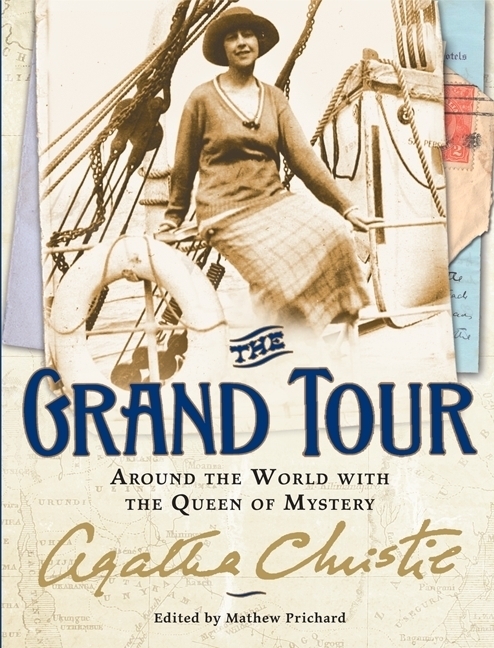
The correspondence of her travels has been collated into the publication The Grand Tour: Around the World with the Queen of Mystery.

 Grand Tour Agatha Christie bookcover

In this book we can read “From Australia we went to Tasmania, driving from Launceston to Hobart. Incredibly beautiful Hobart, with its deep blue sea and harbour, and its flowers, trees and shrubs. I planned to come back and live there one day. From Hobart we went to New Zealand.” Agatha Christie is, of course, referring to the expansive harbour on the sea end of Tasmania’s Derwent River.  She was also making a typical mistake that some mainlanders and most international tourists make. Tasmania is still part of Australia, even though it is a large island to the south.  So, when she left Sydney New South Wales Australia, I suspect Agatha sailed into Launceston Tasmania Australia.

A book reviewer at http://www.amazon.com/The-Grand-Tour-Around-Mystery/dp/006219125X: remarked “The Grand Tour is a fascinating collection of never before published letters and photographs detailing Christie’s travels around the British Empire in 1922. Most of the letters were sent to her mother and included photos taken with Christie’s own camera as well as newspaper clippings and various memorabilia. This collection is an insight into the thoughts and mind of a young Agatha Christie who had just published two novels and would later become the most widely published author of all time. She and her husband, Archie, embarked on a year-long voyage as part of a promotional trade mission, so there was work involved as well as various obligations as they visited South Africa, New Zealand, Hawaii and Canada. Her letters to her mother were, of course, candid which for this reader greatly added to their charm. I especially enjoyed Christie’s slightly wicked sense of humour, such as when she describes a fellow passenger as “the only young thing on the ship, but although very pretty, is a terrible mutt.” Her observations of both people and places are acute and fascinating to read.  Mathew Prichard, Christie’s grandson, has done an excellent job of collecting, editing and introducing these letters. We are in his debt for The Grand Tour reminds us that Christie was not only an outstanding author but a remarkable woman as well.”

The back cover of the book records:

“In 1922 Agatha Christie set sail on a ten-month voyage around the world. Her husband, Archibald Christie, had been invited to join a trade mission to promote the British Empire Exhibition, and Christie was determined to go with him. It was a life-changing decision for the young novelist, a true voyage of discovery that would inspire her future writing for years to come.

Placing her two-year-old daughter in the care of her sister, Christie set sail at the end of January and did not return home until December. Throughout her journey, she kept up a detailed weekly correspondence with her mother, describing the exotic places and the remarkable people she encountered as the mission travelled through South Africa, Australia, New Zealand, Hawaii, and Canada. Reproduced here for the first time, the letters are full of tales of seasickness and sunburn, motor trips and surfboarding, glamor and misery. The Grand Tour also brings to life the places and people Christie encountered through the photos she took on her portable camera, as well as some of the original postcards, newspaper cuttings, and memorabilia she collected on her trip.

Edited and introduced by Agatha Christie’s grandson, Mathew Prichard, and accompanied by reminiscences from her own autobiography, this unique travelogue reveals a new adventurous side to Agatha Christie, one that would ultimately influence the stories that made her a household name.”

A story of a walk in 19th century Tasmania

In the late 1980s, Hilary Webster compiled a book of short stories written by people who travelled around Tasmania by foot and by horse and carriage in the nineteenth century; The Tasmanian Traveller A Nineteenth Century Companion For Modern Travellers.   Thanks to blog follower Ma, I was alerted to this publication.

The Tasmanian Traveller

These stories helped me to understand the difficulty of travel in early colonial Tasmania when roads were not always developed. Some stories surprised me so that I feel inspired to visit Tasmania’s State Archives in order to discover more.

A standout was the story of a walk from ‘Trial Harbour to the Ouse” because the journey relates to some of the area over which I may walk later this year when I restart my walk along the Derwent River.

Trial Harbour is an isolated tiny community on the west coast north of Queenstown where, these days, the few shacks are built with the strangest chimneys to cope with the weight of the westerly winds which blow fiercely from across the Indian Ocean. The Ouse refers to a small town, then hamlet, somewhat south of the centre of Tasmania and situated most remotely from civilisation.  Back then, it took a day’s coach and train ride to reach Hobart. These areas and the land between is an exceptionally rugged environment today and I have difficulty imagining the situation in the 19th century when the walk in the story was taken.

The subtitle of the 1890s story was ’A Lady’s Walking Tour on the West Coast’. A woman (no name) walked with her husband and a dog through ‘untamed’ wilderness, along mining and forestry tracks and the occasional muddy rutted roads.  They climbed mountains, crossed button grass plains and walked through valleys.  She recorded “More than once we were asked our business, the notion of travelling on foot for pleasure in these regions appeared preposterous.” I would say such a walk is extraordinary in this day and age, and totally amazing 125 years ago.  Innovative means were taken to cross rivers. Overnight accommodation was found in out of the way tiny remote mining shops, shacks, huts and the occasional Inn. Telegraph wires were often their only guide for a way forward. Through the rugged wilderness, routinely they walked 17 or more miles (27+kilometres) each day and on one day they walked 33 miles (53 kilometres). I am staggered.  I know the challenging environment in which they walked.  The mountains are many and very steep with ravine and river gullies that are cut into the rock deeply.

Her pack of provisions weighed 7 pounds while her husband carried 21 pounds.  This makes me wonder if contemporary bushwalkers aren’t tough enough – or are we trying to be prepared for every eventuality. The good will of people they met and the willingness of others to share their meagre food supplies, and help with sleeping arrangements, was perhaps something that could be taken for granted in 19th century Tasmania. Generous hospitality as a given.  ‘We got some bread here, and at a house a mile further on the track, some milk, the first fresh milk we had tasted since Waratah.’  This comment indicates she was walking across Tasmania before Trial Harbour – the significant mining town of Waratah is quite a distance north east of Trial Harbour.  So I suspect there may be earlier stories of her walking across other parts of Tasmania – I look forward to conducting research to find records of these.

Walking Home-the Pennine Way

During Tasmania’s current winter days I am using my time to read books with a travel theme, and mostly those involving a significant walk.  These books both inform and inspire me so that I eagerly look forward to the warmer spring weather when I will be able to continue walking to the source of the Derwent River.

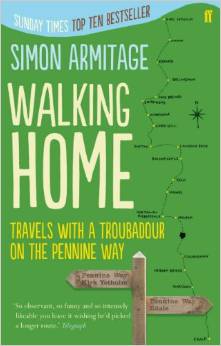
I am thankful some local followers of my blog have alerted me to titles and, in some cases, loaned me their books. Thanks to Ma, my current read is Simon Armitage’s book Walking Home (Faber & Faber 2012).

Walking Home Simon Armitage

In this easy-to-read record, Armitage offers anecdotes and describes his reaction to the walk, the dramatic terrain, the endlessly misty, ferociously windy and inclement weather, the people who walked with him on occasion, the animals, and much more. Through his very entertaining writing style I have come to understand the 256 mile long Pennine Way in England via each step he took as he tramped from the northern to the southern end during 19 days of continuous walking.

The logistics of this walk were well-researched and involved pre-arranged poetry readings each night when he reached each day’s destination in villages, farm cottages, churches, people’s houses, hotels and all manner of other buildings. One of his dry unused walking socks was handed around at the end of each reading and the audience was asked to contribute funds. Simon set out to survive only on the income he could generate in this way. He was so well received that around the journey’s half way point, his wife and daughter came and relieved him of a heavy weight of coins: at the same time they took away a load of very wet and muddy clothes.

I live in a part of the world where rain is not so common, and impenetrable mist is rarely a feature. By contrast, when in summer Simon Armitage walked the higher hills and ridges of the Pennine Way, they were often shrouded in mist and, when the tracks sometimes petered out Simon, would lose his way for a while, become thoroughly drenched and, while trying not to become demoralised, persist in finding his way even if unnecessary miles were covered.  This was an arduous adventure taken one step at a time and I felt a real sense of joy coming from the author as he met each challenge, and as the miles passed. He became both physically and mentally stronger.

Whether or not, you enjoy walking, if you like to be carried along by a book and feel an immense sense of pleasure from reading something which is well written, then add Walking Home to your wish list for reading material. This book made me laugh and certainly lifted my spirits.

The crustacean that walks – and only in Tasmania

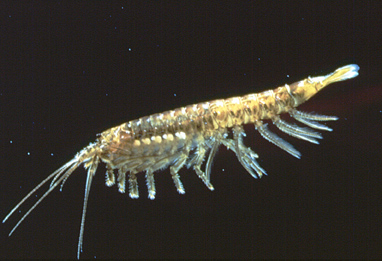
My last post introduced a giraffe who took a long walk. Since giraffes typically walk as part of their locomotion, the surprise of that story cannot be as great as the fact of the shrimp (prawn if you like) which walks around the high creeks and streams which flow down into the Derwent River in Tasmania.

Anaspides tasmaniae from Parks&Wildlife Service

(Photo courtesy of Parks & Wildlife Service Tasmania – http://www.parks.tas.gov.au/indeX.aspX?base=11244)

Geoffrey Smith, in his book A Naturalist in Tasmania (Oxford, 1909), describes the Anaspides tasmaniae. “A number of streams rise in the plateau of Mount Wellington, some of them attaining a considerable size before joining the estuary of the Derwent, and all of them characterised by the beautiful clearness of their water, owing to their beds being formed entirely of hard greenstone boulders.

In the pools of the upper reaches of these streams near the top of the mountain, a very peculiar shrimp-like animal is found.  It is now recognised as one of those survivals of a bygone age of which the Australian continent has furnished so many and such interesting examples. The nearest allies of this animal appear to be some marine shrimps which come down to us as fairly common fossils in the sand deposited round the Permian and Carboniferous seas of Europe and North America: subsequent to this very remote period they do not seem to have existed in the seas, at any rate in the northern hemisphere, so that an enormous passage of the earth’s history has occurred between their peopling the northern seas and their survival on the mountain tops of Tasmania.

The Tasmanian Mountain Shrimp (Anaspides tasmaniae) is sometimes as much as two inches in length, of a brown colour, and walks about on the stones and among the weeds at the bottom of the pools, browsing on the mosses and liver-worts and any small creatures it can catch; it very rarely swims, but when frightened it darts forward by flicking its tail and takes cover under a stone.

In other parts of the world no trace of the animal’s survival has been discovered.

Goethe somewhere remarks that the most insignificant natural object is, as it were, a window through which we can look into infinity. And certainly when I first saw the Mountain Shrimp walking quietly about its crystal-clear habitation, as if nothing of any great consequence had happened since its ancestors walked in a sea peopled with great reptiles … time for me was annihilated and the imposing kingdom of man shrunk indeed to a little measure.”

The website http://www.anaspides.net/other/website_name_why.html believes “Anaspides tasmaniae has remained unchanged for 250 million years (Triassic Period): it is a living fossil. The first published record of Anaspides tasmaniae was made in 1893 from alpine pools on Mt. Wellington behind Hobart.”  More details about this discovery, and about the later involvement of the author of the book excerpt above, Geoffrey Smith, can be read at http://www.tasfieldnats.org.au/TasNaturalist/Articles/1967/TasNat_1967_No8_Feb_pp1-2_Hewer_AnaspidesTasmaniae.pdf

On a camel, then on two different sailing boats, followed by a 900 mile walk

Here is a little light relief with a piece of history which has nothing to do with my walk along the Derwent River. Blog follower Jo alerted me to the story of Zarafa. Have you heard the story of Zarafa?

In the early 1800s exotic animals from Africa and beyond were still sensational to the inhabitants of Europe so, over time, various animals were transported thousands of miles from their home territory to amaze strangers and for political purposes.

The giraffe Zarafa, when gifted to King Charles X of France in 1826 in 1826, became an international sensation in consequence of the challenges faced in her travels.  Zarafa’s journey started in the country of the Masai when she was loaded onto the back of a camel. On reaching the Nile River, she boarded a sailing vessel and travelled northwards to Alexandria. From here she was moved onto a larger boat, with a hole cut in the deck so her head could lift up and out, and sailed for 32 days across the Mediterranean to France. Finally she led by a man in a long walk from Marseilles to Paris over 41 days, and by all accounts she became healthier and more robust with each step.  Fed with the milk of three accompanying cows, Zarafa was considerably taller at the end of her journey.

You can read more at:

Apparently, Zarafa’s stuffed remains can be viewed in France at the La Rochelle museum. I would be interested to hear comments from any blog follower or other reader who has visited this museum and the remains of this giraffe.

Fashion progressed (or suffered) as a result of Zarafa’s arrival.  Apparently Parisienne woman piled their hair so high they needed to sit on the floor of their carriages, and men wore elongated hats and ties as the new trend of ‘a la girafe’ emerged.

Trees co-operating with themselves to create completely connected and supportive communication systems

I will be heading out into the wilds of the Tasmanian bush later this year when I walk near the more inhospitable edges of the Derwent River through old-growth forests; I will be walking away from any tracks and be remote from civilisation.

On this basis, it was with interest I read the article at http://www.abc.net.au/science/articles/2015/05/20/4236600.htm. New research about underground communication has extended 30 year old research which introduced the practice of above ground communication between plants in forests.  There is talk of ‘mother’ trees.

Some readers might consider this is a crack pot viewpoint that has come out of the inclinations of green politics with which they don’t agree.  So I checked who the researchers were, their affiliations were and whether any funding might be seen to skew their research findings.

Leading this research is an academic at the University of British Colombia, Professor/Dr Suzanne Simard who works in the Faculty of Forestry.  Her research is grant funded by a neutral body, the Natural Sciences and Engineering Research Council of Canada – so that the research findings are not created to support any organisation which wants a particular outcome.  At her university, Simard leads Terre WEB (the Terrestrial Research on Ecosystem & World-wide Education and Broadcast project) a Masters and PhD degree level training program that focuses on effective communication of global change research.

You can watch and listen to Suzanne talking in a video as she walks in a forest: go to http://www.ecology.com/2012/10/08/trees-communicate/.  She offers a simple but extraordinary explanation of the process.  Takes less than 5 minutes to watch.

Walking from Australia to London

I blinked and blinked again.  Walking from my home to London? How would this be possible?  Yes it will be possible … but in 100 – 200 million years’ time when continents reconnect with each other, according to a recent news story: http://www.news.com.au/technology/science/australia-on-path-to-join-uk-as-part-of-supercontinent-amasia/story-fnjwl2dr-1227331780435?sv=1e2848859e5b4afa30b76819882202f0&

I reflected that the Derwent River might no longer exist and its beautiful ribbon-like pathway through our landscape might only be remembered in the fault lines of rearranged rocks.

Considering the geological and weather upheavals likely during those intervening years, I imagine the footsteps of human kind will not even be a distant memory.  My guess is that the ant and cockroach populations will have mutated strangely and may be the only lively fauna roaming the planet. If water remains on the Earth then possibly some creatures who can survive in highly acid waters may be in the ascendancy in some regions.

It is rather strange to sit here tapping on my computer and to consider that not only do I expect the human race to become extinct, but all the artefacts of mankind will be obliterated over the millennia.  Having held a career in the museology industry for much of my professional life, I retain the urge to collect and conserve the artefacts of our histories. Nevertheless, these collections and preservations will probably only be valued for a few more hundreds or thousands of years.

On this basis it seems that walking and discovering what we have around us is a much more worthwhile thing to do – at least at the personal level. In an earlier posting I referred followers to the blogsite of a man who took 11 years to walk around the world. Even if I should set myself a similarly outlandish goal, it won’t be possible now to walk from home to London in my lifetime except by using some water or air based technology to move from land to land. What a small dream this is in relation to the expanse of the history of the universe.  But then, humans are not so great when compared to the scale of the universe.

The glow of bioluminescent phytoplankton in the blue waters of southern Tasmania

Near the mouth of the Derwent River on its eastern shore, a natural phenomenon has been sparkling at night. Glorious!

See two stories with the most wonderful photographs, and a short video, at:

http://www.news.com.au/national/tasmania/southern-tasmanian-beaches-aglow-with-sea-sparkle/story-fnn32rbc-1227360083557

http://www.abc.net.au/news/2015-05-19/sea-sparkles-put-on-sensational-light-show-in-southern-tasmania/6480996

More natural beauties stages 11 -14

As some followers remarked on earlier postings, my selection of past photos on different walk stages has given me a chance to ‘relive’ the experiences. Here are some favourites from the last 4 stages of my walk along the Derwent River.

20150119_071956

I love the Hobart wharf area with its crab and other fishing vessels.

20150119_072334

I love the pretty 19th century buildings lining Hunter St, one of the first settled areas in Hobart.

20150119_071536

I love the drama of the Federation Concert Hall where the Tasmanian Symphony Orchestra presents great performances.

20150119_073636

No water is spared. The Parliamentary gardens are always lush and green.

20150119_084657 20150119_101600

I love the juxtaposition of the old and new: at Wrest Point Casino; at Lower Sandy Bay’s Blinking Billy against new modern houses.

20150119_085149 20150119_100336

Fresh beaches. Serenity.

20150119_095728 20150119_130442

Public sculpture.

20150119_124053 20150202_142013

Coastal walking tracks.

20150224_075230

Great signage

20150202_095936

The heritage listed Shot Tower near Taroona

20150202_112545

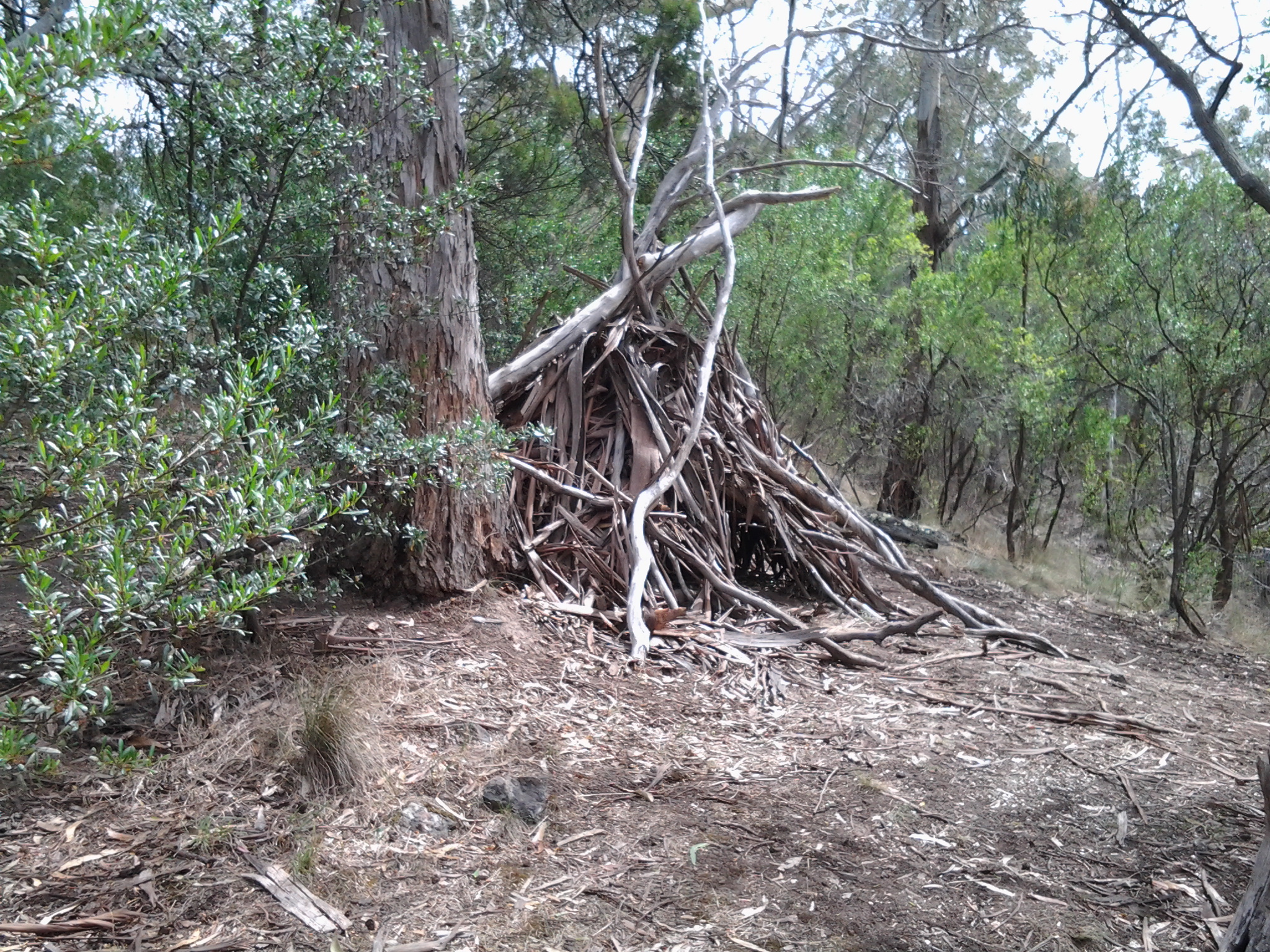
A rough bark and branch ‘hut’ near a track. Shelter from any rain?

20150202_142352

Natural rock caves

20150224_081151

Dramatic viewpoints

20150413_125912

The sun. The reflections.

20150413_131826

Looking at, listening to, smelling the bush.

20150413_140030 2015-04-13 15.11.08

And I appreciate the glories of introduced trees and man-made vistas.

Collectively these images provide a reminder of what sits beside the Derwent River as it flows from New Norfolk to its mouth.

Another revision: naturally therapeutic images from stages 7-10

I can’t help myself. Having reviewed my favourite images from the first half a dozen stages of my walk along the Derwent River, I felt compelled to continue looking through my collection from the subsequent walks.  I have chosen photos showing aspects of both the natural and man-made world and I believe all will prompt thinking about the Derwent River, Hobart and its suburbs, and the natural environment. My selection of the images with the most memorable impact for me, from stages 7-10, are given below.

20141031_094126

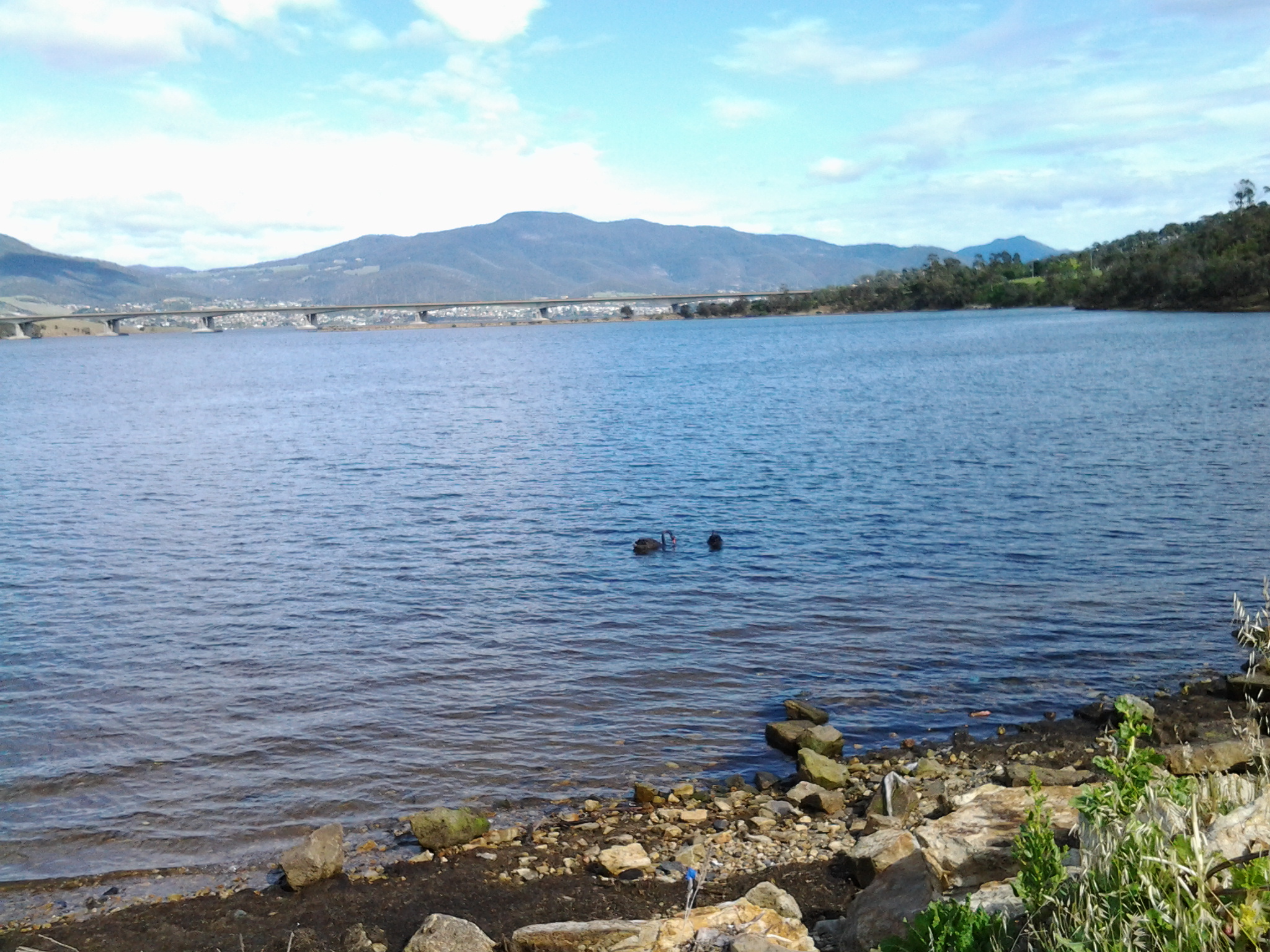
From the eastern shore looking northwards towards the Bowen Bridge, with a couple of black swans on the river.

20141031_100200

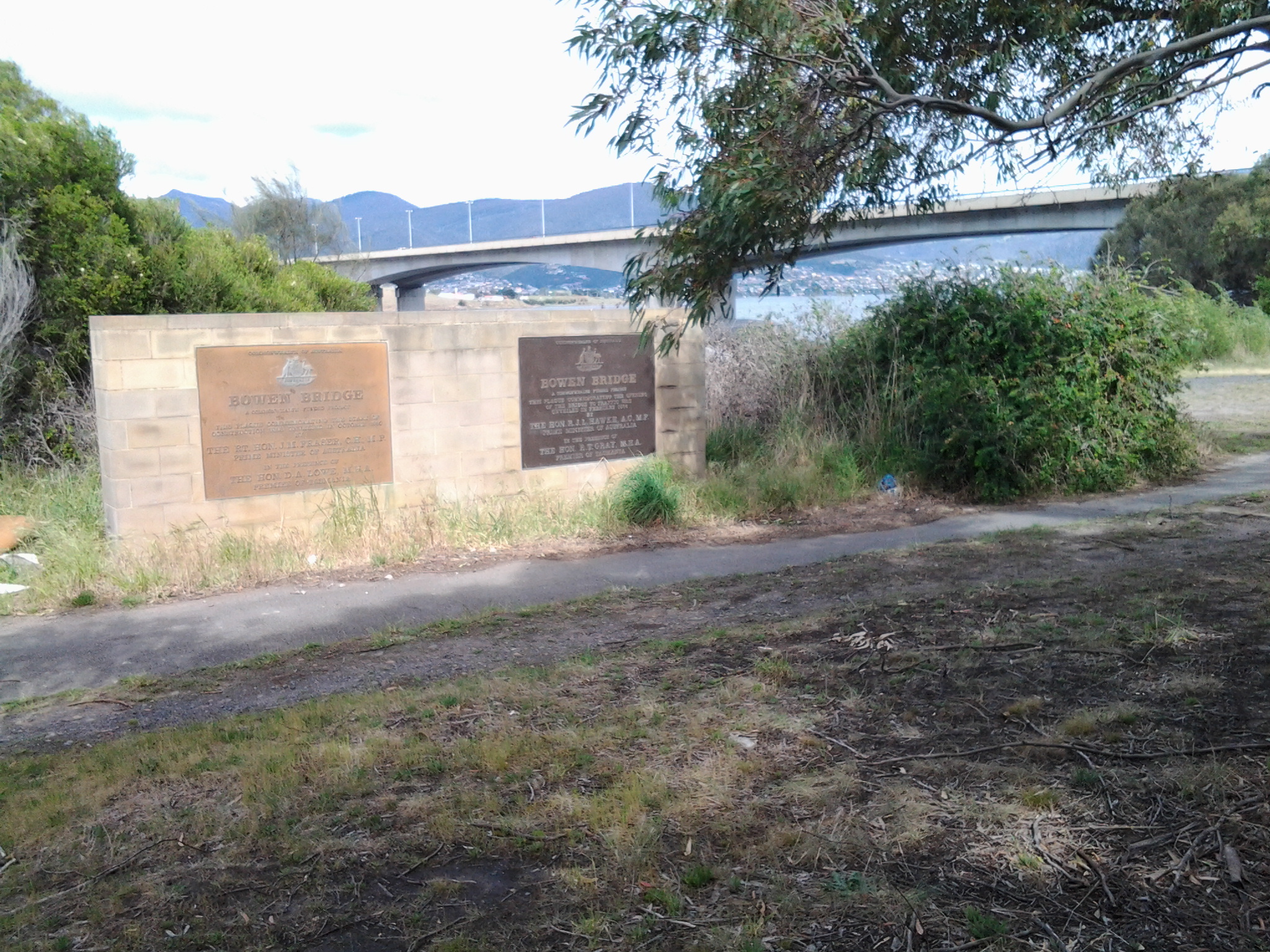
Two plaques ‘opened’ by two great Australian prime ministers near the Bowen Bridge.

20141031_104822

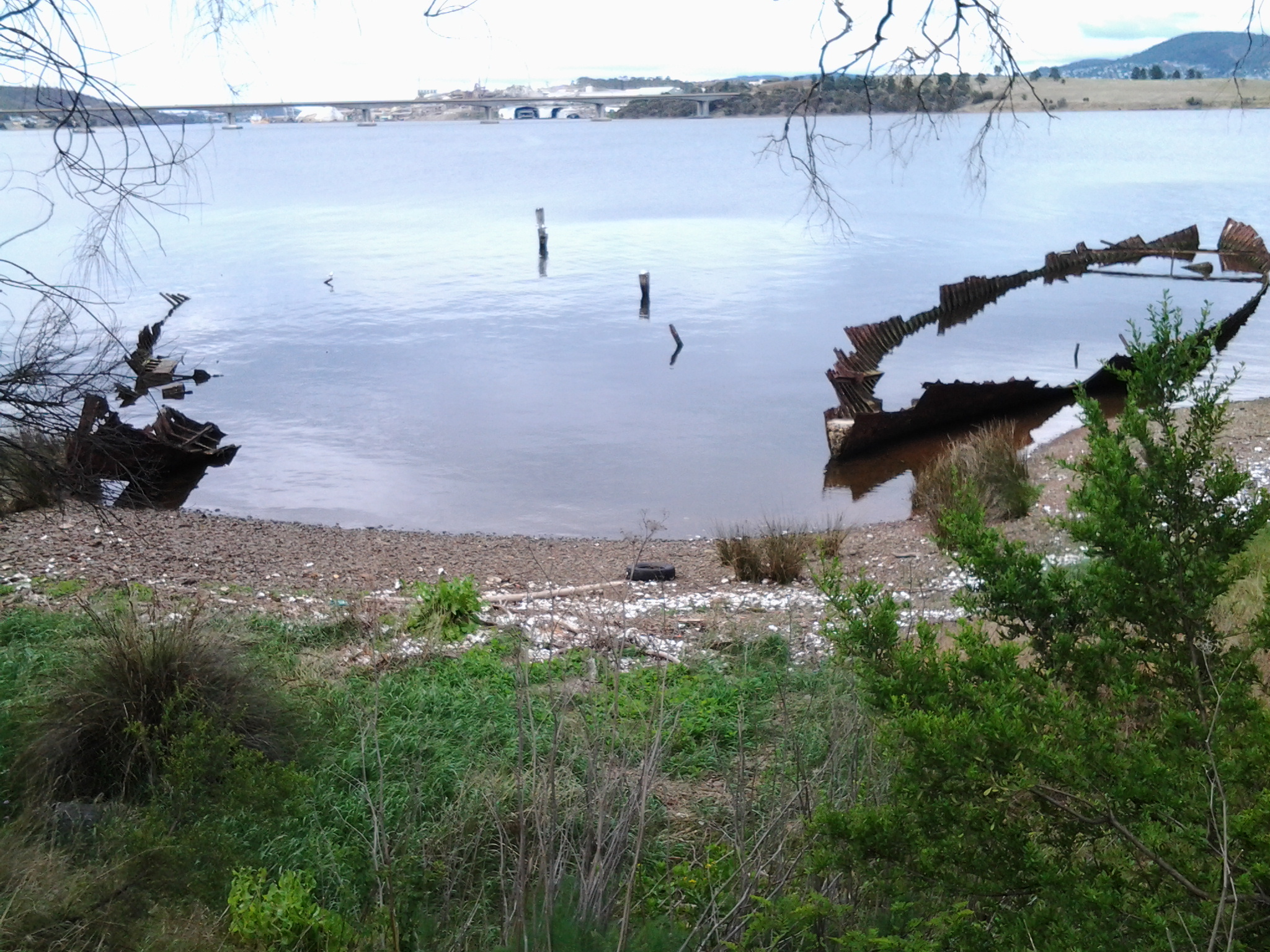
The rusting raw-edged remains of a ship, the Otago, at Otago Bay.

20141031_113132

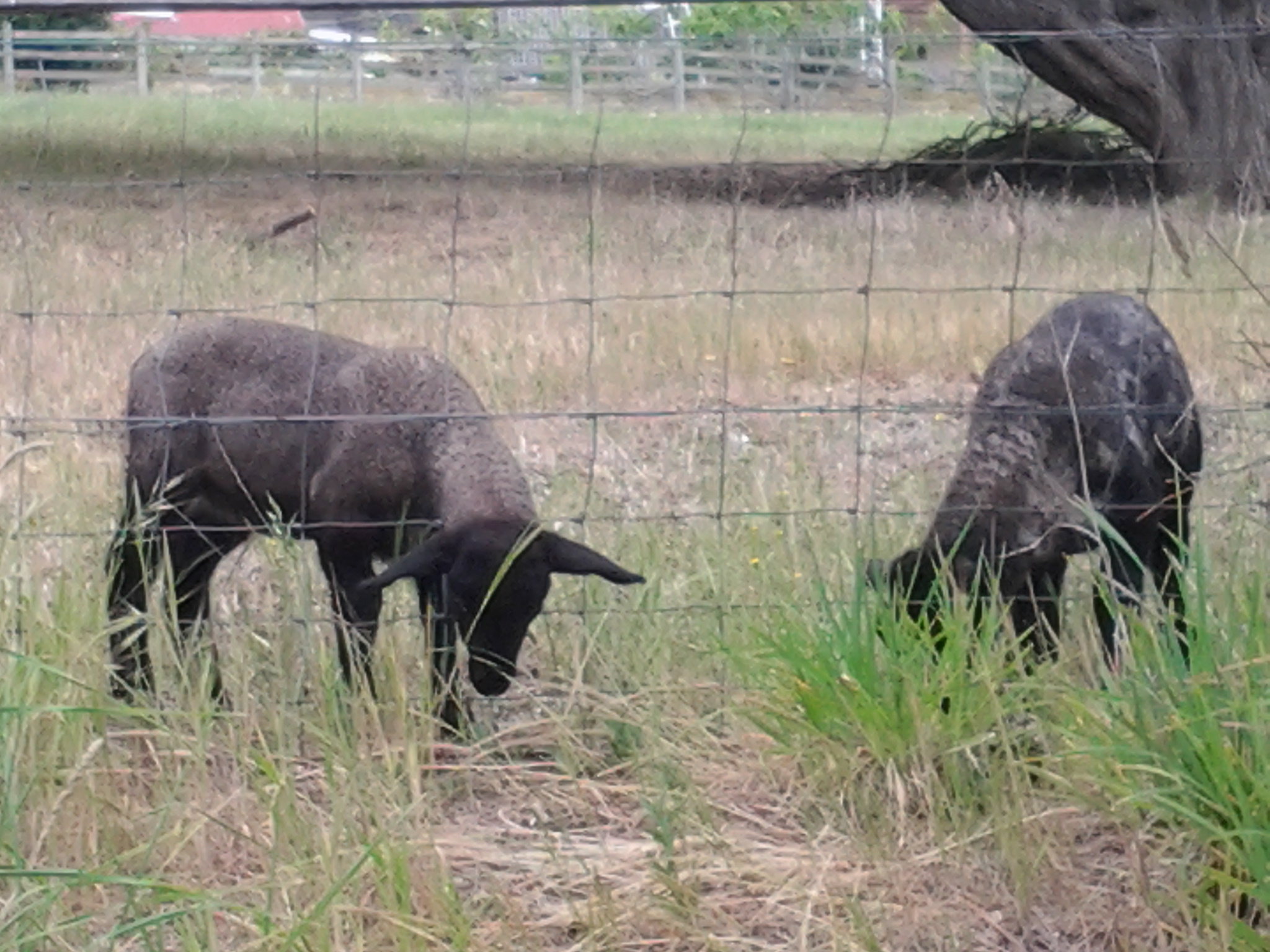
My enjoyment of any family’s black sheep.

20141031_123000

Heading into Old Beach and gradually leaving Mount Wellington behind.

20141031_132519

The gloominess of the approaching storm when I reached Old Beach.

20141111_092342 20141111_092805

The pleasures of well-made pathways, thanks to local government.

Green Point from new Old Beach

Looking northward across the Jordon River to Greens Point.

20141111_103700 20141111_121906

The glories of native flora. In these instances, it was blooming wattle and a spectacular stand of eucalyptus/gum trees which attracted my attention.

20141111_120752

The remains and the signs of a burnt out car on a back track.

20141111_130523

Knowing that it is still possible to have a laugh when walking.

20141111_131133

Arriving at the Bridgewater Bridge.

20141111_134311

Walking on the western shore of the Derwent River for the first time during this project.

20141125_095438

The house of one of first European settlers, James Austin, at Austins Ferry.

20141125_115047

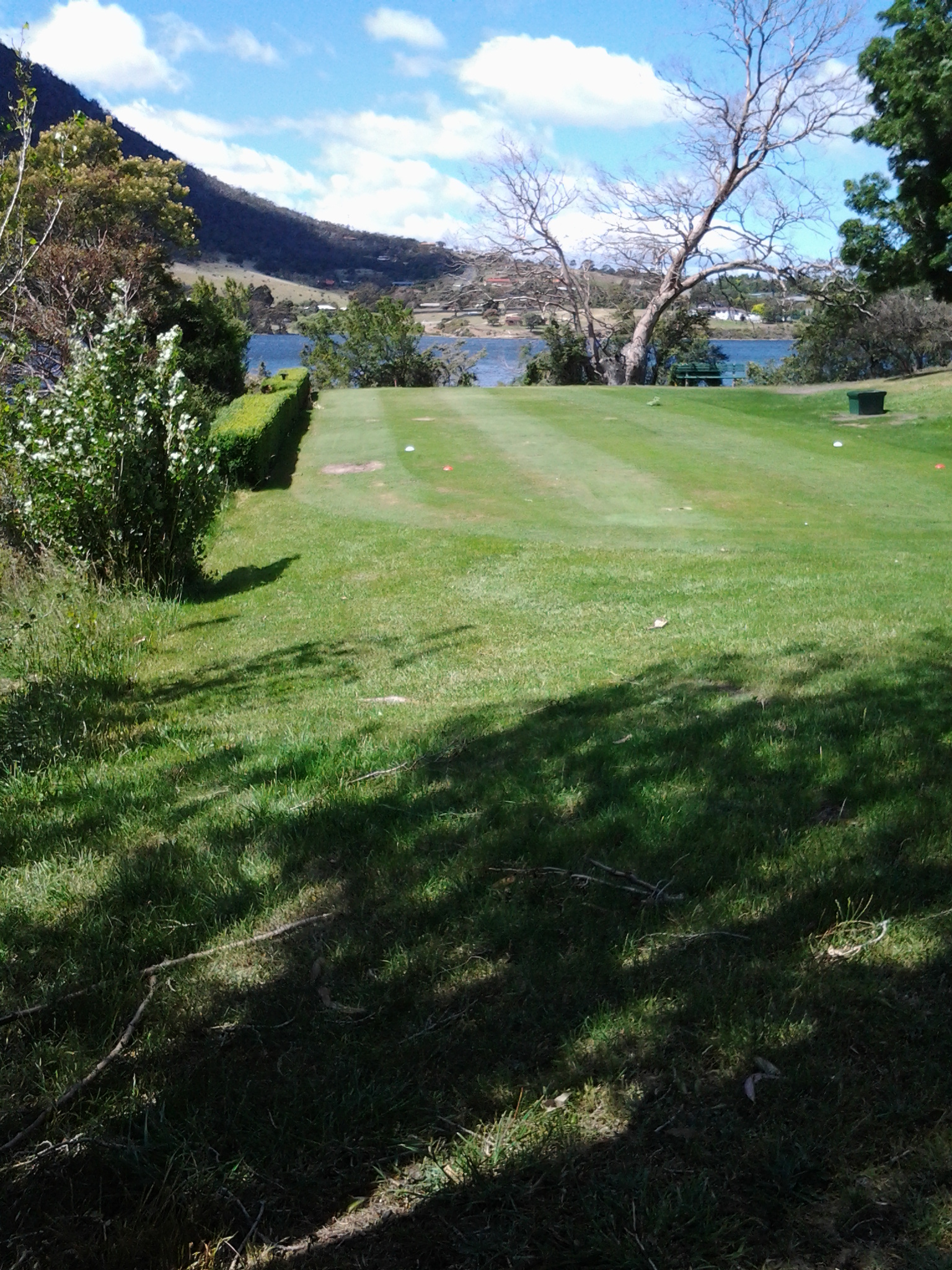
At Dogshear Point, walking around the Claremont golf course, with the thwacking sound of hit balls crossing the greens.

20141125_110906

Reaching Cadbury’s chocolate manufacturing factory in Claremont.

20141125_143454

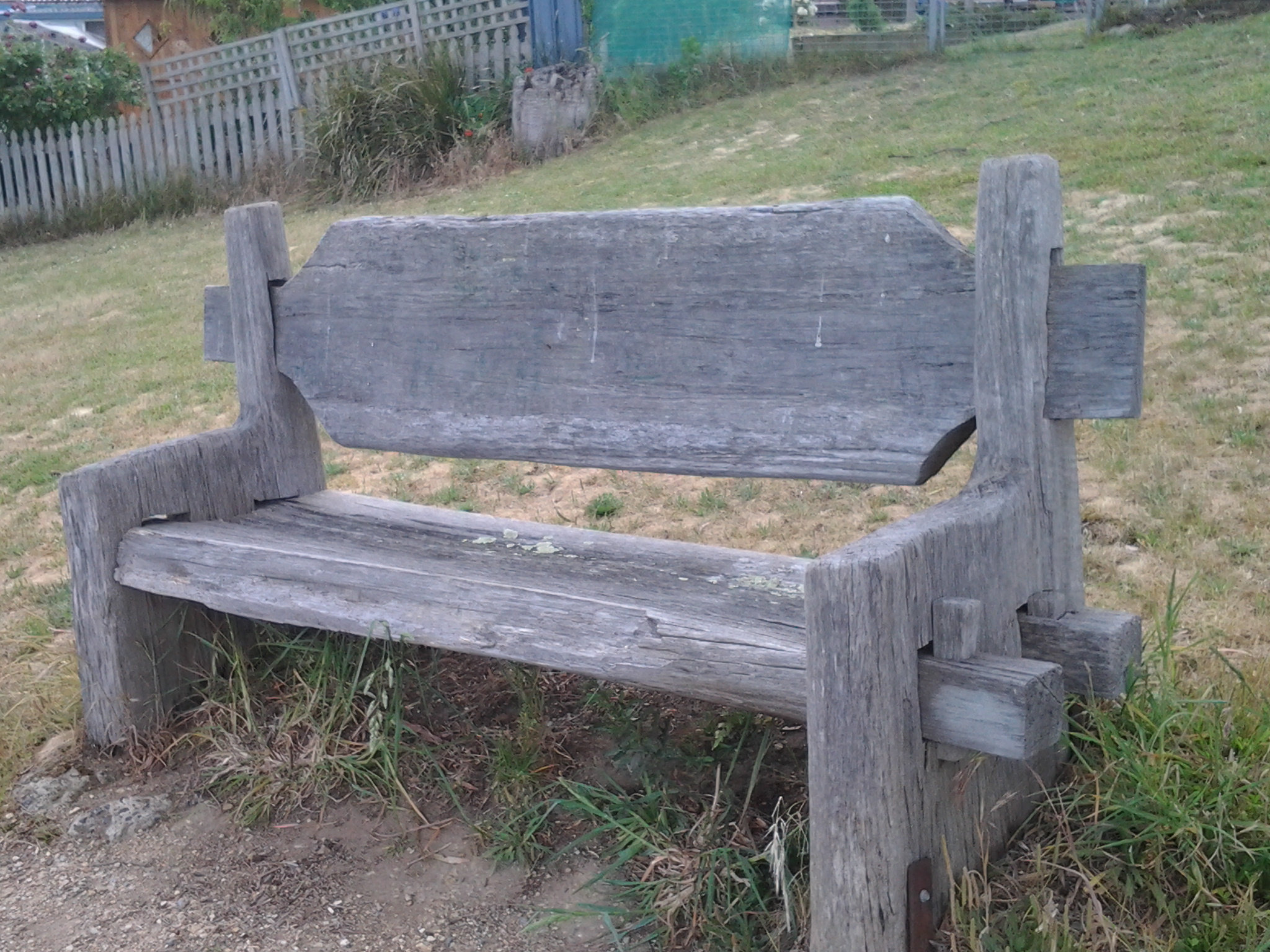
The hand-hewn rustic style seat near Connewarre Bay.

20150109_074126
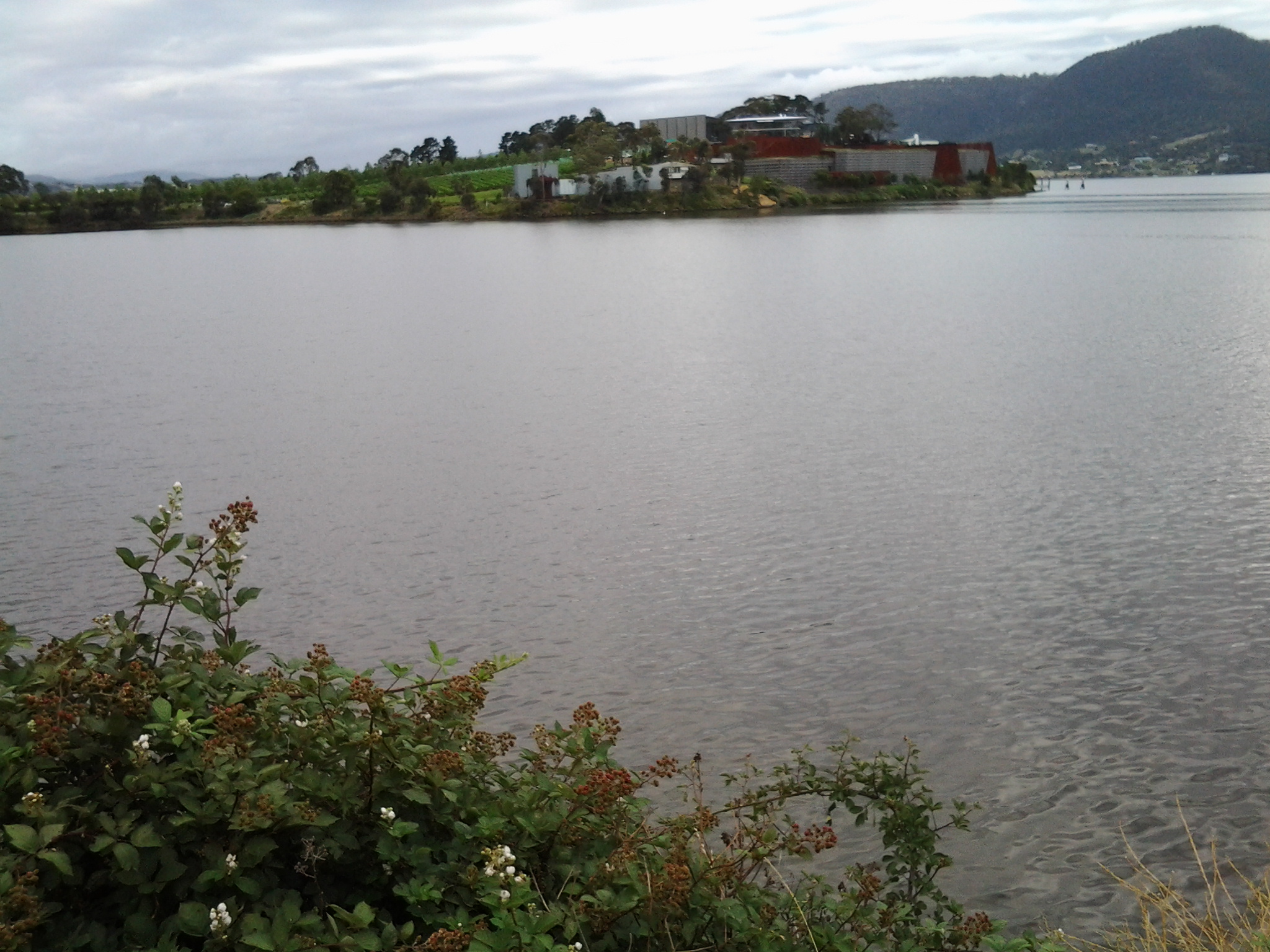
Passing MONA somewhat camouflaged as it nestles into a tiny hill against the Derwent River.

20150109_081644

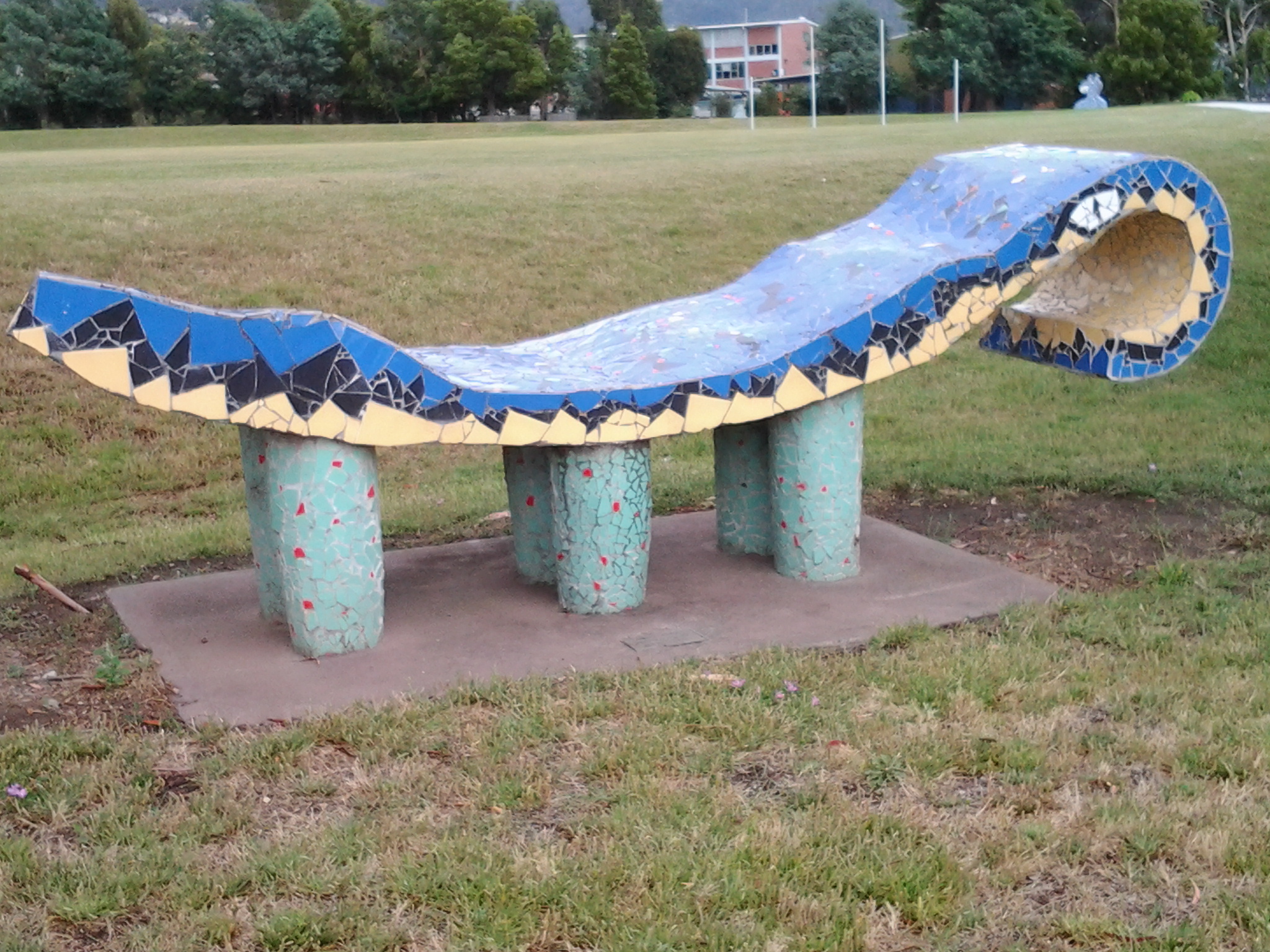
The mosaics along the foreshore.

20150109_101243

The jumble of boats and boat houses at Prince of Wales Bay.

Hoon tyre marks

Road mark making in Lutana.

20150109_132008

Cornelian Bay’s oil tanks up close.

20150109_153103

The Tasman Bridge.

20150109_155515

The circus had come to town.

20150109_161747

The emptiness of an arena of stands waiting to be filled during wood chopping competitions.

20150109_161339

Reaching the ‘end of the line’ on arrival in Hobart city.

Nature is cheaper than therapy

A Californian fiction writer M.P. Zarrella offered the opinion ‘nature is cheaper than therapy’.  Since then, her point of view has spawned posters, cushion covers, and T shirts such as:

Nature cheaper than therapy  and tshirt nature its cheaper than therapy

The use of this comment spread until people couldn’t help themselves …

facebook cheaper than therapy and Beer is cheaper than therapy

Thinking about whether nature is cheaper (with the inference of ‘better’ than therapy), I have been inspired to trawl through my walking-the-derwent photos.

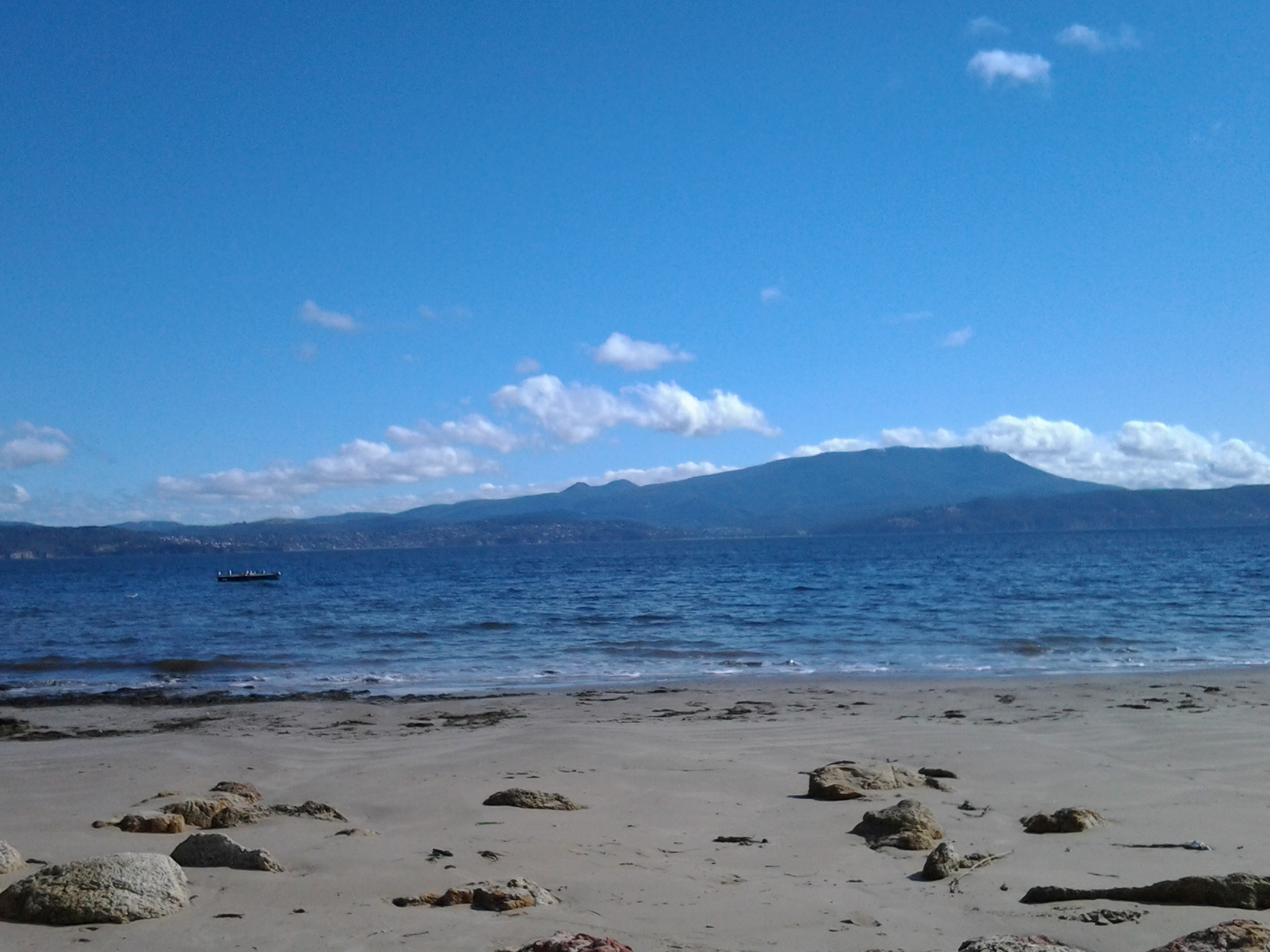
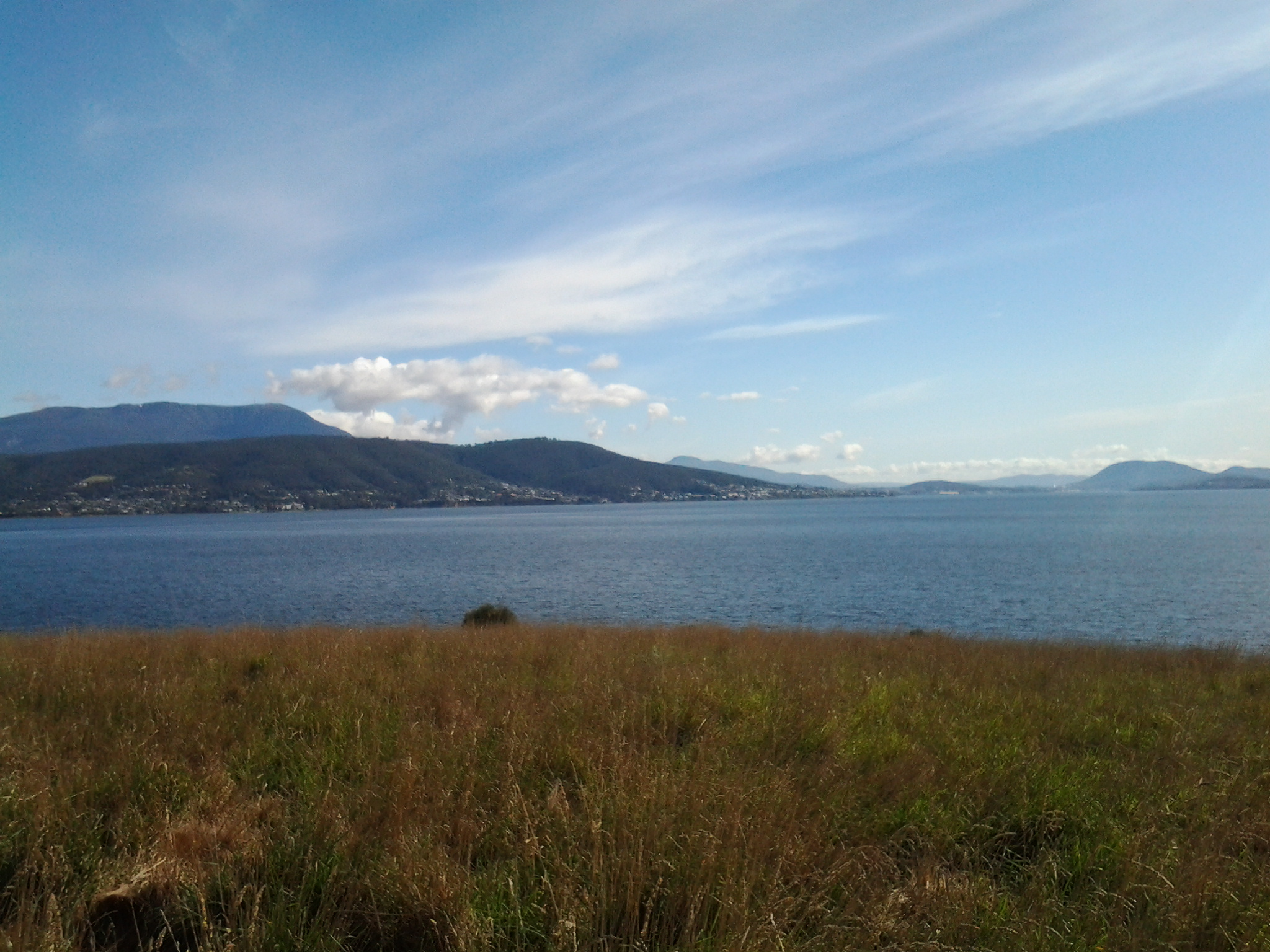
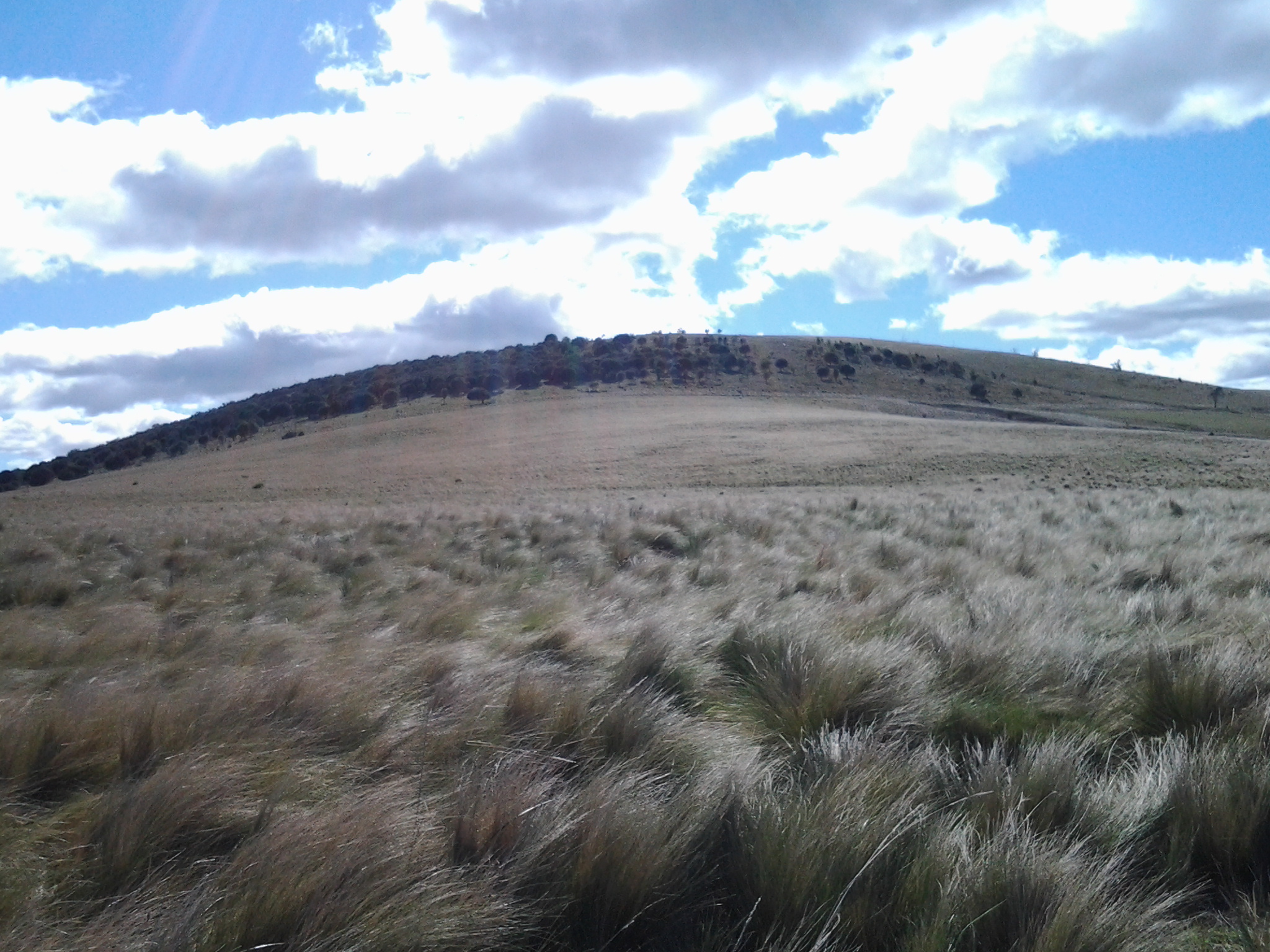
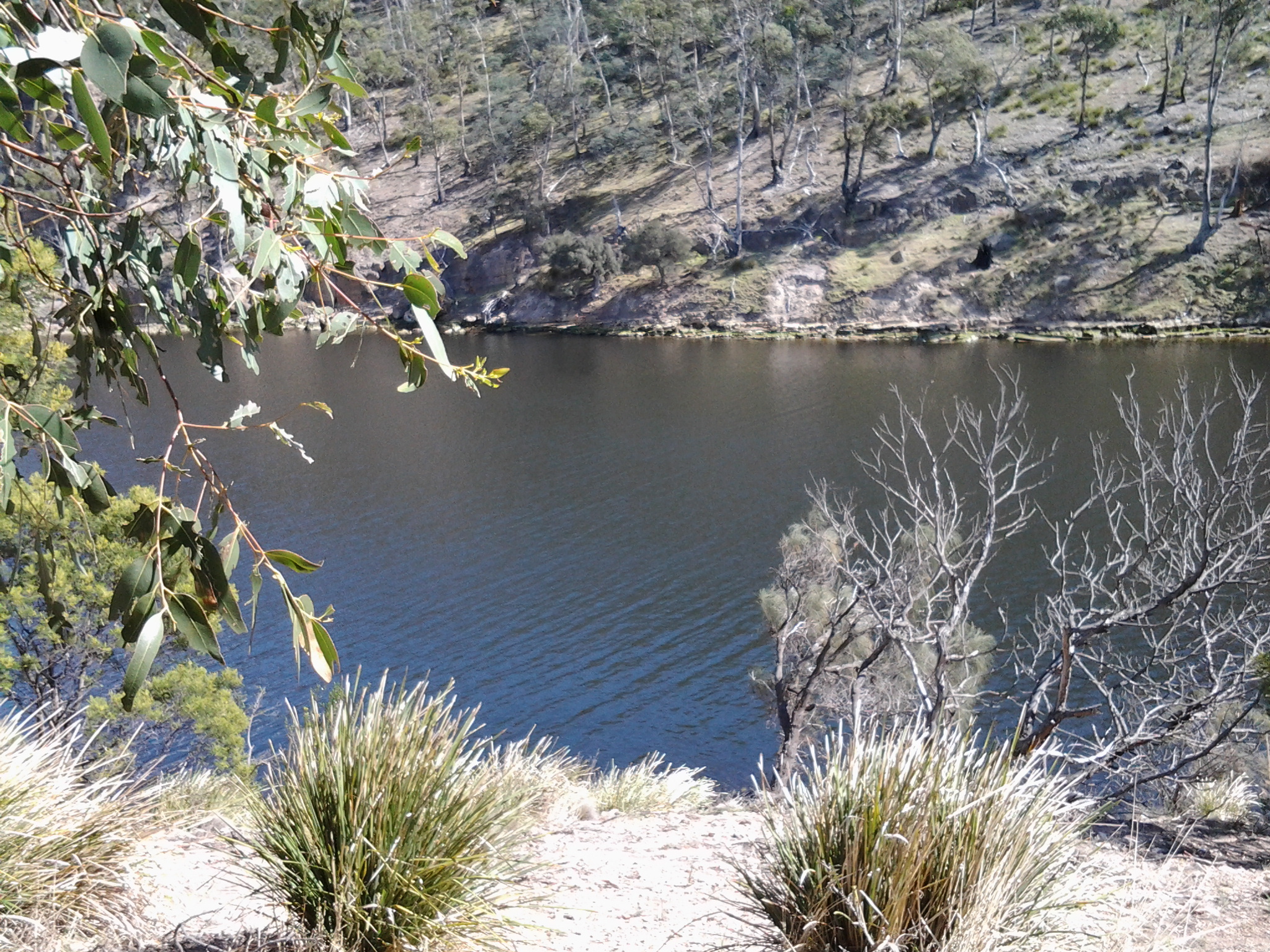
Here are a few favourite natural scenes clicked during Stages 1-6 of my walks along the eastern shore of the Derwent River.  Most of these images spent time as my computer screen background where they lifted my spirits daily.

20140822_100301

Iron Pot off the southern end of South Arm peninsula

20140822_101716

Driftwood beach shack on Pot Bay Beach, South Arm peninsula

20140822_114606

Mount Wellington across the Derwent River from South Arm Beach

20140904_110312

Looking northwards into the gigantic Derwent Harbour from Gellibrand Point at the northern end of the South Arm peninsula.

20140920_102738

Looking uphill from Trywork Point

20140926_095629

Lichen on rocks at Tranmere Point

20140926_104056

Little Howrah Beach

20140926_115158

Looking southwards along Bellerive Beach

20141010_093842

The suburb of Sandy Bay across the Derwent River through the casuarina trees from Rosny Point

20141010_123003

Tranquil Geilston Bay looking toward Mount Wellington

20141015_101248

Bedlam Walls Point

20141015_104855

Shag Bay

20141015_122048

Native flowers in the East Risdon State Reserve

20141015_133435

Tommys Bight

Whenever the weather is deteriorating outside my window, by looking at these photographs from the first 6 of 14 walking stages, I ‘revisit’ the various locations and feel most uplifted. No therapy needed here.