Tag Archives: Tasmania

The Queens Domain

Hobart’s Queens Domain includes the land encompassing the Botanical Gardens, Government House, the old navy depot, the Regatta Grounds, the Cenotaph and much more.  The Hobart City Council commissioned a Master Plan for the maintenance and development of the social and cultural heritage of this area and it can be accessed at: www.hobartcity.com.au/Recreation/Queens_Domain. A wonderful swag of images of many parts of the Domain can be viewed from this same site.  Simply read down the menu of options and then click on photos of the Domain.

From the Tasman Bridge to Hobart’s old navy depot

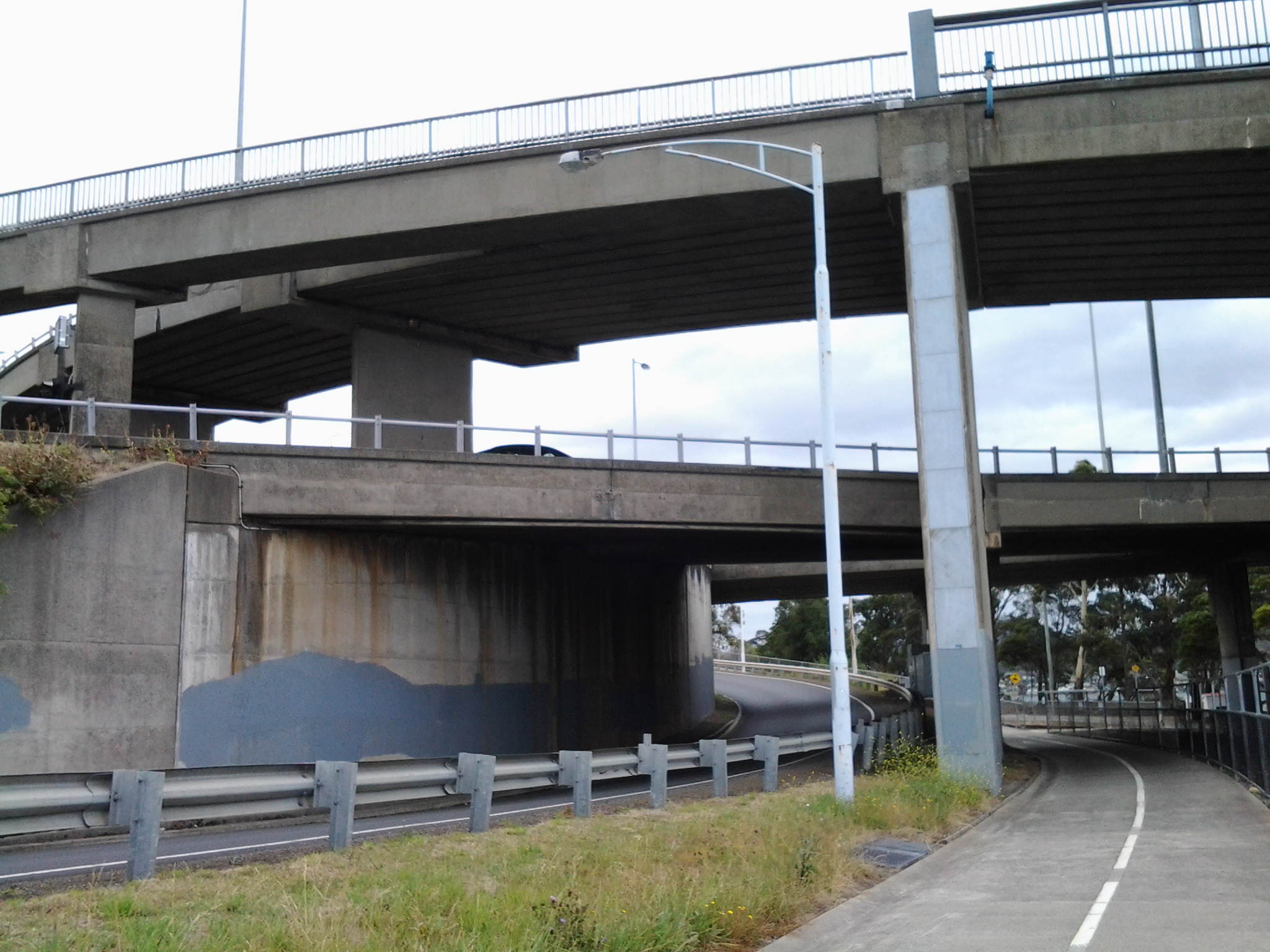
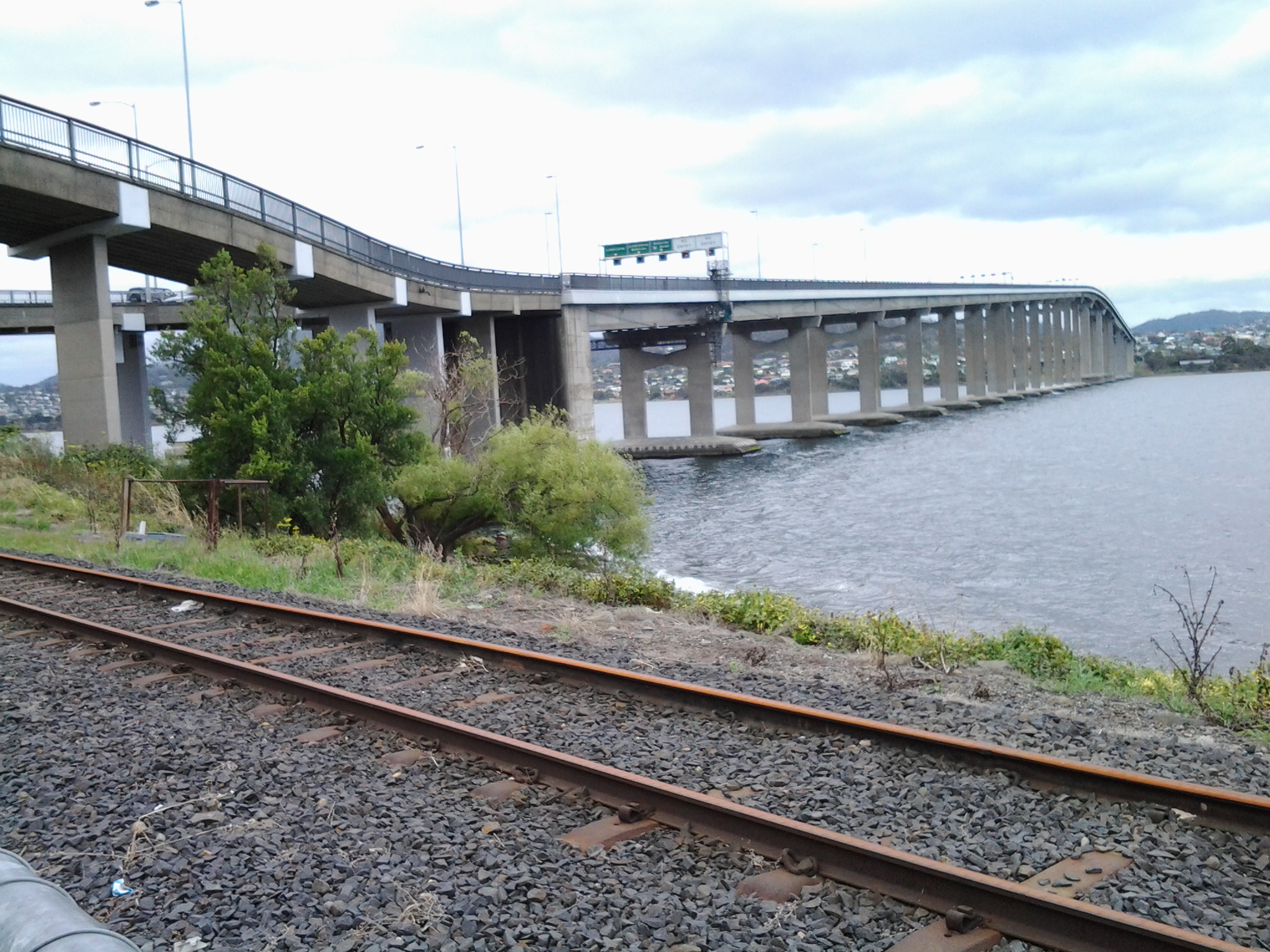
Walking from Cornelian Bay towards the city of Hobart and under the Tasman Bridge was something I had not done for a few years. In the past I could see signs of homeless people using areas under the bridge but not this time. I had a sense that some sort of industrial bridge work was in progress and that the authorities would be around and about here frequently.

20150109_152735  20150109_153103

From the Tasman Bridge into the city I remained on the bike path where I was continually vigilant for cyclists riding fast and hard – to help them and to help myself, I stayed firmly to the left of the path so they could whip by.

20150109_153134

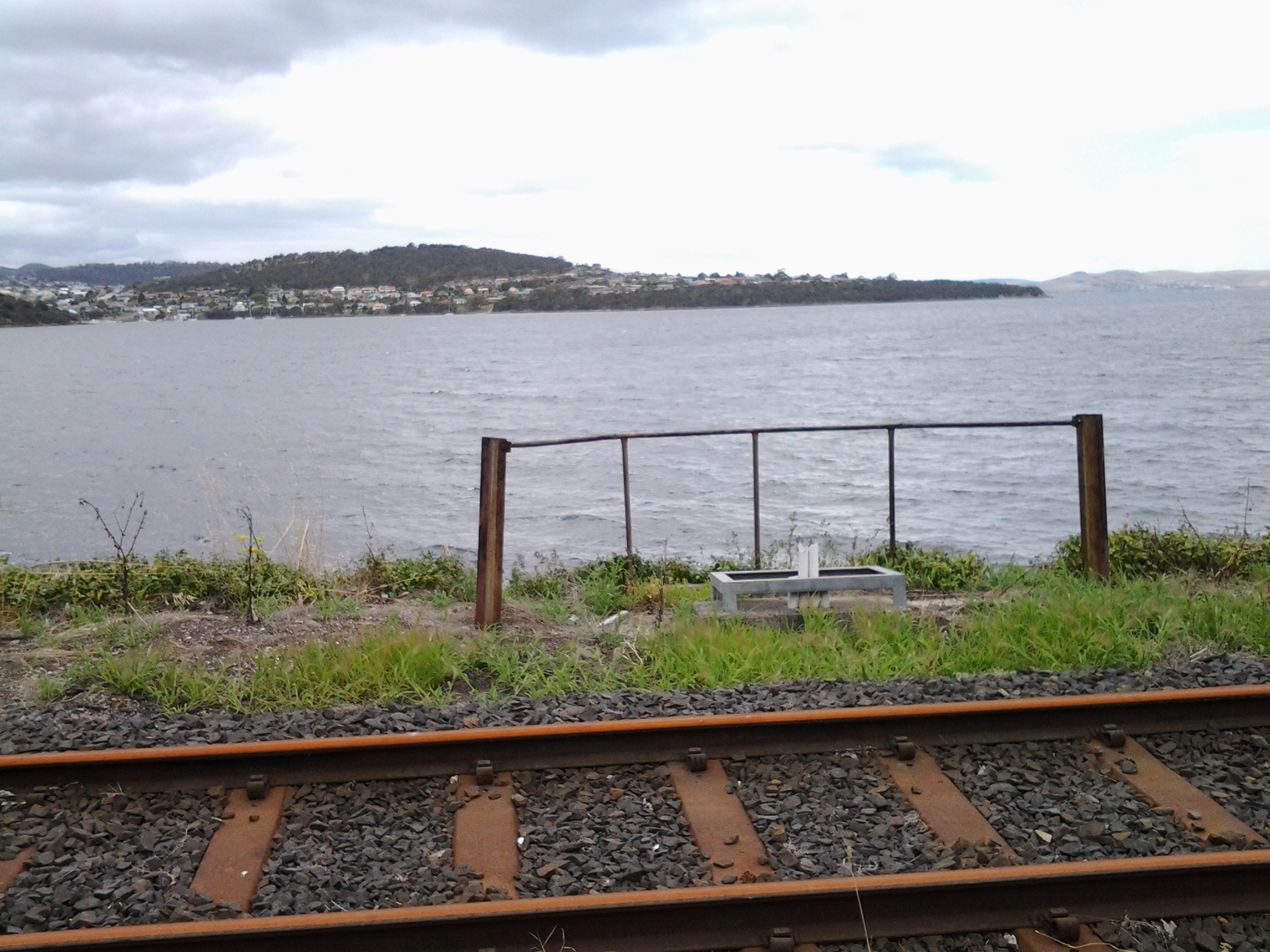
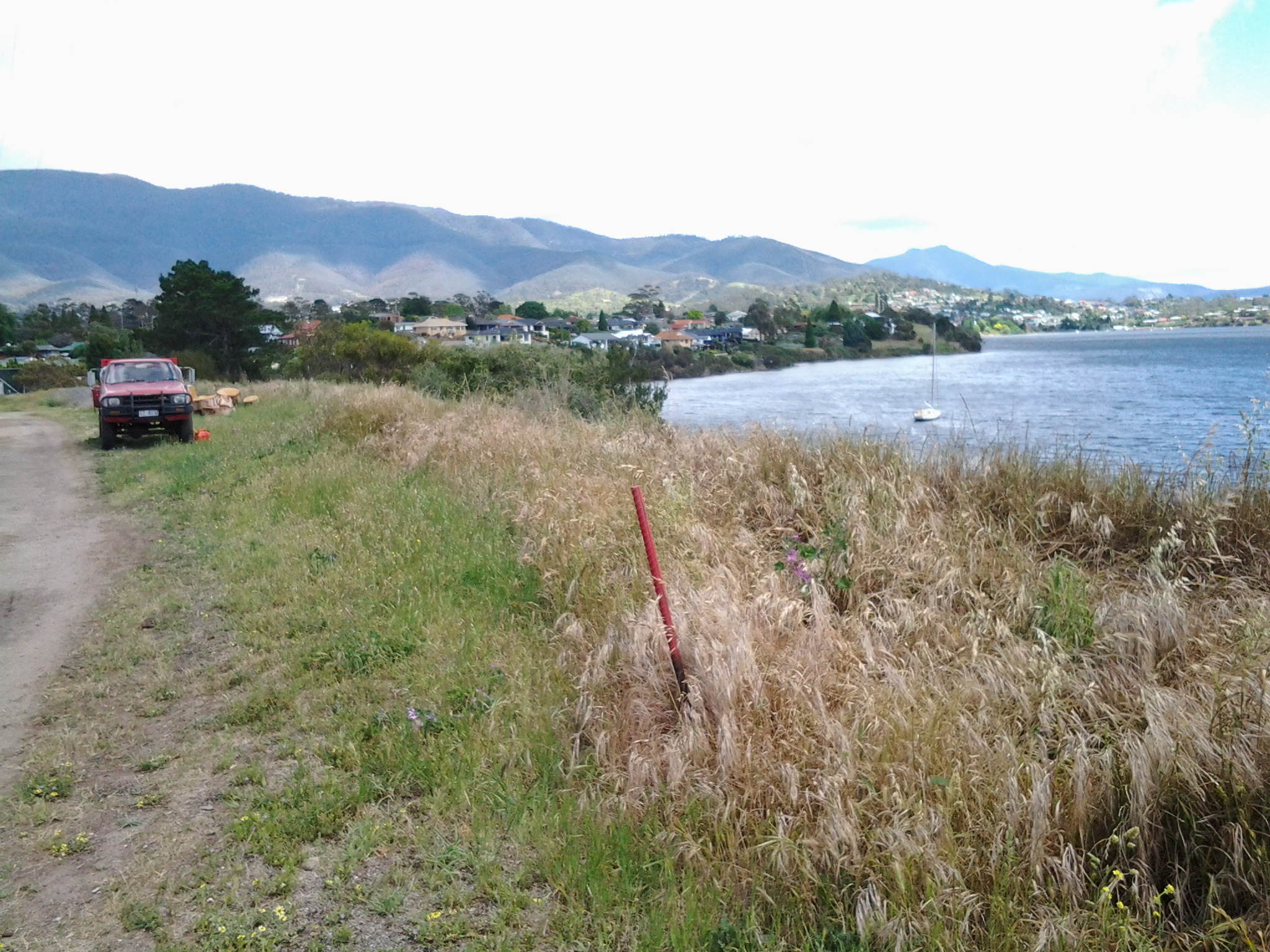
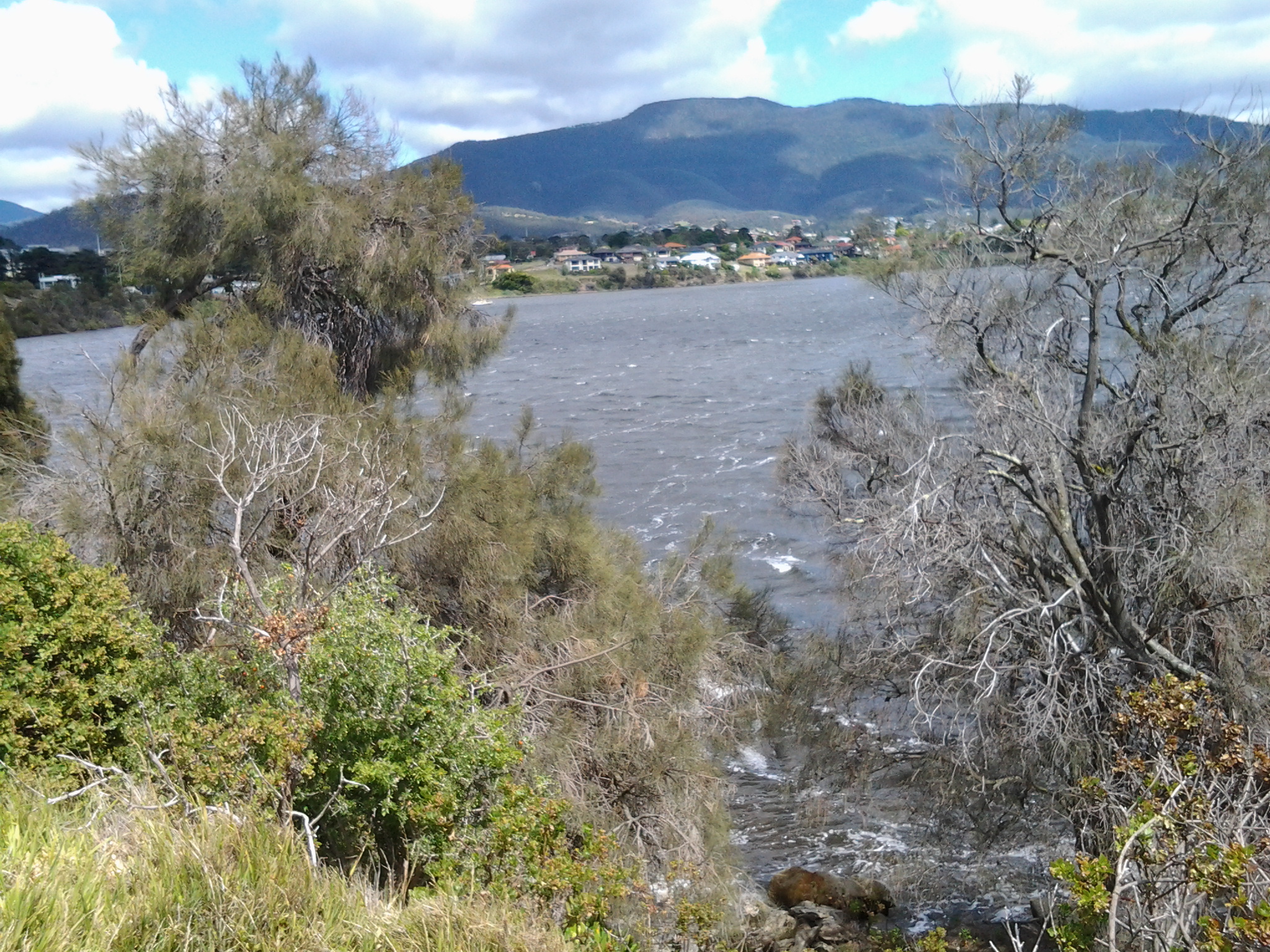
I looked over Ross Bay and across the Derwent River to the shores of previously walked suburbs such as Montagu Bay and Rosny.

 20150109_153023  20150109_153050

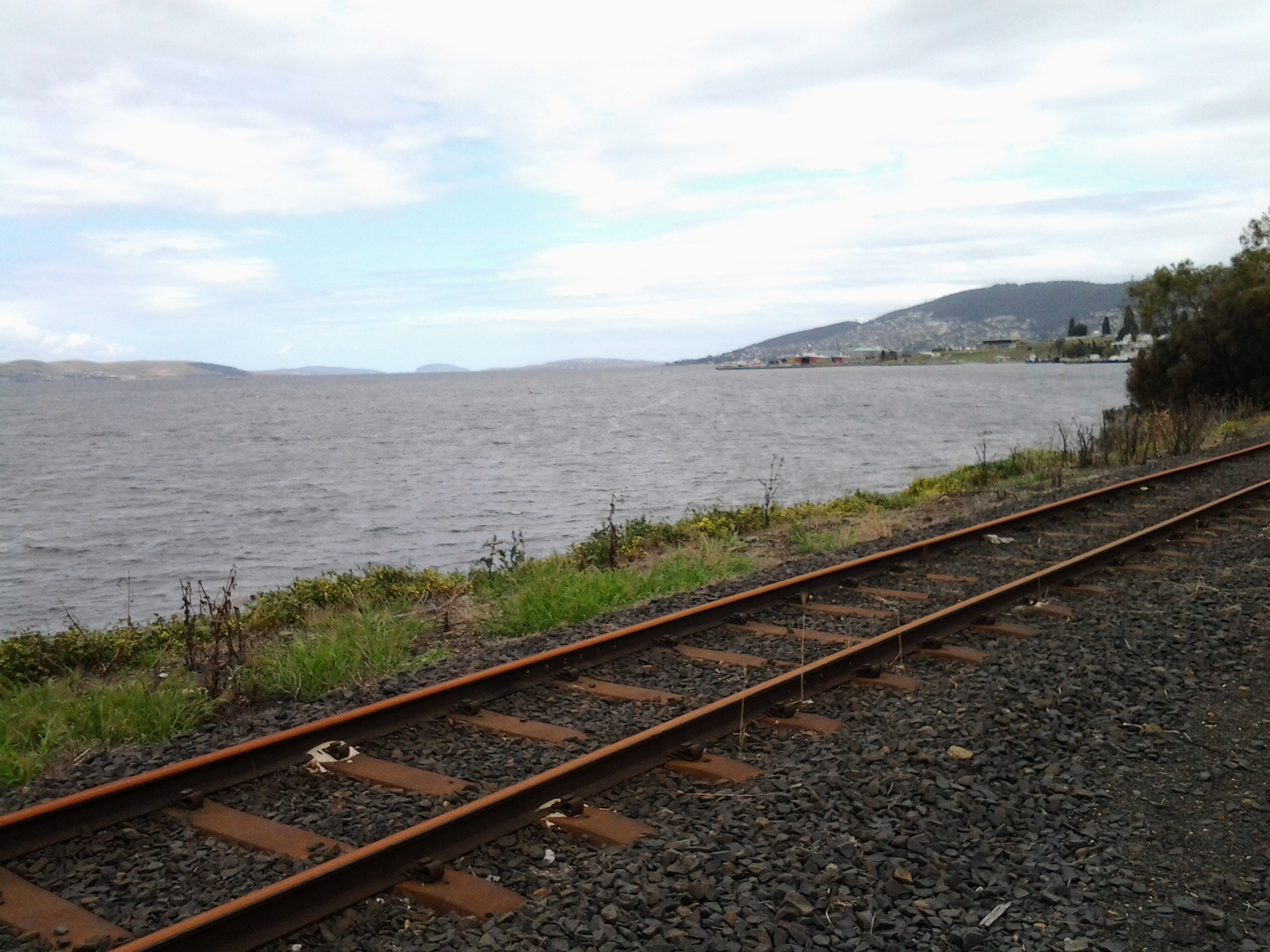
I looked down the river and could vaguely see the isthmus joining the South Arm peninsula to the mainland of Tasmania; an area where I walked during Stage 1 and 2 of my walk along the Derwent River.

20150109_153056

I continued along the bike path heading towards the old navy depot near the Hobart Regatta Grounds.

20150109_154621

I passed two large tug boats resting at their berths.

20150109_154926

It did not seem to take a long time and much walking before I could look back and see the Tasman Bridge was growing considerably smaller again.

20150109_155228

Uphill on my right, occasionally through the trees I could glimpse parts of the 19th century sandstone block Government House.  Further information about the House can be read at http://www.govhouse.tas.gov.au/. The flag was flying high indicating the Governor was in residence.

20150109_153126  20150109_153944

Tasmania’s new Governor is our first female Governor. Her Excellency Professor The Honourable Kate Warner AM, Governor of Tasmania was sworn into service on 9 December 2014.

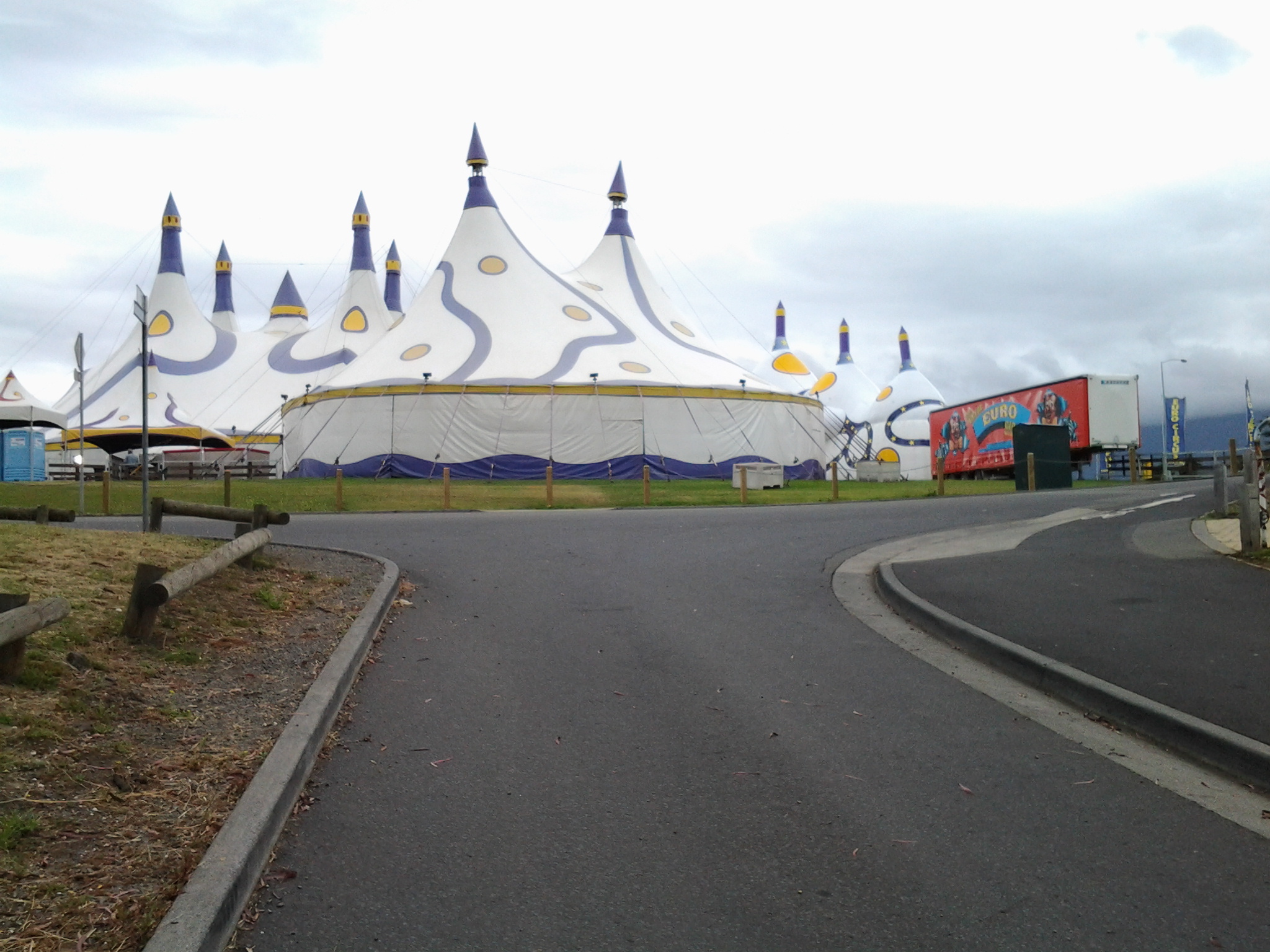
At 3.55pm I had arrived at McVilly Drive which crossed my path. On the rise to my right, grandiose circus tents filled my view and I could hear a performance was underway with the booming voice of a ringmaster surrounded by pumping pop music.

20150109_155515

I discovered a family of powerful Clydesdale horses corralled by electric wire fences and comfortably grazing on the lawns around the other side of the circus.

20150109_162654

A different boom startled me. I realised a large ship somewhere close was blowing its ‘trumpet’. I was close to the main Hobart port. A seaplane flew overhead presumably with a load of tourists enjoying the view.

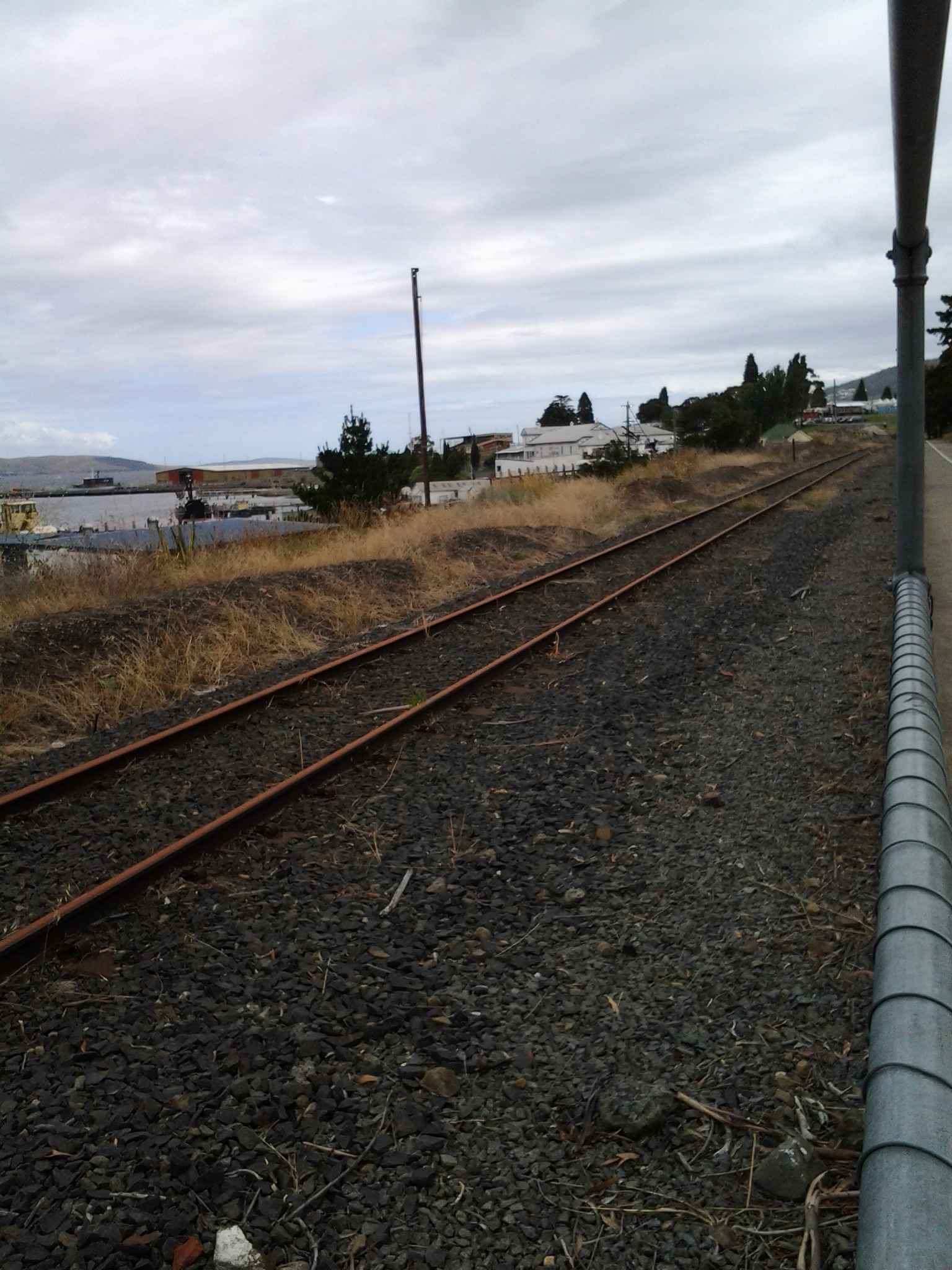
I turned left at McVilly Drive and instead of walking down to the water where I could see there would be no further access southwards, I chose to walk to the right along the metal sleepers of the disused railway line behind a cluster of old white painted buildings, which had started their lives as a navy depot.  Once past the back of the old buildings I walked downhill, watched a cluster of fishermen not yet catching any fish, and turned left and walked northwards along a road leading to an entrance to the navy depot.

Currently known as Huon Quays and located at 17 McVilly Drive, Hobart, you can refer to photographs at http://www.realcommercial.com.au/property-land+development-tas-hobart-501343663 and see that this set of old buildings could be sold for a hotel development.  First built in 1914 as a naval depot, the building includes a ‘Drill Hall’ (major function centre) ‘Club Huon’ (19 rooms for backpackers), ‘Commandants House’ (residence, bar and lounge) plus offices, amenities block, store rooms and night quarters. Originally this was the home port for the navy ship HMAS Huon and the drill hall was constructed for navel cadets.  According to http://www.soldierswalk.org.au/walk_domain.html, the site “served as an important training centre and home dock for a number of small naval vessels until the base was de-commissioned in 1994. The oldest remaining buildings date from 1912-13.”

What I saw on my walk was:

20150109_160405 20150109_160435 20150109_160439

I realise that with increased visitor numbers to Tasmania, accommodation can be difficult to find at times of festivals, special concerts and important sporting events, and that therefore Hobart needs more hotels. However the thought of this rather pretty building being demolished to make way for a less interesting building worries me.  But perhaps the new owners might create something in keeping with the site’s heritage. I will watch with interest.  I left at 4.07pm to continue my walk.

Bus/public transport lovers

There are a few of us, and yesterday the internet was running wild with a story of another bus lover.  Did you hear about the black Labrador who gets on a bus and knows when to get off at the Dog Park bus stop, and does this trip regularly in Seattle without her owner – much to the delight of all the passengers and driver.  You can read more at http://www.news.com.au/lifestyle/home/eclipse-the-black-labrador-takes-herself-to-park-in-seattle-on-bus/story-fngwib2y-1227184034770  I guess the regulations are different in Seattle from those in Tasmania; she had her feet on the seats!!!!  People get thrown off buses for less.  Perhaps it is time we loosened up here.

Goodwood. Not sure about the ‘good’.

After walking across Goodwood Road (on Stage 10 of my walk along the Derwent River) which extends from the Bowen Bridge at one end to Glenorchy suburbs at the other, I was puzzled by a sign on one corner indicating behind it was a Model Park.  There were no trees. What sort of park was this? It seems this is a place for big boys to play with their model cars etc.  Special tracks were clustered in different parts of the ‘park’.

20150109_093005

Not much further along the road to the left (Innovation Drive –someone gave this name a lot of thought and presumably smirked in satisfaction) was signed as the entry to Tasmania’s hopes for technological innovation, Tasmanian Technopark.

20150109_093306

The Technopark was the brainchild of a government minister and his public service department around 2000. A small amount of information can be read at http://www.stategrowth.tas.gov.au/home/about_us/tasmanian_technopark. A federal government website has a whisper of additional information at http://www.australiangovernmentgrants.org/TASMANIAN-TECHNOPARK.php. I am surprised that there is no easily googled publicity about the achievements of this program. Can Tasmania ever equal the cut and thrust of innovation coming out of other small or remote places like Singapore, Finland, Iceland, etc?  What are we doing right and what could be done better to achieve successes?  Who knows? I couldn’t find any such information on the internet.

In the absence of any clear way to walk around the Derwent River edge of Dowsing Point, on which the Technopark is located, I thought it best to leave that exploration for another day and to continue along Howard Road.

Goodwood, in my experience, turned out to be the dog poo suburb of the Greater Hobart Area.  Excrement was everywhere in perfect form or squashed on the pavements, or the various colours dotted grassy verges.  I didn’t waste time on photography for which I am sure you are thankful – the choices were too great!

Firstly I turned left into Negara Crescent which was a street combining mean, low level, paint-flaking, unmown lawns, weed infested residential properties (okay – well not all were, but many were) with light industry such as Linen Services Tasmania, boat works, Anchor Wet Suits, Towbar and Crash bar repairs, fishing supplies, and a large unnamed workshop building emitting unpleasant chemical smells. Those houses which had Derwent River frontage sometimes had escaped overgrown blackberry infestations blocking river access in their back yards. There wasn’t a sense of wanting to live caringly or beautifully here. Accessing the River is impossible without entering private land around this locality. The built-in nature of some parts can be seen on the sign for a block of land that has been sold.

20150109_094257

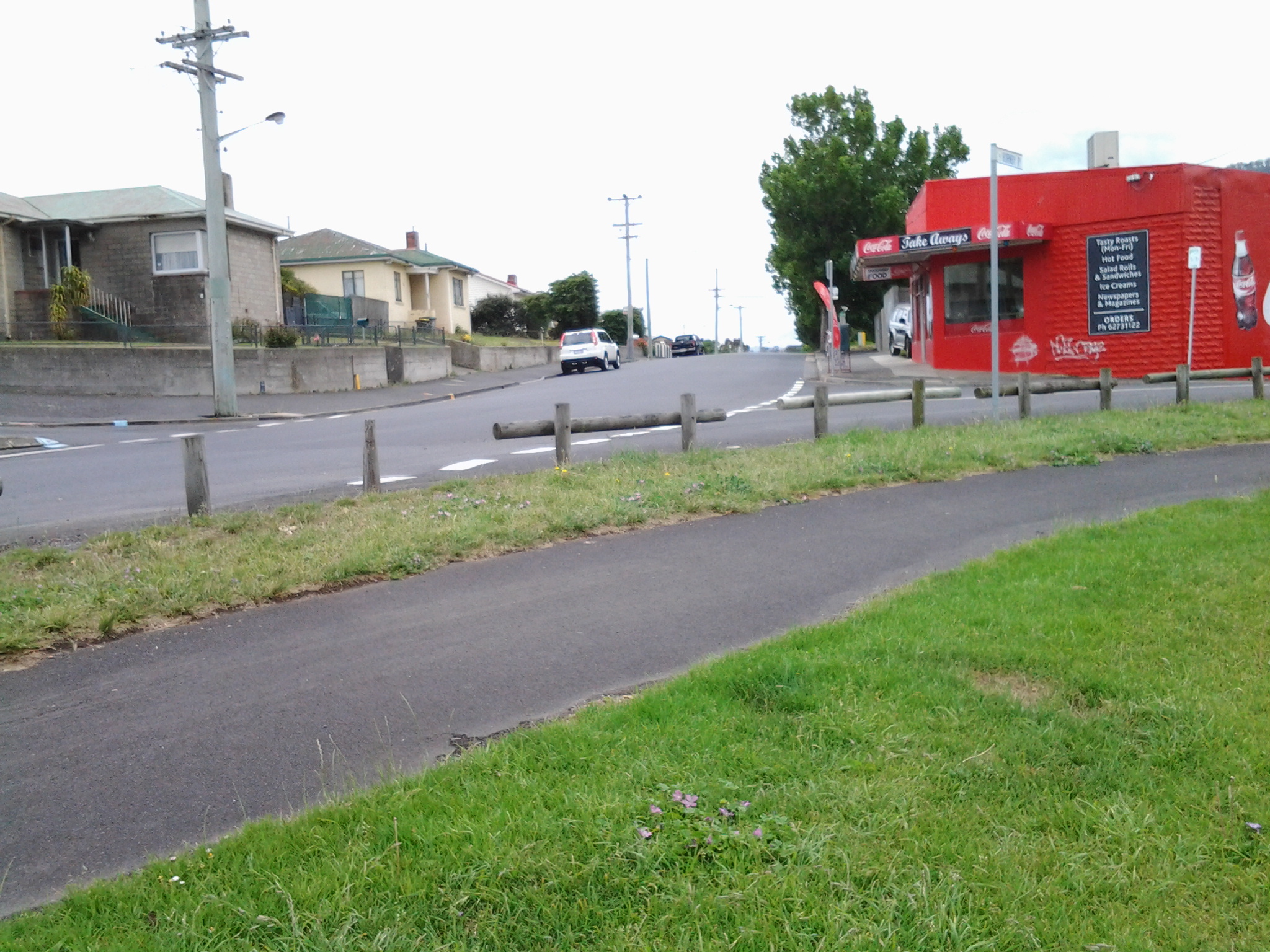
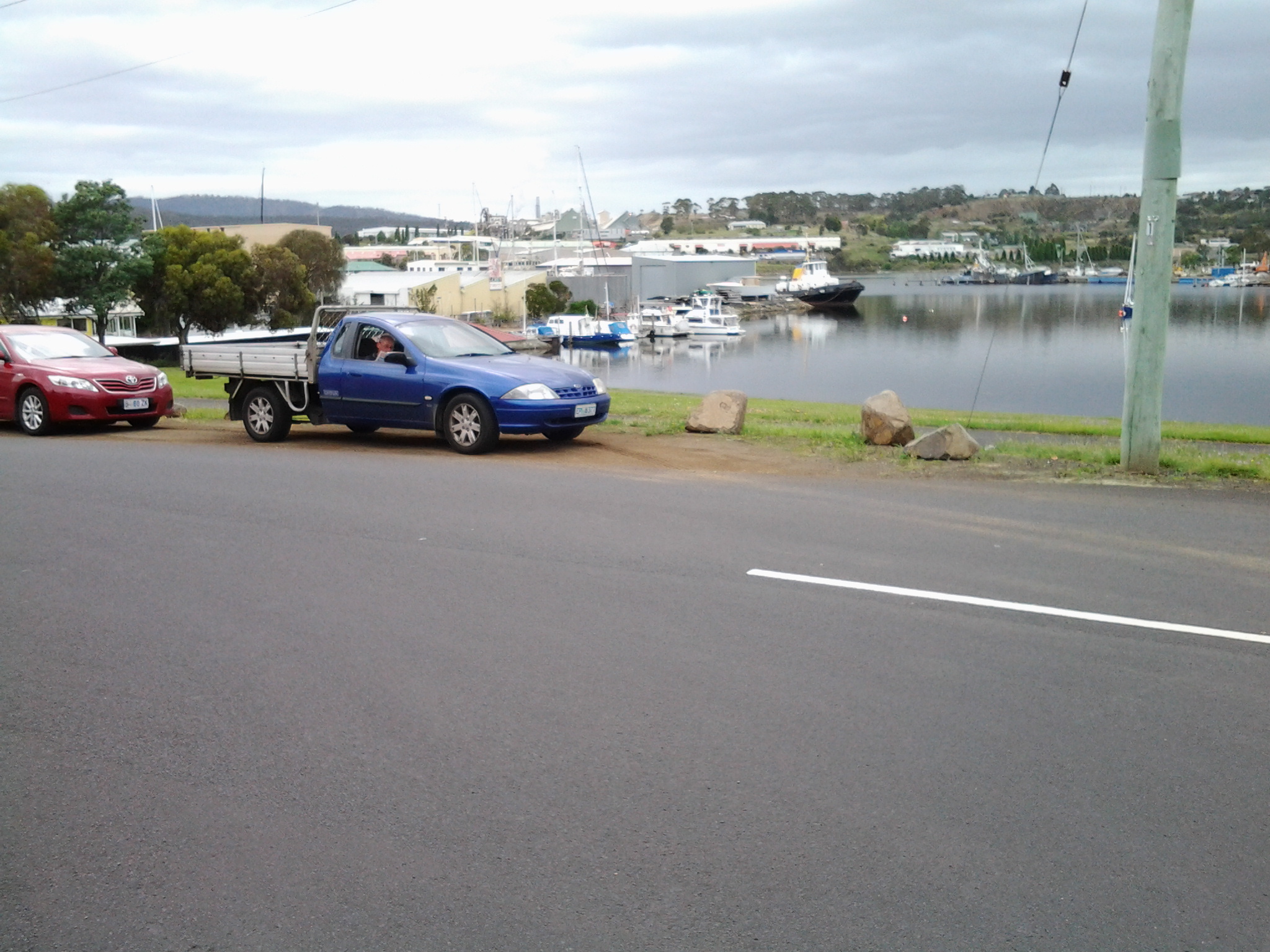
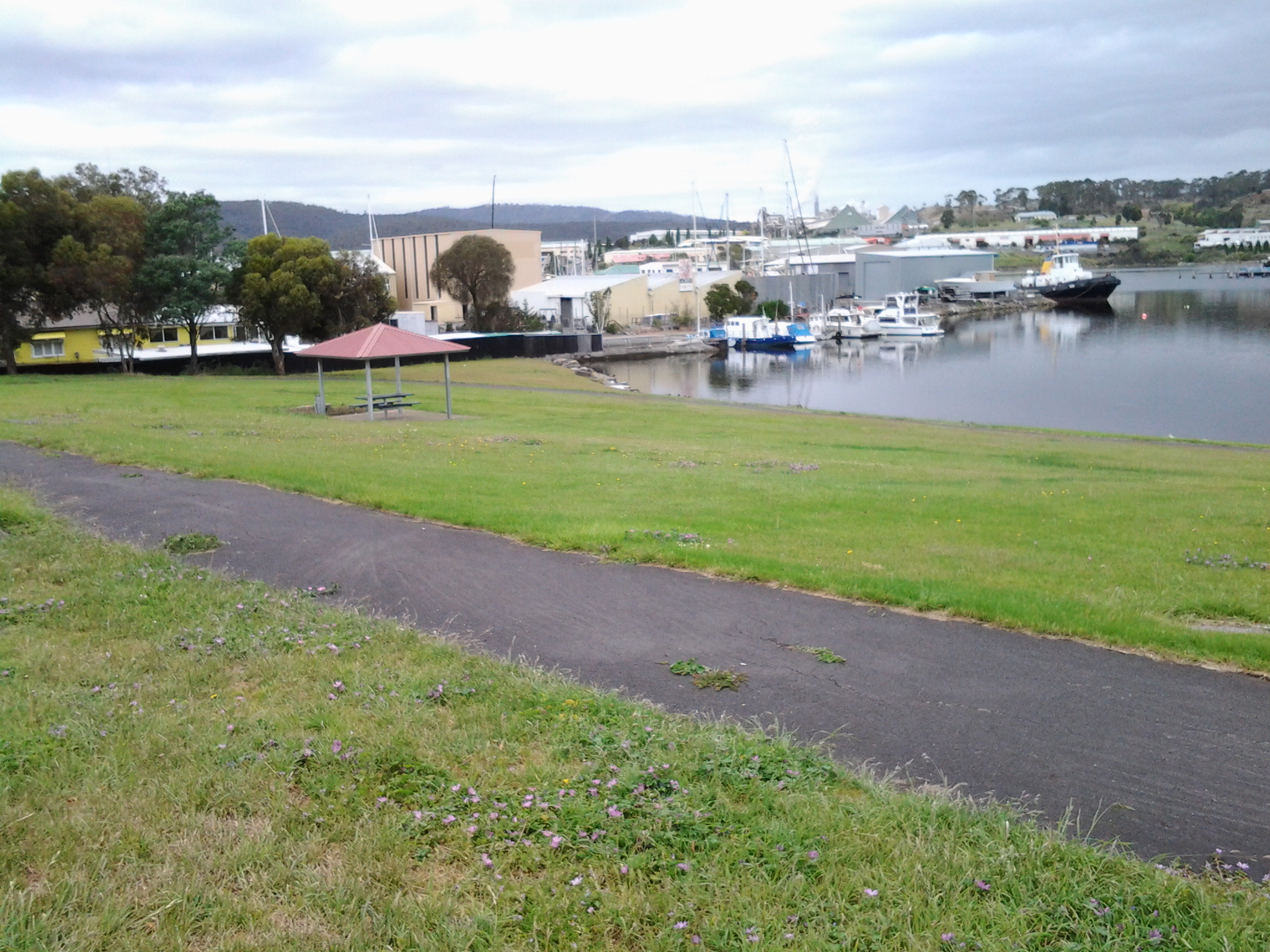
By 9.45am I was joining back onto Howard Road. I walked on past bus stop 34, and the nearby Take Away Food shop and reached the Giblin Reserve around 9.50am. Photos of the surrounds are as follows:

20150109_095701  20150109_095658  20150109_094705

I sat for a while in the Reserve, watching a man in his car eating his take away meal, and taking in the surroundings.  This was a part of Prince of Wales Bay.

20150109_094717  20150109_095819

In the distance I watched the steam/smoke pouring from the zinc works of Nystar, a large industry owning considerable property along the Derwent River a little south from where I sat for a while and soaked in the atmosphere.

20150109_094734

Once I continued walking southwards around the Bay, I passed a kid’s playground, BBQ area, public toilets and ducks quacking.  When stymied by lack of water access around 10.05am, I walked up onto Gepp Parade and walked past a tree laden with not yet ripe nectarines, and later a row of junky looking boathouses. I wondered who wouldn’t be interested in removing their half sunk boat.

20150109_101243

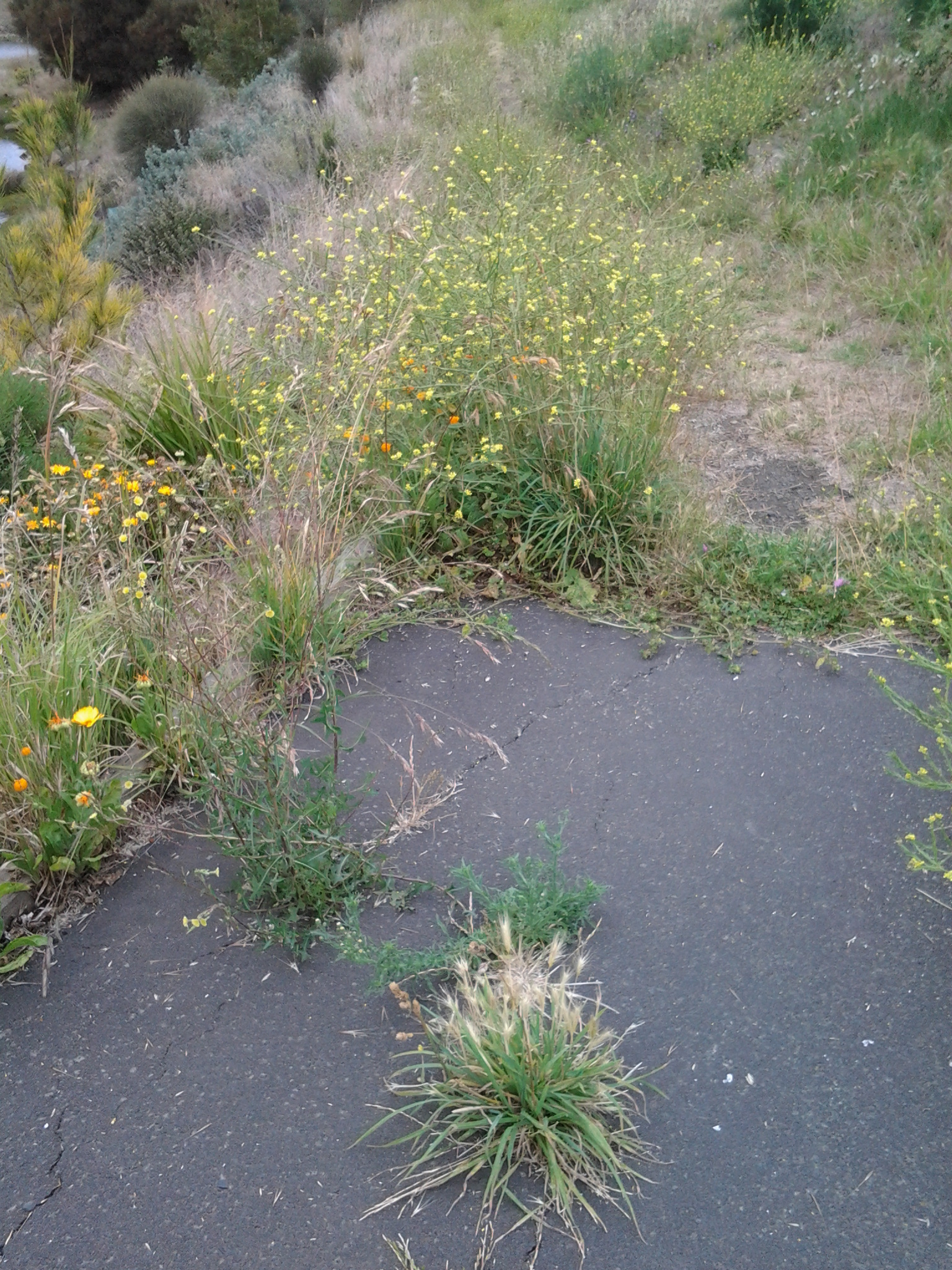
Eventually, through the bitumen path, weeds began to multiply then suddenly this ‘formal’ path stopped and an occasionally trodden pathway through the weeds was all I had to continue on.

20150109_101335

I couldn’t help thinking that wherever a local government area is almost at the end of one and near the start of another area, there is more rubbish not collected and the general appearance of places is rather shabby. This has been the case on earlier stages of my walk, and now as I was at the extremity of the City of Glenorchy and coming closer to the City of Hobart boundary, the amount of visible rubbish and untidiness was escalating.

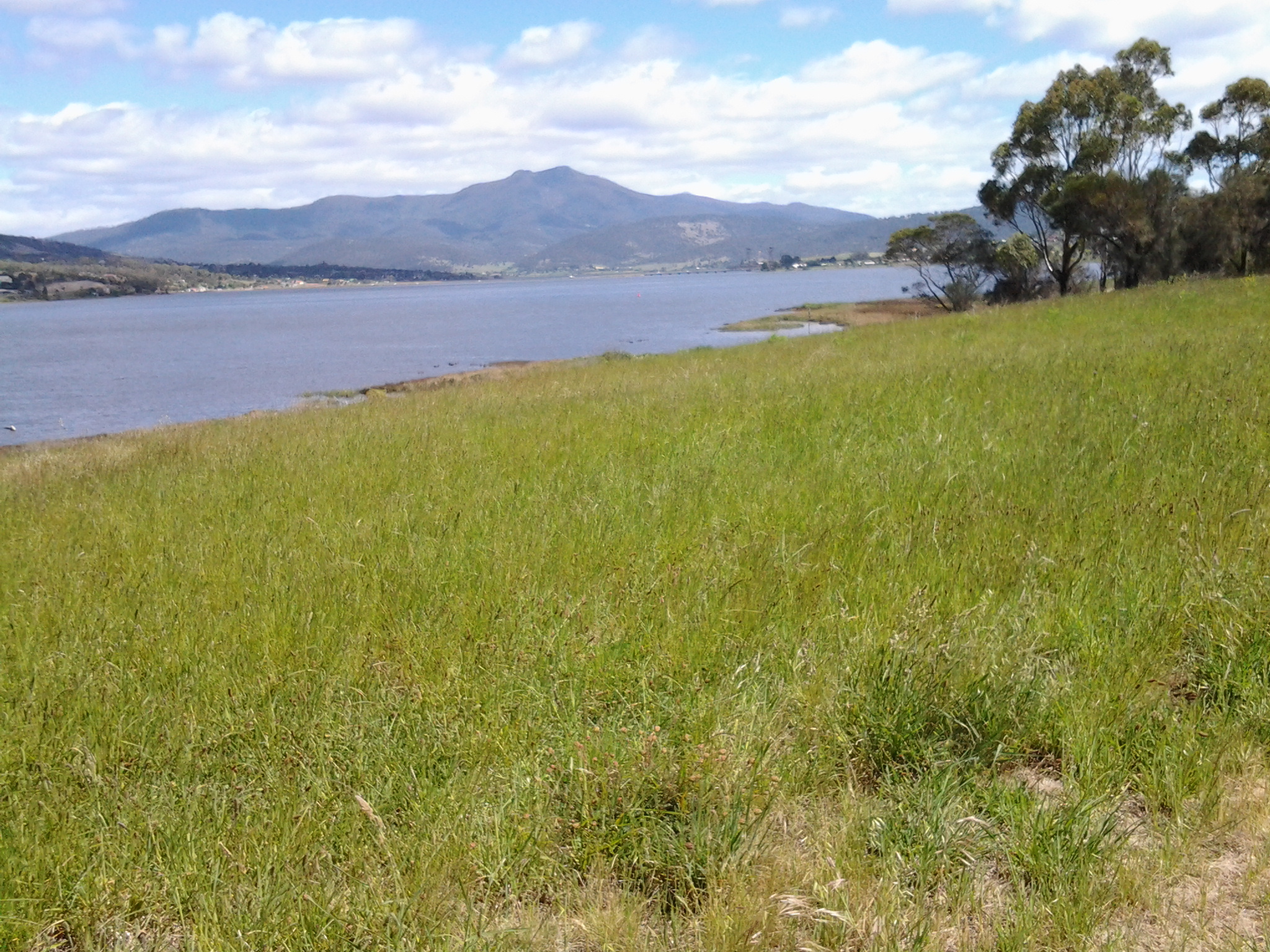
However, looking out over the water of the Bay (and if I tried not to study the weedy edges with their coloured flotsam and jetsam) to Mt Direction on the other side of the Derwent River, presented me with an attractive view.

20150109_101749

When I could get back down onto a weedy area, I followed man-made tracks and continued almost to the Sewage Treatment Farm (which I could see had wired fencing into the water that barred my continuous shore access) then headed up through the trees and onto a disused railway line. I crossed this, climbed a weedy rise spattered with rubbish, clambered over a metal guard rail and stood on Derwent Park Road which is the main road to Nystar and other industry located by the River. It was 10.25am when I reached this point. I had been plodding along for almost three hours.

The Claremont Golf Club

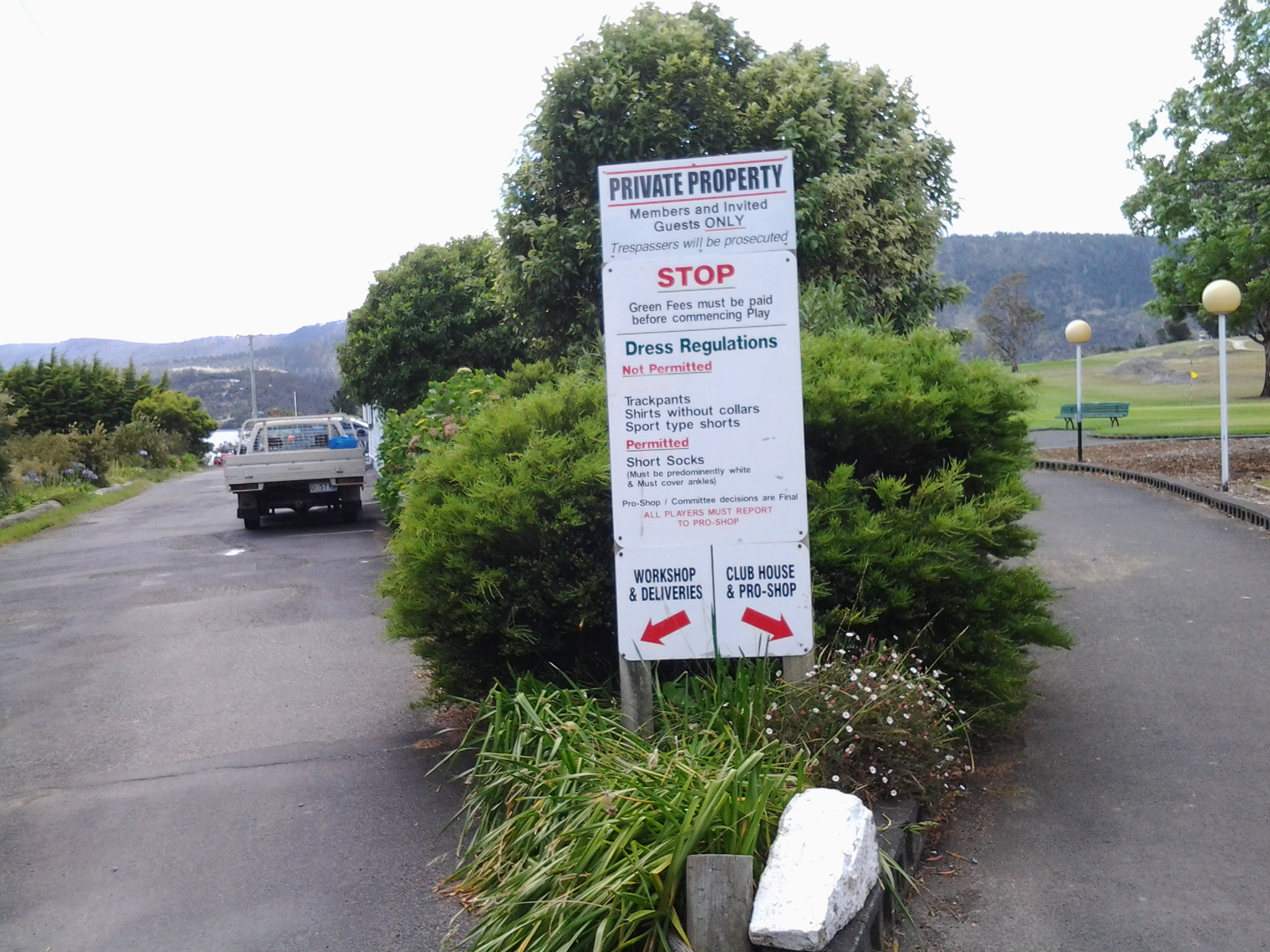
The first sign which greeted me alerted me that only members and their guests were welcome on this property.

20141125_112349

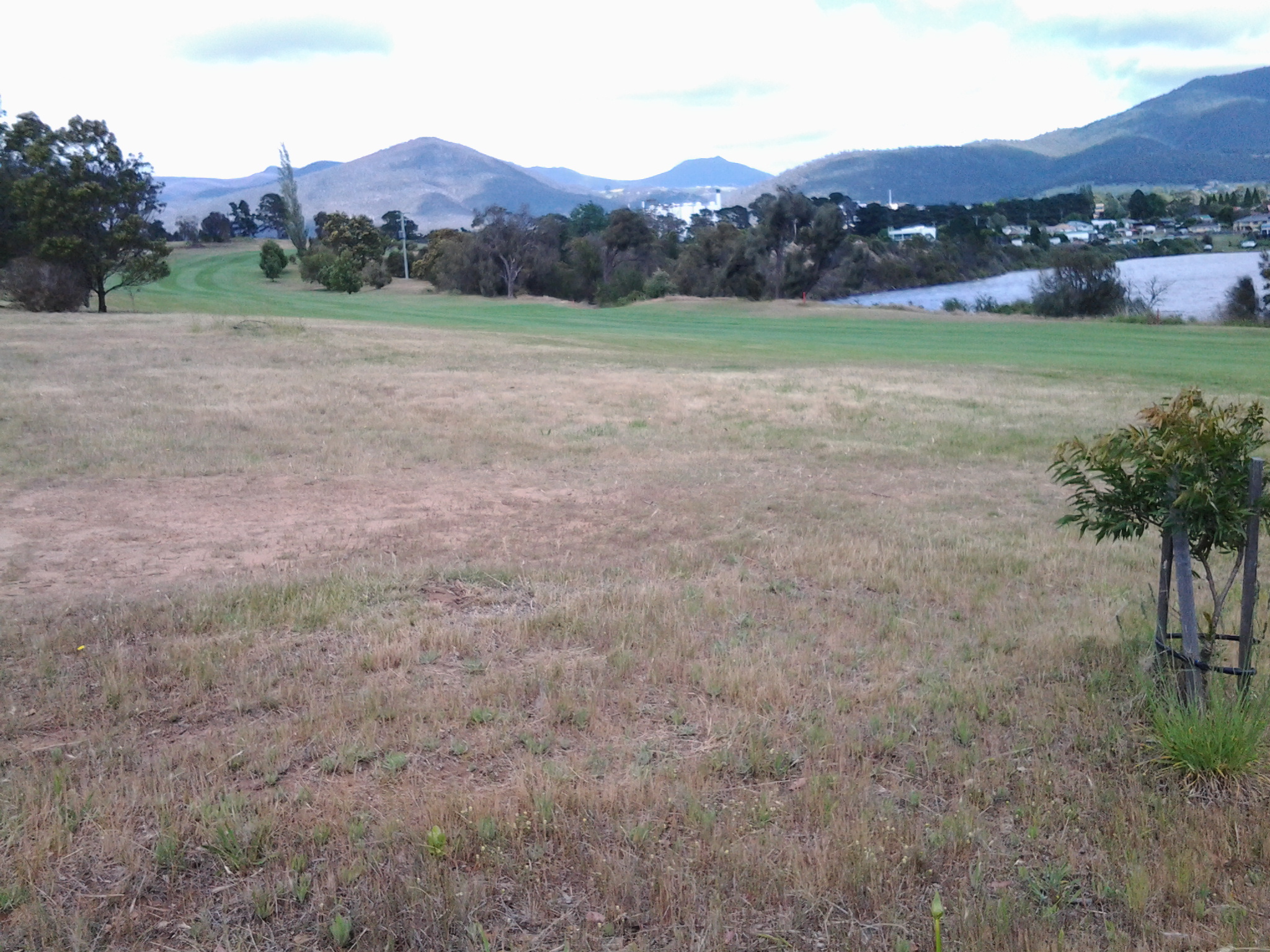
I stood wondering whether I would simply walk away or investigate further. The peninsula, which the Claremont Golf Course occupies, covers many acres but most importantly it causes the Derwent River to deviate dramatically from a straight path. As such I felt I needed to walk around the edge of this substantial piece of land so I would feel that I had truly walked the length of the Derwent River on the western shore.

I sucked in a deep breath and, feeling less than classy with my wrecked wild hair, I walked into the Golf Club house.

20141125_112420

“Can I help you?”, I was asked by a man who appeared seemingly from nowhere. Briefly I explained my walking the Derwent project, registered that I had read the ‘private property’ sign, and asked if there was any chance I could have permission to walk the perimeter. I was amazed that the answer was yes on the basis that only a few people were playing and they were mostly located in the central area. The answer was yes on the condition that, if I did not return within an hour, he would come looking for me.

I thought I would cover the edge in half the time.  How wrong I was. The time was 11.28am as I stepped out to follow a vehicular road on the northern side of the peninsula and it was 12.25 as I returned from the southern direction north to the Club house to show I had returned unscathed.

Starting out:

20141125_113127  20141125_113821  20141125_113139

Northfacing view:

20141125_113807

Eastfacing views in which I could identify traffic on the East Derwent Highway:

20141125_114928  20141125_114903  20141125_115153

Golf course views (in second image notice the players on the course):

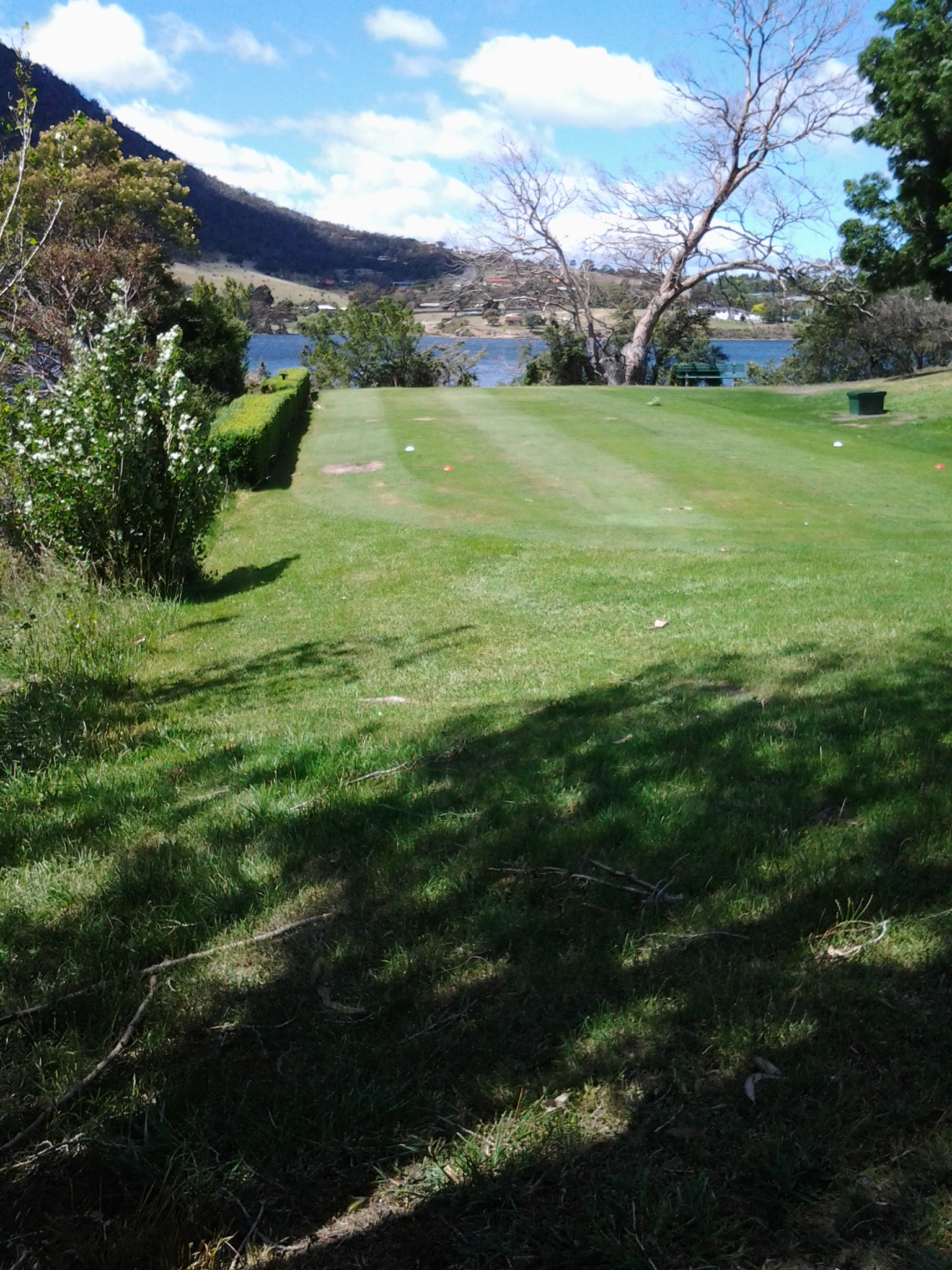
20141125_113824  20141125_114855  20141125_113937

Near Dogshear Point at end of green:

20141125_115047

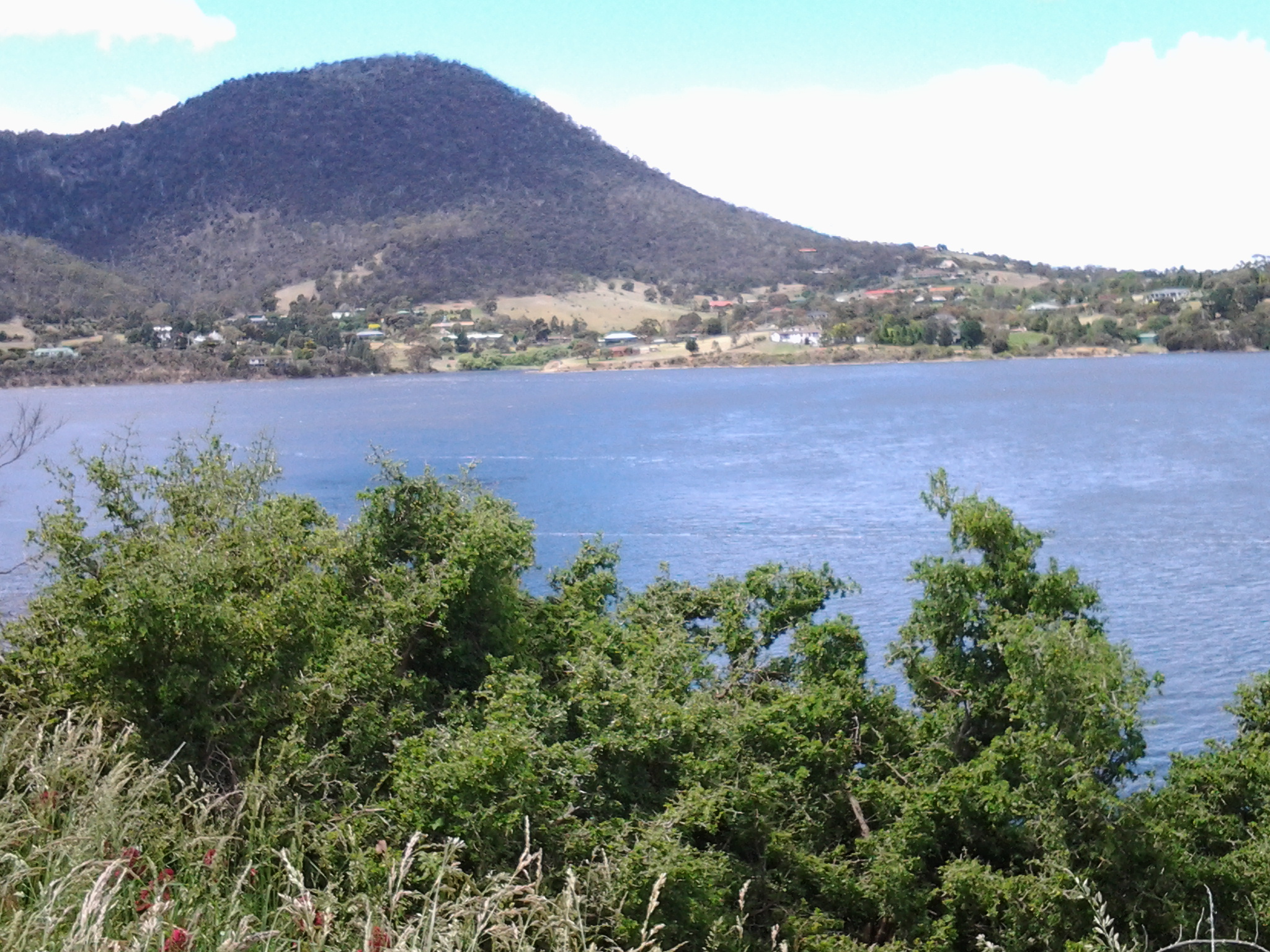
The views from Dogshear Point and then further around on the southern side (note the first image looks back to the area where I scrambled through spiky roses and brambling blackberries on the eastern shore, the second image shows a delightful placid bay slightly south west of Dogshear Point and the third and fourth images remind me that Mount Wellington is again looming over my walk):

20141125_120415   20141125_120029  20141125_11541920141125_120425

That walk was a beautiful, sweet smelling, bird song filled but scary experience. The golf members were generally playing in the centre but some were working on holes closer to the edge. Initially, while on the vehicular track, there was a hill separating me from the course so I couldn’t see the players and their balls and so I had no idea whether I should duck. We all know how balls can be hit into the rough, and the day was exceptionally windy which I imagined could send a ball even further off course than a player might intend. Sometimes I was walking in the rough and sometimes I was walking on fairways and on the bright coloured manicured greens of specific Holes. The golf course has been designed in part to finish at the top of cliffs overlooking the Derwent River and sometimes there was no way I could walk the edge without being on the actual golf course. I was always looking around me to be sure that when a player was about to hit their ball I could see where the ball was travelling to. Rather unnerving.

I wouldn’t be prepared to walk on this golf course again with players out and about. However I am glad to have had the chance to find new vantage points to see up and down the Derwent River and beyond. I wouldn’t recommend others follow in my footsteps (even if permission was given to you) despite the pleasures of the experience.

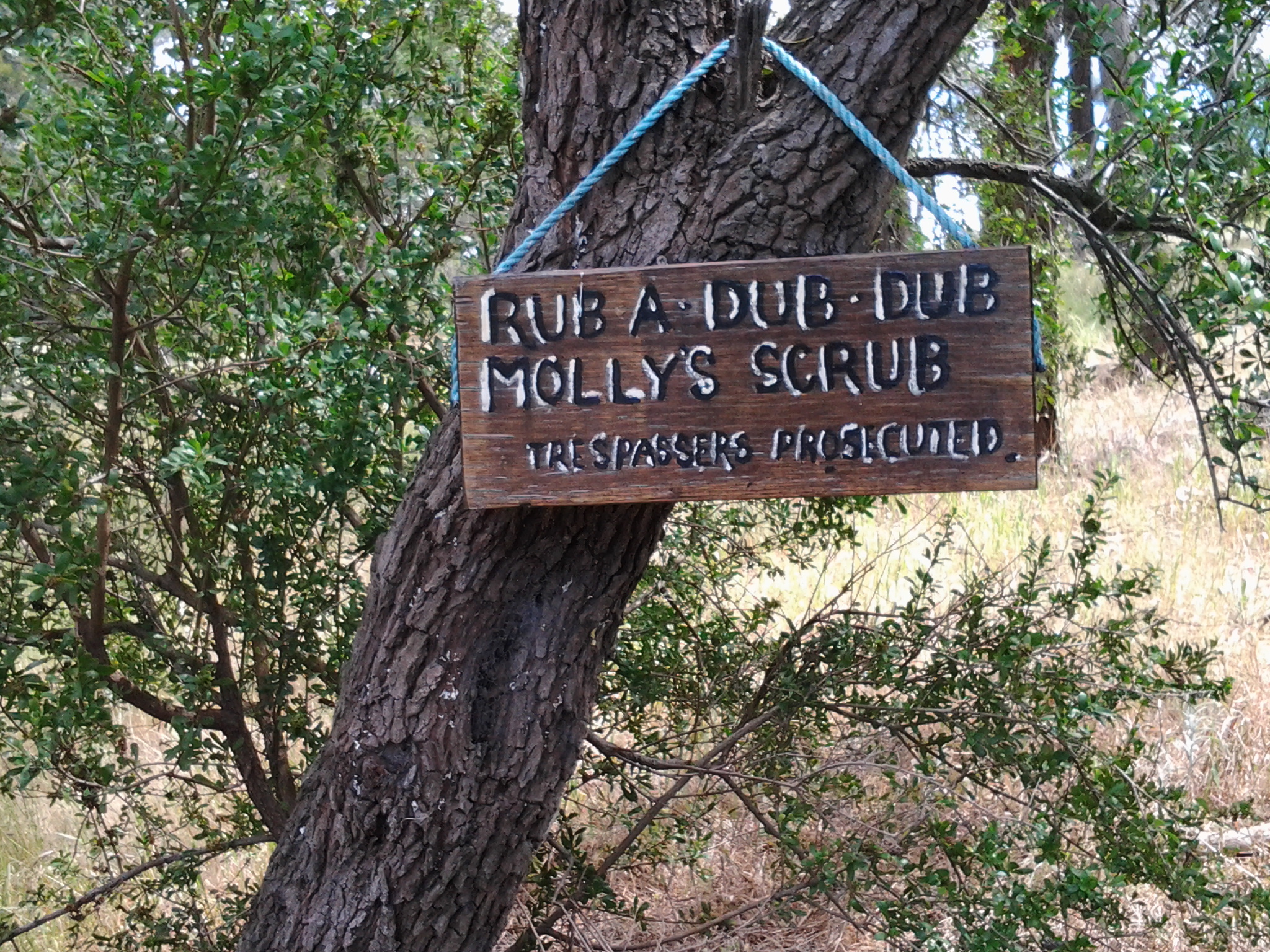
Towards the end of my walk around the Golf course, I passed a copse of trees one of which had a sign attached.  Who was Molly?

20141125_121322

The Cadbury confectionary factory is located just over the fence from the Golf course and the closer I walked to the fenceline the more prominently it showed itself through the trees.

20141125_121946 20141125_122231

Then the Claremont Golf Club house came into focus.

20141125_122235

This leg of stage 9 of my walk along the Derwent River was over. It was time to explore the Cadbury chocolate factory.

Colonial Artists, the Derwent River and the Glenorchy area

A number of 19th century artists made visual references to Roseneath on the Derwent River within the current City of Glenorchy. These include Joseph Lycett, George William Evans and James Taylor (no not ‘Sweet Baby James’) all of whom may have a connection with each other as I will explain.

Background to Joseph Lycett

Let’s start with Joseph Lycett who left a significant body of work depicting Sydney and Newcastle in NSW, and a few pieces named with features along the Derwent River.

Lycett didn’t come to Australia by plan. He was a forger and the British government transported him to Sydney with a sentence of 14 years.  He arrived in 1814. It was clear he had skills and was almost immediately given a ticket of leave on landing, but he couldn’t help himself. Within 15 months Lycett was illegally printing bank notes for use in NSW. His new sentence was relocation to Newcastle for hard labour in the coal mines. I suspect there must have been something charismatic about this man despite the Australian Dictionary of Biography alleging Lycett had ‘habits of intoxication’ that were ‘fixed and incurable’. Before long his abilities were noted and he was out of the mines and drafting designs for new buildings in Newcastle.  In 1821 he was finally pardoned and left Australia for good the following year. But Lycett never visited Van Diemen’s Land.

I wondered how he came to produce the well-known pictorial publication Views of Australia or New South Wales & Van Diemen’s Land, published by John Souter, London, 1824-25 described by eminent Australian Art historian John McPhee as “the most lavish pictorial account of the colony ever produced”. McPhee has come to the conclusion that Lycett couldn’t help being a con man. Though his views of Van Diemen’s Land were supposedly scenes he had witnessed, McPhee (quoted in the Sydney Morning Herald 5/4/2006) says “there’s no doubt he never went there”.  We can be surprised to learn that when Views In Australia didn’t sell in England as well as Lycett hoped, he turned to forging bank notes again. He must have loved his printing press!

So I began to research how Lycett ‘knew’ what the Derwent River and the surrounding land looked like.

When Lycett first landed in Sydney, Governor Macquarie was ruling the colony. During Lycett’s sojourn in Newcastle, Macquarie became acquainted with the artist’s pictorial records of the colony. In 1818, the Governor received the personal gift of a chest. Lycett had  painted eight of the twelve panels on this chest with views of Newcastle as well as copies of William Westall’s Views of Australian Scenery.  In 1820, the year Lycett returned to live in Sydney and earn a living as a painter, according to http://www.nla.gov.au/selected-library-collections/lycett-collection ‘Governor Macquarie and Elizabeth Macquarie were among his patrons’. Obviously impressed, Governor Macquarie sent a selection of the artist’s work to Lord Bathurst, Secretary of State for the Colonies, in England.

But what does this have to do with the Derwent River?

What is the story about Joseph Lycett’s Tasmanian (then named Van Diemen’s Land) pictures? Well … Governor Macquarie visited Van Diemen’s Land on two occasions: in 1811 (before Lycett arrived) and in 1821 (a few months before Lycett left for England). I love connections and so I was pleasantly surprised to discover that Governor Macquarie named the Austins Ferry area as Roseneath when he visited Van Diemen’s Land in 1821. Did the Governor make drawings and bring back sketches?  This is doubtful.  It is more likely that others went to Van Diemen’s Land at the Governor’s request, brought their sketches back to Sydney and that these were shown (perhaps some were given) to Lycett.

I wondered whose sketches, paintings or etchings Lycett saw, and then ‘used’.Two people with drawing skills have been suggested: George Evans and James Taylor.

First, let’s consider George Evans.

In the first two decades of the 1800s, Governor Macquarie sent surveyor George William Evans to Van Diemen’s Land off and on a number of times for short trips to remeasure land previously granted (misconduct involved); various sources suggest different years so I am not sure exactly which years in the second decade of the 1800s Evans was in Tasmania; some suggestions are Sept 1812 to Aug 1813, 1814, July 1815 to 1817. Wikipedia suggests that on two occasions Evans was granted valuable acres of land near in the Coal River Valley near the town of Richmond outside the Greater Hobart Area.

According to  http://www.daao.org.au/bio/george-william-evans/biography, at the end of 1818 Evans was able to resume office as Deputy Surveyor-General of Van Diemen’s Land. His travels around Tasmania are recorded in his Geographical, Historical and Topographical Description of Van Diemen’s Land… (London, 1822). One of his watercolour sketches of Hobart Town was used for the foldout aquatint and etching used as the frontispiece in the original edition. Another of the town was published by Ackermann of London as an independent print. Both depict Hobart as a thriving British colonial seaport town with court-house, commissariat store, St David’s Church, warehouses and numerous domestic dwellings in evidence. A surviving original (Dixson Library) shows a competent understanding of watercolour technique.

The website http://www.nla.gov.au/selected-library-collections/lycett-collection offered: As well as being a competent surveyor and a resolute explorer, Evans was an artist of some note. His aquatint view of Hobart in 1820 was published as a frontispiece in his Geographical, Historical and Topographical Description of Van Diemen’s Land … (London, 1822; second edition, 1824; and a French edition, Paris, 1823). The original, with another aquatint of Hobart in 1829, is in the Dixson Library of New South Wales.’

Second let’s consider James Taylor.

Military officer, Major James Taylor, arrived in Sydney in 1817 with the 48th Foot Regiment. Taylor produced a number of paintings and prints throughout his tours and his panoramic works of Sydney were particularly popular. He travelled to Van Diemen’s Land with Governor Macquarie in 1821. On 15th February 1822 he sailed to Britain with the Macquaries on board the Surry.  Only 50 people including the crew were on board for this 5 month trip around Cape Horn and it is easy to speculate that Macquarie and Taylor would have talked about Lycett.

Comparison of art works

I decided that comparing the works of the three artists Evans, Taylor and Lycett might help me to understand where Lycett’s Tasmanian images came from.  Unfortunately, I have not been able to locate sufficient of the work of Evans and Taylor to make a solid comparison despite knowing Lycett’s work very well (having worked in the Newcastle Art Gallery for a number of years in the presence of a substantial collection of Newcastle district related images by Lycett). Nevertheless some images for Evans and Taylor are available.

Examples of Lycett’s art

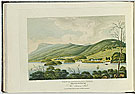
Below is an image of Lycett’s etching (see below) titled Roseneath Ferry near Hobart Town, Van Diemen’s Land dated 1 December 1824 (two years after Lycett left Australia). The etching was published as plate number 4 in Views in Australia or New South Wales and Van Diemen’s Land Delineated. London: J. Souter, 1824. This etching is held in the collection of the National Gallery of Australia in Canberra. Lycett is looking across the Derwent River from somewhere above the western shore and southwards so that the ‘hill’ in the distance to the left of the picture is Mount Direction (you may recall I walked past this as I passed the Bowen Bridge on my way from the suburb of Risdon to the suburb of Otago Bay on the eastern shore).
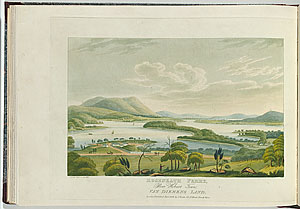
Lycett in  colour

The image below, also by Joseph Lycett, is another hand coloured etching, this time from the viewpoint of the eastern shore.  The title is View of Roseneath Ferry, taken from the Eastside, Van Diemen’s Land and it was produced in 1825 (when he was already living in England).  One of the edition of this etching is in the collection of the National Gallery of Australia in Canberra.

Lycett View of Roseneath Ferry from the eastern shore 1825

The image below is Distant View of Hobart Town, Van Diemen’s Land, from Blufhead Plate 28 from Views of Australia or New South Wales& Van Diemen’s Land,  published by John Souter, London, 1824-25. This handcoloured aquatint and etching is held in the Joseph Brown Collection of the National Gallery of Victoria, Melbourne.
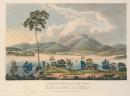
Lycett Distant view of Hobart Town VDL NGV

Examples of George Evans’s art

The image below comes from http://www.abc.net.au/news/2014-08-22/1819-slnsw-south-west-view-of-hobart-town-1819-george-william-e/5689410 It is titled South West view of Hobart Town and dated 1819
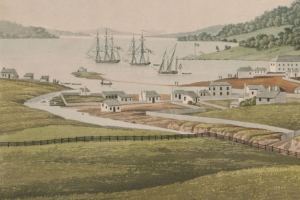
Evans Hobart

The image below comes from http://www.acmssearch.sl.nsw.gov.au/s/search.html?collection=slnsw&meta_e=350

George Evans Hobart Town 1828

Hobart Town, Vandiemen’s Land. 1828 At lower left is printed “G. W. Evans. Pinxt.”; at lower right “R.G. Reeves. Sculpt”; underneath title “Published 1828, by R. Ackermann, 96 Strand, London” he image is from the collections of the State Library of NSW.

Examples of James Raylor’s art

I could find no image by James Taylor that was related to Van Diemen’s Land. I only found two New South Wales images.The image below is from http://www.afloat.com.au/afloat-magazine/2010/july-2010/Lachlan_Macquarie#.VHAuwPmUdqU and titled Panoramic view of Port Jackson c.1821
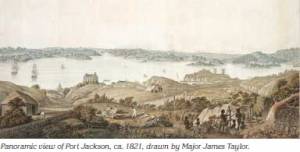
James Taylor Panoramic-view-of-Port-Jackson-c1821

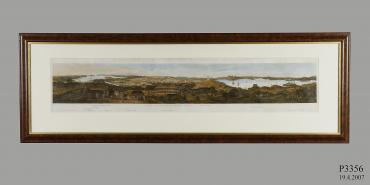
The image below, from http://www.powerhousemuseum.com/collection/database/?irn=326892 is an aquatint of Port Jackson and Sydney dated 1824.
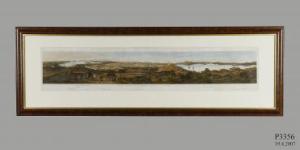
Aquatint of Port Jackson 1824 by Major James Taylor

This panorama of Port Jackson and of the town of Sydney was taken from a hill near the Parramatta River, was produced with ink on paper by Major James Taylor, Sydney, New South Wales, Australia, 1820, then engraved by Rittner et Goulpil, Sydney / Paris in 1824. The Powerhouse Museum (Sydney) provided the following information:

‘Statement of significance

In 1820 Major James Taylor created a series of watercolours on paper which, when joined together, formed a panorama of Sydney. When he returned to England in 1822 (did Taylor and Lycett travel on the same ship? – more research required) Taylor arranged for the engraving and printing of a three sheet panorama based on his watercolours. Known as ‘Major Taylor’s Panorama’, this is one of the most informative depictions of Sydney in its early years. Taylor, a topographical draughtsman attached to the 48th Regiment, arrived in 1817 when Sydney was thriving and Governor Macquarie was trying to turn an ‘infantile’ penal colony into a ‘civilised’ society. Taylor’s pictures were intended to be a record of that change. The view, taken from Observatory Hill, encompasses Sydney Harbour from the Heads to Lavender Bay, showing many of the major buildings of the day.
Convicts can be seen cutting the sandstone which provided building material for Sydney’s expansion. The many fences indicate gardens and a respect for private property. The harbour is filled with trade and military ships. Government House and its stables can be seen set in Governor Macquarie’s private park called the Demesne. Much of this park still survives as the Botanic Gardens and the Domain. This area contrasts markedly with the small cottages in the middle ground which were typical of many in The Rocks. They were often occupied by convicts and their families who were encouraged to develop ‘respectable’ habits like gardening in their spare time.
A prominent building is the Military Hospital, built in 1815, where patients can be seen dressed in long coats. On the horizon are the impressive buildings of Macquarie St, including St James Church, the Hyde Park Barracks and the General Hospital. To the right of the Military Windmill is Cockle Bay, later called Darling Harbour. The land beyond is the Ultimo estate owned by the surgeon John Harris. To the far right are the windmills that gave rise to the name Millers Point.
Topographical artists often included indigenous people in their work. These images were intended to educate European viewers about the appearance and customs of the ‘natives’, but such depictions were informed by symbolism and ideology rather than a representation of reality. In Taylor’s panorama Aborigines stand amid uncultivated bush, in contrast to Europeans who are clearing and grazing the land. When the British took possession of New South Wales they argued that, as the Aborigines did not ‘work’ the land, they did not own it. This supported the notion of ‘terra nullius’ or nobody’s land. Taylor’s representation is a graphic rendering of that argument.

Production notes

The engraving is based on watercolours by Major James Taylor. Taylor was a topographical draughtsman attached to the 48th Regiment. He arrived in Sydney on the convict transport Matilda on 9 August 1817. He accompanied the Macquarie’s on their tour of Tasmania in May and June 1821 and some of the Tasmanian views in Joseph Lycett’s Views are probably based on Taylor’s drawings. Taylor received some training in draughtsmanship as part of his military studies and like other military and naval officers, was interested in his surroundings and recorded them in watercolours. Little of Taylor’s work survives, notably the originals of this view of Sydney Harbour. This image is held in the Powerhouse Museum collection.’
My conclusion

Lycett’s style is quite different from each of Evans and Taylor so it is difficult to attribute the work of one or the other as being the ‘aid’ to Lycett’s Tasmanian etchings.

There are three possibilities.

  • Lycett took the shape of the landscape around Roseneath from Taylor’s drawings. I am guessing that since Taylor accompanied Governor Macquarie to Van Diemen’s Land in 1821, he probably went to Roseneath with the Governor on the day that Macquarie named Roseneath. It is conceivable Taylor rushed up a few sketches and it is these that either Taylor showed or gave Lycett, or Taylor gave to the Governor who showed or gave them to Lycett. Perhaps the three of them met in London on arrival in 1822?
  • Lycett had access in Sydney to Evans maps of the land, and using their flat two dimensional nature, he fabricated a three dimensional landscape. If indeed he worked in this way, then the odd shapes of some topographical features of the landscape in Lycett’s pictures from and towards Roseneath can be explained.
  • Lycett had access to both Taylor and Evans work and amalgamated them to create a fictional but partly realistic depiction of Tasmanian sites. Lycett’s history is one of creativity, so sticking to the facts of the situation wouldn’t necessarily be important.

Incidental extra

In conclusion, there is one connection between the current Hobart and the Derwent River and the early 19th century Joseph Lycett – which could never have been foreseen.  I discovered that Lycett was on the list of prisoners that sailed to Newcastle on 8 July 1815: the name of the ship was the Lady Nelson. Pride of place on the today’s wharf at Hobart is a training sailing replica, the original having been stripped, burnt and sunk in 1825.

Granton and Austins Ferry on the western shore of the Derwent River

On my 9th walk along the Derwent I will be passing through Granton South and Austins Ferry.

Granton is the northern-most suburb within the City of Glenorchy, part of the Greater Hobart Area.  I can find no records explaining how it came to be named. Granton and its Harbour in Edinburgh Scotland were not developed until the 1830s.  If the York Hotel in Tasmania’s Granton was built in 1849, possibly there may be a Scottish connection with the naming of the suburb.

Austins Ferry sits adjacent to and south of Granton within the City of Glenorchy.  Wikipedia informed me that this suburb was named after James Austin (1776-1831). Austin was transported to Australia as a convict and arrived in Tasmania in 1804. When he became a free man, the government granted him some land in this area. During the 1810s he had a profitable ferrying business across the Derwent River to the eastern shore. In 1821 the visiting Governor Lachlan Macquarie renamed the village Roseneath, but it has since reverted to its original name.’ James Austin’s original cottage is located (somewhere) in this suburb and maybe I will be fortunate enough to locate it when I walk.

According to http://profile.id.com.au/glenorchy/about?WebID=160, Granton is linked with the suburb of Austins ferry for statistical purposes. In 2011, the joint population was 3,329.  ‘Settlement of the area dates from the early 1800s. Some growth took place in the early 1900s, although significant development did not occur until the post-war years. Most of the houses were built in the late 1960s and early 1970s. Growth continued from the early 1990s, with the population doubling between 1991 and 2011, particularly in Austins Ferry, a result of large numbers of new dwellings being added to the area. Major features of the area include Goulds Lagoon Sanctuary, Poimena Reserve, Hestercombe Reserve, James Austin Park, Roseneath Park, Shoobridge Park, Weston Park and one school.’

According to http://www.homesales.com.au/location/granton-tas/, Granton has a population of 1519 with an average weekly income of $787. The median prices for houses are $375,000. The average house is rented for $610 a week. 94% of people live in houses as distinct from other types of residences. 36% of people fully own their houses/property. Almost 30% are under 30 years of age and only 10% are over 65 years of age. 92% of residents were born in Australia.  By contrast, Austins Ferry has a population of 2221 with an average weekly income of $721. The median prices for houses are $287,000. The average house is rented for $340 a week. 87% of people live in houses as distinct from other types of residences. 31% of people fully own their houses/property. 27% are under 30 years of age and 14% are over 65 years of age. 88% of residents were born in Australia.


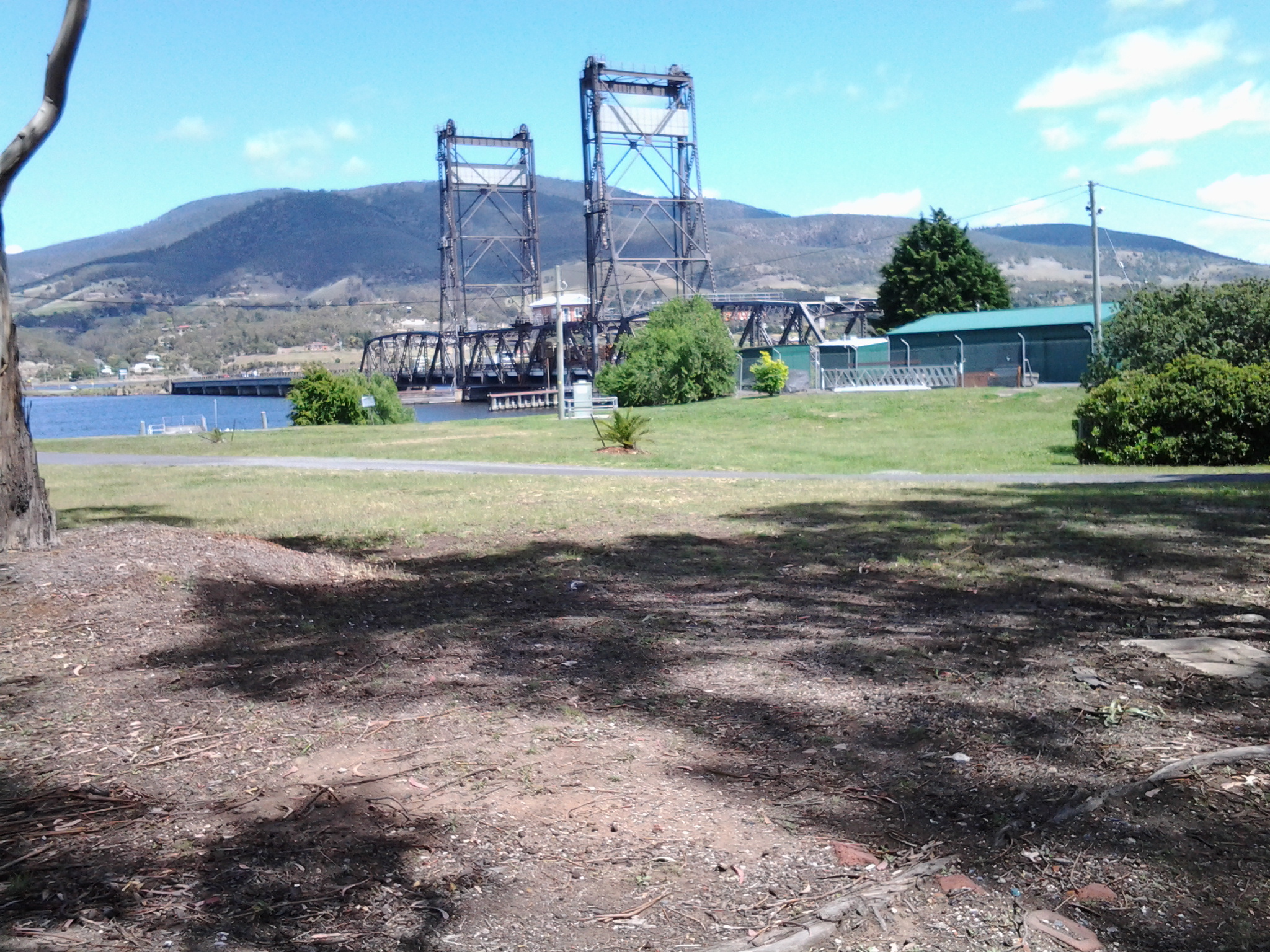
Bridgewater Bridge; getting ready to cross it on 8th stage of walk along Derwent River

The Bridgewater Bridge and the attached Bridgewater Causeway crosses the Derwent River upstream approximately 38.5kms from the sea. I crossed from the eastern shore to the western shore last Tuesday near the end of my 8th walking stage along the River.

According to http://www.aussietowns.com.au/town/bridgewater-tas, “In the early nineteenth century Bridgewater was a vital link on the north-south route from Hobart to Launceston with one of Tasmania’s earliest buildings and the remarkable achievement of the causeway which helped to cross the Derwent River. The settlement was originally known as Green Point until it became known as Bridgewater simply because it was the bridge (actually a causeway) crossing a shallow section of the waters of the Derwent River.

The first ferry service across the Derwent was established in 1816 by James Austin and his cousin James Earl. It remained vital to travellers journeying from Hobart Town to Launceston until the completion of the causeway. By 1820 Austin and Earl were using a punt capable of transporting 30 cattle, 200 sheep or two carts and 16 oxen. In 1829 construction began on a causeway across the Derwent River. It was 1.3 km long and was built by a gang of 200 convicts using nothing but wheelbarrows, shovels and picks. By the time it was completed the convicts had shifted 2 million tonnes of sand, soil, stones and clay. Defined as secondary punishment for serious recidivists, if the convicts were adjudged to have not done a full day’s work they were placed in solitary confinement in a cell which was only 2 m high and 50 cm square. The causeway was completed in 1836. It did not traverse the river and so a ferry plied the deepest section of Derwent River for twenty years from 1829-49.

In 1849 a bridge across the Derwent was opened. Bridgewater, which had been laid out on the southern shore, was moved (down to the last surveying detail) to the northern bank. The present lift bridge was started in 1939, interrupted by the war, and completed in 1946.”

 From further south, as I walked along the eastern shore, I could see the Bridge. As I walked northwards the length and shape of it came into stronger focus.

20141111_114933  20141111_111830  20141111_130209  20141111_130216  20141111_130627  20141111_131133  20141111_131441

All the photos are taken from the eastern shore side of the Bridge.

Major milestone achieved on 8th stage of my walk along the Derwent River

Originally, I decided to walk the length of Tasmania’s Derwent River without research, foreknowledge of the challenges, and without determining the possible milestones.

With hindsight, actually starting the walk and reaching the Bridgewater Bridge were my two main milestones held subconsciously and not recognised at the time.

In late August this year I started at the southern tip of the South Arm peninsula (Cape Direction) and today I have not only reached the Bridgewater Bridge but crossed it and started the walk back towards the mouth of the Derwent River on the western shore.

I am rather amazed that such a thing is possible; to walk such a distance in this day and age and to do so for pleasure doesn’t seem quite real. And yet it is truly possible, even when my feet feel permanently crippled and I want to crawl. Just one foot after the other and it doesn’t matter how long it takes me to put one foot in front of the other. It only matters that I keep doing it. And then and only then can such milestones as today’s be achieved.  And celebrated, which I am about to do.

I was also mindful that today Australia marked the ANZAC soldiers killed and injured in the World Wars and others more recently with Remembrance ceremonies and a minute’s silence across the nation at 11am (on the 11th day of the 11th month). I have nothing to complain about and only much for which to be grateful. The photo below was taken close to the Bridgewater Bridge on the eastern shore.

20141111_131254

Over the coming days, I will write detailed postings of today’s walks through the suburbs of Old Beach, Herdsmans Cove, Bridgewater and starting into Granton South; the areas that I have passed and the trails that I have followed. For now it is enough to know that I have walked yet again, and the countryside and cityside has simply rolled along beside me.

Today I was away from home for almost 9 hours partly because the walking area was relatively difficult to access and leave from by public transport. Some waiting and bus changes were required. Of these hours, just under 5 hours were involved with walking from the starting point in Old Beach to the start of the Bridge, and 1/2 hour was involved from the Granton end of the Bridgewater causeway until I jumped on a bus somewhere in Granton South. Including crossing the Bridge, I walked approximately 16 kms.  Approximately 14 and1/4 kms on the eastern shore, and 3/4 km on the western shore by the Derwent River. So far I have walked 93 kilometres.

At the end of the 7th stage of my walk I had covered 34kms of the length of the Derwent River. Add another 4.5kms for today’s 8th stage and the total distance from the mouth of the Derwent River to the Bridge on the eastern shore is 38.5 kms as ‘a crow might fly’ more or less straight down the centre of the River (by my reckoning – perhaps others will argue). The length covered today of the Derwent River from the Bridge southwards on the western shore is about 1/2km.

Before each stage of my walks along the Derwent River, I have been somewhat nervous about how everything will go and how my body will hold up, yet there has never been any event or location that has turned out to be a problem. My walks have been ‘smooth sailing’. This morning I was particularly anxious because of the less savoury activities of some of the people who live in Herdsmans Cove and Bridgewater. I was also thinking about Tasmania’s ‘ice’ epidemic and remembering that some addicts can go for 7 or more days without sleep and therefore can be totally irrational. I was hoping not to encounter any unpleasantness and I didn’t. So I am delighted to report that today’s walk was safe, beautiful and calm. Quite marvellous in its simplicity.

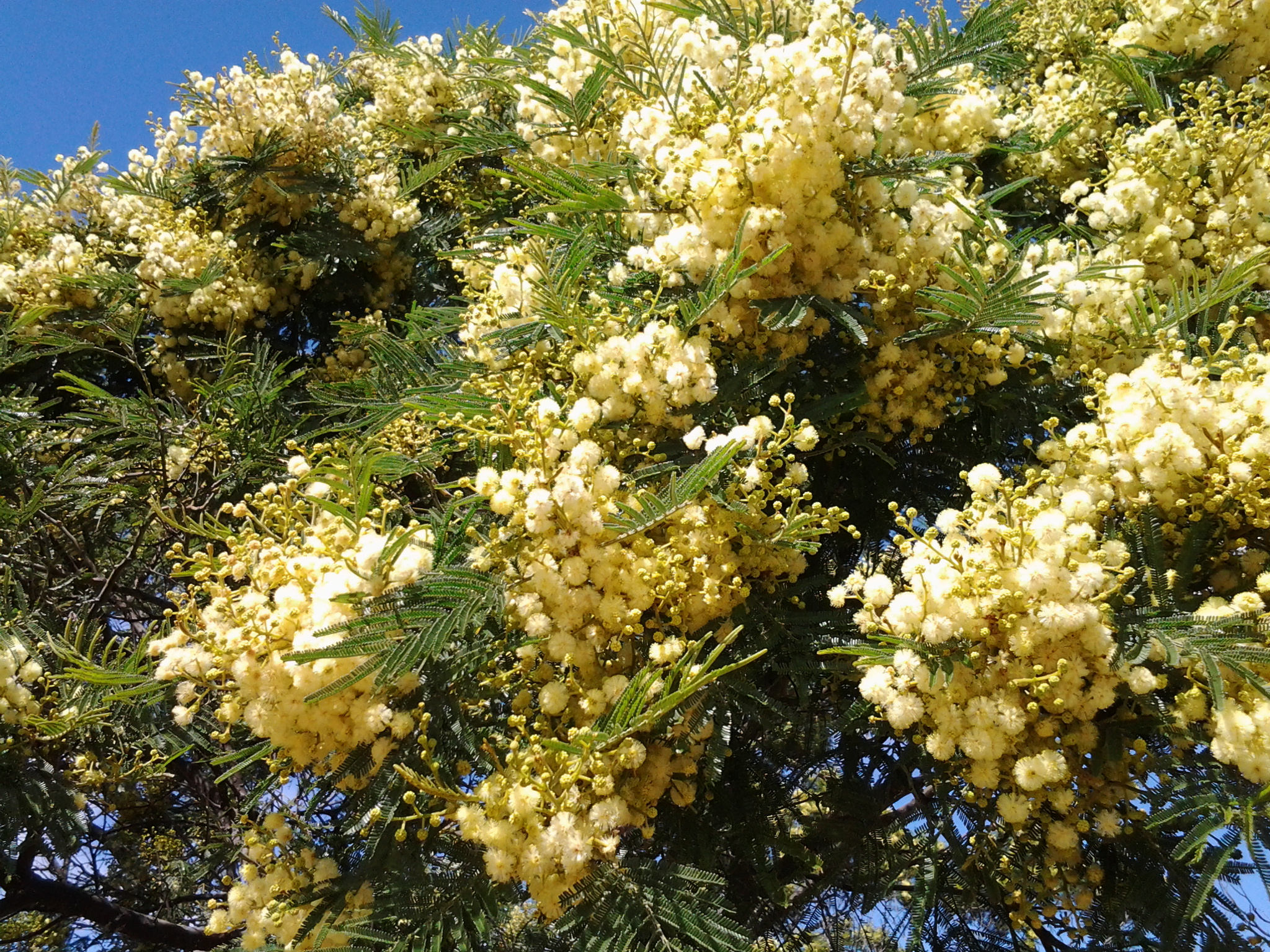
The photo below is a close up of wattle blossom. The seductive heady perfume surrounded me most of the day.

20141111_103716

The Paredarerme people – the original indigenous owners of the land along the Derwent River

Prior to European settlement the district around Bridgewater and Herdsmans Cove was inhabited by the Paredarerme Aborigines, the largest indigenous tribe in Tasmania.  Geographical locations associated with this group include the Derwent estuary, Jordan River and New Norfolk and much further afield along the east coast and into central Tasmania. ‘Oyster Bay Tasmanian’ or ‘Paritarami’ is the aboriginal language of these people.

From http://www.heritage.tas.gov.au/media/pdf/September%202011.pdf , “the history of the Paredarerme (Oyster Bay) tribe, estimated to be the largest Tasmanian tribe at the time of European settlement with 10 bands totalling 700 to 800 people. Theirs was a nomadic, but complex society, with strong cultural traditions. The Paredarerme people constructed uniquely Tasmanian reed and bark boats. It is believed these vessels date back at least 4,000 years and were used to access offshore islands and traversing inland waterways.” The site, http://www.museumsaustralia.org.au/admin/email_templates_archive_message.php?id=428 continues with additional information: “Collecting the plant materials would have involved the whole tribe, with men collecting large pieces of bark and being responsible for the canoe’s construction. It would take considerable strength to lash the plant materials to form a strong and robust vessel.  These would have been used to collect shellfish, crayfish, and to hunt seals along the coast. They were also used to cross the stretch of water now known as Mercury Passage to Toarra-Marra-Monah (Maria Island), choosing good weather to cross from Rheban to Lachlan Island, then across to Maria Island.”

Paredarerme Tasmanian Aboriginals are now collectively referred to as Pungenna Culture. On http://pungennaart.wikifoundry.com/page/bush+tucker, I found photographs of traditional foods. I should not have been surprised to see pigface as one of the foods – in earlier postings I have included photos of this gorgeous pink flowering plant which grew by the Derwent River.

20140822_095628

How common is the name Otago and what is its history?

How did Tasmania come to name its Otago Bay, one of the suburbs in the broader Old Beach area, on my planned Stage 7 of the walk along the Derwent River?

On the Clarence City Council site at http://www.ccc.tas.gov.au/page.aspx?u=1085, Otago Bay was named after the iron barque the Otago, the remains of which can still be seen on the shoreline of Otago Bay. Wikipedia reports that the remains of the Otago (beached in the Bay in 1931) and a steel river steamer the Westralian (beached in 1937) can both still be seen on the beach. The Otago was dismantled at a shipbreaking establishment that operated at the Bay between the 1920s and 1960s. Some excellent current photos of the remains of the Otago can be seen on http://pacific-edge.info/2014/01/otago/.  I look forward to clicking my own photographs later this week.

At http://www.nzgeographic.co.nz/archives/issue-78/joseph-conrads-ship, I learned the Otago was commissioned by Captain Angus Cameron and built by Alexander Stephen & Sons, Glasgow, Scotland. Once in Australasian waters, the Otago was used as a regular carrier of coal from Newcastle, New South Wales Australia to New Zealand’s city of Dunedin in the early 1870s.

The Otago page on the Parks and Wildlife Service website http://www.parks.tas.gov.au/index.aspx?base=1793 explained that the Otago was a three masted ship built in 1869. In 1872 the barque was transferred from Glasgow to Adelaide, South Australia. The Otago‘s chief claim to fame is that the vessel was the only command of the famous Joseph Conrad during 1888-9 (Conrad became a well-known novelist using some of his mariner experiences, after he gave up sea faring in the mid-1890s).

The vessel arrived at Hobart in July 1905. In January 1931 the Otago was sold to a local shipbreaker and towed to its present location in Otago Bay. The hulk was partially dismantled for scrap metal in 1937 and more completely in 1957. The bow of the vessel rests on the shoreline with the stern lying in approximately two metres of water. The iron hull has been cut back to the waterline and the bow and stern have disappeared entirely. The remains can easily viewed from the shore as the interior of the hull and the surrounding area contain a quantity of debris that make closer examination hazardous. The photo below, of the Otago, is from the parks and wildlife website.

Otago 1900 Adelaide

The Otago at Port Adelaide, c.1900 (in the collection of the Archives Office of Tasmania)

The photo below, dated a decade later, is also from the collection of the Archives Office of Tasmania.

Hulk Otago 1910

Hulk of the Otago, c.1910

That is all well and good. We know our Otago Bay was named after a boat that was dismantled in its Bay. But what does the name Otago mean?  How did the boat get its name?

Otago, a well-known region in the southern island of New Zealand, was settled by people from Scotland starting in 1848. Many people believe the name ‘Otago’ is a European corruption of the Maori word ‘Otakou’ which translates as ‘village’. It may be fitting to refer to our Otago Bay as a village because its population only numbers a few hundred and it is isolated from other suburbs by the natural landscape. However, there seems to be no connection between our Tasmanian Otago Bay and with Maori culture (although perhaps some New Zealanders live there – I don’t know).  More than one boat was built in Scotland and named Otago in the second part of the 19th century, so the impact of the Otago region in New Zealand on Scotland was significant.

The founder of the Otago settlement in New Zealand, William Cargill, died in 1860 and a Tasmanian sandstone monument to him was built in Dunedin in 1864. Why Tasmanian sandstone? According to http://freepages.genealogy.rootsweb.ancestry.com/~nzbound/otago_bdm1860.htm, son John Cargill stopped by Tasmania in 1841, before he helped his father to settle in Otago.  Did John collect some local sandstone during his visit? If so, what an extraordinary thing to do considering the Otago ship eventually had its resting place in the Derwent River.

The Shag Bay and Bedlam Walls area covers much loved and used aboriginal land of the Moomairremener people

Various websites have indicated that the tract of land between Geilston Bay and Risdon Cove contains a great deal of evidence of land and river use by the original land owners.

Previously I acknowledged the traditional owners of the land along the Derwent River that I have been walking across. This land, before European settlement, belonged to the Moomairremener people however the early international settlers failed to understand that the local inhabitants had established government practices and legal systems, and worked with the land and sea to ensure an ongoing food supply. Unfortunately the characteristics which made the indigenous people civilised were different to those characteristics which made the settlers civilised. Because of their major cultural differences, both groups of people couldn’t grasp the positive values of each other. Each failed to learn from the other so that neither came to an understanding that the difference between them did not make one group better or worse.  As the new settlers encroached on aboriginal land and hunting grounds without understanding the value and significance of what they were doing and attacked aboriginal people, inevitably the Moomairremener people attacked in return.

Bedlam Walls Point’s aboriginal cave, middens and quarry were the main features of aboriginal occupation that I expected to access during my walk. Regrettably I did not find the cave or the middens but I did see, at a distance, the quarry.  Another walk is needed to take more time to access these additional sites.

All the above are in easy walking distance of the site (Risdon Cove) at which, according to one story, an Aboriginal band hunting kangaroos was mistaken by whites for attackers and massacred (http://fieldnotestasmania.blogspot.com.au/2009/11/bedlam-walls-walk.html). According to http://www.australianhistorymysteries.info/pdfs/StudiesAHM-1.pdf “On 3 May 1804 there was a violent clash between a group of British settlers and a large party of Aboriginal people at Risdon Cove, near Hobart in Tasmania (then known as Van Diemen’s Land). Different writers and historians have given varying accounts of what happened then.”  In my view, neither option expressed on this website does any credit to the early settlers.

I cannot help thinking about the ongoing contemporary parallels where governments provoke fear by urging our populations to be vigilant against others who dress or look different. I cannot see this is a helpful way to learn to understand the benefits that different people can bring to all our lives.

From the Tasman Bridge to Lindisfarne along the Derwent River last Friday

Immediately after the Bridge, the Clarence Foreshore Trail ceased so I walked on the public road and then turned left onto a new road; Rose Bay’s Esplanade. From the cul de sac at the end of that road (which was parallel to the Derwent River), the Trail recommenced.  By 10.30am, I reached the spot where the Trail continued adjacent to a very long public road, the Esplanade.

The silvery blues of the Derwent River, Mount Wellington, and the Tasman Bridge provided a rich contrast to the green vegetation and the bright pink-flowered pigface plants that lined the Clarence Foreshore Trail as I continued walking through the Rose Bay area towards Lindisfarne Bay.  Throughout this Stage 5 of the walk I loved seeing the exotic flowers which had escaped from nearby gardens (and no, they didn’t run out of those gardens: the wind or birds moved their seeds) amidst the native plants because they created carpets and pops of sun-filled colour (I realise they are not good for the environment).

20141010_103138

During my walk from the Tasman Bridge, I was surprised to see a willow tree with its roots in the salt water of the Derwent River. Later in the walk I saw a couple of other large old willow trees on the banks of some Bays. Also surprising was the sight of a thick luscious stand of healthy silver beet proudly growing on the edge of the bank above the rocks.

Lindisfarne Bay

20141010_103210

The photo above shows my walk towards Lindisfarne Bay. From 10.50am, my walk left the Derwent River edge and began to take me into and around Lindisfarne Bay. A few minutes later I was passing the Lindisfarne Pump Station on the left of the Trail, and a massive enclosed kid’s playground with lots of holidaying loudly chattering families on the right of the Trail.  A set of adult outdoor gym equipment and public toilets were nearby.

20141010_105800

After 11am I passed the Lindisfarne Rowing Club, walked up to the continuation of the Esplanade road, and turned left for the Trail. I soon smiled at the duck crossing sign below.

20141010_110226

The Trail eventually turned left into Ford Parade where I noticed the Lindisfarne Scout Group Hall on the right with signs indicating the venue was available for hire. Around 11.09 I walked past the Lindisfarne Sailing Club, crossed the road and followed the Trail curving up and around a slight hill passing a wonderful old house named ‘Kentway’.  When this 1900 heritage home was listed for sale three years ago, its asking price was just under a million dollars. The sales spiel referred to the house’s Tasmanian Oak floors, and its ‘Blue Chip’ location. Lindisfarne was settled early in Tasmania’s history and has a wonderful array of houses of all vintages alongside the Derwent River.

Over the road, the Motor Yacht Club/ Returned Soldiers League displayed a sign offering meals available. I stopped by for a toilet break and was surprised how pleasant the place was with great views across Lindisfarne Bay.  I will get some friends together and enjoy their hospitality in the future.

Anzac Park

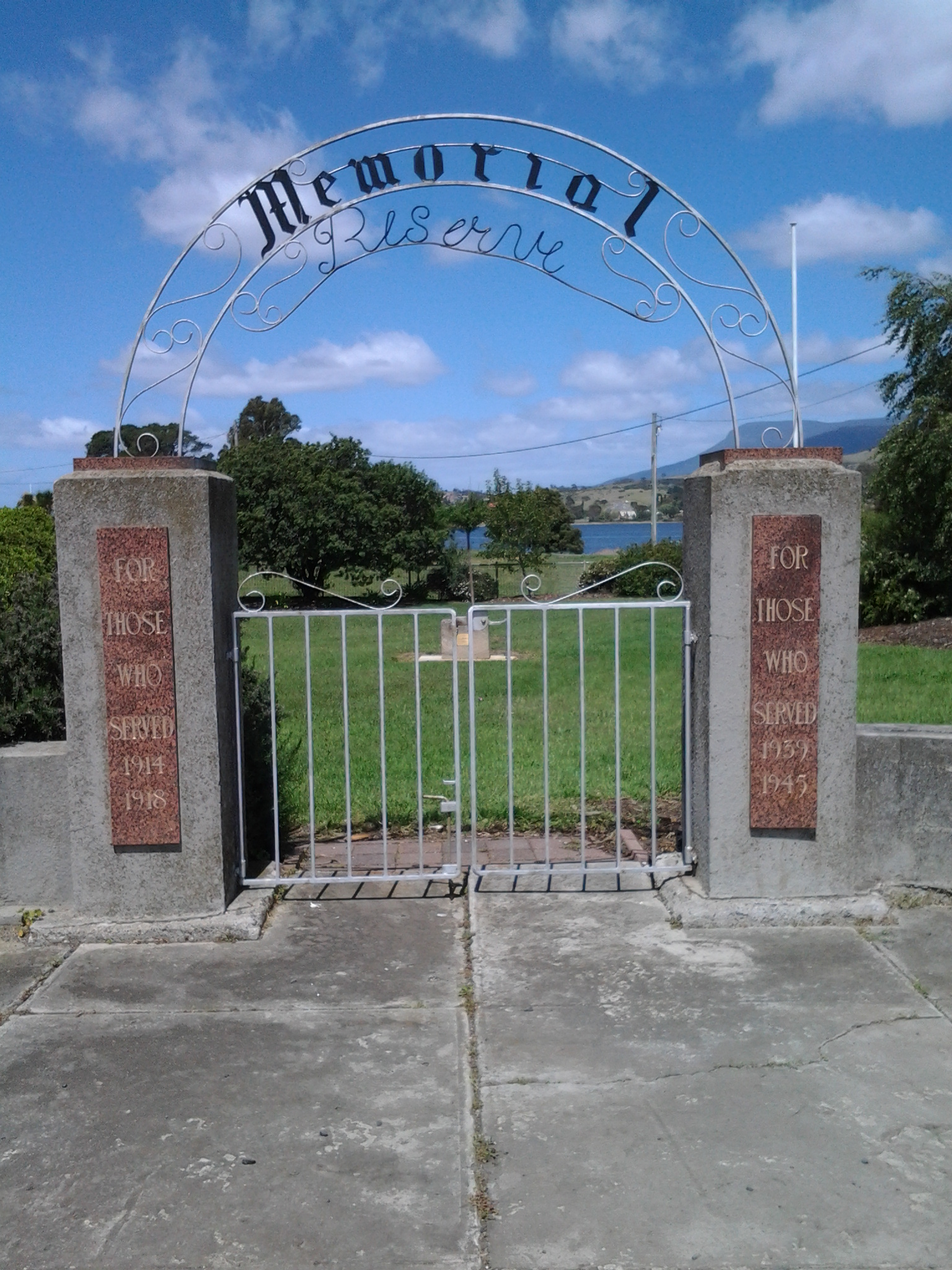
Continuing on the Trail, I reached a car park with Lindisfarne’s tennis courts on the other side. To the left was a dramatic gateway signed Anzac Park. It wasn’t clear that the Trail was through the gate, but I walked it, and found it was. By 11.25am, I reached a memorial to soldiers from the Lindisfarne area lost in wars since World War II.

20141010_112222

Further on an earlier war memorial remembering the locals who died in the first and second World Wars.

20141010_112509

Between the newer and older edifices, gardens containing memorial plaques for many were laid out carefully.

I left this area, Lindisfarne Point, around 11.30am all the while listening to the singing magpies, observing the tables and other seats that were plentiful for picnics, taking note of the Lindisfarne Cricket Ground on the right of the Trail and following the upper bitumen trail. Pathways continued down to the water of the small Beauty Bay with its kid’s playground however I trekked higher up in order to connect with the Trail and walk through the streets of Beltana Point. I turned left when I reached the small roundabout at Talune St.

Most attractive street

Up the road at the entrance to Koluri Court on the left, I spotted a very unusual sign. This street won “Most Attractive Street” in 1985 awarded as part of the Lindisfarne Garden Competition. Despite the fact that I was still walking along Talune St, I could see the lush foliage spilling from gardens.  In particular, the common plant was the Agapanthus, these days declared as a weed in Tasmania because it spreads into native bushland where it competes with native species. All parts of the plant are poisonous.

agapanthus

Photo from http://www.stockfreeimages.com/p1/agapanthus.html

The Perentie Lizard

The Perth Zoo in Western Australia looks after a Perentie Lizard (mentioned in the last posting) (http://perthzoo.wa.gov.au/animals-plants/australia/reptile-encounter/perentie/).

Perentie lizard at Perth Zoo

The Perentie is a Central Australian monitor (also known as a goanna) which is designated a ‘controlled animal’ under the Tasmanian Nature Conservation Act 2002. There is a low likelihood that this species could establish in Tasmania, with potential for minor impacts. The most significant impact is likely to be predation because Perenties have a broad diet and could potentially prey on a variety of native animals. These impacts are likely to be low because the Tasmanian climate is not suitable. This risk assessment categorises Perenties as a moderate threat to Tasmania and proposes that imports be restricted to those licence holders approved for keeping moderate threat species.

I have seen a few lizards during my walks along the Derwent River. Tasmania has fifteen different types of Skinks plus the Blue Tongue Lizard (some live in the rocks in my garden) and the Mountain Dragon. Delicate Skinks are a small, plain species, often found in suburban gardens in northern and eastern Tasmania.  Often I see a tiny Skink darting out of my way., but I do not know which type or types: more research is needed.  The photo below shows a Delicate Skink.

Delicate_Skink

Kangaroo Bluff Historic Reserve and Bellerive Fort

Near the end of my Stage 4 walk from Tranmere to Bellerive Bluff along the Derwent River, I saw a sign pointing to the Kangaroo Bluff Historic Reserve which I chose not to visit. However, my curiosity was aroused. So the next day, last Saturday, I made a special trip and walked to the Reserve to find out more.

20140927_091124

As I walked toward the entrance, I was puzzled. I could see a narrow road passing between two raised hills. On closer inspection when I discovered a massive deep and long ditch from the left to the right outside the stone edged wall of earth, clearly this site was the remains of a fortification.

20140927_091051

The site was a battery complex with underground tunnels and chambers for magazines, stores, the lamp room, a well and loading galleries. The public do not have access to the underground since these parts were bricked up in the 1920s: I would have been very interested to see the speaking tubes set into the walls used for communication purposes.

However there are many metres of well-preserved channels which can be walked in and around.

20140927_090522

20140927_090924

Signage provided useful information. I now understand that the idea of a protective Fort was first discussed in the 1830s as a means to protect the merchant ships travelling up the Derwent River, although I am unclear who might have attacked from the sea because Van Diemen’s Land (now named Tasmania) was very isolated from the rest of New Holland (now named Australia). However, it was not until difficulties were being felt between England and Russia in the 1870s that a renewed push for a Fort was made.

20140927_085957

By 1885 the defensive Fort was built – although I cannot imagine why anyone would think that Russia would believe it useful to send a war ship to the tiny colonial and penal colony in Hobart. It does not surprise me that the two canons were never used as war weapon.

20140927_090533