Category Archives: Walking

Who am I?

Increasingly blog followers have questioned my enigmatic no-name status.  I have been secretive about my identity to protect myself from predators and weirdos. My surname is so rare that I wouldn’t want someone to track me to my house. When the walk was over I intended to reveal and explain more about myself so everyone could understand why I presented myself only as Tasmanian Traveller.

Despite this approach, for people who have emailed me, I have opened up a little more.  For the woman from upstate New York who visited me and asked to walk on some of the sections she had read about in my blog,  of course she got to learn so much more about me.  And she, and others, have been most respectful and careful to keep my gender and characteristics neutral and non-identifying. Thank you.

Now that the process for my walk from the mouth to the source of the Derwent River is evolving, I no longer see a need to retain my protective shell.  From now on, there will be safety in numbers as I walk with one or more friends.

So who am I?  My name is Helen Tyzack and I come from a working history in the visual arts and museology industries, plus an overlay of working in or for many different types of education institutions, government agencies and not-for-profit organisations.  All my life I have walked to get around, keep costs down, to be kinder to the climate, and to experience the beauties of the natural environment at close quarters. A few years ago I sold my car and have walked or used public transport ever since.  As a female, I have wanted to walk alone in remote and isolated country and by maintaining my anonymity this has been comfortably possible.  I am on the mature side of 60 years of age, short in stature with an overweight body, various health challenges and perpetual problems with my feet.  But I refuse to let these characteristics and impediments prevent me living; they slow me but they do not stop me. I will not let them stop me. I am energised by the possibilities of discovering new places, and my walk along the Derwent River has exceeded all my expectations. In recent years I have flown off to different countries around the world to learn and experience new adventures.  It has been one of the greatest surprises that the Derwent has offered so many revelations that the thought of overseas travel has been halted.  I guess it is always easier to think somewhere else will be more interesting yet a place right on your own doorstep can offer ‘the world’.
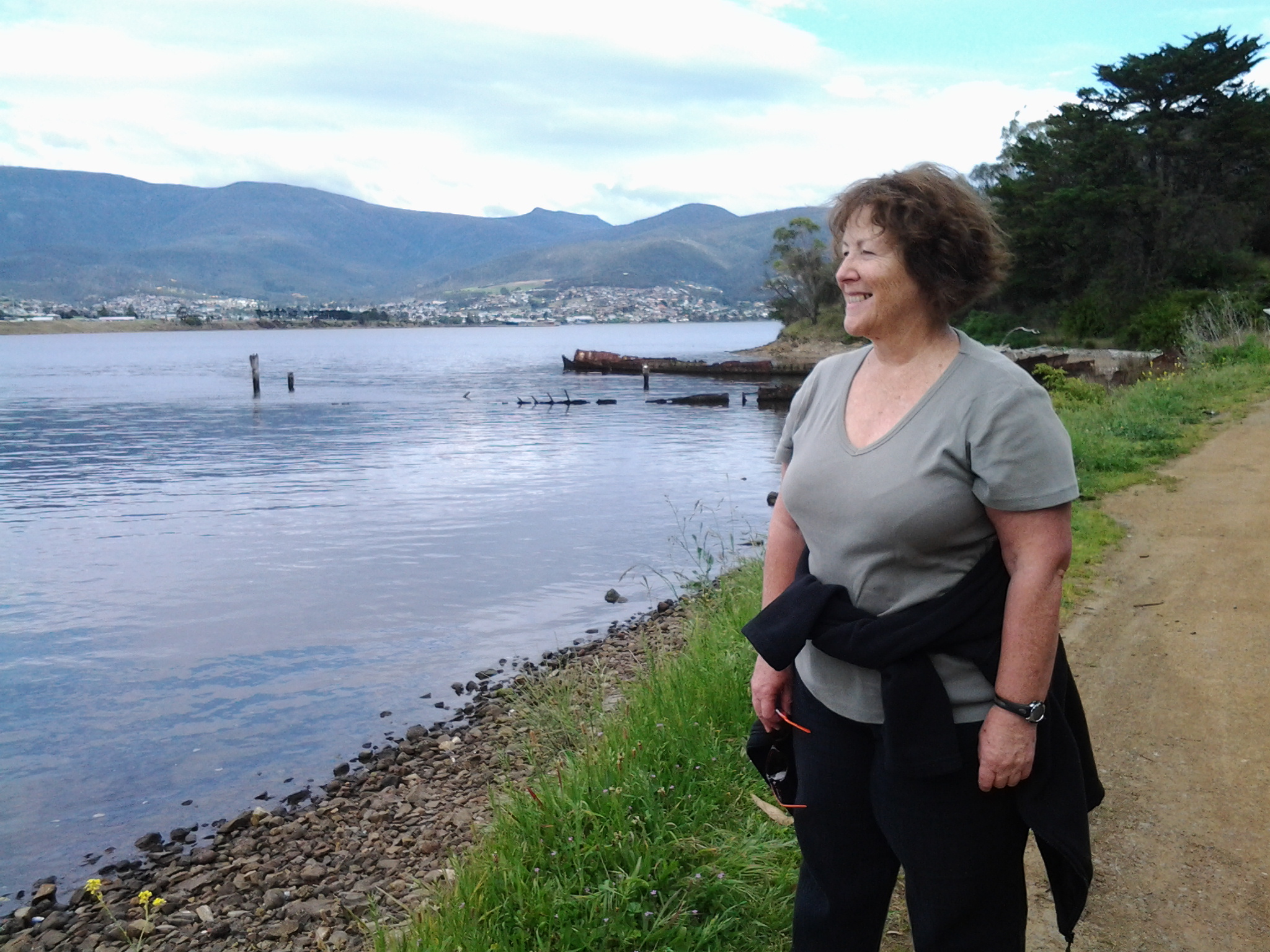
Helen at Otago Bay 2014

The photo of me above was taken by a passer-by as I walked past Otago Bay at the end of last year on Stage 7 of my walk along the Derwent River.

For each of the 15 walking stages completed so far, I have walked alone and independently, and have only been supported by public transport when buses deposited me at a starting point and collected me from each walk’s destination. I have realised this practice cannot continue because of the limited public transport options available in central Tasmania. As an alternative, I have decided to try a UBER-style approach to transport – friends are offering to be my chauffeur and in some cases they are offering to walk with me.

To cope with the constraints of private property restrictions, I am working with locals and others to obtain various kinds of alternative access to the Derwent River.  No project ever goes totally to plan and that is the joy of exploration: discovering new ways to meet changing personal expectations keeps my brain active and my mind vitally alive.

During my last walk, I reached the township of Gretna. From now on, as I head inland towards Lake St Clair, I expect to be accompanied by a friend who will drive me to key locations. Whenever we ‘touch’ the river I will walk north and south along the edge to the extent that the river and the landscape allow.  Gradually, I will walk past the river until I sink down with pleasure on the dam wall at the southern end of St Clair Lagoon with my goal achieved.  The next stages of my walk will represent the collection of the final pieces of a fabulous patchwork quilt – and once I have all the pieces, I will stitch them together into my blog to record a sequential and seamless walk from Gretna to Lake St Clair.  And then I will write two books: one will be a how-to-do-it publication for tourists and locals who want to understand how to use public transport to discover the river edges, and the second book will be a fictionalised account of my walk.

Attention all dromomaniacs

Have you heard of the medical condition known as”mad travellers’ disease” or more officially as “dromomania”? What a lovely word! This condition describes people who are driven to wander long distances due to irresistible impulses. They have an exaggerated desire to wander or travel.

The word is derived from Ancient Greek dromosa running/race, and mania-insanity.

Wikipedia offers the following: Dromomania, also travelling fugue, is an uncontrollable psychological urge to wander. People with this condition spontaneously depart from their routine; they may travel long distances and take up different identities and occupations. Months may pass before they return to their former identities. In the common English vernacular this is often rendered simply as ‘wanderlust’ (directly from the German), although dromomania does imply a psychological compulsion, usually on one’s own and often without one’s conscious knowledge, rather than a more generalised desire to travel. The most famous case was that of Jean-Albert Dadas, a Bordeaux gas-fitter. Dadas would suddenly set out on foot and reach cities as far away as Prague, Vienna or Moscow with no memory of his travels. Jean-Martin Charcot presented a case he called automatisme ambulatoire, French for ‘ambulatory automatism’, or ‘walking around without being in control of one’s own actions.’ More generally, the term is sometimes used to describe people who have a strong emotional or even physical need to be constantly traveling and experiencing new places, often at the expense of their normal family, work, and social lives.”

Rachael Jones constructed her own fiction based on dromomania. How many of us feel driven to travel around our own countries or abroad as often as our finances can manage? Are you a dromomaniac? Am I a dromomaniac because I feel driven to walk the length of the Derwent River, while I hope more dollars will find their way into my bank account so I can travel overseas again?

Possible locations where the Derwent River can be ‘touched’

I have compiled a list of those locations where I believe, with a vehicle, it will be possible to ‘touch’ the Derwent River occasionally along its length between Gretna and Lake St Clair.  Please let me know if any section listed below takes your fancy and if you would be interested to try it out.

Almost all sections include driving on bitumen highway, gravel roads and poor tracks. Some of these may be forestry roads.  If you wish to volunteer to take me to one of these sections (let me know on walkingthederwent@gmail.com), please feel comfortable that your car can handle the different conditions.  Of course, common sense will prevail and we will never push on if a road is too rough for your vehicle and your peace of mind.

If you are happy to help me reach my goal, albeit differently than originally expected, I would like to fill up your tank with petrol as some compensation.  You know my ‘walking the Derwent’ is a non-commercial project, but since I do not own a car nor drive, I need transport – and therefore, I am happy to cover the cost.

  1. On eastern shore – From New Norfolk drive along the Lyell Highway and then, not far past Gretna’s Sports ground, take a left turn into Clarendon Road and drive to farmstead buildings about 250 metres from the river on a hill. Perhaps 140km return trip.
  2. On western shore – From New Norfolk drive along Glenora Road, and turn left at Bushy Park then right onto Meadowbank Road over the Tyenna River then next to Derwent, then on over Meadowbank Creek to a hill top with buildings. It may be possible to continue quite a way on this road. Minimum 130 and maybe up to 160kms return trip
  3. On eastern shore – From New Norfolk drive along the Lyell Highway and turn left off the Highway onto Meadowbank Dam Road. Continue to dam and southern end of Meadowbank Lake. At least 170 kms for round trip.
  4. On western shore – Travel from New Norfolk and turn left into Gordon River Road at Bushy Park, then turn right off Gordon River Rd into Ellendale Rd and then right onto Rockmount Road before you reach the township of Ellendale. There seem to be many dirt forestry tracks to Meadowbank Lake. At least 170kms return trip and maybe 200kms return or more depending on roads.
  5. On western shore – Travel from New Norfolk and turn left into Gordon River Road at Bushy Park, then turn right off Gordon River Rd into Ellendale Rd and drive on through the township of Ellendale until you reach Dawson Rd / Dunrobin bridge over Meadowbank Lake. Turn left before bridge and it seems we can drive 2kms further up along the Lake edge. Return to Ellendale Road, cross bridge and connect with the Lyell Highway. At least 170kms return trip and maybe 200kms return or more depending on roads.
  6. On eastern shore – From New Norfolk drive up Lyell Highway and continue past the left turn off to Dunrobin bridge and afterwards and to the left there are a number of dirt tracks seemingly without gates. After a while these tracks/roads only extend to the Ouse River and not the Derwent River so map consultation is crucial. At least 180kms return and maybe over 200kms return depending on how many side roads/tracks can be driven along.
  7. On eastern shore – Drive up Lyell Highway past Ouse then turn left at Lake Repulse Road. Continue to intersection with Cluny Lagoon Road and turn left and go to Cluny Dam. Return to intersection and continue on Lake Repulse Road to the Repulse Dam. Can cross a bridge and continue back south around Cluny Lagoon to a ‘settlement’ named Cluny.  Perhaps could access this road from the Ellendale Rd on the western shore? By driving north from Repulse Dam along Dawson Road/then renamed Thunderbolt Road it seems we can take right hand detours to Lake Repulse. Over 200kms maybe 250kms or more minimum round trip.
  8. On eastern shore – Drive up Lyell Highway past Ouse, over the Dee River until the sign appears for a left turn at Catagunya Road. Drive down to Catagunya Dam. 200kms minimum return trip
  9. On eastern shore – Drive up Lyell Highway past Ouse, over the Dee River, past Black Bobs and turn left at Long Spur Road. This runs around Wayatinah Lagoon. Go past the intersection to Wayatinah Dam, turn left and travel to Wayatinah Power Station on Lake Catagunya. Return to intersection and turn left and travel to Wayatinah Dam. Cross bridge and continue on to Wayatinah township. Access dirt tracks in the vicinity of all. Drive south from the Wayatinah Dam on the western shore along the Florentine Road but don’t bother crossing the Florentine River because the road goes inland away from the river. Minimum of 230kms but most likely  at least 300kms round trip.
  10. On eastern shore – Drive up Lyell Highway and when you reach a canal passing under the road, and where the road turns right to go to Tarraleah, go straight ahead on Butlers Gorge Road. Note there are limited roads off and around going closer to the river near that intersection. Continue along Butlers Gorge Road for 10-15 kms heading for Lake King William. Reach Clark Dam and Power Station. Continue onto Switchback Track along side of Lake King William. This track stops and you have to return the same way – swamp separates you from the track north about 500 metres away. This would be a big day and I suggest take overnight accommodation at Tarraleah before setting out. PERHAPS it is possible to walk across the swamp and then walk about 7 kms to Derwent Bridge. Unknown over 300 kms return trip.
  11. On eastern shore – Drive up Lyell Highway to Derwent Bridge and continue past to left hand turn off on the western side of Lake King William and drive the track to the lake. 360 kms return trip minimum.
  12. On eastern shore – Drive up Lyell Highway to Derwent Bridge. Walk from the bridge over the Derwent River near the township of Derwent Bridge to St Clair Dam at the bottom of Lake St Clair Lagoon where the Derwent River starts. Walk to Pump House Point and St Clair Weir at the southern end of the Derwent Basin. 350kms return trip minimum.


Personal Locator Beacon

When walking away from roads and settlements in our Tasmanian wilderness, the risks of injury or illness must be covered.  Mobile phone coverage does not necessarily extend into some remote areas and, even where it does, if a person takes a tumble or becomes sick then s/he may not know the precise location of the place where they are. Therefore, potential rescuers may not be able to locate the sufferer.  In addition, our Tasmanian bush can be so dense that someone walking 10 metres away won’t necessarily see or hear you; therefore an alternative more reliable technology is needed.

The internet offers many different types of useful technology.

The Personal Locator Beacon which I purchased locally in Hobart is a SPOT GEN 3 Satellite GPS Messenger. It has the essential S.O.S. function plus my SPOT offers tracking with a Google Maps interface, regular check-in messages to friends elsewhere, and a Help option where a friend or other personal contact can be alerted to come and provide assistance in a non-critical non-life threatening situation.  The lightweight SPOT weighs a tiny 114 grams, is a tiny pocket-sized unit and ruggedly constructed.

SPOT GEN 3

Once purchased, I registered my SPOT via an online connection so that in the event of my pressing the S.O.S option and needing urgent medical assistance, the GEOS International Emergency Support Coordination Centre will be able to respond. Once activated, they will get in touch with my key contact to determine if s/he knows additional information such as where I have walked from and where I am walking to (I guess that is just in case I don’t obey the important rule of staying where I am when I activate the beacon). My location coordinates and any other information are then provided to local response teams in whatever country or state is appropriate.

This is an expensive piece of technology including the registration charge.  However buying it is like buying car or house insurance. You buy it hoping you never need to use it.

Touching the River

Blog followers know that electrified and barbed wire fences, unenterable gates, tangles of thorny blackberry canes and impassable private property have limited my direct access to walk against the Derwent River.  Since my project is not to walk on the highways and byways, and knowing I cannot start out from Gretna and go further by the River as I have hoped and wanted, I believe I need to change my ‘rules’ about this project.

The changes must happen because I am determined to get to the source of the River at Lake St Clair, even if it means doing so by using transport provided by friends, and if it means I can’t be near the river every metre of its length.  I feel I must accept what is possible rather than wailing about the impossible.

Therefore, I am researching all the main roads, backroads and tracks that go towards the river with its dams and lakes, and which do not have locked gates across them preventing access. I plan to create a list of these opportunities and then ask friends whether they would like to volunteer to drive me to one or more of the options.  In the next few days I will post the list on this blog – perhaps there may be other southern Tasmanian blog followers who would like to volunteer to drive me to one or more of these ‘touchings of the river’ – if so, when you see the list please email me at walkingthederwent@gmail.com.

Wherever I ‘touch’ the river I hope to be able to walk north and/or south as far as possible simply to feel more comfortable about saying, in the future, that “I did my best to walk from the mouth to the source”.  That is, I want to limit the amount of qualification I will have to give to that statement.  Quite possibly when I reach one of the touch points, I may determine a longer walk can be achieved. If I find this to be the situation, then I will return with backpack and tent if necessary.  In this way, the touchings of the river will amount to a reconnaissance.

Another option that I am investigating is whether I might fly either in a small plane or helicopter and follow the curves of the Derwent River, photograph it from on high and then incorporate the photos into stories about those edges of the river on which I cannot walk or otherwise reach.  I suspect flying may be out of reach financially so the thought of crowd funding has crossed my mind.  But before then, more research will be needed.

The option to canoe/kayak along sections of the River scares me half to death.  A family friend recently travelled in this way over a short section and has never been so frightened.  Apart from the dangers of the Derwent River’s water levels being unexpectedly changed as the water volume in upstream dams are managed, the dozens of rapids that punctuate so many stretches of the river present unsupportable dangers. I guess I lack the courage to try.  Or maybe it’s the unbelievably cold water I don’t want to fall into.

What haven’t I thought of? Any suggestions will be welcome. This idea is too much fun to be stymied by physical barriers.

Postscript on Stage 15’s walk from New Norfolk to Gretna

Throughout my project to walk from the mouth to the source of the Derwent River, I have been urging readers to walk some or all of the stages I have undertaken just for the pleasure of it. But I cannot do so for Stage 15. I cannot recommend that you follow in my footsteps and take this walk from New Norfolk to Gretna.  I cannot suggest you walk on private property without permission.  I cannot encourage you to walk on the narrow roads with speeding drivers where no pedestrian access has been provided.

I am so sorry to say that, if some of my recent posts inspired you to put on your walking boots and tackle the roads and paths and tracks, you must take them off.  I must only recommend you access a car and drive the road route for Stage 15.  It will mean you will miss out on seeing the black velvet ears of cattle in the moonlight, hearing the river ripping along towards Hobart, meeting those who move cattle or wheelie bins, and enjoying the smell of fresh air.  It will mean you will pass some of my favoured finds so quickly that, in a blink, you miss them altogether.  However, you may not grind your teeth in frustration that access to the Derwent River is denied you so often, you may not get run over, and you may not be shot by a gun toting land owner.

Take care.

Tassie Link back to Hobart

When the Tassie Link bus rolled to a halt at Gretna, I was surprised it was only a small one designed to carry approximately 20 people. I later learnt that if there are minimal bookings the small bus is used but with more bookings a standard larger bus is put into service.  This is the main bus line that links the historic west coast to Hobart via Lake St Clair.  Previously, I had been surprised that the service only runs four days a week, making the development of travel plans more challenging for tourists and locals alike.  Obviously most people drive.

As the driver got out to collect my fare, the side door was swung open by a happy guy and everyone on the bus called out a friendly “Hi” followed by the command, “Give us y’ pack”.  My pack joined a high pile at the back of the bus and once I sat, the happy chat began and lasted through to Hobart.  Everyone was on holiday from different part of mainland Australia and they had all just finished walking the Overland Track from the famed Cradle Mountain to Lake St Clair. Similarly to me they had been at the Derwent Bridge pub for a few hours waiting for the bus to arrive. So we were all very merry regaling each other with the stories of our walks.  It was the perfect ending to a brilliant two days of discovery.

When I walked in through my front door at 11pm, a warm glow spread across my face.  I was home!

Joining the masses

After two days more or less being by myself, arriving at an increasingly busy pub initially assaulted my senses.  All that people activity. All the chatter. All the laughter. I needed time and the right state of mind to ease into this happy pub scene at Gretna Green Hotel. I found a comfortable armchair in another small room, sent off text messages and phoned friends. I sorted myself out and generally arrived at a state where I was ready to be social.

Once I fronted the bar, my friend Brad thoughtfully relocated my pack to a secure room, and I settled into meeting the locals. I chose to drink a red wine so he opened a bottle for me – this is a pub where wine wasn’t the drink of choice.  Around 6pm they suggested I order a meal. A while later I ate dinner alone, by choice, in the dining room with its vases of false sunflowers. I needed to clear my head and regain my equilibrium.

2015-09-18 18.27.24

One of the publicans, Colleen, stopped by to introduce herself and have a chat. Meanwhile hotel regulars ate their meals at the bar or took them outside – a typical Friday night practice apparently. My meal was an excellent freshly cooked plate of fish and chips accompanied by a fresh garden salad.  This was the sort of place where I felt comfortable to return my empty plate directly into the kitchen, a move which allowed me to thank the cook.

Back out in the bar and over the next few hours, I learnt more about the area and its personalities. Tim, a barman, was leaving Tassie and with the night off work, he was getting free beers from the endless stream of locals who came to say farewell. By the time I left he was still standing, able to hold down some sort of chat, but rather glassy eyed. A woman was celebrating her birthday.  So Friday night at the Gretna Green Hotel was party time.  All brilliantly aided and abetted by publican Colleen, whose manner was light and jokey, yet clever and appropriate. She kept everyone feeling good about themselves, and lined up the drinks as new arrivals came through the door.  I was very impressed with how she managed the patrons as they became more inebriated. She was very professional yet made people feel warmly welcome.  These days so many pubs have lost their customers, yet Gretna Green Hotel is thriving. I firmly believe it was Brad, Rick and Colleen behind the bar which makes this Hotel so successful.

As the night progressed, the bar people made sure everyone knew I was waiting to catch the Tassie Link bus. As the departure time of 9.30 pm came closer, Colleen instructed all the drinkers outside to run and stop the bus if it came through early. Regardless, I was on time ready to flag down the bus when I waited on the roadside in the dark, with barking dogs bidding me farewell.

I loved my time at the Gretna Green Hotel. The time passed quickly and I was so pleased that people were friendly and welcoming to me despite my being an outsider.  A local would never have lined up a bottle of water, cup of tea and a red wine on the bar!

Gretna Green Hotel advert

Settling in, indoors+

Once inside the Gretna Green Hotel, immediately I felt comfortable.  I walked out to a back room, plonked my gear and then hung onto the bar looking eager.

“Would it be possible to have a shower?  I’m happy to pay.  I don’t care if the shower is in the private residential quarters upstairs.  I’ll even clean it afterwards if that will help.  I’d REALLY like a shower.” All said with pleading eyes.  ‘No. Can’t do,” said the barman.  I stared with desperate eyes, waiting for an explanation.  Apparently TasWater, which manages water quality and delivery around Tasmania, has declared the water at Gretna to be so unsafe that no-one should drink it, and the locals deem it so bad that there is a flow on risk with showering and washing your clothes in it.  “Well we all shower in it, but that’s the risk we take”, barman Brad informed me. “But we won’t let you take the risk.” I spoke up. “If you shower in it then I am happy to shower in it and will even sign a slip of paper saying I am accepting the risk against your advice.”  “No can do. Nah. Sorry.  The publicans won’t allow it,” was the barman’s response. He was trying to be helpful and so I saw no point in putting him offside.  After all, my bus back to Hobart wasn’t passing through Gretna for another 7 hours – I reckoned that creating an aggro situation wouldn’t be smart.

“OK. A bottle of water and a cup of black tea please.”  The cup with its tea bag was soon in front of me.  While the hot drink cooled, I sculled the bottle all the time sitting and chatting to friendly and informative Brad.  After the second bottle and second cup of tea, I began to feel refreshed.  I made up my mind to get clean including brushing my teeth (in the offending water) and to change my clothes, so off I went to the toilets and slowly completed the ablutions and the makeover.  When I left the cubicle, I felt like a new person. I was rehydrated within from having imbibed the fluids earlier, and now I knew I looked different. I felt so much more alive. I only had to survive the waiting time until the bus came through. Only 6 hours to go.

Arriving at the Gretna Green Hotel

Earlier research indicated that a general store operated on the western side of the Gretna Green Hotel so I padded up the Lyell Highway, past the drinking establishment and its drinkers resting on their vehicles outside, and stood in front of the glass fronted shop. The dust was settled. The space was empty. Clearly no-one had been inside for a long time.

I turned and plodded down to the pub, giving the chatty locals something to take their minds off their beers, and entered a small historic building with many small rooms leading off each other.

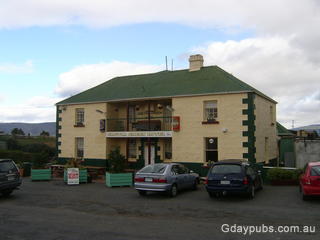
Gretna Green Hotel

Strangely, I forgot to take a photograph when I first looked at the hotel.  This image comes from the internet – please note accommodation is no longer offered. I have just discovered the pub has its own Facebook site with more photos.  Hmm. I must write a review for them.

The last metres into Gretna

Footsore and weary but exhilarated, I walked the final metres into the tiny township of Gretna by passing the exotic bright yellow flowering weed, which when a child I knew as, ‘Broom’.

20150918_143130

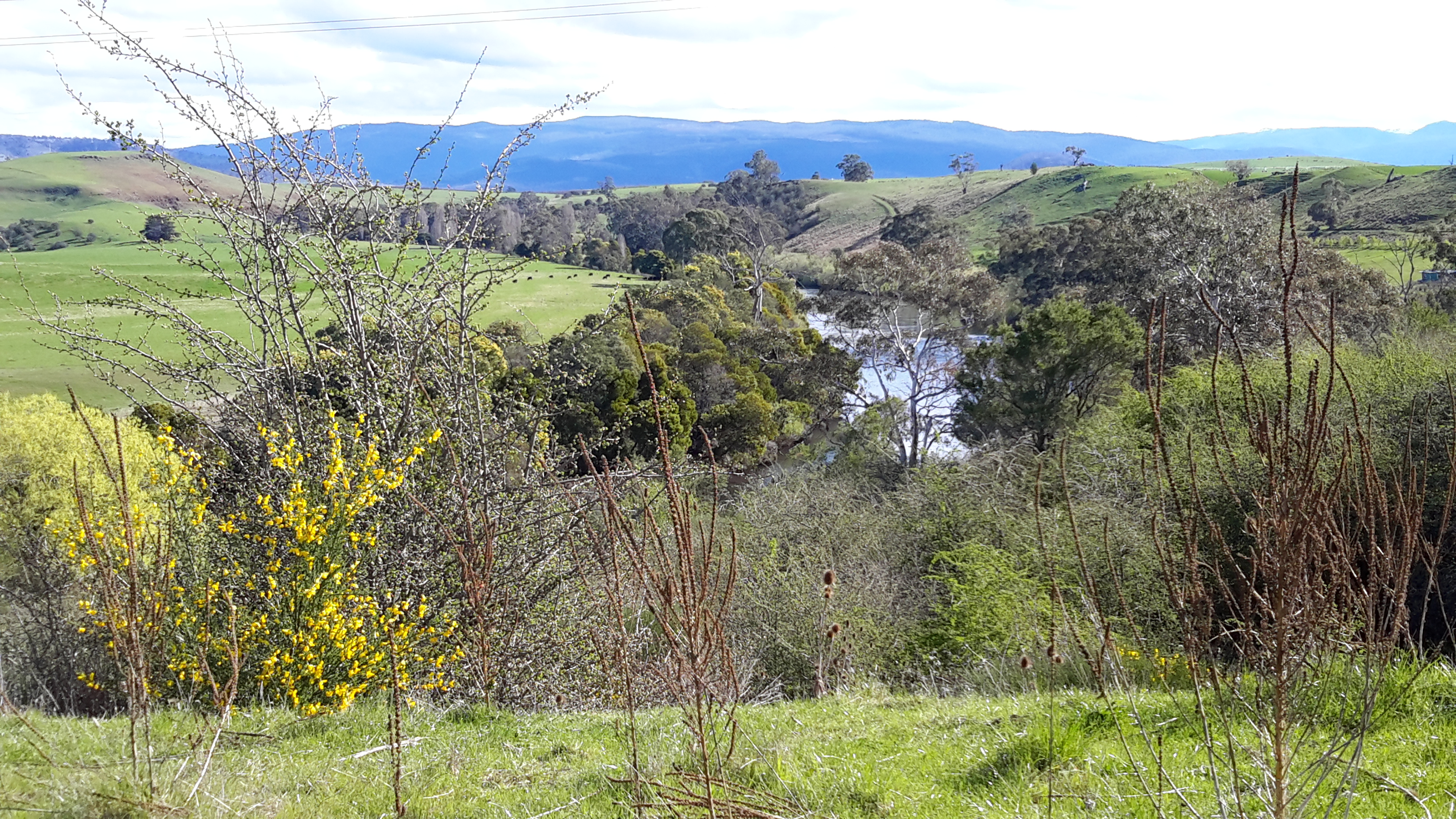
I took my second last look at the Derwent River, and across to the land known as Triffitts Neck.

20150918_143507

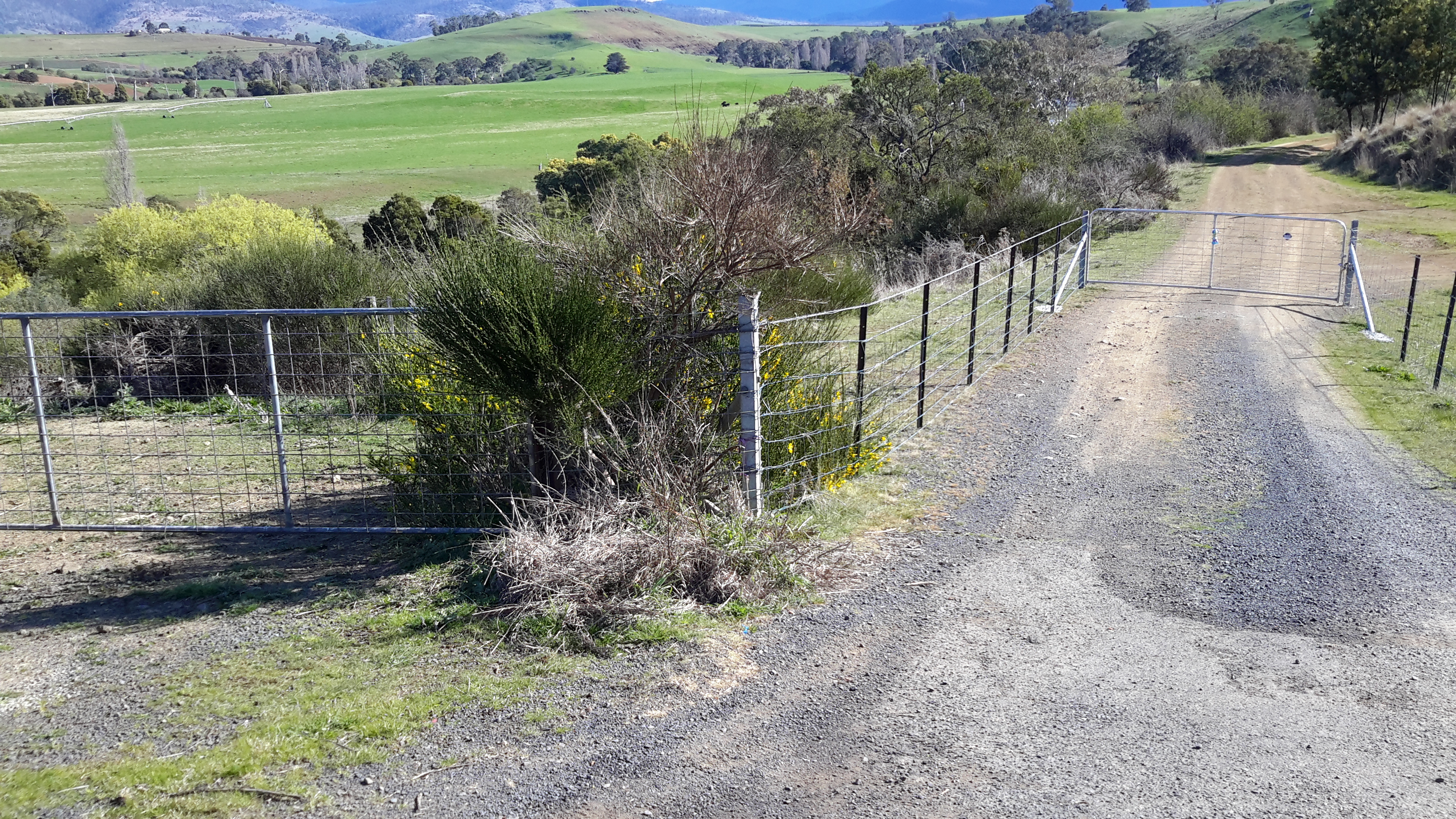
With slumped shoulders I passed the two locked gates which signalled a barrier to my starting the next stage of my walk.

20150918_143624

But up above me on the immediate hill sat something remarkable.

20150918_143520 20150918_143706 20150918_143941 20150918_143945

You can see the Derwent curving around the bottom of the hill, in the distance. An earlier posting included a professional photographer’s shot of this cemetery cross taken from a different angle.

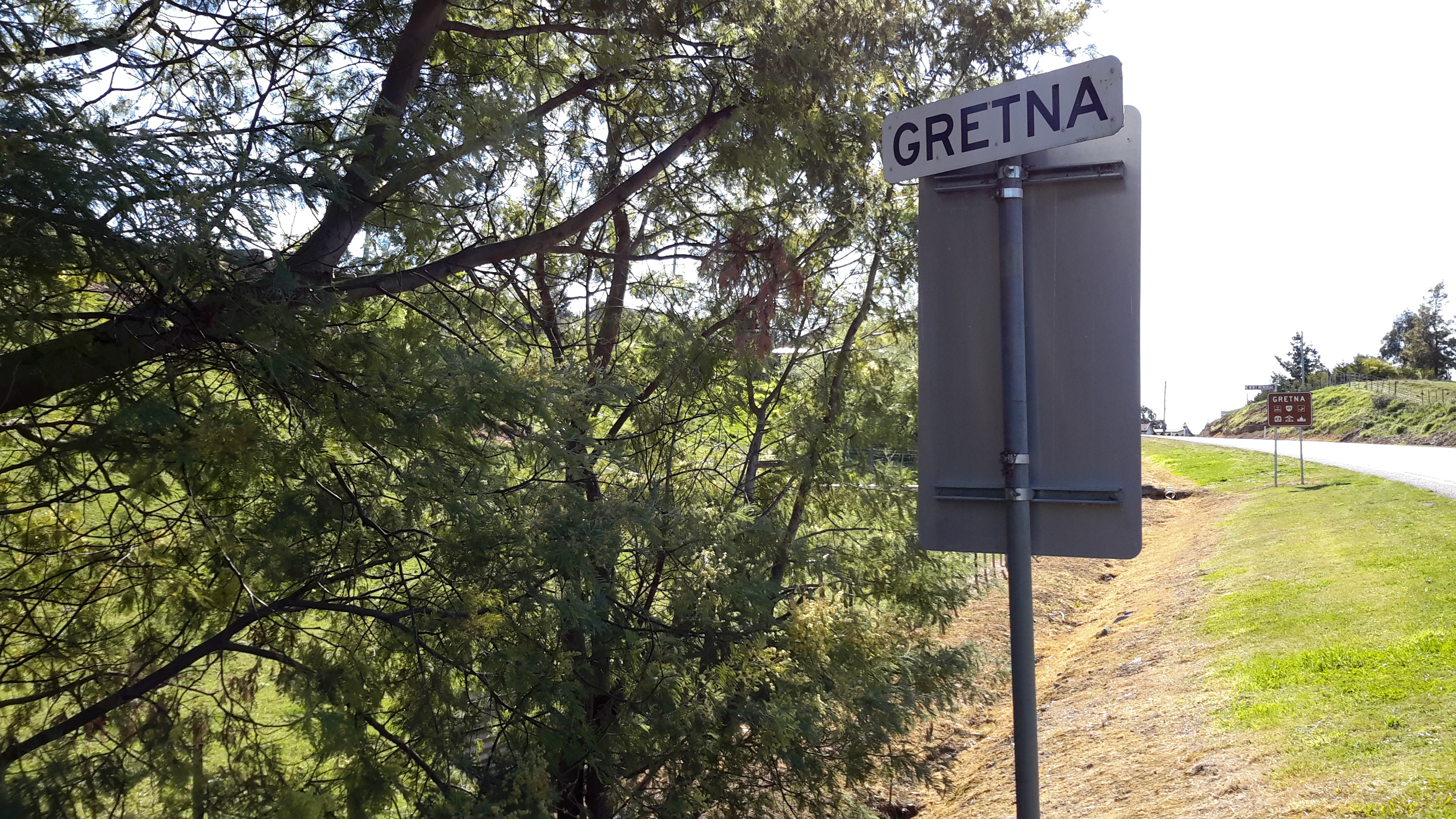
Finally, step after step I reached the town sign and gave myself a mental pat on the back.

20150918_143816 20150918_143830

Nearing and then on the Lyell Highway

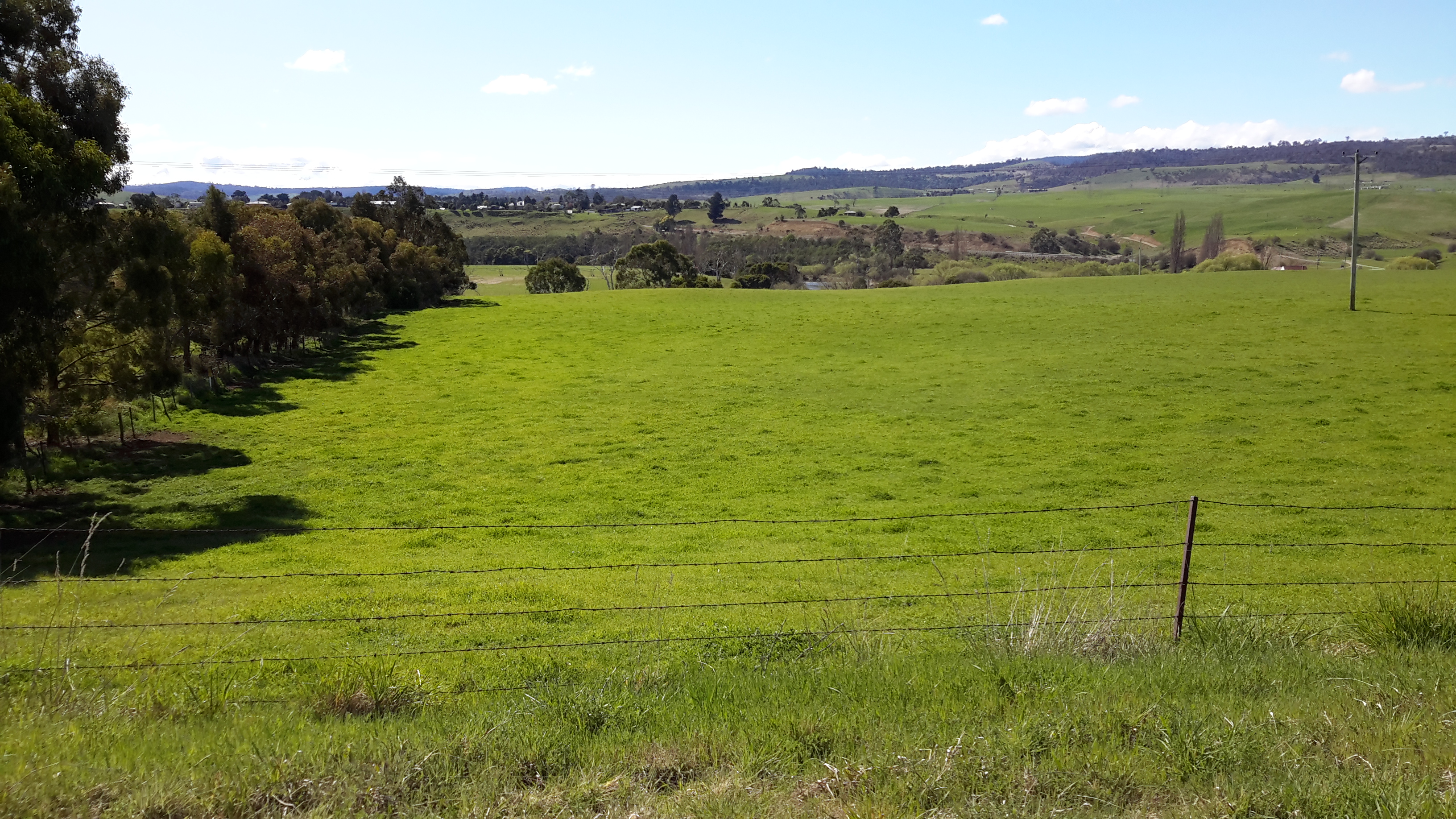
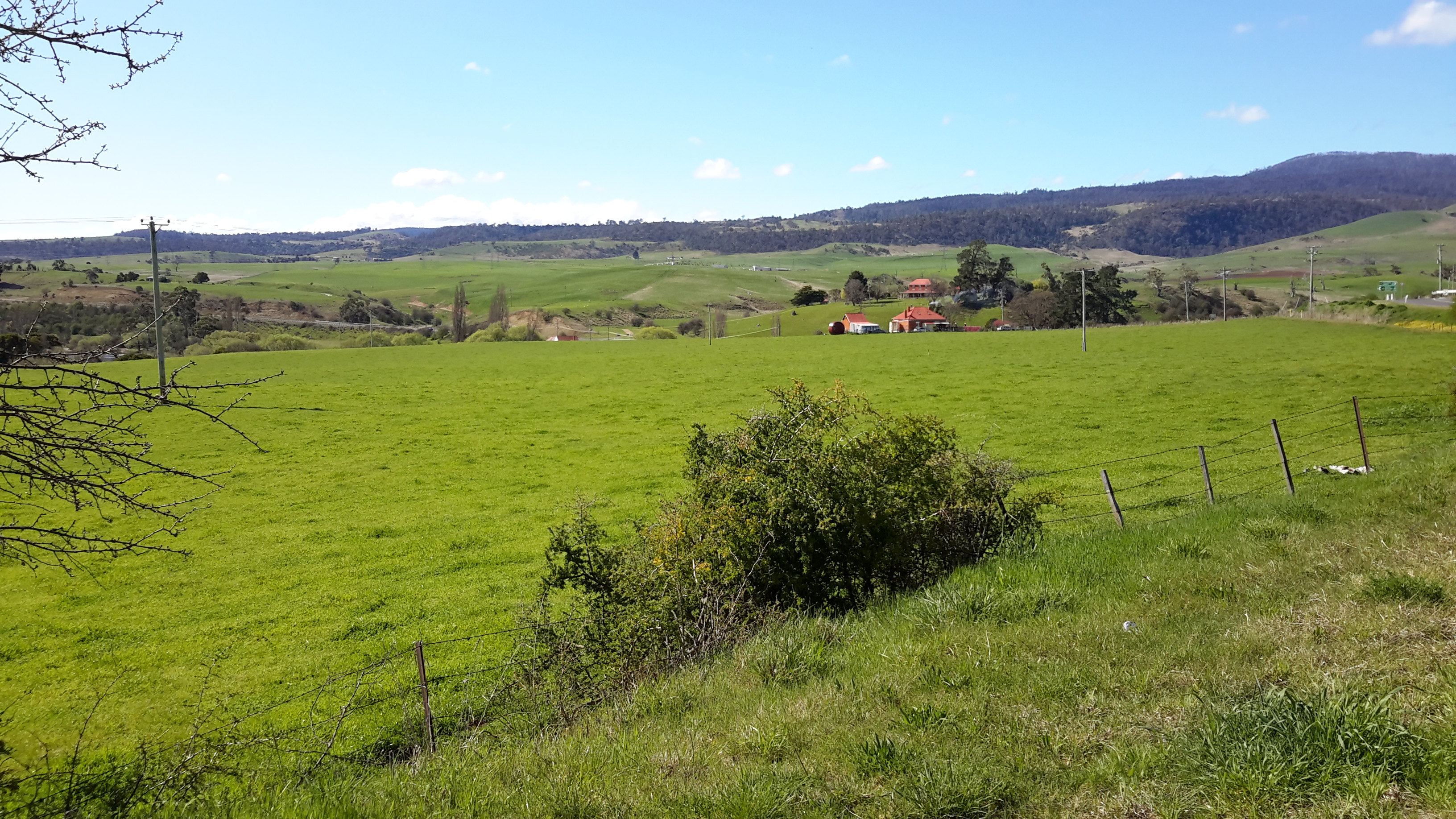
The pastures continued lush and green.
20150918_132218 20150918_133407

You can see a short stretch of the Derwent River in the second photo and the township of Gretna (the destination for this stage) is located on the hill above.

20150918_133542 20150918_133521

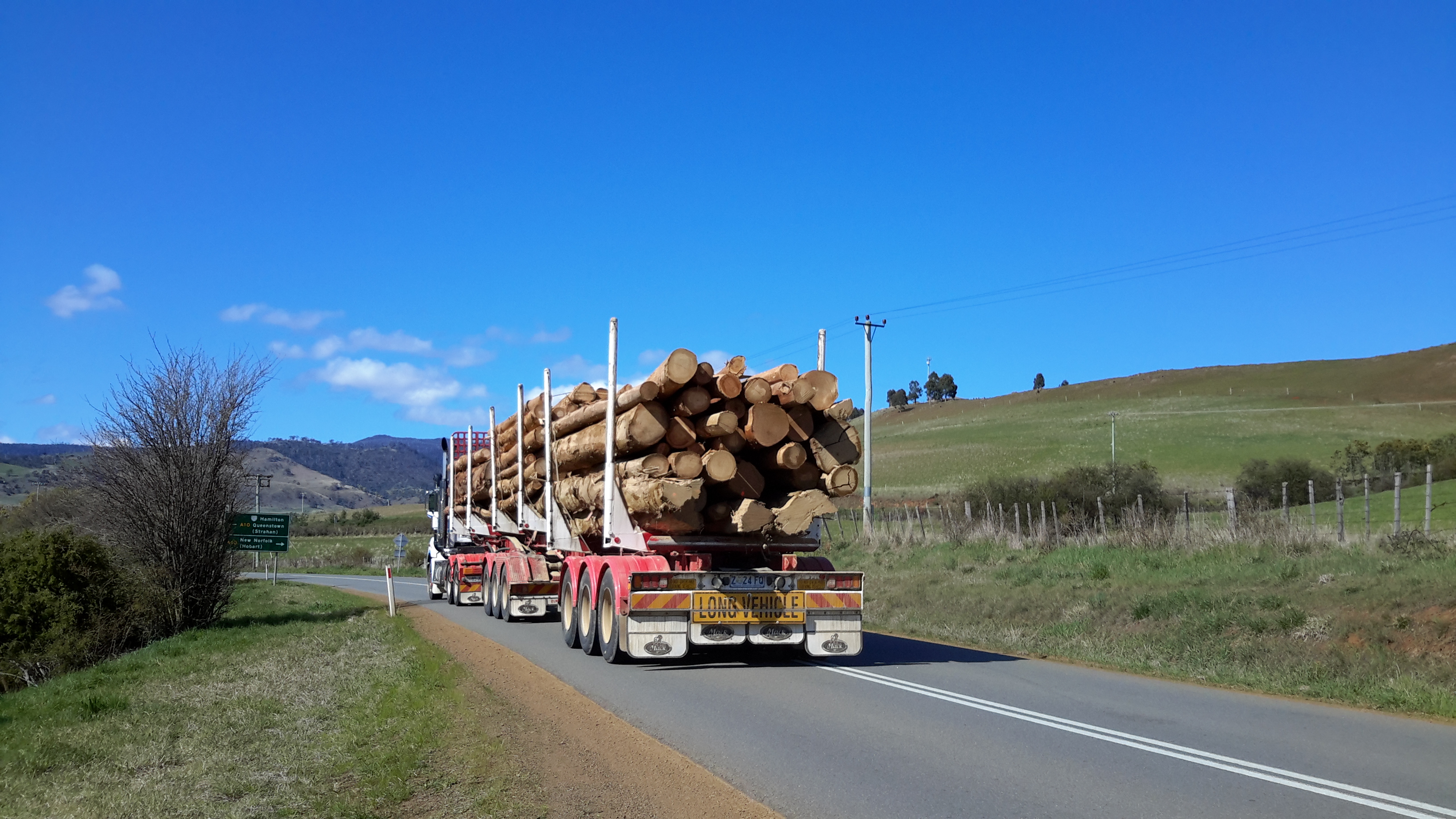
Massive log trucks, taking their pickings to market from our pristine wilderness forests, roared past me.

20150918_133413 20150918_133501

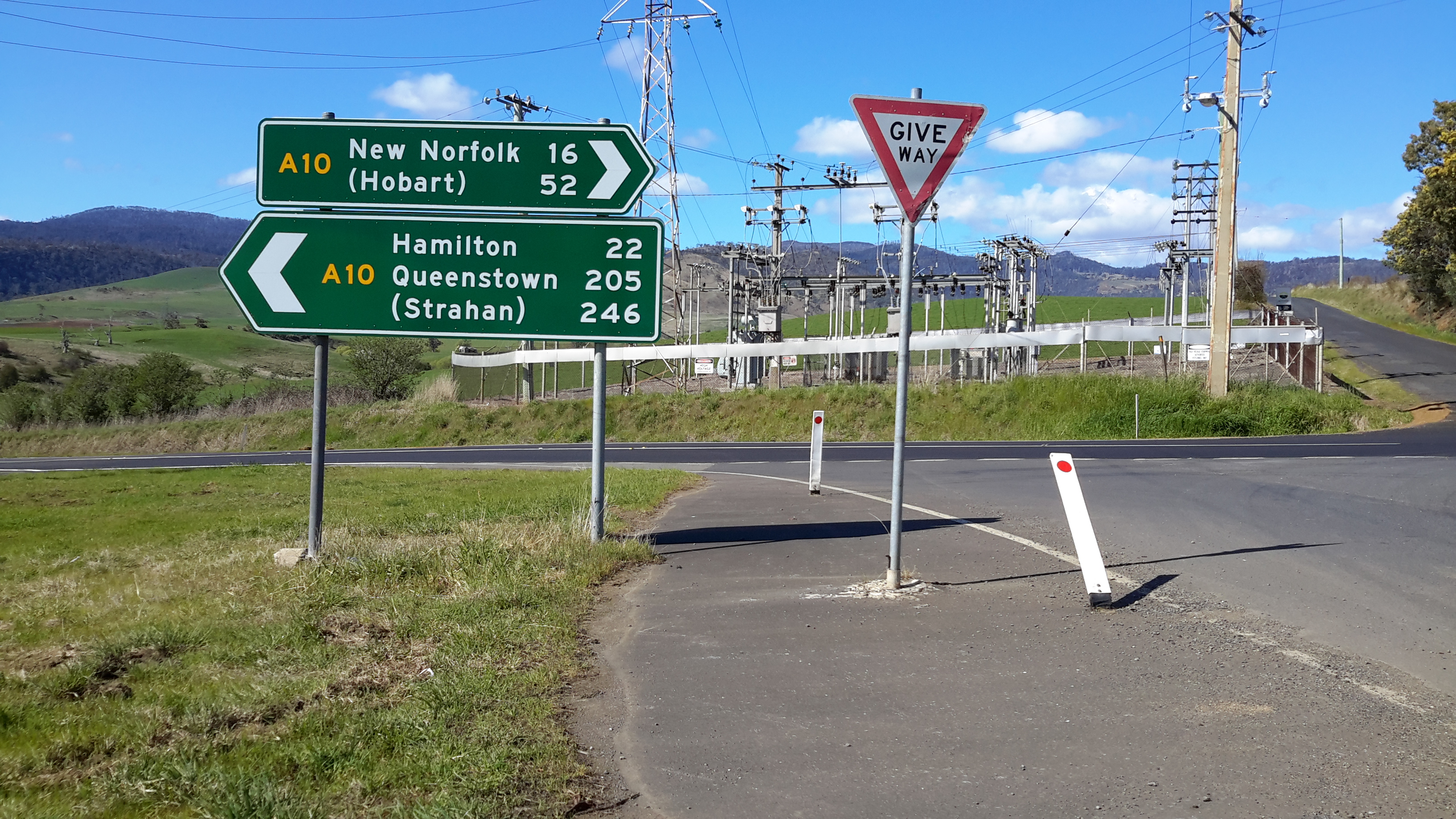
Before long the Lyell Highway, which connects Hobart to the west coast mining towns of Queenstown, Zeehan, Strahan and Rosebery, appeared in view.

20150918_134034

I turned left towards the township of Gretna (which, I note was not listed on any of the signs in the vicinity of this intersection). A few isolated properties, of various vintages, edged the highway.

20150918_134526 20150918_134801

20150918_134532 20150918_134756

20150918_134903 20150918_135203

Each step took me closer to my destination for the day.

20150918_135012

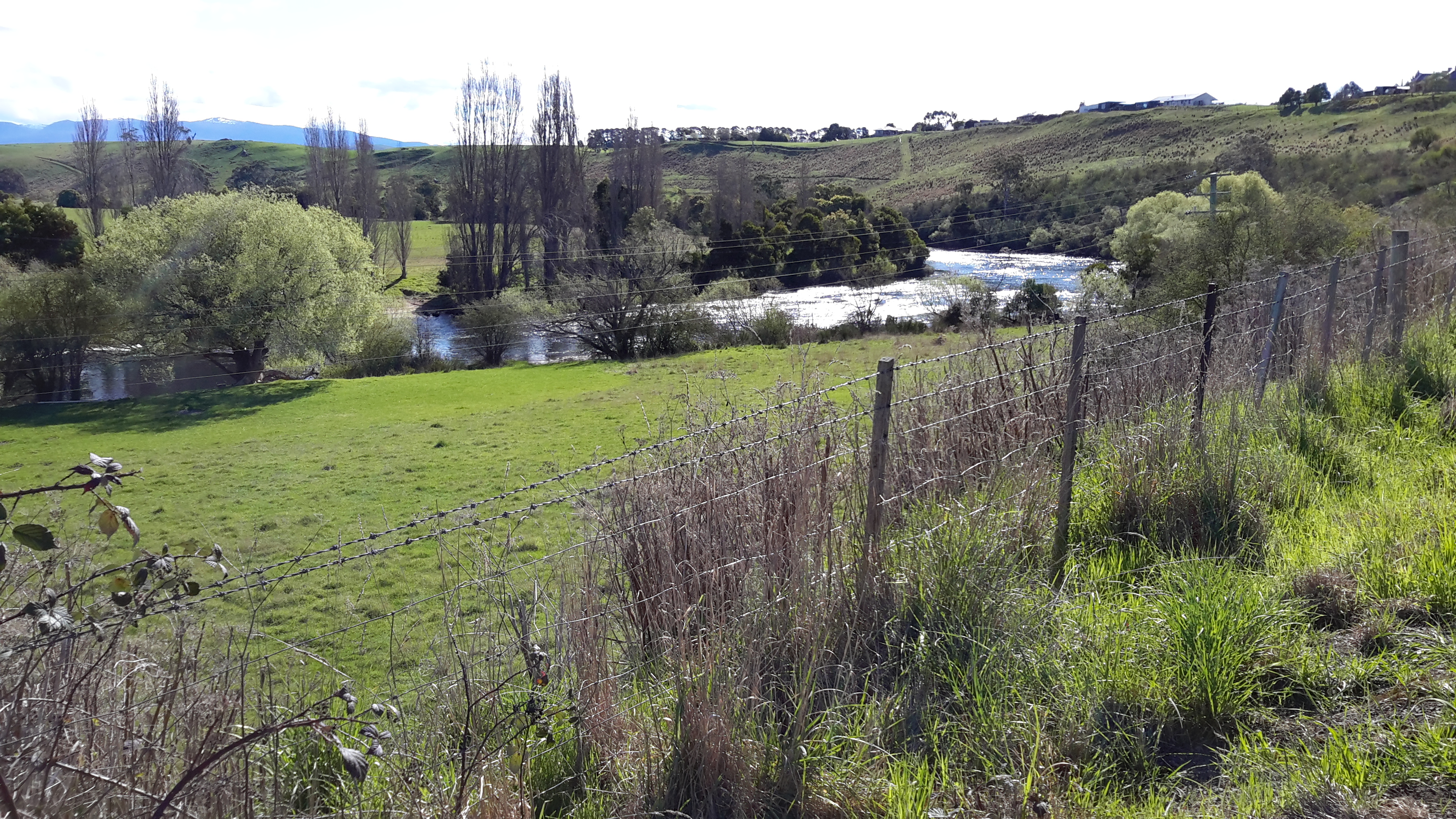
Then the Derwent River came back into view as it snaked its way beneath Gretna.

20150918_135353 20150918_135440

20150918_142556 20150918_142732

20150918_142734 20150918_142924

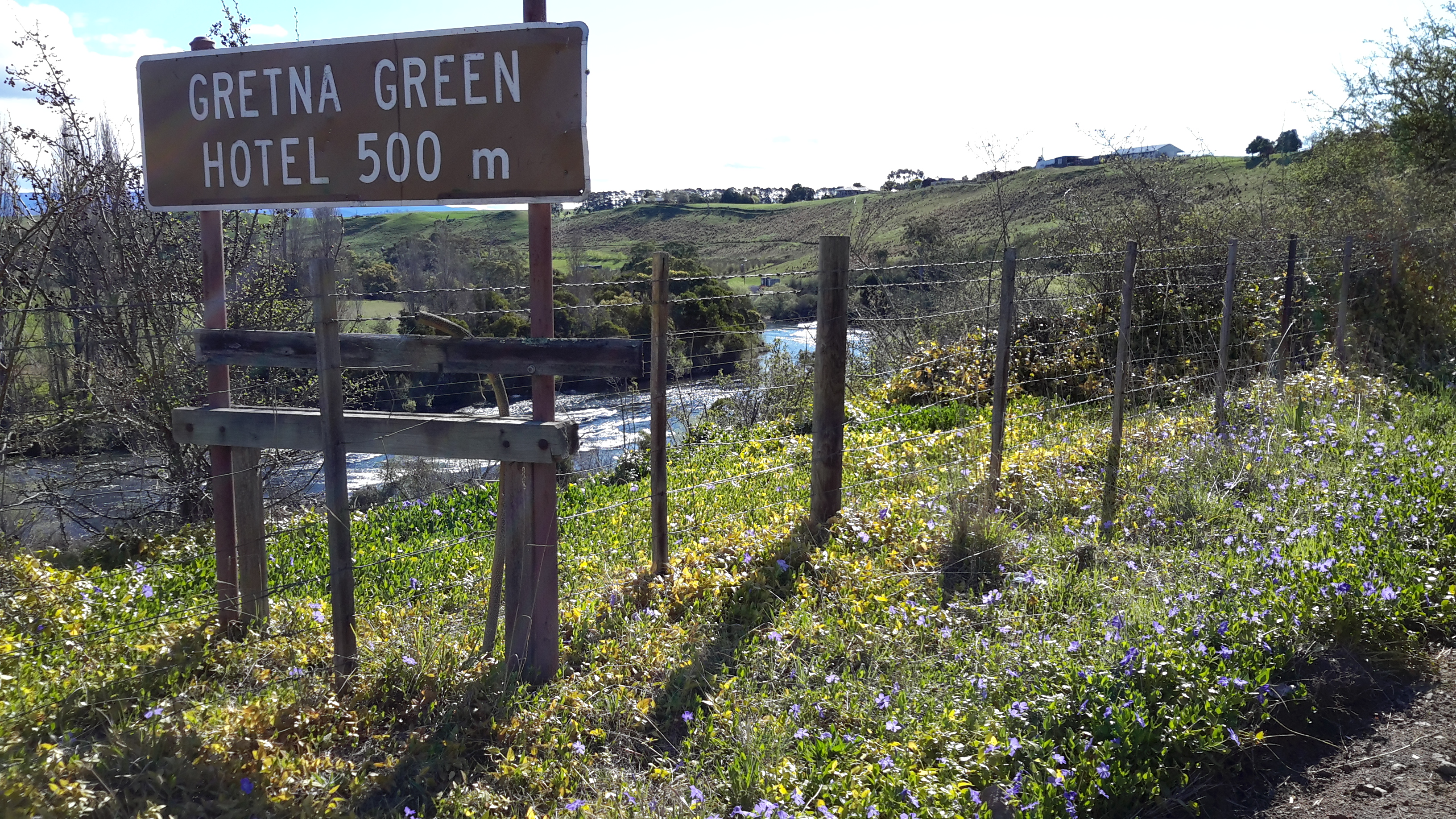
The sign indicating only 500 metres to the Gretna Green Hotel brought on the thought of a long cold drink and filled me with excitement.

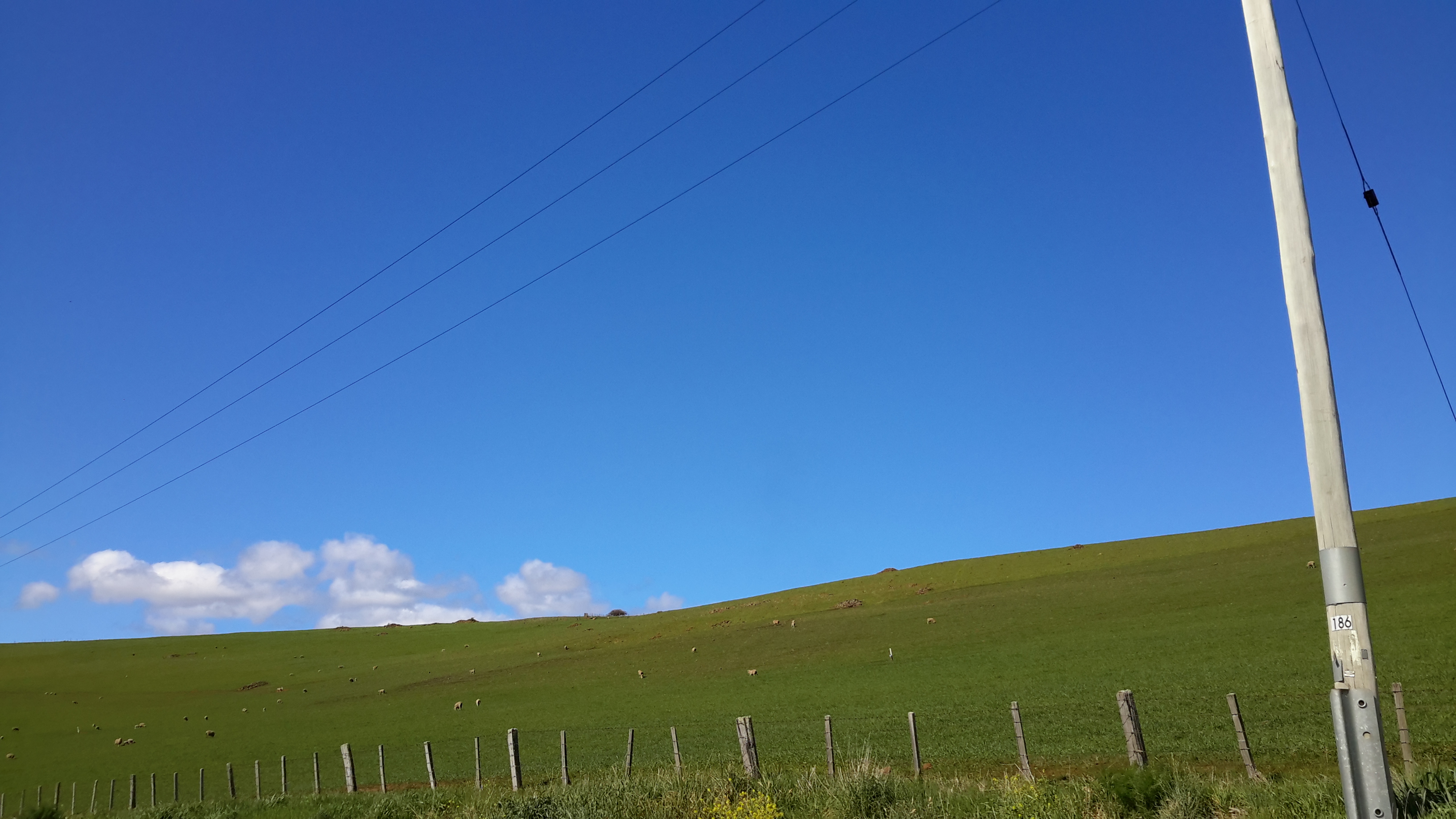
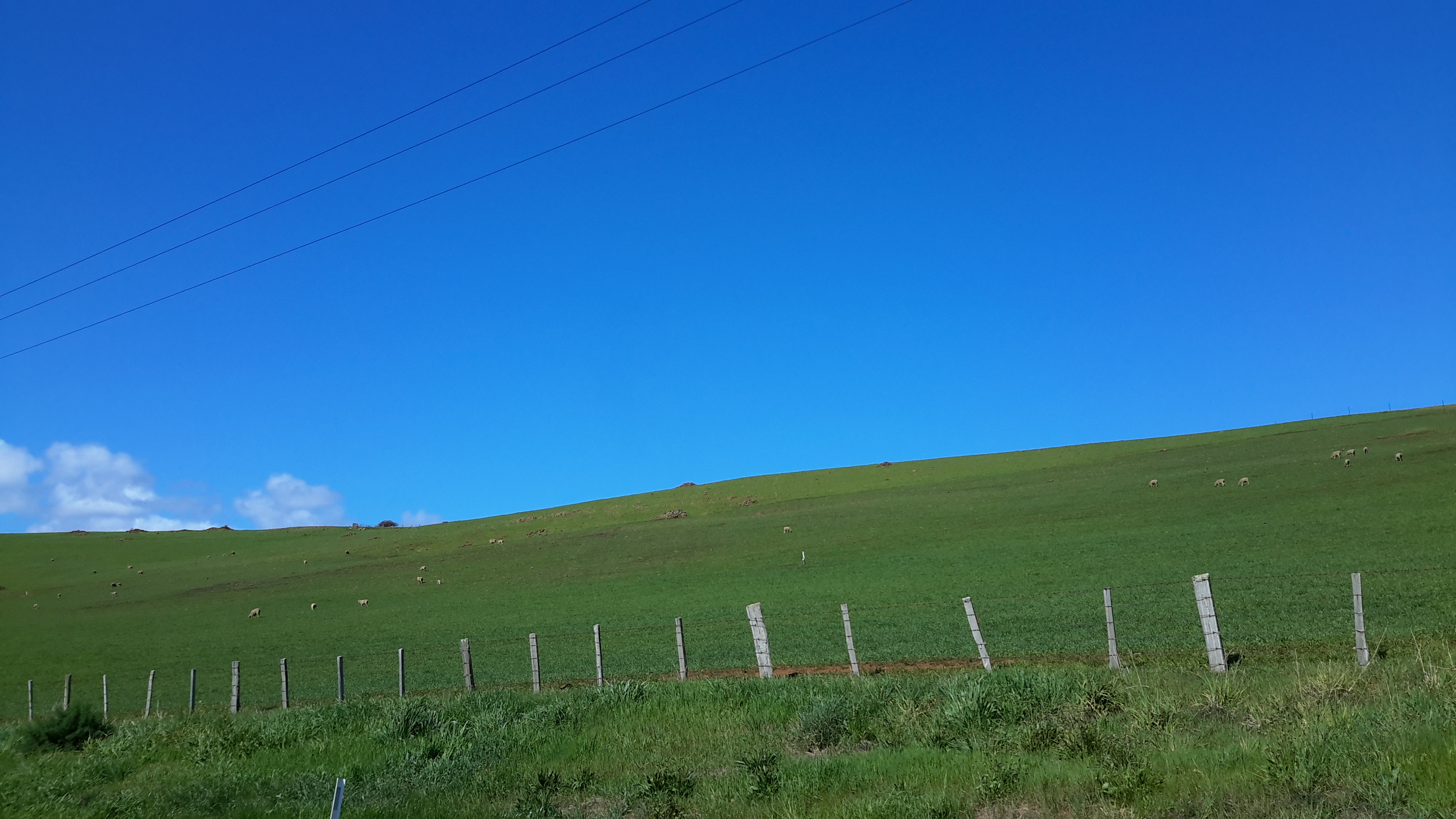
Blue skies and sheep glorious sheep

20150918_131448 20150918_131545

20150918_131612 20150918_131750

It seems so long ago that the Chinese New Year was launched back on the 19th February 2015 and announced as the Year of the Sheep according to the Chinese zodiac.  The ‘year’ continues until 7 February 2016.

As I walked, my mind often wandered to sheep.  The paddocks were dotted with these woolly bundles. The first merinos were sent by Governor King to Hobart in 1805.  More varieties of sheep were brought into Van Diemens Land from the early 19th century as the colony established itself; firstly for meat consumption and then not long after for wool. The establishment of woollen mills followed. These days sheep farmers around Tasmania continue to supply our nation’s butchers and supermarkets, and the fashion industry via fine wool fabrics.

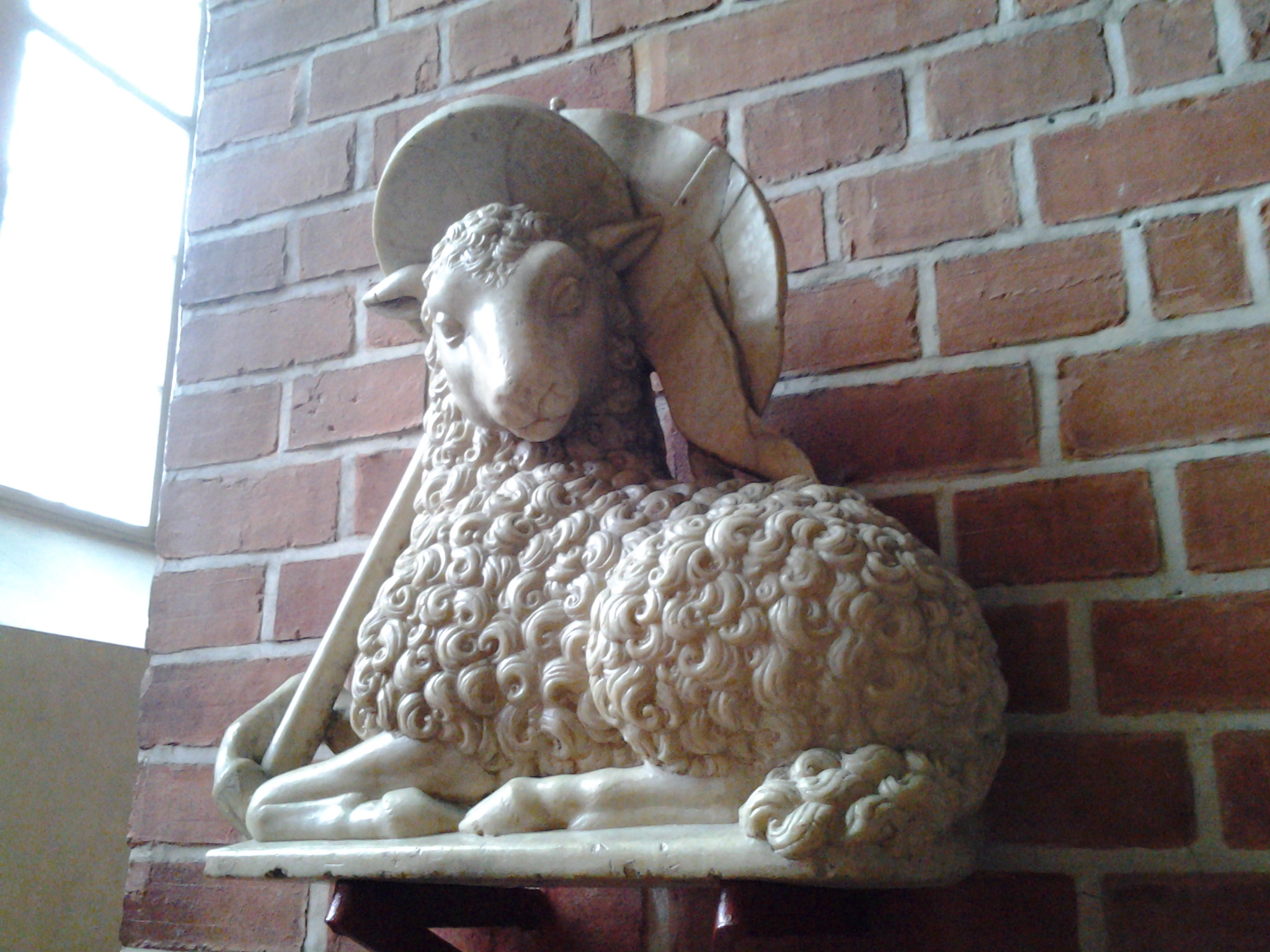
Friends and blog followers know that sheep figure in my list of loves (Refer to an earlier posting).  Therefore, it should not surprise you when this post concludes with photographs I took last year of a very large marble sculpture installed in Stockholm Cathedral, Sweden. Stunningly beautiful!

20140621_155022 20140621_155028

Higher and higher

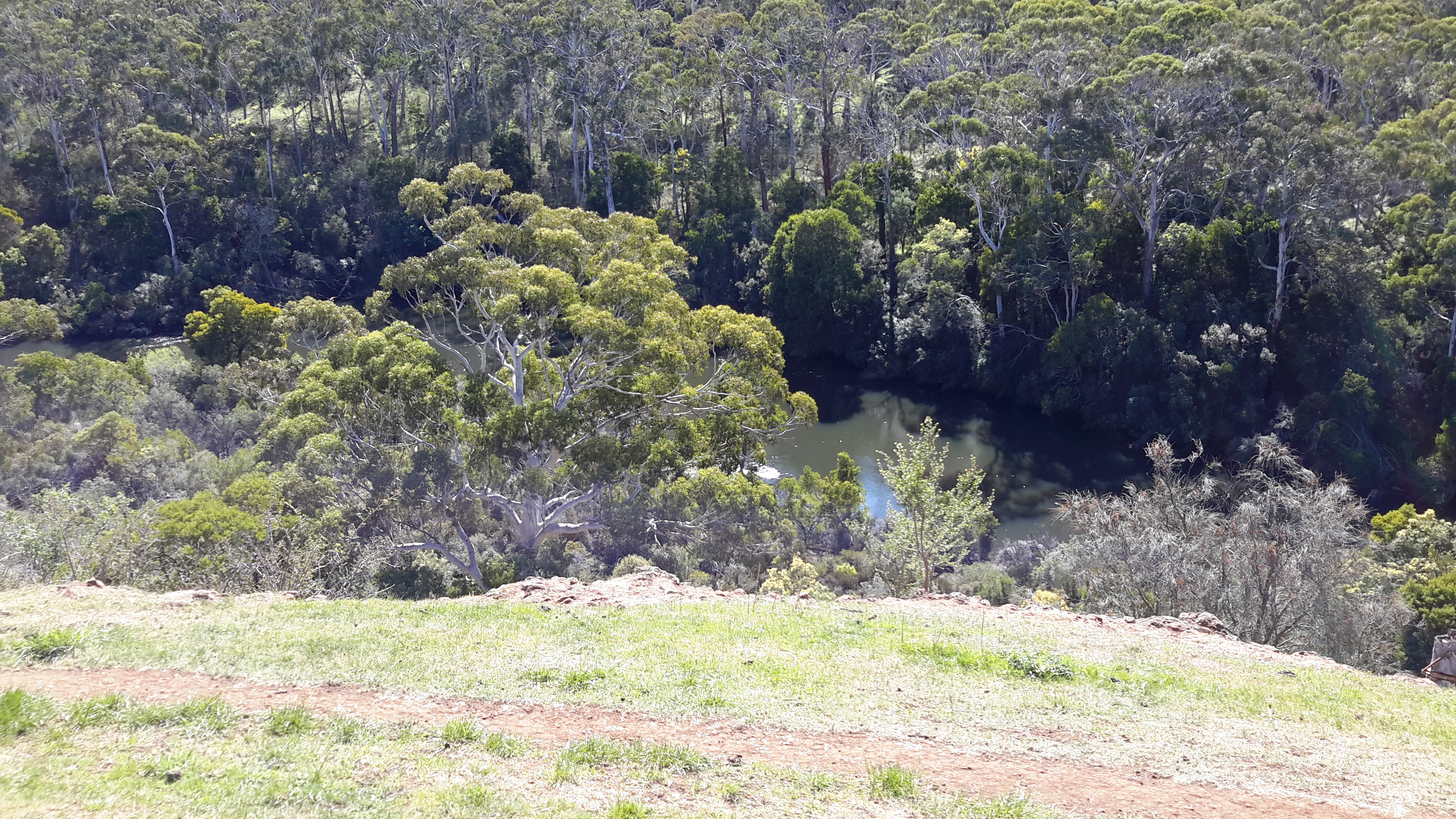
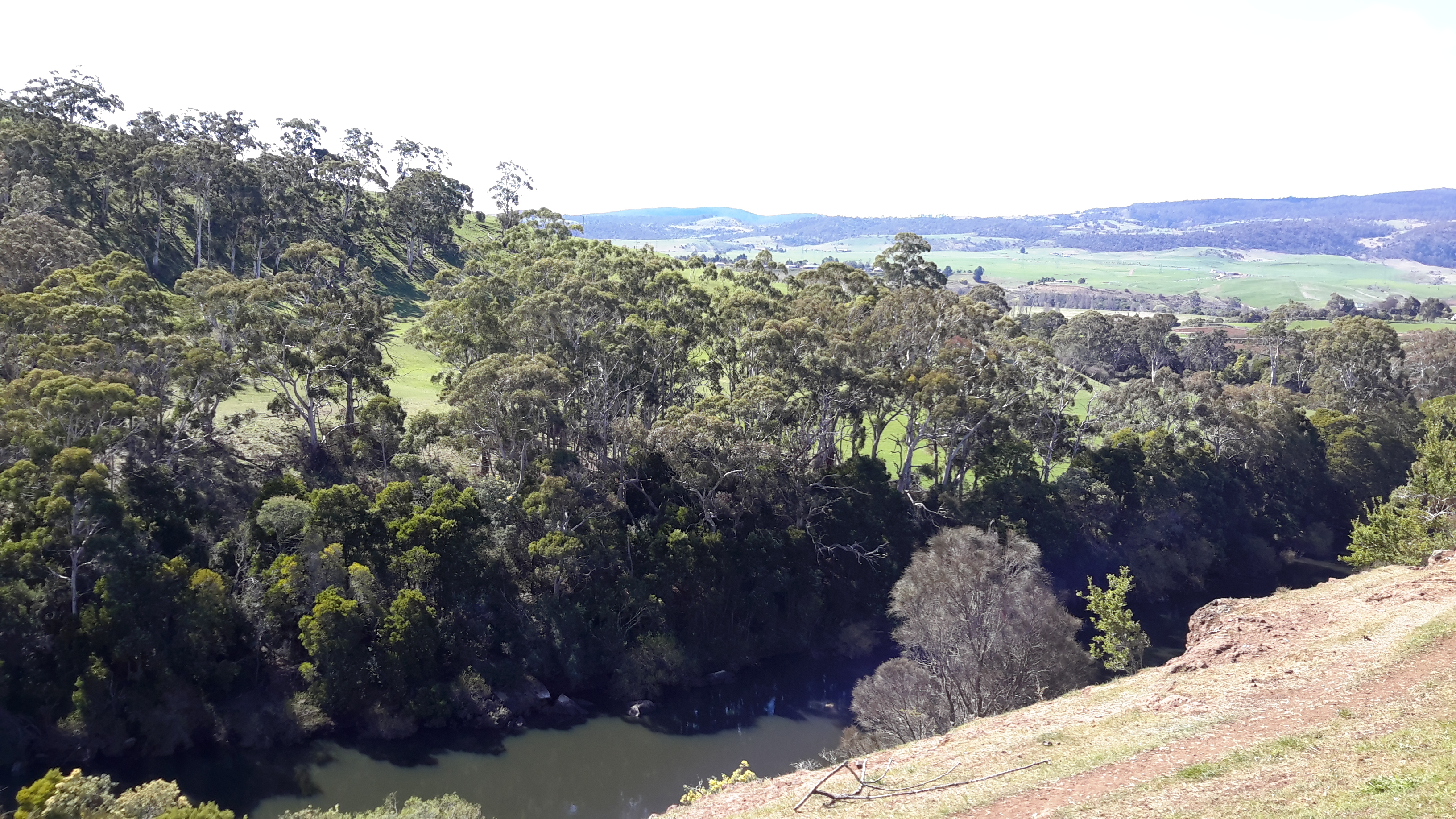
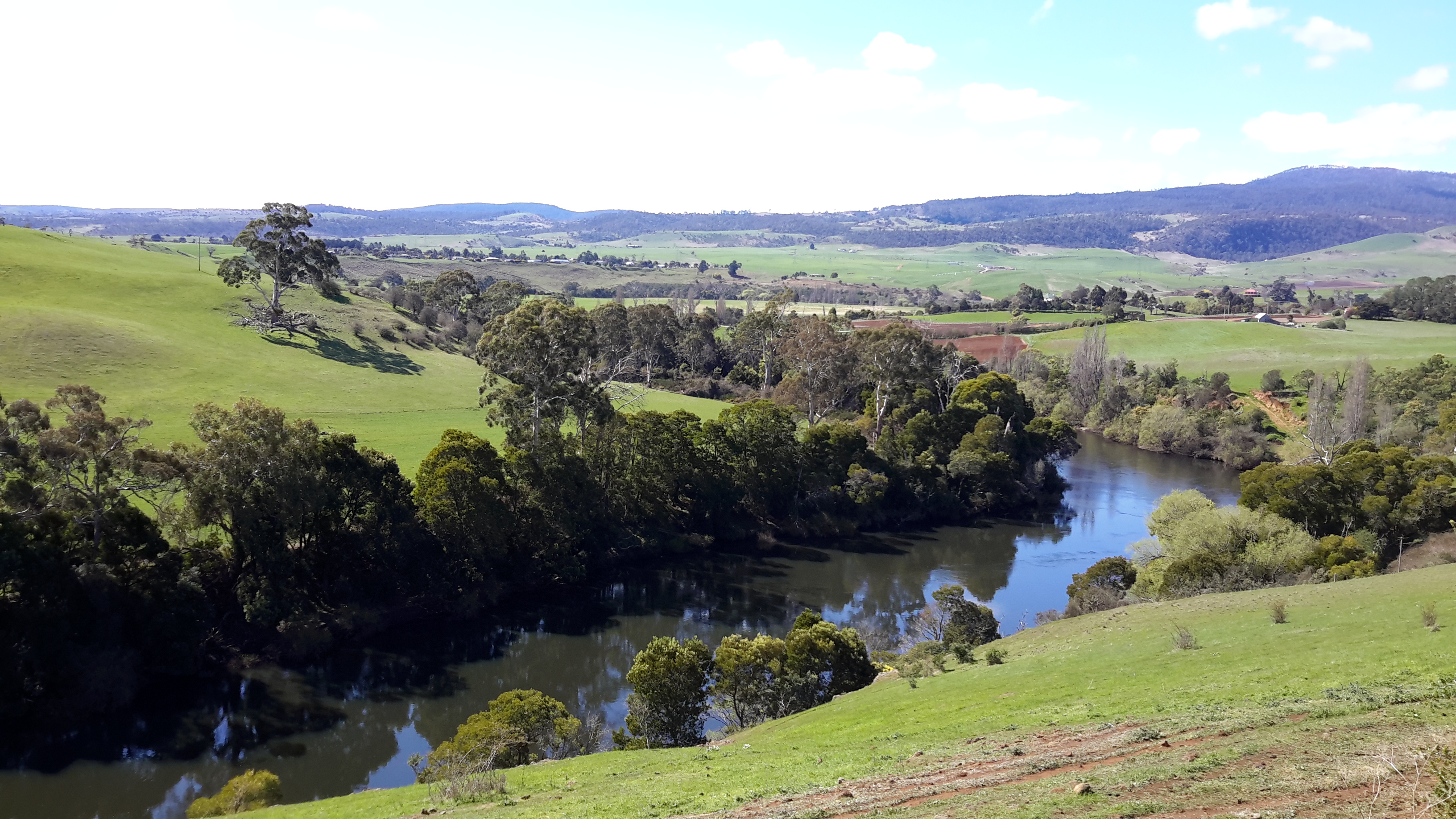
Eventually I began to crest the hill and behold vistas on the Lyell Highway side of the hill. Glimpses of the Derwent River appeared from time to time.

20150918_125951 20150918_125954

20150918_125958 20150918_130424

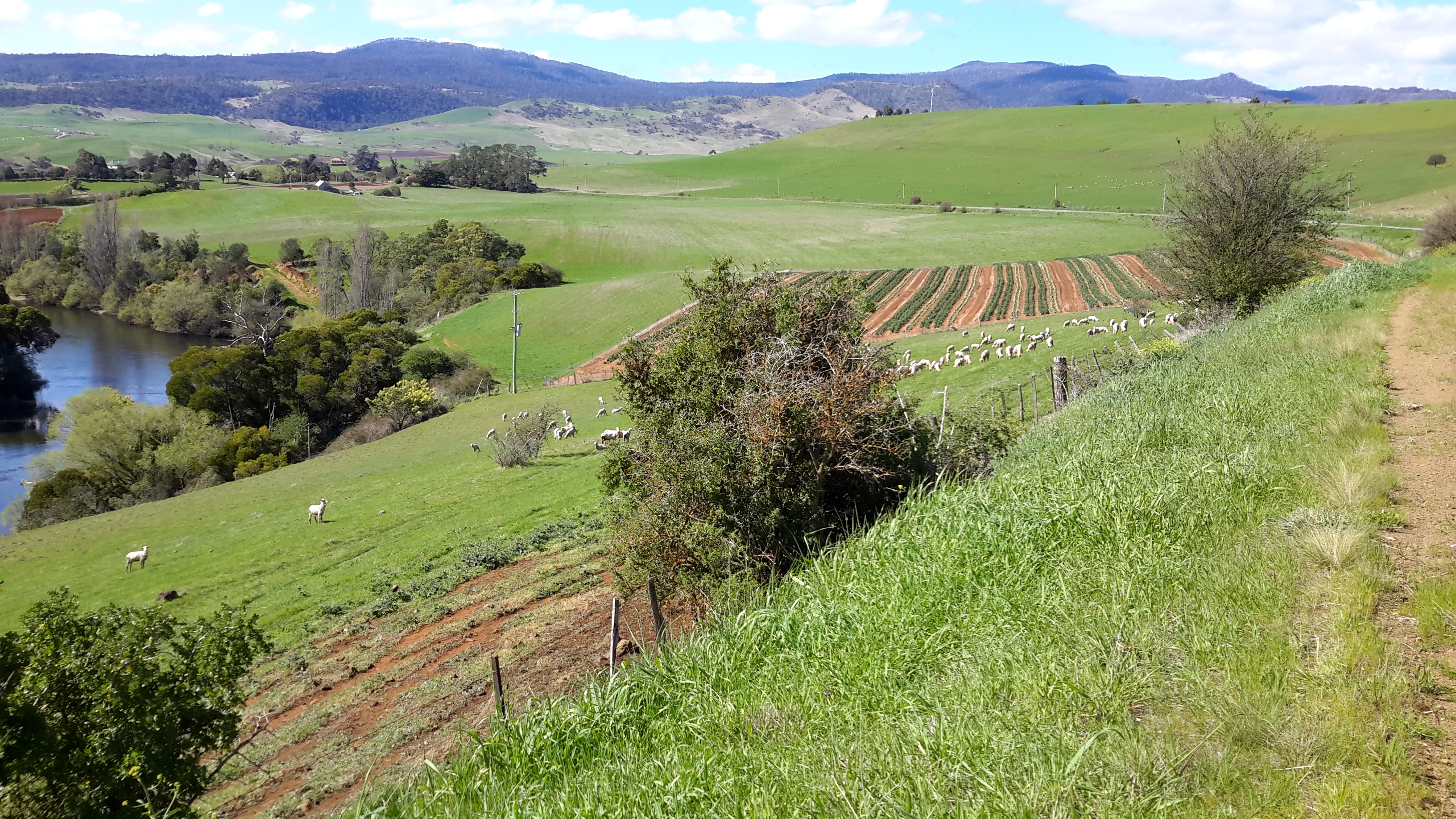
Amidst the rolling cleared paddocks with their sheep, one was cultivated.

20150918_130121 20150918_130544

20150918_130924

I wasn’t sure of the vegetable but it seemed as if the crop was cabbages bolting towards seeding.  Rather strange they were not picked earlier.  Were they intended to be animal feed?

The afternoon was glorious.  The spring blue sky colour, the variations in the landscape, the occasional jigsaw pieces of Derwent River which popped into view, and the rural quietness were splendid.

20150918_131049

Uphill on a narrow road

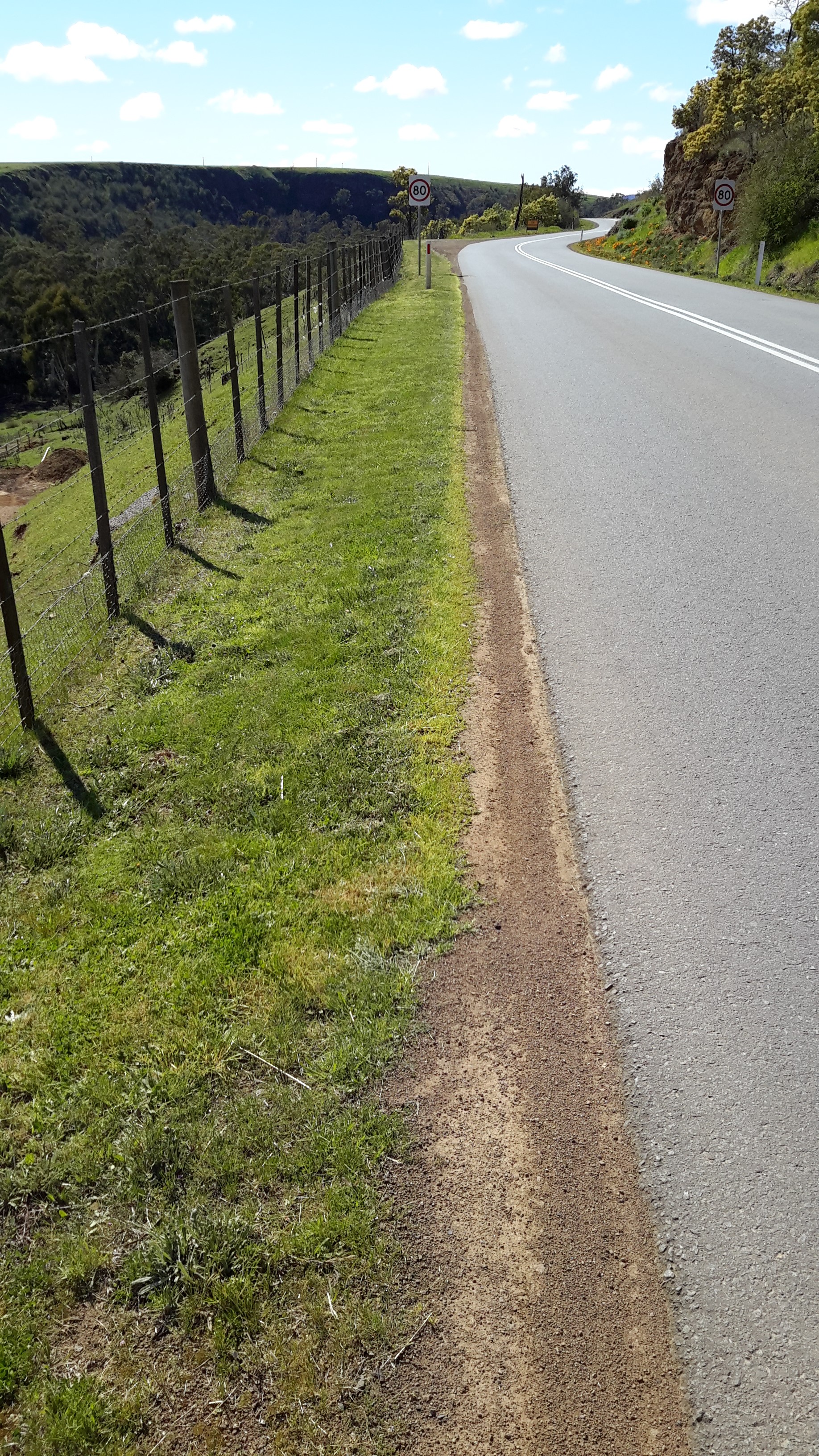
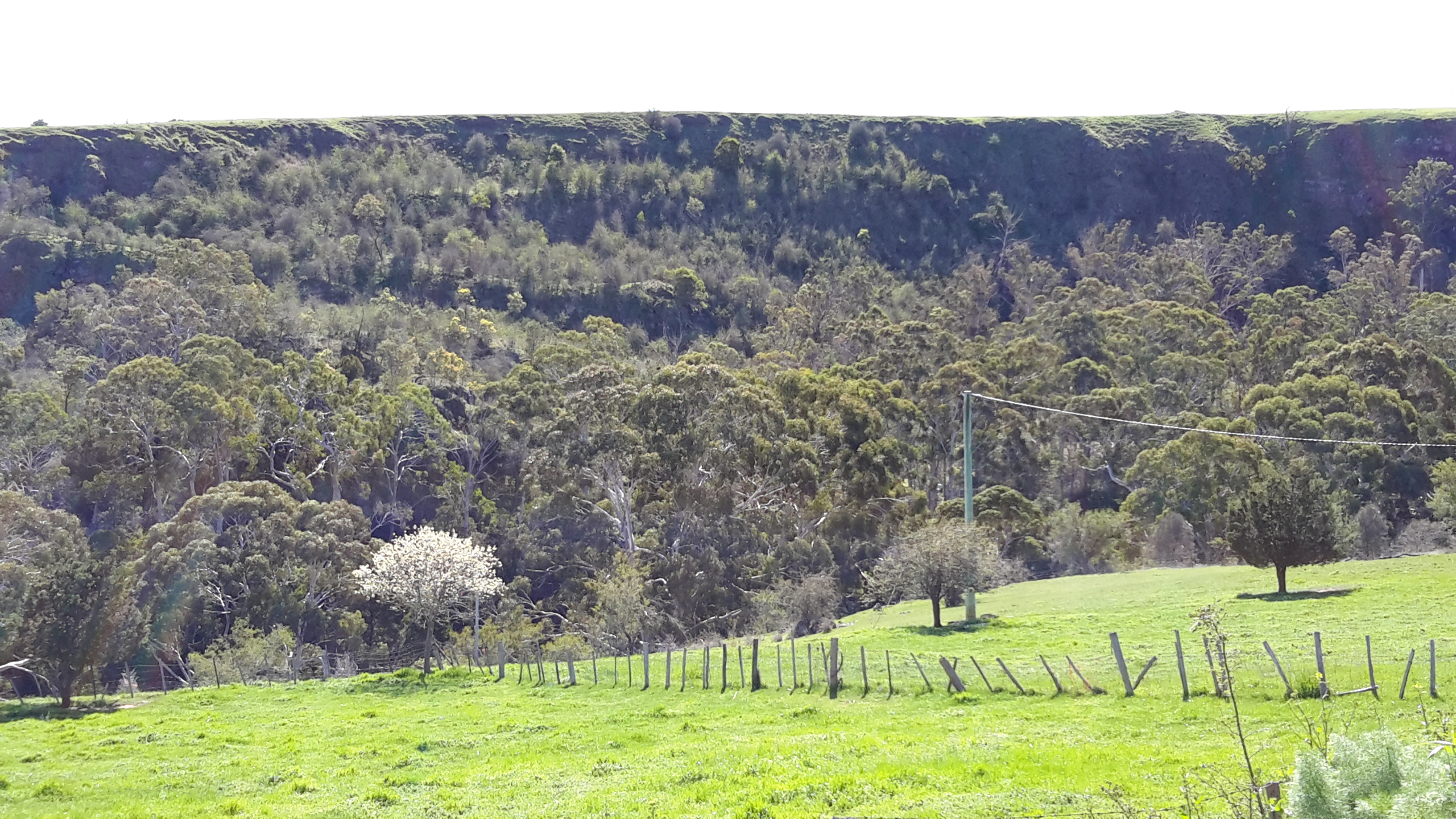
The sun was out and when I looked in one direction, the sky was cloudlessly blue. Stunning! The high plateau of Kenmore Hill was high above the opposite side of the Derwent River.

20150918_123800 20150918_123323

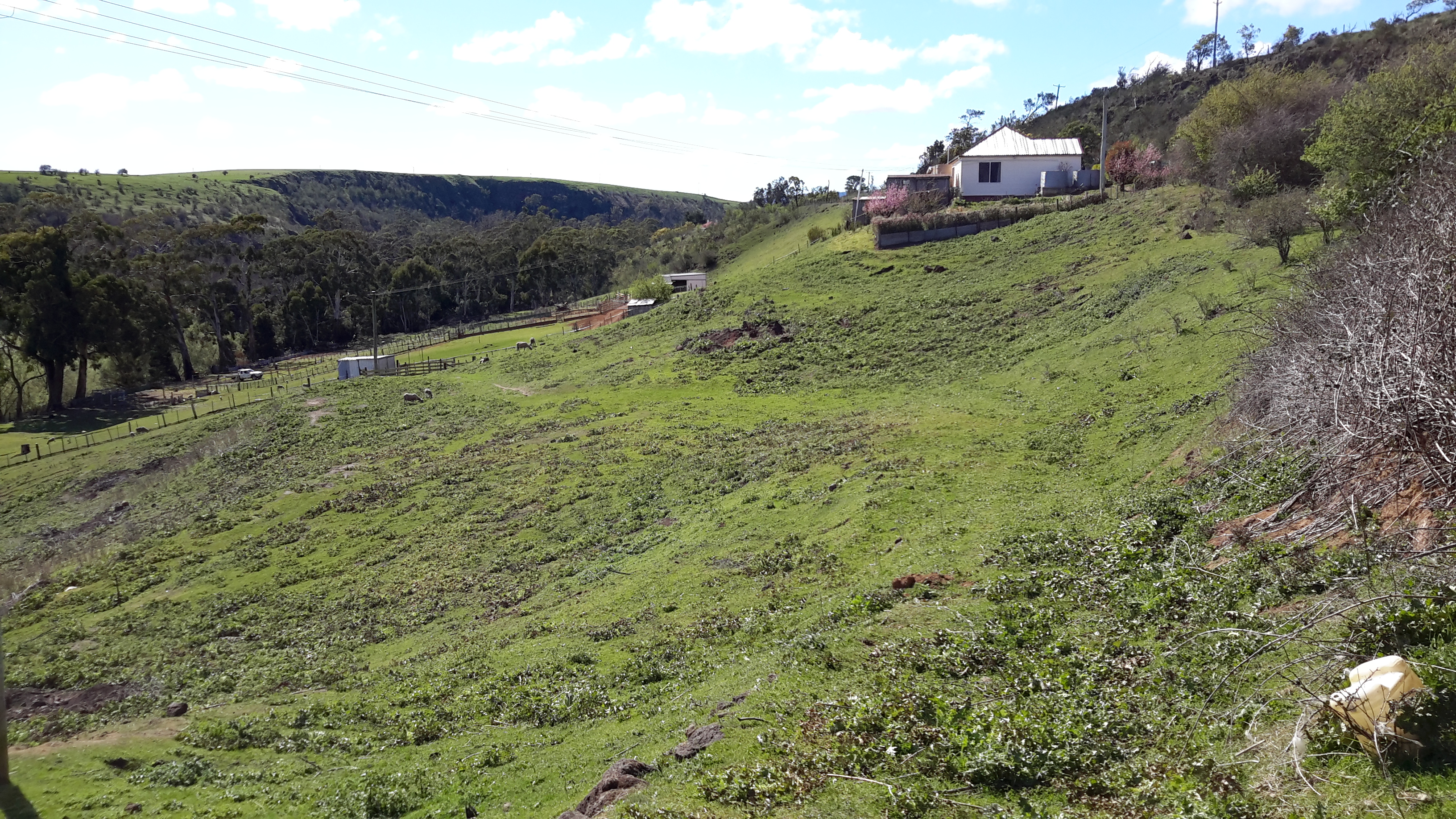
The views were green and rural and the Derwent River ran at the bottom of this hill.

20150918_124602 20150918_125202

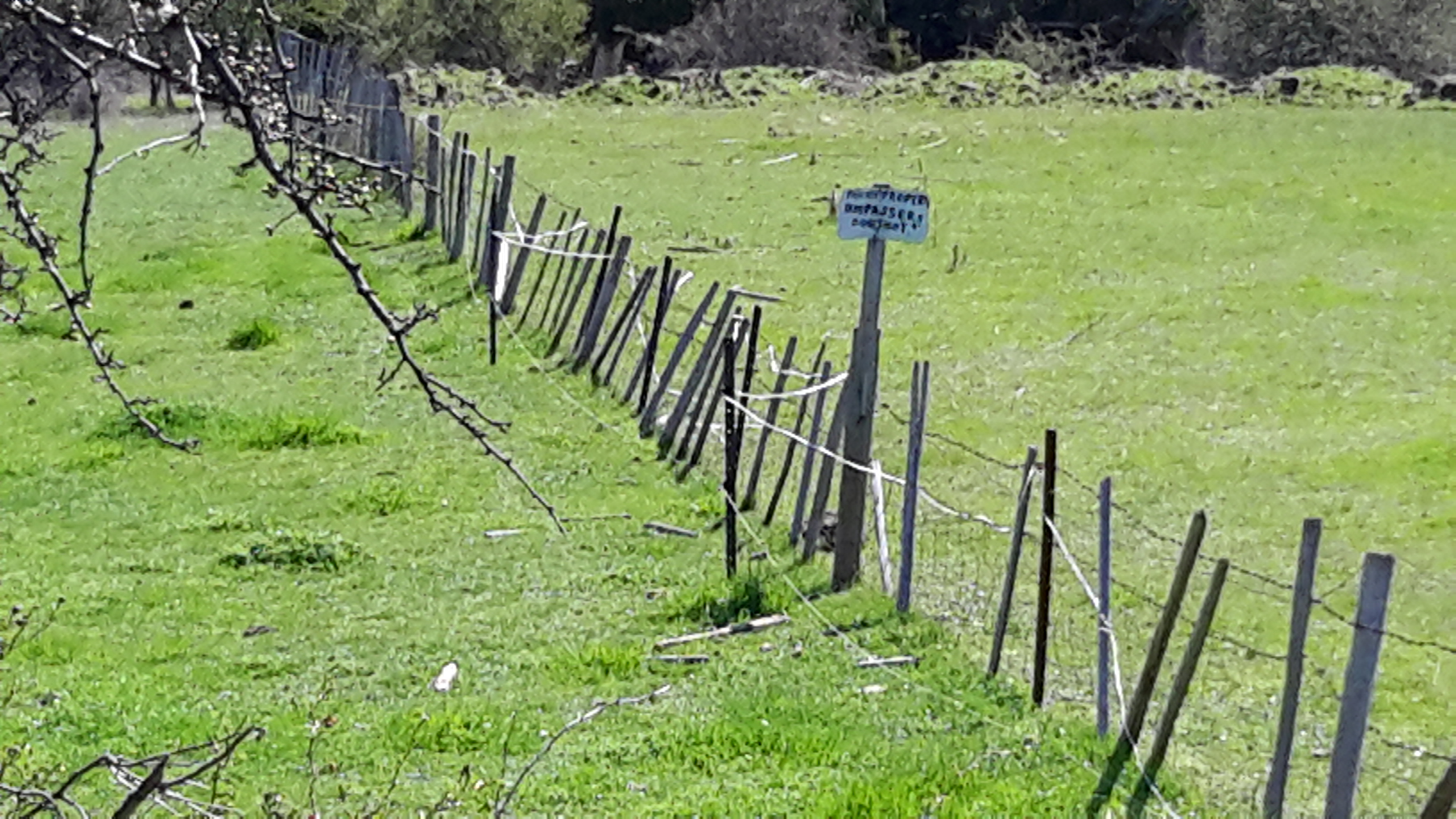
This farm was very inviting with only a few house animals – walking in the shadows of the tall gum and wattle trees on the river banks could have been a pleasure. On this property stood a sign alerting me to danger:  Trespassers will be shot.  So as delightful as walking the river bank might have been, I chose to keep away.

20150918_125443