Category Archives: Derwent River

Onto Austins Ferry edging the Derwent River on the 9th walking stage

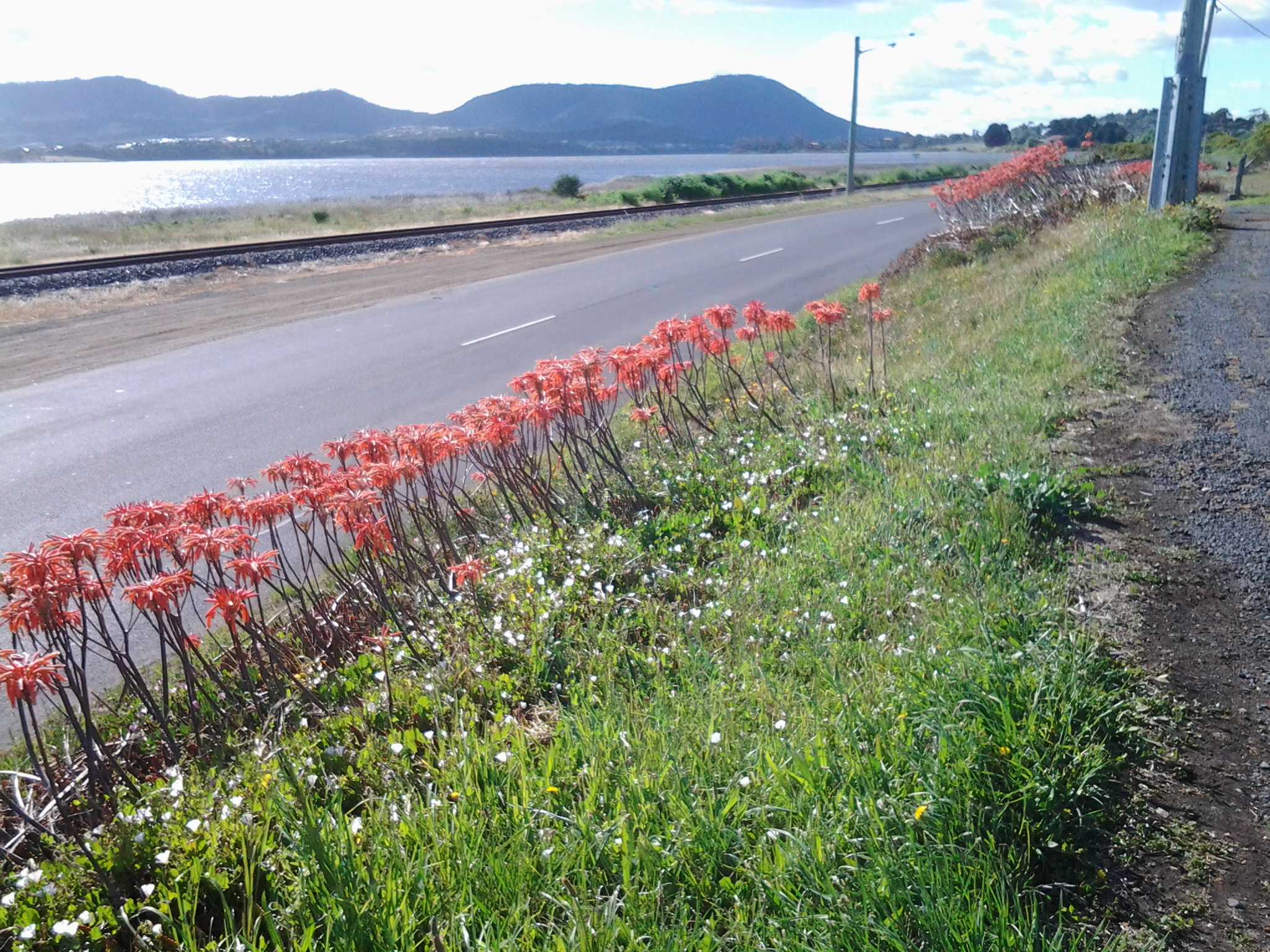
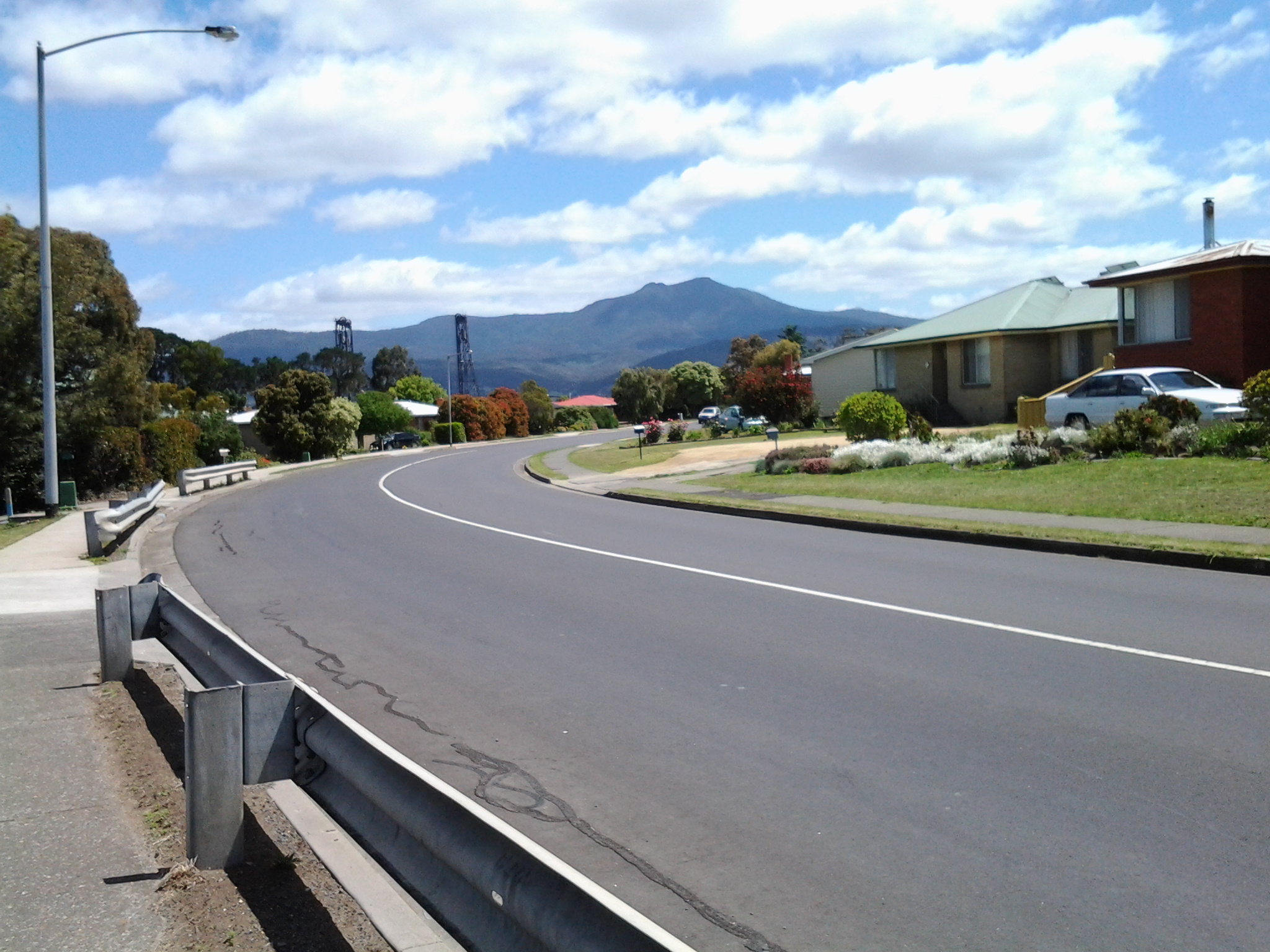
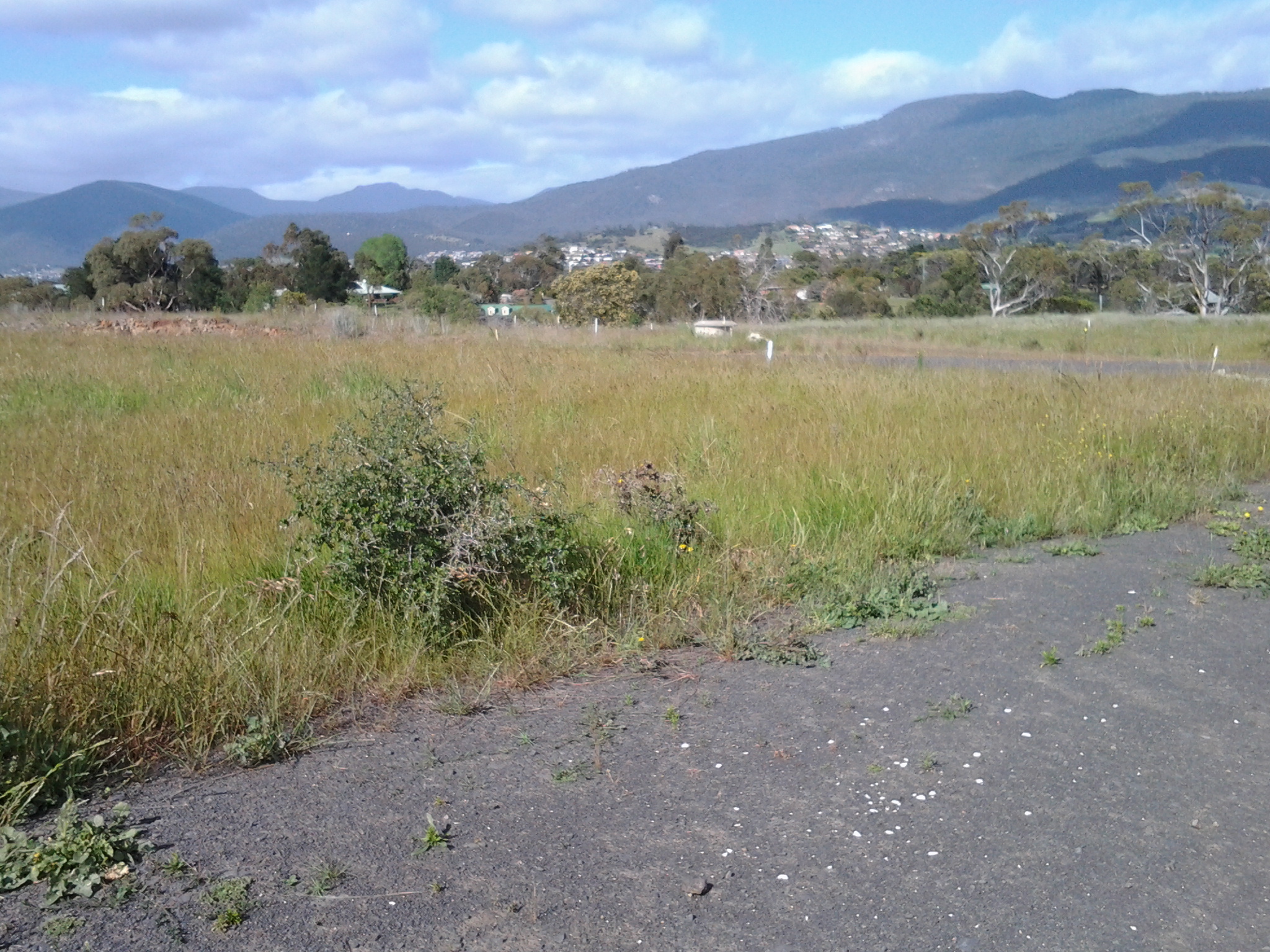
At 9.36am last Tuesday I had passed St Virgil’s College with its warbling magpies and raucous plovers flying overhead and turned left at Merley Road. I was in the heartland of the suburb of Austins Ferry and now walking down a hill towards the River. Opposite a street signposted Willow Walk, I crossed some land and then up and over the railway line. I walked across an open area with large fat rabbits quickly disappearing from view.

20141125_094210

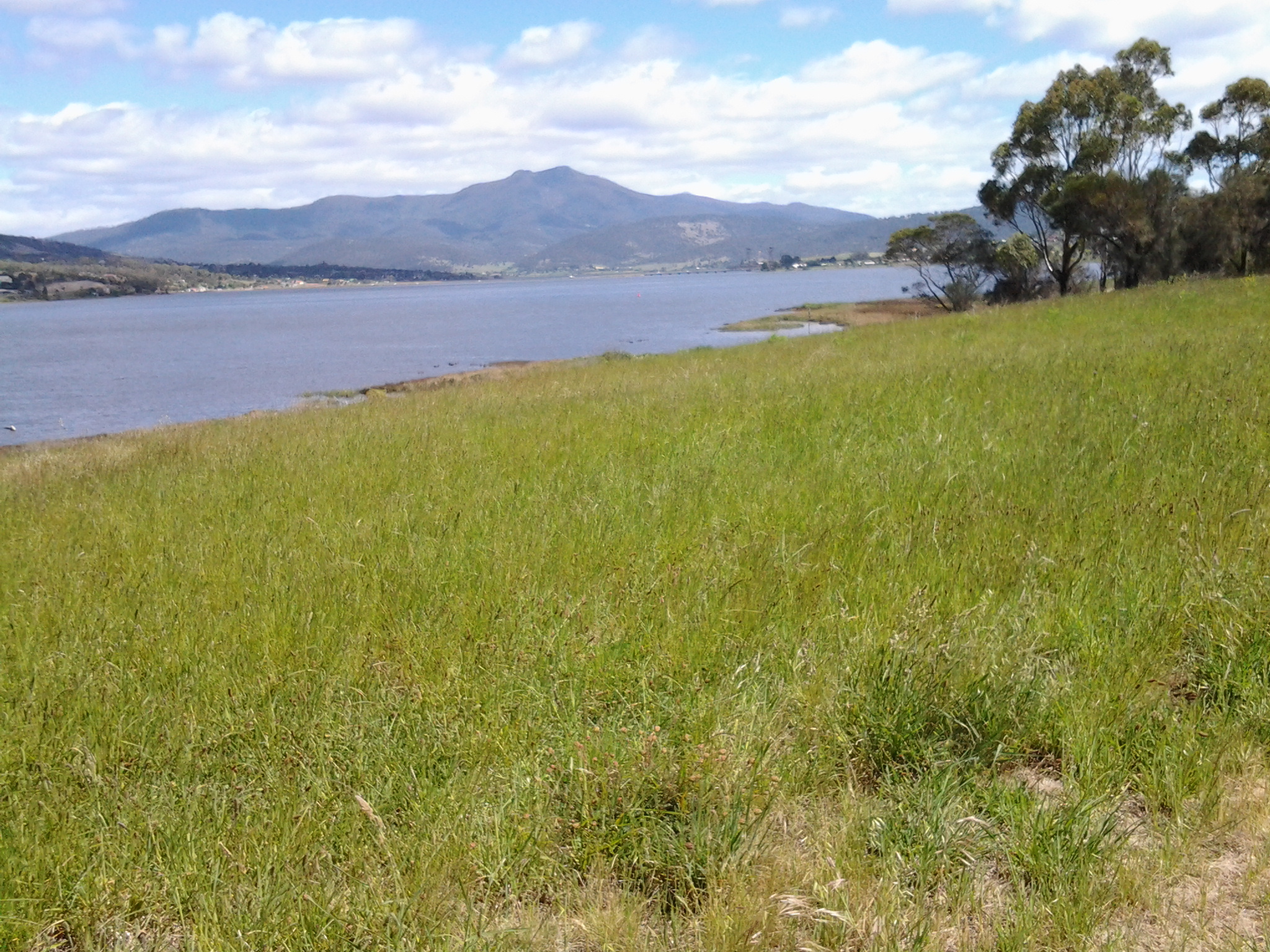
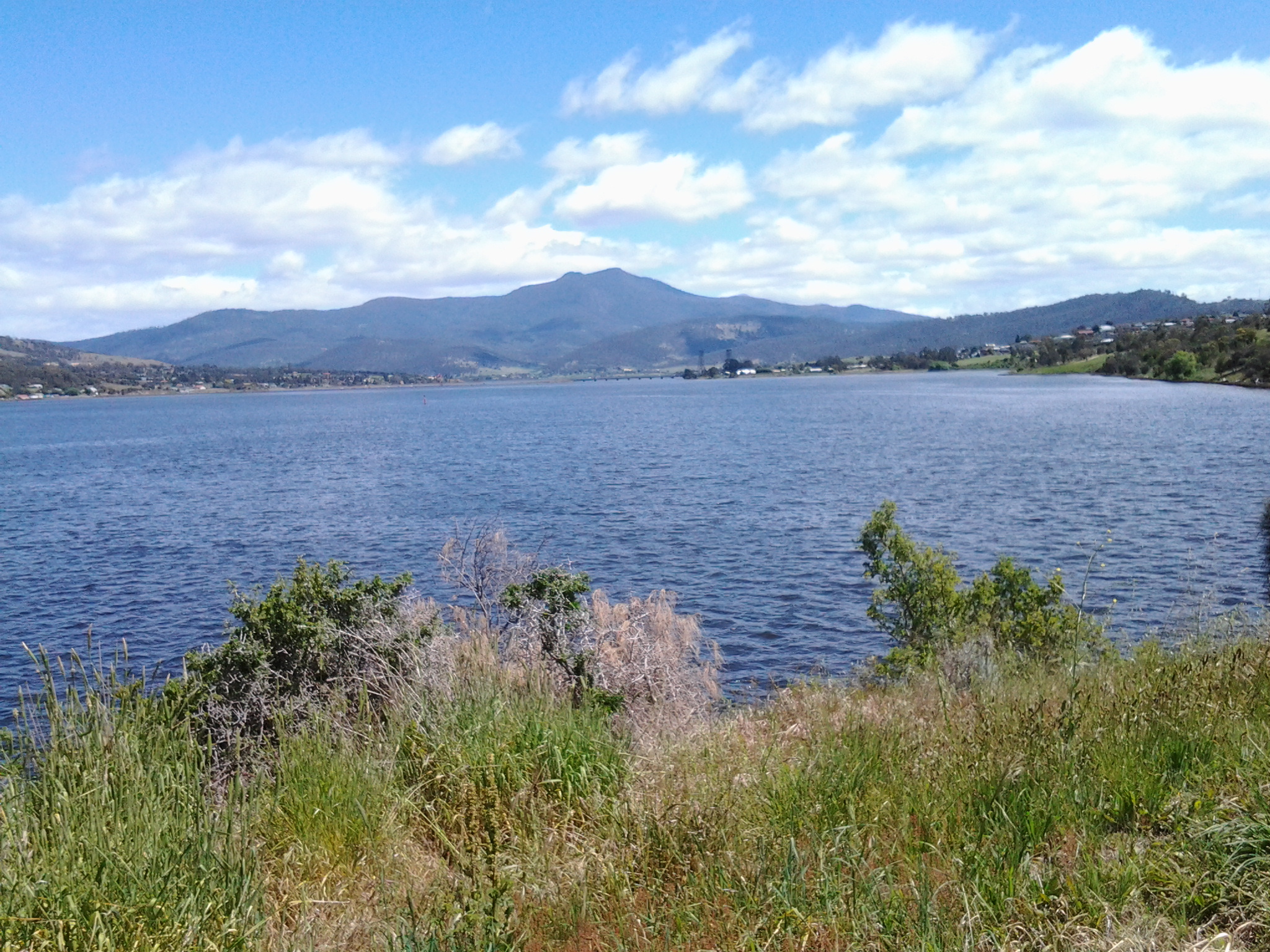
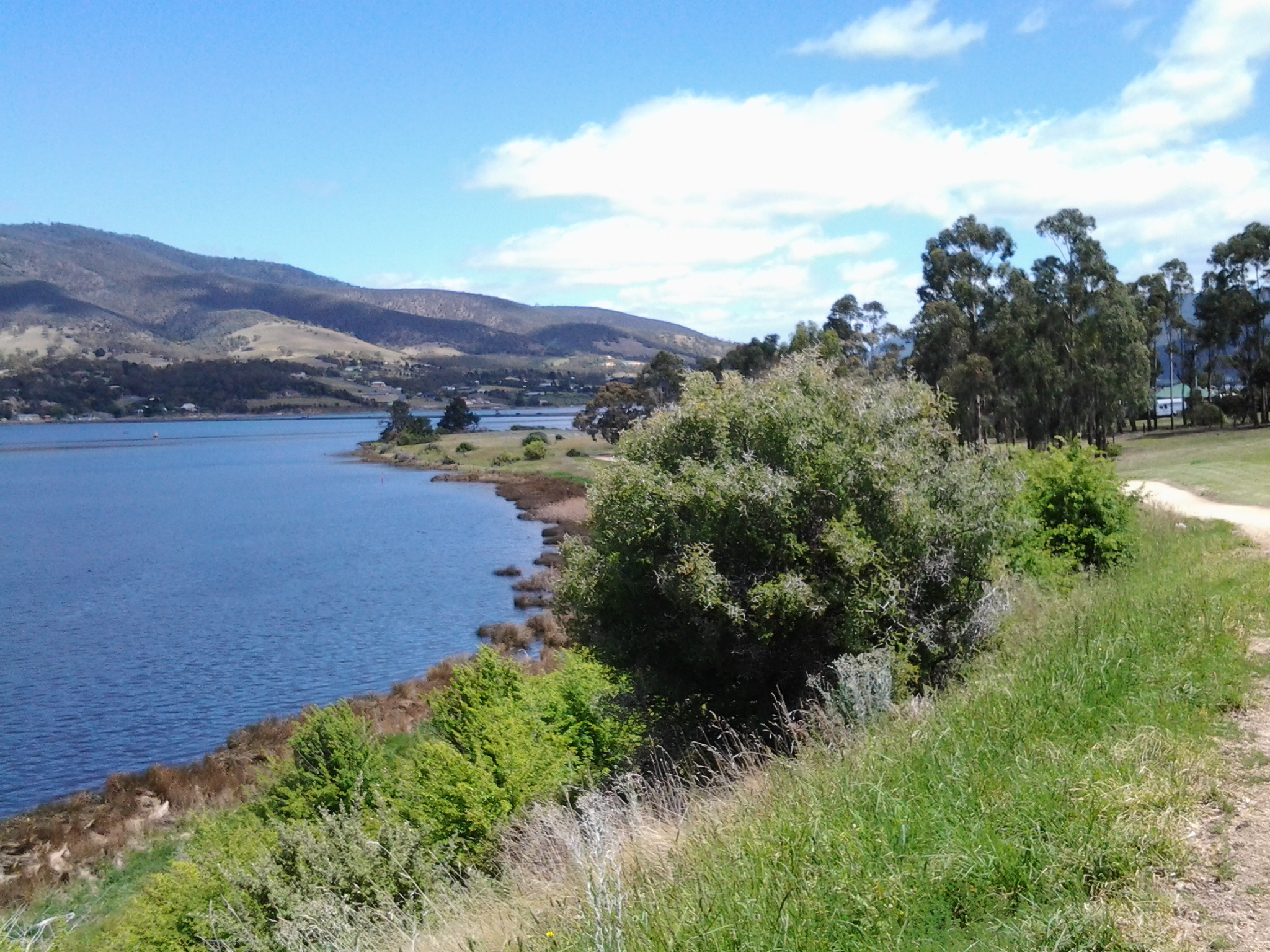
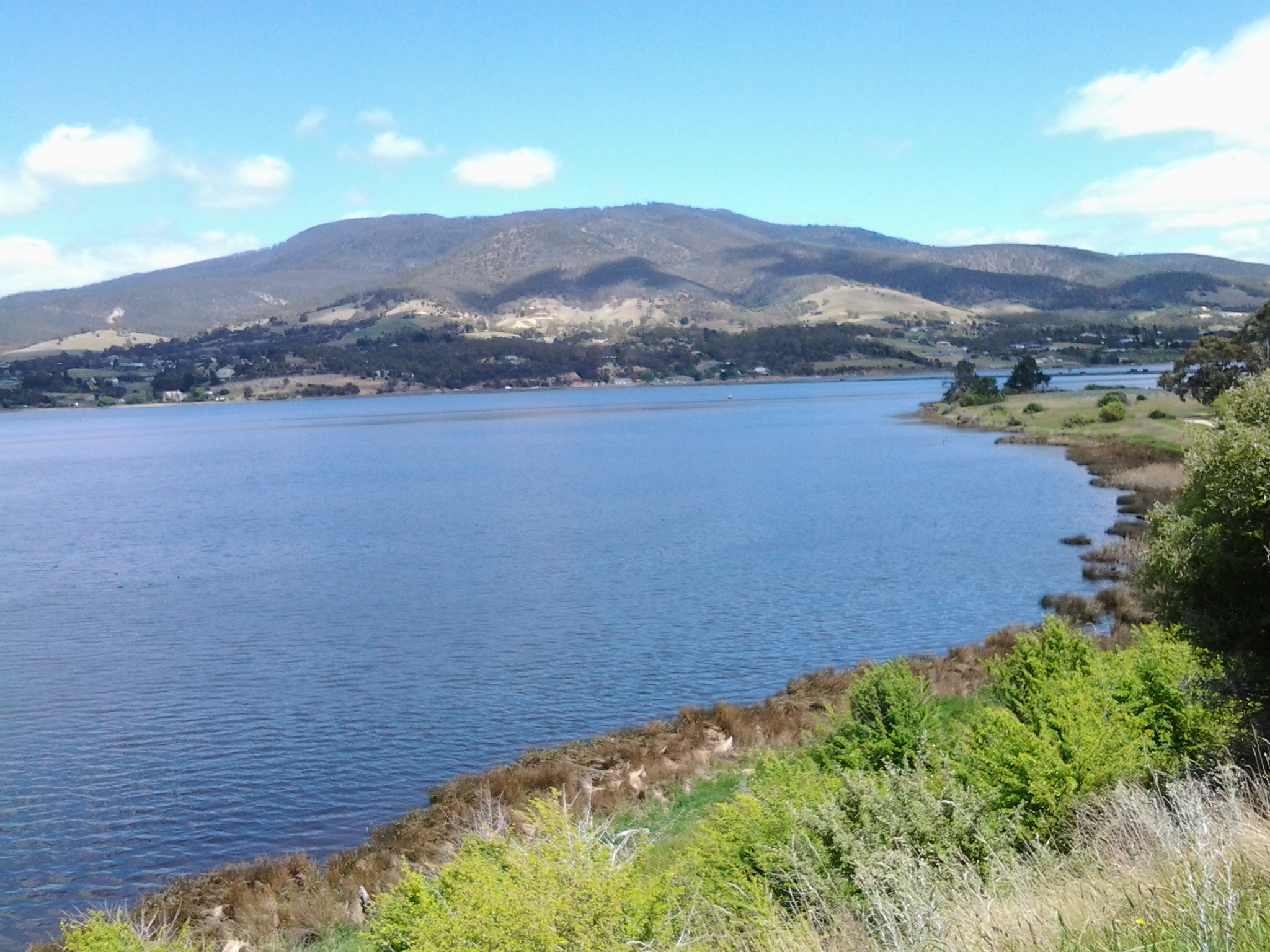
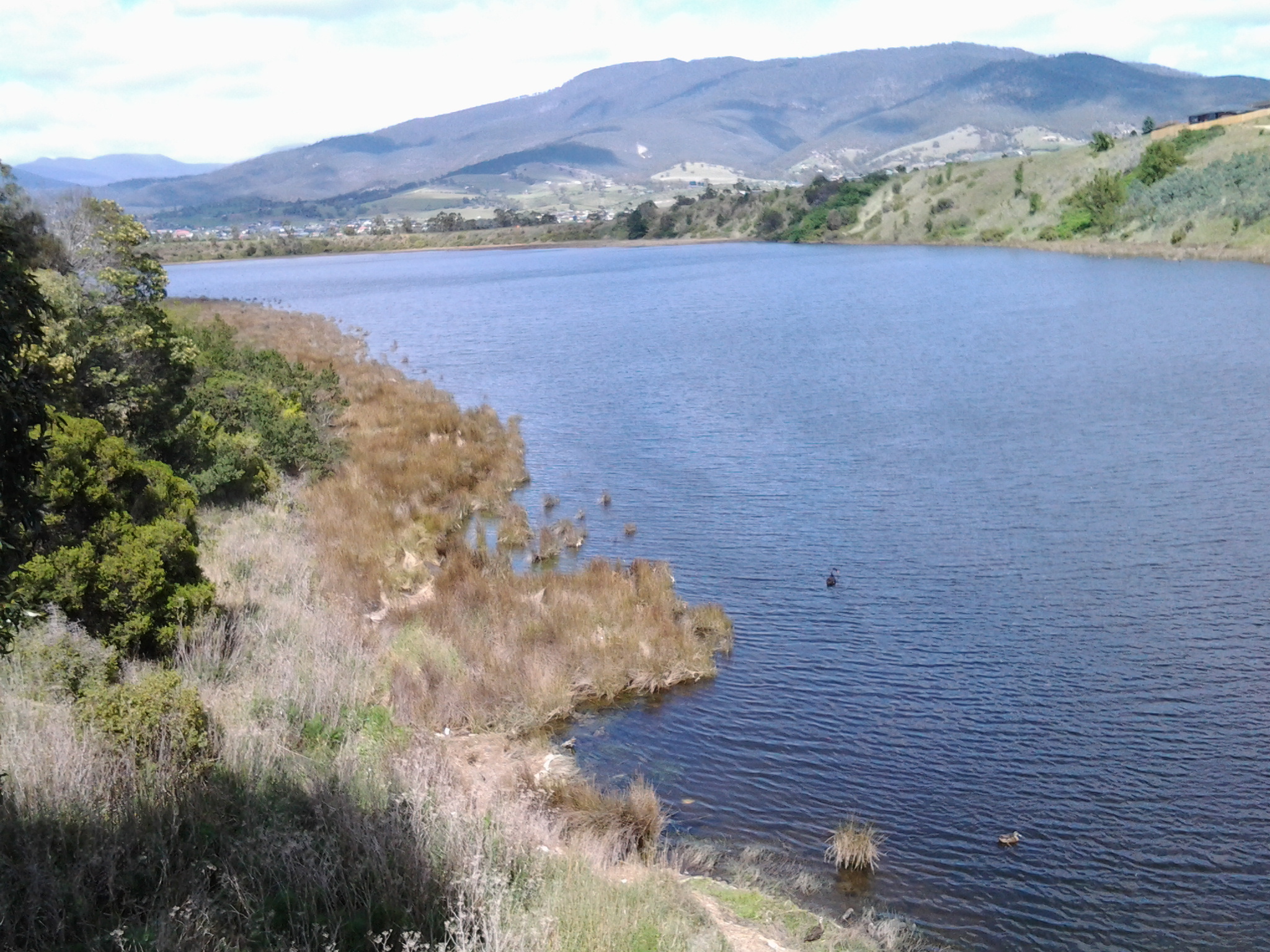
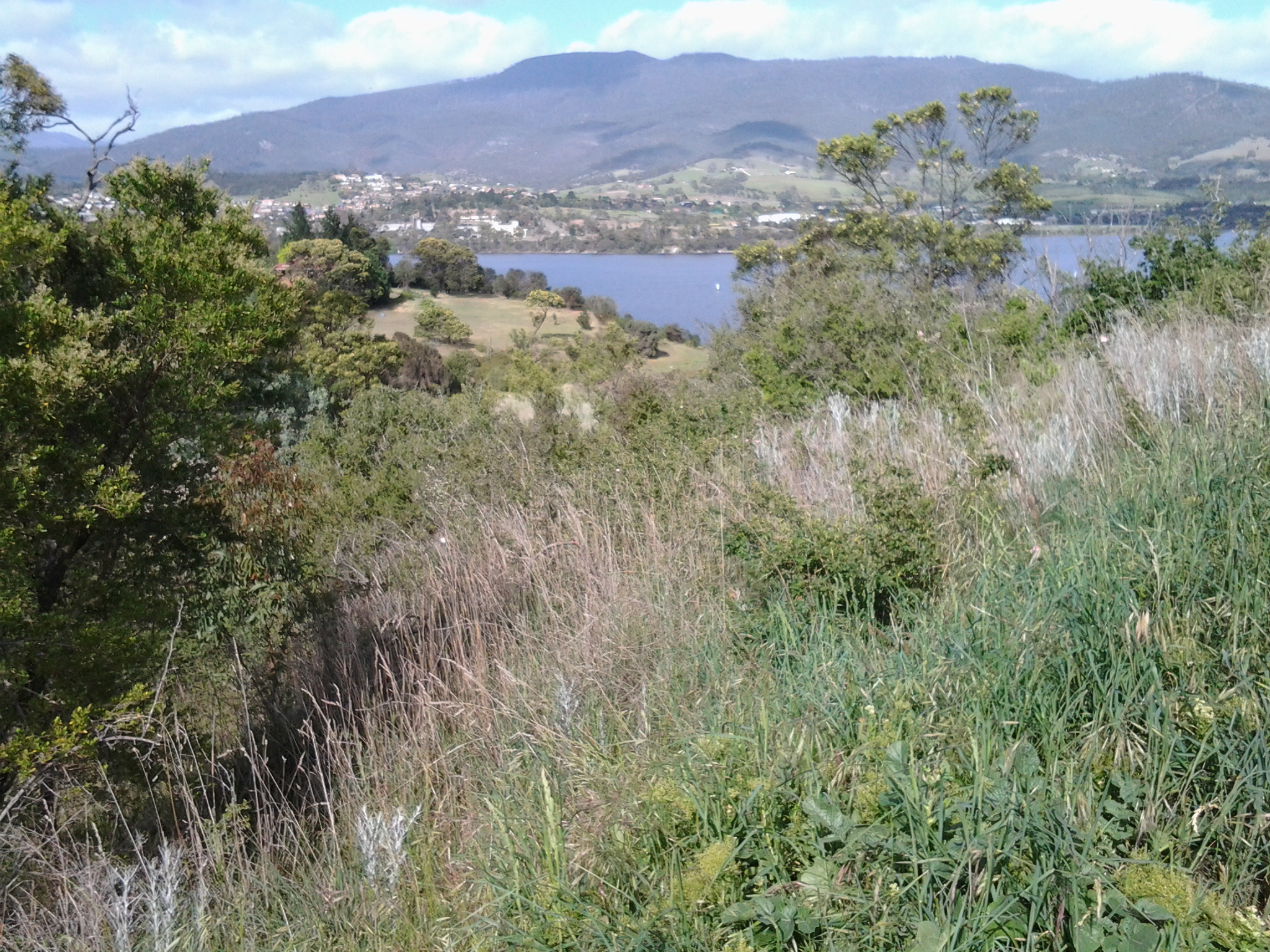
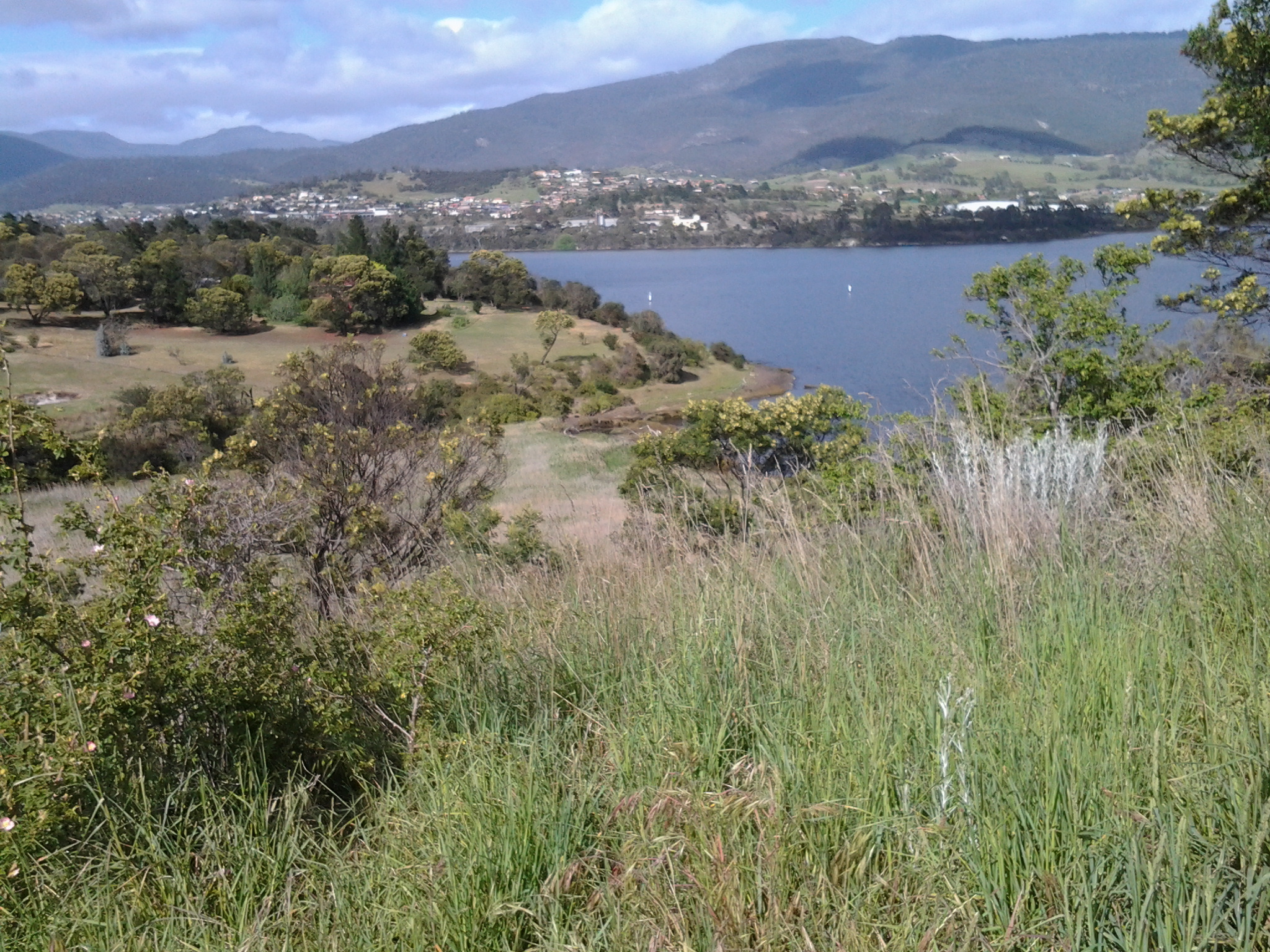
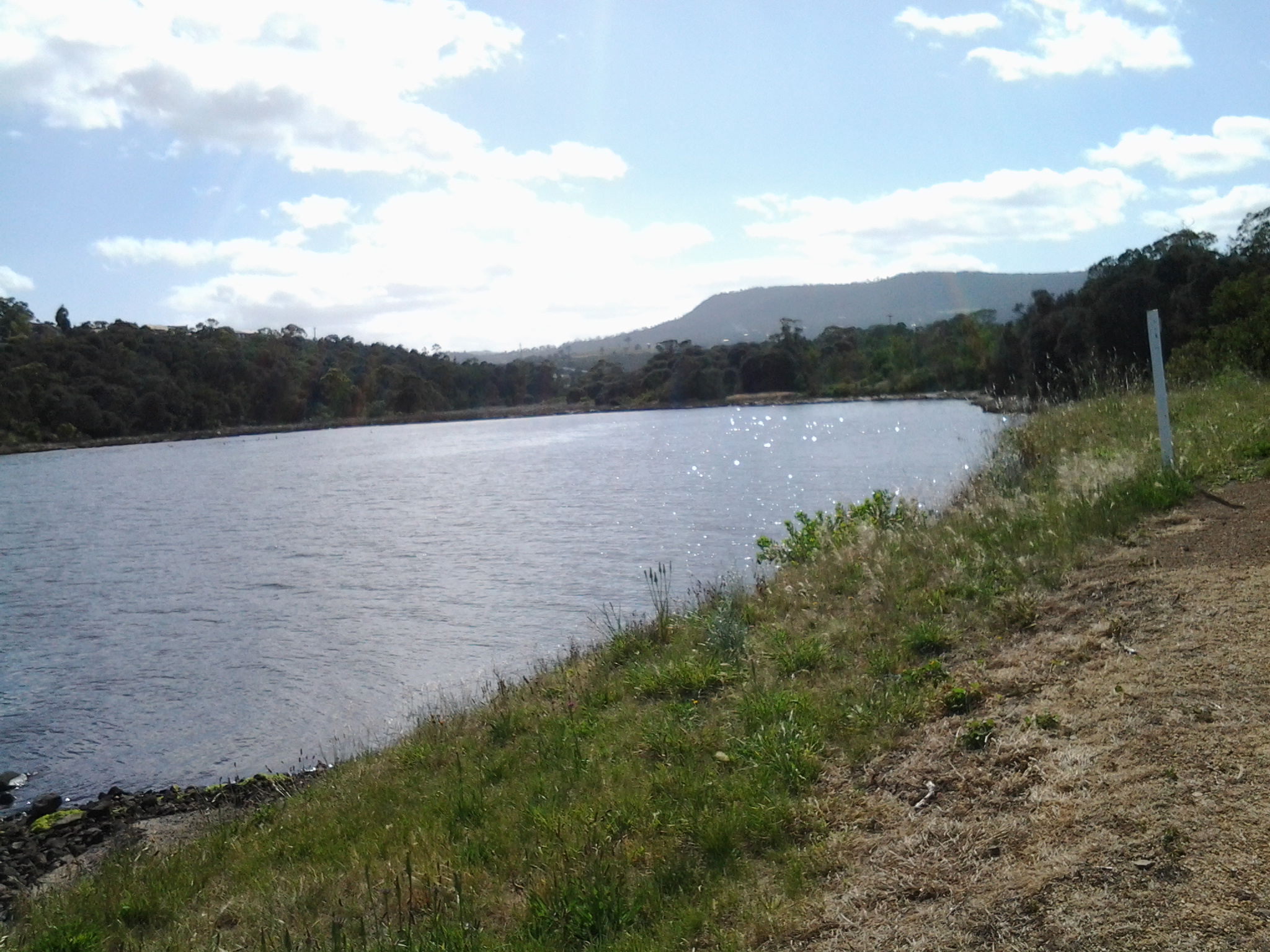
The view from the water’s edge looking northwards was as follows:

20141125_094216

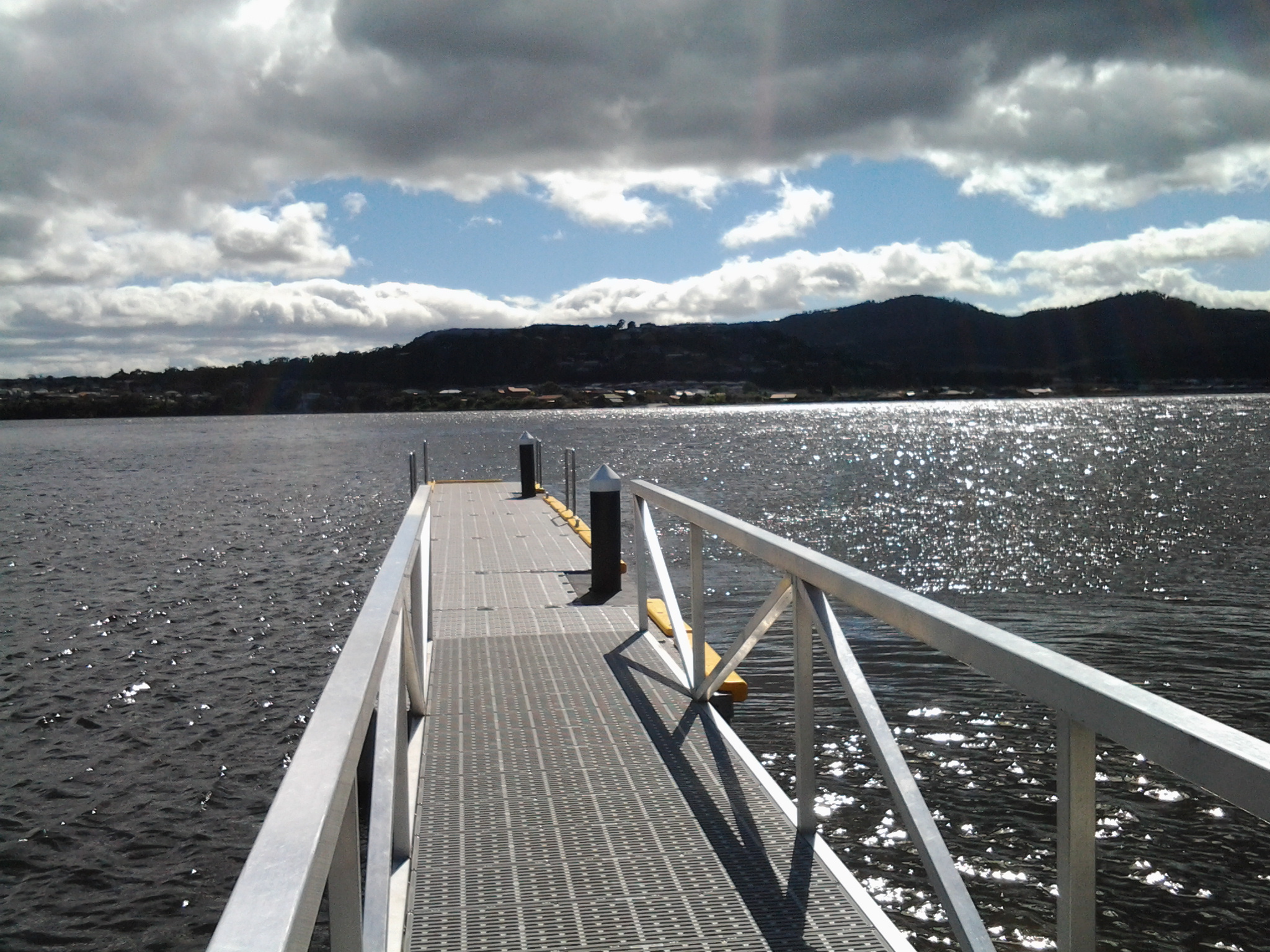
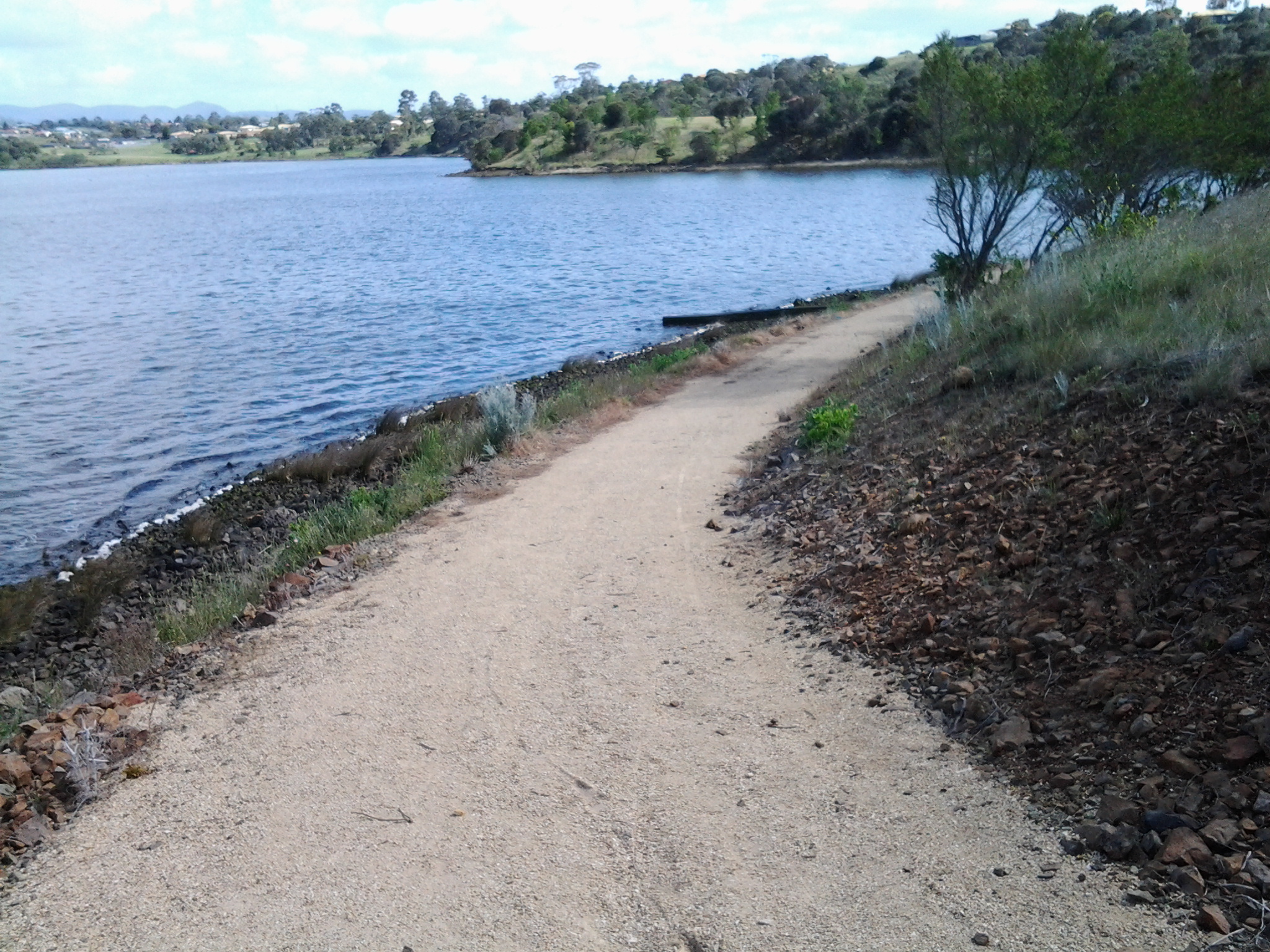
Once at the River’s edge I turned left towards the Austins Ferry Yacht Club and a jetty.

20141125_094200

An interpretative panel explained that the Austin’s Ferry was the main Hobart to Launceston link from 1816 until 1848 when the bridge was constructed up stream. James Austin managed the Roseneath Ferry from the western shore and his friend James Earl managed the Compton Ferry from the eastern shore. I peered across the brightly lit water but could barely distinguish the Old Beach jetty on the other side. Clouds were scudding across bringing light and shade so that all my photographs which try to record the jetty on the other side are abysmal failures. Nevertheless I know where to look for that jetty from this Austin’s Ferry jetty.

20141125_094543

Starting last Tuesday’s 9th walk along the Derwent River

On the first leg of this stage at 8.26am, I started by walking south on the Main Road from the York Hotel in Granton South with a view of white capped wind-blown waves on the Derwent River next to me, and the suburb of Bridgewater across on the other side.

20141125_082909

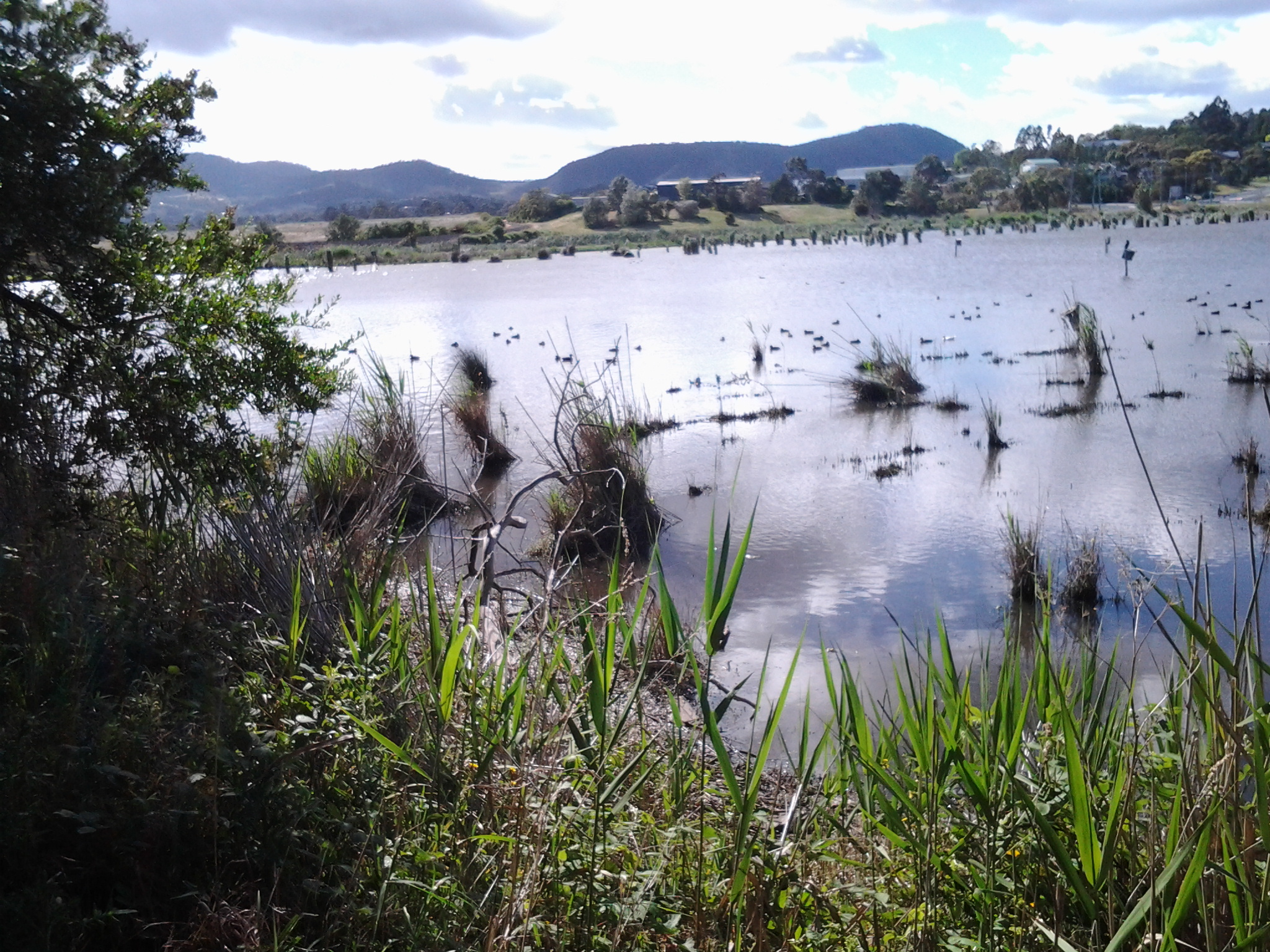
At 8.42am I passed the Lagoon General Store and Servo and by 8.49am I had reached the start of a pathway leaving from the Main Road and leading around the Goulds Lagoon Bird Sanctuary. This was a peaceful alternative to the noisy main road. All manner of wild fowl, other birds, animals and plants could be seen including ducks, rosella parrots, rabbits, wild mushrooms, seagulls, handsome gum trees with their fresh smell of eucalyptus, and a cluster of spectacular Eastern Great Egrets. Spotted across the Lagoon were bird-breeding boxes.  The air was deliciously moist and the grass was high. This was not a track for those in wheelchairs, pushing prams or walking with crutches.

20141125_085659  20141125_085652

By 9.07am I had circled Goulds Lagoon and was back on the main road at the edge of the Hestercombe Reserve.

20141125_090822

Continuing southwards, I passed by the area known as Ten Mile Hill without trying to squeeze through barbed-wire topped gates blocking roads to timber mills and other ‘private property’. By 9.24am I had reached the northern end of St Virgil’s College with its signage indicating ‘private property’.  Effectively these businesses and educational institutions prevented me having direct access to walk along the Derwent River.  I thought I might walk along the railway line corridor closer to the River, but since it passed through some of the private property I chose not to do so.

9th Stage of walk along Derwent River completed yesterday, Tuesday 25 November

I caught two buses from my home in Bellerive on the eastern shore, via the Elizabeth St CBD Hobart and the Glenorchy City bus malls, to reach Granton on the western shore of the Derwent River in the northern suburbs of the City of Glenorchy in the Greater Hobart Area.

At 8.26am I stepped off the Metro number X1 bus at stop 47 outside the York Hotel in Granton South and, with excitement about what the day might bring, I looked around and admired the view across the River to the suburb of Bridgewater before starting the tramp south.

20141125_082854

No footpaths or walk ways had been laid for pedestrians and so vigilance was required against the traffic on the Main Road. Occasionally a few metres of concrete or bitumen were laid for a new subdivision but generally a track for smooth safe walking was not on offer.

The weather started sunny but during the afternoon rain passed intermittently. In the photo below you can see the grey background blurred by rain, but meanwhile three pelicans were enjoying themselves on Lowestoft Bay.

20141125_150144

Relentless buffeting wind was the main feature all day. As a result, I couldn’t keep my sun hat attached to my head. Needless to say, I returned home with a blasted red face.  But happy from the pleasure of walking, discovery and the fresh air. Being a tourist in my home town is a revelation and a joy.

I walked southwards from Granton South to MONA (the world famous Museum of New and Old Art) at Berriedale and passed through the suburbs of Granton South, Austins Ferry, Claremont and half of Berriedale.

I experienced Goulds Lagoon, Austins Ferry Bay, Rusts Bay, Beedhams Bay, Bilton Bay, Dogshear Point, Windermere Bay, Knights Point, Windermere Beach, Connewarre Bay, McCarthy’s Point, Lowestoft Bay, and Cameron Bay. I plodded around bays and a golf course (I gained special permission to walk this private property but I would NOT recommend anyone else try it – see later postings), had a stopover at Cadbury’s, and hid from the rain in gazebos and art works. All up, I probably walked 18 kms.

Yesterday I covered 9 ¼ km of the River’s length on the western shore. This adds to my previous tally of 3/4km on the western shore making a total of 10kms covered as I trek southwards from the Bridgewater Bridge to the mouth of the Derwent on the western shore.

Specific details of the different legs of this 9th stage walk will be written up and posted in the coming days.

My favourite photo of the day was taken near the end of my walk, when I sat at the point where the southern end of Cameron Bay met the Derwent River (with MONA just over the hill). The water had been frothed by wind and I liked the lacy remnants floating by.  The intense colours are the result of the rich light quality caused by the heavy clouds overhead.

20141125_153054

Colonial Artists, the Derwent River and the Glenorchy area

A number of 19th century artists made visual references to Roseneath on the Derwent River within the current City of Glenorchy. These include Joseph Lycett, George William Evans and James Taylor (no not ‘Sweet Baby James’) all of whom may have a connection with each other as I will explain.

Background to Joseph Lycett

Let’s start with Joseph Lycett who left a significant body of work depicting Sydney and Newcastle in NSW, and a few pieces named with features along the Derwent River.

Lycett didn’t come to Australia by plan. He was a forger and the British government transported him to Sydney with a sentence of 14 years.  He arrived in 1814. It was clear he had skills and was almost immediately given a ticket of leave on landing, but he couldn’t help himself. Within 15 months Lycett was illegally printing bank notes for use in NSW. His new sentence was relocation to Newcastle for hard labour in the coal mines. I suspect there must have been something charismatic about this man despite the Australian Dictionary of Biography alleging Lycett had ‘habits of intoxication’ that were ‘fixed and incurable’. Before long his abilities were noted and he was out of the mines and drafting designs for new buildings in Newcastle.  In 1821 he was finally pardoned and left Australia for good the following year. But Lycett never visited Van Diemen’s Land.

I wondered how he came to produce the well-known pictorial publication Views of Australia or New South Wales & Van Diemen’s Land, published by John Souter, London, 1824-25 described by eminent Australian Art historian John McPhee as “the most lavish pictorial account of the colony ever produced”. McPhee has come to the conclusion that Lycett couldn’t help being a con man. Though his views of Van Diemen’s Land were supposedly scenes he had witnessed, McPhee (quoted in the Sydney Morning Herald 5/4/2006) says “there’s no doubt he never went there”.  We can be surprised to learn that when Views In Australia didn’t sell in England as well as Lycett hoped, he turned to forging bank notes again. He must have loved his printing press!

So I began to research how Lycett ‘knew’ what the Derwent River and the surrounding land looked like.

When Lycett first landed in Sydney, Governor Macquarie was ruling the colony. During Lycett’s sojourn in Newcastle, Macquarie became acquainted with the artist’s pictorial records of the colony. In 1818, the Governor received the personal gift of a chest. Lycett had  painted eight of the twelve panels on this chest with views of Newcastle as well as copies of William Westall’s Views of Australian Scenery.  In 1820, the year Lycett returned to live in Sydney and earn a living as a painter, according to http://www.nla.gov.au/selected-library-collections/lycett-collection ‘Governor Macquarie and Elizabeth Macquarie were among his patrons’. Obviously impressed, Governor Macquarie sent a selection of the artist’s work to Lord Bathurst, Secretary of State for the Colonies, in England.

But what does this have to do with the Derwent River?

What is the story about Joseph Lycett’s Tasmanian (then named Van Diemen’s Land) pictures? Well … Governor Macquarie visited Van Diemen’s Land on two occasions: in 1811 (before Lycett arrived) and in 1821 (a few months before Lycett left for England). I love connections and so I was pleasantly surprised to discover that Governor Macquarie named the Austins Ferry area as Roseneath when he visited Van Diemen’s Land in 1821. Did the Governor make drawings and bring back sketches?  This is doubtful.  It is more likely that others went to Van Diemen’s Land at the Governor’s request, brought their sketches back to Sydney and that these were shown (perhaps some were given) to Lycett.

I wondered whose sketches, paintings or etchings Lycett saw, and then ‘used’.Two people with drawing skills have been suggested: George Evans and James Taylor.

First, let’s consider George Evans.

In the first two decades of the 1800s, Governor Macquarie sent surveyor George William Evans to Van Diemen’s Land off and on a number of times for short trips to remeasure land previously granted (misconduct involved); various sources suggest different years so I am not sure exactly which years in the second decade of the 1800s Evans was in Tasmania; some suggestions are Sept 1812 to Aug 1813, 1814, July 1815 to 1817. Wikipedia suggests that on two occasions Evans was granted valuable acres of land near in the Coal River Valley near the town of Richmond outside the Greater Hobart Area.

According to  http://www.daao.org.au/bio/george-william-evans/biography, at the end of 1818 Evans was able to resume office as Deputy Surveyor-General of Van Diemen’s Land. His travels around Tasmania are recorded in his Geographical, Historical and Topographical Description of Van Diemen’s Land… (London, 1822). One of his watercolour sketches of Hobart Town was used for the foldout aquatint and etching used as the frontispiece in the original edition. Another of the town was published by Ackermann of London as an independent print. Both depict Hobart as a thriving British colonial seaport town with court-house, commissariat store, St David’s Church, warehouses and numerous domestic dwellings in evidence. A surviving original (Dixson Library) shows a competent understanding of watercolour technique.

The website http://www.nla.gov.au/selected-library-collections/lycett-collection offered: As well as being a competent surveyor and a resolute explorer, Evans was an artist of some note. His aquatint view of Hobart in 1820 was published as a frontispiece in his Geographical, Historical and Topographical Description of Van Diemen’s Land … (London, 1822; second edition, 1824; and a French edition, Paris, 1823). The original, with another aquatint of Hobart in 1829, is in the Dixson Library of New South Wales.’

Second let’s consider James Taylor.

Military officer, Major James Taylor, arrived in Sydney in 1817 with the 48th Foot Regiment. Taylor produced a number of paintings and prints throughout his tours and his panoramic works of Sydney were particularly popular. He travelled to Van Diemen’s Land with Governor Macquarie in 1821. On 15th February 1822 he sailed to Britain with the Macquaries on board the Surry.  Only 50 people including the crew were on board for this 5 month trip around Cape Horn and it is easy to speculate that Macquarie and Taylor would have talked about Lycett.

Comparison of art works

I decided that comparing the works of the three artists Evans, Taylor and Lycett might help me to understand where Lycett’s Tasmanian images came from.  Unfortunately, I have not been able to locate sufficient of the work of Evans and Taylor to make a solid comparison despite knowing Lycett’s work very well (having worked in the Newcastle Art Gallery for a number of years in the presence of a substantial collection of Newcastle district related images by Lycett). Nevertheless some images for Evans and Taylor are available.

Examples of Lycett’s art

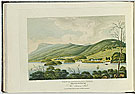
Below is an image of Lycett’s etching (see below) titled Roseneath Ferry near Hobart Town, Van Diemen’s Land dated 1 December 1824 (two years after Lycett left Australia). The etching was published as plate number 4 in Views in Australia or New South Wales and Van Diemen’s Land Delineated. London: J. Souter, 1824. This etching is held in the collection of the National Gallery of Australia in Canberra. Lycett is looking across the Derwent River from somewhere above the western shore and southwards so that the ‘hill’ in the distance to the left of the picture is Mount Direction (you may recall I walked past this as I passed the Bowen Bridge on my way from the suburb of Risdon to the suburb of Otago Bay on the eastern shore).
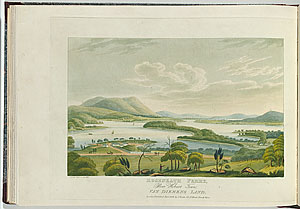
Lycett in  colour

The image below, also by Joseph Lycett, is another hand coloured etching, this time from the viewpoint of the eastern shore.  The title is View of Roseneath Ferry, taken from the Eastside, Van Diemen’s Land and it was produced in 1825 (when he was already living in England).  One of the edition of this etching is in the collection of the National Gallery of Australia in Canberra.

Lycett View of Roseneath Ferry from the eastern shore 1825

The image below is Distant View of Hobart Town, Van Diemen’s Land, from Blufhead Plate 28 from Views of Australia or New South Wales& Van Diemen’s Land,  published by John Souter, London, 1824-25. This handcoloured aquatint and etching is held in the Joseph Brown Collection of the National Gallery of Victoria, Melbourne.
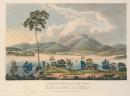
Lycett Distant view of Hobart Town VDL NGV

Examples of George Evans’s art

The image below comes from http://www.abc.net.au/news/2014-08-22/1819-slnsw-south-west-view-of-hobart-town-1819-george-william-e/5689410 It is titled South West view of Hobart Town and dated 1819
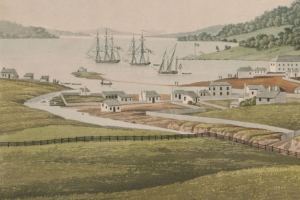
Evans Hobart

The image below comes from http://www.acmssearch.sl.nsw.gov.au/s/search.html?collection=slnsw&meta_e=350

George Evans Hobart Town 1828

Hobart Town, Vandiemen’s Land. 1828 At lower left is printed “G. W. Evans. Pinxt.”; at lower right “R.G. Reeves. Sculpt”; underneath title “Published 1828, by R. Ackermann, 96 Strand, London” he image is from the collections of the State Library of NSW.

Examples of James Raylor’s art

I could find no image by James Taylor that was related to Van Diemen’s Land. I only found two New South Wales images.The image below is from http://www.afloat.com.au/afloat-magazine/2010/july-2010/Lachlan_Macquarie#.VHAuwPmUdqU and titled Panoramic view of Port Jackson c.1821
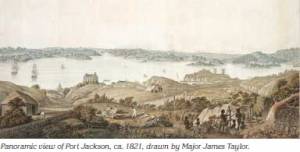
James Taylor Panoramic-view-of-Port-Jackson-c1821

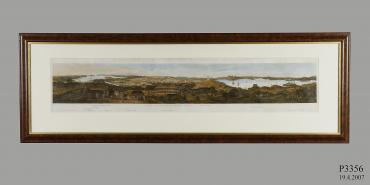
The image below, from http://www.powerhousemuseum.com/collection/database/?irn=326892 is an aquatint of Port Jackson and Sydney dated 1824.
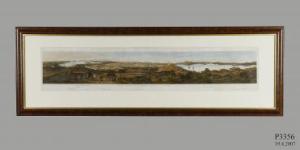
Aquatint of Port Jackson 1824 by Major James Taylor

This panorama of Port Jackson and of the town of Sydney was taken from a hill near the Parramatta River, was produced with ink on paper by Major James Taylor, Sydney, New South Wales, Australia, 1820, then engraved by Rittner et Goulpil, Sydney / Paris in 1824. The Powerhouse Museum (Sydney) provided the following information:

‘Statement of significance

In 1820 Major James Taylor created a series of watercolours on paper which, when joined together, formed a panorama of Sydney. When he returned to England in 1822 (did Taylor and Lycett travel on the same ship? – more research required) Taylor arranged for the engraving and printing of a three sheet panorama based on his watercolours. Known as ‘Major Taylor’s Panorama’, this is one of the most informative depictions of Sydney in its early years. Taylor, a topographical draughtsman attached to the 48th Regiment, arrived in 1817 when Sydney was thriving and Governor Macquarie was trying to turn an ‘infantile’ penal colony into a ‘civilised’ society. Taylor’s pictures were intended to be a record of that change. The view, taken from Observatory Hill, encompasses Sydney Harbour from the Heads to Lavender Bay, showing many of the major buildings of the day.
Convicts can be seen cutting the sandstone which provided building material for Sydney’s expansion. The many fences indicate gardens and a respect for private property. The harbour is filled with trade and military ships. Government House and its stables can be seen set in Governor Macquarie’s private park called the Demesne. Much of this park still survives as the Botanic Gardens and the Domain. This area contrasts markedly with the small cottages in the middle ground which were typical of many in The Rocks. They were often occupied by convicts and their families who were encouraged to develop ‘respectable’ habits like gardening in their spare time.
A prominent building is the Military Hospital, built in 1815, where patients can be seen dressed in long coats. On the horizon are the impressive buildings of Macquarie St, including St James Church, the Hyde Park Barracks and the General Hospital. To the right of the Military Windmill is Cockle Bay, later called Darling Harbour. The land beyond is the Ultimo estate owned by the surgeon John Harris. To the far right are the windmills that gave rise to the name Millers Point.
Topographical artists often included indigenous people in their work. These images were intended to educate European viewers about the appearance and customs of the ‘natives’, but such depictions were informed by symbolism and ideology rather than a representation of reality. In Taylor’s panorama Aborigines stand amid uncultivated bush, in contrast to Europeans who are clearing and grazing the land. When the British took possession of New South Wales they argued that, as the Aborigines did not ‘work’ the land, they did not own it. This supported the notion of ‘terra nullius’ or nobody’s land. Taylor’s representation is a graphic rendering of that argument.

Production notes

The engraving is based on watercolours by Major James Taylor. Taylor was a topographical draughtsman attached to the 48th Regiment. He arrived in Sydney on the convict transport Matilda on 9 August 1817. He accompanied the Macquarie’s on their tour of Tasmania in May and June 1821 and some of the Tasmanian views in Joseph Lycett’s Views are probably based on Taylor’s drawings. Taylor received some training in draughtsmanship as part of his military studies and like other military and naval officers, was interested in his surroundings and recorded them in watercolours. Little of Taylor’s work survives, notably the originals of this view of Sydney Harbour. This image is held in the Powerhouse Museum collection.’
My conclusion

Lycett’s style is quite different from each of Evans and Taylor so it is difficult to attribute the work of one or the other as being the ‘aid’ to Lycett’s Tasmanian etchings.

There are three possibilities.

  • Lycett took the shape of the landscape around Roseneath from Taylor’s drawings. I am guessing that since Taylor accompanied Governor Macquarie to Van Diemen’s Land in 1821, he probably went to Roseneath with the Governor on the day that Macquarie named Roseneath. It is conceivable Taylor rushed up a few sketches and it is these that either Taylor showed or gave Lycett, or Taylor gave to the Governor who showed or gave them to Lycett. Perhaps the three of them met in London on arrival in 1822?
  • Lycett had access in Sydney to Evans maps of the land, and using their flat two dimensional nature, he fabricated a three dimensional landscape. If indeed he worked in this way, then the odd shapes of some topographical features of the landscape in Lycett’s pictures from and towards Roseneath can be explained.
  • Lycett had access to both Taylor and Evans work and amalgamated them to create a fictional but partly realistic depiction of Tasmanian sites. Lycett’s history is one of creativity, so sticking to the facts of the situation wouldn’t necessarily be important.

Incidental extra

In conclusion, there is one connection between the current Hobart and the Derwent River and the early 19th century Joseph Lycett – which could never have been foreseen.  I discovered that Lycett was on the list of prisoners that sailed to Newcastle on 8 July 1815: the name of the ship was the Lady Nelson. Pride of place on the today’s wharf at Hobart is a training sailing replica, the original having been stripped, burnt and sunk in 1825.

Roseneath on the Derwent River

Signs at the jetty at Old Beach on the Derwent River’s eastern shore referred to Roseneath opposite on the western Shore (within the northern suburbs of the City of Glenorchy). The very impressive blog postings by Geoff Ritchie at http://ontheconvicttrail.blogspot.com.au/2014/04/roseneath-house.html provides detailed and well researched information, plus great photographs.  I wonder if I will be in the vicinity of the location of Roseneath house when I walk this way next week (Harbinger Lane and Austin’s Ferry Road).

Granton and Austins Ferry on the western shore of the Derwent River

On my 9th walk along the Derwent I will be passing through Granton South and Austins Ferry.

Granton is the northern-most suburb within the City of Glenorchy, part of the Greater Hobart Area.  I can find no records explaining how it came to be named. Granton and its Harbour in Edinburgh Scotland were not developed until the 1830s.  If the York Hotel in Tasmania’s Granton was built in 1849, possibly there may be a Scottish connection with the naming of the suburb.

Austins Ferry sits adjacent to and south of Granton within the City of Glenorchy.  Wikipedia informed me that this suburb was named after James Austin (1776-1831). Austin was transported to Australia as a convict and arrived in Tasmania in 1804. When he became a free man, the government granted him some land in this area. During the 1810s he had a profitable ferrying business across the Derwent River to the eastern shore. In 1821 the visiting Governor Lachlan Macquarie renamed the village Roseneath, but it has since reverted to its original name.’ James Austin’s original cottage is located (somewhere) in this suburb and maybe I will be fortunate enough to locate it when I walk.

According to http://profile.id.com.au/glenorchy/about?WebID=160, Granton is linked with the suburb of Austins ferry for statistical purposes. In 2011, the joint population was 3,329.  ‘Settlement of the area dates from the early 1800s. Some growth took place in the early 1900s, although significant development did not occur until the post-war years. Most of the houses were built in the late 1960s and early 1970s. Growth continued from the early 1990s, with the population doubling between 1991 and 2011, particularly in Austins Ferry, a result of large numbers of new dwellings being added to the area. Major features of the area include Goulds Lagoon Sanctuary, Poimena Reserve, Hestercombe Reserve, James Austin Park, Roseneath Park, Shoobridge Park, Weston Park and one school.’

According to http://www.homesales.com.au/location/granton-tas/, Granton has a population of 1519 with an average weekly income of $787. The median prices for houses are $375,000. The average house is rented for $610 a week. 94% of people live in houses as distinct from other types of residences. 36% of people fully own their houses/property. Almost 30% are under 30 years of age and only 10% are over 65 years of age. 92% of residents were born in Australia.  By contrast, Austins Ferry has a population of 2221 with an average weekly income of $721. The median prices for houses are $287,000. The average house is rented for $340 a week. 87% of people live in houses as distinct from other types of residences. 31% of people fully own their houses/property. 27% are under 30 years of age and 14% are over 65 years of age. 88% of residents were born in Australia.


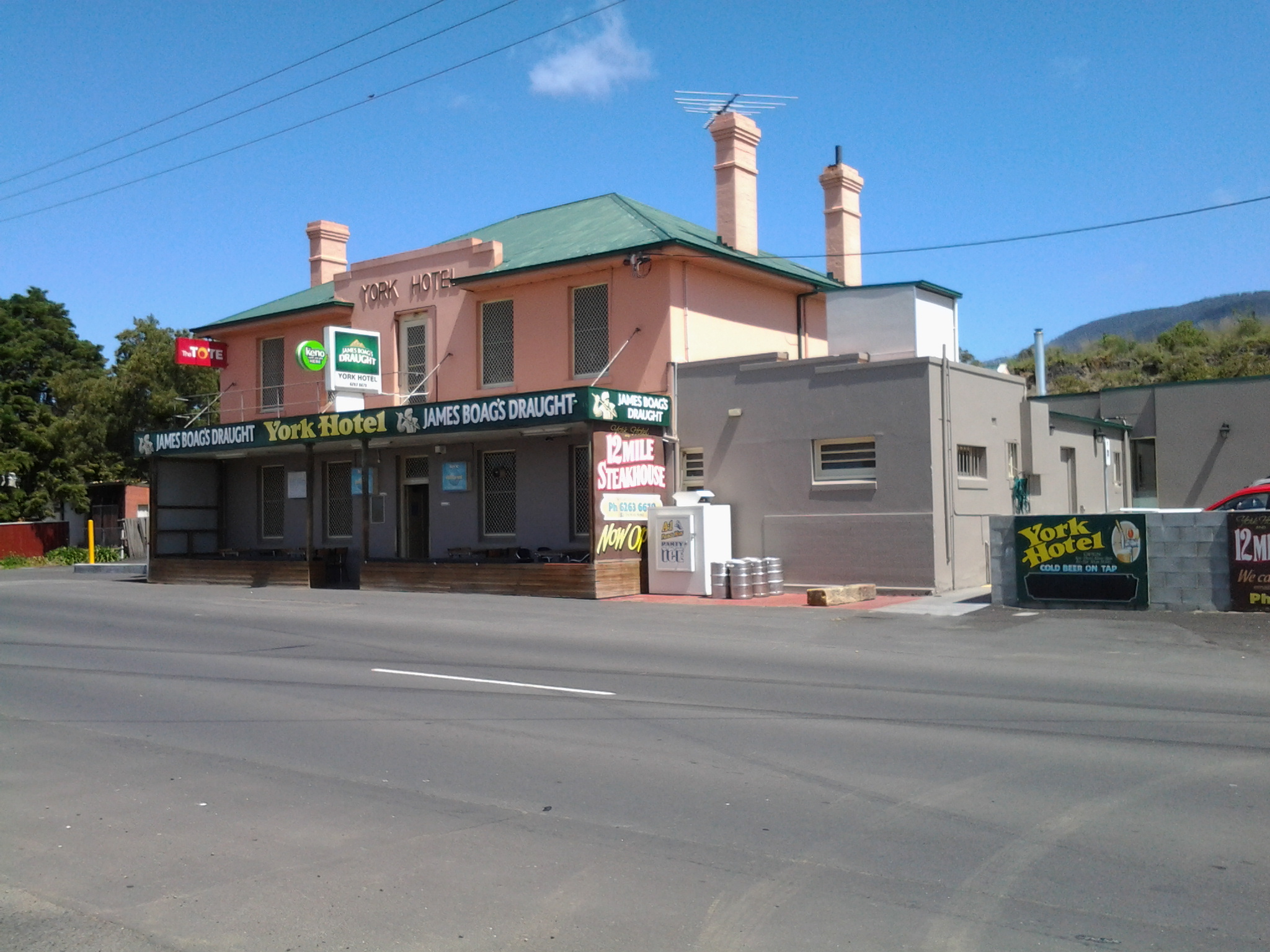
The York Hotel in Granton

I decided to find out what I had missed by not stopping off at the York Hotel on Stage 8 of my walk.

The Hotel’s web site is at http://yorkhotelgranton.com.au/ and offers lots of information and photographs. Its secondary name is ‘Home of the 12 Mile Steakhouse’.  The site says that ‘making a booking is especially important from Thursday to Sunday’ so I can only assume the restaurant does a thriving business. Apparently “…head chef Rick Schultz has been a chef for 30 years both in Australia and overseas. Where ever possible products are sourced locally and the Kitchen staff pride themselves on using only the freshest ingredients.”

I was interested to know the Hotel’s history. The Hotel’s website offered: ‘Re opening on the 18th of December 2011 after renovations, this Tasmanian family owned Hotel has seen major changes including renovated restaurant, kitchen and a new bar and beer garden. The York Hotel is rich in history after first opening in 1836 as an Inn. Many of the original sandstone walls have been retained in the renovation process.’ The Hotel also has its own Facebook site: https://www.facebook.com/pages/The-York-Hotel-12-Mile-Steakhouse/158032947634196 containing lots of happy party shots.

According to Glenys Cruikshank at https://www.flickr.com/photos/36529448@N07/3461732443/, ‘Once used as a coaching stop. Built before 1849.Prince Alfred (Duke of Edinburgh) on the first royal visit to Tasmania, changed horses here, and stepped inside for a glass of ale.

On a less attractive side, a news story in February this year reported ‘Second Hold Up at Granton Hotel’ (http://www.abc.net.au/news/2014-02-11/second-hold-up-at-granton-hotel/5251770). ‘The York Hotel at Granton has been held up for the second time in nine months. Police say a man approached the hotel’s owner as he was leaving to take cash to the bank. It’s believed he had a knife. The police helicopter has been involved in the search and officers have also conducted line searches on the nearby river bank.’

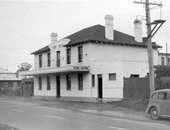
The York Hotel looked as follows in 1953 (photo courtesy of https://www.historypin.org/channels/view/45807/#!photos/list/)

York Hotel 1953

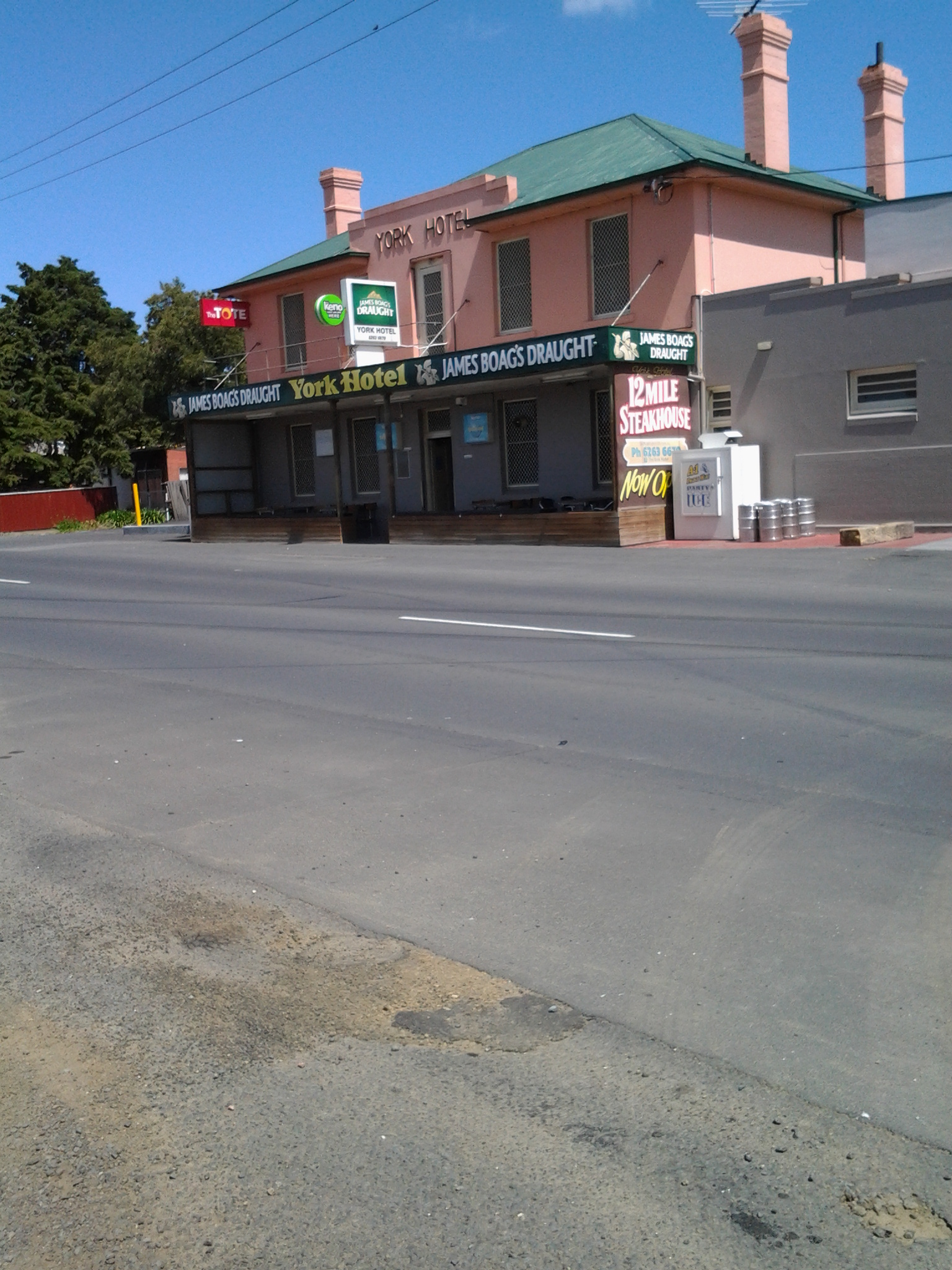
And last week it looked like: 20141111_134845

There is a self-published book, The pubs of Glenorchy authored by Donald Howatson in 2011, which may throw more light on the history of the York Hotel.  I have yet to locate a copy.

Crossing the Bridgewater Bridge during the 8th stage of my walk along the Derwent River

This stage of my walk along the Derwent from the mouth of the River on the eastern shore was the most exciting one so far, because I was reaching a significant milestone.  By my reckoning, it marked the end of the easiest part of the walk to the source of the Derwent River at Lake St Clair. Accordingly, and to continue a walk with relative ease for a while, I planned to cross the Bridgewater Bridge and walk south to the mouth of the River on the western shore, then to start tackling the challenging kilometres further north next year.

I was a little surprised how special the day seemed, and so it was an easy decision to cross the Bridge rather than waiting to do so on Stage 9.

20141111_131436

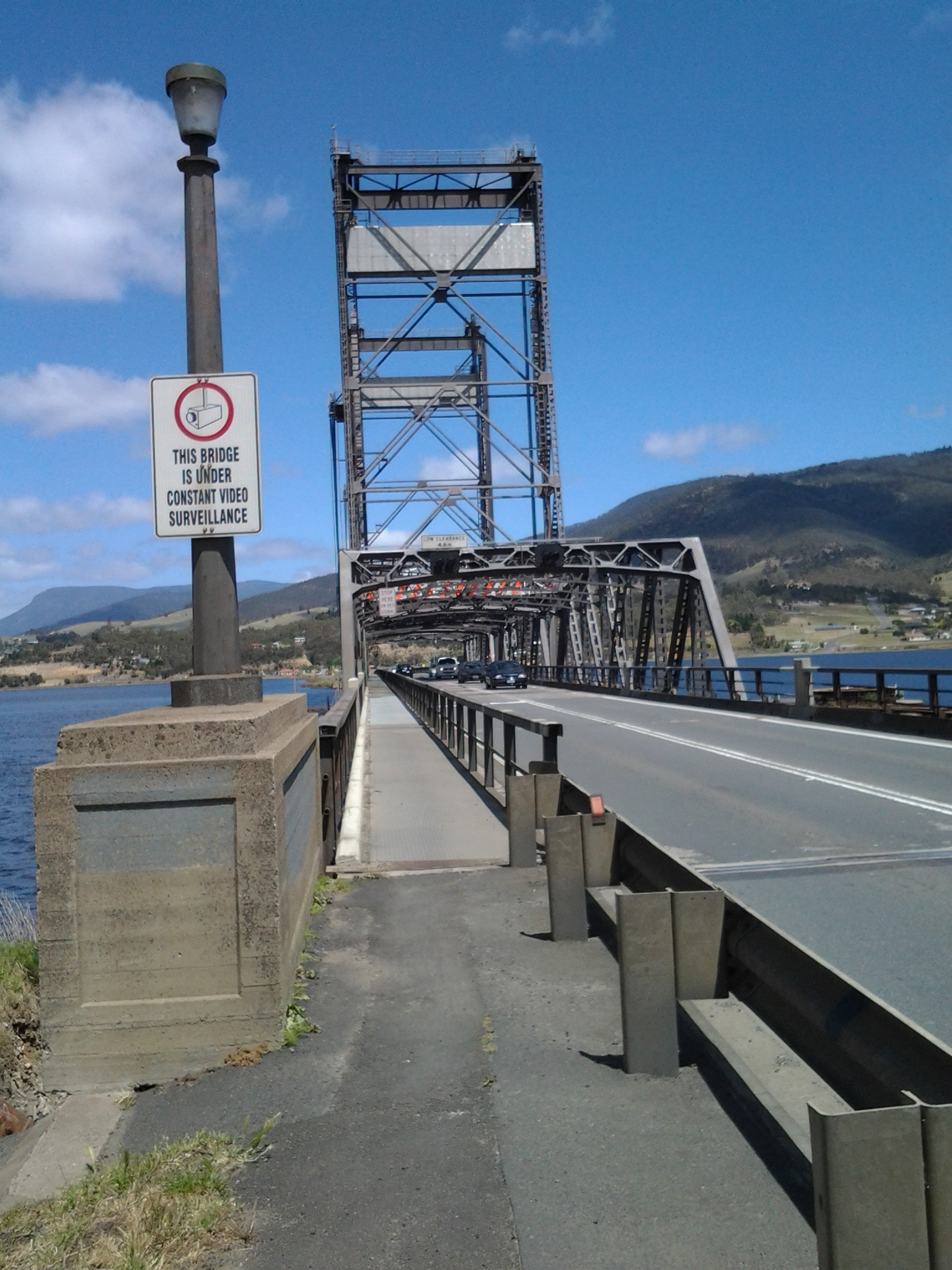
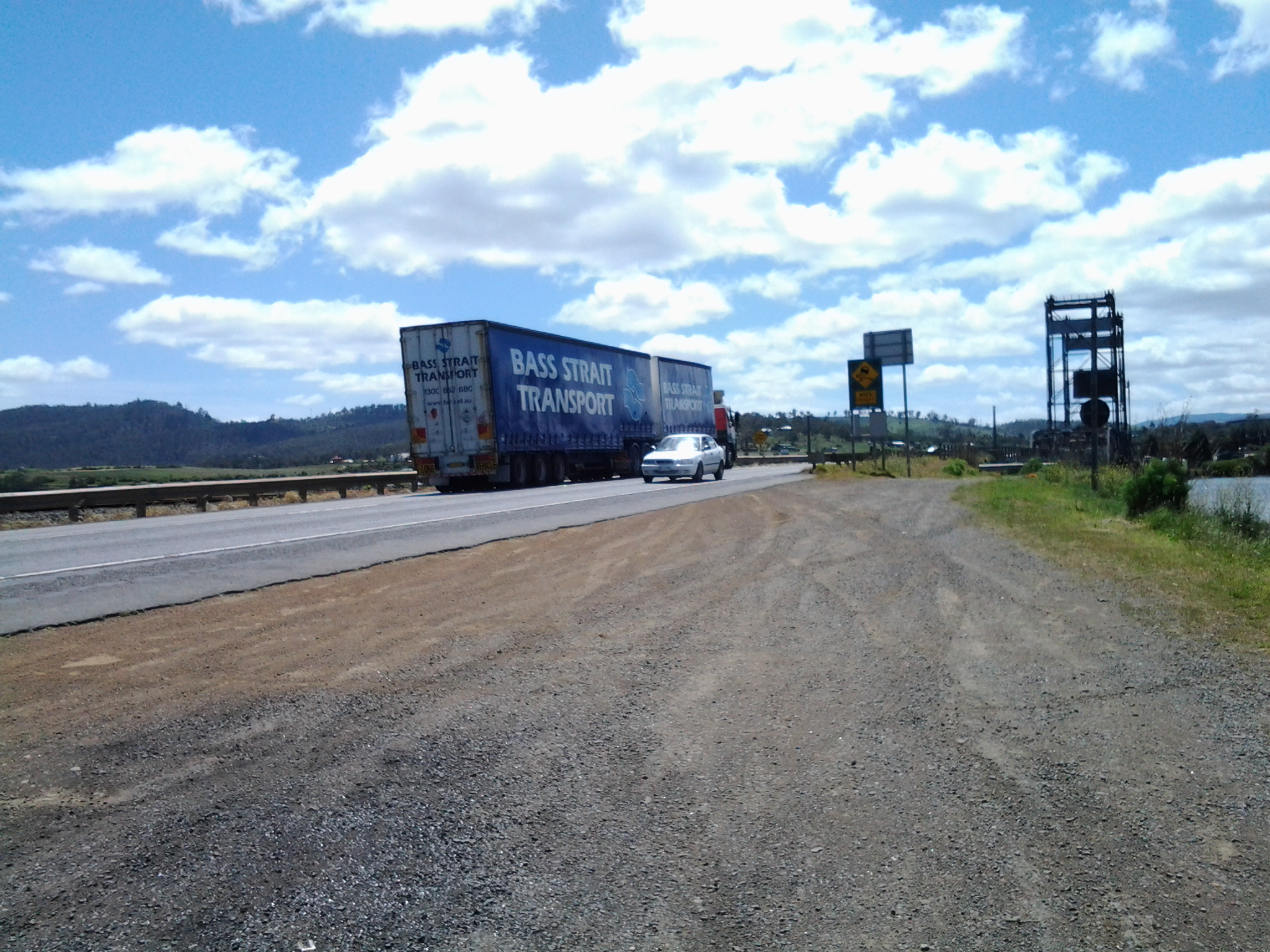
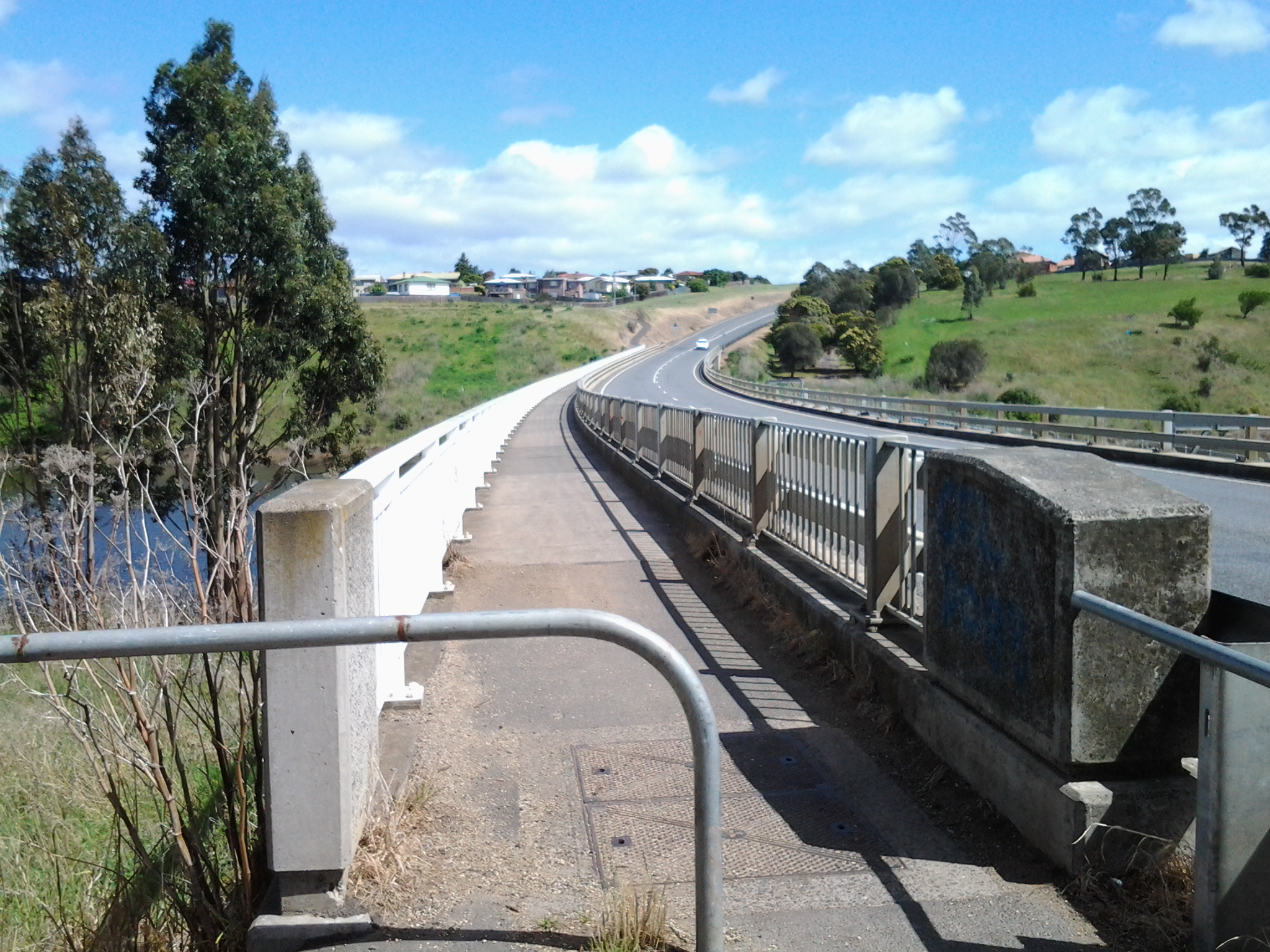
I stepped onto the path on the left of the Bridge at 1.14pm and was off the Bridge and onto the Bridgewater Causeway by 1.20pm. The terrifyingly large fast trucks threatened to suck me off the bridge with their speeding surges next to my shoulder (there was a metal fence separating us but the bridge noise and vehicle speed all combined to make the energy around me vibrate fiercely). I removed my sunhat and held on firmly.

20141111_132207  20141111_132150

Except for a small layby, there was no formal walking track beside the Highway on the Causeway, and trying to walk on extremely unsafe and uneven ground beside railings (or none) required extra vigilance.

Looking ahead of the western shore, from the Bridgewater Causeway.

20141111_132218  20141111_132743

The persistently noisy and fast traffic (on what must be one of Tasmania’s busiest roads – the Midlands Highway) and the wind pushing across the Causeway from one side of the Derwent River to the other were constants, and I was determined they would not distract me from getting to the western shore. I was not the only one walking across the causeway; two others were following me across.  So, on the sample of three people, I would say 100% of people experience danger walking across the Bridgewater Causeway.  I didn’t take photos of the really dreadful bits – too busy concentrating on where my feet might go.

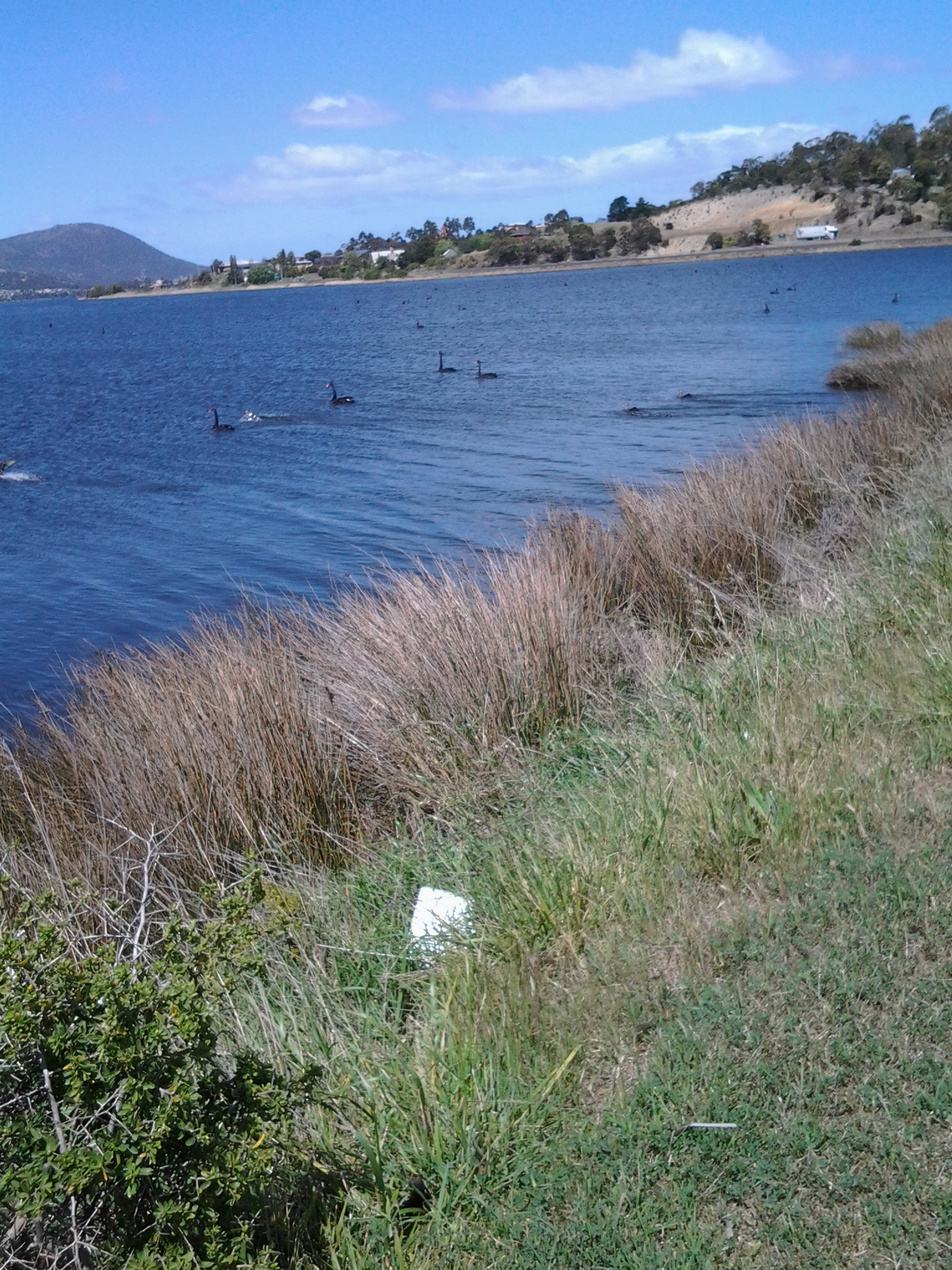
I did enjoy watching the dozens and dozens of Black Swans, and looking back at part of the suburb of Bridgewater on the eastern shore.

20141111_132202

And towards the western shore:

20141111_132810

20141111_132913

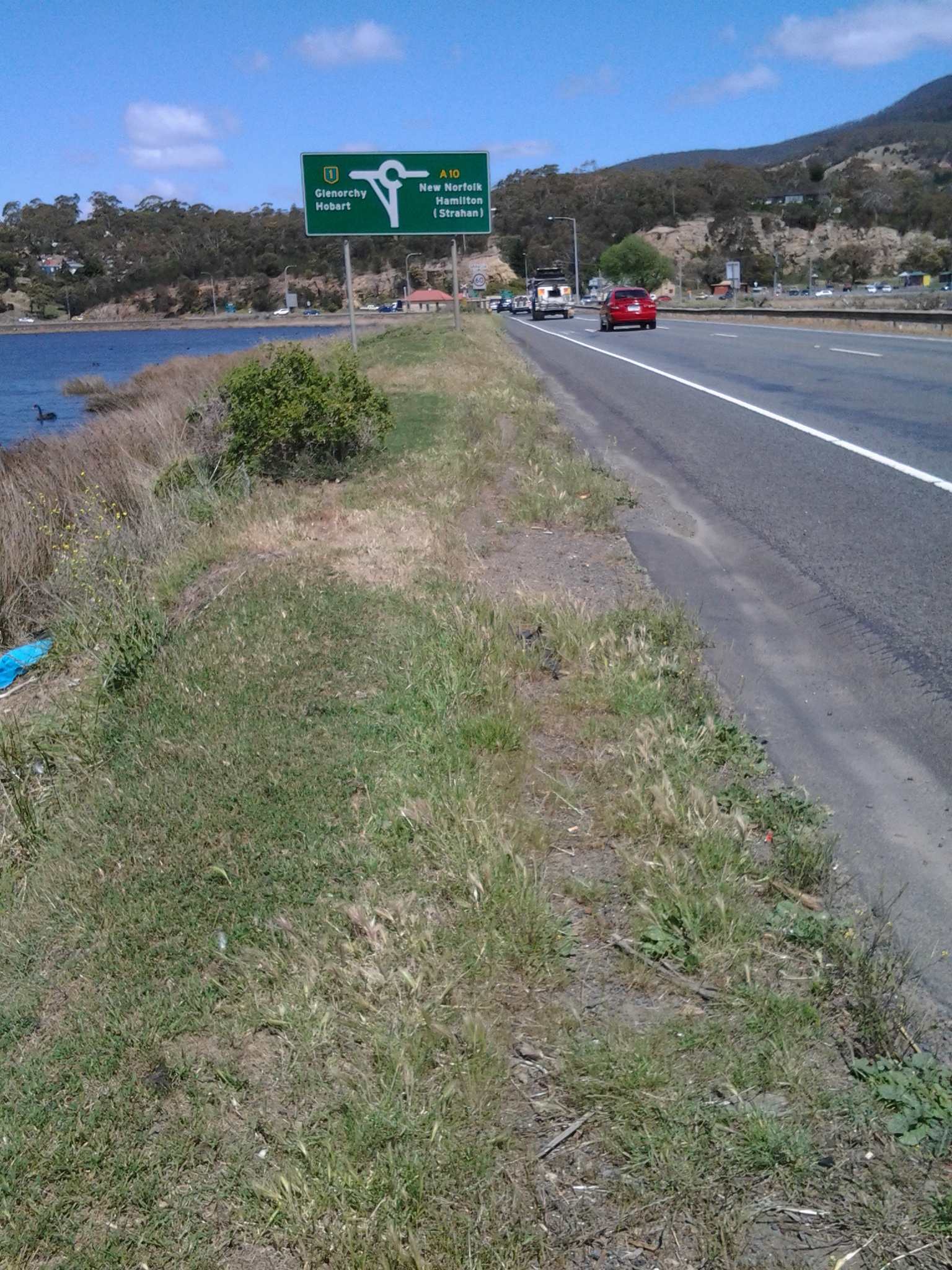
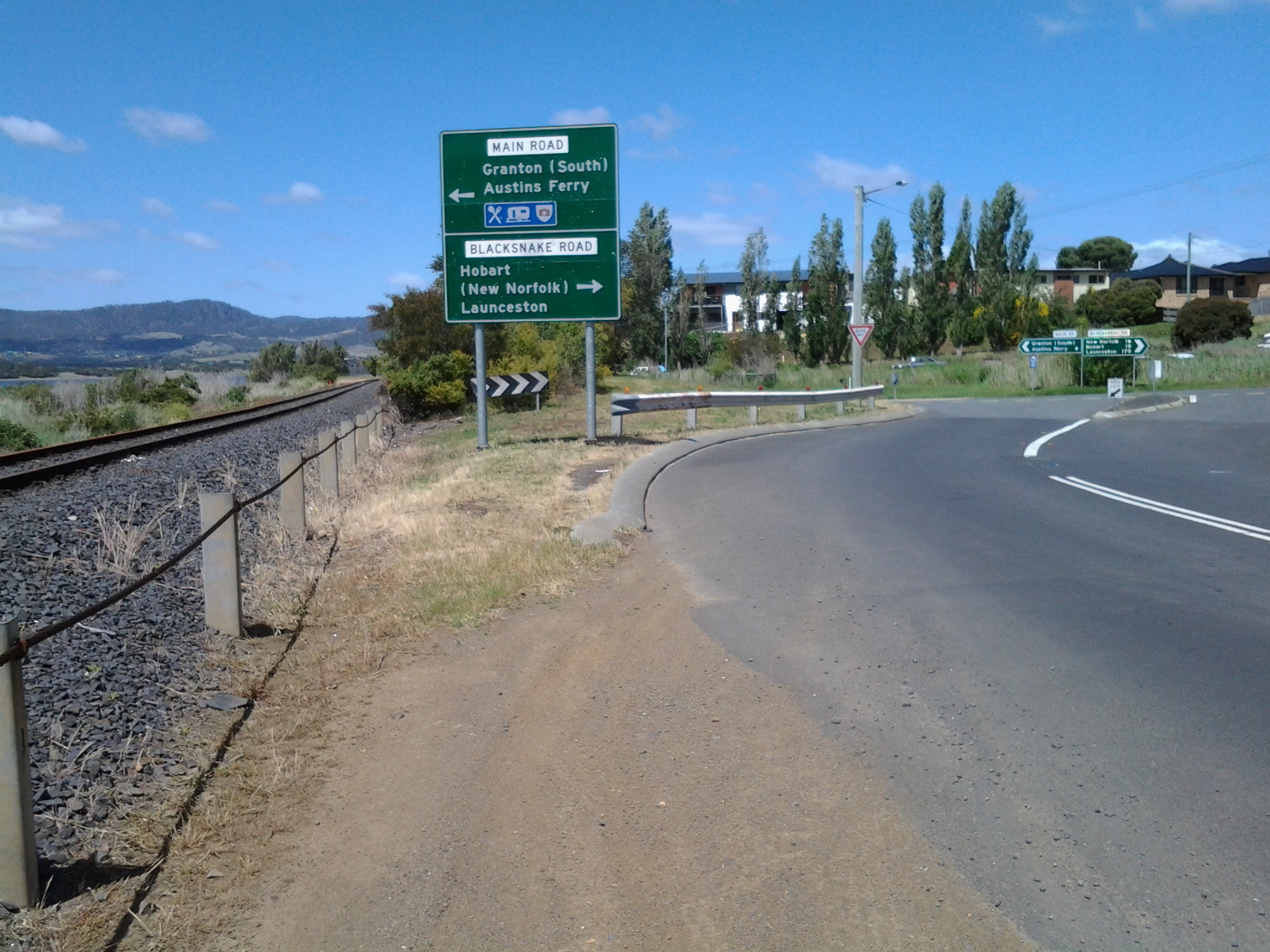
I reached Granton on the western shore at 1.35pm and negotiated myself along the road and across old train lines (this would all be easy if there was no or minimal traffic) all the time beginning to move southwards. Three minutes later I reached the sign indicating a left turn off the Brooker Highway towards Granton South and Austins Ferry.

20141111_134311

As I stepped in this direction I recognised a sign marking the start of the City of Glenorchy.

Occasionally I looked back towards the Bridgwater Bridge, across the railway line that was one a lively link between northern and southern Tasmania.

20141111_133556  20141111_134208

I followed a rough non-path on the edge of the road until a new sign at 1.45pm indicated I needed to take another left turn towards Granton South and Austins Ferry.

20141111_134416

As I walked around the corner, on the right in the distance I could see a hotel; the York Hotel.

20141111_134856

I felt myself glow with delight in anticipation of making this my stopping point for the walk, enjoying a cold beer and meeting the locals. However, as I got closer, two locals were walking towards the bus stop Number 47 located opposite the Hotel.  They let me know that a bus was expected in the next few minutes. My feet hurt, it would be quite a while before another bus would pass this way, and so I decided to forego the pleasures of the pub and start my bus trip home. The locals led me to believe the publican ‘has done a really good job’ and ‘this is a good pub now’.  So, perhaps with friends in the future, I will venture back here for the missed cold one.

I was on the bus at 1.57pm, reached the Glenorchy Bus Mall at 2.15, and caught the Metro bus 694 via Risdon Vale to the Eastlands Shopping Centre at Rosny when it left around 2.30pm.  Most of all I was surprised how long it took the bus from the York Hotel to Glenorchy – almost 20 minutes. That represents a great deal of walking time so it is difficult for me to guess where I can reach on the next Stage 9 of my walk along the Derwent River. I am guessing that somewhere in the suburb of Claremont might be achievable, but who knows! Finding out is what gives me something to look forward to next week when I tackle Stage 9 of my walk.

Bridgewater Bridge; getting ready to cross it on 8th stage of walk along Derwent River

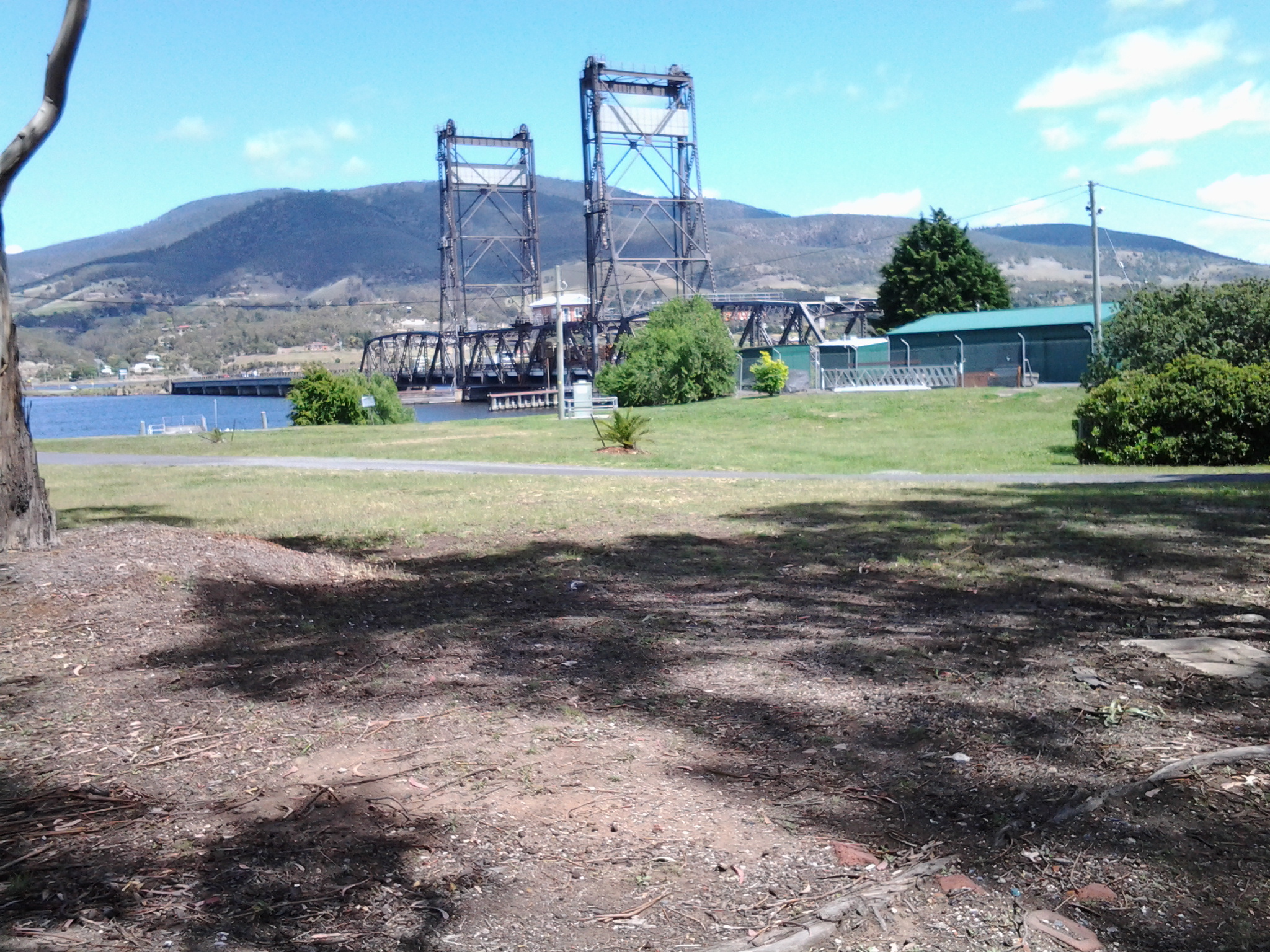
The Bridgewater Bridge and the attached Bridgewater Causeway crosses the Derwent River upstream approximately 38.5kms from the sea. I crossed from the eastern shore to the western shore last Tuesday near the end of my 8th walking stage along the River.

According to http://www.aussietowns.com.au/town/bridgewater-tas, “In the early nineteenth century Bridgewater was a vital link on the north-south route from Hobart to Launceston with one of Tasmania’s earliest buildings and the remarkable achievement of the causeway which helped to cross the Derwent River. The settlement was originally known as Green Point until it became known as Bridgewater simply because it was the bridge (actually a causeway) crossing a shallow section of the waters of the Derwent River.

The first ferry service across the Derwent was established in 1816 by James Austin and his cousin James Earl. It remained vital to travellers journeying from Hobart Town to Launceston until the completion of the causeway. By 1820 Austin and Earl were using a punt capable of transporting 30 cattle, 200 sheep or two carts and 16 oxen. In 1829 construction began on a causeway across the Derwent River. It was 1.3 km long and was built by a gang of 200 convicts using nothing but wheelbarrows, shovels and picks. By the time it was completed the convicts had shifted 2 million tonnes of sand, soil, stones and clay. Defined as secondary punishment for serious recidivists, if the convicts were adjudged to have not done a full day’s work they were placed in solitary confinement in a cell which was only 2 m high and 50 cm square. The causeway was completed in 1836. It did not traverse the river and so a ferry plied the deepest section of Derwent River for twenty years from 1829-49.

In 1849 a bridge across the Derwent was opened. Bridgewater, which had been laid out on the southern shore, was moved (down to the last surveying detail) to the northern bank. The present lift bridge was started in 1939, interrupted by the war, and completed in 1946.”

 From further south, as I walked along the eastern shore, I could see the Bridge. As I walked northwards the length and shape of it came into stronger focus.

20141111_114933  20141111_111830  20141111_130209  20141111_130216  20141111_130627  20141111_131133  20141111_131441

All the photos are taken from the eastern shore side of the Bridge.

Around Bridgewater on the 8th stage of my walk along the Derwent River

After Green Point and looking southwards, I could see Mount Direction in the distance (overlooking the Bowen Bridge – which I could not see). In the photo below, the swell of land on the right of the Derwent River is the foothills of Mount Wellington.

20141111_122916

Early, on this leg of the walk, I stopped and looked northwards along the Derwent River. In the distance Mount Dromedary peered over the landscape.

20141111_120951   20141111_124958

The early highlight of this part of the walk was seeing a collective of about 3 dozen plovers together. I don’t think I have ever seen such a group. The plovers were mostly standing around although some were walking around on an open mowed park area near a cluster of gum trees.  Perhaps some were older ‘young’ plovers because from a distance they all looked the same size, give or take a bit.  This seemed so unusual because I am only familiar with the two parents hanging about and guarding their one or two baby birds.  In some paddocks, in the past, I have seen a number of pairs of parents but the pairs don’t hang out together and keep their own territory quite some distance from each other.

How pleasant this walk was.  Consider the sublime calmness represented in the photo below.

20141111_125006

Around 12.45pm I stopped and sat on a bench seat with a view and watched what amounted to a natural cygnet farm. Dozens of cygnets about the size of a small duck were on the water close to shore.  Only one adult black swan seemed to be on supervision duty. I wondered if the swan bureaucracy had been suffering major cutbacks of ‘staff’ like our Australian and State public agencies where services are meant to continue with less staff.

Opposite where I sat the Mount Faulkner Conservation Area was the main feature on the western shore of the Derwent River.

20141111_125008

At 12.56pm I reached Woods Point, sat under a shelter structure and consulted my maps. Five minutes later I left this Point and began walking north along Gunn St all the while having a good look at Mount Dromedary rising on the eastern shore but away in the distance north of Bridgewater.

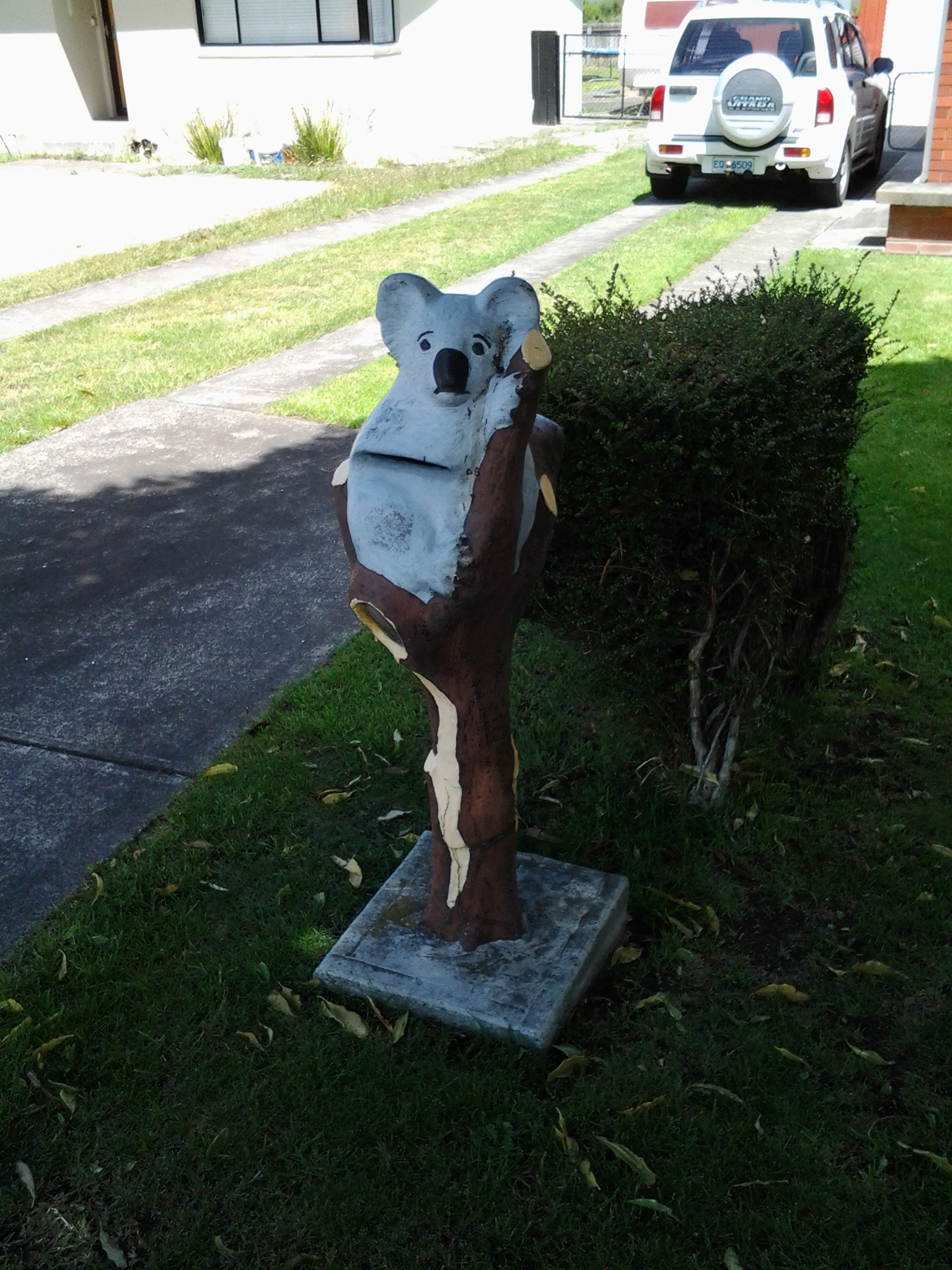
I was walking through suburban streets when a letterbox, under the shade of a tree, captured my attention.

20141111_130517 20141111_130527

A poor sad concrete koala (maybe commiserating with the live koalas in Brisbane given to G20 leaders for a cuddle)!  The postman would push his letters into a slit in the koala’s stomach.

I also had a larger view of part of two uprights of the Bridgewater Bridge.

20141111_130214

I seemed so close.  My day’s goal to nearly reach the Bridge had to be superseded. I was compelled to reach the Bridge and kept on walking, even passing bus stops.  When I could see the golden arches of McDonalds at the end of the right hand road I veered left and headed for the Bridge nearby.

20141111_131010

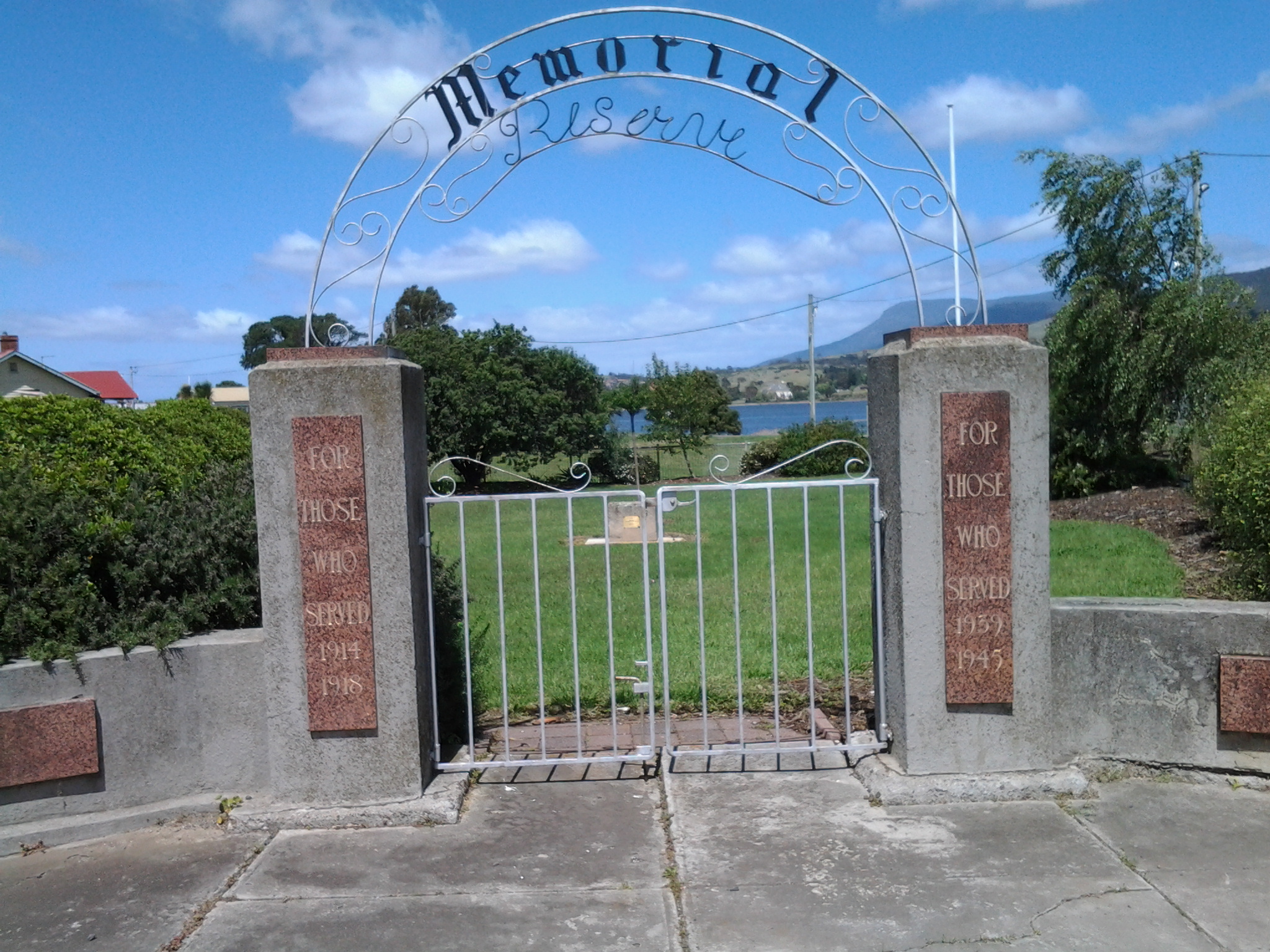
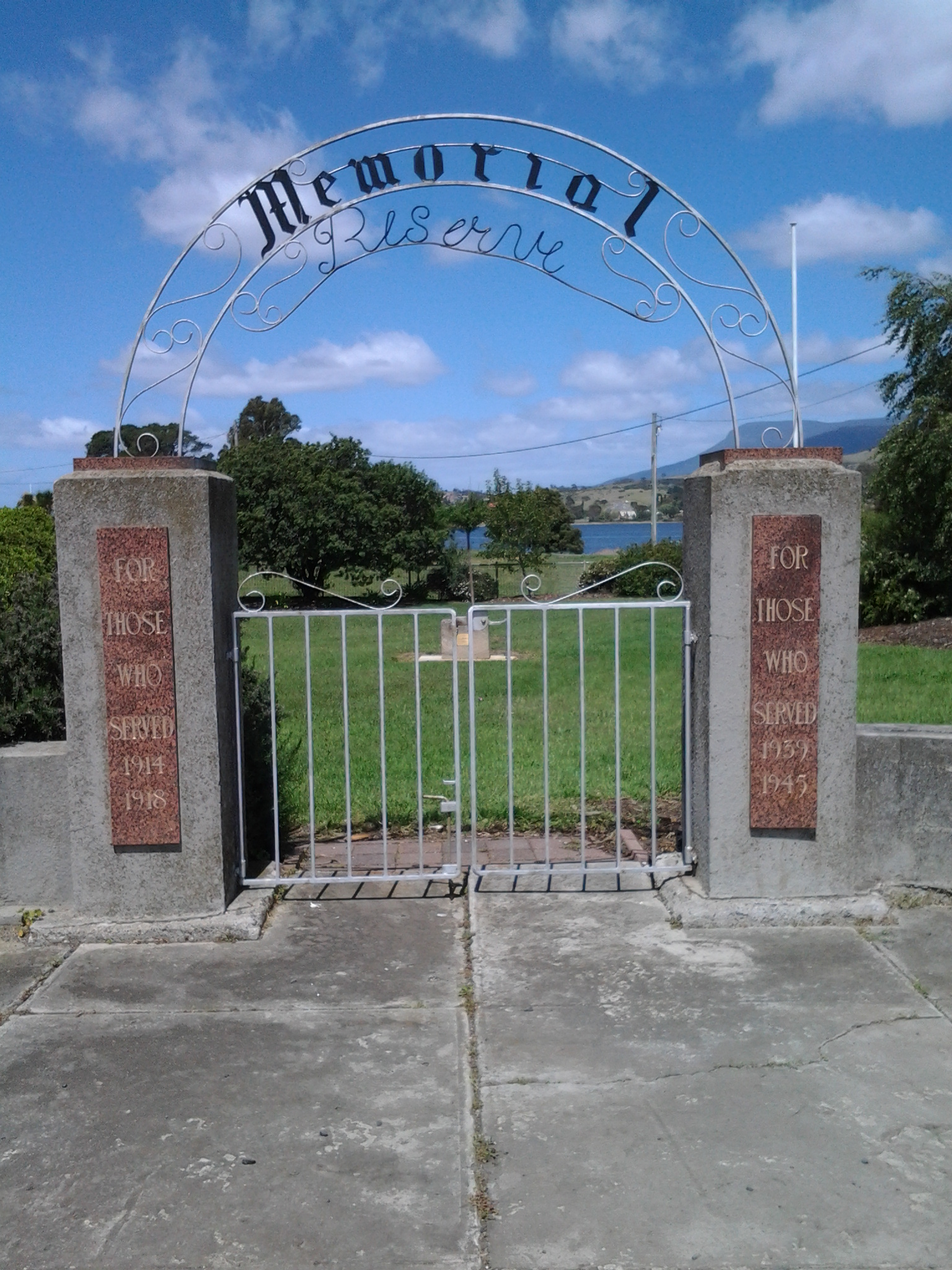
I stopped to photograph the semi-ornate gates of Memorial Reserve commemorating locals who died in various overseas wars (after all, this walk was occurring on the 11th November, Australia’s official Remembrance Day).

20141111_131258

Then I was at the Bridgewater Bridge. Now it wasn’t enough for me to reach the Bridge: I felt compelled to walk across it rather than waiting to do so in the next stage of the walk.

20141111_131431

Across the Jordon and into Greens Point as I walked northwards along the Derwent River

In leaving Herdsmans Cove, I was back on the East Derwent Highway and immediately crossing the bridge northwards across the Jordan River.

20141111_105455

Looking towards the Green Point peninsula at the far end (Derwent River is on the other side of the peninsula) from the Jordan River Bridge: suburbs of Herdsmans Cove on the left and Green Point on the right.

20141111_105605

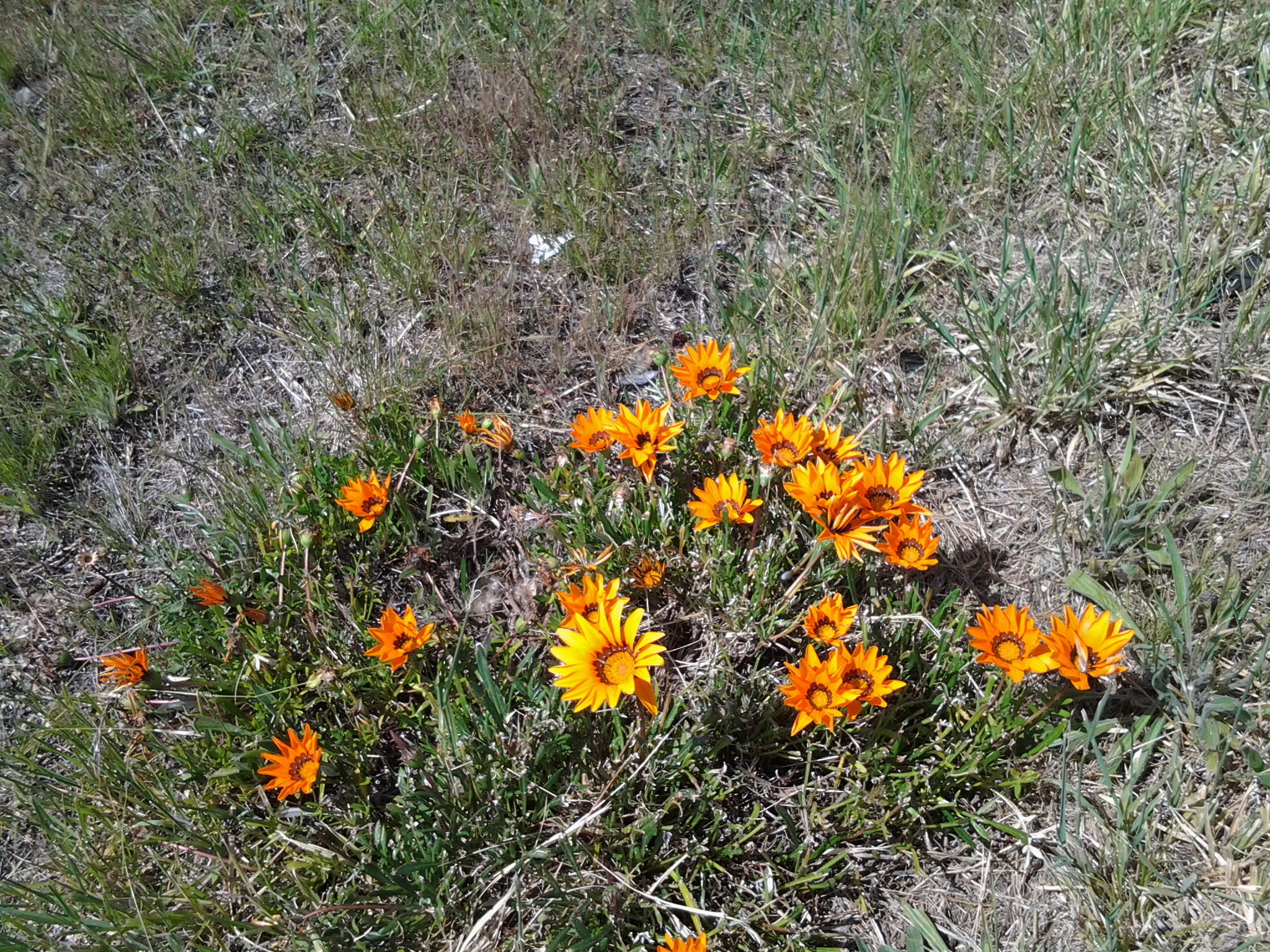
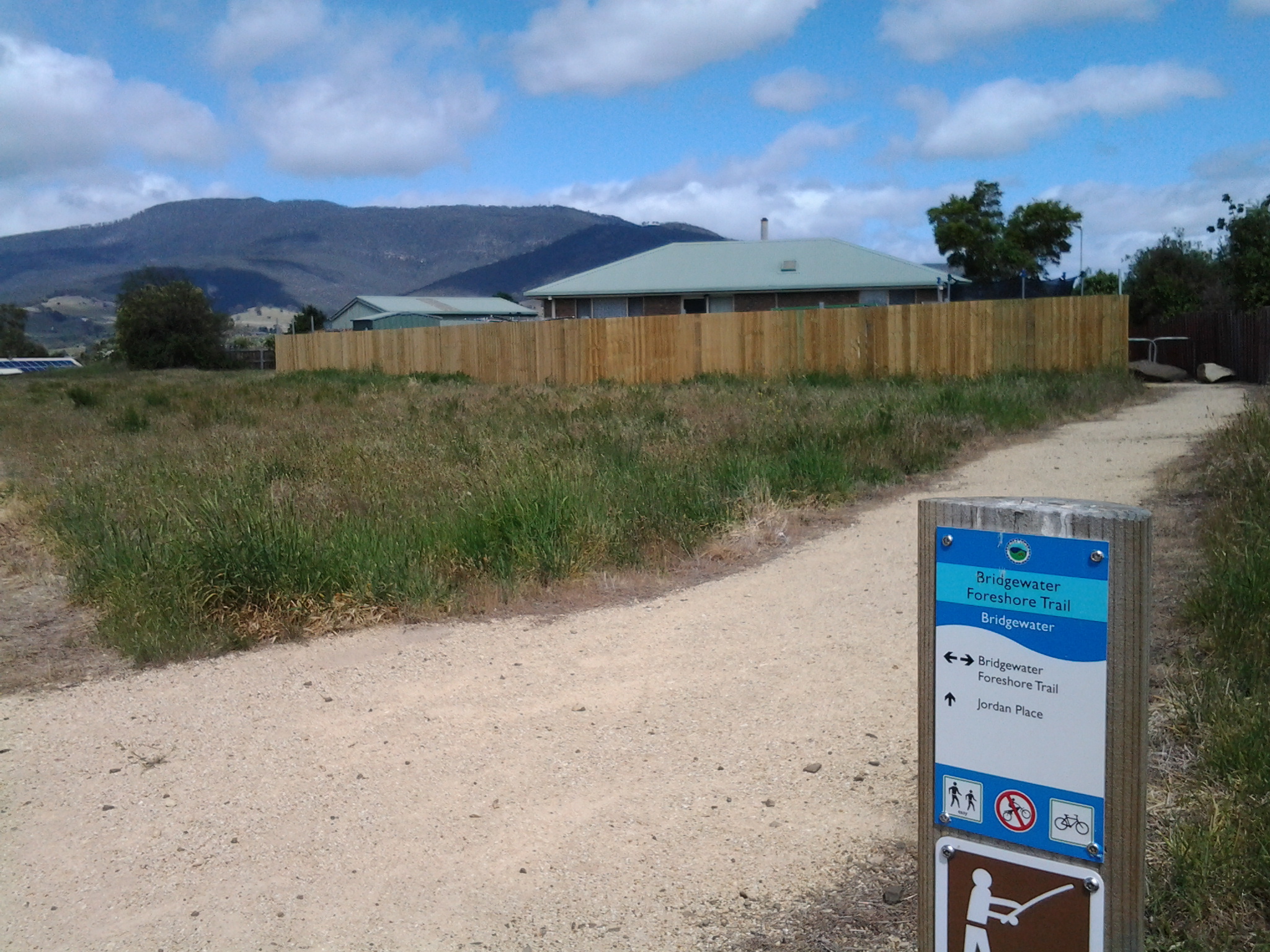
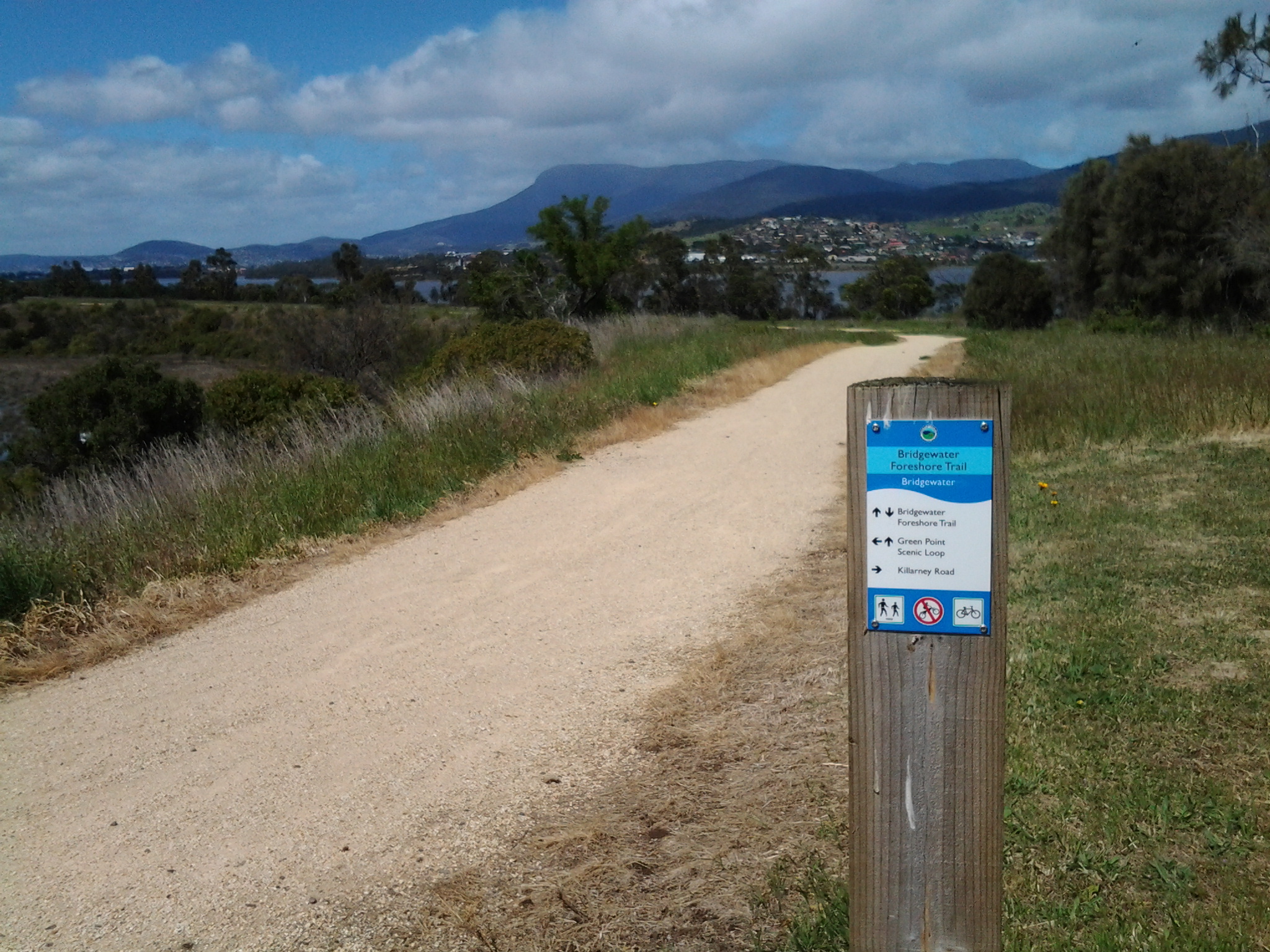
I was off the bridge by 11am and walking up the bitumen path beside the Highway until I reached a yellow gravel path to the left, where I turned and continued on with wild fennel flourishing on the sides of the path along with brightly flowering gazanias growing wild, walked around another gate and by 11.11am I reached the sign for the Bridgewater Foreshore Trail.

20141111_110243   20141111_111122

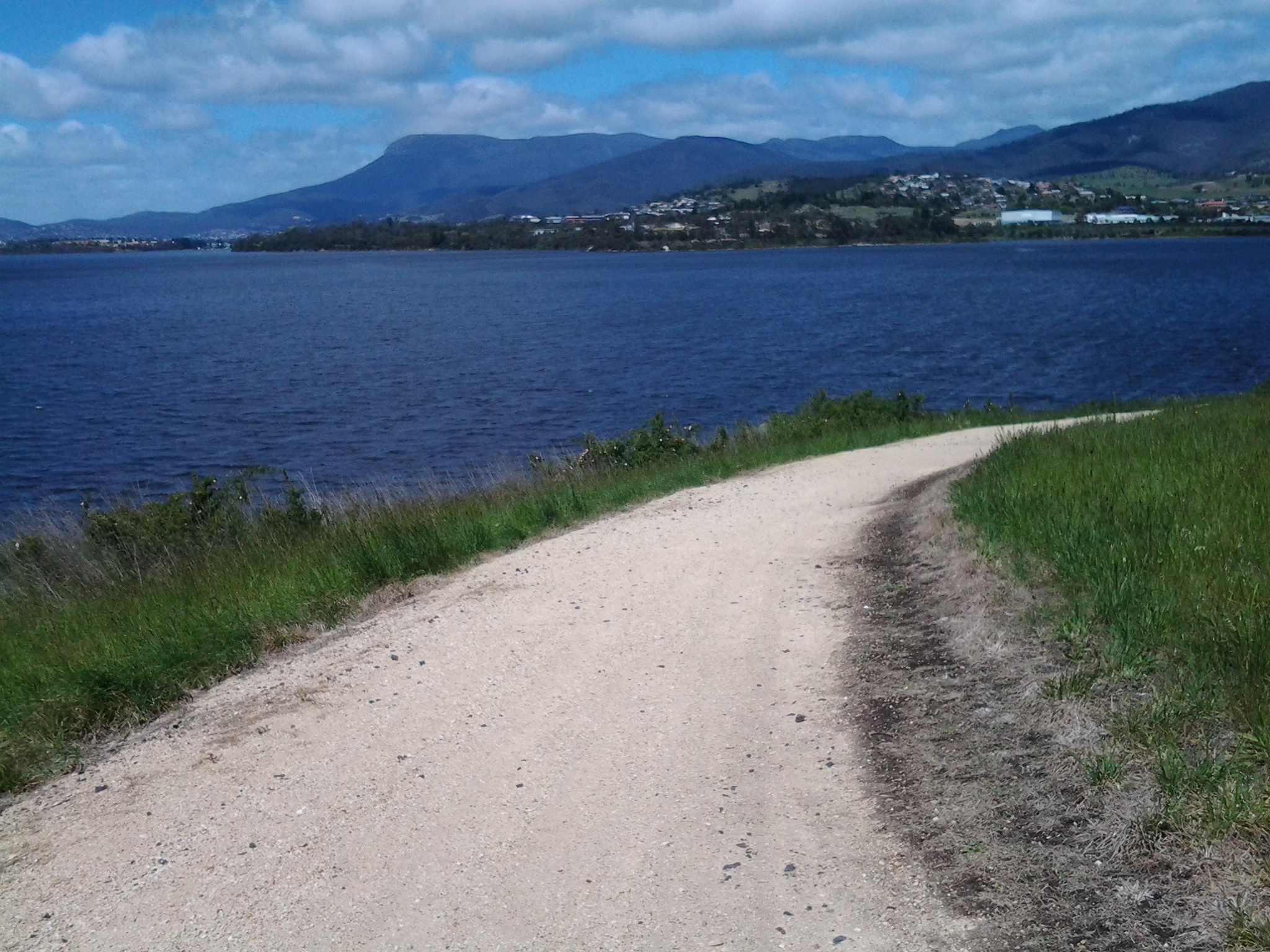
In the distance I could see rain showers softening over Mount Wellington but I was dry and walking in the sunshine. After rounding another gate, a sign pointed out the Green Point Scenic Loop off to the left. I headed along this in a southward direction enjoying the fresh smell of the gum trees and the perfume of the wattle flowers.

20141111_111239  20141111_111236  20141111_111233  20141111_111231  20141111_111500  20141111_112105

At 11.35am I reached the point of Green Point at the junction of the Jordan River with the Derwent River and sat on the grass beside the path for a brunch break.  My breakfast was eaten at 6am so I was a smidgin hungry by this time. A strong south westerly wind blew across the Derwent River and buffeted me. The freshness was invigorating.

20141111_113217 20141111_114835

Ten minutes later I was up and walking on.

A few minutes after midday I had passed some more gates and signs and had chosen the trail closest to the shore leading north. On my right were the fences of some houses, and either someone had dumped their rubbish over the fence or the wind had blown it there. I was amused to see a blue hard plastic chair hanging on a washing line.

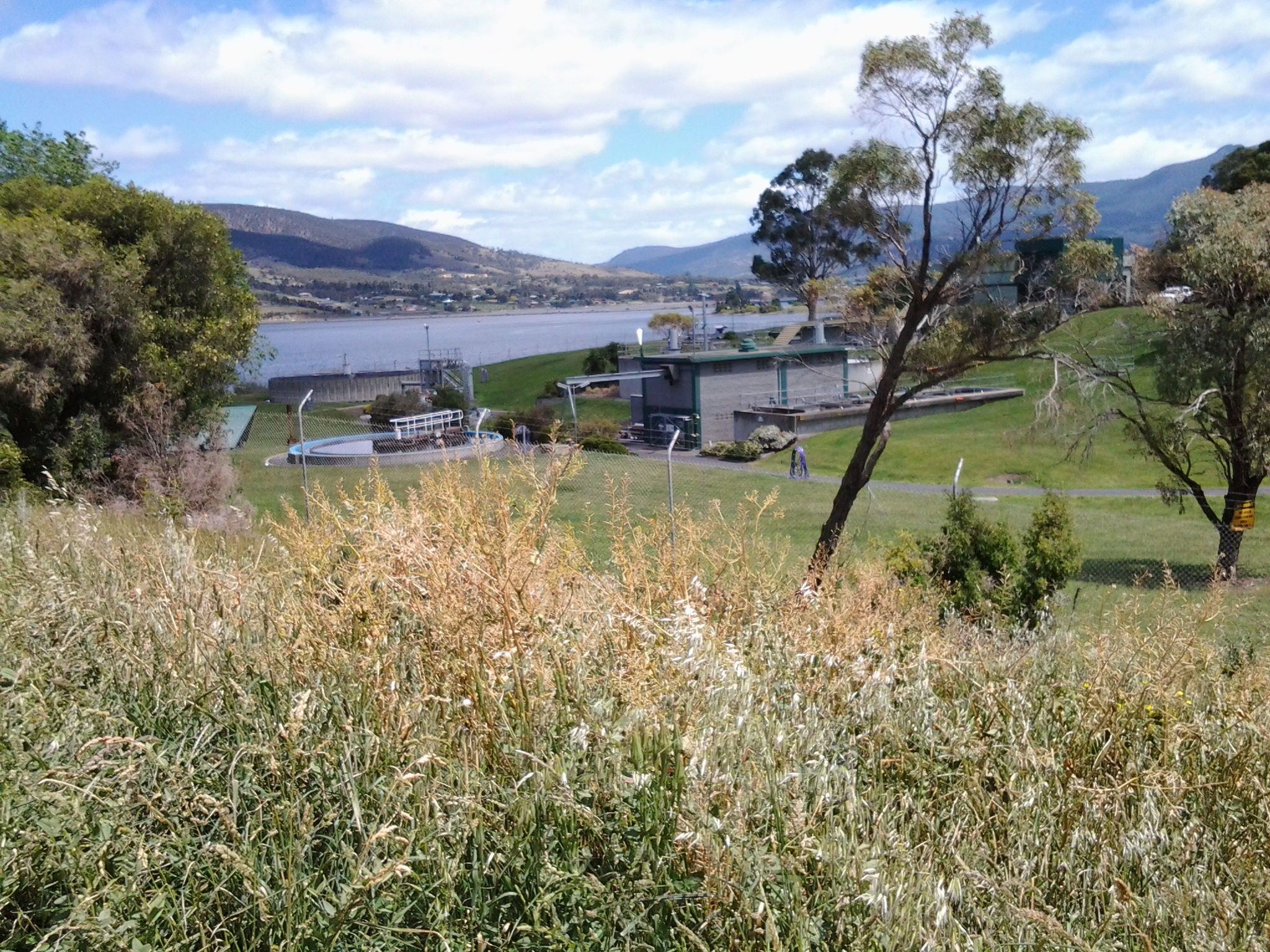
Just after 12.30pm I walked around the Green Point Waste Water Treatment Centre, or as some maps have it, the Sewage Works.  The fresh smells of wattle or gum trees couldn’t reach my nose here. For some reason?

20141111_123316

Near the Treatment Works I walked back on a street for some metres before coming around a corner where I was able to return to the yellow gravel road (am I Tasmania’s version of Dorothy from the Wizard of Oz?).

Now I was about to walk around the suburb of Bridgewater.

Onwards into and around Herdsmans Cove on the 8th stage of my walk along the Derwent Rive

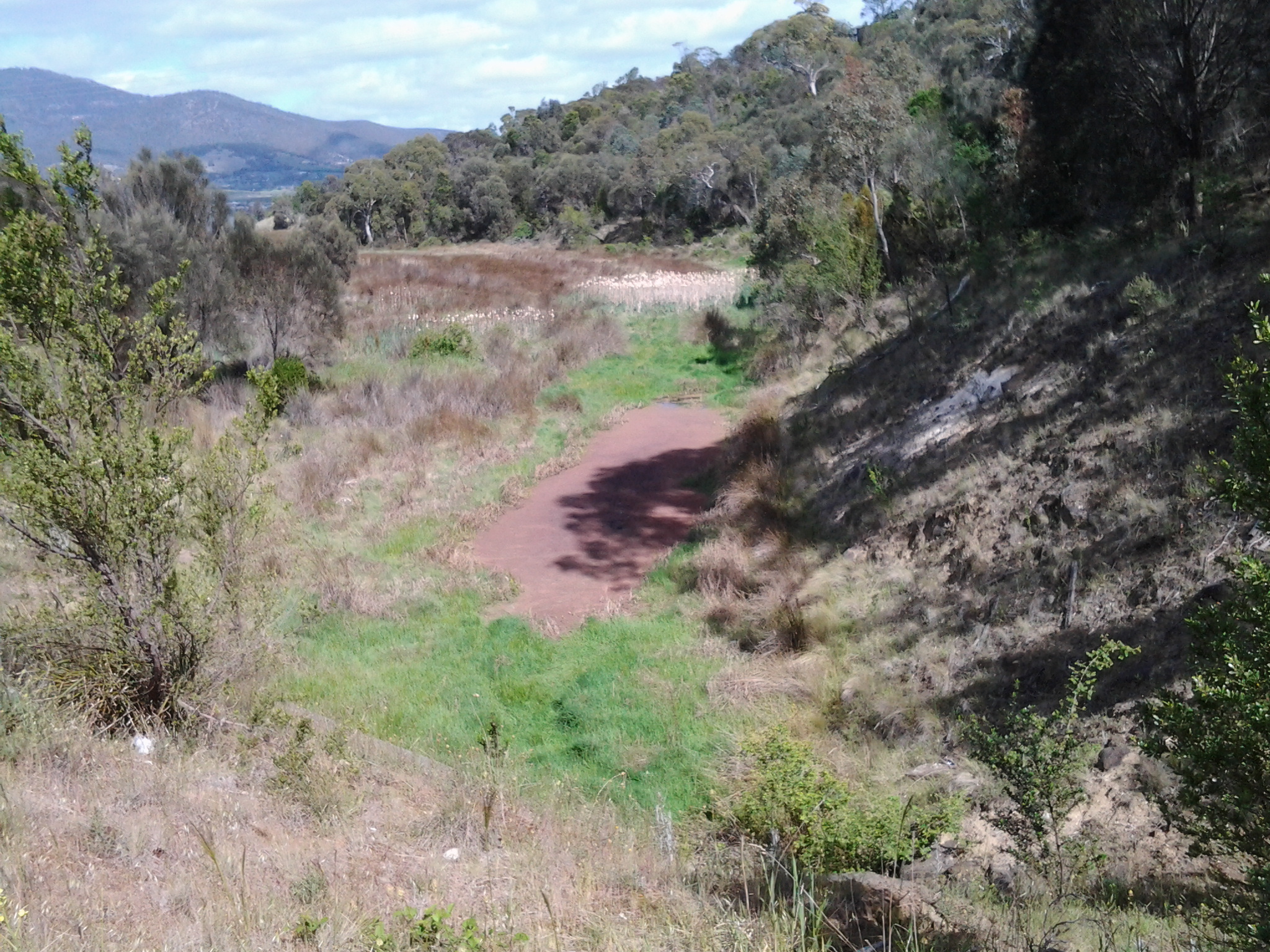
At 9.48 am I was leaving Old Beach and continuing my walk northwards along the East Derwent Highway with its noise of heavy trucks and speeding cars passing me by. To my left were masses of overgrowing blackberry brambles reminding me of the thicket scrambled through on my last walk.  Not long after, the hint of a track on the left took me away from the edge and above the Highway and a little closer to the River.  I continued for a while when it seemed like the track would descend into Gage Cove, but it petered out – I recommend anyone following in my tracks stays on the Highway. Overhead soared a large hawk or kite drifting on the breeze while looking down for a feed.   Below I could see black swans feeling safe on the waters of the reedy Cove. Back towards the road I walked, clambered over a collapsing barbed wire fence, and eventually down onto the unprotected road verge and again sometimes into the ditch (with the thrown cigarette butts and the jetsam of McHappy Meals). At 9.58am I reached the sign for Gage Brook and soon after observed some water ran below towards Gage Cove, amidst a conglomeration of marshy and spiky vegetation.

I continued past a second sign directing traffic to the Baskerville Raceway, and at 10.10am I turned left at a major roundabout (suburb of Gagebrook to the right, Bridgewater straight ahead and Herdsmans Cove to the left). A minute later I turned left at a T-junction then left again at Calvert Court at 10.19am.

I loved hearing the wind in the massive gum trees.  Majestic to look at. Thrilling to listen to. The photo bellows shows a stand of gums in a mowed parkland beside the Bellerive walk. The trees I saw at Herdsmans Cove were much larger.

20141111_121906

At 10.23am I turned left at a short unnamed cul de sac with an empty block leading to a foreshore trail. Two locals, who were mowing lawns, confirmed this was the way to go. On the track, a sign gave directions along this ‘Swan Park Trail’.

20141111_102504  20141111_104216

I never discovered if there was an actual Herdsmans Cove as in a bay or body of water, but I suspect it may be the small inlet adjacent and north of the Lamprill Circuit. If I had turned left I could have walked the Lamprill Circuit. However, because I could look down and could see a small shelter structure had been built at a vantage point where the River and mountain views could be appreciated and I realised going down meant coming back up a hill, I did not pursue this direction.

20141111_102911

Instead I turned right and headed northwards. This was the first of the Brighton local government signs and it made me more confident of where I was walking as I came across more.

At 10.30am I was rounding another gate and soon, away in the distance, I could see the tops of the Bridgewater Bridge.

20141111_111825

The walk around the suburb of Herdsmans Cove was uneventful. Lots of bird song beside the path and scattering tiny birds in the long grasses. A brilliant Blue Wren flitting. Mounds of black swans like dark rocks sleeping on the rocky shore. Foreshore Trail signs off and on. Gates to walk around.

20141111_104537

Eventually I was curving back towards the Highway and nearing the bridge over the Jordan River. Initially I was looking across the Jordan River at the suburb of Green Point (part of Bridgewater) –

20141111_104541

Then I was approaching the Bridge.

20141111_105339

A TasWater worker had parked his vehicle and was absorbed in problem solving inside a building alongside the Jordan. Beside him, I took an informal track up and onto the Jordan River Bridge.

20141111_105331

Starting stage 8 of my walk along the Derwent River

My starting point was the jetty half way through Old Beach on the eastern shore, and to reach this from my home in Bellerive on the eastern shore of the Derwent River was not straightforward. There are no direct buses from Bellerive to Old Beach.

Instead, I left home at 6.45am (way too early for my liking but no other choice), passed three Black Cockatoos feasting on a native tree in a private home (one acted as a sentry high up while the others gorged themselves), walked to the Eastlands bus mall and caught the first bus through to the bus mall in Elizabeth St in Hobart’s CBD. At 7.17am the X1 express bus to Glenorchy in the northern suburbs of the Greater Hobart Area (and beyond) departed. This arrived at 7.35am at the Glenorchy bus mall and, anticipating public toilets would be non-existent for my walk, I walked over to the Northgate shopping centre to use their facilities. I was back at the bus mall in time to catch Metro bus 126 to Old Beach which departed at 8am. At 8.20am I stepped off the bus ready for the day.

The sky was overcast and I was wearing a thermal top over my T-shirt and topped with a fleece jacket.  Blowy. Hard air hitting my face.

Since there was no direct water access from the jetty northwards, I walked through the suburban streets staying on the hard concrete footpaths. Plovers and Blackbirds were my constant companions and extravagant blooming roses and wattles perfumed the air. It was rubbish removal day and the streets were lined with bulging large faded red wheelie bins and yellow lidded green bins. The wind had lifted many lids and these were thrown back as if saluting when on parade (a vision that friend Jo exclaimed he saw).

At 8.33am I reached the intersection with the East Derwent Highway and lost a footpath. I turned left and walked beside the highway where it was obvious a few other people had walked but there was no formal pathway. At this point I could see the water of the Derwent River but I was not close. It was clear that property owners had fenced and gated off any access to the River and I need to determine whether they had the right to do this in all cases.  I continued on the Highway noticing the signpost to the Bonorong Wildlife Park and Compton Agistment Centre marking the turn off from the highway away from the River.

Not much further along I saw a track between new houses on the left and followed it then through the grassy bushland but, as lovely as it was, it was impassable offering no easy way to the River and so I had to retrace my steps. At 8.54am I was back on the Highway walking to the left of the guard rails (so that I wasn’t directly on the Highway) on rolling gravel where a path was never intended.  Then the guard rail disappeared so I walked carefully as far off the road on the narrow verge as I could.  Sometimes I walked in the ditch. By 8.58am I was passing Compton Road and at 9.01 I reached Clarrie’s Creek. I began to disrobe as the morning and the exercise began to warm me: off came my thermal top.

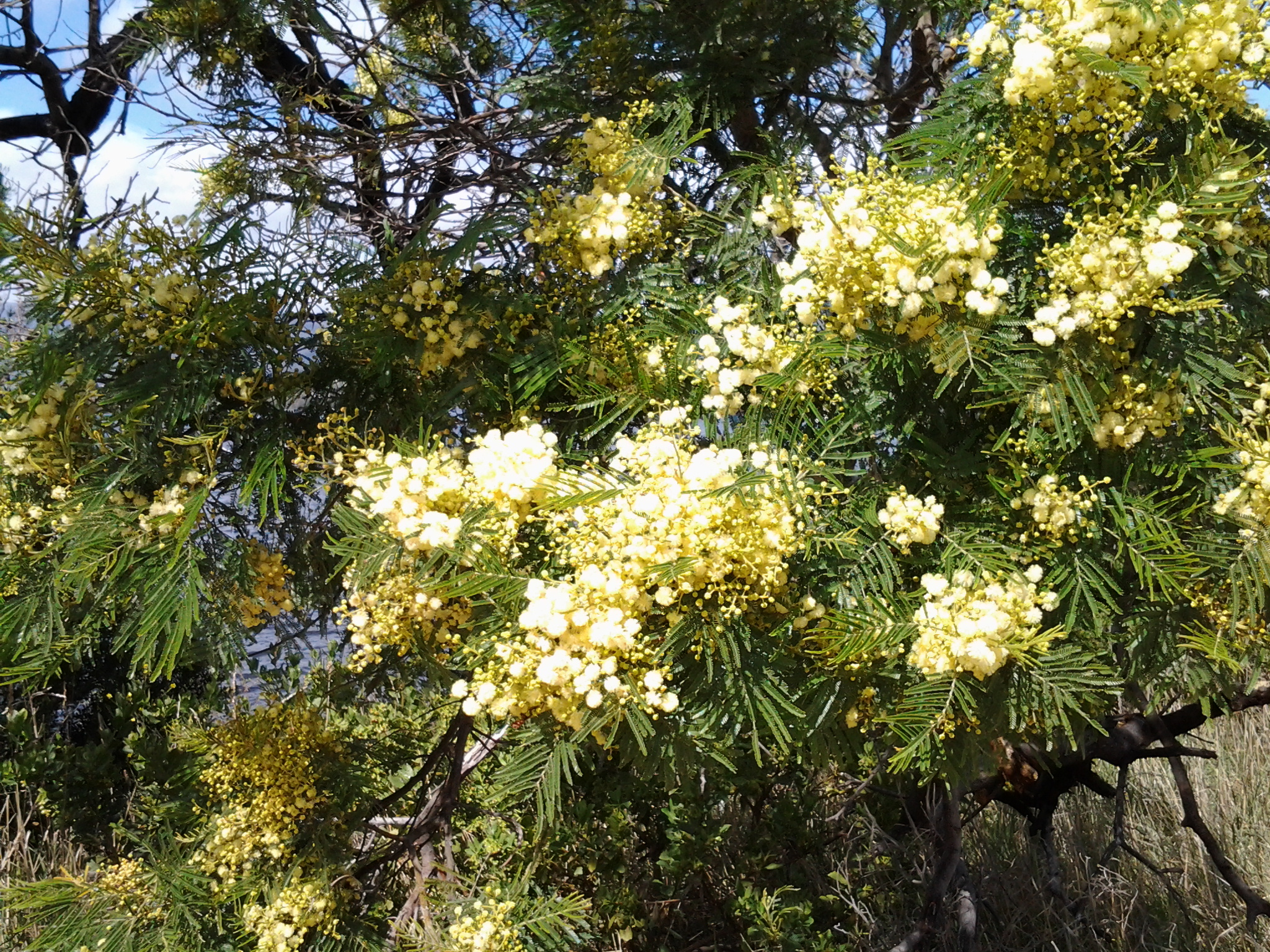
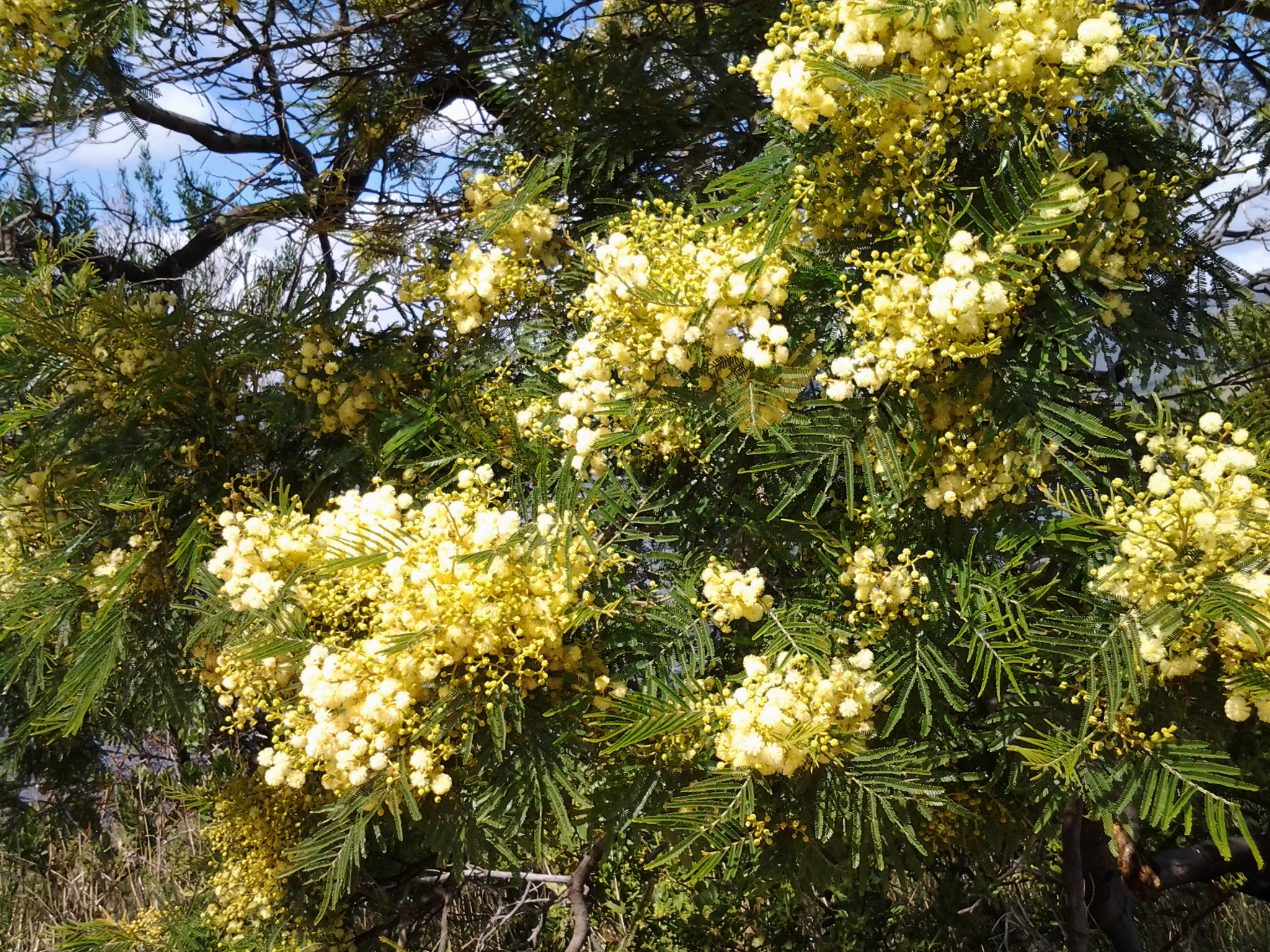
The perfume from the flowering wattle trees was invasive and pervasive in the nicest way.  Please feel free to use any of the photos below as a screen saver. I have.

20141111_103700 20141111_103704 20141111_103708 20141111_103711 20141111_103716

Continuing along the Highway, I walked up an incline until I could turn left on a bitumen roadway. This was blocked by a gate, but there was walking space around this, used by others. I had reached the newest part of Old Beach on its own rounded headland. Once past the gate I turned left towards the Verve Village site office signs and walked on. Through the mesh fence to my right I could see the Verve café, not open. The time was 9.10am.

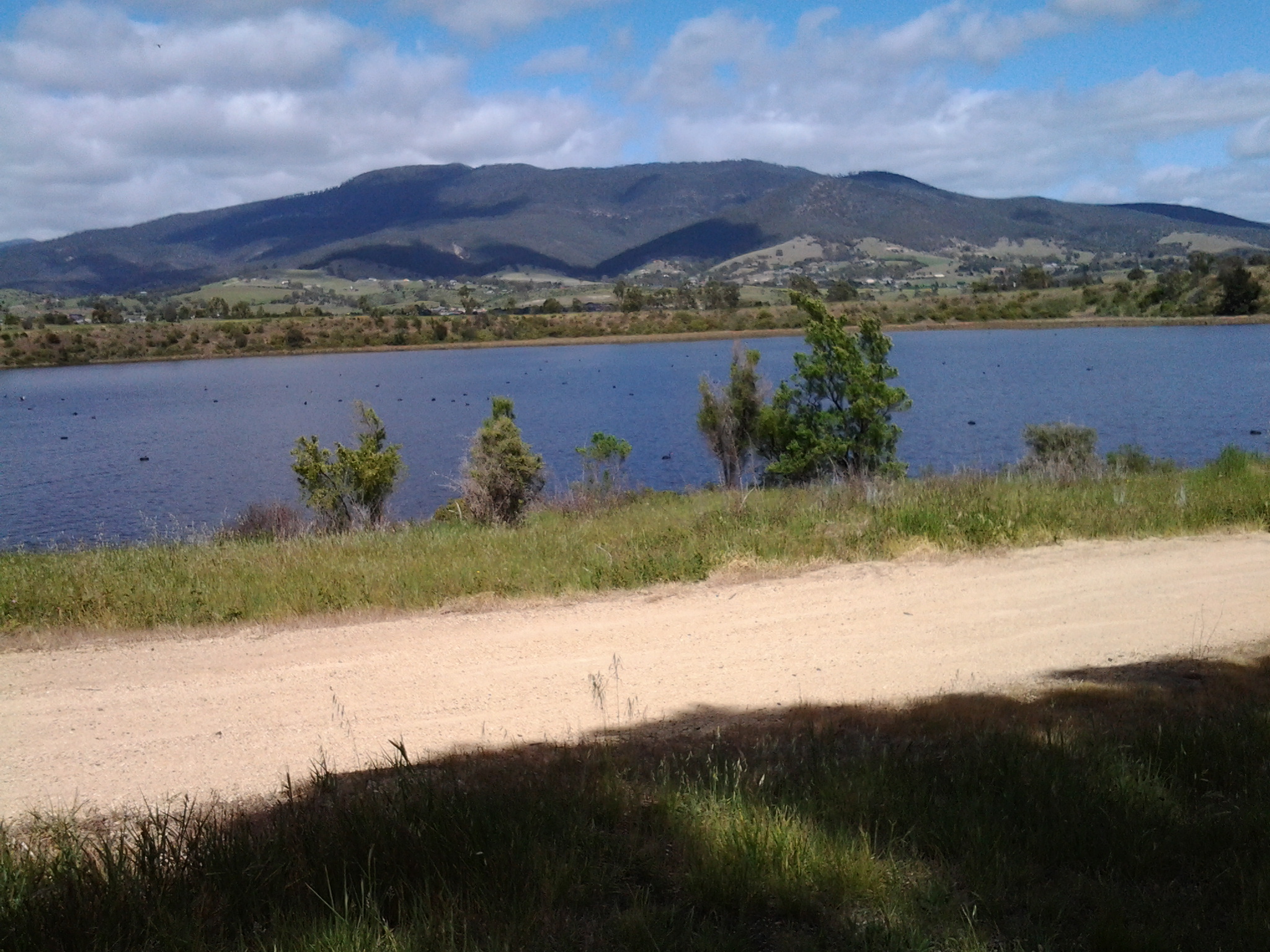
Not long afterwards I was snapping photos of the low mountains and hills across the Derwent River on the western shore. Grandly beautiful in a simple way.

20141111_091212  20141111_091128

This ‘roadway’ eventually ended at a locked gate but again a regularly padded informal path was clearly visible around the obstacle.  I turned left and 100 metres along, a yellow gravel path appeared. The path had no sign but I hoped it was a foreshore trail and followed it. It was.  A trail with almost no signs of animal life except a massive black furry feral cat bounding away and a sole man out for exercise.  Crows carrhh carrhh carrhhed in the distance and overhead. Casuarina trees edged the path and through them the woodland was open and airy. Water lapped onto the shore. Mudstone rocks edged out of the soil on the banks. I enjoyed a flash of colour when I noticed yellow and orange flowering nasturtiums that had escaped from a suburban garden into the bush.

The photos below show a view southwards to the River from the first 100 metres of the path.

20141111_091838 20141111_091955  20141111_092155

The foreshore trail was easy to follow, wide and clear.

20141111_092752

At 9.36am I reached the point where the Derwent River and Gage Cove met.

20141111_093443

The trail curved into the Cove but not before a man-made construction, to the right of the path, seemed to flush deep below and then a dreadful stink followed. I tried not to think what was going on there.

20141111_093606

By 9.42am I was walking up into the suburb having enjoyed watching black swans floating around in the Cove, and a few minutes later I reached a gate which, as usual, I walked around.  I turned left and followed the road from the cul de sac amidst the noise of every neighbourhood dog barking to indicate a stranger was nearby.  Me.

At 9.45am I turned left at the T junction and by 9.48am I reached the intersection of Stanfield Drive with the East Derwent Highway.  Continuing on I could look down in Gage Cove with its coating of red algae or some other red plant.

20141111_100127

So far my morning had gone well and I was enjoying myself. Also, I was pleased that I had finished passing through all parts of the suburb of Old Beach and was ready for the next suburb.

Inspired follower of this blog

Follower of this blog, Ju, emailed me a list of more composers found to be associated with rivers. Ju claimed to be ‘obviously bored’ when undertaking the research. I prefer to see it as inspired by a reading of my posting at https://walkingthederwent.com/2014/11/09/more-music-close-to-the-derwent-river/.   Thanks Ju, I am inspired to continue researching other connections with rivers as I see fit over the period of my walk along the Derwent River. Ju found the following:

  • When Beethoven found refuge in the midst of nature, he jotted down themes inspired by the trill of birds, the trickling of creeks or the rustle of leaves. In one of his notebooks from 1803 was found an outline of a river’s trickling with the additional note: “The greater the river, the more grave the tone.” ‘By the Brook’ (The natural scene of the stream) from Beethoven’s Pastoral Symphony. This slow movement is a beautiful depiction of the delicate nature of… nature itself. It is a wonderful scene of nature with exceptionally musical themes in the pure pastoral air. You can almost breathe the fresh country air! It is more of a description of sensations rather than images. Towards the end, we find the onomatopoeic sounds of birds. Beethoven came back to Mödling during the summer of 1820; he lived in a house called “Christhof” (The “Yard of the Christ”) in Fischergasse (“Fisherman’s street “), near the little river that runs through the village.
  • Robert Schumann : On 27 February 1854 he threw himself into the River Rhine
  • Bedrich Smetana: The Moldau is a musical portrayal of the main river (Moldau is German for Vltava) which runs through the countryside of Bohemia (present day Czechoslovakia). The composer wrote the work following a trip he took down the river as part of a larger cycle of six symphonic poems written between 1874 and 1879 entitled Má Vlast (My Country). Note that each section of the work has its own descriptive title.
  • http://www.mhhe.com/socscience/music/kamien/student/olc/61.htm
  • Shostakovich: The Song of the Great Rivers https://www.youtube.com/watch?v=DZhQrAG3wjc
  • Delius: Summer Night on the River https://www.youtube.com/watch?v=Yvr4l-LufBs
  • Wagner: Das Rheingold (from The Ring Cycle) [The Rhine]
  • Handel: Water Music [Thames]
  • Tobias Picker: Old and Lost Rivers https://www.youtube.com/watch?v=dg2iPEKzqwo
  • Xian Xinghai: Yellow River Concerto https://www.youtube.com/watch?v=zJBU9TyRA80
  • William Blezard: The River http://landofllostcontent.blogspot.com.au/2010/01/william-blezard-river.html
  • Constant Lambert: The Rio Grande (Brazil)
  • Edward Elgar: Severn Suite
  • Sergei Kusevitsky Volga River concert tours of classical music 1910 – 1914
  • Alfred Schnittke was born November 24, 1934 in the city of Engels on the Volga River
  • Song of the Volga Boatmen https://www.youtube.com/watch?v=7nqlBp07j94
  • Duke Ellington: The River Suite – https://www.youtube.com/watch?v=Qg54v9qvDIU&list=PL4F793D8148DC1E2A and Swampy River – https://www.youtube.com/watch?v=tB7aBVPoFAw

Thanks Ju.

Major milestone achieved on 8th stage of my walk along the Derwent River

Originally, I decided to walk the length of Tasmania’s Derwent River without research, foreknowledge of the challenges, and without determining the possible milestones.

With hindsight, actually starting the walk and reaching the Bridgewater Bridge were my two main milestones held subconsciously and not recognised at the time.

In late August this year I started at the southern tip of the South Arm peninsula (Cape Direction) and today I have not only reached the Bridgewater Bridge but crossed it and started the walk back towards the mouth of the Derwent River on the western shore.

I am rather amazed that such a thing is possible; to walk such a distance in this day and age and to do so for pleasure doesn’t seem quite real. And yet it is truly possible, even when my feet feel permanently crippled and I want to crawl. Just one foot after the other and it doesn’t matter how long it takes me to put one foot in front of the other. It only matters that I keep doing it. And then and only then can such milestones as today’s be achieved.  And celebrated, which I am about to do.

I was also mindful that today Australia marked the ANZAC soldiers killed and injured in the World Wars and others more recently with Remembrance ceremonies and a minute’s silence across the nation at 11am (on the 11th day of the 11th month). I have nothing to complain about and only much for which to be grateful. The photo below was taken close to the Bridgewater Bridge on the eastern shore.

20141111_131254

Over the coming days, I will write detailed postings of today’s walks through the suburbs of Old Beach, Herdsmans Cove, Bridgewater and starting into Granton South; the areas that I have passed and the trails that I have followed. For now it is enough to know that I have walked yet again, and the countryside and cityside has simply rolled along beside me.

Today I was away from home for almost 9 hours partly because the walking area was relatively difficult to access and leave from by public transport. Some waiting and bus changes were required. Of these hours, just under 5 hours were involved with walking from the starting point in Old Beach to the start of the Bridge, and 1/2 hour was involved from the Granton end of the Bridgewater causeway until I jumped on a bus somewhere in Granton South. Including crossing the Bridge, I walked approximately 16 kms.  Approximately 14 and1/4 kms on the eastern shore, and 3/4 km on the western shore by the Derwent River. So far I have walked 93 kilometres.

At the end of the 7th stage of my walk I had covered 34kms of the length of the Derwent River. Add another 4.5kms for today’s 8th stage and the total distance from the mouth of the Derwent River to the Bridge on the eastern shore is 38.5 kms as ‘a crow might fly’ more or less straight down the centre of the River (by my reckoning – perhaps others will argue). The length covered today of the Derwent River from the Bridge southwards on the western shore is about 1/2km.

Before each stage of my walks along the Derwent River, I have been somewhat nervous about how everything will go and how my body will hold up, yet there has never been any event or location that has turned out to be a problem. My walks have been ‘smooth sailing’. This morning I was particularly anxious because of the less savoury activities of some of the people who live in Herdsmans Cove and Bridgewater. I was also thinking about Tasmania’s ‘ice’ epidemic and remembering that some addicts can go for 7 or more days without sleep and therefore can be totally irrational. I was hoping not to encounter any unpleasantness and I didn’t. So I am delighted to report that today’s walk was safe, beautiful and calm. Quite marvellous in its simplicity.

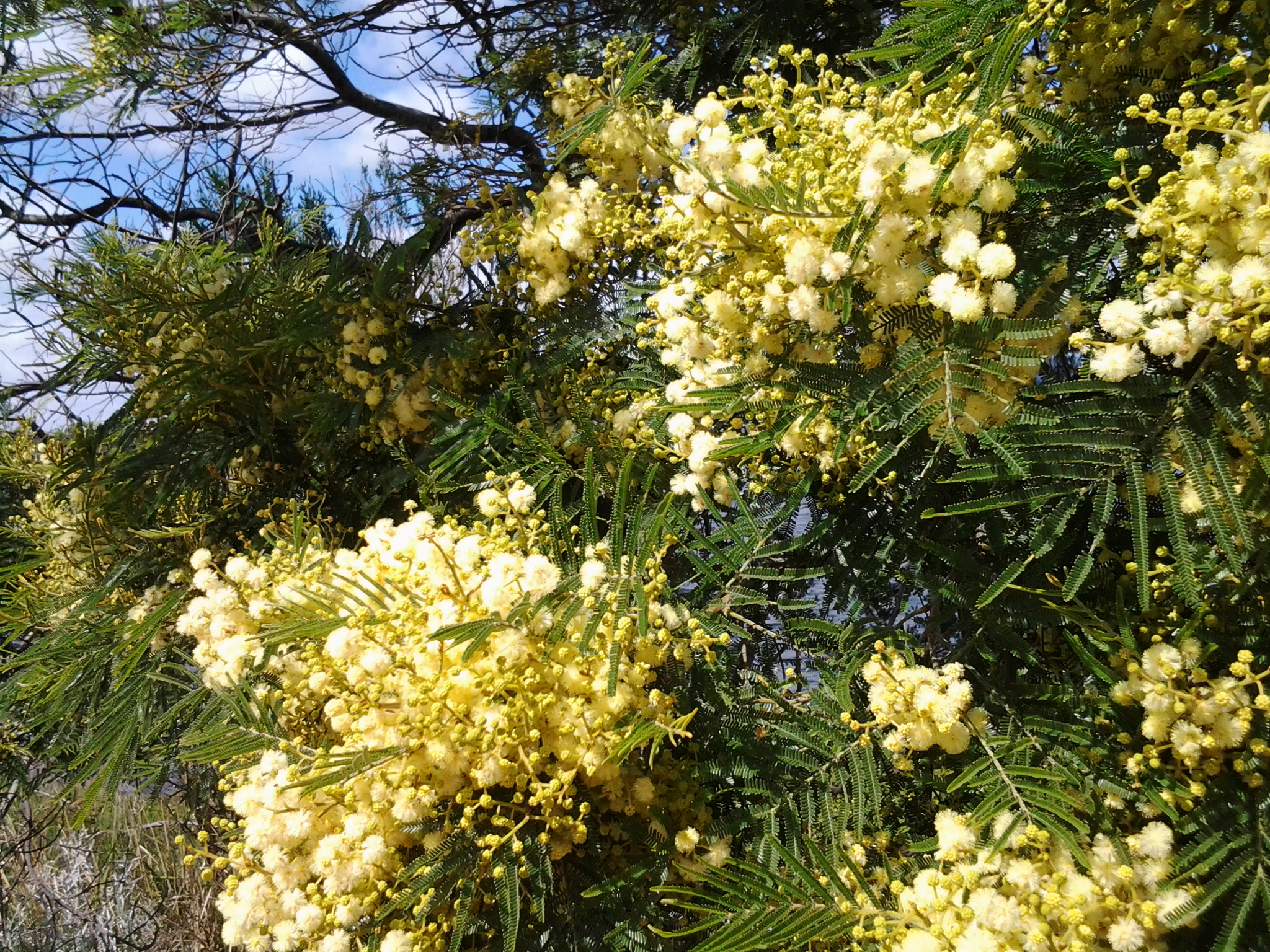
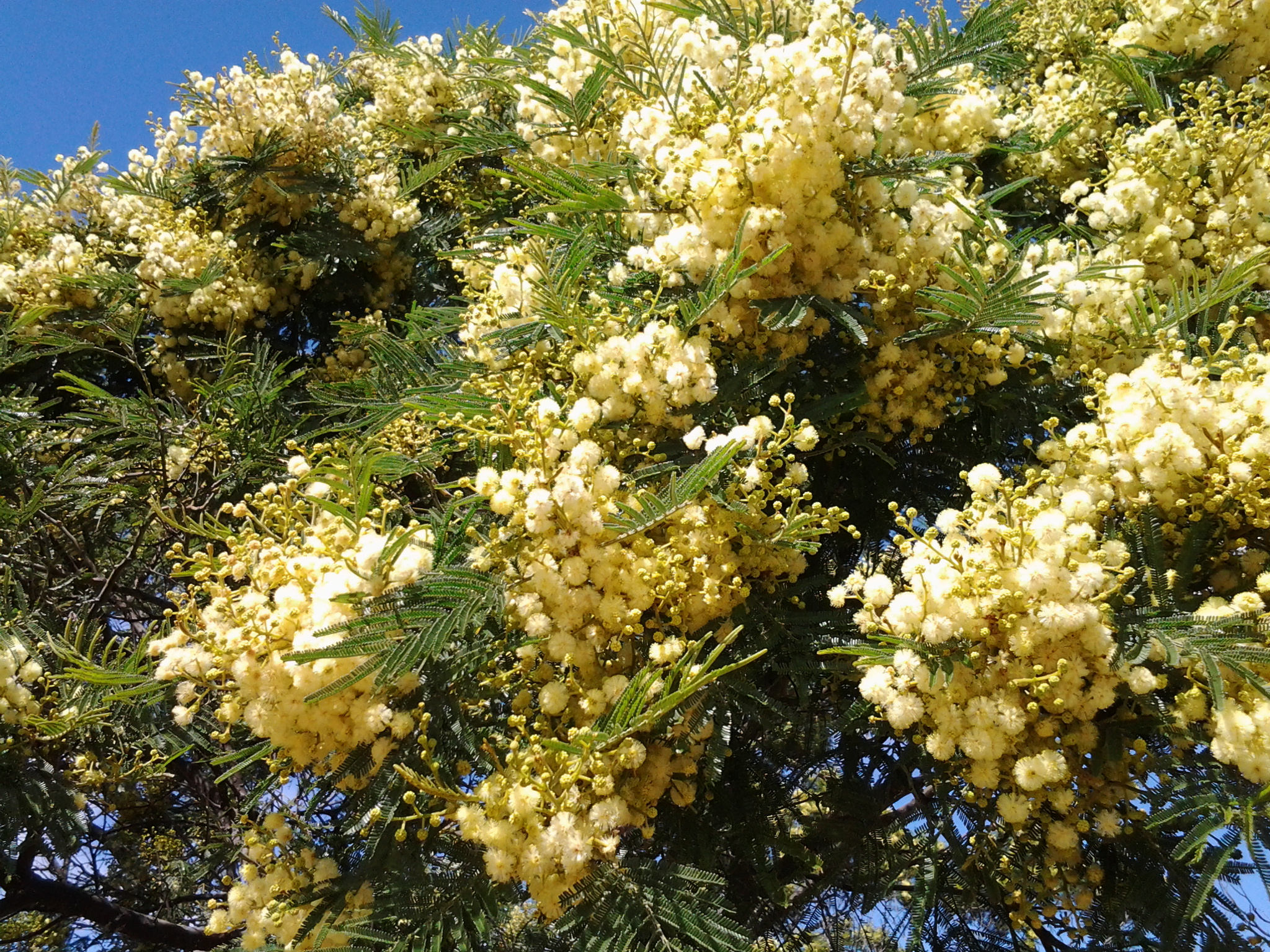
The photo below is a close up of wattle blossom. The seductive heady perfume surrounded me most of the day.

20141111_103716