Category Archives: Derwent River

Yesterday I walked to the source of the Derwent River

Over the past four days I have enjoyed remote, off-the-main-track inland Tasmania from Clark Dam at Butlers Gorge, along the edge of Lake King William to the town ship of Derwent Bridge, and then further north to where the Derwent River commences out of the gates of St Clair Lagoon.  I continued further north also to the Weir which controls water into St Clair Lagoon from the Derwent Basin (which is kept filled with water flowing from Lake St Clair).  Dozens of posts with all the details of the walks, and accompanied by some grand photos, will be forthcoming over the coming days.

This latest walk means I have walked most of the length of the Derwent River from the mouth to the source.  There are only a few gaps to fill if I have the courage (or a moment perhaps of insanity because of the level of difficulty I believe is involved) in the coming weeks.

For the moment, I thought a few photos would be in order to whet your appetite for more.

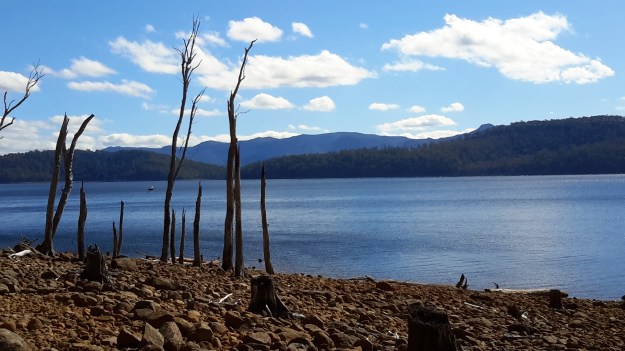
The photo below shows one aspect of a view across Lake King William in the late afternoon.

20160102_170531.jpg

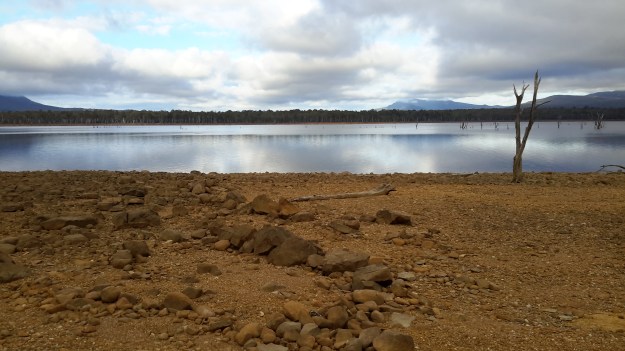
The photo below looks across Lake King William early in the morning.

20160103_072935.jpg

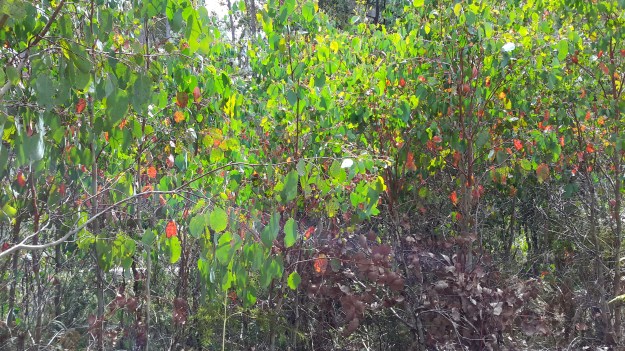
Sun passing through gum leaves.

20160103_110629.jpg

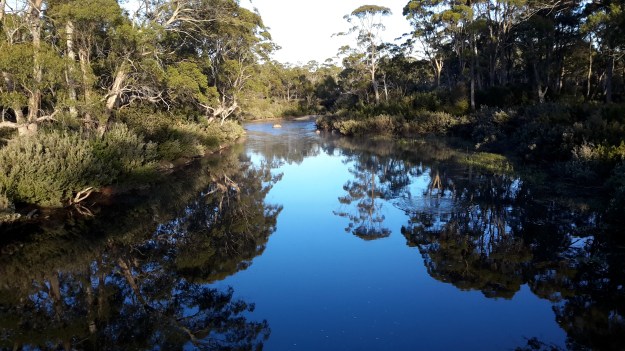
The Derwent River early morning near Derwent Bridge.

20160104_064805.jpg

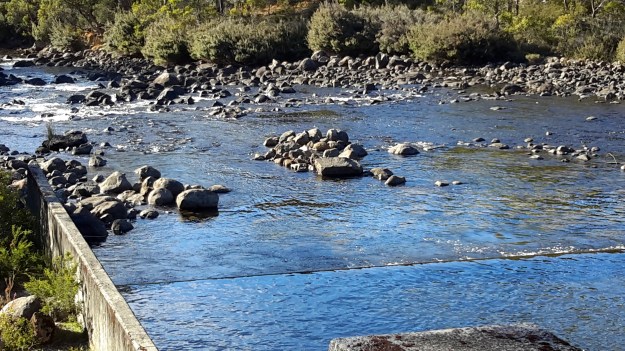
The source of the Derwent River – the water as it leaves St Clair Lagoon. I was standing on the dam when I took the second photo, and watching the water run away eventually to pass New Norfolk then Hobart and finally exit into Storm Bay before dispersing into the wide ocean.  The whole experience was quite marvellous.  The river was fresh and alive!  And so was I!

20160104_075644 20160104_081109


Season’s greetings

When I am in Hobart on Christmas Day, as I will be this year, I make a point of finding time to walk along Bellerive Beach which forms one border with the Derwent River.   I love the bonhomie of people who walk there that day. Good spirits abound. I can almost hear their bodies groaning from eating too much Christmas food. Many are happily dragged onwards by joyful dogs that are delighted to be out in the fresh air. All of this is a wonderful spirit lifter – the goodwill of people, their gambolling dogs, the grand Mount Wellington in view over the water, and the lapping sound and salty smell of the blue river.

For some people Christmas is a happy time, for others it is surrounded by sadness, and for many people Christmas Eve or Christmas Day is a rush of stressful events.  Of course a person’s level of interest and engagement with Christmassy activities depends on religious persuasion and so some people are never involved in the festivities.  But if Christmas is your thing, then I hope you have rituals with family and friends that relax you and, if not, then I urge you to find a way to be calm.  All in all, I wish everyone happiness during the Christmas season.

Help is on its way

Tasmania is fortunate to have excellent emergency services so that when you need help, ambulances, fire trucks, police, and special emergency services (SES) come to your aid.  Sometimes this involves boats and sometimes this involves helicopters. In a local newspaper article earlier this week, the Westpac Rescue helicopter collected people from five locations. Two of these are connected with the Derwent River.

One person fell down a cliff at Pearsons Point, the location which,in my estimation represents the western mouth of the Derwent.  Long term readers of this blog may recall my photographs from this location – high up and looking out and across to Bruny Island. When I walked there, I remember making the decision not to try and clamber down the cliff.  Reading this news story now makes me glad that I resisted the opportunity to get closer to the water.

The article reported another person was rescued from somewhere near Lake St Clair, and the source of the Derwent River is that Lake.

It does not matter where you are, if you can signal for help (don’t forget your Personal Locator Beacon) then Tasmania’s rescue services will reach you.

Sport and the Derwent River

A couple of weeks ago an international Test cricket match between Australia and the West Indies was staged at the Blundstone Arena in Bellerive. Australian cricket tragics (but probably not those from the West Indies) may enjoy these photos. When you stand in the open or sit in the grandstands, fabulous views of the Derwent appear before you and distract.  Cricket Tasmania’s website  shows a glorious aerial shot of the Arena with the Derwent River beyond and mysterious Mount Wellington looming behind the city.

Last Friday night, I was on the Hobart Domain at the Hobart tennis courts. First I watched retired Tasmanian tennis player Richard Fromberg (he reached about number 20 in the world when he was playing on the world circuit) play an up and coming Tasmanian player, Harry Bourchier, who hopes to break into the Australian Open Grand Slam in January.  Fromberg is circled below watching a later match.

Richard Fromberg.jpg

A fun doubles game followed with two 7 year olds (one of which was Cruz Hewitt, Lleyton Hewitt’s son) teaming up with their adult coaches to play a short game.  Those extraordinary 7 year olds stood firmly at the base line and served their balls over the net, despite the net being a great distance off and higher than they were tall. The night finished with ex World number 1 tennis player Lleyton Hewitt playing an exhibition match against Australian Sam Groth who currently has the fastest serve in the world.  In the photo below, Groth wears red at the left of the net and Hewitt wears blacks to the right.

2015-12-18 20.43.38 Sam Groth in red and Lleyton Hewitt in black.jpg

I was thrilled by the hard and fast hitting.  A good game!

Beforehand I wandered to one end of the main court and looked out through an overcast evening, to the Derwent River.

2015-12-18 18.13.43

On occasions when the sky is clear and blue, the Derwent River sparkles.  Getty Images has one shot I particularly like.  The blue tennis court in the foreground seems separated from the Derwent River by a giant cruise ship at anchor in port.

Information additional to yesterday’s posting

I am grateful for the extensive comment provided by one blog follower, which puts my last posting into perspective.  I recommend you go to the website and read the information.  I will be interested to read any comments offered by others.

Possession of aboriginal lands by European settlers and the government of Van Diemen’s Land

John Wadsley’s Brighton, Central Highlands, Derwent Valley and Southern Midlands Councils Joint Land Use Planning Initiative – Stage 2 Heritage Management Plan of July 2010 reports: ‘After the initial period of European settlement from 1803, a large influx of free settlers and pastoralists in the 1820s saw a major expansion of European influence and land grants in the central and midlands areas of Tasmania. Settlement along the Derwent, Jordan, Clyde and Ouse rivers forced local Aboriginal bands from traditional hunting grounds and increased tension between settlers and tribal groups. Conflicts flared in a number of areas, with local farmers and vigilantes attacking Aborigines and retaliation by tribal groups attacking road gangs, stockmen and homesteads.

In 1828 Governor Arthur declared martial law against Aborigines after failed attempts to divide Aboriginal lands from the “settled districts” to reduce the number of attacks by tribal groups. By 1830 the number and frequency of attacks by and on had reached such a level that Arthur decided to launch a full scale military operation against the indigenous population in the southern Central Highlands, southern Midlands and south east areas. This became the so-called “Black Line” which was intended to round up Aborigines and move them from the settled districts. By 1831 some hundreds of Aborigines and settlers had been killed over land occupation and dispossession of traditional tribal lands. The Aboriginal population in the Midlands and Central Highlands was by now very small, probably less than 100. Many traditional hunting areas had been cleared of tribal groups allowing further expansion of pastoral activities. The so called “conciliation” process under George Robinson eventually saw the remaining Aboriginals moved off their traditional lands to Flinders Island by 1834, and then to Oyster Cove in 1847.’

Hamilton and Ouse in Tasmania

These two historic towns straddle the Lyell Highway and both are situated a distance from the Derwent River.  Private farms fill the distance. Direct access to the River can only be achieved by driving approximately 15 kms when leaving Hamilton, or when driving from Ouse, the River or Meadowbank Lake can be reached from two directions; one approximately 7 and the other approximately 10 kms away.

Hamilton is located approximately 4kms ‘as the crow flies’ to the east of Meadowbank Lake.  The Clyde River, which passes through Hamilton empties into Meadowbank Lake (and it once flowed directly into the Derwent River before the Meadowbank Dam was built in 1967).  Tasmania for Everyone claims ‘Hamilton had its origins at a time when early European settlement of Van Diemen’s Land (Tasmania) had progressed from Hobart up the Derwent Valley. The first settlers arrived here shortly after New Norfolk was settled in 1807. A ford across the “Fat Doe River” probably led to the first settlement of the area then known as Sorell Plains, with the village first named Macquarie’s Town, and later, Lower Clyde.By 1828 there were a few weatherboard and sod cottages on the banks of the Clyde, whilst by the 1830s a visitor noted there were some thirty sly grog shops as one entered the town. The name Hamilton had already been suggested for the settlement sometime in 1825 when, during a visit, Lt. Governor Arthur asked if Bothwell would not be suitable, being a Scot himself and dining with the mainly Scottish settlers. The “Fat Doe River” was renamed the Clyde and Hamilton and Bothwell chosen as names for the new settlements, both names recalling towns on the lower and upper Clyde in Scotland.
Occupying a strategic location in the development of roads and agriculture, Hamilton became the focal point of the transport of produce into and out of the district.  By 1832 there were sixty persons living in the settlement and surrounding landholders successfully petitioned for a police establishment as protection from marauding bushrangers and a spate of robberies.
By 1835 the district population had zoomed to 779, including 309 convicts and by 1837 the Police establishment had eleven petty constables and a flagellator (for whipping punishment).  With cheap convict labour it was during this period that many of the town’s buildings (which still stand today) and bridges were constructed.
By 1844 Hamilton was a bustling town, with two breweries, six or seven Inns, a blacksmith, stone quarries, mills, three agricultural implement makers and a large convict probation station; it held its own Races and Hunts, indeed development was so promising that the town was marked out as a major country town, in the style of an English town at the time, with squares, an esplanade, a Circus and Municipal Reserve.
A drive up onto the Hamilton Plains shows the roads laid out, and the decaying, dry stone walls are a reminder of the failed attempt by the mainly Irish settlers to farm the rich volcanic but dry soils of the plains. Nevertheless, Hamilton remained a bustling country town throughout the remainder of the 19th century, with the population peaking at 400 in 1881 and developments like the Langloh Coal mine to the northwest of the town in the late 1930s ensured its importance as a major rural centre.
Increasing mechanisation and improved road transport effectively put an end to Hamilton’s growth. Whilst sadly these factors led to Hamilton’s decay and ultimate demolition of some notable buildings, many fine examples remain in the streetscape having an ambience redolent of our colonial history.’ 

Hamilton is located on the far side of the hill in the photo below. The water is part of Meadowbank Lake.

20151028_114436.jpg

In Chantale’s photo below, the Clyde River is running into Meadowbank Lake. At the top centre of the photo you can see a few houses and these form part of the town of Hamilton.

IMG_3904

Ouse (pronounced ooze) is located approximately 3 kms ‘as the crow flies’ to the east of the Derwent River between Cluny Dam and the north western end of Meadowbank Lake. Tasmania for Everyone claims Ouse is ‘a small rural Central Highlands town on the Lyell Highway, situated on the junction with the Victoria Valley Road and on the banks of the Ouse River. Ouse is the settlement where convicts James Goodwin and Thomas Connolly broke out of the South West Wilderness four weeks after their escape from Sarah Island. Ouse Post Office opened on 1 October 1835.’

In Michelle’s photo below you will need to imagine that Ouse is located over the low hills in the distance away from the Derwent River.

PA280084Top of Meadowbank Lane and then Derwent again.JPG

John Wadsley’s Brighton, Central Highlands, Derwent Valley and Southern Midlands Councils Joint Land Use Planning Initiative – Stage 2 Heritage Management Plan of July 2010 provides additional historical information concerning the building of bridges to enable expansion and ease transport, the significance of convict labour in settling the Valley, and the growth of farming, the development of industries, and the establishment of hydro power generating facilities.

Catherine Nicholson’s Highland Lakes Settlement Strategy of December 2009 offers further information about the history of settlement in the Derwent Valley.

What I notice, in all the histories of the Derwent Valley that I have read, is that attention is seldom given to the Derwent River rather it is focused on the rivers which fed into the Derwent, and also on the central highland lakes.  The search for fertile soil in which to grow wheat and other crops, and for land offering suitable pastures for sheep and cattle, was of paramount importance.

The photo below shows me in Hamilton. Behind me, the Clyde River (which flows into Meadowbank Lake) is located at the bottom of the hill and edges a delightful park which suits picnicking. I am sort of smiling but I was hot and bothered after a delightful day’s walk elsewhere.

20151031_140708.jpg

Aboriginal history associated with Meadowbank Lake

Hydro Tasmania acknowledges aboriginal history was apparent in a cave that is now beneath the waters of Meadowbank Lake in central Tasmania.

In 1977, J Stockton wrote a paper A Tasmanian painting site which adds to the information provided by the Hydro.  The paper provides some background on the submerged cave and indicates that other caves exist with similar markings and ochre residues.

I do not know where these caves are and I wouldn’t want to visit and disturb them even if I knew their location.  Therefore, Chantale’s photo below, showing the north western end of Meadowbank Lake as it receives Derwent River water travelling downstream from Cluny Dam, is simply a picture of one part of the Derwent River system and it is not intended to relate to the location of the caves. I have included it simply to remind readers how part of Tasmania appears these days; that is, with all the signs of European settlement and land control.

IMG_3897Top of Meadowbank Lake.JPG

Meadowbank Lake

IMG_3898Dunrobin bridge

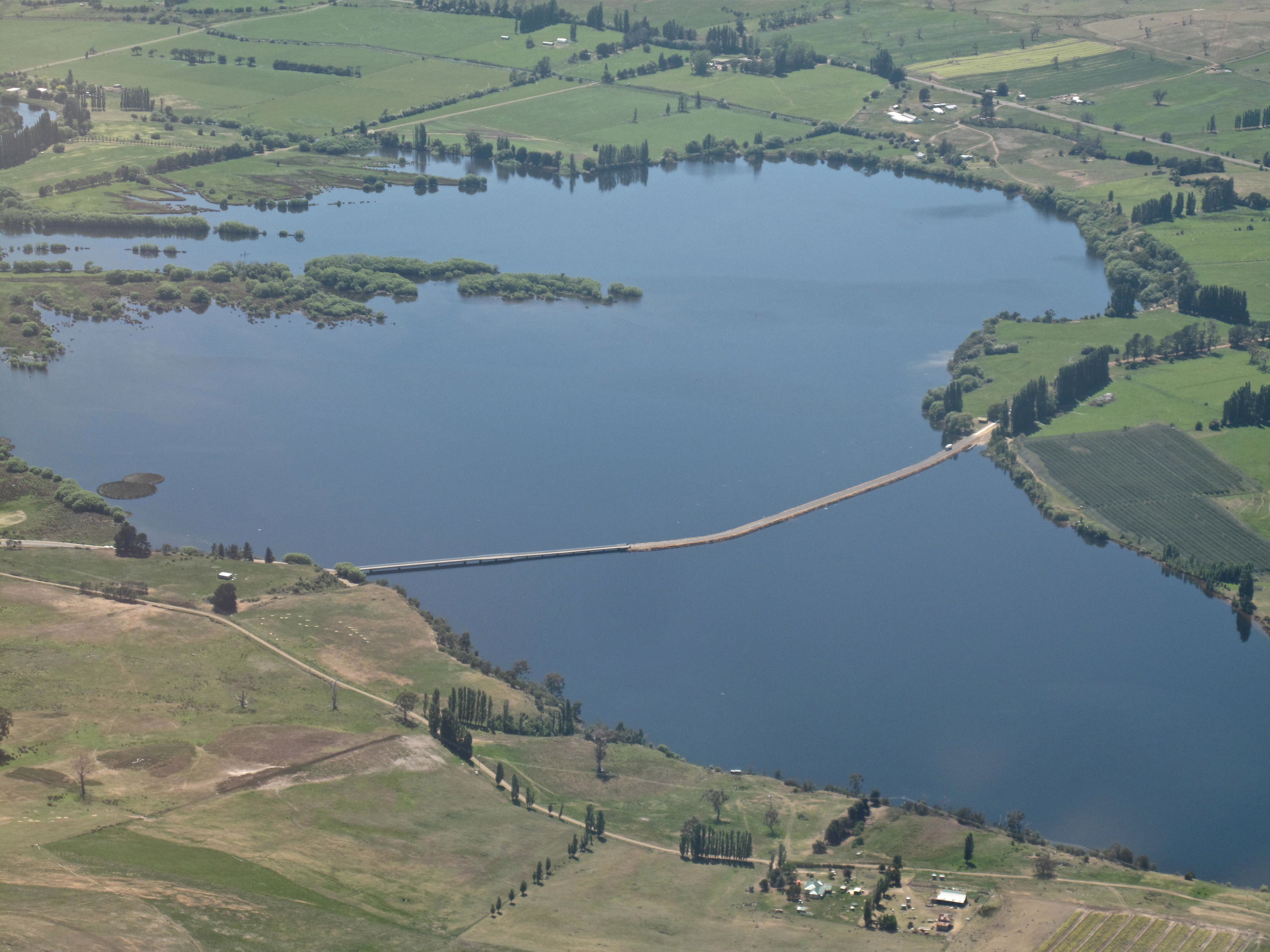
Chantale’s photo above shows the north western end (the furthest end from Hobart) of Meadowbank Lake. You can see the trail of Dunrobin Bridge strung across.
Collecting historical information about Meadowbank is not easy, however the information  I have located has added to my store of knowledge.

According to Environmental Flows for the Lower Derwent River Final Report to DPIWE February 2002 Freshwater Systems, Meadowbank Dam is located approximately 107km upstream of the river mouth.  This report divides the lower Derwent into ‘two major sections: 1. The lower River Derwent – the freshwater river between Meadowbank Dam and New Norfolk; and 2. The upper Derwent estuary – the estuary between New Norfolk (in the vicinity of the upstream tidal limit) and Bridgewater.’

A brochure providing information about access to Meadowbank Lake for anglers includes details about Recreational Fishery Management (Meadowbank Lake is managed by the Inland Fisheries Service as a Family Fishery and is open to angling all year round. Regular stocking with brown trout, rainbow trout and trophy sized Atlantic salmon maintains the quality of the angling.); Native Fish Management (The short-finned eel (Anguilla Australis) is stocked upstream of the dam wall. The blackfish (Gadopsis marmoratus), which is native to northern Tasmanian rivers, has been introduced into the Derwent system and may be encountered in the lake.); and Pest Fish Management (Meadowbank Lake has populations of the pest fish species, redfin perch (Perca fluviatilis) and tench (Tinca tinca). If either of these species are caught, anglers are asked to humanely kill the captured fish and dispose of appropriately.)

Discover Tasmania provides information which encourages access to and usage of the Lake and its shores.

Wikipedia gives background information about the Power Station.

The September 2013 LAKE MEADOWBANK PLANNING PROJECT BACKGROUND REPORT  prepared for the Central Highlands Council in partnership with Hydro Tasmania and the Department of Economic Development, Tourism and the Arts includes panoramic photographs of the Lake and explanations of many of its aspects.

Hydro Tasmania provides information about Lake- side facilities and also about changing water levels.

A little history associated with Meadowbank Farm since the 1970s can be read at this site.

IMG_3908

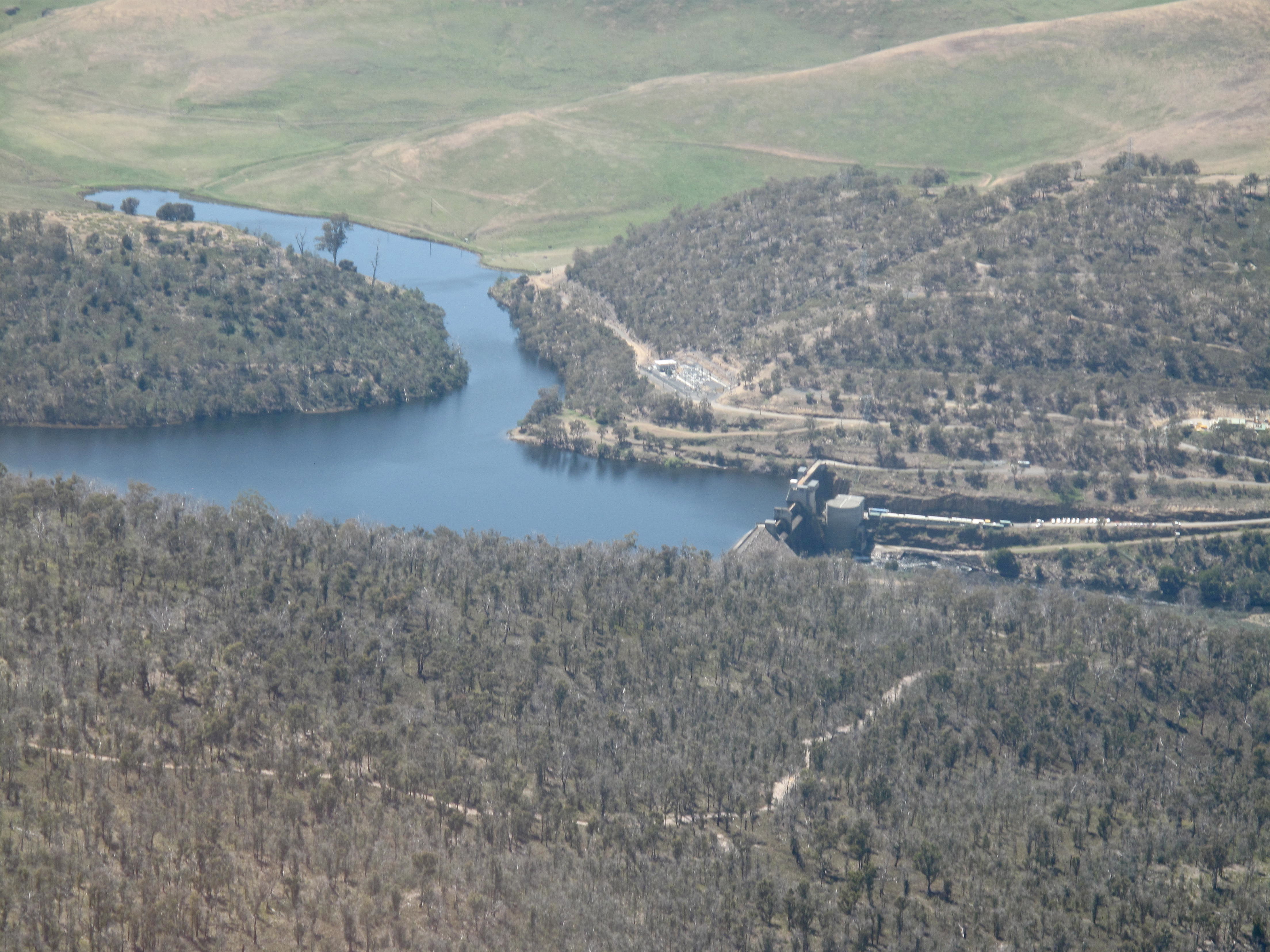
Perched between treed hills sits Meadow Bank dam, roughly 15 kms downstream from Meadowbank Lake’s far western end.   Chantale’s photo shows the start of that water catchment behind the dam wall and the Meadowbank Power Station nestled at its feet.

The inspirers

Congratulations to all the bloggers who celebrate the wonders of our world.  I hope those listed below may inspire my blog followers to be excited by the opportunities to see beautiful landscapes whether close to home or thousands of miles away.

In particular, I am inspired by all those who present Tasmania with glorious photographs and introductions to the geographical nooks and crannies that walkers, cyclists, rowers, kayakers, skiers, sailors and drivers find.  It has been my privilege this year to discover new sites, whose owners love what they find and then share it with the world.  Amongst these, you can find informative and stunningly beautiful photos of Tasmania’s Derwent River.

Here are some of my favourite blogs.

  • Showcasing Tasmania is No Visible Means
  • Traverse our life highlights more Tasmanian beauties by new arrivals to this State
  • This Amazing Planet presents photographs Tasmania, mainland Australia and more broadly overseas
  • The blog, Tasmanian Beaches is being written by a person who plans to find every Tasmanian beach by walking, cycling, sailing or kayaking.
  • For mainland Australia vistas, I love those posted by Solo Hiker. From Home to Roam
  • Life:Kitt shows me colourful photos of cities on mainland Australia
  • The couple of guys who write Everyday Adventures transport me to places in Australia and around the world, give me a new perspective on the familiar and encourage me to seek out more of the unfamiliar.

In addition, the photographs and written content of many overseas bloggers uplift me.  Some examples:

A few bloggers and I have developed a wonderful mutual adoration society because we enjoy what each of us shows in our blogs.  In particular, I love the blogs of

Perhaps you have found blogsites that inspire you. If you think they may interest me or other bloggers then please add the details in a comment to this posting.

MONA edged on the Derwent continues to surprise

I have written many posts featuring MONA (Museum of New and Old Art) – because the building and surrounds are stunningly beautiful and the museum contents and activity options provide a unique experience.  I am not surprised when Lonely Planet approves a visit and hundreds of thousands of tourists vote with their feet and enjoy a day soaking in all that MONA has to offer.

Now new plans have been drawn up to expand and develop this Tasmanian icon.  A recent Mercury newspaper provides photos and information.

Once again the museum environment will focus our attention on the glorious Derwent River as the building extensions reshape our vision of that part of the Derwent River’s edge.  Congratulations to all involved.

Fields of Dreams

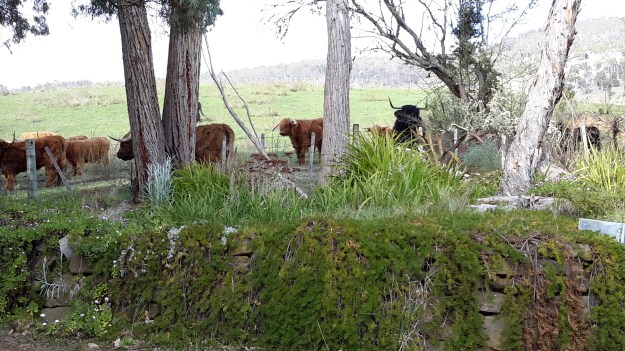
Under the subheading of Horns of Plenty in a local newspaper article, I read about the farmer of the Highland Cattle which I photographed during my walk from New Norfolk to Bushy Park.  By reading the article, I learnt how enterprising Bev Lynd has been, and how useful these cattle are to control the inroads of overwhelming vegetation.  I thought you might be interested in this information.

20150918_090330.jpg 20150918_090340.jpg

My original post can be read at Woolly Long Horned Cattle.

Getting perspective

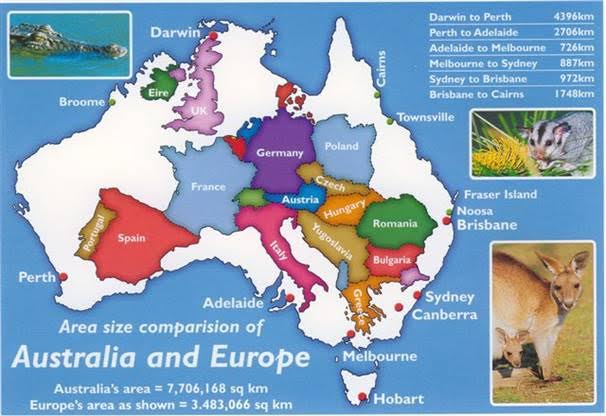
I discovered the following graphic on the Australian Native T-Shirts website.

For readers who do not know Australia well, note Hobart is located at the southern end of the island state of Tasmania at the bottom of the country.  Slightly east of Hobart is where the Derwent River flows out into the sea.  The source of the Derwent River is located north west of Hobart roughly in the centre of Tasmania.

Map of Aust with Europe over it.jpg

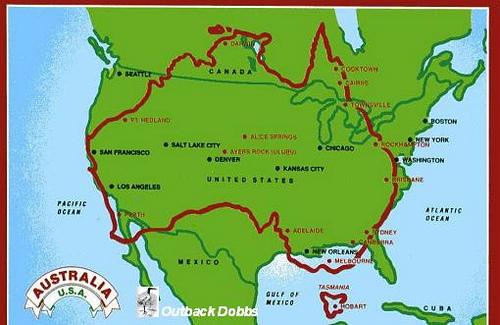
A comparison map showing Australia and the United States of America is located at the site ‘On Walkabout’.

AustraliavUSA comparison map.jpg

Finally, I found a most amusing map with multiple overlays of Australia across the world.

Australia-over-the-world

Seeing such images certainly helps me to understand the scale of our nations.

Gretna to Lake Repulse Dam – an aerial perspective: 3 of 3

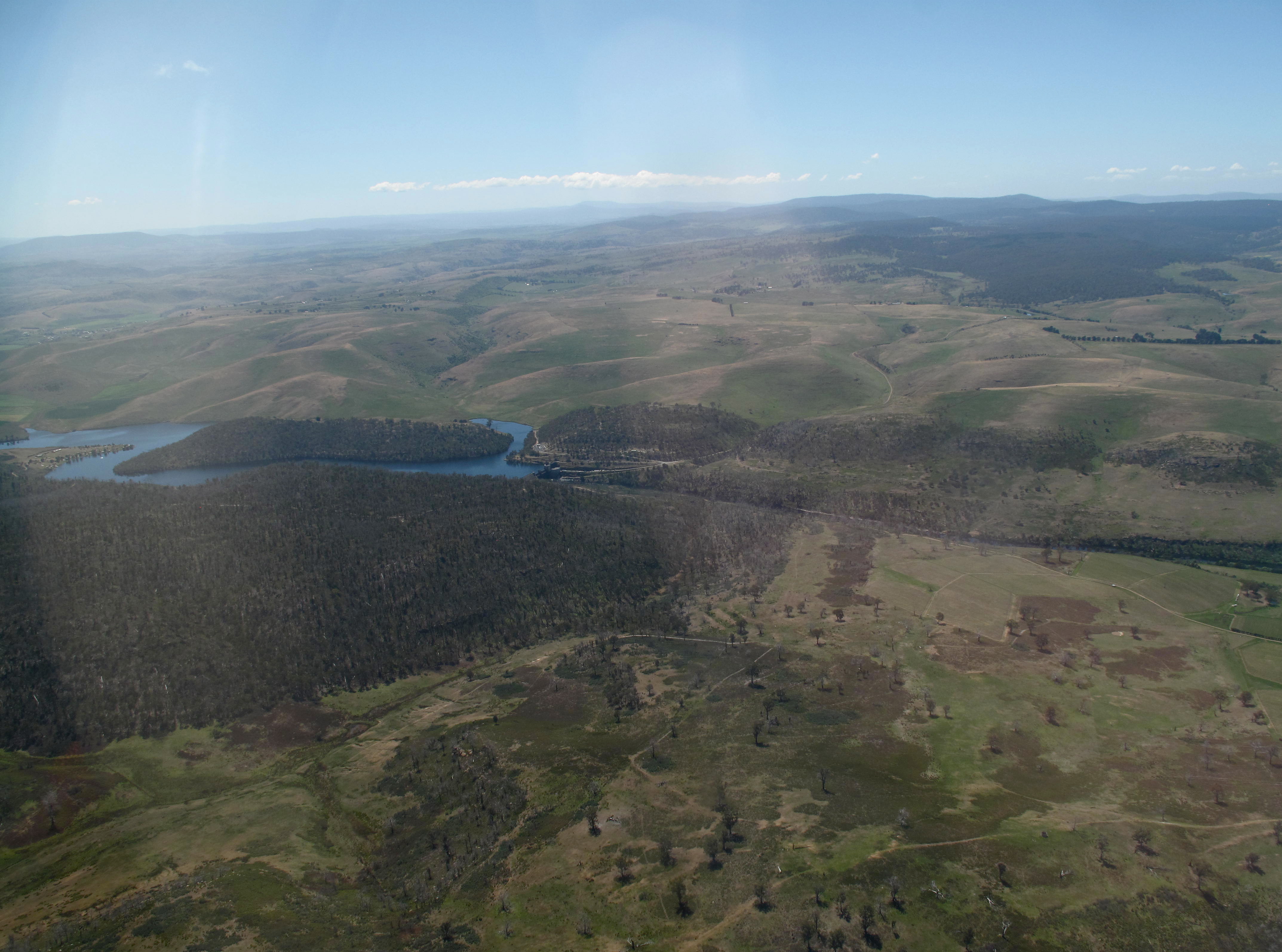
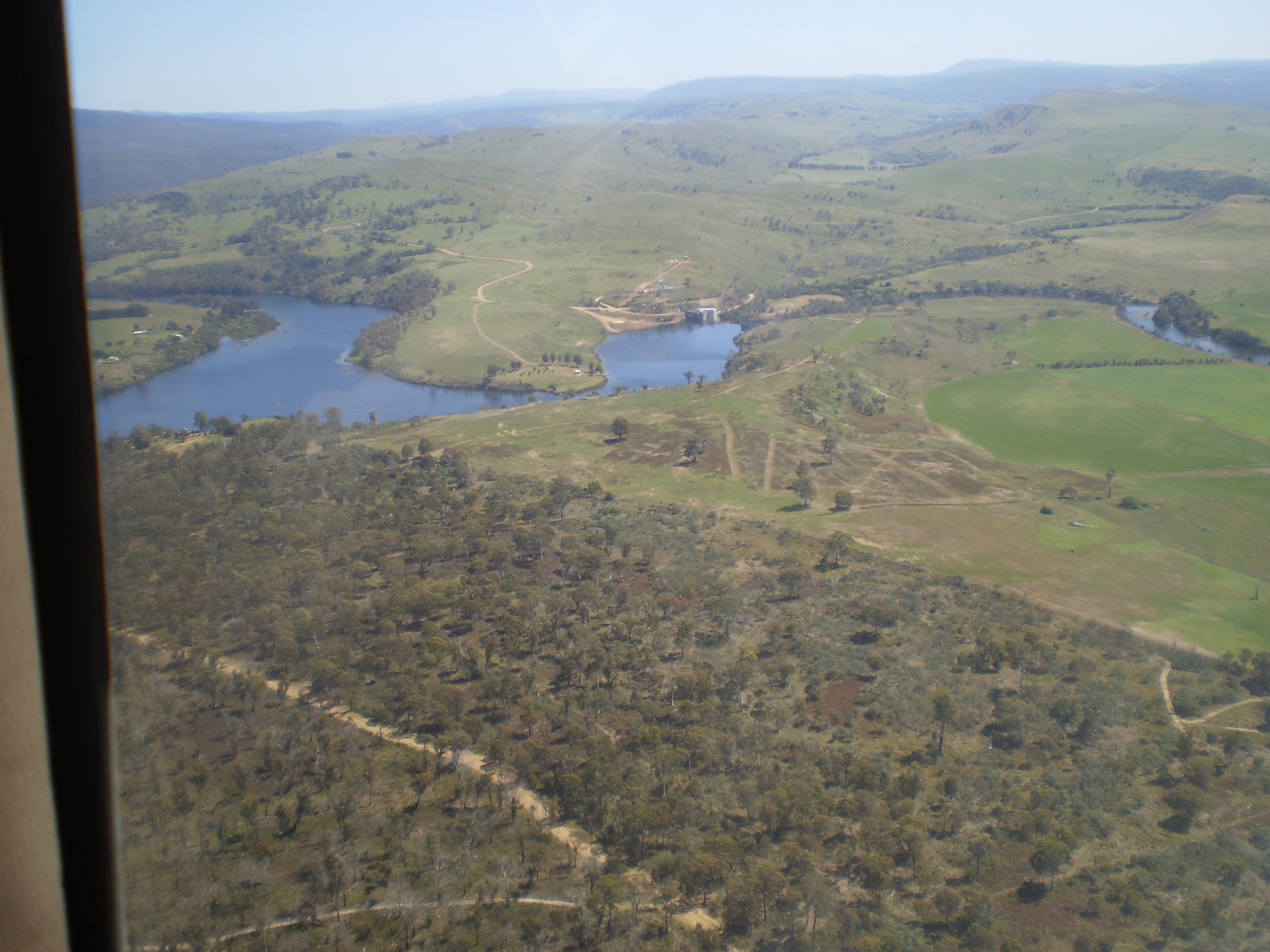
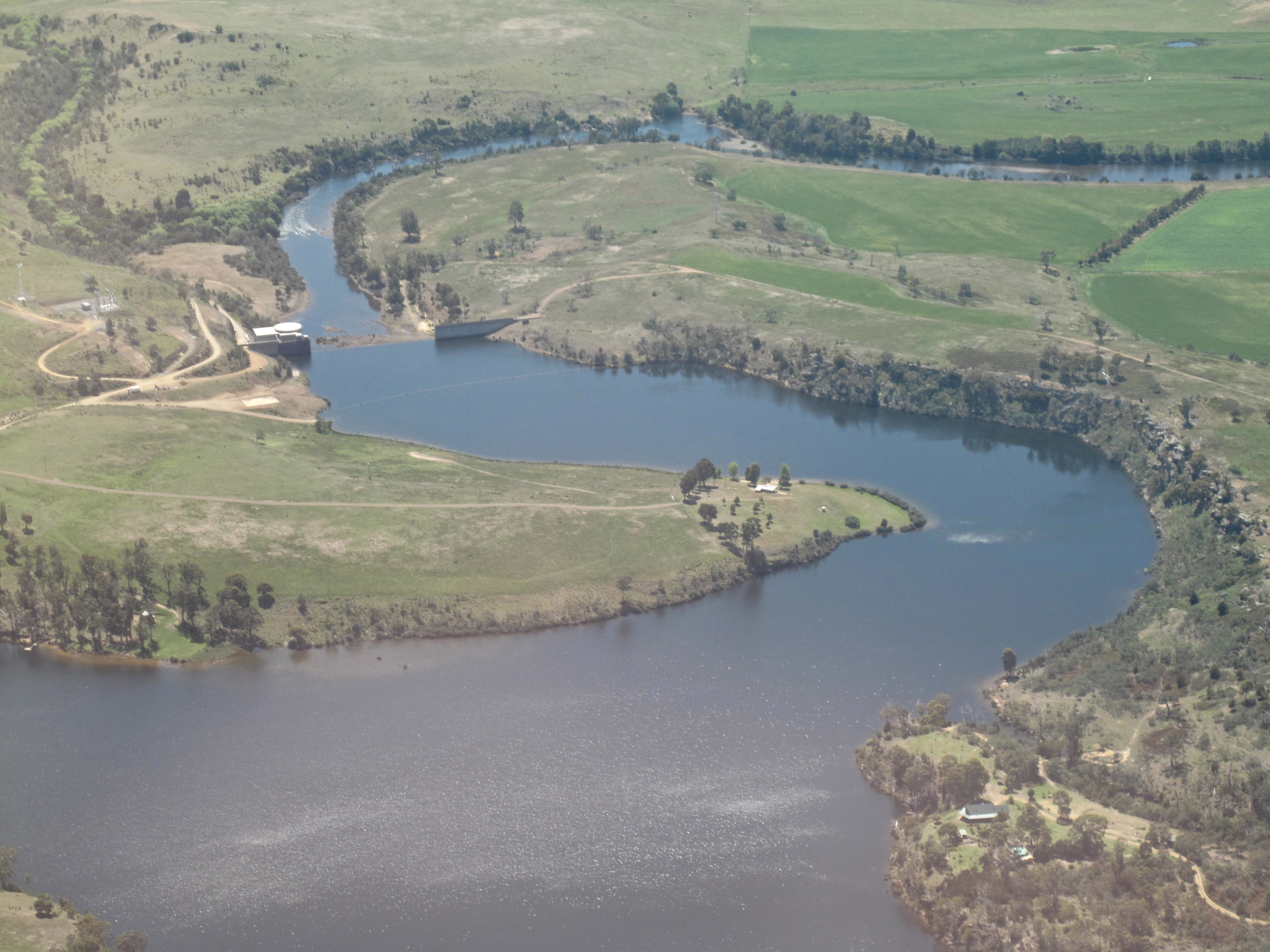
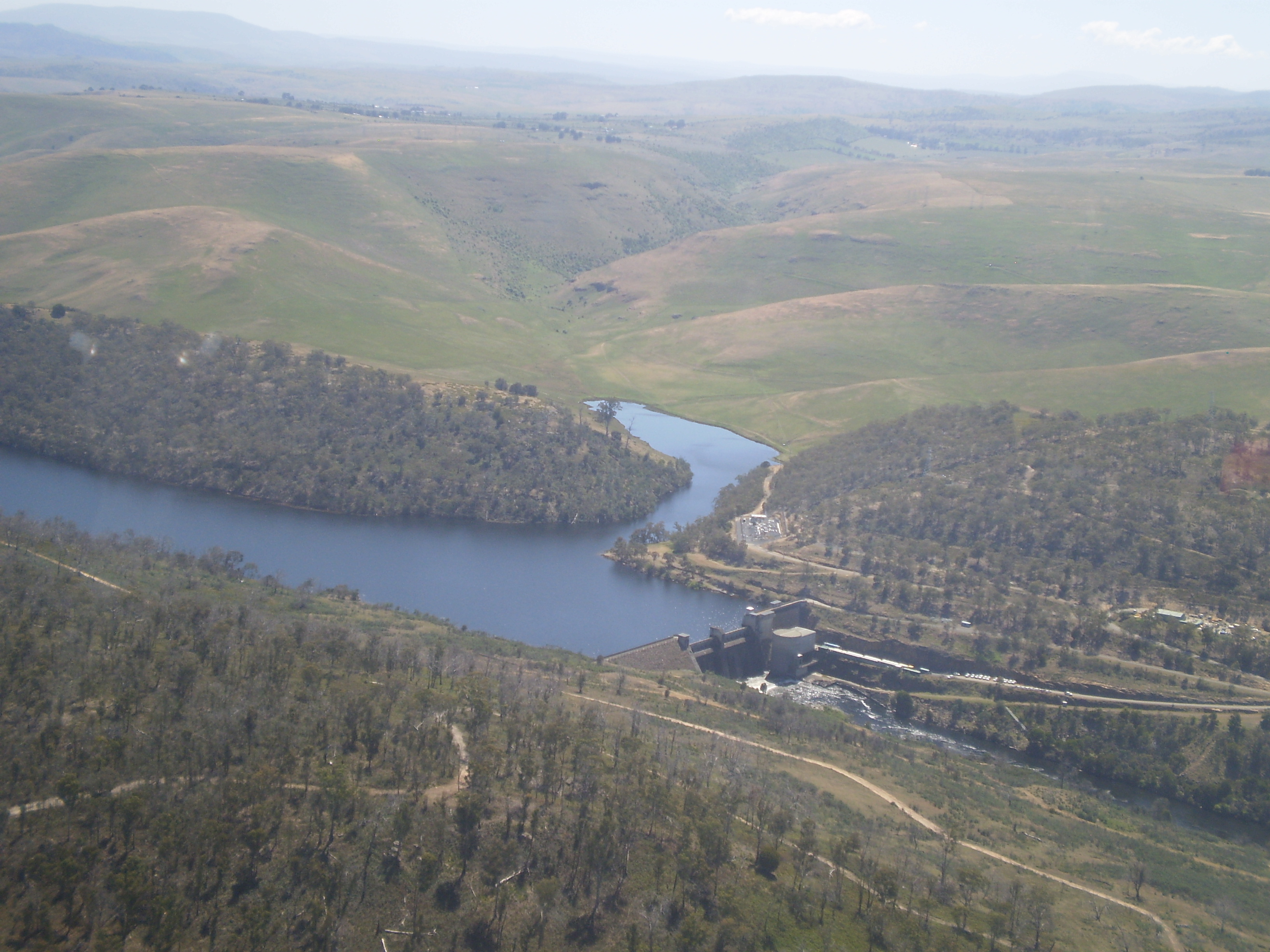
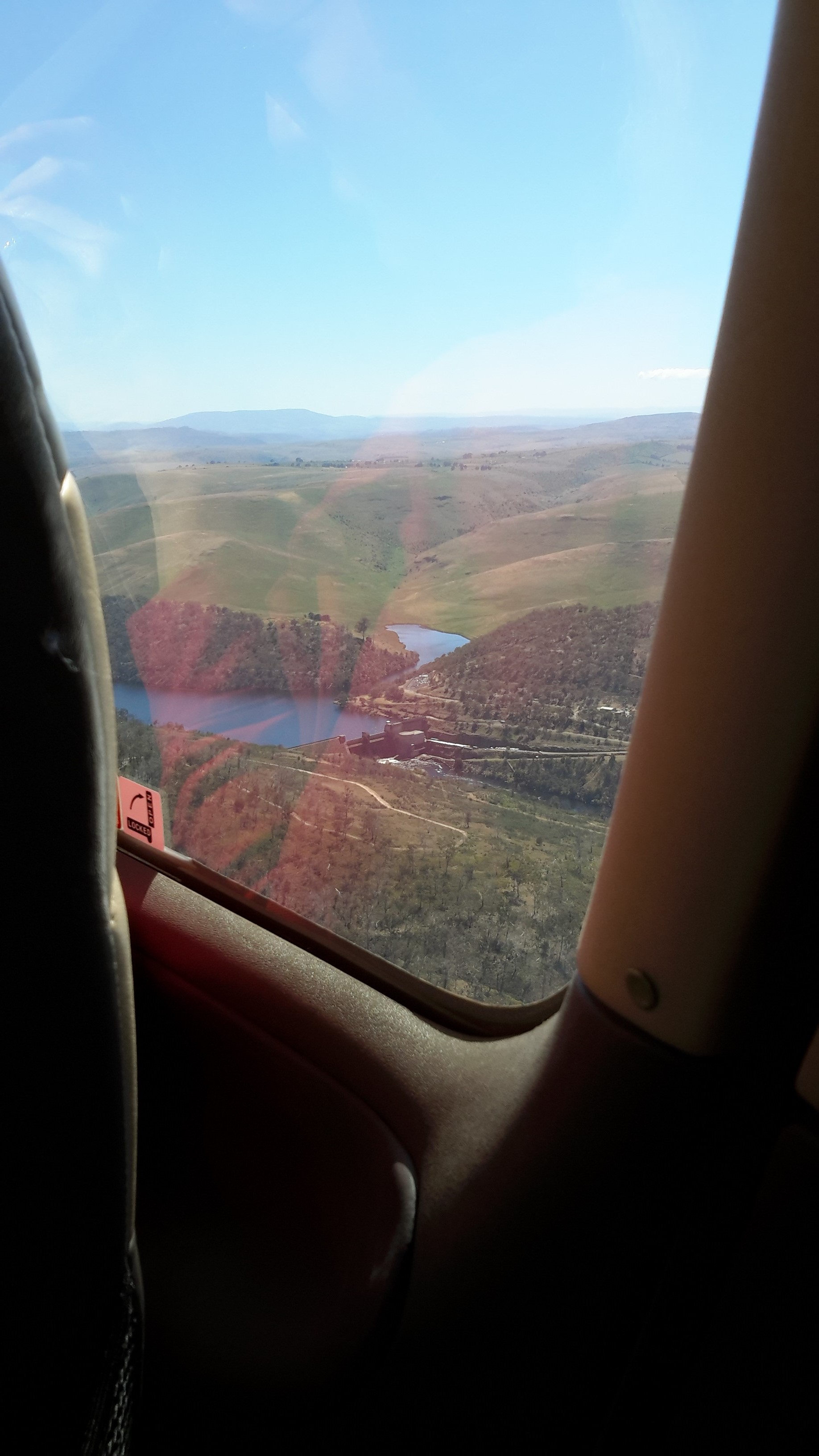
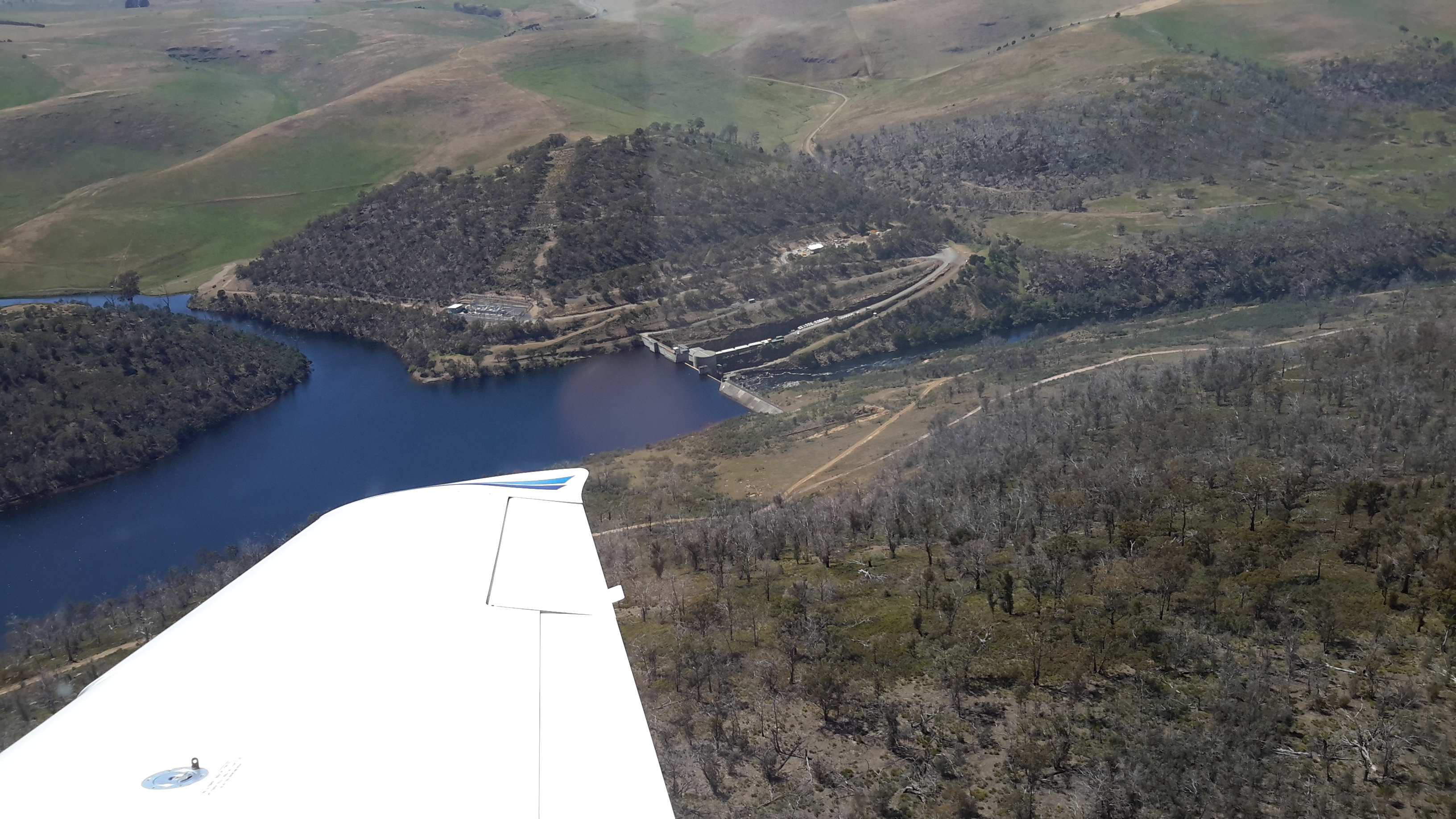
The Cluny Dam holds back the water of Cluny Lagoon, and pumps it through the Cluny Power Station.  At the western end of the Lagoon the wall of the Lake Repulse Dam rears high.

Between Cluny Dam and Power Station and Lake Repulse Dam, Michelle saw:

PA280086Cluny dam and lagoon.JPG

PA280087 Repulse dam.JPG

Between Cluny Dam and Power Station and Lake Repulse Dam, Chantale saw:

IMG_3895Cluny dam.JPG

IMG_3894.JPG

IMG_3893Repulse Dam.JPG

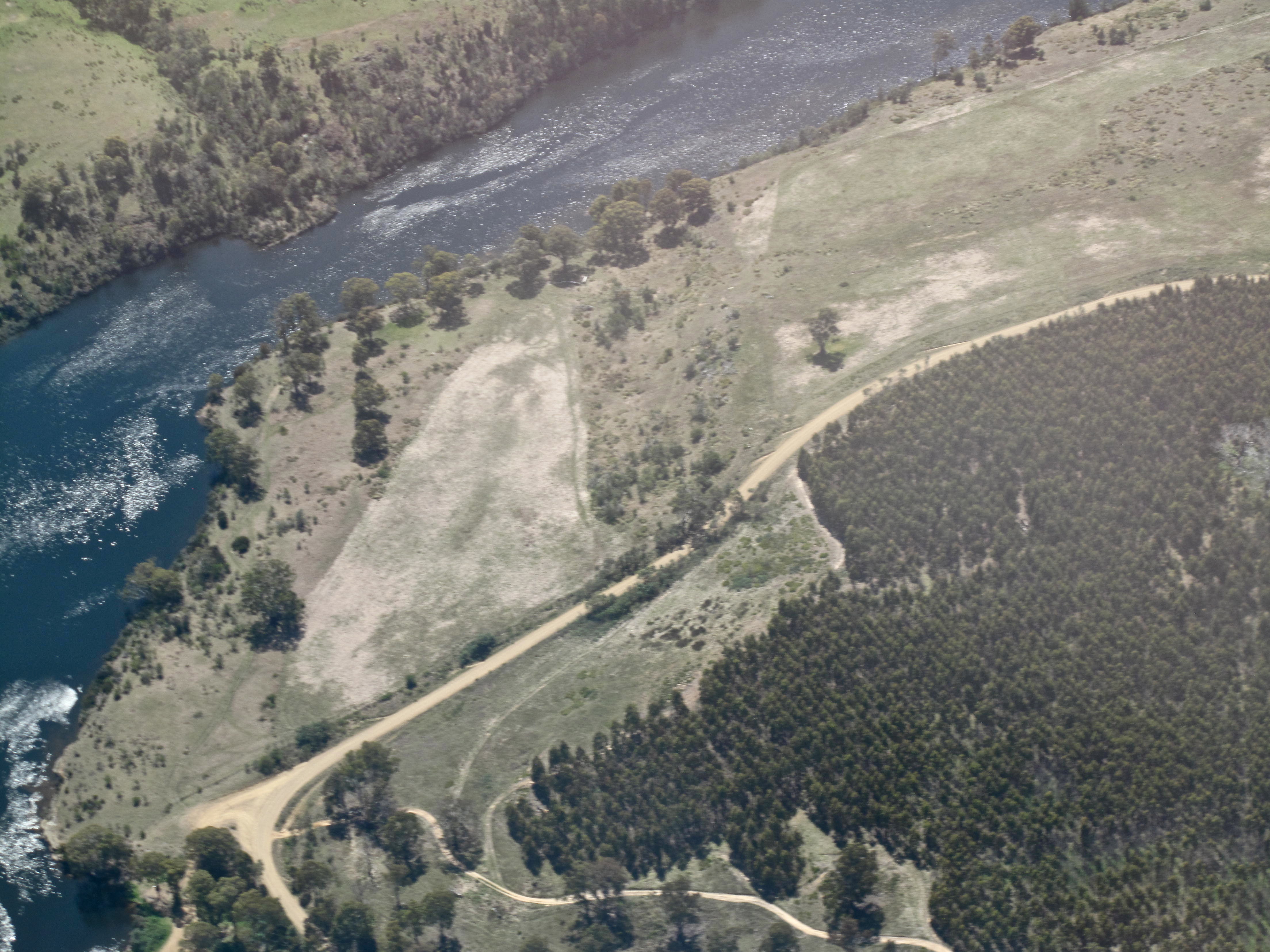
Between Cluny Dam and Power Station and Lake Repulse Dam, I saw:

20151028_114827.jpg

20151028_114747.jpg

20151028_114858.jpg

20151028_114913

When walking along the edge of the Derwent River, I am not so conscious of the constant winding of the river around the hilly landscape as when I look at the photos in this and the last two blog posts.  The beauty of this snaking quality is that as I take each step, new vistas become visible.

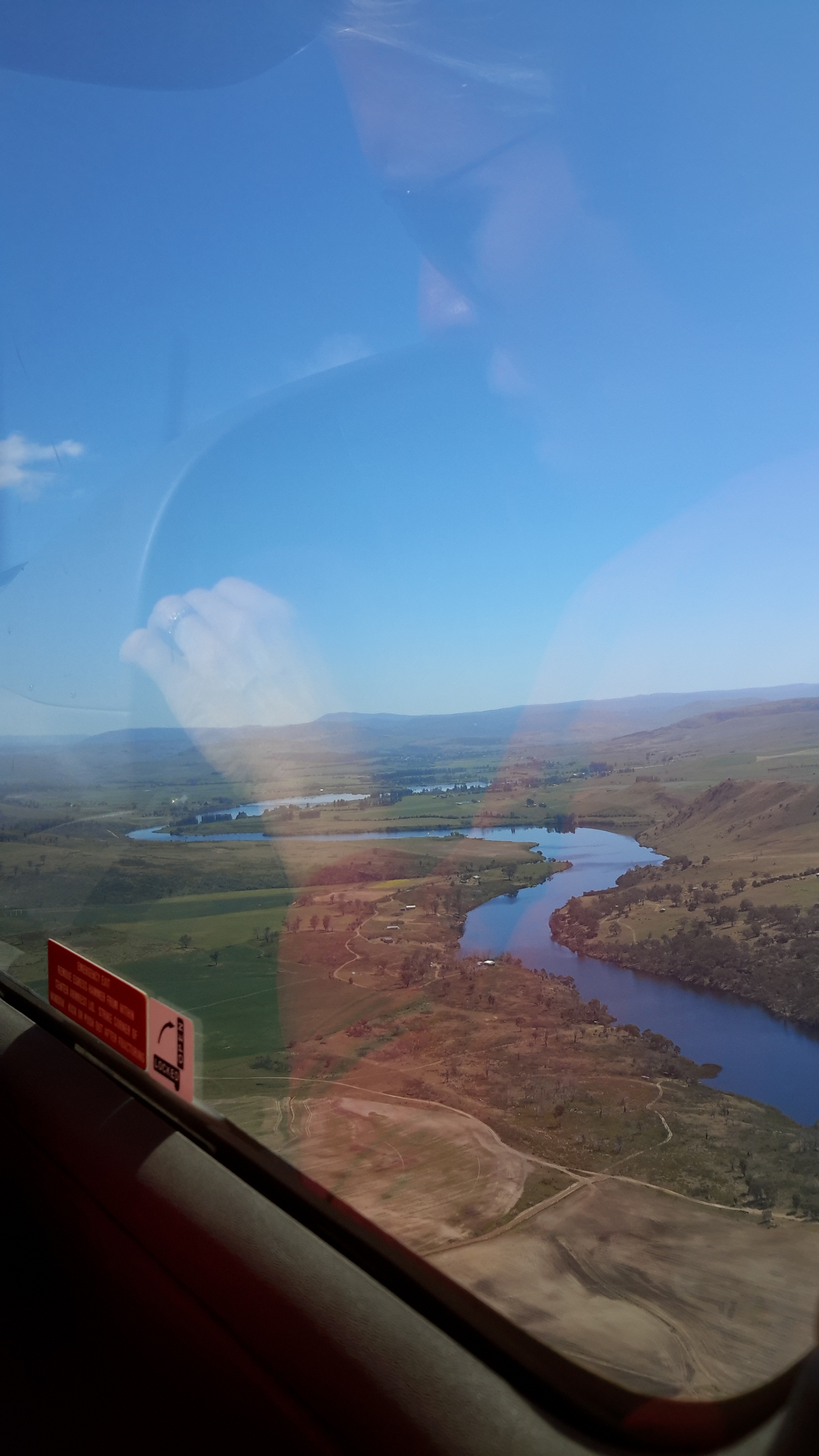
Gretna to Lake Repulse Dam – an aerial perspective: 2 of 3

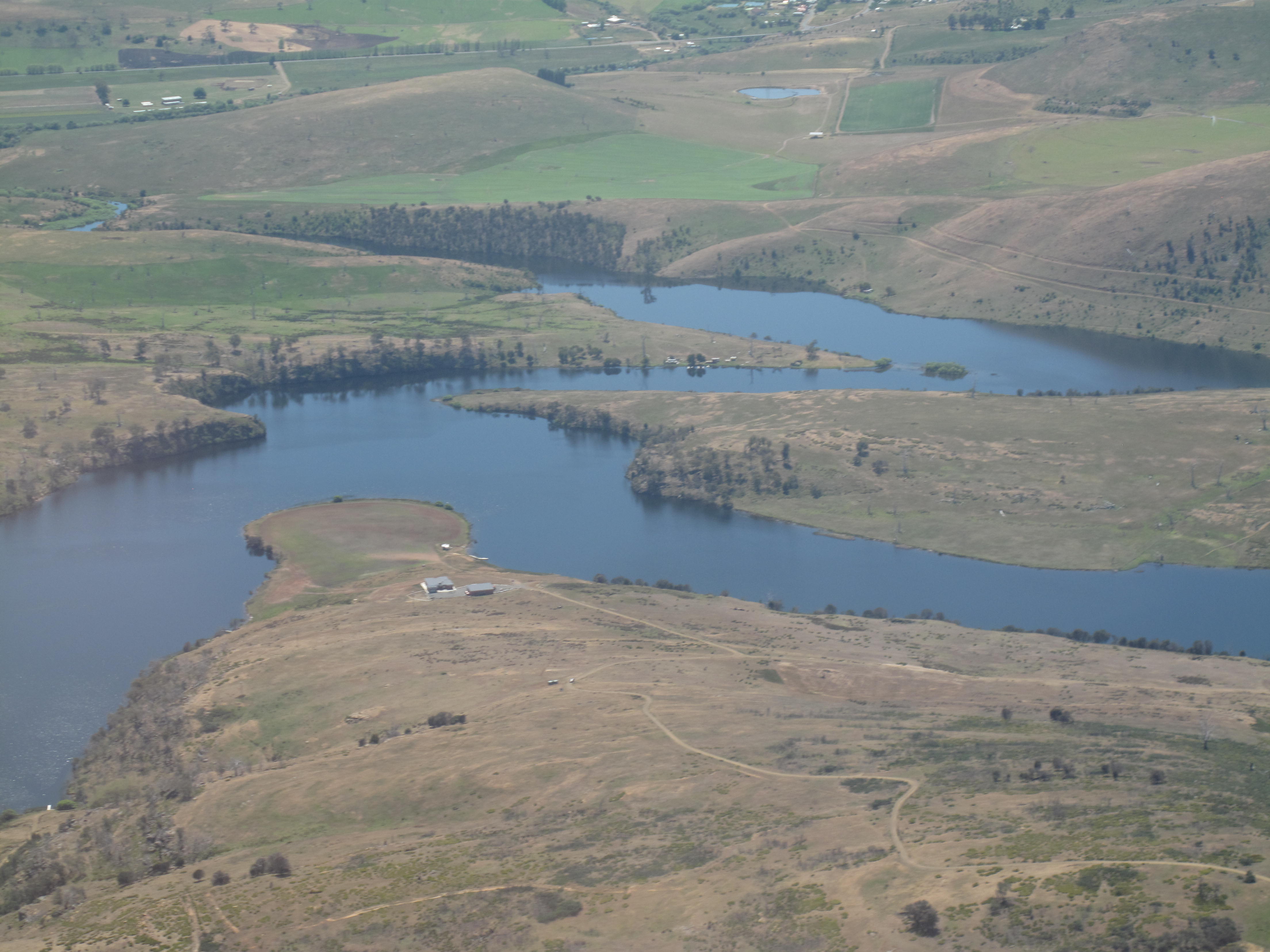
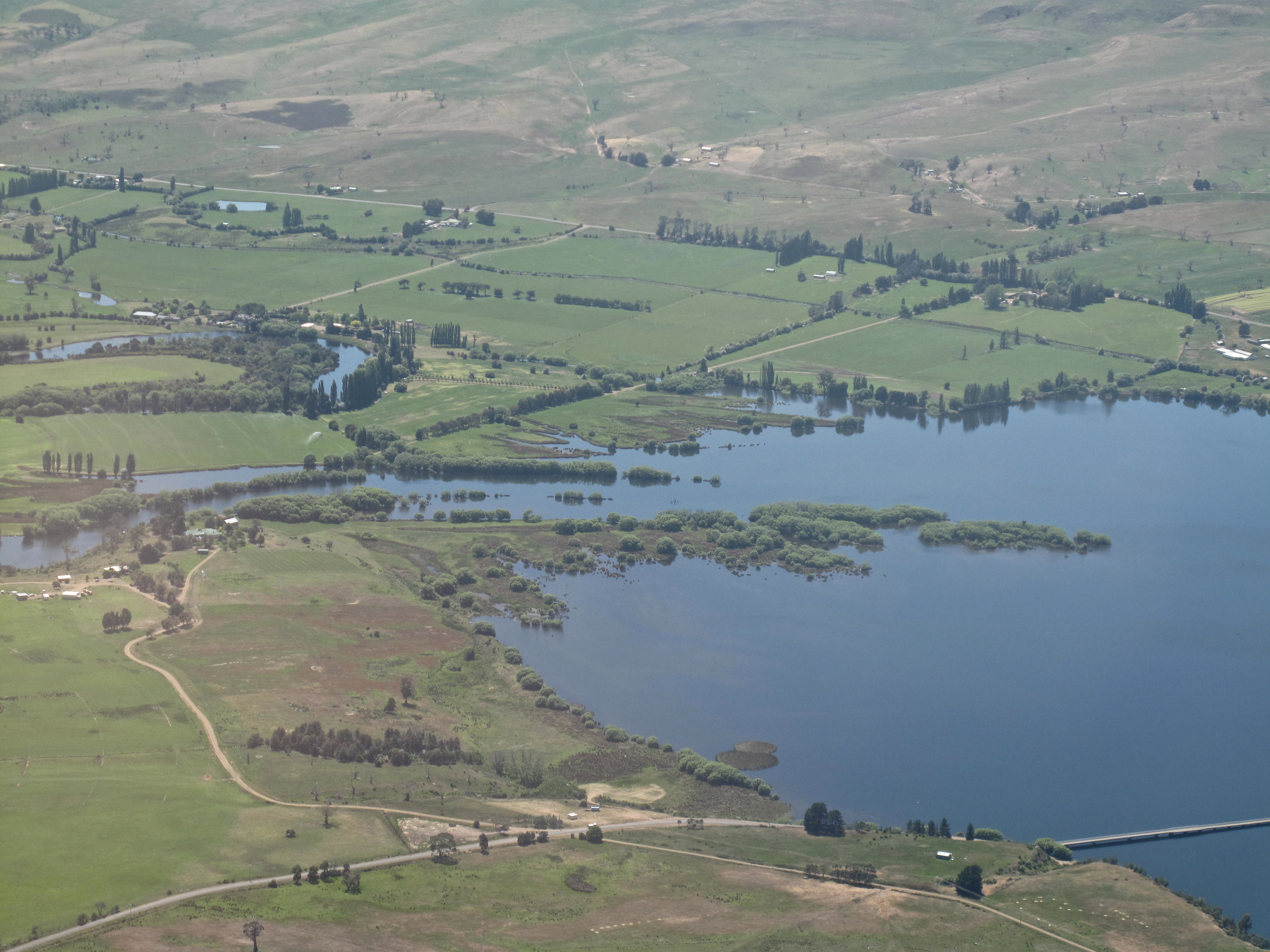
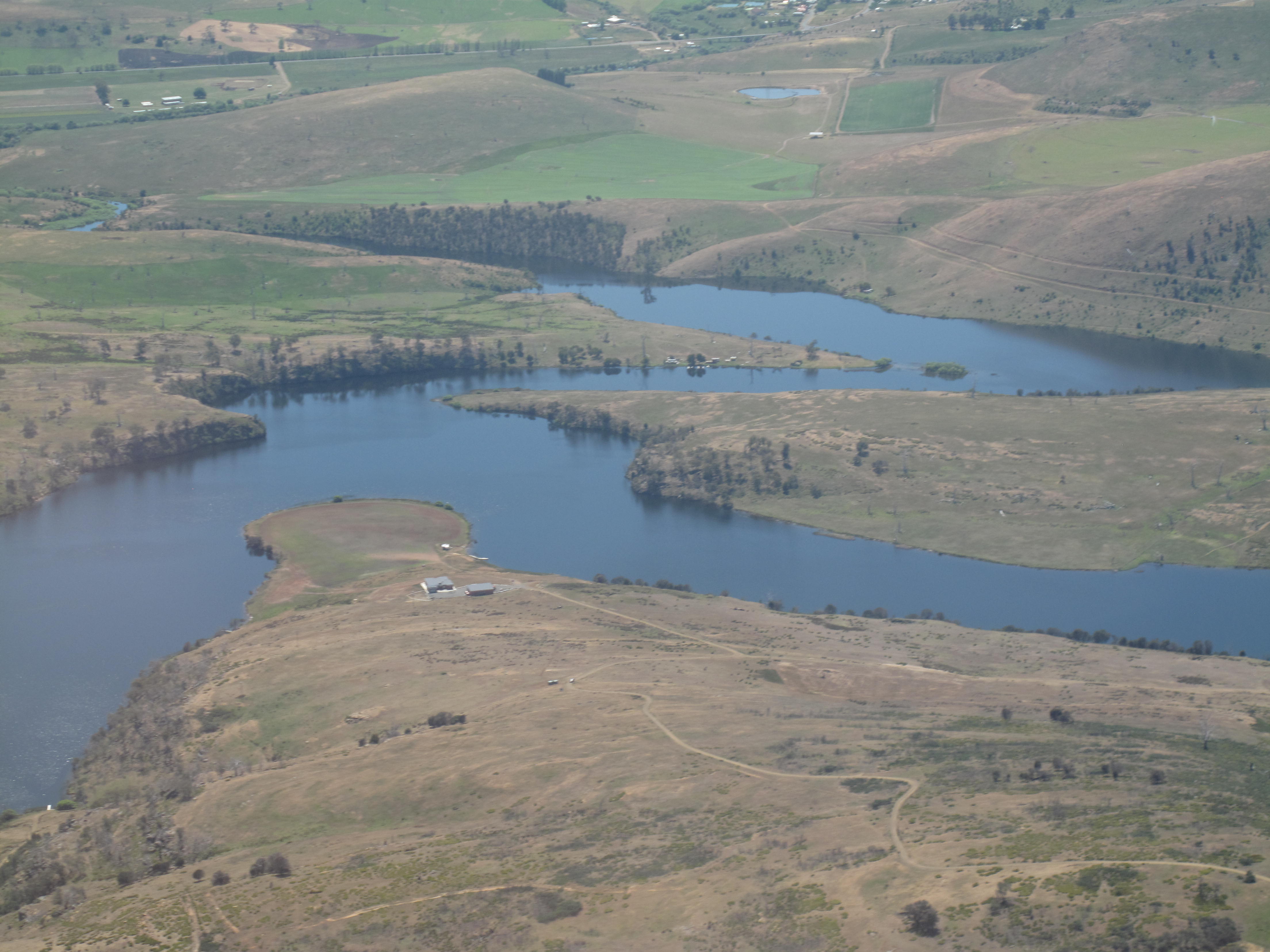
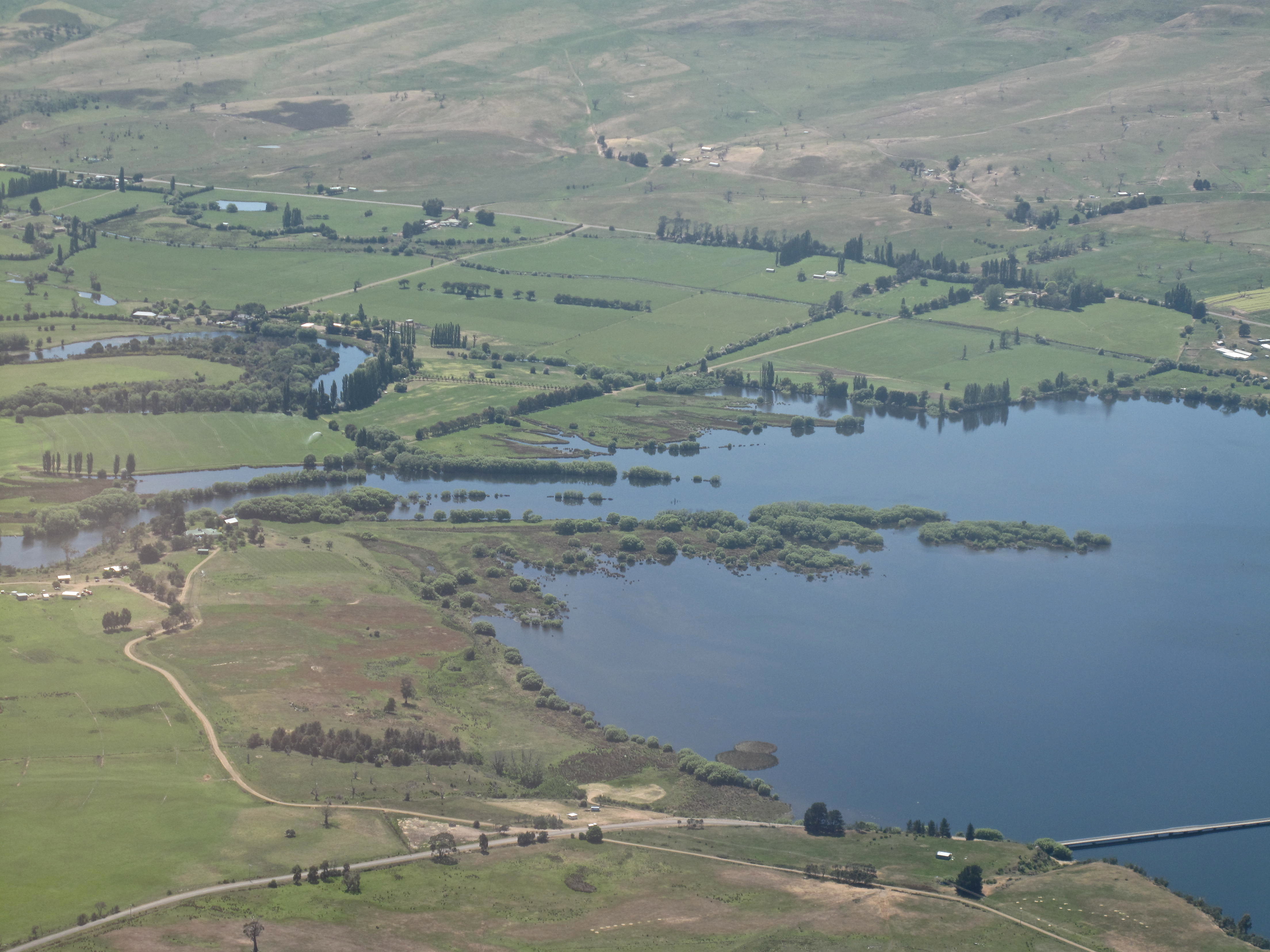
Meadowbank Lake, through which the Derwent River runs, is an expanse measuring approximately 15 kms in length. A few kms of Derwent River flow between the Lake’s western end and Cluny Dam.  Between Meadowbank Dam and Cluny Dam, Michelle saw:

PA280076 Meadowbank Dam.JPG

PA280079 Doctors Flt and Tickleberry Flat on other side.JPGPA280081.JPGPA280084Top of Meadowbank Lane and then Derwent again.JPG

OLYMPUS DIGITAL CAMERA

OLYMPUS DIGITAL CAMERA

 Between Meadowbank Dam and Cluny Dam and Power Station, Chantale saw:

IMG_3907.JPGIMG_3905.JPGIMG_3904.JPGIMG_3901.JPGIMG_3898Dunrobin bridge.JPGIMG_3897Top of Meadowbank Lake

Between Meadowbank Dam and Cluny Dam and Power Station, I saw:

20151028_114338.jpg20151028_114404.jpg

20151028_114522.jpg