Category Archives: Walking

Stage 3 Getting to Tranmere for another Derwent River walk 20 September 2014 Posting 1 of 6

This Saturday morning in Hobart was gloriously sunny so it was time to take a walk along the Derwent River. The Camelot Park number 615 Metro Bus departed from the city bus mall at 8.48am and travelled to the eastern shore of the Derwent River. I jumped on the bus a little after 9am having already enjoyed the short walk to the bus stop past ornamental cherry trees plump with green buds and a sprinkling of newly opened palest of pink flowers, past the mass of flowering jasmine strangling a fence between neighbours, and past the rich red pink jewels of a flowering nectarine tree that promises tasty juicy fruit in the new year.

The bus continued along Cambridge Road before turning left along Clarence Street, which runs parallel to the Derwent River.  I wondered whether the name was in remembrance of Lieutenant John Hayes’ ship the Duke of Clarence, a British Duke of Clarence from some era, or whether there had lived an interesting Mrs Clarence once upon a time whose memory is now enshrined in this long street.

Half way along the street, a sign noted the change of suburb from Bellerive to Howrah. Soon the bus was pulling into the mini bus mall in the Shoreline precinct of a hotel and a shopping plaza.  Moments later the bus was travelling down the road towards the River and, after sweeping around a bend, it continued through the suburb of Howrah then the suburb of Tranmere, always parallel to the River. I had a clear view of Mount Wellington and the city centre of Hobart on the western shore. Between sat an almost rippleless dark blue Derwent Harbour. It wasn’t long before I could see, in the distance, the treeless hills that I expected to be tramping across.

Around ten minutes after leaving the Shoreline, the bus circled into bus stop 33 at the corner of Tranmere Rd and Oceana Drive. This was the final stop, and as I got out the driver turned off the engine and stepped out to stretch his legs while waiting for his return departure time to arrive. The air was clean and the day was colourful. I stood on Oceana Drive edged by large suburban houses and felt the strength of a cool breeze.

A number of black and white magpies were broadcasting their fantastic singing voices. Their melodious sounds were crossed with a cacophony of the de daaa tt de daaa tt of the wattlebirds.

20140920_091642

I was standing at the bus stop when I took this photo looking along Oceana Drive in the direction that I needed to walk. But despite my maps and internet research I stood still looking and puzzling, and not clear where to walk or whether I would be able to access my starting destination: Trywork Point.

Stage 2 of my walk along the Derwent River finished at Gellibrand Point and the next point directly across the inlet to Ralph’s Bay was Trywork Point on an exposed headland. So today’s walk needed to start at Trywork Point, south of this bus stop, but I had to get there on foot somehow before retracing my steps to continue walking northwards along the Derwent River.

20140920_091918

I started walking along Oceana Drive then looked back from where I came and clicked this photograph. The bus is still ‘resting’ where I left it.
How did Hobart’s Derwent River get its name?

Dan Sprod’s information for the Centre for Tasmanian Historical Studies was a great help in understanding that our Derwent’s (http://www.utas.edu.au/library/companion_to_tasmanian_history/R/River%20Derwent.htm) European discovery was made during the second (1793) visit to what is now the island of Tasmania, by French explorer Bruny d’Entrecasteaux. The given French name ‘Rivière du Nord’ never took hold. When Englishman Lieutenant John Hayes arrived in April 1793, he was unaware of d’Entrecasteaux’s visit two months earlier, and named the river after the Derwent River in England.

Great Britain’s Derwent River flows through Cumbria, a sparsely populated non-metropolitan county in the north west of England.

Cumbria contains the famously beautiful Lakes District, and presents as a combination of mountains, rugged seashore, parkland and rural landscape. In the early eighteenth century, the landscape and climate similarities between Cumbria and our island’s river backed by the stunning Mount Wellington make it easy to understand how our river came to be named.  In England, the name Derwent is derived from a Celtic word for “oak trees”.  Australia and Tasmania do not have native trees with the same leaf and character as English Oaks. However the heavy thick forests with large stands of trees either side of Tasmania’s Derwent River, would have made a strong impression on Lieutenant Hayes.

The Cumbrian Derwent flows westwards towards the Irish Sea; the city of Workington sits at the mouth. Google Earth includes photos of a mountain, powdered with snow, showing similarities with our Mount Wellington at cooler times.  I imagine Lieutenant Hayes would have been away from England for many months, if not years, and so his ability to make direct comparisons between his English and our river would be based on hazy memories.  Notwithstanding this, when I look at a current photo of the Derwent in Cumbria, the landscape has a character similar to our local environment. Of course, the landscape and its features at both locations will not be the same as when seen in the late 1700s. However and despite the passing of centuries, I can see how and why Lieutenant Hayes chose to name our river, the Derwent.

But what about the man; what was Lieutenant Hayes connection with Cumbria and the Derwent River?

The Australian Dictionary of Biography (MUP Volume 1 1996) notes that Sir John Hayes (1768-1831), naval officer and explorer, was baptized on 11 February 1768, the son of Fletcher Hayes of Tallentire on the River Derwent, England. On 7 December 1781, when 13, he joined the Bombay Marine as a midshipman on the Bombay. By December 1788 he was promoted to second lieutenant and his rise through the ranks continued over the years. Hayes is best remembered for a private voyage undertaken between February 1792 and December 1794. Glowing accounts of New Guinea’s economic potential fired Hayes to lead an expedition financed by some Calcutta merchants. On 6 February 1793 the Duke of Clarence (250 tons) and the Duchess of Bengal (100 tons) left Calcutta, India. Because of adverse winds Hayes could not sail direct to New Guinea, so at the young age of 27 years, he decided to voyage round New Holland (this was the original European name for Australia). He reached Van Diemen’s Land on 24 April and left on 9 June. During that time, he discovered and named the Derwent River, and other features of the terrain. Risdon Cove and Cornelian Basin still bear the names he gave them. According to the publication “British Heritage of Tasmania’, (http://members.iinet.net.au/~rwatson1/britishheritage/BRITISH%20HERITAGE%20OF%20TASMANIA.pdf

Hayes named Ralphs’ Bay (a beautiful bay which I have mentioned during both my first and second stage of walking along the eastern shore of Tasmania’s Derwent River) at Lauderdale, after William Ralph who was in charge of the Duchess of Bengal.

While I would like to think that the City of Clarence (the eastern shore city of the Greater Hobart Area and the one in which I live) must have been named specifically after the ship which Hayes’ commanded, this apparently isn’t true.  It seems that the City of Clarence was named after King William IV of the United Kingdom who as he ascended the throne was titled His Royal Highness, The Duke of Clarence and St Andrews. However, let’s look at this a little more closely. In 1843, Prince William (the future King William IV crowned in 1830) began a career in the Royal Navy by becoming a midshipman at 13 years. In 1789 he was made Duke of Clarence, and then retired from the Navy in 1790.  The elements are: the future king is a naval man who held the title of Duke of Clarence before Lieutenant John Hayes (who started his naval career as a midshipman) set out from India towards Australia. Travelling to Tasmania, Hayes just happens to be in command of a ship named the Duke of Clarence in 1793. How did his ship get the name?  Considering the timing, surely Hayes ship was named in honour of the new Duke of Clarence (the Sailor King or Silly Willy as the future king was known). I would prefer to believe that the name of today’s City of Clarence lying along the eastern edges of the Derwent River, is a reference to the ship of the man who named our River, and only indirectly refers back to the early title of King William IV.

Vistas of water

I am fortunate to live in a part of Hobart with daily views of the Derwent River.  Travelling to and from work in the city, I bus over one of the river’s main bridges the Tasman Bridge. In these ways, I see the wonderful watery play of the moods, colours and water traffic across the Derwent River.

Since many people from around the world now read this blog I am reminded of the watery views near some of those readers. Most recently, the blog statistics indicated I have some Greek readers.

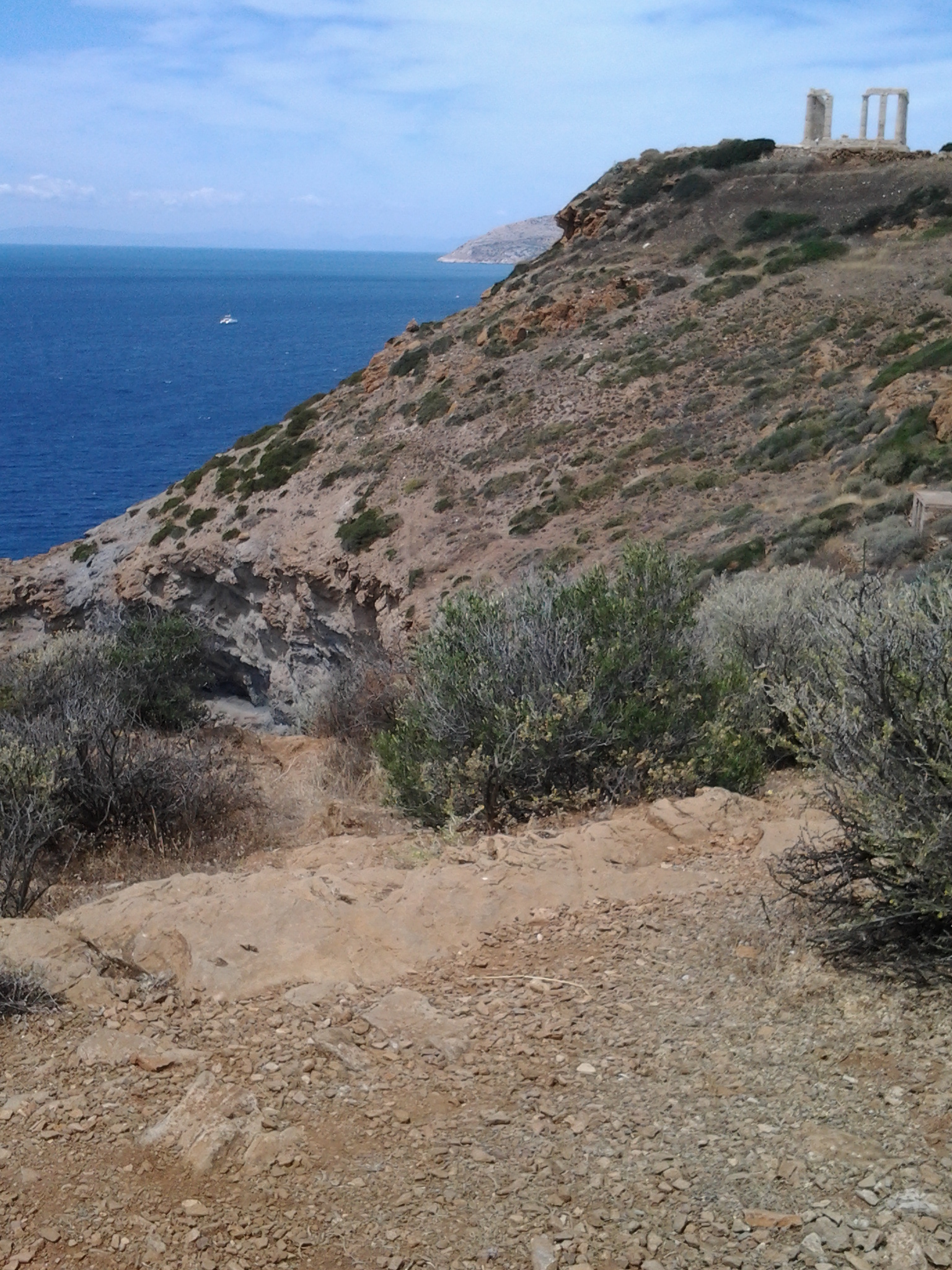
A few months ago I visited Greece, and while I am probably one of few travellers who did not ferry around the islands, from the mainland I did look out at the glorious expanses of the Aegean Sea and marvel at the islands in the distance. The joys of discovery were not limited to searching in the distance. Sometimes, as I found, you can enjoy the sea even more because of structures on the land – you can see through them and they create frames for seeing other landscapes. South-east of Athens is a ruined temple, the Temple of  Poseidon. Almost picture postcard imagery. I had to keep pinching myself.  I was there.  I smelled the freshness of the wind.  I tasted the salt on the air. I felt the sparkle of the sun in my eyes. I heard the passing of seabirds. And I touched the remnants of the workmanship of creativity from over 2000 years ago. And there below and spread out into the distance was the deep blue of the water capped by the blue of the sky.  The gods certainly found one part of paradise.
20140602_121813

The photo shows the ruins of the Temple of Poseidon at Cape Sounio/Sounion located south east of Athens, Greece.  I hope you can you feel the sun in the air.

Yearning to walk the next stage

For the past almost two weeks I have yearned to be out walking and discovering another length of the Derwent River. Unfortunately, when snow storms powdered the mountain (Mt Wellington) last week it was simply too cold and then some of the days when I was free to walk were overcast. I find that I continue to make my own rules about what should happen as and when I walk the Derwent River. The latest ‘rule’ is that I will not walk unless the sun is shining.  The reason is that I only want to take photographs to show you the land and the river in full sparkle. I only want to see it that way myself as I walk.

Again yesterday snow storms on the mountain brought the temperature low and the forecast is for rain to continue off and on until this Saturday, when not only will the day be dry but the sun will shine.   Come on Saturday!

Another thing I must consider is the availability of public transport because, as you know, my walks must be able to be reached and finished in touch with our local public transport system, the Hobart Metro buses. If you have a car to duplicate my walks then you are lucky. Not everyone has access to their own transport.  Weekend bus times are not nearly as frequent as during the weekdays.  For example, the Camelot Park bus that I need for travel on Stage 3 of the walk is around in that suburb every half an hour during the week but only once an hour at the weekends. Research and vigilance is always the key.


Northern Pacific Seastars

A couple of weeks ago, on some of the beaches in the northern section of the South Arm peninsula, I located some seastars (orange pronged starfish) and threw them up onto the dry sand so they could no longer breed and multiply. I recorded that these seastars had infected our Tasmanian waters and were a proliferating pest. Today’s Sunday Tasmanian newspaper has published an article about the seastars’ new enemy: the University of Tasmania’s Diving Club.  Recently members of the club have been conducting a clean out of the waters at Blackman’s Bay (located across the Derwent River from the South Arm peninsula) – and doing so in a more humane way than I was.  Apparently a species of spotted handfish used to be common in these waters but is now rarely seen.  The divers hope that this fish will return once they rid the area of the seastars.

20140904_094156


Preparing for the next stage of my walk along the Derwent River

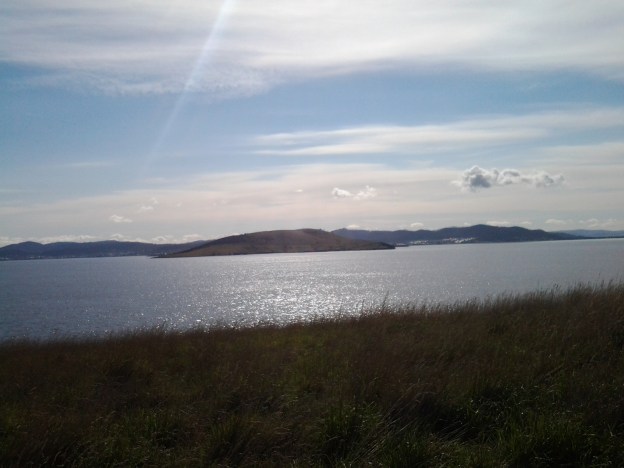
The image featured directly above is of the watery inlet from the Derwent River on the left into Ralph’s Bay on the right. The low hill in the distance is north of and opposite from Gellibrand Point (which is at the northern end of South Arm peninsula). The low hill is Droughty Hill: Trywork Point will be to the lower left of the hill.

Previously, I walked from the mouth of the Derwent River and covered the length of the South Arm peninsula which amounts to approximately 11 km of the River. Stage 1 took me from Cape Direction to the Opossum Bay shop. Stage 2 took me from the Opossum Bay shop to Gellibrand Point. Only 238 Kms to go!

Continuing on from the last walk will require me to leap-frog over approximately 2kms of water for the next starting point Trywork Point which is south of the Rokeby Hills. The reason for my ‘jumping over’ is that I am guessing that the Derwent River was measured as a ‘straight’ length and did not count the many extra kilometres going in and out of every bay and crevice. The water between Gellibrand Point on the South Arm peninsula and Trywork Point is the entrance to the large Ralph’s Bay which feeds off the Derwent River.

So my initial destination for Stage 3 is Trywork Point – that will mark the start of the walk. To reach this starting point I will need to walk south from a bus stop and then later be prepared to retrace my steps or find a more suitable alternative route before continuing northwards through as many Hobart’s eastern shore suburbs as my feet will carry me.  The suburban area has frequent bus services (by comparison with the Opossum Bay bus service) so that timing the duration of Stage 3 is dependent on my health and inclination rather than on bus timetables.

Unfortunately, TasMAP Taroona 5224 is not a great deal of help for reaching Trywork Point. It clearly shows the acres of land between the bus stop and Trywork Point but offers no roads or tracks. I am clear that I will walk from the last Camelot Park bus stop (Metro Bus number 615) south to the Point – somehow. The Hobart and Surrounds Street Directory is only of marginally more use than the TasMAP. However this Directory will be especially useful with the names of streets as I return northwards and walk in and through the suburbs in the later part of this Stage 3 walk.

The most useful mapping and tracking information comes from the Google earth map of the area (which was also useful to see tracks on Gellibrand Point in Stage 2) – although the name Trywork Point is not recorded and does not appear on their map (Note that Trywork Point and some other landmarks are indicated on the TasMAP).  The best that Google can offer is Droughty Point Road. From there I moved the map westward until I found the T junction with Tranmere Rd and Oceana Drive – this intersection is the bus stop from where I will start walking.

Walking south, the bitumen road peters out and the tracks across the land are variously strong and faint on the Google earth map. With this limited information, finding my way will be an experimental process.

Years ago friend Je and I walked from the end of Tranmere Road across some of this land. However, I remember that we encountered stout almost impassable fences. This memory makes me wonder what I will find now, and how easy the access to Trywork Point will be. I look forward to my ongoing discovery of the land besides this wonderful Derwent River.


Stage 2 on 4/9/2014 Summing up Email 14 of 14

I arrived at the Opossum Bay shop at 9.10 am to start Stage 2 of the walking journey, and I caught the return bus (number 638 with a transfer onto bus number 632 at Lauderdale) across from the shop around 2.05 pm.

Between times I walked approximately 10 kilometres.  However, Stage 2 only represents around 4 kilometres of the length of the Derwent River. Adding this to the 7 kms covered in Stage 1, I have now covered 11 kms of the 249 kilometre long river.

I am persuaded that no-one could complete Stage 1 and 2 on one occasion to fit within these bus times. For someone to replicate my journeys two separate trips are required. Alternatively, one longer visit could finish with a return to Hobart on the bus which departs Opossum Bay near Shelly Beach at 5.55 pm.  Unfortunately this latter option would probably leave you with lots of time to fill in waiting for the bus; this eventuality would need to be expected and planned for.

As a post note, in 1995 the Gellibrand property was acquired by the state, on behalf of the people of Tasmania and in 2011 the area was declared a nature reserve and named Gellibrand Point Nature Recreation Area. I feel excited to have walked the trails and found my own way around, for the friendly people I met, the stunning views, the fascinating history, and the discovery of another part of Tasmania, one footstep at a time.  And all for the cost of a couple of bus fares.

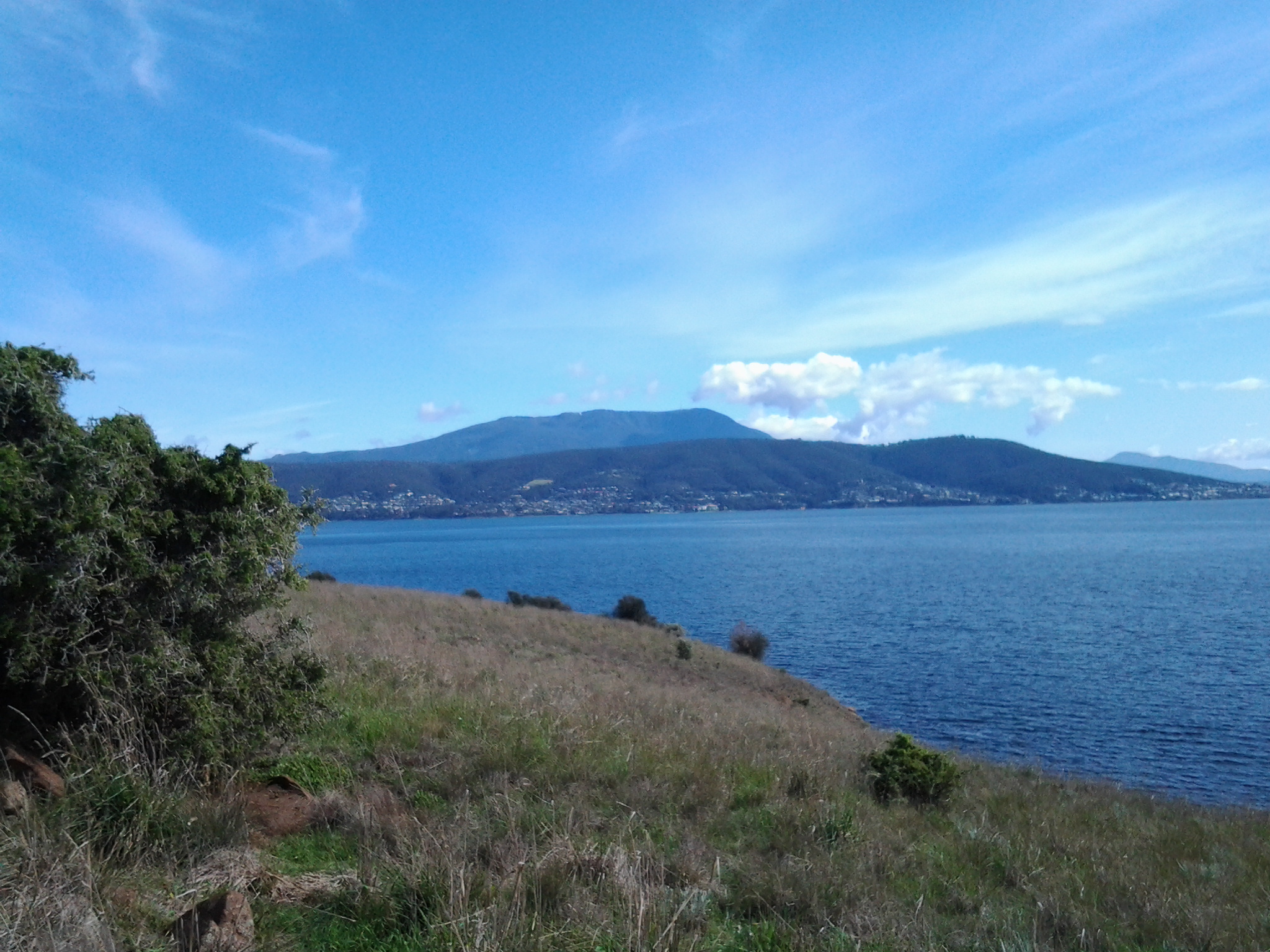
 The photo below was taken from Gellibrand Point, Stage 2’s destination. It looks across the Derwent River towards Hobart city with Mount Wellington behind.

20140904_110649

Stage 2 on 4/9/2014 Time to return Email 13 of 14

By 12.50 pm I had walked to the Icehouse Bluff and was starting on the return journey north along the beach to the boat ramp further along the beach and close to where I had eaten lunch. The bitumen ramp presented an easy incline to walk up to the Bangor street bus turning circle of Opossum Bay.  But I never made it that far.

Rather, some way along, I noticed the semblance of a rough-staired track up the gum lined hill next to the beach. Heavy yellow ropes were attached to the occasional stick to give the impression of a supportive rail. At best this turned out to be an additional guide on the direction that the path took.

20140904_125358

I thumped across the lower bracken, stumpy grasses and fallen branches, hoping that these vibrations through the ground would frighten away any snake that might be meandering in the vicinity. I reached the lower steps covered with a mesh of fine branches and dry gum leaves, detoured and  dragged myself up the steep incline, throwing to the side any miscreant branch that had settled across the rough stairs.  At the top I was surprised this wasn’t a public track, albeit seldom used, rather it led to the back garden of a house. The bush was sufficiently dense either side to disincline me to bash my way in any direction.  Besides I had no idea how far I would need to bash my way along through the bush.  I did what I cannot recommend to others (what I would recommend is that you do not take the staired track up the hill). I was simply taking the easy way out for me. I walked through that back yard, to the driveway and out onto the street.  I have no doubt that in the Opossum Bay as a community style neighbourhood, I will have been seen and remarked on. Out on the street I walked along to the bus stop.

I could have waited for the bus here (although there were no seats or shady buildings). However, since the bus wasn’t scheduled to arrive until 2pm, I had time to fill and decided to walk back to the Opossum Bay shop and catch the bus from there.

Walking along Bangor St I passed local houses and another bus stop 200 metres later. I continued until I reached a T junction passing some plump running rabbits. I turned right into Driftwood Drive and continued until the next T junction with South Arm Road. By now I could see the Derwent River again plus some of the shacks and houses that line the Opossum Bay beach.

Turning left at this T junction, I walked on the road above and parallel to the beach (although I could have taken steps down and re-enjoyed the beach experience). There are a couple of bus stops along this road; at Marsh St, and at Howlin Lane.  It was close to 1.30pm when I reached the Public Toilets, and a few minutes later I had reached the outdoor seating at the Opossum Bay shop.

The couple who sat down nearby were lost. Holidaying from Melbourne, their destination was Howrah but in driving to Opossum Bay they had travelled more than half an hour out of their way.  Fortunately, I carried a street directory with me which they pored over and helped them to understand exactly where they needed to travel.  You never know the resources which people around you might have. So many people have helped me through my life so it’s terrific to be able to help other travellers.

Stage 2 on 4/9/2014 Shelly Beach Email 12 of 14

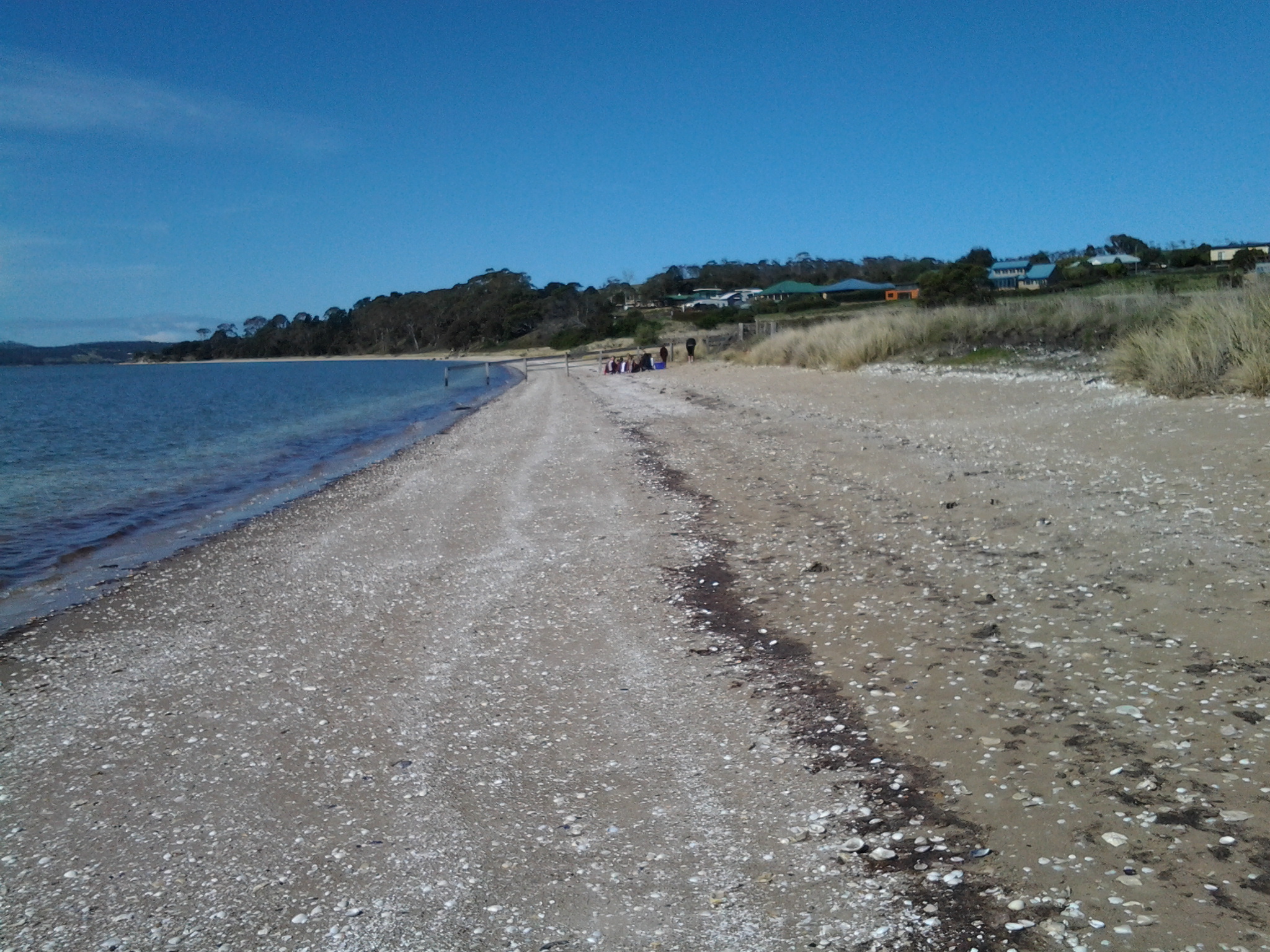
By 11.40 am (only 2½ hours since stepping off the bus) I had taken the trail around Gellibrand Point and south onto the northern end of the narrow sand-based Shelly Beach. Crunching underfoot, millions of sun-bleached shells shattered further. Large empty oyster shells everywhere. Their whites contrasted strongly with the golden dry-brown colours of the sandstone rocks.

The water hardly moved in or out.  Quiet. Calm.

Different schools of 5 inch long fishlings darted from the clear shallows into slightly deeper water.  The bank of sand beneath the Bay was very shallow and I suspect a swimmer might need to wade out quite a distance before being able to lie down and cover themselves comfortably with water. Out a little way in the bay, and like small mirrors, flashes of silver ovals lifted from the water’s surface when slightly larger fish came up for air. Or were they leaping with joy. Perhaps the fishlings that I disturbed when my feet vibrated the ground sending them scurrying for deeper and hopefully safer water, were a delicious meal for the larger fish.

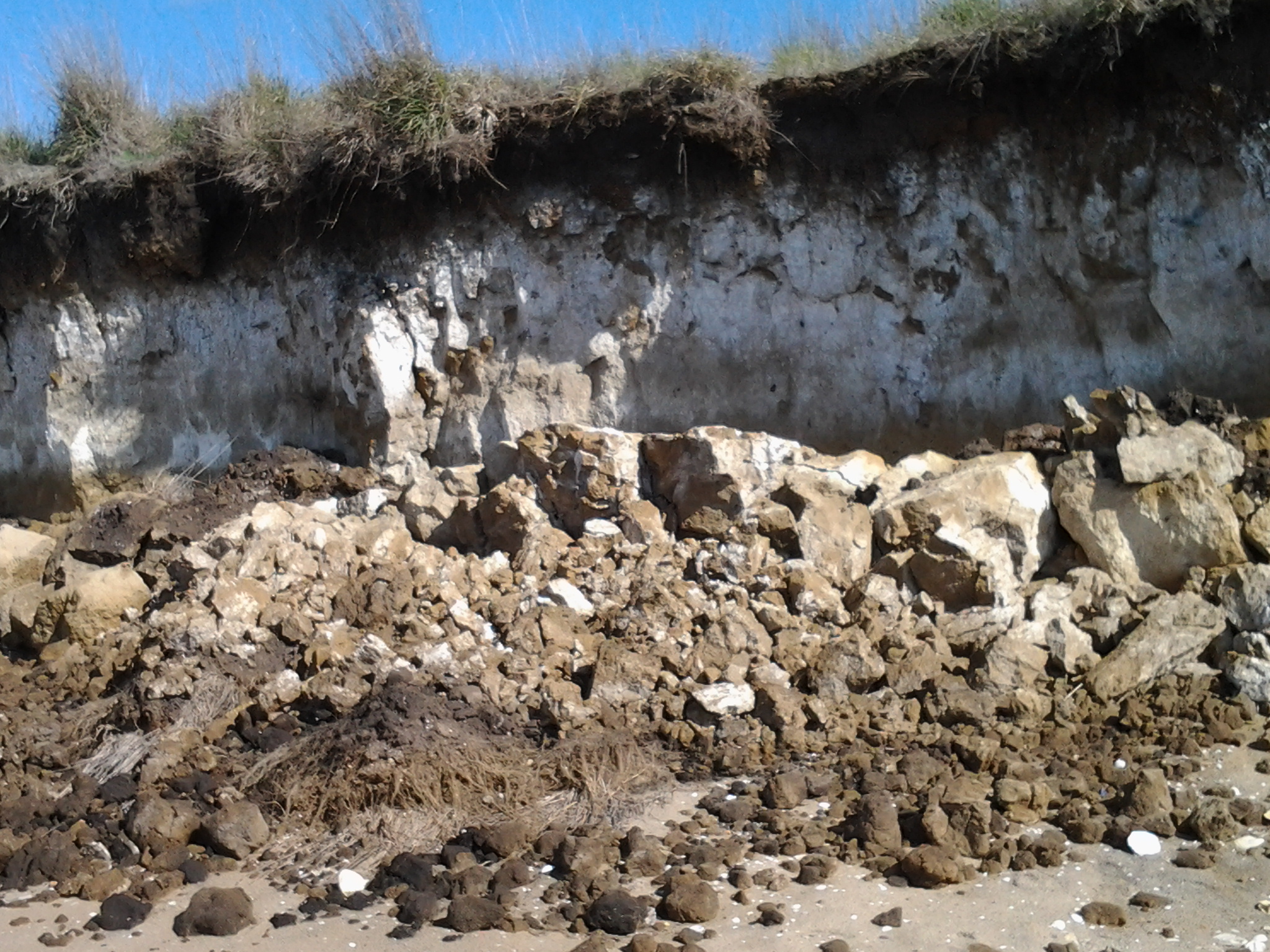
The succulent Pigface with its bright pink flowers grew at the bottom of the sandy cliffs. Were the layers of shells in the cliff strata, remnants of aboriginal middens or simply an older beach level? Was I seeing the shells of the Late Pleistocene?

Sand can be dangerous because, when packed, it doesn’t usually have any structural integrity. Everywhere, I saw crumbling cliffs as a testament to a perpetually ravaging process.  Throughout my walk, on the western beaches and now on this eastern beach of the peninsula, all the sandy cliffs showed erosion and recent falls.  It was clear to me that walking close to the edges on top could lead to a mini landslide if you were unlucky. I feel confident that walking at the bottom of the sandy cliffs poses no risk if you walk nearer to the water’s edge.

20140904_114726

By midday, I had walked to a fence two thirds the way along this long beach.  This fence across the sand to the water of Ralph’s Bay marked one track back towards Opossum Bay.  Because a couple of new groups of older school children were now enjoying a drum playing class on the beach with their teachers near this fence, I decided to walk along the beach further.  Never let it be said that I was a distraction to their lessons!

20140904_115559

Five minutes’ walk past the fence, in the distance was a line of boulders across the sand from the grasses to the Bay.

 20140904_120341

These rocks became my lunch time pit stop while rich brown hawks and protective plover birds whirled nearby.

Looking back where I had walked, the long Shelly Beach stretched into the almost unseeable distance.

20140904_121324

My map informed me that Icehouse Bluff marked the southern end of Shelly Beach. 

Around 12.20 pm I was packed and on my way to the Bluff following in the footsteps of a strolling couple and their dog. We met as they were returning and I asked what they knew about the history of the Icehouse or the Bluff’s name.  Unfortunately, this remains a puzzle to us all.

The advantage of meeting these lovely locals was that I learnt the Bluff was private property and that no access would be possible – so I didn’t waste time looking for tracks up the slopes. We talked about the celebrity locals who have a house at Opossum Bay. I am led to believe that these include Brian Ritchie (MONA) who I thought I saw filling his car with petrol during my Stage 1 walk, Damon Thomas the Lord Mayor of Hobart, Gordon Brown well known heritage artefact collector and television personality, and John Cook who was the last lighthouse keeper for Tasmania’s last two manned light houses (Maatsuyker, Australia’s most southerly lighthouse and later at Cape Bruny).  Quite frankly I imagine everyone who lives on this peaceful South Arm peninsula will have interesting stories to tell and will be celebrities in their own worlds.

Stage 2 on 4/9/2014 Starting the return trip from Gellibrand Point Email 11 of 14

20140904_111425

While eating my morning tea on the gentle slopes at Gellibrand Point, the children had moved ahead but it wasn’t long before I had covered the distance to arrive at the tail of their walking party.

The teacher and I struck up a conversation. I learned that this was a special outing for the South Arm School, and children had to be at least 8 years old to be eligible to join in the 3 or so hours of their planned walk. From anecdotes, this length of walk was deemed potentially a challenge for their children, by some parents.  In this day and age of technological gadgets and constant car use, perhaps walkers are an increasingly rare breed of person. But there were no grumbles from the children and they seemed all very happy to be walking along.

 Just as I have my little project to walk the length of the Derwent River, I was reminded others have their wonderful special projects. The teacher surprised me when she explained that she and some friends had  set themselves the task of walking the 95 kilometres of all the Clarence City Council beaches (Clarence is one of the suburbs of greater Hobart – and the South Arm peninsula is part of that territory). Already they had covered 87 kilometres. What a great idea I enthused.  These are the simple pleasures that give real meaning to our lives.

It wasn’t long before a new geographical feature came into view within the smooth waters of Ralph’s Bay. The Spit.  A slim sandy piece of land that appeared as if the gods had yanked a slight sinew from the main land and pulled it out to a point. A large white cruiser rested languidly in the calm bay nearby.  No chance of sea sickness on that marine vehicle!

20140904_112358

The children decided to take a path in that direction to discover what they might. We parted company and I continued along the 4 wheel driving track.

 I circled around an old disused and collapsing quarry pit all the time enjoying the pleasure of putting one foot in front of the other.

20140904_112512

I passed corralling structures for holding sheep while watching circling hawks in hunting mode for small creatures on the ground.

20140904_113424

Bright sounding small birds tweeted madly. Unseen.

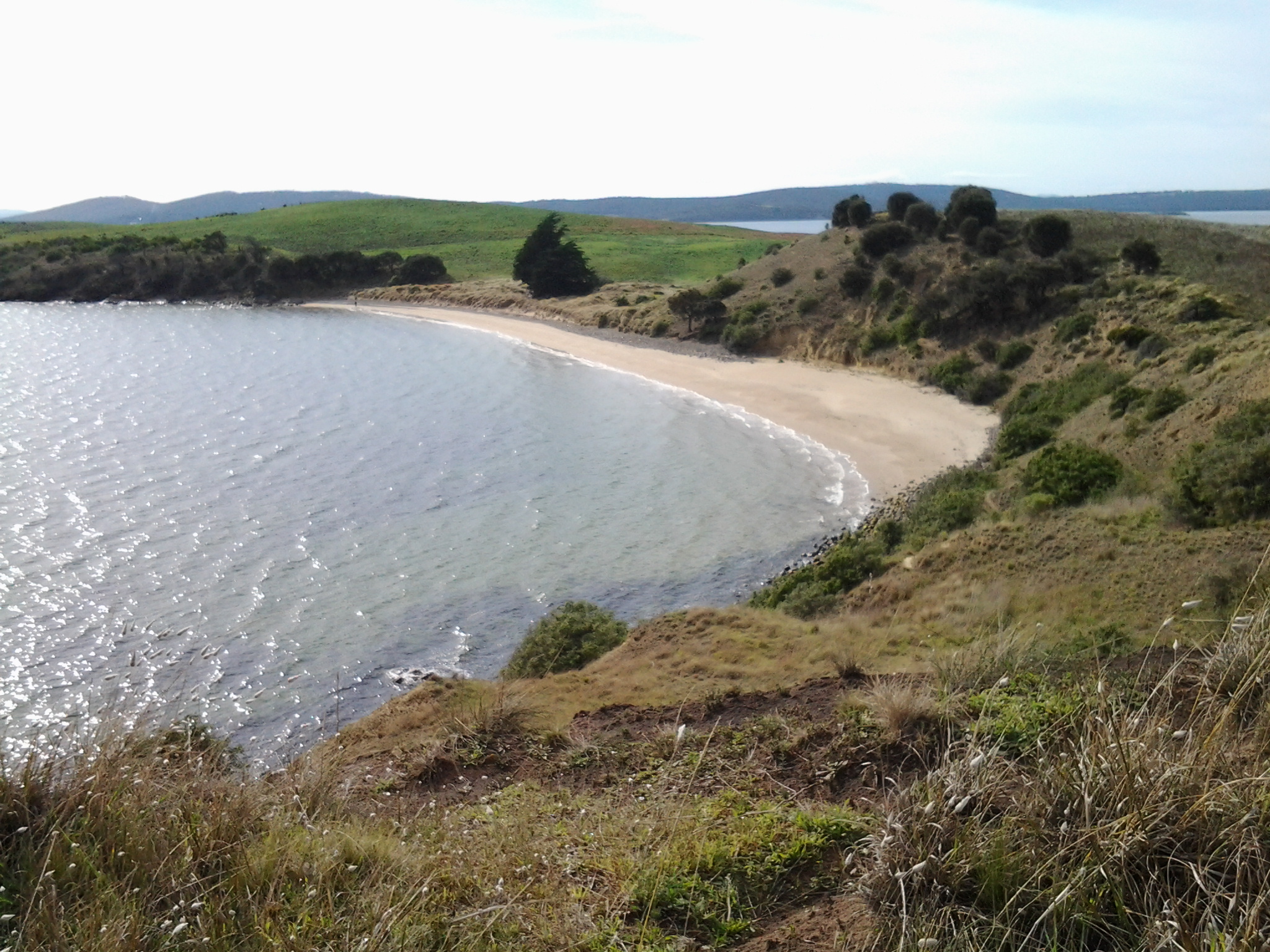
And in a few minutes, there before me was the arc of Shelly Beach – too long to fit into the frame of a photograph.

20140904_113730

Stage 2 on 4/9/2014 Onwards to Gellibrand Point Email 10 of 14

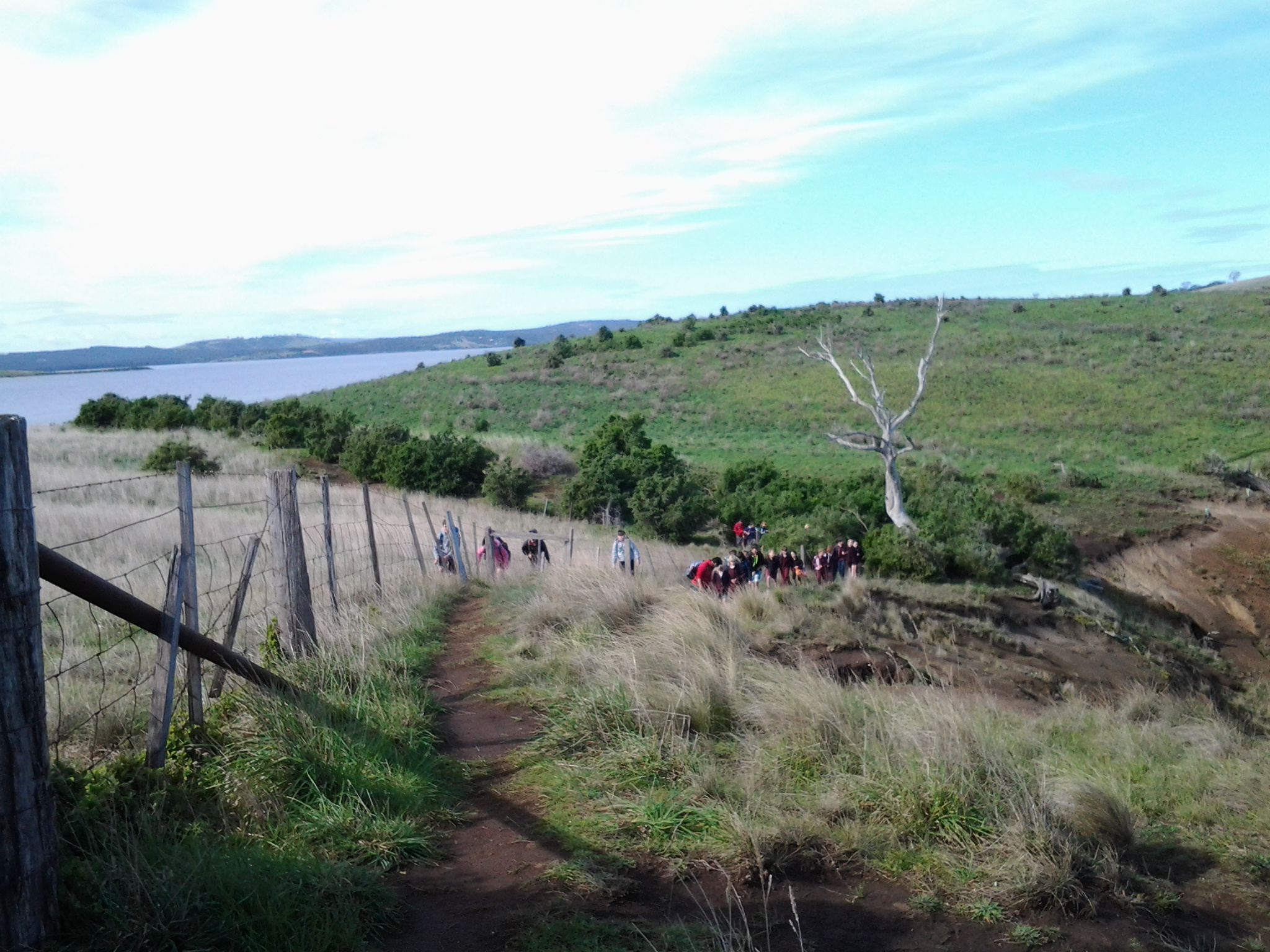
My journey continued up a hill where I recognised two track options; one inside a fence line, and another outside the fence at the top of the cliffs on the side of the Derwent River. I took the track outside the fence (I watched the following children and they were evenly divided between the inner and outer tracks- obviously their teachers thought the outer track to be safe), and at the top of the hill there was an opening to step through the fence and return to a 4 wheel drive track.

20140904_105455

The air was clear. The day was warming up. The views in every direction were sensational. One of those experiences that makes me so happy to be alive.

20140904_105300

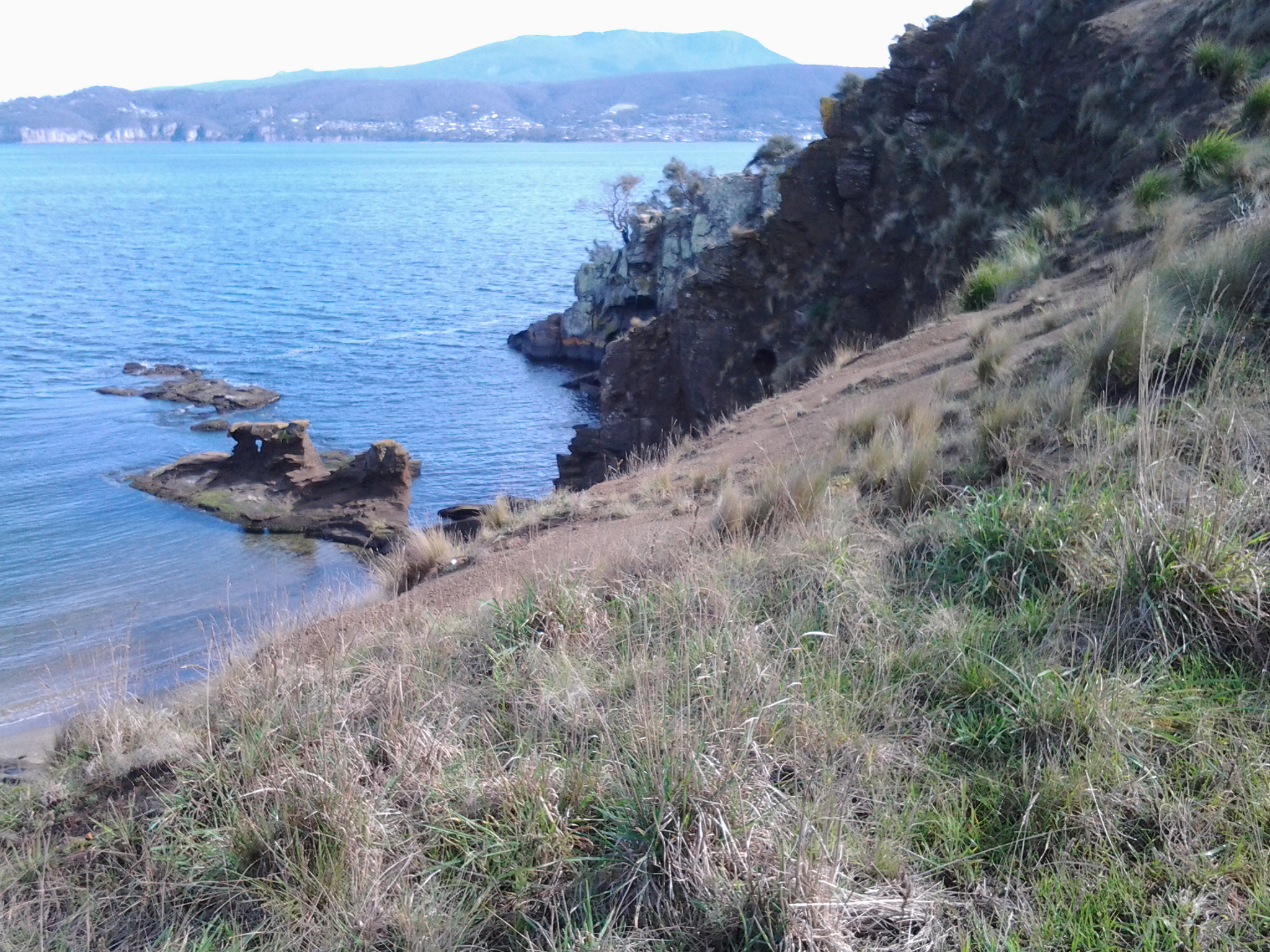
The photo above looks across part of the northern end of that part of the Mary Ann Bay, and via the Derwent River, looks towards Hobart city suburbs and Mount Wellington.

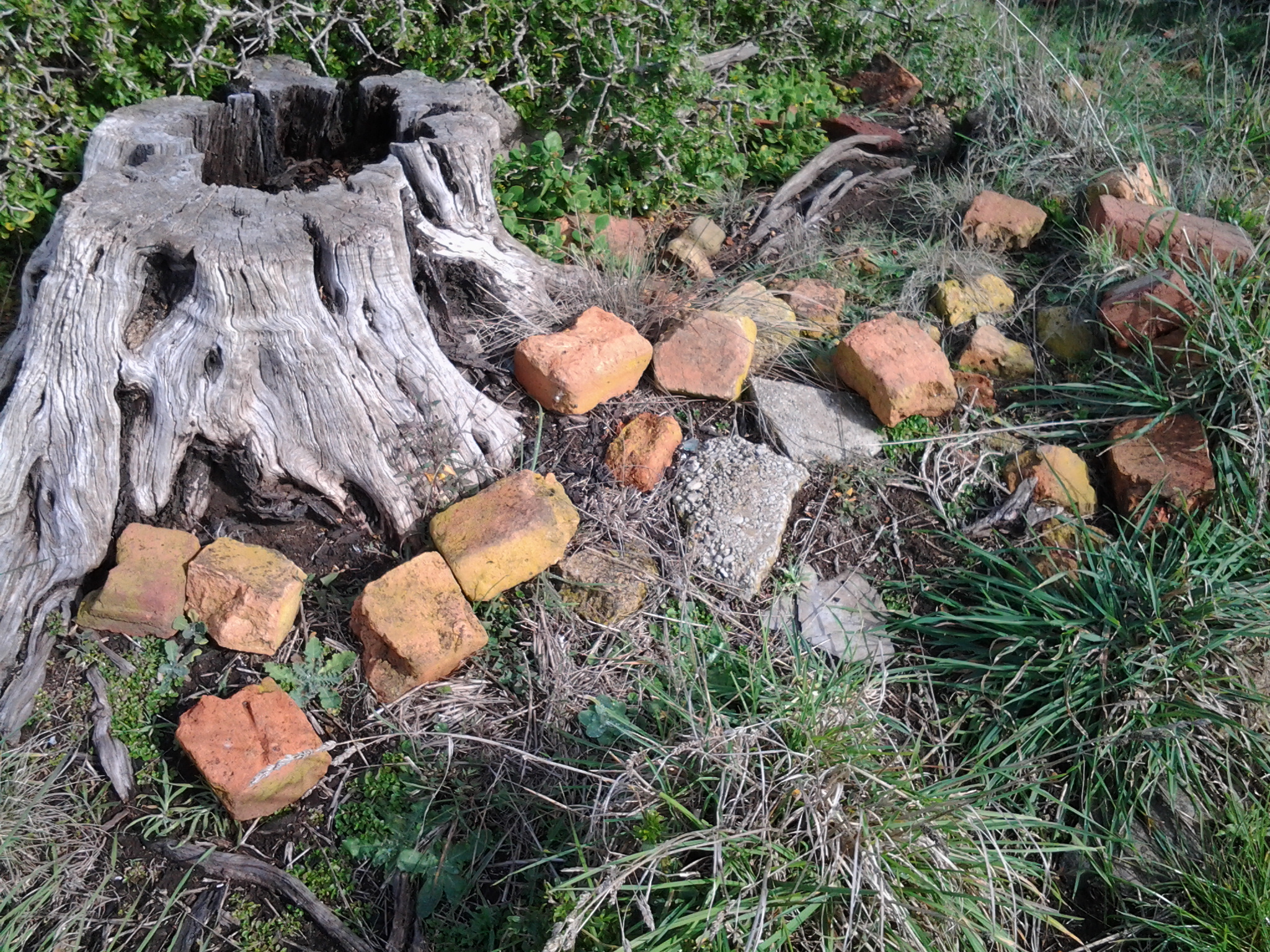
Not far away I walked past a pile of broken old convict bricks.

20140904_105102

Gellibrand Point at the northern most point of the South Arm peninsula was the destination for Stage 2 of the walk.

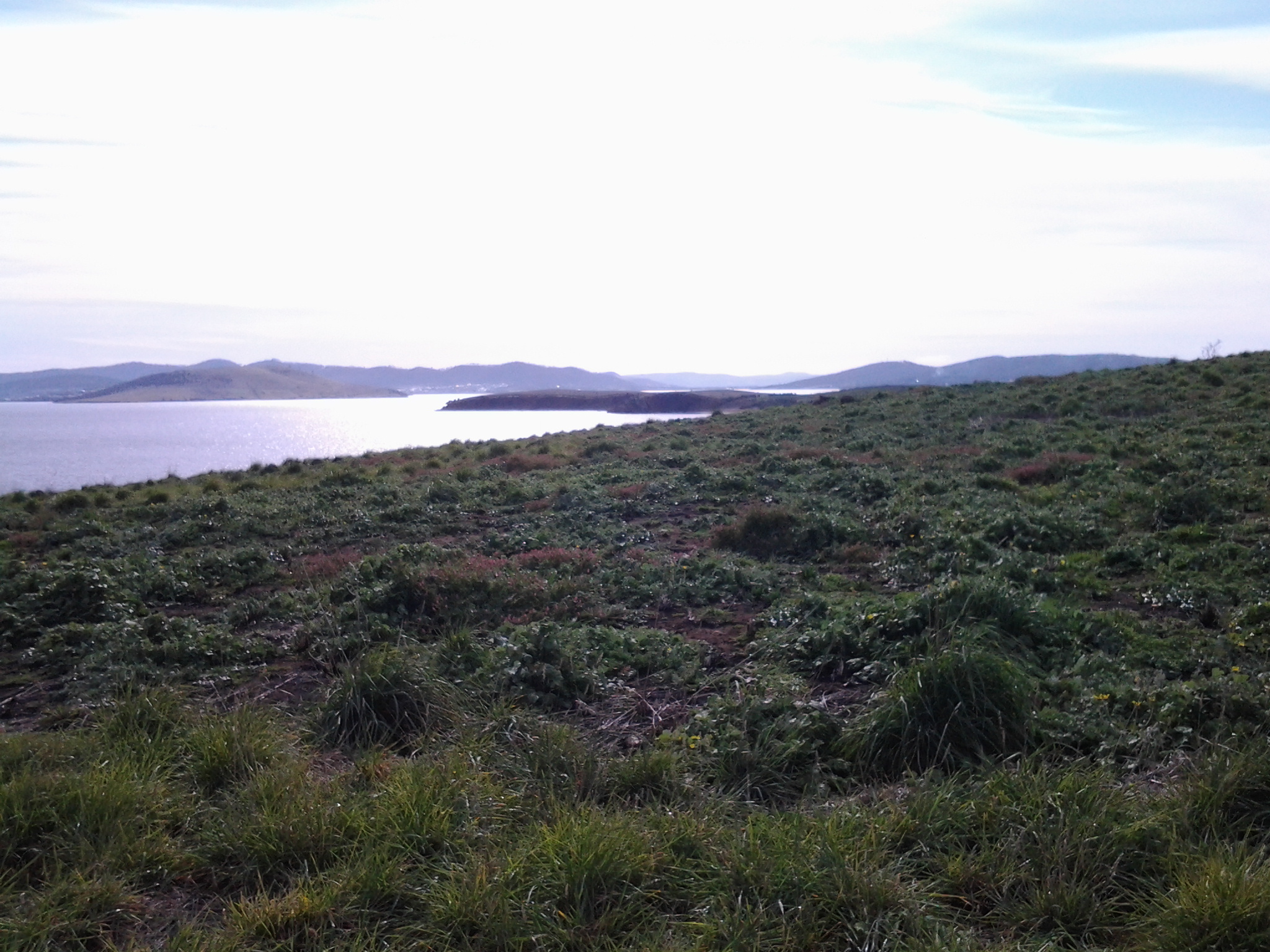
I found the shape of this headland was blunt and rectangular so that there was no hint of a ‘point’. So it was a little difficult to say I had reached the exact spot representing the end of the second stage of my walk along the Derwent River edge. Across the watery opening into the large Ralph’s Bay I could see the goal for Stage 3 of the walk: Trywork Point. This headland is situated south of the suburb of Tranmere, and north of the South Arm peninsula.

20140904_110320

In the photo above, you are looking at Trywork Point across the water.

The photo below was taken from my lunchtime vantage point looking across Ralph’s Bay towards the mound in the distance over the water on the left hand side; this is Trywork Point.

20140904_121302

The Tasman Bridge, which provides the main city crossing between the eastern and western shores of Hobart, shimmered in the distance. Mt Wellington with spots in crevices of hard white ice left over from two or three weeks ago of heavy snow, was majestic.

I wandered along the headland until, between the track and a smattering of Casuarina trees near the water line, I spotted some sandstone boulders that looked perfect as resting spots; the first I had seen. By 11.15 I had rested, eaten a snack for morning tea, and set off again up to and onto the track that extends back to Opossum Bay via the eastern side of the peninsula.

Stage 2 on 4/9/2014 William Gellibrand’s burial Vault Email 9 of 14

Shortly after his arrival, in the 1820s William Gellibrand built a home using cedar with sandstone brick foundations, on Arm End. Marshall and Townsend claim the house was built in two parts consisting of nine rooms with stables located in the trees nearby (it is worth noting that the clearing of the land in this northern end of the peninsula was so thorough and complete that the numbers of trees could probably now be counted on two hands. Currently, the rolling hills are expanses of a variety of clumpy weeds. Open. Exposed. Desolate. The photo of weeds below was taken closer to the Communications tower however it is not atypical of other parts of this peninsula. Adding to the sense of barrenness is the frequent evidence of bandicoots digging across this large reserve. It is worth noting that a regeneration program is underway and so I would expect that the landscape will change its character in the coming years.)

20140904_101005

A visitor to William Gellibrand’s house, Miss Jane Mortimer recalled that every morning after breakfast, William went to dig his own burial vault located just below the house at the top of the dunes beneath She Oaks overlooking Mary Ann Bay. Apparently, he liked to spend sunny afternoons sitting on it and reading.

The land at Arm End remained in the Gellibrand family with the lease controlled by George Henry Blake Gellibrand who lived at ‘Terra Linna’. Young Christopher Calvert leased the land and lived in the house until he retired. There was an auction in 1914 of goods and chattels including animals. The homestead quickly fell into disrepair, was vandalised and eventually burnt down.

 I almost missed seeing the vault as I strolled along the track. The saviour was an information sign installed above the bank at the northern end of Mary Ann Bay beach. The sign informed me that not only was William buried in the vault, but also interred were two of his grandsons who had been members of the Parliament – Thomas and Walter Gellibrand. William Gellibrand died ‘after an illness of acute pain and suffering which he bore with Christian submission and resignation’ on 27 September 1840 (almost exactly 174 years ago) aged 75.

The sign refers to comments by a Mrs Ruby who ‘described the vault as having three shelves of stone more likely collected from the shoreline of Ralph’s Bay’.

The vault is located close by and downhill from the sign. Visitors are urged not to walk down and further degrade the collapsing dune. Thanks to the local land care group, it was very easy to see the vault from near the sign at the top because the surrounding vegetation had been cleared over the edge.

20140904_104535 

I left this remarkable site at 10.50 am as I could hear the school children coming along the track for their own experience.

Stage 2 on 4/9/2014 William Gellibrand’s convicts Email 8 of 14

Researchers, Penelope Marshall and Alan Townsend, have written “The Convicts of South Arm” (available from http://www.ccc.tas.gov.au/webdata/resources/files/The%20Convicts%20of%20South%20Arm.pdf) which offers information and insights.  Here below are some examples of workers on Gellibrand property.

  • John Asgill, a labourer and shoemaker from Coventry in England, was transported aged 19 years for stealing gowns and frocks. He arrived in November 1836 and worked for William Gellibrand until 1841, when he absconded and was caught across on the other side of the Derwent River at Sandy Bay pretending to be a free man.
  • Lydia Hines was tried in London in 1821 and sentenced to 14 years for felony. Despite standing 4 feet 11 and ¼ tall, she was impudent and insolent. Lydia was assigned to William Gellibrand in 1825. She spent six months at South Arm as his domestic servant before being returned to the Female Factory in South Hobart (currently open to tourists) for ‘insolence’.
  • Edmund Musk arrived in Hobart on 16 May 1832, married with five children (he and his wife had a further 10 children while at South Arm. John the eldest son drowned in Ralphs Bay while loading a boat. Their daughter Susannah drowned when a boat capsized at Rokeby.). Edmund was transported for stealing ‘beans and barley’. He was assigned to William Gellibrand, where his skills as a ploughman were used. He later gained his ticket of leave and leased a farm from the Gellibrand’s. By 1858 he was farming 120 acres at South Arm, and employing convicts himself. Edmund Musk is buried at St Barnabas’ at South Arm. The Opossum Bay bus passes this church. It is located on the left as you head back towards Hobart on the South Arm Road, after you have left Opossum Bay and not long before the South Arm Cenotaph corner is reached.
  • Thomas Kimble was transported in 1844 for the highway robbery of 1 ½ sovereigns. He received 15 years at His Majesty’s pleasure. After serving as a probationary convict at Maria Island isolated off the east coast of Tasmania, Kimble was employed at South Arm by George Gellibrand (William’s grandson) during the harvest time. His record lists him as a farm labourer who could plough, a shepherd and a hop grower all useful traits to establish the new colony. Thomas’s distinguishing features were a tattoo of a Mermaid on his left arm, a woman with a glass in hand on his right arm and the bust of a woman on the back of his right hand. He received a ticket of leave on 30 March 1852.

James Cumberland was sent to Sydney from his native home of Walthamstow in England for stealing geese but gained his Certificate of Freedom in 1827. In 1846, following his conviction for the manslaughter of his pregnant wife under the ‘spiritual influence’ of public house liquor, James was transported to Hobart for life. In Van Diemen’s Land, James worked for George Gellibrand at South Arm where he died from heart disease on 19 June 1853 aged 53.


Stage 2 on 4/9/2014 William Gellibrand Email 7 of 14

With feet wet from long dewy grasses in the trek around Mary Ann Bay, I slopped along ready for new natural wonders. The track changed from dirt to dry sand and the large paw prints of a wandering dog were freshly impressed.  Soon after, it seemed the track had not been driven on for a long while and quickly it reduced to a single file.  Around 10.40 am, I had already walked up a hill, and had passed a mesh fence with the beach below to my left where I could see a small sandy bay complete with unconcerned Pied Oyster Catcher birds foraging.

From research and from information shared by a friend, I knew the original white settler, William Gellibrand, was buried somewhere along this part of coastal Derwent River. I wondered if I would be able to find the spot and whether the site would be marked.

A local group http://friendsofthearm.wordpress.com have been particularly instrumental in researching the history of the first white settlers (remember this South Arm peninsula was part of the country of the Moomairremener indigenous people). In addition, the South Arm Landcare Group has been doing its best to preserve the environmental landscape. Currently the latter group are ensuring the land around William Gellibrand’s burial site is protected.

William Gellibrand accompanied his son Joseph Tice Gellibrand (who had been appointed Attorney General for the colony) from England to Van Diemen’s Land in 1824. William was granted approximately 2000 acres of land at South Arm and assigned ten convicts.  This was later increased to 3000 acres by a grant from his son.  As other settlers arrived Gellibrand leased land to them and later they were able to purchase their lot. By 1885, many had purchased land on the peninsula: some names are  Alomes, Calvert, and Potters and people with these family names are still in the district today.

I am sorry not to have found a photo of William Gellibrand for insertion here.Below is a photograph of George and Agnes Alomes courtesy of the site at http://www. southcom. com. au/~pottermj/pagef. htm

  [IMAGE]

 William Gellibrand’s claims to fame in Hobart Town include his appearance in the registrar of Magistrates Hobart Town from 1826 until 1827 and he is also remembered for setting up banking in Hobart.  In addition, William was a merchant and exporter and served as a Justice of Peace.

Stage 2 on 4/9/2014 Mary Ann Bay Email 6 of 14

From the communications Tower, I followed the reasonably flat four-wheel drive track north eastwards by the edge of the river and ten minutes later I was able to look down from a high cliff towards Mary Ann Bay.

20140904_101830

For a short while a solitary man stepped briskly along its short length. Despite the children stopping and starting as they took in the sights along the way, the group caught up with me as I looked down at the beach end of the very long and faceted Mary Ann Bay. These were relaxed country kids who said their ‘hellos’.  I had forgotten such differences exist between the city and country. Their openness reminded me of my experience on a Marquesas Island last year, when having talked to a primary school class one day, and then travelling to a remote part of the island the following day, a young girl came up to me in the car where I was sitting, simply to say hello. With each of our halting use of the French language (the Marquesan’s speak a Marquesan language as their first language and only French, the national language, occasionally) we were able to work out why she was greeting me. She had remembered me from the class room, and the country thing to do was always to acknowledge people you know, however slightly. But I have gone off at a tangent … back to the walk and to Mary Ann Bay.

After glorying in the views of the undulations of this part of the South Arm peninsula, the expanses of the Derwent River and the sparkles of the western shore, I had the choice to continue on the four-wheel drive track up and over a hill or follow a single track through tall wet grass that skirted the cliff edge. No contest. I avoid hills when I can.  Of course I had no idea where this track would go or whether I would need to retrace my steps. But all was well, and the track gave great views before curving around downhill from the main track. Quite quickly I found myself back joining the main track after it had dropped down from the hill. It was only 10.25 am and I had been walking for an hour and a quarter.

I continued for a few minutes along the main track until I reached a very steep hill for a 4 wheel drive to descend. Having owned a 4 wheel drive and enjoyed off road adventures in the Northern Territory, I know that if I had come across such a serious drop I would have been taking lots of very deep breaths and may have even prayed in what would be a swift if not hair-raising sliding descent.  On my walk down the hill, I avoided the slippery earth and enjoyed a safe descent courtesy of clumps of grass. Soon after this, I continued on and passed the sandy track that could have taken me onto the beach end of Mary Ann Bay.