Category Archives: Hobart

Across the Jordon and into Greens Point as I walked northwards along the Derwent River

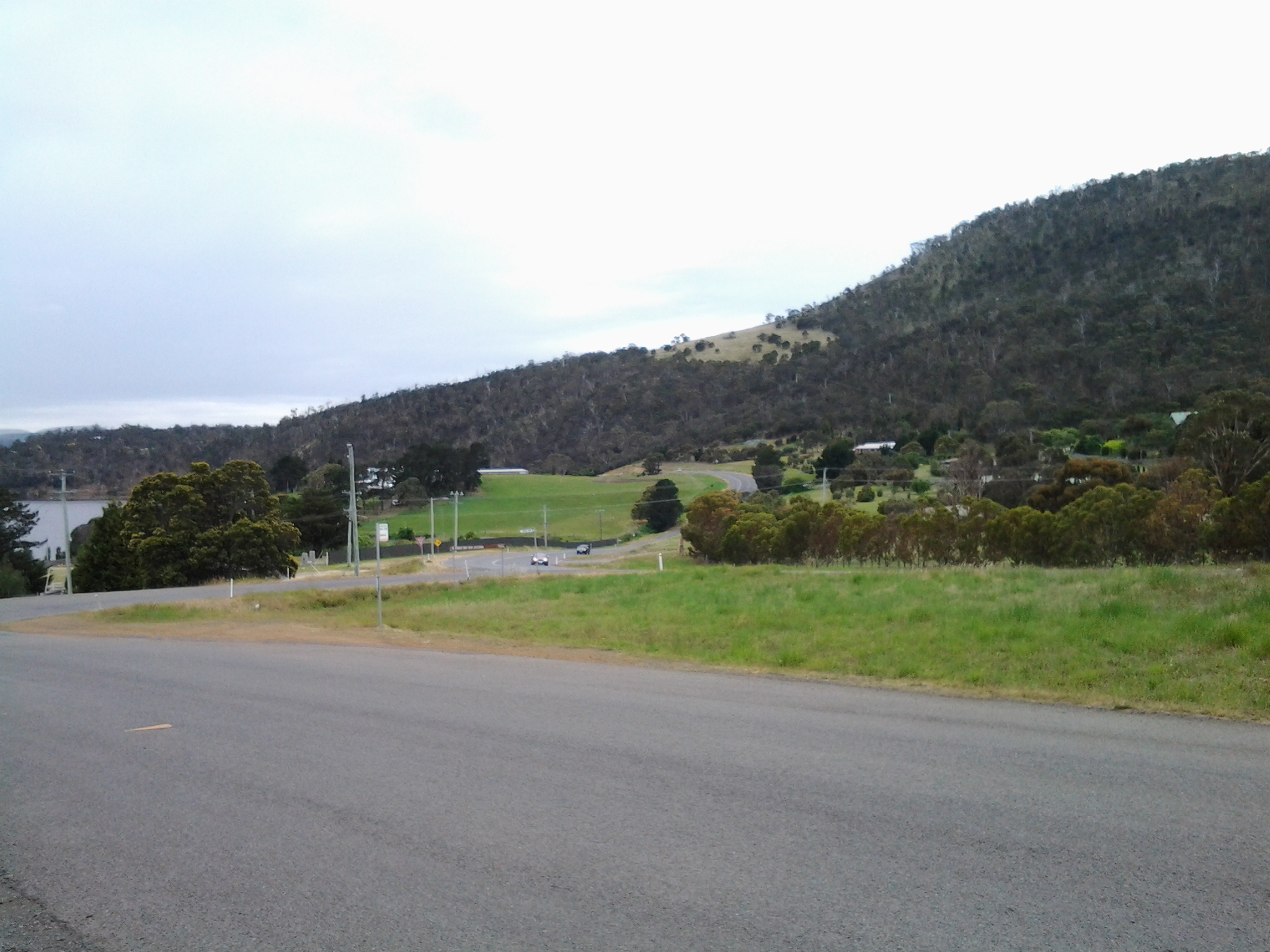
In leaving Herdsmans Cove, I was back on the East Derwent Highway and immediately crossing the bridge northwards across the Jordan River.

20141111_105455

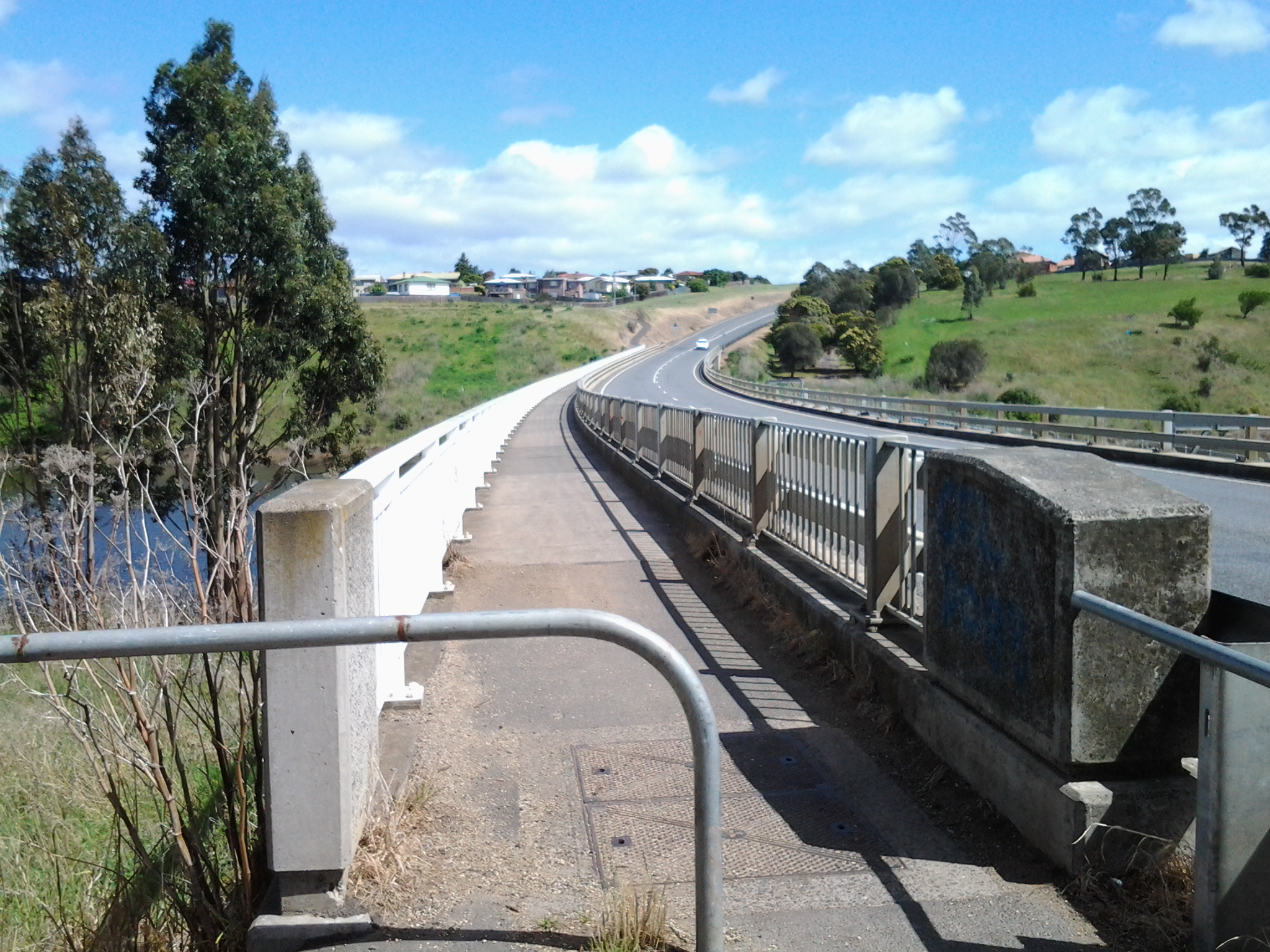
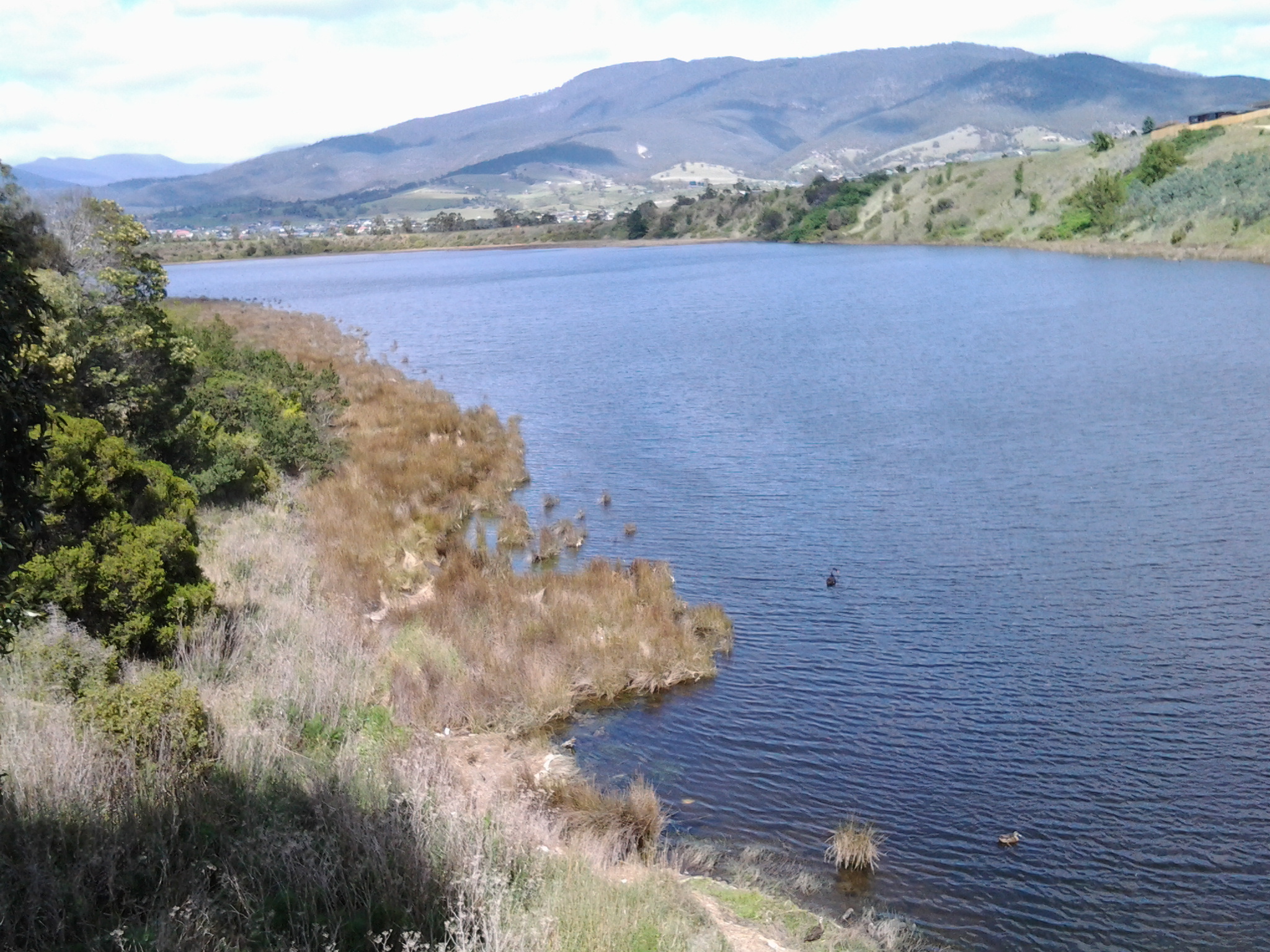
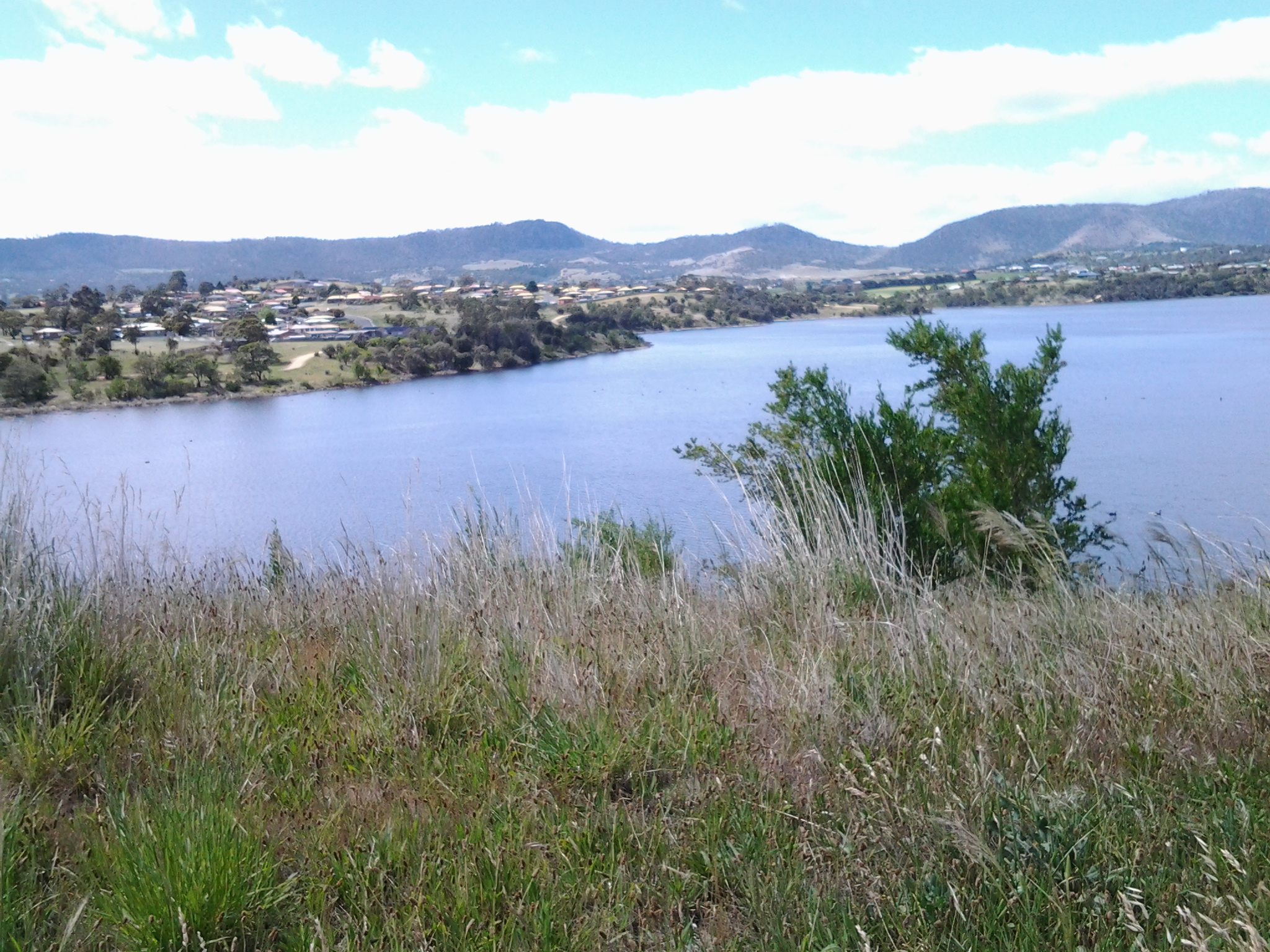
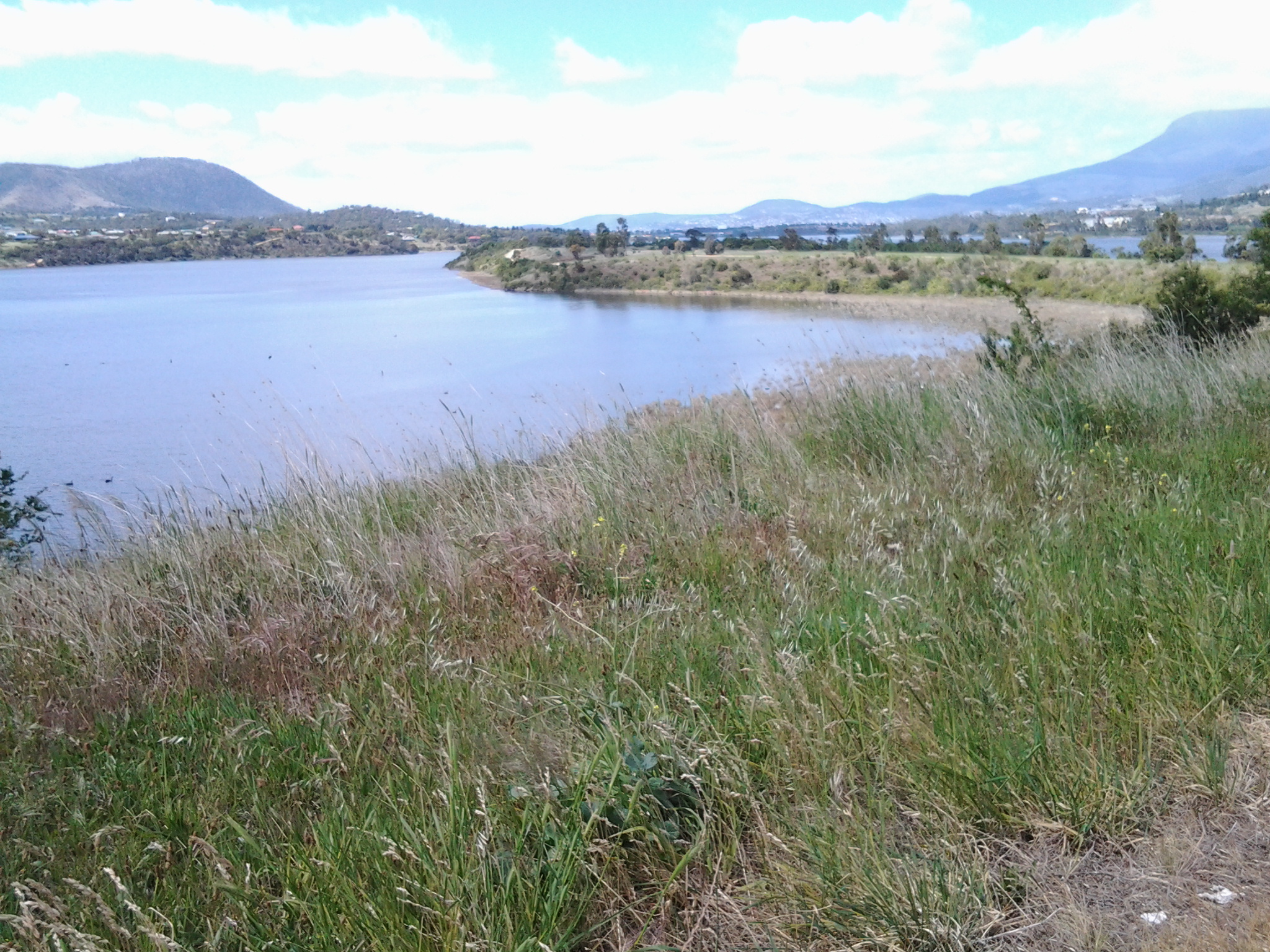
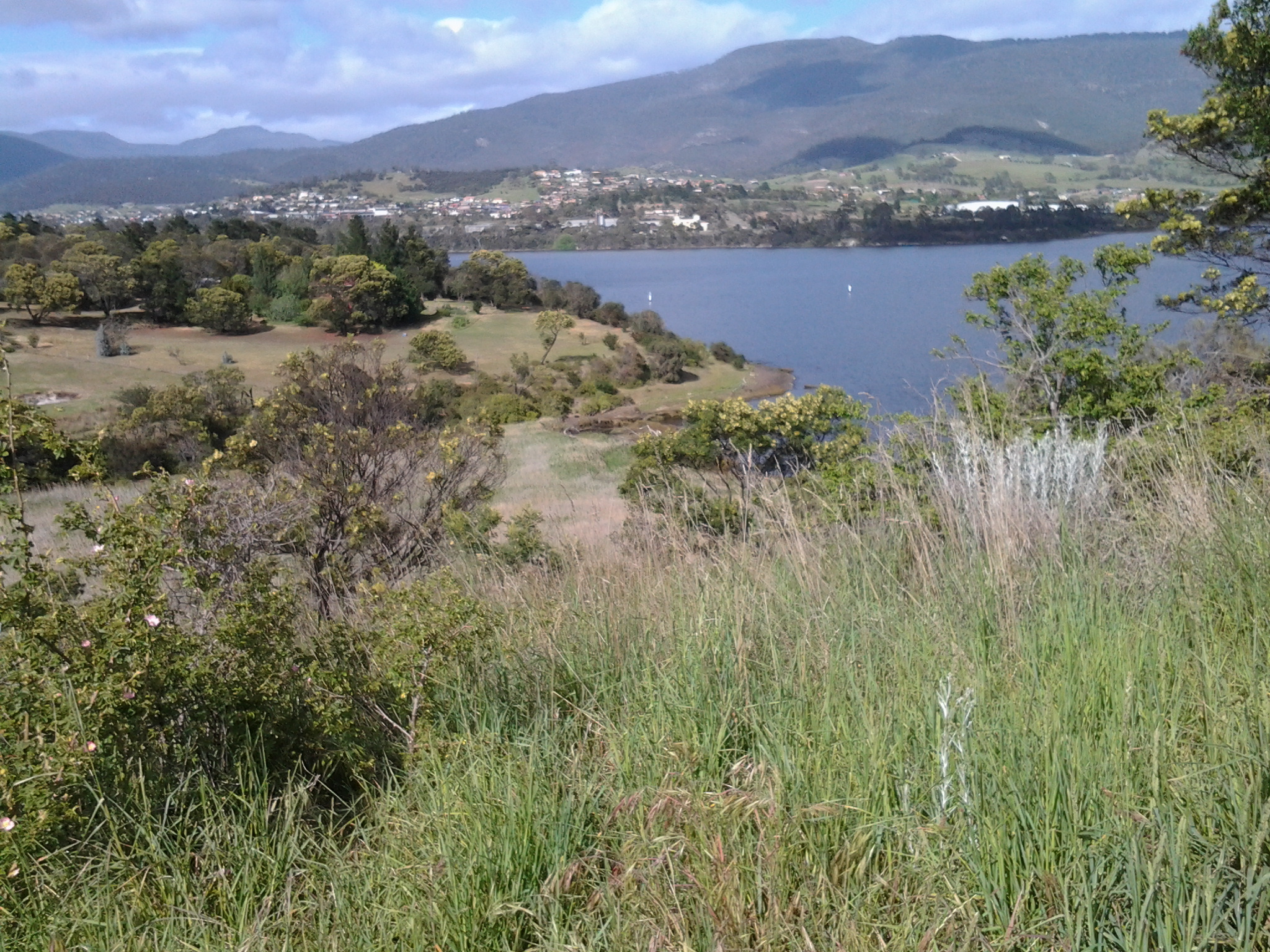
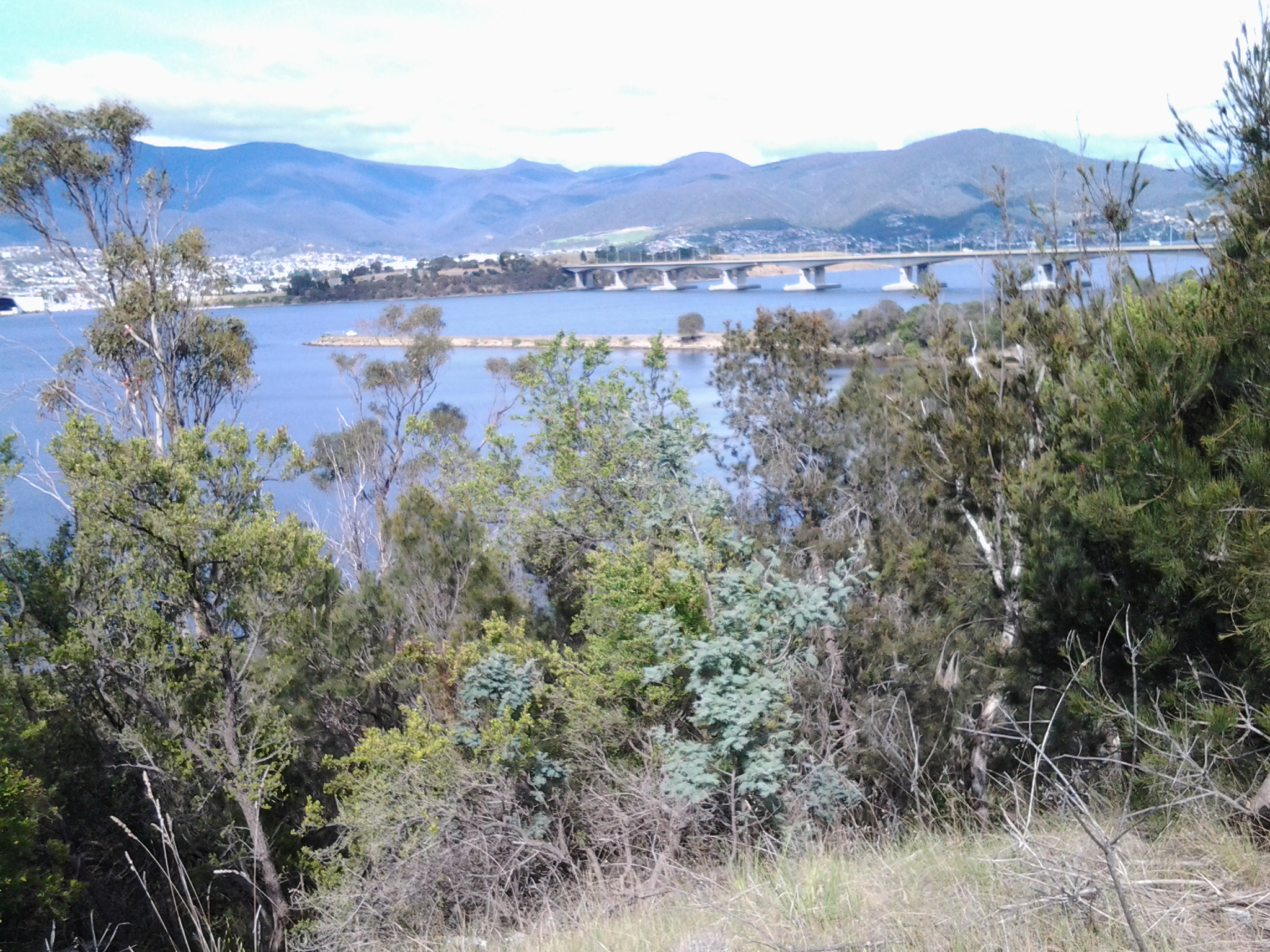
Looking towards the Green Point peninsula at the far end (Derwent River is on the other side of the peninsula) from the Jordan River Bridge: suburbs of Herdsmans Cove on the left and Green Point on the right.

20141111_105605

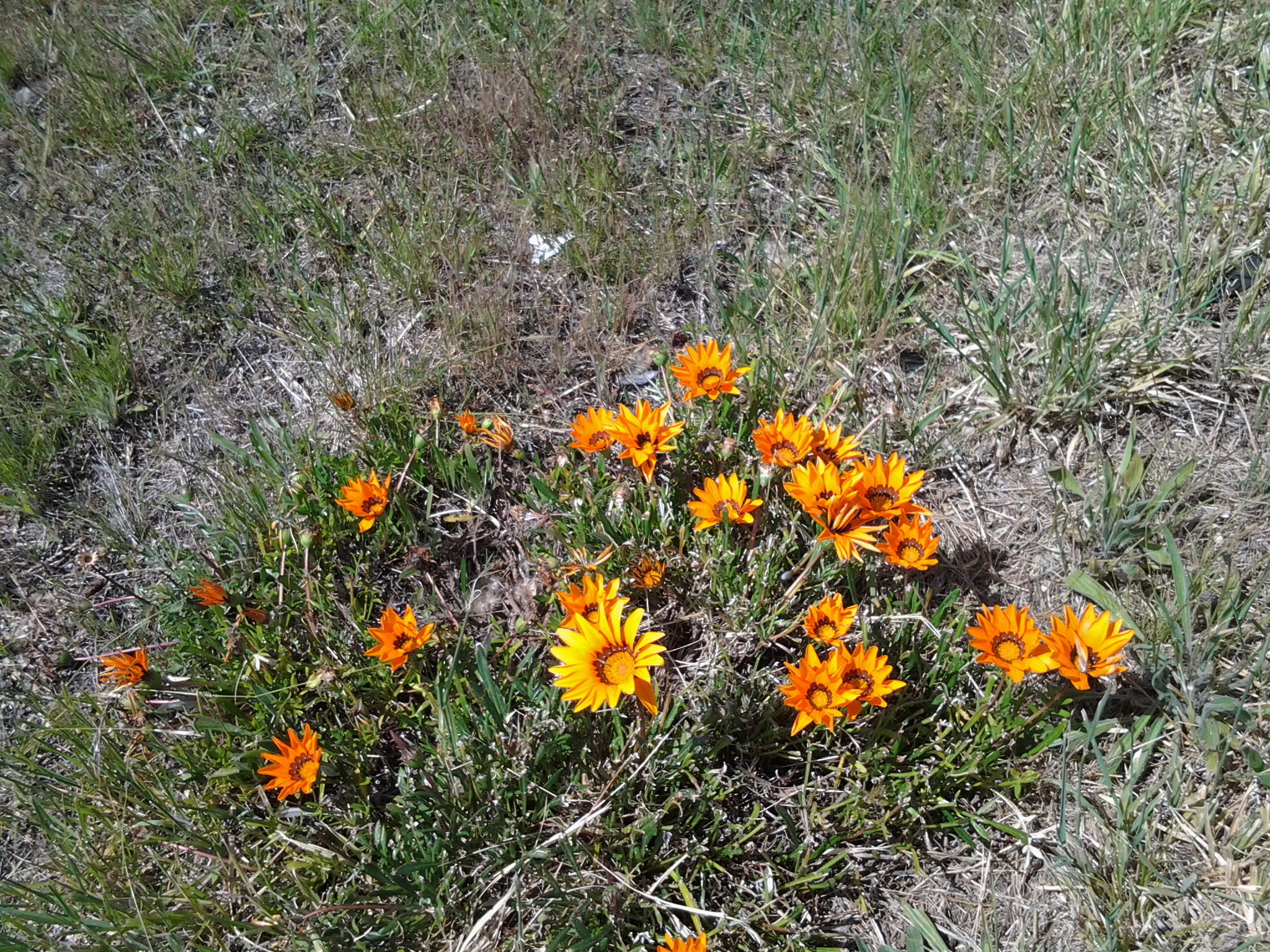
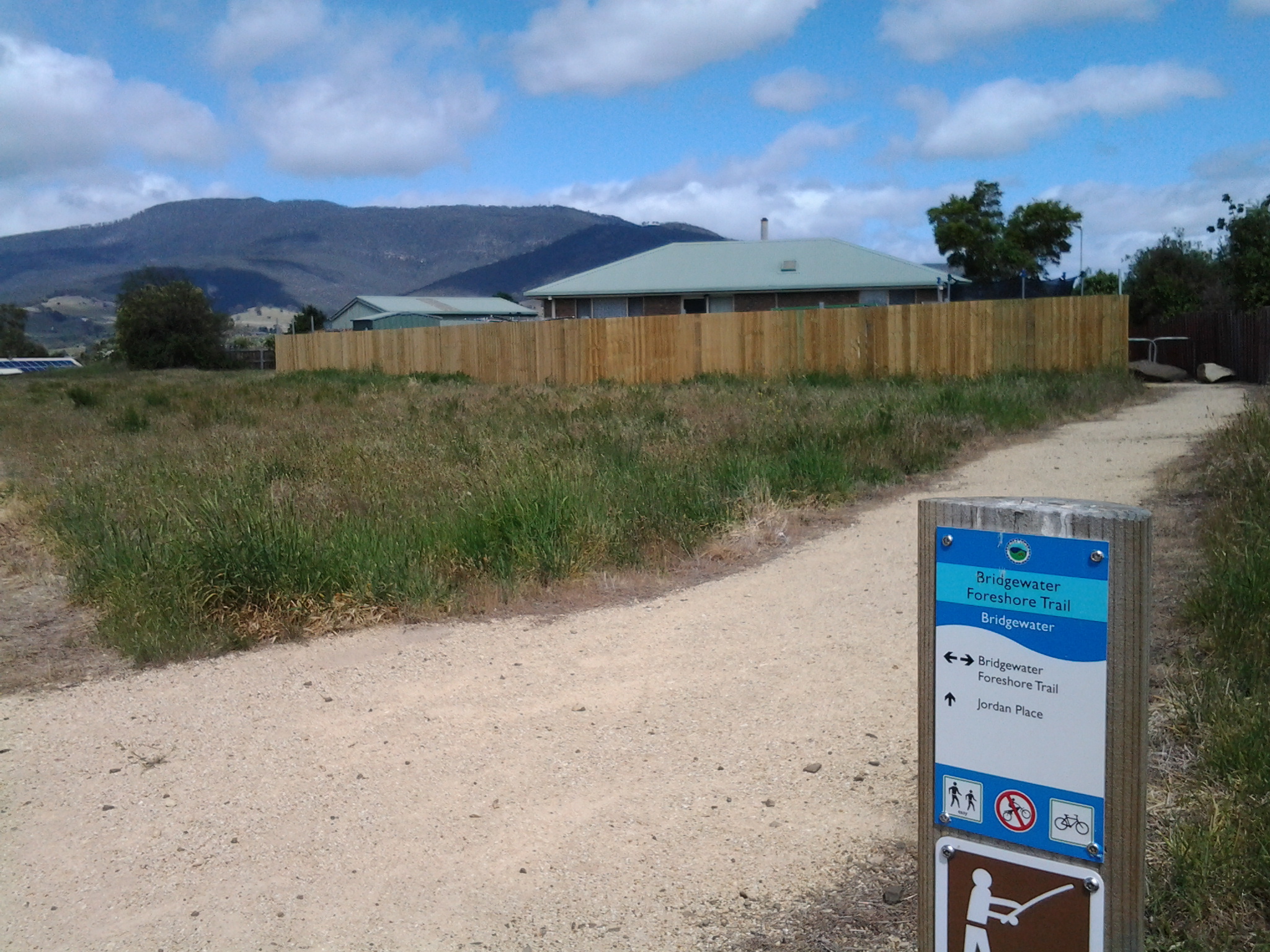
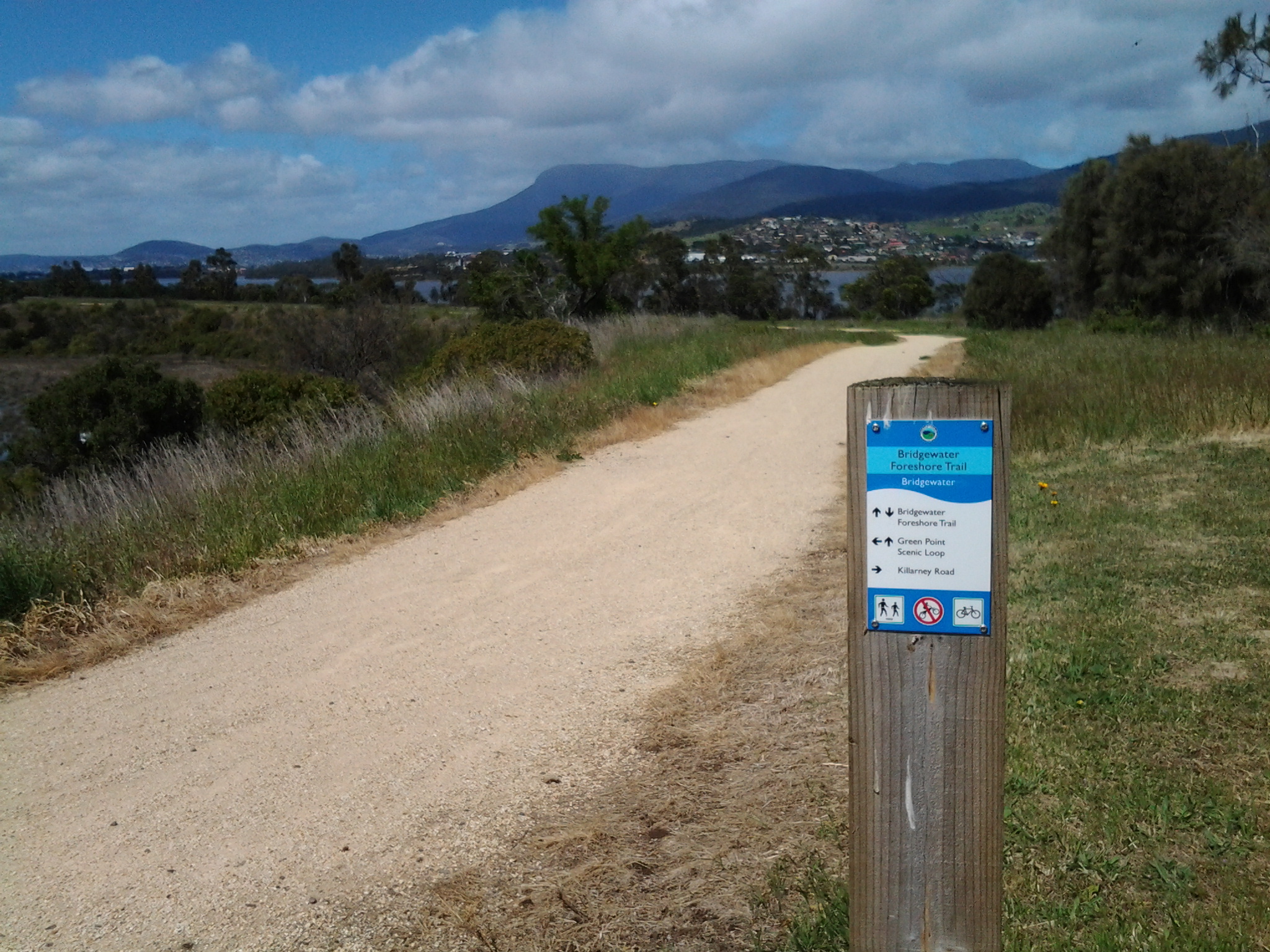
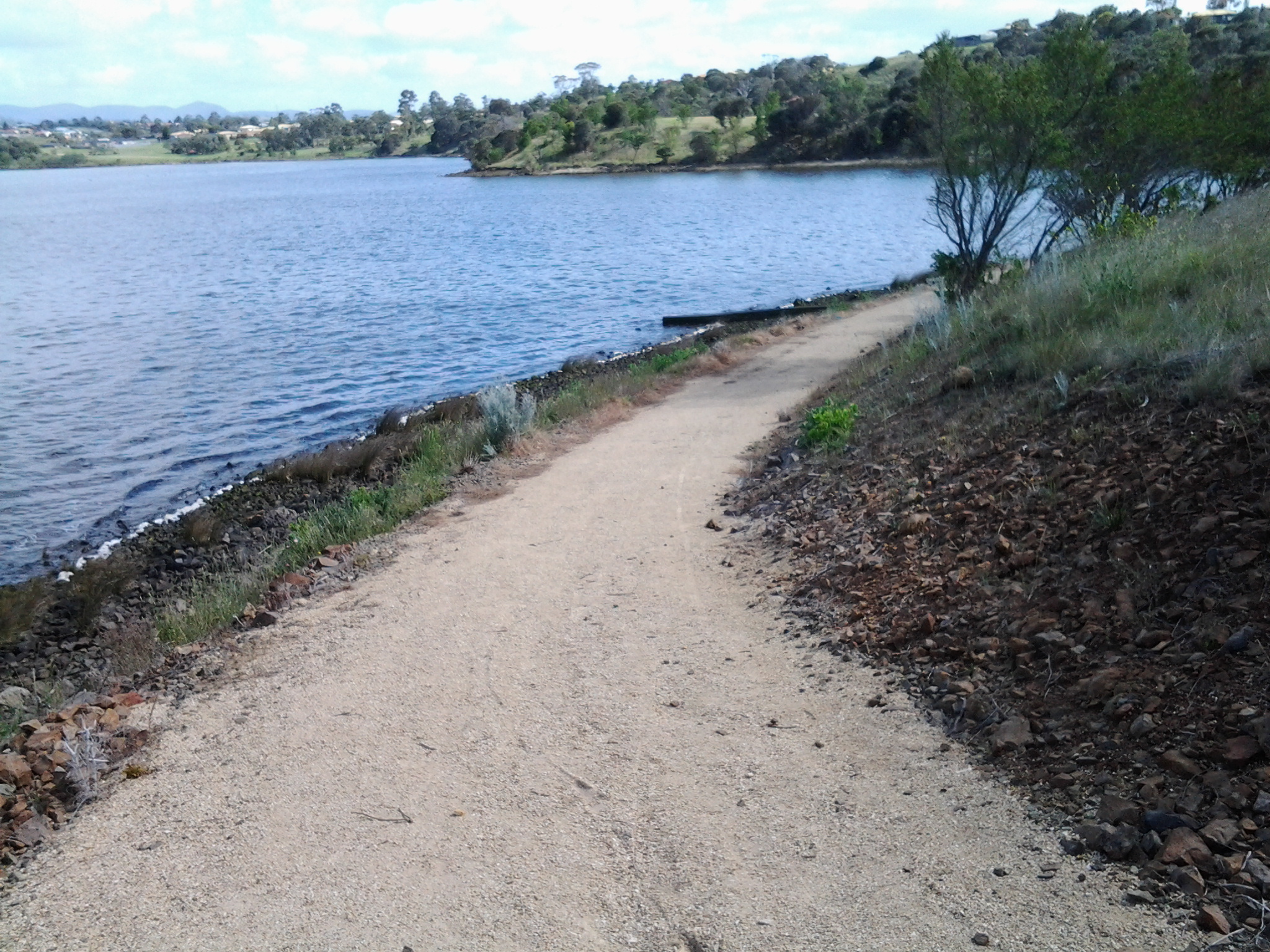
I was off the bridge by 11am and walking up the bitumen path beside the Highway until I reached a yellow gravel path to the left, where I turned and continued on with wild fennel flourishing on the sides of the path along with brightly flowering gazanias growing wild, walked around another gate and by 11.11am I reached the sign for the Bridgewater Foreshore Trail.

20141111_110243   20141111_111122

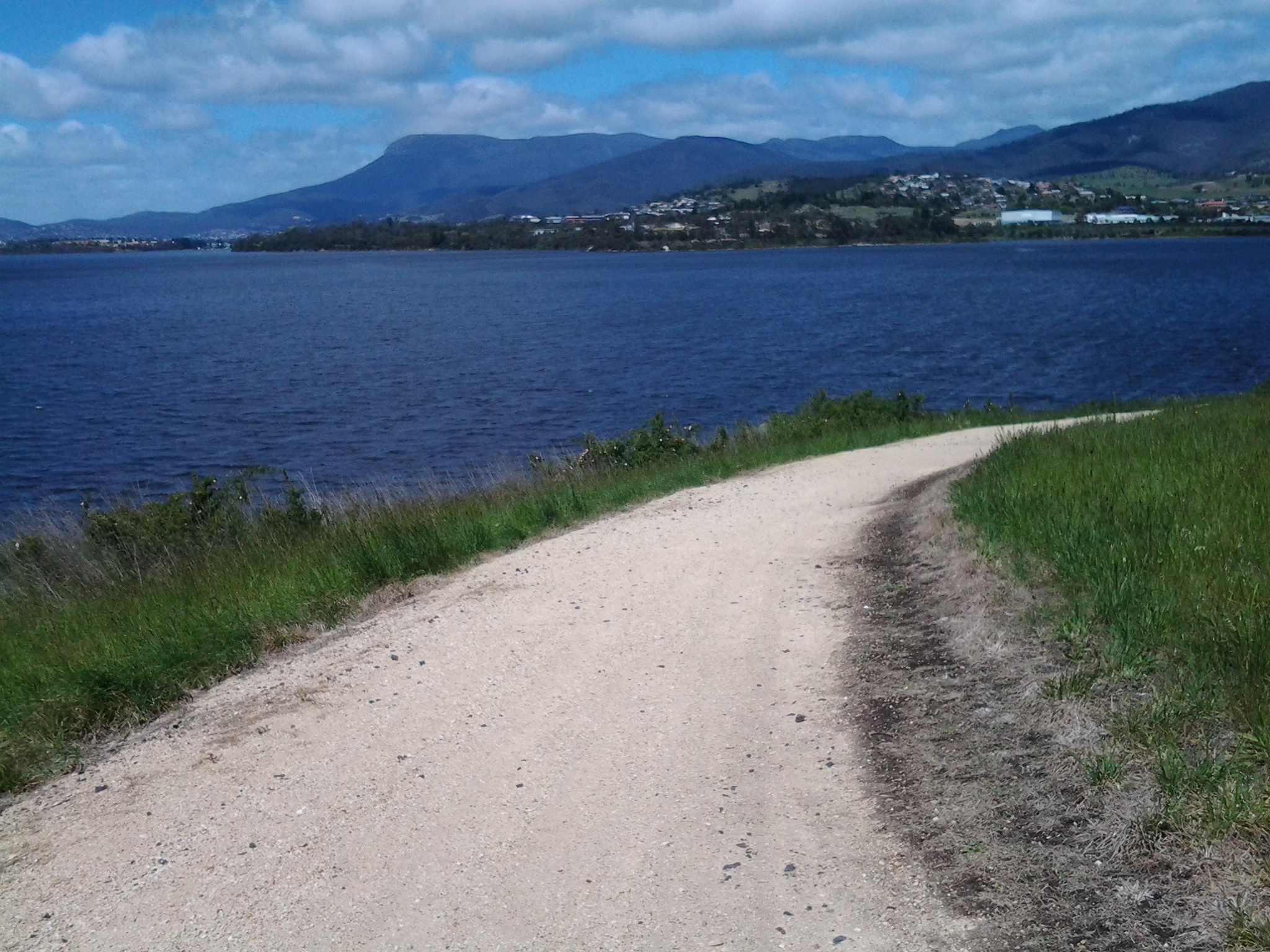
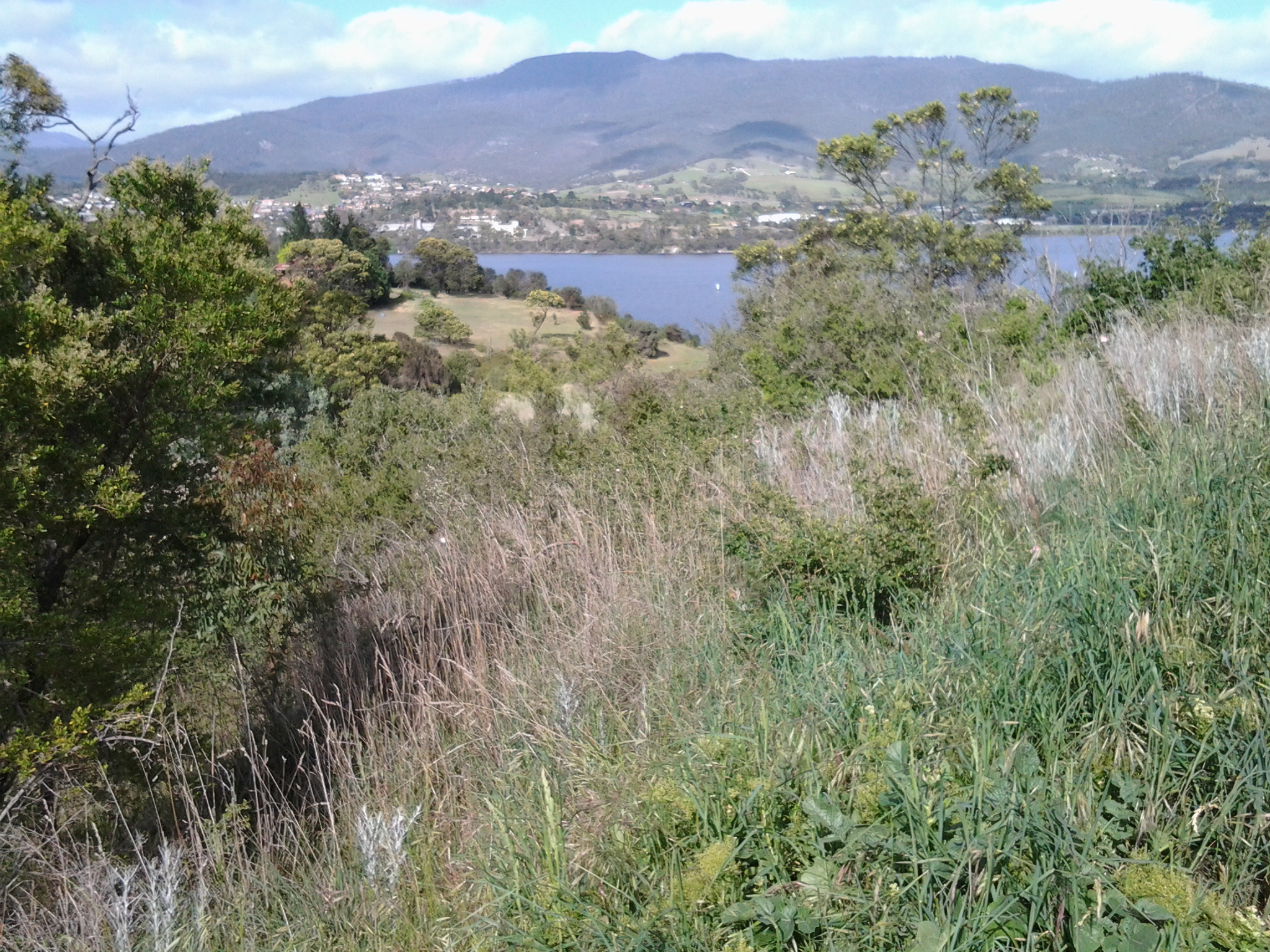
In the distance I could see rain showers softening over Mount Wellington but I was dry and walking in the sunshine. After rounding another gate, a sign pointed out the Green Point Scenic Loop off to the left. I headed along this in a southward direction enjoying the fresh smell of the gum trees and the perfume of the wattle flowers.

20141111_111239  20141111_111236  20141111_111233  20141111_111231  20141111_111500  20141111_112105

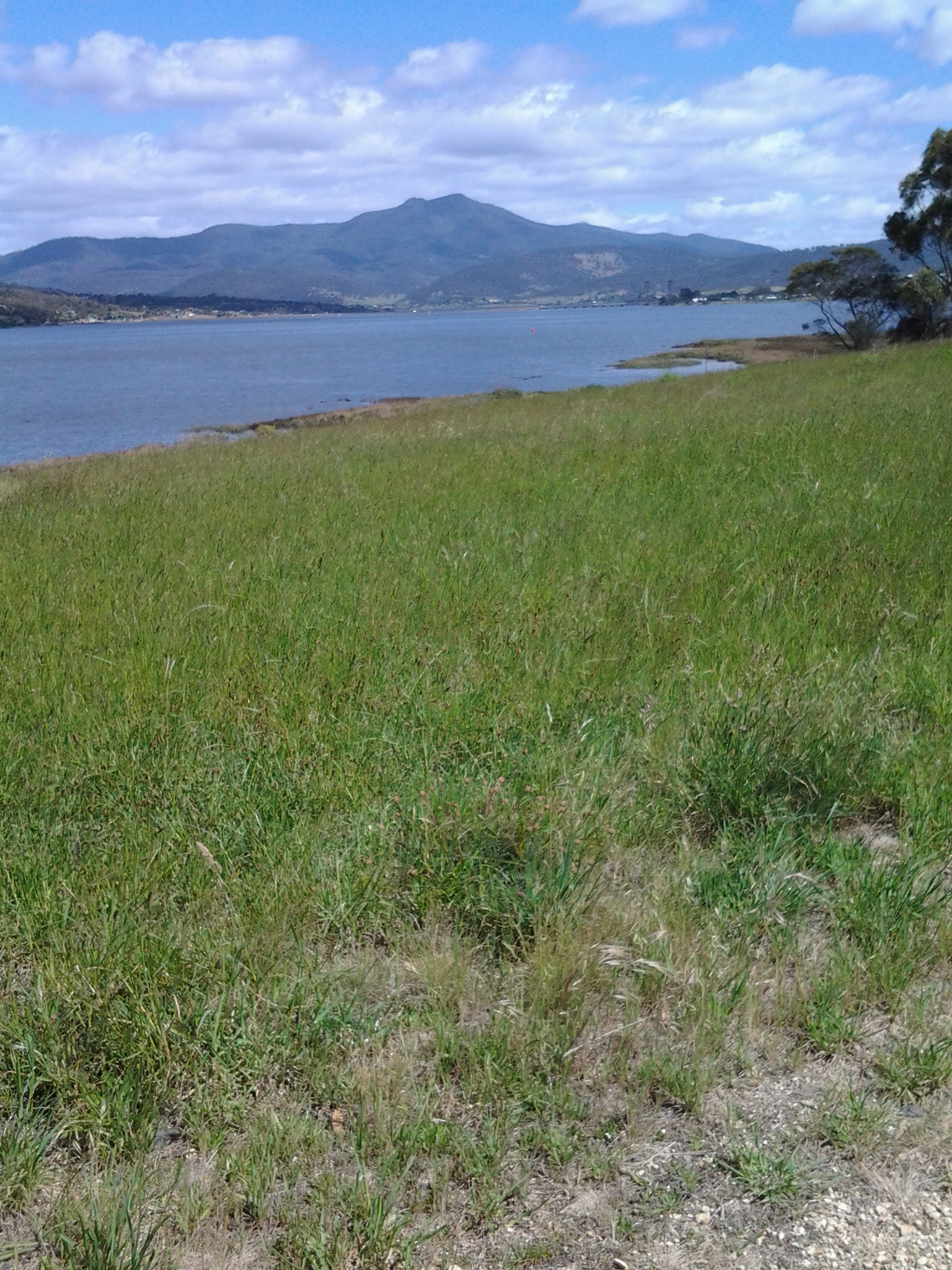
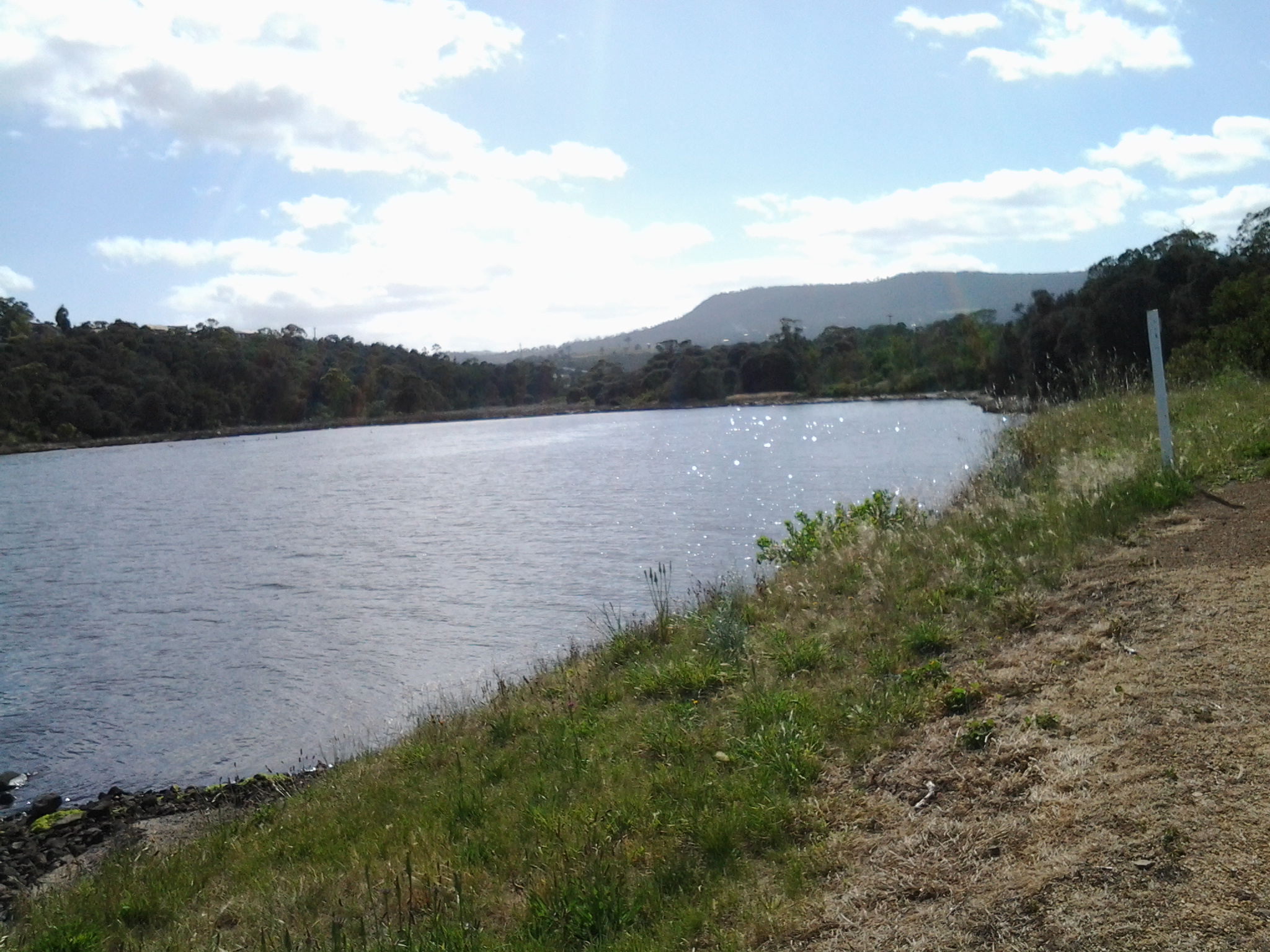
At 11.35am I reached the point of Green Point at the junction of the Jordan River with the Derwent River and sat on the grass beside the path for a brunch break.  My breakfast was eaten at 6am so I was a smidgin hungry by this time. A strong south westerly wind blew across the Derwent River and buffeted me. The freshness was invigorating.

20141111_113217 20141111_114835

Ten minutes later I was up and walking on.

A few minutes after midday I had passed some more gates and signs and had chosen the trail closest to the shore leading north. On my right were the fences of some houses, and either someone had dumped their rubbish over the fence or the wind had blown it there. I was amused to see a blue hard plastic chair hanging on a washing line.

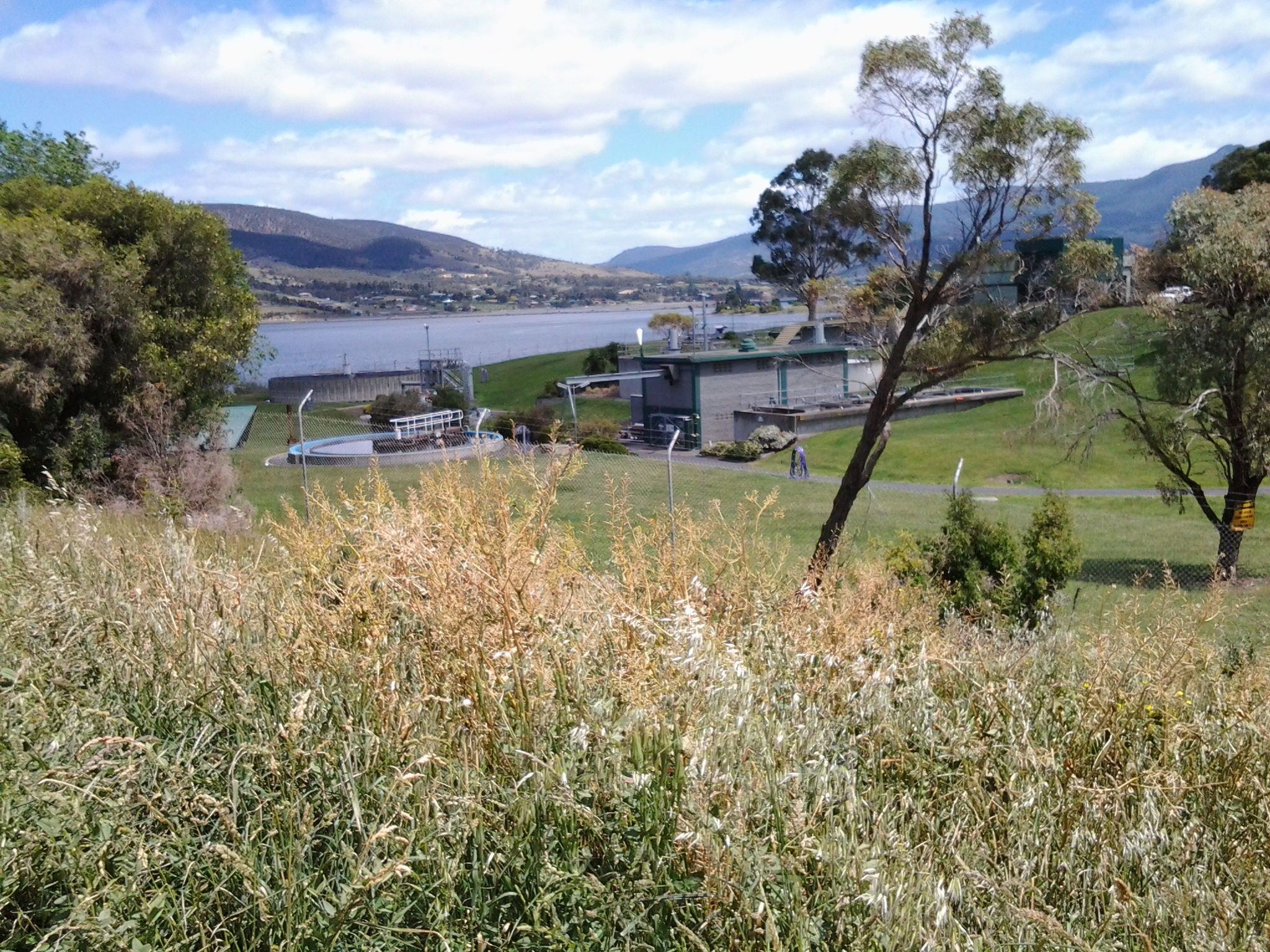
Just after 12.30pm I walked around the Green Point Waste Water Treatment Centre, or as some maps have it, the Sewage Works.  The fresh smells of wattle or gum trees couldn’t reach my nose here. For some reason?

20141111_123316

Near the Treatment Works I walked back on a street for some metres before coming around a corner where I was able to return to the yellow gravel road (am I Tasmania’s version of Dorothy from the Wizard of Oz?).

Now I was about to walk around the suburb of Bridgewater.

Onwards into and around Herdsmans Cove on the 8th stage of my walk along the Derwent Rive

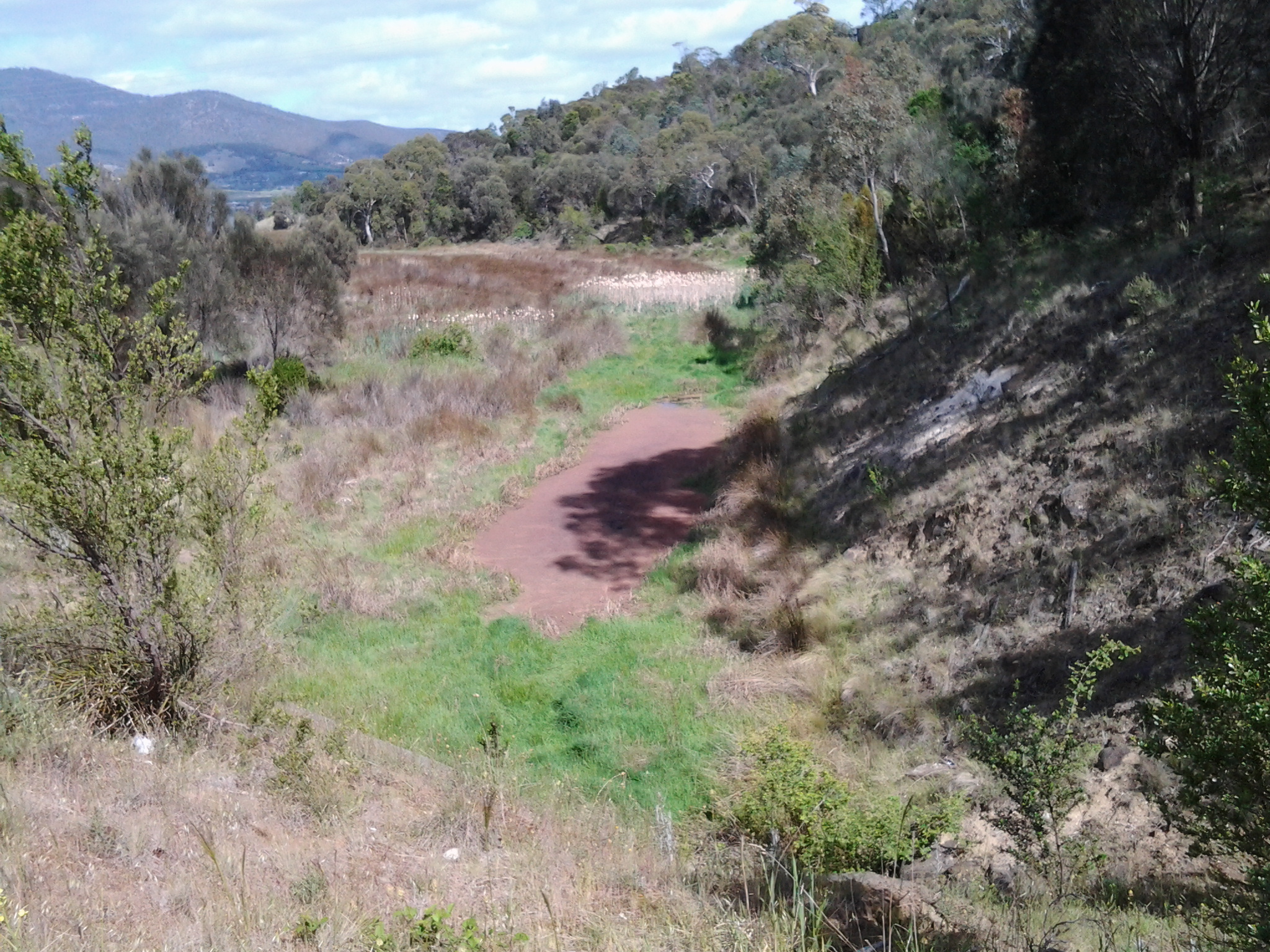
At 9.48 am I was leaving Old Beach and continuing my walk northwards along the East Derwent Highway with its noise of heavy trucks and speeding cars passing me by. To my left were masses of overgrowing blackberry brambles reminding me of the thicket scrambled through on my last walk.  Not long after, the hint of a track on the left took me away from the edge and above the Highway and a little closer to the River.  I continued for a while when it seemed like the track would descend into Gage Cove, but it petered out – I recommend anyone following in my tracks stays on the Highway. Overhead soared a large hawk or kite drifting on the breeze while looking down for a feed.   Below I could see black swans feeling safe on the waters of the reedy Cove. Back towards the road I walked, clambered over a collapsing barbed wire fence, and eventually down onto the unprotected road verge and again sometimes into the ditch (with the thrown cigarette butts and the jetsam of McHappy Meals). At 9.58am I reached the sign for Gage Brook and soon after observed some water ran below towards Gage Cove, amidst a conglomeration of marshy and spiky vegetation.

I continued past a second sign directing traffic to the Baskerville Raceway, and at 10.10am I turned left at a major roundabout (suburb of Gagebrook to the right, Bridgewater straight ahead and Herdsmans Cove to the left). A minute later I turned left at a T-junction then left again at Calvert Court at 10.19am.

I loved hearing the wind in the massive gum trees.  Majestic to look at. Thrilling to listen to. The photo bellows shows a stand of gums in a mowed parkland beside the Bellerive walk. The trees I saw at Herdsmans Cove were much larger.

20141111_121906

At 10.23am I turned left at a short unnamed cul de sac with an empty block leading to a foreshore trail. Two locals, who were mowing lawns, confirmed this was the way to go. On the track, a sign gave directions along this ‘Swan Park Trail’.

20141111_102504  20141111_104216

I never discovered if there was an actual Herdsmans Cove as in a bay or body of water, but I suspect it may be the small inlet adjacent and north of the Lamprill Circuit. If I had turned left I could have walked the Lamprill Circuit. However, because I could look down and could see a small shelter structure had been built at a vantage point where the River and mountain views could be appreciated and I realised going down meant coming back up a hill, I did not pursue this direction.

20141111_102911

Instead I turned right and headed northwards. This was the first of the Brighton local government signs and it made me more confident of where I was walking as I came across more.

At 10.30am I was rounding another gate and soon, away in the distance, I could see the tops of the Bridgewater Bridge.

20141111_111825

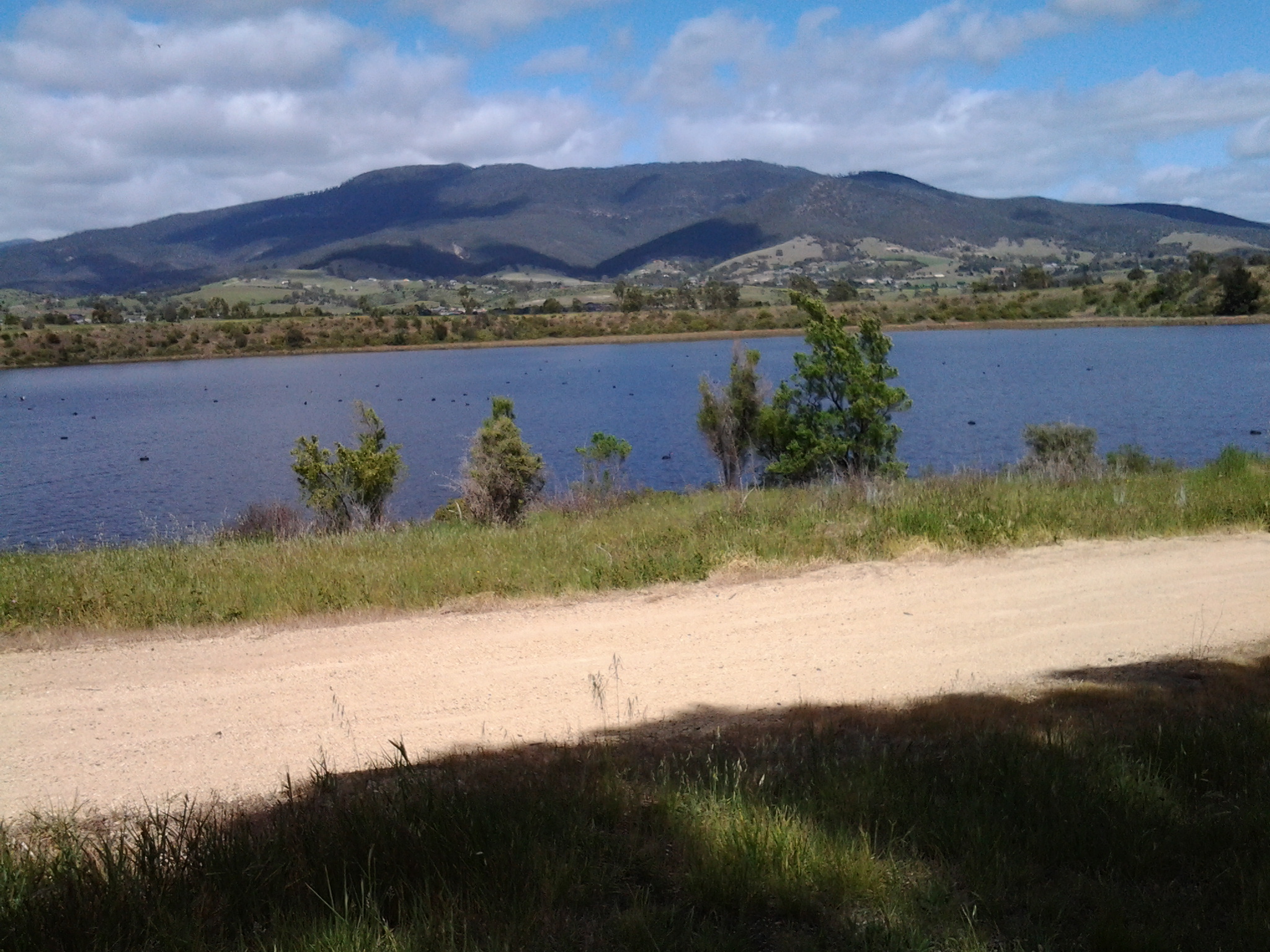
The walk around the suburb of Herdsmans Cove was uneventful. Lots of bird song beside the path and scattering tiny birds in the long grasses. A brilliant Blue Wren flitting. Mounds of black swans like dark rocks sleeping on the rocky shore. Foreshore Trail signs off and on. Gates to walk around.

20141111_104537

Eventually I was curving back towards the Highway and nearing the bridge over the Jordan River. Initially I was looking across the Jordan River at the suburb of Green Point (part of Bridgewater) –

20141111_104541

Then I was approaching the Bridge.

20141111_105339

A TasWater worker had parked his vehicle and was absorbed in problem solving inside a building alongside the Jordan. Beside him, I took an informal track up and onto the Jordan River Bridge.

20141111_105331

Starting stage 8 of my walk along the Derwent River

My starting point was the jetty half way through Old Beach on the eastern shore, and to reach this from my home in Bellerive on the eastern shore of the Derwent River was not straightforward. There are no direct buses from Bellerive to Old Beach.

Instead, I left home at 6.45am (way too early for my liking but no other choice), passed three Black Cockatoos feasting on a native tree in a private home (one acted as a sentry high up while the others gorged themselves), walked to the Eastlands bus mall and caught the first bus through to the bus mall in Elizabeth St in Hobart’s CBD. At 7.17am the X1 express bus to Glenorchy in the northern suburbs of the Greater Hobart Area (and beyond) departed. This arrived at 7.35am at the Glenorchy bus mall and, anticipating public toilets would be non-existent for my walk, I walked over to the Northgate shopping centre to use their facilities. I was back at the bus mall in time to catch Metro bus 126 to Old Beach which departed at 8am. At 8.20am I stepped off the bus ready for the day.

The sky was overcast and I was wearing a thermal top over my T-shirt and topped with a fleece jacket.  Blowy. Hard air hitting my face.

Since there was no direct water access from the jetty northwards, I walked through the suburban streets staying on the hard concrete footpaths. Plovers and Blackbirds were my constant companions and extravagant blooming roses and wattles perfumed the air. It was rubbish removal day and the streets were lined with bulging large faded red wheelie bins and yellow lidded green bins. The wind had lifted many lids and these were thrown back as if saluting when on parade (a vision that friend Jo exclaimed he saw).

At 8.33am I reached the intersection with the East Derwent Highway and lost a footpath. I turned left and walked beside the highway where it was obvious a few other people had walked but there was no formal pathway. At this point I could see the water of the Derwent River but I was not close. It was clear that property owners had fenced and gated off any access to the River and I need to determine whether they had the right to do this in all cases.  I continued on the Highway noticing the signpost to the Bonorong Wildlife Park and Compton Agistment Centre marking the turn off from the highway away from the River.

Not much further along I saw a track between new houses on the left and followed it then through the grassy bushland but, as lovely as it was, it was impassable offering no easy way to the River and so I had to retrace my steps. At 8.54am I was back on the Highway walking to the left of the guard rails (so that I wasn’t directly on the Highway) on rolling gravel where a path was never intended.  Then the guard rail disappeared so I walked carefully as far off the road on the narrow verge as I could.  Sometimes I walked in the ditch. By 8.58am I was passing Compton Road and at 9.01 I reached Clarrie’s Creek. I began to disrobe as the morning and the exercise began to warm me: off came my thermal top.

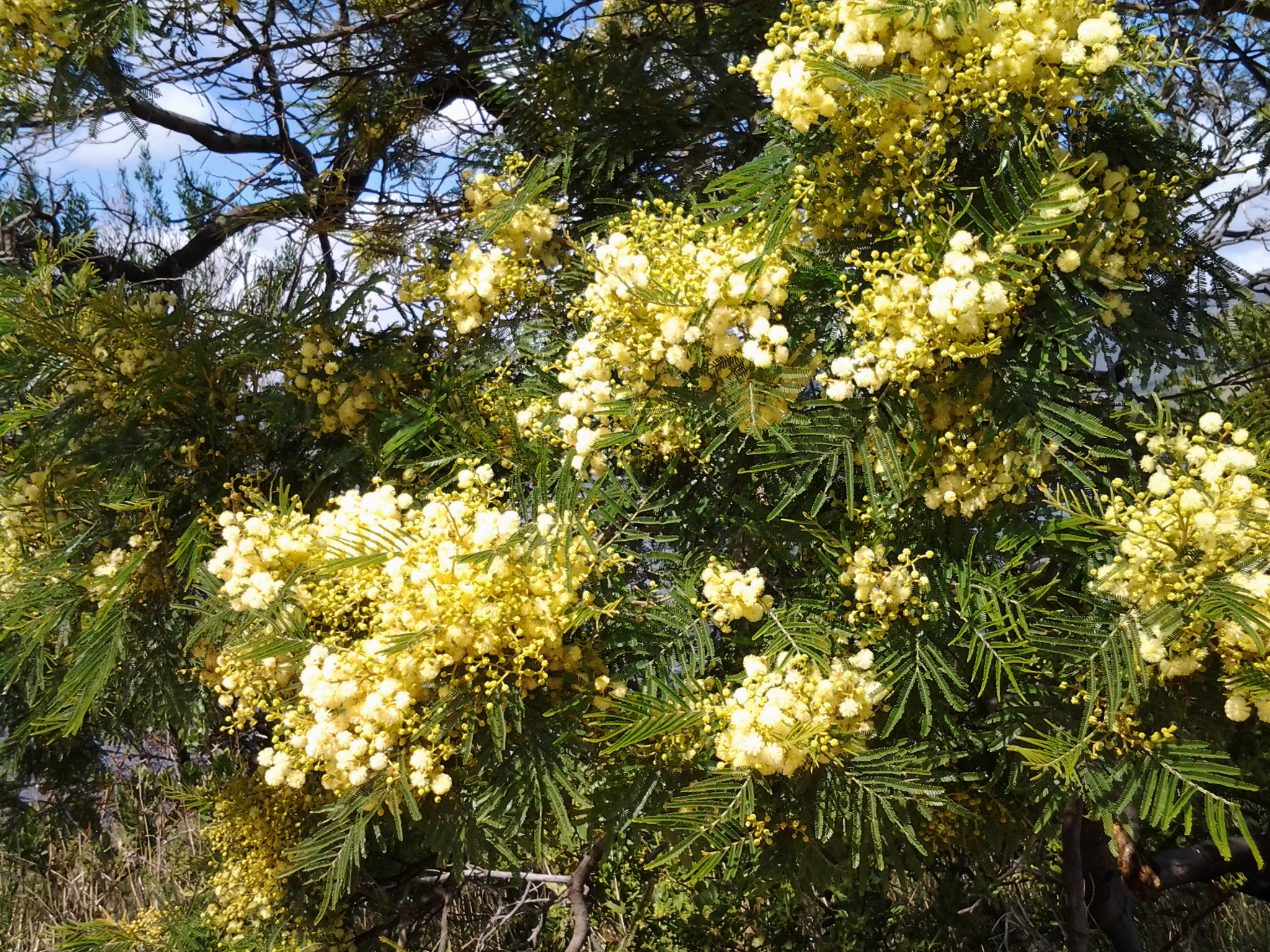
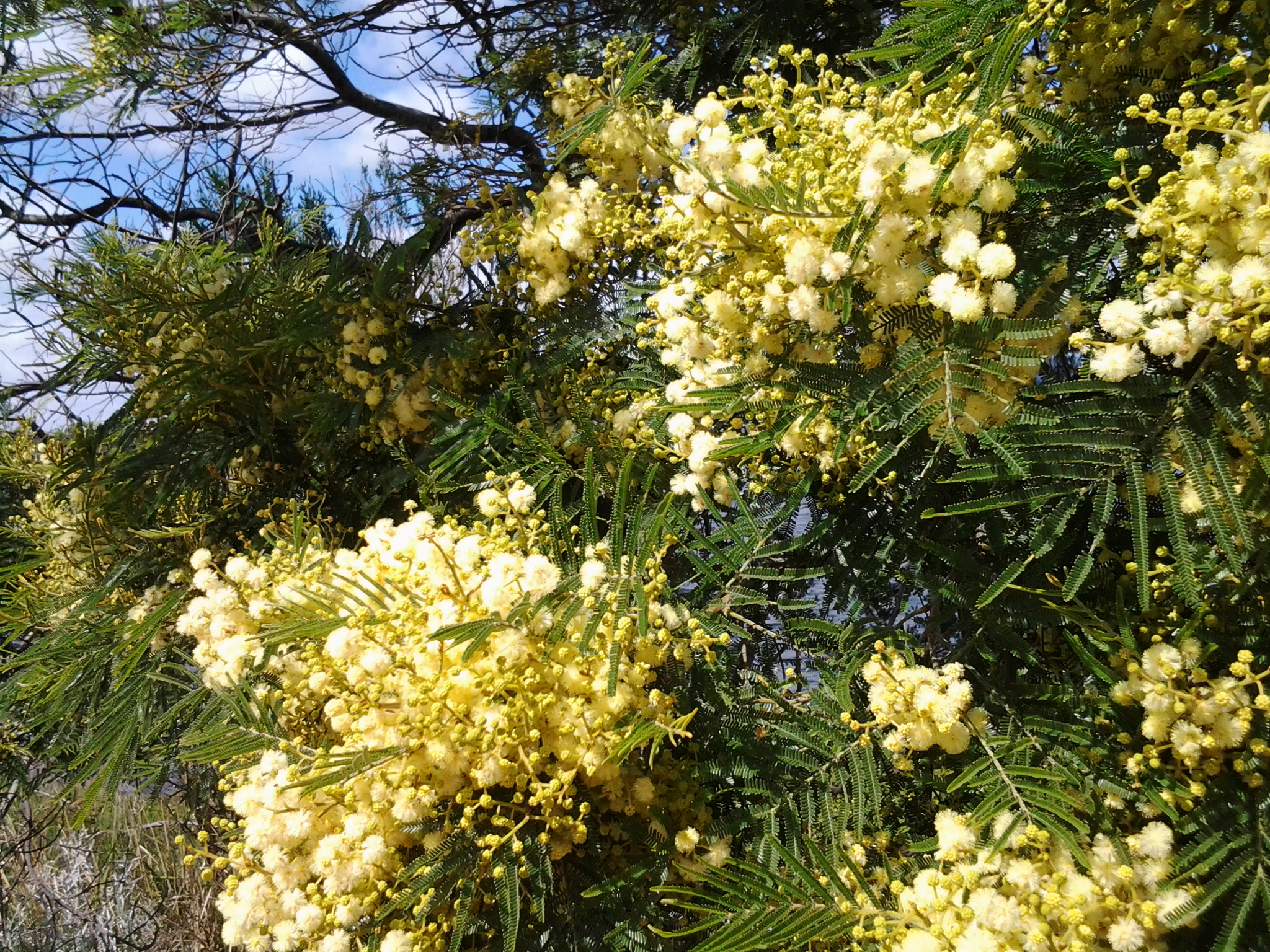
The perfume from the flowering wattle trees was invasive and pervasive in the nicest way.  Please feel free to use any of the photos below as a screen saver. I have.

20141111_103700 20141111_103704 20141111_103708 20141111_103711 20141111_103716

Continuing along the Highway, I walked up an incline until I could turn left on a bitumen roadway. This was blocked by a gate, but there was walking space around this, used by others. I had reached the newest part of Old Beach on its own rounded headland. Once past the gate I turned left towards the Verve Village site office signs and walked on. Through the mesh fence to my right I could see the Verve café, not open. The time was 9.10am.

Not long afterwards I was snapping photos of the low mountains and hills across the Derwent River on the western shore. Grandly beautiful in a simple way.

20141111_091212  20141111_091128

This ‘roadway’ eventually ended at a locked gate but again a regularly padded informal path was clearly visible around the obstacle.  I turned left and 100 metres along, a yellow gravel path appeared. The path had no sign but I hoped it was a foreshore trail and followed it. It was.  A trail with almost no signs of animal life except a massive black furry feral cat bounding away and a sole man out for exercise.  Crows carrhh carrhh carrhhed in the distance and overhead. Casuarina trees edged the path and through them the woodland was open and airy. Water lapped onto the shore. Mudstone rocks edged out of the soil on the banks. I enjoyed a flash of colour when I noticed yellow and orange flowering nasturtiums that had escaped from a suburban garden into the bush.

The photos below show a view southwards to the River from the first 100 metres of the path.

20141111_091838 20141111_091955  20141111_092155

The foreshore trail was easy to follow, wide and clear.

20141111_092752

At 9.36am I reached the point where the Derwent River and Gage Cove met.

20141111_093443

The trail curved into the Cove but not before a man-made construction, to the right of the path, seemed to flush deep below and then a dreadful stink followed. I tried not to think what was going on there.

20141111_093606

By 9.42am I was walking up into the suburb having enjoyed watching black swans floating around in the Cove, and a few minutes later I reached a gate which, as usual, I walked around.  I turned left and followed the road from the cul de sac amidst the noise of every neighbourhood dog barking to indicate a stranger was nearby.  Me.

At 9.45am I turned left at the T junction and by 9.48am I reached the intersection of Stanfield Drive with the East Derwent Highway.  Continuing on I could look down in Gage Cove with its coating of red algae or some other red plant.

20141111_100127

So far my morning had gone well and I was enjoying myself. Also, I was pleased that I had finished passing through all parts of the suburb of Old Beach and was ready for the next suburb.

Major milestone achieved on 8th stage of my walk along the Derwent River

Originally, I decided to walk the length of Tasmania’s Derwent River without research, foreknowledge of the challenges, and without determining the possible milestones.

With hindsight, actually starting the walk and reaching the Bridgewater Bridge were my two main milestones held subconsciously and not recognised at the time.

In late August this year I started at the southern tip of the South Arm peninsula (Cape Direction) and today I have not only reached the Bridgewater Bridge but crossed it and started the walk back towards the mouth of the Derwent River on the western shore.

I am rather amazed that such a thing is possible; to walk such a distance in this day and age and to do so for pleasure doesn’t seem quite real. And yet it is truly possible, even when my feet feel permanently crippled and I want to crawl. Just one foot after the other and it doesn’t matter how long it takes me to put one foot in front of the other. It only matters that I keep doing it. And then and only then can such milestones as today’s be achieved.  And celebrated, which I am about to do.

I was also mindful that today Australia marked the ANZAC soldiers killed and injured in the World Wars and others more recently with Remembrance ceremonies and a minute’s silence across the nation at 11am (on the 11th day of the 11th month). I have nothing to complain about and only much for which to be grateful. The photo below was taken close to the Bridgewater Bridge on the eastern shore.

20141111_131254

Over the coming days, I will write detailed postings of today’s walks through the suburbs of Old Beach, Herdsmans Cove, Bridgewater and starting into Granton South; the areas that I have passed and the trails that I have followed. For now it is enough to know that I have walked yet again, and the countryside and cityside has simply rolled along beside me.

Today I was away from home for almost 9 hours partly because the walking area was relatively difficult to access and leave from by public transport. Some waiting and bus changes were required. Of these hours, just under 5 hours were involved with walking from the starting point in Old Beach to the start of the Bridge, and 1/2 hour was involved from the Granton end of the Bridgewater causeway until I jumped on a bus somewhere in Granton South. Including crossing the Bridge, I walked approximately 16 kms.  Approximately 14 and1/4 kms on the eastern shore, and 3/4 km on the western shore by the Derwent River. So far I have walked 93 kilometres.

At the end of the 7th stage of my walk I had covered 34kms of the length of the Derwent River. Add another 4.5kms for today’s 8th stage and the total distance from the mouth of the Derwent River to the Bridge on the eastern shore is 38.5 kms as ‘a crow might fly’ more or less straight down the centre of the River (by my reckoning – perhaps others will argue). The length covered today of the Derwent River from the Bridge southwards on the western shore is about 1/2km.

Before each stage of my walks along the Derwent River, I have been somewhat nervous about how everything will go and how my body will hold up, yet there has never been any event or location that has turned out to be a problem. My walks have been ‘smooth sailing’. This morning I was particularly anxious because of the less savoury activities of some of the people who live in Herdsmans Cove and Bridgewater. I was also thinking about Tasmania’s ‘ice’ epidemic and remembering that some addicts can go for 7 or more days without sleep and therefore can be totally irrational. I was hoping not to encounter any unpleasantness and I didn’t. So I am delighted to report that today’s walk was safe, beautiful and calm. Quite marvellous in its simplicity.

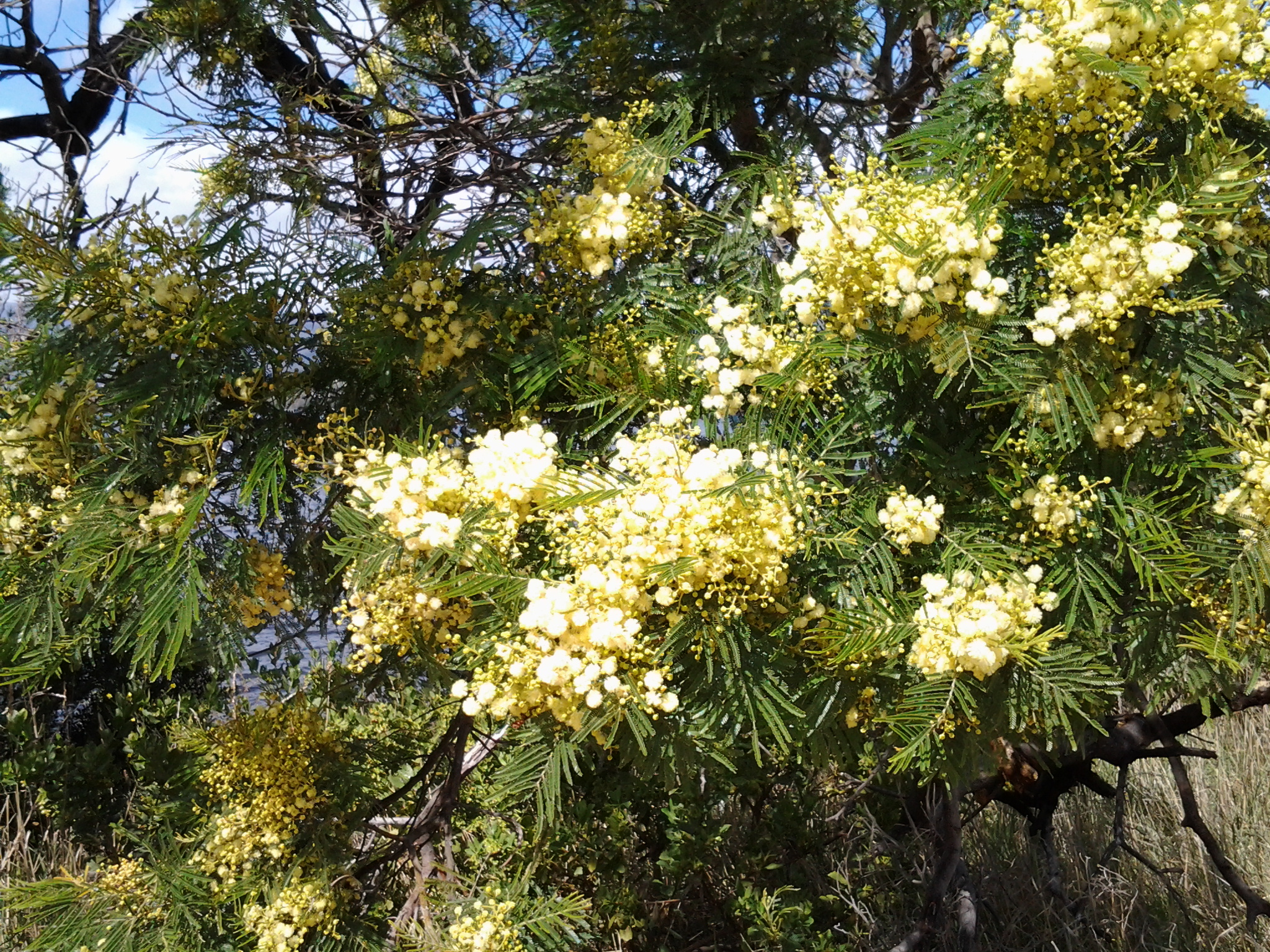
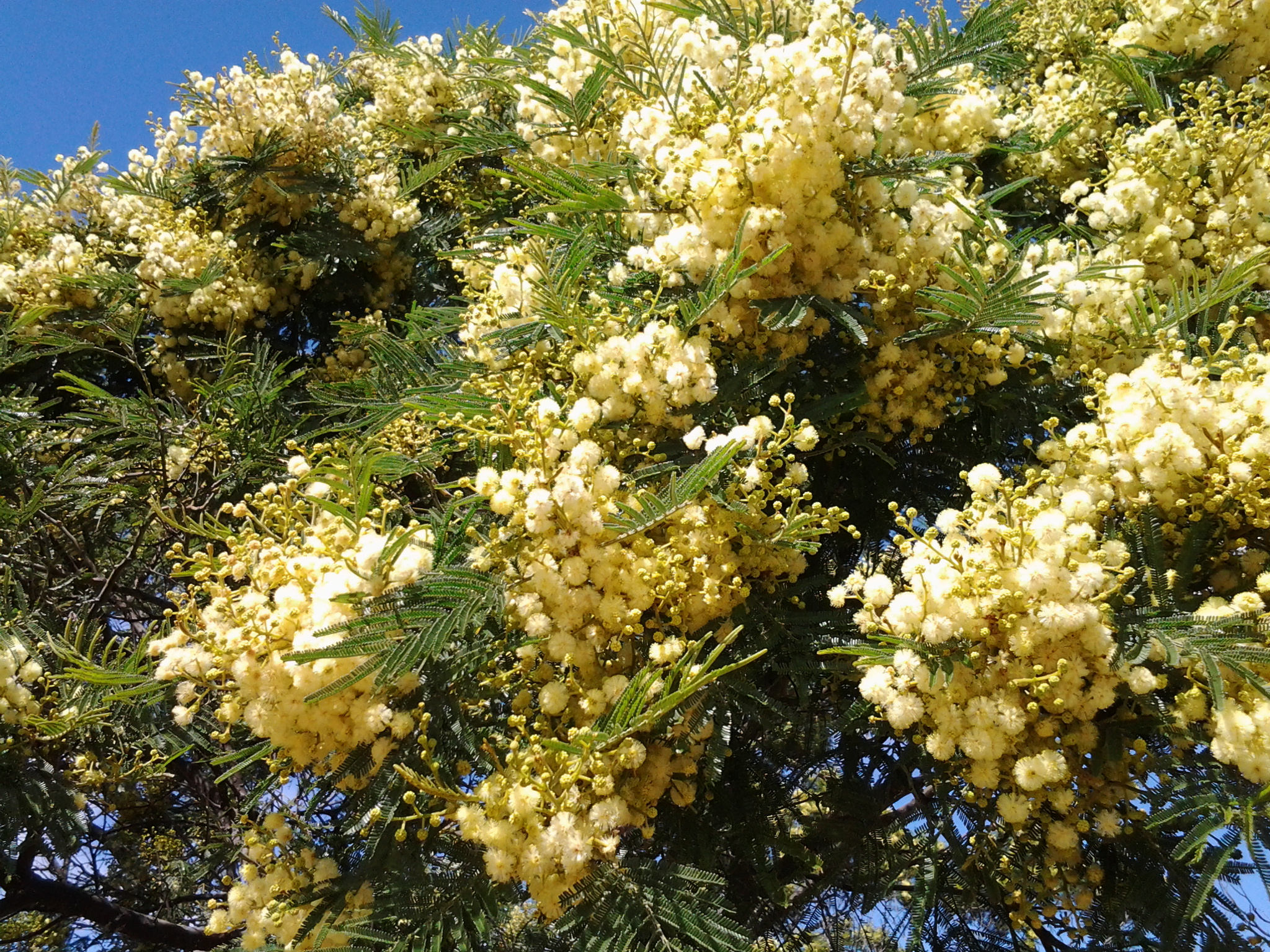
The photo below is a close up of wattle blossom. The seductive heady perfume surrounded me most of the day.

20141111_103716

More music close to the Derwent River

One of my August blog postings extolled the magnificence of the Tasmanian Symphony Orchestra Chorus in a series of performances at MONA by the western shore of the Derwent River in the northern suburbs of the Greater Hobart Area.

Last night I travelled to another institution, the University of Tasmania, which has its lower boundary almost at Derwent River level on the western shore, south of the Hobart city centre. I was so pleased that to continue an annual visiting artist series, the Tasmanian Conservatorium of Music had joined forces with the Hobart Organ Society to bring world renowned pipe organist John O’Donnell to Hobart.

John O Donnell organist

In the University’s Stanley Burbury theatre, the only neoclassical pipe organ in Tasmania was on show for an appreciative audience. Served up was a 1 and a ¼ hour nonstop magical program: Georg Muffat Toccata Septima; Arcangelo Corelli Concerto in C minor, op. 6 no. 3, arr. Thomas Billington Largo/ Allegro/ Grave/ Vivace/ Allegro; Johann Pachelbel Wie schoen leuchtet der Morgenstern; Johann Sebastian Bach Wie schoen leuchtet der Morgenstern(BWV739); Johann Sebastian Bach Sonata no. 3 in D minor (BWV 527); Johann Sebastian Bach Fantasia sopra il Chorale Wo Gott der Herr nicht bei uns haelt (BWV1128); Johann Sebastian Bach Fantasia and Fugue in G minor (BWV542)

I have listened to pipe organs being played in various places around the world but last night’s performance exceeded all expectations. In the hands of a non-expert, the sounds from a pipe organ can sound muddily mixed and your ears can feel assaulted.  Or the playing can sound lack lustre, colourless, and dull. Or irregular pacing can make me, as a listener, believe the organist hasn’t practised well enough and isn’t able to keep to the time signature.  That he or she isn’t as familiar with the musical piece as they ought to be before they play for public entertainment and pleasure.  In those instances there is minimal or no pleasure. But last night, John O’Donnell was nimble of finger across the keyboards, agile with his hip and leg movements to control the multitude of foot pedals, and most importantly made music with his touch. This wasn’t sound it was music. Lyrical. Magical. He made the composer’s scores come alive.

Listening to such music through headphones as you walk along, or blasting from a sound system in your own home, is no substitute for hearing the sounds in an environment where the acoustics work and the nuances of the music embrace you.  The concert was intense.  Intensely rich and beautiful.

I wondered on the effects of significant rivers in the lives of the composers from last night’s concerts.

17th century composer Muffat spent 6 years in Paris near the Seine River before settling in Vienna next to the Fluviul Dunarea. Corelli lived for a time early in his life near the river Po in Italy and later when settled in Rome, he had access to the Fiume Tevere that winds its way through. Pachelbel started life in Nuremberg through which the Reglitz flows. Later he studied at Regensberg around the Fluviul Dunarea, before moving to Vienna also on the same river, then Stuttgart on the Neckar river before settling back in Nuremberg against the Reglitz river for the rest of his life. Johann Sebastian Bach moved as a teenager to Luneberg next to the Ilmenau River. During Bach’s time in Weimar he could have accessed a number of rivers which enter into or are nearby to this city. When he was in Mulhausen, the Unstrut river and a tributary were close at hand. A multitude of rivers and tributaries flow through Liepzig where Bach spent 27 years.

I don’t want to mislead any readers. The connections between composers and rivers is a geographical one and I do not believe the rivers that they lived near had direct musical relevance. But the advantage of this tiny research to me was that I was able to understand a little more of the world’s geography and the interconnectedness of so many things; history, people, musical development. As a result, the experience of my project to walk along the Derwent River is enriched.

Discovering the suburb of Old Beach – 7th stage of my walk along the Derwent River

At 12.40pm I reached the town sign for Old Beach at Cassidy’s Bay. The Bay was covered with ducks of every age.  Families of ducklings are always a pleasure to see. Seemed like a safe haven for them.  Tall grasses grew into the water but there was no beach.

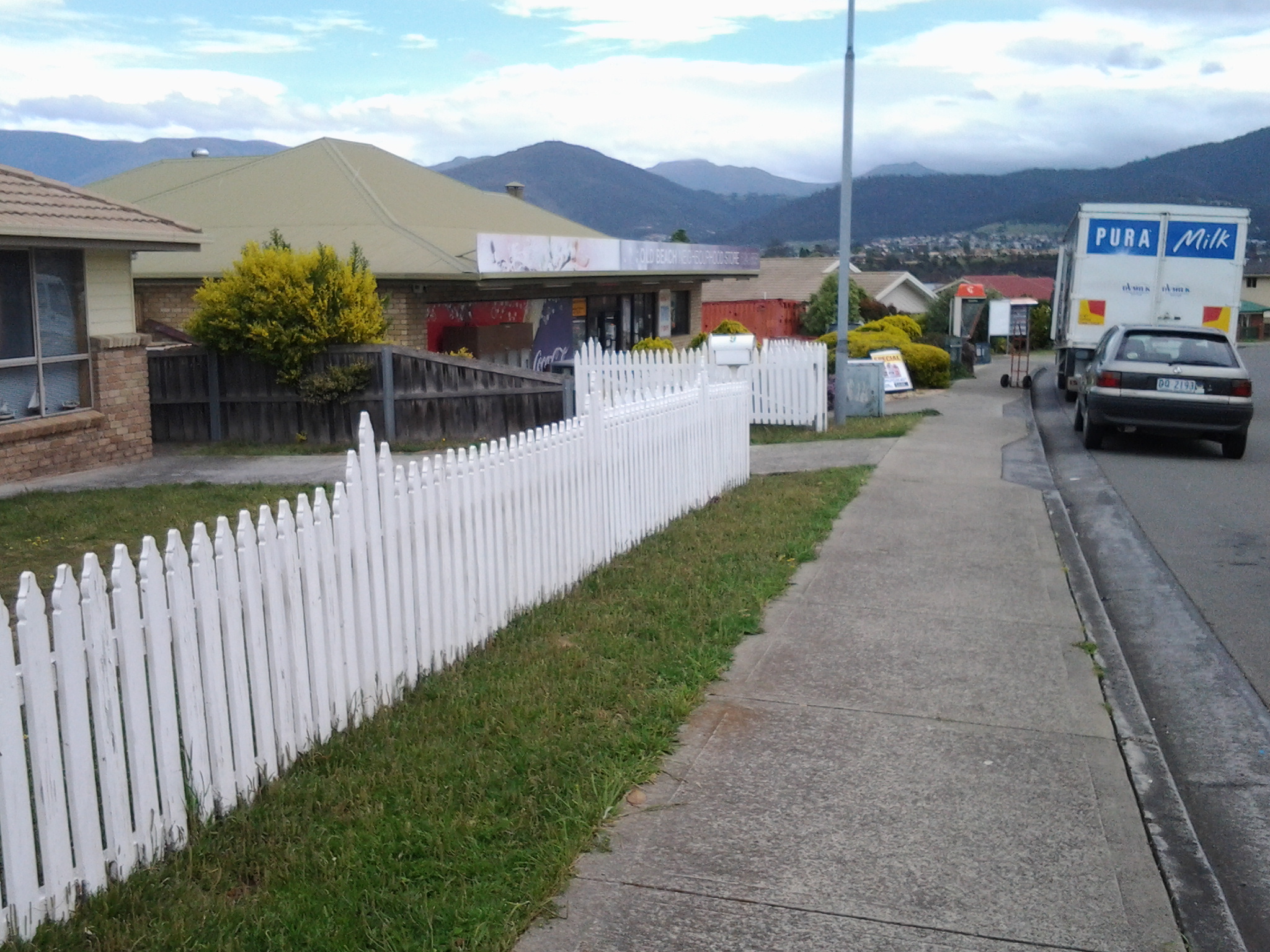
I continued walking along the highway, passed the turn off to the Baskerville raceway, and was eventually forced down into a clay sogged ditch almost until I reached the roundabout at 12.50pm.  At the roundabout, with the hilly section of Old Beach up on the right, the choice was to continue on to Bridgewater or turn left into Fouche Avenue. I turned left to the lowlands and walked through a reasonably affluent area. Back on proper footpaths. Just before 1pm I reached the Old Beach Neighbourhood Store claiming to serve hot food 7 days a week.  I didn’t enter to check.
20141031_125642

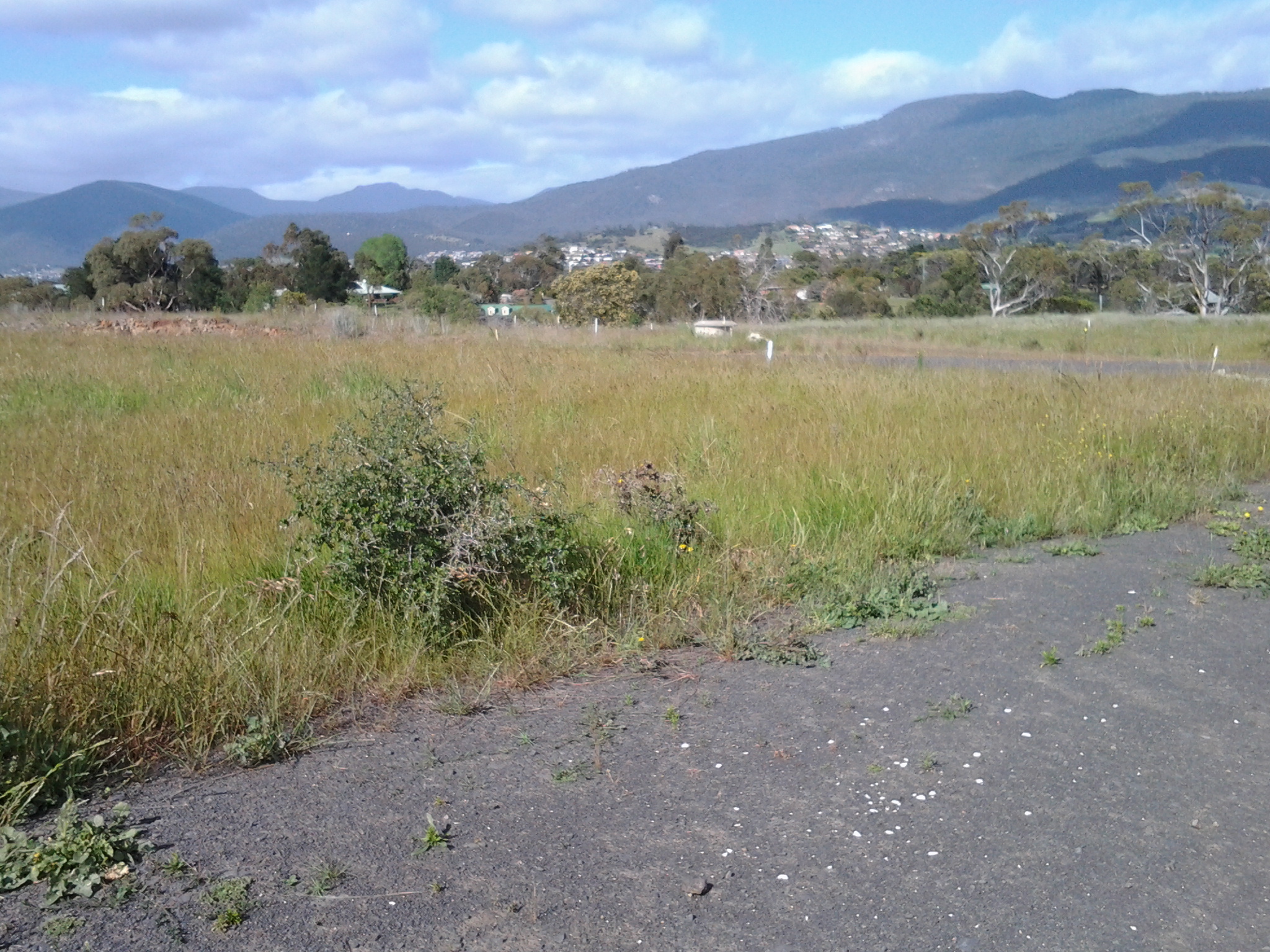
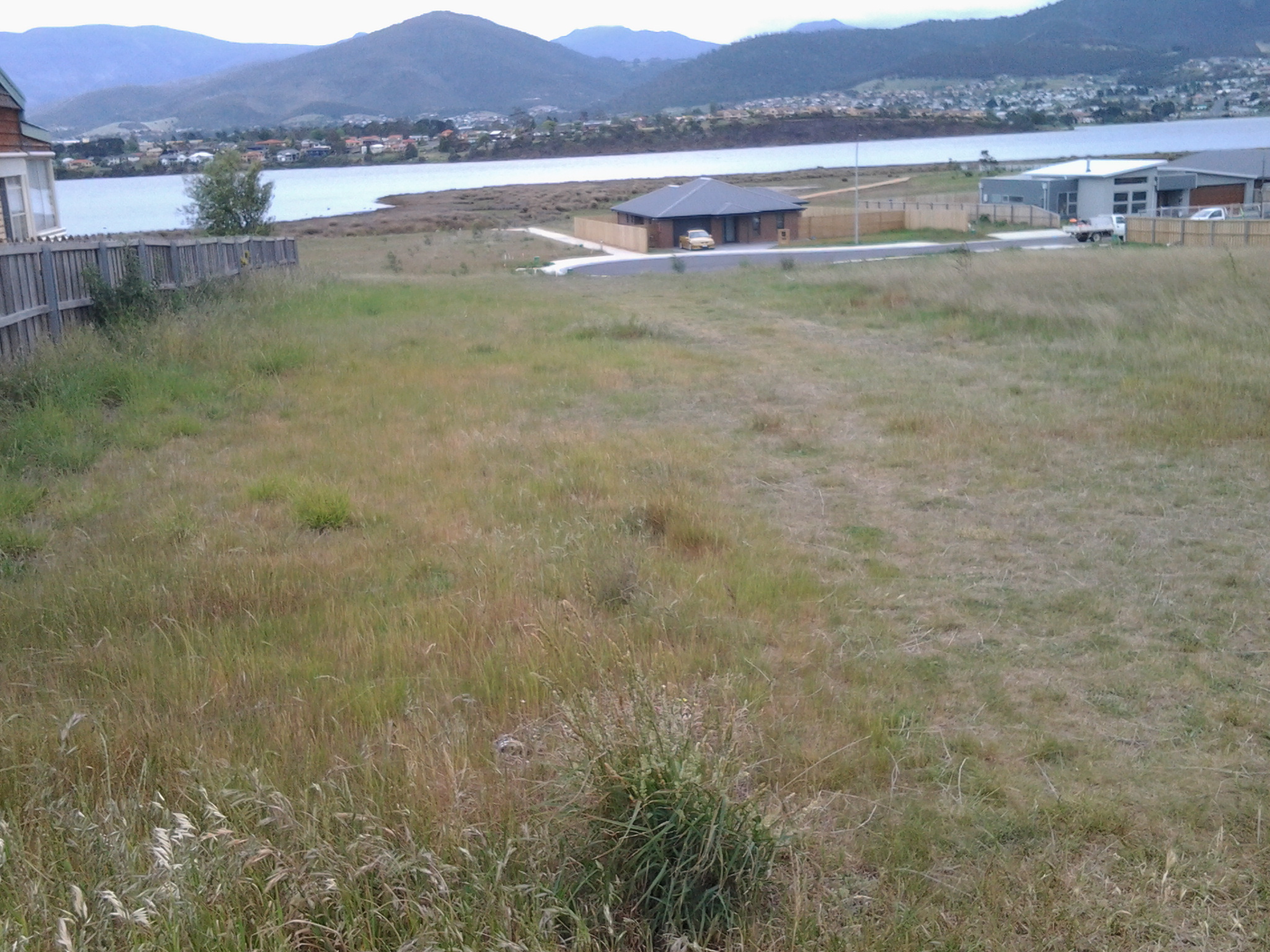
By 1.03pm, after passing a house outlandishly decorated for Halloween, I came to the end of the road.  It seems like one of those roads which will connect up with a street coming from the other direction at some other time. Everywhere I looked, new houses were being built so that I feel confident roads will connect sooner than later. I walked through the open paddock in the photo below in order to reach the ‘golden’ pathway in the distance which I assumed might lead me onwards next to the Derwent River.
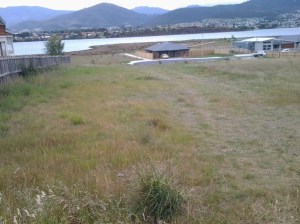
20141031_130307

At 1.06pm I reached the lower path, which was appropriately signposted as the Old Beach Foreshore Trail, and enjoyed seeing more black swans, swooping swallows, flocks of starlings, and the usual screaming plovers. Closer to the water the path divided.  To the left it returned to Cassidy’s Bay (although I saw no signs of a path when I was there), to the right the path would continue to the Jetty at Jetty Road.  The spot where I stood was named the ‘Calm Place’.

20141031_131028

The photo above faces south across the lowlands of Old Beach (which doesn’t seem to have a beach), and provides a view of Mount Direction in the distance.

I headed north by taking the right hand trail. Not long after, on the right hand non River side of the path, I saw a tiny man-made lake, with its quota of swimming ducks and a rusting large sculptural tower on a central island with two Dominican Gulls on top (the expression ‘kings of the castle’ came to mind), amidst a stack of new houses and others being built. The sign on the fence worried me.

20141031_131049

I was concerned that because the land was so low and the lake depended on a levee to contain the water, any River flooding could be of great concern to the new property owners.  I wondered how much of that being built on was reclaimed land. I am surprised the local government allows new buildings here. With global warming increasing the sea level, these houses won’t be around in hundreds of years.

Blue skies opened above Mount Wellington in the distance but heavy clouds sat overhead.  Spits of rain persisted off and on for the rest of my time at Old Beach.  But it was time to have lunch. In the absence of any seats or rocks or other raised area, at 1.20pm I sat on the grass beside the Foreshore Trail, emptied my pack, and started munching as I absorbed the details of my low lying surroundings.  I could see heavy rain clouds that darkened the day travelling across the Derwent from the Mount Faulkner Conservation Area on the western shore.
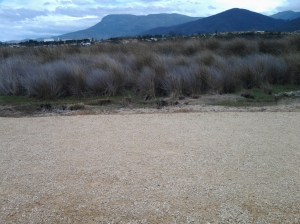
20141031_132509  20141031_132519

At 1.35pm I was on my feet and continuing along the path, passing an alternative walk to Sun Valley Drive, and spotting a pair of native hens pecking ahead on my path.  A private fence made from large pieces of driftwood festooned with creeping bright flowering geraniums, caught my attention.

20141031_134059

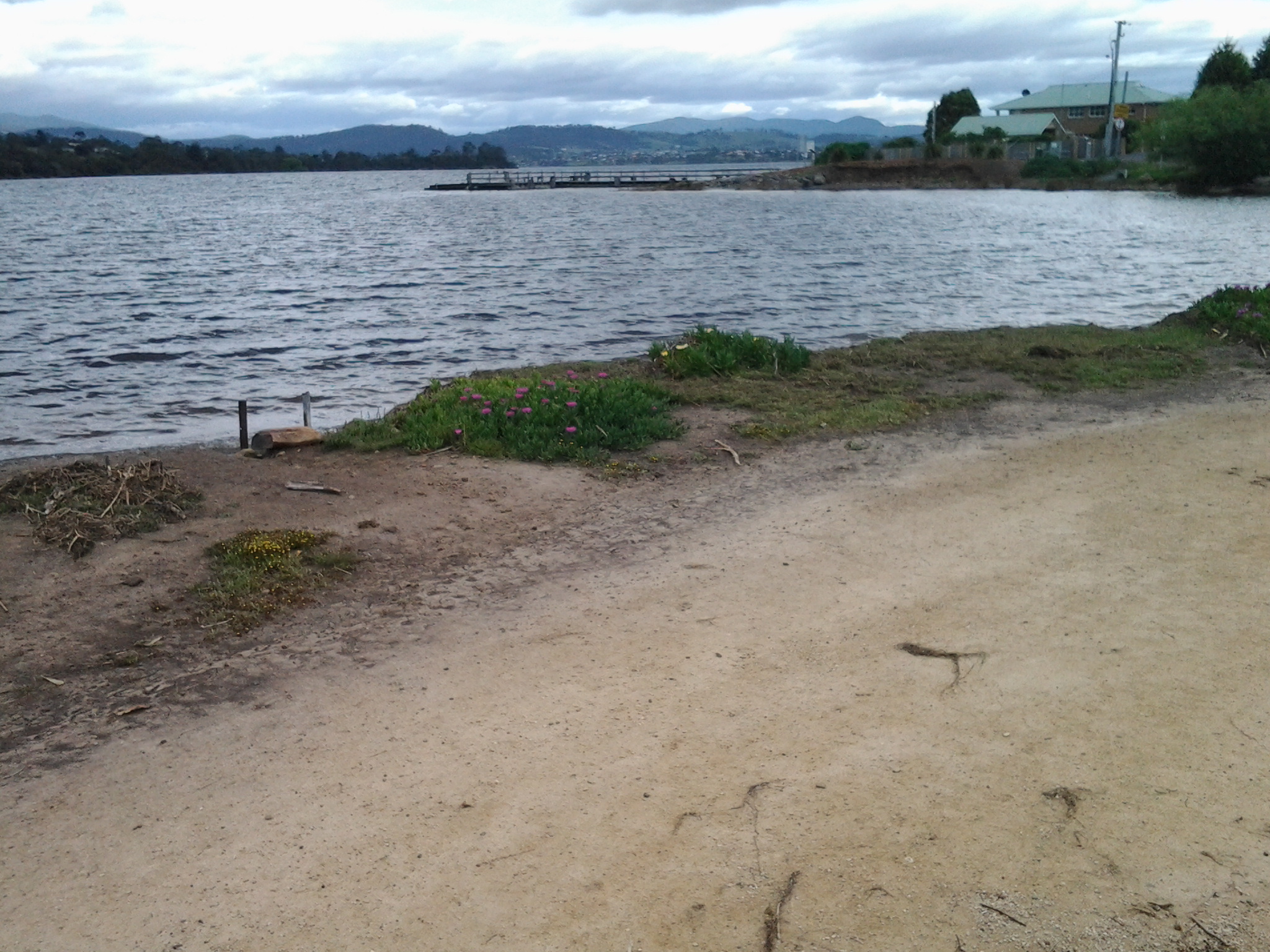
At 1.43pm I arrived at the Old Beach jetty

20141031_134047

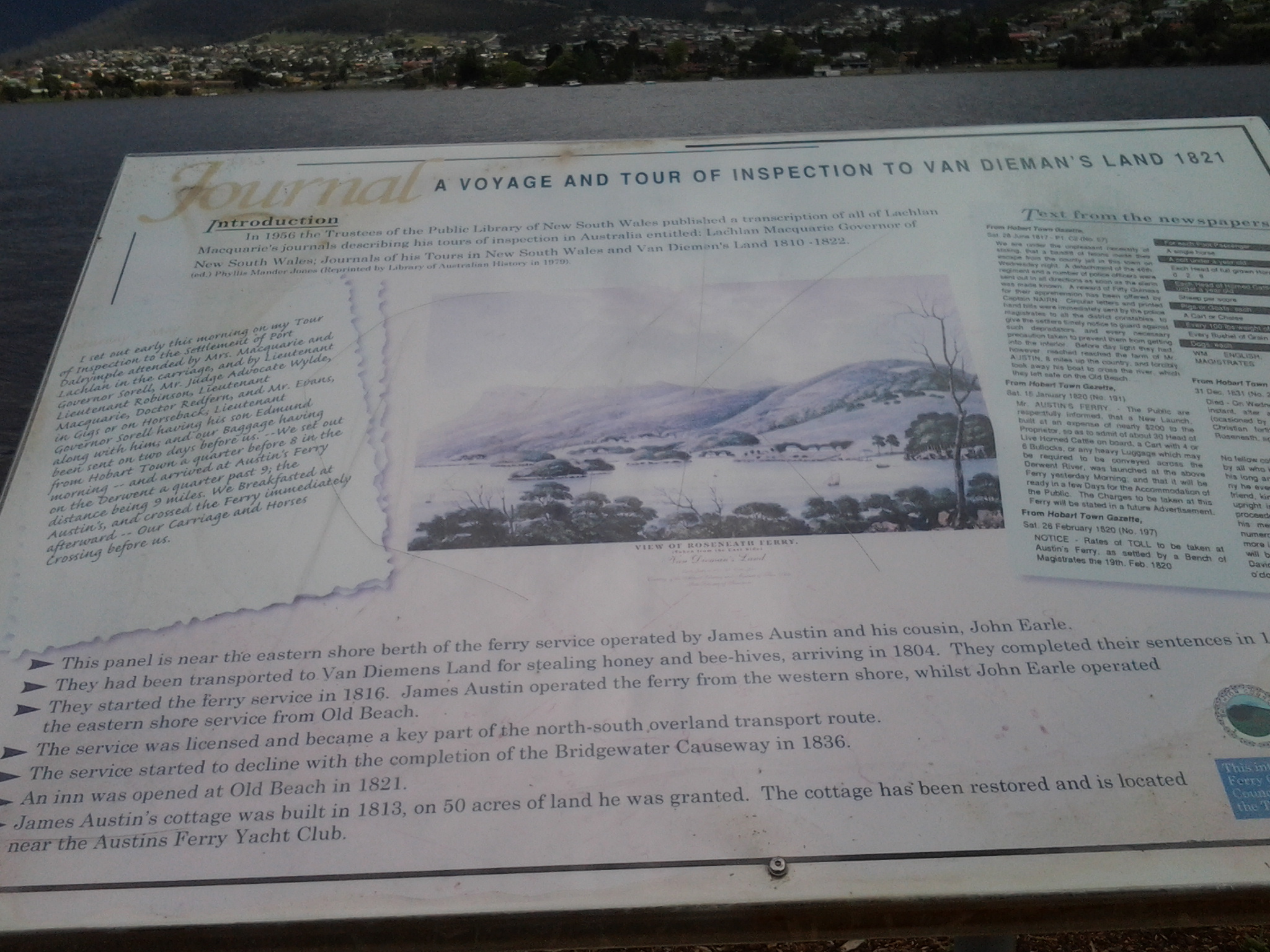
where I found an interpretative panel explaining some of the early 19th century history associated with the location of the jetty.
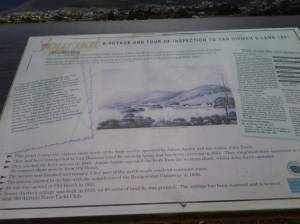
20141031_135134

As early as 1821, an Inn was established near the current jetty, and people would ferry across the Derwent from the western side of the River.

This 7th stage of my walk was coming to a quick close.  I knew a bus would be travelling along Jetty Road at 2pm, and that the next service would not be in the vicinity for another couple of hours. I had wanted to finish walking through all of Old Beach before I finished this stage, but the potential for a long wait for a bus inclined me to cut the anticipated walk short.  I walked along Jetty Road and waited at a bus stop.

Metro bus 114, destined for the Glenorchy Bus Mall on the western shore, picked me up.  I did not travel the entire way but if I had, I would have needed to catch a Hobart city bus to reach the CBD, then a bus to take me back to my home suburb of Bellerive on the eastern shore. A long way. A long time. From Old Beach there are no bus services travelling along the eastern shore.  All the buses travel to the northern city of the Greater Hobart Area of Glenorchy via the Bowen Bridge. Since I live in Bellerive on the eastern shore, I resolved to try Plan B. I proposed to catch a bus from Glenorchy to Hobart via the eastern shore and close to the Bellerive area. Once over the Bowen Bridge from Old Beach, I got off the bus at the first stop which was outside the Elwick racecourse at 2.15pm. I crossed the road and waited in a bus shelter for Metro bus 694. As the rain started to pour in earnest at 2.35pm, the bus arrived. Phew!

I loved the return trip. While again on the Bowen Bridge I looked northward and could see where I had walked earlier in the day. Ahead and looming over the land, was Mount Direction. Looking southward I could see the Cleburne Spit was empty of cars and people, the suburb of Risdon looked quiet, and a thick eddy of smoke rose from behind Risdon Cove. Closer to the area with the fire, a sweet wood smoke smell spread through the bus and reminded me of camping fires I have enjoyed in the past. That was a great conclusion. Memories of the immediate day and memories of the past coming together.

Now I am looking forward to preparing for and then walking the 8th stage of my walk along the Derwent River.  This next walk is likely to happen early next week, weather willing. Let the discoveries continue!

Into and through the suburb of Otago Bay – part of the 7th stage of my walk along the Derwent River

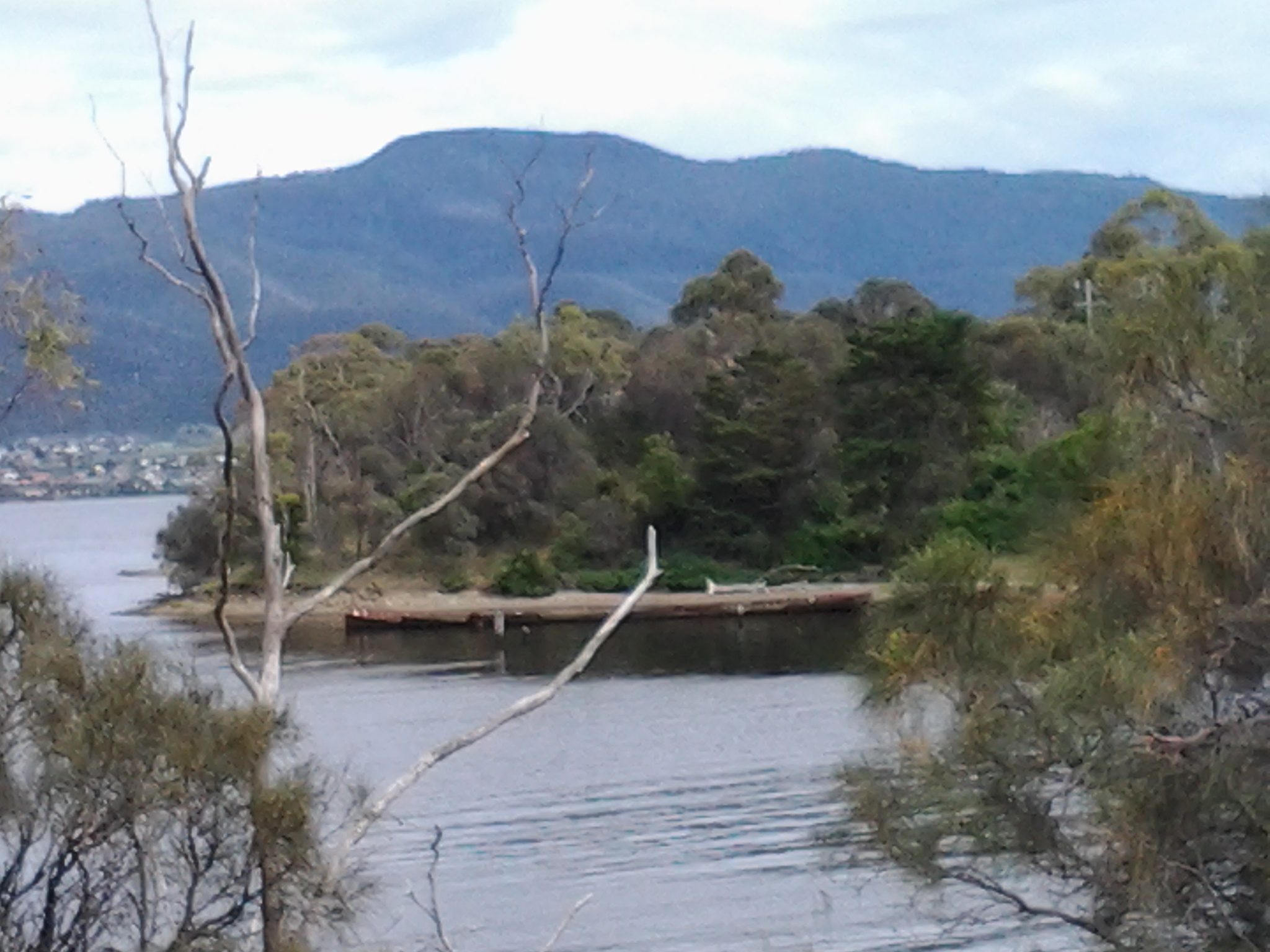
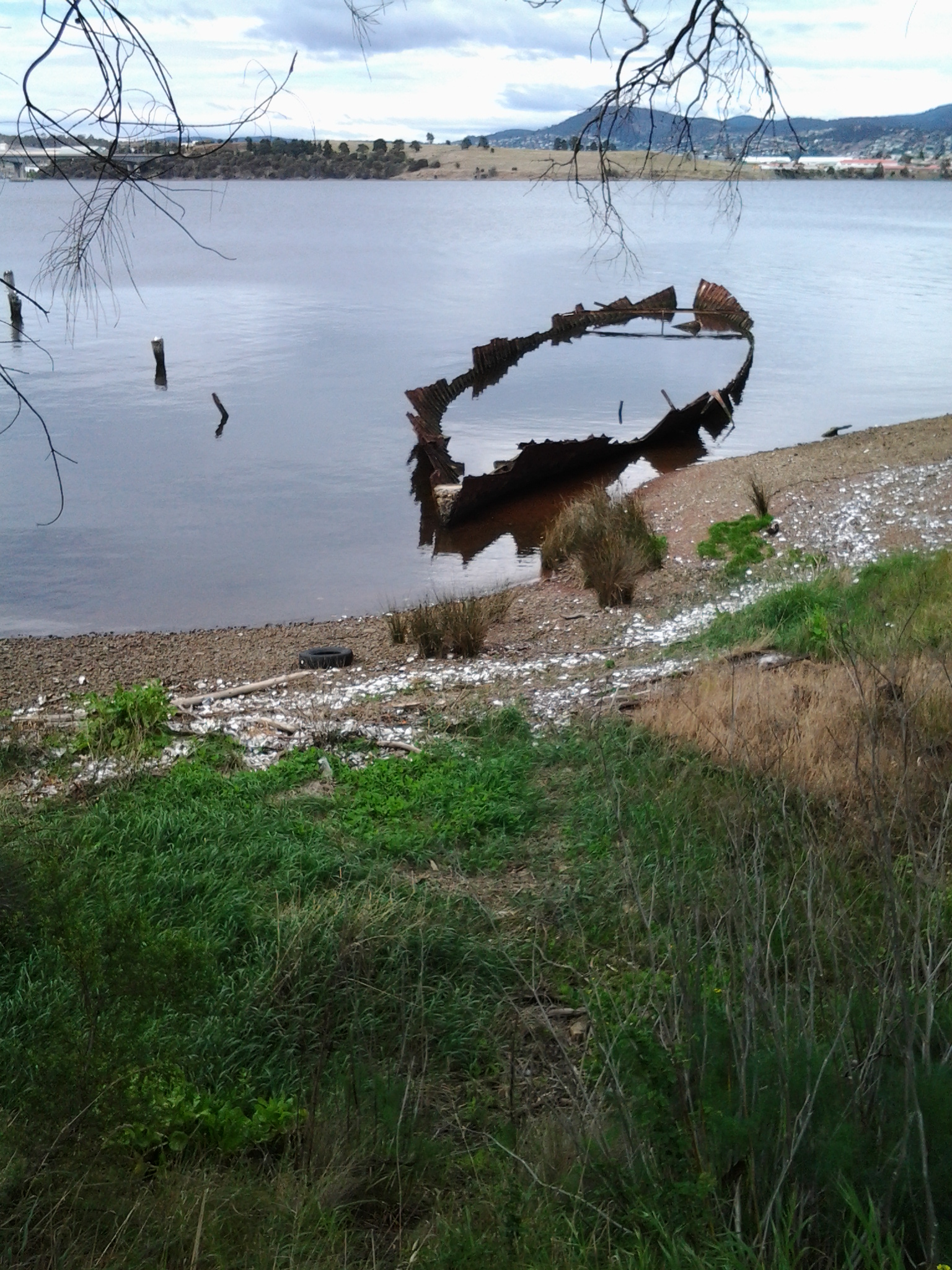
Before long I could see the water of Otago Bay, and I could see the rusty remnants of the two boats, the Otago and the Westralian. In the photo below, the low mountain on the other side of the Derwent is Mount Faulkner.

20141031_102131

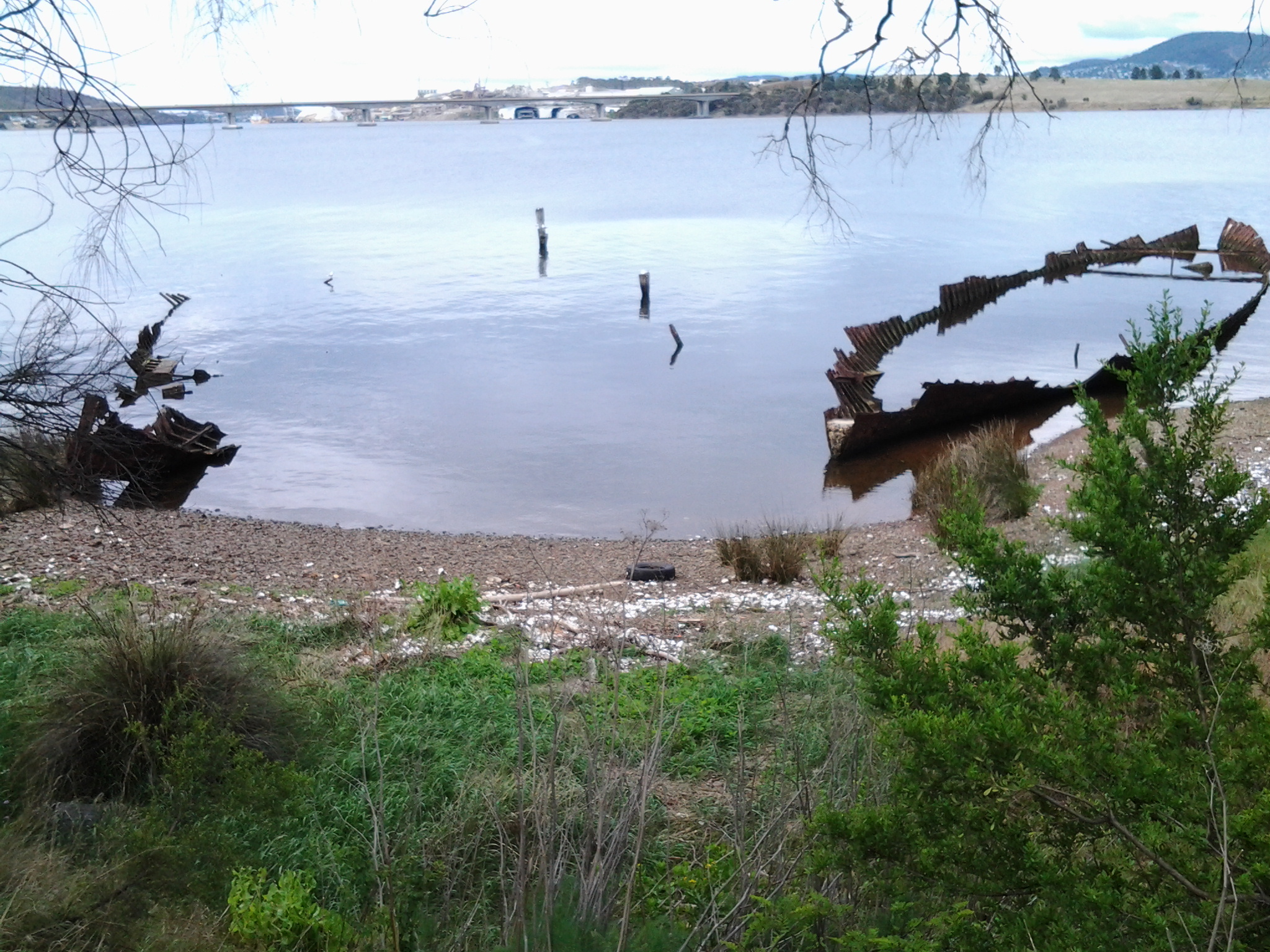
Ja and her dog were lively company and walking with her was a big change from my normal solo experiences. We enjoyed photographing each other in this quiet and peaceful place and parted once we reached the interpretative panel near the sunken ribs of the two boats (Westralian on the left and Otago on the right in the photo below).

20141031_104822

I was disappointed that the main point of the interpretative panel was not to talk broadly about the history of both boats but to laud the last Captain of the Otago, the esteemed novelist Joseph Conrad.  Over the road, Conrad Drive wound up the hill into a residential area. It seems the author has become most important.  The Westralian is not mentioned at all so I can only imagine other visitors must leave the site quite puzzled about what they are seeing. In an earlier posting I provided detailed information about the Otago, after which the Bay and suburb have been named. The Westralian was a steam ship abandoned and cut down during the 1930s.

It was 10.40am before I left the boats of Otago Bay. I walked uphill – yet again without a formal pathway so I was alert for cars travelling through. There are always ‘lead foot Larrys’ whose press on the car’s accelerator speeds them through the suburban streets as they veer unexpectedly onto whichever side of the road gives them the shortest path to whatever their destination.  Could be a shortcut to God if they are not careful.

This leafy gum-treed suburb is mostly high above the Derwent River and many of the houses sit with grand views. At one point I could see that I was level with the height of the Bowen Bridge in the distance.  It was not possible to walk around the water’s edge and it was impossible to walk around the edge of the cliffs because access to these has been cut off by the gates and fences of private property.

I stayed walking up and down and then up and then downhill on undulating Otago Bay Road.

20141031_110555

Some houses were located on 5 acre lots. Some parts of the suburb seemed quite rural without any sign of active agricultural businesses. I passed a creek with croaking frogs and others making a soft booming bom bom, bom bom; a repetitive but very musical sound. Wild blackberry canes flourished. Sulphur crested cockatoos screamed through the trees. The sounds of so many other birds reverberated through the bush. Beautiful. Wonderful.

At 11.10am, I noted a left hand road led to accommodation; the Penenjou Bed and Breakfast. I didn’t walk this road but I imagine that tourists staying out here might find the country to be very attractive and peaceful.  Apparently the homestead is located on a hectare of developed gardens overlooking Mount Wellington.

I continued walking along Otago Bay Road, close to and parallel to the Highway.

At the intersection with Restdown Drive reached at 11.18am, a sign pointed to another accommodation option Otago Cottage (http://www.otagocottage.com.au/). Again, knowing this was a No Through Road, I stayed walking along Otago Bay Road.

Looking inland I could see the smallish mound of Mount Direction.  From experience I know that walking tracks on this mountain can be accessed from the Risdon Dam Reserve near to the Prison and Willow Tavern, way back near Risdon Cove.

20141031_111945

I reconnected with the East Derwent Highway at 11.22am, edged the road dodging rain spits, and continued walking northwards.

20141031_111957  20141031_111951

From Risdon Cove walking towards Otago Bay along the Derwent River- part of the 7th stage of my walk

For safety’s sake I continued walking along on the Derwent River side rather than on the road side of the guard rail, although there were moments when the edge fell away and so I was forced temporarily back onto the road. This stage certainly would not be one that someone using crutches or a wheel chair could follow. There were no official paths and so I made do with whatever I could in terms of a suitable walking path.

I enjoyed this part of the walk observing more black swans in pairs and families of ducklings out for a paddle.  At the end of the bay of Risdon Cove, I exchanged friendly greetings with a couple of woman who were selling bunches of colourful flowers from the boot of their car on a set back on the other side of the road.

I continued up an incline still on the ‘safe’ side of the railing amidst blown and thrown rubbish, tall weeds, and native grasses.  Whispering casuarina trees separated me from the River. Clearly people have walked here before but it is a rough ‘non-path’.

At 9.54am I reached the turn off signposted to Bridgewater, began the left hand walk downhill, and passed the furry remains of dead possums (unfortunately ex- road-kill).  To my right, on the other side of the road, the 19th century heritage listed Cleburne Homestead and its scatter of old sandstone buildings popped occasionally into view through large trees and bushes.  The Homestead operates as a luxury bed and breakfast art hotel style establishment (http://www.visitcleburne.com.au/).

The photo below shows the Cleburne Spit which inserts itself into the Derwent River, with the Bowen Bridge crossing the River in the distance.

20141031_095246
At 10am I arrived at the junction road leading left to the Cleburne Spit. The Spit looked very much like a man made raised wall approximately one or two car widths wide that extends out in a straight line into the Derwent River.  Perhaps it was a series of rocks that once could be walked upon and then someone dropped filling rocks to create a breakwater to fish from or some other activity. I wonder what the real story is. My guess is that the Spit was named after 19th century settler Richard Cleburne.  He was an interesting character who had a property in the area and was suspected of smuggling. Did the Spit figure in such illegal activities I wonder? More information about Richard can be read at http://adb.anu.edu.au/biography/cleburne-richard-1903.

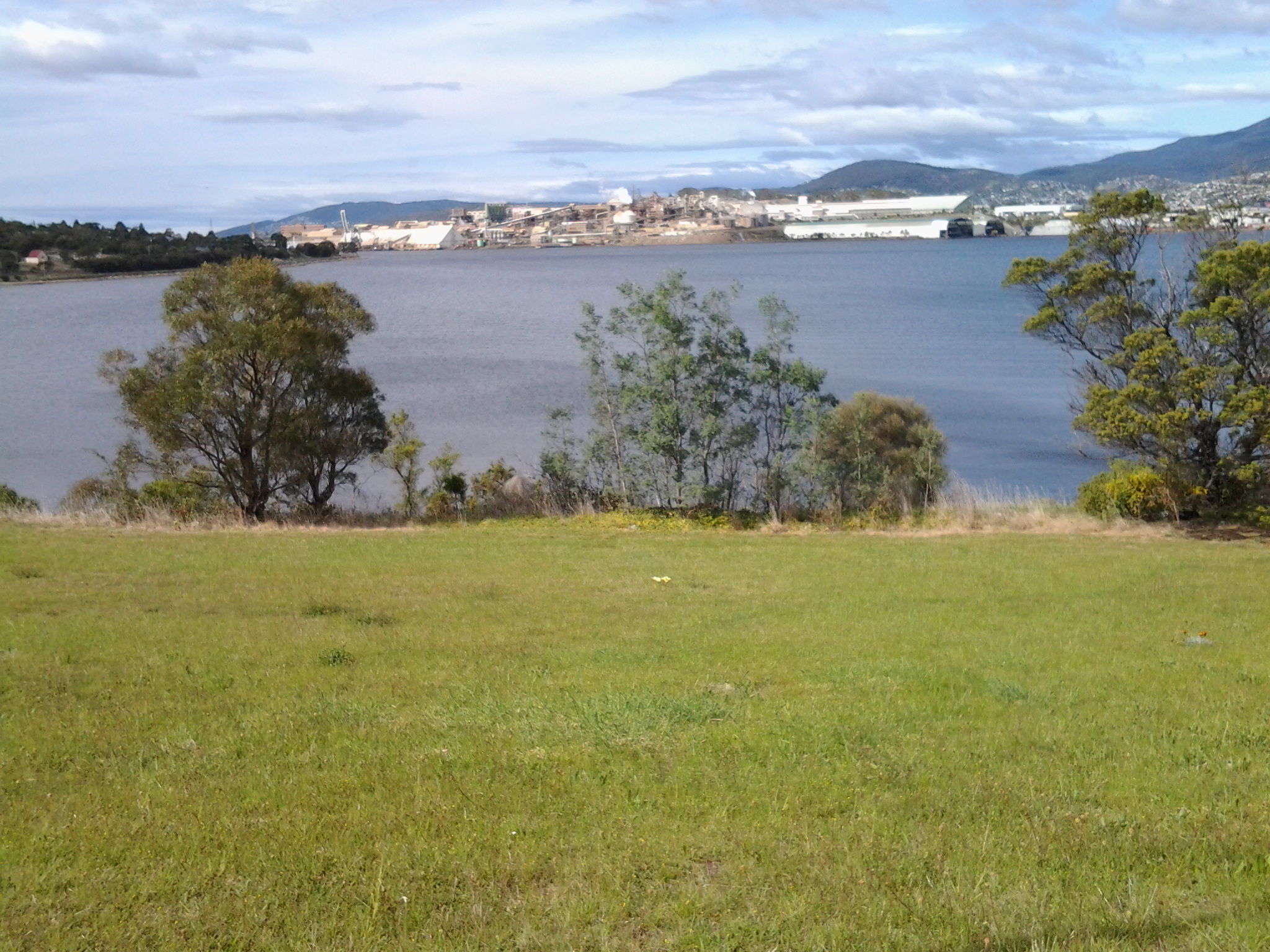
My view across the Derwent took in the noisy Nystar works previously seen and heard on Stage 6 of the walk.  Immediately next to Nystar and further north, I could see another major industrial site: Incat, a manufacturer of very large catamarans.  In the photo below, a massive white structure has two dark ends. Inside each of these spaces, a new catamaran is being built – usually for an overseas market.

20141031_095558

The East Derwent Highway curved in a sweeping right-hand bend from its junction with the road to Cleburne Spit. I walked straight ahead to the River and then curved around to the right keeping parallel with the Highway.  Amidst discarded rubbish, straggling weeds and under the casuarina trees I discovered two plaques: one commemorating the beginning of the building of the nearby Bowen Bridge and the second marking the official opening ceremony of the Bridge. On both occasions an Australian Prime Minister was given the honoured task. Two very strong and formidable men: Malcolm Fraser began the bridge and Bob Hawke opened the bridge.

20141031_100200

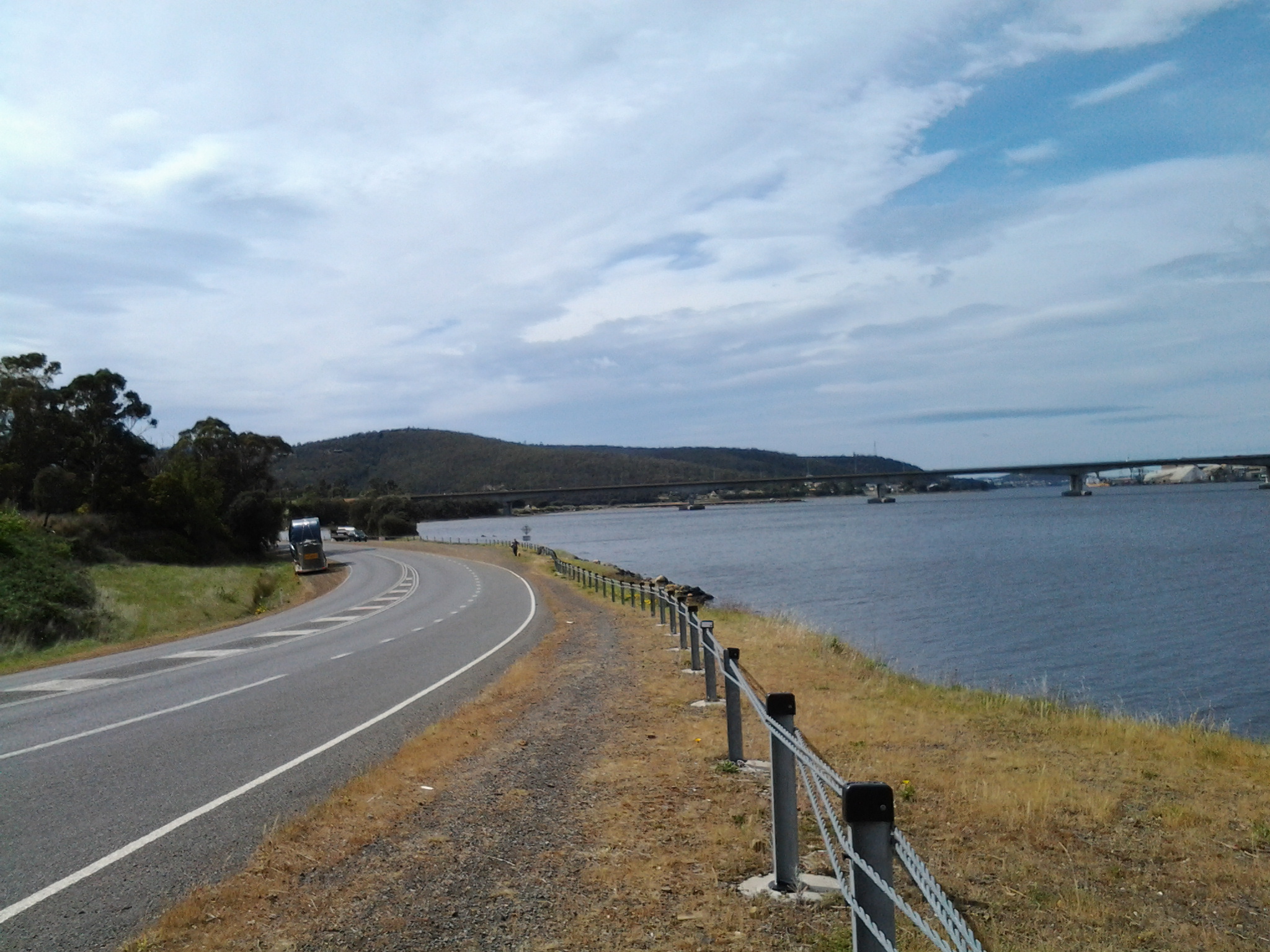
I followed a short bitumen pathway and stood underneath the Bowen Bridge a few minutes after 10am. Eventually I walked beside the guard rail and, depending on the safety of the ‘non-path’, I walked on one side or the other.  Sometimes there was a sandy rough drop to the water below, and sometimes I was walking next to the River at ‘sea level’.

By 10.07am I reached the sign indicating I had moved from the Risdon area into the Otago Bay suburb.  At 10.11am another sign gave me advance warning that Otago Bay Road was up ahead.

In a pull-off-the-road siding, a middle aged man wearing clean moleskin trousers and a sporting peaked cap advertised new season South Arm Pink Eye potatoes. The back of his truck was open and he sold his vegetables to people who, once their cars had skidded to a halt on the gravelly surface, climbed out of their vehicles for a stretch and then a leisurely meander over to check the goods. There was something slightly furtive about the way he wouldn’t meet my eyes which left me wondering why.

The photo below looks southward towards the Bowen Bridge. One of the vehicles in the distance on the right is the truck selling the potatoes.

20141031_101844

At 10.18am I turned left off the East Derwent Highway onto Otago Bay Road.  The sound of traffic in the distance as it poured along the Highway, and the way the wind boxed my ears, meant it was difficult to hear cars coming behind me. Constantly I was watching my back as I walked along non-existent road verges.  I did not discover a safer path for this part of the walk.

Earlier, near the Cleburne Spit, I had exchanged brief friendly words with a woman walking southwards with her dog.  When she caught up with me on her northward return journey, we found we had a great deal in common and spent some time walking together towards Otago Bay.

Yesterday I completed Stage 7 of my walk along the Derwent River

I will write details at length in later posts, however these few words record the walk between Risdon Cove and half way into Old Beach happened amidst spitting rain, strong breezes, gloomy clouds across the northern suburbs, beautiful vistas across the Derwent River, rich native bushlands and bird wandering wetlands, the sunken remains of historic boats, interesting people met along the way, new angles on the mountain (Mt Wellington), and reliable bus services.

I was away from home for around 6 and a half hours, walked about 14 or so kilometres, and covered an extra 8 kms of the Derwent River as it snaked around the suburbs (different from its straight run out to sea on previous walks). All up, I have now covered approximately 34 kilometres of the Derwent River, and the walking experience continues to inspire me.

The photo below shows the sunken remains of the ship Otago.  Notice the calm waters of the Derwent River.  Sensationally beautiful. Through the branches on the top right of the photo is the blue shape of Mount Wellington.  Only when I looked at this photo and registered the relatively small size of our mountain, did I truly understand the distances I have walked from the mouth of the river to this spot on Otago Bay. In the beginning, I was south of the mountain and now I am north. There will come a time when I can no longer see the mountain as I walk along the Derwent River.

20141031_104811

How common is the name Otago and what is its history?

How did Tasmania come to name its Otago Bay, one of the suburbs in the broader Old Beach area, on my planned Stage 7 of the walk along the Derwent River?

On the Clarence City Council site at http://www.ccc.tas.gov.au/page.aspx?u=1085, Otago Bay was named after the iron barque the Otago, the remains of which can still be seen on the shoreline of Otago Bay. Wikipedia reports that the remains of the Otago (beached in the Bay in 1931) and a steel river steamer the Westralian (beached in 1937) can both still be seen on the beach. The Otago was dismantled at a shipbreaking establishment that operated at the Bay between the 1920s and 1960s. Some excellent current photos of the remains of the Otago can be seen on http://pacific-edge.info/2014/01/otago/.  I look forward to clicking my own photographs later this week.

At http://www.nzgeographic.co.nz/archives/issue-78/joseph-conrads-ship, I learned the Otago was commissioned by Captain Angus Cameron and built by Alexander Stephen & Sons, Glasgow, Scotland. Once in Australasian waters, the Otago was used as a regular carrier of coal from Newcastle, New South Wales Australia to New Zealand’s city of Dunedin in the early 1870s.

The Otago page on the Parks and Wildlife Service website http://www.parks.tas.gov.au/index.aspx?base=1793 explained that the Otago was a three masted ship built in 1869. In 1872 the barque was transferred from Glasgow to Adelaide, South Australia. The Otago‘s chief claim to fame is that the vessel was the only command of the famous Joseph Conrad during 1888-9 (Conrad became a well-known novelist using some of his mariner experiences, after he gave up sea faring in the mid-1890s).

The vessel arrived at Hobart in July 1905. In January 1931 the Otago was sold to a local shipbreaker and towed to its present location in Otago Bay. The hulk was partially dismantled for scrap metal in 1937 and more completely in 1957. The bow of the vessel rests on the shoreline with the stern lying in approximately two metres of water. The iron hull has been cut back to the waterline and the bow and stern have disappeared entirely. The remains can easily viewed from the shore as the interior of the hull and the surrounding area contain a quantity of debris that make closer examination hazardous. The photo below, of the Otago, is from the parks and wildlife website.

Otago 1900 Adelaide

The Otago at Port Adelaide, c.1900 (in the collection of the Archives Office of Tasmania)

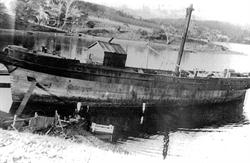
The photo below, dated a decade later, is also from the collection of the Archives Office of Tasmania.

Hulk Otago 1910

Hulk of the Otago, c.1910

That is all well and good. We know our Otago Bay was named after a boat that was dismantled in its Bay. But what does the name Otago mean?  How did the boat get its name?

Otago, a well-known region in the southern island of New Zealand, was settled by people from Scotland starting in 1848. Many people believe the name ‘Otago’ is a European corruption of the Maori word ‘Otakou’ which translates as ‘village’. It may be fitting to refer to our Otago Bay as a village because its population only numbers a few hundred and it is isolated from other suburbs by the natural landscape. However, there seems to be no connection between our Tasmanian Otago Bay and with Maori culture (although perhaps some New Zealanders live there – I don’t know).  More than one boat was built in Scotland and named Otago in the second part of the 19th century, so the impact of the Otago region in New Zealand on Scotland was significant.

The founder of the Otago settlement in New Zealand, William Cargill, died in 1860 and a Tasmanian sandstone monument to him was built in Dunedin in 1864. Why Tasmanian sandstone? According to http://freepages.genealogy.rootsweb.ancestry.com/~nzbound/otago_bdm1860.htm, son John Cargill stopped by Tasmania in 1841, before he helped his father to settle in Otago.  Did John collect some local sandstone during his visit? If so, what an extraordinary thing to do considering the Otago ship eventually had its resting place in the Derwent River.

Alas

Regretfully I sit here at my computer at the time I had planned to leave home for Stage 7 of my walk along the Derwent River.  As promised the sky is mostly cloudy and, while I would have preferred a clear blue sky, clouds in themselves are not the problem.  The clouds are trying to be ordinary cumulus stacks but there is too much a sense of snow cloud around their edges, so I do not trust the day. The mountain (Mt Wellington) still has a covering of snow from yesterday’s storms and today’s winds blowing from there are icy.  Since quite a bit of today’s walk was over exposed roads, the thought of being blasted by the wind all day isn’t attractive. So … I expect Friday’s weather to be suitable and will try again then.  It’s such a shame. My lunch was made and bag packed. Nature wins!


Weather – please be kind tomorrow

People who live in Hobart know the persistently wet and windy spring weather we have felt and seen for the past few days.  This afternoon my windows were pelted with white stones of ice; yes hail. I haven’t seen hail for a long while. But I shouldn’t be surprised.  After a major storm over the mountain (Mt Wellington) this morning, the top half was white with snow. Then strong fronts passed over Tasmania bringing the ferocious inclement weather with it. Stories about the wild weather have been covered in http://www.themercury.com.au/news/tasmania/hobarts-hadleys-hotel-damaged-in-storm-squall-with-thousands-of-homes-without-power/story-fnj4f7k1-1227104947517.

But the Bureau of Meteorology indicates a minimal chance of rain tomorrow around Hobart, and cloudy but with a high of 19 degrees.  This seems perfect for walking, and I am desperate to get back out there in the fresh air walking along the Derwent. I will be travelling on an early Metro bus 694 ready to get off at Risdon Cove near the intersection of the East Derwent Highway with  Saundersons Road, the entry to the suburb or Risdon. I will be walking northwards through two suburbs; Otago Bay and then Old Beach before jumping on a bus to return home in the afternoon.

Right now, looking out from my window, the sky is dark grey, the hills are dark grey and the edges of buildings are blurred by the rain. My fingers and toes are crossed for good weather tomorrow.

Aboriginal and European cultures clash at Risdon Cove

1804 was a memorable year for Van Diemen’s Land (later to be renamed Tasmania). Historical records show that in May 1804 a significant and deadly clash occurred between the European new settlers and the peoples of the local Moomairremener aboriginal tribes.

I have been trying to picture the circumstances which might have caused fighting to break out.

Starting with the European settlers

From January 1804 onwards, Bowen sailed to Sydney from Risdon Cove and back again before making a final departure from Van Diemen’s Land in August. It is not clear how many people remained at Risdon Cove while he was away. During the months from February to May, the two officers were confused in relation to who was in charge. It wasn’t until 8 May 1804 that Bowen officially handed control over to Collins.

Another problem is that personality conflicts existed between Bowen’s free settlers, and that there were difficulties working with the few members of the military which accompanied this initial settlement. The contributing factors to the uneasiness between people are easy enough to guess: an environment that is physically unusual and unknown to the new settlers, unpredictable weather conditions, inadequate food and water, no services or shelter buildings available and everything needing to be built, the hard labour required to eat and live each day, the fact that half the number were convicts and not free to do as they please, the fact the other half had to manage and feed those convicts.  In a small community of 49 people, should one person not like another, there would be no escape, and it is easy to imagine in these harsh pioneering days irritability could burst. Even minor civic scuffles would be unsettling for such a community.

In relation to the Moomairremener indigenous peoples

Their land entitlements and living practices had been established for thousands of years. Therefore, the incursion of the European strangers would have started as a puzzling surprise and then proceeded to become a despairing resentment as their land was taken over and their food sources mismanaged. The food stores brought by Bowen’s and Collins’ ships were often unusable leading the new settlers to kill kangaroo and other game for survival. Their means for obtaining such additional food supplies included using firearms. Not only were these weapons unfamiliar to the Moomairremener peoples, they were stronger and more efficiently deadly than the weapons which the aboriginal tribes owned. Without a common language nor shared cultural beliefs, the failure of the aboriginal and Europeans to communicate clearly with each other, set a path towards localised warfare.

According to Wikipedia, on the 3rd May 1804 “a large group of Abo­rigines blundered into the British settlement. The sol­diers mistakenly thought they were under attack and killed some of the intruders. About 300 aboriginals, men, women and children who had banded together, approached the Risdon Cove settlement whilst occupied on a kangaroo hunt during a seasonal migration. The Aborigines had arrived at the settlement and some were justifiably upset by the presence of the colonists. There had been no widespread aggression, but if their displeasure spread and escalated, Lieutenant Moore, the commanding officer at the time, and his dozen or so soldiers, could not be expected to be able to protect the settlement from a mob of such size. The soldiers were therefore ordered to fire a carronade (a small cannon used for firing salutes at the settlement) in an attempt to disperse the aboriginals; it is not known if this was a blank round, although some allege grape shot was used to explain an alleged but uncorroborated high figure of deaths.

In addition, two soldiers fired muskets in protection of a Risdon Cove settler being beaten on his farm by aboriginals carrying waddies (clubs). These soldiers killed one aboriginal outright, and mortally wounded another, who was later found dead in a valley. Lieutenant Moore’s account lists three killed and some wounded. It is therefore known that in the conflict, some aboriginals were killed, and that the colonists ‘had reason to suppose more were wounded, as one was seen to be taken away bleeding’. ‘There were a great many of the Natives slaughtered and wounded’ according to the Edward White, an Irish convict who later spoke before a committee of inquiry nearly 30 years later in 1830, but could not give exact figures. White alleged to have been an eyewitness, although he was working in a creek bed where the escarpment prevented him from viewing events, claiming to be the first to see the approaching aboriginals, and also said that ‘the natives did not threaten me; I was not afraid of them; (they) did not attack the soldiers; they would not have molested them; they had no spears with them; only waddies’, though that they had no spears with them is questionable, and his claims need to be assessed with caution. His contemporaries had believed the approach to be a potential attack by a group of aboriginals that greatly outnumbered the colonists in the area, and spoke of ‘an attack the natives made’, their ‘hostile appearance’, and ‘that their design was to attack us’.” Neither  Bowen or Collins were present at the time of this attack.

Ahhh. The sadness caused by misunderstandings, ignorance, fear and lack of leadership!

Another informative site is http://members.iinet.net.au/~rwatson1/bowen/risdon_cove.htm which includes  20th and 21st century history of Risdon Cove.

The birthplace of European Settlement in Tasmania (Van Diemen’s Land): Risdon Cove

The start of my walk along the next stage of the Derwent River will be at Risdon Cove.

Earlier blogs explained how Lieutenant John Hayes, with two ships, entered the River and named it the Derwent in 1793. Twenty six kilometres upstream, while mapping the River, he saw an inlet on the eastern shore and named it Risdon Cove. Risdon, Risdon Vale and Risdon Cove were named after Captain William Bellamy Risdon. Risdon took command of the Duke of Clarence, the second ship that was part of Hayes excursion up the Derwent River.

Another decade passed before European colonisation began.

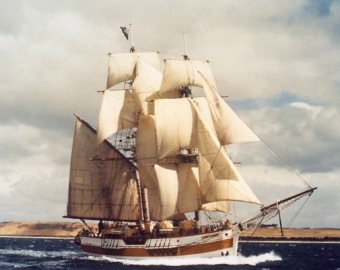
The Lady Nelson was the first ship to arrive at Risdon Cove in September 1803 when Lieutenant Bowen was sent from Port Jackson (Sydney area) to establish the first settlement at Risdon Cove, and rename it Hobart. As an aside, in the late 1980s a replica was built and the new Lady Nelson became well known on the Derwent River round Hobart. Currently locals and visitors volunteer time to maintain and crew the ship. Short sails are scheduled throughout the year for those who are interested. The website http://www.ladynelson.org.au/ provides further information, and has published the photo which I have reproduced below.

Lady Nelson

Despite the recommendation of the explorer George Bass, Risdon Cove proved to be a bad choice for a settlement site because the soil was poor and fresh water minimal.

In early February 1804, Lieutenant Colonel David Collins arrived from establishing the first small settlement at Sullivan Bay in the state of, what is now known, as Victoria. Quickly Collins realised Risdon Cove was inadequate and ordered the relocation of the settlement to a new site at Sullivan’s Cove, the present wharf-front centre of today’s Hobart. By late February 1804, the military and convicts had been moved to Sullivan’s Cove on the western shore of the Derwent River.

How many settlers were there?

Gathering reliable figures for the numbers of people remaining at Risdon while Bowen was away sailing and exploring and once Collins had moved some of his people to Sullivan’s Cove has proved to be impossible. According to the reputable Australian Dictionary of Biography, Bowen’s landing party in 1803 numbered 49 persons in total including 24 convicts previously transported from England via Port Jackson (Sydney). The site http://www.treasury.tas.gov.au/domino/historyW.nsf/v-all/021976A07261DACBCA256EB400107431 declared that in 1803, 100 people were settled at Risdon Cove, so I assume that further ships arrived after Bowen later that year. The same website refers to “Collins’s expedition of more than 430 people.” Apparently by July 1804, Collins had ‘hutted’ 400 people on the western shore around Sullivan’s Cove and bays further along the Derwent River. Other reports indicate an unspecified number of people stole a boat and escaped from Risdon Cove, thereby reducing the number of people living in that tiny settlement.  I wanted to have a sense of the scale of the residents remaining at Risdon Cove in order to determine whether the settlers might be afraid of the aboriginals simply on the basis of being outnumbered.

Bus routes and public bus services are a great help to me as I walk along the Derwent River

Today’s TasWeekend insert magazine in The Saturday Mercury newspaper included a piece by Bushwalking enthusiast John Cannon. From the content of his article, it suggests to me that he may have been reading my walking the Derwent River blog, particularly when he talked about the possibilities for accessing walks amongst Hobart suburbs by using Metro bus services. I am sorry the address for my blog was not included in the article as an incidental extra to encourage more locals  to follow in my footsteps. I wonder whether one day I will find John Cannon getting off the bus when I do at one of the walking stage starting points.

Metro bus timetables are located on http://www.metrotas.com.au/. The bus below is travelling in the centre of Hobart (image is from www.totallysouth.com.au)

metro-bus-service