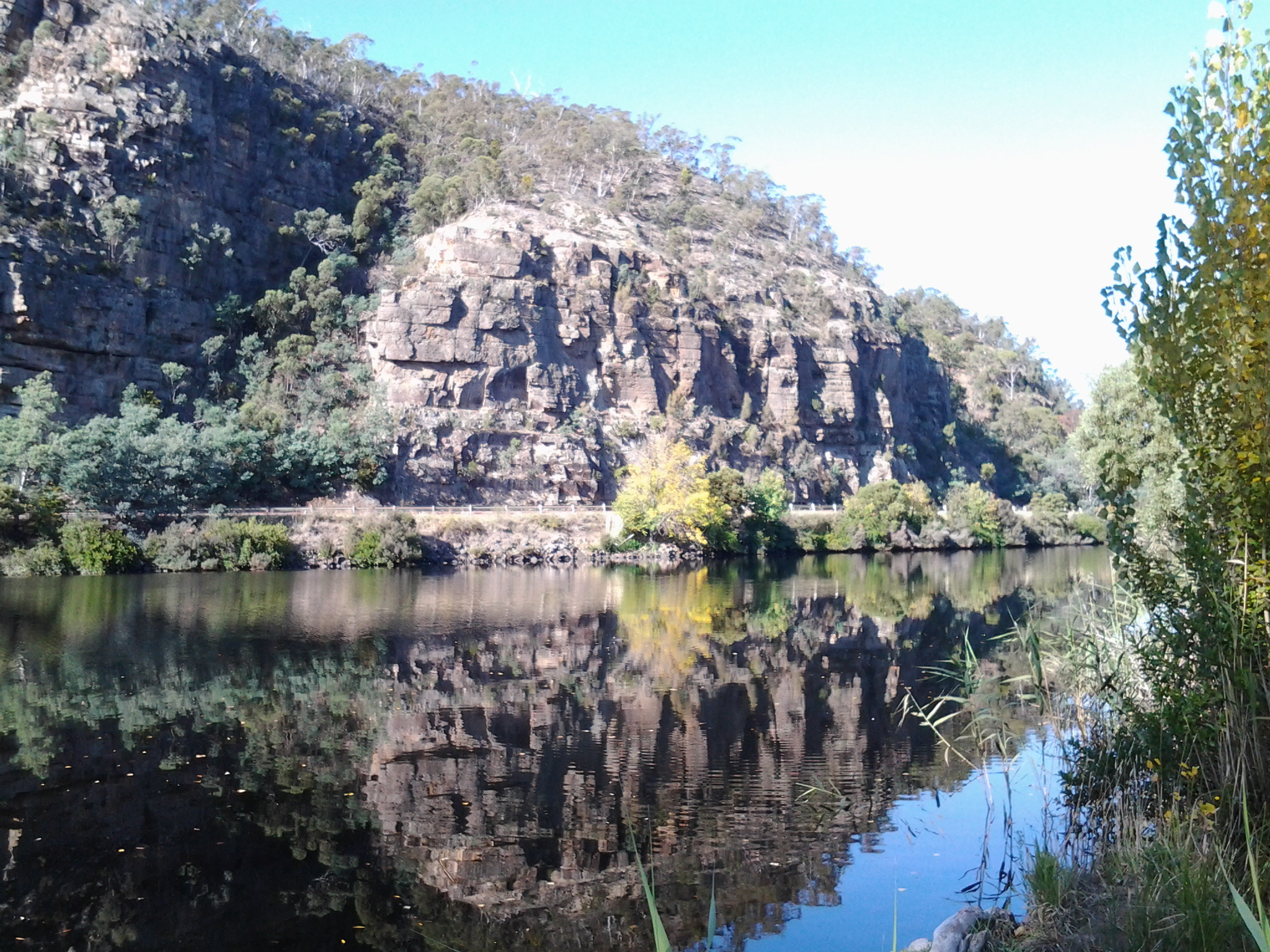
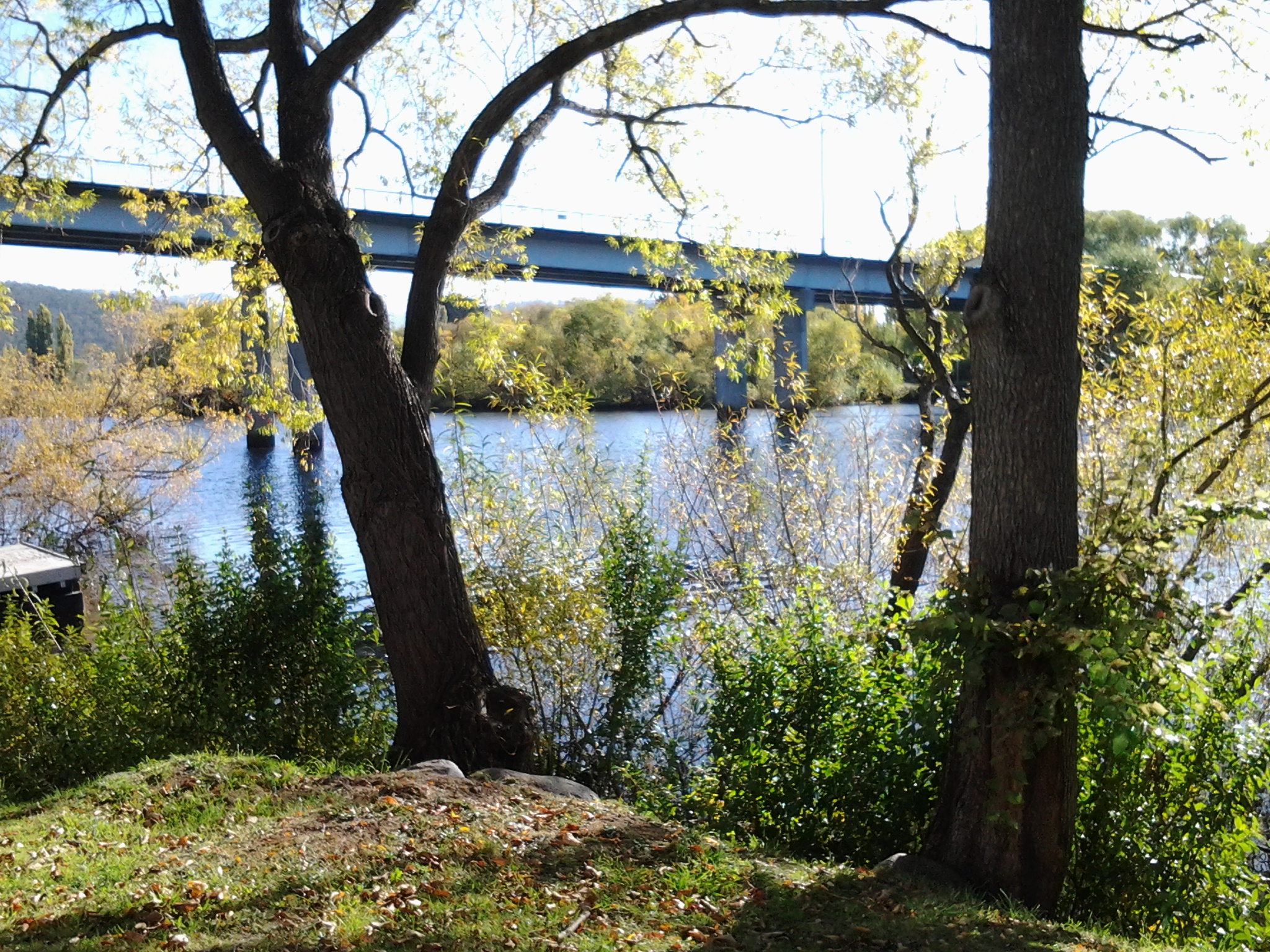
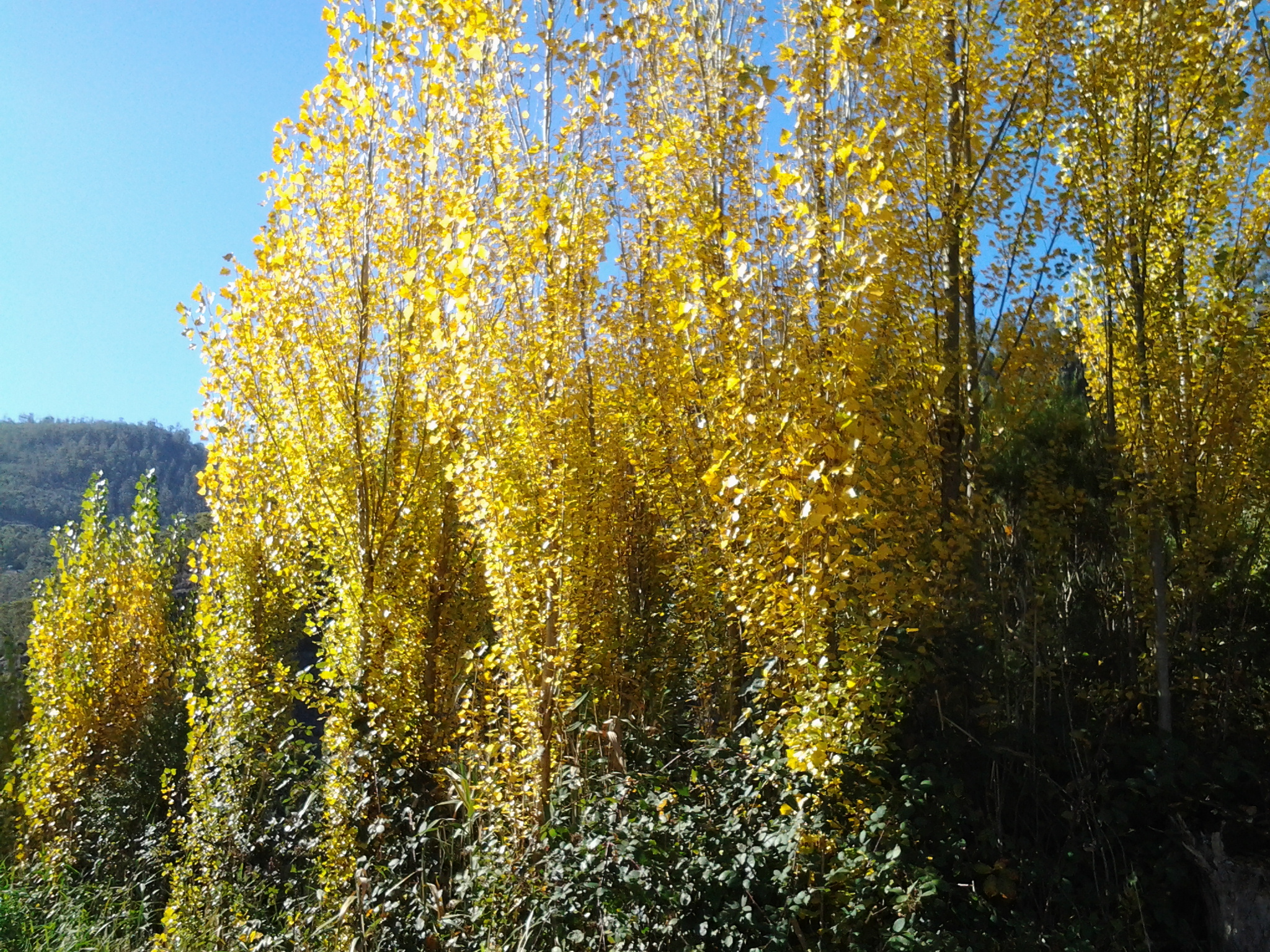
Category Archives: Tasmania

Green Island – do you know it?

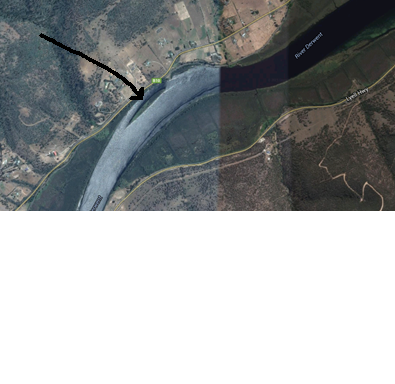
How many islands are green with vegetation? How many blots of land are named Green Island? Probably many thousand.  Tasmania has a few ‘green’ geographical features spread around the state – followers may recall in an earlier walking stage I rounded Green Point on the eastern shore of the River. My walk along the Derwent River last week passed by a green Green Island.

While walking the length of Murphys Flat toward the northern end, across the water of the Derwent River I caught glimpses of a small length of low lying land in the flow of the Derwent River. Green Island was almost invisible from the western shore because the grasses in the Murphy’s Flat wetlands have grown tall.

This small piece of land provides a safe haven in which fish hang about the edges. New Norfolk Anglers Club members and others have enjoyed catching tagged salmon here.

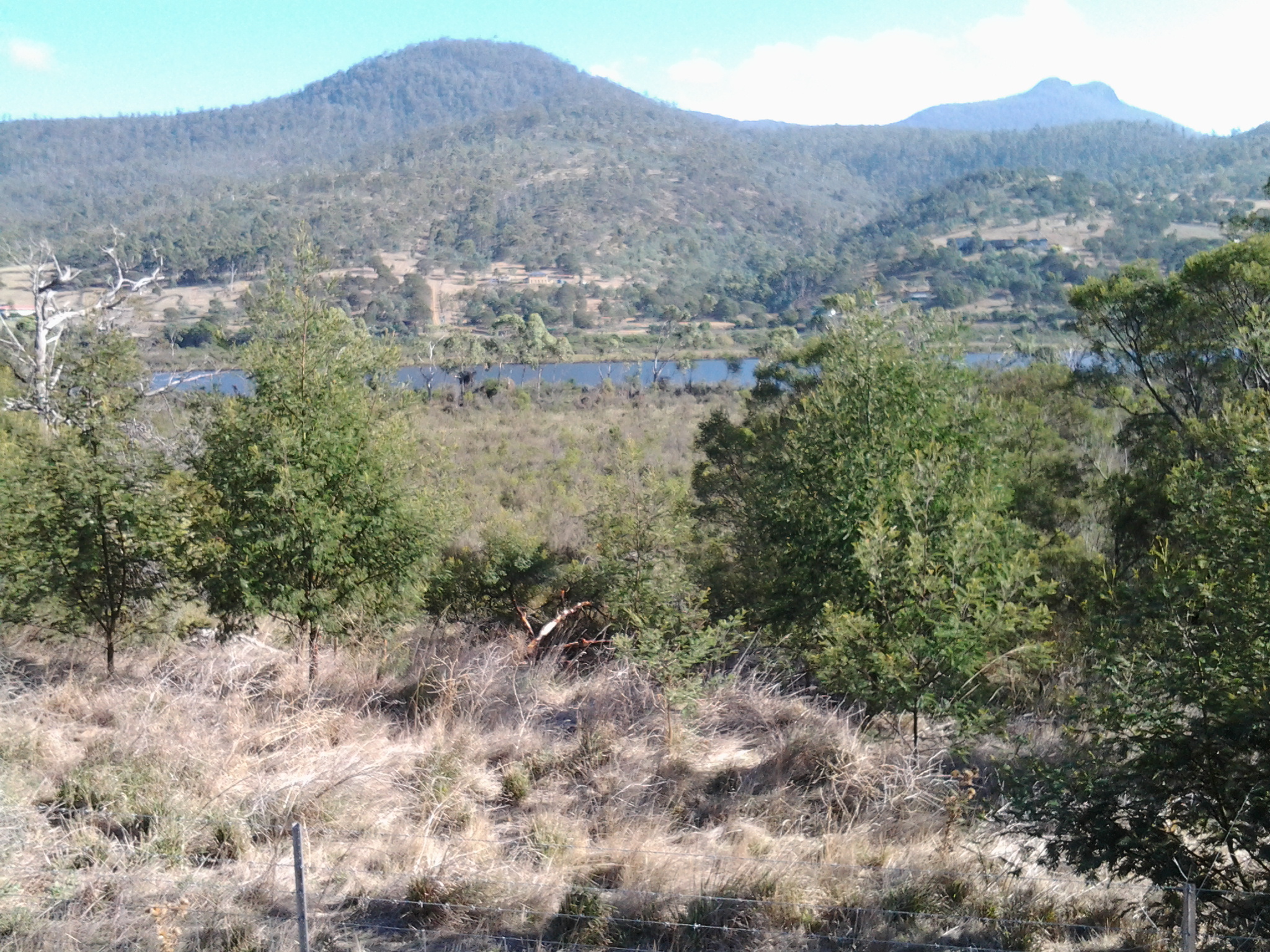
Green Island is looked over by Mount Faulkner on the south western side of the river, and by Mt Terra and Mt Dromedary on the north eastern side.  On the map below, my arrow points to the slim Green Island near one bank of the Derwent River. The Lyell Highway is the yellow line curving through the lower part of the landscape. Murphys Flat is the fat area between the Highway and the River.

Green Island map

Did I feel uneasy walking alone past Murphys Flat on Stage 14 of my walk along the Derwent River? Answers and extraordinary stories.

Yesterday one of my posts introduced Addington Lodge as a Haunted House and since then a few readers have wanted to know more.

Photo of Addington Lodge

The photograph above is of Addington Lodge, Granton, apparently a former residence of Governor Arthur – from the collection of Linc Tasmania

In Hobart’s The Mercury newspaper of Saturday 6 July 1935 (http://trove.nla.gov.au/ndp/del/article/30094484?searchTerm=Anthony+Geiss), J Moore-Robinson wrote his version of the history of the House and area (then not known as Murphys Flat rather as Marsh Farm). A few descriptions and some extraordinary stories of what happened to a hop picker and others, create a feeling of how the crumbling remains of Addington seemed at that time.

The author talked about people “who visit southern Tasmania who have not seen the Haunted House but have been intrigued by its shady reputation and shadowy tradition. Empty and forlorn it stands to-day near the road-side on the way to New Norfolk, a gaunt spectre of a vague past, a meet  and fitting rendezvous for apparitions which, if the poets speak truly, steal at the witching hour of midnight, from yawning graves and uneasy vaults, to curdle the blood of humans. Motorists roll by unthinking at all hours of the day and night, but pedestrians, I am told, walk warily, or walk not at all past the place.”

Did I walk warily? Well yes I did. But my caution was the result of the stream of traffic pouring down the highway a couple of feet next to me.  Sometimes, in some situations, my body can feel ’something’ about a location, but with the incessant roar of vehicles close to my left ear, the brittle wind in my face, and the chilly temperatures I was charging on northwards and gave no thought to ghosts of the past.  Perhaps the bright hard sunlight kept them at bay.

The newspaper article continued: “The existing owner, Mr. F. B. Rathbone of Mt. Nassau, tells me that the place has been rather a bane and an expense to him, and he will not be sorry when nothing remains but a heap of rubble foundations. I asked him why. ‘I have lived in the place myself for weeks at a time,’ he said. ‘My son lived in it for more than a year. Neither of us saw anything uncanny, yet nobody will take it. It has a bad name, and I think it better to let it fall to ruins’. It appears that long before the war, folk were apprehensive and the Haunted House, lacking regular tenants, frequently was empty. Mr. Rathbone said that there are no spectres, never were any and that the noises and apparitions came from a loose board in the roof and from rats, rolling-apples and potatoes in a cupboard.”

But is this true? The newspaper article continued and included a number of stories which might explain the haunting reputation, and which might even be factual.

The hop-picker story

“Shortly before the embers of discontent of South Africa burst into the flames of war, a hop-picker having drawn his cash at Bushy Park was ’Waltzing Matilda’ to Hobart.  He was weary with tramping the hot and dusty road but, doubtless he looked forward, with unfeigned pleasure to the flesh pots and foaming tankards, of the city. As the sun set, he came, unaware of its story, to the Haunted House.  Shadows deepened on the nearby river as the hop picker, pushed open an unfastened door, entered the fateful house, ate his cold mutton and bread, washed it down with part of a billy-can of beer purchased at New Norfolk, spread his blanket on the floor, and slept the sleep of the weary. Presently he stirred and rubbed his eyes and, as he looked, the very marrow froze in his bones. His hair stood on end and his heart seemed to stay its pulsing, for rising before him in the doorway he saw a ghastly thing. ‘Thing’ is the right word, for the hop-picker had not seen or dreamed of anything like it. Thin legs, curved, and bent, supported an enormous body which, though it seemed to be clothed, was still visible to the trembling mortal who saw the apparition’s internal organs hideously pulsing and distended. Its neck, gashed from ear to ear, was unable to support the head which sagged horribly from one side to the other. Blood dropped from the severed jugular and the baleful gleams from the staring eyes pierced the semi-darkness and seemed to impale the terrified watcher. A butcher’s knife was clasped tightly in the spectre’s right hand, and hand and knife were horribly red.

In a crouching pose, the creature swayed toward the ‘hopper’, whose limbs seemed fettered by unseen manacles, from which he writhed and struggled to free himself as the menacing and blood stained figure approached. A foul smelling breath stung his nostrils and the knife was within striking distance of his heart, when, with a wrench that would have done credit to Samson, the ‘hopper’ broke free, dodged the ghost, darted through the doorway and, looking neither right nor left, sped down the road, a white and terror-stricken figure clad only in a shirt. Feeling rather than seeing the ‘thing’ close behind him, he essayed a short cut over a bank, slipped on a stone, gashed his head on a sharp rock, and lapsed into blessed insensibility. When he came to, he found himself prone on the cold floor of the room in which he supped. His blanket lay in a disordered heap. His fingers bled where he had scratched and torn at the floorboards. A lump on the side of his head betokened a meeting with some foreign body. Looking around cautiously the ‘hopper’ could see nothing of his ghastly visitor but, thinking discretion the better part of valour, gathered his belongings, moved tremulously through the door to spend the remaining hours of darkness in vigil by the roadside.”

The hopper’s ghost

“It is said that the hopper’s ghost is the spiritual remnant of a whaler, who, wandering further afield than usual, met at the Golden Fleece (for that was the sign of the haunted house 100 years ago) a bushranger disguised as an honest man. The pair spent some happy hours until the Tasmanian Robin Hood, seeing his chance expertly slit the throat of his ‘friend’ and disappeared with his wallet.”

Lady with the broken heart

Another story has to do with a young and beautiful woman who, betrayed by the usual dashing cavalier, languished in spite of the kindly protection of the landlady until, with a broken heart and saying a prayer for bitter revenge, she stabbed herself, and so went away to brighter, and, I hope, happier fields.

The landlord and his landlady

Still another tale is told about the landlord and the landlady, when the place was the William the Fourth hostelry. This couple, having decided to essay life together without bothering the clergy lived happily for a while, but only for a while. Quarrel followed quarrel, and in these the woman usually came out on top for she was bigger, quicker and stronger, although the landlord had been a soldier and had seen wars, having been with that army which ‘swore terribly in Flanders’, he became tired of being the vanquished, and one day finding his ‘wife’ asleep, stabbed her.  Not content with that, he drove a spike into her head, cut out her tongue, slit her throat and not being quite sure at this stage that she was really dead, and poured some poison down her throat. He then tenderly buried her and was caught and duly hanged which seems to be the only really proper and moral part of the story.”

The Golden Fleece’s reputation as an Inn

“It was during Fitzgerald’s term as licensee that, according to legend and tradition, the place achieved its notoriety, which, considering the grounds on which he was later pilloried is not surprising. It is certain that the ‘Golden Fleece’ had an evil reputation, and that the name was truly descriptive of the ‘fleecing’ accomplished within its walls, and the ‘golden’ results which accrued to the enterprising landlord.”

Kelvin Markham (http://www.km.com.au/tasmania/ch14.htm) has a different view on why the House was haunted.

During the twenty one mile journey to New Norfolk, I had the company of a ghost – one Denis McCarty. To you who follow me along this road, the first made in Tasmania, I present this Irish ghost, ex-convict, constable, farmer and grazier, road-maker, Deputy Provost Marshal and much more. My assertion is that Denis, after all his troubles in constructing the road, drinking his share of the 500 gallons of rum that were to be part payment, and then dying whilst his claims for final settlement were being considered by Governor Sorell and Macquarie, perambulates this unpaid-for road, and, when he finds it necessary to take shelter, rests in the old Golden Fleece.  If you dive into the history of this road, you will learn a number of things. For example You will stand at his deathbed, seeing it only as through a glass darkly, and wonder what Jemott and Broadribb had to do with it – if anything. Contemporary records refer mysteriously to these persons as knowing more than they should of McCarty’s end.”

These background stories and reasons for Addington House or Lodge/Golden Fleece Inn/William the Fourth hostelry to be haunted make for wonderful fiction-writing and movie-making opportunities.  Anyone interested?

Add Lodge drawing -UTAS library

The image above is a drawing of ‘Addington Lodge Colonel Arthur’s Marsh Farm between Bridgewater and Sorell Creek Derwent Valley’/’The Haunted House on the Granton New-Norfolk Road’ by artist A. T. Fleury c1931 – from the collection of Linc Tasmania

Only 10kms to go

20150413_092119

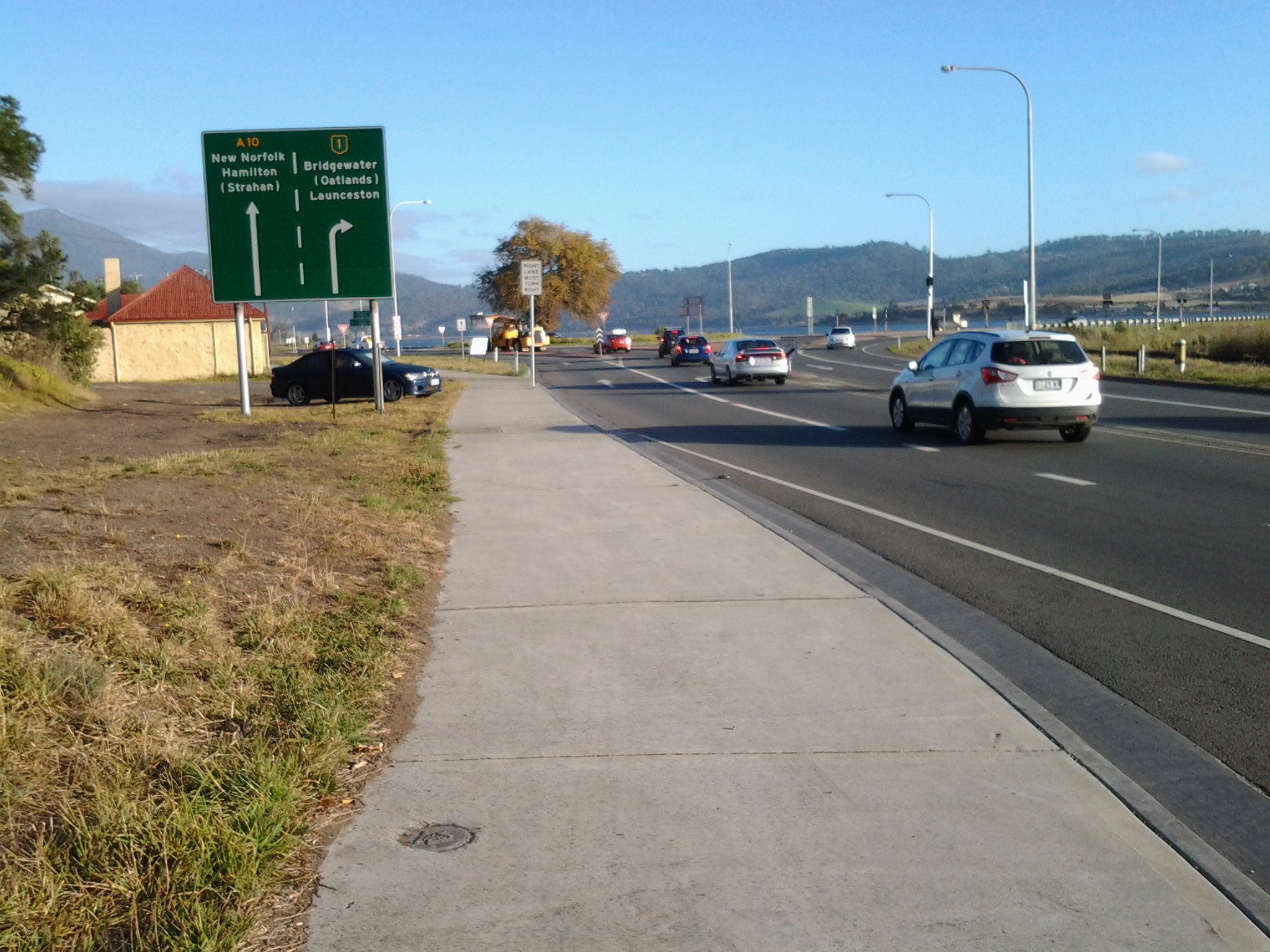
I blinked and double blinked. I almost missed the tiny green sign, probably no larger than my hand, on a pole opposite me as I walked from Granton to New Norfolk.

This tiny sign indicated that if I stayed on the Lyell Highway, I would only need to walk a further 10 kilometres to arrive in the town of New Norfolk. At that moment the end of the walk seemed so close, it was not yet 9.30am, and in a split second I thought the remainder of my walk for the day wouldn’t take long and I could reach my destination at lunchtime. But there was still a lot more walking to do, and later I would be walking off the main road following tracks – which would extend the journey. And later I would stop and chat with people – which would extend the time it took to reach New Norfolk.

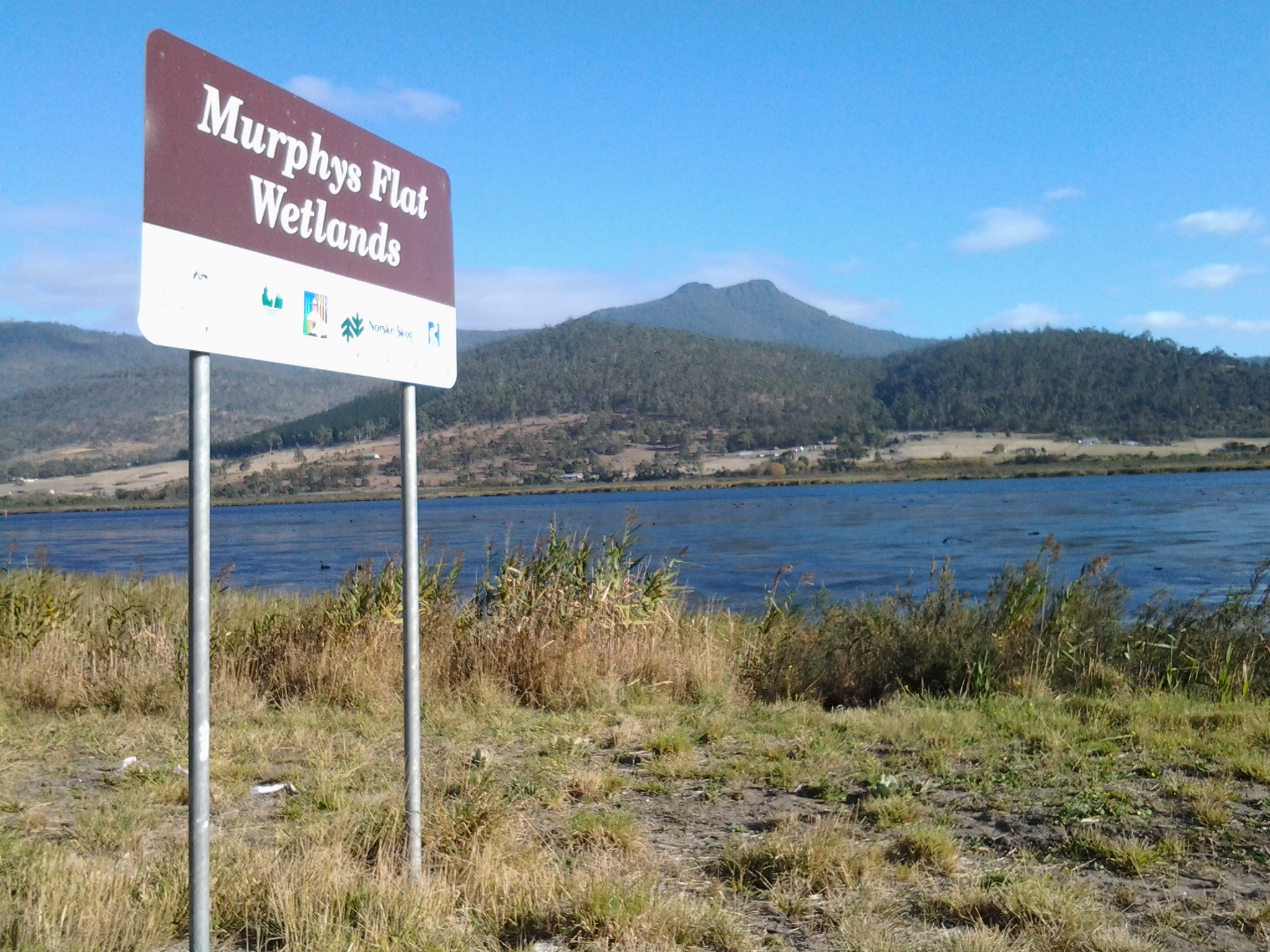
Why are these wetlands called Murphy’s Flats? Who was Murphy?

20150413_090953

Thanks to http://www.parks.tas.gov.au/file.aspx?id=17347  I know that “Murphys Flat Conservation Area historically formed a portion of the property locally referred to as Marsh Farm, which was established through an ambitious land reclamation endeavour begun by Governor Arthur in 1824. The property was hailed as an agricultural “show place” throughout Tasmania and was one of the earliest land reclamations in Australia.”

The site http://www.derwentestuary.org.au/assets/NIE_-_wetlands.pdf provides the information that “In 1997 we nearly lost 40% of these wetlands when a farmer started draining the 66 hectare marsh known as Murphy’s Flat.”  This action was the catalyst for various tiers of government to step in and fund the process to purchase the land and retain it as a conservation area. The area known locally as Murphys Flat was acquired on 1 May 2001 by the Tasmanian Parks and Wildlife Service.

20150413_103930

The 2010 Management Statement at (http://www.parks.tas.gov.au/file.aspx?id=17347) is informative.

Murphys Flat Conservation Area is located within a wetland complex on the southern shore of the River Derwent beside the Lyell Highway between Granton and New Norfolk. The area has been recognised as being particularly species rich, with expansive areas of marshes, underwater grasses, tidal flats and reed beds that provide habitat and breeding areas for large populations of fish, platypus and waterfowl. Murphys Flat Conservation Area comprises 25 to 30 per cent of remaining wetlands in the River Derwent. It is listed within both the Directory of Wetlands of National Significance and the Tasmanian Geoconservation Database.

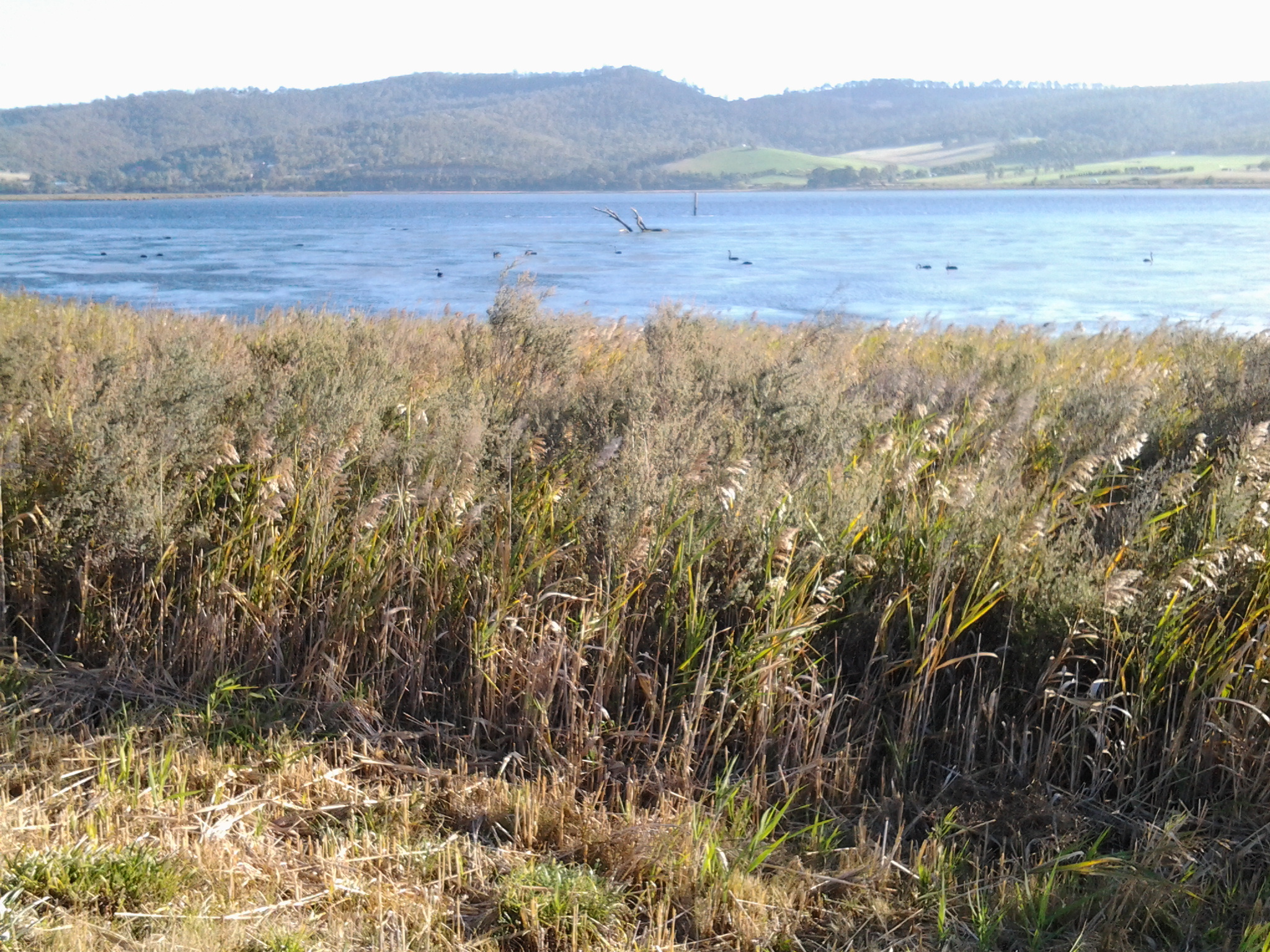
Birds are particularly abundant in the reserve due largely to the diverse habitat. The vicinity is well known for its large population of black swans and it is a likely hunting and foraging area for five significant bird species including the wedge-tailed eagle, white-bellied sea-eagle, swift parrot, masked owl and great crested grebe. The secretive, little-known Australasian bittern is also known to occur there.

Murphys Flat Conservation Area serves as a nursery for the sandy flathead and also provides important shelter for other juvenile native fish. Backwater areas of the reserve are of particular biological significance with unique botanical assemblages and an abundance of gastropod molluscs.

Until the early years of this century, “Murphys Flat was used as a dump site for domestic rubbish, garden waste and for overburden from road and earthworks. As a result, the area of wetland vegetation communities has decreased and its condition has been further compromised through the spread of weeds, largely from this source.” Now a weed control program has been instituted. “The vision for Murphys Flat Conservation Area is that it will contribute significantly to regional biodiversity and geodiversity in the upper River Derwent estuary, provide water quality services and research opportunities and be a vehicle for increasing public awareness of wetland values.”

In addition to the natural history and situation, Murphy’s Flat has a cultural history.

Firstly, the site is reported to have been on a travelling route for two Aboriginal tribes (http://www.parks.tas.gov.au/file.aspx?id=17347).

Then, according to Kelvin Markham at http://www.km.com.au/tasmania/ch14.htmFour miles beyond Granton stood a derelict grey stone house, known to all and sundry as The Haunted House. No one can tell why it received its name, though it is popularly (and wrongly) supposed to have been the country seat of early governors. The haunted house was originally the Golden Fleece Inn, licensed on 22 October 1824 to one Henry Fitzgerald. It did not long cater for travellers and in 1837 was on the market. This building was also called Addington Lodge Villa at one time.”

Add Lodge drawing -UTAS library

The image above is a drawing of ‘Addington Lodge Colonel Arthur’s Marsh Farm between Bridgewater and Sorell Creek Derwent Valley’ / ‘The Haunted House on the Granton New-Norfolk Road’ by artist A. T. Fleury c1931 – from the collection of Linc Tasmania
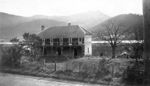
Photo of Addington Lodge

The photograph above is of ‘Addington Lodge, Granton, apparently a former residence of Governor Arthur’ – from the collection of Linc Tasmania
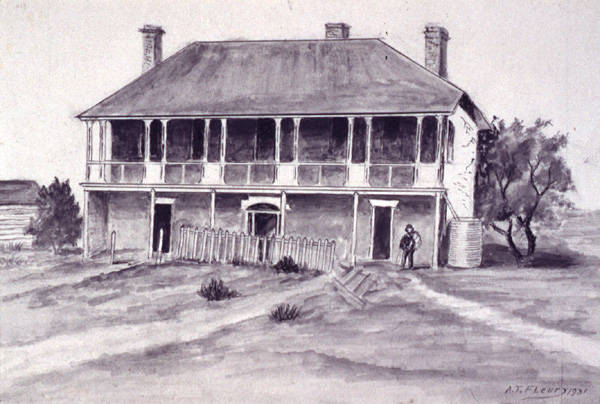
The National Library of Australia (http://trove.nla.gov.au/ndp/del/article/30094484?searchTerm=Anthony+Geiss) offers the information that “Addington Lodge was named after Mr. J.H. Addington, the Secretary to the British Treasury at the time. It was constructed by Governor Sorell to serve as a country house in 1820, a year after the construction of the Hobart to New Norfolk Road. The lodge was a double storey brick house with an architectural style typical of a late Georgian villa with symmetrical doors and windows and a wide fan-lit front door. The lodge was renamed the Golden Fleece Inn and opened to the public after a Mr Barker sold it to Mr. Henry Thomas Fitzgerald in 1824 having owned it for 4 years only. Addington Lodge at Murphys Flat became a popular half-way house for travellers between Hobart and New Norfolk and earned an unsavoury reputation.”

If remains of this house still exist they are now obscured from view by the lush vegetation  growing across the wetlands.  I saw no sign of it as I walked past Murphy’s Flat.

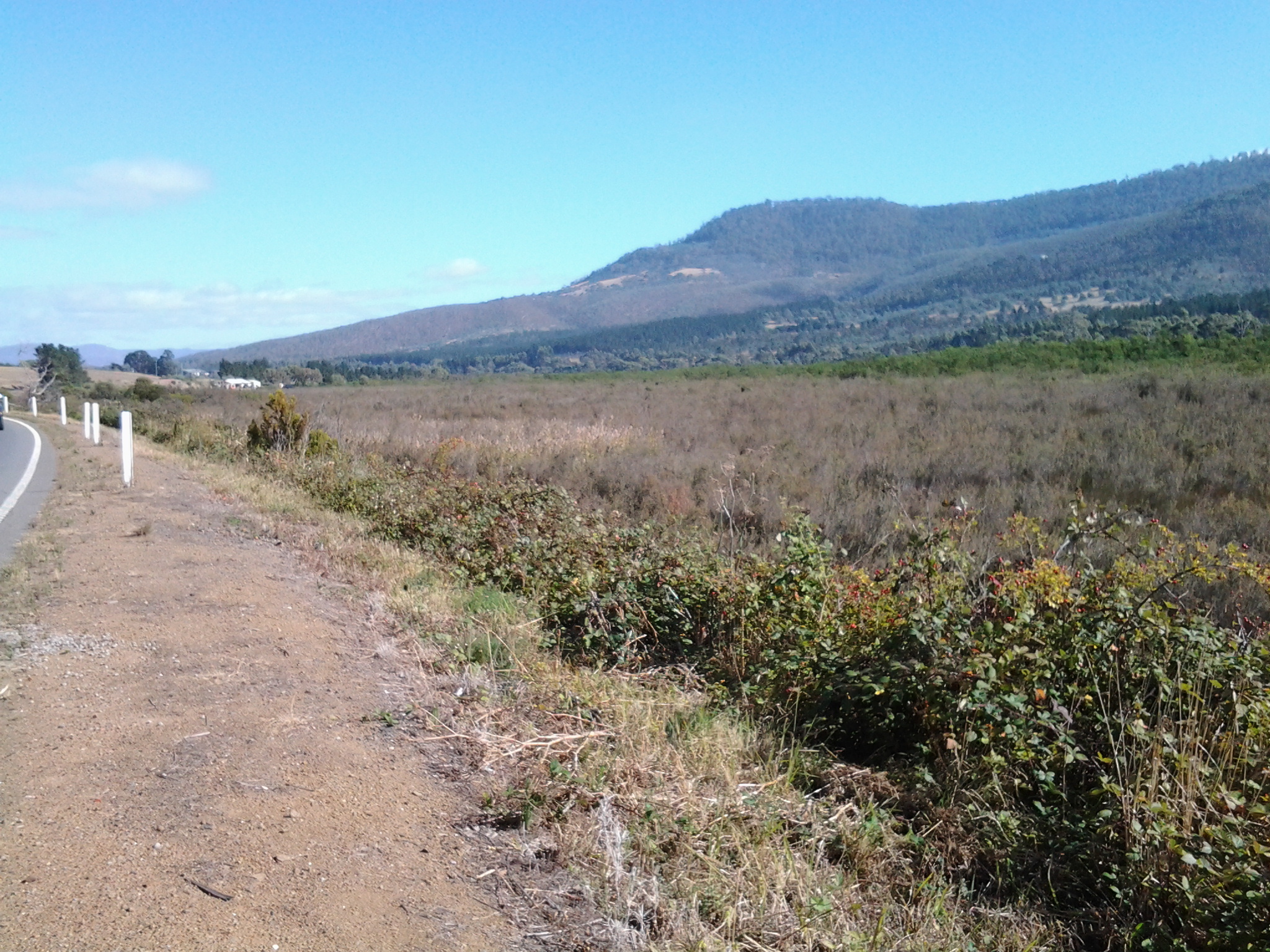
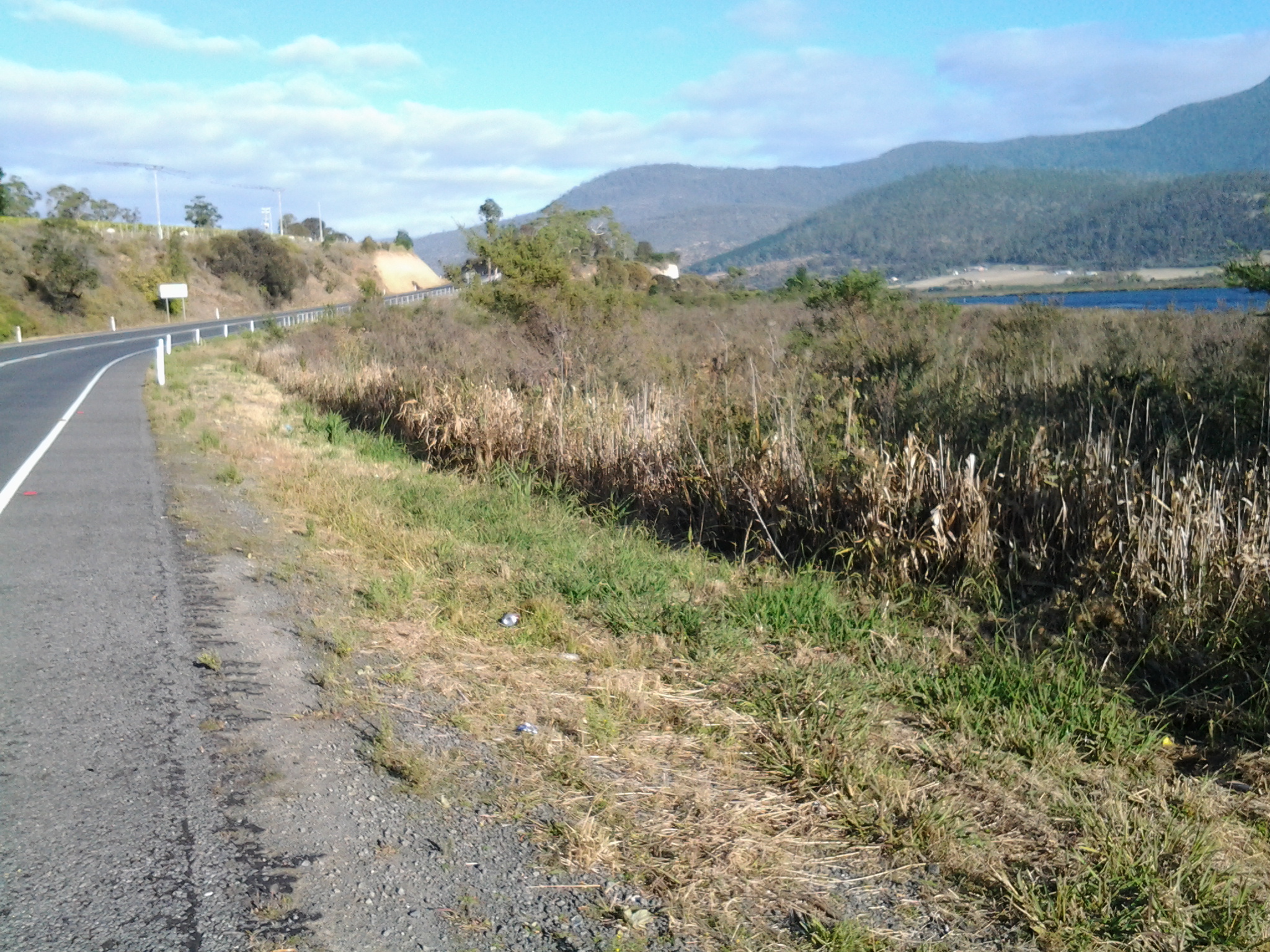
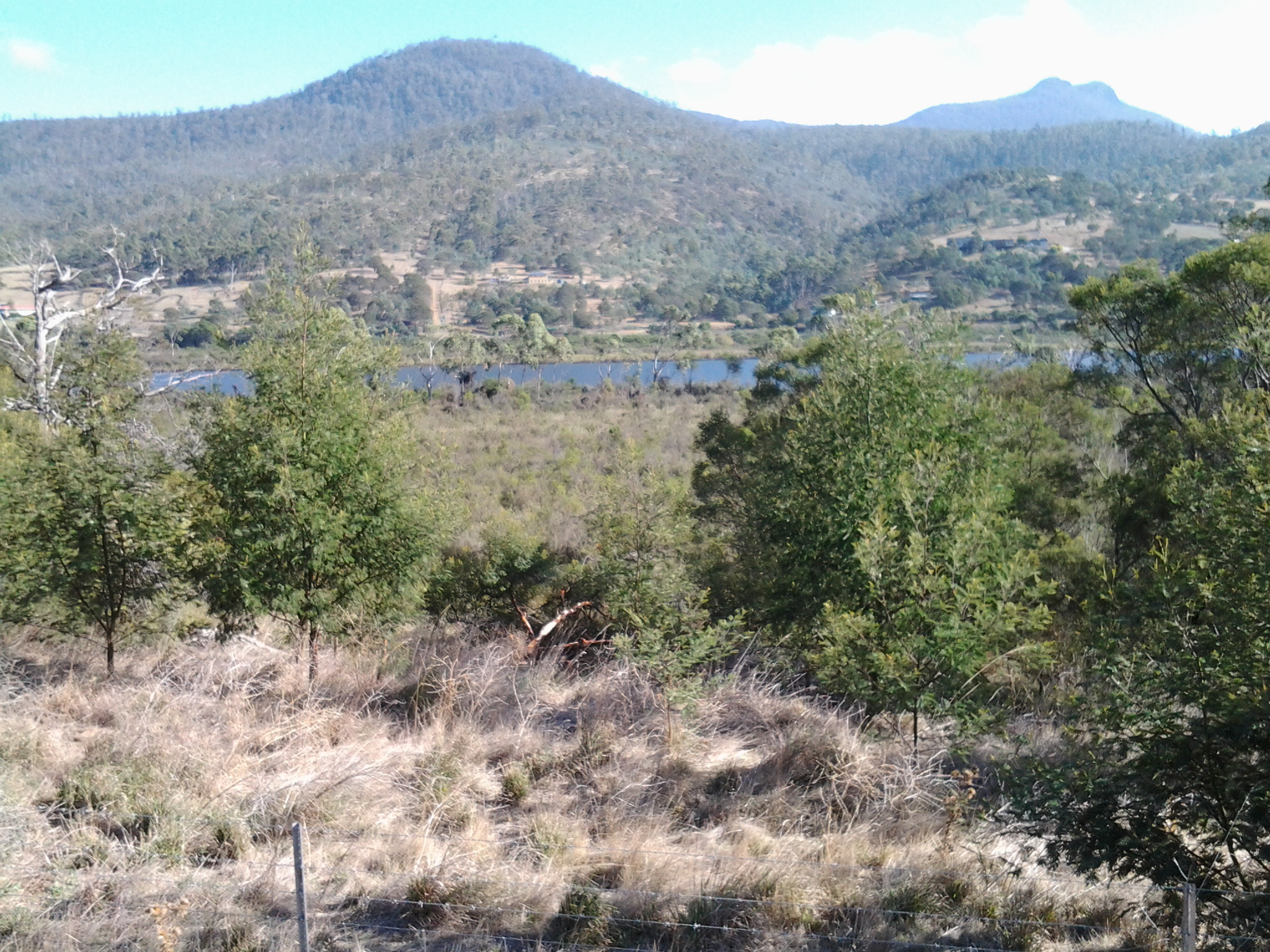
To give you some idea about the look of the wetlands from the Highway, the photo below shows the landscape when I looked back over the road just walked.

20150413_103926

The wetlands looking toward the road yet to be walked.

20150413_103940

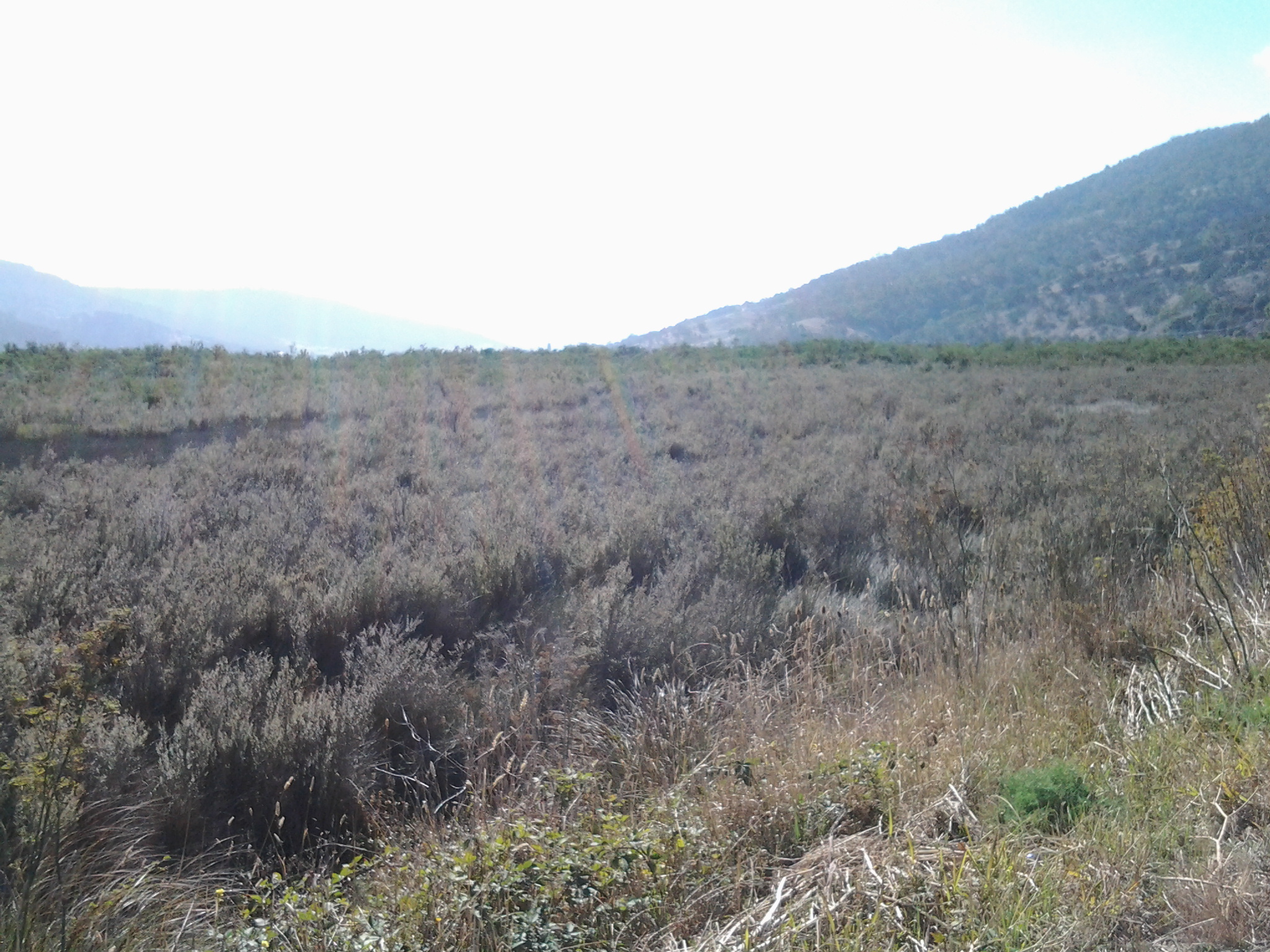
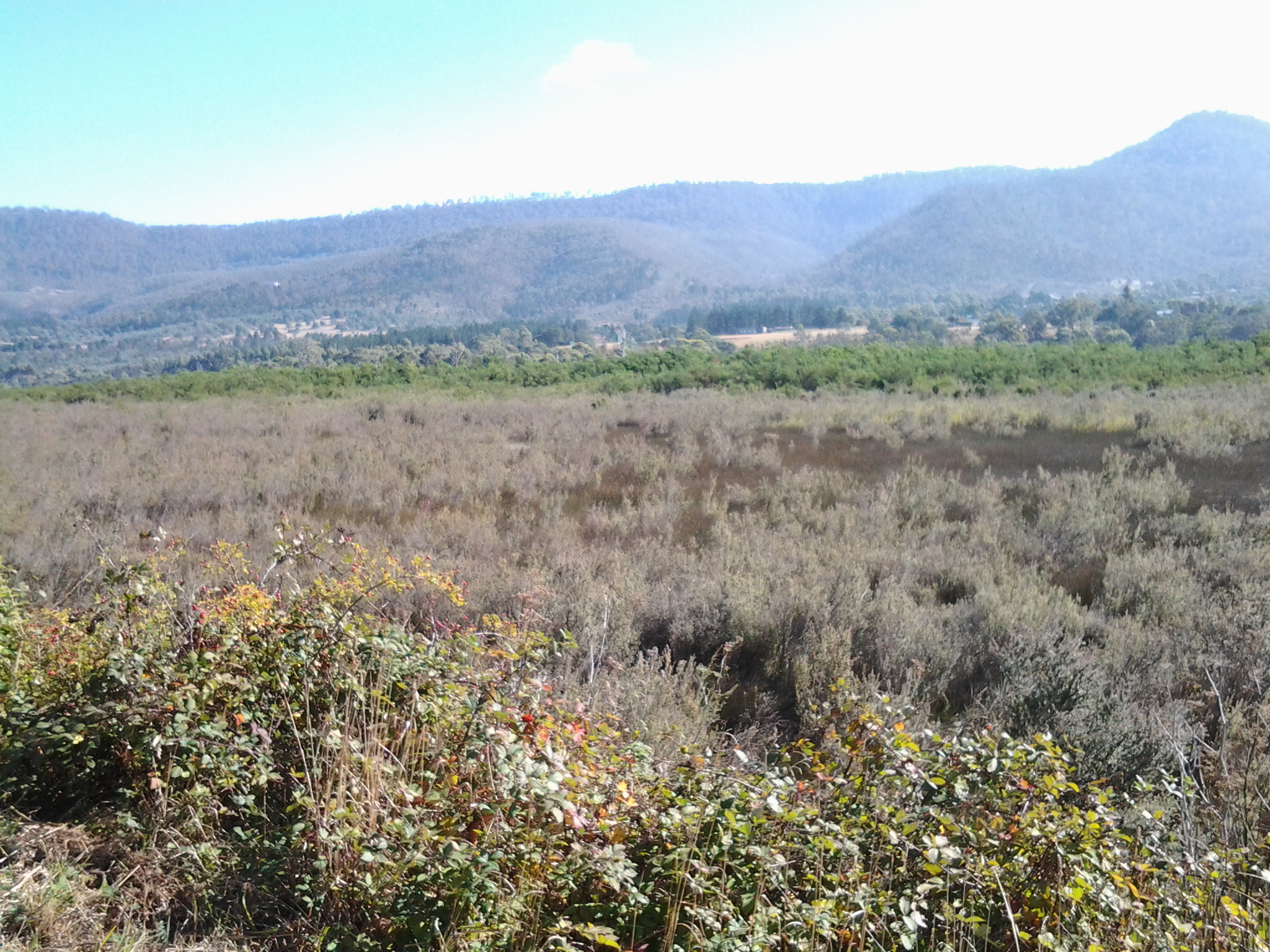
Along the kilometres (Murphys Flat Conservation Area is approximately 2.7 kilometres long and 550 metres wide at its maximum width) of Murphy’s Flat Wetlands, the vista consisted of subtle variations of the following:

20150413_091605  20150413_103937

When I walked, most of the landscape between the Lyell Highway and the smoothly flowing Derwent River seemed impenetrable. I can only imagine this is a very safe place for water birds and fishlings to breed, and for native grasses and other plants to re-establish.

This posting started with a question which I have been unable to answer. I cannot discover who Murphy was. Regrettably.

Murphy’s law is a commonly heard saying which is typically stated as: Anything that can go wrong, will go wrong.  I wondered if the land now known as Murphy’s Flat had been purchased for the purpose of grazing animals and growing crops without due checking, and then found the wet soggy land to be useless in the days when preservation of native flora and fauna was not considered – I wondered if someone bought the land without really checking how it was and having spent all their money decided Anything that can go wrong, will go wrong. BUT according to the definitive book The History of Murphy’s Law written by Nick Spark, this adage was named after an American aerospace engineer Captain Edward Murphy who said as much around 1950. The naming of Murphy’s Flat at Granton seems to have preceded this ‘law’ so the area must have been named after a local – but who was it?  More research required.

Map of Murphys Flat 20150413_095018

Google maps cannot locate Murphy’s Flat so I have attempted to indicate the location this posting has referred to.  Within the hand drawn oval above, the Murphys Flat Conservation Area sits contained between the Derwent River and the Lyell Highway.

From Lime Kiln Point northwards towards Murphy’s Flat

Away from the Lyell Highway in southern Tasmania, while looking at the lime kilns, I had enjoyed relative silence, but once back on the road the endless traffic continued to roar past and box my ears.

Have a look below at the video of a car coming towards and passing me. Listen to that sound. Imagine this noise multiplied many times over and over, and then deeper and more invasive when the many trucks passed. For most of the day’s walk.

There was a pleasant moment when a scattering of comparatively slow moving vintage cars were interspersed in long lines of suffering traffic.  I smiled at all of them and they waved back glad to have someone appreciating their passing.

I loved the geological drama exposed by road cuttings.

20150413_090926

Along the way I enjoyed signs such as the one in the photo below. Has anyone ever seen a kangaroo lifting a car?  Before you send me an email indicating your outrage at my ignorance, I know the sign’s message is for motorists to beware of kangaroos hopping across the road and doing great damage to their car and perhaps injury to themselves.  But I also realise it’s not the fault of kangaroos and wallabies that mankind built roadways in their normal travelling routes.

Kangaroo and car sign

By the time the day was heading towards mid-morning,  the bright quality of the sunlight still indicated the air was still hard and cold.  At this stage I was setting a steady pace, and had great ambitions of reaching New Norfolk very quickly. Before long I reached the start of a long marshy area known as Murphy’s Flat.

Lime Kiln Point ahead

After walking 3 or so kilometres from the bus stop earlier in the day, from a distance I could see part of a white wall fronting the Derwent River.

20150413_084145

At 8.50am on Stage 14 of my walk, I left the Lyell Highway and walked down what seemed to be an earlier version of the highway until I reached the site of the Lime Kilns at Lime Kiln Point.

20150413_084758

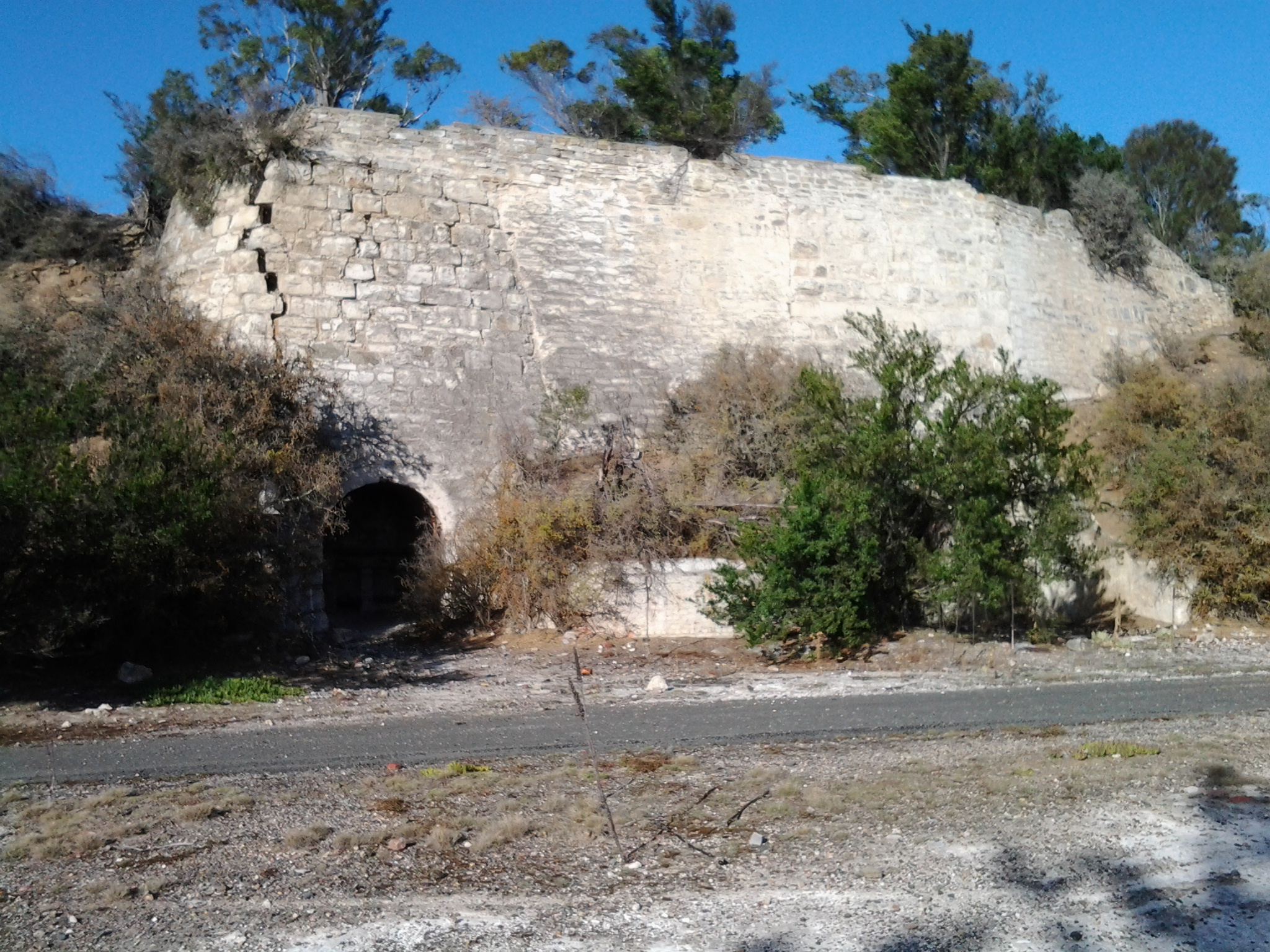
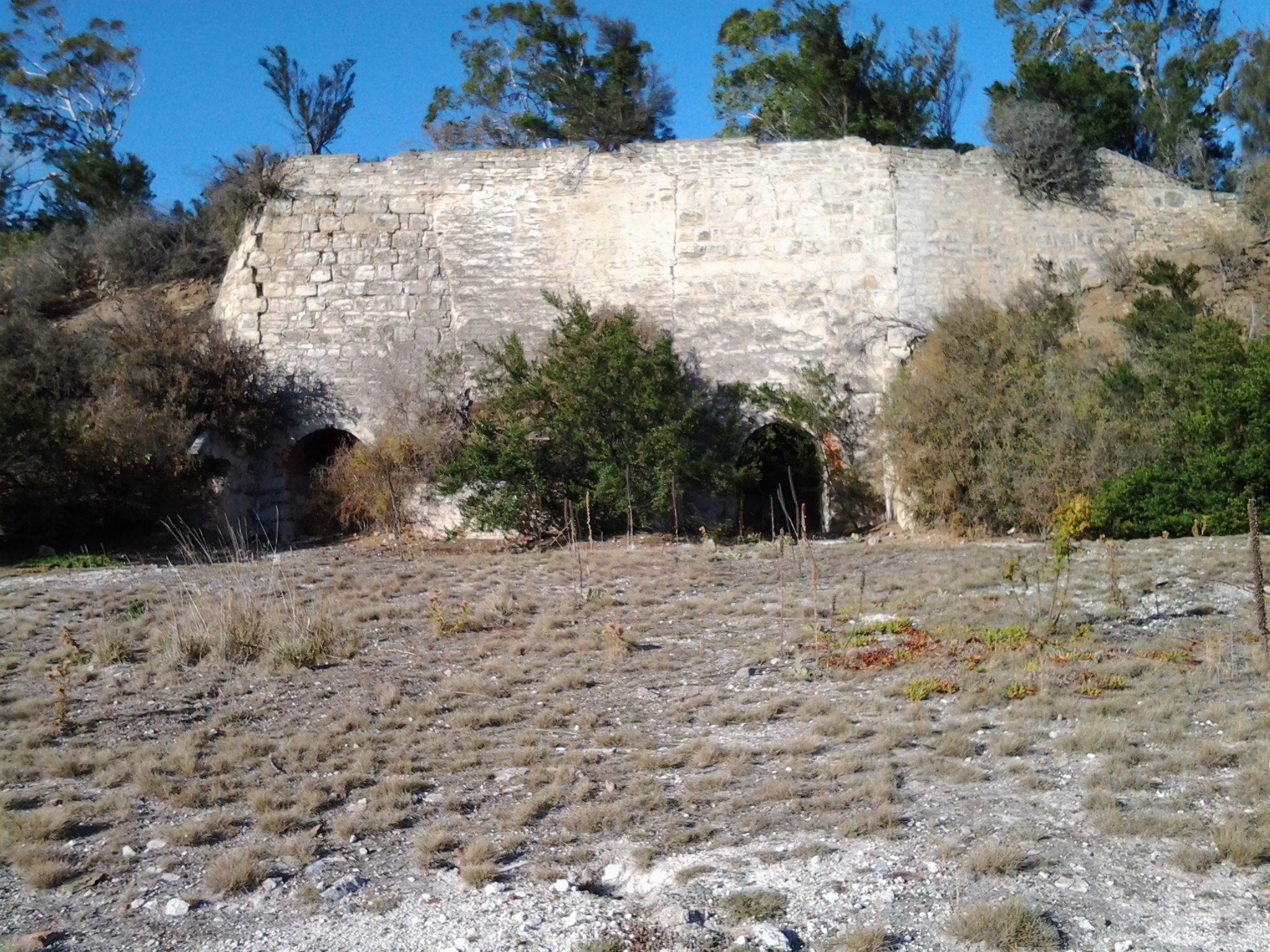
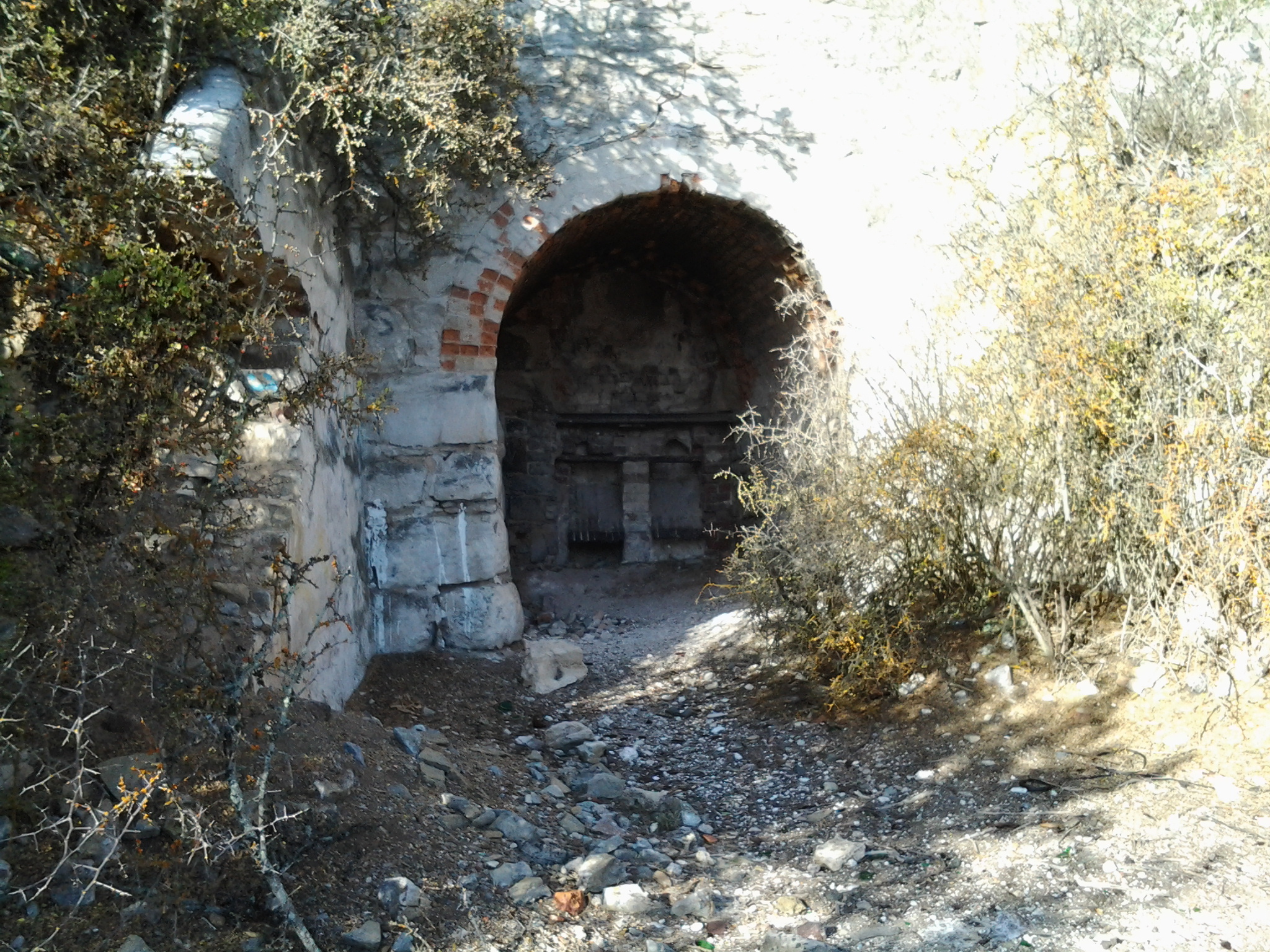
At the site I first discovered the remains of one lime kiln built into the massive white wall.

20150413_085025

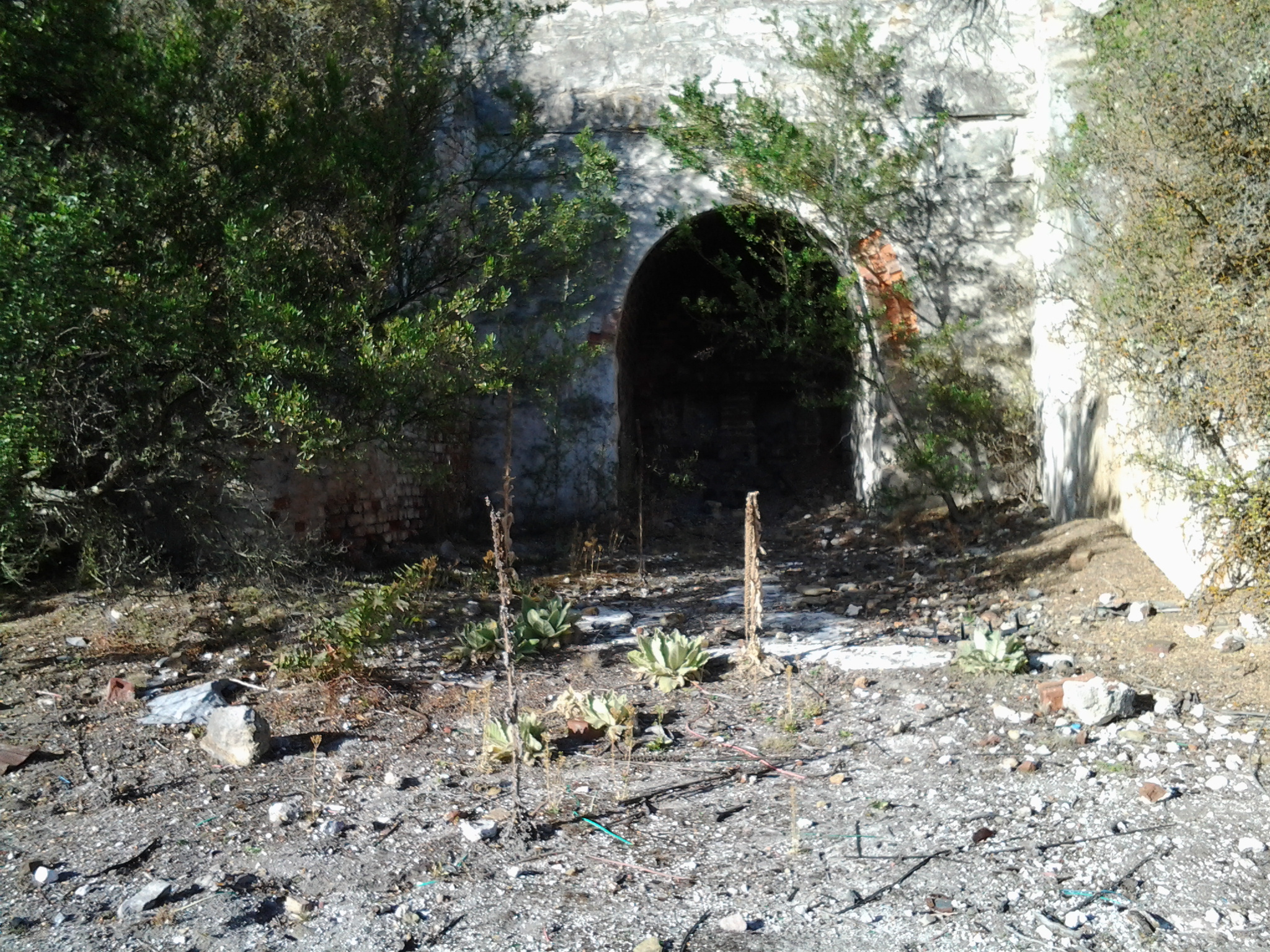
Later I discovered there were two lime kilns in that wall.

20150413_085326

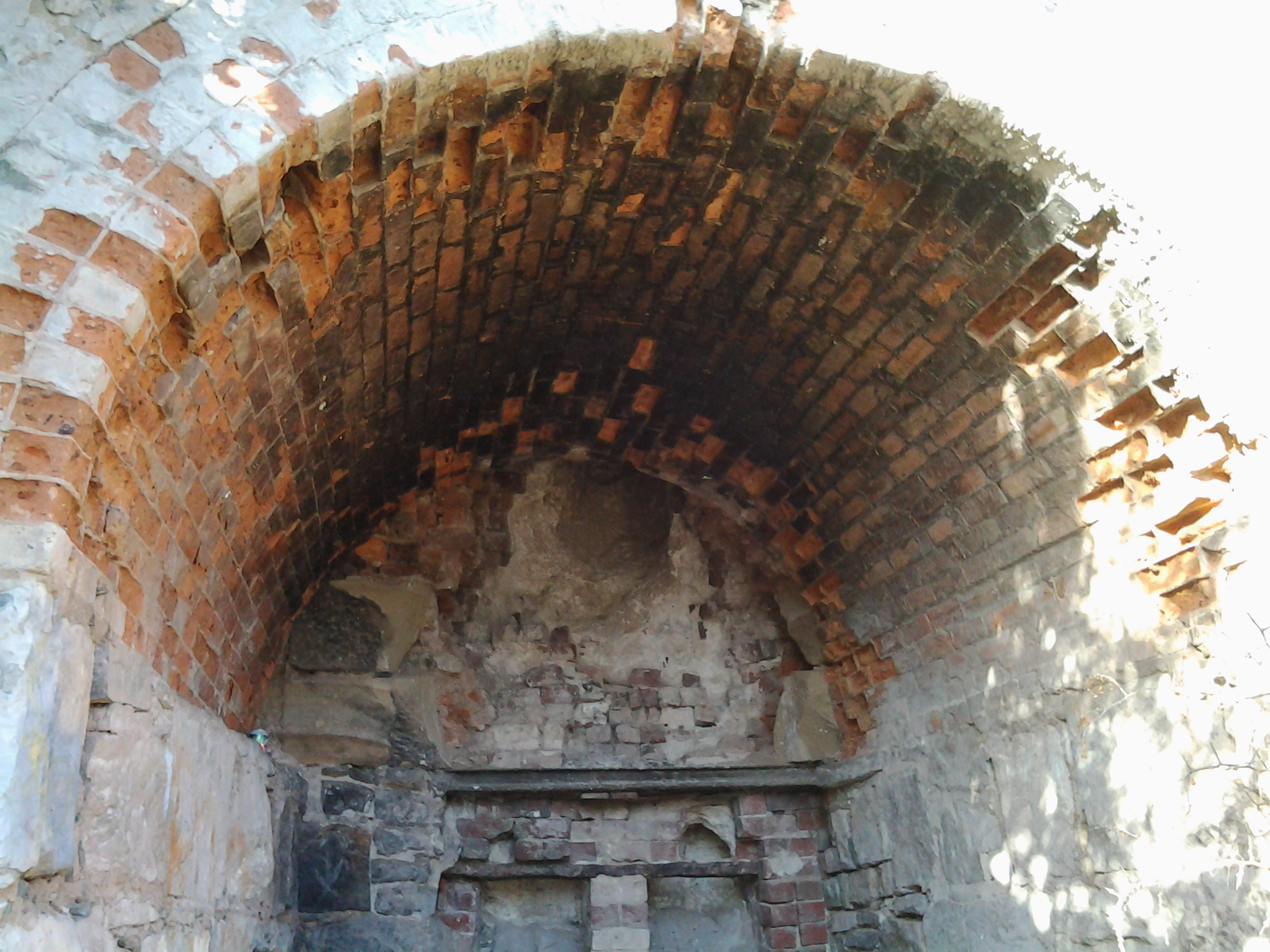
Inside each were two burners.

20150413_085050 20150413_085109 20150413_085112 20150413_085134 20150413_085235 20150413_085219

If you looked at the video in the last posting, then you will be able to understand what my photos show you.

There are no site interpretations, signs, nor information panels and there are no site protection structures in place.  Perhaps these lime kilns are a minor piece of Tasmania’s history, nevertheless they are interesting. I would not have known what I was looking at except for the name of the Lime Kiln Point (a name which only appears on some maps. No road signs named this so if you come looking, it is located 200 metres north of the Derwent Estate Wines turn off) and I imagine there would be many others like me.

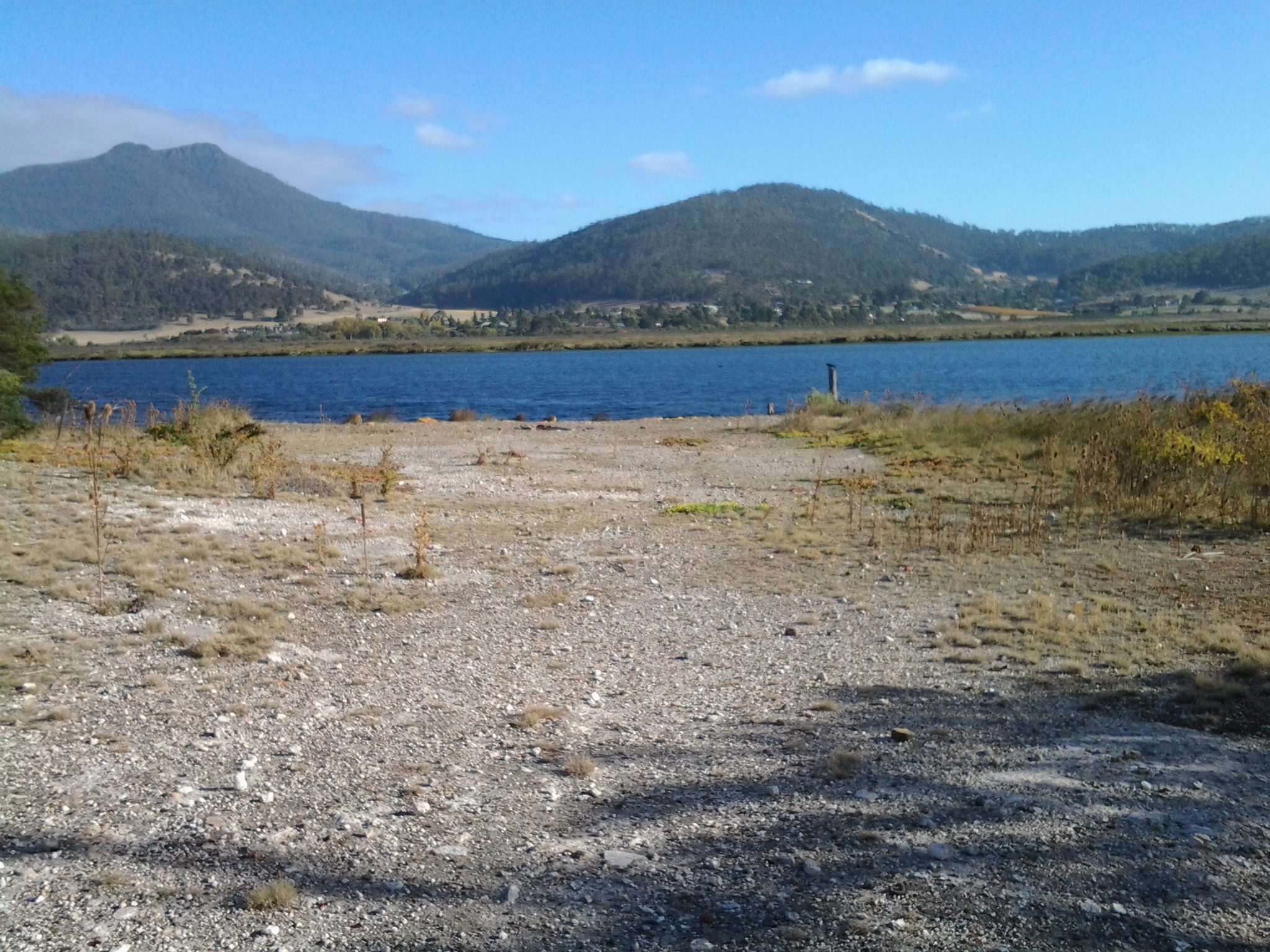
In front of the lime kilns, the broken remnants of a jetty poked up above the Derwent River through the cold air.

20150413_085029 20150413_085352

The view upstream was majestic.

20150413_085400

After taking time to look around Lime Kiln Point, I continued northward. When the old road petered out, I clambered up a loose gravelly rise and back onto the Lyell Highway.  It was only 9am.

What is a lime kiln?

Is it a pottery kiln that has been painted or glazed with lime colours? Is lime syrup or lime pickle cooked in a kiln? Is it an oven for drying lime fruits? None of these are true.

Their job was to produce quicklime (agricultural fertiliser) by the calcination of limestone rock (calcium carbonate). Calcination of the limestone requires heating to around 900 degrees to remove moisture, to oxidise the rock, and to decompose carbonates and other compounds in the rock.

For more information and the process, have a look at the video:

https://www.youtube.com/watch?v=IJpZsvYygF8  You may be amazed, like I was, to understand how toxic and dangerous the process was. A terrible question passed through my mind – is this how third world countries are doing the work still?

The remnants of lime kilns can be found around Tasmania.

Around Windy Point on Stage 14 of my walk along the Derwent River

Despite having driven and been driven along this patch of the Lyell Highway many times, its shape and character were not well known to me. I guess I have always looked out at the Derwent River and more or less disregarded the land.

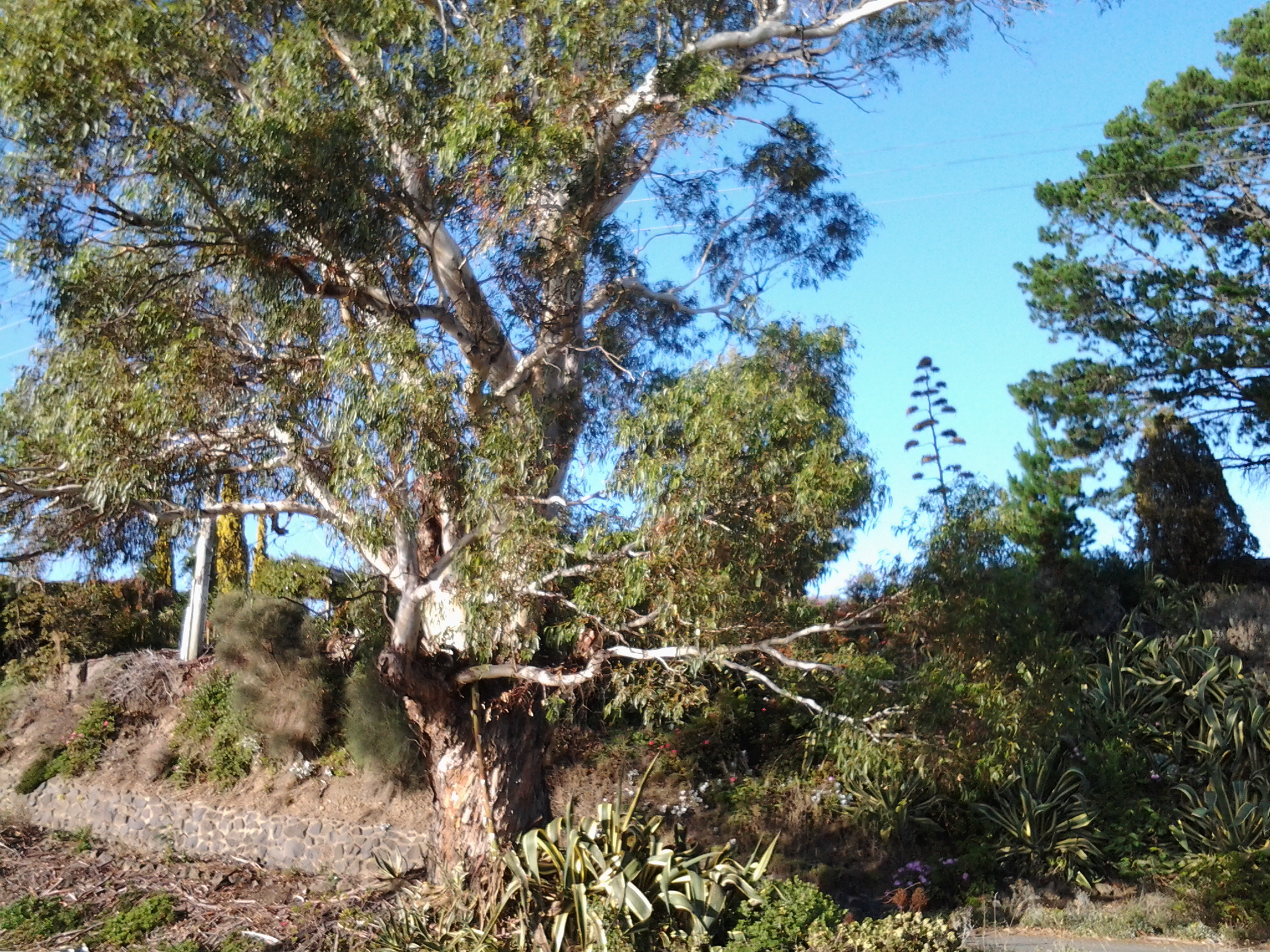
The area jutting into the River, causing it to curve from a north west to western orientation, has been labelled Windy Point. I reached the start of this about 8.20 and it was another 15 minutes of walking before I reached its western end. There was some wind and when blowing my dribbling nose, the icy breeze flattened my handkerchief across my face. I sought visual distractions against the cold. A magnificent old gum tree amidst a range of exotic plants was a grand surprise.

20150413_081138

On one hill to my left were half a dozen dappled sheep with twins on their teats.  Sometimes their heads were black or brown but most fascinating was the dinner plate sized brown woollen shapes across their otherwise beige woollen bodies. I was too cold to take a photo of this sight.

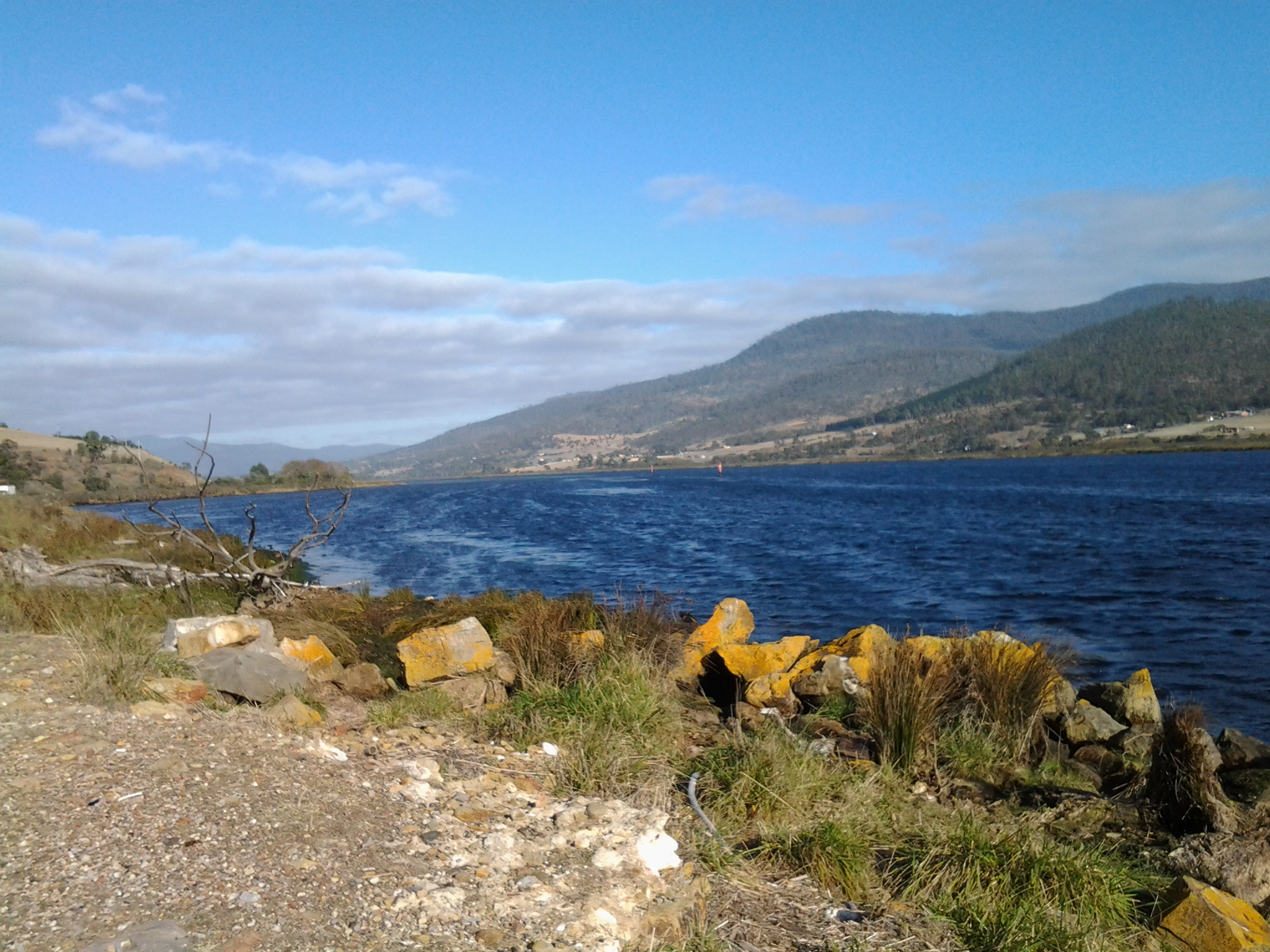
In parts, the flowing river was a distance from the road.  Between the highway and the clear water, marshy water plants grew profusely, and access to the River was impossible.  The photo below looks across the Derwent River to Mt Dromedary in the distance and Mt Terra in the left  foreground.

20150413_095018

During my walk around Windy Point, at 8.30am I passed the road turn-off leading to Stefano Lubiana wines and noted there was a Derwent Valley Link bus stop on the highway – which, if you are a tourist without transport, would allow you easy access to the winery and the odd glass or two of some special liquid. I didn’t stop and visit – drinking at such an early hour didn’t seem like a good idea.

20150413_082819

Ten minutes later at 8.40am I was passing the road turn-off to the Derwent Estate Wines.

20150413_083657

I was surprised as I passed the estate to see what seems like late 19th century buildings nestled into the hill.  While the website explains: ‘the historic Mt Nassau property has been in the current owner’s family since 1913, I can find no information about these buildings which appear to be an earlier architectural style.  More research required.

20150413_084136

Opposite, in the River and its edging long grasses, white faced herons, coots, ducks and black swans were at home.

20150413_082210 20150413_082826

The day was offering truly magical sights aided by the intense blue of the sky and the water.

Arriving in Granton for Stage 14 of the walk along the Derwent River

Since walking along the Derwent River in the northern suburbs on the western shore earlier this year, I have revisited MONA at Berriedale on a number of occasions but I have not been further north. So it was a great delight when my X1 Metro bus, which departed from Hobart city at 7.17am, used the old main road after the Glenorchy bus mall to travel through Berriedale, Claremont and Austins Ferry before reaching Granton.  I was able to see the acres of majestic gold and red leafed vines of Moorilla Wines, to observe Cadbury’s chocolate factory puffing plumes of white steam into the crisp blue sky morning, to identify a range of native birds that were using Goulds Lagoon as a safe resting place, and to recognise various bays and other features that I had passed previously.  Everything seemed edged with the early sunlight which glowed strongly through rain washed, impeccably clean air.

I was off the bus at stop 49 on the last of the Brooker Highway at 7.50am.  Looking northwards, the sign made it clear the direction to take was straight ahead. An earlier post introduced the history of the old Granton watch house (search Historic Granton, Tasmania) – that’s the low yellow building on the left in the first photo below, and then the second photo shows the sun-struck front of the building.

20150413_074858 20150413_075049

I was aware New Norfolk, over last weekend, had been celebrating the glories of its autumn foliage as indicated by the sign below. The sign served to increase my anticipation of those colourful delights.

20150413_075028

The unmemorable architecture of the Granton Memorial Hall solidly facing the morning sun, seemed very out of place in this beautiful area.

20150413_075136

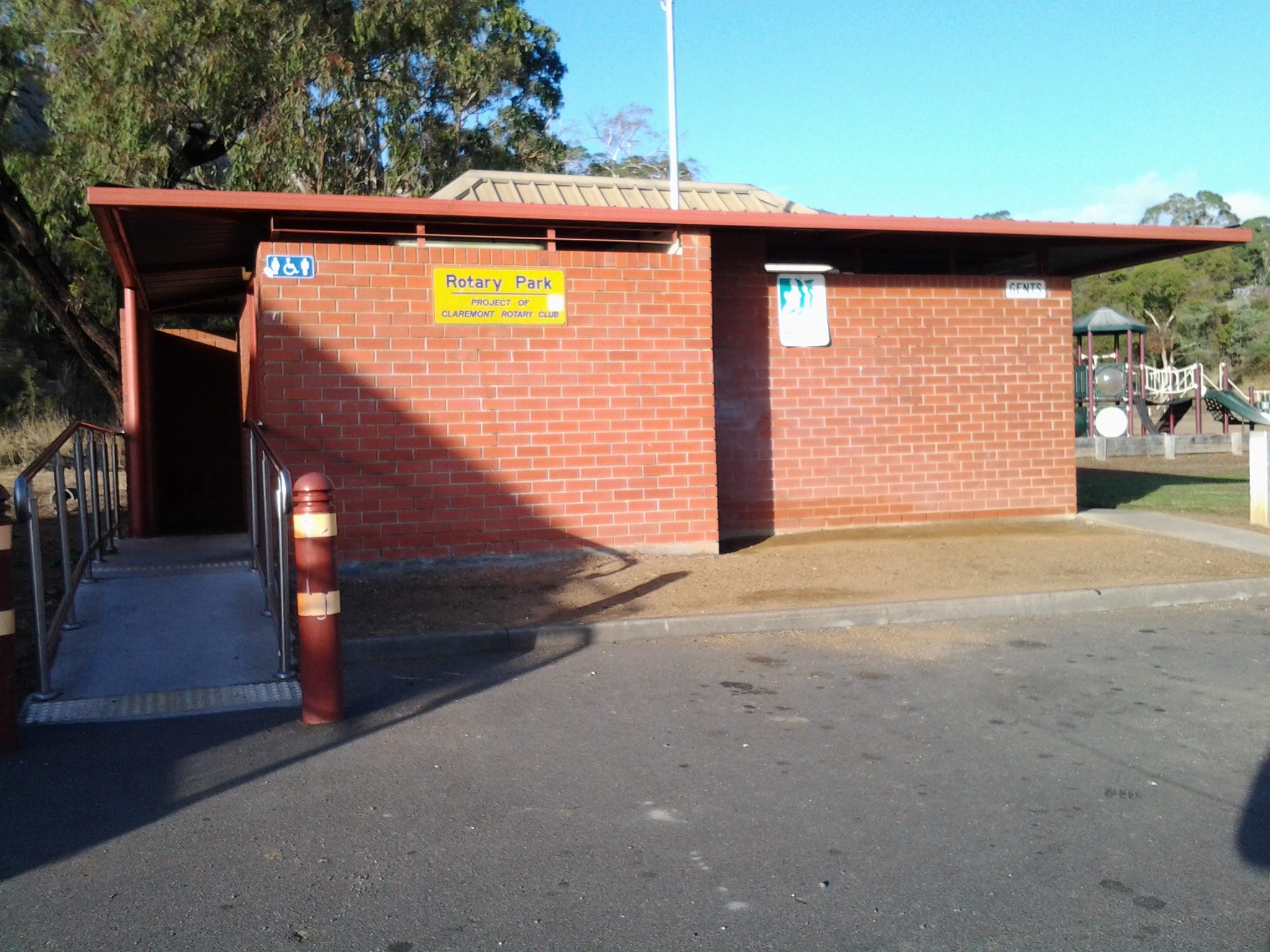
Equally solid and immediately serviceable was the public toilet block at the edge of the carpark used by many city bus commuters.

20150413_075231

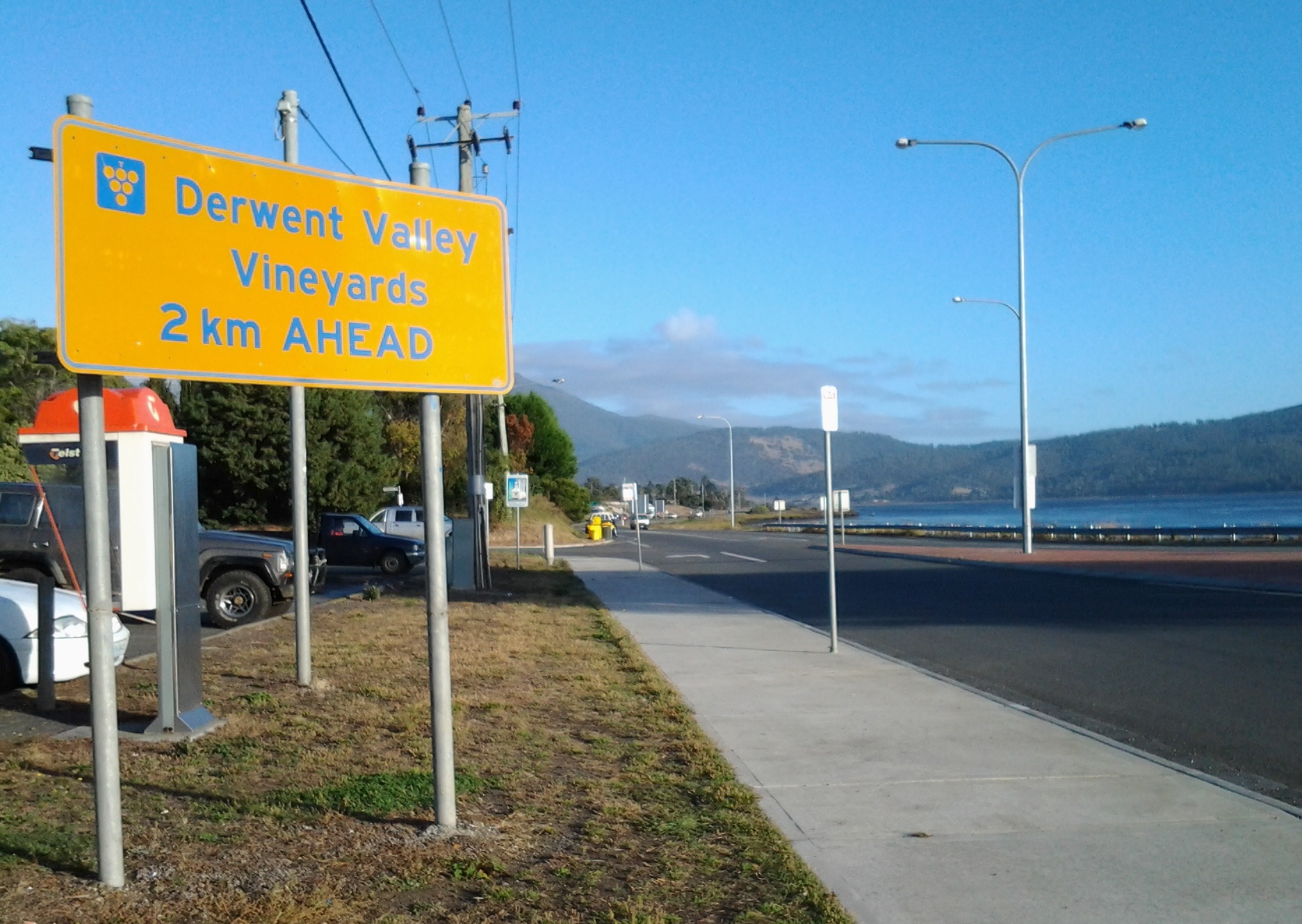
In front of the carpark a sign reminded me of the importance of grape growing in Tasmania – not the least because the wine from our vineyards is very drinkable (as agreed by wine judges from around the world).
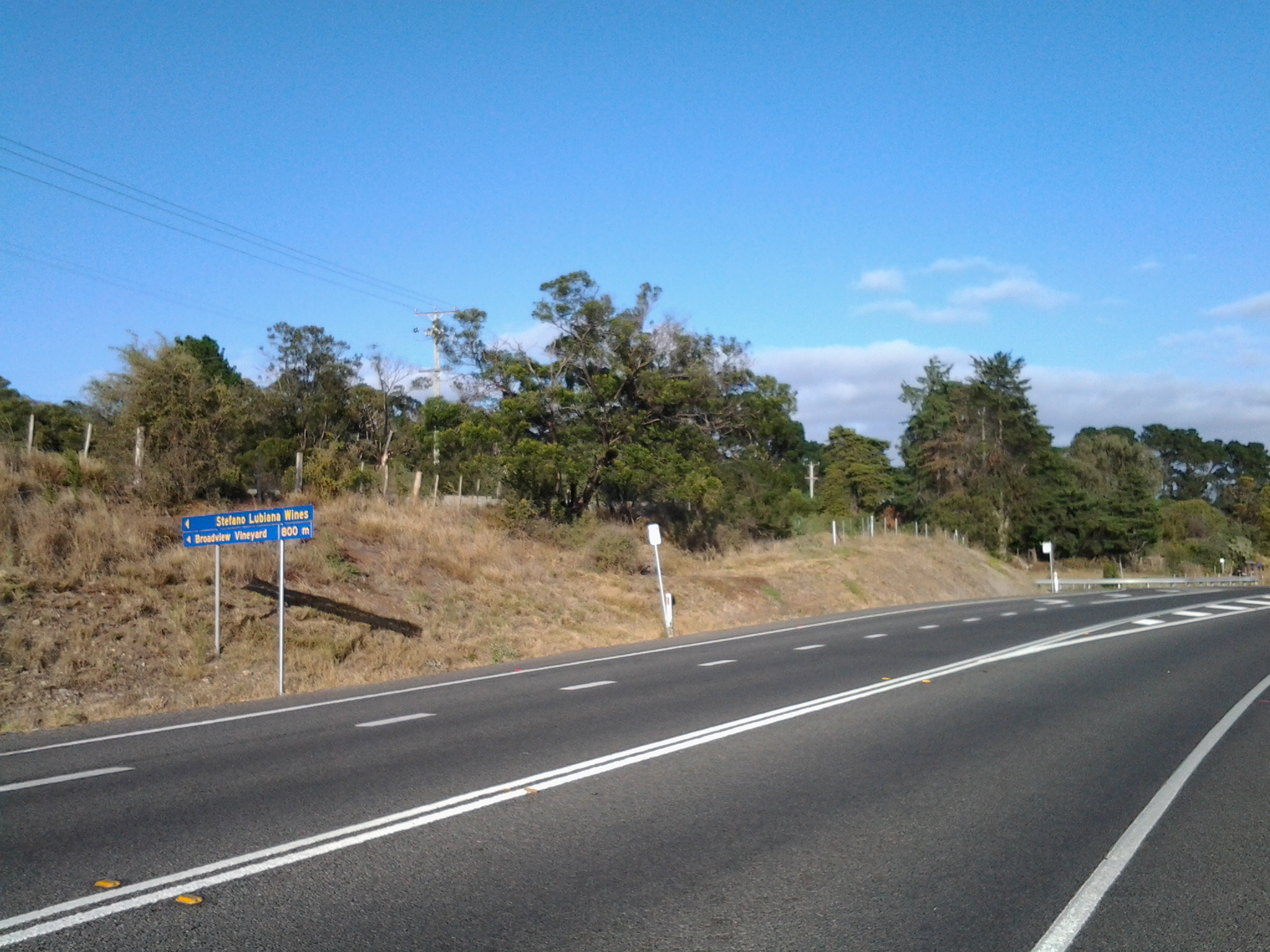
Vineyards ahead

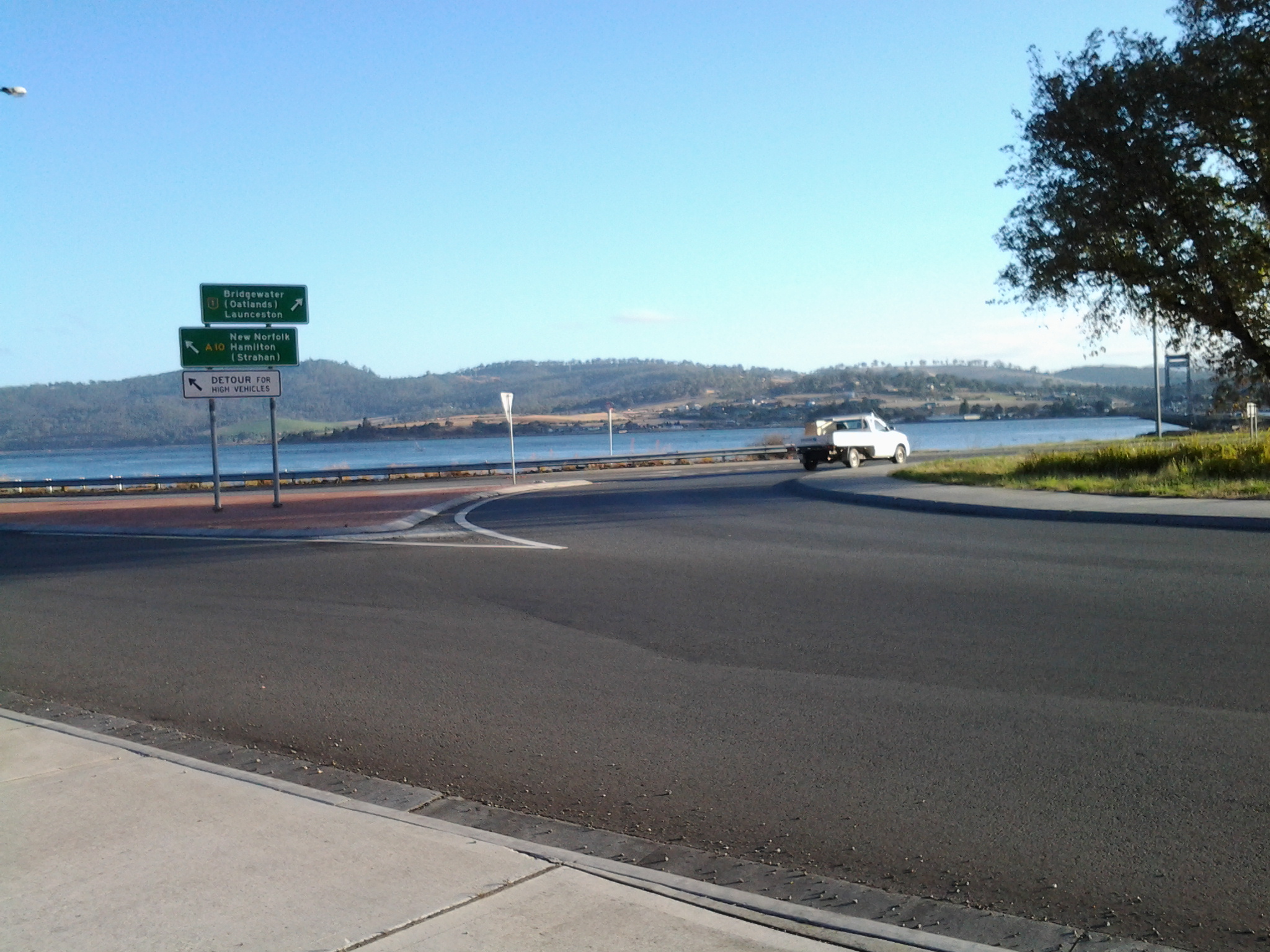
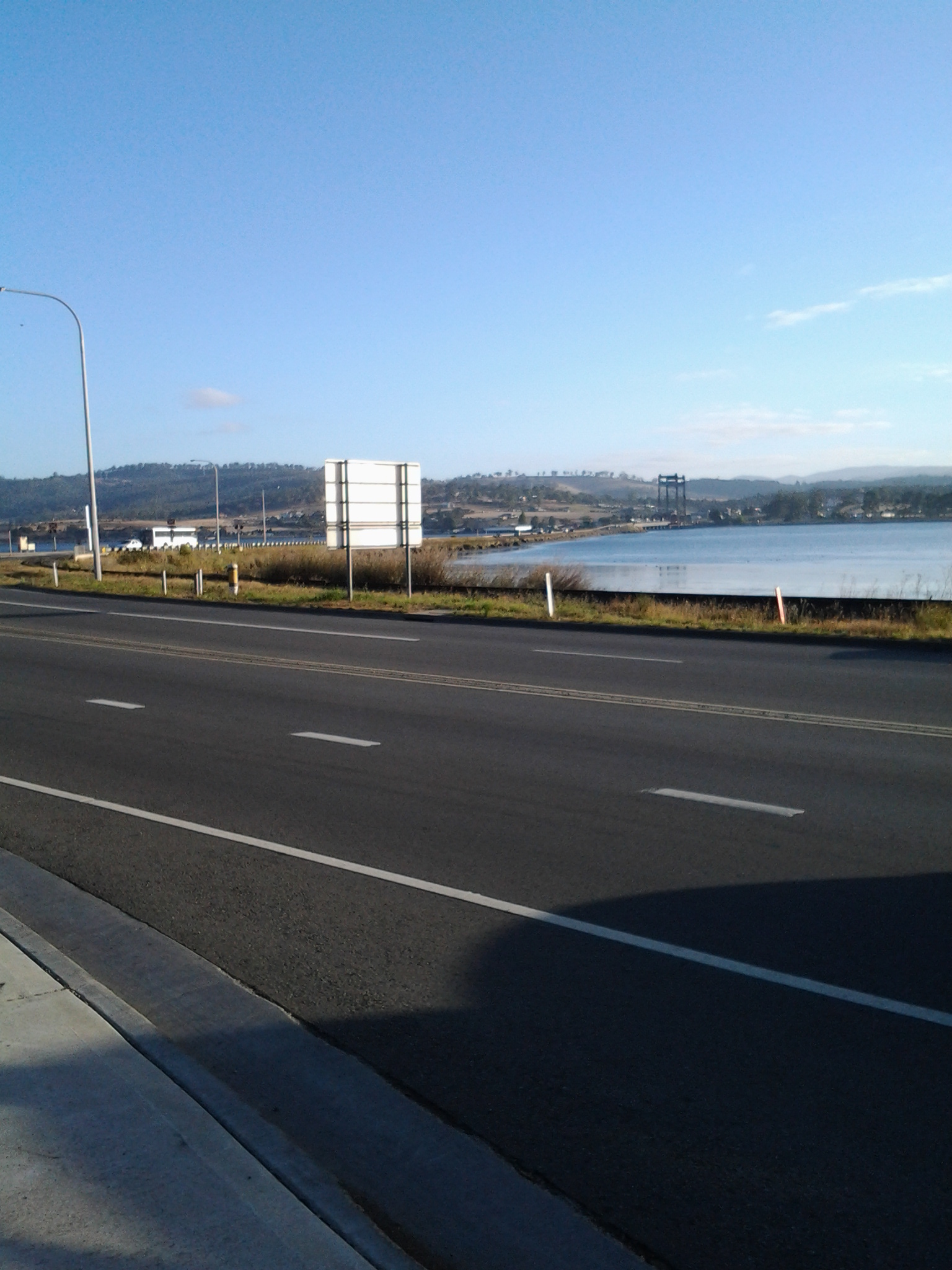
My eyes swung across to the roundabout for vehicles travelling north on the Midlands Highway to Launceston via many rural towns. In the distance, the vertical towers of the Bridgewater Bridge marked the Derwent River crossing.  The calmness of the day, and the quality of the light was sublime.

20150413_075150

I hadn’t walked far along the Lyell Highway when I saw the sign below which indicated that 16 kilometres further along the highway I would reach New Norfolk.  But could I trust the sign? Two or so kilometres further back, when I was still bussing on the Brooker Highway, I had seen a sign indicating the distance was 16 kilometres.

Leaving Granton

Not far away another roadside sign alerted motorists (and the occasional pedestrian): Welcome to The Rivers Run Touring Route.

The Rivers Run

Walking on the right hand side of the road facing oncoming traffic and with the Derwent River on my right, I continued into the icy breeze heading towards New Norfolk.  It wasn’t much after 8am when I left the (comparatively) built up area of Granton on the first leg of Stage 14.

Finding information – ‘time walk from lindisfarne to Hobart city’

Today on my blog statistics page, I noticed someone from somewhere entered into their search engine, the following words: time walk from lindisfarne to Hobart city

I understand travellers and locals want to know this type of information but websites have not been set up to help.

Based on my knowledge, and for an average strolling style walk, I guess the time from Lindisfarne to the Tasman Bridge would be no more than half an hour (only 2.1 kms from Lindisfarne’s Simmons Park to the Bridge), allow 20 minutes to negotiate your way across the bridge on the narrow pedestrian path with cyclists and pram wielding mothers, and then on the western side into the city the walk takes about 20 minutes.  This makes a total of approximately 1 hour and 10 minutes to complete the walk. At the beginning and end of the day, there is a constant stream of walkers and cyclists making this trek to and from work in the city.  A healthy and pleasant way to live a life.

Between the bridges: Stage 14 of my walk along the Derwent River

The achievement yesterday was to walk from the Bridgewater Bridge to the New Norfolk bridge on the western shore of the Derwent River.

I set off from home before the sun was up and I found Hobart was quiet when I arrived at the city bus mall.

20150413_070843

Then I bussed to Granton and alighted from the bus at the intersection with the Bridgewater Bridge causeway.

20150413_074852

From Granton I walked north-west then west towards the inland town of New Norfolk walking mostly along the Lyell Highway and then on a walking track for the last 5 or so kilometres. The morning was freezing and the afternoon warm.  But the sun was out; its hard autumn light made the world seem alive and sparkling. The Derwent River was splendid, often still and reflecting the trees and hills on its surface, under a bright blue sky with the sun shining gloriously.

20150413_140121

I finished my walk at the bridge crossing the Derwent River in New Norfolk.

20150413_145514

During the walk, I covered about 15½km of the length of the Derwent River.  By my reckoning, the total distance of the Derwent River on the western shore from the mouth of the River to New Norfolk is 54¼ km.

My walking distance was approximately 20¼kms.  I have now walked approximately 191¼ kms not counting getting to and from buses, as part of this project to walk along the Derwent River.

The highlights of the walk to New Norfolk were finding the remnants of two clearly visible heritage lime kilns, seeing a family of 6 pelicans, finding the track along the river leading to New Norfolk, and being mesmerised by the spectacular autumn foliage along the walk and especially in New Norfolk.

20150413_140030

I started walking from Granton around 8am and, despite wearing a thick woollen beanie plus a thermal top under my windproof jacket, I was frozen for the first two and a half hours.  It was 8 degrees Celsius at Bellerive when I left home, 6 degrees at Glenorchy and I suspect much less with a wind chill factor along the first part of the walk.  On this basis, I will not be walking further inland until sometime in Spring, and the timing of starting again towards Lake St Clair will depend on the air temperature.

Over the coming week I plan to enjoy writing up the journey and the discoveries of Stage 14’s walk in a series of different postings.

Walking the Back Roads

My upstate New Yorker blog follower (https://deescribesblog.wordpress.com/about) who came to Tasmania recently and walked with me along GASP to MONA, alerted me to the blogsite (https://walkingbackroads.wordpress.com/about/) re “Walking the Back Roads: A Hundred Years from Philadelphia to New Hampshire“.   She recognised my broad interest in people who decide to walk paths that are not normally walked. Thank you.  I love followers alerting me to such sites.

The walking the backroads blogsite has been inspired by a range of different books written by walkers of the highways and backroads of America through the 19th century. The blogger examines their stories.  He refers to the walk which he undertakes as ‘the long walk home’. Very interesting.

The concept of walking on backroads is instantly appealing to me. I wonder how many backroads exist which connect with Tasmania’s Derwent River in some way. I guess there may be hundreds and that they would all lead to interesting, mostly remote places. I imagine our backroads would peter out into bushland where sheep or cattle graze, rabbits multiply, indigenous wombats might run, Tasmanian devils fight for scraps of native food, or wallabies roam.

Suddenly the question comes to me; what is the definition of a backroad? When is a road no longer a main road? Is it a matter of how many people live along its edges?  Is it a matter of how many vehicles use it? Is it a matter of the road being unknown to the majority of the surrounding population? Is it possible to have a backroad in city areas or can they only be found in rural areas? Or are backroads, roads which are out of the way, difficult to find, and often not on maps?  And does a vehicular unsealed track count as a backroad?

In other words, how would I know if I was on a backroad? Is it sufficient that I make the decision?  Guess it would be. And I guess the locals may not refer to their road as a backroad even when I might.

Writing a blog helps to find others with similar interests

The tags and categories, which I create each time I write a blog, help people during their internet searches to find my blogsite.  Another way in which people around the world find my blog is if they are already using WordPress for their blog. In addition, I have a specialised Facebook and Twitter account for this Walking the Derwent project, and my LinkedIn account also automatically receives the regular postings. So there have been many ways in which my blogs have been found by others and, in some cases, have been just what they wanted to read.

The surprise for me has been the interesting bloggers who have ‘liked’ or commented on my blogs.  When they do this I always check their blogsite and sometimes I become an avid follower because their blog preoccupation coincides with an interest of mine.

The latest great blog find is by Jean Béliveau who decided to walk around the world.  His blog can be examined at http://wwwalk.org/en.  Originally, this extraordinary man left Montreal in Canada and then took 11 years for his walk.

Jean Béliveau’s blog is very well organised so that you can find which towns he visited in each country.  Looking at his itinerary in specific counties, the towns and cities visited are eclectic and not always capital cities or key places. Of course, with a parochial interest, I searched and found where he walked in Tasmania. There was a great deal of my State which he didn’t walk on, but since (like me) he was making his own rules about where to walk, it does not matter. After all, he never said he was going to walk around each country and through each town or city.

Don’t miss his selfie photos on the left of his blogsite because they show his changing looks in each country; hair, skin colour etc.

Setting ‘Mt Everest’ level goals

I am in awe of those who set themselves dangerous projects, especially those associated with water.

Today’s local newspaper, The Mercury, reports that a group of mates ‘the injured, ill and wounded former and serving Australian soldiers’ have successfully kayaked across Bass Strait.  This is the wash of wind-blown, wild water which separates the State of Tasmania from mainland Australia.  This is the patch of water which, when the Rolex Sydney to Hobart Yacht Race passes across it each December, masts may be broken, yachts overturned and sailors drowned.

At the narrowest and easiest route, the distance is 330 kilometres. The kayakers left north eastern Tasmania on March 14, were delayed in the Flinders Island area for 11 days with bad weather, and arrived yesterday in Victoria after 24 days. ’The challenges don’t come any tougher, with elite kayakers referring to the Bass Strait route as the “Everest of the sea’.
The story is from: http://www.news.com.au/national/tasmania/military-mates-conquer-everest-by-crossing-bass-strait-by-kayak/story-fnn32rbc-1227294031866

There is no doubt this was an extreme project undertaken by a group of people who might otherwise have believed they had limits on what they could do in their life.

I see it as a strong reminder that our bodies are capable of so much more than we push them through, and that it is our minds which sets most limits. So when I hear people say things like ‘I couldn’t do that or I couldn’t do what you do’, there is nothing wrong with saying that as long as their next sentence is something like, ‘but what I can do is ….xxx….’  The scale of the project doesn’t matter. Whether a ‘Mt Everest’ or a tiny mole hill type goal is set, the important thing is to do something that pushes you even slightly outside your comfort zone.  It is so enriching to do something that, after you have finished, you can look back on and think ‘I did that and no-one can ever take away that achievement from me’.

You may be surprised to know that I am terrified of the walk ahead of me to Lake St Clair. I realise this ‘Walking the Derwent’ is a puny project by comparison with the Bass Strait crossing by kayak. However, in my own terms, this is my ‘Mt Everest’ sized project.  I have never talked in this blog about my physical characteristics, but if you had my size, age, gender, health situation and other personal characteristics you might think that attempting this project is crazy.  My antidote to the fear is to remind myself to think of the small steps and not to concern myself with the big distances, the isolation and the impenetrable bush.  I tell myself that I only have to put one foot after the other, and that because each step is always okay, the whole distance can be achieved.

The Lyell Highway between Bridgewater Bridge and New Norfolk

History

In the first couple of decades of the 19th century, when increasingly the small Van Diemens Land colony demanded more roads and better river crossings, the first road from Hobart Town to New Norfolk was built by McCarty under contract to the government. By 1840, the road to New Norfolk had extended to Ouse and Marlborough (Nive River) to serve remote settlers. During the next forty years the road was further extended for tourist purposes to Lake St Clair (Refer http://www.utas.edu.au/library/companion_to_tasmanian_history/R/Roads.htm).

Wikipedia offers the information that the highway did not reach Queenstown until the 1930s and was not properly surfaced for some time after that. In post cards of the 1940s and 1950s it is called the West Coast Road. When Tasmania’s hydro-electric system was expanding and their works were under construction at Tarraleah in the mid-1940s, the highway was re-aligned to follow the Derwent River until it passed Tarraleah to provide better access to the area for construction vehicles.

Lyell Highway on map

2008 details

A 2008 government report (http://www.parliament.tas.gov.au/ctee/Joint/Reports/Lyell%20Hway.pdf), which recommended major changes be made to the road between Bridgewater Bridge and New Norfolk in order to create a safer highway, provided lots of information which added to my knowledge about this strip of road and its environment.  I will be looking to see if the recommendations were acted upon when I walk (the temperature plummeted today, and wintry weather yet again made the walking of Stage 14 impossible).

The report explained The Lyell Highway between Granton and New Norfolk is a two lane road with a sealed pavement width that varies in the range of 6.5m to 7.2m wide with unsealed shoulders. The highway follows the southern bank of the Derwent River. The highway is often located at the base of the hillside adjacent to the river flats and as a result has tight curves and sharp crests. The high, steep terrain on the southern side of the highway and deep soft silts on the northern side pose significant design challenges due to cost management and the environmental impact of the proposed works. The abutting land use is rural, dominated by rural residential with some horticulture (vineyards, tomatoes, cherries) and one private recreational facility, the Motor Yacht Club of Tasmania (MYCT). The Derwent River is a conservation area. On the southern side of the highway most of the land is hilly, mainly cleared with some trees along the roadside and a few scattered in the paddocks. There are some properties which remain untouched and vegetated by woodland. There are also rows of trees along the side of the road which form windbreaks and/or landscape features.’

Vegetation

According to the same report, the following three vegetation communities of conservation significance occur in the area:

  • Phragmites australis grassland (generally referred to as a common reed): considered vulnerable and inadequately reserved at the state level.
  • Acacia verticillata dry scrub (commonly known as Prickly Moses): of bioregional significance.
  • Leptospermum lanigerum scrub (sometimes named the Woolly Tea Tree): of bioregional significance.

The trees of Potential Cultural Significance along that stretch of the Lyell highway include

  • A stand of white gums between the roadside rest area and the Derwent River at Chain 7760 – 7860.
  • Two weeping willows on the northern side of the highway at Chain 8215 – 8220.
  • A row of old radiata pines on the southern side of the highway at Chain 10250 – 10350.

The following two significant flora species, listed on the Threatened Species Protection Act 1995, occur in the area:

  • Austrostipa scabra (rough spear grass): southern side of the highway Chain 3300 – 3400, 6430 and 6610 – 6640; northern side of the highway at Chain 6940 – 7010.
  • Vittadinia gracilis (woolly new holland daisy): southern side of the highway at Chain 3300 – 3400.
Social history

There are a number of additional features in the immediate area that are considered to have some cultural heritage significance. Project 3 Lime kiln, Chain 3250 – 3540, is located on the northern side of highway. This is currently listed on the Tasmanian Heritage Register (THR) (R701)(http://www.heritage.tas.gov.au/thr.html) and hence is subject to the provisions of the Historic Cultural Heritage Act 1995. There are a number of additional features in the immediate area that are considered to have some cultural heritage significance, such as the Marsh Farm and a redundant section of the old main road.