Author Archives: Tasmanian traveller

Unknown's avatar

About Tasmanian traveller

Through travel, I have experienced the eccentricities of people and their environments around the world. At the same time, I love where I live. So, for people who cannot travel to discover the wonders of my home town, this blog is an attempt to introduce its exoticness. My goal was to walk along both sides of Hobart's Derwent River from the mouth to New Norfolk, and to walk on one or alternating sides of the River between New Norfolk and the source of the River at the southern end of Lake St Clair. The walk was undertaken in stages around my other commitments of my life. Almost all stages of the walk connected with Tasmanian public transport - my intentions was to inspire people, who do not have access to a vehicle, to feel they can replicate the walks. This blog reports on each stage in the hope it will encourage people to either follow in my steps or to create their own walking project where-ever they live. Please note: The blog background and headliner image of 'Hobart from Mt Wellington' is the work of Tourism Tasmania and Garry Moore. It is a free image with unrestricted copyright and available from http://www.tassietrade.com.au/visual_library

Finding information – ‘time walk from lindisfarne to Hobart city’

Today on my blog statistics page, I noticed someone from somewhere entered into their search engine, the following words: time walk from lindisfarne to Hobart city

I understand travellers and locals want to know this type of information but websites have not been set up to help.

Based on my knowledge, and for an average strolling style walk, I guess the time from Lindisfarne to the Tasman Bridge would be no more than half an hour (only 2.1 kms from Lindisfarne’s Simmons Park to the Bridge), allow 20 minutes to negotiate your way across the bridge on the narrow pedestrian path with cyclists and pram wielding mothers, and then on the western side into the city the walk takes about 20 minutes.  This makes a total of approximately 1 hour and 10 minutes to complete the walk. At the beginning and end of the day, there is a constant stream of walkers and cyclists making this trek to and from work in the city.  A healthy and pleasant way to live a life.

Between the bridges: Stage 14 of my walk along the Derwent River

The achievement yesterday was to walk from the Bridgewater Bridge to the New Norfolk bridge on the western shore of the Derwent River.

I set off from home before the sun was up and I found Hobart was quiet when I arrived at the city bus mall.

20150413_070843

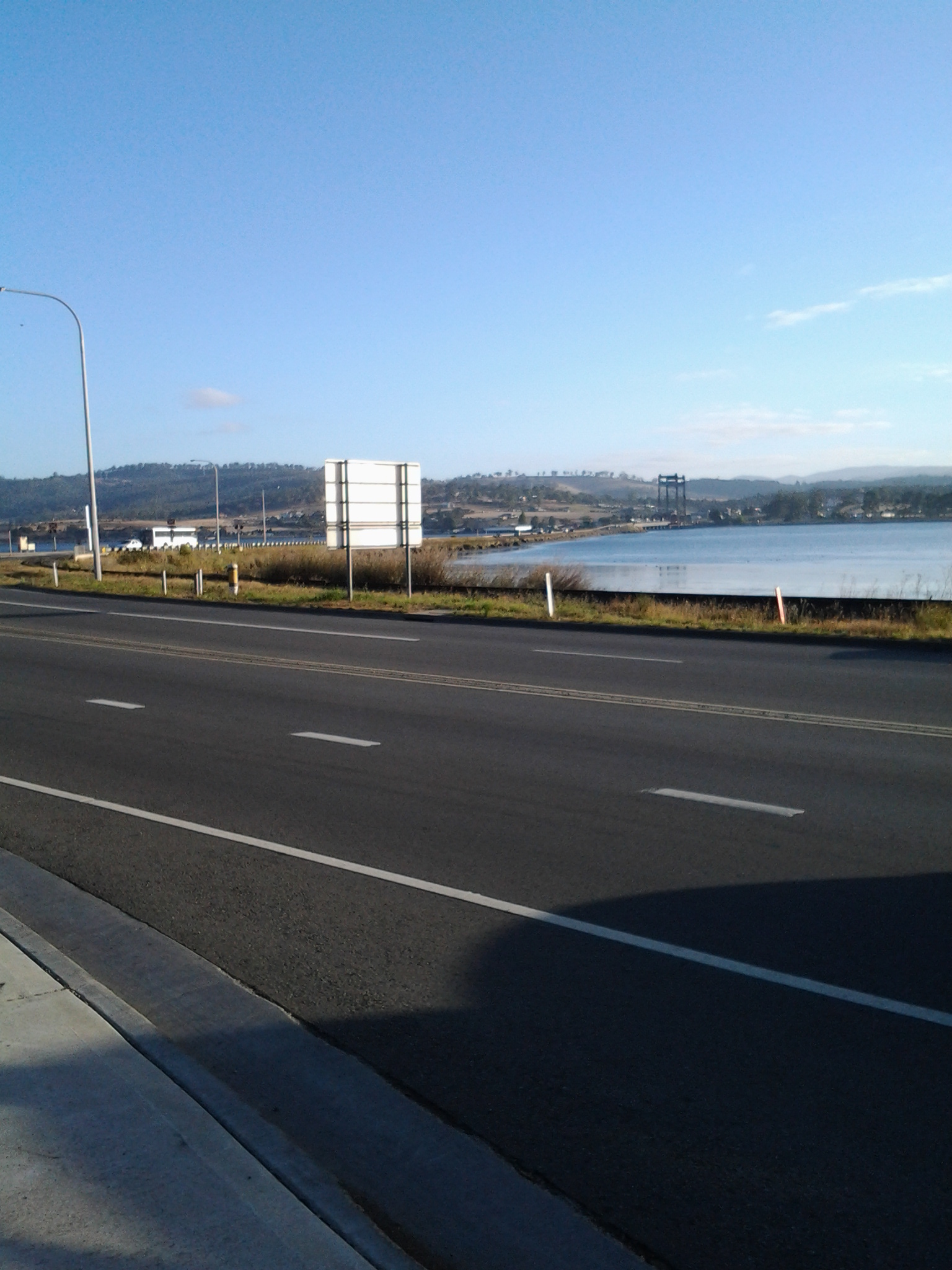
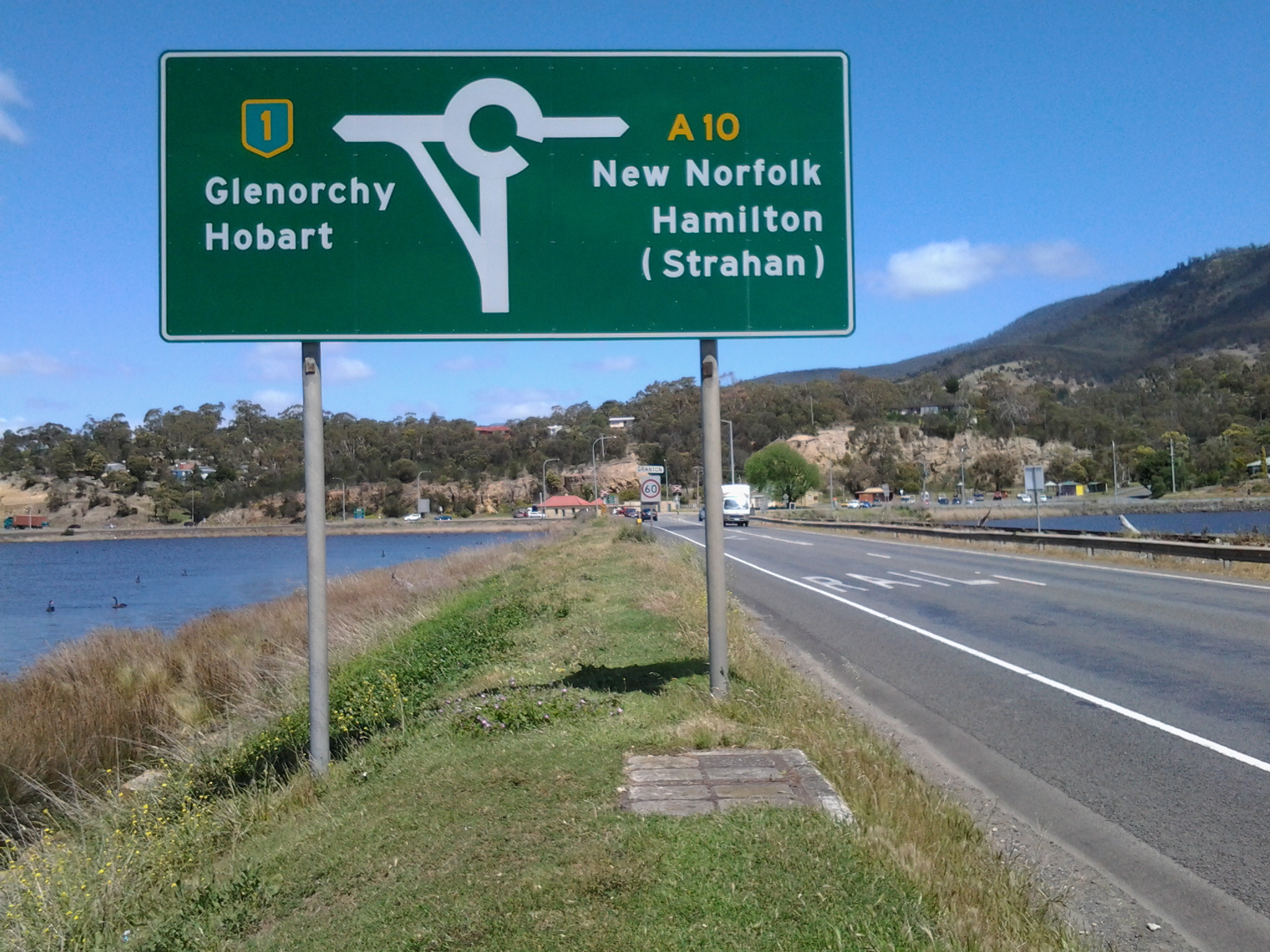
Then I bussed to Granton and alighted from the bus at the intersection with the Bridgewater Bridge causeway.

20150413_074852

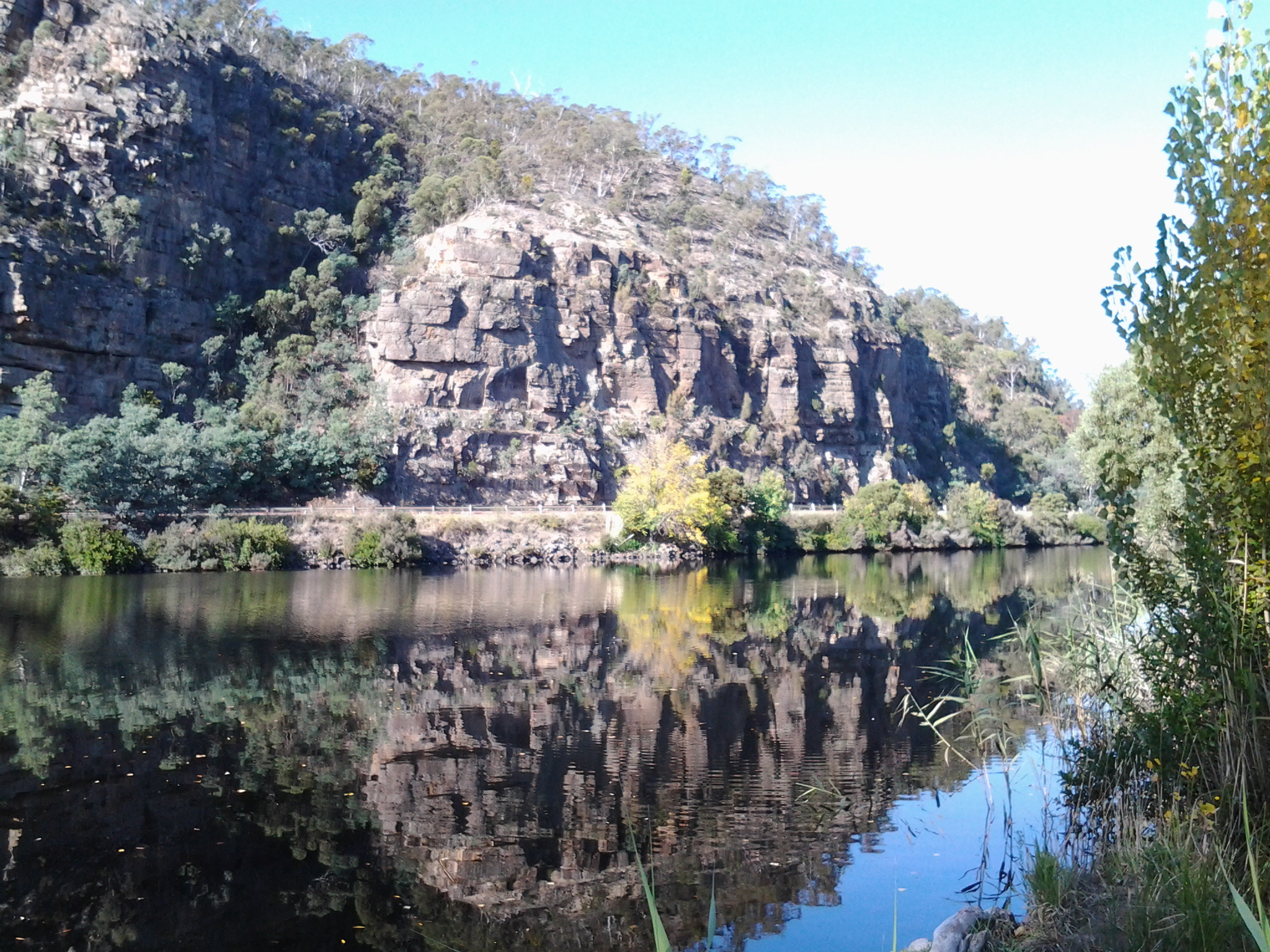
From Granton I walked north-west then west towards the inland town of New Norfolk walking mostly along the Lyell Highway and then on a walking track for the last 5 or so kilometres. The morning was freezing and the afternoon warm.  But the sun was out; its hard autumn light made the world seem alive and sparkling. The Derwent River was splendid, often still and reflecting the trees and hills on its surface, under a bright blue sky with the sun shining gloriously.

20150413_140121

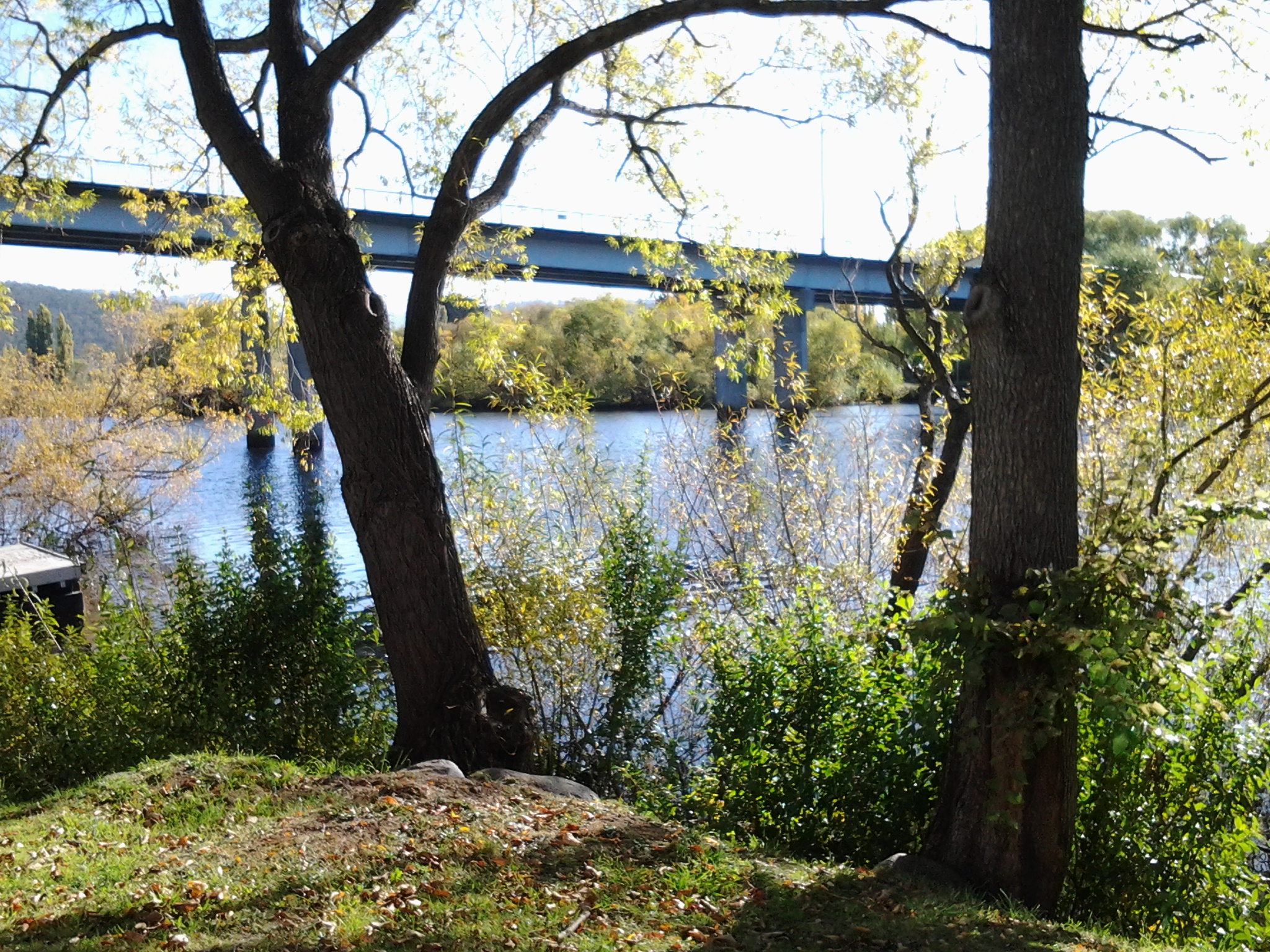
I finished my walk at the bridge crossing the Derwent River in New Norfolk.

20150413_145514

During the walk, I covered about 15½km of the length of the Derwent River.  By my reckoning, the total distance of the Derwent River on the western shore from the mouth of the River to New Norfolk is 54¼ km.

My walking distance was approximately 20¼kms.  I have now walked approximately 191¼ kms not counting getting to and from buses, as part of this project to walk along the Derwent River.

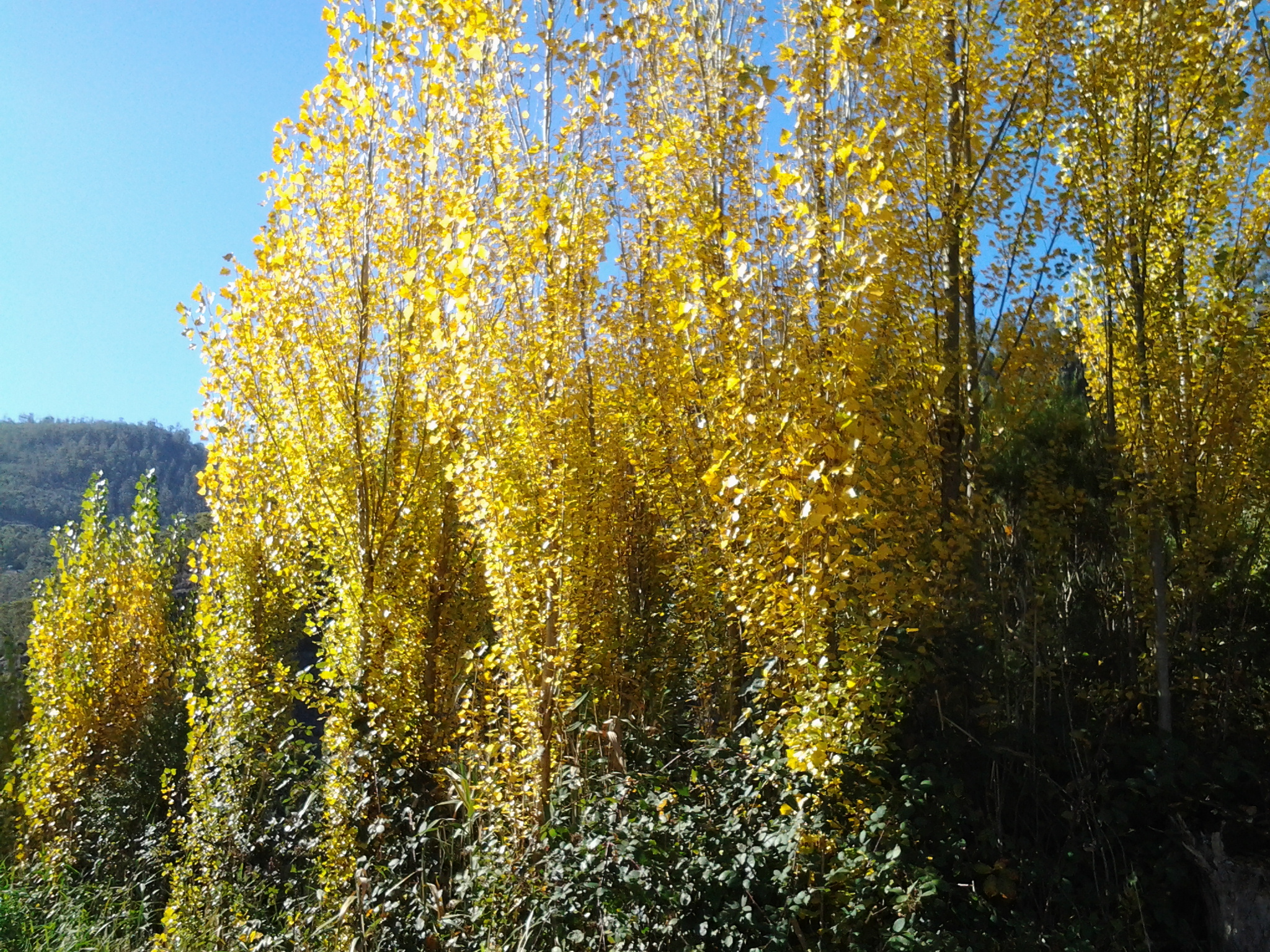
The highlights of the walk to New Norfolk were finding the remnants of two clearly visible heritage lime kilns, seeing a family of 6 pelicans, finding the track along the river leading to New Norfolk, and being mesmerised by the spectacular autumn foliage along the walk and especially in New Norfolk.

20150413_140030

I started walking from Granton around 8am and, despite wearing a thick woollen beanie plus a thermal top under my windproof jacket, I was frozen for the first two and a half hours.  It was 8 degrees Celsius at Bellerive when I left home, 6 degrees at Glenorchy and I suspect much less with a wind chill factor along the first part of the walk.  On this basis, I will not be walking further inland until sometime in Spring, and the timing of starting again towards Lake St Clair will depend on the air temperature.

Over the coming week I plan to enjoy writing up the journey and the discoveries of Stage 14’s walk in a series of different postings.

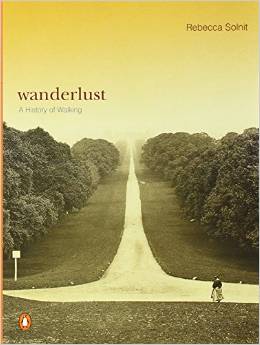
Wanderlust: a history of walking

Blog follower Ch alerted me to the book Wanderlust: A History of Walking by Rebecca Solnit. (Chicago: University of Chicago Press, 2000, viii, 326pp.).

Wanderlust book cover

Joseph Anthony Amato’s review of the book (Journal of Social History 35.1 (2001) 209-210) claims “This work is not quite a history of walking nor is it a study of Wanderlust. Rather, title notwithstanding, it is essentially a perceptive cultural commentary about what writers, thinkers, protesters, and Solnit herself have made of their walking in the last two centuries.”

In conducting internet searches I found the following quotations from the book (a copy of which I must locate and read):

  • For [Jane Austen and the readers of Pride and Prejudice], as for Mr. Darcy, [Elizabeth Bennett’s] solitary walks express the independence that literally takes the heroine out of the social sphere of the houses and their inhabitants, into a larger, lonelier world where she is free to think: walking articulates both physical and mental freedom.”
  • “A path is a prior interpretation of the best way to traverse a landscape.”
  • “Roads are a record of those who have gone before.”
  • “Many people nowadays live in a series of interiors…disconnected from each other. On foot everything stays connected, for while walking one occupies the spaces between those interiors in the same way one occupies those interiors. One lives in the whole world rather than in interiors built up against it.”
  • “Thinking is generally thought of as doing nothing in a production-oriented society, and doing nothing is hard to do. It’s best done by disguising it as doing something, and the something closest to doing nothing is walking.”

Walking the Back Roads

My upstate New Yorker blog follower (https://deescribesblog.wordpress.com/about) who came to Tasmania recently and walked with me along GASP to MONA, alerted me to the blogsite (https://walkingbackroads.wordpress.com/about/) re “Walking the Back Roads: A Hundred Years from Philadelphia to New Hampshire“.   She recognised my broad interest in people who decide to walk paths that are not normally walked. Thank you.  I love followers alerting me to such sites.

The walking the backroads blogsite has been inspired by a range of different books written by walkers of the highways and backroads of America through the 19th century. The blogger examines their stories.  He refers to the walk which he undertakes as ‘the long walk home’. Very interesting.

The concept of walking on backroads is instantly appealing to me. I wonder how many backroads exist which connect with Tasmania’s Derwent River in some way. I guess there may be hundreds and that they would all lead to interesting, mostly remote places. I imagine our backroads would peter out into bushland where sheep or cattle graze, rabbits multiply, indigenous wombats might run, Tasmanian devils fight for scraps of native food, or wallabies roam.

Suddenly the question comes to me; what is the definition of a backroad? When is a road no longer a main road? Is it a matter of how many people live along its edges?  Is it a matter of how many vehicles use it? Is it a matter of the road being unknown to the majority of the surrounding population? Is it possible to have a backroad in city areas or can they only be found in rural areas? Or are backroads, roads which are out of the way, difficult to find, and often not on maps?  And does a vehicular unsealed track count as a backroad?

In other words, how would I know if I was on a backroad? Is it sufficient that I make the decision?  Guess it would be. And I guess the locals may not refer to their road as a backroad even when I might.

World walker Jean Béliveau’s blogsite address

Apologies to those followers receiving an automatic email; the last post did not contain the link to the wonderful blog of world walker Jean Béliveau. Here it is: http://wwwalk.org/en

Writing a blog helps to find others with similar interests

The tags and categories, which I create each time I write a blog, help people during their internet searches to find my blogsite.  Another way in which people around the world find my blog is if they are already using WordPress for their blog. In addition, I have a specialised Facebook and Twitter account for this Walking the Derwent project, and my LinkedIn account also automatically receives the regular postings. So there have been many ways in which my blogs have been found by others and, in some cases, have been just what they wanted to read.

The surprise for me has been the interesting bloggers who have ‘liked’ or commented on my blogs.  When they do this I always check their blogsite and sometimes I become an avid follower because their blog preoccupation coincides with an interest of mine.

The latest great blog find is by Jean Béliveau who decided to walk around the world.  His blog can be examined at http://wwwalk.org/en.  Originally, this extraordinary man left Montreal in Canada and then took 11 years for his walk.

Jean Béliveau’s blog is very well organised so that you can find which towns he visited in each country.  Looking at his itinerary in specific counties, the towns and cities visited are eclectic and not always capital cities or key places. Of course, with a parochial interest, I searched and found where he walked in Tasmania. There was a great deal of my State which he didn’t walk on, but since (like me) he was making his own rules about where to walk, it does not matter. After all, he never said he was going to walk around each country and through each town or city.

Don’t miss his selfie photos on the left of his blogsite because they show his changing looks in each country; hair, skin colour etc.

Setting ‘Mt Everest’ level goals

I am in awe of those who set themselves dangerous projects, especially those associated with water.

Today’s local newspaper, The Mercury, reports that a group of mates ‘the injured, ill and wounded former and serving Australian soldiers’ have successfully kayaked across Bass Strait.  This is the wash of wind-blown, wild water which separates the State of Tasmania from mainland Australia.  This is the patch of water which, when the Rolex Sydney to Hobart Yacht Race passes across it each December, masts may be broken, yachts overturned and sailors drowned.

At the narrowest and easiest route, the distance is 330 kilometres. The kayakers left north eastern Tasmania on March 14, were delayed in the Flinders Island area for 11 days with bad weather, and arrived yesterday in Victoria after 24 days. ’The challenges don’t come any tougher, with elite kayakers referring to the Bass Strait route as the “Everest of the sea’.

The story is from: http://www.news.com.au/national/tasmania/military-mates-conquer-everest-by-crossing-bass-strait-by-kayak/story-fnn32rbc-1227294031866

There is no doubt this was an extreme project undertaken by a group of people who might otherwise have believed they had limits on what they could do in their life.

I see it as a strong reminder that our bodies are capable of so much more than we push them through, and that it is our minds which sets most limits. So when I hear people say things like ‘I couldn’t do that or I couldn’t do what you do’, there is nothing wrong with saying that as long as their next sentence is something like, ‘but what I can do is ….xxx….’  The scale of the project doesn’t matter. Whether a ‘Mt Everest’ or a tiny mole hill type goal is set, the important thing is to do something that pushes you even slightly outside your comfort zone.  It is so enriching to do something that, after you have finished, you can look back on and think ‘I did that and no-one can ever take away that achievement from me’.

You may be surprised to know that I am terrified of the walk ahead of me to Lake St Clair. I realise this ‘Walking the Derwent’ is a puny project by comparison with the Bass Strait crossing by kayak. However, in my own terms, this is my ‘Mt Everest’ sized project.  I have never talked in this blog about my physical characteristics, but if you had my size, age, gender, health situation and other personal characteristics you might think that attempting this project is crazy.  My antidote to the fear is to remind myself to think of the small steps and not to concern myself with the big distances, the isolation and the impenetrable bush.  I tell myself that I only have to put one foot after the other, and that because each step is always okay, the whole distance can be achieved.

Travelling to the River Source

Please listen to the radio broadcast on Radio National during the Blueprint for Living program of 4 April 2015, provided by host Michael Williams titled Travelling to the River Source.  Go to http://www.abc.net.au/radionational/programs/blueprintforliving/rivers/6070254. Below the options to listen to the audio and download the broadcast, the web site provides the following information:

“Throughout the history of travel, rivers have held a particular place – whether it be as the first trade routes or the more modern experiences of bobbing around for enjoyment. But for a few hardy souls, a river journey wouldn’t be complete if it wasn’t attempted on foot. Maya Ward is a Melbourne writer who travelled the length of the Yarra River in Melbourne a few years ago and Katharine Norbury is a London based screenwriter and author who has also discovered the redemptive nature of walking the path of river from its mouth to its source. Her first book is published this month called ‘The Fish Ladder-travelling upstream’. They joined Michael Williams to explain the appeal of travelling upstream.”

The Lyell Highway between Bridgewater Bridge and New Norfolk

History

In the first couple of decades of the 19th century, when increasingly the small Van Diemens Land colony demanded more roads and better river crossings, the first road from Hobart Town to New Norfolk was built by McCarty under contract to the government. By 1840, the road to New Norfolk had extended to Ouse and Marlborough (Nive River) to serve remote settlers. During the next forty years the road was further extended for tourist purposes to Lake St Clair (Refer http://www.utas.edu.au/library/companion_to_tasmanian_history/R/Roads.htm).

Wikipedia offers the information that the highway did not reach Queenstown until the 1930s and was not properly surfaced for some time after that. In post cards of the 1940s and 1950s it is called the West Coast Road. When Tasmania’s hydro-electric system was expanding and their works were under construction at Tarraleah in the mid-1940s, the highway was re-aligned to follow the Derwent River until it passed Tarraleah to provide better access to the area for construction vehicles.

Lyell Highway on map

2008 details

A 2008 government report (http://www.parliament.tas.gov.au/ctee/Joint/Reports/Lyell%20Hway.pdf), which recommended major changes be made to the road between Bridgewater Bridge and New Norfolk in order to create a safer highway, provided lots of information which added to my knowledge about this strip of road and its environment.  I will be looking to see if the recommendations were acted upon when I walk (the temperature plummeted today, and wintry weather yet again made the walking of Stage 14 impossible).

The report explained The Lyell Highway between Granton and New Norfolk is a two lane road with a sealed pavement width that varies in the range of 6.5m to 7.2m wide with unsealed shoulders. The highway follows the southern bank of the Derwent River. The highway is often located at the base of the hillside adjacent to the river flats and as a result has tight curves and sharp crests. The high, steep terrain on the southern side of the highway and deep soft silts on the northern side pose significant design challenges due to cost management and the environmental impact of the proposed works. The abutting land use is rural, dominated by rural residential with some horticulture (vineyards, tomatoes, cherries) and one private recreational facility, the Motor Yacht Club of Tasmania (MYCT). The Derwent River is a conservation area. On the southern side of the highway most of the land is hilly, mainly cleared with some trees along the roadside and a few scattered in the paddocks. There are some properties which remain untouched and vegetated by woodland. There are also rows of trees along the side of the road which form windbreaks and/or landscape features.’

Vegetation

According to the same report, the following three vegetation communities of conservation significance occur in the area:

  • Phragmites australis grassland (generally referred to as a common reed): considered vulnerable and inadequately reserved at the state level.
  • Acacia verticillata dry scrub (commonly known as Prickly Moses): of bioregional significance.
  • Leptospermum lanigerum scrub (sometimes named the Woolly Tea Tree): of bioregional significance.

The trees of Potential Cultural Significance along that stretch of the Lyell highway include

  • A stand of white gums between the roadside rest area and the Derwent River at Chain 7760 – 7860.
  • Two weeping willows on the northern side of the highway at Chain 8215 – 8220.
  • A row of old radiata pines on the southern side of the highway at Chain 10250 – 10350.

The following two significant flora species, listed on the Threatened Species Protection Act 1995, occur in the area:

  • Austrostipa scabra (rough spear grass): southern side of the highway Chain 3300 – 3400, 6430 and 6610 – 6640; northern side of the highway at Chain 6940 – 7010.
  • Vittadinia gracilis (woolly new holland daisy): southern side of the highway at Chain 3300 – 3400.

Social history

There are a number of additional features in the immediate area that are considered to have some cultural heritage significance. Project 3 Lime kiln, Chain 3250 – 3540, is located on the northern side of highway. This is currently listed on the Tasmanian Heritage Register (THR) (R701)(http://www.heritage.tas.gov.au/thr.html) and hence is subject to the provisions of the Historic Cultural Heritage Act 1995. There are a number of additional features in the immediate area that are considered to have some cultural heritage significance, such as the Marsh Farm and a redundant section of the old main road.

The Derwent River and its Highways

The south of Tasmania is crossed by trunk roads, regional freight roads and regional access roads, including six of the highways for walking on when walking from the mouth of the Derwent River to the source.

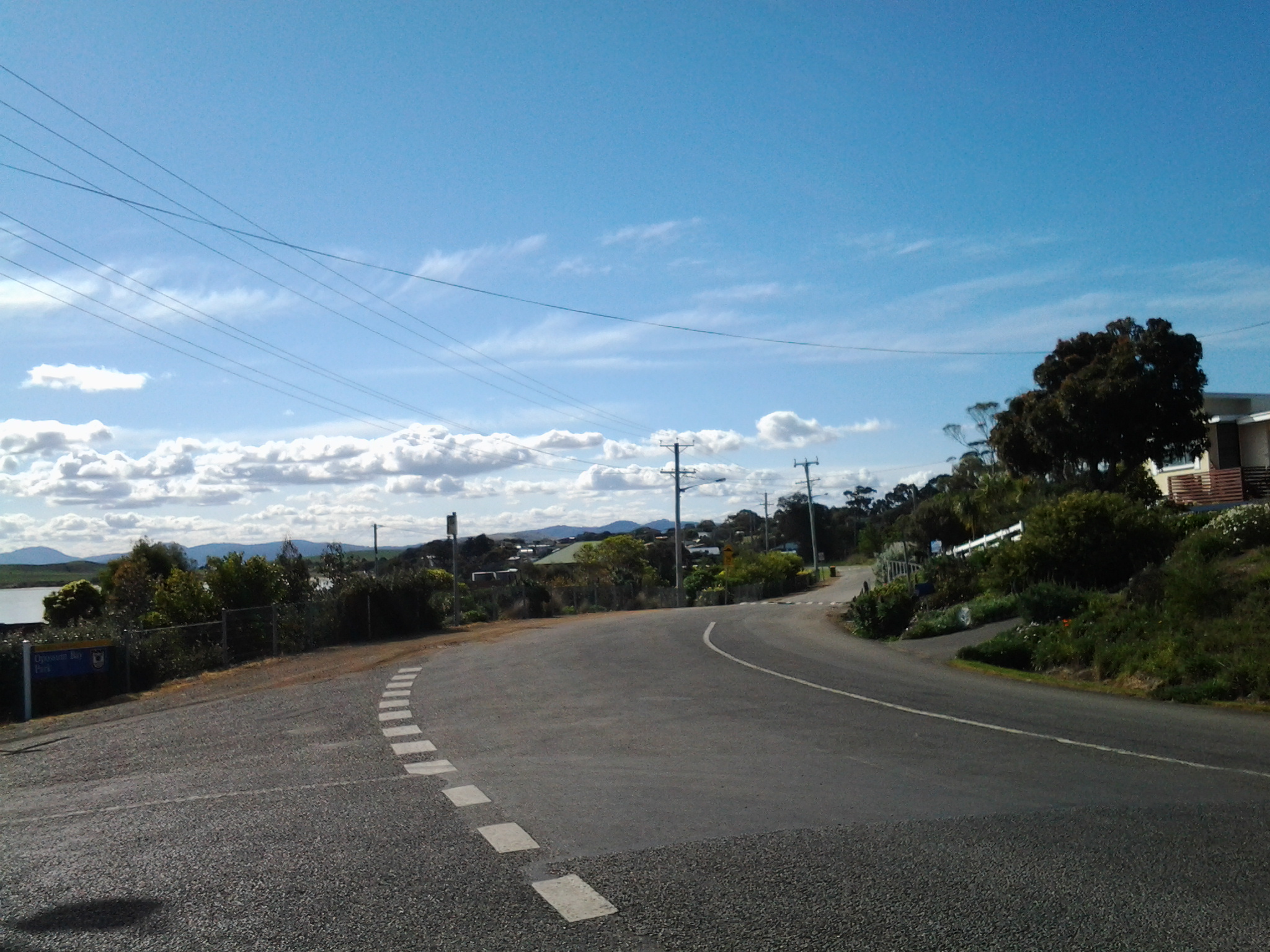
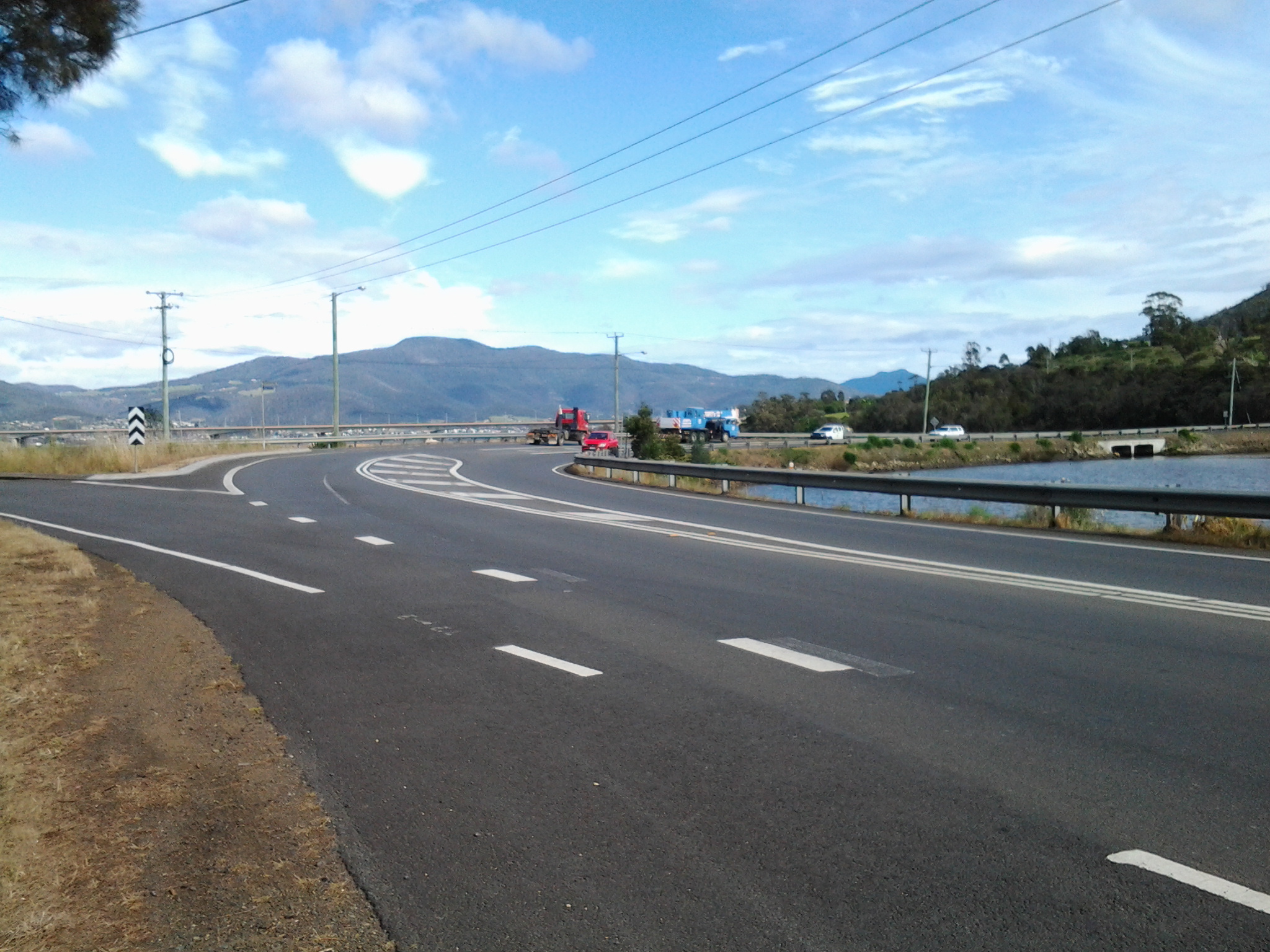
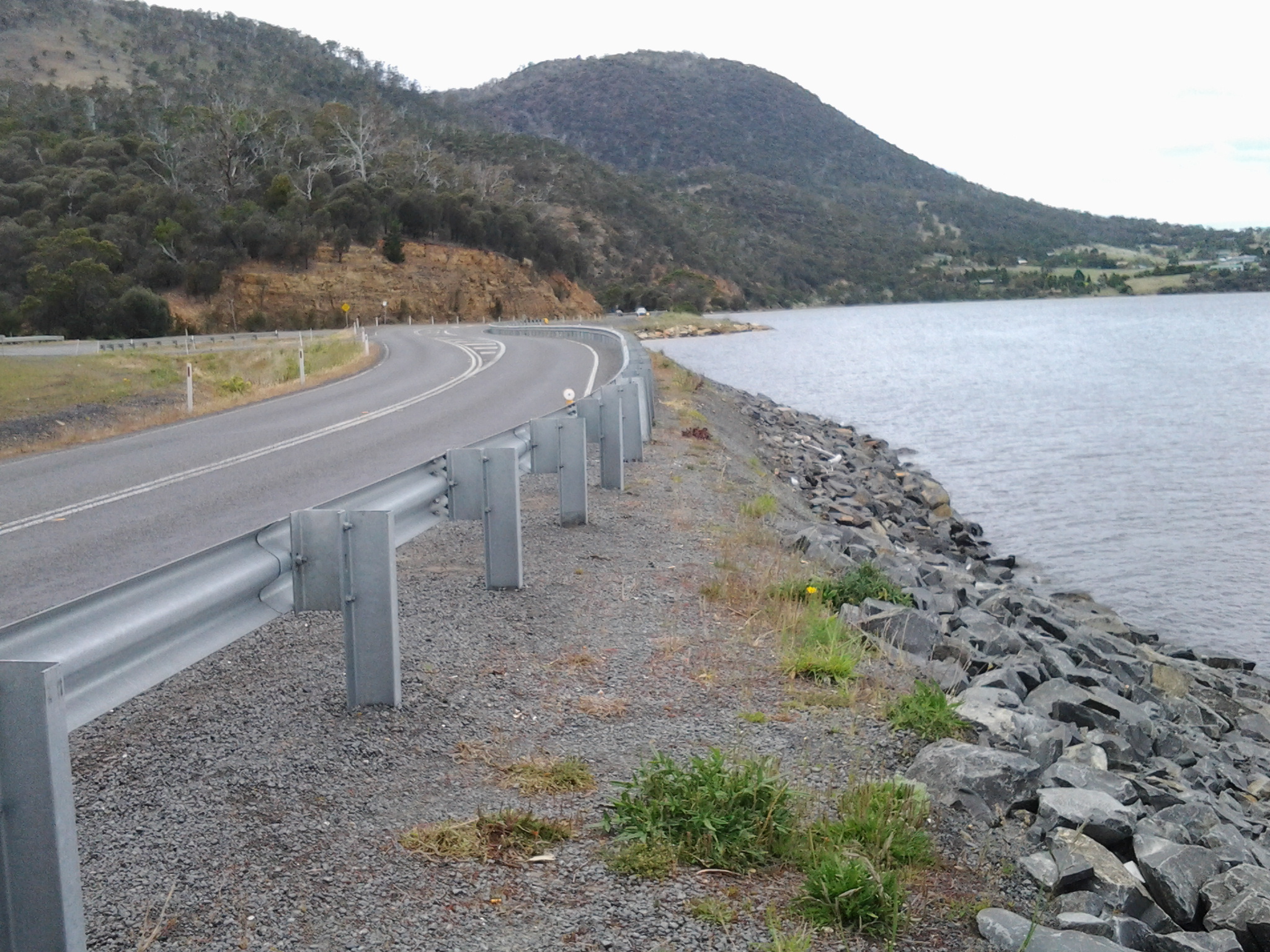
  1. The South Arm Highway which extends from Opossum Bay to where the suburb of Mornington reaches the Tasman Highway. I bussed and/or walked on the South Arm highway during Stages 1-3.

20140822_130241 20140904_133309

2.   On the eastern shore of the Derwent from Geilston Bay to Bridgewater Bridge it was the East Derwent Highway which felt the plod of my feet occasionally during stages 5 -8 of my walk.

20141031_093816 20141031_101844 20141031_122945 20141031_111951 20141031_121153 20141111_105455

3.    Once I reached Bridgewater on Stage 9, the highway crossing the Bridge was the Midland or Midlands Highway (sometimes referred to as the Heritage Highway).

20141111_131431 20141111_132913

4.     Some of Stage 12 of my walk on the western shore towards the mouth of the Derwent River, included a couple of kilometres on the Channel Highway.

20150202_095550

5.   At the start of Stage 14 I will walk on the last few metres of the Brooker Highway, the main highway which extends from the centre of Hobart city to the Bridgewater Bridge at Granton. For the first time, at the Bridgewater Bridge, this Highway edges the Derwent River.

6.    Immediately after the highway intersection with the Bridge, the Lyell Highway commences. From Granton until I reach the source, the Derwent River winds closest to the Lyell Highway, the highway which extends west to the town of Queenstown (which is overshadowed by the copper bearing Mount Lyell). This highway will be my life line in terms of accessing public buses.

Pacific Seastars are multiplying in Kangaroo Bay

Recently when I walked past the Marina at Bellerive, I looked down in horror to see hundreds of seastars foraging across the river bottom. The water was clear so their orange arms were spectularly visible.  Some of these starfish were larger than a dinner plate.

2015-03-28 08.21.49

The white lines in the photo above are the reflections of yacht masts.

I talked about these pests in two earlier postings; ‘Northern Pacific Seastars’ of 14 September 2014, and Stage 2 on 4/9/2014 Mitchell’s Beach of 5 September 2014. The Tasmanian government department responsible for parks (http://www.parks.tas.gov.au/file.aspx?id=6917)  provides information about Tasmania’s 3 unique starfish and acknowledges the damage that Northern Pacific Seastars are doing to our marine life.

Pretty some might say.  Perhaps that is why they are multiplying and limited collection and destruction actions are being taken.

For a split second I thought to throw off my clothes, jump in and start throwing these scavangers onto the jetty. Of course, common sense prevailed:  I could have been overcome with hypothermia.  In addition, I realised there were too many for one person to collect.  Their removal needs a devoted crowd of wet suit clad divers to be methodical and dedicated.  Of course the sadness is that thousands more are grazing out of eye shot.  And they continue to breed so well in these cool waters.

2015-03-28 08.21.57

You can read Louise Goggin’s story on these marauding seastars at http://www.abc.net.au/science/slab/starfish/.  ‘Enjoy’ the photo in this article “Community divers pulled 30,000 sea stars from the Derwent River in 1993 and hardly put a dent in the population”.

Mirror smooth waters of Kangaroo Bay, an inlet off the Derwent River

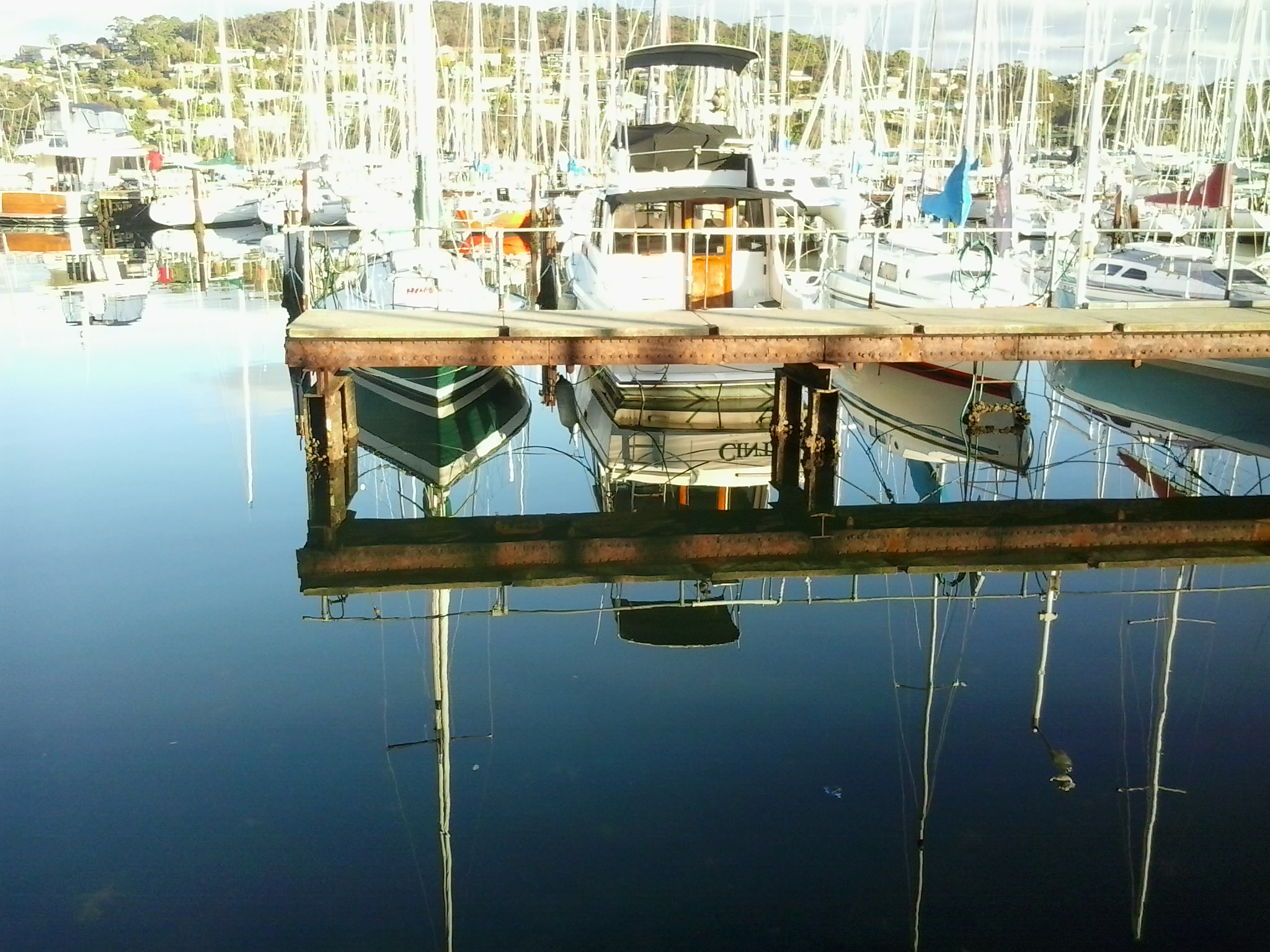
Last weekend, when I walked to Bellerive Village via the Bellerive Yacht Club and Boardwalk, I was stunned by the beauty of the view.  The water in the marina was smooth as glass.  The yachts were clear edged by the crisp air and hard bright morning sun.  Despite puffs of cloud obscuring full vision of Mount Wellington in the distance, the vista was spectacular.

2015-03-28 08.22.12 2015-03-28 08.22.28 2015-03-28 08.22.21

Fish dying in the Derwent River

In early March Tasmania’s Inland Fisheries Service received a report of dead fish in the Derwent River between upstream New Norfolk and the area downstream near the industrial mill Norska Skog. For further reading refer to http://www.ifs.tas.gov.au/news/river-derwent-fish-kill-restricted-to-barracouta.  The thinking was that “The most likely cause is that barracouta have followed the salt wedge with the high tide in the river and killed by their sudden entrapment in freshwater.”

One of this week’s news stories reported on monitoring the unexpected numbers of fish dying in groups. The story can be read at http://www.abc.net.au/news/2015-03-27/more-monitors-on-river-derwent-as-fish-kills-continue/6354950. In an earlier article http://www.themercury.com.au/news/tasmania/experts-examine-mass-fish-kill-in-upper-derwent-estuary/story-fnj4f7k1-1227256722478, the thinking was that “Water quality in the lower saline layer is typically poor in summer.

Quite separately another story was running and I can find no-one publically connecting the two: “Fish kills could occur if the large algal bloom in the River Derwent near the Murphys Flat wetlands grows.”  For further information read http://themercury-au.newspaperdirect.com/epaper/viewer.aspx.

I expect to be walking past Murphy’s Flat in the next day or so and I hope not to smell dying fish or see the silvery scales of dead fish littering the River’s edges.

The question has been asked: when will I walk the New Norfolk leg?

The answer is that I don’t know because this year’s style of autumn weather is making decisions difficult.

Last year it was mid-May before I removed the summer cotton sheets from my bed and changed to the fleecy flannelette sheets for winter warmth. Until that time I wasn’t wearing thermal tops. But this year before the end of March, I am rugging up and friends are lighting warming fires.

With this drop in temperature, we have continued to have light or heavy rain, not for all the day but off and on unpredictably. The idea of walking with a raincoat on and off or an umbrella up and down all day does not thrill me.  I want an uninterrupted view of everything around me.  I want to be able to hear the sounds of the Derwent River and the birds without the distortion of pattering raindrops.

For my walks from the mouth to the mouth of the Derwent River via the Bridgewater Bridge, routinely I consulted the Bureau of Meteorology (BOM) for their forecasts. Then, typically, I adjusted these predictions according to what I could see happening in the air over Mount Wellington.  Unfortunately, the leg from Bridgewater Bridge to New Norfolk is out of sight of the mountain and so I need to trust the BOM.  At this stage both next Monday and Tuesday look promising weather-wise in the New Norfolk area. Hopefully I will have fresh new stories of lived experience to post mid next week.

Winemaking along the Derwent River

Very soon, when the weather is right, I will be off walking the next stage along the Derwent River.  On that day I will pass by vineyards (without stopping for a sample) on route to New Norfolk. Wine Tasmania (http://winetasmania.com.au) promotes touring routes to the dozens of vineyards established across the State.

Soon after passing the Bridgewater Bridge and close to the Derwent River at Granton, a couple of well-established vineyards with cellar doors can be accessed easily by the public.  More about the Derwent Estate Wines can be read at http://www.derwentestate.com.au/home/ .  I like the sound of the approach taken by their viticulturist– ‘We do not use any Insecticides or nasty Pesticides at all. We prefer a softer Integrated Pest Management approach to disease control.’

The Stephano Lubiana Wines estate (http://www.slw.com.au/slw/index.html) offers a food menu to complement their wines, which uses fresh produce from their bio dynamically run vegetable garden. At the end of March, a Festa di Pomodori will focus on the tomato. Sounds like the place to be for healthy food and a great drop of wine.  Any local blog followers interested to join me at this festival? The winery has organised a return bus from Hobart; great thinking I am thinking!