Tag Archives: Lake Catagunya

Possible locations where the Derwent River can be ‘touched’

I have compiled a list of those locations where I believe, with a vehicle, it will be possible to ‘touch’ the Derwent River occasionally along its length between Gretna and Lake St Clair.  Please let me know if any section listed below takes your fancy and if you would be interested to try it out.

Almost all sections include driving on bitumen highway, gravel roads and poor tracks. Some of these may be forestry roads.  If you wish to volunteer to take me to one of these sections (let me know on walkingthederwent@gmail.com), please feel comfortable that your car can handle the different conditions.  Of course, common sense will prevail and we will never push on if a road is too rough for your vehicle and your peace of mind.

If you are happy to help me reach my goal, albeit differently than originally expected, I would like to fill up your tank with petrol as some compensation.  You know my ‘walking the Derwent’ is a non-commercial project, but since I do not own a car nor drive, I need transport – and therefore, I am happy to cover the cost.

  1. On eastern shore – From New Norfolk drive along the Lyell Highway and then, not far past Gretna’s Sports ground, take a left turn into Clarendon Road and drive to farmstead buildings about 250 metres from the river on a hill. Perhaps 140km return trip.
  2. On western shore – From New Norfolk drive along Glenora Road, and turn left at Bushy Park then right onto Meadowbank Road over the Tyenna River then next to Derwent, then on over Meadowbank Creek to a hill top with buildings. It may be possible to continue quite a way on this road. Minimum 130 and maybe up to 160kms return trip
  3. On eastern shore – From New Norfolk drive along the Lyell Highway and turn left off the Highway onto Meadowbank Dam Road. Continue to dam and southern end of Meadowbank Lake. At least 170 kms for round trip.
  4. On western shore – Travel from New Norfolk and turn left into Gordon River Road at Bushy Park, then turn right off Gordon River Rd into Ellendale Rd and then right onto Rockmount Road before you reach the township of Ellendale. There seem to be many dirt forestry tracks to Meadowbank Lake. At least 170kms return trip and maybe 200kms return or more depending on roads.
  5. On western shore – Travel from New Norfolk and turn left into Gordon River Road at Bushy Park, then turn right off Gordon River Rd into Ellendale Rd and drive on through the township of Ellendale until you reach Dawson Rd / Dunrobin bridge over Meadowbank Lake. Turn left before bridge and it seems we can drive 2kms further up along the Lake edge. Return to Ellendale Road, cross bridge and connect with the Lyell Highway. At least 170kms return trip and maybe 200kms return or more depending on roads.
  6. On eastern shore – From New Norfolk drive up Lyell Highway and continue past the left turn off to Dunrobin bridge and afterwards and to the left there are a number of dirt tracks seemingly without gates. After a while these tracks/roads only extend to the Ouse River and not the Derwent River so map consultation is crucial. At least 180kms return and maybe over 200kms return depending on how many side roads/tracks can be driven along.
  7. On eastern shore – Drive up Lyell Highway past Ouse then turn left at Lake Repulse Road. Continue to intersection with Cluny Lagoon Road and turn left and go to Cluny Dam. Return to intersection and continue on Lake Repulse Road to the Repulse Dam. Can cross a bridge and continue back south around Cluny Lagoon to a ‘settlement’ named Cluny.  Perhaps could access this road from the Ellendale Rd on the western shore? By driving north from Repulse Dam along Dawson Road/then renamed Thunderbolt Road it seems we can take right hand detours to Lake Repulse. Over 200kms maybe 250kms or more minimum round trip.
  8. On eastern shore – Drive up Lyell Highway past Ouse, over the Dee River until the sign appears for a left turn at Catagunya Road. Drive down to Catagunya Dam. 200kms minimum return trip
  9. On eastern shore – Drive up Lyell Highway past Ouse, over the Dee River, past Black Bobs and turn left at Long Spur Road. This runs around Wayatinah Lagoon. Go past the intersection to Wayatinah Dam, turn left and travel to Wayatinah Power Station on Lake Catagunya. Return to intersection and turn left and travel to Wayatinah Dam. Cross bridge and continue on to Wayatinah township. Access dirt tracks in the vicinity of all. Drive south from the Wayatinah Dam on the western shore along the Florentine Road but don’t bother crossing the Florentine River because the road goes inland away from the river. Minimum of 230kms but most likely  at least 300kms round trip.
  10. On eastern shore – Drive up Lyell Highway and when you reach a canal passing under the road, and where the road turns right to go to Tarraleah, go straight ahead on Butlers Gorge Road. Note there are limited roads off and around going closer to the river near that intersection. Continue along Butlers Gorge Road for 10-15 kms heading for Lake King William. Reach Clark Dam and Power Station. Continue onto Switchback Track along side of Lake King William. This track stops and you have to return the same way – swamp separates you from the track north about 500 metres away. This would be a big day and I suggest take overnight accommodation at Tarraleah before setting out. PERHAPS it is possible to walk across the swamp and then walk about 7 kms to Derwent Bridge. Unknown over 300 kms return trip.
  11. On eastern shore – Drive up Lyell Highway to Derwent Bridge and continue past to left hand turn off on the western side of Lake King William and drive the track to the lake. 360 kms return trip minimum.
  12. On eastern shore – Drive up Lyell Highway to Derwent Bridge. Walk from the bridge over the Derwent River near the township of Derwent Bridge to St Clair Dam at the bottom of Lake St Clair Lagoon where the Derwent River starts. Walk to Pump House Point and St Clair Weir at the southern end of the Derwent Basin. 350kms return trip minimum.
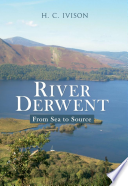
 

From the sea to the source; stories of a river on the other side of the globe

Two years ago, Helen Ivison published River Derwent: From Sea to Source (Amberley Publishing).

 Ivison River Derwent

 The promotional puff declares this book ‘brings to light tales and stories of fascinating events, landmarks and people. River Derwent: From Sea to Source is essential reading for anyone who knows this river well, and also for those who are visiting the River Derwent for the first time.’  But what is the author referring to?

Hers is the Derwent River in the Cumbrian region of England which flows from the mountainous Lakes District in two strands, one of which starts near Styhead Tarn. The two strands meet at Grains Gill, and continue in a north easterly direction as a single river towards an expanse known as Derwent Water. The river passes through this ‘lake’ then eases into a north westerly direction across country before flowing onwards through Bassenthwaite Lake. Finally, the English Derwent River turns westwards and empties into the Irish Sea.

By contrast Tasmania’s Derwent River flows generally in a south easterly direction from Lake St Clair, through steep narrow gorges, curving around farmlands, before passing between the two sides of the Greater Hobart Area into Storm Bay. The man-made lakes of Lake King William, Wayatinah Lagoon, Lake Catagunya, Lake Repulse, Cluny Lagoon and Meadowbank Lake all disrupt the progress of the River. These lakes have resulted from dam building as part of hydro-electricity generating projects over the past century.

Wilderness – what is it?

The word ‘wilderness’ has different meanings depending on context. Dictionaries offer a range of similar meanings:

  • An uncultivated, uninhabited, and inhospitable region. Neglected or abandoned.  A large area of land that has never been developed or used for growing crops because it is difficult to live there. (Oxford)
  • An unsettled, uncultivated region, especially a large tract of land that has not been significantly affected by human activities. A barren or desolate area; a wasteland. Something characterised by bewildering vastness, perilousness, or unchecked profusion. (The Free Dictionary)
  • A wild, uncultivated region, usually where humans do not live. Any desolate tract or area. (WordReference.com)
  • A tract or region uncultivated and uninhabited by human beings. An area essentially undisturbed by human activity together with its naturally developed life community. An empty or pathless area or region. (Mirriam Webster dictionary)

From Old English used in the 13th century, the word ‘wilderness’ is derived from wild dēor ‘wild deer’, wilddēoren ‘wild beasts’, and from wildēornes, ‘land inhabited only by wild animals’. From Middle English, wildern is ‘wild’.

Reflecting on these varying definitions, I realise some of the meanings ring true particularly in relation to the land along the Derwent River between Lake Catagunya and Derwent Bridge (I anticipate this part of the River will take at least 8 days to walk, over three stages).

Lake Catagunya to Derwent Bridge

The sides of the River will be uncultivated and uninhabited. Its dense forest, littered with generations of massive tree falls, will make some sections relatively inhospitable.  The only markers of human kind will be parts where old growth logging has or is occurring, and where the infrastructure associated with dam construction across the Derwent River has occurred and is being maintained.  The area will not be barren, desolate (although I might feel desolate when penetrating some of the denser bush hour after hour), and it is not neglected, abandoned nor a wasteland.  This wilderness will be rich with flourishing flora and fauna, have profound connections with the original indigenous population pre-European settlement of Van Diemen’s Land, hold a social history with the settlers who moved inland in the 1800s and 1900s, and include an occasional contemporary history with photographers, tourists and fishermen.

The United States of America has proclaimed special legislation. ‘The Wilderness Act bans all kinds of motors, roads, and permanent structures from large tracts of American territory. It provides a legal definition of wilderness, as land that’s “untrammelled by man” with a “primeval character and influence”.’  You can read more at this site.  What is the Australian situation?

The Wilderness Society of Aus logo

The Wilderness Society of Australia summarises our state-based rather than national legislation in relation to the wilderness. ‘Dedicated wilderness legislation exists in NSW and SA, which allows the nomination, assessment, declaration and management of wilderness. In other States, such as Victoria, Queensland, WA and the ACT, management of wilderness is provided for under general nature conservation legislation, with varying degrees of usefulness in terms of actually ensuring identification and appropriate protection.’

In Tasmania we have a range of legislation including the most recent Tasmanian Forest Agreement Act that was negotiated to include the requirements of the Tasmanian Wilderness World Heritage Area (TWWHA) – that is, those parts of Tasmania which have been recognised with World Heritage listing for their natural and cultural heritage that is important to the world community.  Tasmania’s Nature Conservation Act talks about biological and geological diversity, and historic sites and provides regulation for our fauna (and strangely it also covers animals which do not live in Tasmania such as dingos and wolves) and flora. The word ‘wilderness’ does not appear.

stock-photo-64271807-walking-boot-and-bike-tread-marks-on-muddy-trail(Image is a free iStock photo)

The land on which I will walk has been walked for thousands of years originally by our indigenous ancestors and more recently by their descendants and European settlers. However, there will be parts on my trek which will not have had many footfalls because of the isolation and the forest density.  Unless there was a purpose such as surveying the Derwent River as part of planning to build dams, sensible people would travel from Lake St Clair towards the coast  via the region around the township of Ouse, or by more hospitable routes. With or without the word ‘wilderness’ being written into our state legislation, much of the inland edges of the Derwent River edge are undoubtedly genuine wilderness.