Category Archives: Hobart

Inspiring tourism

Stephanie Williams’ article ‘The heartfelt journey to a better world’ was published in The Sunday Tasmanian newspaper on 12/12/14. I cannot locate a free copy online for you to access, however because her ideas resonated with me, I feel compelled to share them.

Dr Susanne Becken, Professor of Sustainable Tourism at Griffith University, Australia has coined the expression ‘inspired tourism’.  I like these words because they conjure up the idea of a richer and more meaningful travel experience.  One that can lift people’s spirit and extend the limits they might have set for themselves.  The concept of ‘inspired tourism’ opens the way for both traveller and local residents to have value and vitality added into their lives.

When Williams’s article talked about community conscious travellers, it is clear increasing numbers of people are changing the way they holiday.  While more Aussie travellers want authentic experiences, there is increasing acceptance that along with ‘an insatiable appetite for discovering the world comes a responsibility to respect and protect the places we travel to.’

My take on these ideas includes the notion that travelling locally and becoming a tourist in your own town or city, by using public transport, should become a mainstream travel option. To do so is easy on resources, has minimal impact on the environment and most importantly allows the traveller to see more and understand more of their local situation. Until I started walking along the Derwent River, I had no idea about so many of the communities, the landscape and the history of places through which I have passed. And yet I have lived in Hobart for many years. My walk along the Derwent River has been, and promises to continue to be, inspiring.

From Risdon to Tommy’s Bight via Porters Bay and finally to the bus stop

Once I had walked through the East Risdon State Reserve and down the hill to the edge of the Derwent River in the suburb of Risdon, despite sore feet, I felt compelled to walk south along the water’s edge towards Tommy’s Bight. Much of my walk over the previous hour or so had not been at the edge of cliffs, so for an authentic walk along the River I liked the idea of following tracks to determine how far back south I could walk (all the while knowing I would need to retrace my steps to get to the bus stop for my return home).

I turned left into Saundersons Road from Risdon St and continued walking until, opposite the No Through Road and the 50km/hour speed signs, a gravel and dirt single-foot track led down around the water’s edge. The track seemed infrequently walked, and it was delightfully soft and gentle on my feet.

20141015_124824

I loved listening to the lightly lapping water and my world seemed very still until three sulphur crested cockatoos screamed overhead.

At 12.50pm I arrived at a Bay, and without checking my maps, mistakenly thought I had reached Tommy’s Bight.
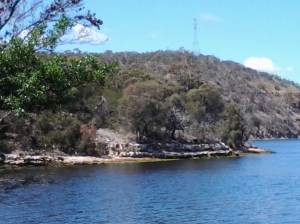
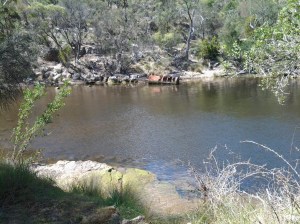
20141015_124844  20141015_125201

I had a good look around the Bay before sitting on a sunny rock to eat my lunch.

20141015_125354

After munching I dragged out my map and discovered I had been enjoying the peace and quiet of Porter’s Bay.

Ignoring my aching feet, I began on the track towards Tommy’s Bight. When the track split into two directions, I walked uphill for a while before realising this would take me back to the top of the East Risdon State Reserve. I turned back until I could follow the track parallel to Porters Bay. The time was 1.20pm and the metal-saw whining noise from over the River was ever present.

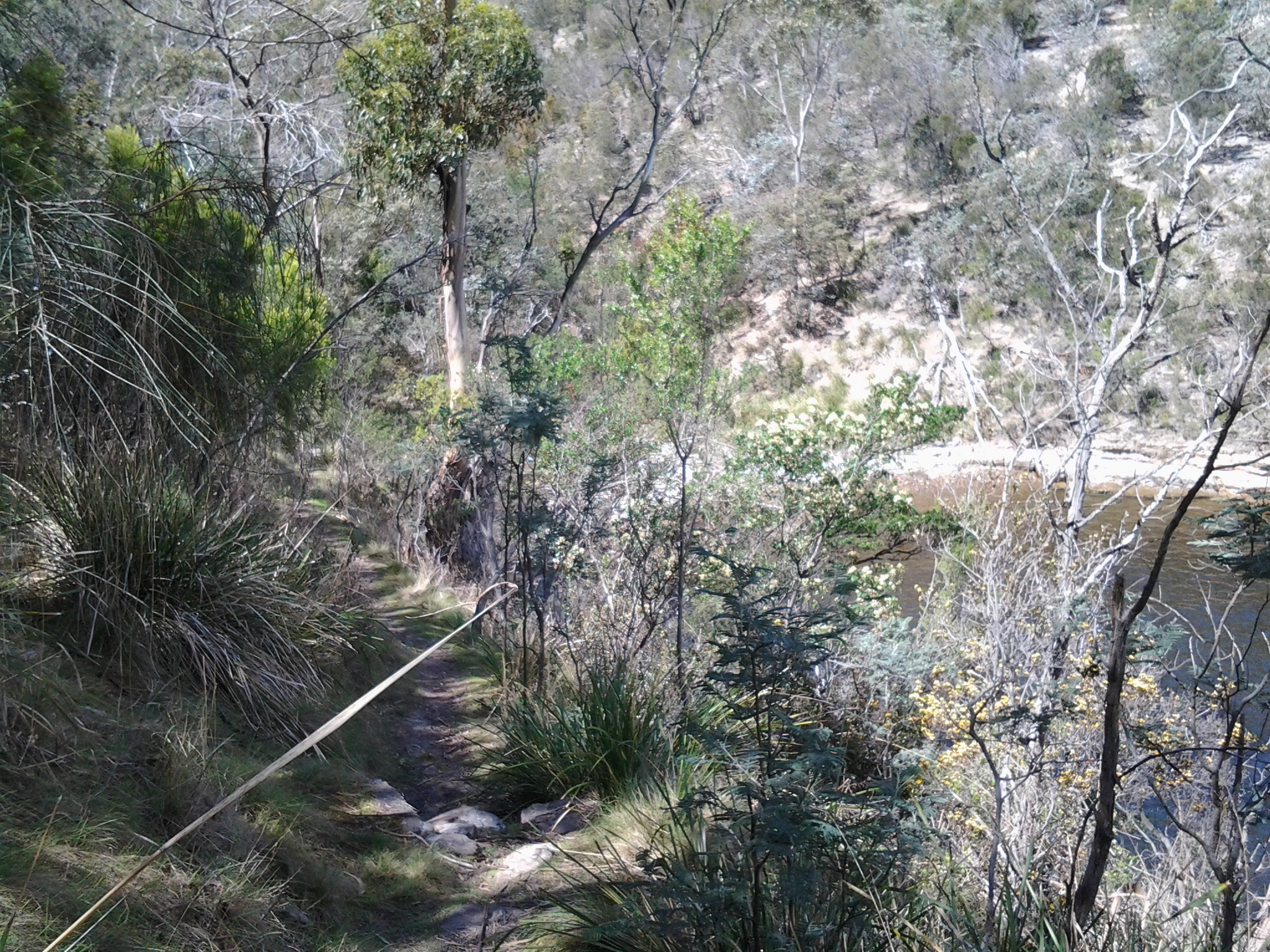
Parts of this track were dappled with sunlight and the lack of direct searing sun was a relief.  However, it was difficult to read the irregular root strewn and rocky pathway and not roll my ankles. A number of splits in the track and a mess of tracks generally all led back to the one track. Usually the detours were the result of fallen trees along the way.

It was along this track that the walk’s greatest thrill materialised.

I had never seen one before and was staggered how large it was: a perfectly camouflaged Green Rosella. With deep olive green feathers and broad tail, the bird was resting on a low branch. I stood watching for the few seconds before it flew off through the trees and disappeared. Today, as I write this blog post, I have checked the internet for photos and I am sorry to say I cannot find an image showing a bird as green as the bird I saw. I realise the Green Rosella has other colours which should have flashed at me, but they didn’t and it is the overwhelming sense of the green that I remember – even on its head (although perhaps the shadows of the green surrounding foliage led me to ‘see’ green).  I feel immensely privileged to have seen this spectacular specimen.

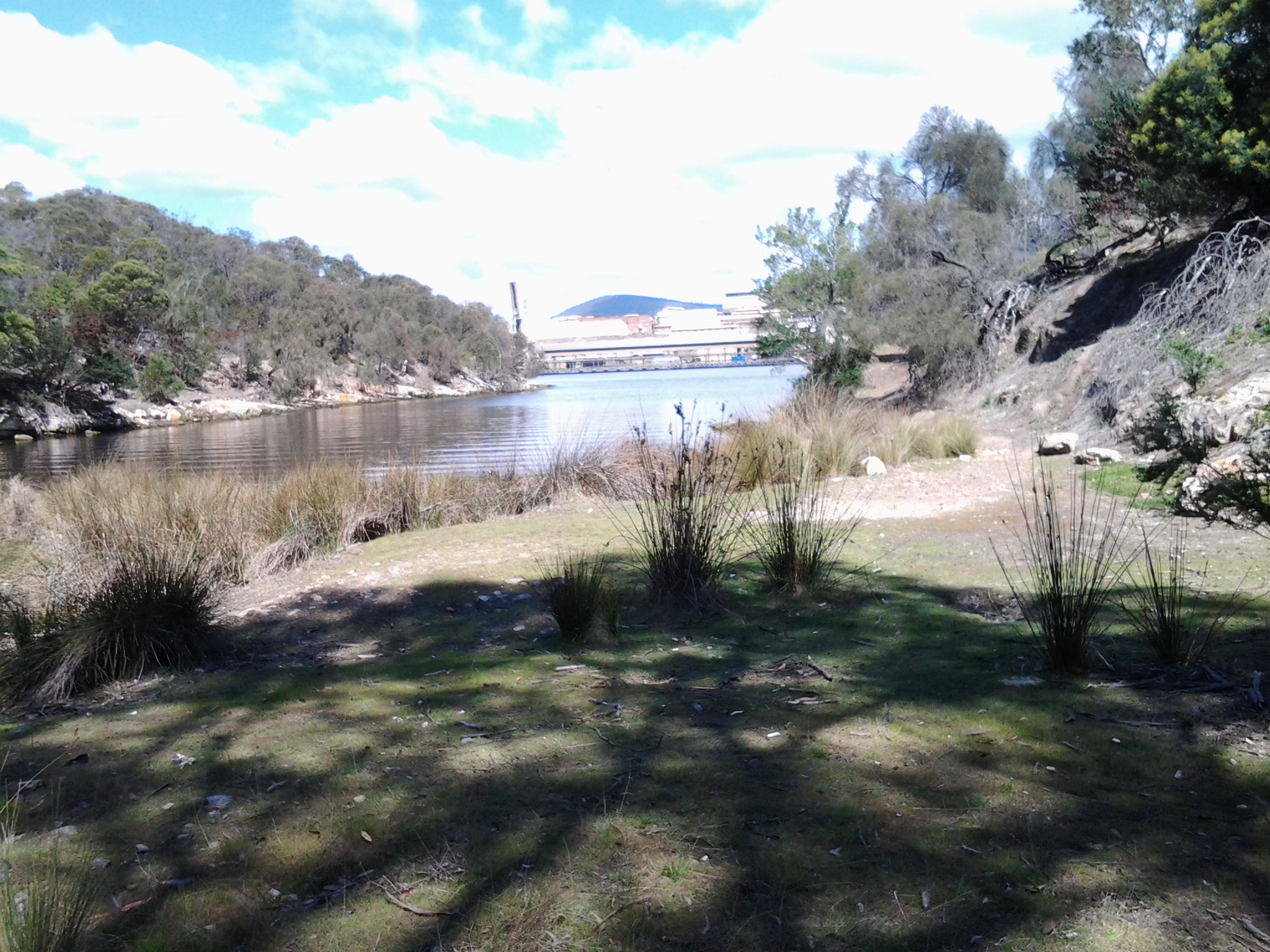
At 1.30pm I was passing a tiny curved shell beach below and continued on to where the waters of the Derwent River and Tommy’s Bight met.

20141015_133435

By 1.35pm the bottom of Tommy’s Bight was in full view.
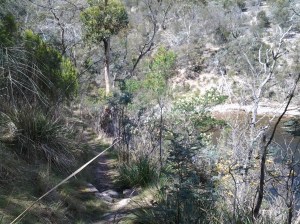
20141015_133405

Tracks on the other side of the bay made it obvious that it was possible to continue walking south. On the hill top in the distance I could see the electricity pylon against which I had walked earlier in the day.  Another day, I will return to discover more.

By 1.45pm I had begun the return walk north and was back at Porters Bay and by 1.50pm I was back on the bitumen at Risdon. Only then did I notice an electricity pole on the other side of the road with its own name, ‘The Leaning Pole of Risdon’!

By the way, there are no public toilets, no cafes or restaurants, and no other facilities and services during this walk or in the suburb of Risdon.  So be prepared.

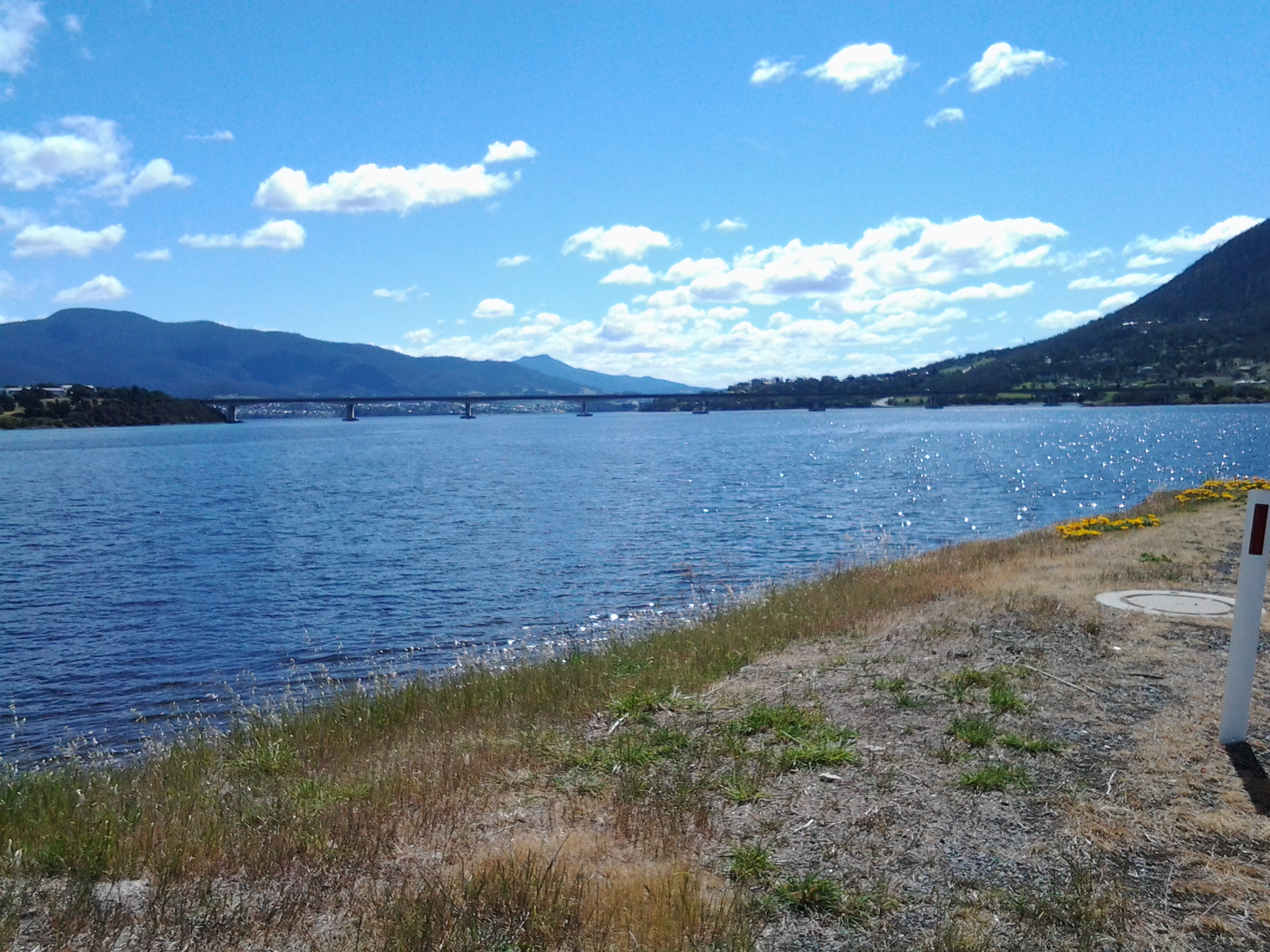
The rest of my walk was undertaken on the edge of Saundersons Road as it wound around the Derwent River with Risdon’s houses on the right. I reached the bottom of Risdon St by 2pm and then continued on in full view of the Bowen Bridge further north

20141015_135550

before passing Cleburne Street and Cemetery/Church Point Road. I reached the intersection with the East Derwent Highway at 2.10pm.

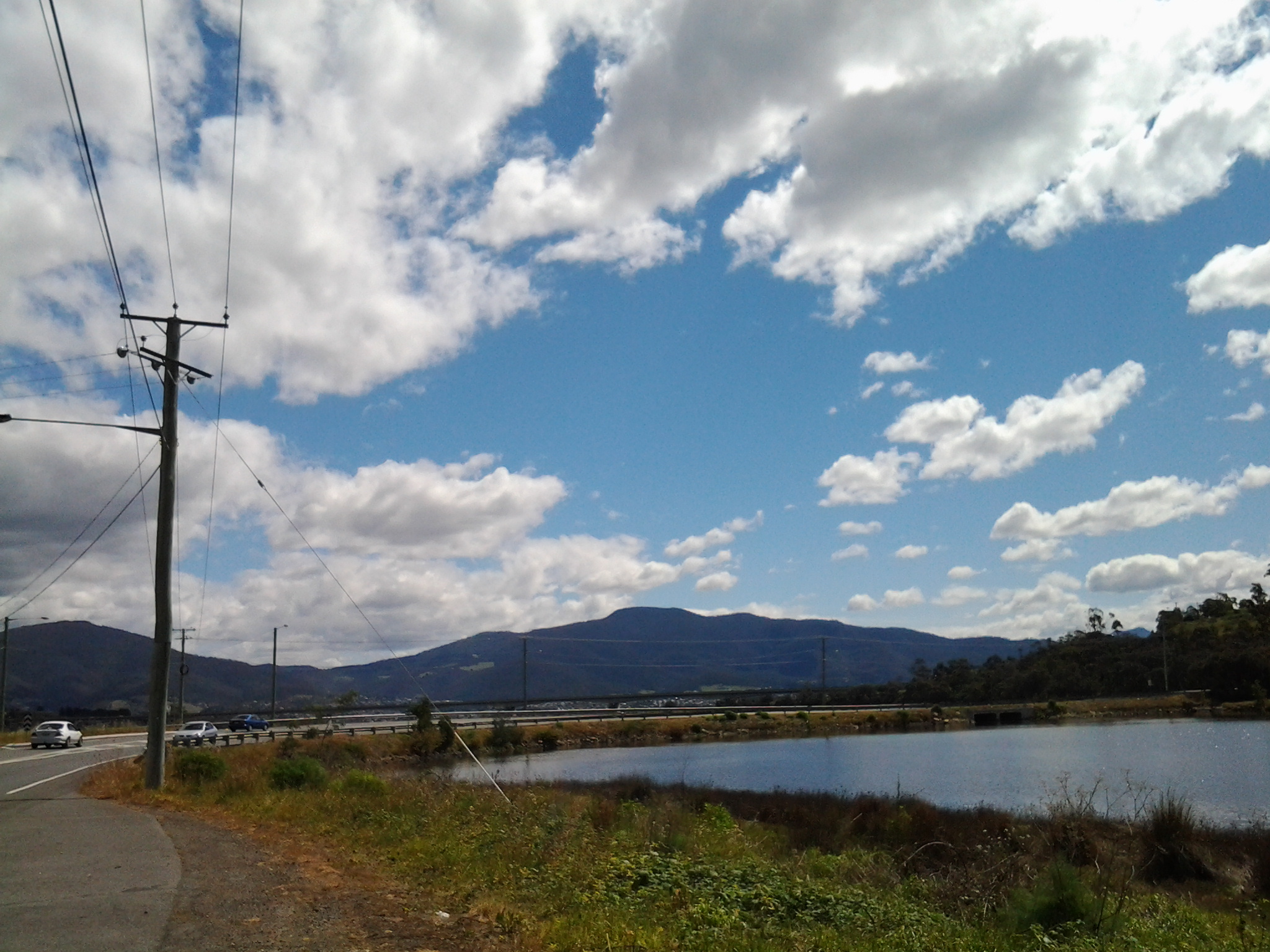
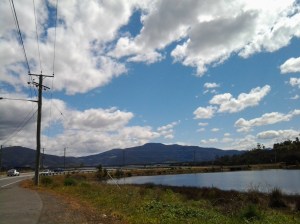
The view below was photographed at Risdon Cove looking towards the Derwent River while waiting for the bus.  The suburb Risdon can be accessed to the left of the car that is seen travelling on the road.  Land has been reclaimed across the Cove so that the East Derwent Highway can continue uninterrupted further north. I will walk along that road in Stage 7.
20141015_141139

Once at the bus stop (an unnumbered bus stop) at 2.15pm, I relaxed into the wait for Metro Bus number 694 that arrived 20 minutes later. Meanwhile, I was able to take a broad view of Risdon Cove, knowing this to be the starting point for Stage 7 of my walk along the Derwent River.

On the return bus I was treated to a ride through the large and dispersed suburb of Risdon Vale located some kilometres away. This suburb sits in an open valley skirting behind Tasmania’s main prison site, the Risdon Prison Complex.  ‘The mountain’ (Mount Wellington) is ever visible.

Eventually the bus turned back onto the East Derwent Highway and travelled via some suburban detours to the Eastlands Bus mall at Rosny Park on its way to Hobart. I am excited by the rich experiences offered by Stage 6 of this walk and look forward to leading friends along these paths. I hope my stories inspire others to have a look at this area or find their own walks of discovery.

Geological history and the Bedlam Walls area

For readers interested in the rock foundations of the Bedlam Walls Point the information from http://www.mrt.tas.gov.au/mrtdoc/dominfo/download/TR12_116_118/TR12_116_118.pdf may be of help.

“The area examined is rectangular and measures about 700 yards from SW to NE and about 600 yards from NW to SE. It is on an elevated promontory projecting into the Derwent estuary, bounded on the N by Shag Bay, on the W by the Derwent River and on the S by Geilston Bay.

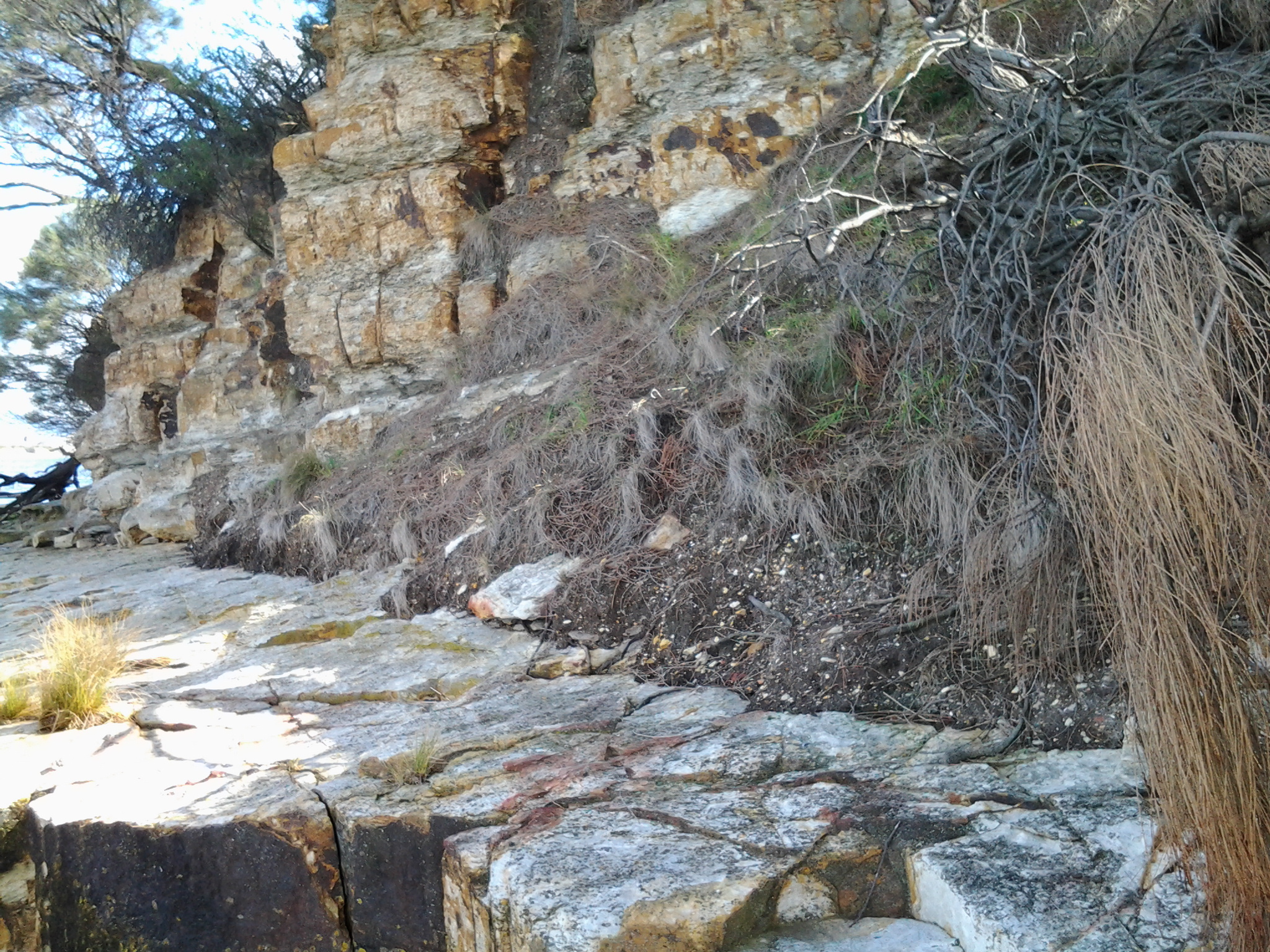
The rocks present are fine light grey sandstone and siltstone of the Malbina Formation of Permian age. The sandstone forms hard, compact massive beds from one foot to six feet in thickness which alternate with siltstone beds generally less than two feet in thickness. The siltstone weathers more readily and so is readily distinguished in outcrop, but it is not markedly softer than the sandstone.

The rocks dip at low angles up to 6° to the W, that is, towards the Derwent. They possess vertical joints usually from nine inches to four feet apart although locally they may be as little as one inch or as far as six feet apart. Scattered isolated pebbles up to eight inches in diameter are present in the Formation Cliffs and on the W side of the area they plunge into the Derwent River. Along the foreshore in the NW corner are three shallow sea caves about 30 feet along any diameter. Their floors are now about twenty feet above sea level. There has been some collapse. No evidence of groundwater was seen either on the promontory or along the shoreline. The soil cover is a shallow silty grey loam overlaying thin stony clay. This forms a podsolic profile up to  eighteen inches and usually less than one foot in thickness.

Comments: In view of the rock types present, the low angle of dip and the well-drained nature at the rocks, the general stability of the area is not in doubt. Locally, the presence of the caves has been mentioned but they are superficial features caused by marine erosion, and do not extend underground for any distance. Except on the steepest slopes, the rocks are adequate to support normal industrial structures. Excavation will be assisted by the jointed and bedded nature of the rocks. Where there are large joint spacings, explosives will be required but in the closely jointed areas heavy earth moving equipment will be sufficient. Blocks up to six feet in diameter could be quarried from the massive sandstone. Groundwater supplies are not likely, and in any case would be limited in quantity to, at the most, 1,000 gallons per hour from a bore hole, and in quality by the proximity of sea water.”

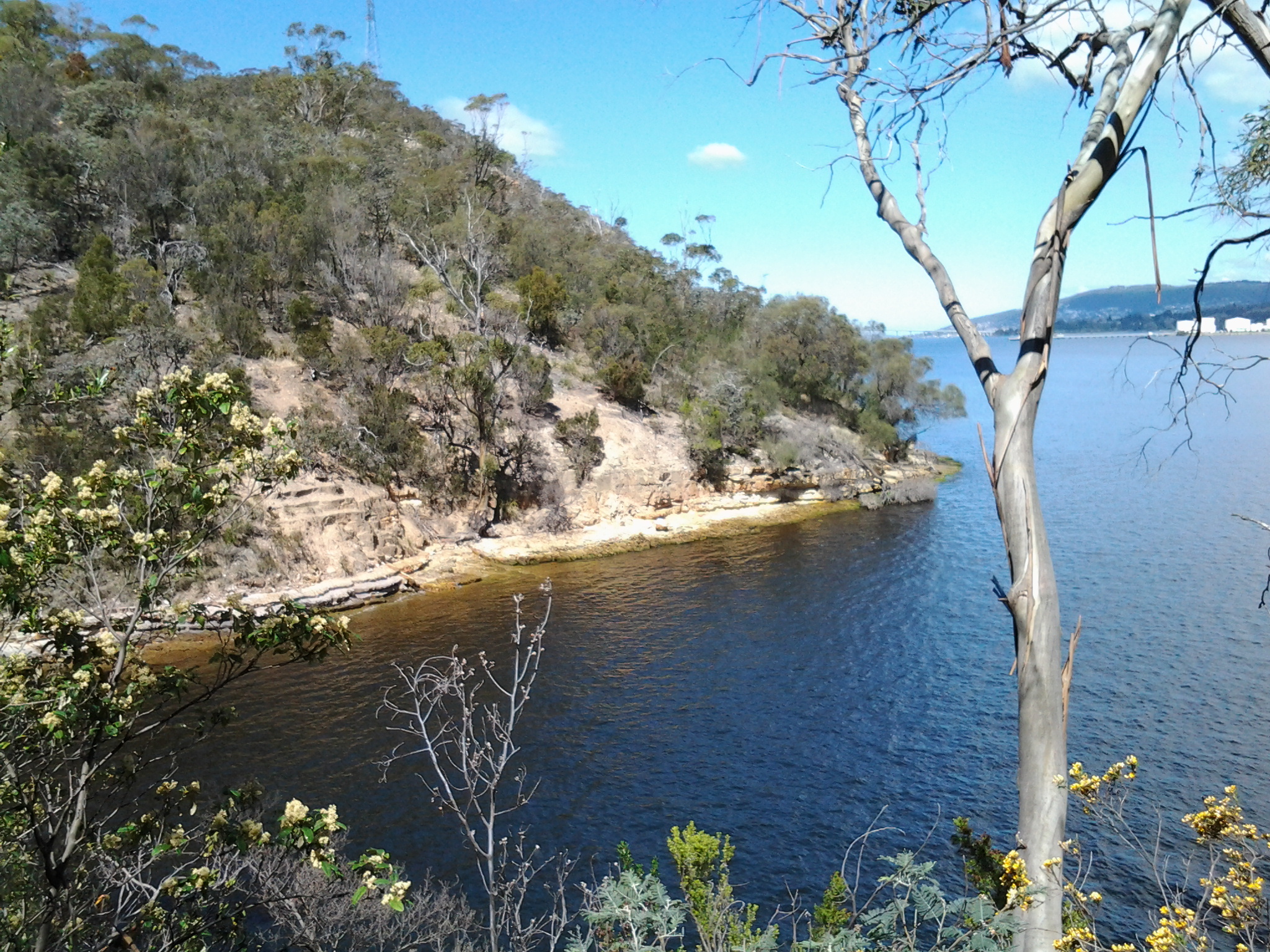
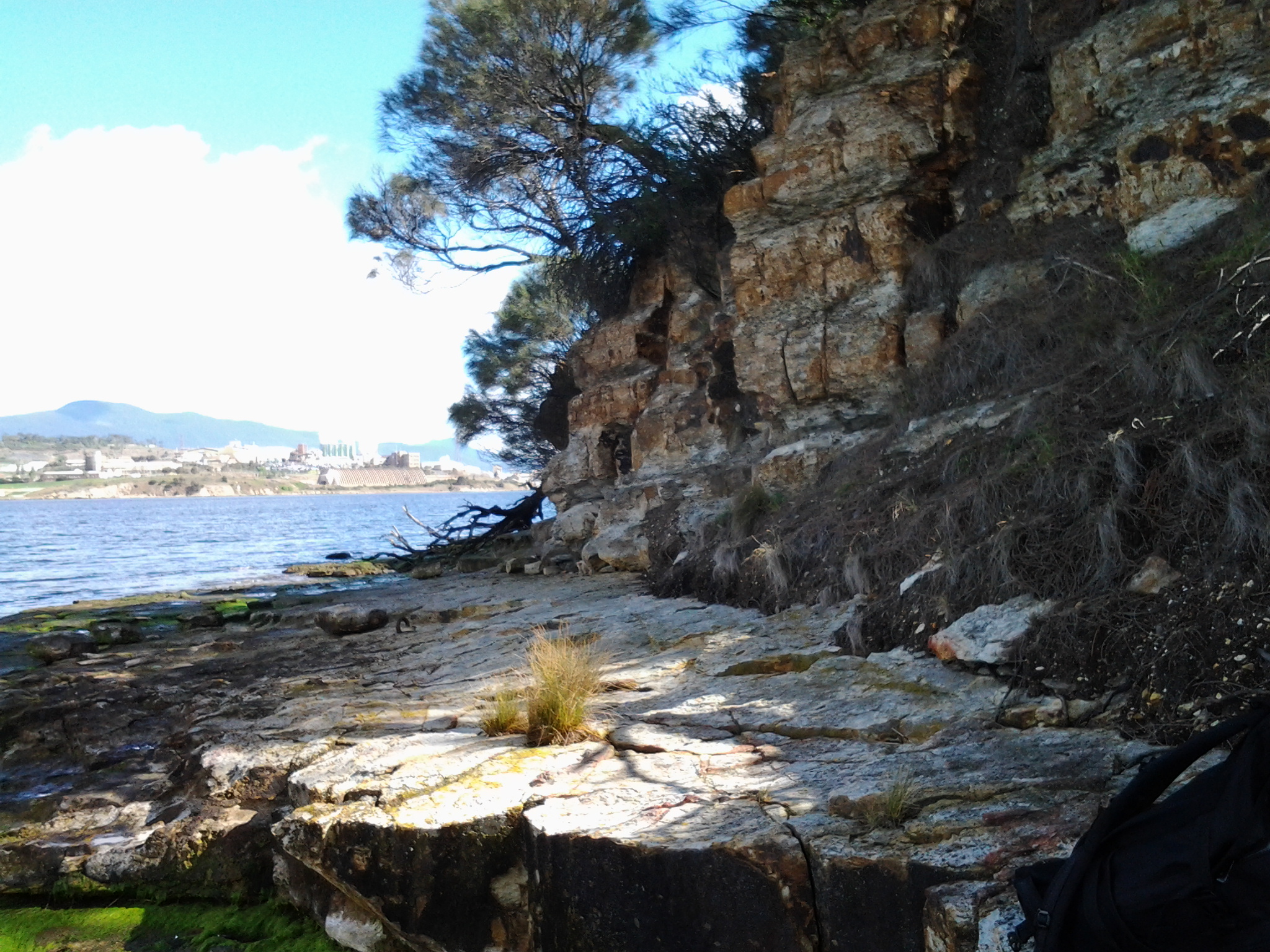
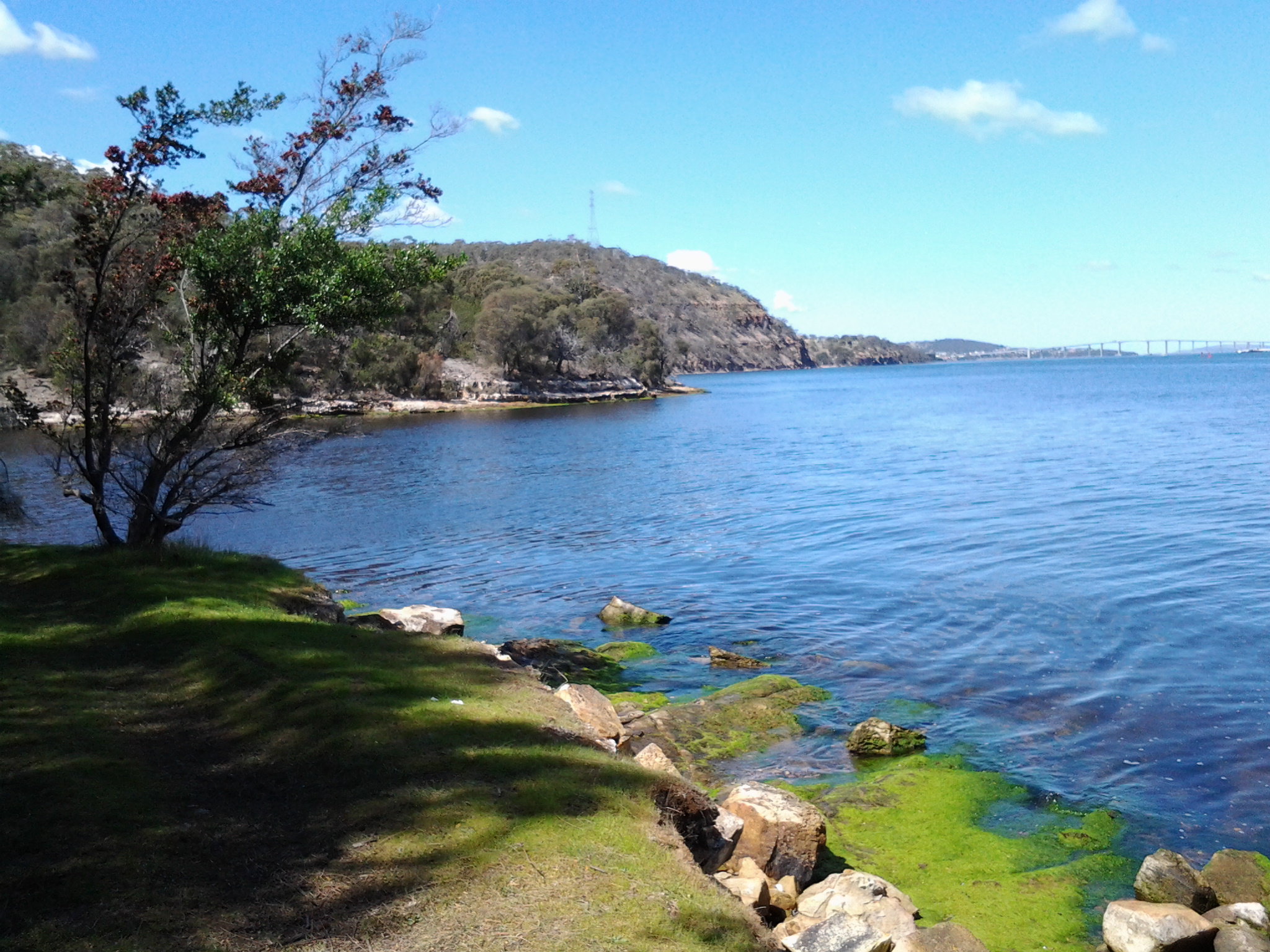
The photo below was taken off the rocks at Bedlam Walls Point.

20141015_101248

Bedlam and its Walls on the Derwent River. What are they all about?

You may be aware that the Hospital of St Mary of Bethlehem in London served from the 1377 as a lunatic asylum and is used today for people with mental illness. The word bedlam, used to describe a place of uproar and confusion, derives from the behaviour of the inmates of this institution and others like it in the early centuries.

I cannot find how or when the Bedlam Walls or the Bedlam Walls Point along the Derwent River were named.  Perhaps the quarrying and fertiliser production in a comparatively isolated location amounted to sheer madness? Does anyone know?

On through the East Risdon State Reserve along the Derwent River

Mostly I noticed the absence of birds (except for a pair of huge glossy Black Currawongs) in the motionless dry sclerophyll forests – was it the buzz of the electricity from the pylons, was it the relative lack of shelter or was it the heating day which might have sent the birds to the shady valleys? The only sound was the relentlessly growling and metallic-sawing industrial sound piercing the air from Nystar over the River. A constant.

At 11.45am, although I saw a tiny track heading towards the River, I continued uphill on the main trail with a Kookaburra laughing at me somewhere in the distance, and tiny moths flitting around my feet camouflaged to the ochre-brown-grey earth but noticeable for their motion. A tiny black jumping spider looked like a small glossy beetle when it landed and stayed still.

20141015_115218

I pondered whether I should have made my own way along closer to the shore by ‘bush bashing’.  The vegetation was sufficiently open to have made this easy enough, however it would still have slowed me down, and since I didn’t know the end game (the time it would take to get to the bus stop), I chose to stay on the main track.  Even when the path split (at 11.50 am)with a red ribbon hanging on a tree to indicate this was a reliable alternative, I chose to stay on the main right hand path. With hindsight the left path may have given me a shorter route to Risdon – but I don’t know.

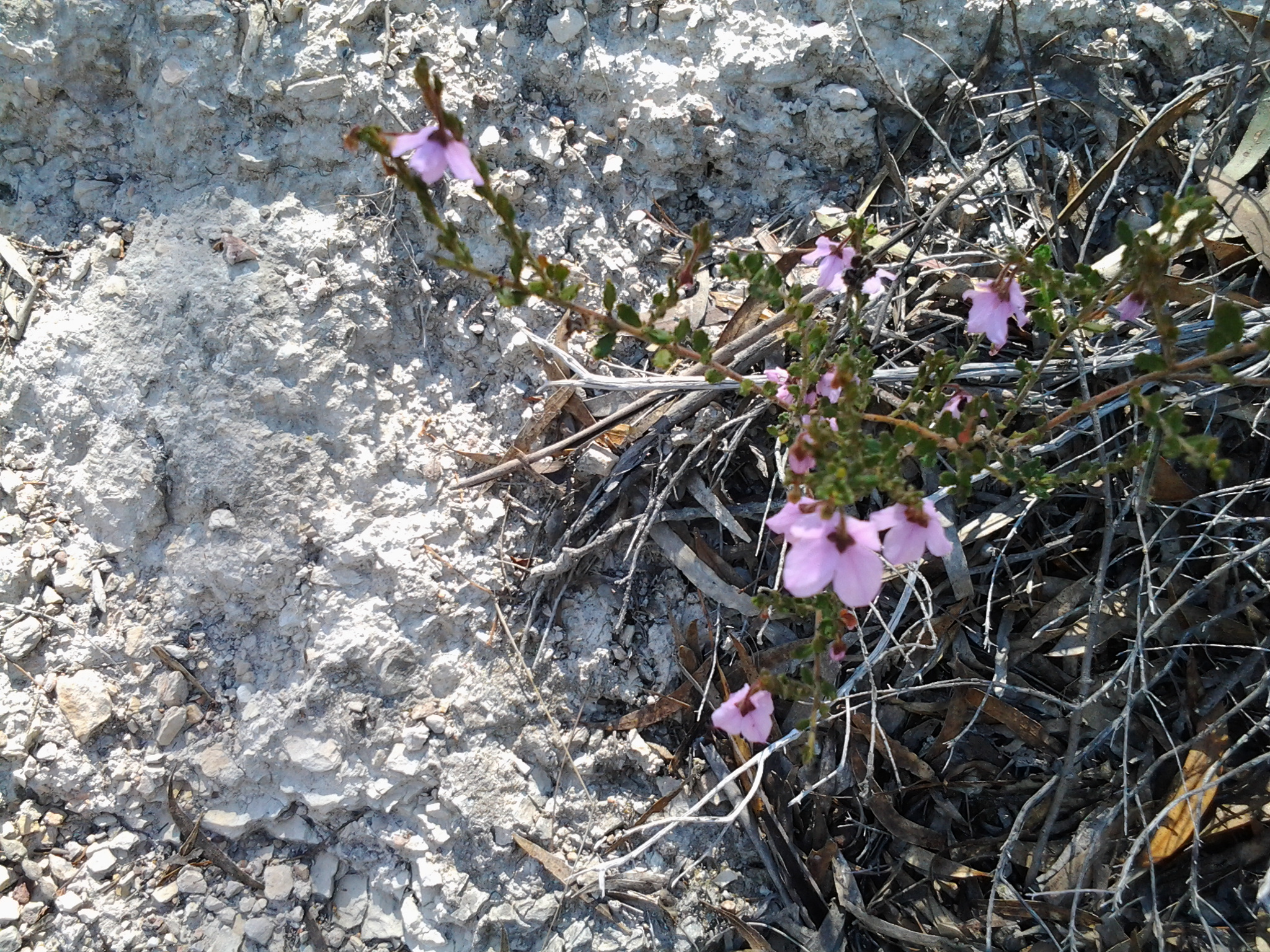
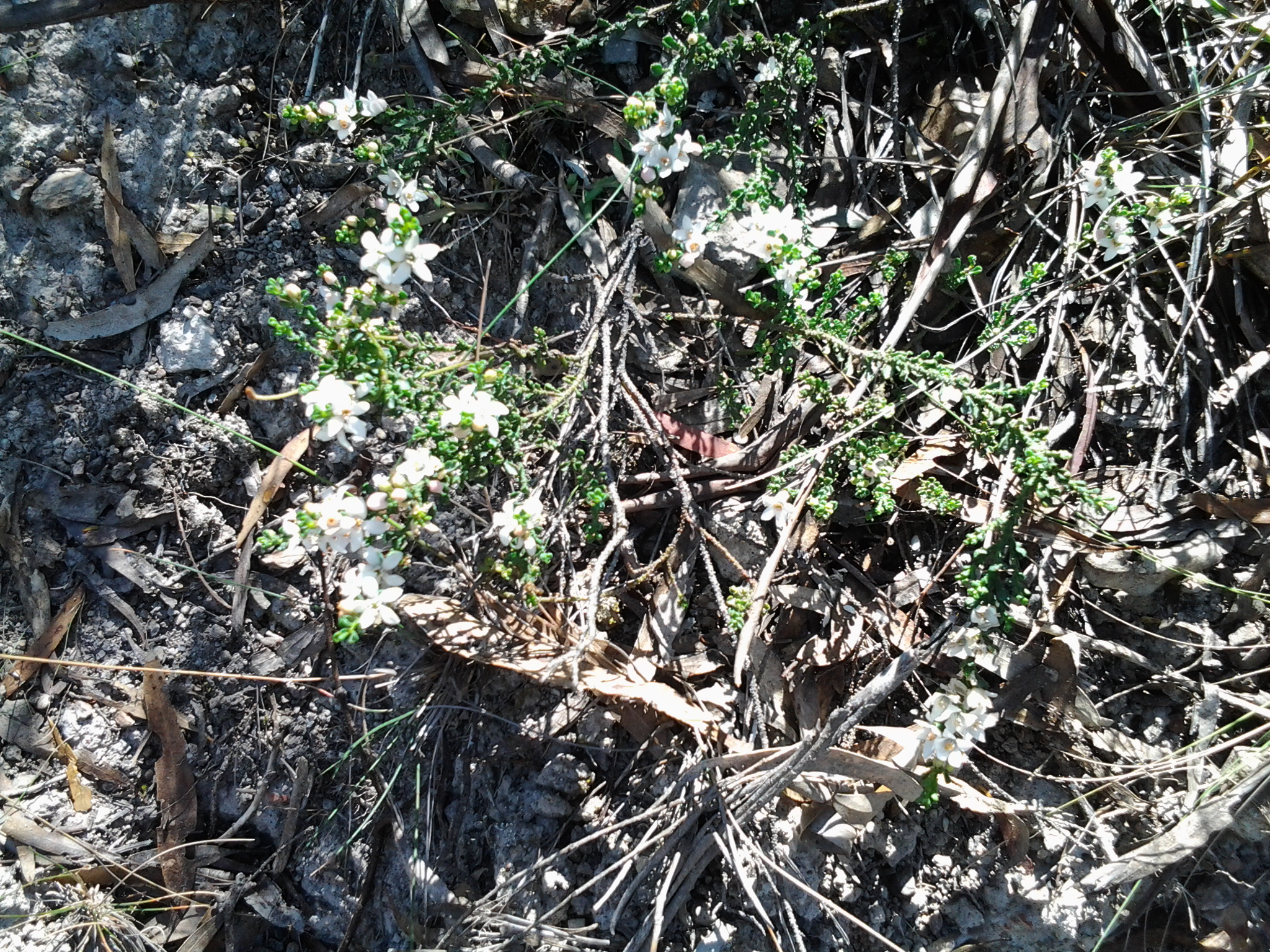
At midday the road split again.  This time, as a Black Currawong flew overhead with its wonderful tail edging of white (made me think of the black and white dress Audrey Hepburn wore to Ascot in the movie My Fair Lady), I chose the left hand route.  Small clusters of pink native flowers, with fragile connections to nurturing soil, presented posies left and right. Perfection.

20141015_121749

This track dipped downhill to the left soon after, as I could see large water tanks on the hill to my right.  Almost no undergrowth. Evidence of past bush fires through part of the forest.

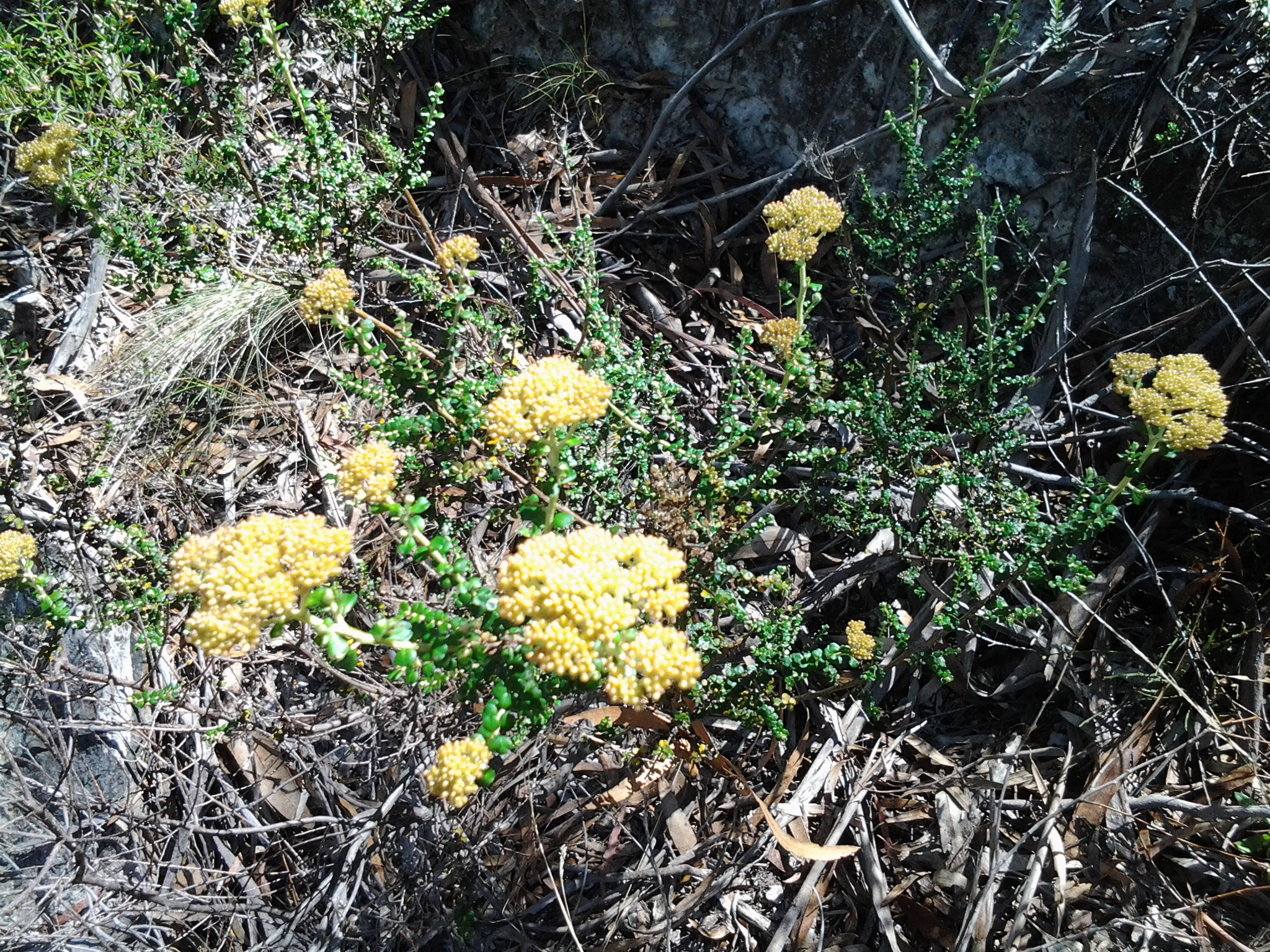
In the valley, lots of different wild flowers bloomed offering me a visual gift.

20141015_121456  20141015_121612  20141015_121654

At 12.10 and through the trees, I caught a glimpse of Risdon suburban houses but it was still a long while before I reached the suburb – obviously I missed tracks which could have taken me down more quickly, and instead I took the longer route, Shady. More bird song. Clean fresh smells. A vine entangling other plants with a delicate lilac-blue flower. Scenic it was and I have no regrets.

At 12.23 I took the left of a new split in the road and continued downhill. Lines of cobwebs occasionally floated across my arms and face indicating no-one else had walked here since the spider had swung across the path.

By 12.30 I reached a fenced enclosure for a water storage tank, the East Risdon Reservoir. I chose the road curving downhill on the left amidst a fresh burnt smell from the blackened bush on my right.  At the time I thought it smelt like a cup of tea freshly made – but perhaps that was wishful thinking. Three minutes later I reached a locked bar gate preventing road traffic entry but with an easy walk around. Now I passed houses on my right as I walked the length of Risdon Street down to the Derwent River.

In Risdon at the T junction with Saundersons Road which edges the River, I stood and watched a fisherman in his lunch break, felt overwhelmed by the extent of Nystar opposite, noticed INCAT’s shipyard on Prince of Wales Bay a little further north on the western side, listened to the pervasive roar from industry on the other side of the River, and wondered if I my feet would take me further.

20141015_123942

In the distance southwards I could see the Tasman Bridge.

20141015_124203

Along the northern side of Shag Bay and onwards along the Derwent River

I used the mini bridge to cross the tiny creek feeding into Shag Bay and began immediately to take the walking track uphill on the northern side.  From here on I was not particularly confident about the clarity of tracks or, in fact, whether there would be tracks. I was pleased to discover that many tracks existed and as I long as I kept the Derwent River on my left, I couldn’t get lost – even if I did not know at what part of the suburb of Risdon I would arrive (‘all roads lead to Rome’ even if entry is by a different gate).

On the way up the first hill I had stopped for a view and a swig of water. During that time I surprised a dog that came around the corner behind me with her mistress. They both stopped in their tracks.  She told me that in all the dozens of times she has walked this track, she has never seen anyone on it.  Peace and solitude. Yet only a dozen or so kilometres from the heart of a city.  A capital city.

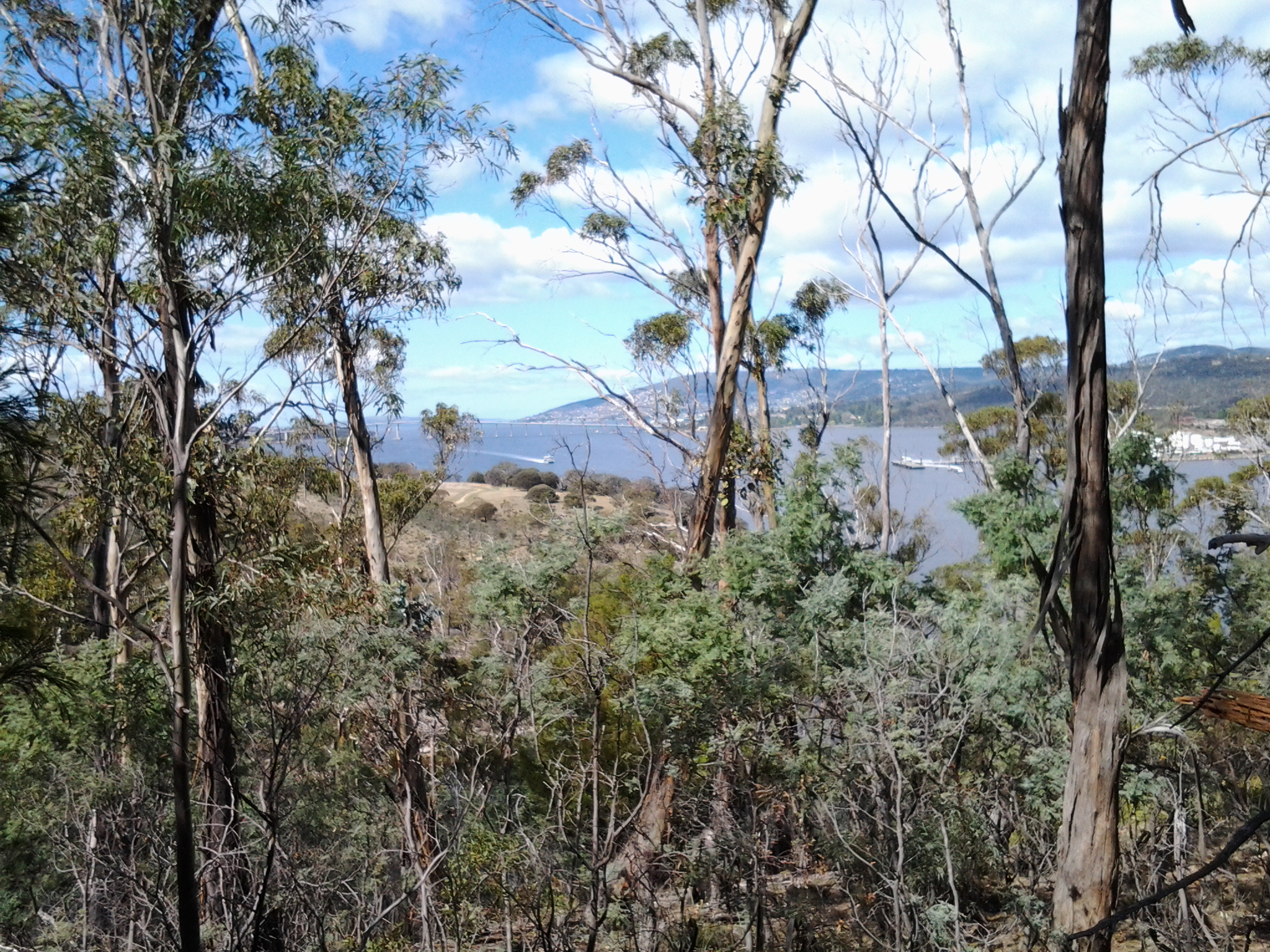
The photo below through a wooded landscape extends a view southwards to the Derwent River with the MONA ferry coming my way.  At this point, I was as high as the uppermost part of the Tasman Bridge located closer to the mouth of the River.

20141015_111529

Around me eucalyptus gum nut shells lay on the ground exuding a clean fresh perfume (think of May Gibbs’ hats on the gumnut babies Snugglepot and Cuddlepie – Tales of Snugglepot and Cuddlepie: their adventures wonderful was first published in 1918.).  Not long afterwards, the track passed through a copse of self-seeding wattle trees: I know some varieties are considered to be weeds in certain parts of Australia and I suspect this collection of specimens may be ‘weeds’.  The problem is that it grows quickly and blocks out the opportunity for other trees to survive. Monocultures are death to the natural landscape.

At the top and moving along parallel to the Derwent River, I was on top of the Bedlam Walls.  Various unofficial tracks disappeared over the cliff but I stayed on the main path. My reasoning was that I had an infrequent bus service to connect with at Risdon Cove and I was not sure how long it would take to reach there.  The downside was that I missed experiencing the actual walls and their walkways and caves. I would have liked to have seen the following (https://www.flickr.com/photos/bleeter/7266025800/), but I must return for a closer inspection.

7266025800_c8d48839e8_b

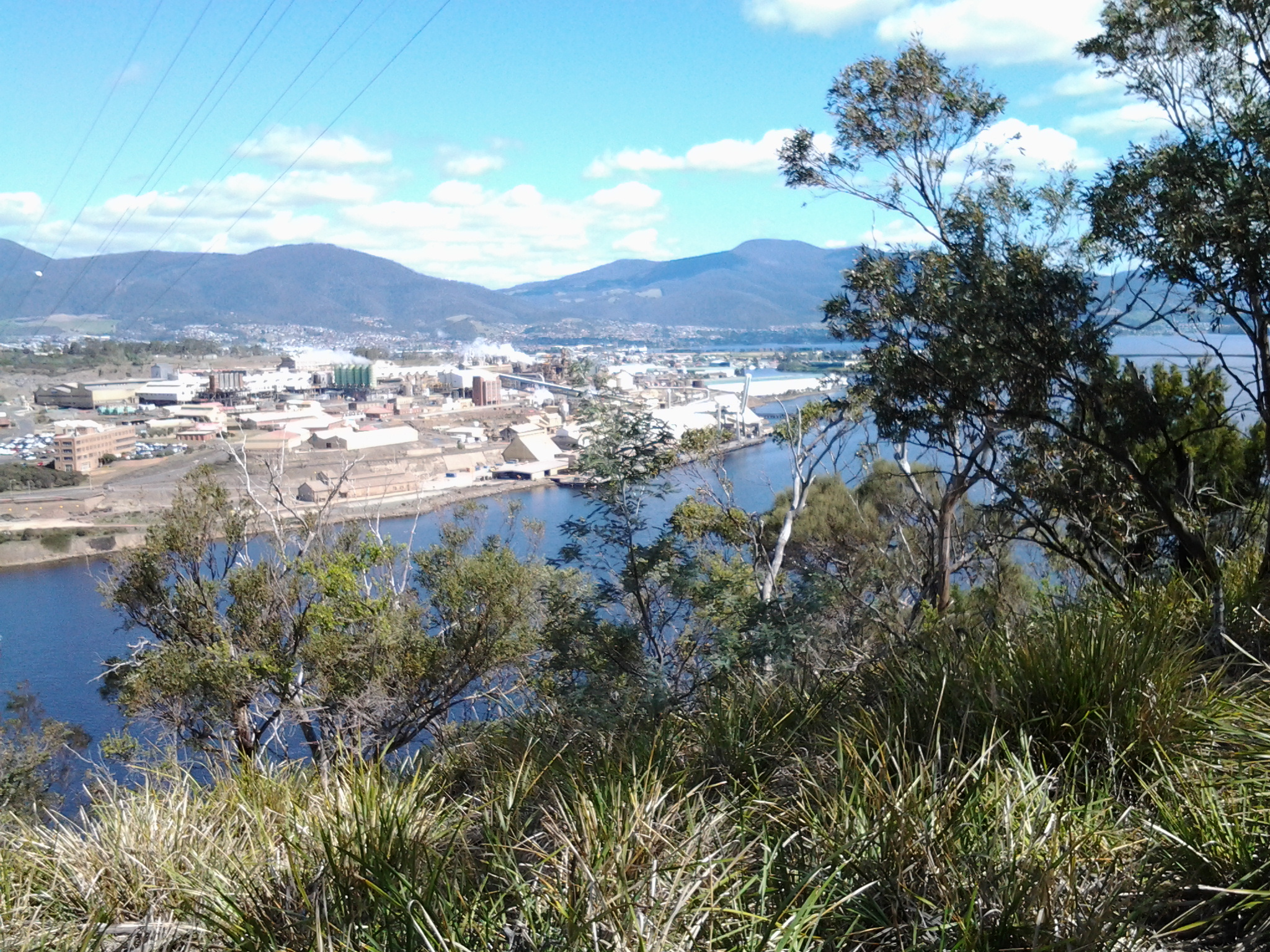
Along the top I was afforded detailed views of the western shore and especially of the smelting works, Nystar as shown below.

20141015_112338

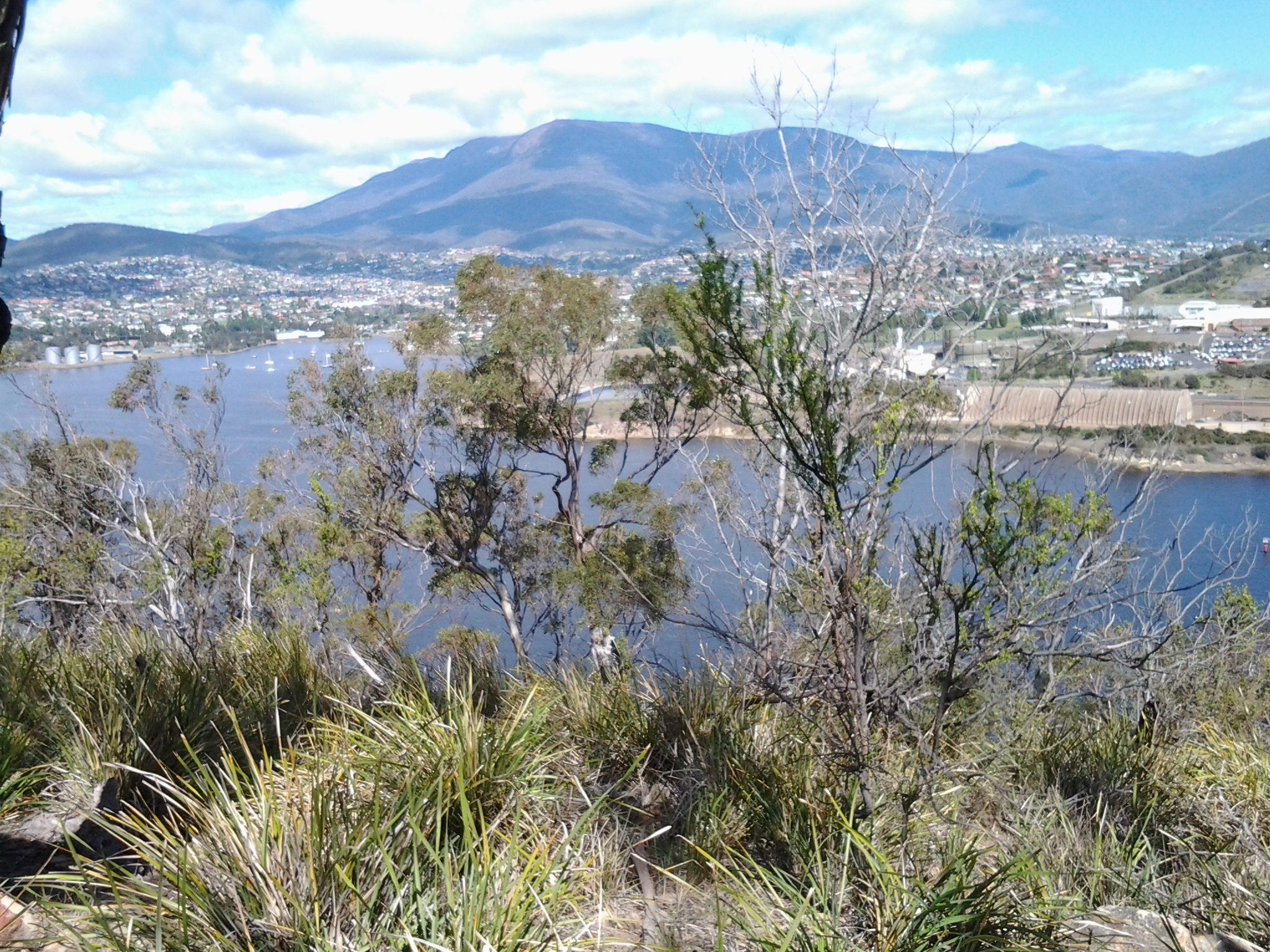
It is now obvious to me that when I walk south along the western shore of the Derwent I will not be able to be close to the river edge when I pass this massive Nystar industry covering many acres of land. I reached a major electricity pylon around 11.20am and watched its wires swing across the river to the power hungry industry (these wires are just visible in the photo above). Looking southwards and across the River from the top of Bedlam Walls, I could see Mount Wellington overshadowing Cornelian Bay and the Newtown suburb of Hobart.

20141015_112331

My track moved inland and parallel to the electricity pylons. After 5 minutes the track split and I turned left. It came to an end with a rough worker’s seating area in view of the Bowen Bridge crossing the Derwent River further north.  The cliff seemed to drop away and I judged that a slippery slide down might not be a good idea with no one else around if something should go wrong.  Later in the day when I was much further north, I was able to look back to the pylon and see I really should have braved it down the hill and kept closer to the water. But then again it might be safer to walk south and climb that hill rather than slip down it heading northwards. By 11.35am I had walked back to the divide with the original clear but rough 4WD track and chose the other arm along the pylons.

Reaching Shag Bay as I walked along the Derwent River

From Bedlam Walls Point, tracks meandered northward and before long a large quarry was visible on the other side of Shag Bay. At its base I could see the rusting remnants of machinery parts.

20141015_103753

Descending to Shag Bay at this point seemed perilous so I turned right and found tracks moving inland parallel to the Bay.  Fresh wallaby poo beside the track: black olive sized and shaped, glistening in the sun. I did not see the wallaby which undoubtedly would be looking elsewhere for a midday shady rest spot. Large grey-brown fantailed birds darted amongst the trees.

I was back on the main track at 10.45am and a couple of minutes later reached a sign marking the start of the East Risdon State Reserve (dogs prohibited, even on leads). The deep dark brown green water of Shag Bay rested liked a solid plane behind the sign. Very seductive.  Once at the water’s edge I was surprised how clear the water was except for the natural colouring and tannins from native plants.

20141015_104855

I stepped carefully down the rocky crumbling path to the Bay.

20141015_104912

The quality of light was extraordinary. Rain during the night had cleared the air and the colours of the landscape were clear. I reached the bottom next to the water’s edge of Shag Bay after a further five minutes, and breathed in my surrounds, feeling very joyful to have such easy access to this beautiful environment.

Temporarily I was startled by the spectacle of a massive White Bellied Sea Eagle flying up and down Shag Bay. I stood spellbound unable to move to click a photograph.  Have a look at the photo on http://www.parks.tas.gov.au/?base=5115 and see the large fish in the eagle’s talons. It wasn’t long before a large (but much smaller than the eagle) black bird came and swooped at the eagle to drive it away.  It’s not an easy life for these birds; they have no rest.
As I continued along the foot of the Bay, I came across an old rusting boiler up on the rocks, a massive lump of concrete, and other rusting metal in the water and around about.

20141015_105602     20141015_105701

A couple of minutes before 11am I reached the boiler used as part of a blood and bone factory in the late 19th and early 20th centuries, shown in the photos above, then a few minutes later I reached the curve of the Bay and could see a second old boiler partly obscured by the bush.  Apparently the Tasmanian Fertiliser Company was operating here for many years until a massive boiler explosion caused death and destruction resulting in the business folding. You can read the records of the inquest at http://trove.nla.gov.au/ndp/del/article/10403147.

20141015_110028

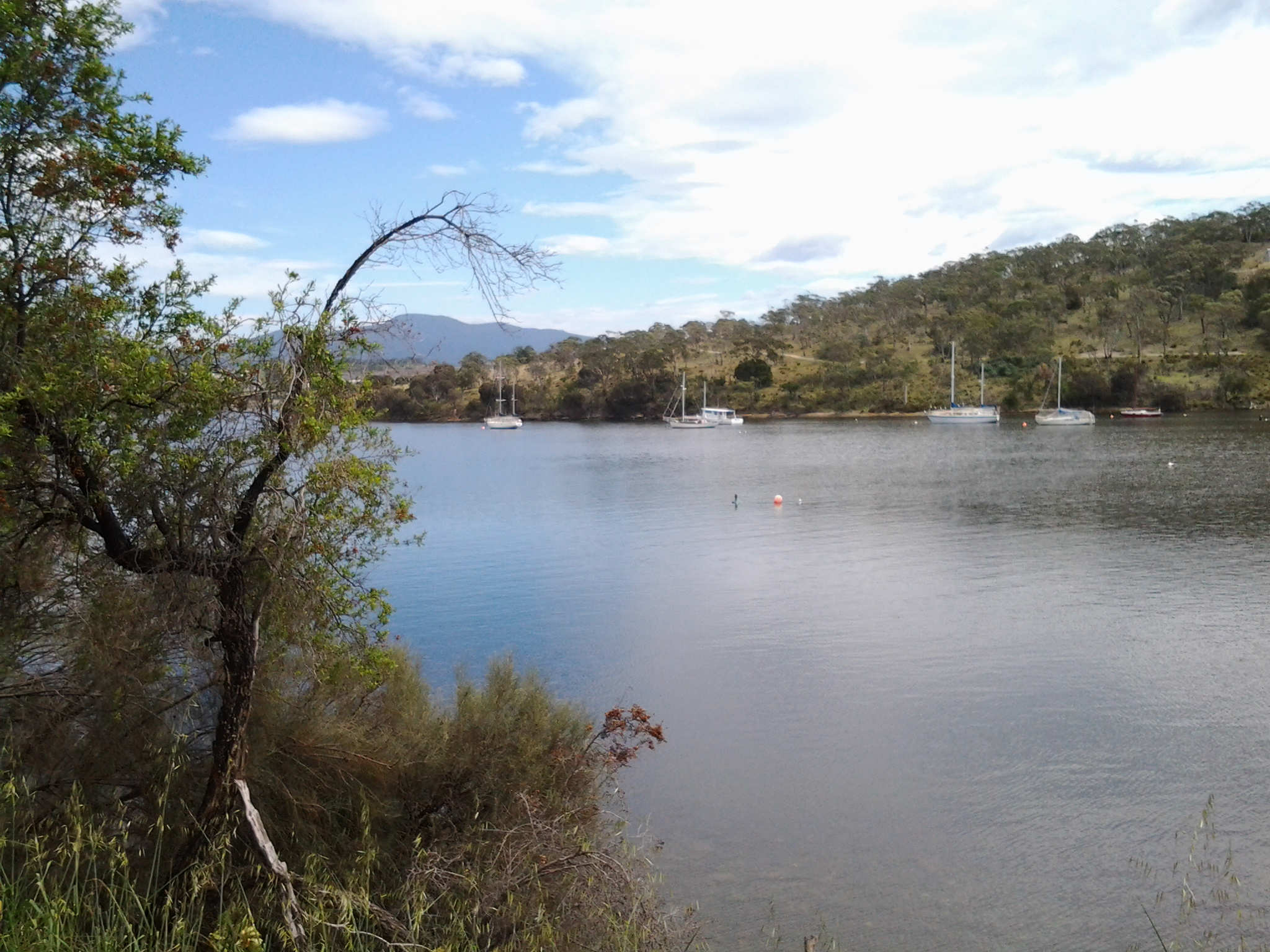
Looking down the Bay, past two fishermen in their outboard motored runabout, I soaked in the view of the western shore of the Derwent River with Mount Wellington rising above it. Hardly any air movement and the temperature was cool enough to make standing in the sun a comfortable delight.

Prior to the walk I did uncover information (http://www.parks.tas.gov.au/indeX.aspX?base=1799) that Shag Bay was used for the demolition of boats such as the HMS Nelson in 1926. The photo below is from the collection of the State Library of Tasmania.

abandonedHMS Nelson Shag Bay

I saw no evidence of boat demolition during my walk around Shag Bay, however on a second visit if I investigate the quarry maybe I will find materials of interest.

The Clarence City Council (http://www.ccc.tas.gov.au/page.aspx?u=1487) suggests the 3km round trip from

Geilston Bay to Shag Bay will take 45 minutes (although another website suggests an hour and a half for the return trip). I took considerably longer by following unofficial tracks and taking time to observe the land around me as I walked. Apart from the two fishermen on the Bay there was not a soul around. I cannot recommend this walk too strongly. Everything about the walk and the location is attractive so I hope people living in Hobart will take themselves out to Geilston Bay and make their own discoveries.  The website at http://highteawithhominids.squarespace.com/ancient-humans/2011/8/19/bedlam-walls-a-walk-in-tasmania.html provides additional details which may help locate some of the historical sites that I missed.

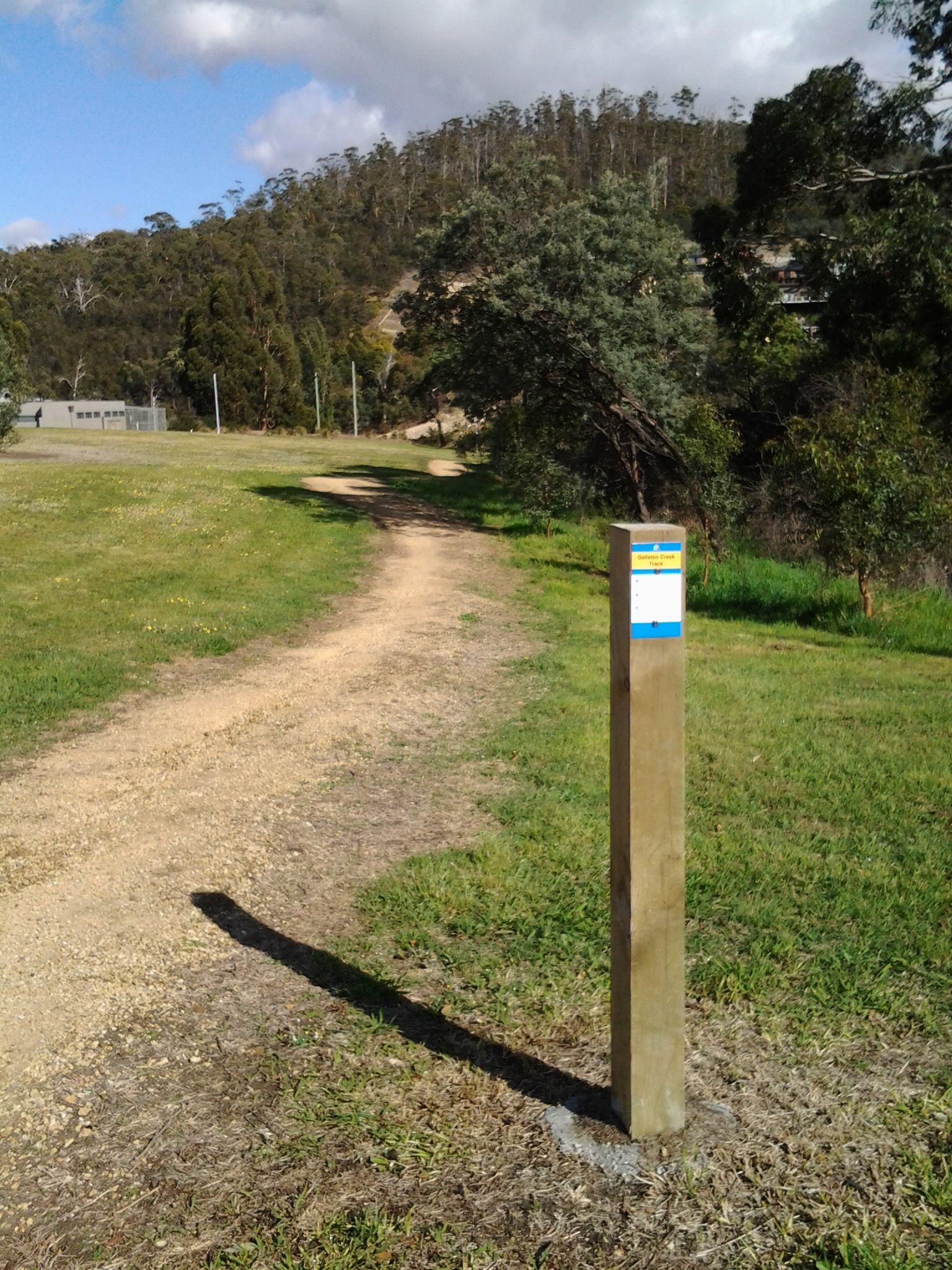
Also on the Clarence City Council website, the claims are made that the track is well signposted. This is not true.  I saw three signs only: Geilston Creek track from the bus stop, Bedlam Walls sign including a map to Shag Bay at the start of the track, and the East Risdon State Reserve billboard close to Shag Bay. Considering the myriad of unofficial tracks that will attract the attention of many walkers, if you wander aimlessly, you will need to remember to keep the river on your left as you walk north to Shag Bay and on your right when you return to Geilston Bay.  I do not recall seeing any signs at Shag Bay so I missed the aboriginal midden and quarry.

The Shag Bay and Bedlam Walls area covers much loved and used aboriginal land of the Moomairremener people

Various websites have indicated that the tract of land between Geilston Bay and Risdon Cove contains a great deal of evidence of land and river use by the original land owners.

Previously I acknowledged the traditional owners of the land along the Derwent River that I have been walking across. This land, before European settlement, belonged to the Moomairremener people however the early international settlers failed to understand that the local inhabitants had established government practices and legal systems, and worked with the land and sea to ensure an ongoing food supply. Unfortunately the characteristics which made the indigenous people civilised were different to those characteristics which made the settlers civilised. Because of their major cultural differences, both groups of people couldn’t grasp the positive values of each other. Each failed to learn from the other so that neither came to an understanding that the difference between them did not make one group better or worse.  As the new settlers encroached on aboriginal land and hunting grounds without understanding the value and significance of what they were doing and attacked aboriginal people, inevitably the Moomairremener people attacked in return.

Bedlam Walls Point’s aboriginal cave, middens and quarry were the main features of aboriginal occupation that I expected to access during my walk. Regrettably I did not find the cave or the middens but I did see, at a distance, the quarry.  Another walk is needed to take more time to access these additional sites.

All the above are in easy walking distance of the site (Risdon Cove) at which, according to one story, an Aboriginal band hunting kangaroos was mistaken by whites for attackers and massacred (http://fieldnotestasmania.blogspot.com.au/2009/11/bedlam-walls-walk.html). According to http://www.australianhistorymysteries.info/pdfs/StudiesAHM-1.pdf “On 3 May 1804 there was a violent clash between a group of British settlers and a large party of Aboriginal people at Risdon Cove, near Hobart in Tasmania (then known as Van Diemen’s Land). Different writers and historians have given varying accounts of what happened then.”  In my view, neither option expressed on this website does any credit to the early settlers.

I cannot help thinking about the ongoing contemporary parallels where governments provoke fear by urging our populations to be vigilant against others who dress or look different. I cannot see this is a helpful way to learn to understand the benefits that different people can bring to all our lives.

Bird song on the track along the Derwent River

A glorious soundscape within a fresh and embracing landscape was my reward for Stage 6 walking along the Derwent River.

As I left the bus and began to walk along the marked gravel pathway nearby, a sulphur crested cockatoo screeched overhead. It was easy to enjoy the sunlit stand of poplar trees then Peppermint gum trees and other vegetation surrounding me.  Geilston Creek, with its paddling ducks, wound its way towards Geilston Bay on my right.

20141015_094500

The further I walked the more bird song I heard and the more native birds showed their colours. First I noticed a pair of pardalotes, then Jenny Wren and her mate the divine Blue Wren both collecting a meal of insects from the path ahead. To my left were sports ovals and tennis courts. 10 minutes after leaving the bus I reached a new walking bridge over the creek near the edge of Geilston Bay, garlanded by large flowering wattle trees at the entrance.

Once over the bridge I turned left onto a road, with a series of dinghy lockers visible on the other side of the creek, then a couple of minutes later the Bay was clear on my left and the last houses before the bush started were located up on the right. The track to Shag Bay started 15 minutes after I left the bus. Despite no breeze I felt the cold air hard on my face. But the air was deliciously clean, the environment pristine after the rain overnight, and the tranquillity of the vistas was sublime.

20141015_095242

The official sign in the photo above, which was located at the beginning of the track, includes a map showing the way to Shag Bay and on to Bedlam Walls. I trekked gently uphill parallel to Geilston Bay on an undulating gravel track and around me all manner of birds sang, whistled, chirped and squawked. An ornithologist would be able to identify those sounds, but mostly I needed to rely on seeing these feathered friends of the bush.  The sounds were inspiringly musical. It was a feast for the ears. I spotted a Black Faced Cuckoo Shrike.

20141015_100446

The photo above show where I had walked from: it looks down the track with Geilston Bay on the right.

Along the way, unofficial tracks led down to the water.  On this walk I had hoped to locate the known aboriginal cave but alas, I was unlucky.  I suspect one of those tracks would have led to it, and so I will return another day for further exploration. Previous research had indicated that our Parks and Wildlife Service government department no longer can afford the upkeep and safety practices that are associated with this cave, and that somewhere there are stairs to descend to the cave and a locked gate to prevent entry. Other bloggers have indicated this gate is easily climbed if you are prepared to take the responsibility to accept all risks. As yet I have no idea if Trespassers Prosecuted signs are in place for that location. A clear photo of the cave is available at: http://tastrails.com/shag-bay-heritage-walk/tastrails_shagbay_bedlamwalls/

At 10.05am I reached a split path and took the left hand route. The occasional gum tree was surrounded by open grassland containing frequent clumps of one of our native plants the Diplarrena Moraea, spiked with their white blooms. Tree roots slithered across the path creating a tripping hazard, so I walked slowly in order to absorb the views. At a second split in the path, again I took the left hand track.  This meandered downhill on slippery gravel under old Casuarina trees to the water’s edge. At 10.10am I stood on the rocky shore at Bedlam Walls Point.

20141015_101225

From the foreshore at Bedlam Walls Point, I looked across the Derwent River northwards to the industrial business ‘Nystar’ which edges part of the western shore of the river; a large zinc and lead smelting and alloying operation.

The photo below is also taken from Bedlam Walls Point and looks southwards. The headland on the left is the Lime Kiln Point marking the other entrance into Geilston Bay. Further afield the Tasman Bridge spans the Derwent River.

20141015_101301

Before I left the Point, I watched a few pieces of river traffic: cormorants diving for their fish dinners, the MONA catamaran, fishing boats, and the sailing yachts.

Generally tranquillity reigned. Then for a while, I walked the rocky edge back into Geilston Bay a little then retraced my steps again to walk around the Point and along the Derwent River edge hoping to find the cave.  Once it was obvious success with this search wasn’t likely, I clambered up the hill. By 10.25am, I was standing on top of a cliff on a little used unofficial track. I continued to walk along northwards and up the gentle hill with the intention of rejoining the official track. Before then, however, I came across an infrequently used 4 wheel drive ‘road’ and followed this instead. The main path was only 20 or so metres further inland. By continuing on the ‘road’ I walked closer to the River and found the experience very pleasant.  There were no other people, and no signs of native animals. Only beautiful bird song.

From Geilston Bay to Risdon on Stage 6 of my walk along the Derwent River yesterday

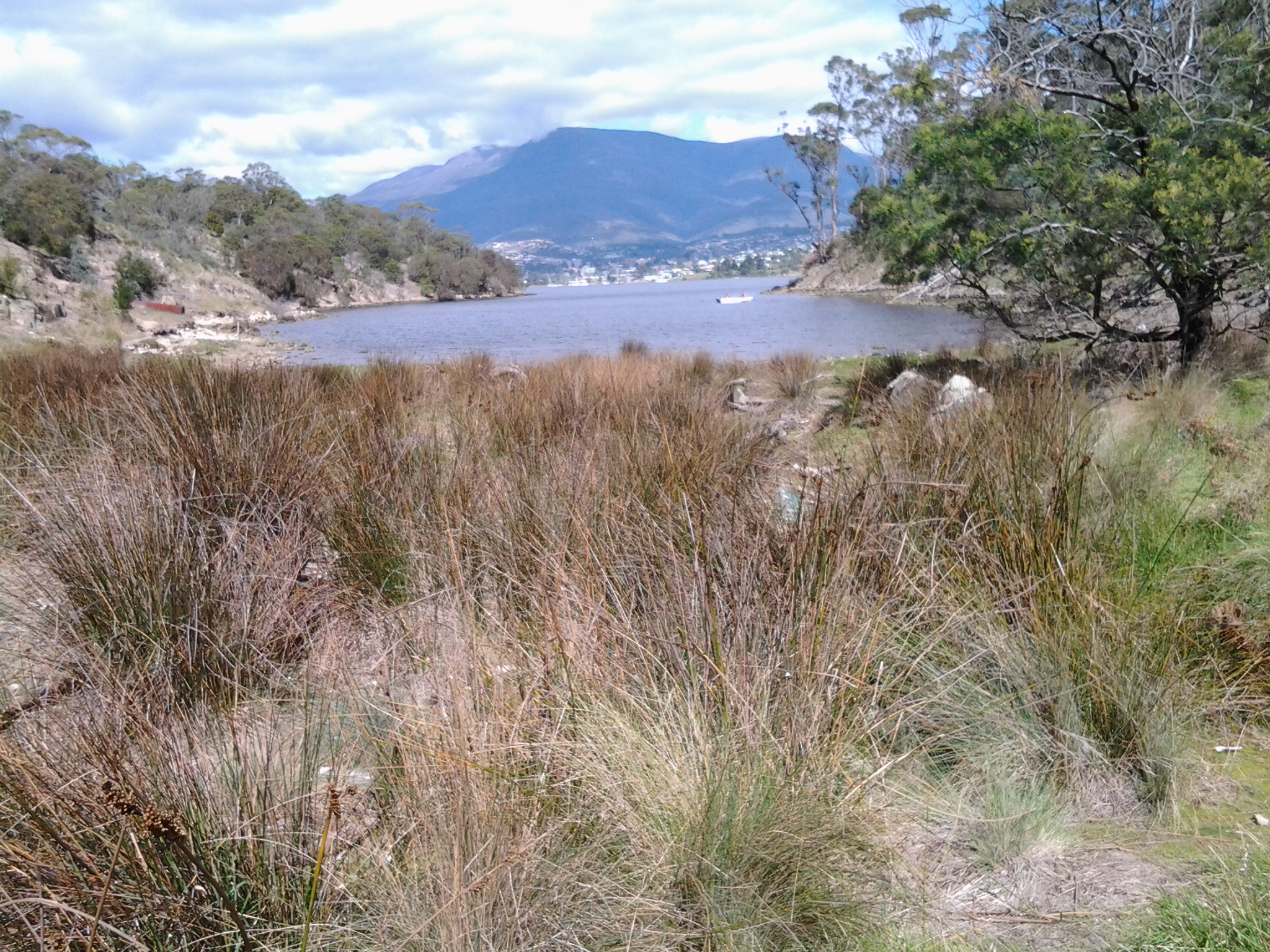
Yesterday’s walk was a sensationally wonderful experience. Over a few posts I will colour in the rich fabric of the day, much of it in clean fresh smelling bushland (such as that at Tommy’s Bight in the photo below).

20141015_133405

To start with, I caught Metro bus 694 destined for Risdon Vale and Glenorchy (scheduled from the Hobart city bus mall at 9.03) on the eastern shore and travelled to bus stop 14 on the East Derwent Highway at Geilston Bay. Thankfully the Clarence City Council has erected a sign marking the start of the walk.

20141015_093747

From the bus stop, I walked along the edge of Geilston Bay then northwards around Bedlam Walls Point to Shag Bay and onwards to the top of the Bedlam Walls, where I was rewarded with panoramas across the Derwent River. My northwards walk continued into and across the East Risdon State Reserve before descending into the suburb of Risdon. I turned south and walked on the edge of the Derwent River to Porters Bay where I took my lunch break before continuing south to Tommy’s Bight.

Eventually I retraced my steps back to Risdon and continued along the water’s edge to the junction of Saunderson’s Road with the East Derwent Highway. The return bus stop for a 694 bus, which arrived at 2.35pm (with not another one due for two hours), was on the Highway across from Risdon and adjacent to the land and water marking the Risdon Cove area.

I was away from home for approximately 6 and ¼ hours, and walked a total of around 12 kms winding over many tracks and retracing parts of my walk.

Previously I had walked 23 kms of the length of the Derwent River.  Yesterday I added 3 kms which brings the new tally to 26 kms.

Walking from Lindisfarne to Geilston Bay along the Derwent River last Friday

Gask

Talune St, Lindisfarne ended at the edge of the Derwent River, so I turned right to follow a pathway. At 11.45am the pathway continued along an extension of Paloona St before changing back into a shoreline Trail. Further on and next to the Clarence Foreshore Trail, an attractive weatherboard house named ‘Gask’, with an expansive enclosed verandah framing extensive Derwent River views, attracted my attention. Apparently this home was built in 1900 as a holiday residence for Dr William Crowther (but more research required confirming this because birth dates and the house dates do not make a suitable match). The property, originally named Villa Rose was renamed Gask, although I can find no explanation for this name. In 2010, the house was sold for over ¾ million dollars.

The Trail continued past the sweeping Koumala Bay where I watched the camouflaged catamaran speed past carrying its cargo of visitors from MONA to the city.

20141010_114355

In the photo below I have almost walked to Limekiln Point and the headland in the distance is Bedlam Walls Point. Limekiln Point is the southern location which corresponds with the northern Bedlam Walls Point across the other side of the gap where the Derwent River meets the waters of Geilston Bay.  At Limekiln Point I saw no remnants of any limekiln. Apparently Geilston Bay was initially named Lime Kiln Bay, so perhaps the lime works were centred around the curve of the Bay (more research required).

20141010_115251

Bedlam Walls Point will be the official starting point for Stage 6 of walk along the Derwent River.

My first view into Geilston Bay looked as follows:

20141010_120134

Closer to the Bay, my views included the following image which shows the walking track on the other side which I will follow in Stage 6 of my walk along the Derwent River:

20141010_120139

At midday, approximately 1km of my walk to the Geilston Bay Regional Park remained. The Trail became a gravel track, and while parts of the track earlier would have been suitable for someone using a wheel chair or crutches, much of the last 1000 metres of the track was better suited to mountain bikes, despite not being very hilly. Gardens cascaded down to the edge of the path and private uphill stony stairways ended in gates and fences. Jenny Wrens flitted through the undergrowth. Raucous sulphur crested cockatoos flew  screeching overhead. Colourful. Tranquil. Glistening light. Far from the maddening crowd (with apologies to Thomas Hardy). A perfect day.

I appreciated the skill in building a dry stone wall.

 20141010_120126

Sighting the first massive almond tree filled with growing fruit was a surprise, and then when I saw a few more I was amazed. Obviously, these were self-seeded and reseeding.  All growing between the Trail and Geilston Bay’s water edge.  I wonder when they will be ready to pick and eat.  Perhaps December or January?  Since they grow on public land, it will be a matter of first in first served.

Eventually the gravel pathway met with a formal Foreshore Trail and I continued around the Bay until I spotted a bench on the grey weathered wharf in front of the Geilston Bay Boat Club.  It was time to enjoy the view of Geilston Bay, Hobart city beyond and the ever present Mount Wellington.

20141010_120820

Friday’s walk was an easy simple experience and since it passed places, streets, and vistas I had never seen before, I loved it all.

From the Tasman Bridge to Lindisfarne along the Derwent River last Friday

Immediately after the Bridge, the Clarence Foreshore Trail ceased so I walked on the public road and then turned left onto a new road; Rose Bay’s Esplanade. From the cul de sac at the end of that road (which was parallel to the Derwent River), the Trail recommenced.  By 10.30am, I reached the spot where the Trail continued adjacent to a very long public road, the Esplanade.

The silvery blues of the Derwent River, Mount Wellington, and the Tasman Bridge provided a rich contrast to the green vegetation and the bright pink-flowered pigface plants that lined the Clarence Foreshore Trail as I continued walking through the Rose Bay area towards Lindisfarne Bay.  Throughout this Stage 5 of the walk I loved seeing the exotic flowers which had escaped from nearby gardens (and no, they didn’t run out of those gardens: the wind or birds moved their seeds) amidst the native plants because they created carpets and pops of sun-filled colour (I realise they are not good for the environment).

20141010_103138

During my walk from the Tasman Bridge, I was surprised to see a willow tree with its roots in the salt water of the Derwent River. Later in the walk I saw a couple of other large old willow trees on the banks of some Bays. Also surprising was the sight of a thick luscious stand of healthy silver beet proudly growing on the edge of the bank above the rocks.

Lindisfarne Bay

20141010_103210

The photo above shows my walk towards Lindisfarne Bay. From 10.50am, my walk left the Derwent River edge and began to take me into and around Lindisfarne Bay. A few minutes later I was passing the Lindisfarne Pump Station on the left of the Trail, and a massive enclosed kid’s playground with lots of holidaying loudly chattering families on the right of the Trail.  A set of adult outdoor gym equipment and public toilets were nearby.

20141010_105800

After 11am I passed the Lindisfarne Rowing Club, walked up to the continuation of the Esplanade road, and turned left for the Trail. I soon smiled at the duck crossing sign below.

20141010_110226

The Trail eventually turned left into Ford Parade where I noticed the Lindisfarne Scout Group Hall on the right with signs indicating the venue was available for hire. Around 11.09 I walked past the Lindisfarne Sailing Club, crossed the road and followed the Trail curving up and around a slight hill passing a wonderful old house named ‘Kentway’.  When this 1900 heritage home was listed for sale three years ago, its asking price was just under a million dollars. The sales spiel referred to the house’s Tasmanian Oak floors, and its ‘Blue Chip’ location. Lindisfarne was settled early in Tasmania’s history and has a wonderful array of houses of all vintages alongside the Derwent River.

Over the road, the Motor Yacht Club/ Returned Soldiers League displayed a sign offering meals available. I stopped by for a toilet break and was surprised how pleasant the place was with great views across Lindisfarne Bay.  I will get some friends together and enjoy their hospitality in the future.

Anzac Park

Continuing on the Trail, I reached a car park with Lindisfarne’s tennis courts on the other side. To the left was a dramatic gateway signed Anzac Park. It wasn’t clear that the Trail was through the gate, but I walked it, and found it was. By 11.25am, I reached a memorial to soldiers from the Lindisfarne area lost in wars since World War II.

20141010_112222

Further on an earlier war memorial remembering the locals who died in the first and second World Wars.

20141010_112509

Between the newer and older edifices, gardens containing memorial plaques for many were laid out carefully.

I left this area, Lindisfarne Point, around 11.30am all the while listening to the singing magpies, observing the tables and other seats that were plentiful for picnics, taking note of the Lindisfarne Cricket Ground on the right of the Trail and following the upper bitumen trail. Pathways continued down to the water of the small Beauty Bay with its kid’s playground however I trekked higher up in order to connect with the Trail and walk through the streets of Beltana Point. I turned left when I reached the small roundabout at Talune St.

Most attractive street

Up the road at the entrance to Koluri Court on the left, I spotted a very unusual sign. This street won “Most Attractive Street” in 1985 awarded as part of the Lindisfarne Garden Competition. Despite the fact that I was still walking along Talune St, I could see the lush foliage spilling from gardens.  In particular, the common plant was the Agapanthus, these days declared as a weed in Tasmania because it spreads into native bushland where it competes with native species. All parts of the plant are poisonous.

agapanthus

Photo from http://www.stockfreeimages.com/p1/agapanthus.html

What did I see on the walk along the Derwent River from Rosny to the Tasman Bridge last Friday?

Previous posts have explained the route I walked and the bus services that supported my walk from Rosny Point to Geilston Bay last Friday. This and a further couple of posts will provide colour and texture to those bones.

Once off the bus around 9.20am, I walked through a light open forest of wattle, gum, casuarina and other trees and could see snippets of calm Kangaroo Bay to my left. The photo below looks across the Bay to Bellerive Bluff which was the official finish point of Stage 4 of the walk. The suburb of Tranmere with Droughty Hill above, appears in the misty distance (the location of Stage 3 of my walk).

20141010_093831

The beautiful Bay seemed like murmuring silk. Almost no breeze. The whoosh of cars on distant roads seemed oddly out of time and place.

The Clarence Foreshore Trail passes the inaccessible Rosny Wastewater Treatment Plant on the left.  From the Trail, occasionally rough gravel tracks led down making it possible to reach the water’s edge and I could see Dominican Gulls on the rocks and the occasional Pied Cormorant. Around 15 minutes after leaving the bus I reached the Rosny Point curve where the land left Kangaroo Bay and moved around to edge the Derwent River.  A few minutes later, a Trail sign indicated the Tasman Bridge was 1.7 kilometres further on. I was thankful for the Trail because the narrow rocky shore was strewn with sharp broken oyster shells; later on I watched a family of Pied Oyster Catchers preening and resting – obviously they had eaten their fill.

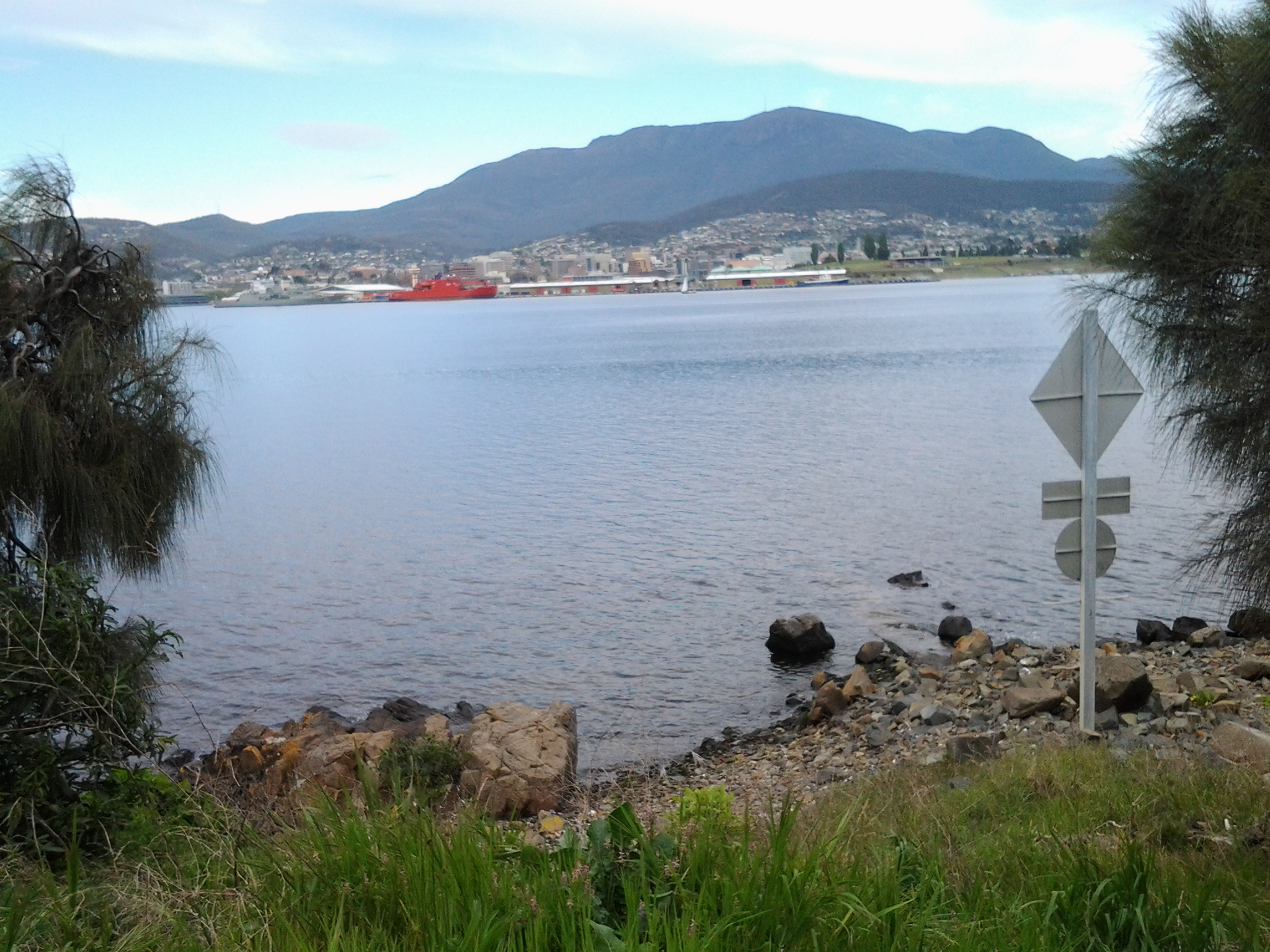
A few days ago I posted the story that the ‘navy had come to town’. The photo below looks across the River from a place between Rosny Point and Montagu Bay and shows the grey green HMAS Arunta to the left of the orange Aurora Australis Antarctic icebreaker. Oh, and by the way, I discovered the Commander of this naval ship was once responsible for the HMAS Derwent.

20141010_094333

Close to 10am, I reached the Derwent River corner of Montagu Bay.  Harsh sounds filled the air; very vocal wattle birds and the growling of power brakes used by large trucks on the Tasman Bridge. From here, I had the choice to walk 200 metres up to the Rosny Hill Lookout. However, I continued on towards the heart of Montagu Bay past a clutter of upturned dinghies partly hidden in the bushes by the shore. By 10.05am, I was out of the forest and soon passing Langdon’s Welding shop on the left with workers out repairing some boats. By the Trail, I noted a large nectarine tree filled with the start of new fruit and made a mental note to walk this way in December when the fruit should be ripe.

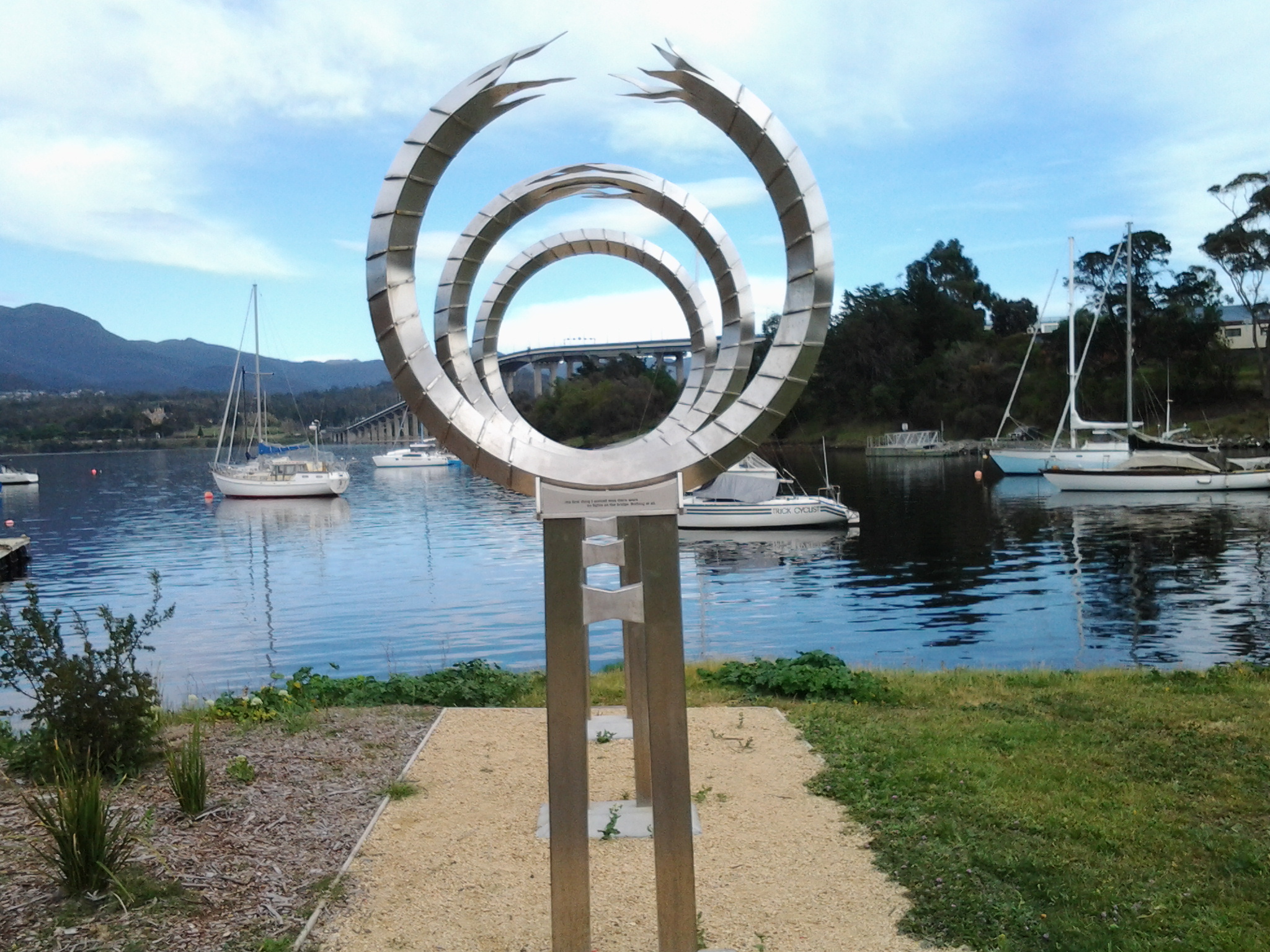
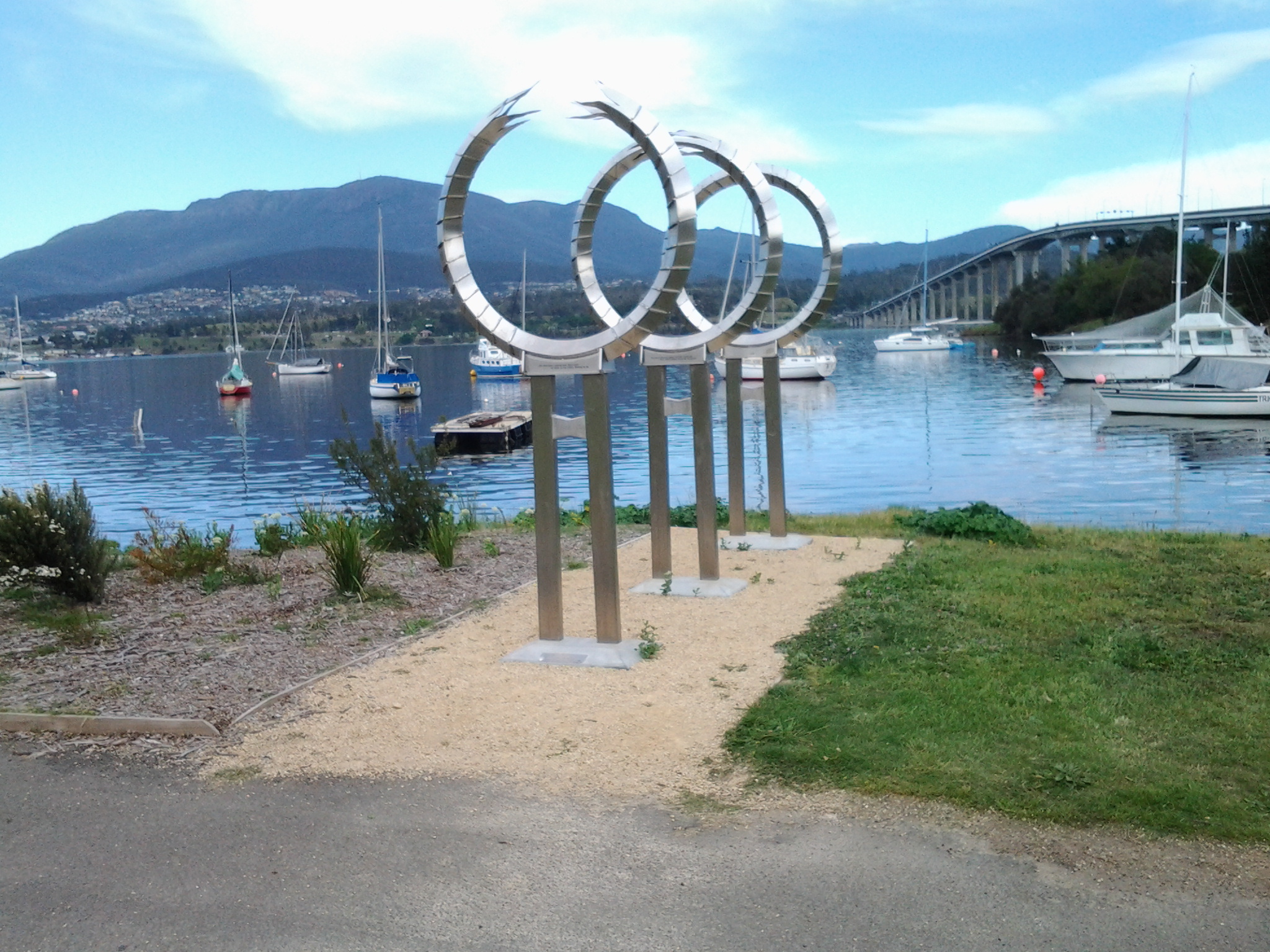
At Montagu Bay I was stopped by an elegant contemporary public sculpture (unknown artist) which I did not know existed.  Well worth a visit. This was the Memorial to those who lost their lives when the Tasman Bridge crashed in 1975. Have a look at the photo below.

20141010_100906

The idea is that you look through these circles to pin point the part of the bridge which collapsed.  An information board provided additional information on this tragedy.

20141010_100832

The view across the Derwent from Montagu Bay was magnificent.

20141010_100852

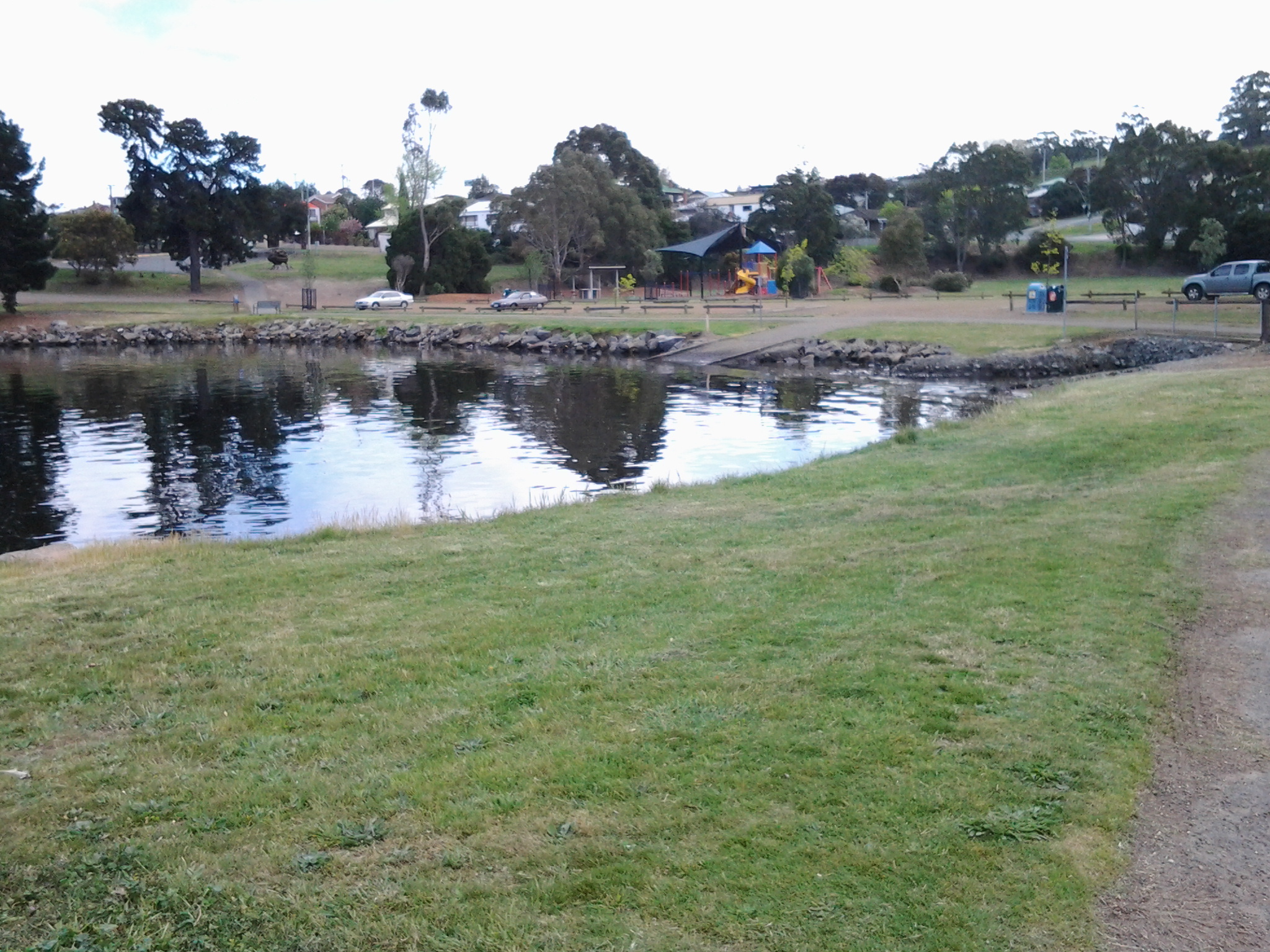
Public Toilets are located near the Montagu Bay Reserve parkland area. This area is one of many that are child friendly with kids play equipment for free use.

20141010_100923

300 metres along the Clarence Foreshore Trail after passing huge old pine trees, massive gums with fanciful ‘painted’ bark trunks, then the Montagu Bay Primary School on the right, I reached the Tasman Bridge which I walked beneath to continue towards Rose Bay. The time was 10.20am.

Buses for walking the Derwent – Rosny to Geilston Bay and back to Rosny or Hobart

The website for Metro Tasmania is http://www.metrotas.com.au. When you get onto the bus you should ask for a DayRover bus fare so that you can get one ticket to be used on and off buses throughout the day.

Getting to Rosny Point

Only bus number 670 travels from Hobart city to Rosny Point but this only occurs late in the afternoon.  Therefore, from the city centre bus mall in Elizabeth St, Hobart take any bus travelling to the Eastlands Shopping Centre bus mall, Rosny Park. Please be aware not every bus that travels over the Tasman Bridge to the eastern shore of the Derwent River comes through the Eastlands Shopping Centre bus mall, but most of them do.  Consider buses numbered 605, 606, 608, 613, 614, 615, 620, 625, 638, 640, 642, 643, 644, 646, 648, 650, 652, 660, or 662. However, I recommend you always ask the driver for confirmation.

From the Eastlands Shopping Centre you have two choices to reach Rosny Point; bus number 670 (Rosny Park to Hobart City) or 675 (Rosny Park to Rosny Park Loop).

Once in the Rosny Point area, get off either at bus stop 20 or 21. Then take the road that travels down to the water from between these two bus stops. Continue walking along the road and eventually it clearly changes to the Clarence Foreshore Trail. This Trail is sometimes marked with a sign naming it. At other times the un-signposted bitumen or concrete pathway, with a broken white line marked down the length, indicates to walkers and cyclists to keep to the left hand side of the path. The Clarence Foreshore Trail continues along the Derwent River in various styles until Geilston Bay, and includes some road walking without the pathway. Along the way it is possible to stop the walk and access various buses.

Leaving from Montagu Bay if you wish

Both the 670 and 675 travel through the suburb of Montagu Bay so, having rounded the Rosny Point and arrived at Montagu Bay, it is possible to catch a bus either back to the Eastlands Shopping Centre, or to Hobart city.

Leaving from Rose Bay if you wish

Once you have left Montagu Bay and walked under the Tasman Bridge, you are in the area of Rose Bay.  To access a bus you would need to walk along the Clarence Foreshore Trail for some distance (perhaps 20 minutes) then walk up and away from the Derwent River until you reached the East Derwent Highway which runs somewhat parallel to the River. To bus back to Hobart, you should cross this Highway and wait at a bus stop on that higher side.

Leaving from Lindisfarne if you wish

Continuing onto Lindisfarne and its Bay, four buses regularly pass along the East Derwent Highway. In addition, two buses travel down the main street of Lindisfarne’s village (Lincoln St).

Departing from Geilston Bay

At Geilston Bay there are no buses at the wharf. Two choices: to walk up to Derwent Avenue through the suburban streets south of the Bay and find a bus stop along this road or, as I did, walk for 8 minutes to the East Derwent Highway along De Bomford Lane. Cross the road when you reach the Highway. Wait at bus stop 14 located left from De Bomford Lane on the Highway. If you do not cross the road you will end at the outer Greater Hobart Area suburb of Risdon Vale.

Walking the Derwent from Rosny Point to Geilston Bay – Stage 5 October 10th

A maximum temperature of 20 degrees but with a 70% chance of rain was Friday’s weather forecast.  However, I was so desperate to get out and walk another stage that I decided to brave whatever today would throw at me. I am delighted to record that only sunshine between partly clouded skies and the occasional warm breeze greeted me for the 4 and ¼ hours I was away from home.

First up, I was the only passenger to catch the 9.15am Metro bus number 675 to Rosny Point from the Eastlands Shopping Centre at Rosny (Note: this bus started at Eastlands and not from Hobart. Refer to my next posting to understand the range of bussing options for today’s walk).  Soon after passing Rosny College, the tennis courts and Bowling Club on the left in Bastick Street, I got off at bus stop number 21. I walked down Seabird Lane; this road angled down off Bastick Street between bus stops 20 and 21 and went along closer to the water of Kangaroo Bay. Seabird Lane leads into a continuing Clarence Foreshore Trail that passes along close to the River through the five suburbs: Rosny, Montagu Bay, Rose Bay, Lindisfarne and Geilston Bay. Later postings will detail how the quality of this path changes from one where a person in a wheelchair could comfortably navigate the Trail to other sections where a mountain bike would be more useful. I will also provide information about the challenges of lack of directions on and off the Trail from time to time.

Walking Time

The walking time between the point of Rosny Point and the point where the Derwent River meets the entrance to Geilston Bay is approximately 2 hours and 20 minutes. However, if you decide to take this walk, then in order to get to the starting point by bus from Eastlands and leave the Geilston Bay area by bus, the total walking time will be around 3 and ½ hours.

Walking distance

Today I walked approximately 12 kilometres, but this distance covered only 3.5 kms of the River length. Previously I had covered 19.5 kms of the length. Now I have achieved a total of 23 kms of the Derwent River.

Favourite photo

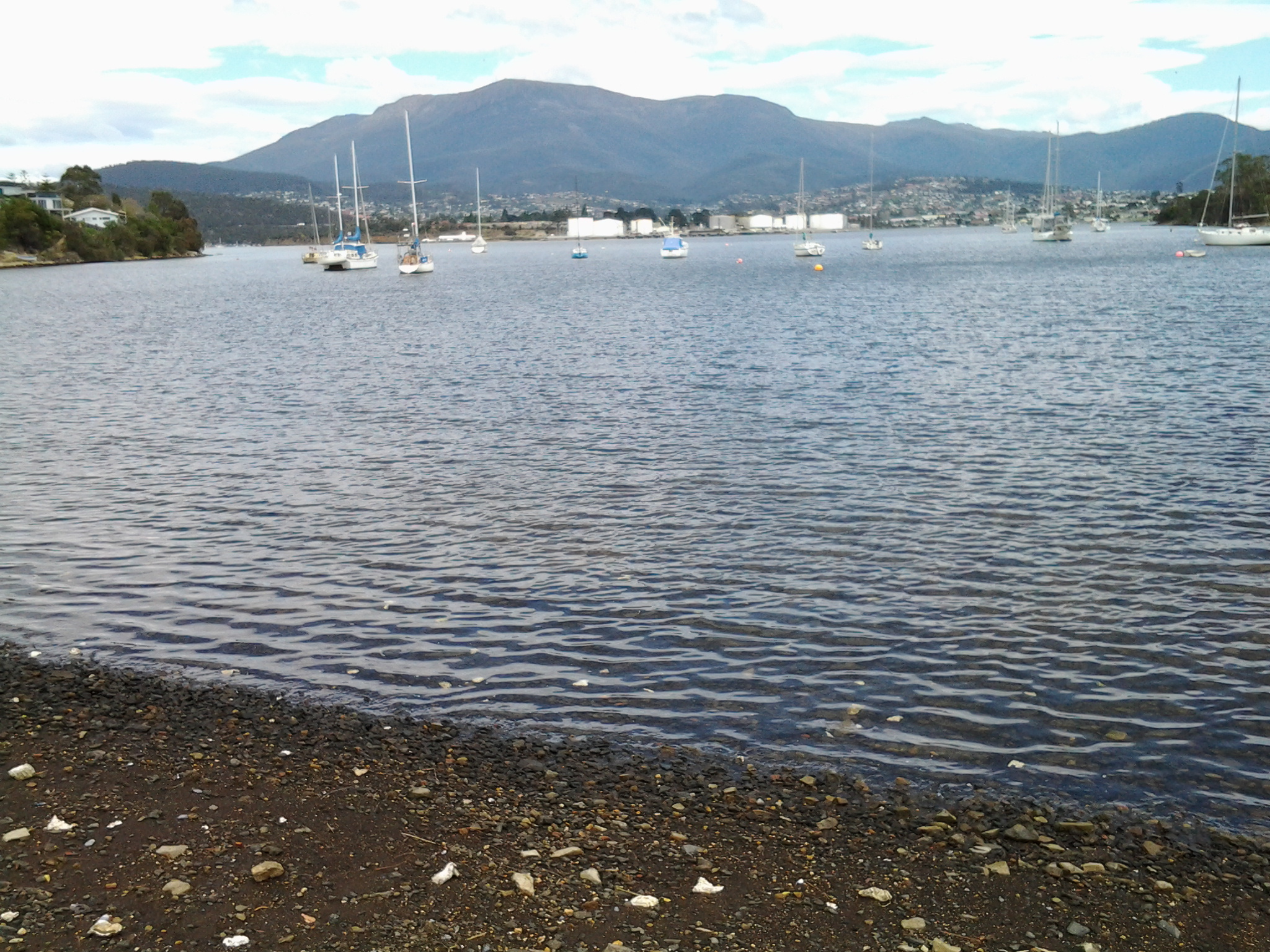
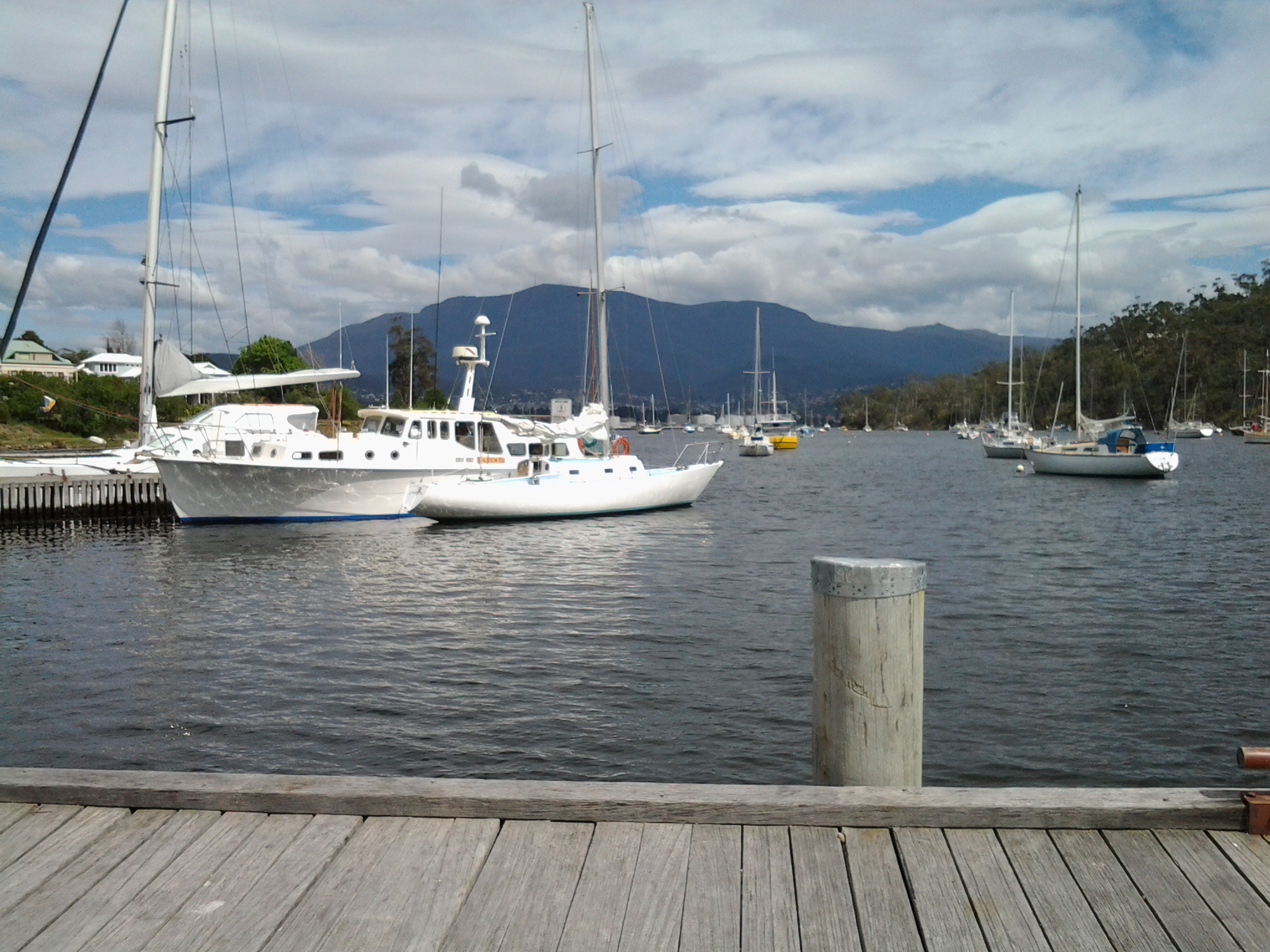
The photo below is my favourite from today’s walk. I clicked it while sitting eating my lunch on the wharf at Geilston Bay. The water reflections on the bow of the yachts on the left were sparkling, and the blue mountain provided a rich and colourful contrast in the background. Experiencing Geilston Bay for the first time was a treat. The starting point for Stage 6 of my walk along the Derwent River will begin here, so I look forward to seeing the place in the early morning light next time.

20141010_122959