Tag Archives: Tasmania

From the sea to the source; stories of a river on the other side of the globe

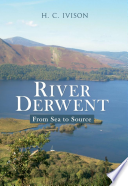
Two years ago, Helen Ivison published River Derwent: From Sea to Source (Amberley Publishing).

 Ivison River Derwent

 The promotional puff declares this book ‘brings to light tales and stories of fascinating events, landmarks and people. River Derwent: From Sea to Source is essential reading for anyone who knows this river well, and also for those who are visiting the River Derwent for the first time.’  But what is the author referring to?

Hers is the Derwent River in the Cumbrian region of England which flows from the mountainous Lakes District in two strands, one of which starts near Styhead Tarn. The two strands meet at Grains Gill, and continue in a north easterly direction as a single river towards an expanse known as Derwent Water. The river passes through this ‘lake’ then eases into a north westerly direction across country before flowing onwards through Bassenthwaite Lake. Finally, the English Derwent River turns westwards and empties into the Irish Sea.

By contrast Tasmania’s Derwent River flows generally in a south easterly direction from Lake St Clair, through steep narrow gorges, curving around farmlands, before passing between the two sides of the Greater Hobart Area into Storm Bay. The man-made lakes of Lake King William, Wayatinah Lagoon, Lake Catagunya, Lake Repulse, Cluny Lagoon and Meadowbank Lake all disrupt the progress of the River. These lakes have resulted from dam building as part of hydro-electricity generating projects over the past century.

Wilderness – what is it?

The word ‘wilderness’ has different meanings depending on context. Dictionaries offer a range of similar meanings:

  • An uncultivated, uninhabited, and inhospitable region. Neglected or abandoned.  A large area of land that has never been developed or used for growing crops because it is difficult to live there. (Oxford)
  • An unsettled, uncultivated region, especially a large tract of land that has not been significantly affected by human activities. A barren or desolate area; a wasteland. Something characterised by bewildering vastness, perilousness, or unchecked profusion. (The Free Dictionary)
  • A wild, uncultivated region, usually where humans do not live. Any desolate tract or area. (WordReference.com)
  • A tract or region uncultivated and uninhabited by human beings. An area essentially undisturbed by human activity together with its naturally developed life community. An empty or pathless area or region. (Mirriam Webster dictionary)

From Old English used in the 13th century, the word ‘wilderness’ is derived from wild dēor ‘wild deer’, wilddēoren ‘wild beasts’, and from wildēornes, ‘land inhabited only by wild animals’. From Middle English, wildern is ‘wild’.

Reflecting on these varying definitions, I realise some of the meanings ring true particularly in relation to the land along the Derwent River between Lake Catagunya and Derwent Bridge (I anticipate this part of the River will take at least 8 days to walk, over three stages).

Lake Catagunya to Derwent Bridge

The sides of the River will be uncultivated and uninhabited. Its dense forest, littered with generations of massive tree falls, will make some sections relatively inhospitable.  The only markers of human kind will be parts where old growth logging has or is occurring, and where the infrastructure associated with dam construction across the Derwent River has occurred and is being maintained.  The area will not be barren, desolate (although I might feel desolate when penetrating some of the denser bush hour after hour), and it is not neglected, abandoned nor a wasteland.  This wilderness will be rich with flourishing flora and fauna, have profound connections with the original indigenous population pre-European settlement of Van Diemen’s Land, hold a social history with the settlers who moved inland in the 1800s and 1900s, and include an occasional contemporary history with photographers, tourists and fishermen.

The United States of America has proclaimed special legislation. ‘The Wilderness Act bans all kinds of motors, roads, and permanent structures from large tracts of American territory. It provides a legal definition of wilderness, as land that’s “untrammelled by man” with a “primeval character and influence”.’  You can read more at this site.  What is the Australian situation?

The Wilderness Society of Aus logo

The Wilderness Society of Australia summarises our state-based rather than national legislation in relation to the wilderness. ‘Dedicated wilderness legislation exists in NSW and SA, which allows the nomination, assessment, declaration and management of wilderness. In other States, such as Victoria, Queensland, WA and the ACT, management of wilderness is provided for under general nature conservation legislation, with varying degrees of usefulness in terms of actually ensuring identification and appropriate protection.’

In Tasmania we have a range of legislation including the most recent Tasmanian Forest Agreement Act that was negotiated to include the requirements of the Tasmanian Wilderness World Heritage Area (TWWHA) – that is, those parts of Tasmania which have been recognised with World Heritage listing for their natural and cultural heritage that is important to the world community.  Tasmania’s Nature Conservation Act talks about biological and geological diversity, and historic sites and provides regulation for our fauna (and strangely it also covers animals which do not live in Tasmania such as dingos and wolves) and flora. The word ‘wilderness’ does not appear.

stock-photo-64271807-walking-boot-and-bike-tread-marks-on-muddy-trail(Image is a free iStock photo)

The land on which I will walk has been walked for thousands of years originally by our indigenous ancestors and more recently by their descendants and European settlers. However, there will be parts on my trek which will not have had many footfalls because of the isolation and the forest density.  Unless there was a purpose such as surveying the Derwent River as part of planning to build dams, sensible people would travel from Lake St Clair towards the coast  via the region around the township of Ouse, or by more hospitable routes. With or without the word ‘wilderness’ being written into our state legislation, much of the inland edges of the Derwent River edge are undoubtedly genuine wilderness.

The weather in southern Tasmania

The early non-indigenous settlers in Van Diemen’s Land (now Tasmania), almost all of whom were formerly residents of the typically rainswept and cool British Isles or had lived in hot India, documented their thoughts on the weather.

Their descriptions of our weather were usually based on comparisons with the situation from which they had relocated. Generally the impression given is that the weather on this island is temperate, irritatingly variable, and considerably easier to live with compared to that experienced in the settlers’ original homelands. For example, in James Bischoff’s “Sketch of the History of Van Diemen’s Land” written in 1832, there are many references to the climate and its relationship to agriculture and animal husbandry. More generally he says: ‘To one accustomed to the moist climate and plentifully watered countries of England, Scotland, and Ireland, Van Diemen’s Land, at first sight, may present a dry and unproductive appearance; but upon a nearer acquaintance, it will put on a more inviting aspect.’  It was ‘the regularity and salubrity of its climate’ which Bischoff found attractive.  The author also claims that ‘A book was published at Calcutta, in 1830, giving an account of Van Diemen’s Land, principally intended for the use of persons residing in India, and shewing the advantages it holds out to them for their residence; the following is extracted from that work: Its climate seems so well adapted to the renovating of the constitution of those who have suffered from their residence in India, that it only requires to be pointed out, and the easiest manner of getting there made known, as also the cheapness and comfort of living, when there, to turn the tide of visitors to the Cape and the Isle of France, towards its shores.’

Godwins Guide to Emigrants to VDL

Godwin’s “Emigrants Guide to Van Diemen’s Land more properly called Tasmania held in the collection of the State Library of Victoria, written in 1823, offers the following: ‘This island has to boast of perhaps the most salubrious and congenial climate of any in the known world, for our European constitution: It has been ascertained by the thermometer to be similar to that of the south of France; the general temperature being about 60 degrees Fahrenheit, and the extremes from 43 to 80 degrees. The spring commences early in August, the summer in November, the autumn in March, and the winter in May. The winter, therefore, is not of more than three months’ duration, and the severest part only six weeks.’

Ros Haynes writes on a University of Tasmania site in 2006 ‘In most areas there was adequate rainfall, the climate was more conducive to growing the crops they were used to …. The temperature was also considered more invigorating than the heat and humidity that enervated settlers in the other Australian colonies. Van Diemen’s Land was soon marketing itself as the ‘Sanatorium of the South’, famous for its flowers, fruit and healthy inhabitants.’

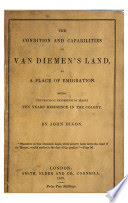
Dixons cover

John Dixon, in his 1839 book (available as an E-book) “The Condition and Capabilities of Van Diemen’s Land, as a Place of Emigration: Being the Practical Experience of Nearly Ten Year’s Residence in the Colony“, explained, ‘Lingering illness is seldom heard of in Van Diemen’s Land: and, in consequence, the deaths always seem to be sudden.  These seeming sudden deaths may contribute to praise of the climate: for they may improve its salutary influence, by sustaining the body in health longer there, than in the climate of another country.

These days we would describe our climate as being cool temperate with four distinct seasons. However, across the island, our temperature and rainfall ratings vary according to topography, nearness to the coast and time of the year.  Despite Tasmania’s capital city Hobart being the Australian capital city located closest to South Pole, it is known as the nation’s driest capital city.  By contrast, parts of the west coast of Tasmania expects rain for more than 300 days each year – I lived in Queenstown once and it rained for three weeks straight leaving me feeling very sun deprived.

Helpful tip

When you visit Tasmania for the first time, you will find any and everyone will be happy to talk with you about the weather – for many minutes at a time.  Such conversations may help you to make new friends.  However, please avoid some pitfalls. If you normally live in a super cold climate it may not be appropriate to say our weather is so mild and lovely here, when powder snow tops our mountains in the distance and light drizzle saturates the ground – because we may not think highly of the weather under those circumstances.  Similarly if you come from a very hot climate it may not be appropriate to say the weather is so gorgeously moderate here when we have a 35 Celsius degree day, because it is likely we will consider that to be a hot day. I guess we all have our peculiarities.

Australian stamping grounds

Blog reader, Ju, surprised me with an unexpected gift; a freshly minted set of postal stamps.  Recently Australia Post released the set noting 4 Great Australian Walks: The National Pass in New South Wales, the Cape to Cape Track in Western Australia, the Larapinta Trail in the Northern Territory, and the Overland Track in Tasmania.

20150804_173448

On each of the four gloriously coloured stamps, a photograph of an iconic landscape represents each Walk. On the edge of each stamp, a white featureless body with a pack-on-the-back shape represents one or more people walking. Mentally you can pop yourself into the body and become that walker.

20150804_173629

The image for Tasmania’s Overland Track is Cradle Mountain. This marks the commencement in northern Tasmania for the 60km walk which winds southwards and ends at Lake St Clair (regular blog readers know the southern end of that Lake is where the Derwent River commences its life).  I walked the Overland Track in 2006 and strongly recommend it to others; leisurely – over 6 days with walks off the main path and plenty of time to soak in the atmosphere.  I remember that when I saw some of the mountains on the west coast of Tasmania way in the distance, I realised Tasmania was not so large. I thought it would be possible to walk across this state from the east to the west but I have not pursued that idea. Yet.

20150804_174429

Looking across to Cradle Mountain and beyond, and at its reflection in the pristine Dove Lake at its feet, I can see a light powdering of snow.  Currently, snow is very topical.

Over the past few days, Hobart and the rest of Tasmania have received loads of snow the likes of which hasn’t been seen here for 30 years.  News and social media are brimming with sensational photos many showing the thrill of this unusual flurry: for example, http://www.abc.net.au/news/2015-08-03/snow-across-tasmania-forces-many-key-road-closures/6666838 and http://www.news.com.au/national/tasmania/cold-brings-warnings-and-snow-wonder/story-fnn32rbc-1227467164313.

Most appropriate for this blog about Walking the Derwent, is the photo I found of The Hungry Wombat Café at Derwent Bridge (the township at the southern end of Lake St Clair to which I will walk sooner or later). When you look at the photo below (taken from the website above), you will understand why I am not walking inland at the moment.

Snow at The Hungry Wombat Cafe Derwent Bridge 030815

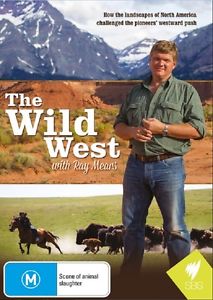
Wild West with Ray Mears

Blog reader, Be, alerted me to the third in a BBC program series, ‘Wild West with Ray Mears’. This episode focused on mountains and followed Mears travelling through the Appalachians, the Rockies and the Sierra Nevada to evaluate the landscape and its effect on the early European settlers as they moved west in North America.  Be indicated there was river edge walking and this reminded her of my quest to walk along the Derwent River in Tasmania – so I was eager to watch the documentary.

Ray Mears and Wild West DVD cover

I found that Ray Mears did access various rivers and streams to emphasize parts of his story, but direct connections to my walking project were slight. However, I found his story to be important because it has prompted me to ask new questions about the Derwent River and its most recent European settler history.  Hopefully others have already conducted research and can supply me with some answers – any leads will be welcome.

  • After initial settlement in Van Diemen’s Land at Risdon on the Derwent River in 1803, what was the nature of the westward push along the Derwent River by European settlers? Do we have names of the people and families of those who moved west? What are the dates associated with these movements?  What are their stories?
  • Why did they move along the River? Did they stop and set up camp, house or agricultural property? Do those buildings or farming properties still exist?  Is the land now in private or organisational hands or is it Crown Land? Or were people only passing through?  If so, what was their intended destination? Did people moving inland along the Derwent find some parts of the wilderness edging the River made their further progress impossible so that they moved away from the River? What are the movement stories?
  • To what extent was the River used for transport between Lake St Clair and New Norfolk? Where and when? What was transported on the River? Can anyone name ships/boats that were used? Were there recognised ferries across the River above New Norfolk?  I know the Derwent River has a series of rapids further towards the source.  Did these inhibit river travel?
  • In the rivers of the United States’ Rockies mountains, the ‘mountain men’ trapped beavers for their fur. Their fur was used to create a strong felt which could be used for those increasingly tall hats that were fashionable in the 18th century. What was the nature of any trade in possum skins and those of other animals that might have persuaded hunters to walk the Derwent River?  What are their stories?
  • Massive removal and usage of natural resources supported the westward movement of European settlers across America. When did forestry operations and logging commence west of Hobart in the Derwent Valley and how was the Derwent River used to support those operations? What mining expeditions and investigations were made along the Derwent River? When and by whom?  What were the outcomes of these searches and trials and finds?

Ray Mears met with a muleteer who explained why he loved being in the wilderness: ‘I leave no trace as I pass and just move through like a shadow’.  I hope that is how I walk.

A traveller – at the Salamanca Market set up by the Derwent River

Since April I have been waiting for the weather to warm up so I can continue my walk to the source of the Derwent River more comfortably. Between then and now my posts have connected with the Derwent River by various degrees. This posting is no different. Months ago I walked past historic Salamanca in Hobart as I walked the edge of the Derwent River and last Saturday, I headed back again to the area for the renowned Salamanca Market.

The big find was an Englishman who has relocated to live in Tasmania and had set up a stall to sell his book.  A few years ago his Tasmanian wife lured him here for a holiday and when she flew back to England, he decided to return by hitching his way half way around the world.  After starting from Hobart by accepting a lift on a Sydney to Hobart Yacht Race yacht returning to Sydney, his trek took 6 months via the countries north of the Himalayas.  Apparently it only took 800 rides, through 19 countries! Out of the adventure and experiences Jamie Maslin wrote his story: ‘The Long Hitch Home’.

The Long Hitch Home Jamie Maslin book cover

In more recent times, Jamie has relocated to Hobart for permanent residence.

Past posts have indicated my awe and amazement about the achievements of people who take on, what seem to me to be, herculean tasks – These always excite me to make yet another step.  Inspiring others to make the first step in their own backyard is one of the goals of this ongoing blog.

Where will I find authentic and reliable information about Tasmania’s aborigines prior to 1803?

This question has been asked because I am not concerned with researching European settlement or its impact on Tasmania’s indigenous population.

It seems that three categories of information sources might be used for my study:

  1. the written/printed word,
  2. material anthropology, and
  3. oral histories. Such histories might exist in association with the continuance of authentic movements such as dance and sound making.

As stated in an earlier post, the original settlers in Van Diemen’s Land, the descendants of non-indigenous peoples, and other non-indigenous people have left historical written/printed documentation. In addition, exploring visitors to this island before European settlement made written records. Each of these writers will have their own perspective, and so my challenge will be to remember what they write is not necessarily a fact. This means I will need supporting and corroborating evidence of other kinds; material artefacts and/or oral histories.  I do not expect to find any early 19th century documentation written by Tasmanian aborigines – but I would be very excited to read such records if I should find them.

James Joyce, in his essay “Fantasy Island” (Manne, 2003, Whitewash Black Inc. Agenda, Melbourne) refuted the evidence of Keith Windshuttle’s book (2002, Fabrication of Aboriginal History: Volume One, Van Diemen’s Land 1803-1847 Macleay Press, Sydney) when he declared ‘Windshuttle can impose his contemporary conclusions on Van Diemen’s Land history only by limiting the selection of sources …’.  Joyce’s position reminds me to stay focused and to explore broadly.

At the moment, I have started working through a mountain of freely available reference material seeking clues as to what I might need to follow up with careful research.  As yet, I have found very little that pertains to the Derwent River. These are early days during which I will come to an understanding of the limitations and challenges of my project.

The scope of my research into Tasmanian aboriginal history

My last post generated lots of interest so this post should clarify my intentions.

Principally, I plan to gather information about the aboriginals who frequented the area along the Derwent River, from the mouth to the source of the River. My research aims to collect and collate reliable and authentic information about the life of the indigenous communities prior to European settlement in Van Diemen’s Land/Tasmania.  In so doing, I hope to be able to understand the value of the River to early indigenous peoples, as well as the way the topography influenced their lives.

This study will not consider –

  • interactions with new settlers, convicts or any other non-indigenous person
  • the effect of European settlement on the lives and practices of the indigenous community
  • the history of mainland indigenous peoples

I suspect I may be challenged to present a ‘before and after 1803’ scenario of the situation for aboriginals.  Others have researched and written on this aspect generally although not specifically focused on the Derwent River, and I am seeking a fresh perspective which is not encumbered by conflict with European settlers in early Van Diemen’s Land.

The periods of history about which I want to collect information, are –

  1. before European settlement
  2. at the moment of European settlement in 1803
  3. some years after 1803 to later in the 19th century – this is deliberately loose to allow for non-indigenous people many decades later who have a first-hand experience, to contribute any information they have about any authentic aboriginal practices – but I will only be looking for those indigenous practices which do not seem to have been altered as a result of European settlement.

This quest will occur intermittently because it will compete with the priorities of my other projects and commitments.

Lake St Clair and architectural awards

Previous posts have introduced the re-purposed Pumphouse that sits proudly in the centre of Tasmania.  When blog follower Ju alerted me to the 2015 Tasmanian Architectural Awards I was keen to follow up. I found the new buildings at Pumphouse Point on Lake St Clair won this year’s Commercial Award. You can glide over the glorious photographs at http://wp.architecture.com.au/tasawards/2015-awards/commercial-architecture/commercial-architecture-pumphouse-point/. The accompanying information includes words such as art deco, Tasmanian Wilderness, heritage, World Heritage Area – I hope these focussed your attention as they did mine.

Complete with 18 guest suites, a communal lounge area and a shared dining area, I find this development very attractive.  When I checked the website (http://www.pumphousepoint.com.au/) imagine my surprise to discover that of the 18 accommodation spaces very very few remain to be booked over the coming weeks.  Popular!!!  Yes.

I plan to stay for one or two nights as my reward for completing the walk along the Derwent River to Lake St Clair – one day when that happens (bring on the warmer weather!).  Can you blame me?

40 degrees south

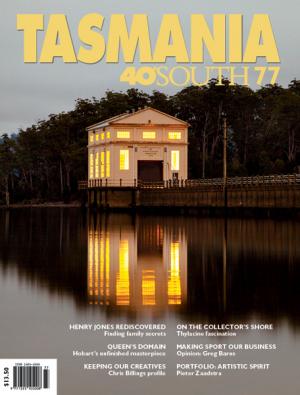
The iconic magazine produced in, by and about Tasmania is Tasmania 40° South.

Details about the latest issue can be read at http://www.fortysouth.com.au/back-issues/issue/77. One current story highlights the cleverly re-purposed Pumphouse at Lake St Clair (the end goal for my walk along the Derwent River). The accompanying photos include mirror quality reflections across the lake – simply stunning.

Tas 40deg south mag cover

Each issue of the magazine showcases the wonders and diversity of Tasmania, the stories are always well written and accompanied by magical photographs.

It is possible to subscribe and receive each quarterly issue through the post, or purchase electronic issues – go to (http://www.magzter.com/AU/Forty-South-Publishing-Pty-Ltd/Tasmania-40%C2%B0South). For people planning to visit or to move to and live in this state, obtaining copies of this glossy magazine is a must. The information will inspire and orient you. Also, it will provide something wonderful to show friends and relatives.

While Tasmania may be located remotely at one edge of the world before the southern polar cap, it is an Australian state with startling natural beauty, a flurry of surprising international and community festivals throughout the year, clean air, the freshest of sea and land food, a rich and complex cultural scene, beautiful remnants of heritage listed architecture, and short travel times with easy access within the cities and throughout regional areas. In addition, Tasmania boasts valuable educational institutions (for example, our University of Tasmania is ranked in the world top 100 universities in the disciplines of Earth and marine sciences, top 150 for Agriculture and forestry, top 300 for Law and top 400 for Medicine).

Many residents and visitors to the state are lifted by a sense of vibrancy and vitality from the opportunities which Tasmania offers.  Technological and communication access to the world is a given from Tasmania, and a number of airlines fly in and out of Tasmania all day throughout the year.  In other words, we are easily connected to the world – when we are not out and about in Tasmania eating world class meals, participating in all manner of sports, or discovering more of the natural environment by walking, cycling, driving, swimming, diving, fishing or flying. Oh yes … and some of us work.

If you are wondering where the magazine title came from, consult your maps or have a look at https://en.wikipedia.org/wiki/40th_parallel_south.  You will see that the latitude of 40 degrees south passes through King and Flinders Islands the two most northern islands of Tasmania and therefore that line of latitude marks the northern extremity of this Australian state.

I wonder who of my blog readers, apart from Tasmanians, live somewhere near 40 degrees South (New Zealand, Chile, Argentina?).  And how many readers are living at 40 degrees North?

Piguenit – artist extraordinaire in southern Tasmania

The 19th century lady who wrote her story of a walk from Trial Harbour to Ouse (refer https://walkingthederwent.com/2015/06/20/a-story-of-a-walk-in-19th-century-tasmania/) mentioned Tasmanian artist William Charles Piguenit in her record of the events.

‘… had our first near view of the various peaks of the West Coast Range. From here we kept on rising till we reached the Government hut, 1,500 ft above and 15 miles from Strahan.  Here the first of a series of magnificent views met our eyes; beneath us lay a deep valley, forest clad for miles, and beyond, stretching as far away as the eye could reach, lay the range, its rugged peaks standing out sharply against the sky.

How it makes one long for the brush of a ready painter, to be able to place on canvas at least something to keep one’s mind fresh with the remembrance of all this beauty. Mr Piguenit is, I believe, the only artist who has devoted his time and labour to this district, and the results of his work are to be seen in the pictures now hanging in the Art Gallery of the Hobart Museum, and certainly the next best thing to visiting the West Coast is to see Mr Piguenit’s pictures of different scenes in that region.’

The collection of the Tasmanian Museum and Art Gallery (TMAG) contains a substantial number of his oil paintings.  Years ago I was employed by TMAG as an attendant and stationed in the upstairs ‘colonial’ gallery where the 19th century paintings were hung adjacent to marble sculptures and rare examples of early Tasmanian wood furniture. Back then I was a student of art history, and the establishment deemed me to be the expert amongst their collection of gallery attendants. They felt sure I would be able to help any visitor with enquiries about the collection on show.  One whole end of that 19th century gallery space was devoted to the work of Piguenit.  With much time on my hands to study each work of art, I fell in love with his dramatic descriptions of remote Tasmanian wilderness. But most surprising was that many of the very large oils, surrounded by beautiful carved frames, were compositions of the landscape in many gradations of grey when Piguenit had only chosen to use black and white paint.  Gloriously glossy. Unexpectedly stunning.  Tasmania’s inland environment had never been seen by most people (and still hasn’t been).

It was a surprise to me that I can only find online reproductions of these great paintings in a TMAG published catalogue raisonne of the work of William Charles Piguenit (http://www.tmag.tas.gov.au/__data/assets/pdf_file/0017/73142/piguenit_catalogue.pdf). Unfortunately, the document is incomplete and the images are very poorly reproduced – this booklet does the artist a great disservice. When faced with the paintings, the oils are truly majestic and have a similar power to mountainous work by artists such as Eugen von Guerard, Casper David Friedrich, and those from the Hudson River School such as Frederick Edwin Church.

The collection of the Art Gallery of New South Wales in Sydney holds some of his work including the following paintings (in coloured oils) which show aspects of Lake St Clair (the source of the Derwent River and the goal of my walk).

Mount Ida, Lake St Clair, Tasmania c1881

AGNSW Mount Ida Lake St Clair Tasmaniac1881

Mount Olympus, Lake St Clair, Tasmania, the source of the Derwent 1875

AGNSW Mount Olympus Lake St Clair Tasmania the source of the Derwent 1875

From the Nile River in Africa to the Derwent River in Australia

The Nile River in Africa and the Derwent River in Tasmania Australia.  On two different sides of the world.

Q.     What connects these two rivers?       A.     Agatha Christie

You gasp.

In 1922, the now-world renowned detective fiction novelist Agatha Christie took herself on a ten-month Grand Tour of the British empire, including South Africa, Australia, New Zealand, and Canada. Previously she had spent time in Egypt with her mother in 1910. Her travels helped flesh out details for many of her ‘who-done-it’ mysteries.

For those of my blog followers who have not been devotees of Hercule Poirot, I recommend you read Agatha Christie’s story of Death on the Nile written in 1937, visit the theatre to see Murder on the Nile the 1944 play based on the novel, or watch anyone of the many films that have been produced based on this story. I would be surprised if you cannot access something on the internet.

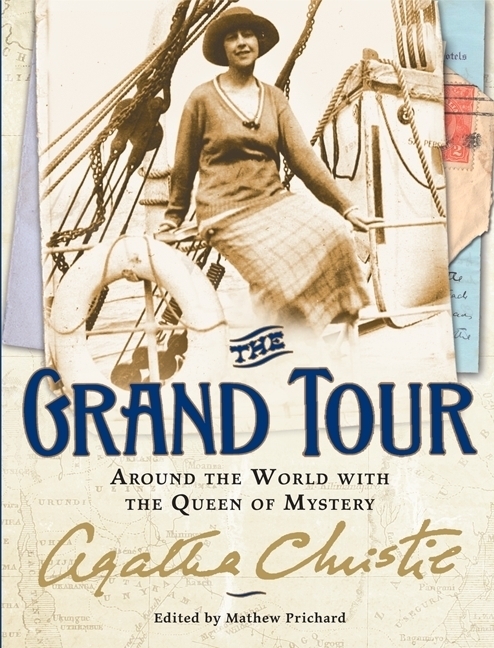
The correspondence of her travels has been collated into the publication The Grand Tour: Around the World with the Queen of Mystery.
 Grand Tour Agatha Christie bookcover

In this book we can read “From Australia we went to Tasmania, driving from Launceston to Hobart. Incredibly beautiful Hobart, with its deep blue sea and harbour, and its flowers, trees and shrubs. I planned to come back and live there one day. From Hobart we went to New Zealand.” Agatha Christie is, of course, referring to the expansive harbour on the sea end of Tasmania’s Derwent River.  She was also making a typical mistake that some mainlanders and most international tourists make. Tasmania is still part of Australia, even though it is a large island to the south.  So, when she left Sydney New South Wales Australia, I suspect Agatha sailed into Launceston Tasmania Australia.

A book reviewer at http://www.amazon.com/The-Grand-Tour-Around-Mystery/dp/006219125X: remarked “The Grand Tour is a fascinating collection of never before published letters and photographs detailing Christie’s travels around the British Empire in 1922. Most of the letters were sent to her mother and included photos taken with Christie’s own camera as well as newspaper clippings and various memorabilia. This collection is an insight into the thoughts and mind of a young Agatha Christie who had just published two novels and would later become the most widely published author of all time. She and her husband, Archie, embarked on a year-long voyage as part of a promotional trade mission, so there was work involved as well as various obligations as they visited South Africa, New Zealand, Hawaii and Canada. Her letters to her mother were, of course, candid which for this reader greatly added to their charm. I especially enjoyed Christie’s slightly wicked sense of humour, such as when she describes a fellow passenger as “the only young thing on the ship, but although very pretty, is a terrible mutt.” Her observations of both people and places are acute and fascinating to read.  Mathew Prichard, Christie’s grandson, has done an excellent job of collecting, editing and introducing these letters. We are in his debt for The Grand Tour reminds us that Christie was not only an outstanding author but a remarkable woman as well.”

The back cover of the book records:

“In 1922 Agatha Christie set sail on a ten-month voyage around the world. Her husband, Archibald Christie, had been invited to join a trade mission to promote the British Empire Exhibition, and Christie was determined to go with him. It was a life-changing decision for the young novelist, a true voyage of discovery that would inspire her future writing for years to come.

Placing her two-year-old daughter in the care of her sister, Christie set sail at the end of January and did not return home until December. Throughout her journey, she kept up a detailed weekly correspondence with her mother, describing the exotic places and the remarkable people she encountered as the mission travelled through South Africa, Australia, New Zealand, Hawaii, and Canada. Reproduced here for the first time, the letters are full of tales of seasickness and sunburn, motor trips and surfboarding, glamor and misery. The Grand Tour also brings to life the places and people Christie encountered through the photos she took on her portable camera, as well as some of the original postcards, newspaper cuttings, and memorabilia she collected on her trip.

Edited and introduced by Agatha Christie’s grandson, Mathew Prichard, and accompanied by reminiscences from her own autobiography, this unique travelogue reveals a new adventurous side to Agatha Christie, one that would ultimately influence the stories that made her a household name.”

Hobart to Lake St Clair in 1850; mostly by foot.

Another of the stories published in Hilary Webster’s compilation: The Tasmanian Traveller A Nineteenth Century Companion For Modern Traveller, recorded the Journey of F.J. Cockburn who on foot travelled ‘From Hobart to Lake St Clair and Return’ in 1850.

The Tasmanian Traveller

Cockburn seems to have been the butt of nonsense advice when he asked around for the best time of year to walk from Hobart to the remote inland Lake St Clair, which is located roughly in the centre of Tasmania. He tells ‘I received replies which induced me to start on May-day.’  By that time of year, temperatures are plummeting and the further you progress away from the coast of Tasmania the more the rain settles in.

He took a steamer to New Norfolk and then it rained for 4 days.  On one of these early walking days he found an essential bridge had been washed away with the deluge. His crossing was memorable. ‘The river remained impassable until 7th, when by letting a long ladder down from the remnant of the bridge onto the ruins of one of the piers, I was able to cross, like a monkey, before an admiring audience’.

Miles later he ‘stopped at a little eating house, in a damp situation surrounded with wet fields …” What was wrong with F.J. Cockburn’s powers of perception?  All the weather signs indicated that proceeding further at that time of the year was a bad idea.  Then came more reasons for abandoning the walk; ‘the last six or seven miles of my day’s journey was along a regular wild bush road, affording admirable opportunities for murder and robbery.’

Despite these factors, F.J. Cockburn persisted with his journey. After losing his way at one point he came across a hut with two shepherds who fed him mutton chops, damper and tea. “My bed was formed on the floor near the fire, of sheepskins, and I was very thankful that it was too cold for fleas.”

When he reached Lake St Clair, his appreciation of the lake was stymied. ‘The sides of the lake being covered with dense forest, almost impenetrable, it cannot be seen to advantage without a boat, and boat there was none.’

Cockburn summed up his experience of Lake St Clair as ‘certainly a gem in its own way. It is as fine as any Scotch lake of its size, excepting in the beauty of the foliage on the banks. It was a wild and striking scene.’

F.J. Cockburn carried a satchel weighing ‘about twelve pounds: one shooting coat, waistcoat and trousers; one pair of shoes; three shirts; three flannel waistcoats; three pairs of socks; three handkerchiefs; one pair of braces; one neck-tie; one travelling dressing case – and when I started, half a pound of “nailrod” tobacco.’  I can’t help wondering how small this man was – these days the clothes on this list would weigh much more for the average sized walker.

He concluded ‘on the whole I was pleased with my trip; the roads were bad, the country wet and the air cold, but on the other hand, the grass was more vividly green than at any other time, the air was clear and crisp, there were no fleas, and walking was pleasant in the cold.’

Long-term followers of this blog know that I found the start of my last walk (in April) from Bridgewater/Granton to New Norfolk way too cold. This led me to the decision to put on hold any further walking towards Lake St Clair until Springtime when the temperature starts to climb towards summer.  I am in awe of walkers around the world who like being cold and wet and find pleasure in achieving walking goals in such environments.  Perhaps I am too soft!

A story of a walk in 19th century Tasmania

In the late 1980s, Hilary Webster compiled a book of short stories written by people who travelled around Tasmania by foot and by horse and carriage in the nineteenth century; The Tasmanian Traveller A Nineteenth Century Companion For Modern Travellers.   Thanks to blog follower Ma, I was alerted to this publication.

The Tasmanian Traveller

These stories helped me to understand the difficulty of travel in early colonial Tasmania when roads were not always developed. Some stories surprised me so that I feel inspired to visit Tasmania’s State Archives in order to discover more.

A standout was the story of a walk from ‘Trial Harbour to the Ouse” because the journey relates to some of the area over which I may walk later this year when I restart my walk along the Derwent River.

Trial Harbour is an isolated tiny community on the west coast north of Queenstown where, these days, the few shacks are built with the strangest chimneys to cope with the weight of the westerly winds which blow fiercely from across the Indian Ocean. The Ouse refers to a small town, then hamlet, somewhat south of the centre of Tasmania and situated most remotely from civilisation.  Back then, it took a day’s coach and train ride to reach Hobart. These areas and the land between is an exceptionally rugged environment today and I have difficulty imagining the situation in the 19th century when the walk in the story was taken.

The subtitle of the 1890s story was ’A Lady’s Walking Tour on the West Coast’. A woman (no name) walked with her husband and a dog through ‘untamed’ wilderness, along mining and forestry tracks and the occasional muddy rutted roads.  They climbed mountains, crossed button grass plains and walked through valleys.  She recorded “More than once we were asked our business, the notion of travelling on foot for pleasure in these regions appeared preposterous.” I would say such a walk is extraordinary in this day and age, and totally amazing 125 years ago.  Innovative means were taken to cross rivers. Overnight accommodation was found in out of the way tiny remote mining shops, shacks, huts and the occasional Inn. Telegraph wires were often their only guide for a way forward. Through the rugged wilderness, routinely they walked 17 or more miles (27+kilometres) each day and on one day they walked 33 miles (53 kilometres). I am staggered.  I know the challenging environment in which they walked.  The mountains are many and very steep with ravine and river gullies that are cut into the rock deeply.

Her pack of provisions weighed 7 pounds while her husband carried 21 pounds.  This makes me wonder if contemporary bushwalkers aren’t tough enough – or are we trying to be prepared for every eventuality. The good will of people they met and the willingness of others to share their meagre food supplies, and help with sleeping arrangements, was perhaps something that could be taken for granted in 19th century Tasmania. Generous hospitality as a given.  ‘We got some bread here, and at a house a mile further on the track, some milk, the first fresh milk we had tasted since Waratah.’  This comment indicates she was walking across Tasmania before Trial Harbour – the significant mining town of Waratah is quite a distance north east of Trial Harbour.  So I suspect there may be earlier stories of her walking across other parts of Tasmania – I look forward to conducting research to find records of these.

Walking Home-the Pennine Way

During Tasmania’s current winter days I am using my time to read books with a travel theme, and mostly those involving a significant walk.  These books both inform and inspire me so that I eagerly look forward to the warmer spring weather when I will be able to continue walking to the source of the Derwent River.

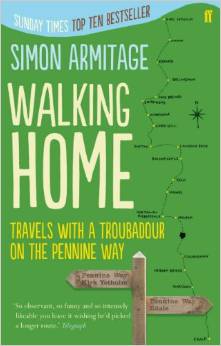
I am thankful some local followers of my blog have alerted me to titles and, in some cases, loaned me their books. Thanks to Ma, my current read is Simon Armitage’s book Walking Home (Faber & Faber 2012).

Walking Home Simon Armitage

In this easy-to-read record, Armitage offers anecdotes and describes his reaction to the walk, the dramatic terrain, the endlessly misty, ferociously windy and inclement weather, the people who walked with him on occasion, the animals, and much more. Through his very entertaining writing style I have come to understand the 256 mile long Pennine Way in England via each step he took as he tramped from the northern to the southern end during 19 days of continuous walking.

The logistics of this walk were well-researched and involved pre-arranged poetry readings each night when he reached each day’s destination in villages, farm cottages, churches, people’s houses, hotels and all manner of other buildings. One of his dry unused walking socks was handed around at the end of each reading and the audience was asked to contribute funds. Simon set out to survive only on the income he could generate in this way. He was so well received that around the journey’s half way point, his wife and daughter came and relieved him of a heavy weight of coins: at the same time they took away a load of very wet and muddy clothes.

I live in a part of the world where rain is not so common, and impenetrable mist is rarely a feature. By contrast, when in summer Simon Armitage walked the higher hills and ridges of the Pennine Way, they were often shrouded in mist and, when the tracks sometimes petered out Simon, would lose his way for a while, become thoroughly drenched and, while trying not to become demoralised, persist in finding his way even if unnecessary miles were covered.  This was an arduous adventure taken one step at a time and I felt a real sense of joy coming from the author as he met each challenge, and as the miles passed. He became both physically and mentally stronger.

Whether or not, you enjoy walking, if you like to be carried along by a book and feel an immense sense of pleasure from reading something which is well written, then add Walking Home to your wish list for reading material. This book made me laugh and certainly lifted my spirits.