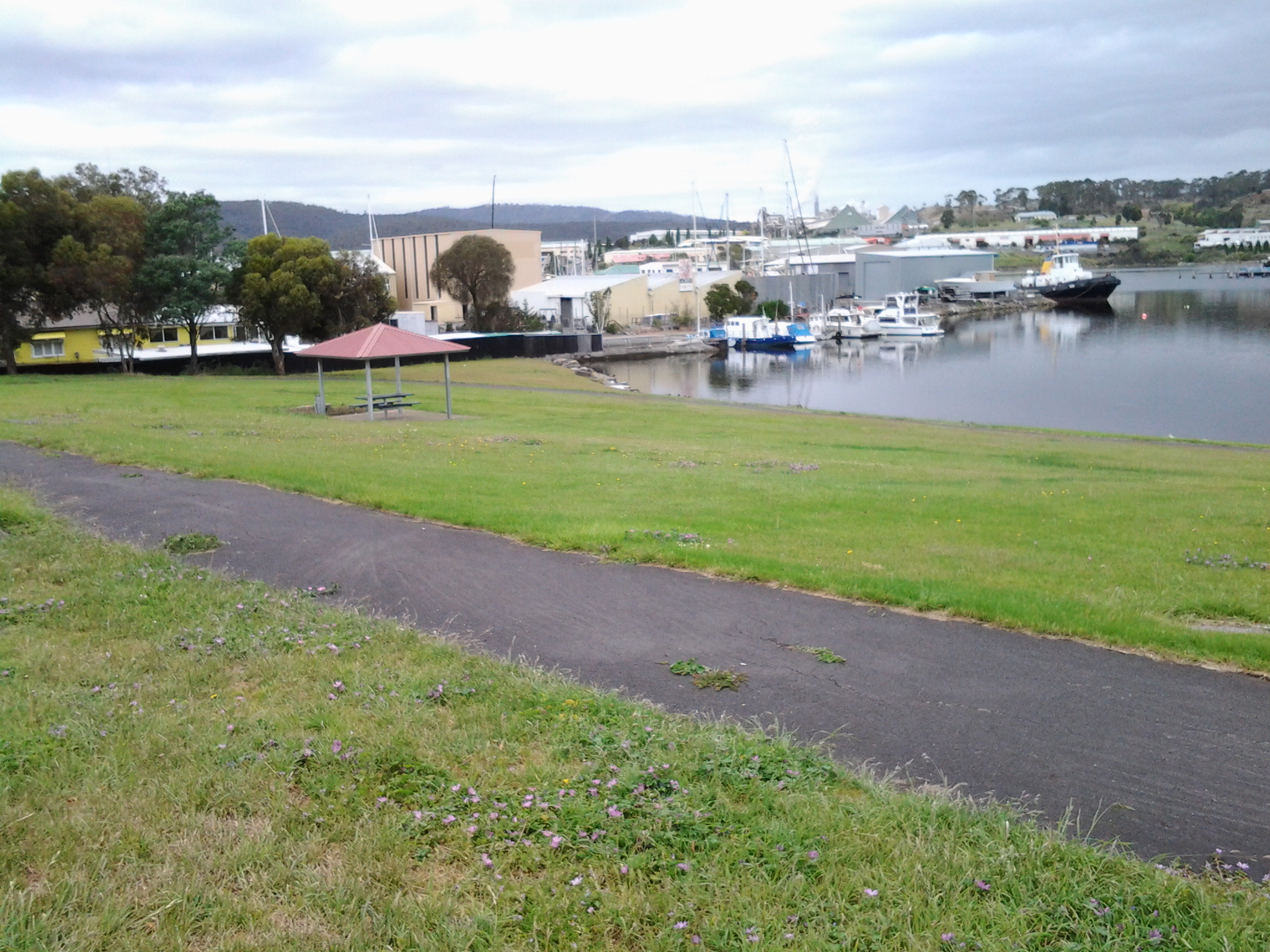
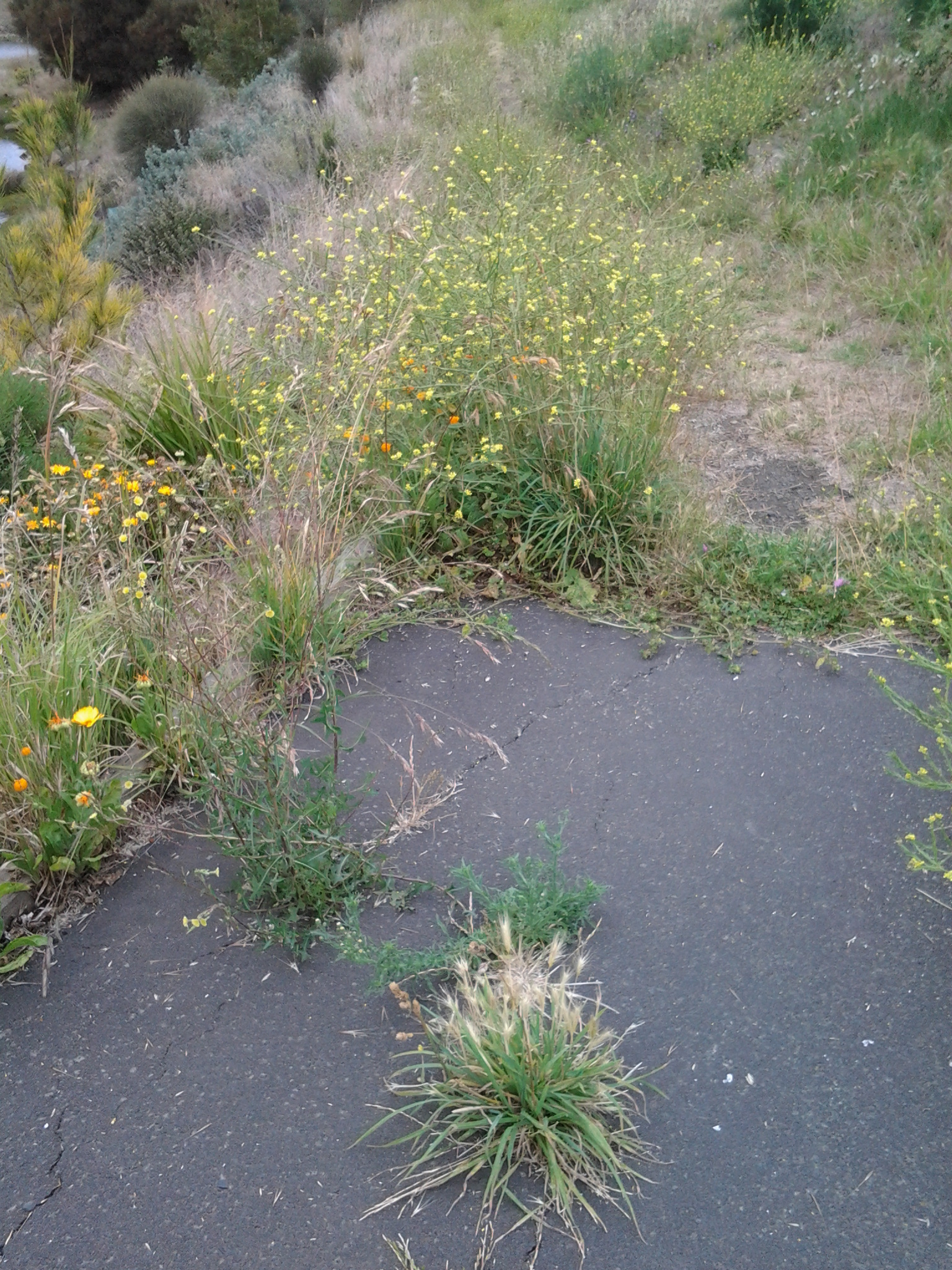
Category Archives: Derwent River

Visits to the industries of Lutana may occur in the future

Once I reached Derwent Park Road on the northern side of the suburb of Lutana during Stage 10 of my walk along the Derwent River, I had two choices. I could turn left and try and get access to the Derwent River through various industries established and blocking my way, or bypass these and walk directly through suburban Lutana with the idea of making appointments and returning another day for the industry end of Lutana.  I chose to walk through Lutana.

Goodwood. Not sure about the ‘good’.

After walking across Goodwood Road (on Stage 10 of my walk along the Derwent River) which extends from the Bowen Bridge at one end to Glenorchy suburbs at the other, I was puzzled by a sign on one corner indicating behind it was a Model Park.  There were no trees. What sort of park was this? It seems this is a place for big boys to play with their model cars etc.  Special tracks were clustered in different parts of the ‘park’.

20150109_093005

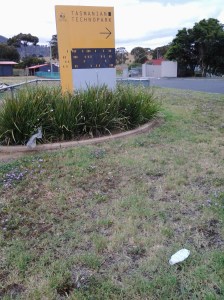
Not much further along the road to the left (Innovation Drive –someone gave this name a lot of thought and presumably smirked in satisfaction) was signed as the entry to Tasmania’s hopes for technological innovation, Tasmanian Technopark.
20150109_093306

The Technopark was the brainchild of a government minister and his public service department around 2000. A small amount of information can be read at http://www.stategrowth.tas.gov.au/home/about_us/tasmanian_technopark. A federal government website has a whisper of additional information at http://www.australiangovernmentgrants.org/TASMANIAN-TECHNOPARK.php. I am surprised that there is no easily googled publicity about the achievements of this program. Can Tasmania ever equal the cut and thrust of innovation coming out of other small or remote places like Singapore, Finland, Iceland, etc?  What are we doing right and what could be done better to achieve successes?  Who knows? I couldn’t find any such information on the internet.

In the absence of any clear way to walk around the Derwent River edge of Dowsing Point, on which the Technopark is located, I thought it best to leave that exploration for another day and to continue along Howard Road.

Goodwood, in my experience, turned out to be the dog poo suburb of the Greater Hobart Area.  Excrement was everywhere in perfect form or squashed on the pavements, or the various colours dotted grassy verges.  I didn’t waste time on photography for which I am sure you are thankful – the choices were too great!

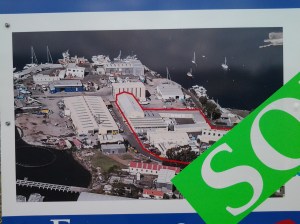
Firstly I turned left into Negara Crescent which was a street combining mean, low level, paint-flaking, unmown lawns, weed infested residential properties (okay – well not all were, but many were) with light industry such as Linen Services Tasmania, boat works, Anchor Wet Suits, Towbar and Crash bar repairs, fishing supplies, and a large unnamed workshop building emitting unpleasant chemical smells. Those houses which had Derwent River frontage sometimes had escaped overgrown blackberry infestations blocking river access in their back yards. There wasn’t a sense of wanting to live caringly or beautifully here. Accessing the River is impossible without entering private land around this locality. The built-in nature of some parts can be seen on the sign for a block of land that has been sold.
20150109_094257

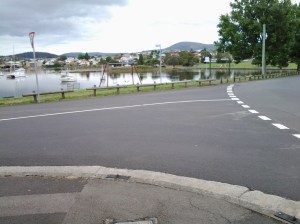
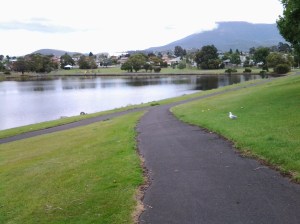
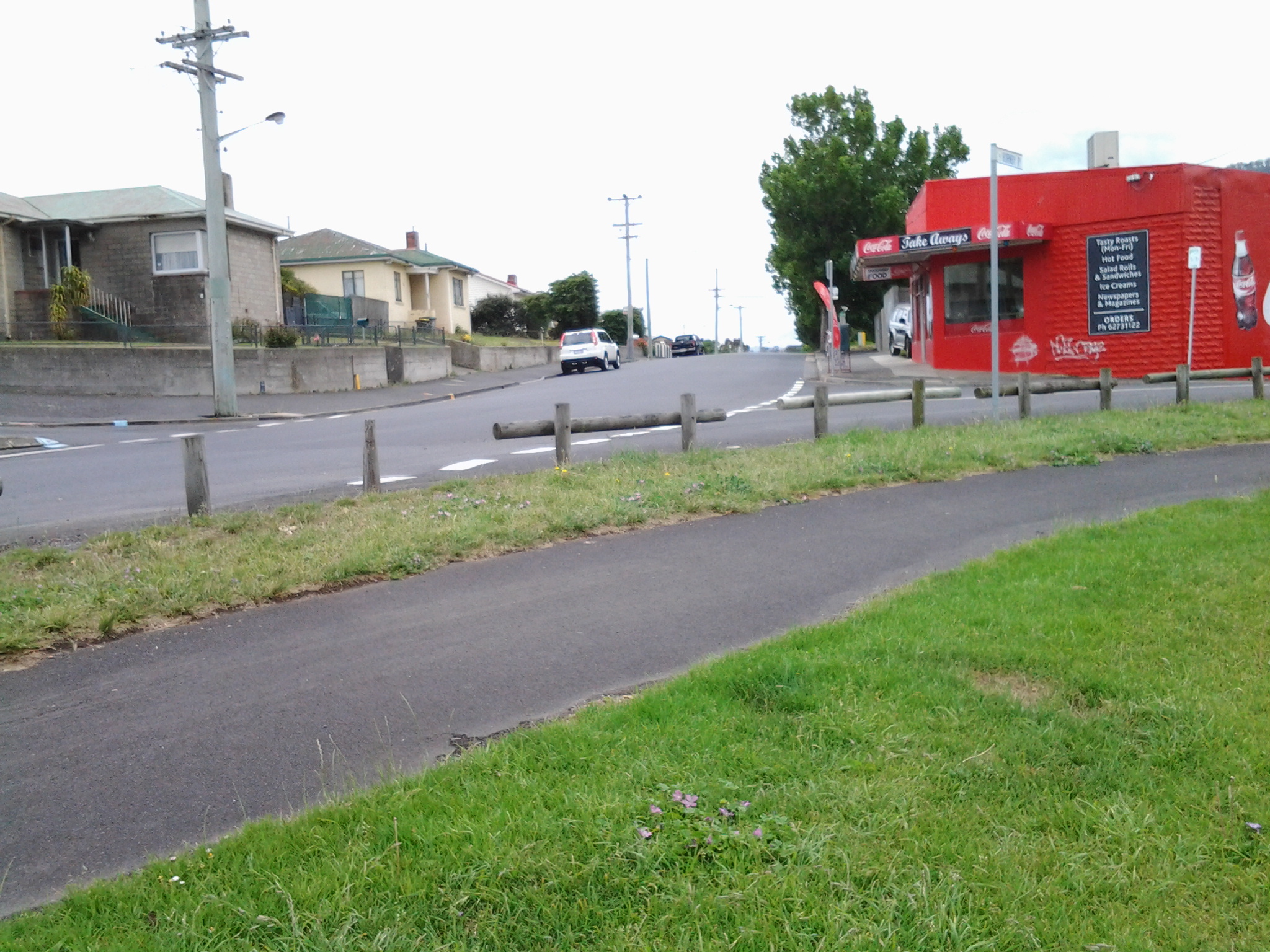
By 9.45am I was joining back onto Howard Road. I walked on past bus stop 34, and the nearby Take Away Food shop and reached the Giblin Reserve around 9.50am. Photos of the surrounds are as follows:

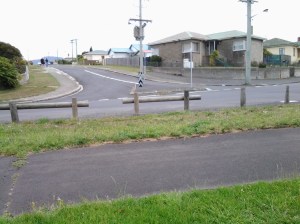
20150109_095701  20150109_095658  20150109_094705

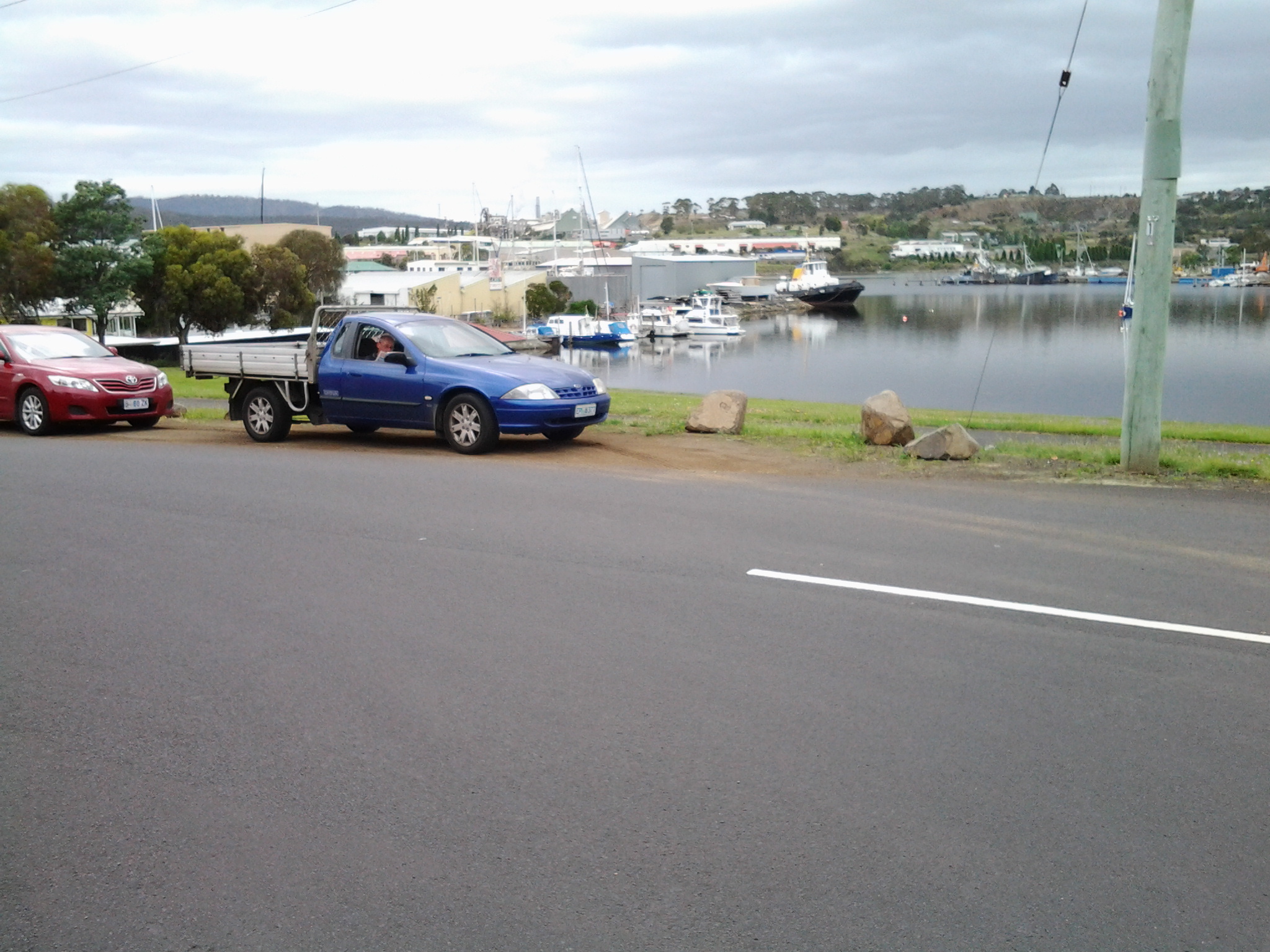
I sat for a while in the Reserve, watching a man in his car eating his take away meal, and taking in the surroundings.  This was a part of Prince of Wales Bay.
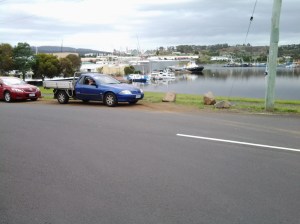
20150109_094717  20150109_095819

In the distance I watched the steam/smoke pouring from the zinc works of Nystar, a large industry owning considerable property along the Derwent River a little south from where I sat for a while and soaked in the atmosphere.
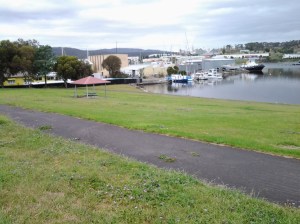
20150109_094734

Once I continued walking southwards around the Bay, I passed a kid’s playground, BBQ area, public toilets and ducks quacking.  When stymied by lack of water access around 10.05am, I walked up onto Gepp Parade and walked past a tree laden with not yet ripe nectarines, and later a row of junky looking boathouses. I wondered who wouldn’t be interested in removing their half sunk boat.

20150109_101243

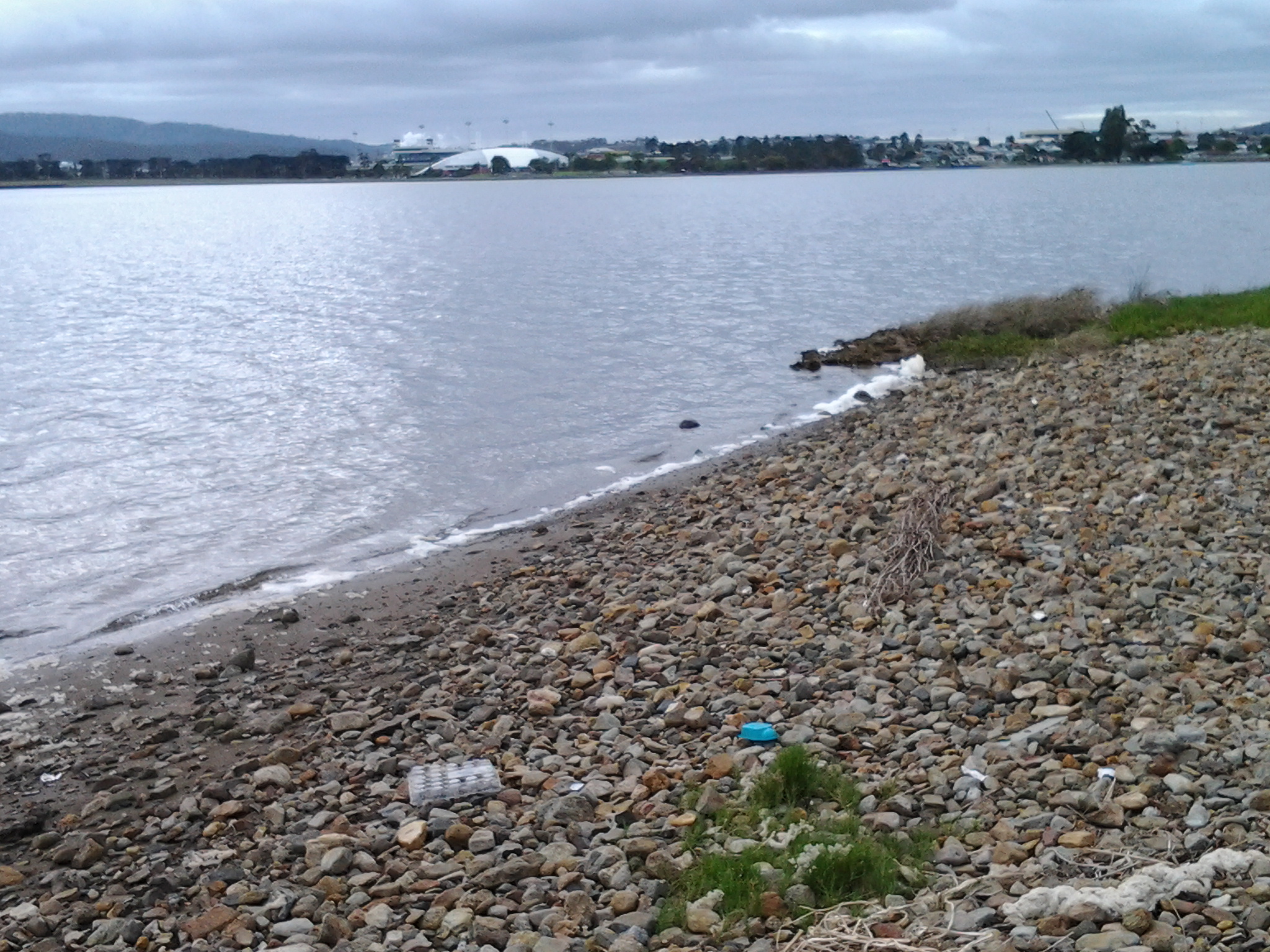
Eventually, through the bitumen path, weeds began to multiply then suddenly this ‘formal’ path stopped and an occasionally trodden pathway through the weeds was all I had to continue on.
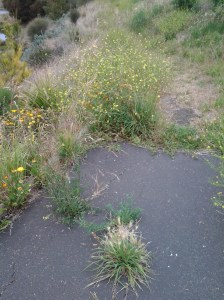
20150109_101335

I couldn’t help thinking that wherever a local government area is almost at the end of one and near the start of another area, there is more rubbish not collected and the general appearance of places is rather shabby. This has been the case on earlier stages of my walk, and now as I was at the extremity of the City of Glenorchy and coming closer to the City of Hobart boundary, the amount of visible rubbish and untidiness was escalating.

However, looking out over the water of the Bay (and if I tried not to study the weedy edges with their coloured flotsam and jetsam) to Mt Direction on the other side of the Derwent River, presented me with an attractive view.
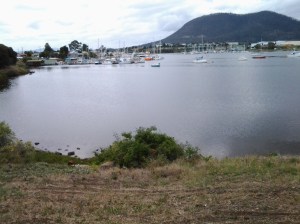
20150109_101749

When I could get back down onto a weedy area, I followed man-made tracks and continued almost to the Sewage Treatment Farm (which I could see had wired fencing into the water that barred my continuous shore access) then headed up through the trees and onto a disused railway line. I crossed this, climbed a weedy rise spattered with rubbish, clambered over a metal guard rail and stood on Derwent Park Road which is the main road to Nystar and other industry located by the River. It was 10.25am when I reached this point. I had been plodding along for almost three hours.

Towards the Bowen Bridge

I plodded away from the GASP and Derwent Entertainment Centre site by walking between the Derwent River and the Elwick Race Course where dogs and horses race regularly for their owners.  I heard the rhythmical thumping on the turf before two trainers galloping their horses came into view over the barb wired fence.

20150109_091131

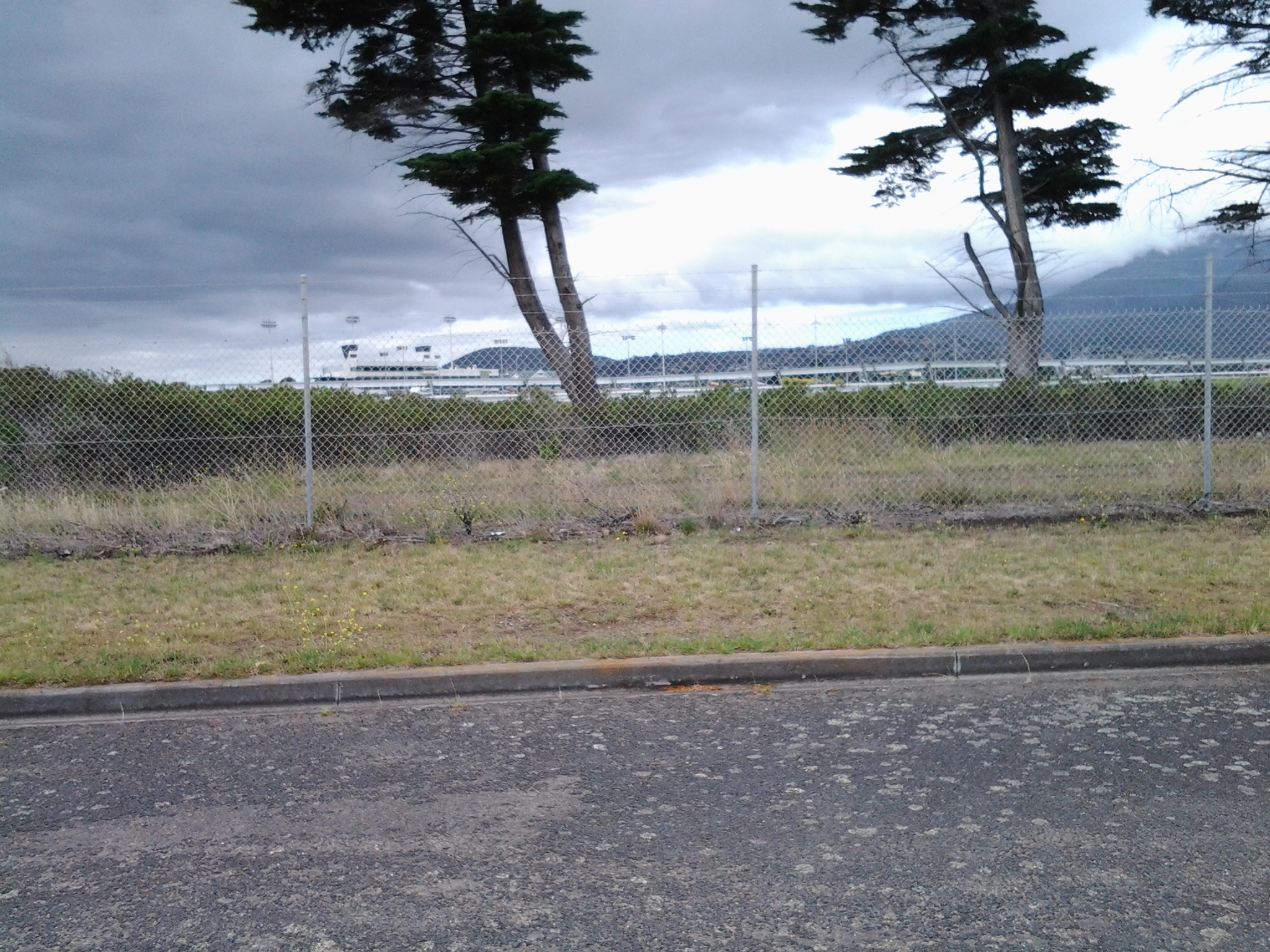
Otherwise all seemed quiet in that direction. Obviously it wasn’t a race day – well not then. Possibly it was too early in the day.  I walked along the long and winding Loyd Lane past a Department of Defence enclosure around 9.15am.  This is a little used road and pale green lichens were spreading across the bitumen in Rorschach test like splotches.

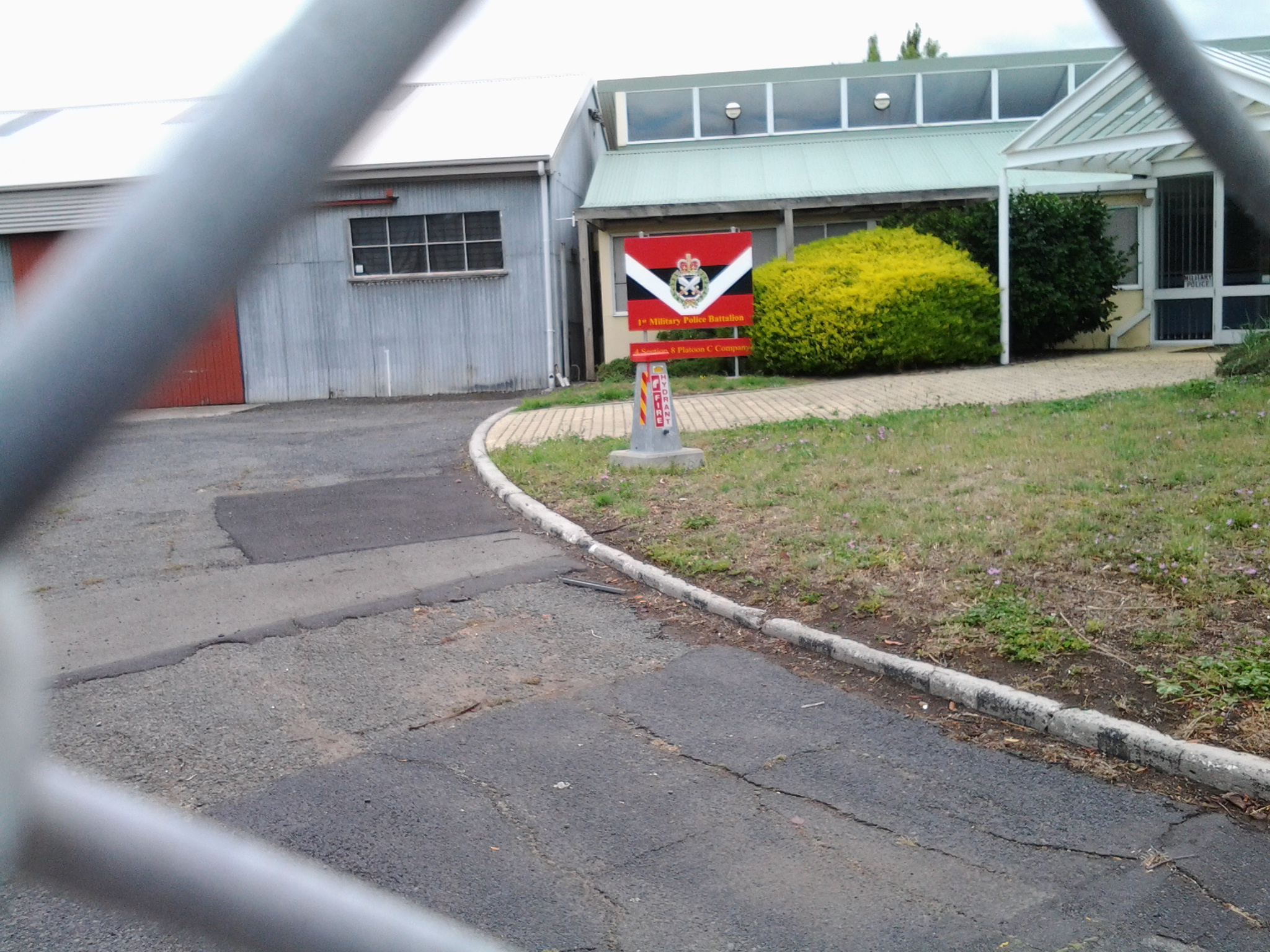
Before 9.20am I had reached a bar across the road which I walked around to discover inside the Commonwealth Government property was a Regional Training Centre and the base for the First Military Police Battalion, and the 4 Section 8 Platoon Company.  The gates were all locked and there was no sign of life on the other side of the fences.

20150109_091945

I continued along the road, reached the T junction with Park Rd, checked my map and found accessing the River improbable so I continued the few metres to the next T junction, with Centre Road. But there was no walking possible this way. The Road was strongly gated and locked and the signs indicated the Australian Army Derwent Barracks was inside.  Effectively I was denied access to the Derwent River from the end of GASP.

I did not achieve success with edging that headland which pushes out into the Derwent River and which is split in half by Goodwood Road to the Bowen Bridge. I have an idea that perhaps there is another way and at some future time I will try again to follow the River on the northern side.  I didn’t have much more success on the southern side of the Bridge, but again I am inclined to return and to see what else is possible.

So, on Stage 10 of my walk, I proceeded to the traffic lights intersection of Loyd Lane, Goodwood Road and over to the other side at Howard Road. It was 9.30am.

Images of the Derwent Entertainment Centre

I took over 200 photos during the 10th stage of my walk along the Derwent River, downloaded then sorted those photos.  Alas, I overlooked including my photos taken as I walked past the Derwent Entertainment Centre, in recent postings.

20150109_084521  20150109_084606

The photo below is when I was looking back as I was about to leave the area.

20150109_090658

This Centre has seen some extraordinary acts and visitors including the Australian Visit of His Holiness the Dalai Lama, Powderfinger “Sunsets” Tour, “Keeping it Real” Daniel Geale World Title Event, Grease – The Arena Spectacular, Building and other Expos and much much more.

There is more to GASP beside the Derwent River than perhaps seen in first inspection

During Stage 10 of my walk along the edge of the Derwent River and a few minutes before 9am I had walked to Wilkinson’s Point the mostly southern end of the GASP (Glenorchy Arts and Sculpture Park) where I was surprised to discover a redeveloped structure which now forms part of the GASP experience. This was the construction site used for the building of the Bowen Bridge which crosses the Derwent River nearby.

Now, from time, contemporary art installation exhibitions are staged here.  In fact, I expect to see something there in the next week as part of the extraordinary internationally acclaimed MOFO festival (refer http://mofo.net.au/).  The MOFO program indicates that this Friday Jan 16 at midday The Tea Cube will introduce a portable tatami tearoom for a spiritual brew.

I wandered around this site in amazement.

20150109_085808  20150109_08582020150109_085816

With my back to the Derwent River I took the following photograph with clouds over part of Mount Wellington.

20150109_085951

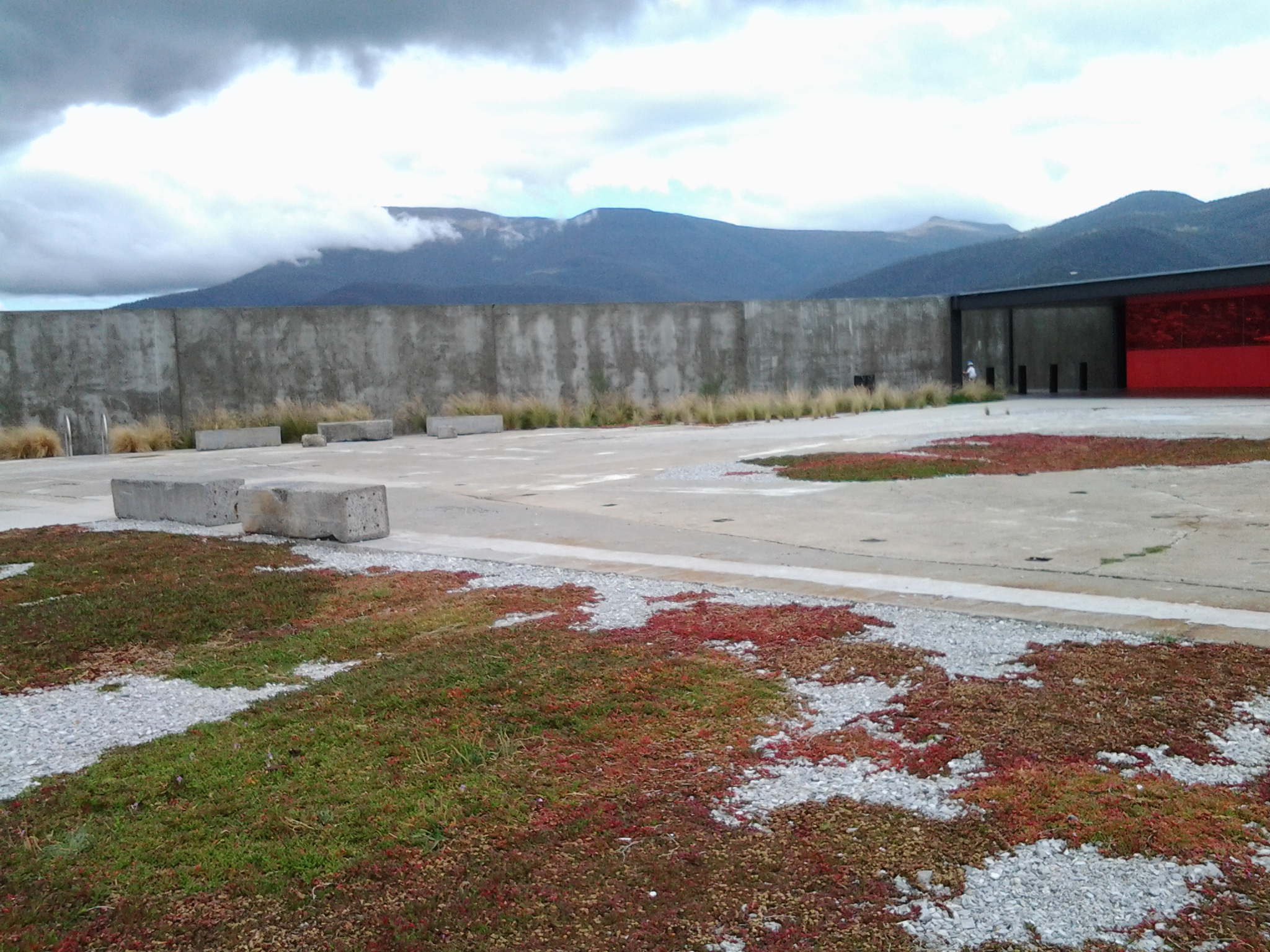
I loved the colour of the surface ‘weeds’.

20150109_085853

And then it was time to begin to wander southwards again back on a non -path, which some readers will recognise from my video of walking feet.  In the photo below you can see the low structure of the ex-construction site, as a dark line separating the land from the water.

20150109_090654

Looking northwards and back to the ex-construction site.

20150109_090856

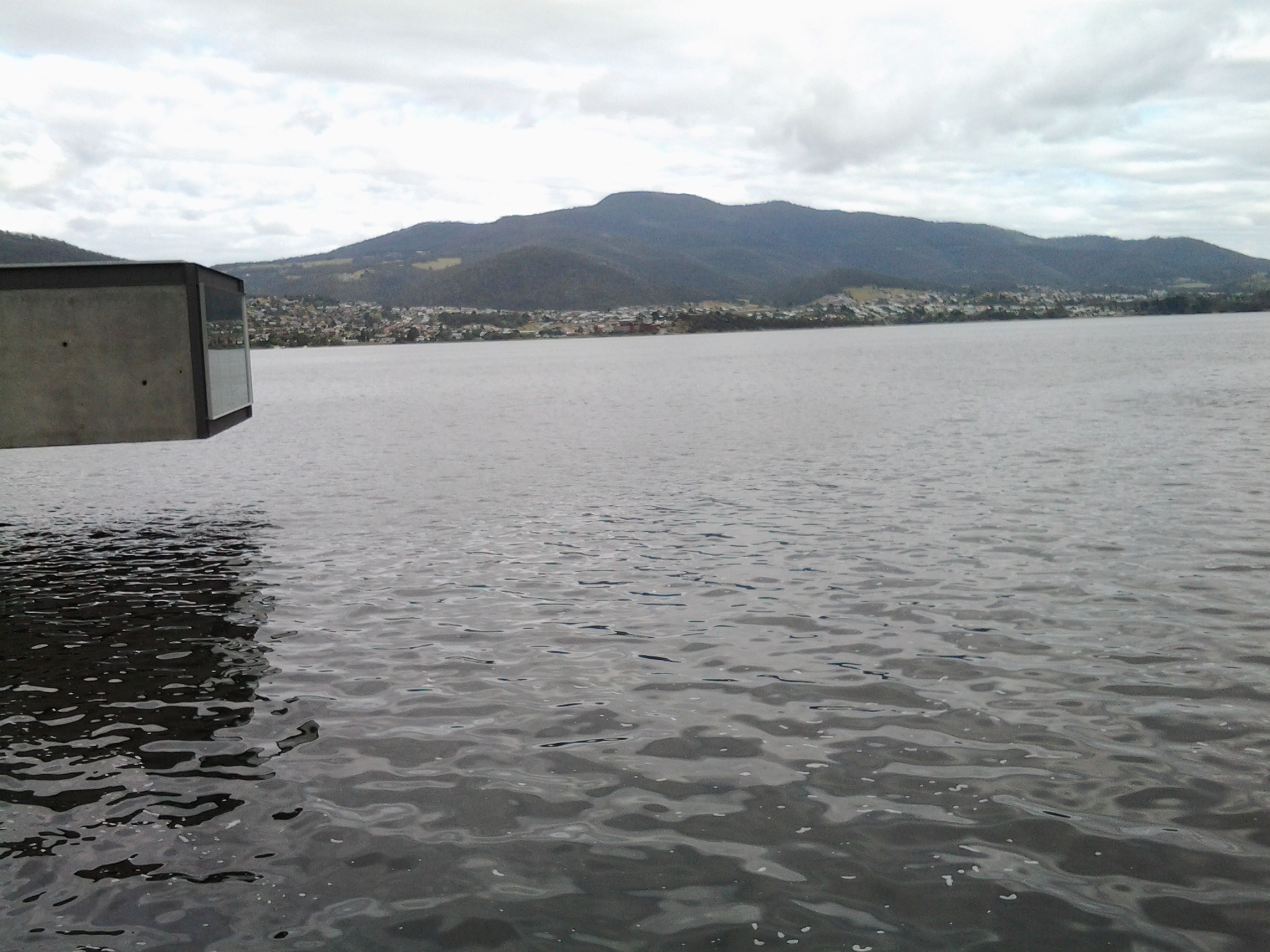
Part of the new repurposed structure has been cantilevered over the Derwent River.

20150109_085938

Passing the Derwent Entertainment Centre brought back memories

Years and years ago, when I arrived back in Hobart after being away a while, I recall it was a very hot day and so I found myself sipping a cold beer in the Wheatsheaf Hotel in Davey St, Hobart.

As you do, I got chatting to a man at the bar and we both realised we were out of work and eager to find paid employment. In walked an arrogant man who mouthed off about dole bludgers and how he had lots of jobs but no one wanted to work. The stranger and I looked at each other and chorused ‘we do!’  This put the guy in an awkward position because I could see, in his body language, he did not think either of us would be up to any work on his construction site; the construction of the new Derwent Entertainment Centre. However, he had to save face and couldn’t say no to us.  I remember he threw obstacles at us but we countered each.

It was a Saturday when we met, and on the following Monday morning the stranger and I turned up on the construction site at 7.30am ready for whatever work could be thrown at us.

Mr Arrogant faced us with a new obstacle, one which he thought we could not overcome. He told us that we had to be paid-up union members even though he was only offering 2 day’s work initially otherwise we couldn’t walk any further onto the site. We made some calls and the stranger and I soon found ourselves sitting in the office of a Union boss having a comfortable chat. Accountability and compliance were not so important then, and unions had lots of unregulated powers and sometimes illegal behaviours. It is enough to say that the stranger and I returned to the construction site with our Union passes.

The Derwent Entertainment Centre is built on reclaimed land and eventually more land was built around the site for carparks, roads and walkways. At the time, the construction site was surrounded by water on three sides. Our job was to remove discarded construction material off the rocky shores and load into rubbish skips.  It was hard, heavy and constant work but it was an income albeit for a short while. Since I am female, the workers on the site found they needed to be able to see me all day and wolf whistle and carry on wondering how the stranger had found me and what the story was.  All immensely amusing to me. And the distraction was incredibly annoying for their foreman.

After finishing the two day’s work, we left a pristine set of rocks. We were not surprised that Mr Arrogant was unable to find any further work for us. All of us parted ways and moved on in our separate ways. I cannot remember what I did next. Guess it was not half as exciting as helping with the Derwent Entertainment Centre project.

From Montrose Park to GASP on the edge of the Derwent River

This was the favourite part of the 10th stage of my walk along the Derwent River and still within the bounds of the City of Glenorchy.

The parkland with its majestic gum trees, the few people around, the silvery Derwent, and the wide expanses were incredibly peaceful and attractive.

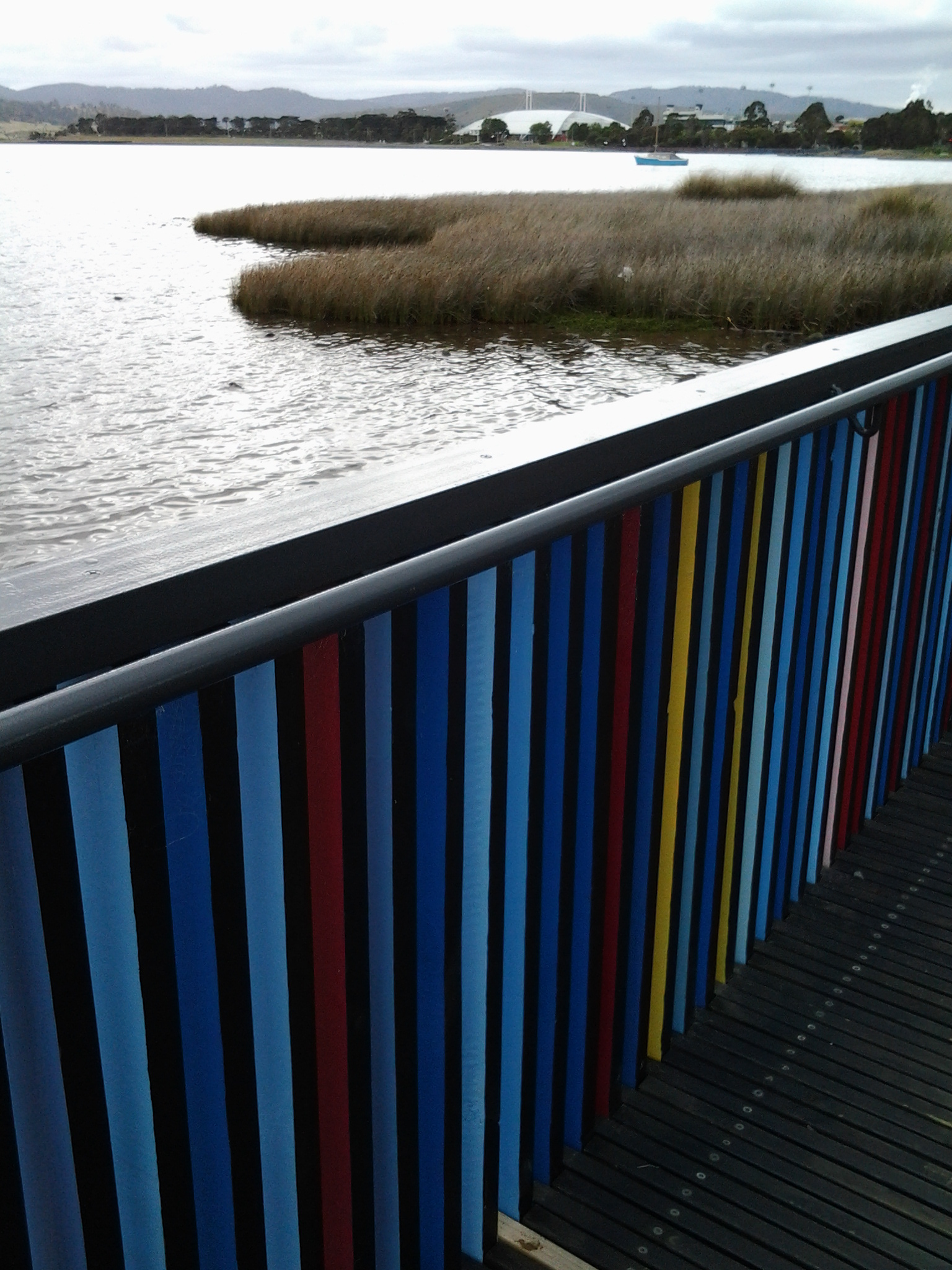
By 8.30am I reached the first of the four colourfully striped walkways.  The concept was simple and it is probably the simplicity which is so beguiling.  Vertical posts have been painted black on the edge and then coloured inside. Hundreds and hundreds have been so painted. The first walkway that I reached looked as follows:

20150109_082957  20150109_082931  20150109_083005
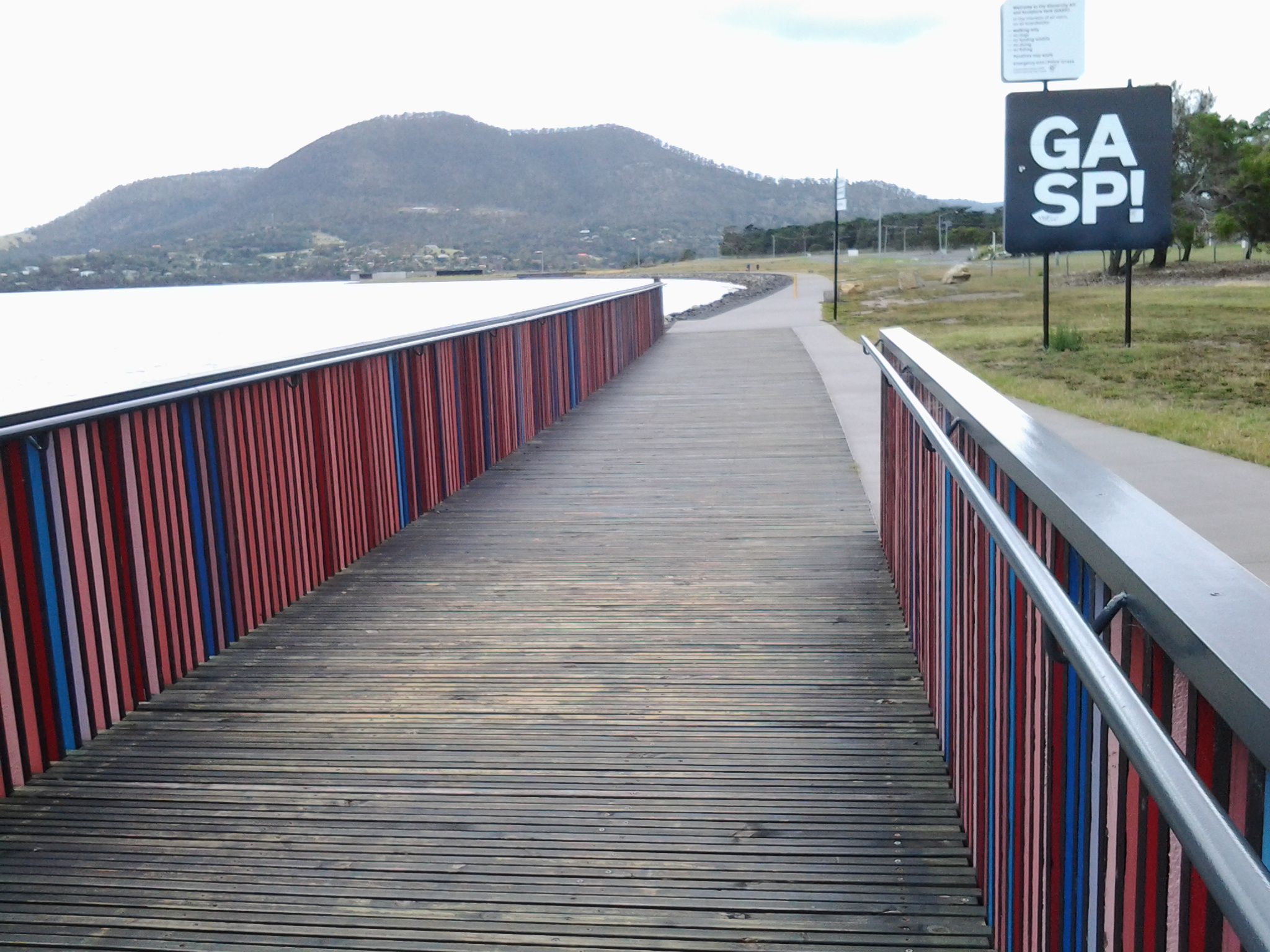
And then I turned and looked across the Derwent River towards Mt Direction in the Risdon area.

20150109_083020

The atmosphere of the environment with its natural and man-made sophistication was very exciting.  The photo below shows the curved roof of the Derwent Entertainment Centre in the distance.

20150109_083126

A few minutes later I came across the GASP (Glenorchy Arts and Sculpture Park) sign which alerts visitors to the different areas.

20150109_083248

Nearby a plaque indicates that The Hon Julia Gillard MP Prime Minister of Australia officially opened these boardwalks of GASP on 3 October 2011.

Not far away a sound installation has been set up within a protective shelter.

20150109_083928  20150109_083903

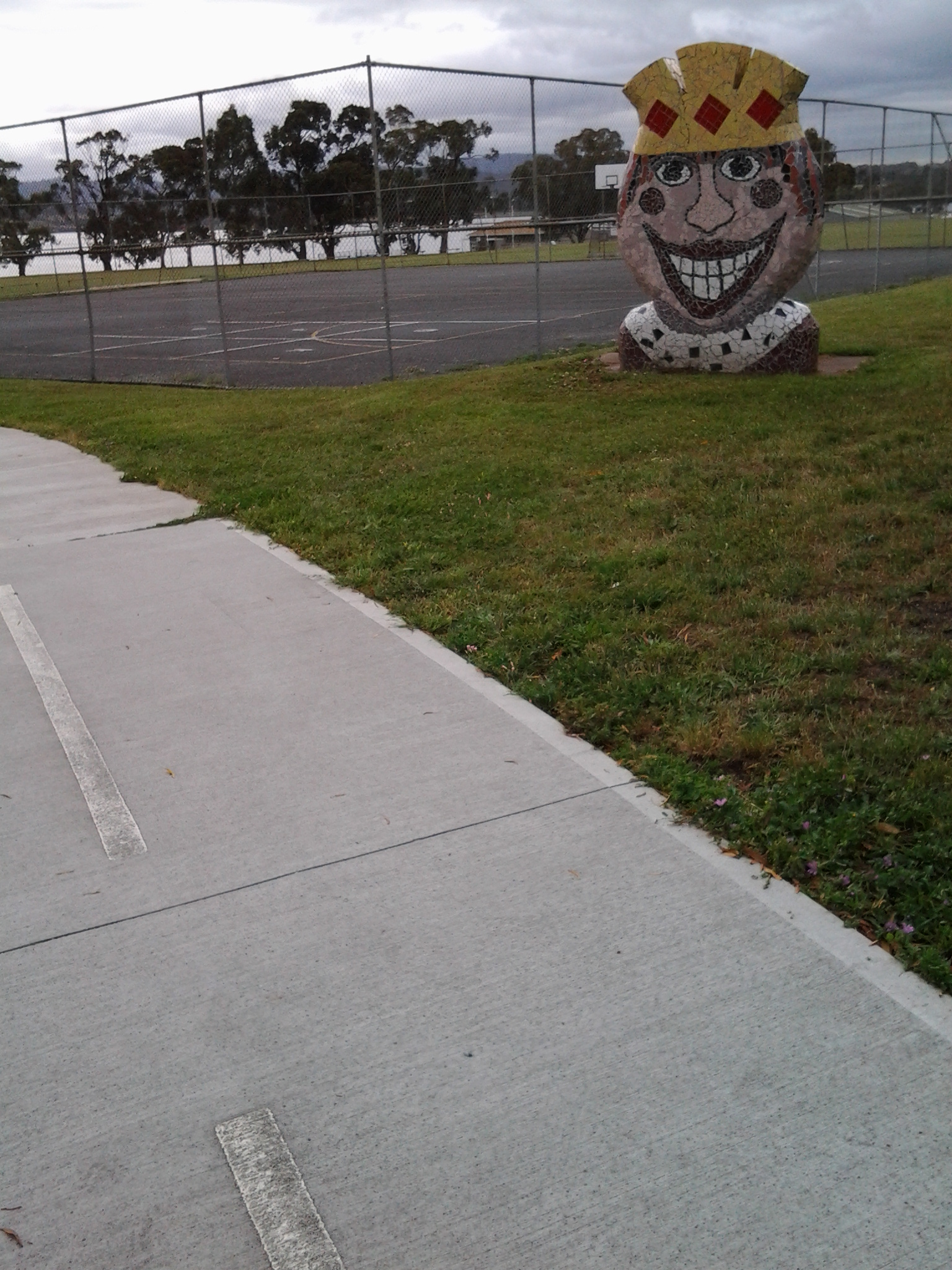
Marvellous mosaic frippery continued to surprise me along the walk.

20150109_083807

Then I had the joy of walking across more coloured walkways and,before long, I had the River on my left and the Derwent Entertainment Centre complex on my right.

20150109_084018  20150109_084355
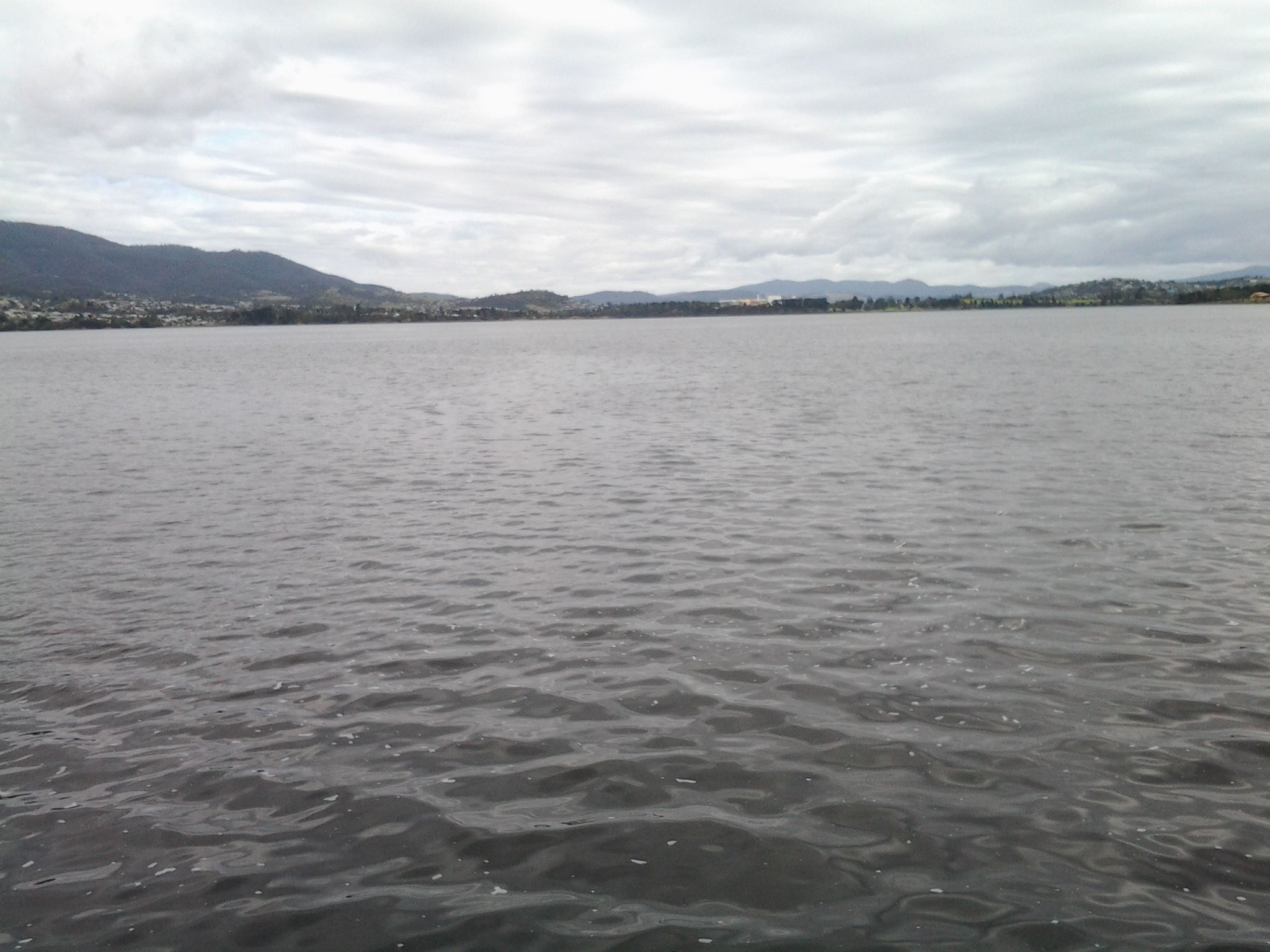
Mt Direction stood prominently over the water on the eastern shore.

20150109_084404

In the far north facing distance, the white buildings of Cadbury’s chocolate factory could be seen vaguely.

20150109_085905

Walking Montrose and GASP parks is an easy and pleasant thing to do. There are opportunities for picnics and barbecues, and kid’s playgrounds.  Water and land birds abound.   And the sense of creativity fills the air.

The meld of Montrose and Rosetta on the shores of the Derwent River

Walking south from Berriedale, a blur exists between the two suburbs of Montrose and Rosetta and I am not sure where either starts or finishes.

Soon after leaving the Strathaven Home and Riverfront Motel, as I walked along the ‘bike’ path beside the Highway, on the right in the distance over the highway I could see an old two storey white painted building. Having just passed the sign indicating the Undine Colonial Bed & Breakfast was in that vicinity, I made what I believe is the reasonable guess that what I was seeing was the developed building that grew from the original Rosetta Cottage of the 1800s.

20150109_080054  20150109_080208

It was impossible to safely cross the highway at this point so I walked on.

By 8.06, I had passed the Montrose Park sign, alerting me to turn left towards the Derwent River in the distance.

20150109_080504

Not long afterwards, I walked past the Montrose Bay High School with its whimsical mosaic decorations, and tennis courts.

20150109_080603  20150109_080720  20150109_080816

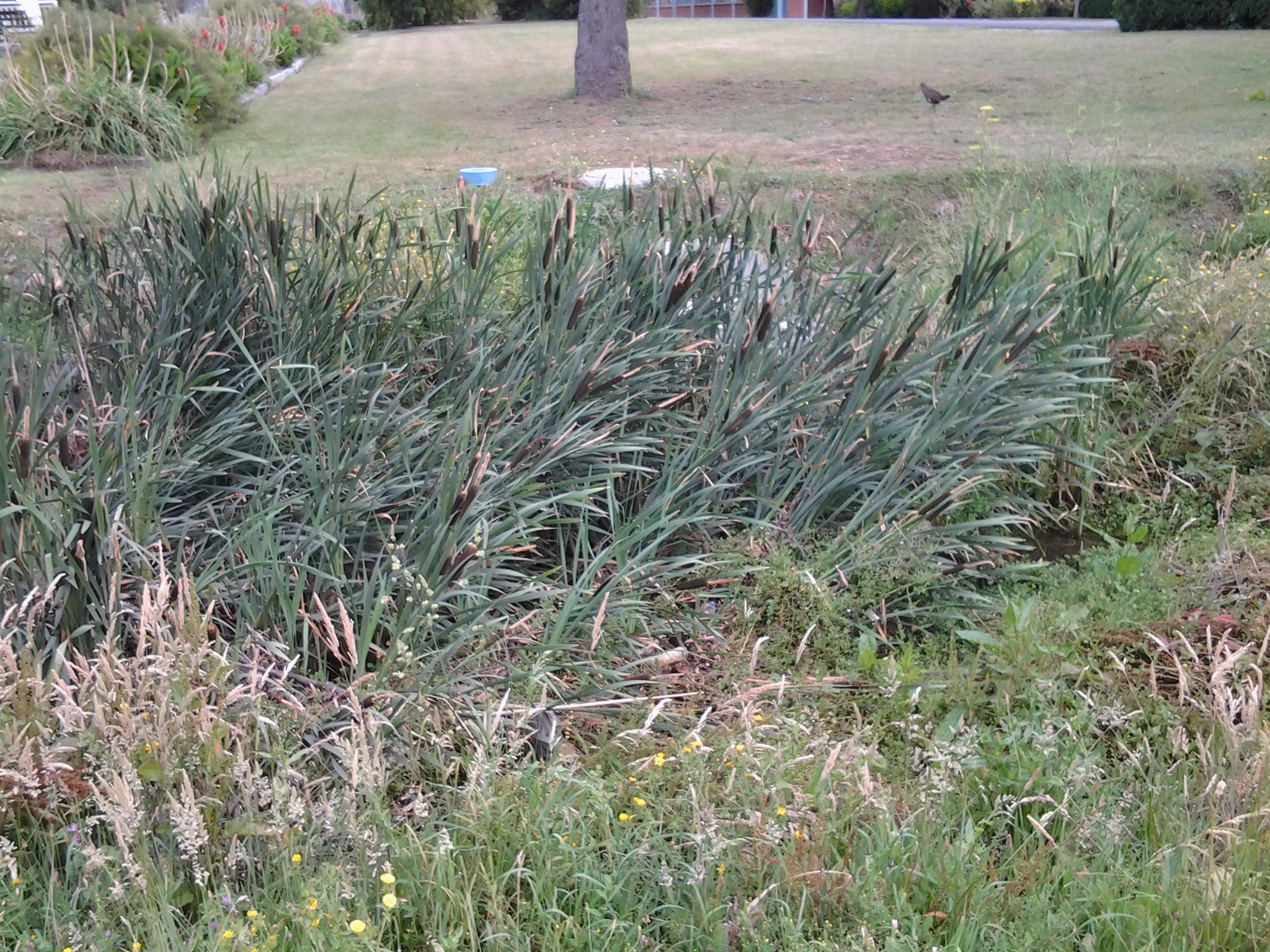
Wild hens ran around the bull grasses of the Islet Rivulet.

20150109_080850

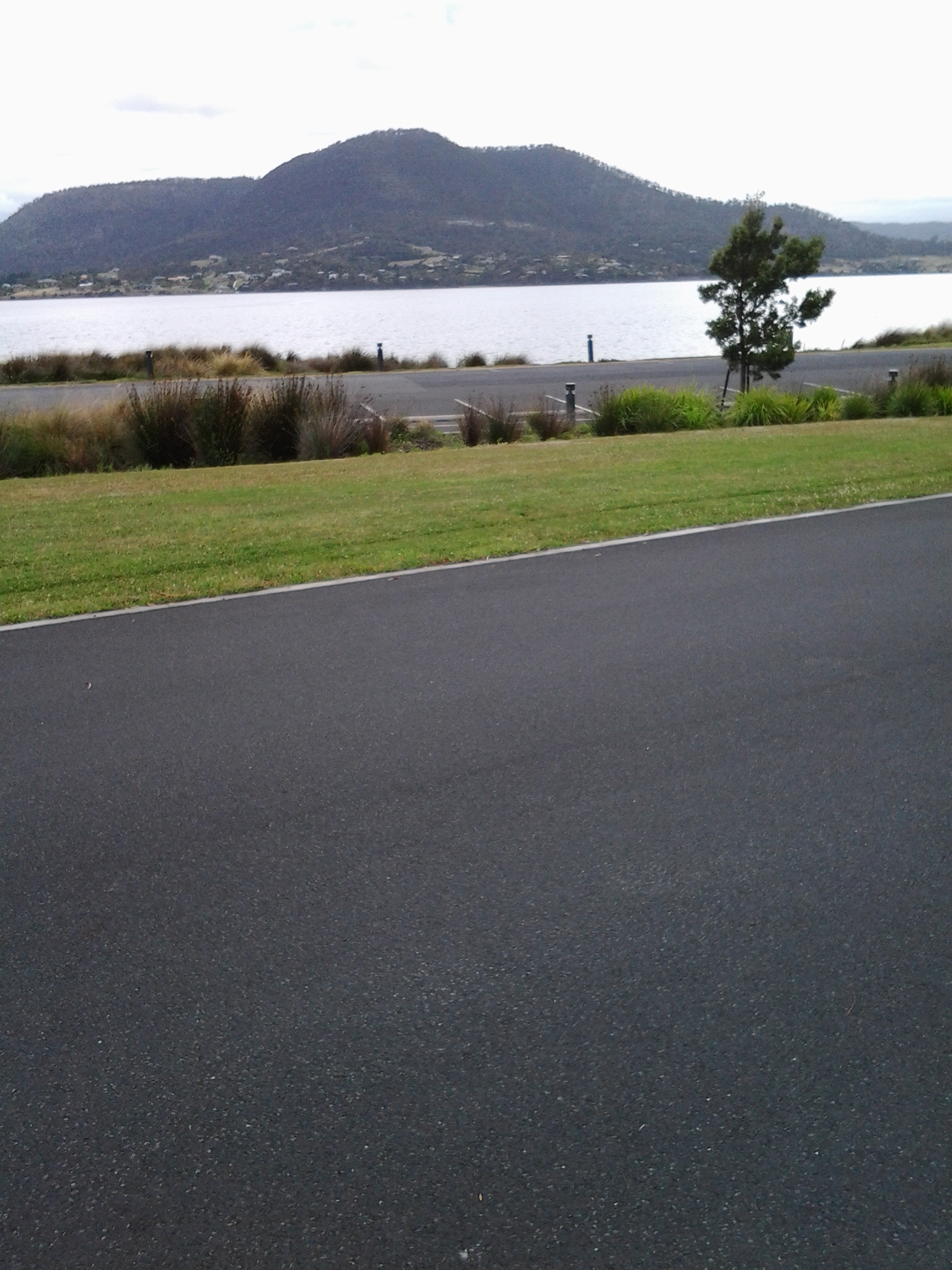
Once at the water’s edge I realised, that Montrose Park is the northern end of the Glenorchy Arts and Sculpture Park (GASP) that extends a few kilometres south and passes the Derwent Entertainment Centre.  Across the Montrose Bay High School Bus Mall, and then across the Derwent River I could see Mount Direction in the Risdon area.

20150109_081320

The white buildings of Cadbury’s chocolate factory were visible in the distance to the north.

20150109_081523

Also in a northerly direction, the dramatic walls of MONA were clearly visible.

20150109_081530

Looking south, the white Derwent Entertainment Centre was in view.

20150109_081540

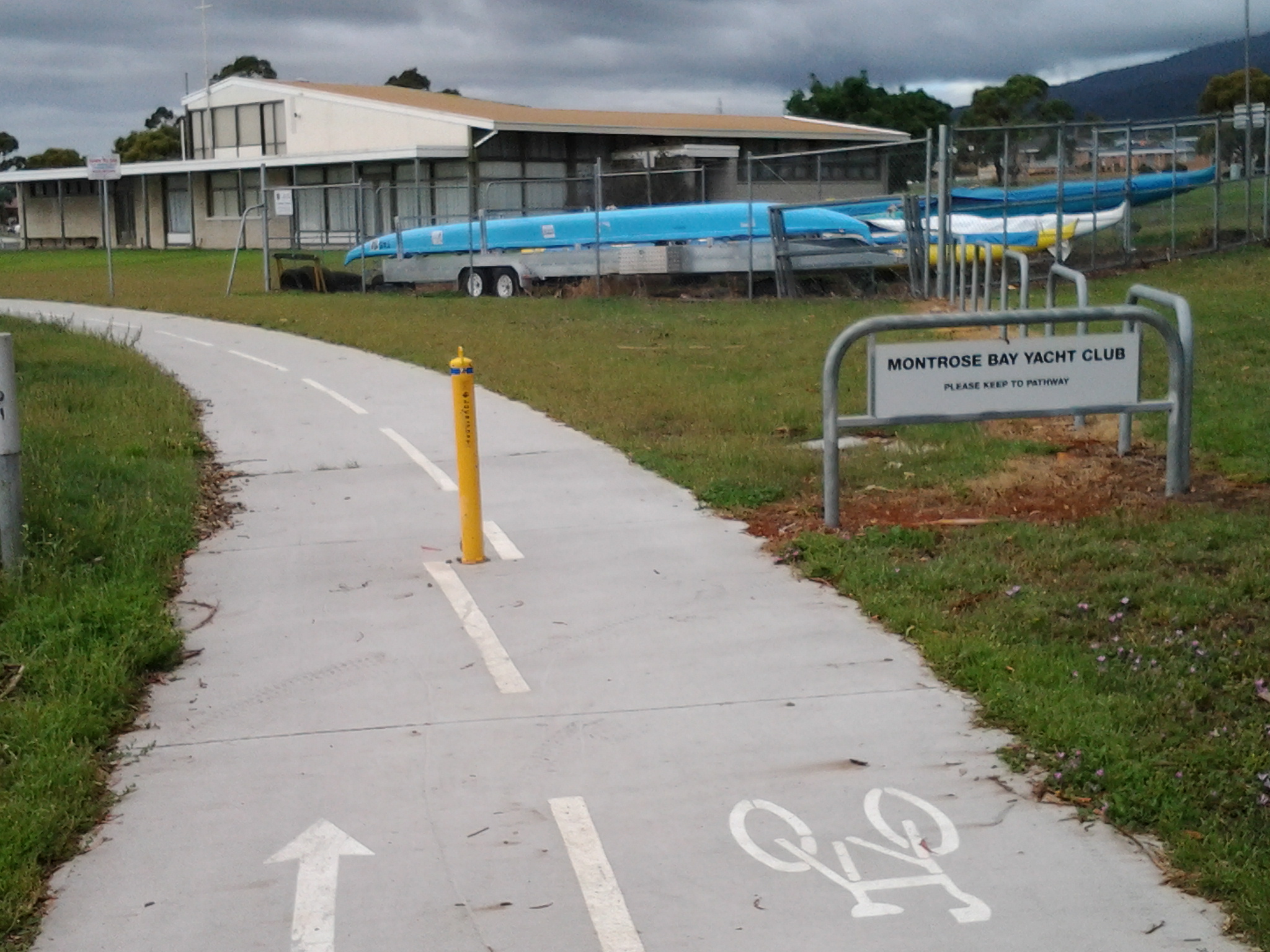
Then I started walking again. By 8.20 I was walking passed the Montrose Bay Yacht Club (Making a great offer to help me learn to sail) and then the Glenorchy Rowing Club.

20150109_081817  20150109_081907

Public toilets were nearby, near a kid’s playground.

I enjoyed looking at other quirky mosaic constructions. The photo below shows the High school and another mosaic figure in the distance, plus the posts for an Australian Rules Football game.

20150109_081644

Continuing along, I passed pontoons and jetties, an immature Dominican Gull standing fluffily on one leg, flowering gums with squawking parrots, an outside adult’s gym with chest presses and other exercise equipment, and the Montrose Foreshore Project sign showing developments since 1946.  The spread of residential development over the years has been substantial.

20150109_082441

Getting started on Stage 10 along the Derwent River.

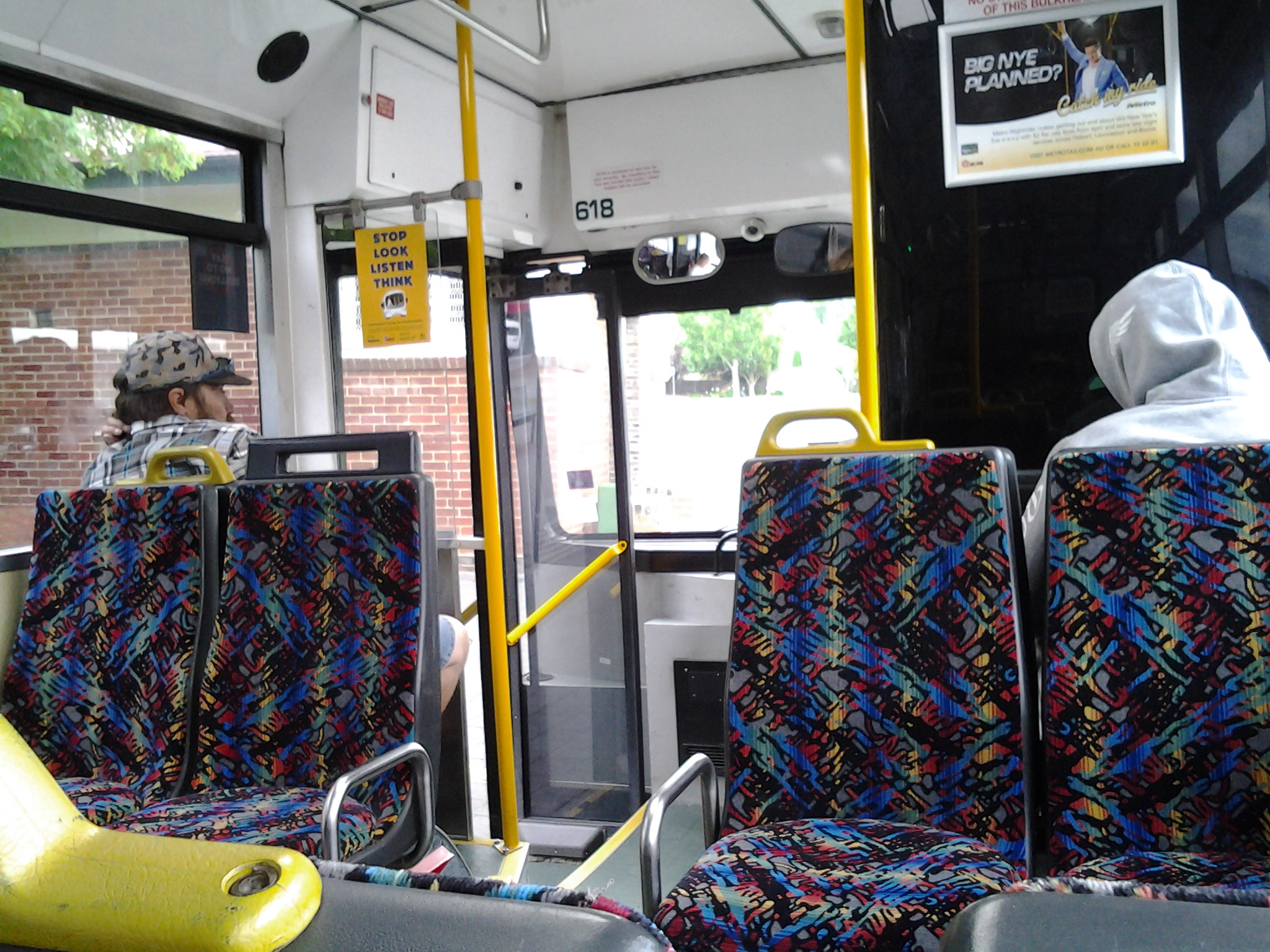
From the eastern shore I caught a bus to Hobart City and then transferred to a 7am bus destined for Bridgewater. At the Glenorchy Bus Mall we waited until it was time to continue … and until more passengers arrived.

20150109_072558

This bus travels along the main road via Berriedale, Claremont and Granton suburbs. At 7.32am I was off the bus outside the Grenada Tavern at Berriedale.

20150109_073246

Opposite the bus stop I glanced at the vineyards of Moorilla and thought of the Museum of New and Old Art (MONA) nearby.

20150109_073235

The view, down the road in the southerly direction I needed to follow, is blandly suburban.  At that hour, the road was very quiet.  I guess with school holidays and many adults taking a holiday away from work, there were lots of sleeping bodies in the vicinity.

20150109_073239

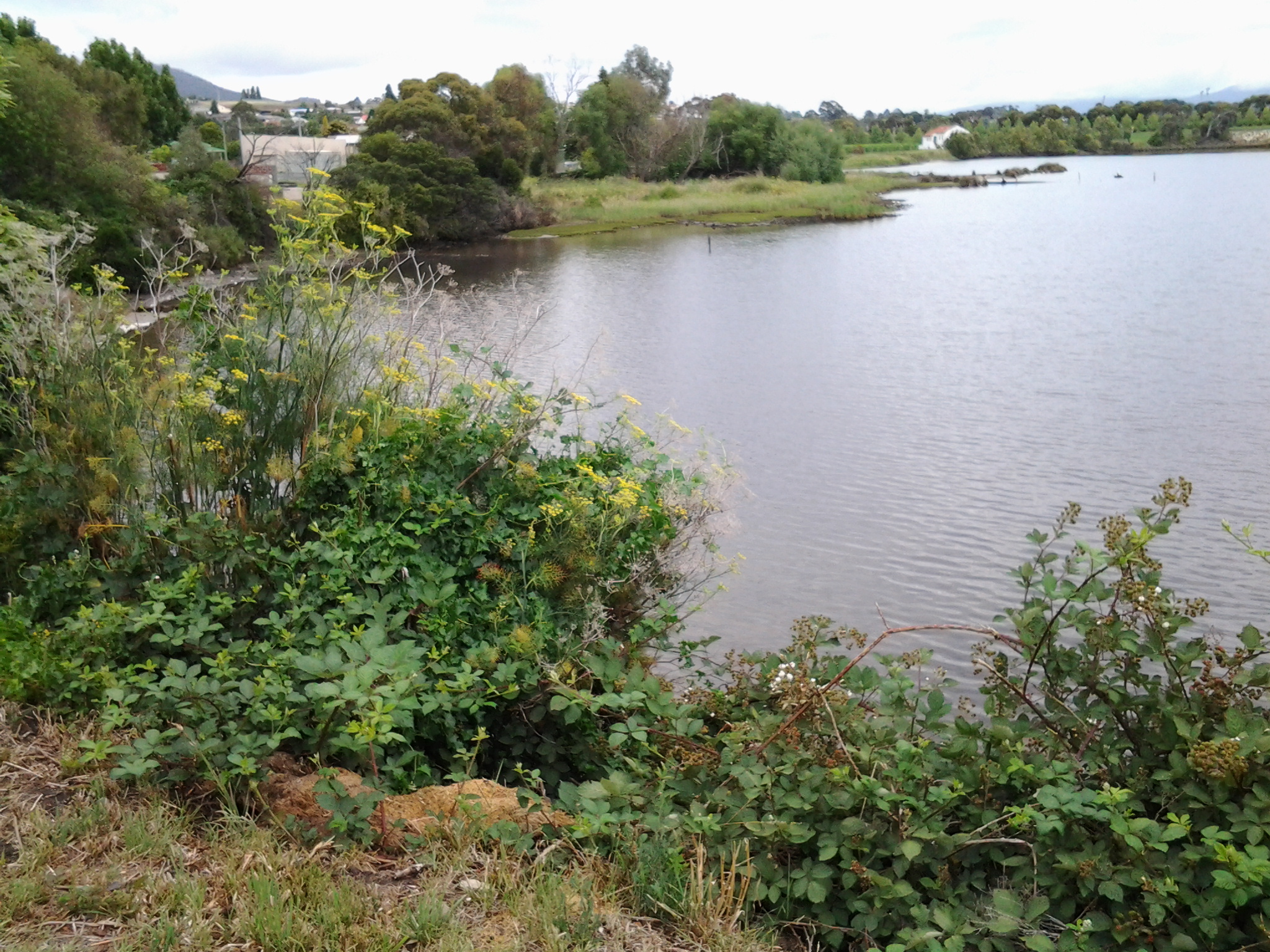
I crossed the road and headed south on the footpath looking to see how I could get past the houses edging Berriedale Bay and walk closer to the water.  Firstly I reached a parking area with a tall mesh fence partly blocking an area of profusely flowering weeds and Berriedale Bay water from me.

20150109_073650

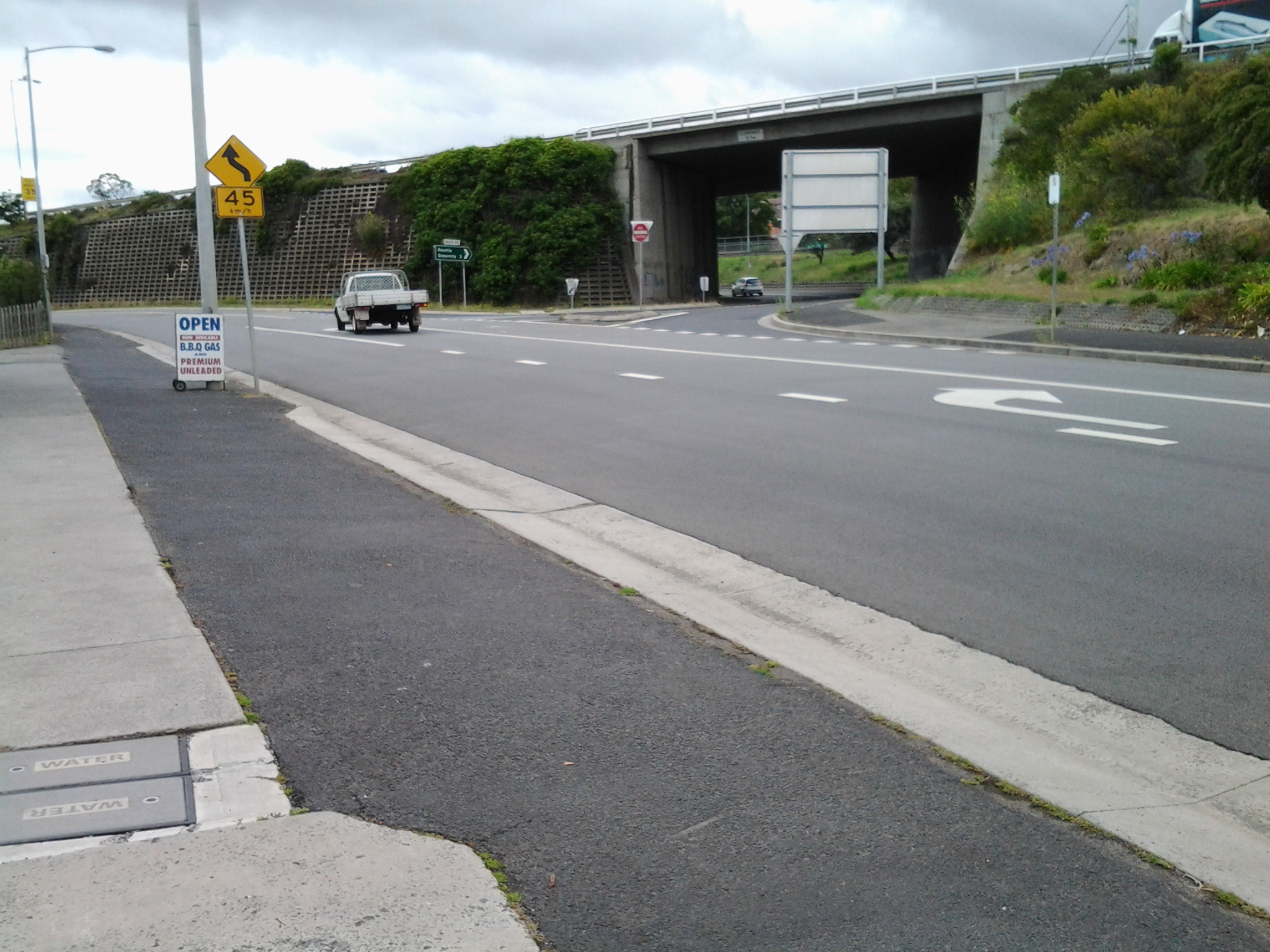
I continued on the main road and turned left away from the highway overpass.

20150109_073954

When I reached a service station I spotted a gap to the water and deviated to see whether further access was possible. Looking north over a bramble of free sown blackberry bushes, I could see the vineyards of Moorilla, and the concrete and rusting building of MONA.

20150109_074116  20150109_074126

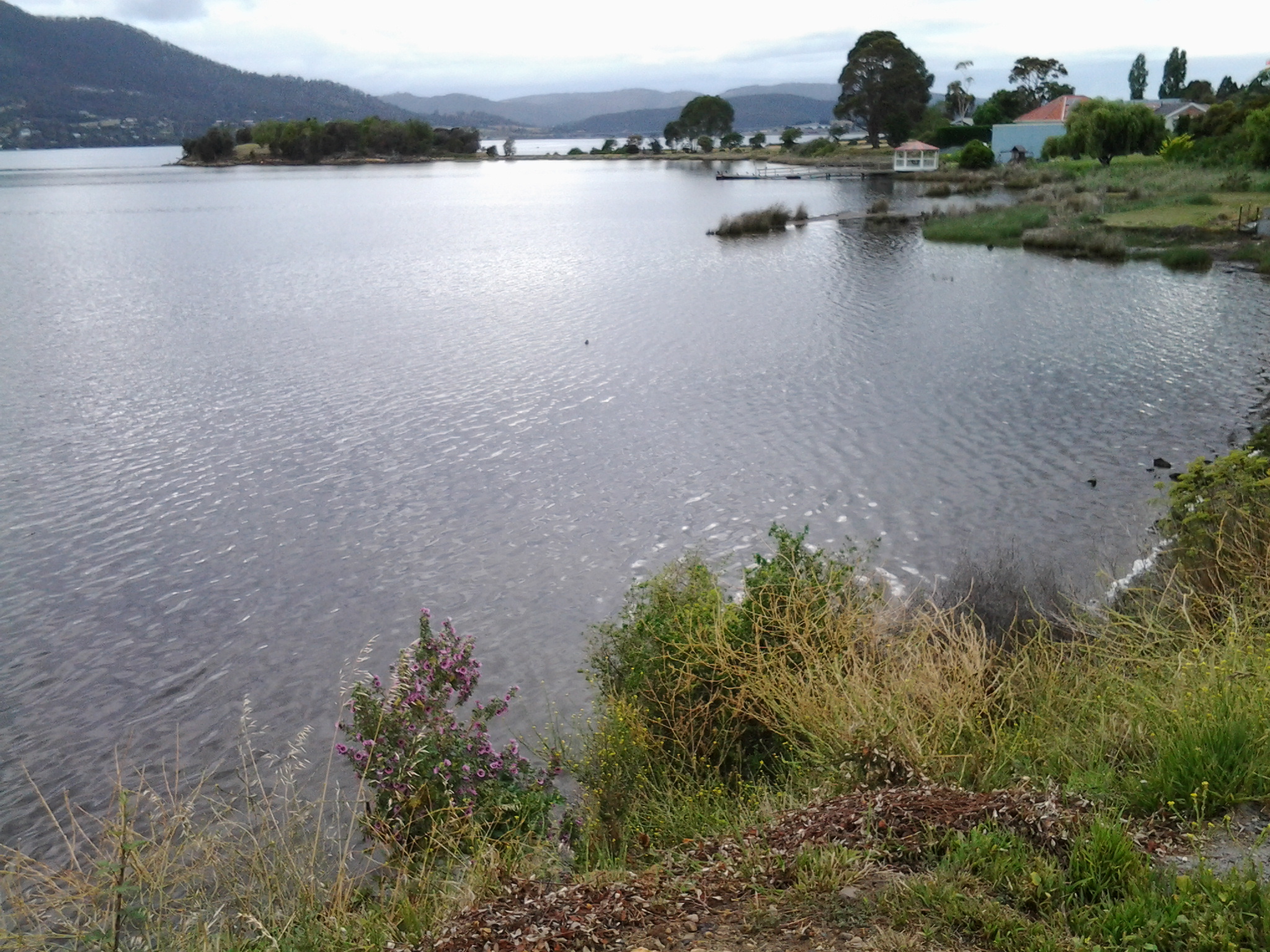
Looking south, Frying Pan Island could be seen joined to the land by a tiny isthmus.

20150109_074105

It was clear there would be no continual walking access directly along the River’s edge.  I returned to the main road and continued along until I reached the Strathaven Home for senior citizens and Riverfront Motel villas, arriving there about 20 minutes after I had stepped off the bus. I walked through these properties and continued along the foreshore until stalled by a high fence topped with barbed wire – this continued out into the water as a definite deterrent for further progress. Fat rabbits, and gangs of wild hens scattered across the mown grasses. Frying Plan Island can be accessed via the Strathaven Home  and Motel site. In the photo below, the tiny islet in the foreground and southern side of the Bay, almost blocks the rusting verticals which form part of MONA in the distance at the northern side of Berriedale Bay. It is rather difficult to separate these visually.

20150109_075100

So I retraced my steps back to the main road and joined the ‘bike path’ established for both cyclists and pedestrians by the joint efforts of the Cities of Hobart and Glenorchy. It was 8am.

Walking next to the Derwent River. The proof.

By accident, I videoed my feet as I walked across the ground near the Derwent Entertainment Centre in the southern extremities of the Glenorchy Arts and Sculpture Park (GASP).  The video lasts 53 seconds, which when you watch seems a long time, and reminds me of the unchanging nature and relentlessness of some of the films of Andy Warhol decades ago.

http://youtu.be/q5sNFzfmFuI

Yesterday I completed Stage 10 of my sequential walk along the Derwent River

The goal for Stage 10 was to start at my last stopping point, MONA in the middle of Berriedale on the western shore of the Derwent River, and continue to Lutana the last suburb of the City of Glenorchy before the City of Hobart starts. But I went further.  Much further.  Almost much further than my feet could take me.  I walked to Hobart.

Over future posts I will write up the stories of the walk, what I saw and what I experienced, but for now it’s enough to say that I am continuing with this massive project to walk both sides of the Derwent between the mouth and Bridgewater, and then onwards to Lake St Clair. Once I get walking it is always so addictive.  Even when my feet feel crippled, I say to myself … ‘go just a little bit further. What else will I be able to see with fresh eyes?’

The day was gloomy with a cloudy sky, and Mount Wellington had veils of clouds covering at least part of its prominence most of the day. But it didn’t rain and so was perfect for walking.  However, the weather ensured the photographs were without sunshine.

Yesterday I covered 12 kilometres of the length of the Derwent River on the western shore (making 22 kms in total on the western shore), and walked approximately 19 kilometres (making a total of 130 kms to date) to achieve that distance. This distance also takes in the streets and paths on which I walked that led to dead ends so that I needed to retrace my footsteps.

Of the many highlights of the walk, I saw the building that once started life as Rosetta Cottage, and powerful Clydesdale horses with their large hairy feet.

20150109_162649

I surprised a friend still in pyjamas when I went visiting for the first time in my walks. The hot cups of tea were most welcome.

I am always excited when I walk the striped edged boardwalks of GASP (Glenorchy Arts and Sculpture Park) or pass the boatsheds of Cornelian Bay and it was no different yesterday.  See the photos below for a taste of the colour.

20150109_084404  20150109_145335

I very much enjoyed looking at the eastern shore where I had walked during past stages and seeing the landscape from a different perspective.  I felt it made the Greater Hobart Area seem undeveloped in a way which is quite amazing for a capital city. For example, Bedlam Walls on the eastern shore from the western shore of the Derwent River, in the photo below.

20150109_123940

From comments I have received, I know my walks are inspiring others to think about what they might do. Even if you choose not to walk, perhaps you can set yourself other challenges.

My next walk will start at Hunter St at Sullivans Cove on the wharf in Hobart and probably extend to Kingston.  But before then I need to record the details of yesterday’s walk.

Rosetta on the Derwent River

My next walk along the Derwent River will start half way through Berriedale and pass by the suburb of Rosetta before moving onto others. I have tried to discover how Rosetta came to be named and, while I learned a little of its history, I am not certain why it was given this name.  However, I believe that our local suburb of Rosetta is indirectly named after an Egyptian town.

I suspect it all started around the time when the internationally known Rosetta Stone was found in 1799 (note: the first European settlement along our Derwent River started in 1803).  The Rosetta Stone was found by French soldiers, (under Napoleon Bonaparte’s command) who were rebuilding a fort in Egypt, in a small village called Rashid (but known as Rosetta by the Europeans).

Wikipedia offers the following information: “Rosetta (Arabic: رشيد‎ Rašīd IPA: [ɾɑˈʃiːd]; French: Rosette) is a port city on the Nile Delta in Egypt, located 65 km east of Alexandria. Both the Arabic name Rašīd (Interesting unrelated sideline is that Ar-Rašīd meaning “The Guide”, is one of the 99 names of Allah) and the western name Rosetta or Rosette (“little rose” in Italian and French respectively) are corruptions of a Coptic (language from the native Christians of Egypt) word, Rashit or Trashit.”  I can pronounce Trashit, Rashid and Rosette/Rosetta so that they sound similar. Can you?

Read http://www.touregypt.net/rashid.htm#ixzz3NvMb6Iyk for more information about the town of Rashid. Apparently the highly green Egyptian town on the Nile River was typically tranquil with vast gardens, orchards and date-palm plantations, in addition to a multitude of beautiful historical houses, inns and mosques adorned with exquisite decorative inscriptions and woodworks. The town was known as the ‘Rose of the Nile’ by Europeans. I guess the name Rosetta was given to our suburb for the underlying European meaning of rose; a thing of beauty.  Hobart’s Rosetta is located on the southern side of Tasmania’s major river in a beautiful setting within the City of Glenorchy as part of the Greater Hobart Area.  However it is neither a city nor a port.

In 1807 as part of the Alexandria/Fraser expedition to Rosetta in Egypt, British forces led one group of local inhabitants in a civil war against another group led by a local leader.  Britain’s intention was to break the Ottoman-French alliance. As a result, in the first decade of the 1800s, I suggest that Egypt would have been highly visible in English news and the battles would have been known in the colonies.

Irene Schaffer, a Rosetta resident and local researcher offers historical information about the original settlement at http://www.tasfamily.net.au/~schafferi/index.php?file=kop79.php. John Berrisford and wife arrived in Australia from England on the First Fleet in 1788. Then, in 1808 John and his family sailed to Hobart Town. In subsequent years, they settled along the Derwent River in the area now known as Berriedale Bay and which extended to the south-east past Rosetta High School, and they built Rosetta Cottage (later renamed Undine Inn). 140 acres of land, now part of our suburb of Rosetta, was granted by NSW’s Governor King to John Berrisford in 1813.

My last walk along the Derwent River finished at MONA a little to the north of Rosetta. My next walk will start by passing Berriedale Bay. I look forward to seeing the old house – albeit with extensions and renovations since John Berrisford was alive. A photograph of this property, now known as the Rosetta Colonial Accommodation, can be seen at http://firstfleetfellowship.org.au/stories/john-hannah-beresford/. This website also provides more detail about the Berrisford family and their history.

Perhaps, through news from England, John Berrisford heard that Rosetta was the ‘Rose of the Nile’ and, in believing the British intrusion into Egypt was glorious, named his house as a show of support.

As a contrast from the historical background, I have located a contemporary profile for Rosetta. The population is 2567, the median household weekly income is $1050, the median age of residents is 45 years, the average household size is 2.4, almost 60% are married or in a de facto relationship, almost 40% are either under 5 years of age or over 64 years of age, weekly rent is $340, and the median house price is $319,455.

40th anniversary of the collapse of the Tasman Bridge over the Derwent River

On the 5th January 1975 late at night, the link between the eastern and western shore of the Derwent River was broken.  It took 2 ½ years to rebuild. In the interim, residents of the eastern shore ferried across to Hobart city for work.  Last night a small gathering of people came together to remember that momentous occasion.  Read more at:

http://www.news.com.au/national/tasmania/tasman-bridge-collapse-remembered/story-fnn32rbc-1227175410862e

These days if a large ship is travelling upstream, traffic lights bring vehicles to a stop before they drive onto the Tasman Bridge. Bridge pedestrians are also alerted to stop and wait until a ship has passed before walking.  However, as I found one day when walking into Hobart city over the Bridge, the alert is not given soon enough for pedestrians and I was already on the Bridge when the cars were stopped. I recall walking to the highest point and looking down and watching the ship pass beneath. Safely.

Then there is remarkable story of the guy whose Monaro teetered over the edge of the broken bridge.  He stills drives the car. You can see pictures and learn more at http://www.news.com.au/national/tasmania/historic-monaro-out-from-under-wraps-for-anniversary-of-tasman-bridge-disaster/story-fnn32rbc-1227174793722

Berriedale on the Derwent River

I experienced the Berriedale Caravan Park, beautiful bays and water birds, the surprising memorial to dogs that were members of the defence forces in various international wars, sewage works and MONA at the end of the last stage of my walk along the Derwent River. But there is more to Berriedale.

1986 was the International Year of Peace and many Peace Gardens were created to celebrate the event. Others have been created since then for bringing communities together. Eve Masterman (1907-2014), a tireless worker for peace, social justice and the environment, was instrumental in the establishment of an International Peace Forest (Peace Park) at Berriedale in 1991. This Forest/Park does not appear on Google maps, is not listed as a park within the jurisdiction of the City of Glenorchy, and there are a number of online enquiries asking for the location. But I remember passing through a Peace Park on my walk – I just can’t remember where. I have scoured my handwritten notes (the precursors to the postings) and photographs and found them wanting. Does any reader know the location of the International Peace Forest (Peace Park) at Berriedale? Shouldn’t a Peace Park be considered significant and worthy of records, signage and directions?

Now, how about some older history?

The Scottish heritage of some residents of Tasmania’s City of Glenorchy may be represented in the name Berriedale. According to http://www.tasmaniatopten.com/lists/ancestries.php, “The third largest migrant group in Tasmania are the Scots. They were also numerous among the early settlers in the colony.” Firstly, it was interesting to learn that in Scotland; Glen Orchy is about 17 km long and follows the River Orchy through the Caledonian Forest. Secondly, there is a small village Berriedale located on the far north eastern coast of Scotland. I have looked at images of the Scottish countryside around Berriedale and they show no resemblance to Tasmania’s Berriedale. The Berriedale Inn was open for business near our Derwent River in 1834 and perhaps the name for the suburb derived from that. Alternatively, perhaps our suburb was named after someone with that surname rather than the town. The City of Clarence has a good website with historical information about its suburbs and so I wish that the City of Glenorchy offered something similar. I can’t believe I am the only one interested to understand the Hobart that I live in.

Around the corner from the mouth of the Derwent River, at Clifton Beach

Yesterday, the temperature at my home was in the high 30 degrees but today the temperature was much more pleasant and only rose to a little over the mid 20s. In the spirit of getting back out into the environment and not worrying about heat exhaustion, this afternoon Je and I headed off to have a look at Clifton Beach. This is not a place easily accessible by public transport unless you have time to take a long walk of many kilometres from a distant bus stop. So this Beach was accessed today by starting with a private car trip.

Neither of us had visited Clifton Beach or the adjacent Clifton Beach Conservation Area nature reserve for many years yet it’s a stunningly beautiful location only 25km from the centre of Hobart. The sky was cloudless, and the onshore breeze kept us comfortably relaxed.

This beachside suburb to the north of the South Arm peninsula and therefore north of the mouth of the Derwent River on the eastern shore, is part of the City of Clarence in which I live, and part of the Greater Hobart Area.

Clifton Beach is a 2.1km long wide sandy beach backed by deep revegetated 20 metre high sandy dunes. The beach is bordered by 54m high Cape Deslacs in the east and 50m high rocky cliffs in the west that run south for 3.5 km rising to 100m high at Cape Contrariety. At the southern end of the beach, a Surf Club is central to the protection of swimmers. However out on the waves, and typically clad in black wet suits, were sun-bleached surfers. Have a look at http://www.surf-forecast.com/breaks/Clifton-Beach which has a changing selection of photographs showcasing this amazing beach – plus you can check out the forecast if you want to go for a surf. One of the photos looks towards the southern end, another looks across Storm Bay to the Tasman Peninsula, and the other is a huge wave the like of which we did not see today.

The photo on http://en.wikipedia.org/wiki/Clifton_Beach,_Tasmania shows the cliffs at the northern end marking Cape Deslacs. When we followed a track out from a carpark, we found ourselves about half way along the long beach so we turned north and walked to the cliffs in the photo, passing a few happy walkers and joggers.  A multitude of empty shells and dying/dead jellyfish lined the high tide mark. Dominican and Silver Gulls hovered. The crumbly sandstone strata in the cliffs were majestic. The rocks at the water edge were covered in baby black mussels. Under the waves crashing onto the rocks were thick unforgiving ribbons of kelp – the sort that could strangle and drown you if you were foolish enough to swim here without care.

Our view across the white capped waters of Storm Bay included a glimpse of Bruny Island to the south west on our right, and the western side of the Tasman Peninsula on our left.

We paddled in the breaking waves of cold water then trailed wet trousers across the hot sand.  We longed to swim, but this is a very dangerous beach for undertows, powerful currents/rips and back surges, and unexpected changing sand bottom levels. People have died here from time to time after being seduced by the jade coloured waters, the clarity and cleanness of the water, and the seeming safety of it all.  But the message ‘to swim between the flags’ indicating you should not swim unless there are life guards present and when they have put up flags indicating the safest stretch to swim between, needs to be adhered to at Clifton Beach.  Today Je and I could see some of the turmoil beneath the waves, and the contrary action of waters moving in and out seemingly simultaneously.  The clear glassiness of the water was so very enticing and, when licking my lips I tasted salt, I had a difficult time resisting going into the water.  But the sand was soft and warm so a great lingering stroll was the wonderful substitute.