Category Archives: Tasmania

The end of the Rolex Sydney to Hobart 2014 yacht race

This afternoon I needed to walk to Bellerive’s Village for basic shopping. Once there (20 minute walk) it seemed a waste to be so close to the Derwent River and not to walk around Kangaroo Bay to Bellerive Bluff and see if any more yachts were sailing up to the finish line.

Today has been exceptionally blustery and Mount Wellington keeps disappearing from view as rain squalls and clouds move across in waves.

2014-12-30 13.37.39  2014-12-30 13.39.41

It was clear to me that a major storm was passing and could reasonably be expected to travel across the Derwent River and saturate me. Nevertheless, knowing its only water and that my umbrella could be expected to be blown inside out with the wind, I walked on.  And it was worth it.

The wild water of the River showed peaks and troughs and there in the blurry distance, trying to keep close to protection of the land on the western shore close to Wrest Point Hotel Casino, two of the last yachts were fighting it out to see who would cross the line first.

2014-12-30 13.40.23  2014-12-30 13.41.19

At home I have checked and learned that the two were Maluka of Kermandie and Charlie’s Dream.  As I stood on that windswept shore, I could see it was a battle between the two but I was surprised to discover their finish time had only 3 seconds between them. Can you imagine?  After hundreds of miles/kilometres in some very testing weather, three seconds separated these two at the line. Inspirational!  The message for me was that one must never give up; I must keep pushing onwards.

Only two yachts are yet to cross the line. One is charging up the Derwent as I type and has almost reached the finish line (Southern Myth) and the other seems almost to be stalled in Great Oyster Bay slightly south of Freycinet peninsula on Tasmania’s east coast.  I can only imagine that yacht is taking it slow and easy to cope with the weather and arrive in one piece.  Many yachts have withdrawn from the race with expensive rigging, sail, rudder, lost masts, and other boat damage. Perhaps the last yacht, Landfall, is considering making landfall earlier than the Hobart docks.

If you don’t mind thickly padded appearances and wind-blown hair, then today is a wonderful day to be wearing your winter woollies and outside walking and filling the lungs with fresh (and it is fresh) air.
In the right place at the right time watching the Derwent River

From my front windows I can look down the Derwent River, and when I am lucky, over the curve of Bellerive Bluff sloping into the water I can see tall masts suddenly appearing.  If I wait a few moments, the sails become visible and then the entire yacht sails into view, trying to fly to the finish line of the Sydney to Hobart yacht race.

Last night, my mind was full of stories and ideas. Earlier in the day I had relaxed in the large chairs within the Gold Class at the cinema courtesy of a friend, and been moved strongly by Russell Crowe’s new movie The Water Diviner.  We were both very impressed by the movie and were thrown into thinking and talking about World Wars, and the futility of lost lives and the consequences for families. Then later, once back at home, I finished reading our Tasmania’s Richard Flanagan’s Booker Prize winning novel The Narrow Road to the Deep North. Until then I had never truly felt the situation for our Prisoner of War soldiers forced by the Japanese army to build the Thai-Burma railway.  It is an extraordinary story, which made me feel quite breathless with despair about how different cultural values and beliefs can neutralise or destroy the natural talents of men.

So with two war stories swirling in my head, I dozed. When I woke from a half sleep at 2.20am I thought not of mud and death rather of water and the achievement of goals.

I ambled to my front windows and was brought wide awake. As I stood looking onto the dark Derwent River with the lights of streets, buildings and Wrest Point Hotel marking the western shore line, I realised something tall was slipping along behind Bellerive Bluff.  Within seconds the tall mast was momentarily blocking my view of bits of light on the other shore.  Before long the supermaxi was entirely in view and charging towards the finish line. I was surprised at its speed. Majestic. This morning, after checking the race standings, I now know I watched the third boat to arrive, Ragamuffin100.

Today’s arriving yachts have not been so lucky with the wind once they have come into my view. It’s almost as if once they pass Bellerive Bluff, the wind stalls.  I have watched yachts tacking across trying to make the most of a fickle breeze. Sometimes one almost passes another which had been way ahead.  It’s a beautiful clear morning in Hobart, and the surface of the Derwent River seems to be without a ruffle, but I doubt if any of the crew are thinking about that as they try to cover the last kilometre or so and improve their race standing and time.

Wild Oats XI took line honours for the 8th time when it crossed the finish line on the Derwent River

I bussed into Hobart seeking a spectacle and I wasn’t disappointed. I looked seaward when the bus crossed the Derwent River on the Tasman Bridge.  Hundreds of boats of all shapes and sizes were out on the water  welcoming the racing yachts into and up the River. Picture postcard imagery.  Perfect.

Once in the city and amidst thousands of people, I wandered down to the wharf. I loved the festive atmosphere and the sense of great achievements.

The tallness of the supermaxi masts always surprises me, and seeing the mast on the glossy Wild Oats XI was no exception. Gasp. So tall I had to move my head to see from the bottom to the top; simple eye movements were not enough.

The yacht was tied up and people, whether on or off the boat, were hugging and shaking hands, their tanned faces full of smiles. The crew had not slept but were exhilarated. Publically broadcast speeches followed. The sun beat down and it seemed the air reverberated with good will.  Today was definitely full of joy for those who have arrived safely in port at Hobart.  ABC Online was the first to transmit a story of the win.  Have a look at http://www.abc.net.au/news/2014-12-28/2014-sydney-to-hobart-yacht-race-winner/5990156 for colourful action photos, and a video.

The great and wonderful Sydney to Hobart Yacht race is about to enter the Derwent River

For 69 years annually on Boxing Day (26th December), over 100 yachts have set sail from Sydney Harbour for the internationally renowned Sydney to Hobart Yacht race.  Their well-trained crews have great ambitions of becoming line or overall winner depending on the size and class of their yachts.

The website (http://rolexsydneyhobart.com/about-the-race) explains this race is an egalitarian event, attracting yachts as small as 30-footers or large maxis, sailed by crews who range from weekend club sailors to professionals from the America’s Cup and Volvo Ocean Race circuits. The Rolex Sydney Hobart Race 2014 is a classic long ocean race open to anyone who owns a yacht that qualifies for this challenging event and which meets all the safety requirements of a Category 1 safety race.

Today is the exciting one for Hobart residents, thousands of yachtie fans and plane loads of tourists who expect to see the first two towering maxis come over the final line later this afternoon.  As I type this posting, an Australian yacht Wild Oats XI (which has won the race 7 times) leads the USA maxi Comanche which is trailing by 10 kilometres. The rest of the fleet are over 140 kilometres north and none of those yachts can be expected to arrive until tomorrow at the earliest.

But, for today’s two maxis, the big trial will be sailing the final 11 nautical miles of the Derwent River to the finish line.  A change in the wind is forecast and this could be to Comanche’s advantage.  The history of this race is littered with leaders who are overtaken during the last leg on the Derwent due to fickle, conflicting or no winds. Currently the winds around Hobart are north-westerly 15 to 20 km/h and are expected to shift south to south-easterly 15 to 25 km/h in the early afternoon then become light in the late evening.

As I sign off, Wild Oats XI has entered Storm Bay which is the last expanse of water before the Derwent River.

Check out the website http://rolexsydneyhobart.com/ for stunning photos of the yachts and in a few hours you will see the arrival of the first two in Hobart, on this gorgeous sunny blue sky day.

Kingston Beach, Tasmania

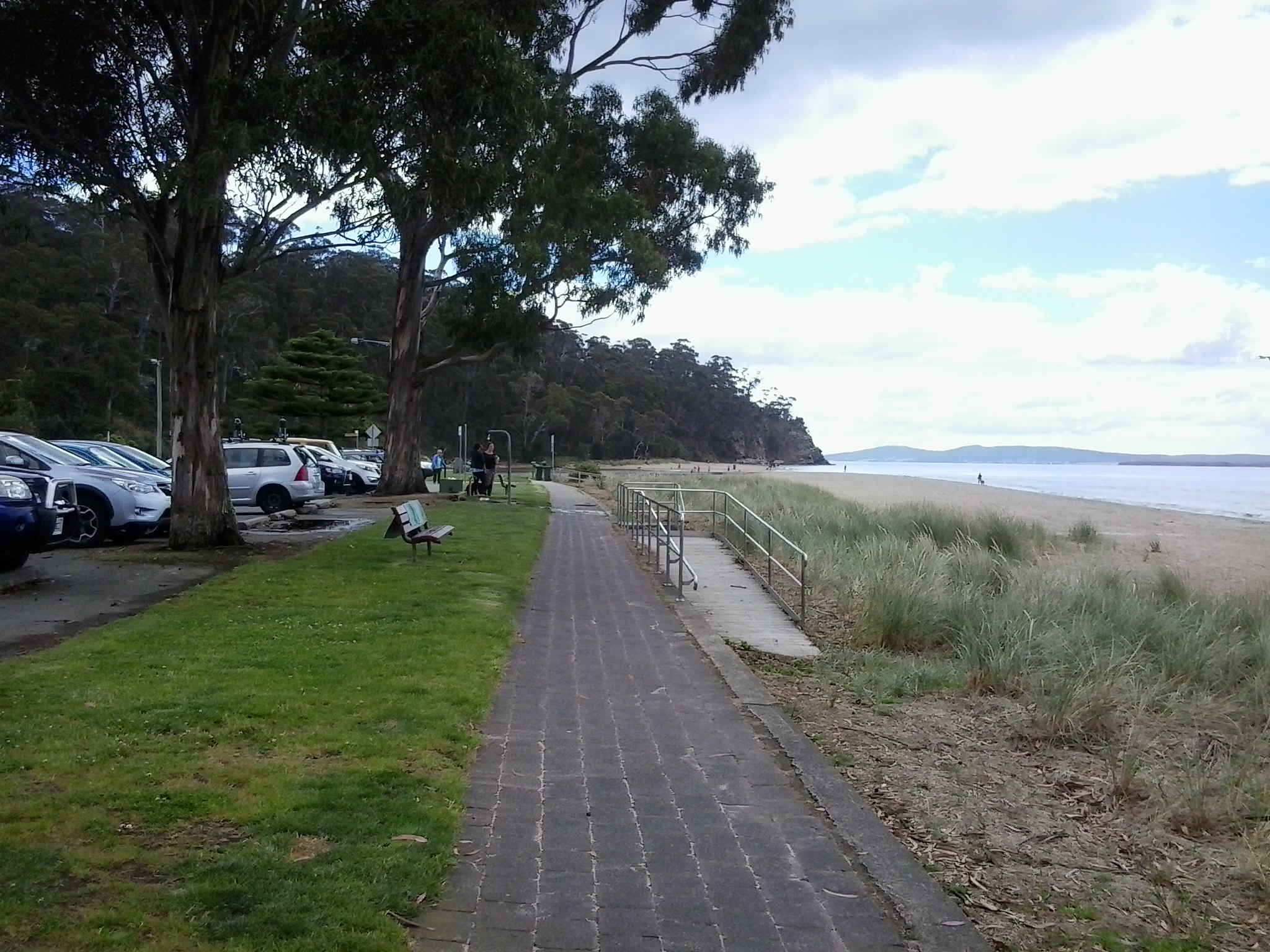
I found a tiny laneway, squeezed between residential properties, which extended from Roslyn Avenue near where I was staying in Kingston, down to Kingston Beach.  The downward stroll took 6 minutes and, later, the return trundle uphill took 10 minutes.  The easy accessibility to the beautiful foreshore is an asset for locals.  I loved the closeness of the lush vegetation along the pathway and then the openness of the Beach extending before me once I reached the Esplanade.

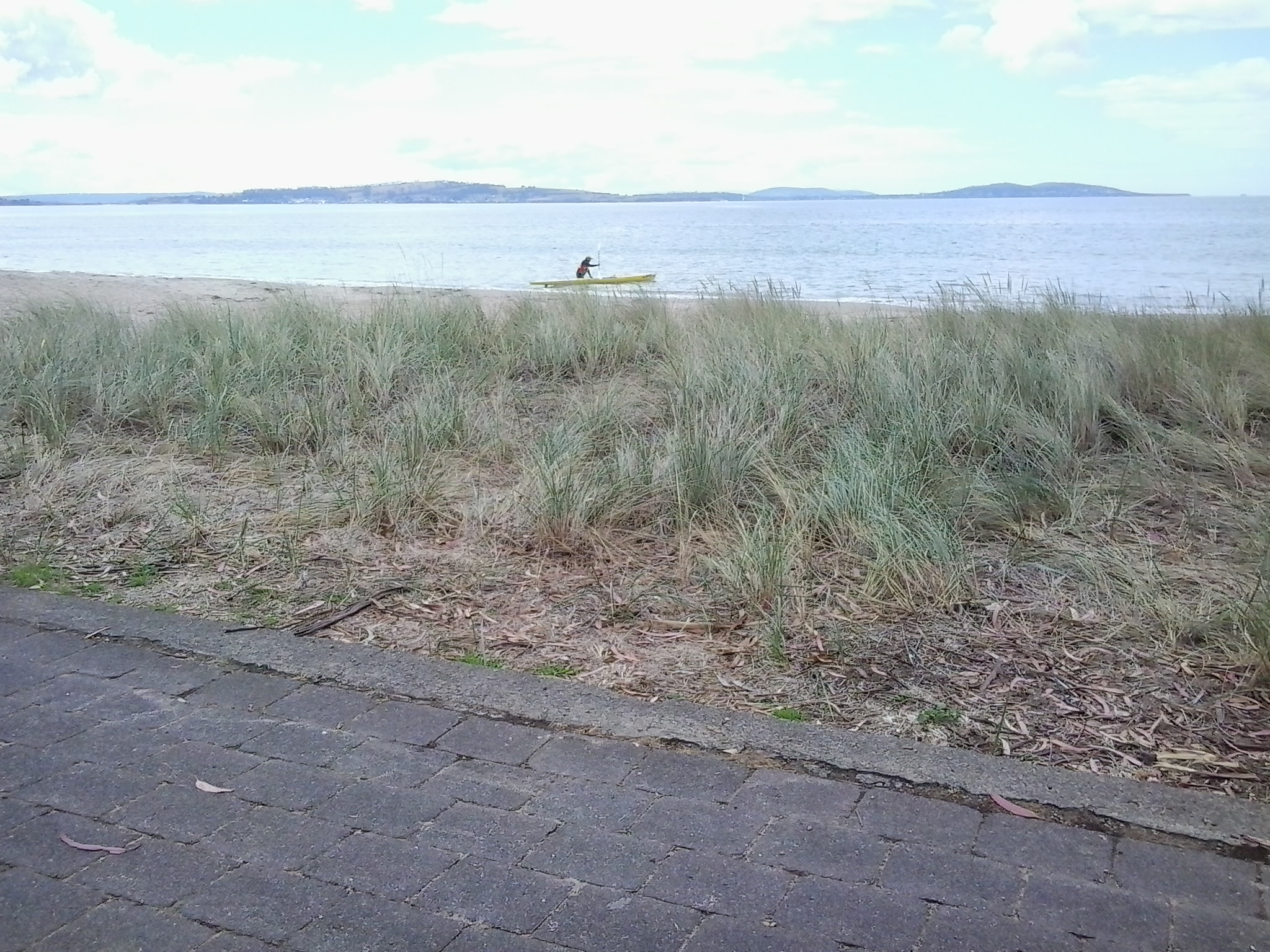
The morning was overcast with a moderate breeze, but the weather did not deter families, groups of children or a kayaker from enjoying the beach and water.

In the photo below the lone kayaker sets off to enjoy a paddle. The land which can be seen across the Derwent River is the South Arm peninsula. Standing on Kingston Beach, I could identify key points along that piece of land which I had walked during Stage 1 and 2: Gellibrand Point, Opossum Bay, South Arm, and Fort Direction Hill.

Kayaker

I followed a path along the foreshore northwards to Browns River and then I retraced my steps. Looking towards the mouth of Browns River as it enters the Derwent River.

Pathway along Derwent at KB

At Browns River, one side of Mount Wellington looms in the distance.

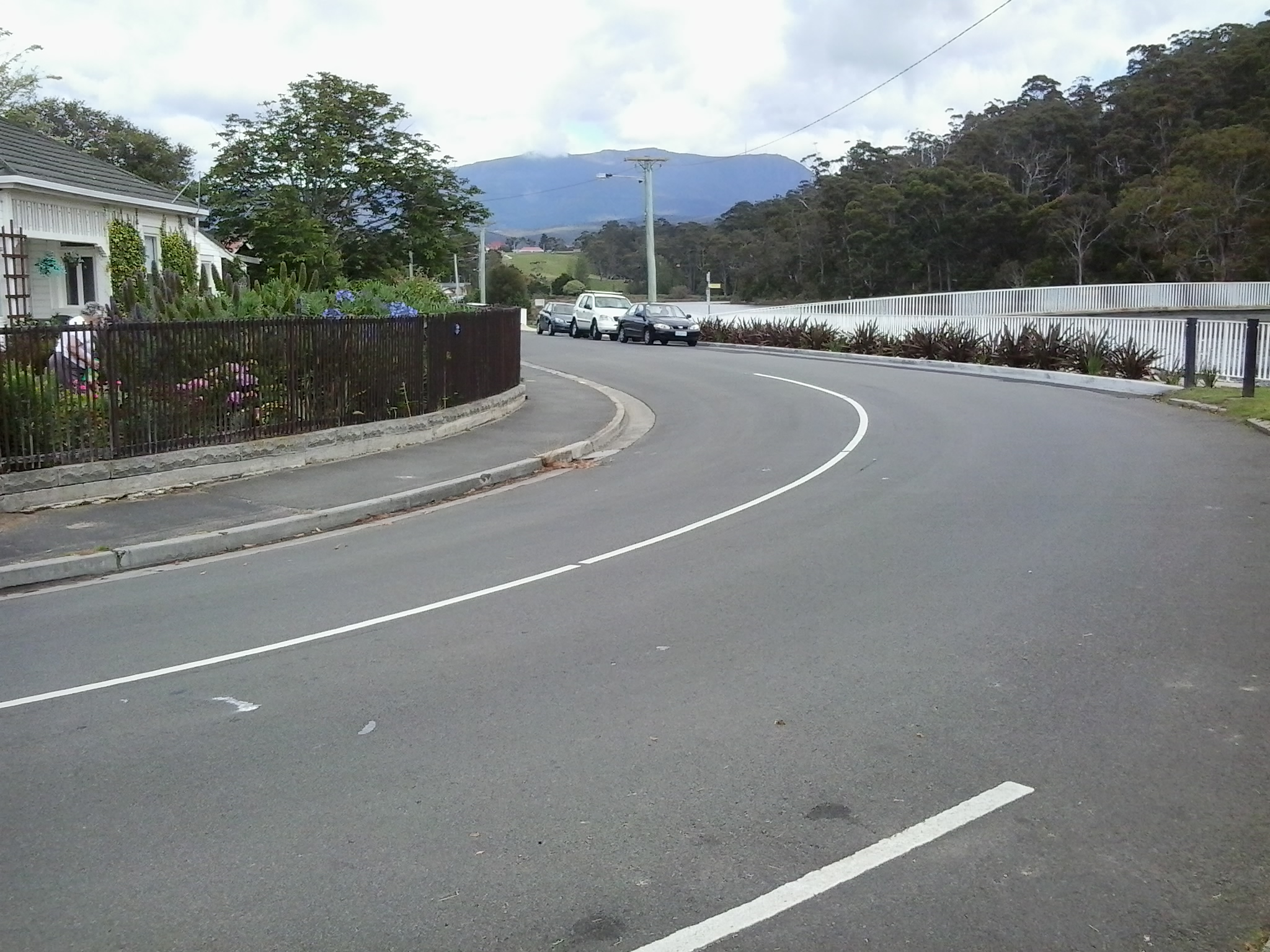
end of Kingston beach road

Kingston Beach and Browns River are located within the municipality of Kingborough as part of the Greater Hobart Area. In the photo below the waters of Browns River can be seen meeting the Derwent River.

Sign

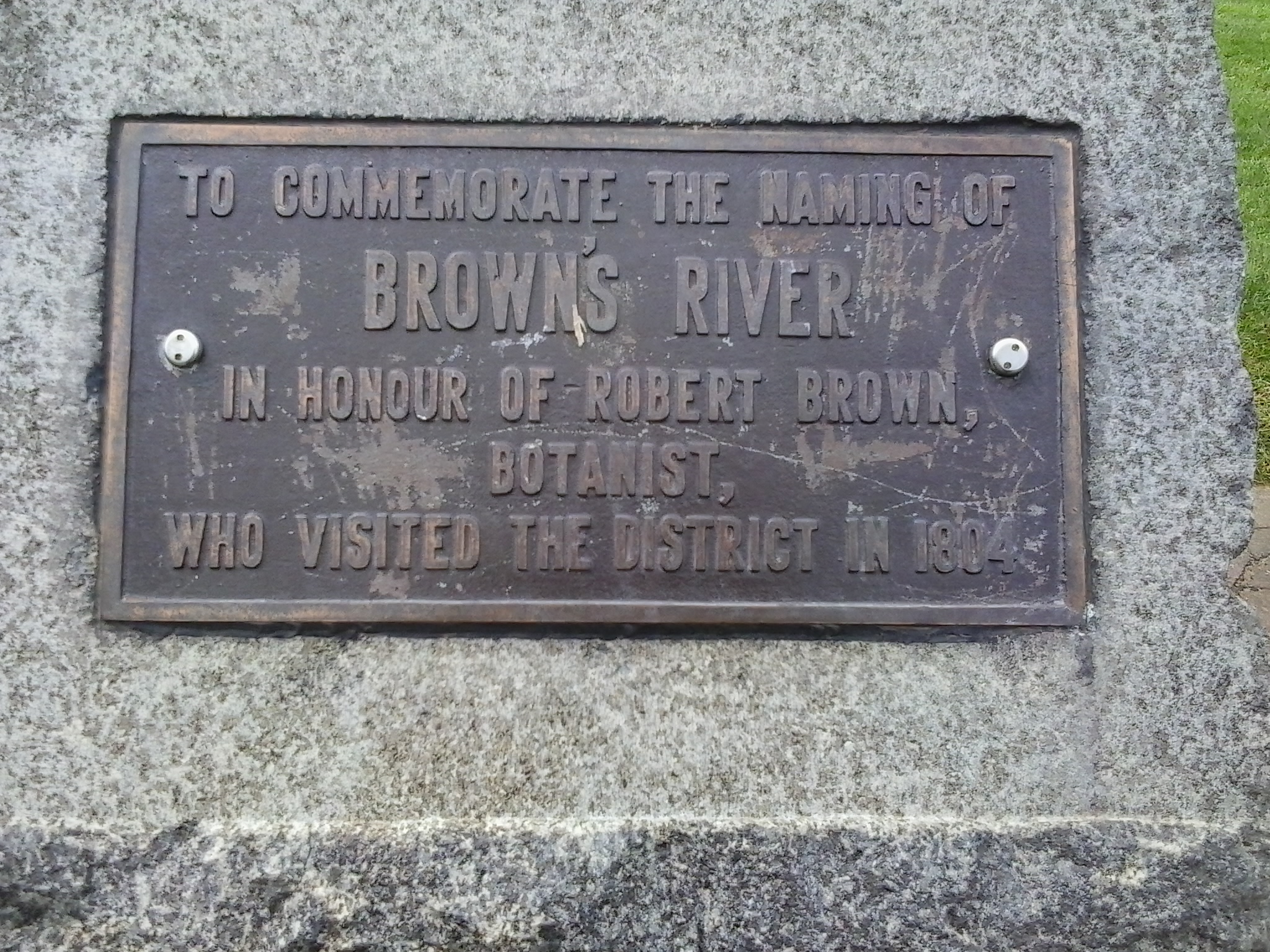
Nearby I discovered a plaque (photo below) and its message surprised me. Browns River was named in 1804 (you can read more about Robert Brown at https://www.forestrytas.com.au/assets/0000/0185/tasfor_12_10.pdf).  From the reports of my earlier walks in this blog, you might recall that Risdon Cove was established as the first white/non indigenous settlement (on the eastern shore, and quite a few kilometres upstream from the mouth of the Derwent River) in September 1803. I find it quite extraordinary that within months of the first white settlement (in fact Brown named the River in April 1804), despite the difficulties of making a new home in this foreign land, new arrivals were off and about checking and naming other edges of the Derwent River. It wasn’t until July 1804 that the area around Sullivans Cove (the site for the central part of the current city of Hobart) was set up for permanent residency. Sullivans Cove is much much closer to Browns River than Risdon Cove, so Brown had a long way to paddle.

Browns River plaque

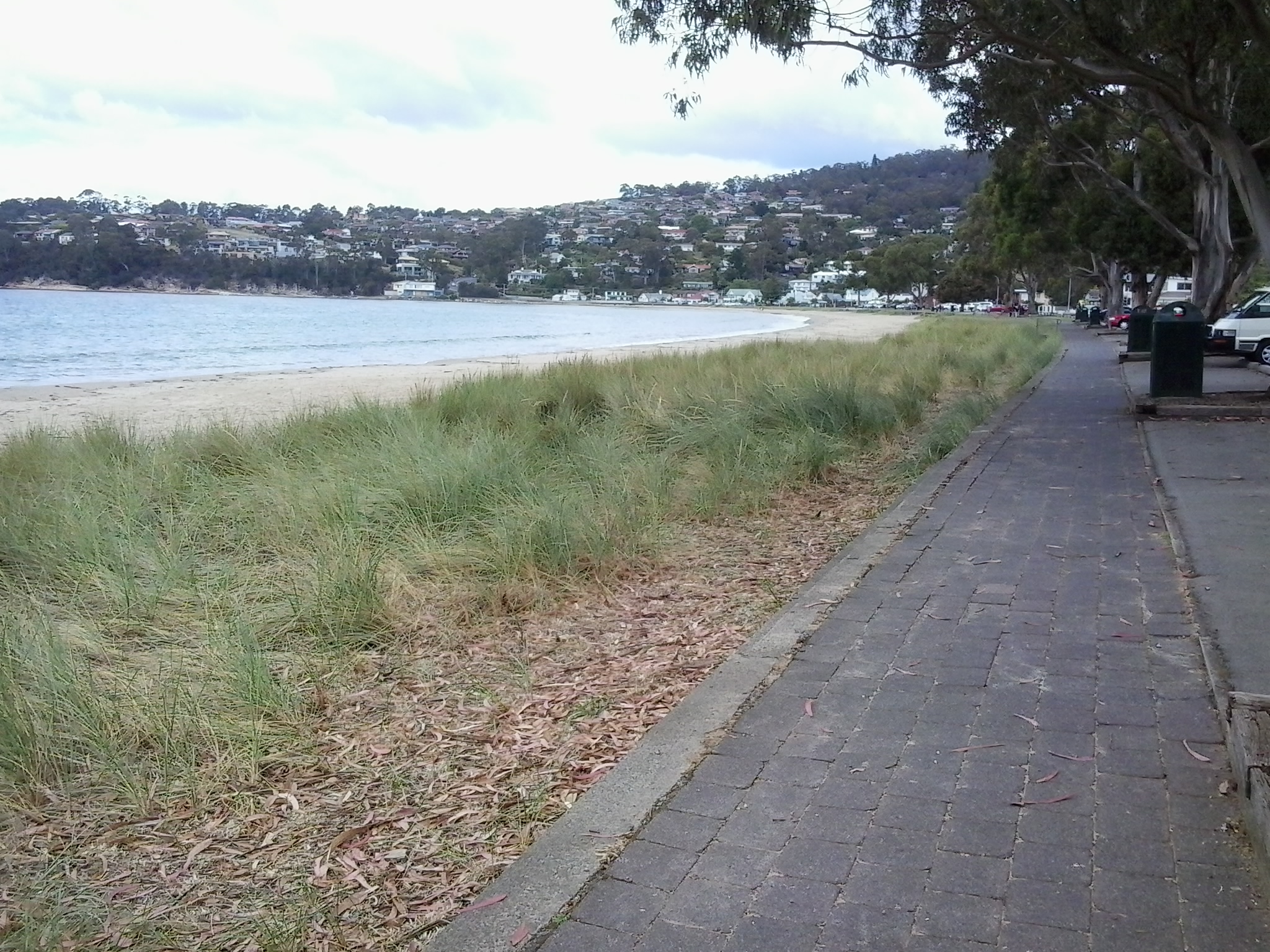
The photo below looks back towards the centre of Kingston Beach from the Browns River northern end.

kb 2

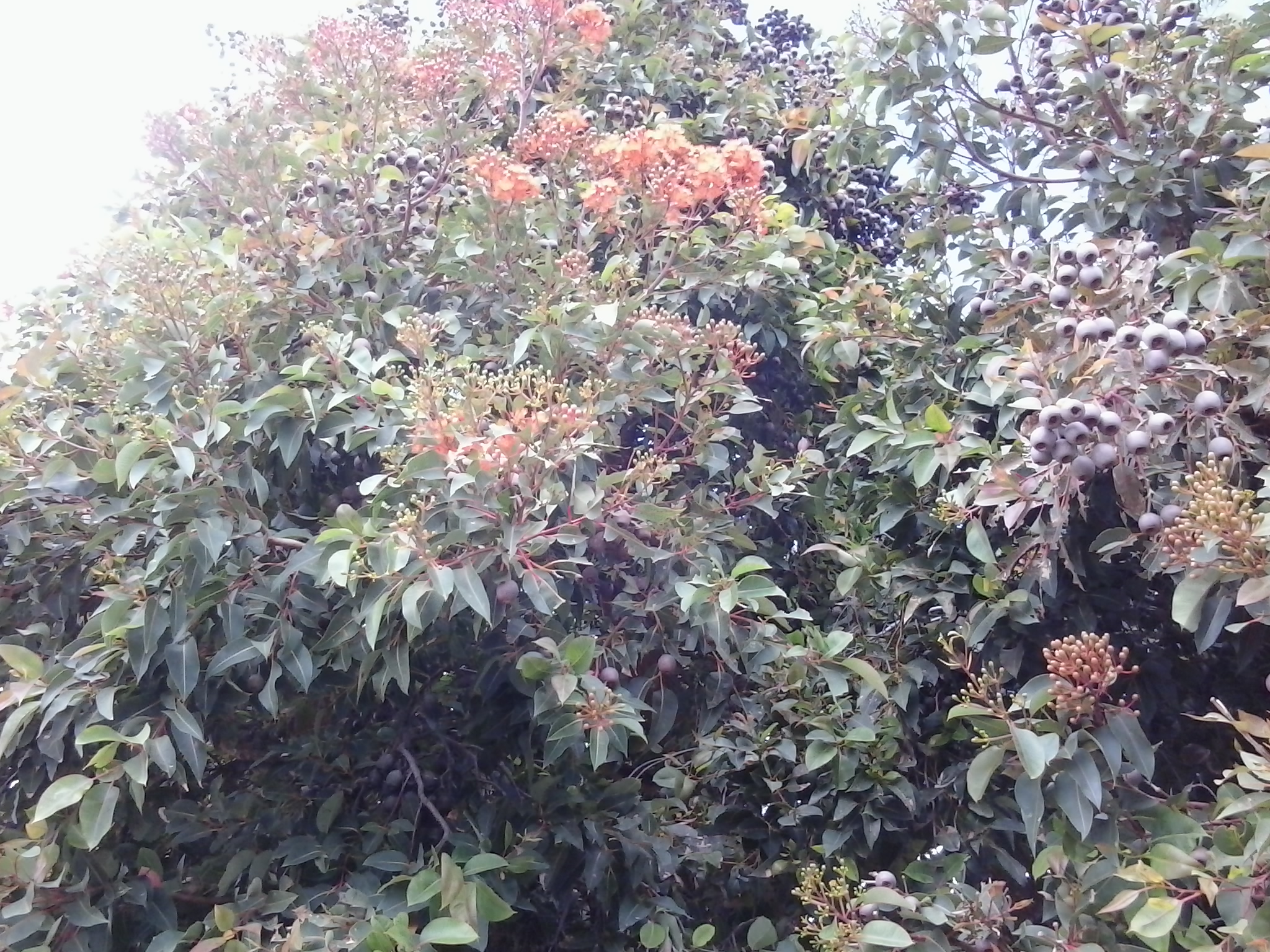
I loved the trees and was especially impressed by one of the flowering gum trees next to the foreshore walkway.

gum blossom

The stroll from the one end of Kingston Beach to the other takes about 15-20 minutes and represents approximately 1 kilometre of the Derwent River’s length.  Immensely pleasant.  If you haven’t enjoyed this part of the Greater Hobart Area, or it’s a while since you have travelled here, then I strongly recommend you make a visit.

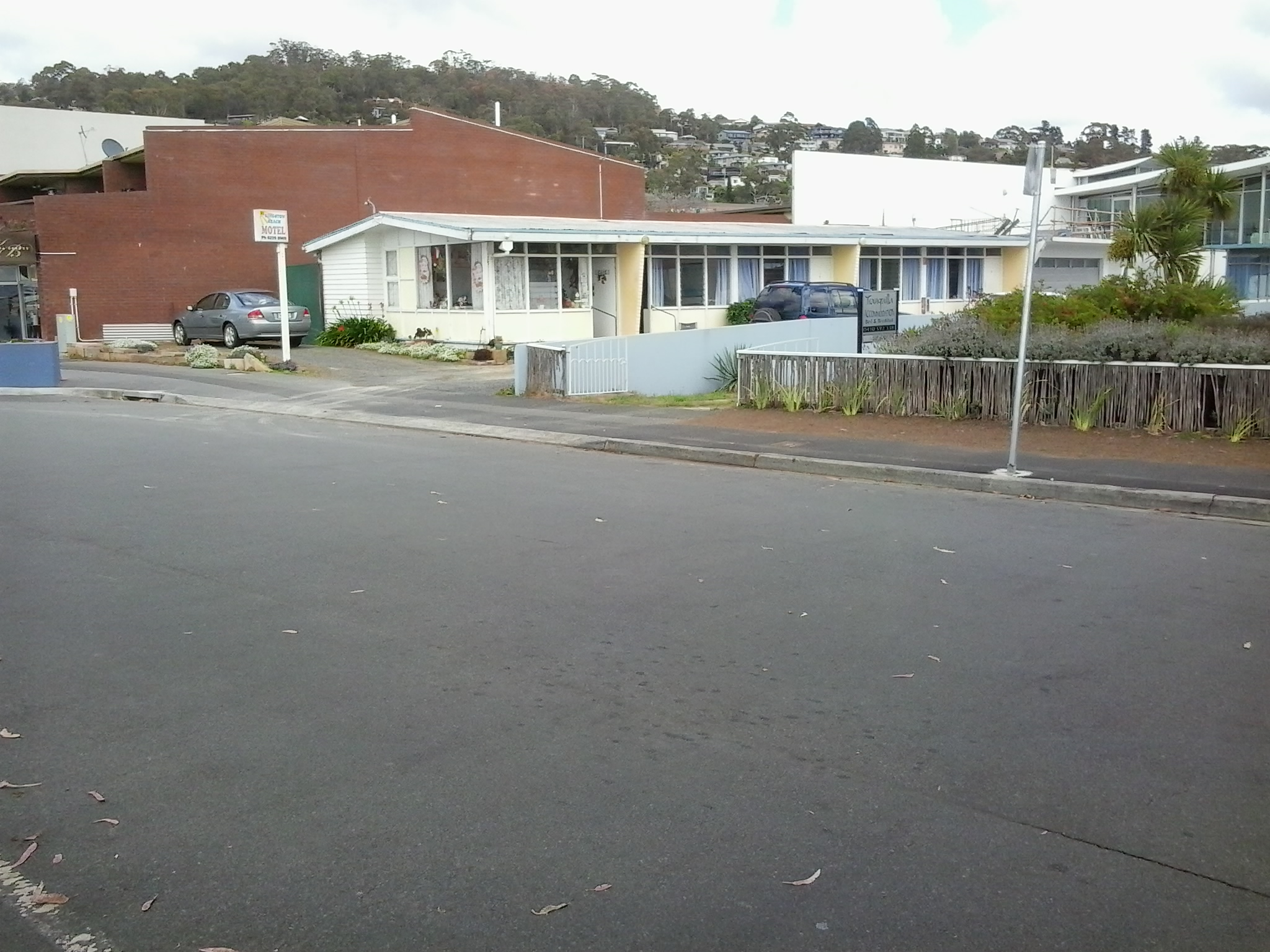
Fish and chip shops, cafes, a sad looking motel and Duncan’s Beachfront Motel Hotel are located across from the beach.  Some readers might know Slim Dusty’s song ‘I’d like to have a drink with Duncan’ (refer to http://www.lyrics007.com/Slim%20Dusty%20Lyrics/Duncan%20Lyrics.html for more information). Jo will recall the hilarious fiasco at a fashion parade in Darwin when this music coincided with a bridal dress being shown on the cat walk.  I wonder who Kingston’s pub is named after? Anyone know?

shops and cyclists  Motel  Duncans pub

Along the street travelling away from the beach towards Hobart, you will pass an assortment of outlets including hair salons, service stations, a community hall and, very surprisingly, the Wafu Works which is a shop selling vintage authentic Japanese fabrics.

Japanese Wafu Works  Japanese fabric shop

Simple street art in the form of inset mosaic panels have been incorporated in the pavements.

Mosaic in pavement  Street mosaic in pavement

This part of Greater Hobart is very attractive, and I am vowing to visit more often.

Getting out into the air at Kingston Tasmania

Twenty three minutes of walking, mostly along Auburn St in Kingston, was rewarding for the profusion of native and exotic vegetation, the family of pardalote birds, the friendly locals, the lone sulphur crested cockatoo, the occasional glimpse down to Kingston Beach between houses, and the still silvery almost disappearing Derwent River.

Kingston Beach from Auburn St v3

At the end of my walk was the Channel Court shopping centre (http://channelcourt.com.au/directory/) at Kingston with new and old parts ( I am yet to walk to the Kingston Shopping Centre). Perhaps years have passed since I was here and the building extensions and diversity of dozens and dozens of shops surprised me.

I found what I needed, made my few purchases and was eager to leave. So many people, so many trolleys, so many bags, so many cars, so many travellators where people forget they are meant to continue walking, so much tinsel, so much ‘festive’ music,  and so much to consume if you want to keep spending. Overlaying all that experience was the deadening sound of air conditioning noise which all shopping centres have.

I am not an enthusiastic shopper and very quickly I looked forward to the return walk home.  In particular, I was hoping to get a good photo of this side of Mount Wellington. However, since the rain has stopped, the rising steam is clouding the base of the mountain. Unfortunately, except when I am close up with glowing colourful flowers, the silvery air washes out the landscape.  So I will return another day and hope to click a definitive shot of that spectacular natural edifice.

I am on holiday watching over the Derwent River

Yesterday afternoon I left home, for a week, to live in a unit above Kingston Beach which overlooks the wide expanse of the Derwent  Harbour in Tasmania’s south east.

In future, I will walk along the edge of the Derwent River below as part of my stroll along the Derwent from the eastern shore mouth to the western shore mouth and then from Granton to the source.  Here I am located very close to the mouth on the western shore. I feel tempted to walk the last kilometres this week, and then go back to Berriedale and walk the remaining distance to Kingston. The weather and Christmas commitments will influence the decision.

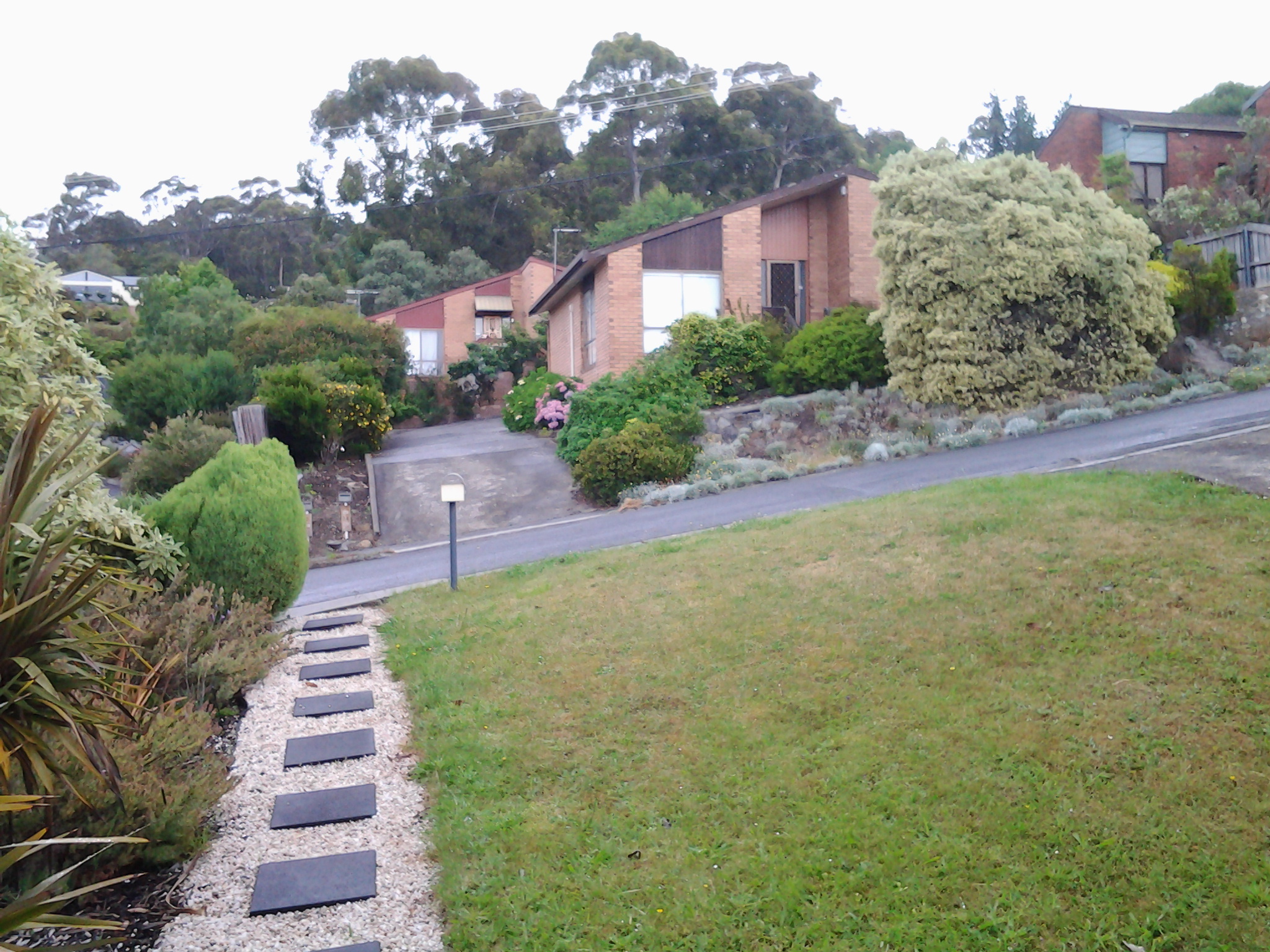
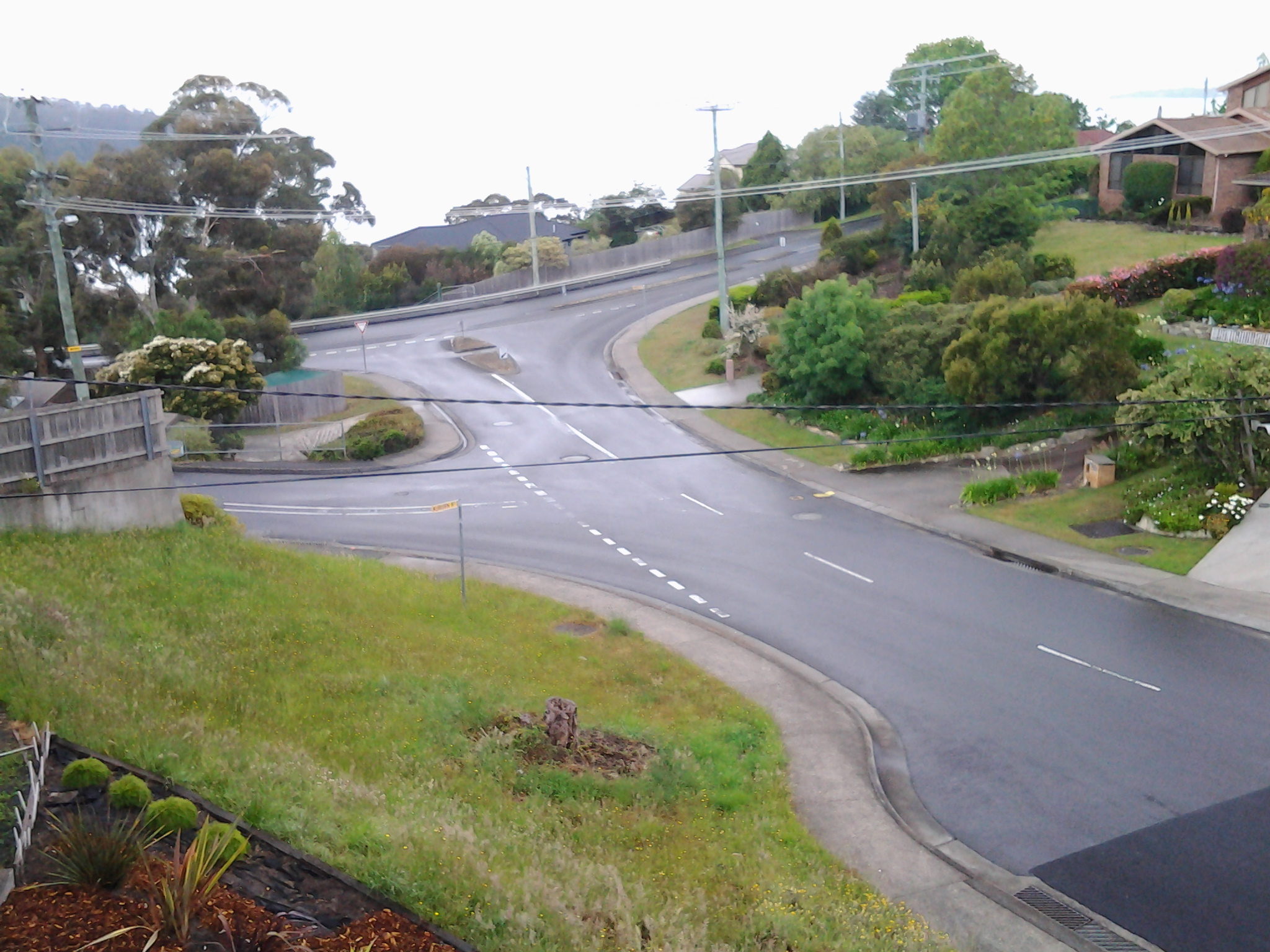
I am living in a leafy suburb where the rain has pattered through most of the night.  The ground is moist, the air is clean, and the vegetation looks delightfully healthy. This morning, despite slight drizzle, I have taken photos from and around where I am living to give me a sense of place.

20141223_092336 20141223_092147  20141223_092341

The water and the air over the Derwent River are pale and silvery. The sky and water blend softly over disappearing hills so that they all seem to slip from my eyes. Details are scant. Focusing is difficult.  It is not surprising that the photo below shows no water detail.

20141223_092053

Last night in the evening’s continuing light (today is the longest day of the year) I looked across the Derwent River and could identify the land on which I walked in parts of the first three stages of my walk.  The entrance to Ralphs Bay is marked by Trywork Point to the north and Gellibrand Point in the south stands proud at the northern end of the South Arm peninsula. I can see the northern parts of the suburb of Opossum Bay and, further south, the hill above Fort Direction intrudes into the light wispy sky.

Today is the sort of day when ‘you can leave your hat on’ (rain hat that is) and I am enjoying my holiday so much that I have been ‘singing out of key’ around the place … thanks Jo Cocker. Devotees will remember Jo Cocker’s fourth album was titled “I can stand a little rain”.  Bring it on!

Glorious rain

Yesterday, I was excited by the weather and exclaimed “Oh this is so tropical!”

The day had been warm and humid with brooding clouds. Then, all of a sudden, I watched the weather front coming across Mt Wellington and the thick strong flashes of lightning. Booming thunder rolled through the air. Gradually the mountain, Hobart city then the Derwent River disappeared from view and rain spots larger than a 50 cent piece splattered and splashed heavily on my balcony.

Within seconds, the largest hail I have ever seen cracked down. Solid ice balls half the size of golf balls, settling on my garden, balcony and the street.  Torrential rain.

Five minutes later bits of sun struck through the rain, the mountain became visible again, and the storm had passed. But the white hail remained like a lace cover on my property – for almost 20 minutes. Marvellous!  Today’s newspaper has a story with an online video – have a look at the hail on http://www.news.com.au/national/tasmania/freak-storm-brings-hail-and-heavy-rain-to-southern-tasmania/story-fnn32rbc-1227158393426

I wondered how others around Hobart fared.  Friends told me how they were caught in the wildness of the storm and were drenched even when they used an umbrella. Others remarked on the deafening noise of the hail on a tin roof.  To quote from one email (thanks An) “Some of our garden is less than happy. I had to pick all of the rhubarb as it had honeycomb leaves, my begonia lost all of its leaves and flowers, the water lilies are shredded as are most of the magnolia leaves. I feel sorry for the cherry and soft fruit growers. We had a few drifts of ice near our lemon tree and the cool air was quite spectacular! Our gutters overflowed due to ice too. Quite an eventful afternoon.”

We all seemed to love the drama of the storm.


And what are you doing in the week before Christmas?

Life before Christmas this year is conspiring to prevent me from taking a much-longed-for next walk along the Derwent River. Stage 10 seems so elusive. A weird flattish cloud hovers over Mount Wellington and the Derwent River is a silvery expanse striped with white ridges blown up by the wind. The sun is out and the temperature warm.  Perfect for walking.  Last week the problem was the weather and this week it is my unexpected and changing commitments that are delaying further exploration. So … apologies to my followers for the lack of new stories of discovery. Meanwhile, I hope you are making some of your own in your local area.

Looking forward to plodding again along the Derwent River.

Australian cartoonist Leunig has a point of view that I understand well.  It reflects the simplicity of walking.

Leunig as jpeg

Moorilla Estate on the edge of the Derwent River, and Claudio Alcorso’s legacy

Two weeks have passed and I am yet to plod along a new stage of my walk along the Derwent. Unfortunately a number of commitments and inclement weather have kept me off the path but for the followers and other readers of this blog, I hope to be walking later this week or early next week and lodging new stories onto the blog.

History

Meanwhile a little history of the fabulous location at Berriedale where my last walking stage finished and the next stage starts needs to be provided.

20141125_155820

Moorilla is an estate producing wonderful wines from the vineyards that sit around MONA (Museum of New and Old Art) in the northern suburbs of the Greater Hobart Area.  Details about these good drops can be found at http://www.moorilla.com.au/. In addition, the world famous Moo Brew Brewery operates from the site.  Read more at http://www.mona.net.au/mona/moobrew

Claudio Alcorso

The estate and vineyard was originally established by entrepreneur and Italian textile merchant Claudio Alcorso in 1947. Read more at http://www.moorilla.com.au/winemaking/history/. Claudio Alcorso was well known for setting up Silk and Textile Printers Ltd. at Derwent Park, a suburb in the City of Glenorchy in the Greater Hobart Area.  He was also a patron of the arts. For example, in 1947 and other years Alcorso commissioned selected Australian artists to design new fabrics and then these were printed on silk, wool and linen. The artists included William Dobell, Hal Missingham, William Constable, Russell Drysdale, James Gleeson, Francis Lymburner, Adrian Feint, Jean Bellette, Donald Friend, Margaret Preston, Justin O’Brien, J. Carrington Smith, Loudon Sainthill, Frank Hinder, Carl Plate, Margo Lewers, Douglas Annand, Alice Danciger, and Desiderus Orban.  Tasmanians may recognise that our Jack Carrington Smith was recognised in this list of celebrated Australian artists. Their designs were displayed in substantial national exhibitions and helped to create a design shift nationally and were part of a global development in the design of fabrics. Have a look at http://news.google.com/newspapers?nid=1301&dat=19470821&id=fgNVAAAAIBAJ&sjid=25MDAAAAIBAJ&pg=7284,3275402 to see some of the fabrics.

Alcorso sponsored the Alcorso-Sekers Travelling Scholarship for Sculpture with the Art Gallery of New South Wales and helped bring some of the most controversial art to Australia in the 1960s and 1970s.

You can read a transcript of a short interview with this wonderful man at http://eprints.utas.edu.au/16629/2/alcorso-transcript.pdf.  Alcorso’s autobiography The Wind You Say. An Italian in Australia – the True Story of an Inspirational Life was published by Angus & Robertson in 1993.

Handing over to David Walsh

Alcorso sold the property to David Walsh in 1995 who, in concert with the current wine maker, has continued the open-mindedness of the original owner with a search for, and presentation to the public, of new and exciting and beautiful objects and experiences.

Stacks of wonderful photographs of Moorilla and MONA can be seen at https://www.google.com.au/search?q=moorilla+images&espv=2&biw=1366&bih=643&tbm=isch&tbo=u&source=univ&sa=X&ei=XreGVP8Lg4PyBcWxgTA&ved=0CDMQ7Ak

Since MONA opened to the public a few years ago, hundreds of thousands of people from around the world have poured into Tasmania and made the pilgrimage. It offers a feast for all the senses and no-one leaves the estate unchanged.

Just remember the estate and MONA are closed to the public every Tuesday.

20141125_155805

Where am I when I am on my walks? “Give me a map”, many cry.

Some readers have despaired for the lack of a running map which shows precisely the tracks where I have walked. I and others continue to try and solve the problem.

Meanwhile, for those who are unaware, I do create a location map with each posting. The map is static and simply pinpoints one place but at least it is a guide to where I was during that leg of the walk.  Sometimes if a location is not within Google maps then I cannot show it as the main location. For example I wanted to include a map with the McCarthy’s Point location but was limited to the two bays either side. This was problematic when the posting had nothing directly to do with the bays either side – but I chose one just to give readers a guide. When I want to pinpoint the Derwent River, the map highlights the southern suburb of Kingston.  Ahhhh I sigh.

There is another unfortunate matter. I now realise that those readers who are ‘followers’ by automatic email do not get direct access to that location map. For interested readers, when you receive the email you need to click onto the heading of the posting and this will take you to the website.  At the bottom of the posting on the website is a link which you click to open the map.

I realise that this is a tedious and tiresome process, but it may help some readers to orient themselves better.

The highlights of the 9th stage of my walk along the Derwent River

The 9th walk took place on 25th November. I loved every part of the day but a number of highlights stand out.

  • The tranquillity of Goulds Lagoon
  • Being at the Austins Ferry point and looking across to the Old Beach jetty
  • Finding James Austins House
  • Being surprised how long it took to walk around the water edge of Claremont Golf Course
  • Arriving at and walking around Dogshear Point
  • The down time at the Cadbury chocolate factory
  • Being followed by a duck
  • Pied Oyster Catchers on the golf course and parks
  • The rough-hewn bench seat near Lowestoft Bay
  • The memorial to defence force dogs
  • Discovering the Worm Mound at MONA

Earlier postings provide more information on these highlights or you can email me for further information

Please note; anyone choosing to walk this stage needs to be aware there are no public toilets. However, a number of businesses have toilet facilities to which you may be able to gain access.

My 10th walking stage will start at bus stop 33 in Berriedale and then will continue south towards Lutana.

The 9th stage of my walk along the Derwent River finished at MONA

More serious rain was threatening as I sat at the point, and rather than return to the Berriedale Caravan Park and then locate the Main Road seeking a bus, I decided to investigate whether it was possible to walk up the hill and arrive on the Moorilla estate at MONA (Museum of New and Old Art) by the ‘back door’.

Earlier in the day others had warned me that MONA was closed to the public every Tuesday. As a result, I was somewhat concerned that even if I was able to access MONA property, by the time I reached the Main Road perhaps the exit might be gated and locked and I would need to retrace my steps.  But I am glad to say the day had a happy ending. There were no gates or locks and my exit was simple and easy.

But before then, I continued my voyage of discovery.

It was very easy to wander up the hill from Cameron Bay. Firstly, I came upon a shed with the sign MONA ROTA and beside it a helicopter pad was laid out for the transport of special guests.

The hills behind Berriedale were almost invisible with shrouds of rain and I knew that a heavy downpour would be around me very soon.

Therefore, I was very pleased when I spotted a large concrete pipe, the sort which is used for drainage when major roads are being built. The pipe offered me perfect protection from the wind and rain. While standing inside, I discovered that the pipe was part of an art work, Worm Mound. A number of pipes like it were placed around a tepee located in their centre and then a high mound of rich soil provided a thick cover. Grass seed had sprouted and the mound seemed almost ready for a haircut. What I liked particularly was the long roots that had been inserted in the mound and which hung and draped inside the mound around the tepee.

I have visited MONA many times but I had never walked to this part of the property. The Worm Mound was a strange but uplifting find.

When the rain calmed a little, I ventured out with my umbrella firmly in hand and walked to the open concert area.  As the rain re-intensified, I noticed the rich red transparent door of one of the tall wooden ‘art’ buildings was open. I went inside and sat and listened to the dialogue which formed part of the art experience. Previously I had not made the time to do this and so the experience was most instructive. A meditation space.  In future I will be interested to visit the other similar structures built in the concert area to see if the voice and messages are the same.

Eventually I connected with Moorilla’s main thoroughfare and walked down to the Main Road at Berriedale. Bus stop 33 is located near the entrance to the Moorilla/MONA experience and I didn’t have to wait long for a Metro bus numbered X1 to transport me to Glenorchy and onto Hobart city.

20141125_155805  20141125_155817  20141125_155820

I left Moorilla/MONA at 4pm, half an hour after leaving the point where the southern end of Cameron Bay met the Derwent River. On a fine day and without any distractions the time required to pass through the property might have been 10 minutes.

I never had the intention to simply pass through this refreshingly invigorating complex with its thought provoking and startling exhibitions.  Besides, I had planned to reward myself at the end of this stage 9 with a glass of their award winning wines. Alas. That pleasure was not to be – on this occasion.

From Lowestoft Bay to Cameron Bay

Before leaving Lowestoft Bay, I looked up through the rain showers to see three Pelicans fishing on the water.

20141125_150144

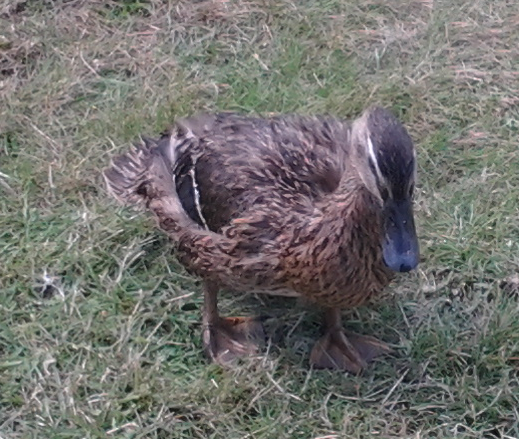
A temporary stop under a gazebo offered no respite from the off and on again rain nor the fierce wind bursts. By 3.15pm I reached the start of the Berriedale Caravan Park. I followed the road through from Lowestoft Bay to Cameron Bay and was accompanied by a very persistent duck.

The Duck

I was worried s/he might follow me home but after a few hundred metres the duck dropped off the pace.

Before long I was walking away from the Caravan Park on the gravel road towards the Berriedale Sewage Treatment Works.  What a pong hung around this area!

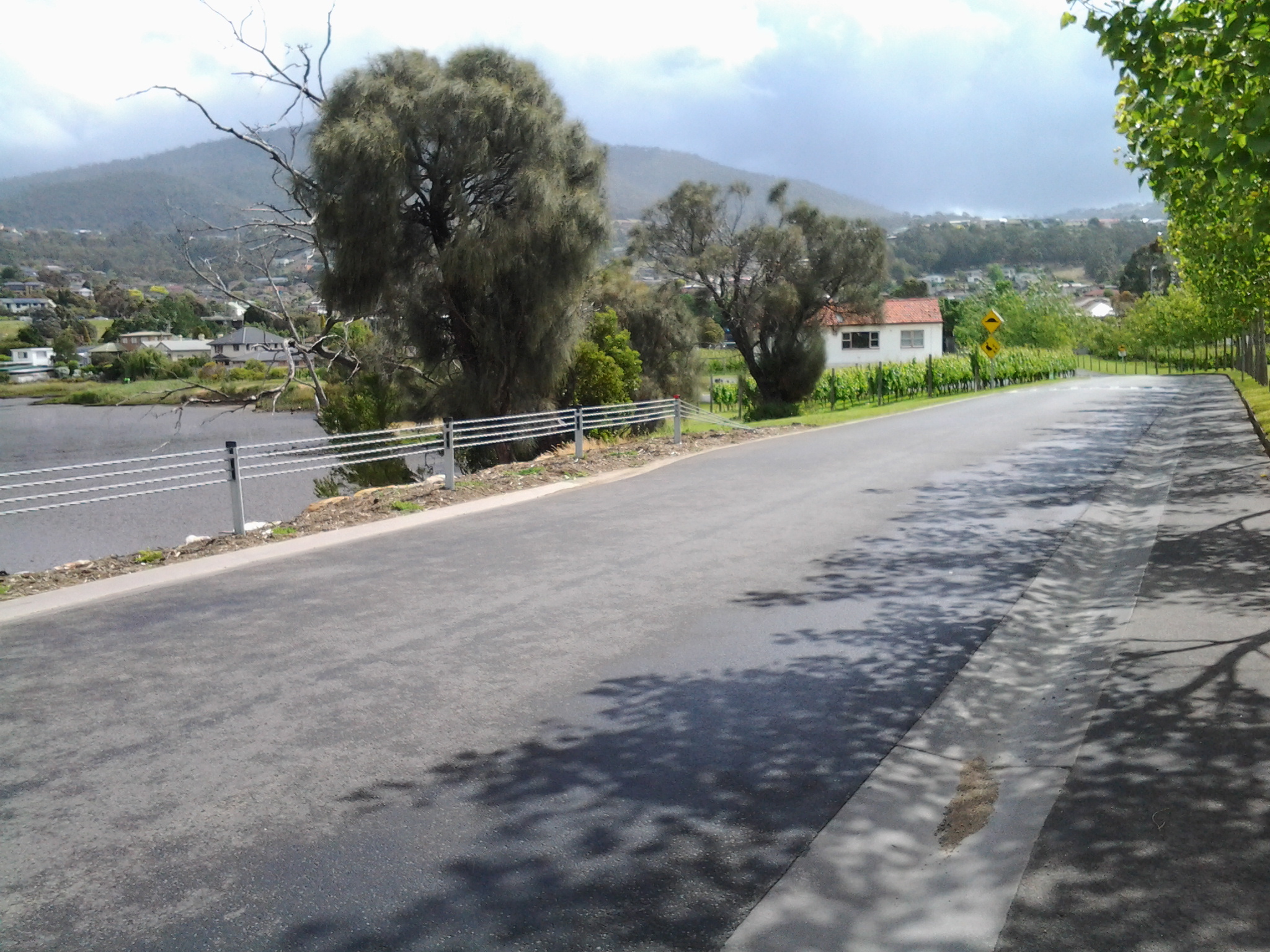
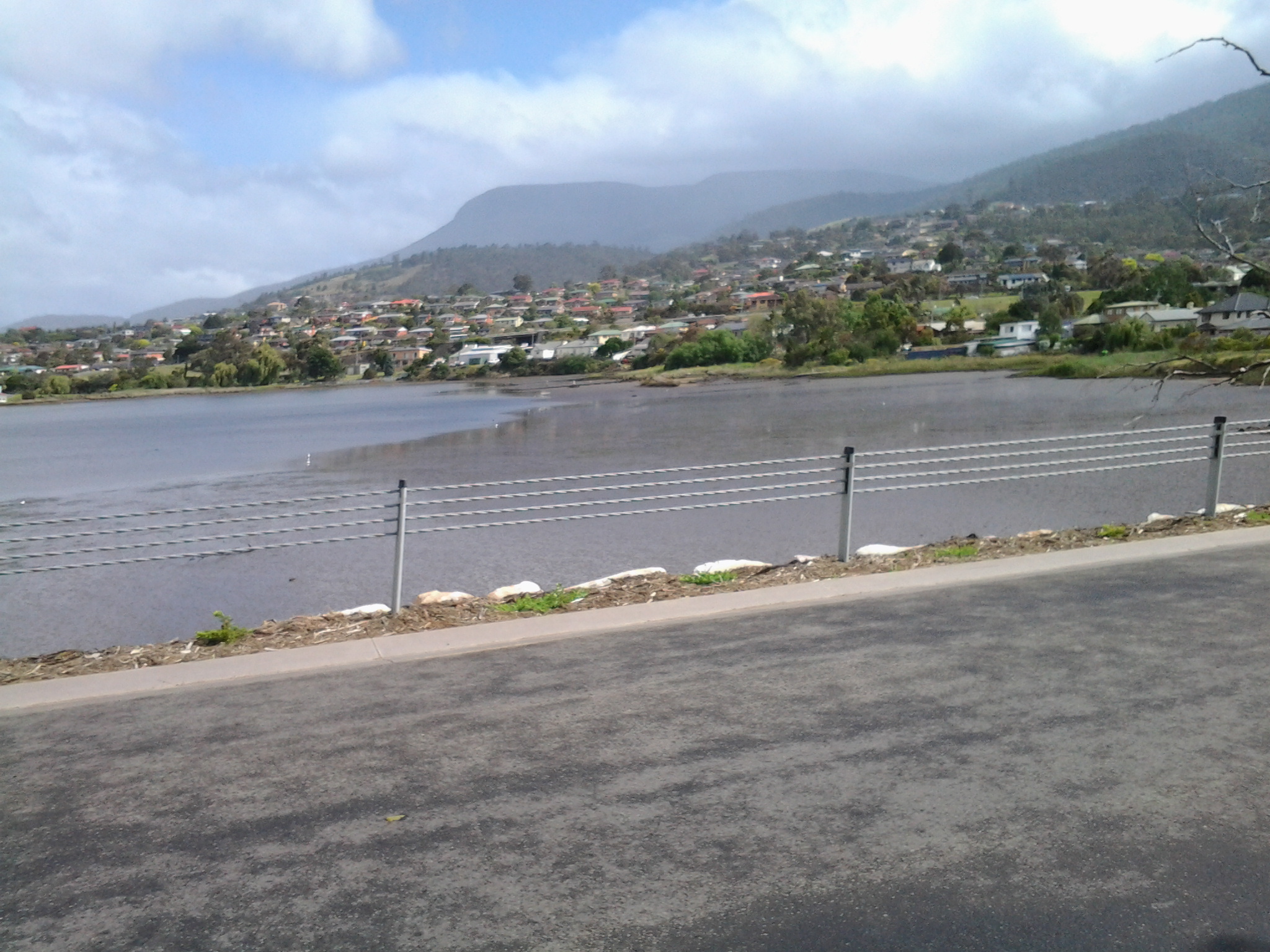
20141125_151751 20141125_152409  20141125_152417

I hurried past the fenced-in nasal offender and around a barred gate designed to prevent vehicular traffic. The sign warning fishermen to be careful indicated to me that public access was acceptable.

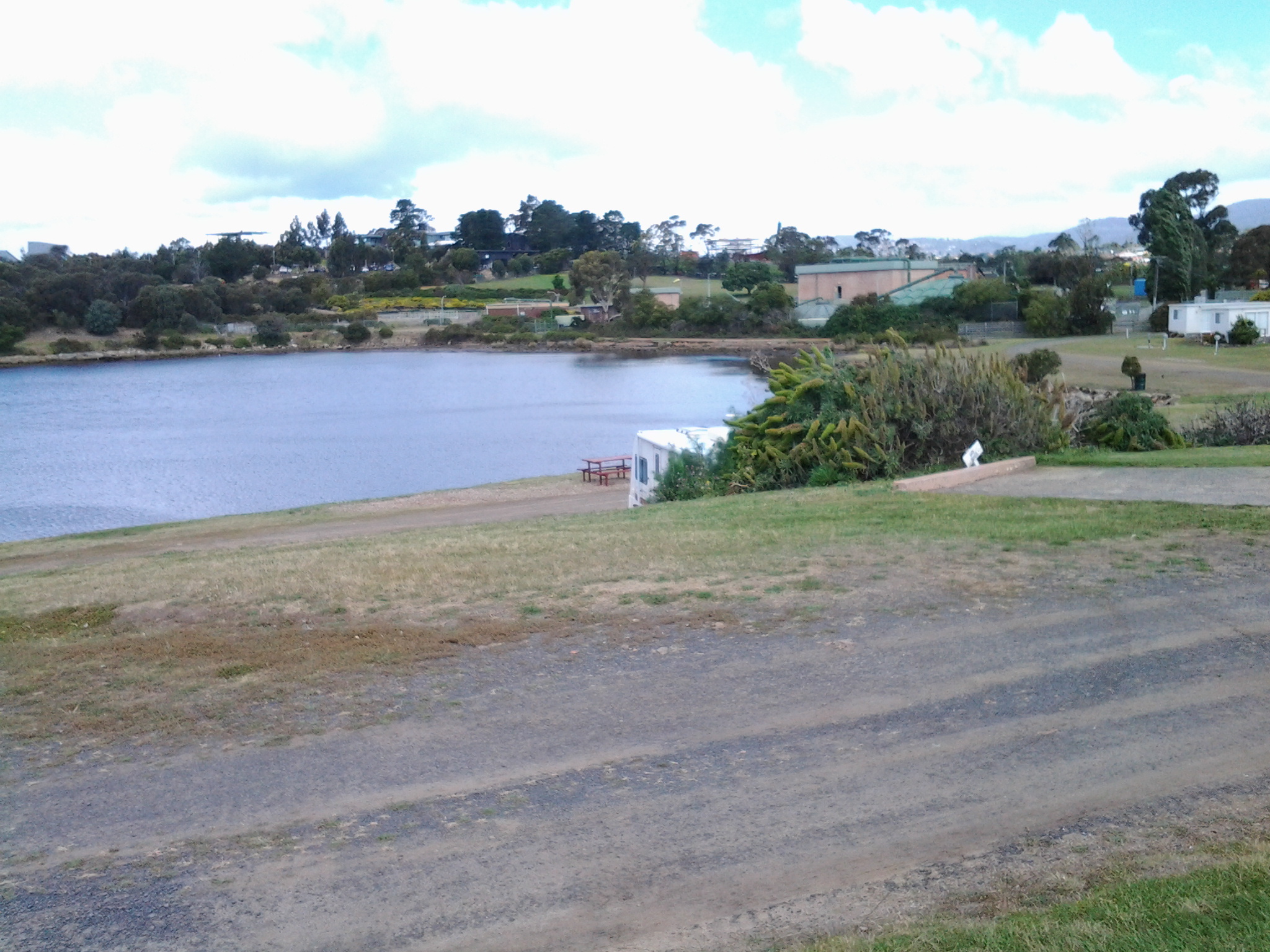
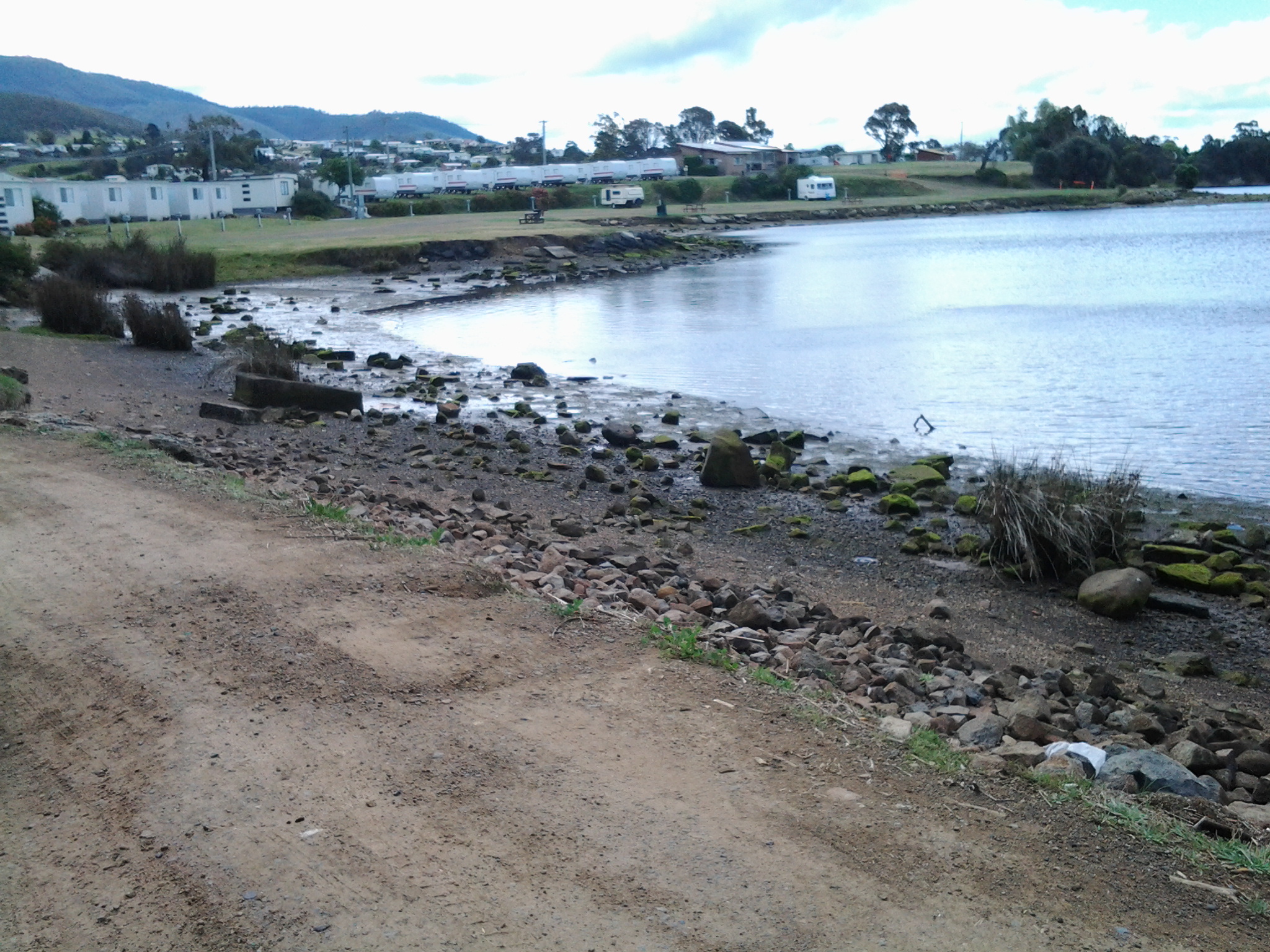
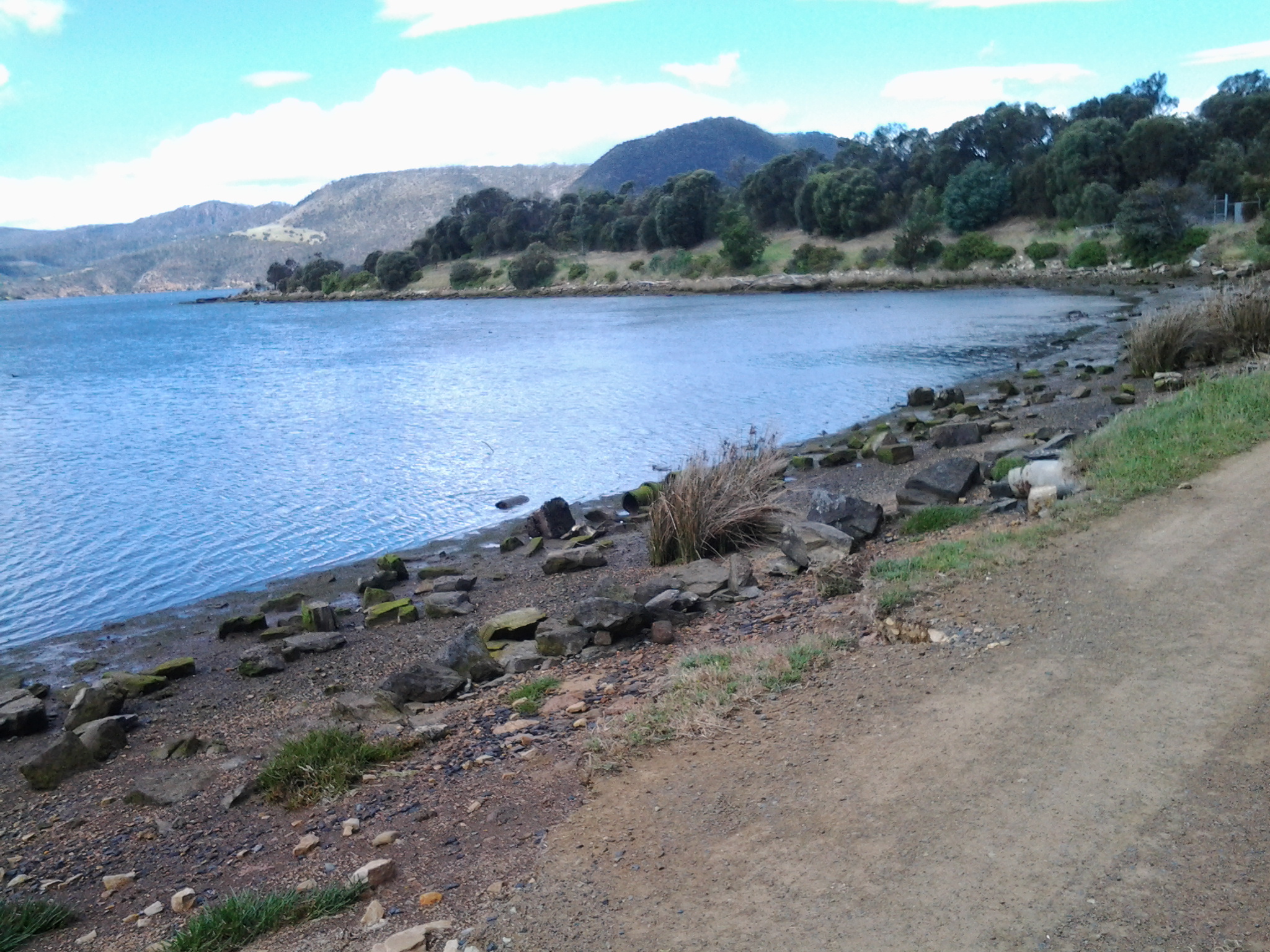
By 3.30pm I reached the point where the southern end of Cameron Bay meets with the main flow of the Derwent River. I sat above the water’s edge, admired the views and contemplated where I had been and considered how much further I could travel on the 9th stage.

20141125_153058