Tag Archives: Australia

Searching for my place in history

When I talk with strangers about my project to walk from the mouth to the source of the Derwent River, people often ask why. I trot out a range of reasons but, in truth, it is never clear to me at a deep level why I am making this walk.

My experiences over the past few days have given me new insights.

Earlier this year I began immersing myself in family history searches, with the view to knowing something of family members who were born and had died before me.

When I realised that the 150th anniversary of arrival in Melbourne Australia from England of the first family with my surname, from which I am a directly descended, will occur next year (2016), I decided to find and see where they lived in Victoria. Last Friday, I walked the Melbourne suburban streets of Carlton and the areas governed by the Boroondara City Council in Hawthorn of Glenferrie, Auburn, Deepdene, Kew and Camberwell.

I found all the streets in which my great great grandfather lived, however his houses have been replaced with various vintages of newer architecture. The landscape was changing while he lived in Melbourne when massive land sale and building booms wiped away acres of farmlands. And, of course, since he died in 1889 ‘development’ has progressed.  Nevertheless, because homes built in the 1880s still exist with their facades intact, I developed some understanding of what an original streetscape might have looked like during that decade.  Unfortunately late 1860s and 1870s buildings are no longer in evidence.

Throughout my-day long walk, I felt very much attached to the areas where he lived. A weird sense of belonging.  Albeit transient. And I was profoundly happy that in every street, one or more magpies warbled as they watched my progress.

My father’s family home, located in rural central Victoria, has always been special to me. It was during my early childhood visits that the music of the magpies perched on trees above nearby gold-mine slag-heaps, caught my attention. I have loved their intelligence and beauty ever since. Therefore, I should have not been surprised when I made a trip to the family home on Saturday and the wonderful sounds of magpies made me weep.  It seems the melodic notes of these black and white beauties provide me with a marker of family places, and also to other places where I gain so much pleasure.

Throughout my blog postings following the walking stages along the Derwent River, I have recorded my observation of magpies, and my delight in their song.  Rarely do magpies fly through my part of suburbia, so now I realise that part of my purpose for walking the Derwent is to hear the glorious communications of magpies. I guess it is my way of finding my place, as I make my own history – which becomes part of my family history.
Commencing research about the original aboriginal communities living and walking along the Derwent River

In earlier posts, I acknowledged the original aboriginal custodians of the land over which I have walked: refer to https://walkingthederwent.com/2014/08/21/acknowledgement-of-country-to-the-moomairremener-people/, and https://walkingthederwent.com/2014/11/10/the-paredarerme-people-the-original-indigenous-owners-of-the-land-along-the-derwent-river/.

My last blog posting referred to a book telling the story of a walk from the mouth to the source of the Yarra River in Victoria on mainland Australia.  Many steps of the author’s journey were associated with aboriginal stories past and present and this made me wonder what could be learnt here in Tasmania around the Derwent River. The history of aboriginals in Victoria and elsewhere on mainland Australia, is very different to that in the isolated island state of Tasmania.  Around 10,000 years ago, when the sea rose to form Bass Strait, Tasmanian aboriginals were cut off completely from their relatives on the mainland of Australia.

From the 1870s, for the next 100 years, the official Tasmanian government line was that the entire aboriginal population had been exterminated. No full blood descendants of the original indigenous peoples have survived however there is a sizeable minority of population in Tasmania now who proudly declare themselves as descendants from specific aboriginal ancestors.

During these cold winter days, I have started research seeking to understand the lives of indigenous bands and tribes which roamed the land from the mouth to the source of the Derwent River.  My starting point is my belief (which may be found to be incorrect) that, prior to European settlement in Van Diemen’s Land (later renamed Tasmania),

  • indigenous peoples had a significant history with activities, practices, laws, dress, property that are unique as a collection, although individual aspects may be common with mainland indigenous peoples.
  • indigenous peoples had a perfectly functioning tribal family system
  • indigenous peoples had a perfectly functioning interaction system with other tribes
  • indigenous peoples had a perfectly functioning communication system with other tribes
  • indigenous peoples were thriving

Most historians, anthropologists, sociologists, other researchers and various document writers have introduced ‘facts’ and conjecture about the nature and impact of events subsequent to European settlement, and I suspect this has been to the detriment of understanding the original situations of indigenous people.   As a result, I suspect at least some people who identify currently as having Tasmanian indigenous heritage, focus more with the outrages of the past 200 plus years than with the life of their ancestors, pre-European settlement. I wonder whether historians, anthropologists, sociologists, other researchers and various document writers (almost all of whom were original settlers in Van Diemen’s Land, are the descendants of the non-indigenous peoples, or are in some other way, non-indigenous) have presented a clear picture of the nature of the original indigenous peoples without the shadow of events post-settlement in 1803. Considering the political activism of some of the descendants of the original indigenous populations, their attempts to censor studies and dispute evidence, and their destruction of ancient artefacts, it may not be possible to create a clear picture, however I plan to try (and it may take time).

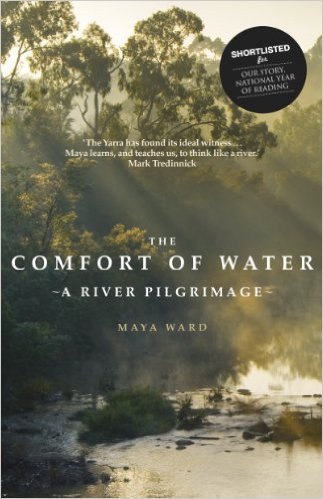
The Comfort of Water – a River Pilgrimage

Maya Ward’s story of walking from the mouth to the source of the Yarra River in Victoria, Australia (The Comfort of Water – a River Pilgrimage, Transit Lounge Publishing, Yarraville, Australia) was published in 2011. Maya Ward says, ‘There were many reasons to start where the river meets the sea. We knew where the sea was, but we didn’t know the location of the source, so we needed to follow the Yarra to find it. We’d start from where we live and what we knew to walk into the unknown.’

The Comfort of Water book cover

This was a continuous walk over three weeks made with a changing collection of friends, backed by a support crew, and with an assortment of accommodation pre-arranged for the end of the each day.  Maya Ward undertook preparation prior to departure to the extent most of the landowners along the length of the River were contacted for permission to walk across their land.

The two main themes of the walk, and therefore the book, were the environment and indigenous practices and history (Birrarung in the Wurundjeri language).  Intertwined, were the author’s personal reflections and philosophy as well as some of her life story in which she seemed devoted to cultural and ecological political activism at a community level.

From time to time, the author offered simple ideas which I found very attractive. For example, ‘I liked the wind – it stopped us talking.’ … ‘A story is like the wind – it comes from a far off place, and we feel for it.  So says the Kalahari Bushmen …’, ‘Grandma knew, I think, of the comfort and the intimacy to be found among trees.’, and ‘The watching is just the start of something.’

I am pleased to have discovered this book because Maya Ward’s approach has made me consider that the history of Tasmanian indigenous peoples has not been evident in my posts during my walk along the Derwent River. In fact, I have been remarkably ignorant of the nature and practices of the original inhabitants prior to European settlement on the edge of Tasmania’s Derwent River in 1803. I am now interested to know more and it occurs to me that blog readers might also be curious.  To rectify this gap in my knowledge, I have set myself a new project (I do like projects) to find out if I can discover information relevant to the Derwent River that is reliable and authentic.

From the Nile River in Africa to the Derwent River in Australia

The Nile River in Africa and the Derwent River in Tasmania Australia.  On two different sides of the world.

Q.     What connects these two rivers?       A.     Agatha Christie

You gasp.

In 1922, the now-world renowned detective fiction novelist Agatha Christie took herself on a ten-month Grand Tour of the British empire, including South Africa, Australia, New Zealand, and Canada. Previously she had spent time in Egypt with her mother in 1910. Her travels helped flesh out details for many of her ‘who-done-it’ mysteries.

For those of my blog followers who have not been devotees of Hercule Poirot, I recommend you read Agatha Christie’s story of Death on the Nile written in 1937, visit the theatre to see Murder on the Nile the 1944 play based on the novel, or watch anyone of the many films that have been produced based on this story. I would be surprised if you cannot access something on the internet.

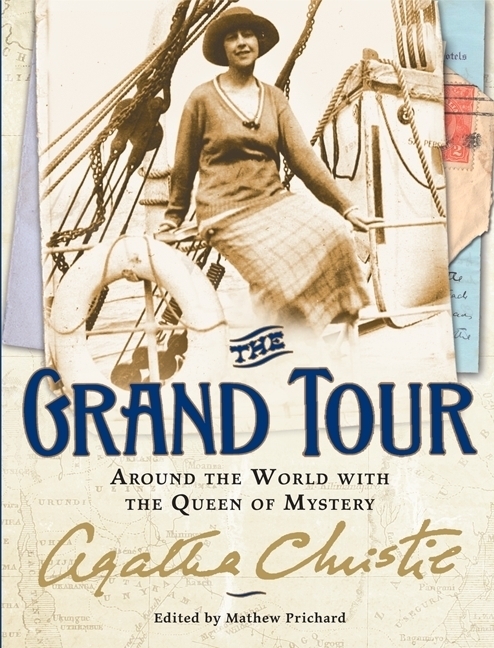
The correspondence of her travels has been collated into the publication The Grand Tour: Around the World with the Queen of Mystery.

 Grand Tour Agatha Christie bookcover

In this book we can read “From Australia we went to Tasmania, driving from Launceston to Hobart. Incredibly beautiful Hobart, with its deep blue sea and harbour, and its flowers, trees and shrubs. I planned to come back and live there one day. From Hobart we went to New Zealand.” Agatha Christie is, of course, referring to the expansive harbour on the sea end of Tasmania’s Derwent River.  She was also making a typical mistake that some mainlanders and most international tourists make. Tasmania is still part of Australia, even though it is a large island to the south.  So, when she left Sydney New South Wales Australia, I suspect Agatha sailed into Launceston Tasmania Australia.

A book reviewer at http://www.amazon.com/The-Grand-Tour-Around-Mystery/dp/006219125X: remarked “The Grand Tour is a fascinating collection of never before published letters and photographs detailing Christie’s travels around the British Empire in 1922. Most of the letters were sent to her mother and included photos taken with Christie’s own camera as well as newspaper clippings and various memorabilia. This collection is an insight into the thoughts and mind of a young Agatha Christie who had just published two novels and would later become the most widely published author of all time. She and her husband, Archie, embarked on a year-long voyage as part of a promotional trade mission, so there was work involved as well as various obligations as they visited South Africa, New Zealand, Hawaii and Canada. Her letters to her mother were, of course, candid which for this reader greatly added to their charm. I especially enjoyed Christie’s slightly wicked sense of humour, such as when she describes a fellow passenger as “the only young thing on the ship, but although very pretty, is a terrible mutt.” Her observations of both people and places are acute and fascinating to read.  Mathew Prichard, Christie’s grandson, has done an excellent job of collecting, editing and introducing these letters. We are in his debt for The Grand Tour reminds us that Christie was not only an outstanding author but a remarkable woman as well.”

The back cover of the book records:

“In 1922 Agatha Christie set sail on a ten-month voyage around the world. Her husband, Archibald Christie, had been invited to join a trade mission to promote the British Empire Exhibition, and Christie was determined to go with him. It was a life-changing decision for the young novelist, a true voyage of discovery that would inspire her future writing for years to come.

Placing her two-year-old daughter in the care of her sister, Christie set sail at the end of January and did not return home until December. Throughout her journey, she kept up a detailed weekly correspondence with her mother, describing the exotic places and the remarkable people she encountered as the mission travelled through South Africa, Australia, New Zealand, Hawaii, and Canada. Reproduced here for the first time, the letters are full of tales of seasickness and sunburn, motor trips and surfboarding, glamor and misery. The Grand Tour also brings to life the places and people Christie encountered through the photos she took on her portable camera, as well as some of the original postcards, newspaper cuttings, and memorabilia she collected on her trip.

Edited and introduced by Agatha Christie’s grandson, Mathew Prichard, and accompanied by reminiscences from her own autobiography, this unique travelogue reveals a new adventurous side to Agatha Christie, one that would ultimately influence the stories that made her a household name.”

Walking the Nile River in Africa

Overseas followers of my blog may have already seen the four part series documenting a recent walk from the source to the mouth of the Nile River – I can see on the internet it was screened in some countries earlier this year.

This Thursday on WIN TV around Australia, the first hour will be screened from 8.30pm (Eastern Standard Time).  How thrilling!  What a wonderful opportunity to immerse myself in such a journey albeit from the comfort of my couch.

Former British soldier, journalist and now explorer, Levison Wood started out in the African country of Rwanda and walked northwards through 5 other countries until he reached the Mediterranean at the northern edge of Egypt. This epic journey covering upwards of 4000 miles, took about 9 months after starting in December 2013 and finishing later last year.  Lev Wood has written a book of these travels.

Levison Wood Walking the Nile book cover

Websites including http://www.levisonwood.com/, https://twitter.com/walkingthenile; and https://www.facebook.com/WalkingTheNile provide additional information about this extraordinary achievement. Isn’t it marvellous that in this day and age, people can still undertake ‘pioneering firsts’ on this planet? “Everything” hasn’t been done already.

Australians, I urge you to join me on the couch this Thursday night to begin to see the challenges faced by this inspirational walker.

Walking from Australia to London

I blinked and blinked again.  Walking from my home to London? How would this be possible?  Yes it will be possible … but in 100 – 200 million years’ time when continents reconnect with each other, according to a recent news story: http://www.news.com.au/technology/science/australia-on-path-to-join-uk-as-part-of-supercontinent-amasia/story-fnjwl2dr-1227331780435?sv=1e2848859e5b4afa30b76819882202f0&

I reflected that the Derwent River might no longer exist and its beautiful ribbon-like pathway through our landscape might only be remembered in the fault lines of rearranged rocks.

Considering the geological and weather upheavals likely during those intervening years, I imagine the footsteps of human kind will not even be a distant memory.  My guess is that the ant and cockroach populations will have mutated strangely and may be the only lively fauna roaming the planet. If water remains on the Earth then possibly some creatures who can survive in highly acid waters may be in the ascendancy in some regions.

It is rather strange to sit here tapping on my computer and to consider that not only do I expect the human race to become extinct, but all the artefacts of mankind will be obliterated over the millennia.  Having held a career in the museology industry for much of my professional life, I retain the urge to collect and conserve the artefacts of our histories. Nevertheless, these collections and preservations will probably only be valued for a few more hundreds or thousands of years.

On this basis it seems that walking and discovering what we have around us is a much more worthwhile thing to do – at least at the personal level. In an earlier posting I referred followers to the blogsite of a man who took 11 years to walk around the world. Even if I should set myself a similarly outlandish goal, it won’t be possible now to walk from home to London in my lifetime except by using some water or air based technology to move from land to land. What a small dream this is in relation to the expanse of the history of the universe.  But then, humans are not so great when compared to the scale of the universe.

Setting ‘Mt Everest’ level goals

I am in awe of those who set themselves dangerous projects, especially those associated with water.

Today’s local newspaper, The Mercury, reports that a group of mates ‘the injured, ill and wounded former and serving Australian soldiers’ have successfully kayaked across Bass Strait.  This is the wash of wind-blown, wild water which separates the State of Tasmania from mainland Australia.  This is the patch of water which, when the Rolex Sydney to Hobart Yacht Race passes across it each December, masts may be broken, yachts overturned and sailors drowned.

At the narrowest and easiest route, the distance is 330 kilometres. The kayakers left north eastern Tasmania on March 14, were delayed in the Flinders Island area for 11 days with bad weather, and arrived yesterday in Victoria after 24 days. ’The challenges don’t come any tougher, with elite kayakers referring to the Bass Strait route as the “Everest of the sea’.

The story is from: http://www.news.com.au/national/tasmania/military-mates-conquer-everest-by-crossing-bass-strait-by-kayak/story-fnn32rbc-1227294031866

There is no doubt this was an extreme project undertaken by a group of people who might otherwise have believed they had limits on what they could do in their life.

I see it as a strong reminder that our bodies are capable of so much more than we push them through, and that it is our minds which sets most limits. So when I hear people say things like ‘I couldn’t do that or I couldn’t do what you do’, there is nothing wrong with saying that as long as their next sentence is something like, ‘but what I can do is ….xxx….’  The scale of the project doesn’t matter. Whether a ‘Mt Everest’ or a tiny mole hill type goal is set, the important thing is to do something that pushes you even slightly outside your comfort zone.  It is so enriching to do something that, after you have finished, you can look back on and think ‘I did that and no-one can ever take away that achievement from me’.

You may be surprised to know that I am terrified of the walk ahead of me to Lake St Clair. I realise this ‘Walking the Derwent’ is a puny project by comparison with the Bass Strait crossing by kayak. However, in my own terms, this is my ‘Mt Everest’ sized project.  I have never talked in this blog about my physical characteristics, but if you had my size, age, gender, health situation and other personal characteristics you might think that attempting this project is crazy.  My antidote to the fear is to remind myself to think of the small steps and not to concern myself with the big distances, the isolation and the impenetrable bush.  I tell myself that I only have to put one foot after the other, and that because each step is always okay, the whole distance can be achieved.

A deviation from the record of my walk along the Derwent Stage 11 – today was Australia Day!

Around the edge of Australia, and across inland towns and communities, celebrations are taking place today remembering the start of European settlement in Australia – not that it is expressed as such, rather as a day to celebrate being Australian (Orstrayan – as our accent seems to be saying these days). The day, quite reasonably, antagonises the descendants of the original land owners, our Australian indigenous community, because the day seems to be about being from other countries and not inclusive of the people who were already living here at the end of the 18th century.  Today celebrates the first ‘white’ settlement but not the start of invasion of the lands of those aboriginal peoples who had lived on this land for thousands of years. So it is a day of division across Australia. However, since people with an aboriginal heritage are in the minority in Australia’s population, non-aboriginals go ahead with their barbecues and other family and social events treating today as a public holiday which is their right.  More cross culture chat is needed.

So with that opinion as background, instead of walking to the Bellerive Boardwalk for the annual community Australia Day breakfast and ceremony for new Australian citizens, I decided to try out the Kingston (Kingborough) Australia Day celebrations which were centred on Kingston Beach.

Thousands of people across streets closed to traffic and the endless beach, playing beach volleyball, creating extraordinary structures in sand, and all sorts of other family and activities made the area a hive of activity.  The day’s temperature was comfortably mild for summer, the water so clear, all manner of water craft glided along, swimmers braved the cold water, and happy dogs led their owners on their leashes.  It was an extremely comfortable place to be.

I didn’t take any photographs (more is the pity because Kingston Beach was such a colourful location today) –  you may have read my blog in the area on an overcast non-people day at https://walkingthederwent.com/?s=kingston

The photos I took at that time included:

Sign and river Kingston Beach

Please try and create an image in your mind of sunshine and colour, and of lots of happy relaxed people of all ages and sizes and backgrounds playing and walking on this beach today.

Whatever out ethnic background, Tasmania’s natural sites are incredibly beautiful – and all the better for being so easily accessible.

Today our national Prime Minister released the names of people who have won prestigious Australia Day Awards in recognition of valuable contributions to Australia’s wellbeing and growth and substantial achievement in one or more specific areas.  Today, many Australians are aghast at our Prime Minister’s approval of the English Prince Phillip as a Knight of Australia. Many of us are perplexed and cannot name his contribution to Australia and achievement for Australians, other than in the most general and cursory terms. We have many amazing people in this country, so this announcement of a foreigner getting a special national honour has stopped many in their tracks.

Another opinion can be read at http://www.smh.com.au/federal-politics/political-news/prince-philip-awarded-knight-of-the-order-of-australia-by-prime-minister-tony-abbott-20150125-12xzk8.html – ‘some people worried that this was an Australia Day hoax’.

Selection of landmarks along Sandy Bay Road

Once on Sandy Bay Road I turned left and continued walking southwards.When past the University of Tasmania grounds, over the road on my right was a Catholic co-educational secondary school operating in the Josephite tradition. This Mt Carmel College site includes an attractive 19th century sandstone building.

In a small park, a family of Sulphur Crested Cockatoos feasted on insects in the grass along with ducks and Silver Gulls.

20150119_083933

The day was very peaceful.

20150119_083937

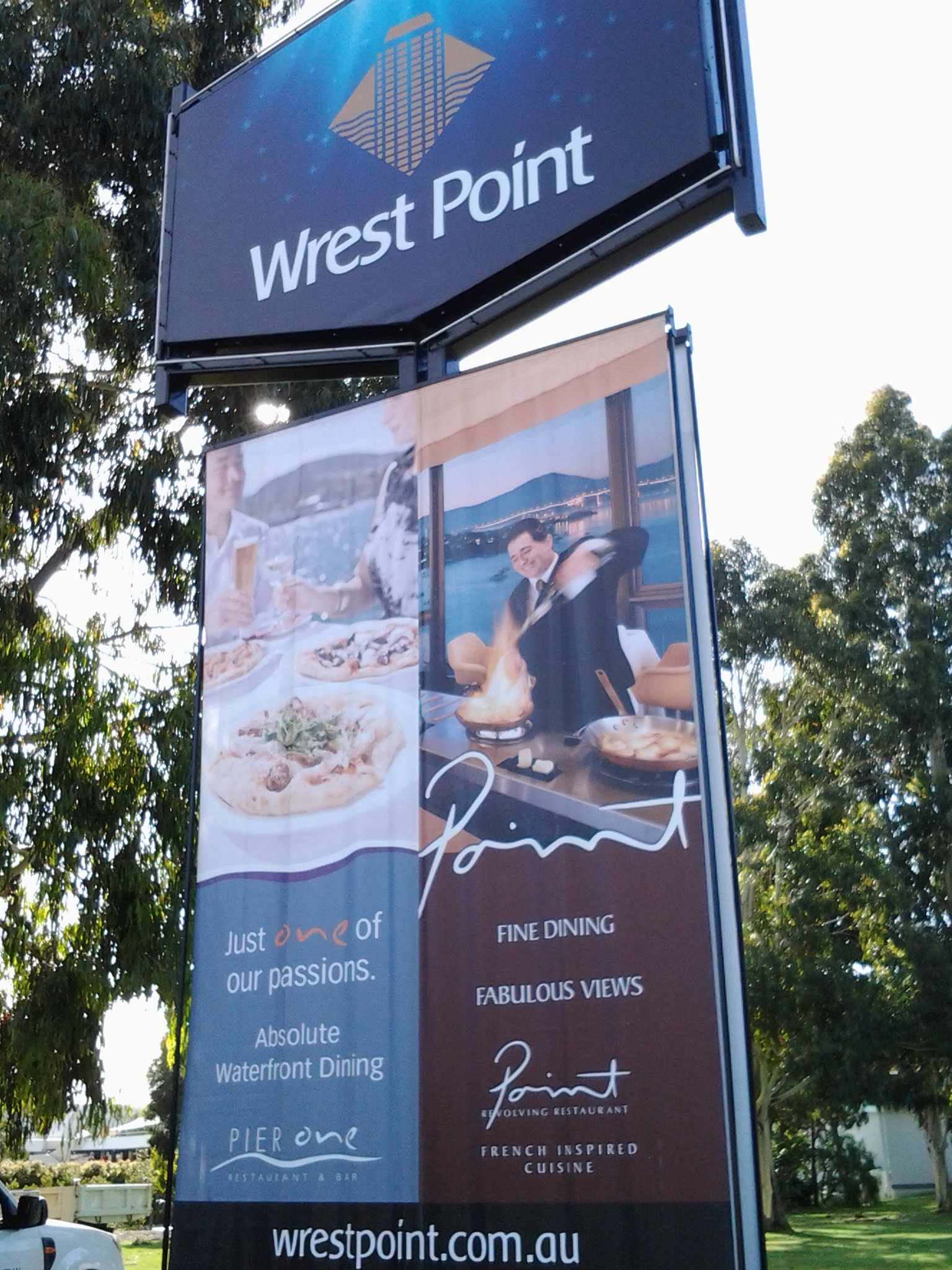
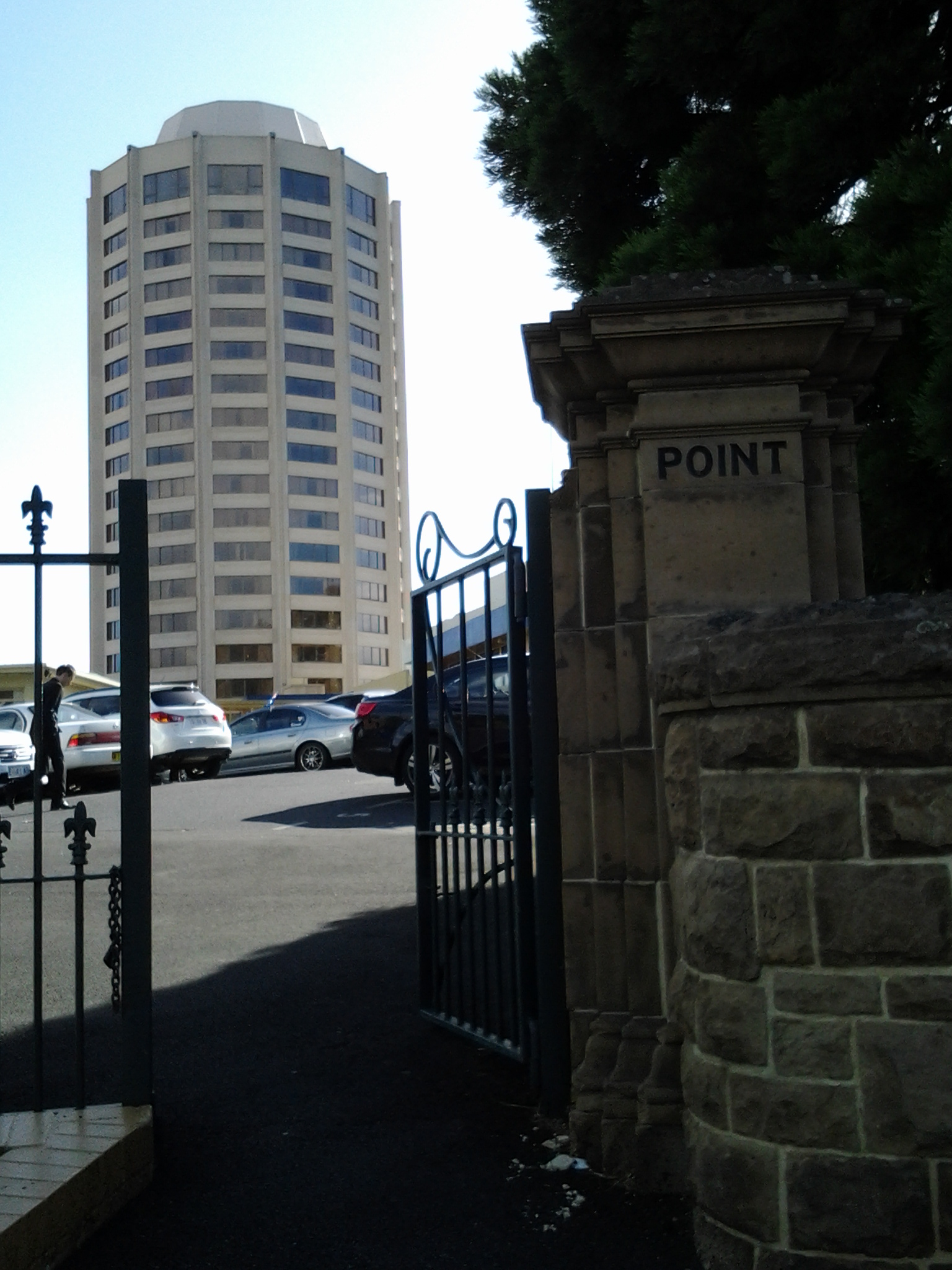
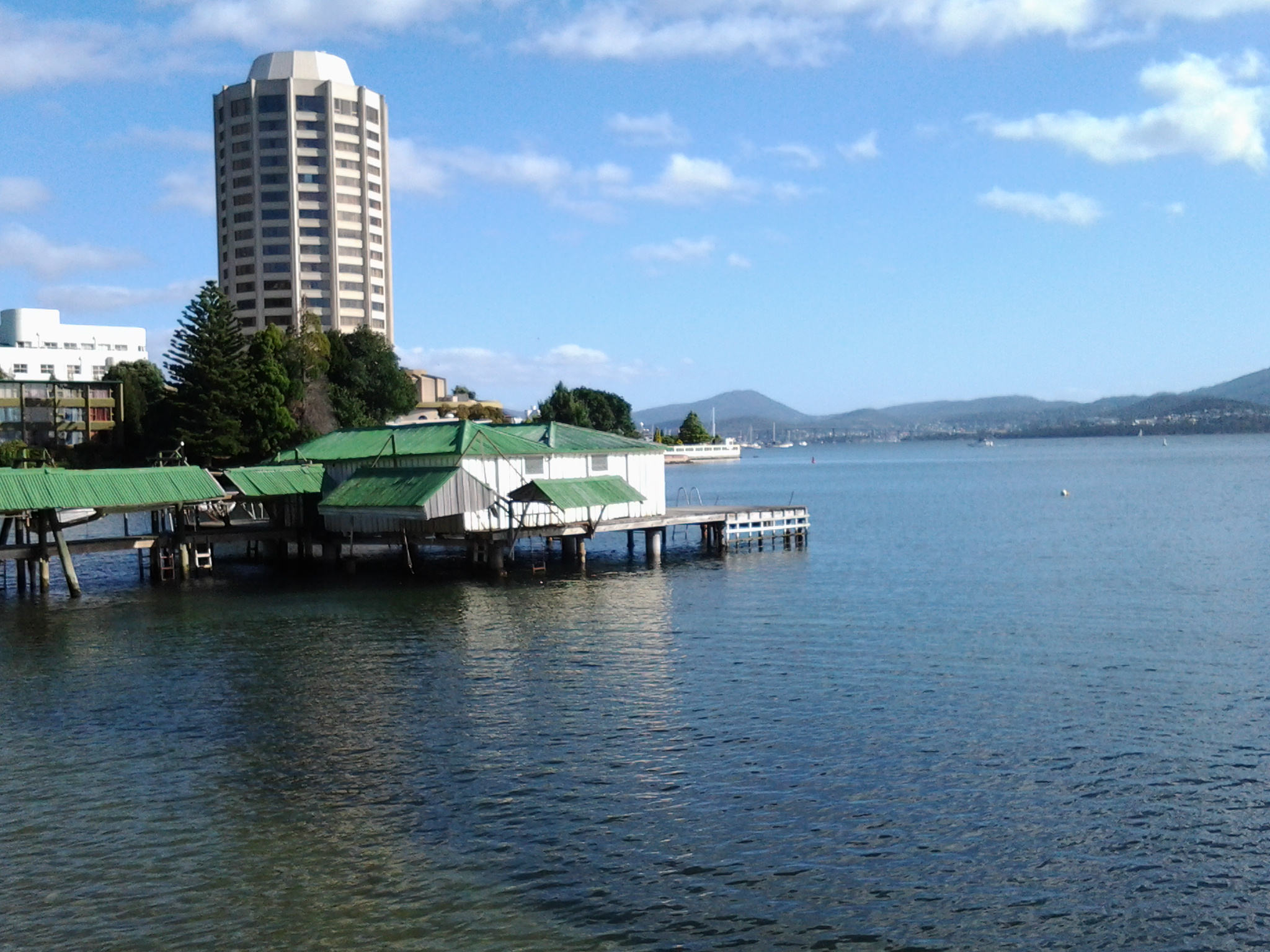
At 8.40am I reached the entrance to Wrest Point Hotel (http://www.wrestpoint.com.au) which, in the 1970s, established the first legal casino in Australia.

20150119_084114

Apart from its poker machines and gambling rooms, this Hotel offers many bars and different restaurants. In addition, it runs a continuous program of concerts, guest artists and other entertainment events so that thousands of people pass through its doors weekly. With exploratory meandering I think it may be possible to walk through different parts of this Hotel and find a route close to the water’s edge. I didn’t feel confident that I would find my way around without finding myself in ‘no go’ areas. Instead I continued walking along Sandy Bay Road.

The business Network Gaming lives in what used to be a well-known and much loved pub, Travellers Rest:  one which I knew well in my student days.

20150119_084249

The Wrest Point Hotel land wraps around the old Travellers Rest hotel so, it wasn’t until I continued to walk along Sandy Bay Road that I discovered an original entrance to the Wrest Point property area.

20150119_084657

I reached the Derwent Water Beach Reserve at 8.50am.

20150119_085149

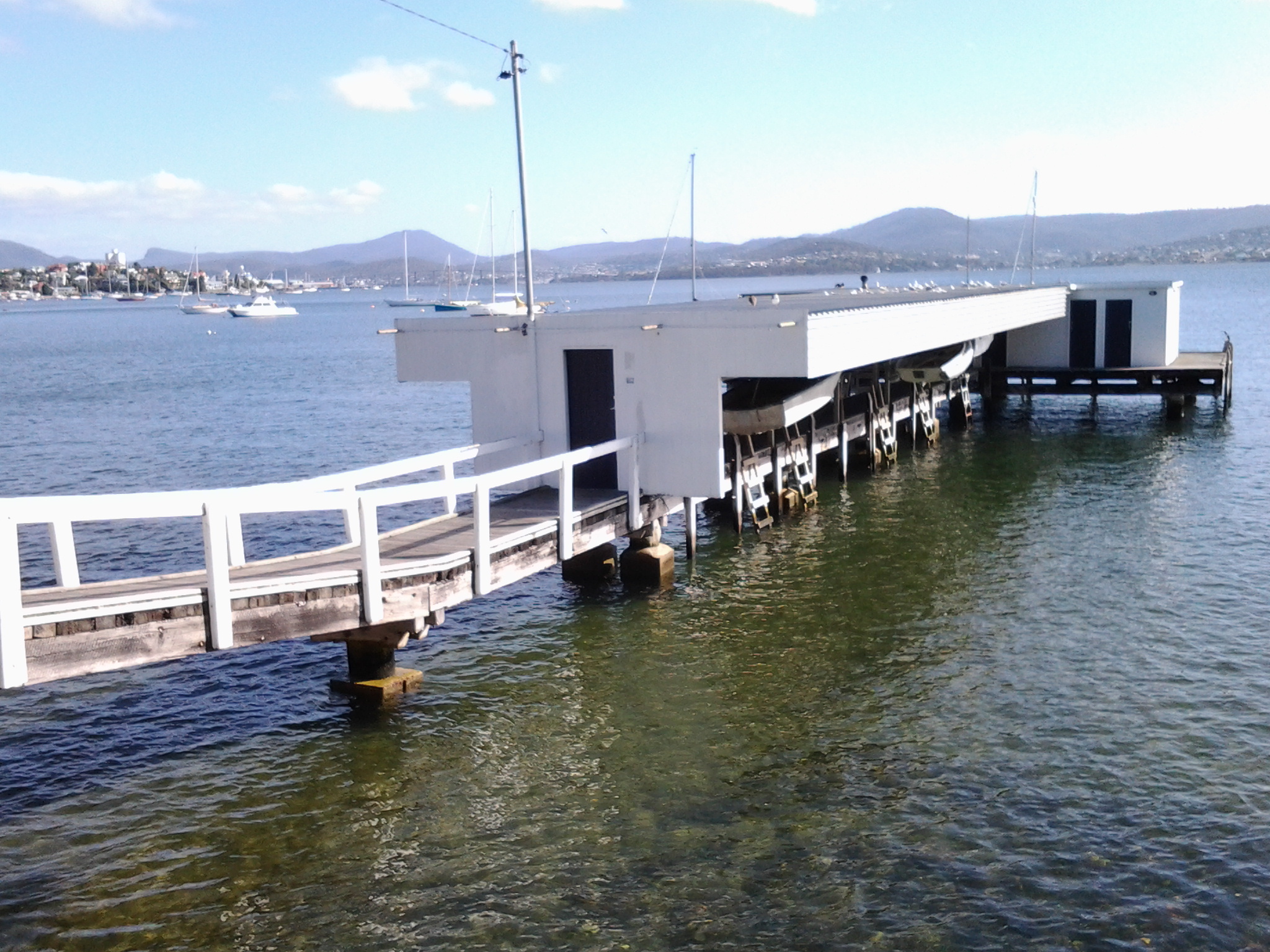
From there I could see two private jetties jutting out into the water.

20150119_084905

When I walked closer, it was clear that dozens of dinghies hung under protection waiting for their owners to come and row them out to yachts moored on the Derwent River.  In fact, as I watched, one fellow set off rowing.

20150119_085231

The time of day and the quality of the sunlight made this vista exceptionally beautiful; seagulls perched on the jetties, the water sparkled, a mild breeze dappled the surface of the River, happy dogs walked along attached to owners, and I was able to blot out the sound of noisy traffic streaming past behind and beside me. The water was crystal clear.

20150119_085408 20150119_085637

By 9.05am I was reading the information panel at the Maning Ave Reserve. This Reserve seemed to mark the change from the suburb of Sandy Bay to the suburb of Lower Sandy Bay. I learnt Fred Maning arrived in 1824 and his family farmed in the area (however I understand he spent most of his life in New Zealand, and it is not clear why he is remembered with his name on this park and on streets etc in the Lower Sandy Bay area).  Information boards such as these help me to understand how Hobart developed.

Rosetta on the Derwent River

My next walk along the Derwent River will start half way through Berriedale and pass by the suburb of Rosetta before moving onto others. I have tried to discover how Rosetta came to be named and, while I learned a little of its history, I am not certain why it was given this name.  However, I believe that our local suburb of Rosetta is indirectly named after an Egyptian town.

I suspect it all started around the time when the internationally known Rosetta Stone was found in 1799 (note: the first European settlement along our Derwent River started in 1803).  The Rosetta Stone was found by French soldiers, (under Napoleon Bonaparte’s command) who were rebuilding a fort in Egypt, in a small village called Rashid (but known as Rosetta by the Europeans).

Wikipedia offers the following information: “Rosetta (Arabic: رشيد‎ Rašīd IPA: [ɾɑˈʃiːd]; French: Rosette) is a port city on the Nile Delta in Egypt, located 65 km east of Alexandria. Both the Arabic name Rašīd (Interesting unrelated sideline is that Ar-Rašīd meaning “The Guide”, is one of the 99 names of Allah) and the western name Rosetta or Rosette (“little rose” in Italian and French respectively) are corruptions of a Coptic (language from the native Christians of Egypt) word, Rashit or Trashit.”  I can pronounce Trashit, Rashid and Rosette/Rosetta so that they sound similar. Can you?

Read http://www.touregypt.net/rashid.htm#ixzz3NvMb6Iyk for more information about the town of Rashid. Apparently the highly green Egyptian town on the Nile River was typically tranquil with vast gardens, orchards and date-palm plantations, in addition to a multitude of beautiful historical houses, inns and mosques adorned with exquisite decorative inscriptions and woodworks. The town was known as the ‘Rose of the Nile’ by Europeans. I guess the name Rosetta was given to our suburb for the underlying European meaning of rose; a thing of beauty.  Hobart’s Rosetta is located on the southern side of Tasmania’s major river in a beautiful setting within the City of Glenorchy as part of the Greater Hobart Area.  However it is neither a city nor a port.

In 1807 as part of the Alexandria/Fraser expedition to Rosetta in Egypt, British forces led one group of local inhabitants in a civil war against another group led by a local leader.  Britain’s intention was to break the Ottoman-French alliance. As a result, in the first decade of the 1800s, I suggest that Egypt would have been highly visible in English news and the battles would have been known in the colonies.

Irene Schaffer, a Rosetta resident and local researcher offers historical information about the original settlement at http://www.tasfamily.net.au/~schafferi/index.php?file=kop79.php. John Berrisford and wife arrived in Australia from England on the First Fleet in 1788. Then, in 1808 John and his family sailed to Hobart Town. In subsequent years, they settled along the Derwent River in the area now known as Berriedale Bay and which extended to the south-east past Rosetta High School, and they built Rosetta Cottage (later renamed Undine Inn). 140 acres of land, now part of our suburb of Rosetta, was granted by NSW’s Governor King to John Berrisford in 1813.

My last walk along the Derwent River finished at MONA a little to the north of Rosetta. My next walk will start by passing Berriedale Bay. I look forward to seeing the old house – albeit with extensions and renovations since John Berrisford was alive. A photograph of this property, now known as the Rosetta Colonial Accommodation, can be seen at http://firstfleetfellowship.org.au/stories/john-hannah-beresford/. This website also provides more detail about the Berrisford family and their history.

Perhaps, through news from England, John Berrisford heard that Rosetta was the ‘Rose of the Nile’ and, in believing the British intrusion into Egypt was glorious, named his house as a show of support.

As a contrast from the historical background, I have located a contemporary profile for Rosetta. The population is 2567, the median household weekly income is $1050, the median age of residents is 45 years, the average household size is 2.4, almost 60% are married or in a de facto relationship, almost 40% are either under 5 years of age or over 64 years of age, weekly rent is $340, and the median house price is $319,455.

A sparkling night over the Derwent River

Happy New Year to readers. There is something about New Year’s Eve which becomes a great distraction; the focus on midnight. We can never have a foot in both one year and the other like we can when we straddle the borders between states, countries or at Greenwich when you can stand in two time zones at the one moment.  Al we can do is surrender to the ticking and suddenly the next moment is on us.  As it was when 2014 came to an end last night in Australia.

I realise, as I write, that some parts of the world are yet to reach midnight 2014. Australia is one of a very few countries to be able to celebrate entry into 2015 very early on. If you are not there yet, then I can only suggest you enjoy the countdown.

Tasmania and Hobart at the very south of the island in particular, have long days at this time of year. There is still light in the sky at 9.30pm (I know I know I know that many countries in the northern hemisphere, which stretch closer to the poles, have even longer days mid-year. I did experience the White Nights of St Petersburg in northern Russia in 2013.)

Hobart City Council stages two separate firework celebrations on New Year’s Eve; one at 9.30pm when the sky is not perfectly light and the other at midnight when the night sky is black.

Last night, nature created an early spectacle. At 9pm brilliant pink-red tinged clouds marbled across the intense blue sky over Mount Wellington, with the sun well set behind. The strident pinks rippled like the marks left when waves recede over sandy beaches. The unruffled surface of the Derwent River, singed with red, made my heart sing. Sensational.  As the mountain side darkened, spot lights from the headlight of cars driving up and down the mountain, and the street and house lights across the hillside suburbs on the western shore, began to sparkle.

Slowly, the under clouds developed grey tones and the air began to soften beautifully.  Magnificent. Gradually the clouds softened to transparent greys and whites patterning the sky over the mountain. A splendid ¾ moon gleamed nearby.

The first fireworks were well timed and blew their tops at 9.30pm as the last pink glow on grey clouds disappeared. 10 minutes of coloured light and light shapes flying through the air and the delayed booming bangs (reminding me light travels faster than sound) seemed to pass quickly. The grand finale was a crescendo of cascading lights falling from on high like a tree shaped waterfall. The light rained down. And the smoke drifted away down the Derwent River towards the mouth.

For a picture of one stage of the fireworks (although it seems mean by comparison with other stages that I saw) go to http://www.themercury.com.au/news/tasmania/thousands-of-tasmanians-party-in-the-new-year/story-fnj4f7k1-1227171557865.

Last year’s New Year’s Eve for me was dramatically different. I vividly recall 2013’s New Year’s Eve when I had a marvellous night along with thousands of others on the waterfront at Kowloon in Hong Kong.

20131228_183334

Then, after midnight, I had to walk many kilometres (along with everyone else like a swarm of insects packed across the six lane main road) back to my hotel because the train stations were so full that people couldn’t even walk into them, leave alone catch the trains.

Now we all have 12 months to consider where we might be and what we might do on New Year’s Eve at the end of this new year.  Best wishes.

Granton and Austins Ferry on the western shore of the Derwent River

On my 9th walk along the Derwent I will be passing through Granton South and Austins Ferry.

Granton is the northern-most suburb within the City of Glenorchy, part of the Greater Hobart Area.  I can find no records explaining how it came to be named. Granton and its Harbour in Edinburgh Scotland were not developed until the 1830s.  If the York Hotel in Tasmania’s Granton was built in 1849, possibly there may be a Scottish connection with the naming of the suburb.

Austins Ferry sits adjacent to and south of Granton within the City of Glenorchy.  Wikipedia informed me that this suburb was named after James Austin (1776-1831). Austin was transported to Australia as a convict and arrived in Tasmania in 1804. When he became a free man, the government granted him some land in this area. During the 1810s he had a profitable ferrying business across the Derwent River to the eastern shore. In 1821 the visiting Governor Lachlan Macquarie renamed the village Roseneath, but it has since reverted to its original name.’ James Austin’s original cottage is located (somewhere) in this suburb and maybe I will be fortunate enough to locate it when I walk.

According to http://profile.id.com.au/glenorchy/about?WebID=160, Granton is linked with the suburb of Austins ferry for statistical purposes. In 2011, the joint population was 3,329.  ‘Settlement of the area dates from the early 1800s. Some growth took place in the early 1900s, although significant development did not occur until the post-war years. Most of the houses were built in the late 1960s and early 1970s. Growth continued from the early 1990s, with the population doubling between 1991 and 2011, particularly in Austins Ferry, a result of large numbers of new dwellings being added to the area. Major features of the area include Goulds Lagoon Sanctuary, Poimena Reserve, Hestercombe Reserve, James Austin Park, Roseneath Park, Shoobridge Park, Weston Park and one school.’

According to http://www.homesales.com.au/location/granton-tas/, Granton has a population of 1519 with an average weekly income of $787. The median prices for houses are $375,000. The average house is rented for $610 a week. 94% of people live in houses as distinct from other types of residences. 36% of people fully own their houses/property. Almost 30% are under 30 years of age and only 10% are over 65 years of age. 92% of residents were born in Australia.  By contrast, Austins Ferry has a population of 2221 with an average weekly income of $721. The median prices for houses are $287,000. The average house is rented for $340 a week. 87% of people live in houses as distinct from other types of residences. 31% of people fully own their houses/property. 27% are under 30 years of age and 14% are over 65 years of age. 88% of residents were born in Australia.


Major milestone achieved on 8th stage of my walk along the Derwent River

Originally, I decided to walk the length of Tasmania’s Derwent River without research, foreknowledge of the challenges, and without determining the possible milestones.

With hindsight, actually starting the walk and reaching the Bridgewater Bridge were my two main milestones held subconsciously and not recognised at the time.

In late August this year I started at the southern tip of the South Arm peninsula (Cape Direction) and today I have not only reached the Bridgewater Bridge but crossed it and started the walk back towards the mouth of the Derwent River on the western shore.

I am rather amazed that such a thing is possible; to walk such a distance in this day and age and to do so for pleasure doesn’t seem quite real. And yet it is truly possible, even when my feet feel permanently crippled and I want to crawl. Just one foot after the other and it doesn’t matter how long it takes me to put one foot in front of the other. It only matters that I keep doing it. And then and only then can such milestones as today’s be achieved.  And celebrated, which I am about to do.

I was also mindful that today Australia marked the ANZAC soldiers killed and injured in the World Wars and others more recently with Remembrance ceremonies and a minute’s silence across the nation at 11am (on the 11th day of the 11th month). I have nothing to complain about and only much for which to be grateful. The photo below was taken close to the Bridgewater Bridge on the eastern shore.

20141111_131254

Over the coming days, I will write detailed postings of today’s walks through the suburbs of Old Beach, Herdsmans Cove, Bridgewater and starting into Granton South; the areas that I have passed and the trails that I have followed. For now it is enough to know that I have walked yet again, and the countryside and cityside has simply rolled along beside me.

Today I was away from home for almost 9 hours partly because the walking area was relatively difficult to access and leave from by public transport. Some waiting and bus changes were required. Of these hours, just under 5 hours were involved with walking from the starting point in Old Beach to the start of the Bridge, and 1/2 hour was involved from the Granton end of the Bridgewater causeway until I jumped on a bus somewhere in Granton South. Including crossing the Bridge, I walked approximately 16 kms.  Approximately 14 and1/4 kms on the eastern shore, and 3/4 km on the western shore by the Derwent River. So far I have walked 93 kilometres.

At the end of the 7th stage of my walk I had covered 34kms of the length of the Derwent River. Add another 4.5kms for today’s 8th stage and the total distance from the mouth of the Derwent River to the Bridge on the eastern shore is 38.5 kms as ‘a crow might fly’ more or less straight down the centre of the River (by my reckoning – perhaps others will argue). The length covered today of the Derwent River from the Bridge southwards on the western shore is about 1/2km.

Before each stage of my walks along the Derwent River, I have been somewhat nervous about how everything will go and how my body will hold up, yet there has never been any event or location that has turned out to be a problem. My walks have been ‘smooth sailing’. This morning I was particularly anxious because of the less savoury activities of some of the people who live in Herdsmans Cove and Bridgewater. I was also thinking about Tasmania’s ‘ice’ epidemic and remembering that some addicts can go for 7 or more days without sleep and therefore can be totally irrational. I was hoping not to encounter any unpleasantness and I didn’t. So I am delighted to report that today’s walk was safe, beautiful and calm. Quite marvellous in its simplicity.

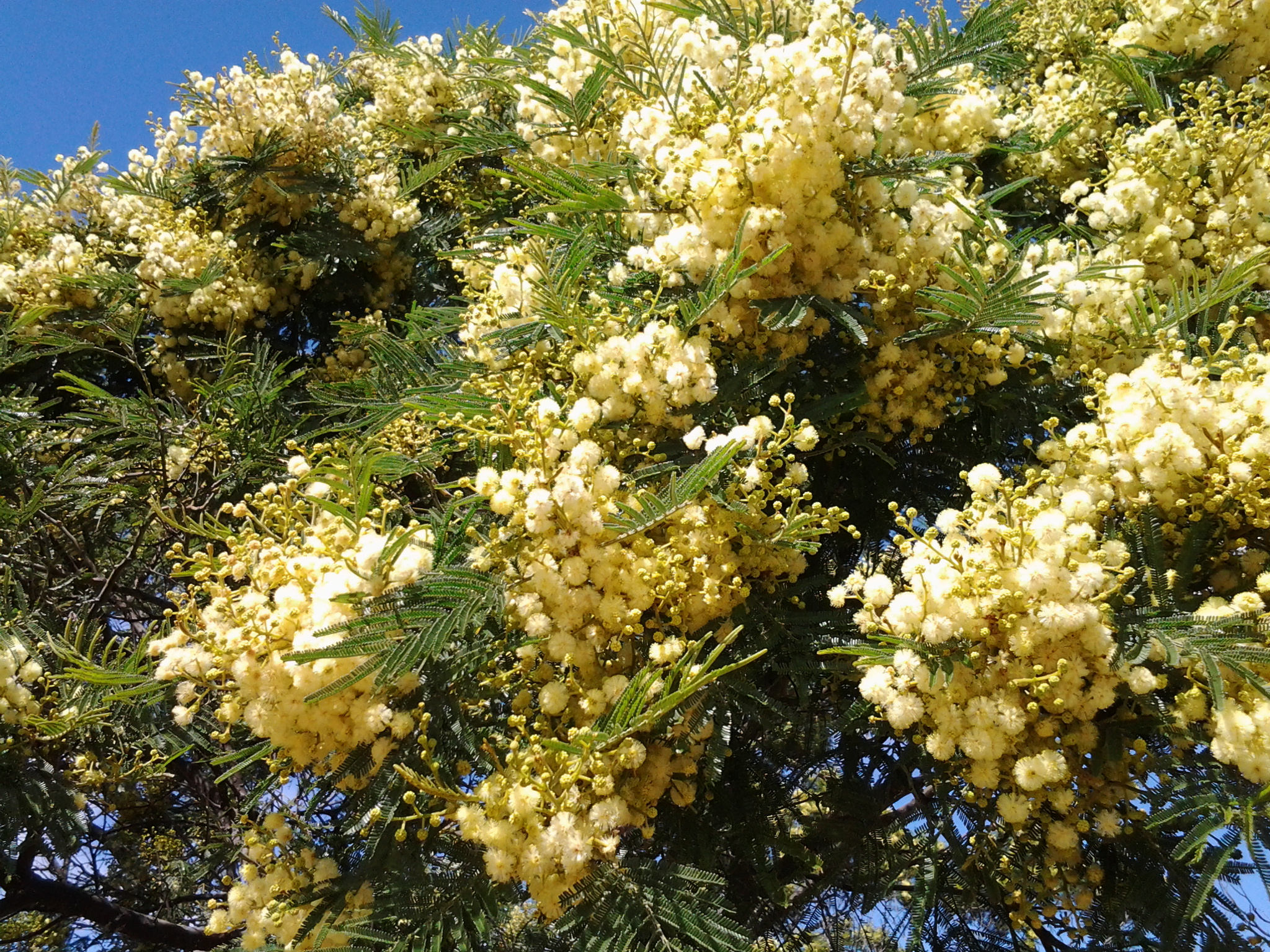
The photo below is a close up of wattle blossom. The seductive heady perfume surrounded me most of the day.

20141111_103716

Kangaroo Bluff Historic Reserve and Bellerive Fort

Near the end of my Stage 4 walk from Tranmere to Bellerive Bluff along the Derwent River, I saw a sign pointing to the Kangaroo Bluff Historic Reserve which I chose not to visit. However, my curiosity was aroused. So the next day, last Saturday, I made a special trip and walked to the Reserve to find out more.

20140927_091124

As I walked toward the entrance, I was puzzled. I could see a narrow road passing between two raised hills. On closer inspection when I discovered a massive deep and long ditch from the left to the right outside the stone edged wall of earth, clearly this site was the remains of a fortification.

20140927_091051

The site was a battery complex with underground tunnels and chambers for magazines, stores, the lamp room, a well and loading galleries. The public do not have access to the underground since these parts were bricked up in the 1920s: I would have been very interested to see the speaking tubes set into the walls used for communication purposes.

However there are many metres of well-preserved channels which can be walked in and around.

20140927_090522

20140927_090924

Signage provided useful information. I now understand that the idea of a protective Fort was first discussed in the 1830s as a means to protect the merchant ships travelling up the Derwent River, although I am unclear who might have attacked from the sea because Van Diemen’s Land (now named Tasmania) was very isolated from the rest of New Holland (now named Australia). However, it was not until difficulties were being felt between England and Russia in the 1870s that a renewed push for a Fort was made.

20140927_085957

By 1885 the defensive Fort was built – although I cannot imagine why anyone would think that Russia would believe it useful to send a war ship to the tiny colonial and penal colony in Hobart. It does not surprise me that the two canons were never used as war weapon.

20140927_090533