Tag Archives: MONA

Moorilla Estate on the edge of the Derwent River, and Claudio Alcorso’s legacy

Two weeks have passed and I am yet to plod along a new stage of my walk along the Derwent. Unfortunately a number of commitments and inclement weather have kept me off the path but for the followers and other readers of this blog, I hope to be walking later this week or early next week and lodging new stories onto the blog.

History

Meanwhile a little history of the fabulous location at Berriedale where my last walking stage finished and the next stage starts needs to be provided.
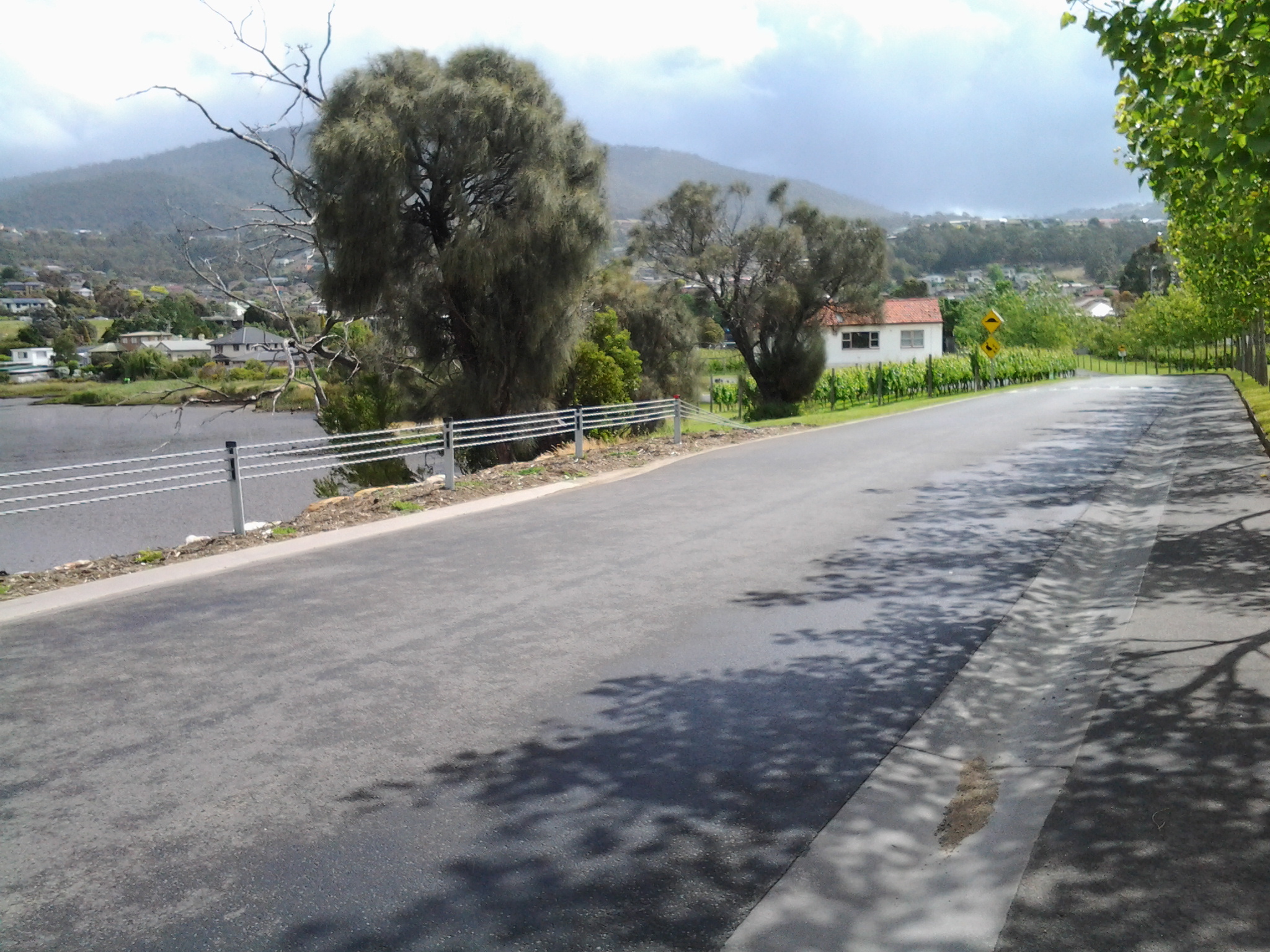
20141125_155820

Moorilla is an estate producing wonderful wines from the vineyards that sit around MONA (Museum of New and Old Art) in the northern suburbs of the Greater Hobart Area.  Details about these good drops can be found at http://www.moorilla.com.au/. In addition, the world famous Moo Brew Brewery operates from the site.  Read more at http://www.mona.net.au/mona/moobrew

Claudio Alcorso

The estate and vineyard was originally established by entrepreneur and Italian textile merchant Claudio Alcorso in 1947. Read more at http://www.moorilla.com.au/winemaking/history/. Claudio Alcorso was well known for setting up Silk and Textile Printers Ltd. at Derwent Park, a suburb in the City of Glenorchy in the Greater Hobart Area.  He was also a patron of the arts. For example, in 1947 and other years Alcorso commissioned selected Australian artists to design new fabrics and then these were printed on silk, wool and linen. The artists included William Dobell, Hal Missingham, William Constable, Russell Drysdale, James Gleeson, Francis Lymburner, Adrian Feint, Jean Bellette, Donald Friend, Margaret Preston, Justin O’Brien, J. Carrington Smith, Loudon Sainthill, Frank Hinder, Carl Plate, Margo Lewers, Douglas Annand, Alice Danciger, and Desiderus Orban.  Tasmanians may recognise that our Jack Carrington Smith was recognised in this list of celebrated Australian artists. Their designs were displayed in substantial national exhibitions and helped to create a design shift nationally and were part of a global development in the design of fabrics. Have a look at http://news.google.com/newspapers?nid=1301&dat=19470821&id=fgNVAAAAIBAJ&sjid=25MDAAAAIBAJ&pg=7284,3275402 to see some of the fabrics.

Alcorso sponsored the Alcorso-Sekers Travelling Scholarship for Sculpture with the Art Gallery of New South Wales and helped bring some of the most controversial art to Australia in the 1960s and 1970s.

You can read a transcript of a short interview with this wonderful man at http://eprints.utas.edu.au/16629/2/alcorso-transcript.pdf.  Alcorso’s autobiography The Wind You Say. An Italian in Australia – the True Story of an Inspirational Life was published by Angus & Robertson in 1993.

Handing over to David Walsh

Alcorso sold the property to David Walsh in 1995 who, in concert with the current wine maker, has continued the open-mindedness of the original owner with a search for, and presentation to the public, of new and exciting and beautiful objects and experiences.

Stacks of wonderful photographs of Moorilla and MONA can be seen at https://www.google.com.au/search?q=moorilla+images&espv=2&biw=1366&bih=643&tbm=isch&tbo=u&source=univ&sa=X&ei=XreGVP8Lg4PyBcWxgTA&ved=0CDMQ7Ak

Since MONA opened to the public a few years ago, hundreds of thousands of people from around the world have poured into Tasmania and made the pilgrimage. It offers a feast for all the senses and no-one leaves the estate unchanged.

Just remember the estate and MONA are closed to the public every Tuesday.

20141125_155805

The 9th stage of my walk along the Derwent River finished at MONA

More serious rain was threatening as I sat at the point, and rather than return to the Berriedale Caravan Park and then locate the Main Road seeking a bus, I decided to investigate whether it was possible to walk up the hill and arrive on the Moorilla estate at MONA (Museum of New and Old Art) by the ‘back door’.

Earlier in the day others had warned me that MONA was closed to the public every Tuesday. As a result, I was somewhat concerned that even if I was able to access MONA property, by the time I reached the Main Road perhaps the exit might be gated and locked and I would need to retrace my steps.  But I am glad to say the day had a happy ending. There were no gates or locks and my exit was simple and easy.
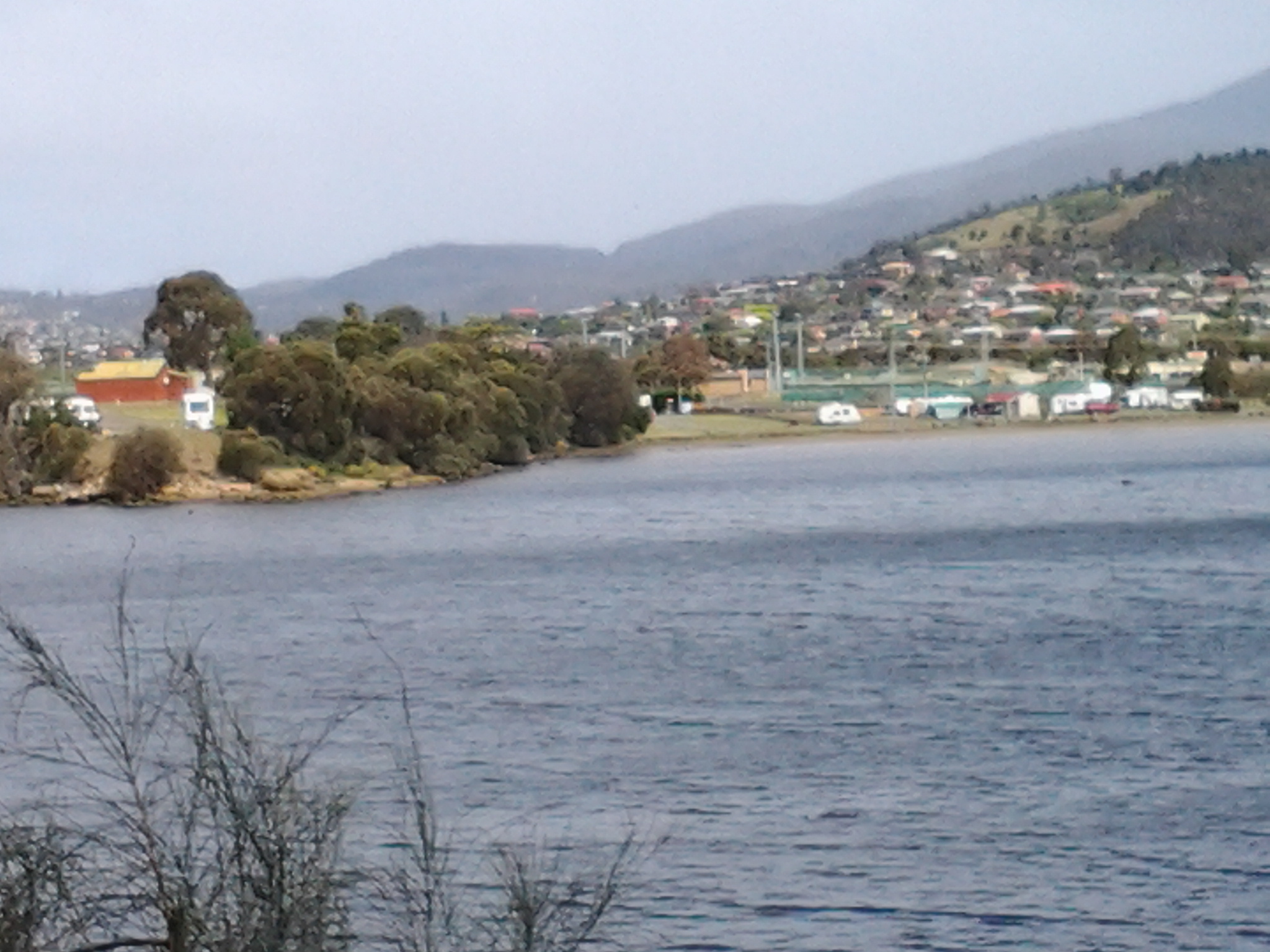
But before then, I continued my voyage of discovery.

It was very easy to wander up the hill from Cameron Bay. Firstly, I came upon a shed with the sign MONA ROTA and beside it a helicopter pad was laid out for the transport of special guests.

The hills behind Berriedale were almost invisible with shrouds of rain and I knew that a heavy downpour would be around me very soon.

Therefore, I was very pleased when I spotted a large concrete pipe, the sort which is used for drainage when major roads are being built. The pipe offered me perfect protection from the wind and rain. While standing inside, I discovered that the pipe was part of an art work, Worm Mound. A number of pipes like it were placed around a tepee located in their centre and then a high mound of rich soil provided a thick cover. Grass seed had sprouted and the mound seemed almost ready for a haircut. What I liked particularly was the long roots that had been inserted in the mound and which hung and draped inside the mound around the tepee.

I have visited MONA many times but I had never walked to this part of the property. The Worm Mound was a strange but uplifting find.

When the rain calmed a little, I ventured out with my umbrella firmly in hand and walked to the open concert area.  As the rain re-intensified, I noticed the rich red transparent door of one of the tall wooden ‘art’ buildings was open. I went inside and sat and listened to the dialogue which formed part of the art experience. Previously I had not made the time to do this and so the experience was most instructive. A meditation space.  In future I will be interested to visit the other similar structures built in the concert area to see if the voice and messages are the same.

Eventually I connected with Moorilla’s main thoroughfare and walked down to the Main Road at Berriedale. Bus stop 33 is located near the entrance to the Moorilla/MONA experience and I didn’t have to wait long for a Metro bus numbered X1 to transport me to Glenorchy and onto Hobart city.

20141125_155805  20141125_155817  20141125_155820

I left Moorilla/MONA at 4pm, half an hour after leaving the point where the southern end of Cameron Bay met the Derwent River. On a fine day and without any distractions the time required to pass through the property might have been 10 minutes.

I never had the intention to simply pass through this refreshingly invigorating complex with its thought provoking and startling exhibitions.  Besides, I had planned to reward myself at the end of this stage 9 with a glass of their award winning wines. Alas. That pleasure was not to be – on this occasion.

Lowestoft Bay in Berriedale on my 9th walk along the Derwent River

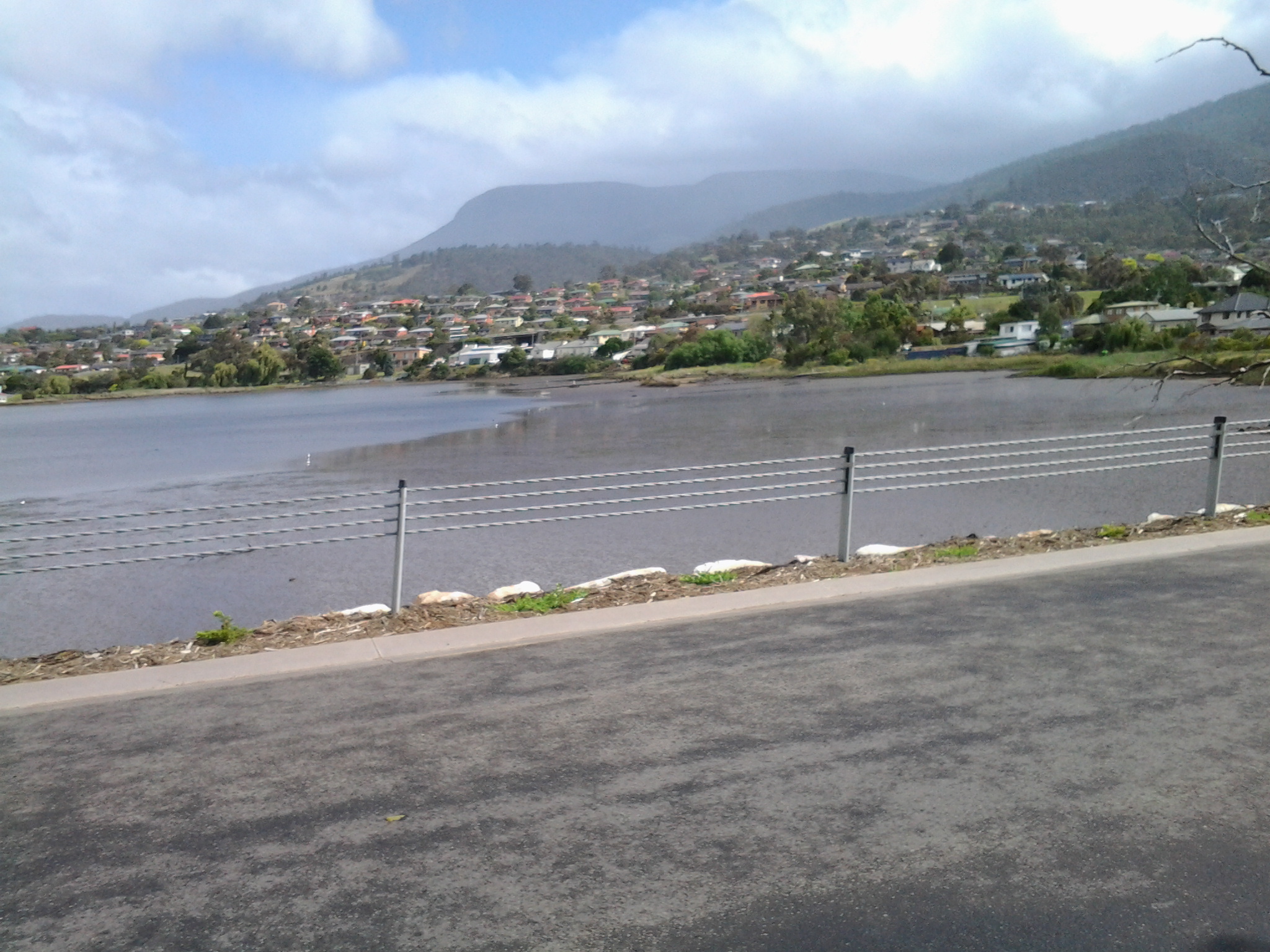
Wandering down the track towards Lowestoft Bay, Berriedale’s Caravan Park and the headland with MONA were visible.

Towards MONAacross Lowestoft and Cameron Bays  20141125_145110

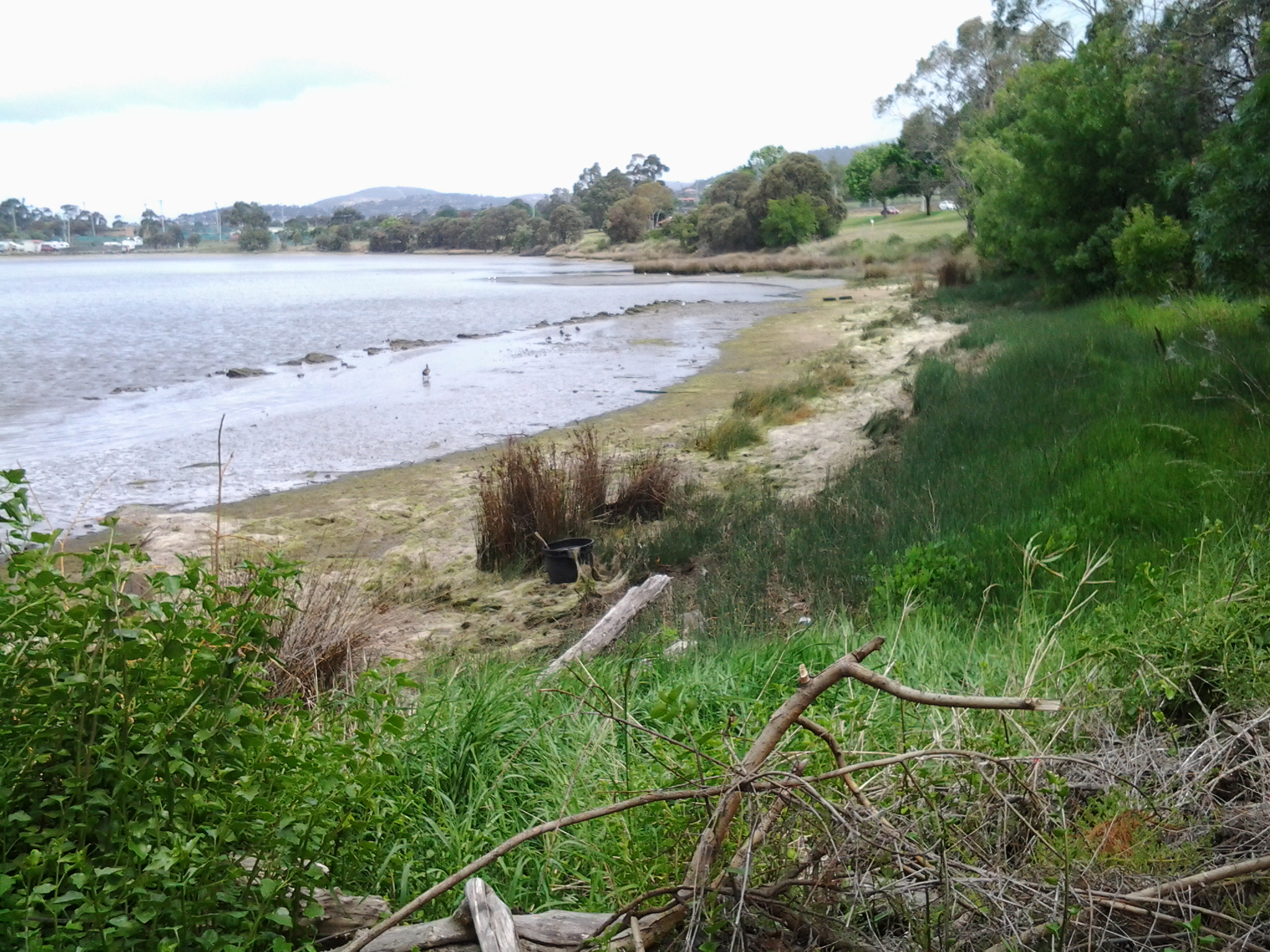
Eventually at 3pm, I reached the northern end of the Lowestoft Bay and could see the Bay stretching around to the Berriedale Caravan Park.

20141125_145823

Once on the open mowed green parklands, clear walking tracks were easily accessible.

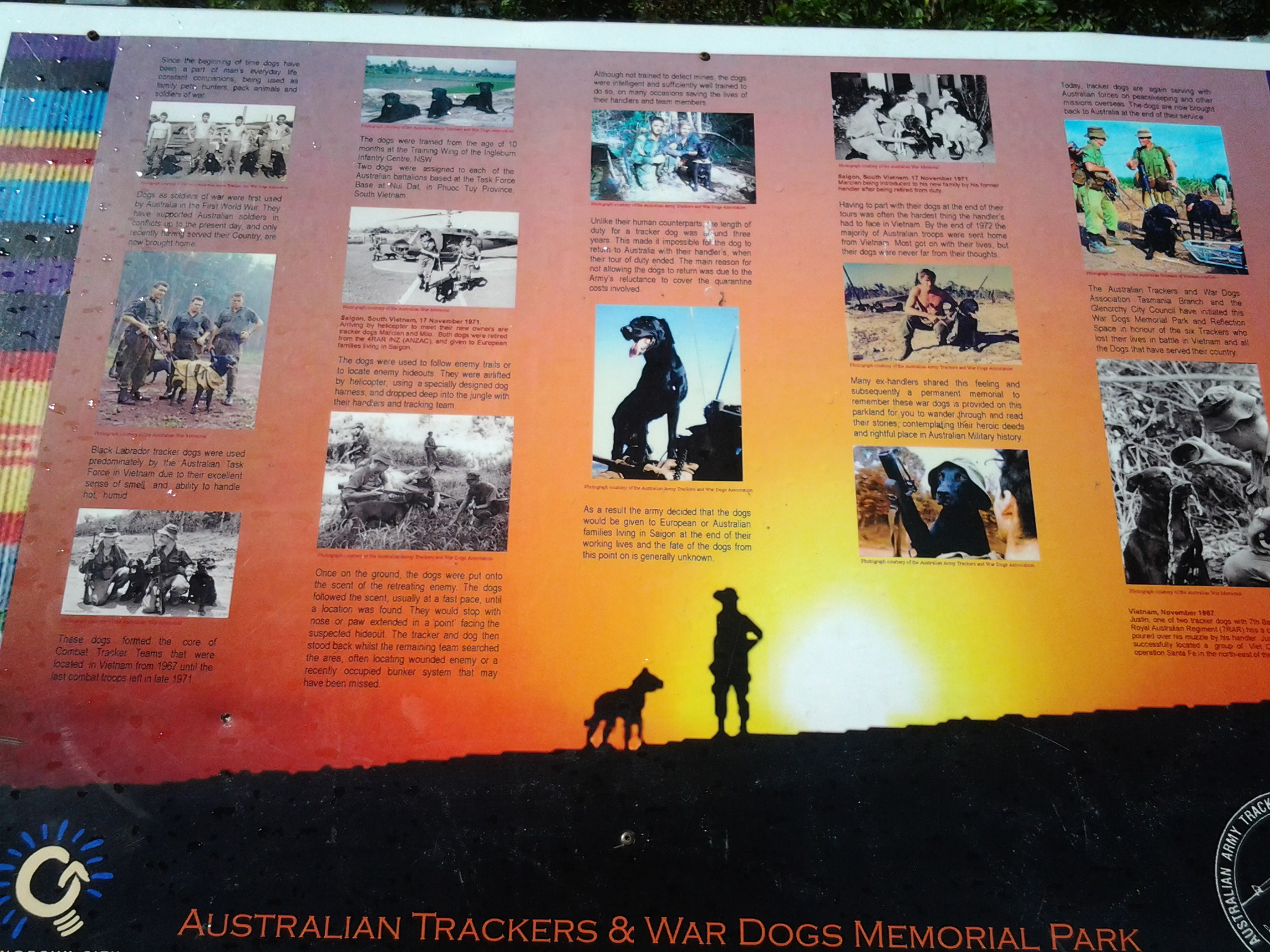
The most amazing discovery of this 9th stage of my walk along the Derwent River was a significant memorial to the dogs that had been part of Australia’s fighting forces.

Three different components constituted the memorial.

  • A panel detailed the stories of some of the dogs.

20141125_150411

  • Vertical panels placed at intervals along the Lowestoft Bay waterfront with the names of the dogs and the wars they had fought in. For example:

20141125_150551

  • A paved and constructed place for quiet contemplation

20141125_150441

This memorial was so unexpected; a remarkable series of features the like of which I have never seen before.  How many readers knew it was there?

9th Stage of walk along Derwent River completed yesterday, Tuesday 25 November

I caught two buses from my home in Bellerive on the eastern shore, via the Elizabeth St CBD Hobart and the Glenorchy City bus malls, to reach Granton on the western shore of the Derwent River in the northern suburbs of the City of Glenorchy in the Greater Hobart Area.

At 8.26am I stepped off the Metro number X1 bus at stop 47 outside the York Hotel in Granton South and, with excitement about what the day might bring, I looked around and admired the view across the River to the suburb of Bridgewater before starting the tramp south.

20141125_082854

No footpaths or walk ways had been laid for pedestrians and so vigilance was required against the traffic on the Main Road. Occasionally a few metres of concrete or bitumen were laid for a new subdivision but generally a track for smooth safe walking was not on offer.

The weather started sunny but during the afternoon rain passed intermittently. In the photo below you can see the grey background blurred by rain, but meanwhile three pelicans were enjoying themselves on Lowestoft Bay.

20141125_150144

Relentless buffeting wind was the main feature all day. As a result, I couldn’t keep my sun hat attached to my head. Needless to say, I returned home with a blasted red face.  But happy from the pleasure of walking, discovery and the fresh air. Being a tourist in my home town is a revelation and a joy.

I walked southwards from Granton South to MONA (the world famous Museum of New and Old Art) at Berriedale and passed through the suburbs of Granton South, Austins Ferry, Claremont and half of Berriedale.

I experienced Goulds Lagoon, Austins Ferry Bay, Rusts Bay, Beedhams Bay, Bilton Bay, Dogshear Point, Windermere Bay, Knights Point, Windermere Beach, Connewarre Bay, McCarthy’s Point, Lowestoft Bay, and Cameron Bay. I plodded around bays and a golf course (I gained special permission to walk this private property but I would NOT recommend anyone else try it – see later postings), had a stopover at Cadbury’s, and hid from the rain in gazebos and art works. All up, I probably walked 18 kms.

Yesterday I covered 9 ¼ km of the River’s length on the western shore. This adds to my previous tally of 3/4km on the western shore making a total of 10kms covered as I trek southwards from the Bridgewater Bridge to the mouth of the Derwent on the western shore.

Specific details of the different legs of this 9th stage walk will be written up and posted in the coming days.

My favourite photo of the day was taken near the end of my walk, when I sat at the point where the southern end of Cameron Bay met the Derwent River (with MONA just over the hill). The water had been frothed by wind and I liked the lacy remnants floating by.  The intense colours are the result of the rich light quality caused by the heavy clouds overhead.

20141125_153054

More music close to the Derwent River

One of my August blog postings extolled the magnificence of the Tasmanian Symphony Orchestra Chorus in a series of performances at MONA by the western shore of the Derwent River in the northern suburbs of the Greater Hobart Area.

Last night I travelled to another institution, the University of Tasmania, which has its lower boundary almost at Derwent River level on the western shore, south of the Hobart city centre. I was so pleased that to continue an annual visiting artist series, the Tasmanian Conservatorium of Music had joined forces with the Hobart Organ Society to bring world renowned pipe organist John O’Donnell to Hobart.

John O Donnell organist

In the University’s Stanley Burbury theatre, the only neoclassical pipe organ in Tasmania was on show for an appreciative audience. Served up was a 1 and a ¼ hour nonstop magical program: Georg Muffat Toccata Septima; Arcangelo Corelli Concerto in C minor, op. 6 no. 3, arr. Thomas Billington Largo/ Allegro/ Grave/ Vivace/ Allegro; Johann Pachelbel Wie schoen leuchtet der Morgenstern; Johann Sebastian Bach Wie schoen leuchtet der Morgenstern(BWV739); Johann Sebastian Bach Sonata no. 3 in D minor (BWV 527); Johann Sebastian Bach Fantasia sopra il Chorale Wo Gott der Herr nicht bei uns haelt (BWV1128); Johann Sebastian Bach Fantasia and Fugue in G minor (BWV542)

I have listened to pipe organs being played in various places around the world but last night’s performance exceeded all expectations. In the hands of a non-expert, the sounds from a pipe organ can sound muddily mixed and your ears can feel assaulted.  Or the playing can sound lack lustre, colourless, and dull. Or irregular pacing can make me, as a listener, believe the organist hasn’t practised well enough and isn’t able to keep to the time signature.  That he or she isn’t as familiar with the musical piece as they ought to be before they play for public entertainment and pleasure.  In those instances there is minimal or no pleasure. But last night, John O’Donnell was nimble of finger across the keyboards, agile with his hip and leg movements to control the multitude of foot pedals, and most importantly made music with his touch. This wasn’t sound it was music. Lyrical. Magical. He made the composer’s scores come alive.

Listening to such music through headphones as you walk along, or blasting from a sound system in your own home, is no substitute for hearing the sounds in an environment where the acoustics work and the nuances of the music embrace you.  The concert was intense.  Intensely rich and beautiful.

I wondered on the effects of significant rivers in the lives of the composers from last night’s concerts.

17th century composer Muffat spent 6 years in Paris near the Seine River before settling in Vienna next to the Fluviul Dunarea. Corelli lived for a time early in his life near the river Po in Italy and later when settled in Rome, he had access to the Fiume Tevere that winds its way through. Pachelbel started life in Nuremberg through which the Reglitz flows. Later he studied at Regensberg around the Fluviul Dunarea, before moving to Vienna also on the same river, then Stuttgart on the Neckar river before settling back in Nuremberg against the Reglitz river for the rest of his life. Johann Sebastian Bach moved as a teenager to Luneberg next to the Ilmenau River. During Bach’s time in Weimar he could have accessed a number of rivers which enter into or are nearby to this city. When he was in Mulhausen, the Unstrut river and a tributary were close at hand. A multitude of rivers and tributaries flow through Liepzig where Bach spent 27 years.

I don’t want to mislead any readers. The connections between composers and rivers is a geographical one and I do not believe the rivers that they lived near had direct musical relevance. But the advantage of this tiny research to me was that I was able to understand a little more of the world’s geography and the interconnectedness of so many things; history, people, musical development. As a result, the experience of my project to walk along the Derwent River is enriched.

Along the northern side of Shag Bay and onwards along the Derwent River

I used the mini bridge to cross the tiny creek feeding into Shag Bay and began immediately to take the walking track uphill on the northern side.  From here on I was not particularly confident about the clarity of tracks or, in fact, whether there would be tracks. I was pleased to discover that many tracks existed and as I long as I kept the Derwent River on my left, I couldn’t get lost – even if I did not know at what part of the suburb of Risdon I would arrive (‘all roads lead to Rome’ even if entry is by a different gate).

On the way up the first hill I had stopped for a view and a swig of water. During that time I surprised a dog that came around the corner behind me with her mistress. They both stopped in their tracks.  She told me that in all the dozens of times she has walked this track, she has never seen anyone on it.  Peace and solitude. Yet only a dozen or so kilometres from the heart of a city.  A capital city.

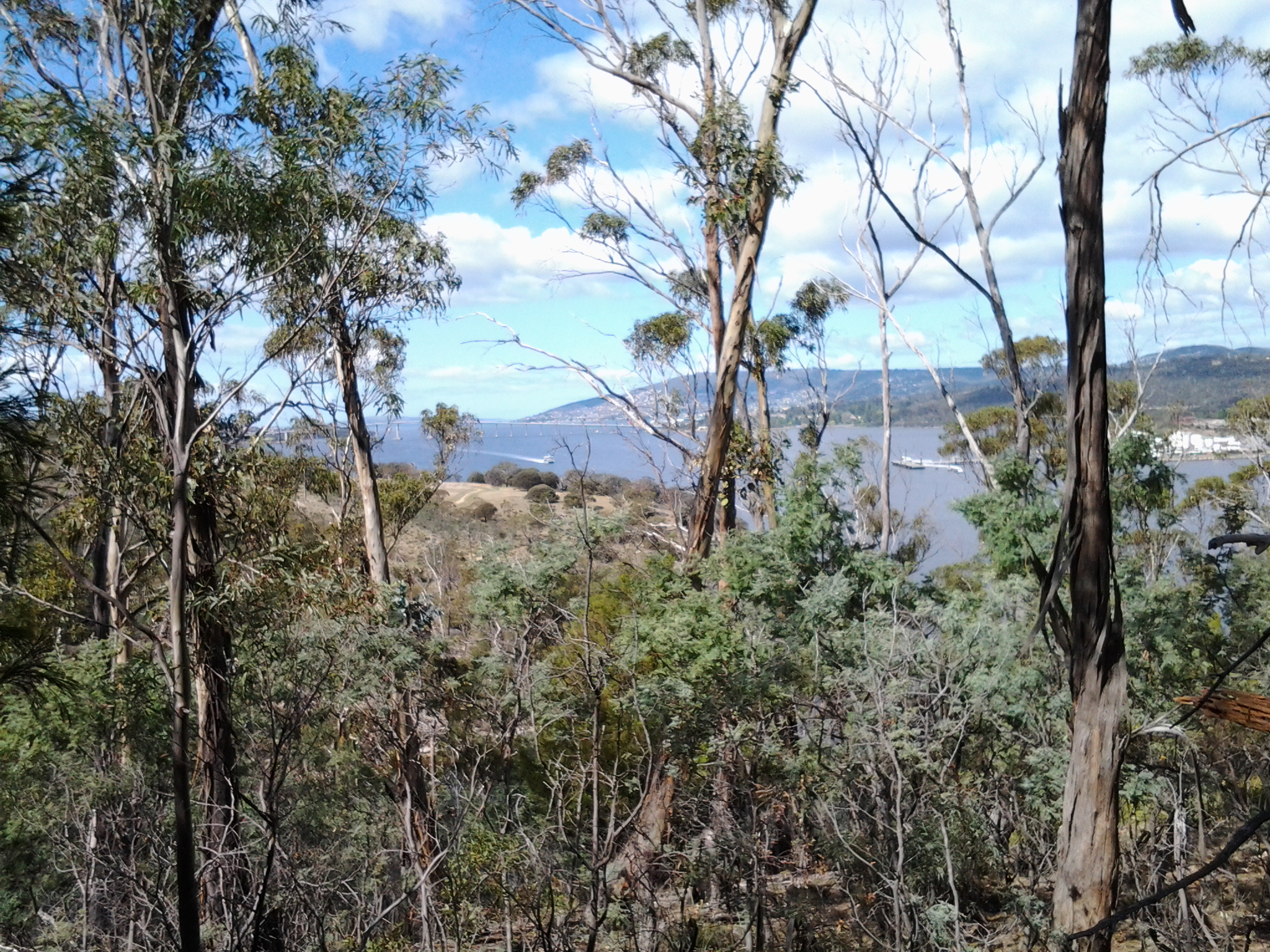
The photo below through a wooded landscape extends a view southwards to the Derwent River with the MONA ferry coming my way.  At this point, I was as high as the uppermost part of the Tasman Bridge located closer to the mouth of the River.

20141015_111529

Around me eucalyptus gum nut shells lay on the ground exuding a clean fresh perfume (think of May Gibbs’ hats on the gumnut babies Snugglepot and Cuddlepie – Tales of Snugglepot and Cuddlepie: their adventures wonderful was first published in 1918.).  Not long afterwards, the track passed through a copse of self-seeding wattle trees: I know some varieties are considered to be weeds in certain parts of Australia and I suspect this collection of specimens may be ‘weeds’.  The problem is that it grows quickly and blocks out the opportunity for other trees to survive. Monocultures are death to the natural landscape.

At the top and moving along parallel to the Derwent River, I was on top of the Bedlam Walls.  Various unofficial tracks disappeared over the cliff but I stayed on the main path. My reasoning was that I had an infrequent bus service to connect with at Risdon Cove and I was not sure how long it would take to reach there.  The downside was that I missed experiencing the actual walls and their walkways and caves. I would have liked to have seen the following (https://www.flickr.com/photos/bleeter/7266025800/), but I must return for a closer inspection.

7266025800_c8d48839e8_b

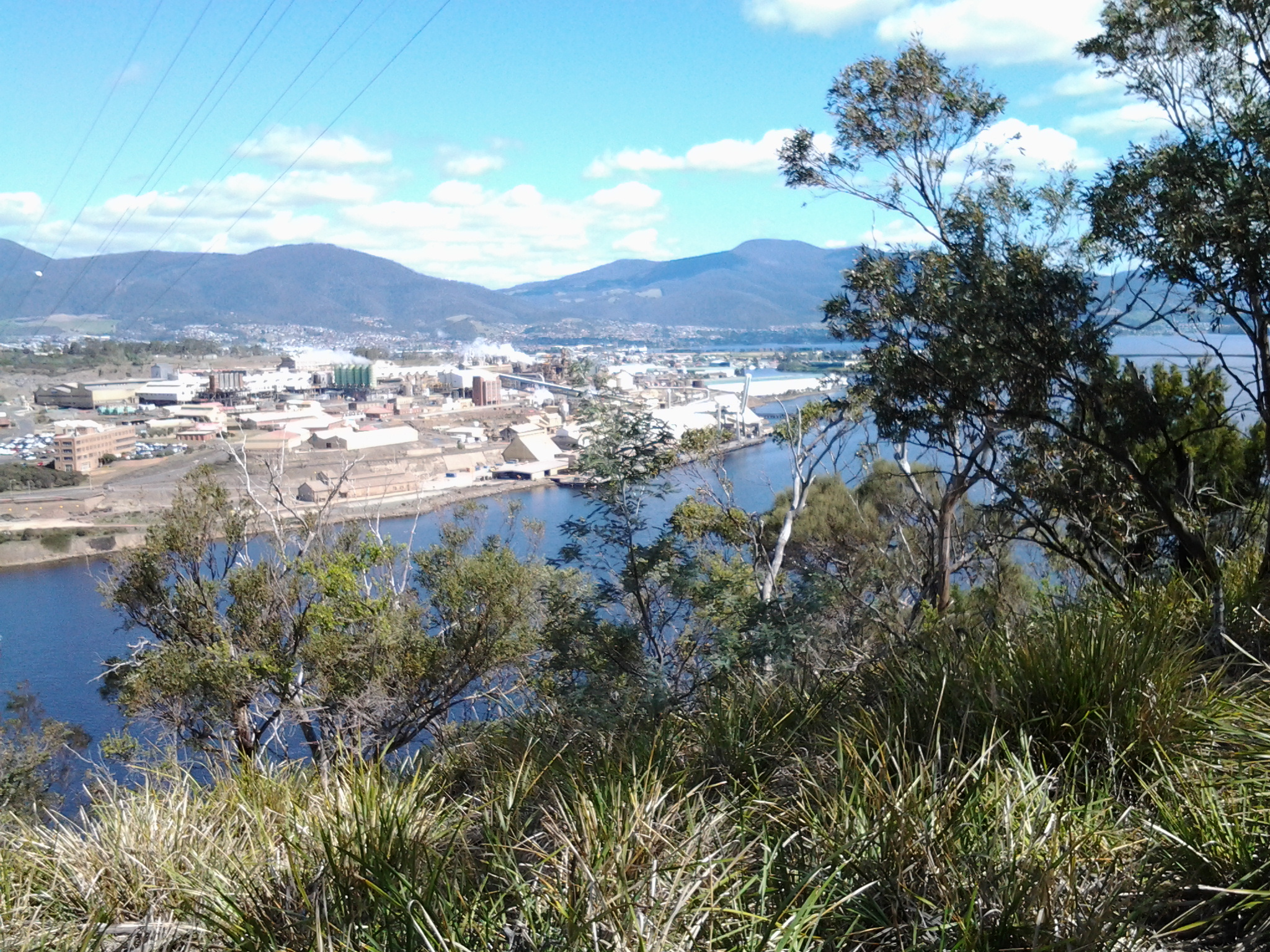
Along the top I was afforded detailed views of the western shore and especially of the smelting works, Nystar as shown below.

20141015_112338

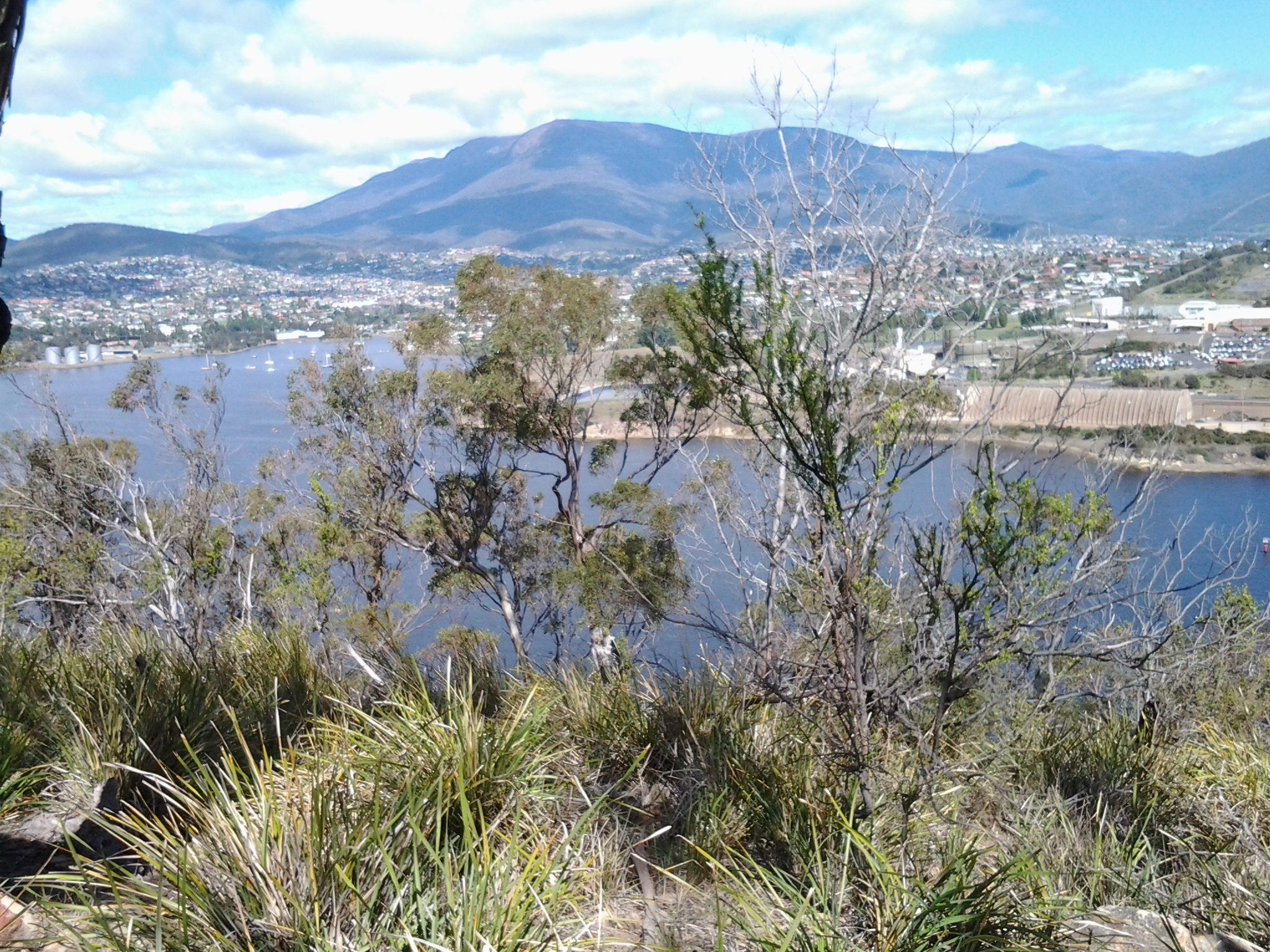
It is now obvious to me that when I walk south along the western shore of the Derwent I will not be able to be close to the river edge when I pass this massive Nystar industry covering many acres of land. I reached a major electricity pylon around 11.20am and watched its wires swing across the river to the power hungry industry (these wires are just visible in the photo above). Looking southwards and across the River from the top of Bedlam Walls, I could see Mount Wellington overshadowing Cornelian Bay and the Newtown suburb of Hobart.

20141015_112331

My track moved inland and parallel to the electricity pylons. After 5 minutes the track split and I turned left. It came to an end with a rough worker’s seating area in view of the Bowen Bridge crossing the Derwent River further north.  The cliff seemed to drop away and I judged that a slippery slide down might not be a good idea with no one else around if something should go wrong.  Later in the day when I was much further north, I was able to look back to the pylon and see I really should have braved it down the hill and kept closer to the water. But then again it might be safer to walk south and climb that hill rather than slip down it heading northwards. By 11.35am I had walked back to the divide with the original clear but rough 4WD track and chose the other arm along the pylons.

Bird song on the track along the Derwent River

A glorious soundscape within a fresh and embracing landscape was my reward for Stage 6 walking along the Derwent River.

As I left the bus and began to walk along the marked gravel pathway nearby, a sulphur crested cockatoo screeched overhead. It was easy to enjoy the sunlit stand of poplar trees then Peppermint gum trees and other vegetation surrounding me.  Geilston Creek, with its paddling ducks, wound its way towards Geilston Bay on my right.

20141015_094500

The further I walked the more bird song I heard and the more native birds showed their colours. First I noticed a pair of pardalotes, then Jenny Wren and her mate the divine Blue Wren both collecting a meal of insects from the path ahead. To my left were sports ovals and tennis courts. 10 minutes after leaving the bus I reached a new walking bridge over the creek near the edge of Geilston Bay, garlanded by large flowering wattle trees at the entrance.

Once over the bridge I turned left onto a road, with a series of dinghy lockers visible on the other side of the creek, then a couple of minutes later the Bay was clear on my left and the last houses before the bush started were located up on the right. The track to Shag Bay started 15 minutes after I left the bus. Despite no breeze I felt the cold air hard on my face. But the air was deliciously clean, the environment pristine after the rain overnight, and the tranquillity of the vistas was sublime.

20141015_095242

The official sign in the photo above, which was located at the beginning of the track, includes a map showing the way to Shag Bay and on to Bedlam Walls. I trekked gently uphill parallel to Geilston Bay on an undulating gravel track and around me all manner of birds sang, whistled, chirped and squawked. An ornithologist would be able to identify those sounds, but mostly I needed to rely on seeing these feathered friends of the bush.  The sounds were inspiringly musical. It was a feast for the ears. I spotted a Black Faced Cuckoo Shrike.

20141015_100446

The photo above show where I had walked from: it looks down the track with Geilston Bay on the right.

Along the way, unofficial tracks led down to the water.  On this walk I had hoped to locate the known aboriginal cave but alas, I was unlucky.  I suspect one of those tracks would have led to it, and so I will return another day for further exploration. Previous research had indicated that our Parks and Wildlife Service government department no longer can afford the upkeep and safety practices that are associated with this cave, and that somewhere there are stairs to descend to the cave and a locked gate to prevent entry. Other bloggers have indicated this gate is easily climbed if you are prepared to take the responsibility to accept all risks. As yet I have no idea if Trespassers Prosecuted signs are in place for that location. A clear photo of the cave is available at: http://tastrails.com/shag-bay-heritage-walk/tastrails_shagbay_bedlamwalls/

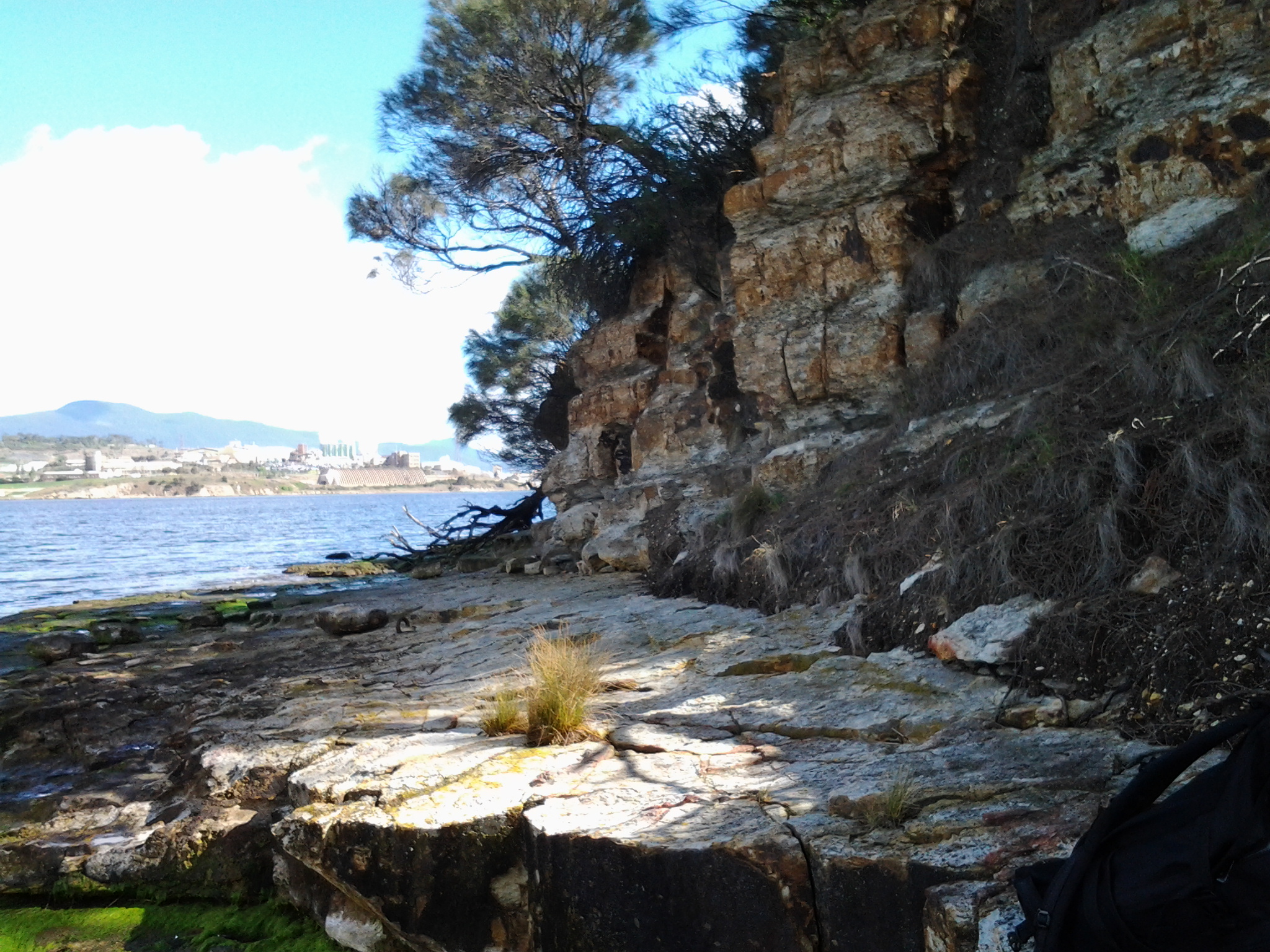
At 10.05am I reached a split path and took the left hand route. The occasional gum tree was surrounded by open grassland containing frequent clumps of one of our native plants the Diplarrena Moraea, spiked with their white blooms. Tree roots slithered across the path creating a tripping hazard, so I walked slowly in order to absorb the views. At a second split in the path, again I took the left hand track.  This meandered downhill on slippery gravel under old Casuarina trees to the water’s edge. At 10.10am I stood on the rocky shore at Bedlam Walls Point.

20141015_101225

From the foreshore at Bedlam Walls Point, I looked across the Derwent River northwards to the industrial business ‘Nystar’ which edges part of the western shore of the river; a large zinc and lead smelting and alloying operation.

The photo below is also taken from Bedlam Walls Point and looks southwards. The headland on the left is the Lime Kiln Point marking the other entrance into Geilston Bay. Further afield the Tasman Bridge spans the Derwent River.

20141015_101301

Before I left the Point, I watched a few pieces of river traffic: cormorants diving for their fish dinners, the MONA catamaran, fishing boats, and the sailing yachts.

Generally tranquillity reigned. Then for a while, I walked the rocky edge back into Geilston Bay a little then retraced my steps again to walk around the Point and along the Derwent River edge hoping to find the cave.  Once it was obvious success with this search wasn’t likely, I clambered up the hill. By 10.25am, I was standing on top of a cliff on a little used unofficial track. I continued to walk along northwards and up the gentle hill with the intention of rejoining the official track. Before then, however, I came across an infrequently used 4 wheel drive ‘road’ and followed this instead. The main path was only 20 or so metres further inland. By continuing on the ‘road’ I walked closer to the River and found the experience very pleasant.  There were no other people, and no signs of native animals. Only beautiful bird song.

Floating away

At Synaesthesia 2014 today and yet again honouring their brilliant inaugural performance last year at MONA’s first Synaesthesia event, the Tasmanian Symphony Orchestra Chorus were the stars: their performances all triumphs of ingenuity, great craftsmanship, elegance and beautiful musicality.

Two different types of ethereal performance were on offer.

For the first, the only instruction to the would-be audience was to head to the Barrel room. MONA, the Museum Of Old and New Art is located within a vineyard and winery, and the Wine Bar on the hill away from the museum, sits atop a number of rooms lined with wine carrying barrels. Rugged up against the low temperatures, visitors climbed the steps away from the museum and found the entrance to the Barrel room inside the Wine Bar. I knew that only 50 people were being allowed in to see each of the three scheduled performances, so I joined the queue early. Soon we were being counted through the door, and urged down stairs and into a large concrete room.

In the centre of the room, seated in four rows with two facing the other two rows, were chorus members dressed in black.  Chorus Master June Tyzack stood at one end of the rows with her back to a wall laden with dun coloured barrels. The audience filed in and spread around the chorus. Some sat and others stood.

A strong smell pervaded the space. Ga reminded me that this was like the pure alcohol floating off a fruit pudding when brandy is set alight at Christmas. Astringent. At Christmas the smell bursts and disappears almost instantaneously. By contrast, the odour in the barrel room was permanent, invasive and not particularly pleasant.

Then someone flicked all the switches. I closed my eyes. And bravely the chorus sang in the dark without the benefit of a conductor and sheet music. Without being able to see. In the pitch black. With perfect pitch. Remarkable. Marvellous. Between three short choral pieces, the chorus master acted as a narrator and mood creator with a voice-over that provided a seamless link from the past to the later sounds. In addition, occasionally members of the chorus hummed, breathed, and made other sounds so that the continuity of the whole event was maintained.

The concept was original. The execution total quality. This was breathtaking. The Barrel room performance provided a feast for the aural senses, without the distraction of things visual. The performance, despite being sophisticated and complex, appeared to be deceptively simple. This made the offerings by the chorus instantaneously accessible to listeners.  People filed out feeling some new richer space had been created in their beings to hold more.

The two different performances also had spiritual power.

When the Chorus returned to perform anew, this time they gathered in an arc at one end of the Nolan room. With barely sufficient light, they watched their chorus master lead them to make a string of sweet and discordant sounds. Sounds which echoed. Sounds which bounced along the walls. Sounds that whished into crevices. Sounds that whispered and scuttled. Sounds that dragged and stopped suddenly. When their lights were switched off, the chorus members formed into a line, gathered lit candles and ascended the stairs.  Their procession through a long gallery was led by two choristers dragging a cello case. What was this all about one wondered. The parade, with its character of a monastic religious observance, was punctuated by ritual stops that provided the space for lines of a song to be sung by different voices in the chorus, and then they moved on through the gallery spaces towards a cellist playing rich mellow tones.

Near the cellist, the instrument case was laid on the floor and the candles were arranged around in the form of an offering. Meanwhile, the chorus members prostrated themselves before this icon and wailed cries to the gods. The picture of a religious ceremony was complete.  Duties complete, the chorus rose and walked on towards the switchback-stairwell. Eventually a core of singers arranged themselves down one section of the staircase and sang. When the remainder of the chorus filled other sections of the stairs and opened their hearts and voices, the sound was sublime.

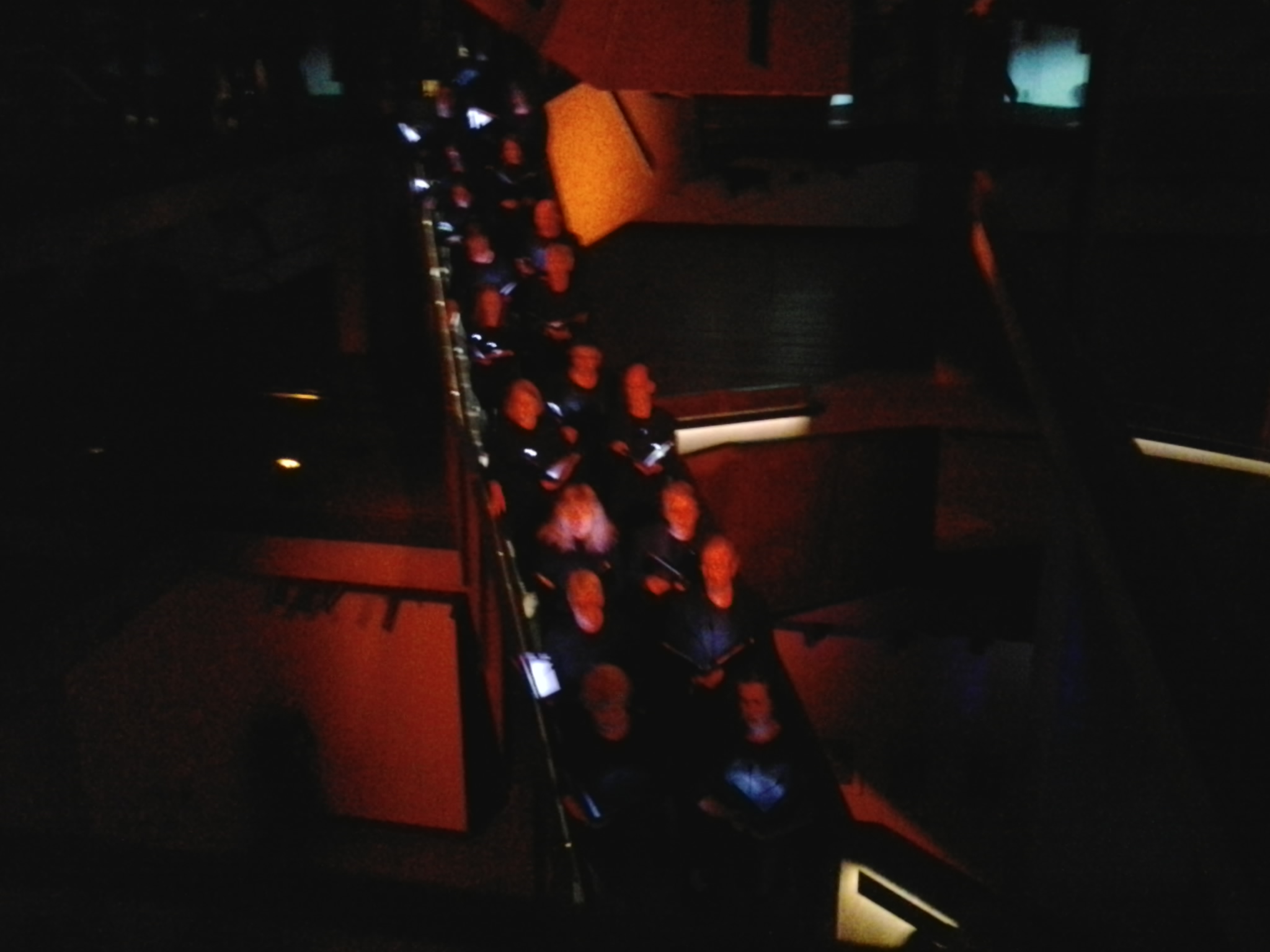
Chorus of Tasmanian Symphony Orchestra singing sublimely on stairs within MONA 16 August 2014

Chorus of Tasmanian Symphony Orchestra singing sublimely on stairs within MONA 16 August 2014

This performance was profoundly moving.

Why was listening to the Chorus special to experience? And why was their performances more interesting and exciting than the instrumental pieces? I can think of a few reasons.

Not only did I have the pleasure of listening to thrilling musical sounds, but I also had the pleasure of seeing and understanding that this music is made directly by people as living breathing entities. There was life and vitality in the people and in the performance. These performances were not dedicated to music as something separate from people.

As an audience member I was taken on a journey. The physical journey took me out of my comfort zone (in the lightless Barrel room), and it encouraged me to walk as the Chorus moved around the Gallery (during the second performance). Both performances provoked me to question what was happening and why, and because I was required to think, these performances gave me more to do than simply acting like a sponge or acquiring the music by something like osmosis.  Having ‘work’ to do was exciting.

The inventiveness of costume, lights and location, all contributed to a series of spectacles today.  But most importantly, the arrangement and performance of the music was entertaining. I came to Synaesthesia 2014 hoping to be enthralled, taken away from myself, uplifted and entertained on many levels. I am delighted to say my expectations were exceeded. I floated away with (not away from) the Tasmanian Symphony Orchestra Chorus. A truly pleasurable and memorable experience. Next to the Derwent river.

MONA is a key destination on the edge of the Derwent river

I am excited that today I will be travelling by a series of local Metro buses to MONA (our wonderful comparatively new, Museum of Old and New Art – which incidentally also houses ancient Egyptian art). The award winning architectural edifice sits on the banks of the Derwent river in Hobart’s northern suburb, Berriedale.  In the future, one of the walking stages will include passing by MONA.

Today, however, the only walking to be done involves getting to bus stops, and then walking up the driveway past Alcorso’s old house and the green leafed rows of grapevines to the new museum. Inside a treat is waiting for me: Synaesthesia. This is where a select few visitors will be asked to submerge themselves in a ‘reverberating, subterranean private playground’. Presented by MONA and the Tasmanian Symphony Orchestra, Synaesthesia will create an immersive experience for its patrons with musicians spread out across the entirety of the museum.  This is edgy stuff and having attended one day of the inaugural event last year, I can’t be sure what lies ahead – and therein lies the attraction.  I do know the Tasmanian Symphony Orchestra chorus will be giving me a new experience when they sing in total darkness while listeners are contained in an unlit room: Black Bach.