The Canal comprised three different flume structures;
- In the ground channel


- In or on the ground narrower channel with concrete or metal arms across the top


- Raised aqueduct


The Canal comprised three different flume structures;
The Canal, with and without the Derwent River water flowing through it, has featured in my recent posts. Perhaps you have been wondering about the location of the original river bed. As I walked I felt it close by and sometimes I could see it. After considerable thought I did not attempt to reach its edge during this walk. It was wild country down there. The distance between the Canal and the stony river bed was usually no more than 150 metres, but the hillside dropped away drastically losing 250 feet as it dropped down steeply. Judging by cliffs that I saw on the other side of the river bed, I imagined that access to the river bed on my side would not always have been possible. I could see no value in forcing my way through the thick vegetation to try and reach the river bed and then forcing my walk back up the steep incline to the Canal, with the idea of repeating the process at intervals. I simply could not see the value in such an activity. Besides, the bush density was such that a machete would probably have been the only way to make a path, and this wasn’t a tool I carried with me.
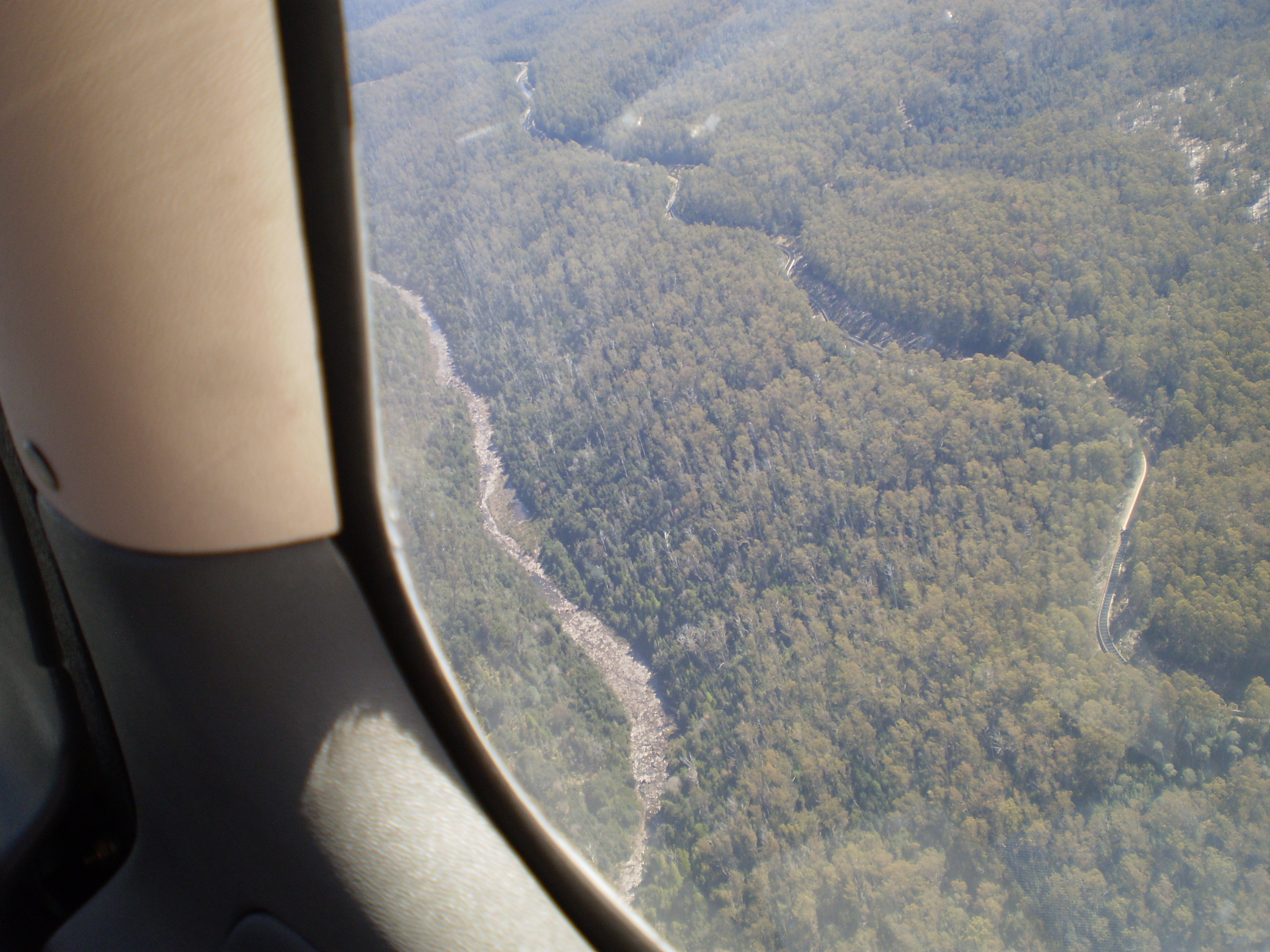
When I saw the river bed, it was a stony snake winding between forested hills. It seems so much further away in the photographs than it was in reality.


At one point, when I stared down a scree-like slope I considered making the steep trek to the river edge.

But the nature of the terrain screamed the potential of a ‘rolled ankle’ and so I continued walking along the Canal close by.
At intervals, Hydro Tasmania has structured simple narrow crossing bridges over the Tarraleah Canal number 1. The various vintages of these crossings seem to indicate changing needs over time.


One bridge appeared to be wide enough for some sort of vehicle to cross, but I wondered where the roadway or path was located on the other side.


Occasionally other buildings and solar panels were associated with a bridge.


Once, as part of the bridge package, I saw a special viewing platform.


Blog followers may remember that at the start of my walk against Tarraleah Canal number 1, I was surprised to see an empty Canal. Later in my walk I was even more surprised. After a few hours of walking, I stopped, looked, frowned, looked again and peered more intensely. A dribble of water was moving. I blinked furiously. Was I imagining that the water was running? No – the water was flowing. Wow! I was here on a day which next to nobody ever sees: a dewatered Canal and then one which is filling. What a thrill.
In the photos below you can see that the water level is edging higher up in the Canal the closer I walked to my destination and the start of the Canal at the Clark Dam.
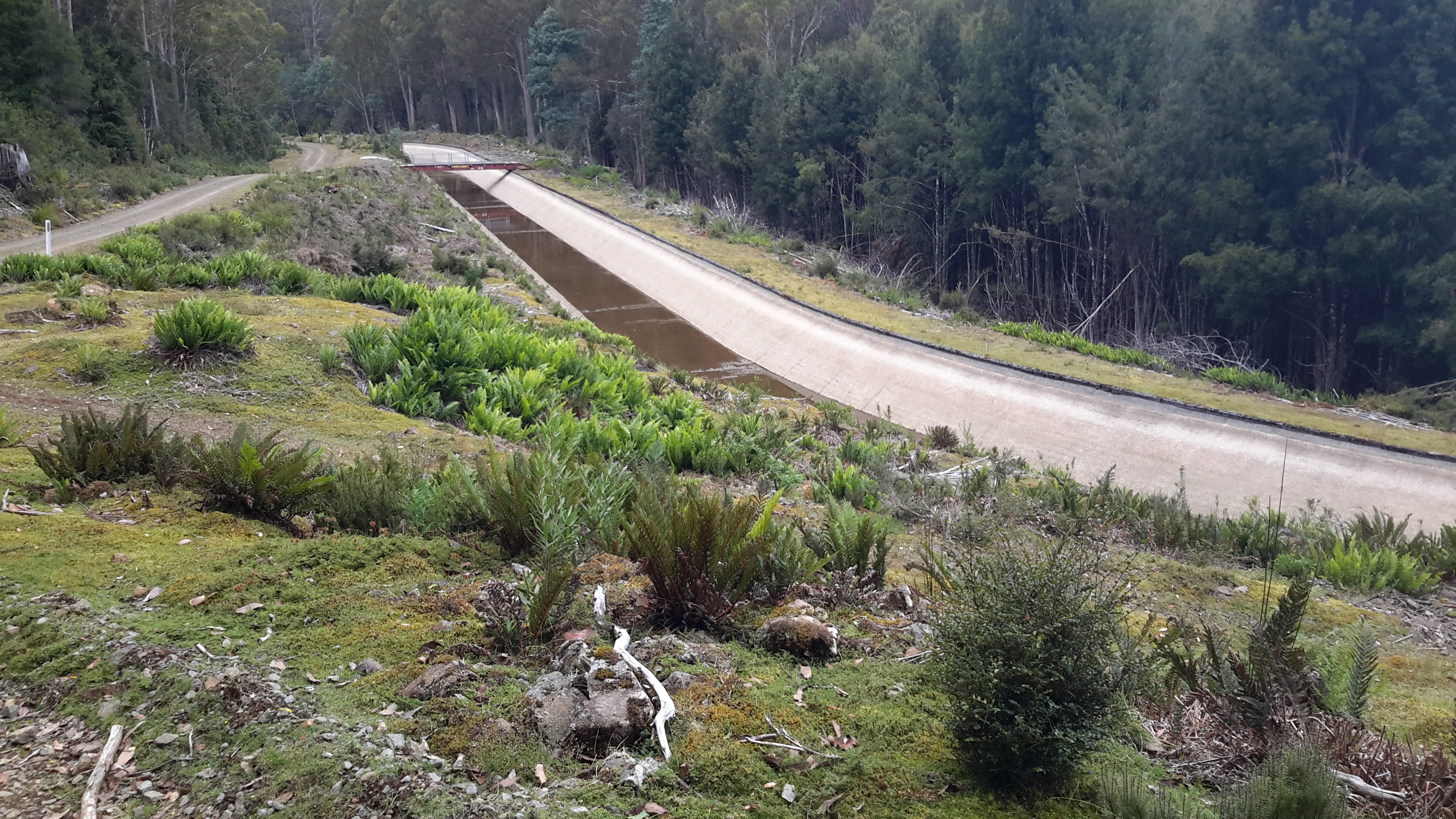
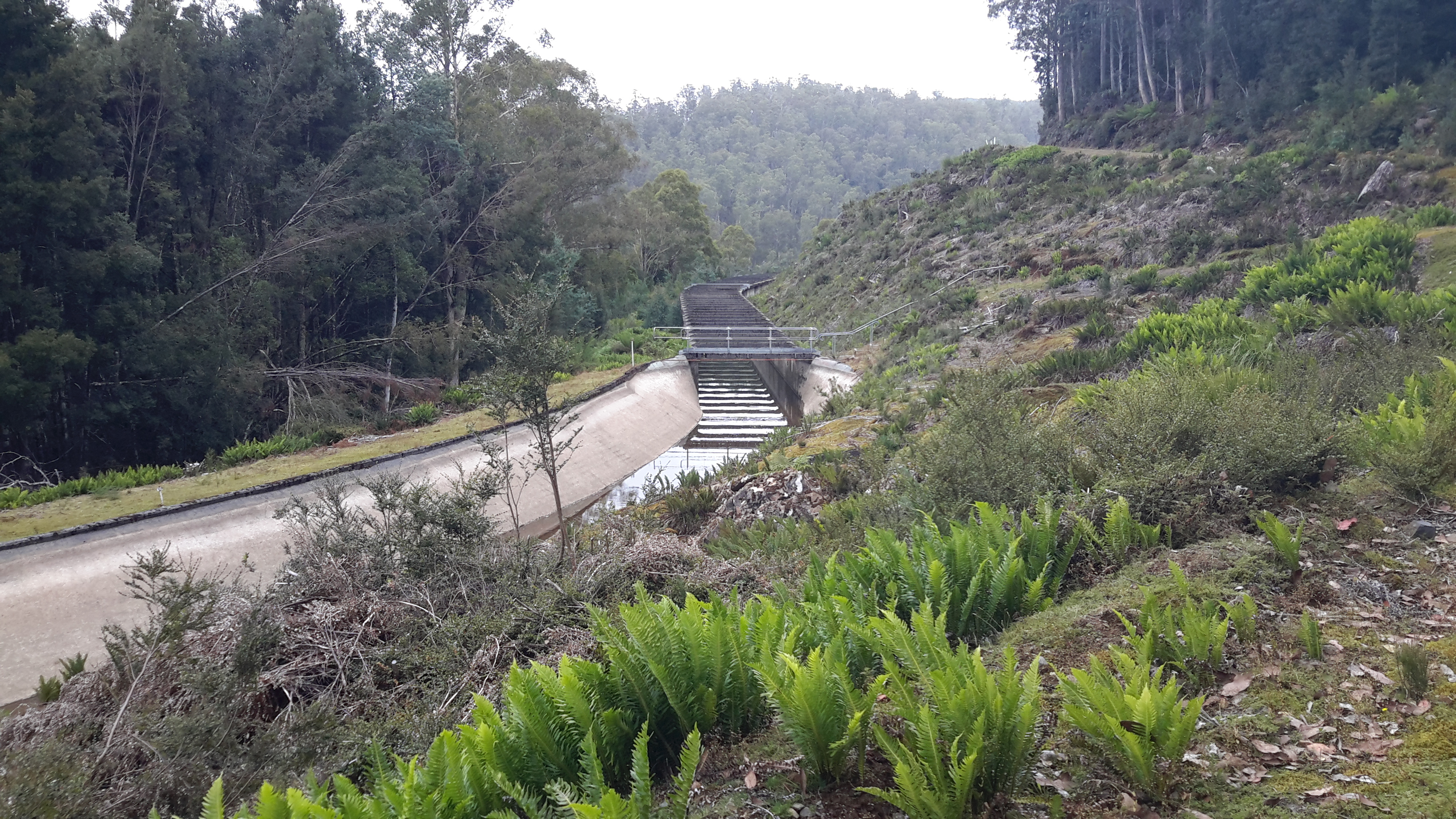


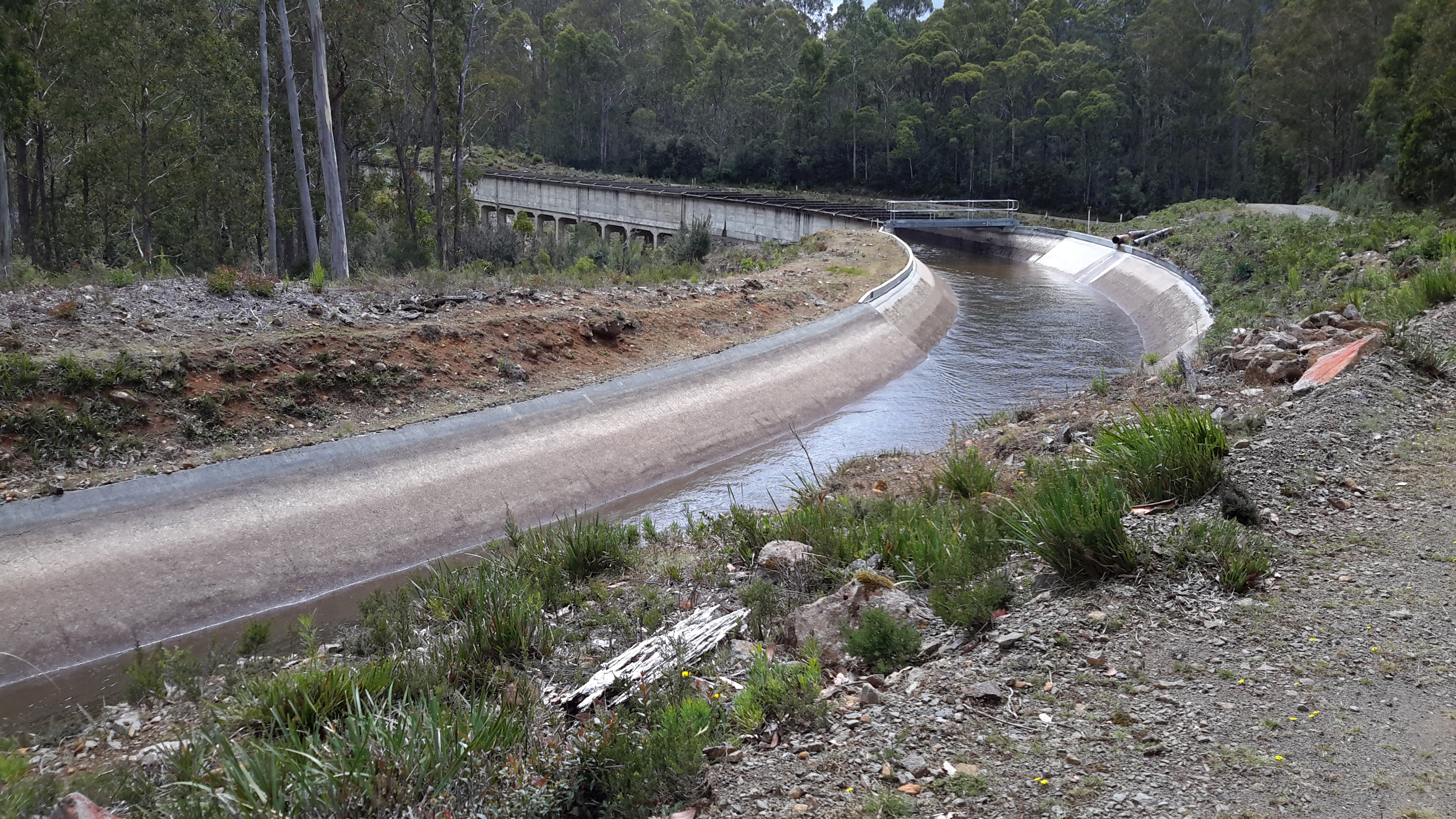

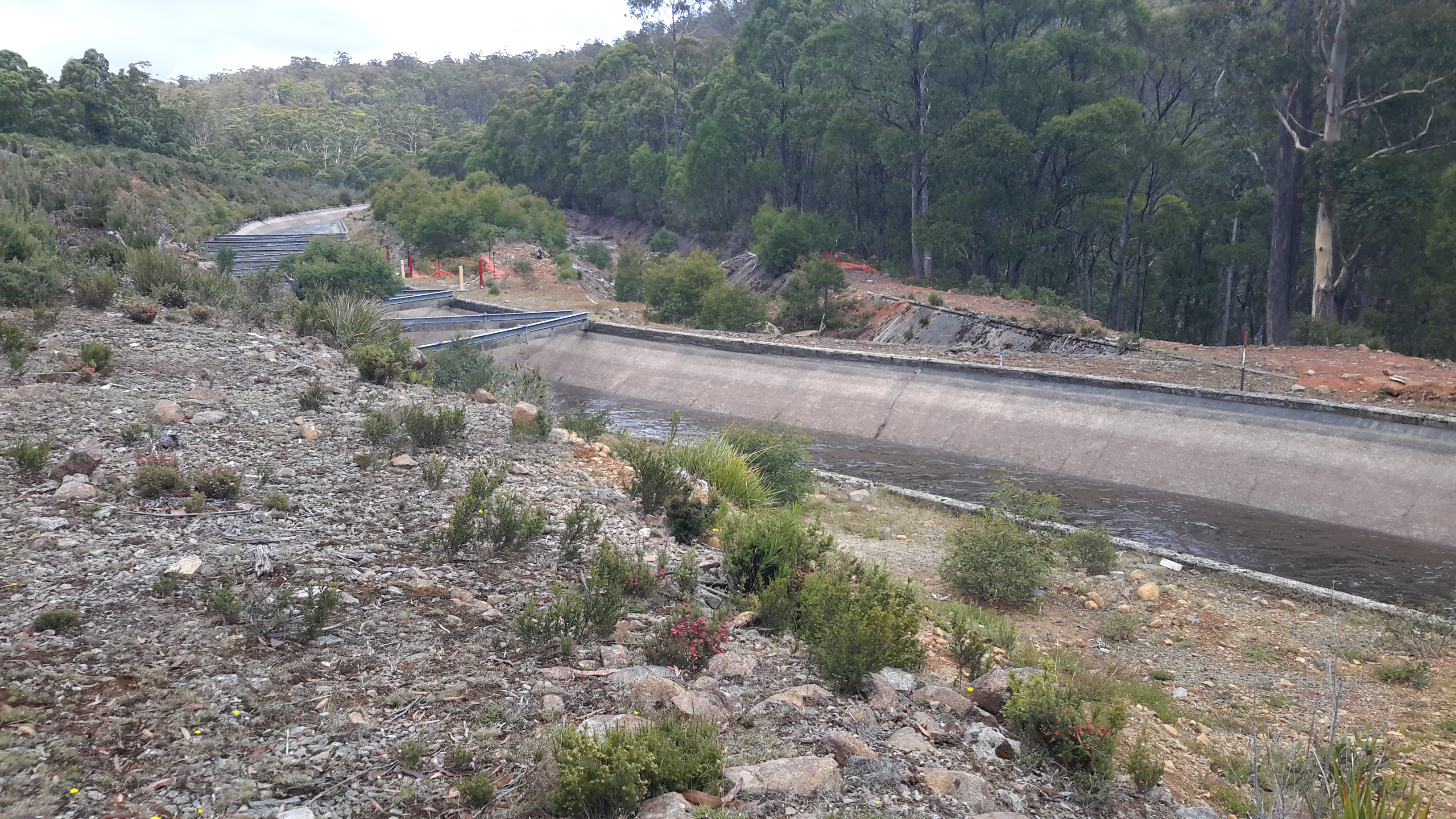


The speed with which the water flows can be appreciated in the video.
Any person who decided to drop down into the empty Canal would have no way to clamber up and out over the deep smooth concrete sides and would be trapped. If you fell in once water ran through the Canal, then the speed would quickly whizz you into the penstocks and before long you would be filtered out in tiny pieces at the Tarraleah Power Station before the water proceeded along at a crushingly powerful pace to create electricity. I guess the remoteness and isolation prevent idiots from discovering this snaking gem – or maybe even idiots can appreciate the dangers.
Thanks to Tim, a Hydro Tas mechanical engineer who was working at the Butlers Gorge Power Station (Clark Dam) on the day of my walk and who was kind enough to drive me back home to Hobart, I know Hydro Tasmania had deliberately ‘dewatered’ the Canal in order to complete maintenance work at the Butlers Gorge Power Station and at the Tarraleah Power Station. Obviously tonnes of water pressing through while someone changes a valve or whatever, means the job won’t get done. While Canal number 1 was dewatered, Canal number 2 a little further inland was running full with water in order for the Tarraleah Power Station to continue to generate electricity.
When I met Tim at the end of my walk, I learned he was responsible for the final maintenance and the rewatering. On his mobile phone he had taken photos and a short video of the first cylindrical gush of water – he was as excited as I. The power of the water was obvious. A perfect picture of a powerhouse for generating electricity.
I learned that it would take the Canal two hours to reach full capacity between Clark Dam and the Tarraleah Power Station. I had seen all stages: the Canal empty and later with a dribble across the bottom. Then the closer I came to Clark Dam the higher the water reached up the Canal walls. By the time I reached the start of the Canal near the Dam, the water level was at its highest but for some reason I don’t have photos after a certain point back down the road – frustrating. I know my feet were hurting and I was plodding with determination to reach the end. I suspect that I lost focus on maintaining a photographic coverage of the whole distance. Maybe someone will want to drive a couple of hours up there with me one day so I can get those additional photos.
Before I had walked more than a few metres, I was delighted to see the multi species rainforest growing densely along the edge of Tarraleah Canal Number 1 and by the side of the Hydro Tasmania vehicular track next to the Canal. The air was clean so that every hue of green, grey and brown provided a clear and rich visual texture. The environment uplifted my spirits.

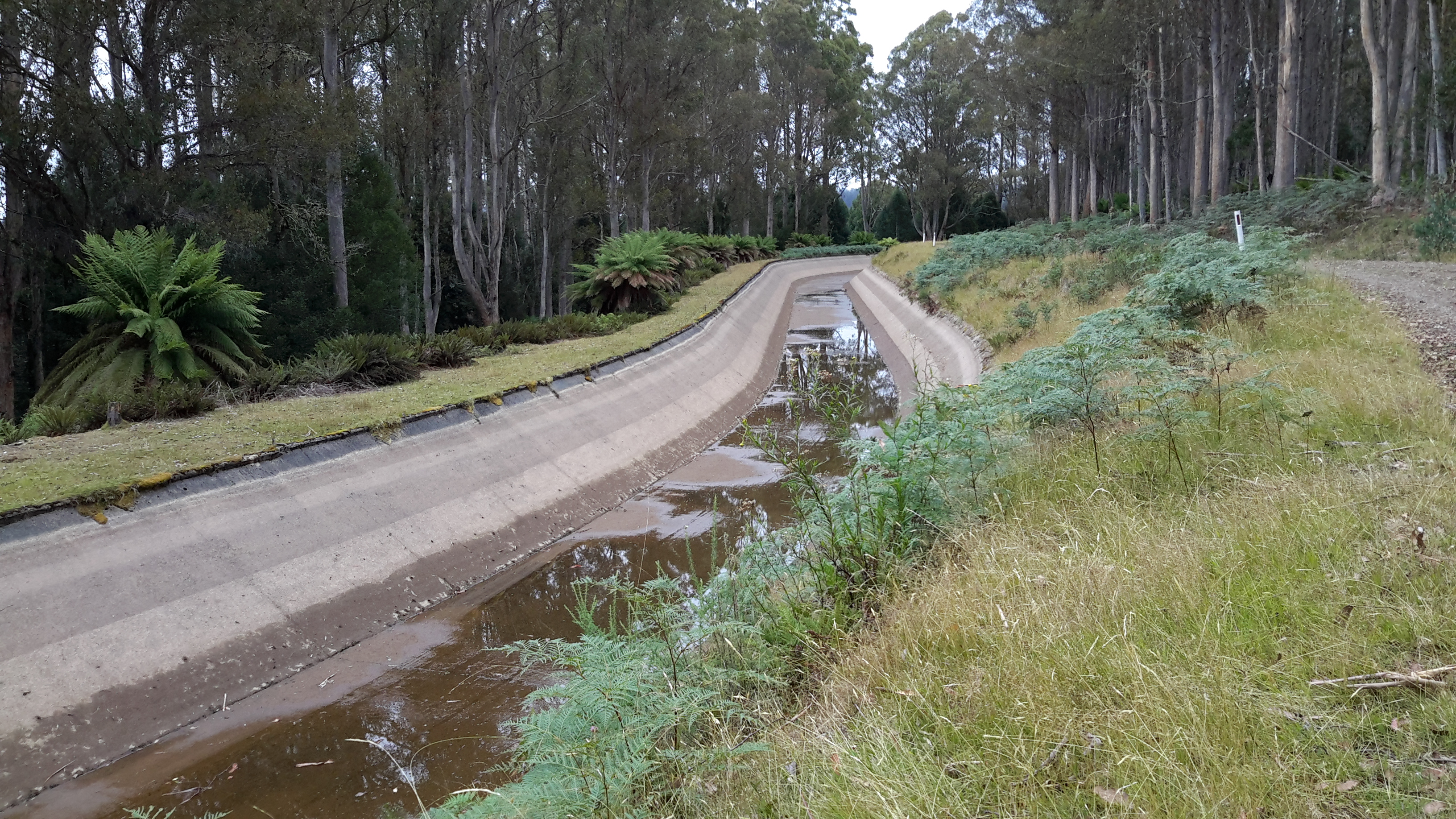


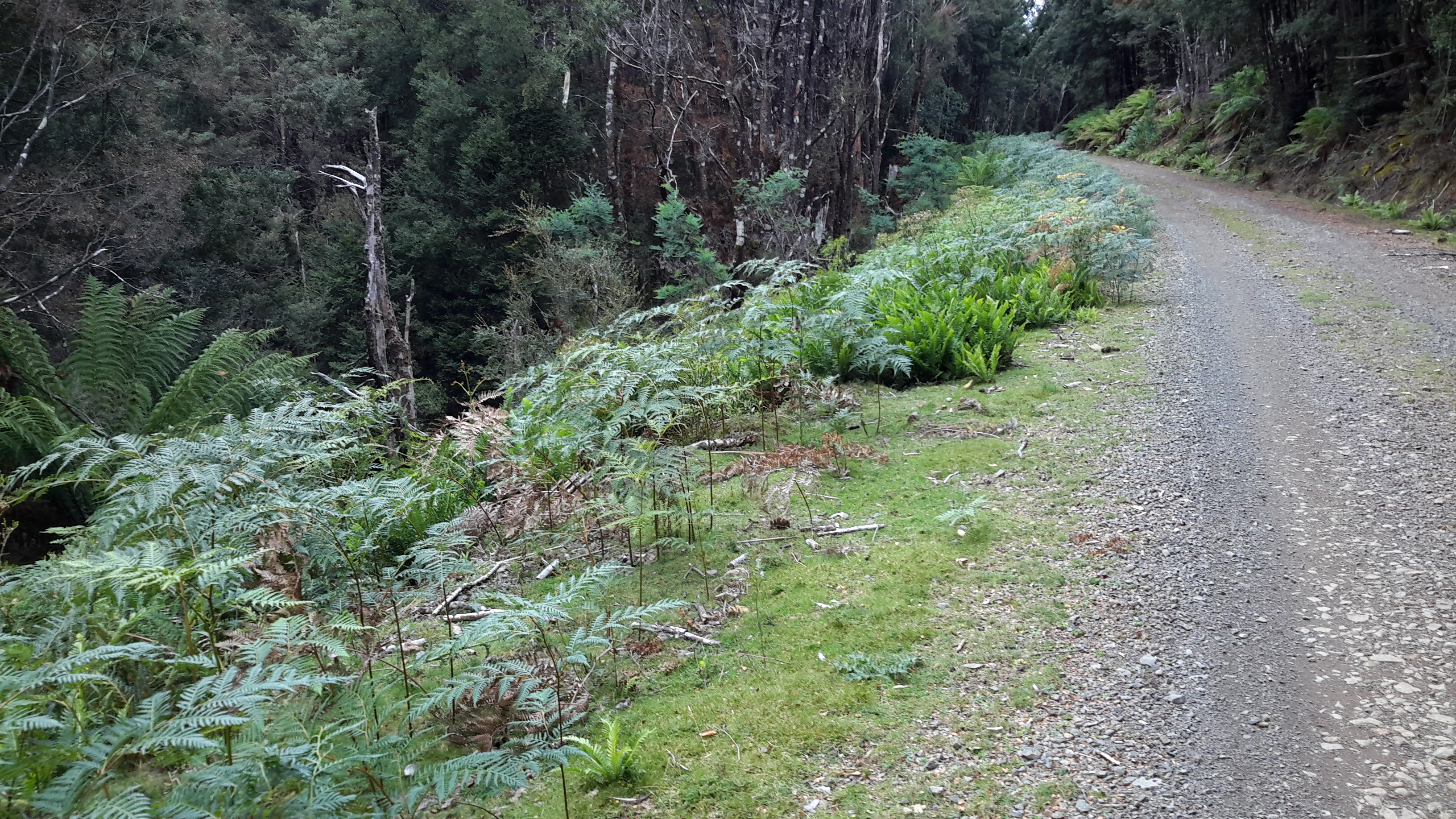
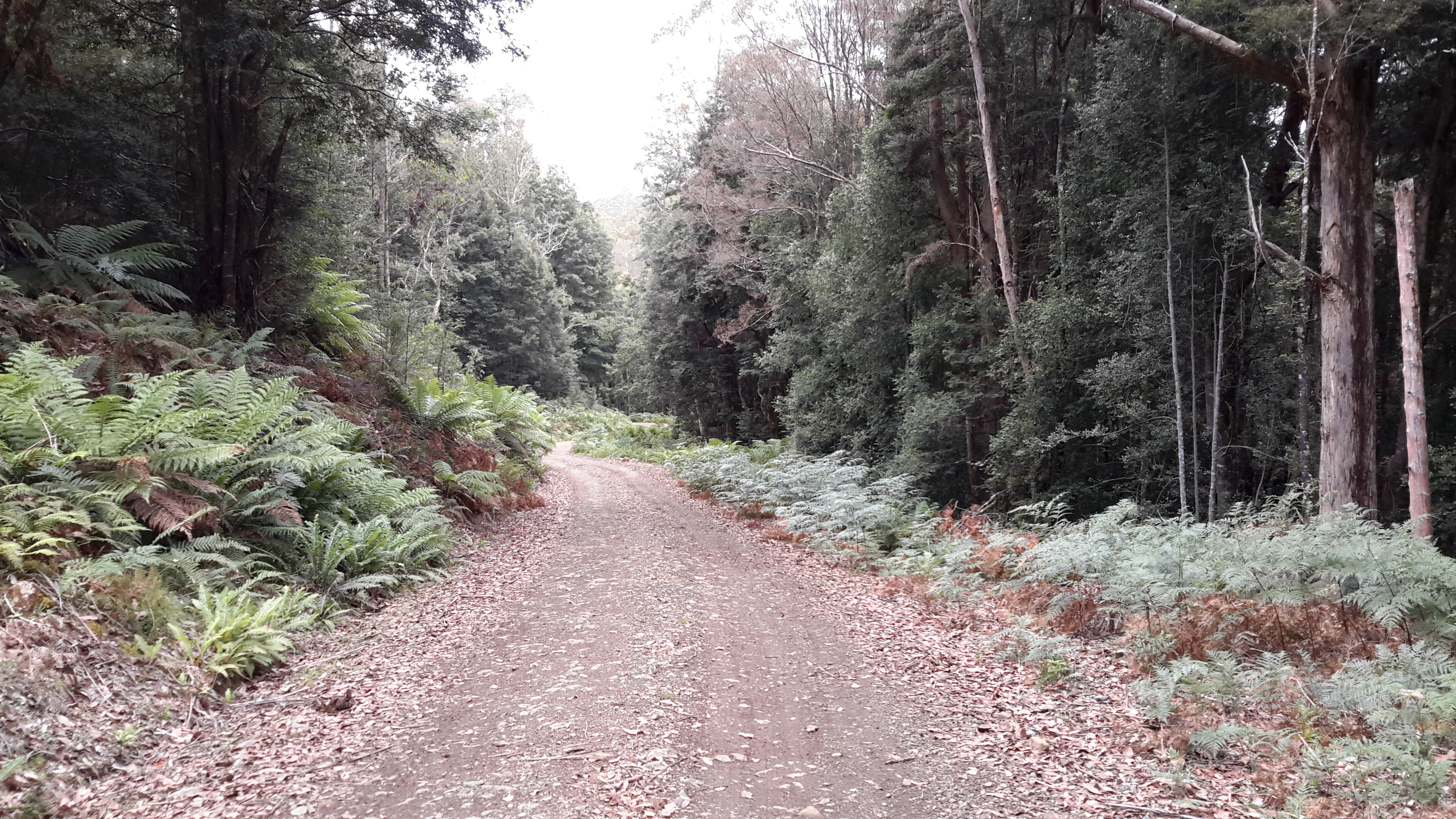

All day I revelled in the fragrance emanating from the forest. It was one of my walk’s great highlights. Thankfully my nostrils did not sniff out rotting animal odours. From midday into the early afternoon when the air was warmest, the natural oils of the trees dispersed creating a strong natural perfume. I could not identify all the trees that were visible leave alone those that were hidden in the dark thickets. Therefore, I could not identify what I smelt. I tried to think of words to describe the smell, but every description I considered is woefully inadequate. All I can say is that there was a hint of eucalyptus but a stronger minty-like freshness floating and pervading the environment. I would love to be able to bottle that forest fragrance.
The quantity and volume of tree ferns astonished me as did how close they grew to each other. I guess that the disturbance to the ancient original forest, which occurred when the Canal was built, caused a monoculture of these plants to thrive. Another of my walks, the one between Wayatinah and here, passed through this ridiculously dense bush. Often there wasn’t a person-sized space between the tree ferns, but I will write more about that challenging walk in a future post.

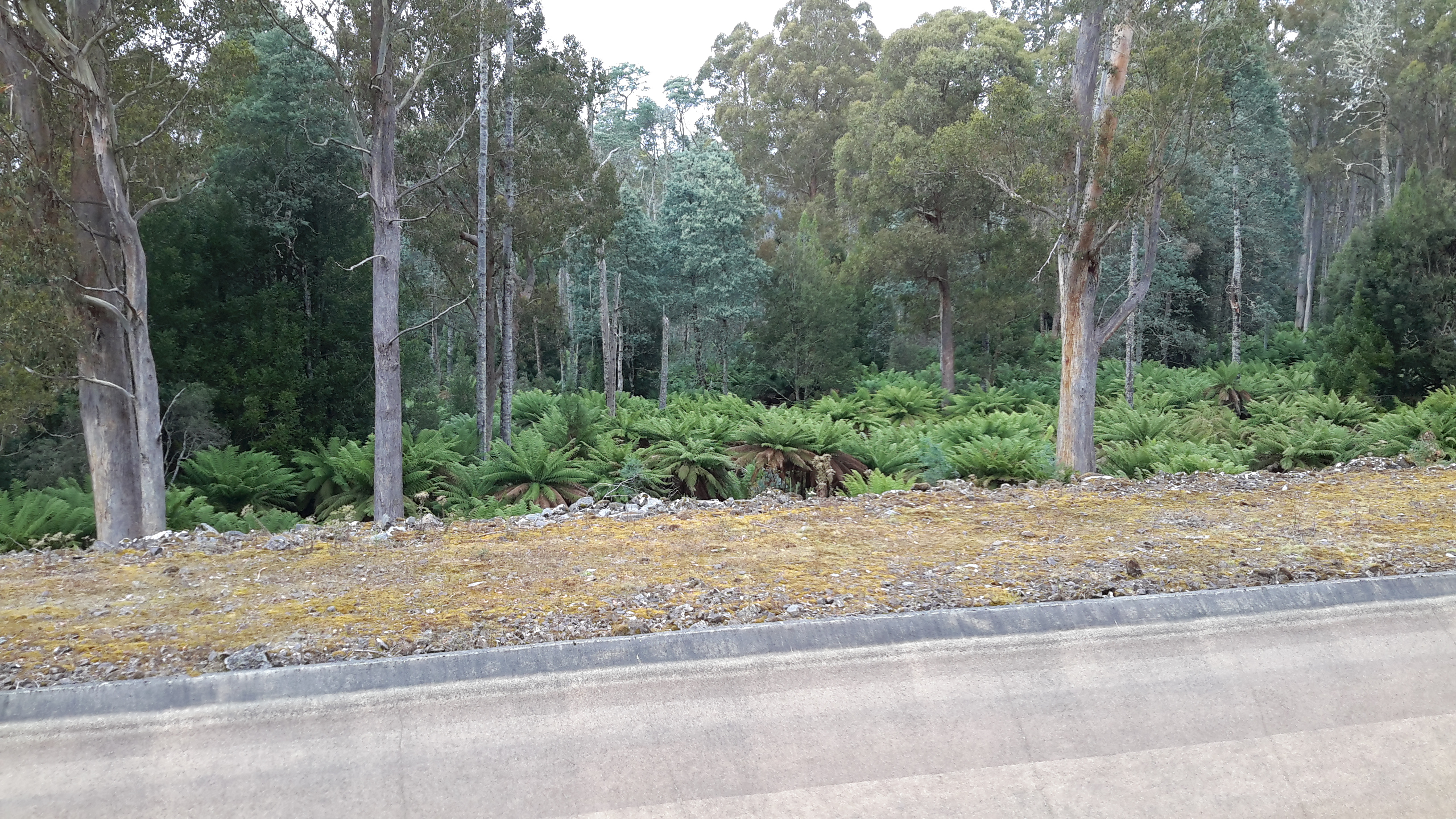
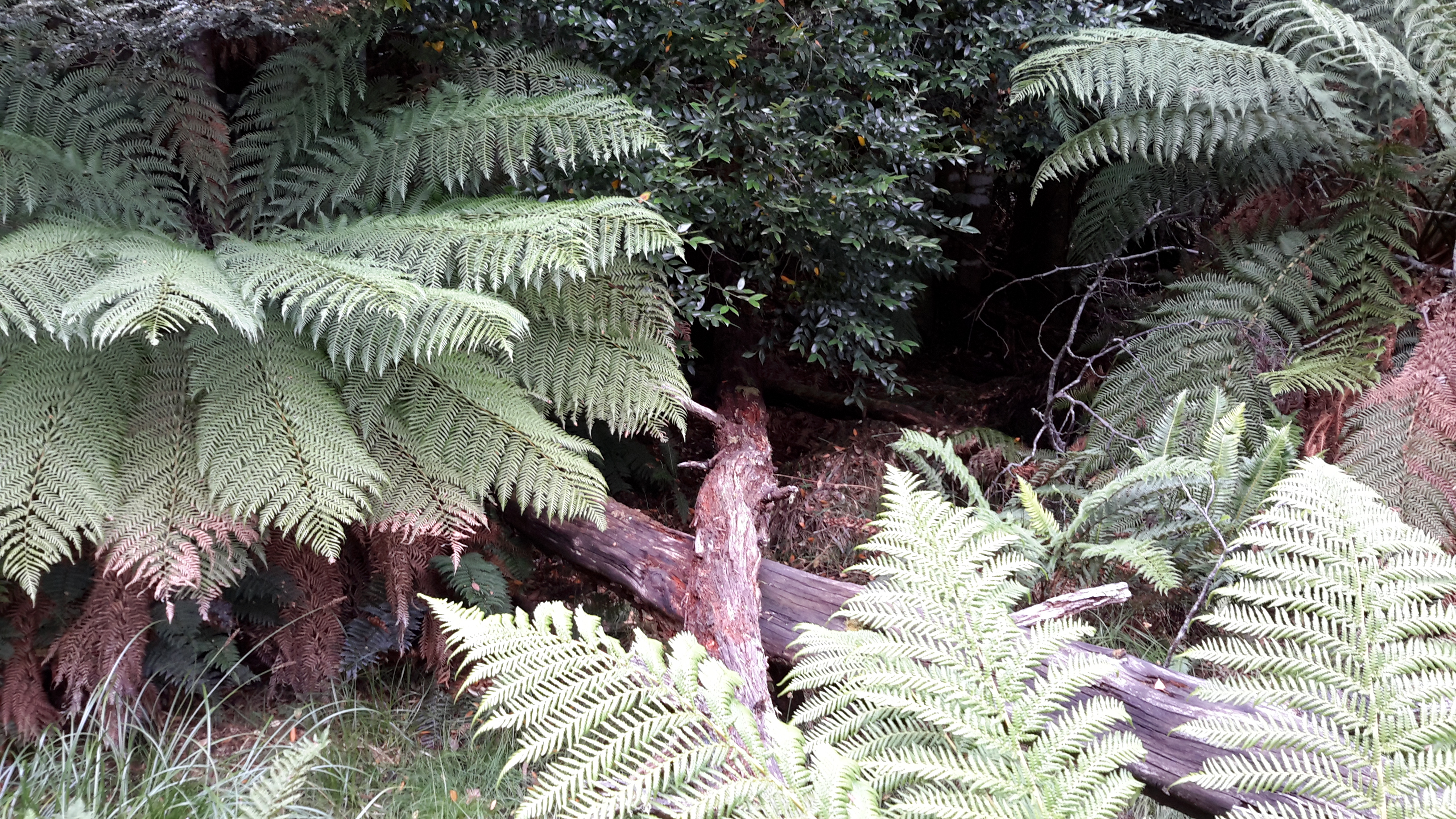
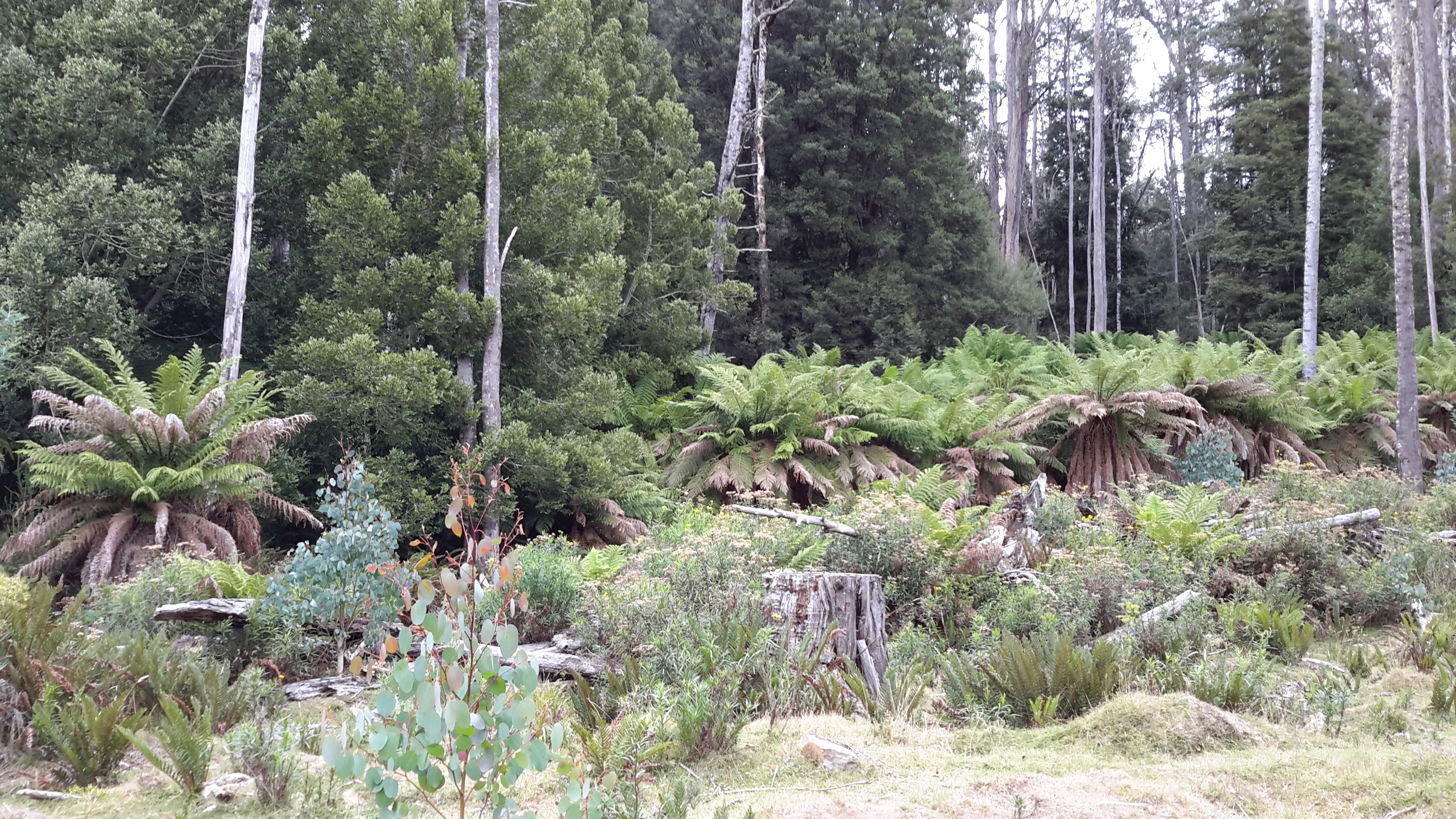

This hilly landscape with the old Derwent River bed at the bottom constantly surprised me. I could see that thick seemingly impenetrable forests grew either side of the river bed. In the photo below, the land drops steeply to the river bed and then rises equally steeply on the other side. For much of the length of the Canal, when I looked at 150 metres of land across the flatness of a map, I realised the Canal was 250metres above the river bed; both the length and the steepness of the drop seemed extraordinary to me.
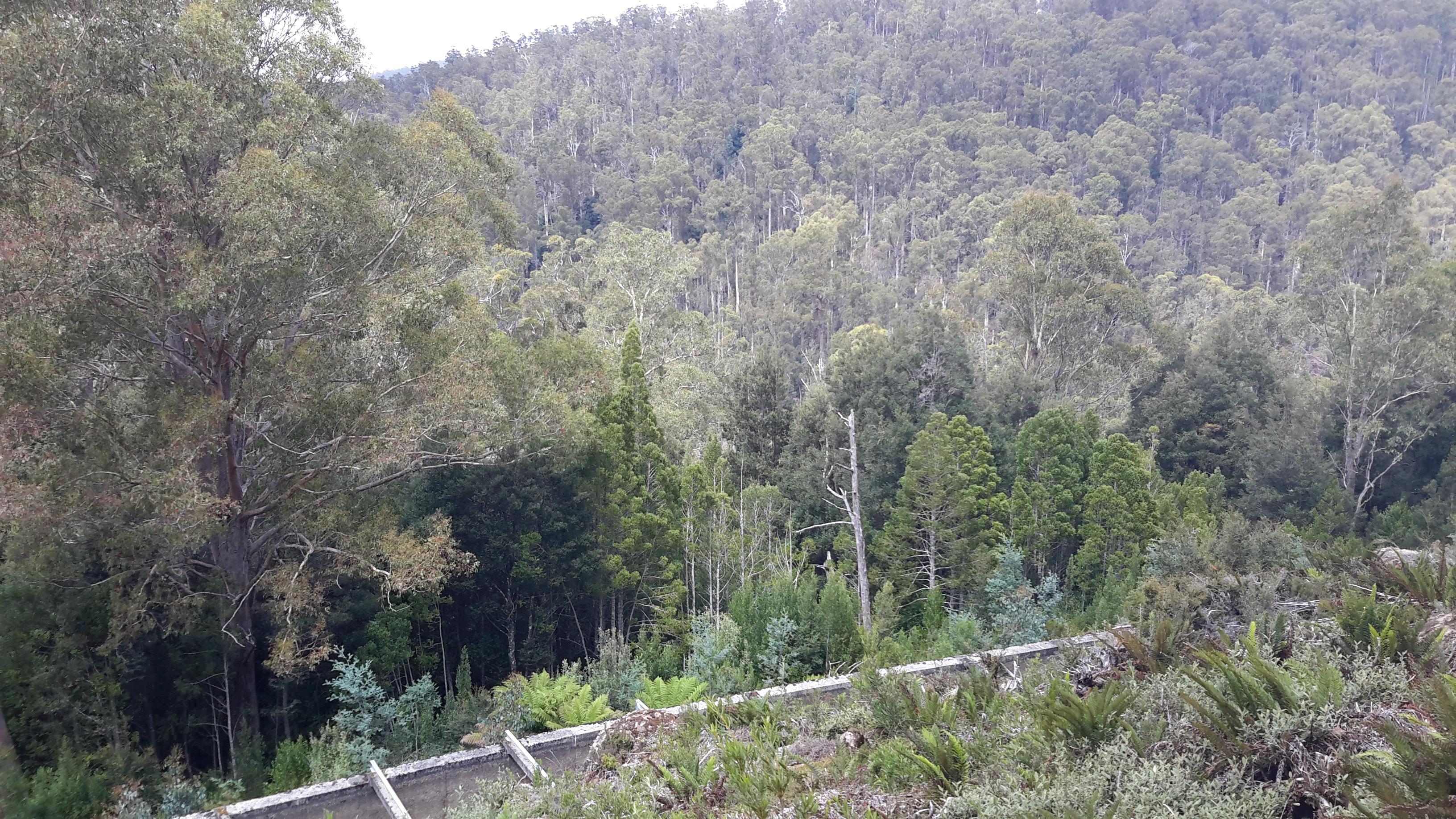
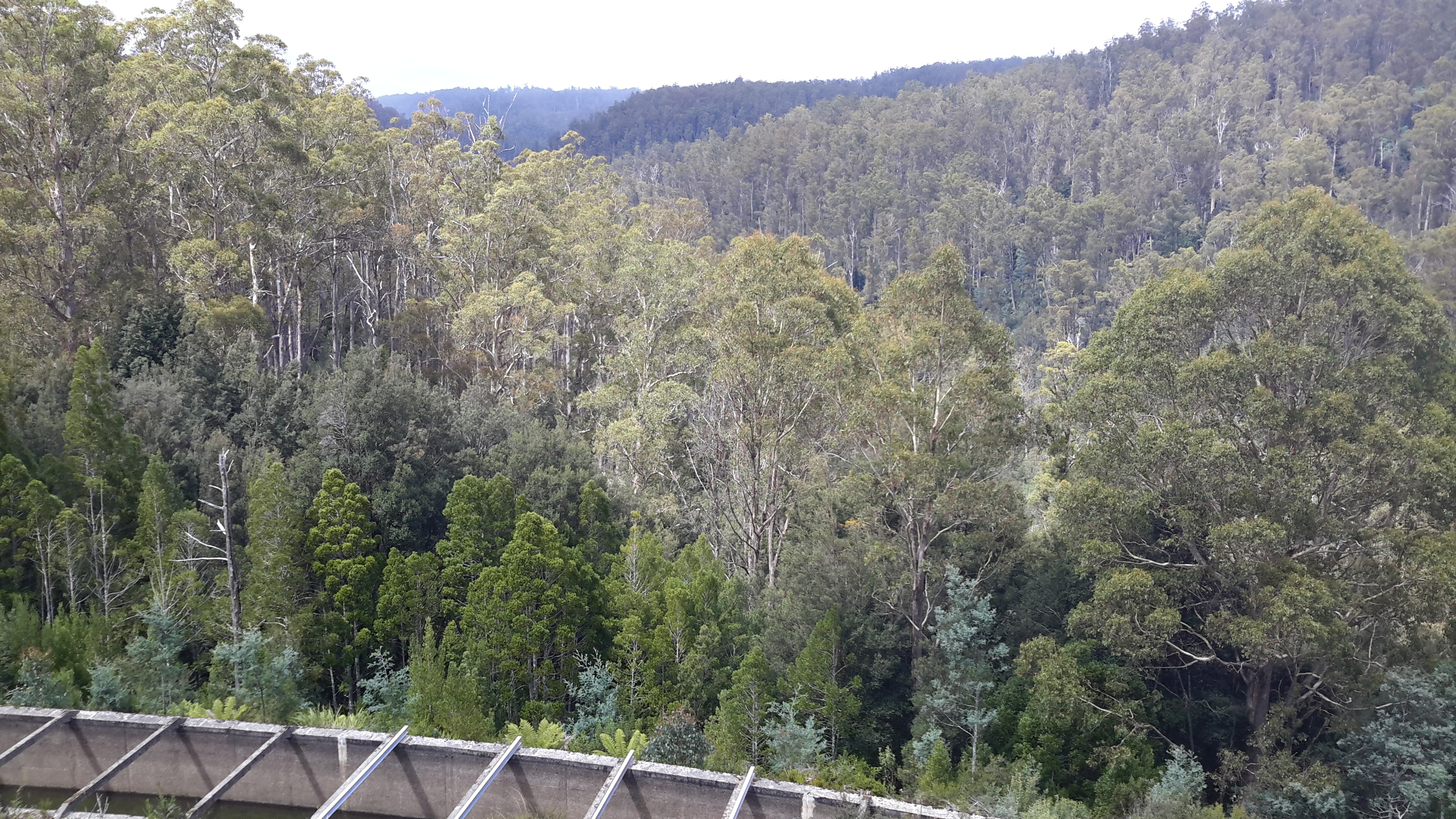
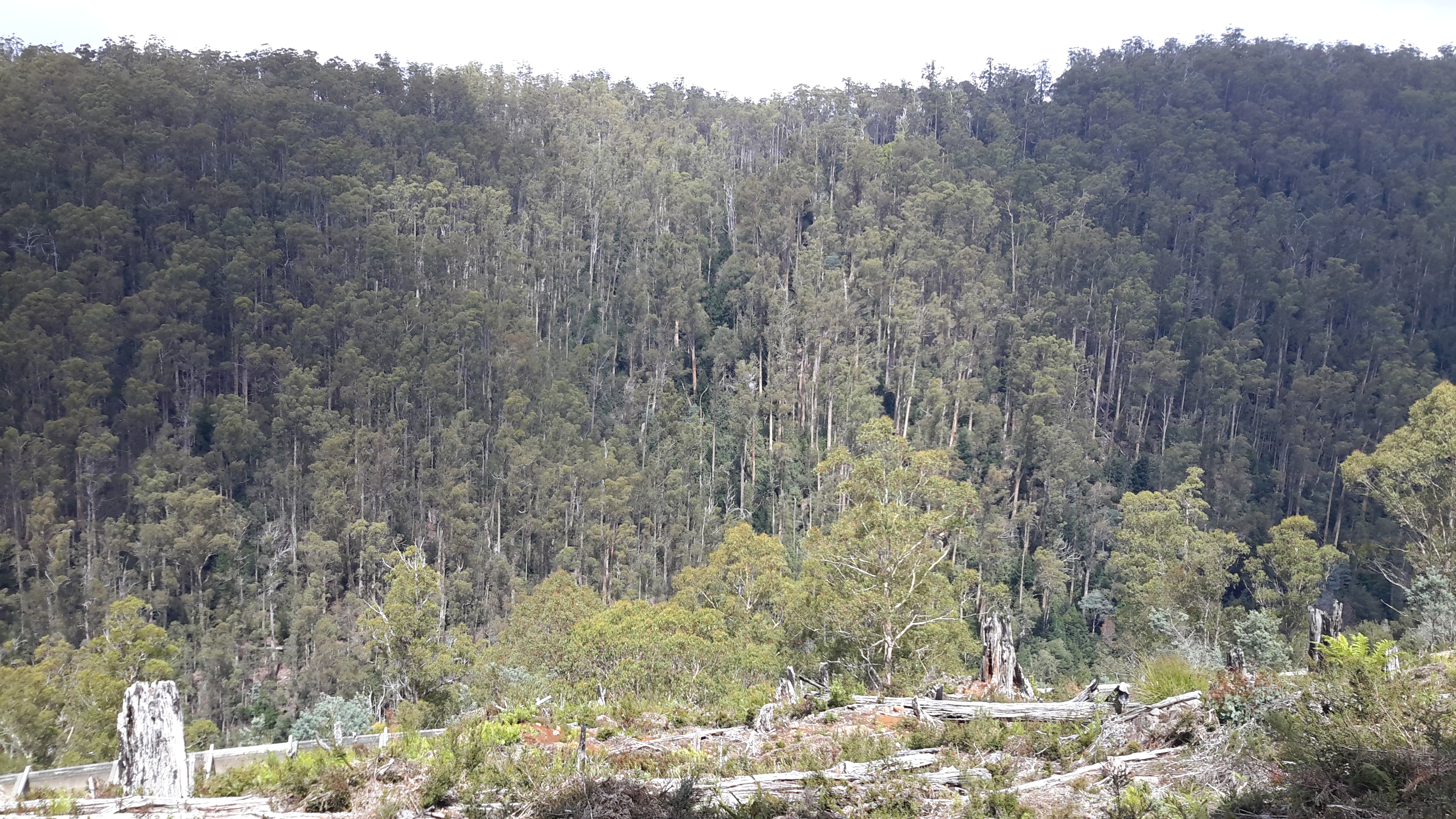

Towards the conclusion of the walk the nature of the vegetation seemed to change from dense wet thicket to a dryer and slightly more open landscape – or was it my imagination.

My walk started well with the Tassie Link bus depositing me on the Lyell Highway at the junction with Butlers Gorge Road, a very isolated spot. The day was overcast and sufficiently cool to make for extremely comfortable walking.

Instead of following Butlers Gorge Road I walked over to Tarraleah Canal number 1 and was stunned. It contained no running water and green slime was growing at the bottom in sections.
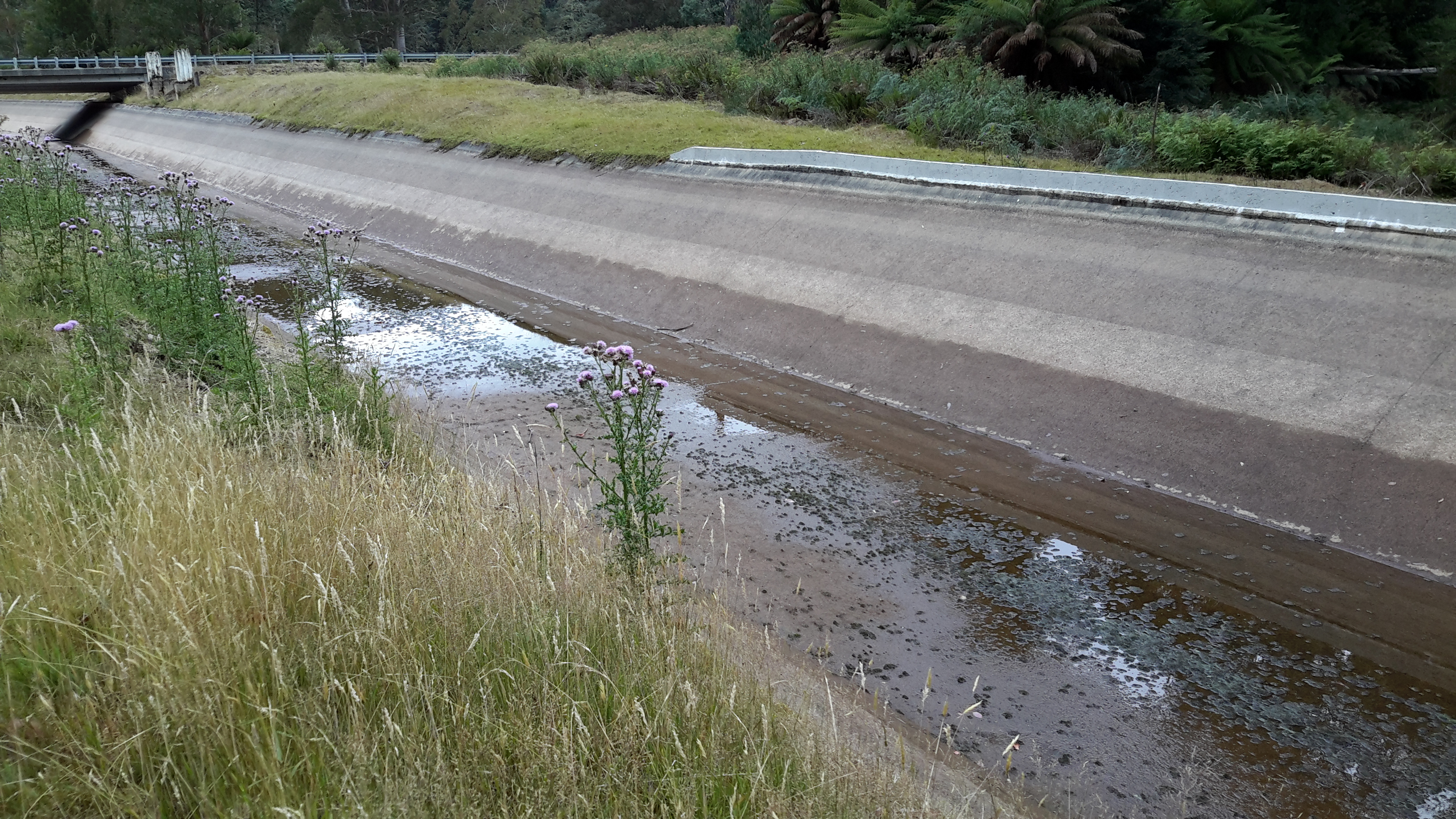

A question pounded through my brain – where was ‘my’ Derwent River? I was annoyed. I was two hours’ drive from Hobart and returning home was not an option. I was here to walk my ‘choice’ of the Derwent River, yet no water flowed. I humphed and sighed and decided to walk beside the Canal to Clark Dam despite the absence of water, and that would be my story.
Years ago Tasmania decided to sell its clean electricity supplies into the national grid and in tough times to buy in essential electricity supplies. So an underwater pipe was built beneath Bass Strait, which separates Tasmania from mainland Australia. In recent months the connection has failed, the Bass Link is yet to be repaired and our state has been unable to acquire additional electricity to meet our needs in the foreseeable future. Meanwhile with low water levels in our Hydro Tasmania dams, our local electricity supplies are in danger of being exhausted. Therefore, when I saw the empty Tarraleah Canal number 1 I jumped to the conclusion that the water from Lake King William had been turned off; I thought this was a sign of our increasingly dire situation. Later (and in a later post I will explain) I learned I was wrong. The empty Canal had nothing to do with the Bass Link failure.
I laughed to see the warning sign.
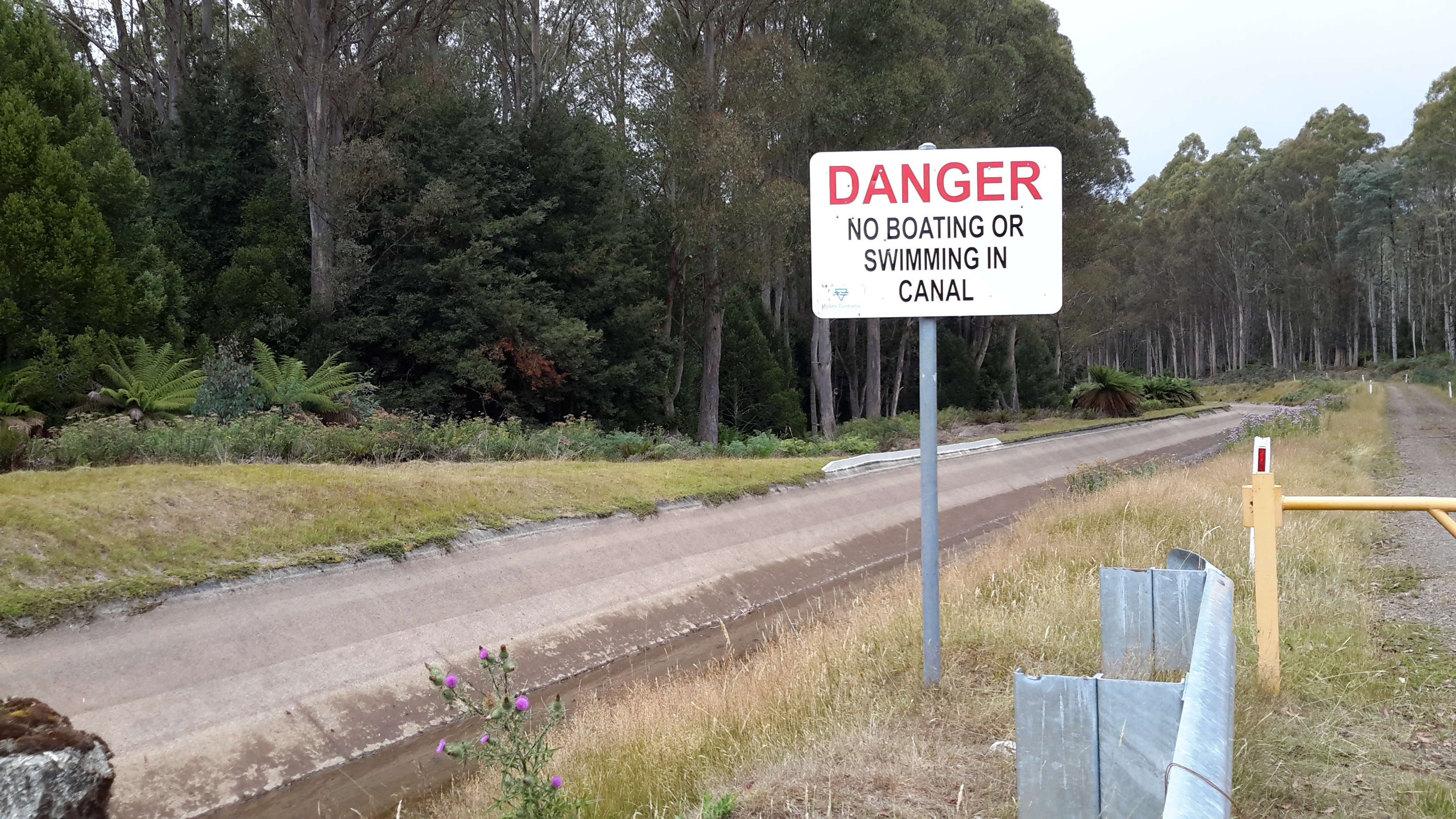
As later posts will indicate, even when empty this Canal is dangerous and should never be entered.
Aerial photos help to situate this part of my walk along the Tarraleah Canal Number 1.
Chantale’s first photo below looks across to Lake King William behind Clark Dam, and down onto the remnants of the meandering ‘dry’ Derwent river bed meander which can be seen in the glare near the lower edge. The Canal winds its way next to a gravel road close by. Her second photo shows the curving Canal and the gravel road, on which I walked, immediately to its right. Much further inland a yellow line indicates the gravel Butlers Gorge Road.
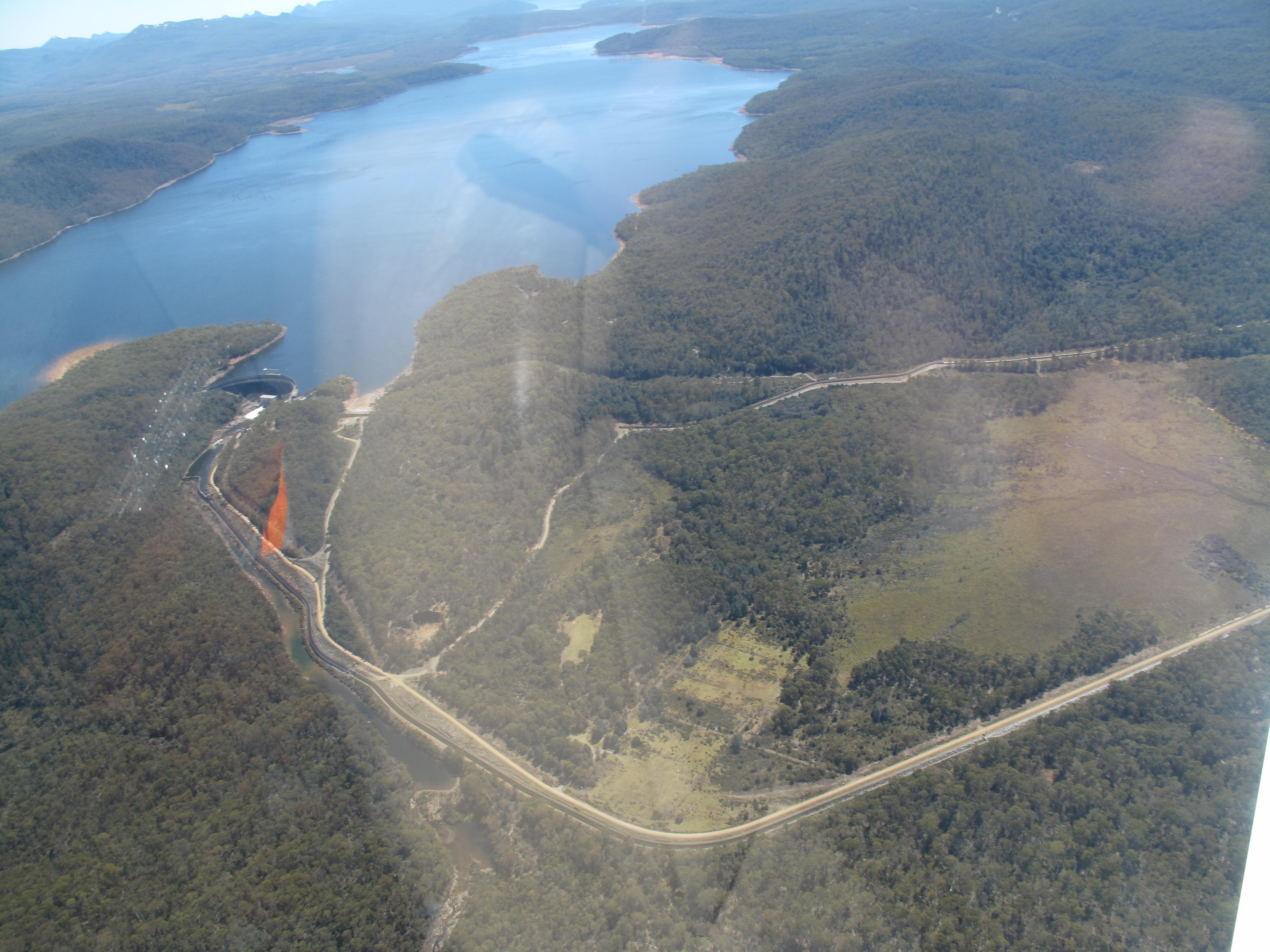

My photo below includes the old river bed, the Canal and the Hydro Tasmania gravel road.

Michelle’s photos below helps you to appreciate the density and height of the surrounding bush. I stayed on the road and was immensely pleased not to be navigating through that wilderness. The bush was stunningly beautiful to look at and to smell but would have been a nightmare to walk through.

Will the real Derwent River please stand up! Where should a person walk if they are ‘walking the Derwent’?
Since the Clark Dam was built in 1952, the Derwent River has not flowed from the area now known as Lake King William downstream across its original bed, until closer to Hobart. Instead the Tarraleah Canals number 1 and 2 accept Derwent River water from Clark Dam/Lake King William at Butlers Gorge in central Tasmania. These canals channel the water to penstocks that feed the Tarraleah Power Station. Electricity is generated and then the water flows on to create more electricity at Liapootah then Wayatinah Power Stations. Eventually the water empties into Lake Catagunya.

The old Derwent River bed is stony. Along its length between Clark Dam and the bridge at Wayatinah, seepage from the steep hills creates pools of water. There is sufficient water, although limited, to create a continuous running flow between the stones. At the end of Spring the river bed looking upstream from Wayatinah was as follows:

Michelle’s photo shows another view.

In January the water level had dropped and the river bed looked like …

Similarly, between the bridge over the Derwent River bed at Wayatinah and the river’s meeting with the Florentine River, and downstream almost to Lake Catagunya, the river is often a stony bed with limited flow.
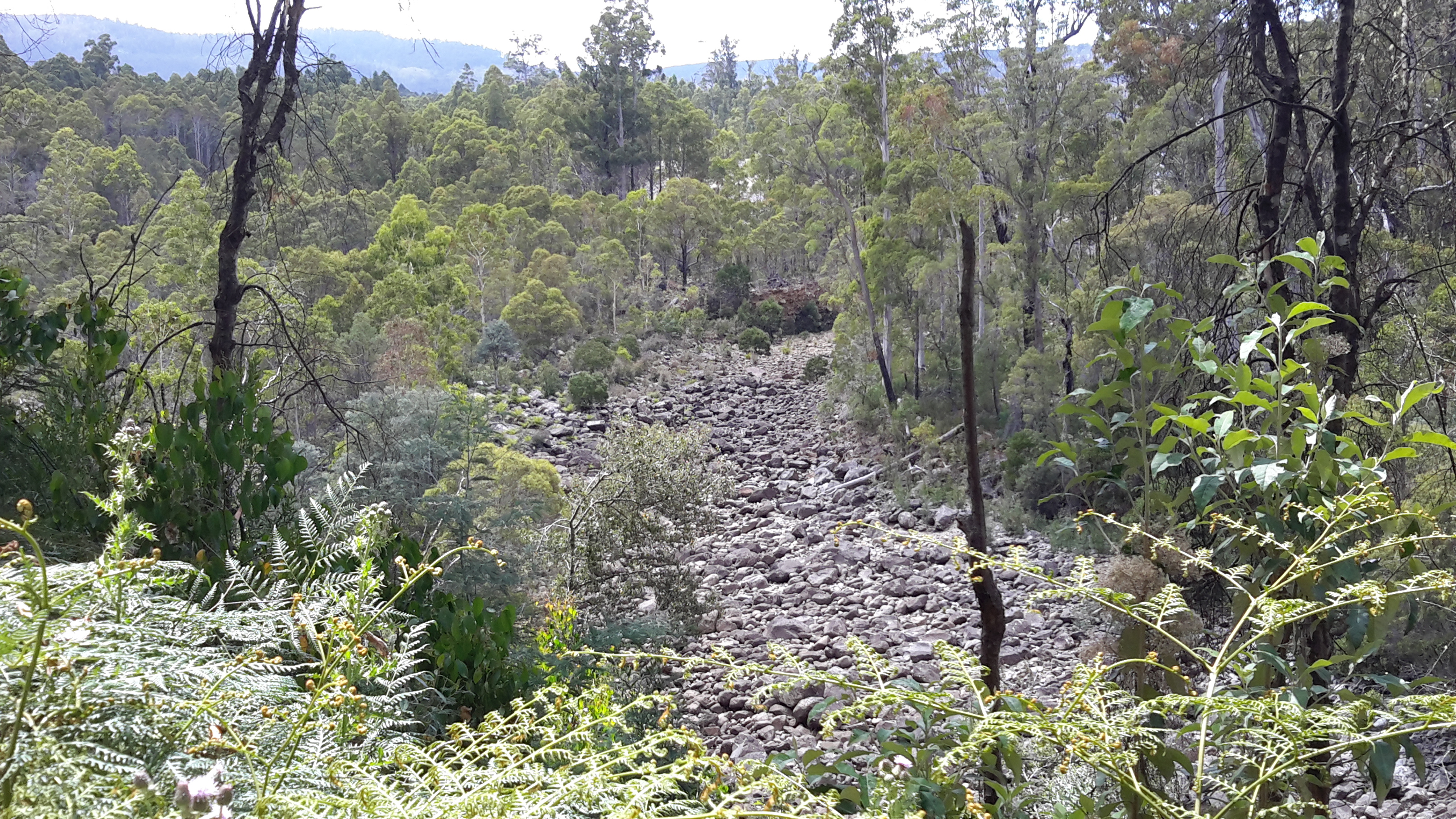
Upstream from the junction of the Florentine and Derwent Rivers, upstream from the Wayatinah Power Station, I walked on the river bed where I could.

To ‘walk the Derwent’ should one follow the original river bed or the Canals or a mix of both?
Since Tarraleah Canal number 1 runs more or less parallel to the old river bed and is usually located under 500 metres from that river bed, I chose to walk next to the Canal along the section before it turned inland to travel to Tarraleah Power Station. I rather liked the idea of staying as close to the original Derwent River course rather than following man-made deviations. However this ‘walkingthederwent’ project does raise the question as to what constitutes the ‘real’ Derwent River. Does it exist any longer? And therefore, is it possible to walk the Derwent?
I am a subscriber to the wonderful Great Walks Australian magazine.
Its latest offer is a photo competition which, as it turns out, I have nothing to offer. The rules include a need to submit photos greater in size than 5MB. After looking through the thousands of photos which I have taken over the past year or so, none of those over this required size meet the other essential criteria. Alas.
So, I want to turn it over to others who may not be aware. I love the sites of some of my blog followers; particularly those who are photographers taking brilliant shots within Tasmania’s wilderness environment. I believe all of these bloggers may find this competition something to which they can contribute. More can be read about the competition at Great Walks.
Please let me know if you enter … and then, if you are successful I would like to know. Best wishes!
Thanks to Steve from Hydro Tasmania, I was loaned a safety hat and then, as a visitor, given a guided tour over the Catagunya Power Station. We walked down three levels of the building and by the end of the tour, because Steve used the analogy of a car engine, I understood how electricity was generated.

Deep down below in the building, I was impressed by the massive scale of the spiralling pipes through which the Derwent River poured.
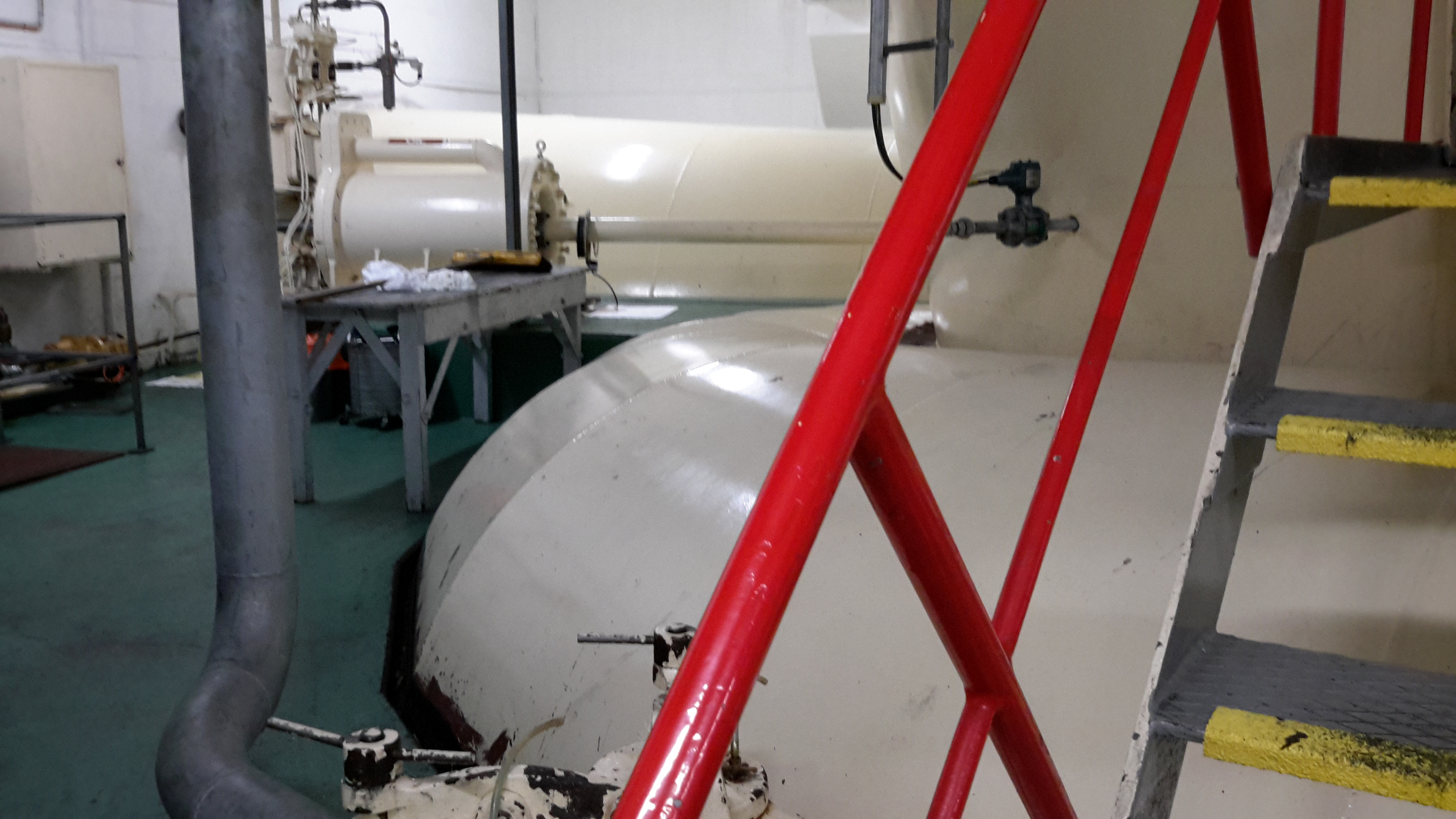
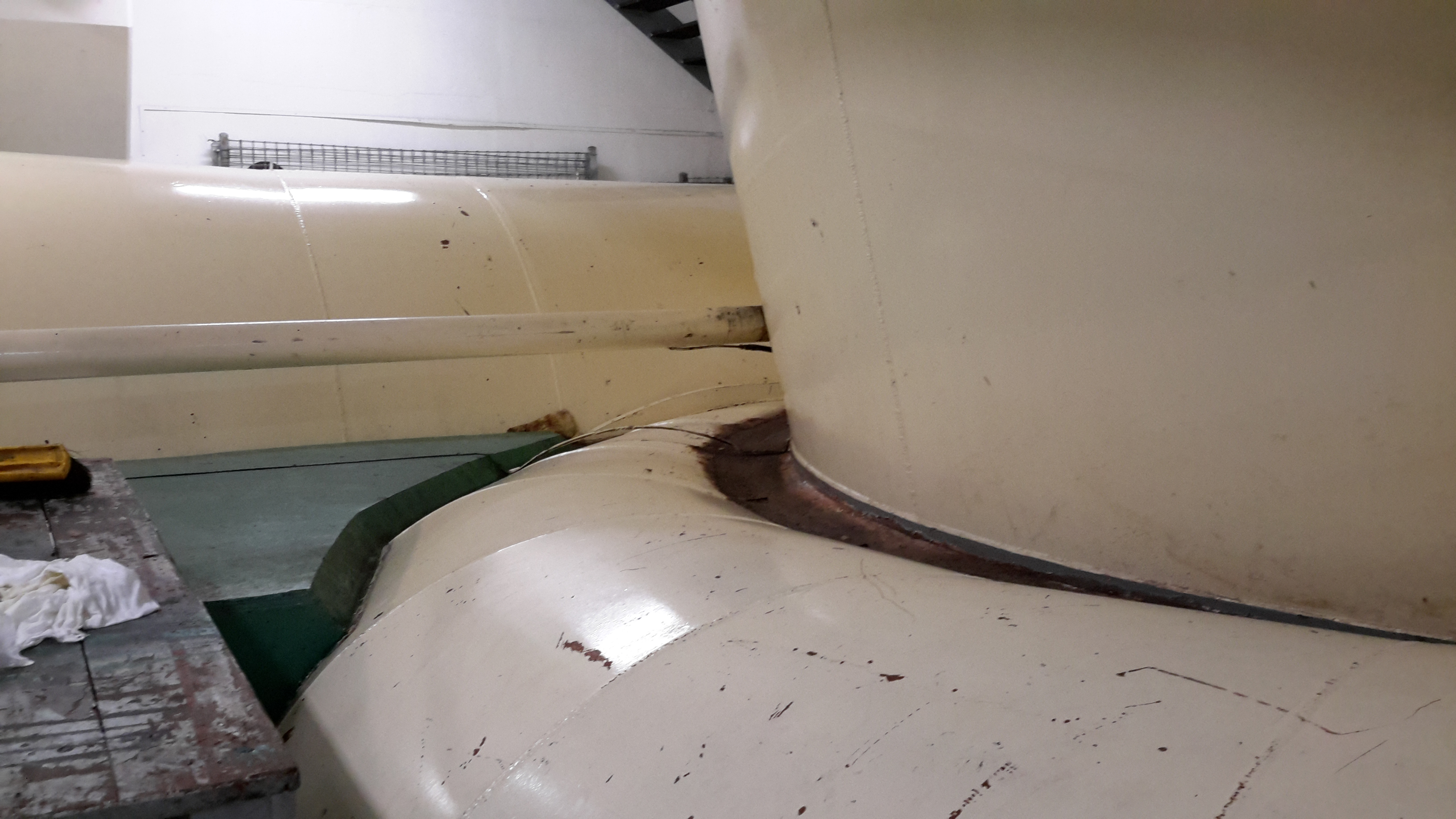


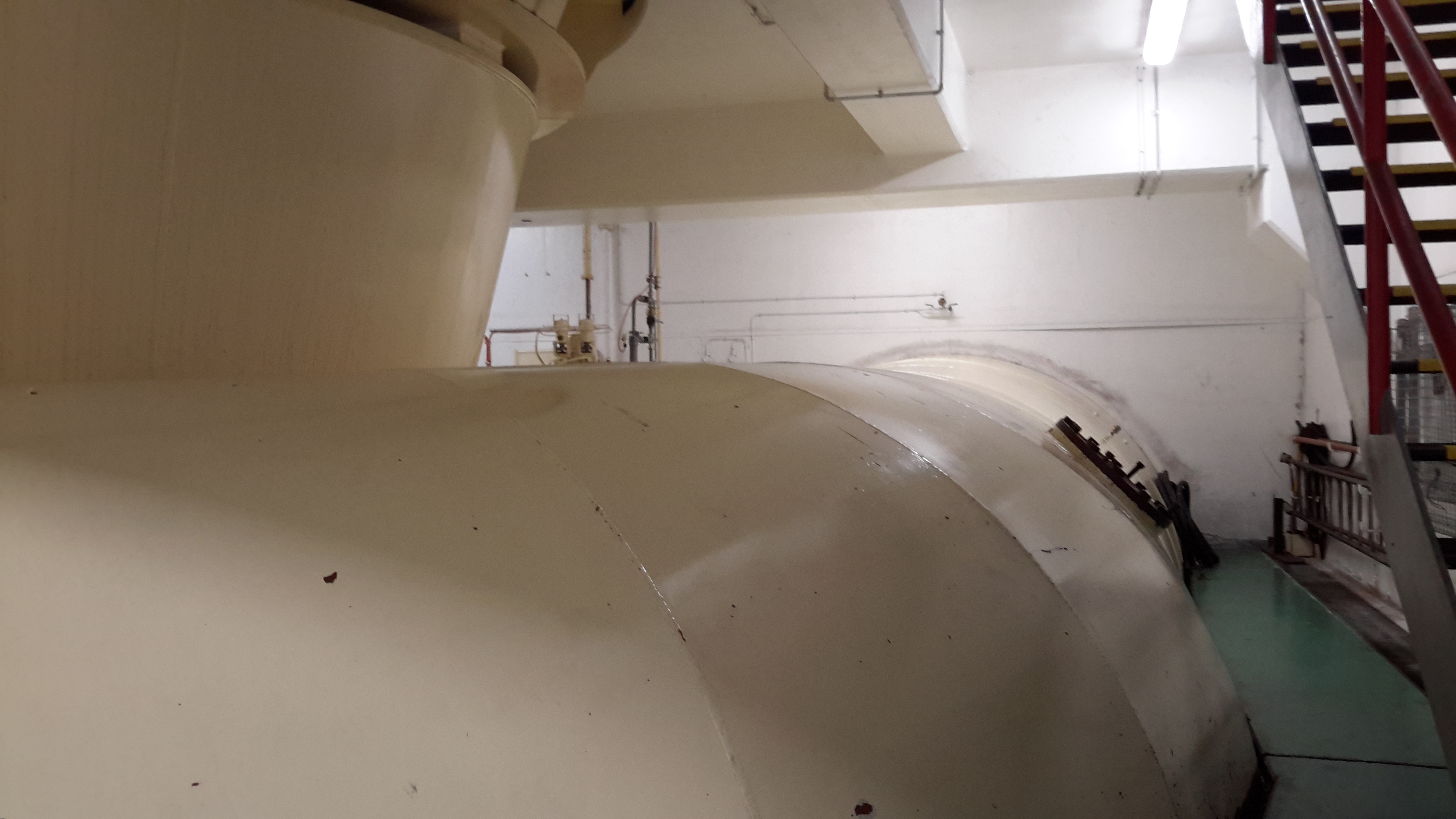
The explanations plus what I saw were enthralling. I am lucky to have been offered this tour and most grateful for the experience.
Later we went out into the Switchyard which amounts to an electrical substation where voltages are transformed (switched) to meet various needs.
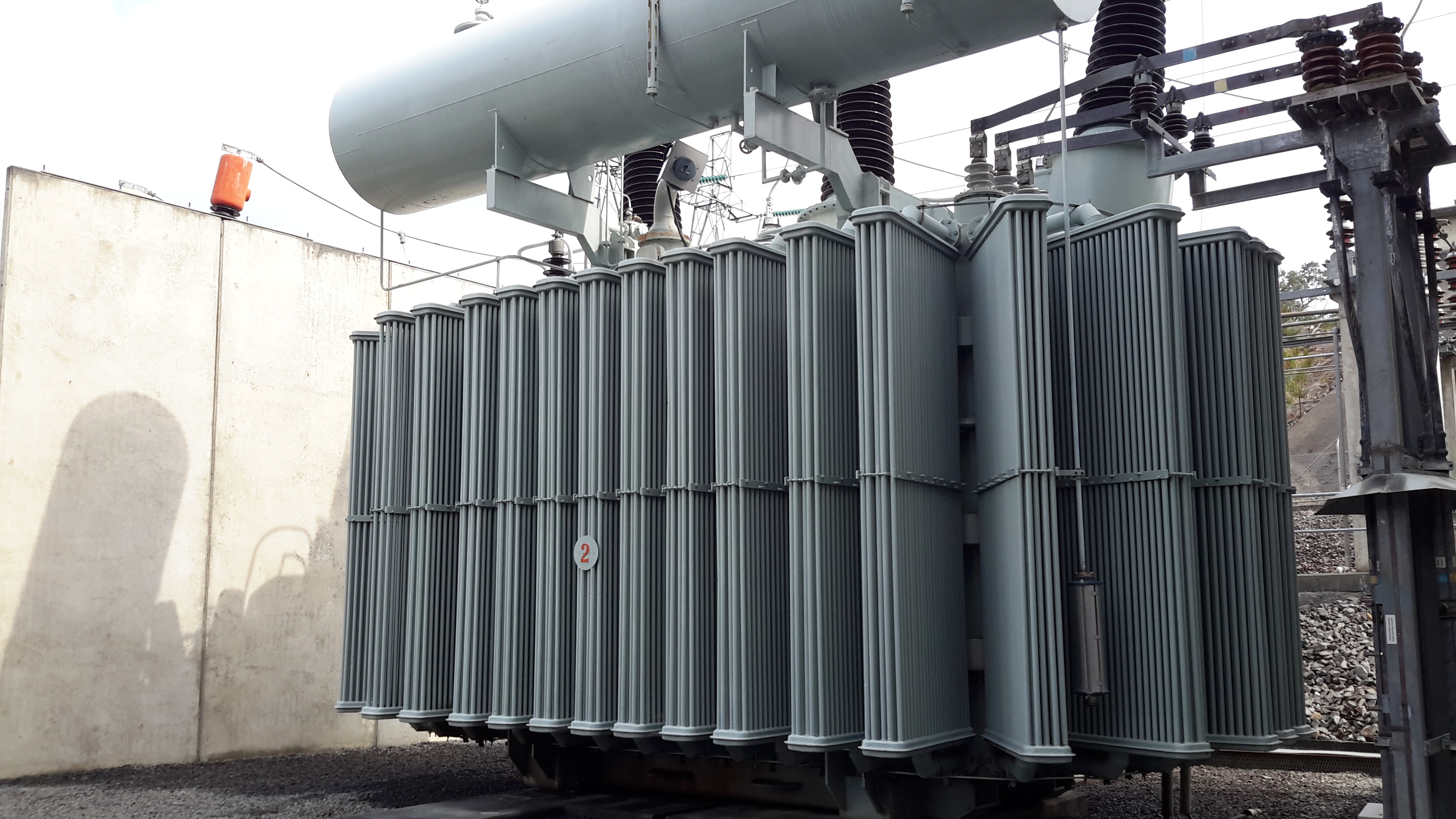

Steve and I talked about the likelihood of being too close to the transmission lines and getting zapped by arcing electricity. He explained it was most dangerous when the air was laden with moisture. Water acts as an excellent conductor of electricity and therefore it is unwise to stray near power lines when it drizzles or rains.
Many posts ago I wrote about walking the Switchyard Track and at the time I wondered what ‘switchyard’ meant. That track around Lake King William, which starts in the vicinity of the switchyard of the Butlers Gorge Power Station is, quite simply, the track leading off ‘from’ the switchyard and follows those transmission lines which started at the Power Station.
From a distance, the grey concrete structures of Catagunya Dam made me think of Russia’s Stalinist architecture with its solid and functional masses. Up close I found nothing pretty about the Catagunya Power Station; just a very large box at the end of a wide driveway.

There was little to see looking down along its side.


So I was delighted when two cars drove down the road towards the Station. The front door was opened and I was invited inside.
My first touch with civilisation was a gravel road after I had crossed a challenging fence and stepped between dozens of fresh almost liquid cattle pats (but no cattle in sight).
I followed the road to the river and saw the sturdy bridge. Floods would never sweep that piece of engineering away!

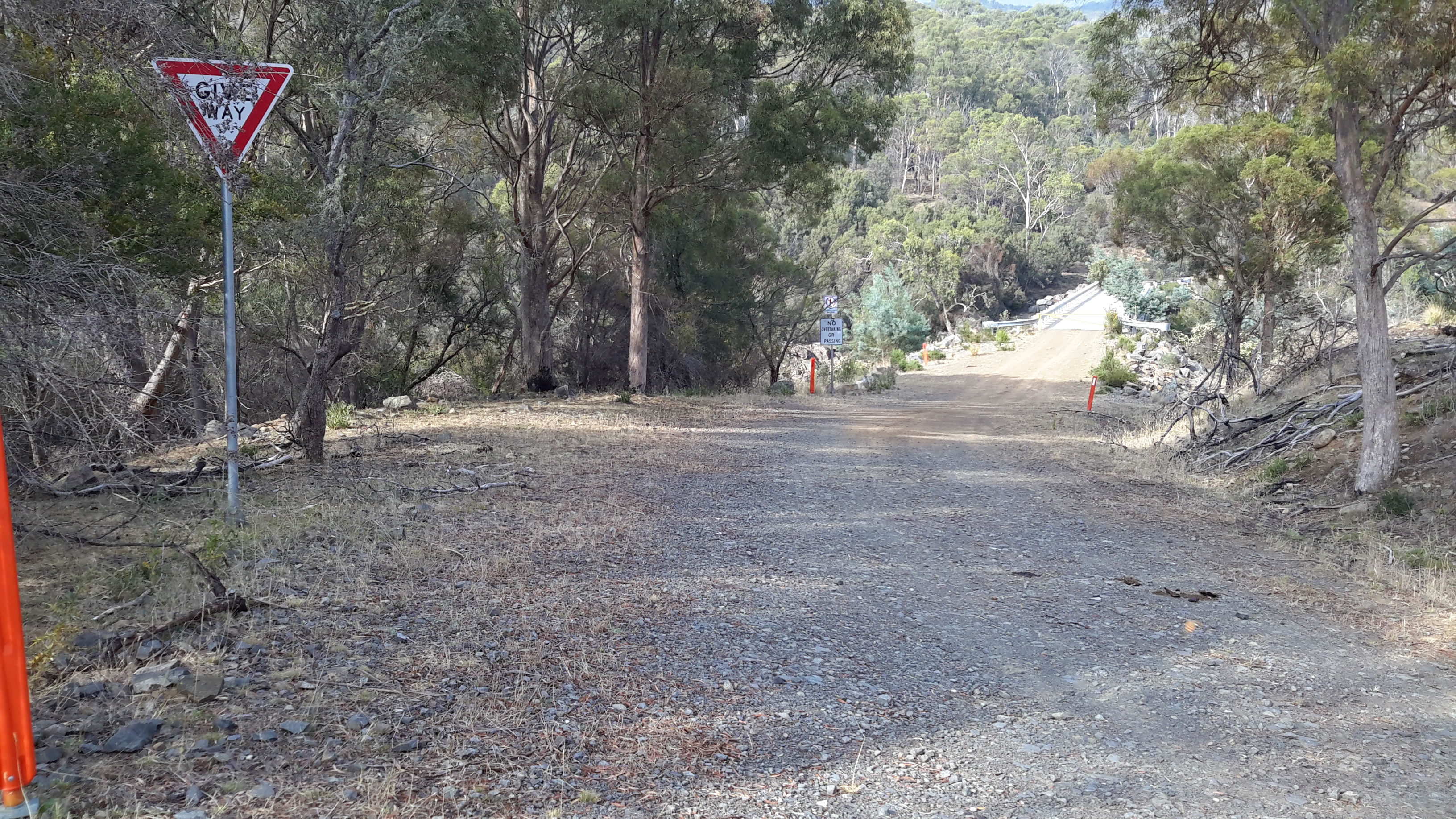
Would you believe I did not notice the following sign denying pedestrians access until I had walked onto the bridge and then retraced my steps up the gravel road? I later wondered whether the sign meant no access down to the river – and there was none that was safe for me. The sign was unclear. It was definitely easy to access the bridge.
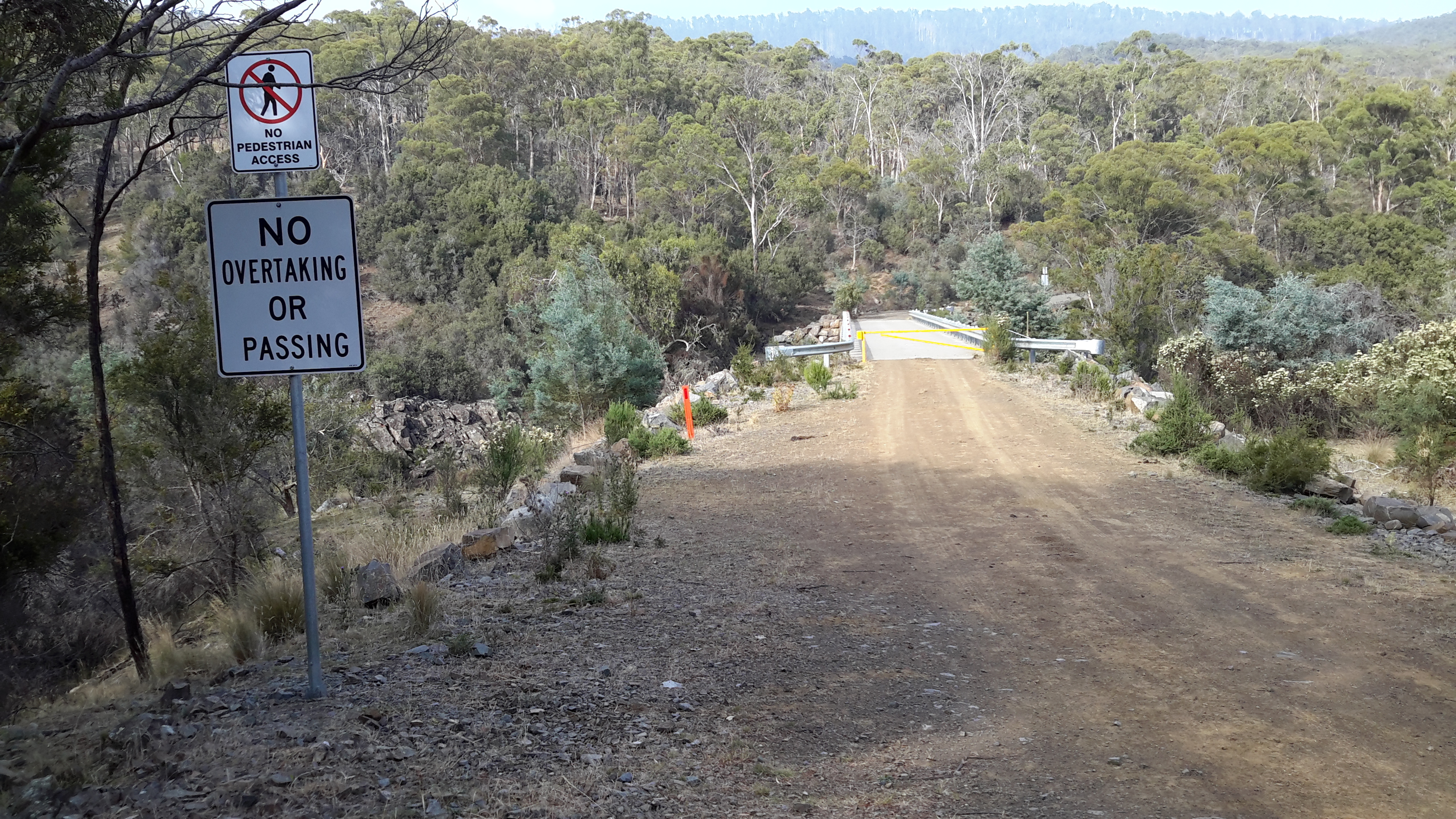
The views were stupendous from the bridge: maybe one of these will become a background for your computer.

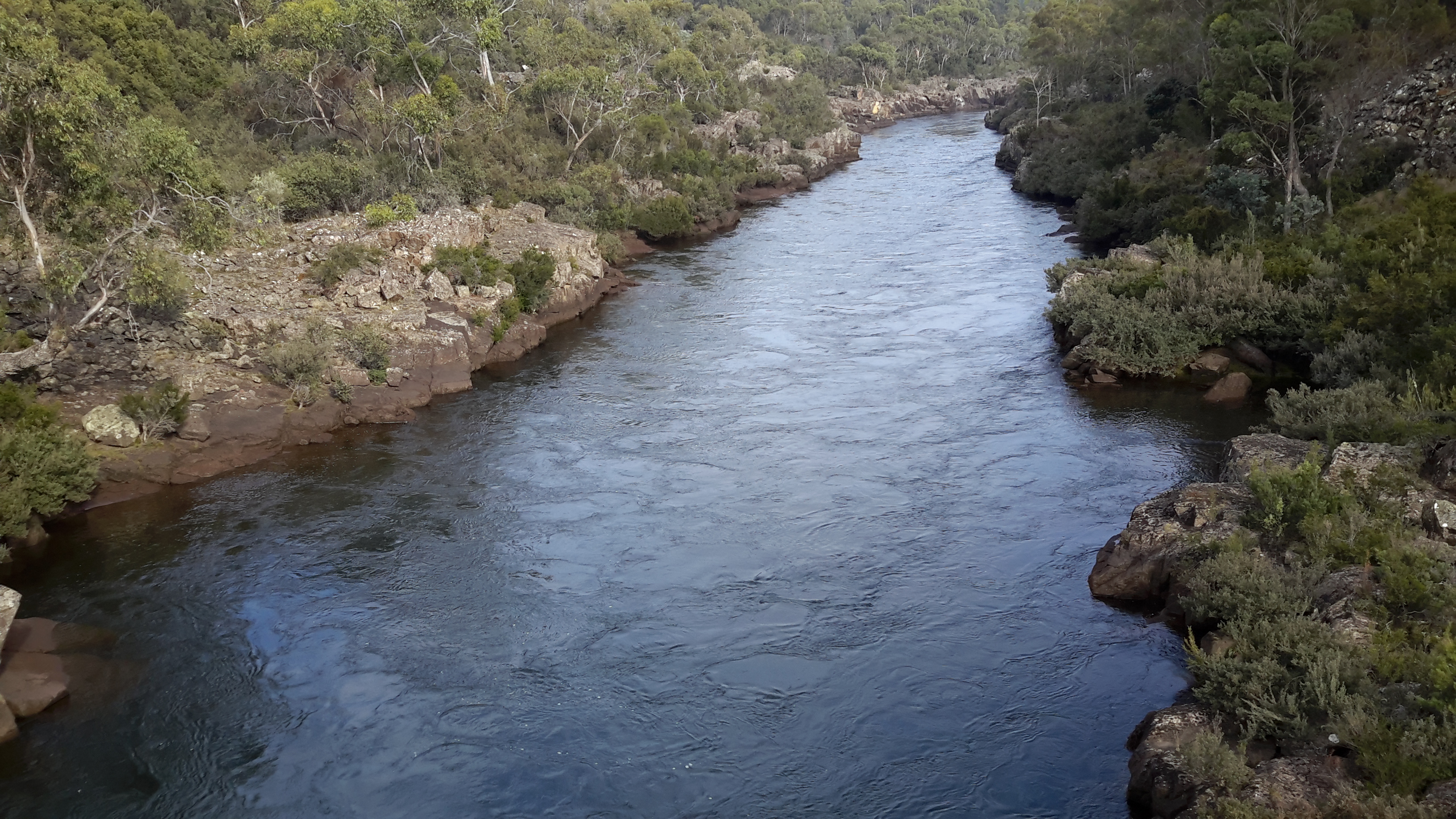

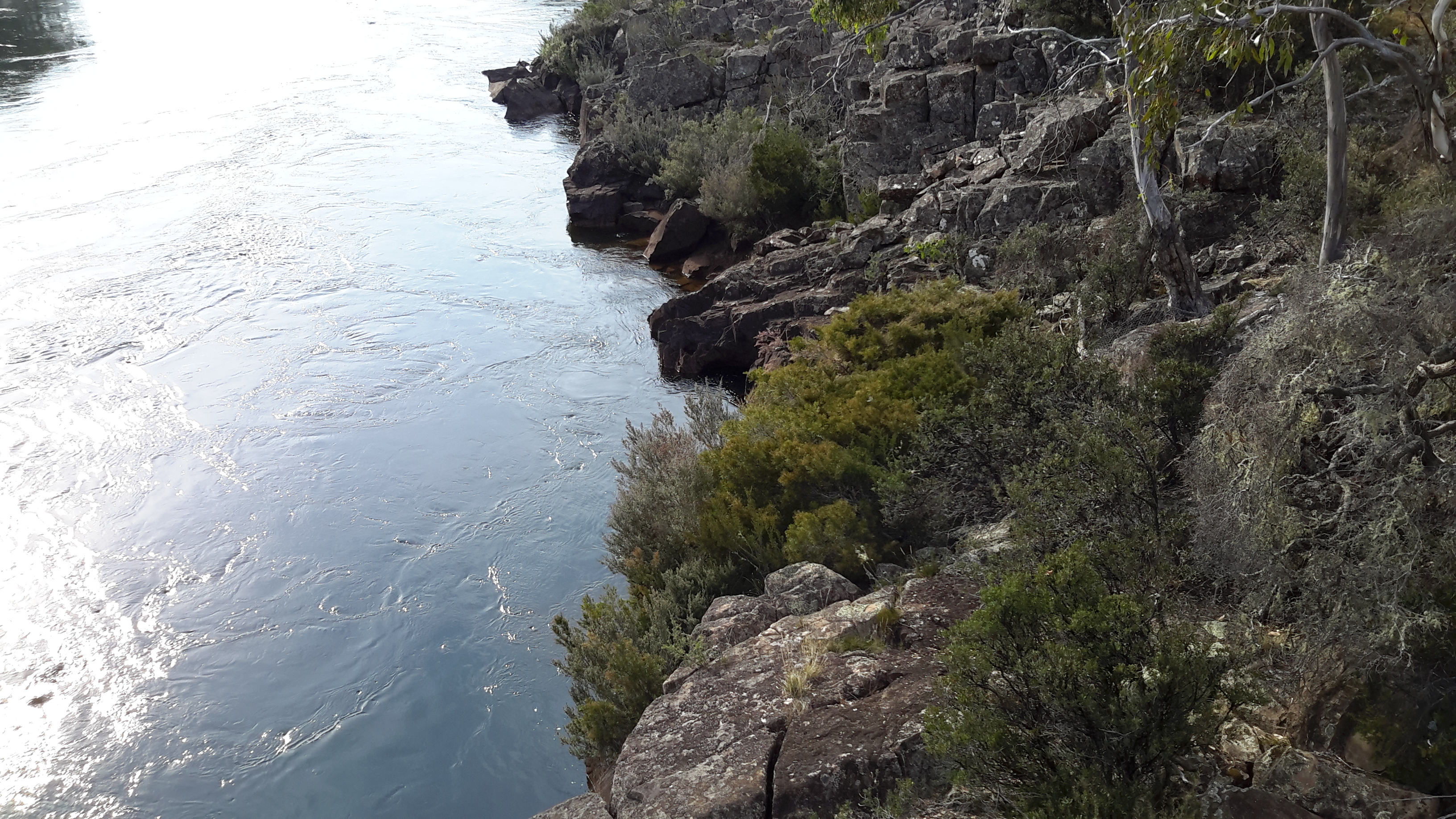
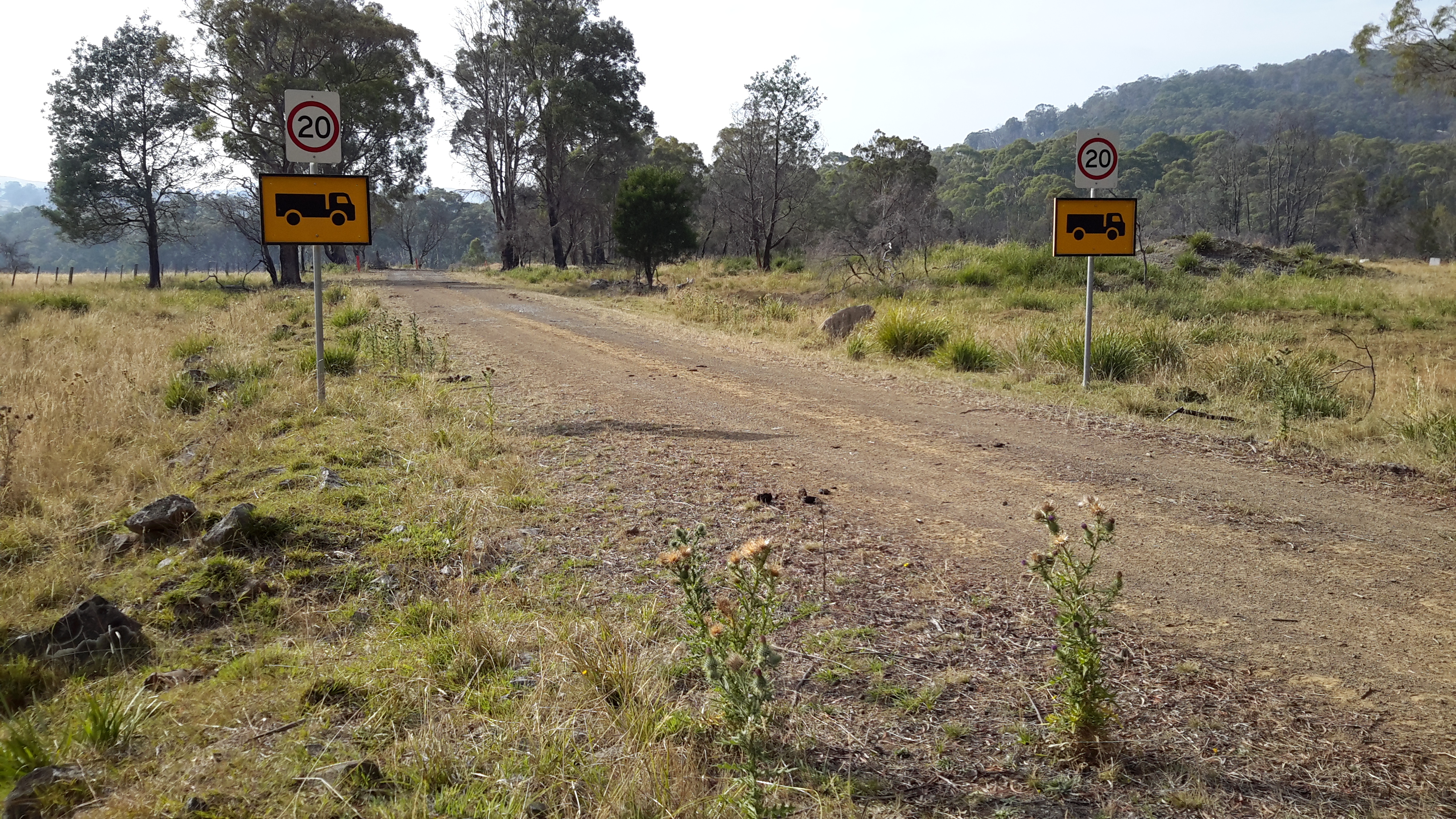
I followed the road, and dutifully kept my pace under 20km an hour.
I enjoyed the walk from my camping spot to Catagunya in the early morning. Except, as usual, I didn’t enjoy negotiating fences. Getting from one side to the other took time. Most were rather challenging. Frequently, I needed to unhitch my backpack, lift its 14kg weight in a clean and jerk manoeuvre and tumble it over a fence. Then I would walk up and down the fence line until I found the easiest (never easy) place for me to crawl under the fence, climb over or squeeze through the fence. Back to the pack, heave it onto my back, and adjust the straps. Thankfully the paddocks were huge and I could never see all sides at the same time which means I didn’t have as many fences as one might imagine for this distance. The fences followed the curves of hills and disappeared over crests. I only ever saw two gates.
From the smaller second dam I followed a creeklet down down down to an almost hill-less flatter space that bordered a section of Lake Repulse.


I turned north-west and meandered up a smaller hill slope until Catagunya Dam came into view.

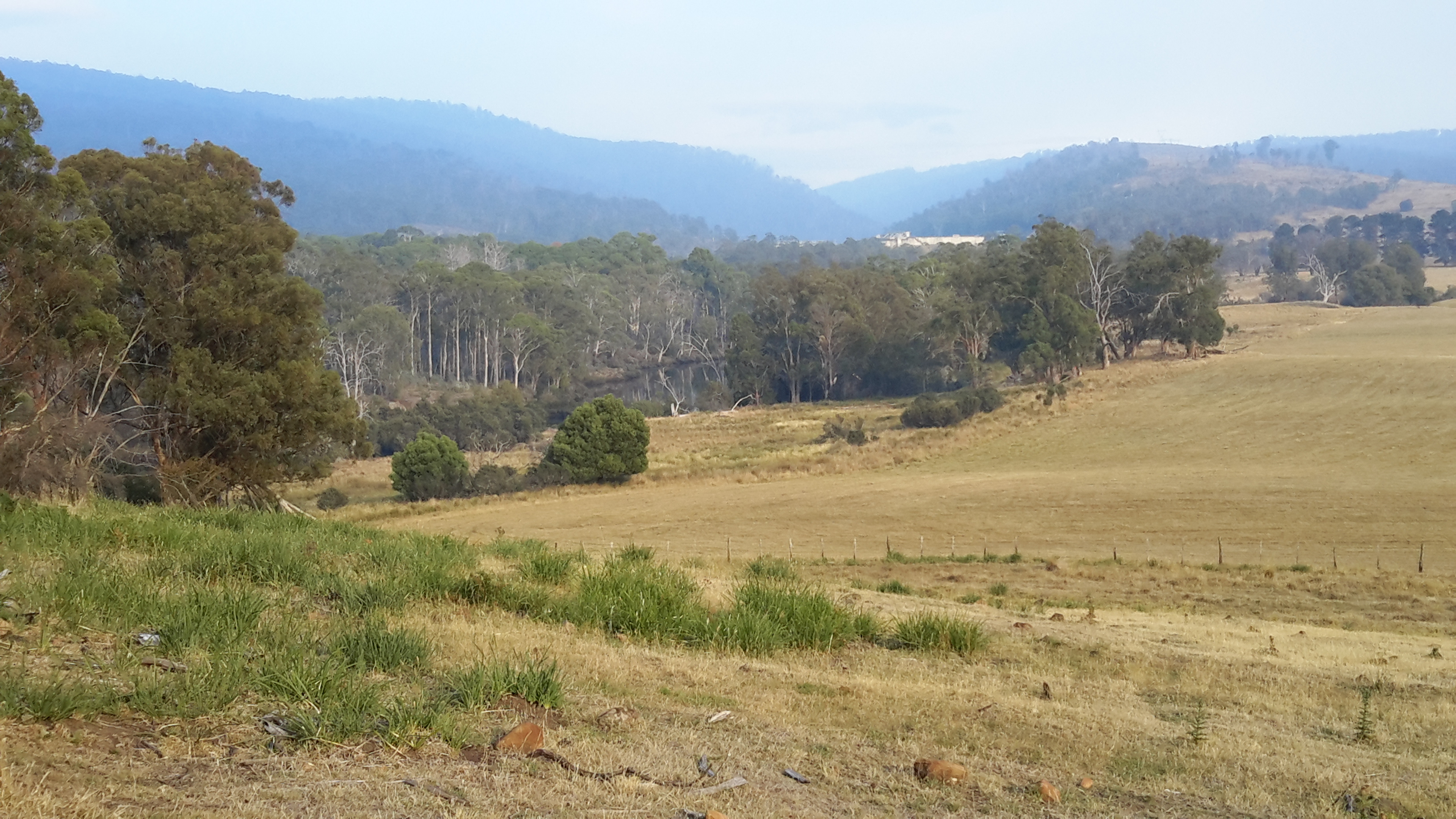
Ahead of me were extensive paddocks with sheep.
Beside me, to my left through a thick edge of trees Lake Repulse/Derwent River streamed away in a south-easterly direction.
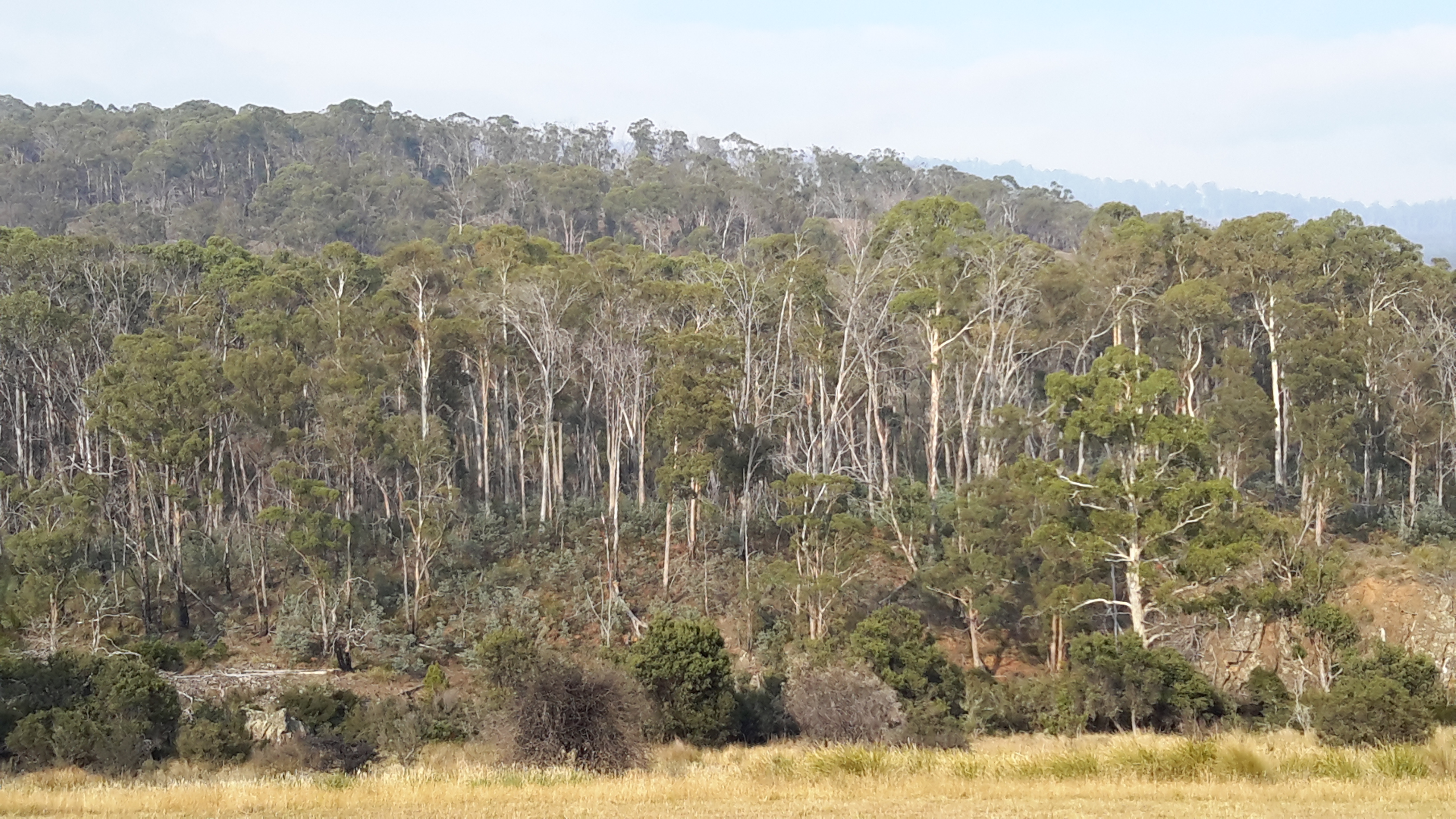
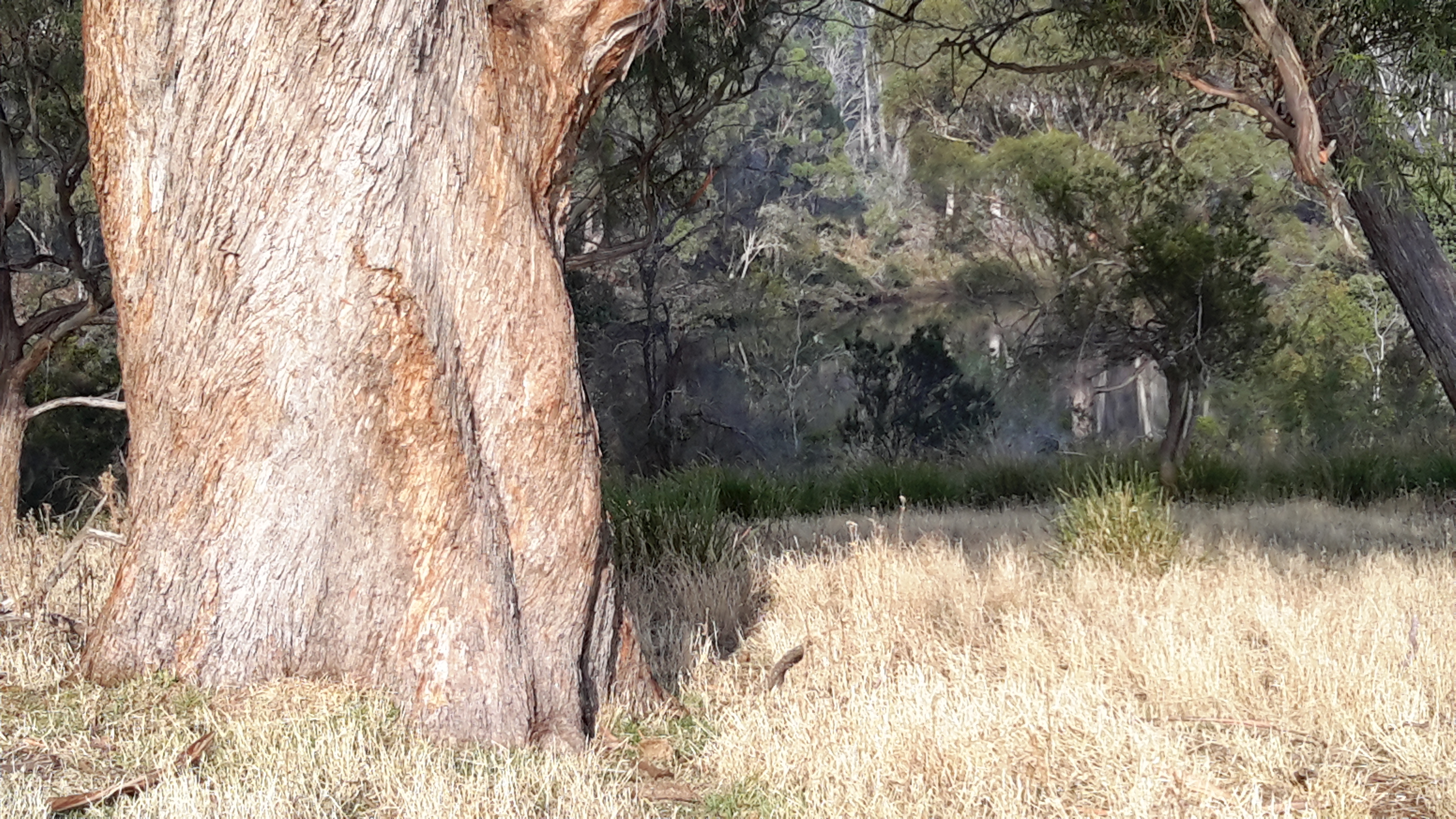
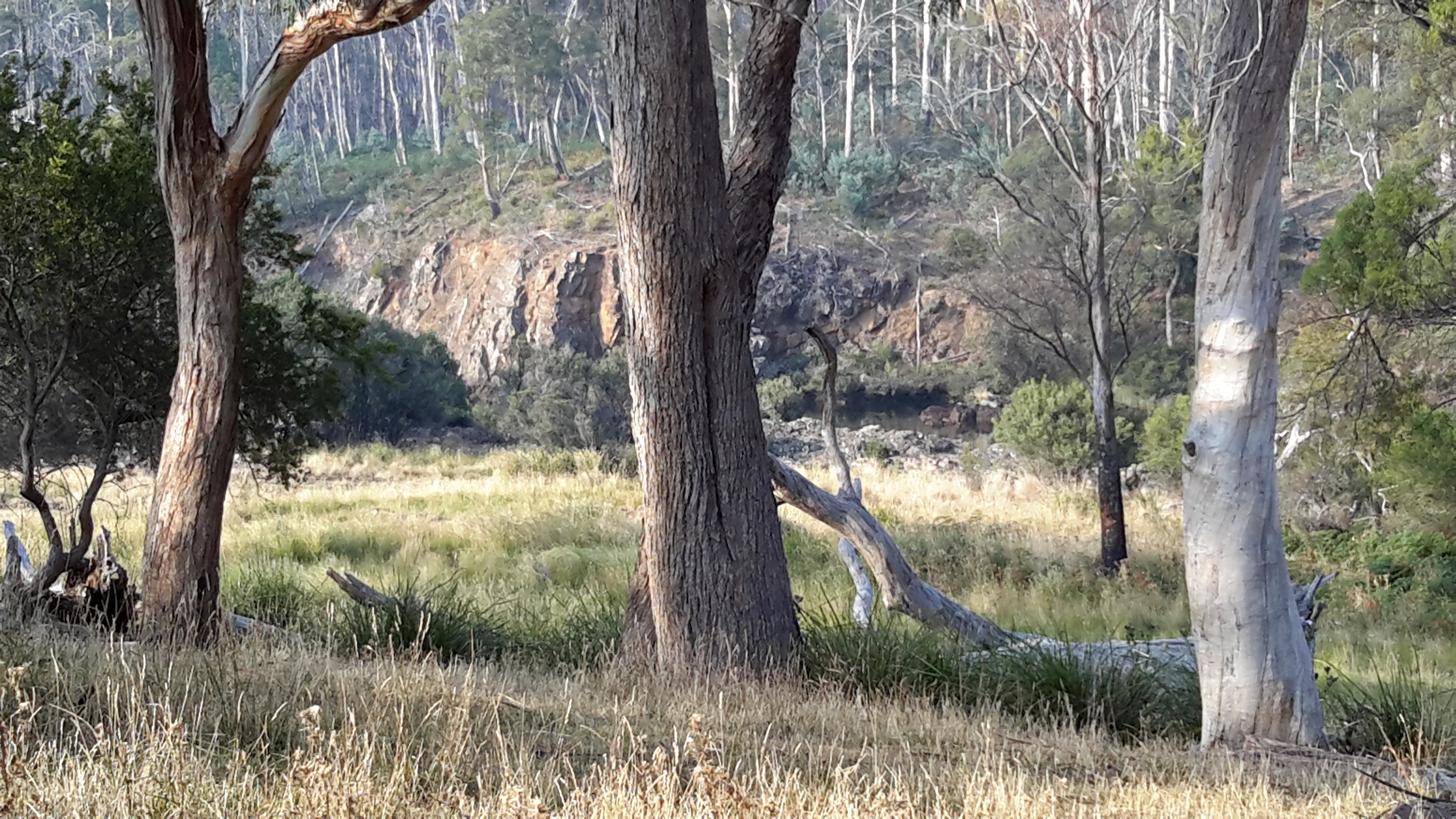
Solid thick trunked trees stood sentry near the water beside rocky outcrops which defined the River edges and stopped the expansion of vegetation.

I looked back from where I had come; way behind all the hills you can see.
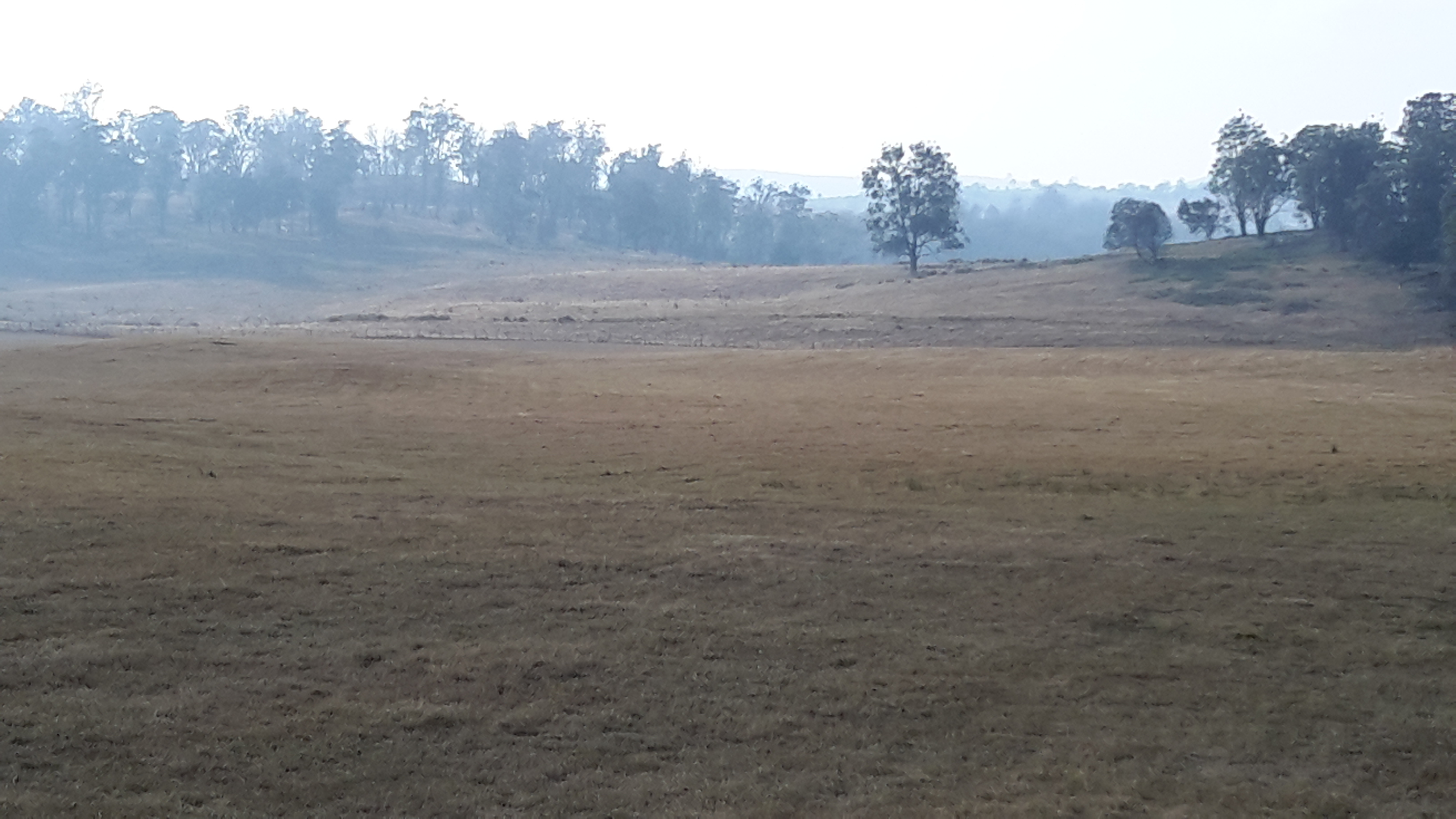
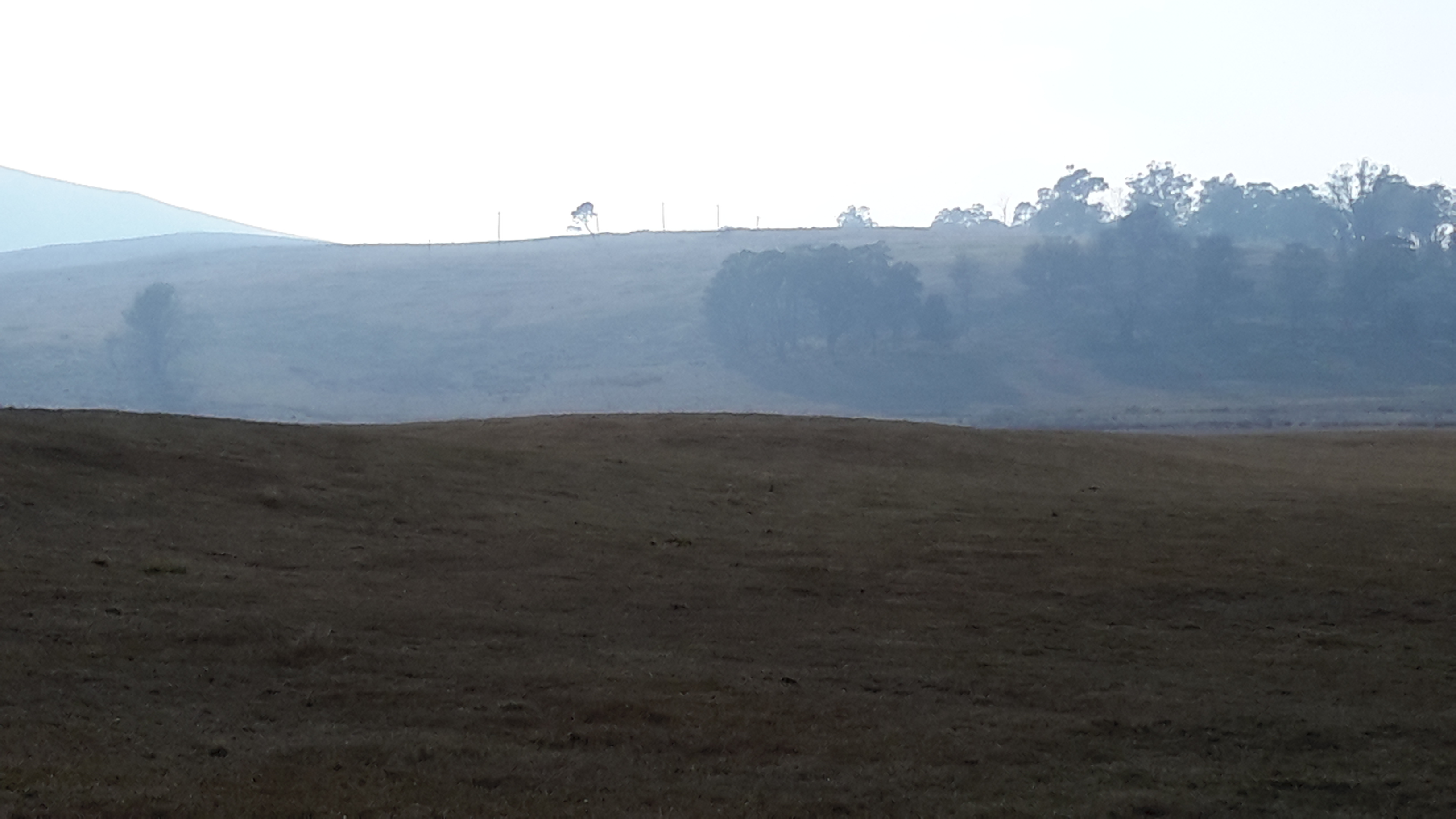
I looked forward to my destination.


I looked around about me.


How beautiful the country looked with its softened edges.
The signs of a past bushfire were clear on one long hill. Possibly a year ago. A little green regrowth in evidence.


Nevertheless seeing the blackened trees was a timely alert and made me wonder how I would cope if a bush fire came my way. I have been informed the safest place is to find/create a hollow in the ground at the bottom of a hill, dig in and cover yourself as well as you can (remembering that most bushwalking gear and clothes is synthetic and will melt), hope the fire will flash over you quickly and that no trees or burning branches will fall on you, wait until the rush has passed, and then hope you can see somewhere to go. I don’t ever want to put that to the test.
On the evening of this walk, I dropped off to sleep around 7.30pm (early to bed early to rise!) in my trusty little synthetic tent on the only flat place I could find during almost the entire walk.

A little after 9 pm I woke to the smell of smoke. Hmmmm. I clambered out of the tent to have a look; 360 degrees of hills were softened with smoke haze. No wind. I couldn’t guess the direction from where the fire smoke might be coming. When I considered collapsing my tent, repacking my backpack and continuing onto the Catagunya complex, I realised it was possible the fire was flaring between me and that destination. I listened for the sound of helicopters doing water drops. Heard nothing.
A couple of hundred metres below me was the dam with its thick brown water (photo below taken when setting up before the smoke haze arrived) which I felt was the safest place I would find close by. Thought I was safest staying put.
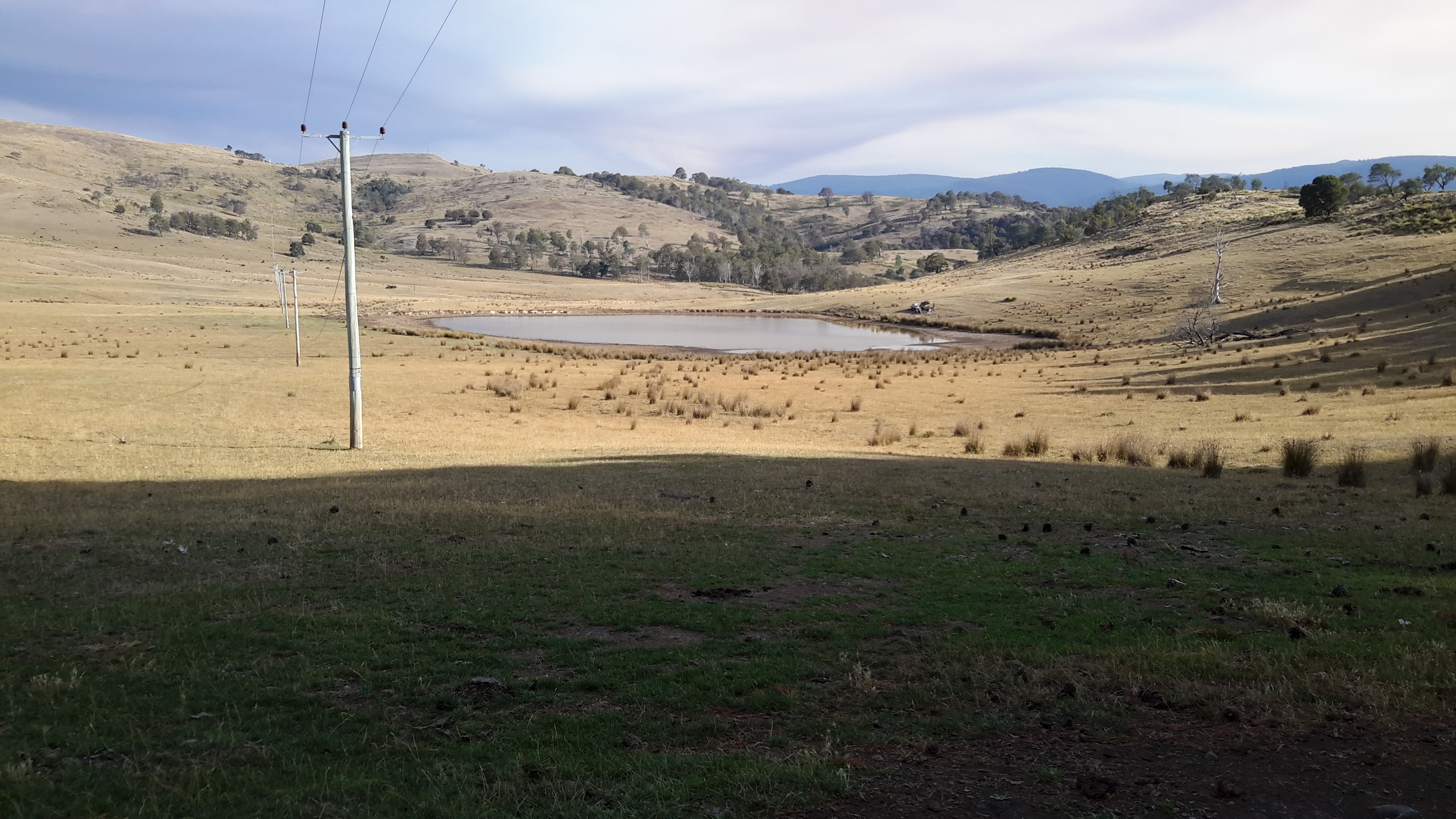
So I climbed back into my hot sleeping bag (the evening temperature didn’t cool as forecast), and went to sleep.
In the morning, I took the following photos. They show the smoky cattle-crossed hills surrounding me – and indicate the smoky air I was breathing.
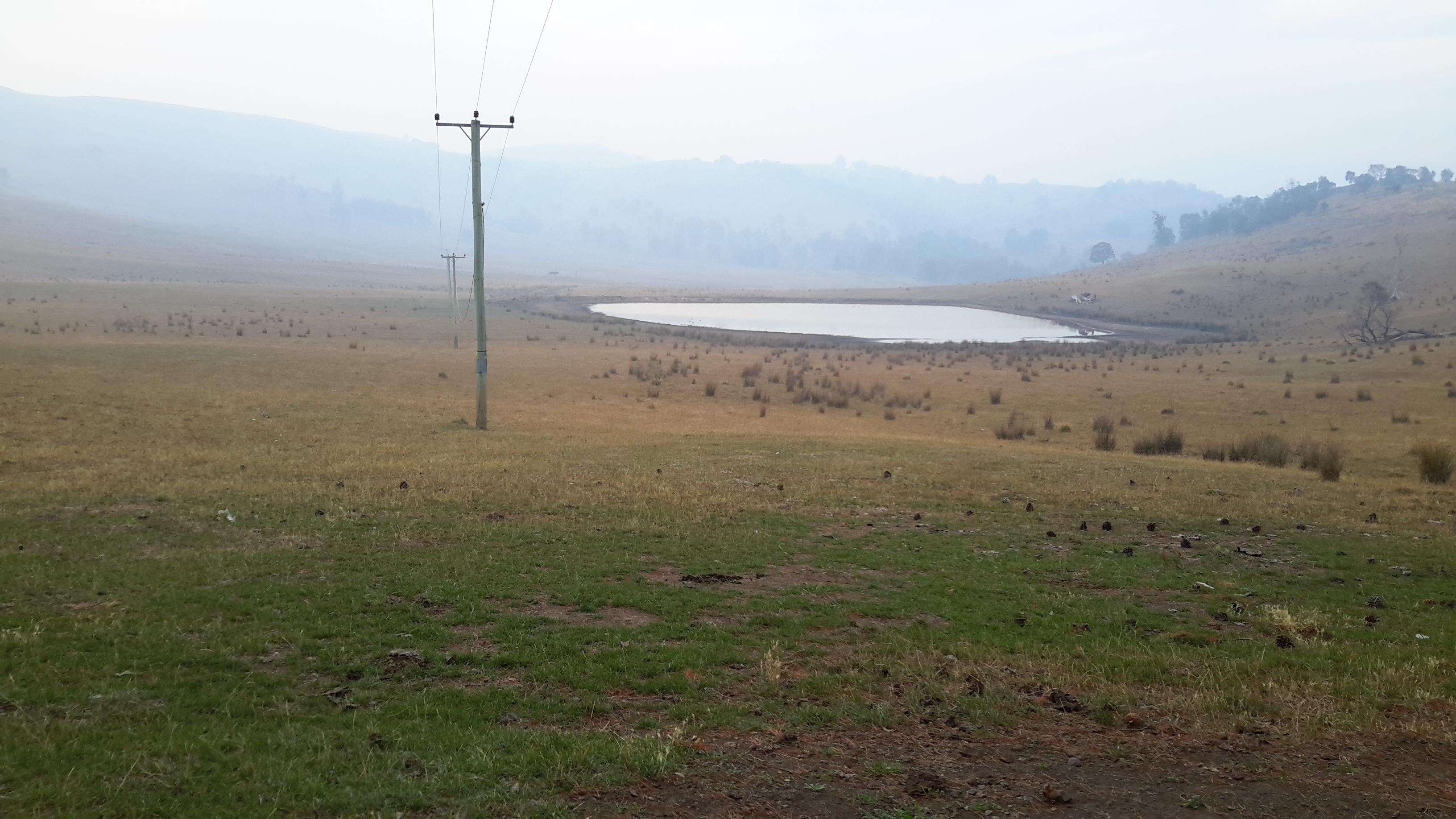
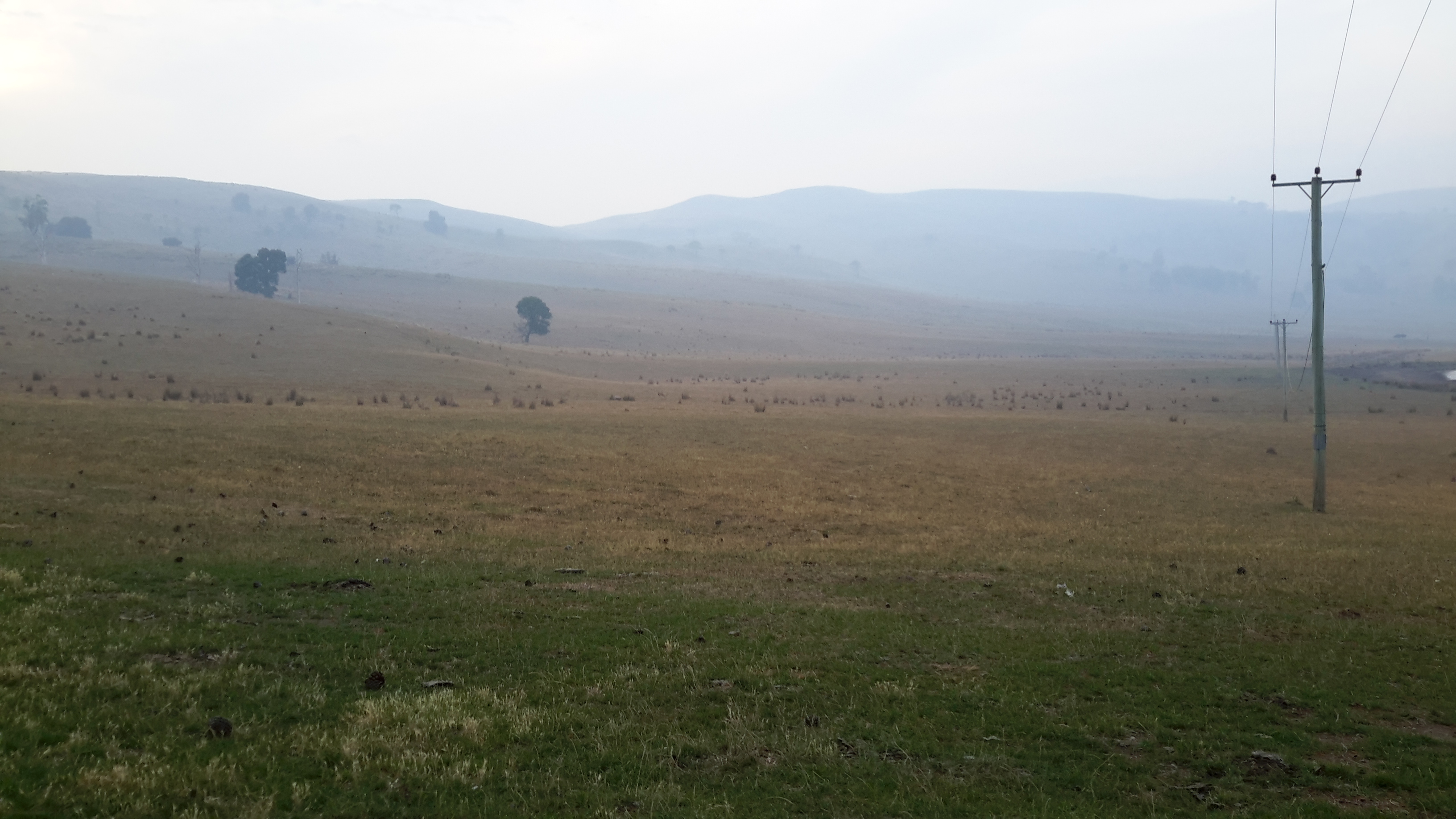

I packed up and walked passed another smaller dam, before travelling around, down and up hills once more. The smoky haze persisted. Didn’t seem worse. I continued.

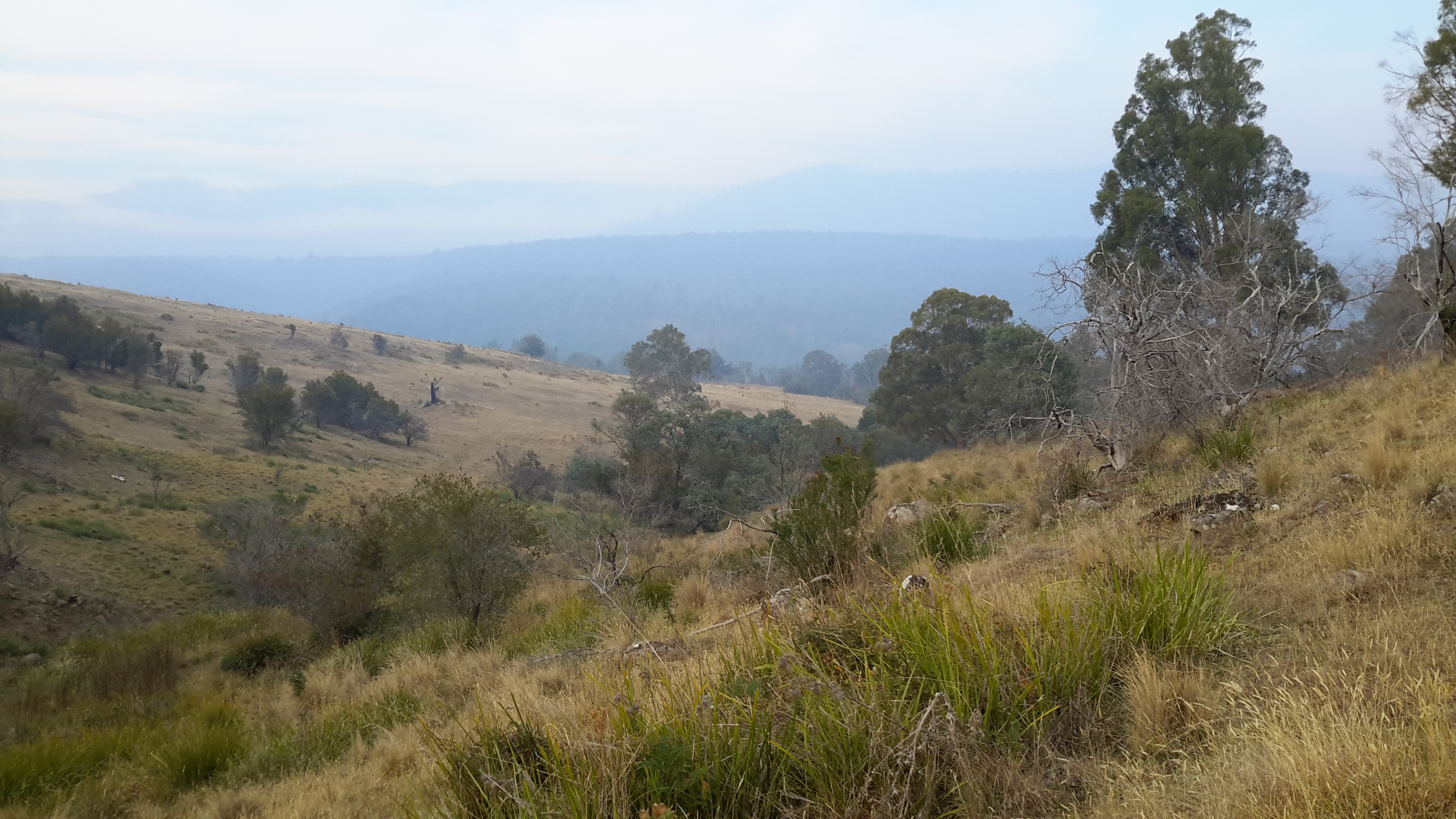
When I saw Catagunya Dam in the distance with the haze behind, I knew the seat of the fire was elsewhere.

Later, I learnt the fire was over 70kms away in the south west of Tasmania. Strong winds were responsible for creating the haze and even Hobart way east was blanketed similarly by smoke from the same fire.
When I reached the top of one of many hills, the heat of the day was intense and weariness forced me to stop. I ate a little lunch. Sipped a little water. Thought about its reducing quantity. Lay down in the shade. And fell asleep.
Increasingly, I was acknowledging my water situation could become serious.
At the start of my walks I carry two one-litre bladders (Think 2kgs of weight). By the early afternoon I estimated this quantity might not be sufficient: I realised that the hot weather, the energy required to navigate my way around contours and up and down hills, the need to have water to cook with, clean the teeth, and continue on, were likely to deplete my supplies. If I didn’t find water to replenish my resources I could be in trouble.
As it turned out, the first creek with the brown running water was the only source of water that I might have drunk, if pushed. Later creeks trickled sluggishly and pools sat with green slime and algae. Obviously no rain had flushed these creeks in ages.
By late afternoon I decided to head inland to a man-made dam of water clearly marked on the map; I was walking away from the River but I needed water and this seemed the only sensible solution. I walked up and down more serious hills until the dam was in view (can you spot the dam in the first photo?).
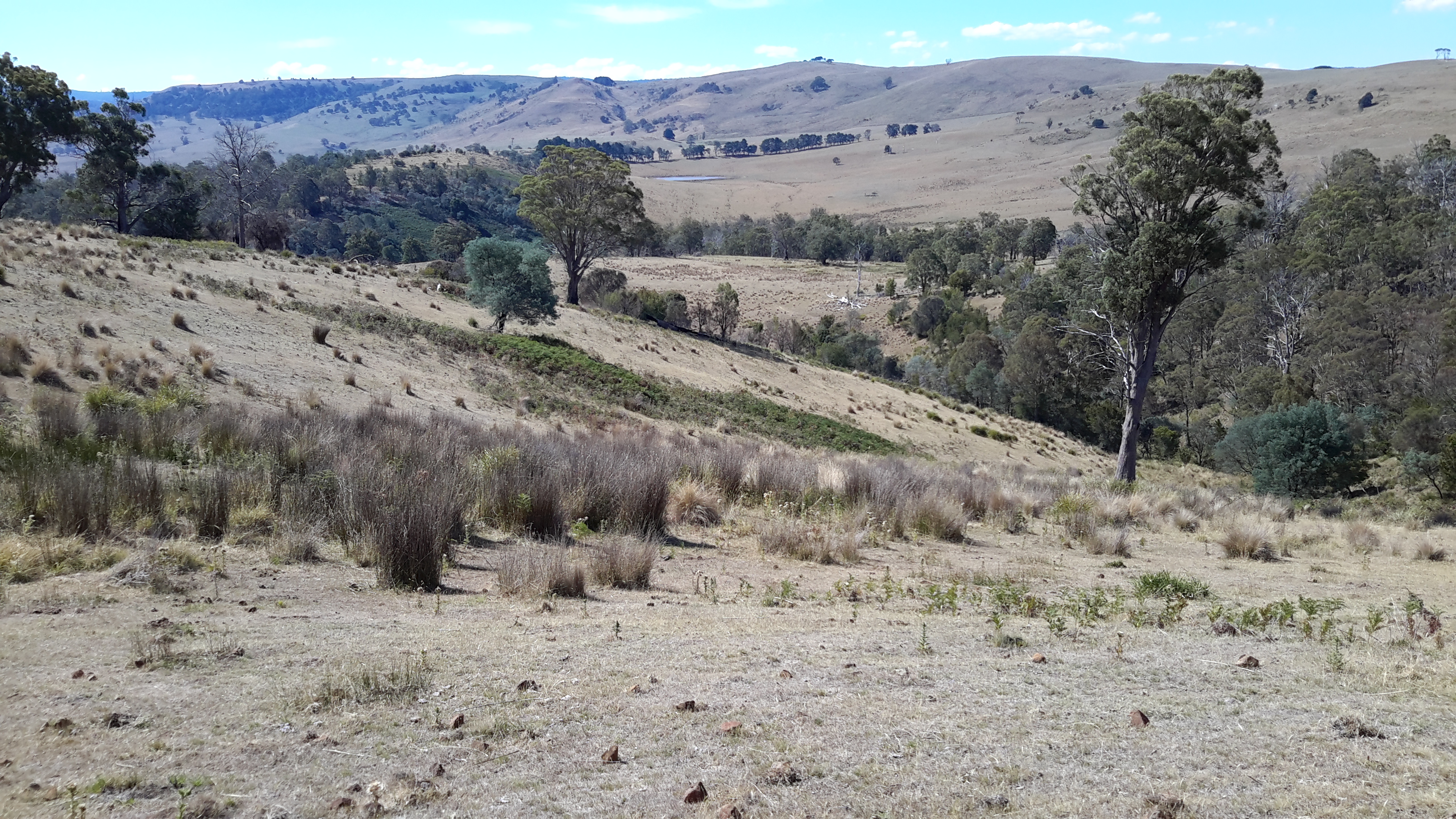
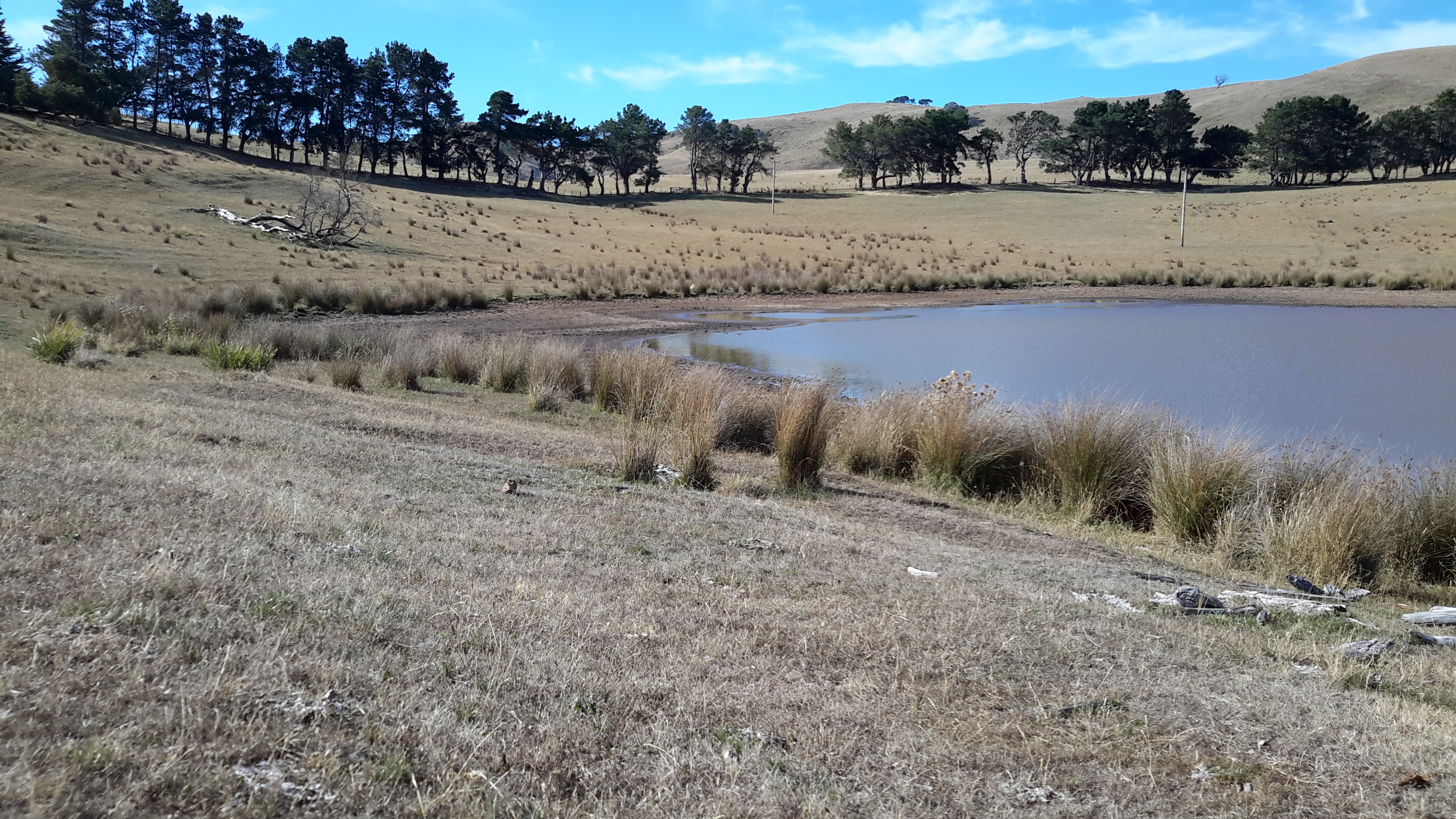
After walking for around seven hours, this nameless dam was a huge disappointment. The water edges were pudgy with cattle trampings so that the mud oozed up around my walking boots and threatened to suck them off my feet. And the low level of water left in the dam was a thick brown mix. Unreachable and undrinkable.
That night, I didn’t cook because water would have been required. Instead I finished eating my lunch for dinner. Again at breakfast I ate food which did not require rehydration. At no time did I brush my teeth, although I would have loved to. Keeping water to sip was more important than niceties.
Next morning I walked for two hours to reach the Catagunya complex. No creeks ran with clean water on the way. Cliffs and rocky edges made the water of Lake Repulse inaccessible. I thought that the bridge over the Derwent River at Catagunya might allow me to drop down and brush my teeth, but again – no access. Impossible.

Thankfully when I arrived at the Catagunya Power Station, a couple of work cars pulled up. Inside I was able to refill my water containers and brush my teeth. Thanks Hydro Tasmania.
I have written before about the challenges of walking and worrying about water. The irony is that the Derwent River is a mighty liquid machine, the water of which can be seen – but mostly it cannot be touched. If a person wasn’t able to keep walking, and didn’t have a Personal Locator Beacon, it would be easy to die of thirst in this remote part of Tasmania in the summer.
Visiting Turkey, Italy, Morocco and Hungary
Hotels in Launceston to 1900
The ribbon that separates the eastern and western shores of Hobart, Tasmania's capital city
The ribbon that separates the eastern and western shores of Hobart, Tasmania's capital city
Beautiful wilderness locations and more
Keeping track of our adventures.
Travel and Photography
The ribbon that separates the eastern and western shores of Hobart, Tasmania's capital city
From Hobart to Hobart via four continents
Nature + Health
Solo hiking is an amazing challenge. Let's go... and keep going!
Sharing Inspiration from the Wild
My soul explores where my mind wanders...
A Hundred Years from Philadelphia to New Hampshire
Following her writing dreams
Ariadne's Clew - the Ship's bLog: sailing Tasmania with the Stoneman family
My life's aspirations, inspirations and a little bit about running :)
We are about to embark on great change, we are moving to Tasmania.
Our everyday adventures
 Walking the Derwent River