Author Archives: Tasmanian traveller

Unknown's avatar

About Tasmanian traveller

Through travel, I have experienced the eccentricities of people and their environments around the world. At the same time, I love where I live. So, for people who cannot travel to discover the wonders of my home town, this blog is an attempt to introduce its exoticness. My goal was to walk along both sides of Hobart's Derwent River from the mouth to New Norfolk, and to walk on one or alternating sides of the River between New Norfolk and the source of the River at the southern end of Lake St Clair. The walk was undertaken in stages around my other commitments of my life. Almost all stages of the walk connected with Tasmanian public transport - my intentions was to inspire people, who do not have access to a vehicle, to feel they can replicate the walks. This blog reports on each stage in the hope it will encourage people to either follow in my steps or to create their own walking project where-ever they live. Please note: The blog background and headliner image of 'Hobart from Mt Wellington' is the work of Tourism Tasmania and Garry Moore. It is a free image with unrestricted copyright and available from http://www.tassietrade.com.au/visual_library

Between Wayatinah and Catagunya Power Stations- posting 6 of 6


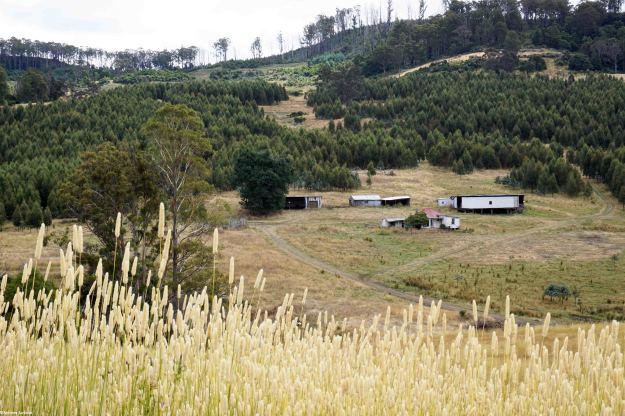
The goal was achieved. It was great to have it done. I am very grateful for Andrew’s generosity of spirit and for his notes and photographs. The walk between Wayatinah and Catagunya Power Stations could be ticked off the list. But a long walk back to the Lyell Highway had to be faced before returning home. Andrew turned north for the 7 km walk on Catagunya Road. He passed a mix of open unfenced paddocks and distant plantations. The Cooma farmstead and outbuildings were the only marker that people had lived in the area.

DSC01747e.jpg

For a brief moment he thought he would have company. Andrew had been walking for a while when, in the distance on a straight stretch of road, he could just make out a couple of figures coming slowly towards him.  Someone to say g’day to and have a natter  – but  – on closer inspection they transformed into ambling sheep. After that, Andrew’s company all the way back to the locked gate was a rather large herd of very healthy looking quadrupedal steaks – which, with a spritely step, he kept ahead of. After some 7 hours of pleasant walking, this walk along the Derwent River was over.   There had been time for plenty of stops during the day to take photographs and to enjoy the surroundings.

Hydro Tasmania, TasNetworks and forestry related employees can drive over the convoluted maze of tracks between the two dams, but there are numerous locked gates and no general public access.  Even during the walking, many locked gates with serious double and complicated locks were seen. I have said in earlier postings that landowners and managers in the Derwent Valley and Central Highlands can recite histories of bad experiences with people entering their lands and not treating it appropriately or stealing their wood or livestock. It is a shame that a few people wreck it for the rest, and remove the opportunities for those who care for the land and the property of others and wish to explore more of our wonderful Tasmanian natural environment.


Between Wayatinah and Catagunya Power Stations- posting 5 of 6


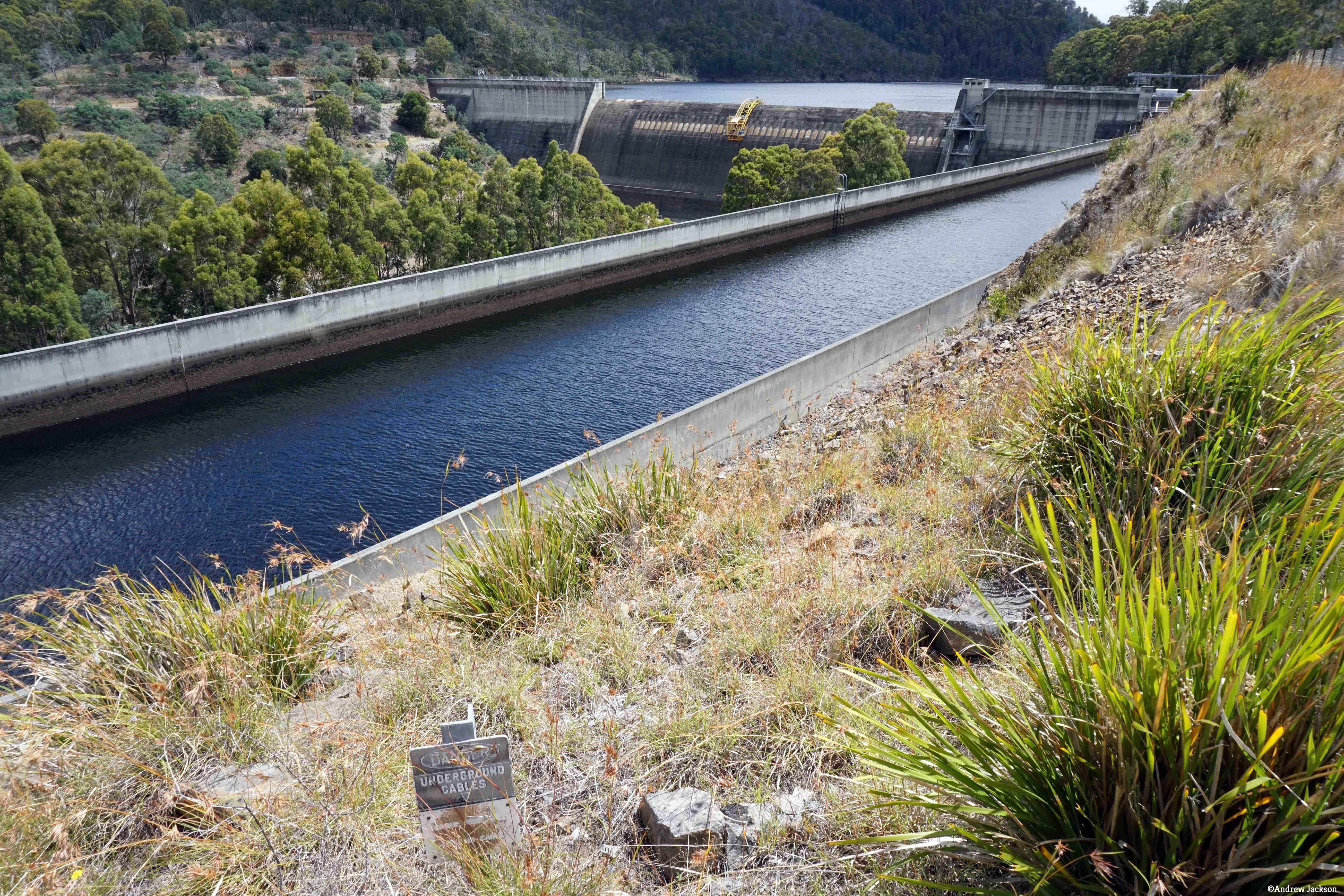
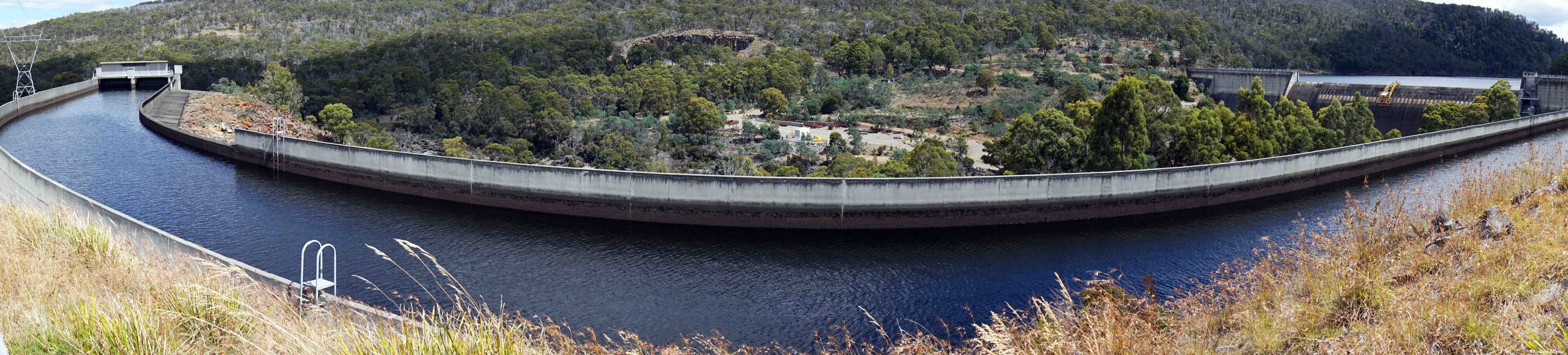
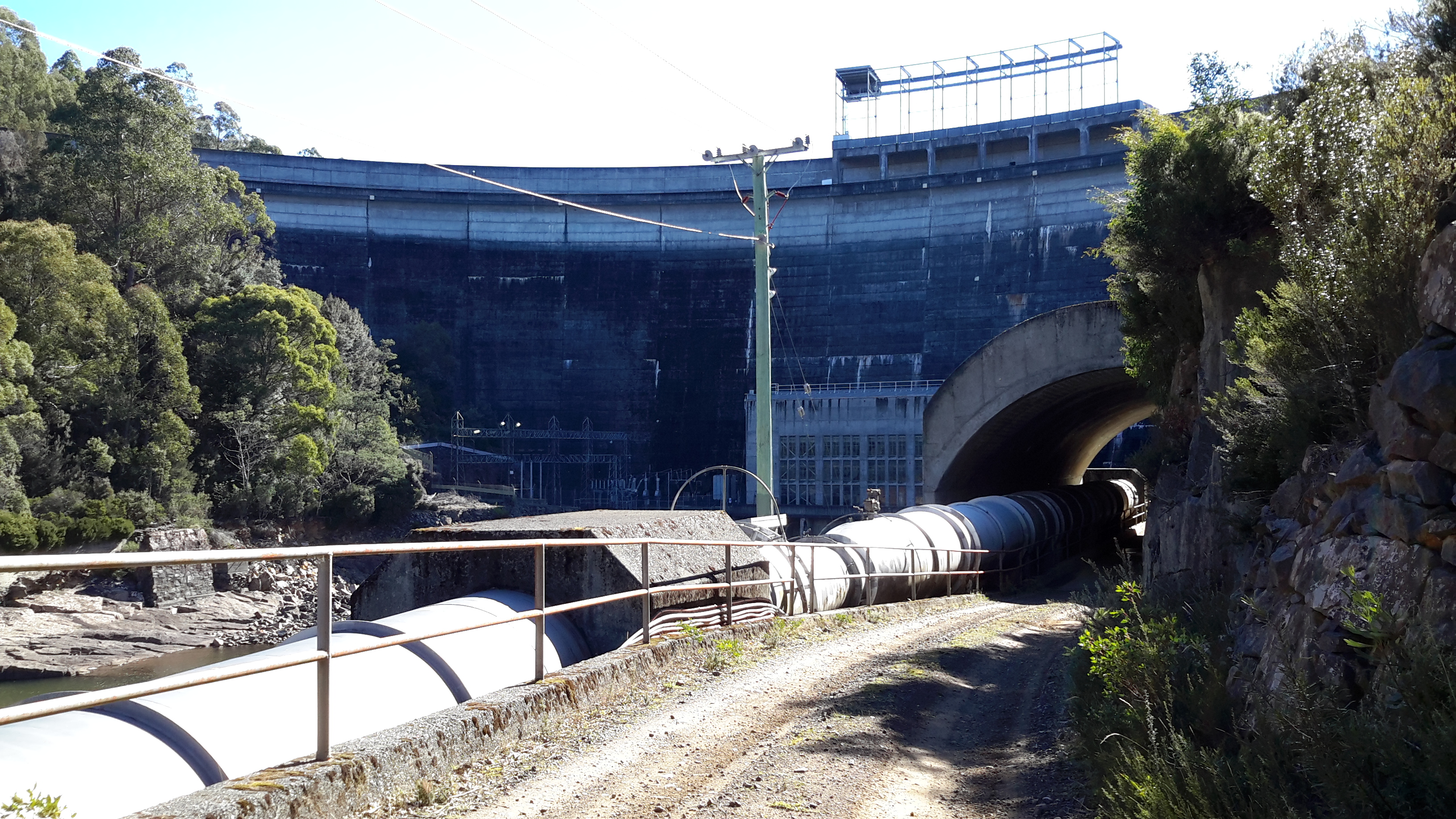
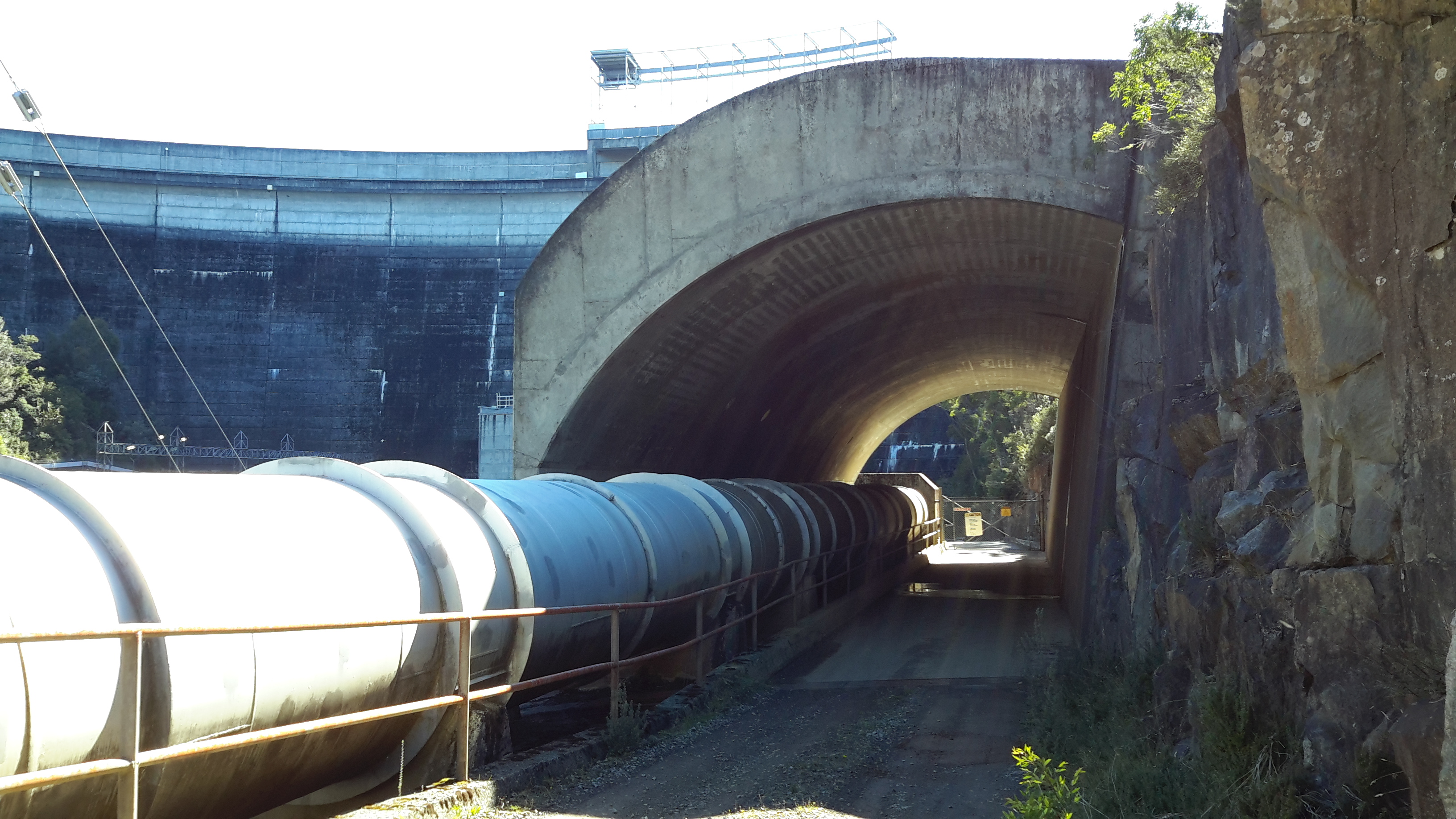
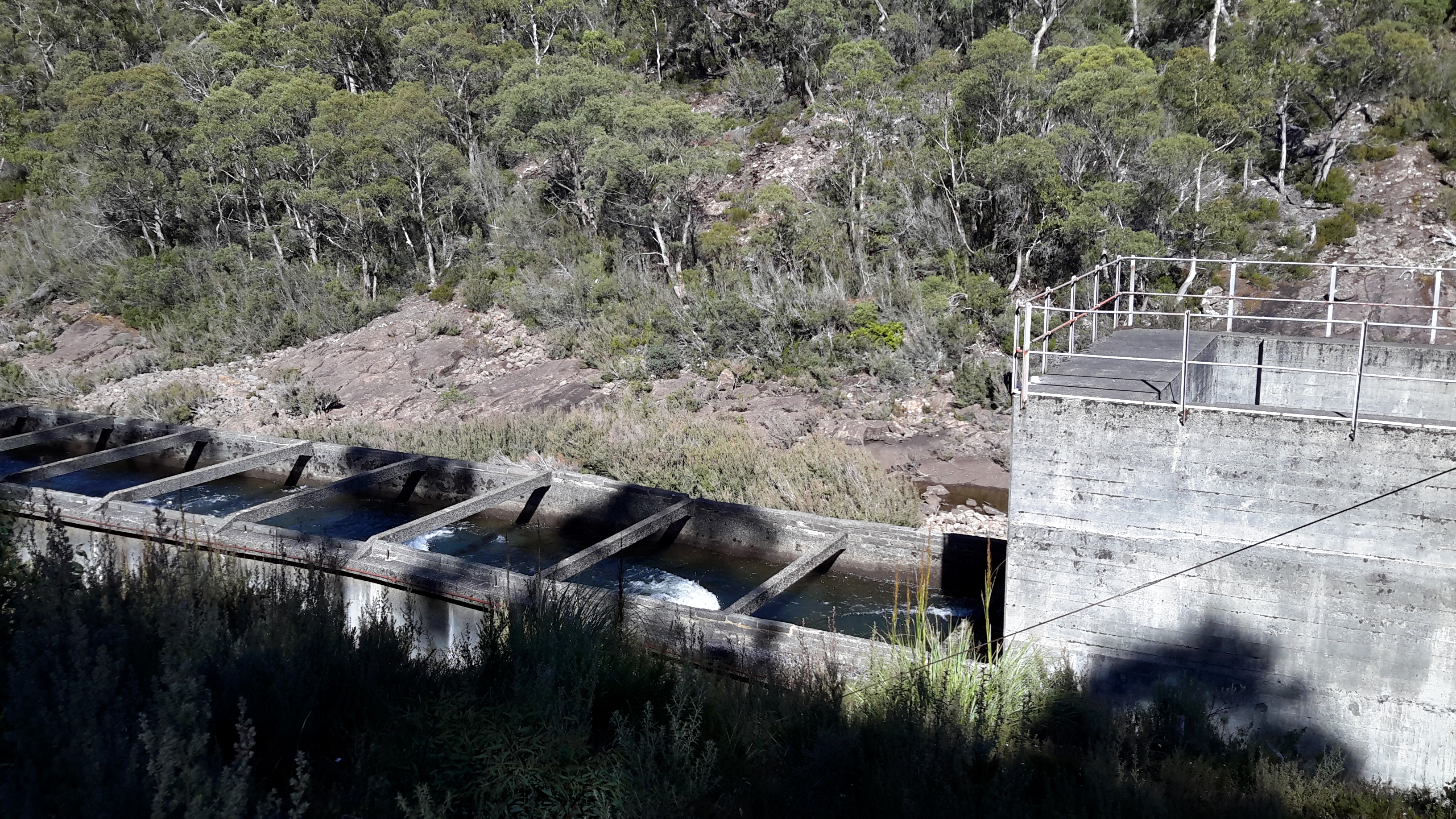
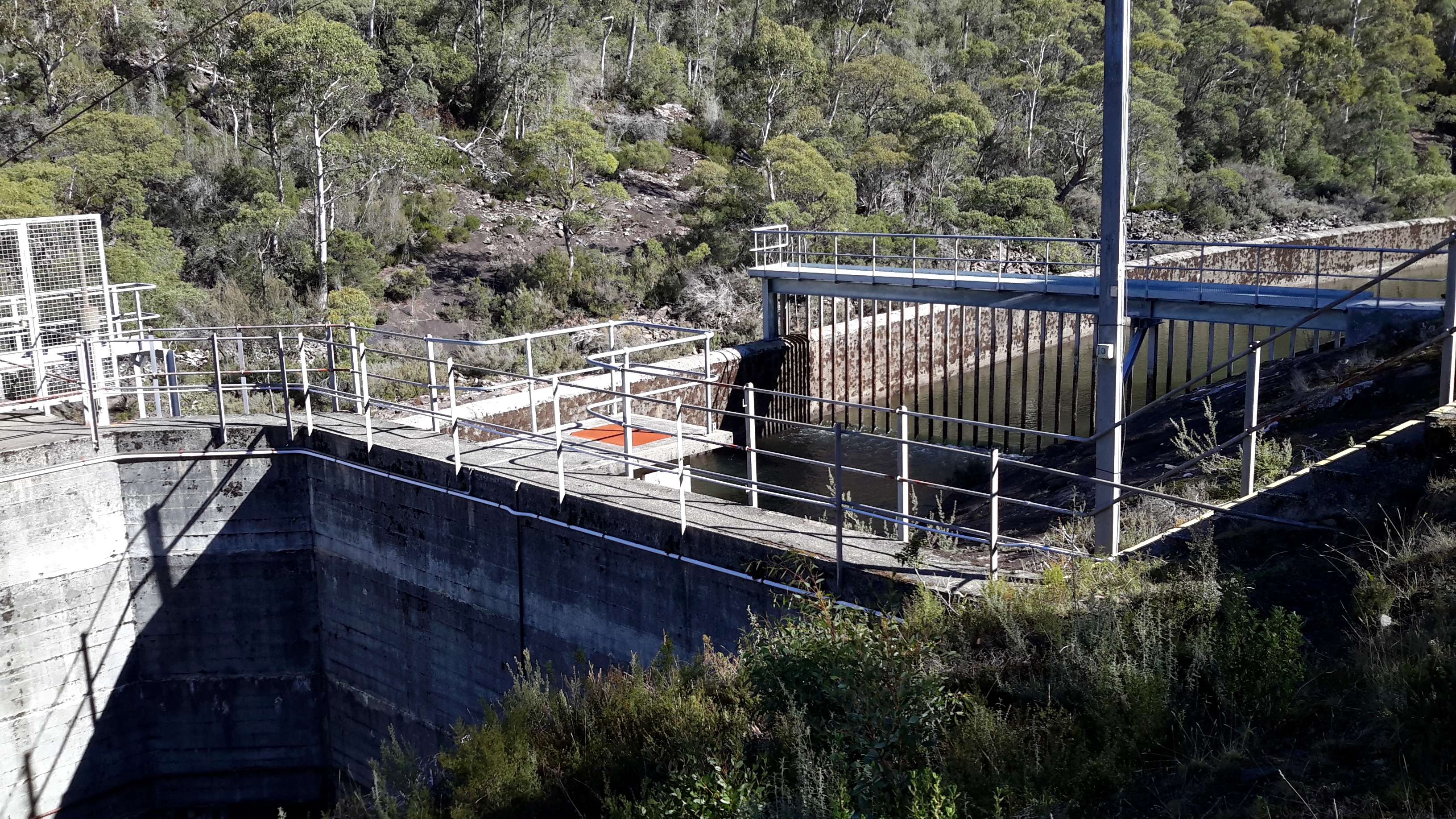
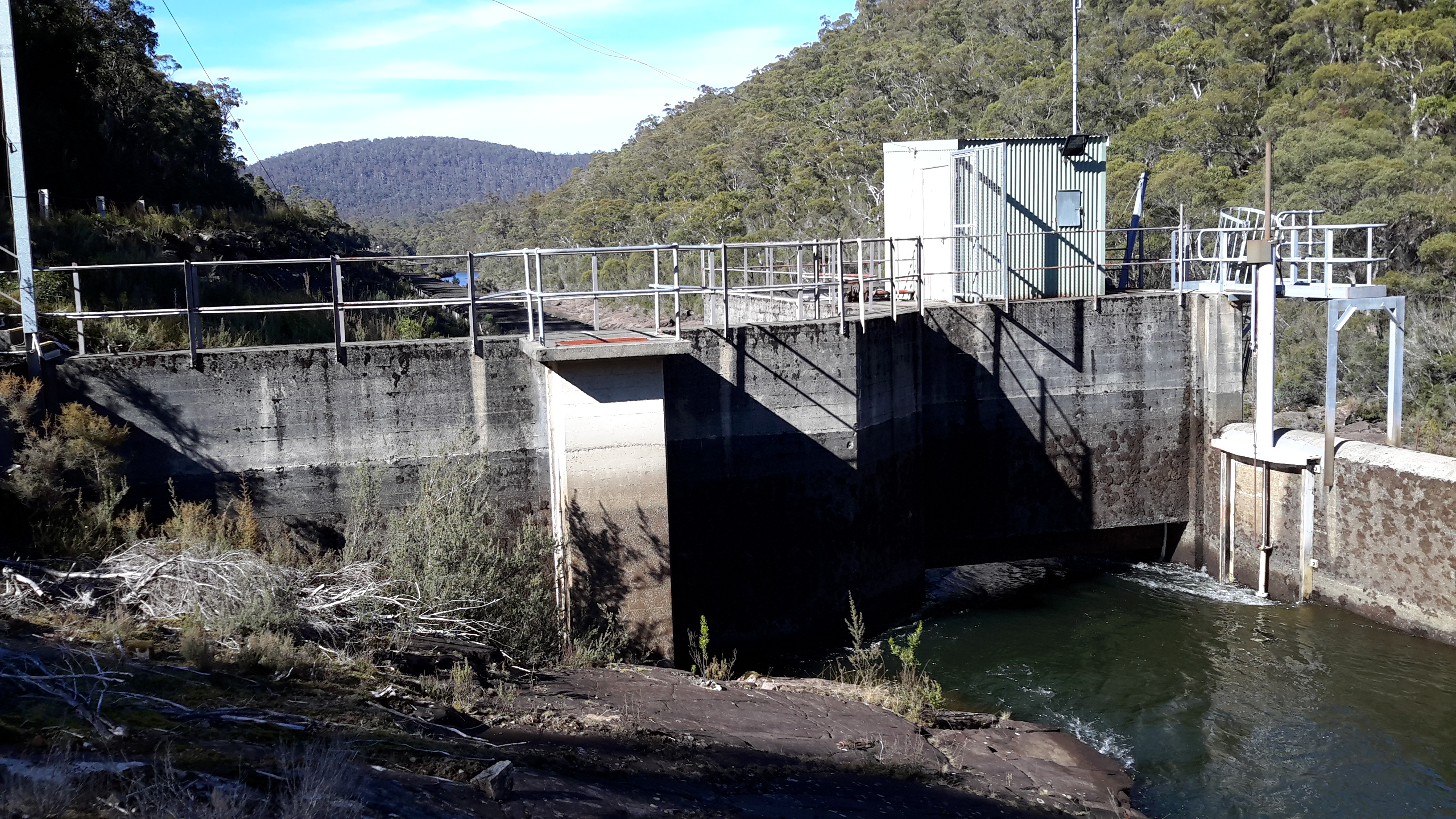
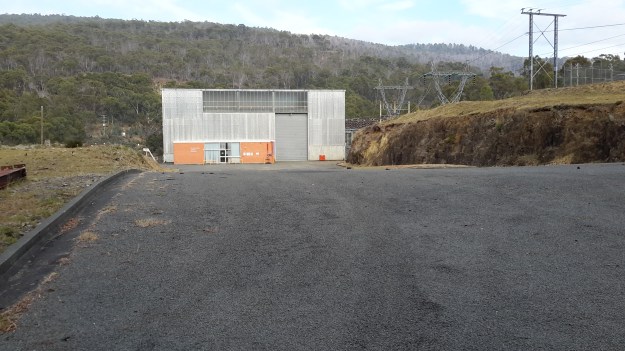
Above the complex of Catagunya Lake, Dam and Power Station there were a number of viewing points from which to study the construction of the dam, the head race, switch yard, etc. It was so easy to admire the engineering feat that established this enterprise. Water was not moving in the race so it seemed that the Catagunya Power Station was closed down.  Maintenance? Too much power being generated elsewhere? Water conservation and therefore prudent power generation management practices?  The reason is unknown.

DSC01733e.jpg

DSC01736e.jpg

DSC01734e.jpg

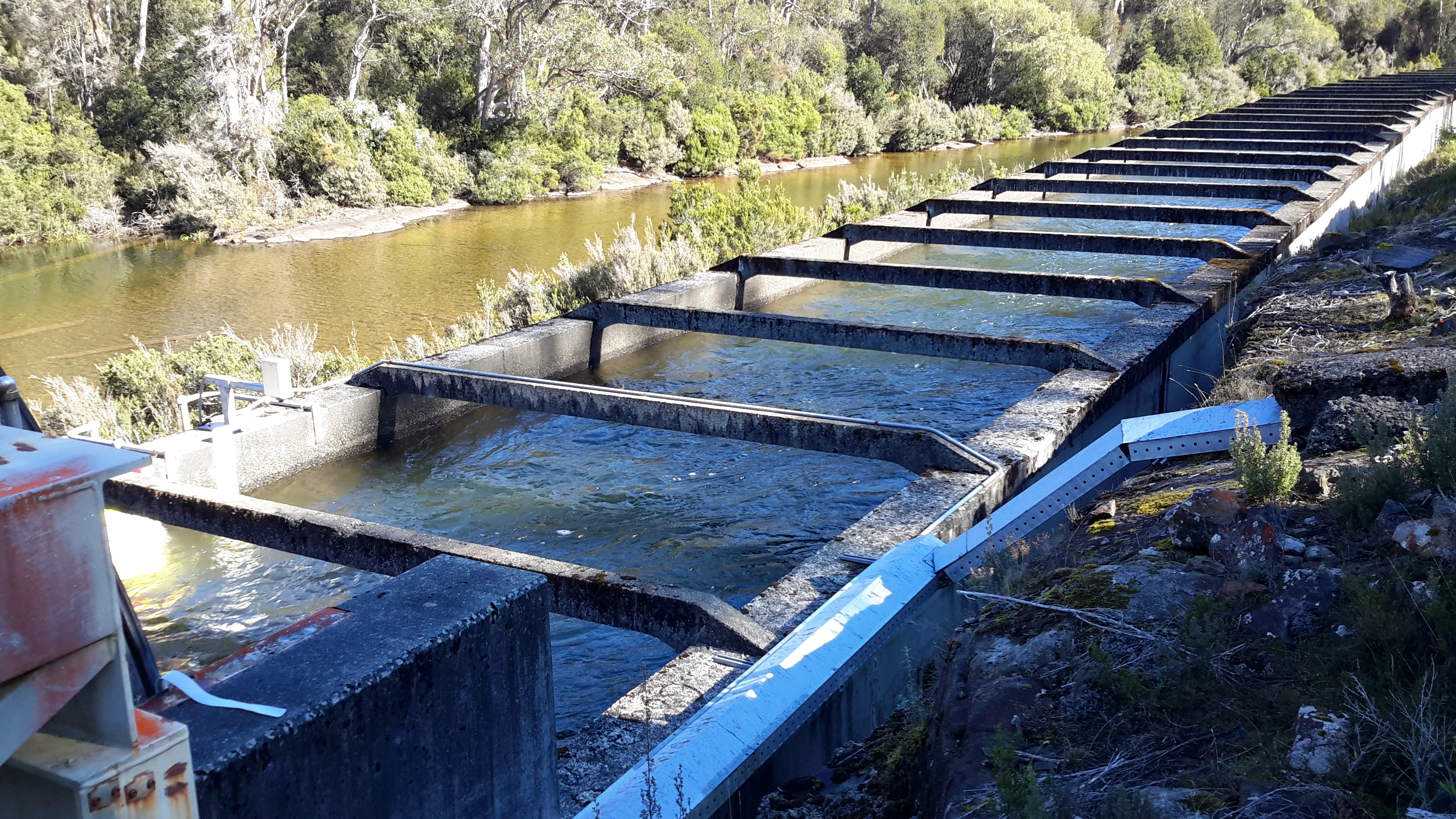
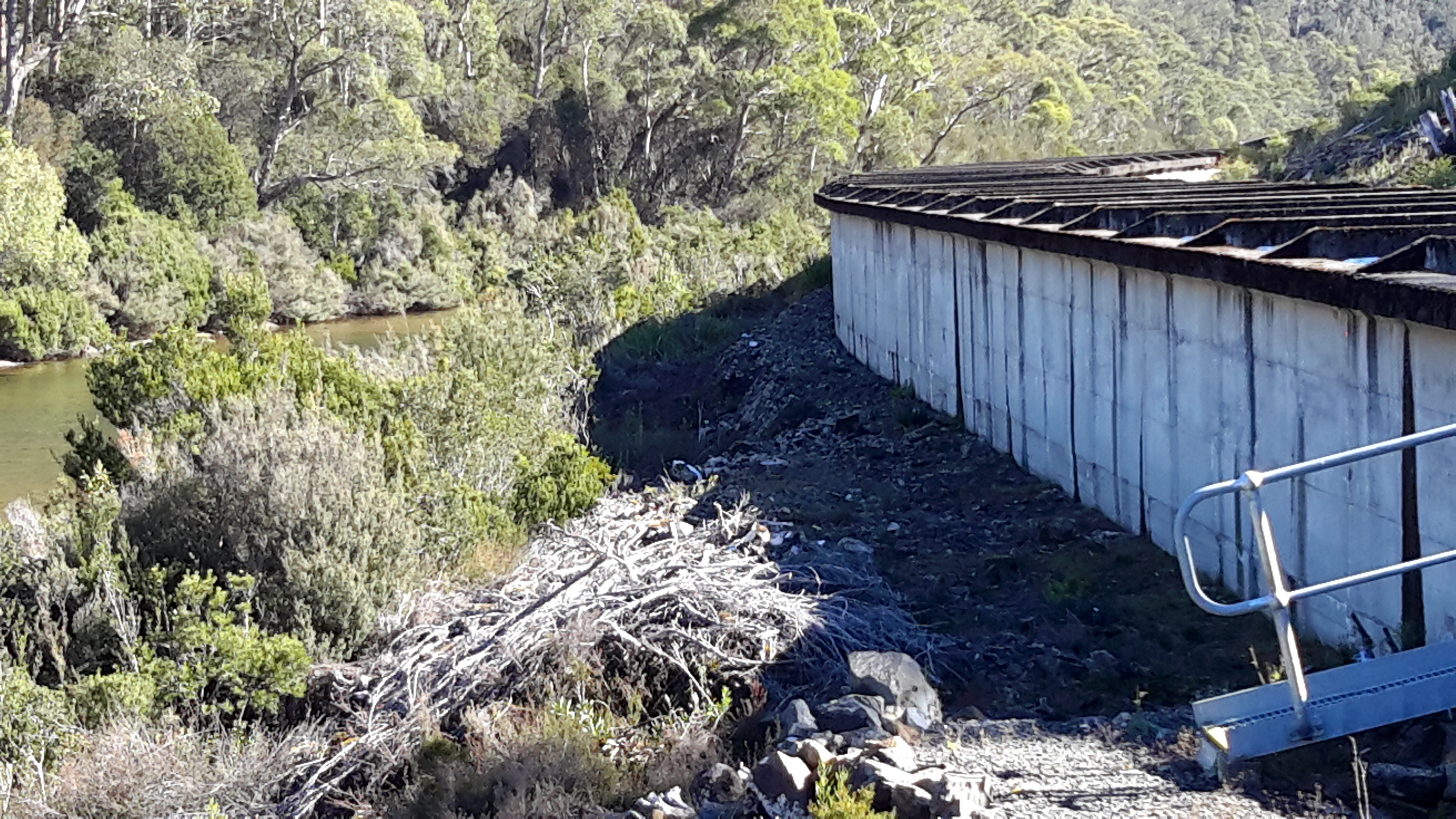
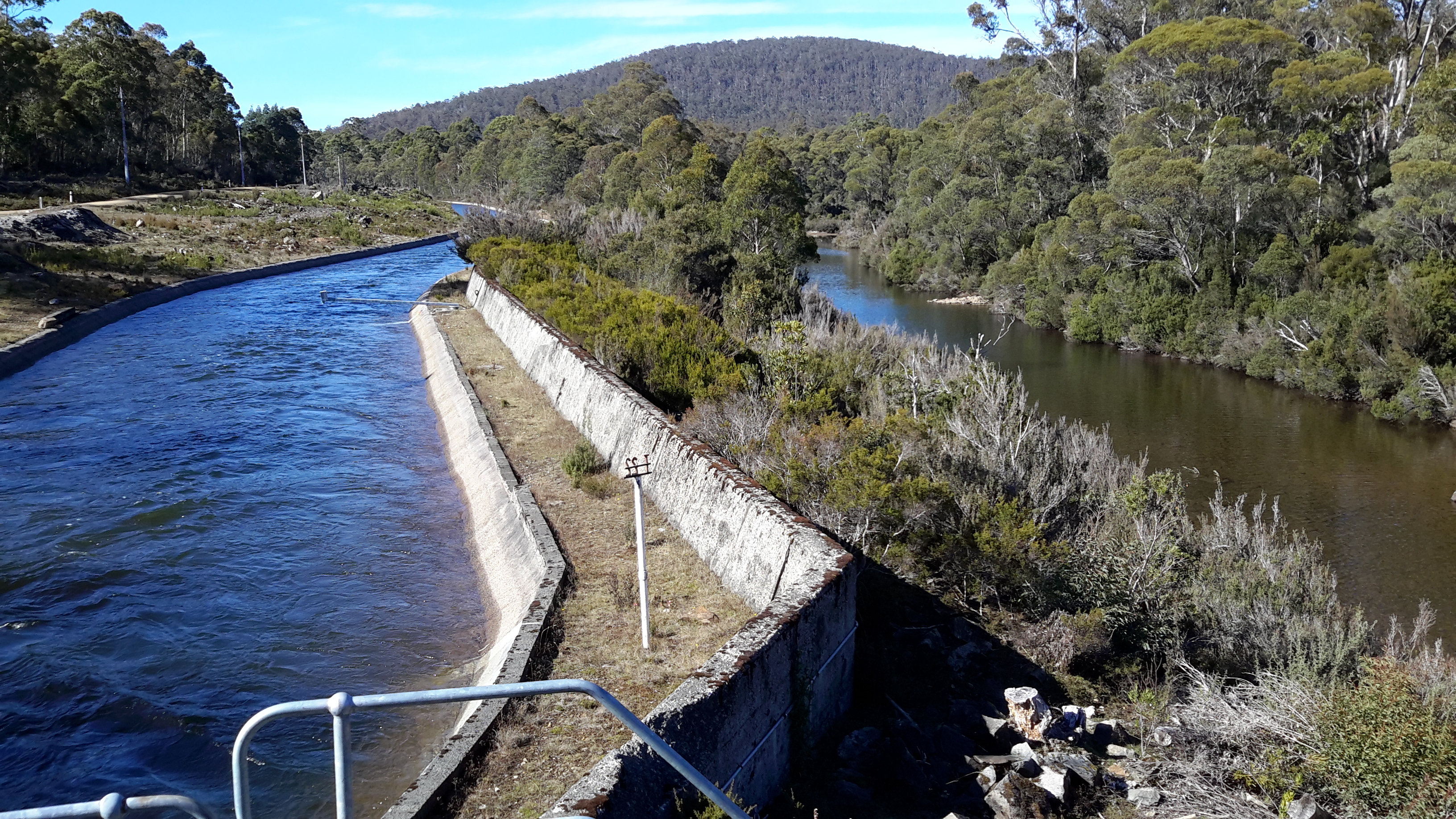
Did you notice how thin the water race walls were?  If you imagine the pressure of the water in the race you might believe the walls should be thicker. Certainly, when compared to those of Tarraleah Canal No 1 (refer to photos in my earlier postings) these walls are much slimmer, and they do not have cross beams linking both sides together.

Did you notice the ladder over the wall?  On this side and a second on the other side?  This is more than is on offer in Tarraleah Canal No 1.  Of course the ladders would be used as part of maintenance programs when the race is empty, and only a fool would step over the edge while the race is full of water. Since the power generation could be restarted at any moment, the speed of the water flow would almost immediately turn anything in that water into an electrical spark.

When looking at the Dam wall, Andrew saw specks of movement; these were the only people encountered in the whole day – three workers doing some work on the curving face of dam’s spillway. Can you spot them in the photograph?  They are working on the yellow curved frame which has been custom built to move from left to right across the curve of the dam wall.

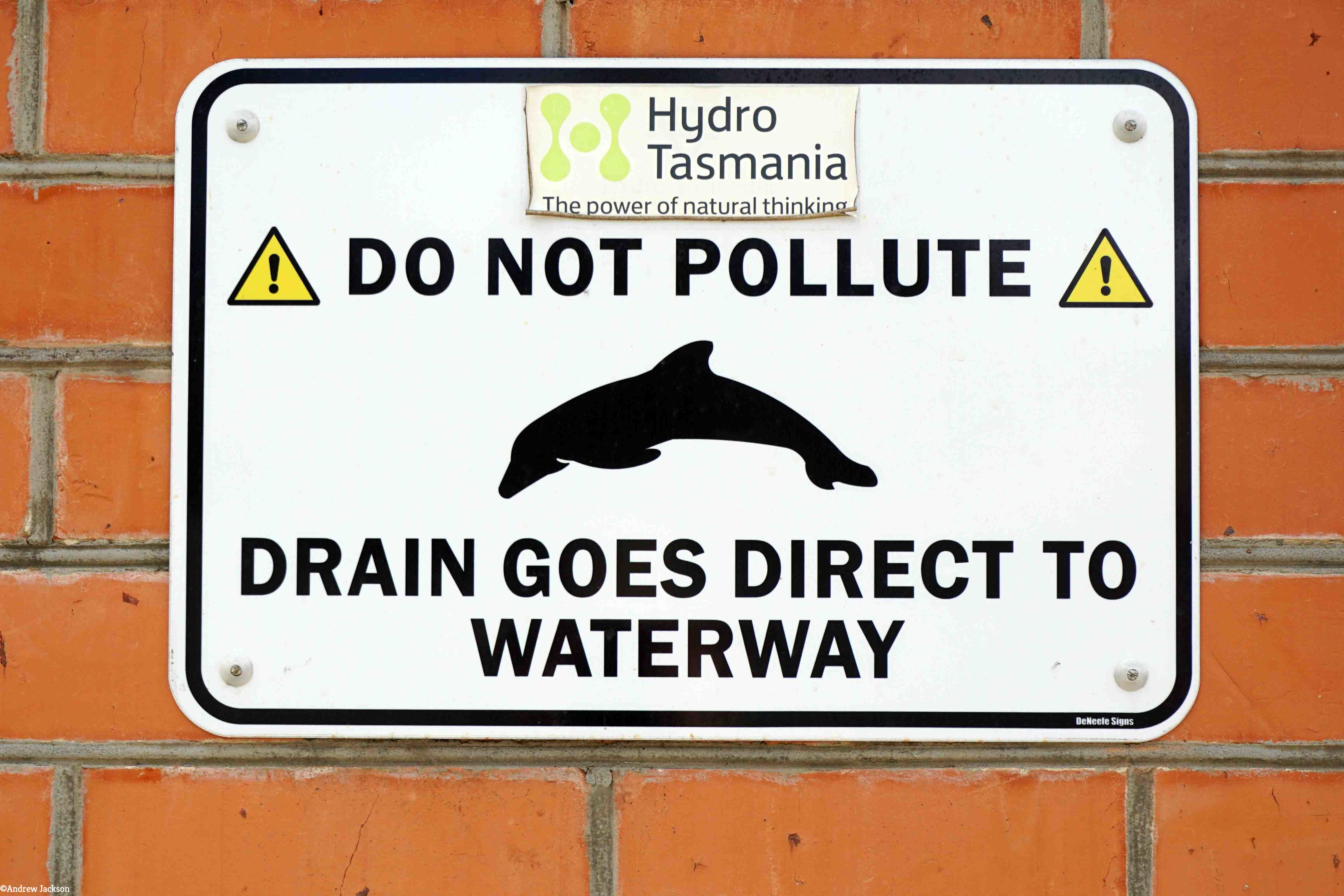
Andrew remarked, “I could hear their voices echoing off the concrete walls, but they were far too distant for them to see me”. There was no-one at the Power Station itself – so Andrew passed by with no-one the wiser that the visit had occurred.   One sign attracted his attention.

DSC01740e.jpg

It was quite extraordinary to see a sign with an image of a dolphin so far inland. Hydro Tasmania must be congratulated for alerting others to the damage which can be done to marine life should people pollute Lake Catagunya/the Derwent River.   Apart from the damage to sea life 60% of Hobart’s drinking water comes from the Derwent River so the protection of these waterways is of paramount importance.

Between Wayatinah and Catagunya Power Stations- posting 4 of 6

Eventually Andrew reached cleared paddocks at the point where the transmission line swung to the south east.  The going then was much easier through low scrub in a shallower gully and then up onto the summit of Bushman’s Hill, some three hours after the start of the day’s walk.  From this hill Mt Wellington above Hobart was visible in the distance, and Andrew’s mobile phone pinged. He had come back into mobile phone coverage range. The one occasional bar of reception was enough for a text message but not sufficient for a phone call. Bushman’s Hill offered a very comfortable spot with the occasional shade tree and logs to rest on.

DSC01689e.jpg

After a quick lunch around 1 pm, Andrew followed the power line easement hoping to get to  Lake Catagunya’s edge. Unfortunately, the terrain became impressively steep and scrubby with a coverage of thick ferns towards the bottom so that idea was abandoned.

Before crossing Lake Catagunya’s inlet, as Andrew skirted around looking for a cross over point, Dunns Hill stood prominently. This hill, pictured below, had to be traversed to reach Catagunya Dam and Catagunya Power Station. But first the water had to be crossed or walked around.

DSC01692e.jpg

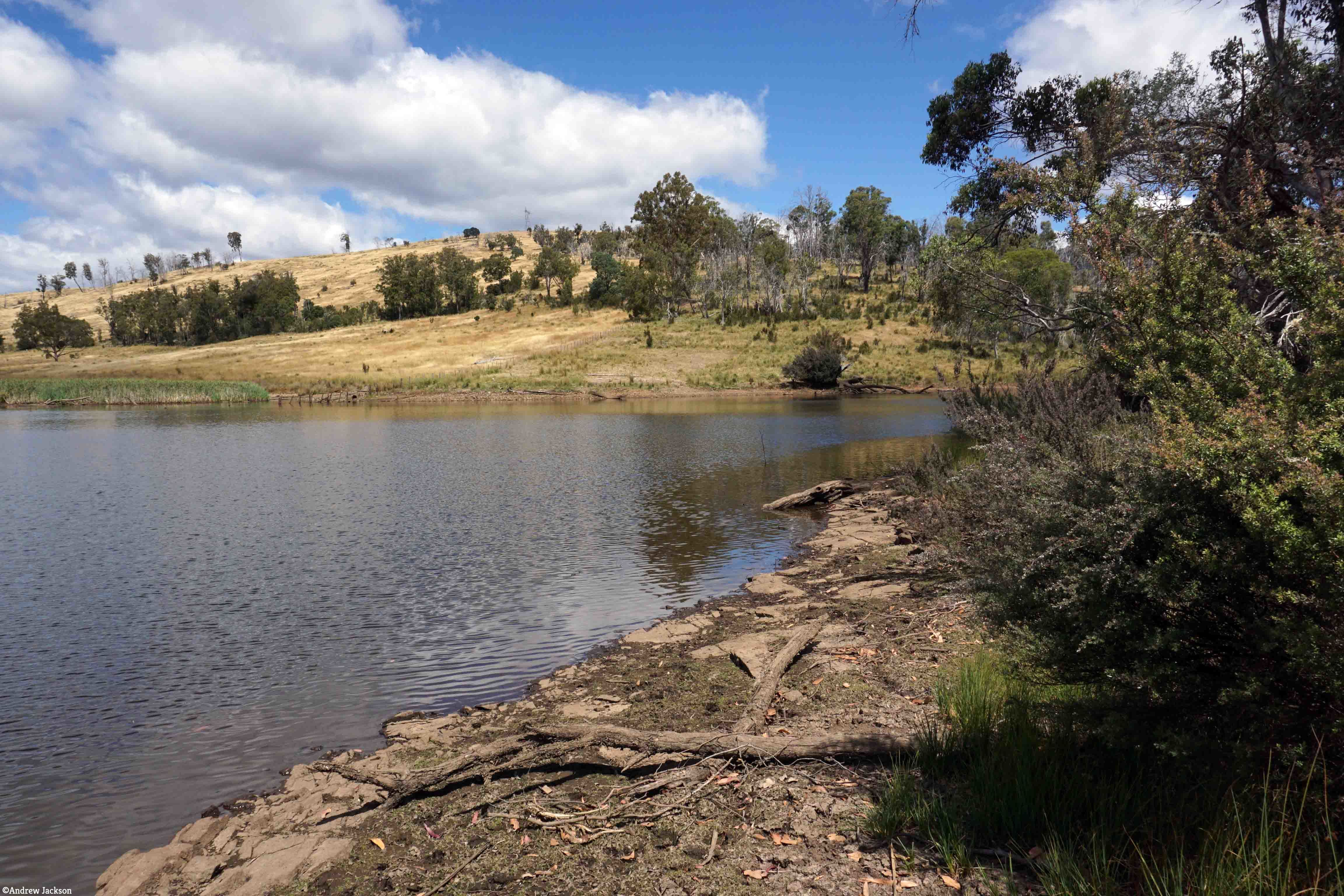
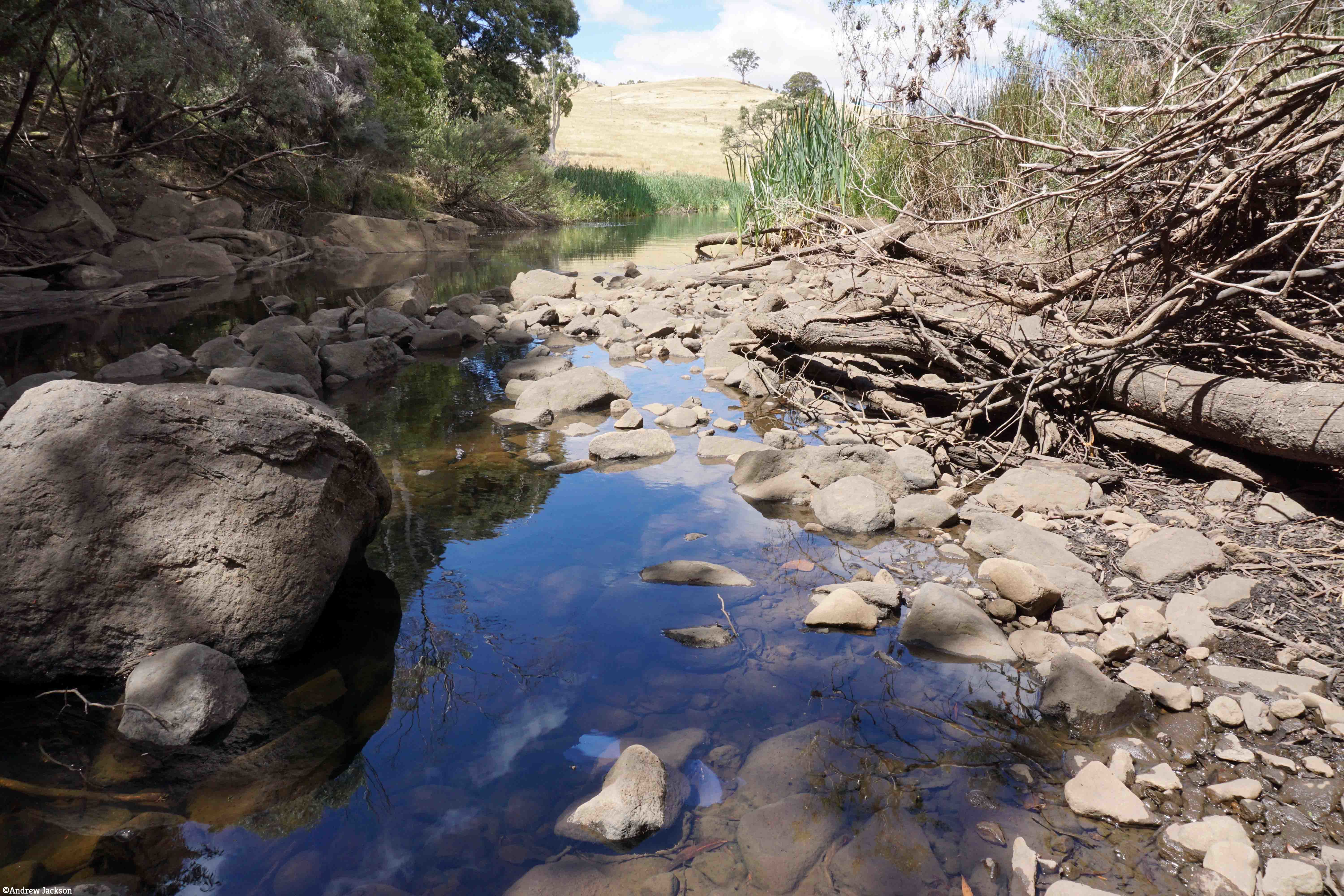
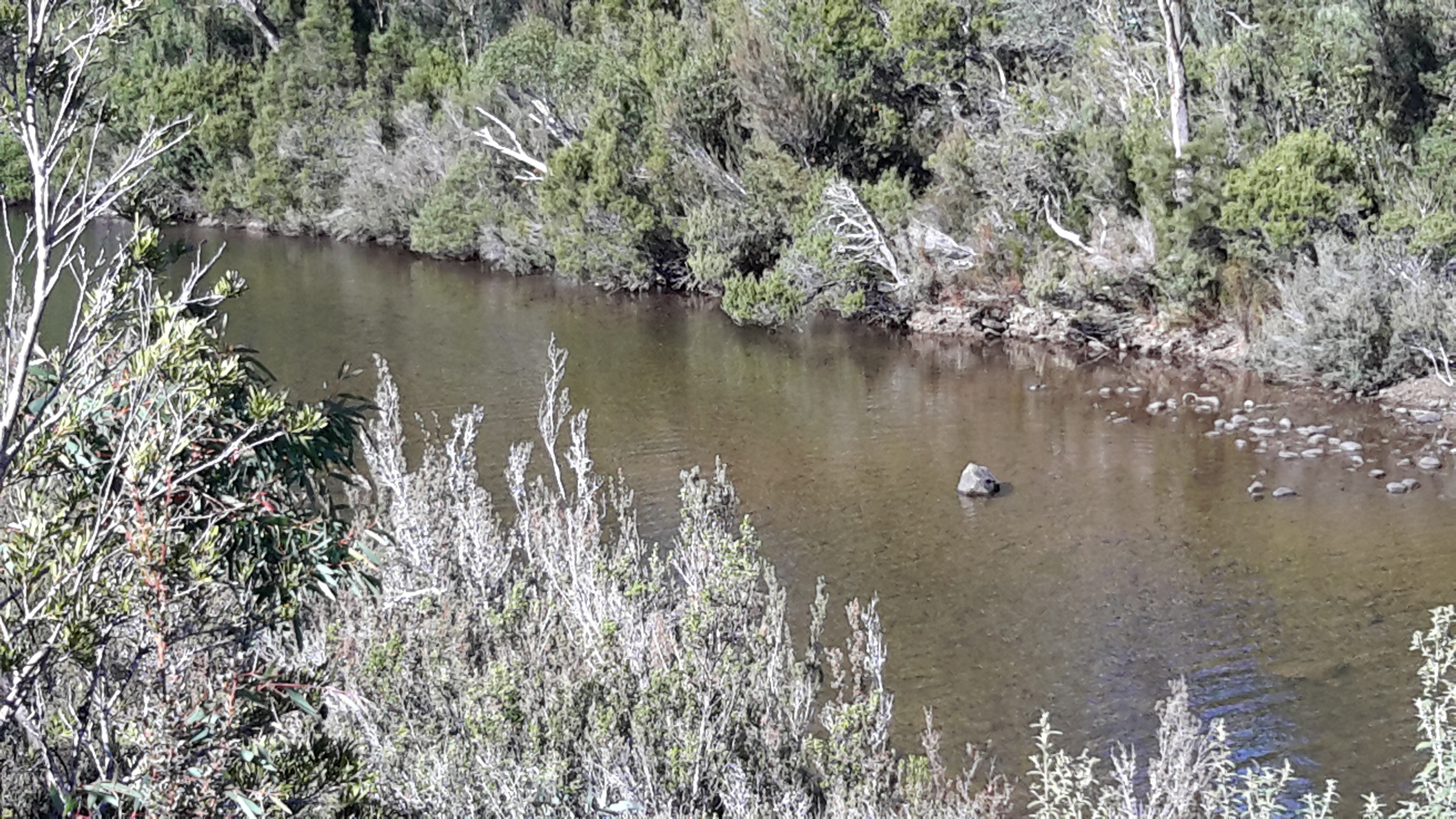
The challenge was to find a way of by-passing the large inlet of water where Black Bobs Rivulet enters Catagunya Lake. By heading 1 km north, north east, then east through open forest and then progressively steeper country Andrew reached a point where the rivulet hit the Lake. Right at the junction the exposed rock made for an easy rock-hop to the other side (in flood this part would be impassable as it is obvious that it carries a lot of water after heavy rain). He was so glad to see the low water level at that point. otherwise it would have meant wet feet or more kilometres of walking to skirt around this obstacle.

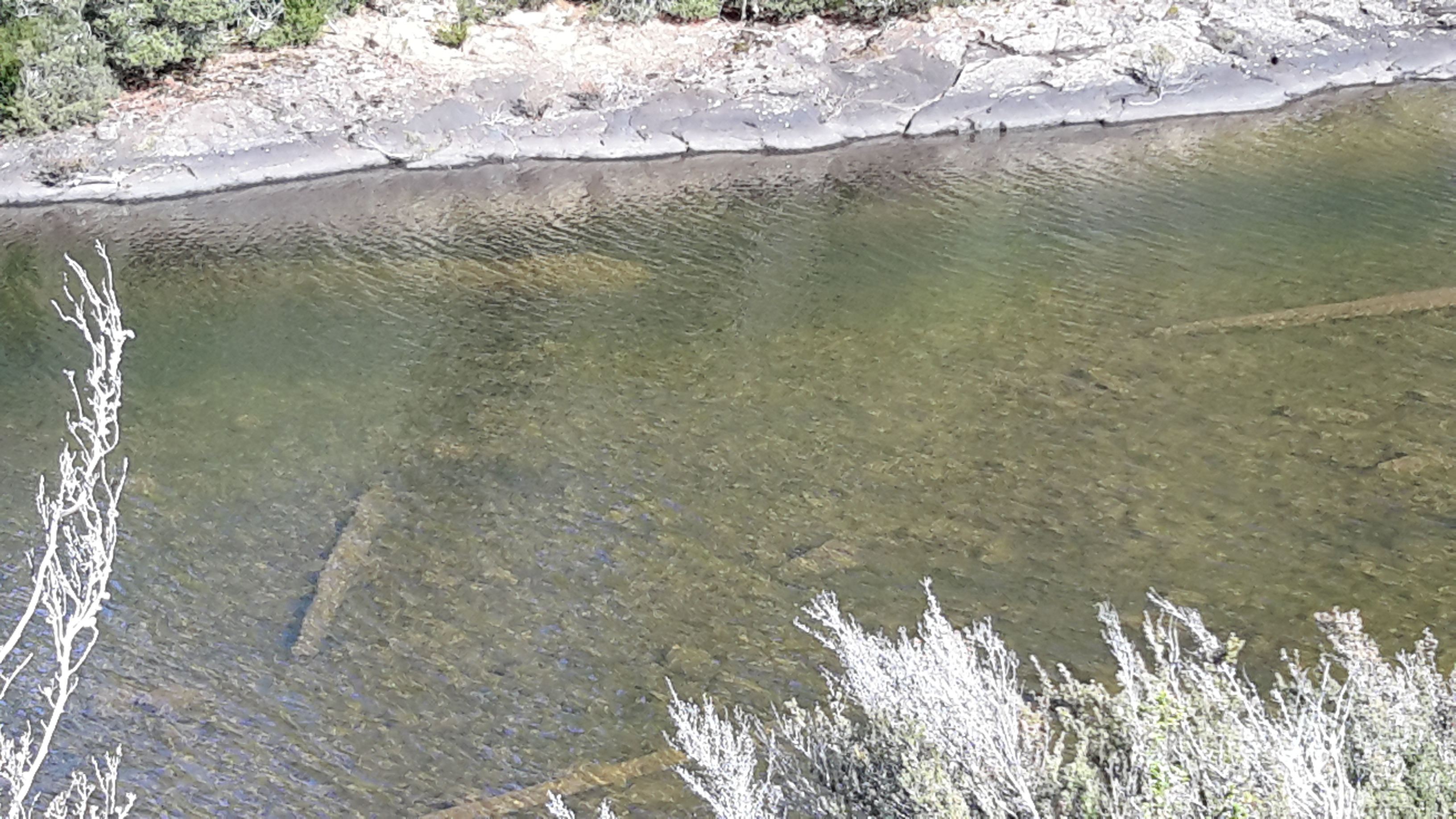
The first photo below of Black Bob’s Rivulet looks upstream and the second looks downstream to where it enters the lake.

DSC01693e.jpg

DSC01695e.jpg

The open hill in the distance on the second photo is located north of Catagunya Dam and on the other/eastern side of Catagunya Road – this is not Dunns Hill.  Once over Black Bob’s Rivulet, the direction taken was south towards Dunns Hill. After a short scrub-bash, the route emerged into the open paddocks of the cattle country surrounding Catagunya Power Station. Andrew then climbed 1 km steeply up Dunns Hill to rejoin the power lines.  The reward for reaching the top of Dunns Hill was a fine view down into the Lake and westwards to Wylds Craig.

DSC01702e.jpg

Looking westwards the continuing power lines disappear into the distance. The undulating nature of the landscape is also on show.

DSC01698e.jpg

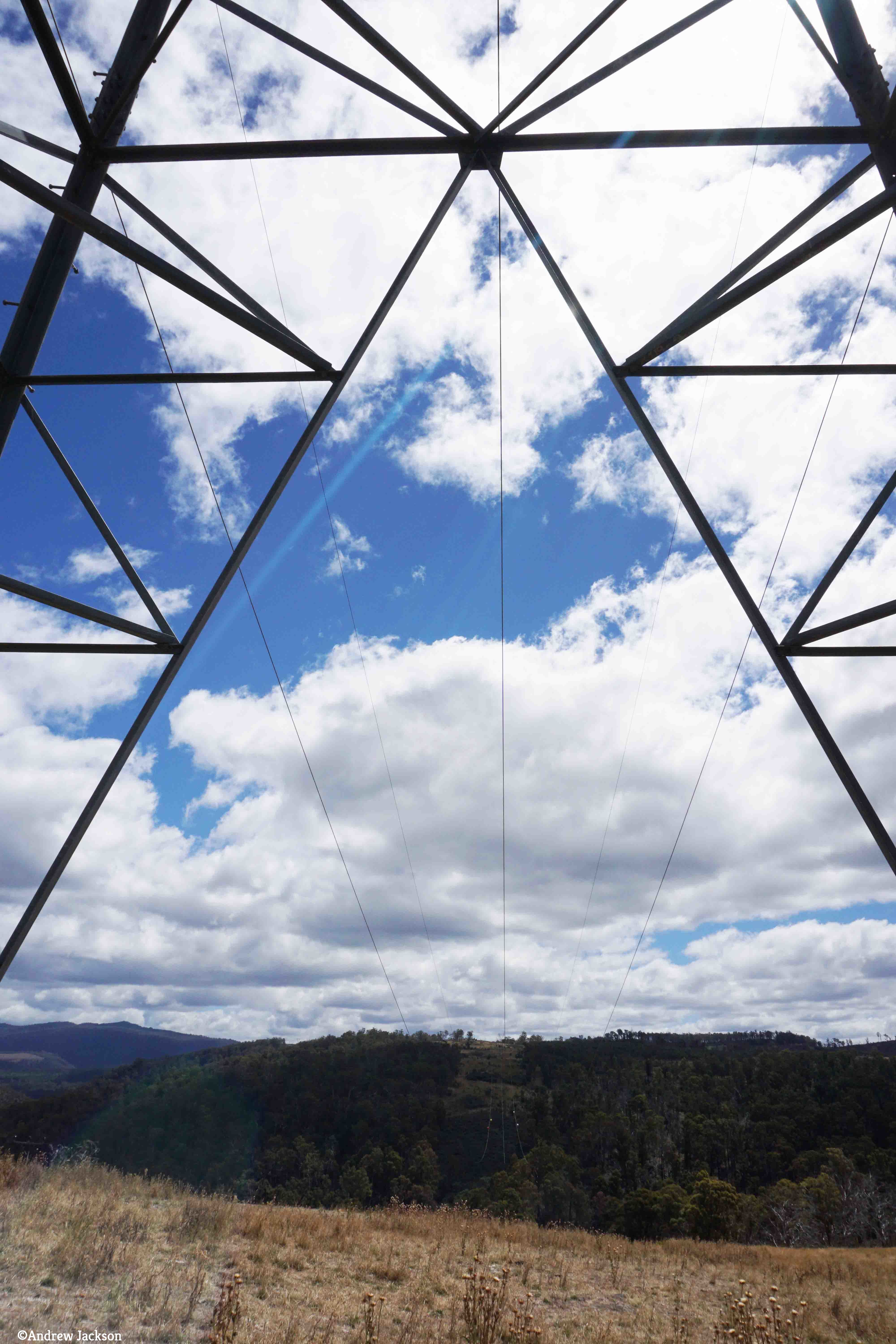
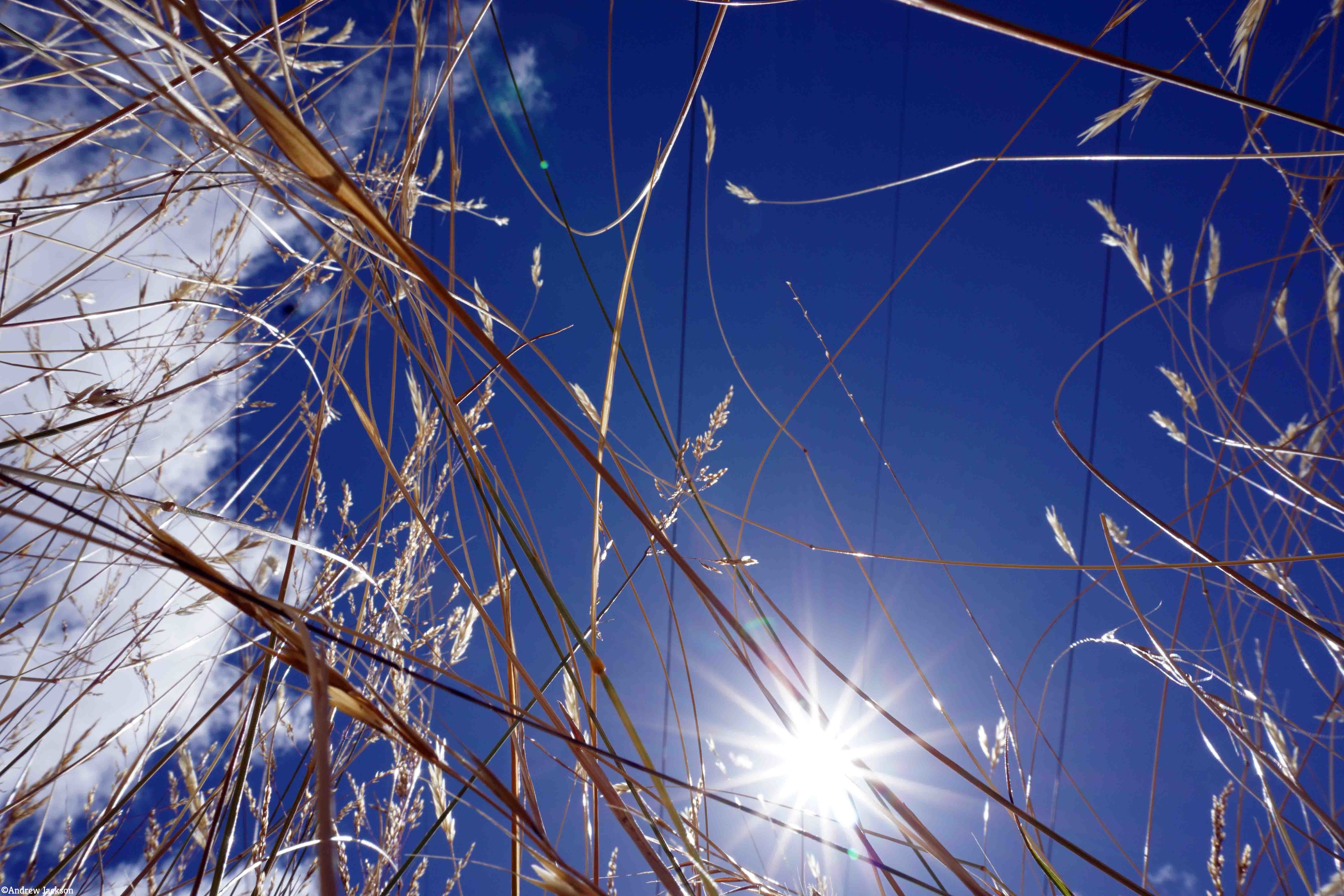
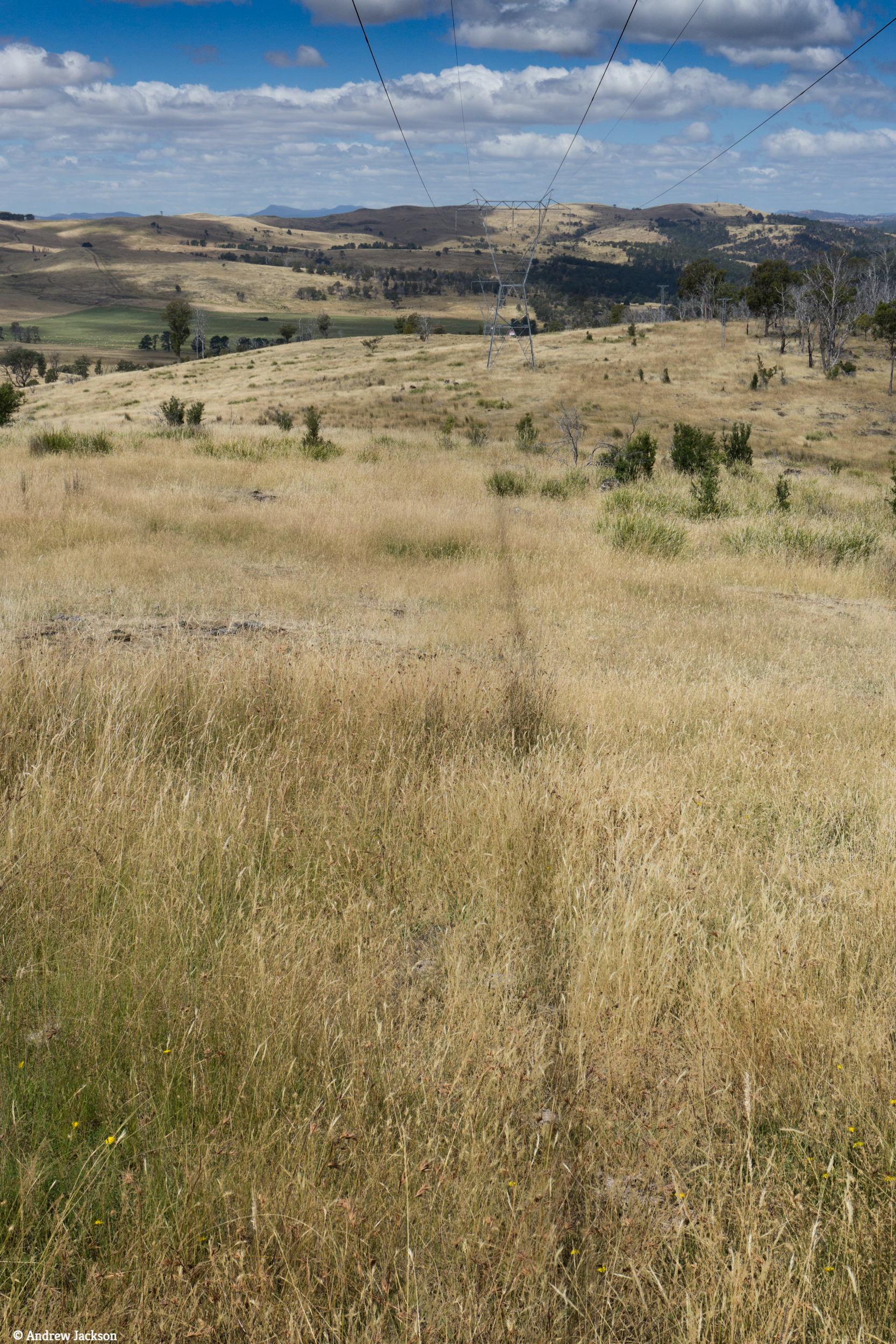
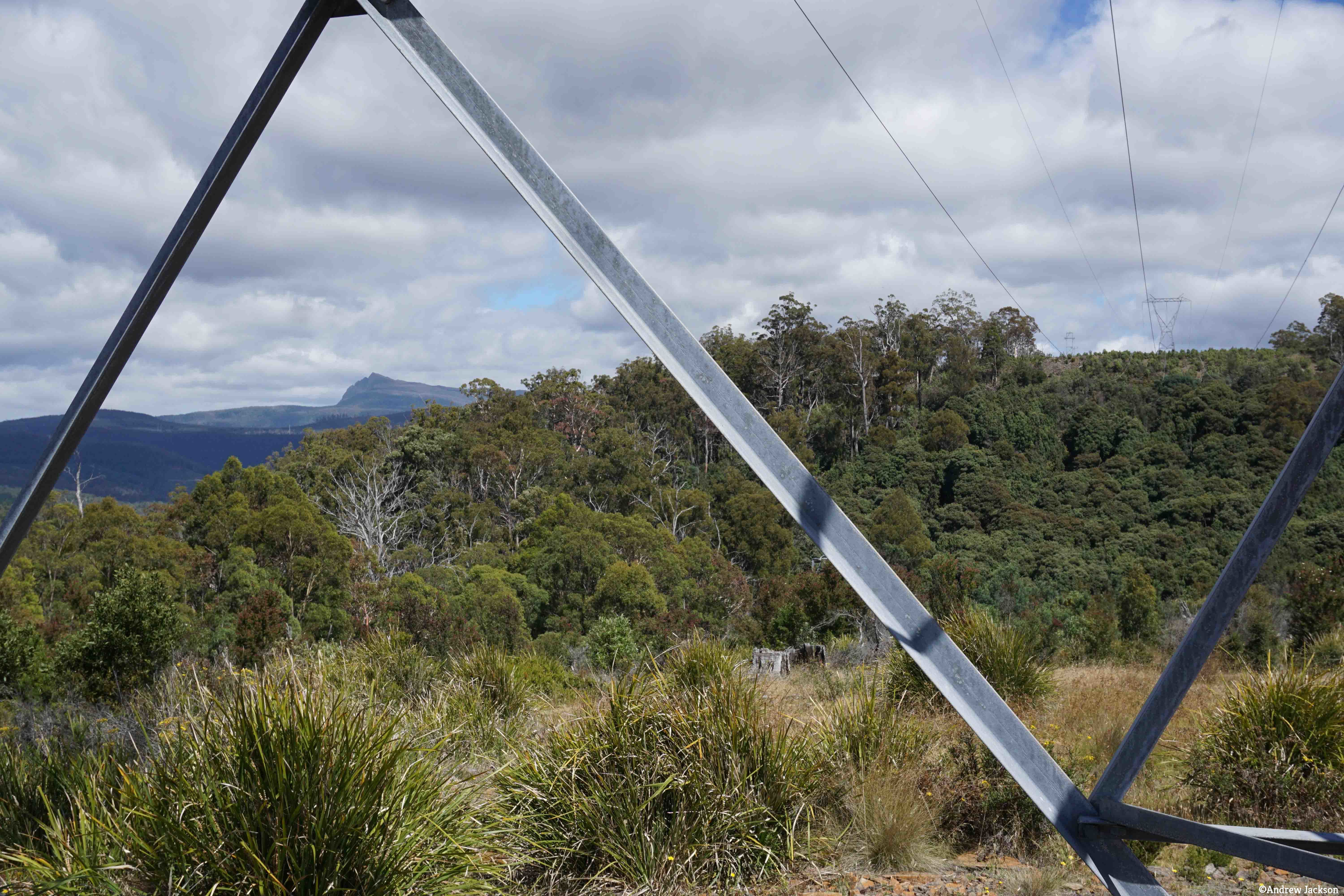
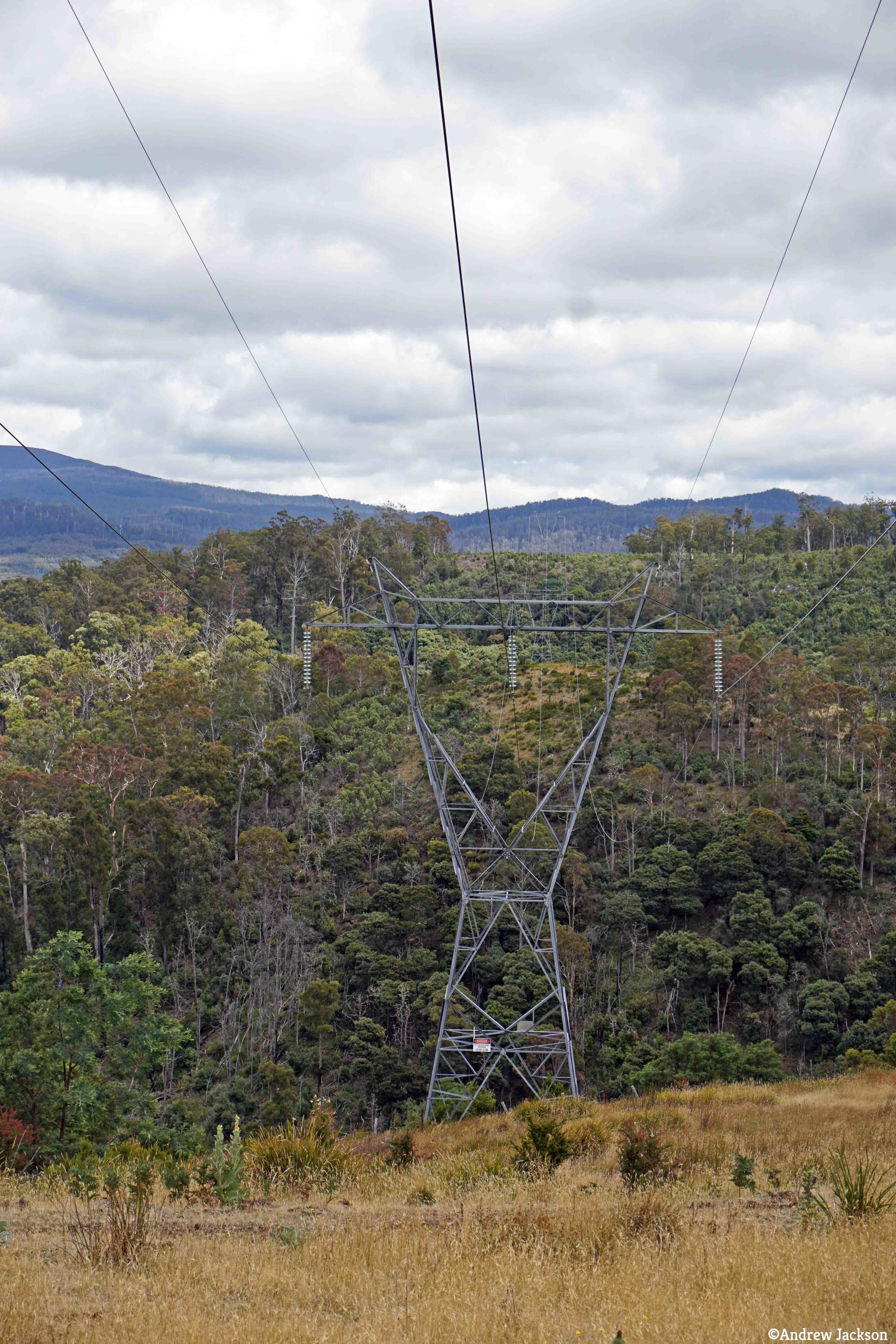
The glorious openness of Dunns Hill with its vistas on a sunny day, provided the stimulus for creative photography showcasing the patterns offered by the electricity transmission pylons and the grass.  DSC01711e.jpg

DSC01721e.jpg

DSC01724e.jpg

The final kilometre to the power station was through open grasslands, buzzing with grasshoppers and butterflies.  It was like creating a bow wave; with each step the masses of insects were spread ahead.  My walk from Lake Repulse Dam to Catagunya Dam was in similar country and the postings  3 and 4 of 13 talk about my experiences with grasshoppers and butterflies.

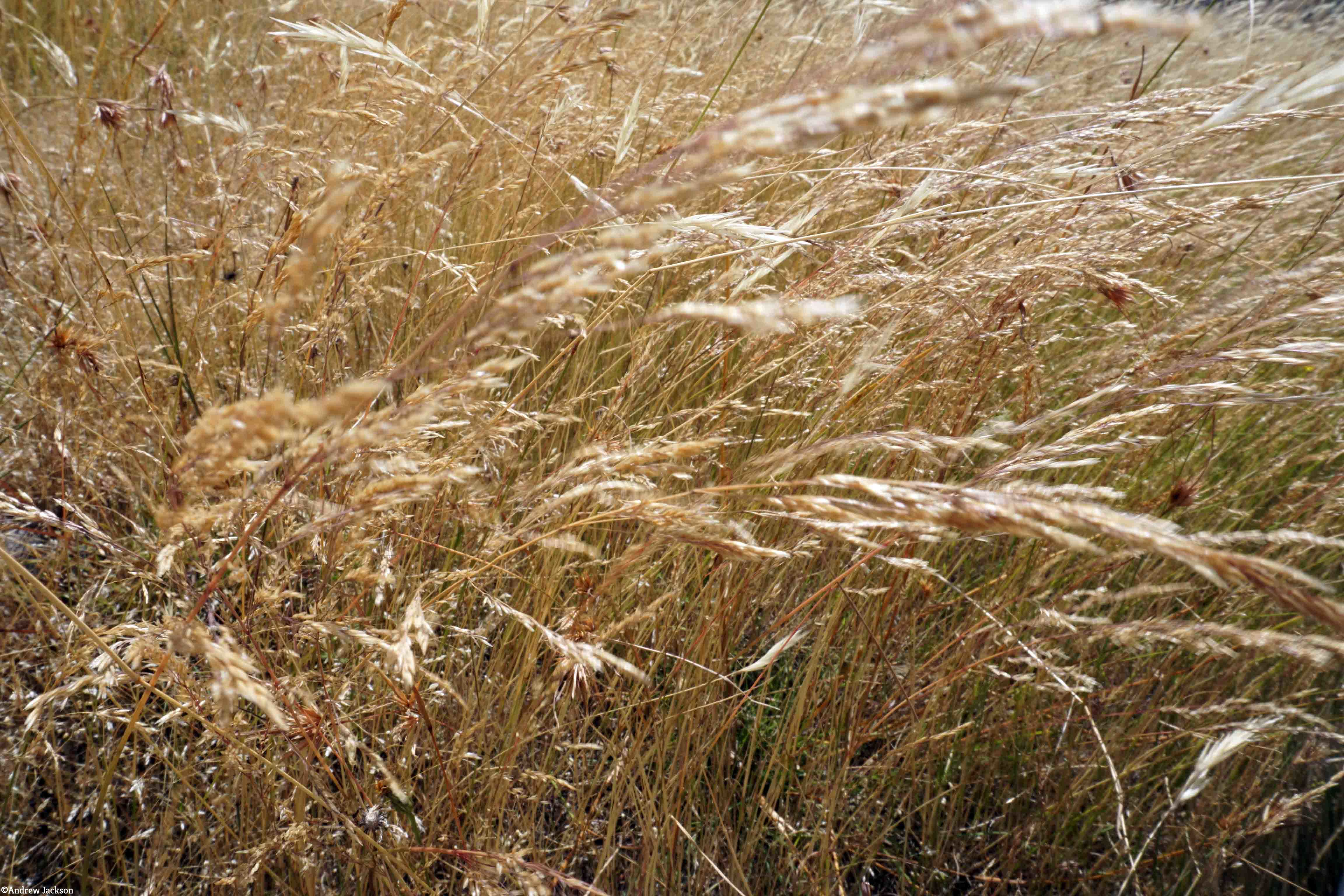
I am very keen on grass with its colours and textures. Long term blog readers have seen many photos of grasses taken in many locations during my walk along the Derwent.  Andrew’s photo below shows Dunns Hill grass moved by the breeze.

DSC01712e.jpg

Navigation during this walk was never in doubt – the prominent shadow on the grass from the transmission cables overhead marked the route to the power station!  See the shadow line in the photo below.  Of course if the inland forest plantation/logging roads had been followed (which might be necessary in wet weather and when Black Bob’s Rivulet was flooding), then using GPS equipment would have been essential to keep track of your location. power-line-shadowv2-1

The day was glorious and the following panoramic photo captures some of that magic.

DSC01708e.jpg

Between Wayatinah and Catagunya Power Stations- posting 3 of 6


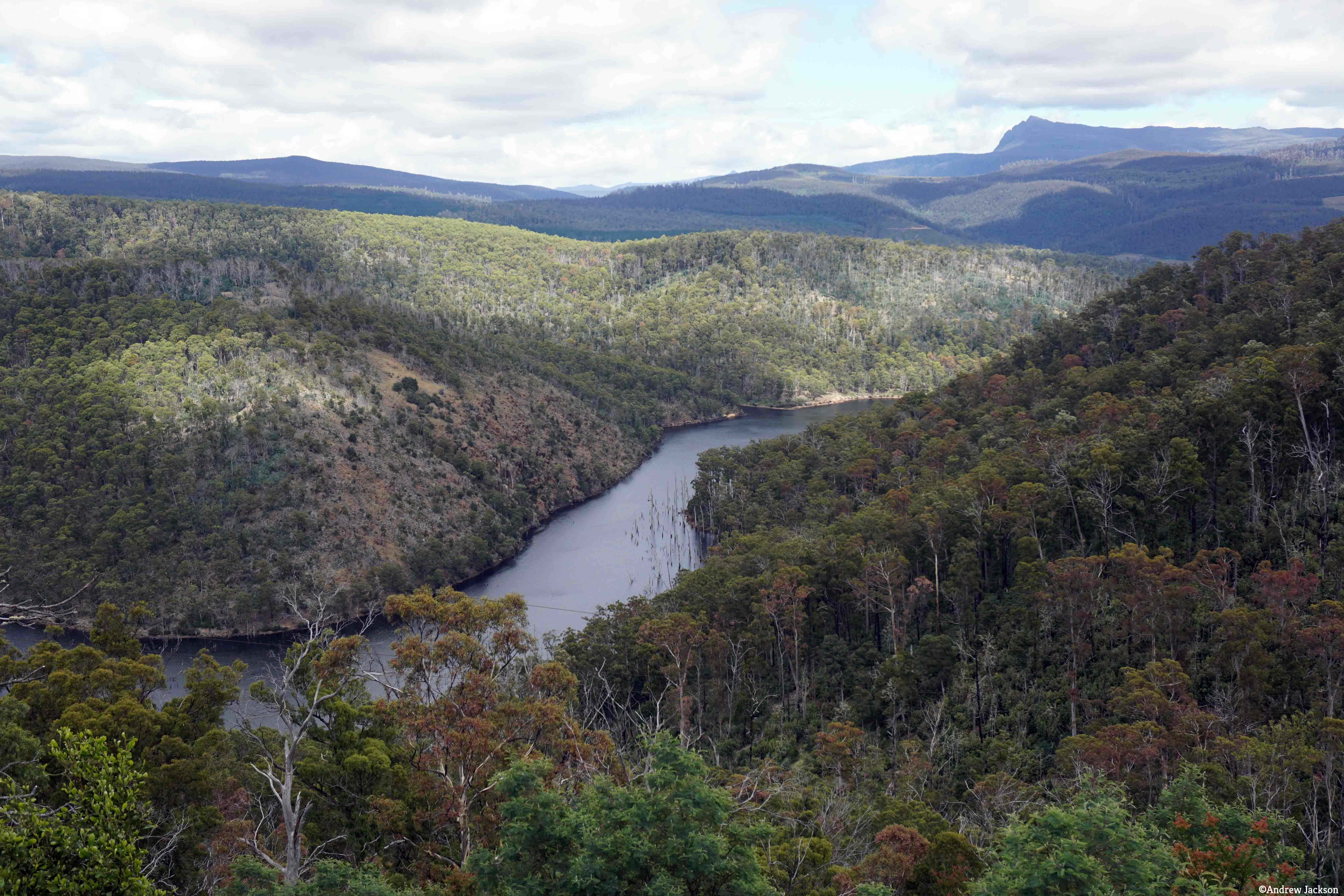
After crossing the first creek,  a steady climb brought Andrew to the first of the huge transmission towers.  To the west, the dramatic dolerite outcrop known as Wylds Craig with a cloud capping its head, stood on the horizon.  Way below, sections of the slender, curved Lake Catagunya were apparent.

DSC01675e.jpg

Between this point and the next pylon interposed a very deep gully which, on the other side, rose steeply through thick scrub. Towards the top on the other side, parts looked very intimidating and gave the impression it might have required a steep and scrubby scramble. As an alternative, a vehicle track was found here – presumably the access route for transmission tower maintenance and for the occasional vegetation slashing. This looked like an easier route than the scrub-choked gully so Andrew followed the track away from the transmission line – it went for a considerable distance ‘inland’, rising continuously and passing through another locked gate, until it hit a high point in forestry plantations before dropping back to the transmission line easement. It was not clear if taking the long distance of the road was easier than the shorter but steeper climb up the gully – either way, Andrew elected to stick to the transmission line for the rest of the walk.

A discernible hum could be heard while walking beneath the power lines; was it wind in the wires, vibration or something electrical?

DSC01680e.jpg

DSC01688e.jpg

The next gully was equally scrubby, but the thickest part could be passed a short distance to one side, on the edge of the forestry plantation in which recently planted seedlings grew. The subsequent deep gully was passed easily by contouring a little to the north in lovely open forest with occasional views to Lake Catagunya lying far below steep and forested slopes.

DSC01686e.jpg

DSC01687e.jpg


Between Wayatinah and Catagunya Power Stations- posting 2 of 6

Throughout the walk between the Wayatinah and Catagunya Power Stations, a number of creeks cut across the power line easement creating deep gullies with their own special environments of thick forests. In some spots these make progress slow.

Only the first creek had running and potable water. The other creek beds were dry and even if water had flowed, the extensive plantation forests or agricultural lands where chemicals are used, sit upstream so it would have been inadvisable to drink the water.

Long term readers know how on my walks I have been able to see the Derwent River (and its lakes and dams)  but in almost all cases I could not reach it to refill my water bottles.  The escarpments, rocks, steepness and dense vegetation to the water’s edge prevented access.  With that constraint plus finding dry creek beds, managing my water supply was always a challenge.  Water, water everywhere/over there but not a drop to drink!  Despite the weight of water, I strongly advise anyone walking inland in Tasmania in summer to carry plenty of water.


Between Wayatinah and Catagunya Power Stations- posting 1 of 6

Anticipating a comparatively easy and short day of walking, my proxy Andrew left Hobart at 7 am and drove westwards and inland along the Lyell Highway, until reaching Catagunya Road where he parked his vehicle at the locked gate.

20151029_145020.jpg

A friend drove him further along the highway, turned left just before the Liapootah Power Station and proceeded along the gravel surface of Long Spur Road towards the Wayatinah Power Station.

He arrived at the western side of the Station but needed to be on the eastern side to start this sector of the walk. Because it was not possible to cross over the Power Station outlet, and access through the Power Station is not permitted, Hydro tracks were followed to the most accessible part further away from the Lake Catagunya/Derwent River. Private vehicle access to the penstocks and beyond was prevented by a locked gate on the approach to the top of the penstocks, so the walk started there around 10 am. While it would have been possible to scramble beneath the penstocks, a detour to where the penstock began high up on the hill seemed like a good idea.

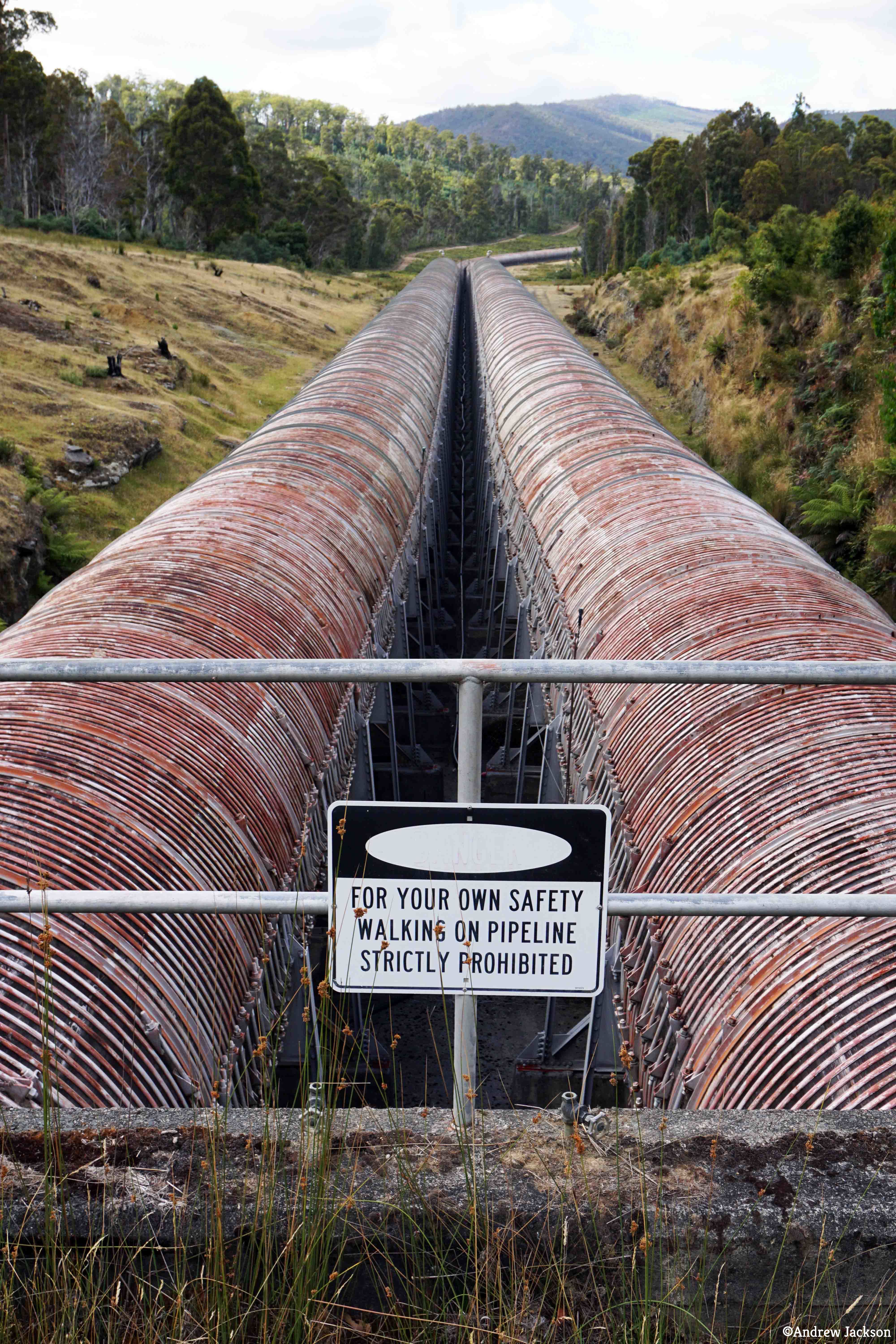
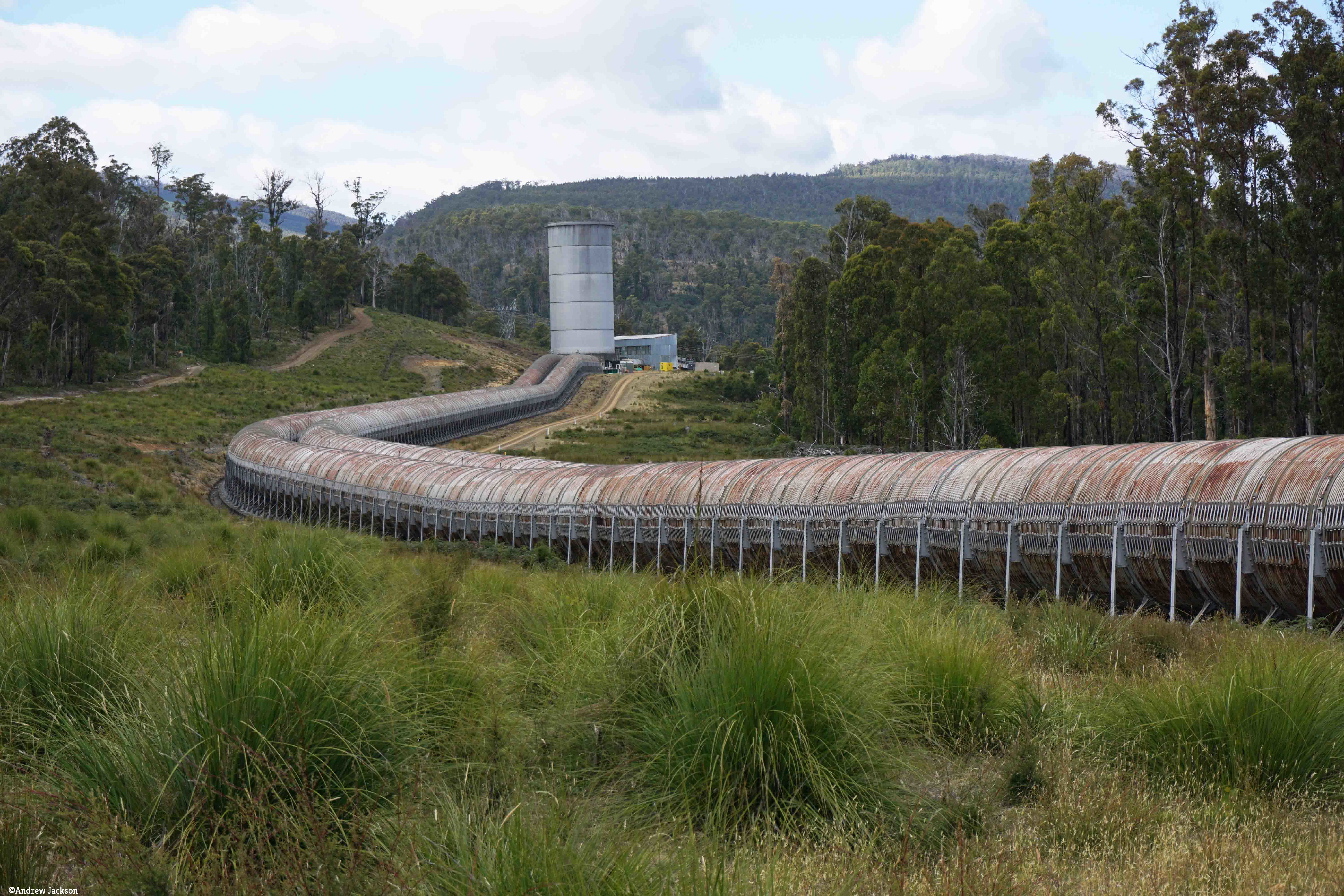
Wayatinah’s penstocks consist of two massive parallel pipes that carry water from the tunnel bored through from Wayatinah Lagoon. The pipes are approximately 1.2 km long and are made entirely of timber – coopered like gigantic continuous barrels. To keep it all together they are tightly bound with steel straps which keep the joints snug, save for the occasional trivial leak. Interestingly, inserted into the walls of the pipes every 50 metres of so, is a fire hose outlet (obviously the timber pipelines are not only protected from the inside!).  DSC01655e.jpg

DSC01657e.jpg

DSC01658e.jpg

The walk began by heading around the top of the penstocks where they emerge from the tunnel.

DSC01651e.jpg

There is an impressive view down the length of the penstocks to where they disappear around a distant bend for the final approach to the Wayatinah Power Station.

DSC01663e.jpg

On the far side of the penstocks a good track leads down to the huge surge tank near the entrance to the power station. The glorious panoramic photo below distorts the view so I have also included a Google Earth aerial shot so you can understand the situation.

DSC01666e.jpg

Google Earth view of WPS and surge tank.JPG

Past the surge tank but before the Power Station, a power line easement heads east, then south east, over a series of ridges and gullies to Catagunya Power Station. The forest next to the track leading to the easement was open with healthy eucalypts, dogwoods and some wattle trees sprinkled across the landscape. The day’s walk was a combination of traversing hills and gullies, and the next photo gives an appreciation of one of the more gentle hills.

DSC01670e.jpg

Because of the steep and scrubby terrain, it was not viable to access or follow against the edge of Catagunya Lake (Derwent River) at water level. Instead, following the power line ‘clearing’ was the smart alternative.

Once serious walking along the transmission line ‘clearing’ began, it was obvious that sections had not been slashed in a long while. The going was irregular with patches of scrubby low level vegetation and fallen logs to negotiate so that, occasionally, Andrew walked off to one side for a clearer route. The next photo shows an example of a less straightforward area along the easement under the power lines, and helps to explain why deviating from this line made sense during the walk.

DSC01678e.jpg

Did you know not all penstocks are constructed using steel?

This post provides a background on an extraordinary feature of the walk between Wayatinah and Catagunya Power Stations along the Derwent River.   It is about one of the great surprises of this  ‘walking the Derwent’ project and, as such, reminds me that even the most ordinary of explorations can unearth new discoveries (for those not familiar with an industry – in this case, the industry involved with penstocks).

Okay okay okay I know some readers will have rolled their eyes wondering what a penstock is.  A penstock is a very large pipe that is laid downhill through which water falls at high speed to an electricity generating power station.  Refer to photos in some of my earlier posts such as: Derwent River water passes via the township of Tarraleah .

My typical experience of penstocks, as conduits for water gushing into electricity generating power stations, is of massive steel structures.  I suspect this would be the expectation for others who have seen Tasmania’s penstocks only from the vantage point of our highways.  For people like me, the wooden penstocks feeding Wayatinah Power Station are astounding and therefore I thought it would be of value to undertake some research and learn more. Andrew’s photo below shows the wooden penstocks emerging from an underground tunnel and sloping down towards the Wayatinah Power Station.

dsc01651e

The questions which come to mind include, are there any other wooden penstocks in Tasmania, what wood is used, when were they built, why weren’t they built with metal, who built them, how effective are they, and what is their life span. In my research a constant term was ‘stave’. A stave is a narrow length of wood with a slightly bevelled edge to form the sides of barrels, tanks and pipelines, originally handmade by coopers.

After a little research I now know that wooden penstocks are not unique to Tasmania and have been built in a number of countries including Britain, Canada and the USA. For example, wooden penstocks were built for hydroelectric facilities in Lincoln County, Wisconsin, USA as shown in this article.  This web site contains a great deal of construction and other information which I imagine is similar to that for Tasmanian wooden pipelines, and therefore worth reading. The photo below, from that website, shows redwood penstocks at the Thomson Hydroelectric Station in eastern Minnesota, Wisconsin.

  redwoodpenstock in USA.jpg

The website answered some of my questions: “Why wood? First and foremost, keep the wood thoroughly wet and it will not rot. If there is an issue, it has to do with the quality of the metal bands. Expansion joints are not required as the wood absorbs the water and expands. Steel restraining bands are used and the wood will expand against those. The metal bands are used only to provide strength. Even when they corrode and lose their strength, the wood will hold together and the bands can be easily replaced. The carrying capacity exceeds that of metal pipe, in large part because the interior walls remain smooth and do not form tubercles. The wood components are easily transported to the sites, which can be remote. No massive hoisting apparatus is needed. They do not require concrete foundations, but “float” on the gravel. The wood is easy to bend, so the contractors can follow a more natural contour; for example, bending around curves. There is no need to cover them. The wood has natural insulation. They can last for 40-50 years. Simple carpentry can be used for repairs. Assembly is easy.

Why do we see so any leaks? Leaks do occur at the end of a stave, at what is called the butt-joint, most often when combined with a breakdown or severing of a steel band at that point. In addition, steel plates are sometimes placed in the slots at each stave end, and these steel plates can corrode. Also, some erosion can occur at the end of a stave, and develop into a hole. In this instance, the steel band in that area might corrode and sever, and the pressure of the water inside might break off a section of the stave, however small. Metal corrosion also sets up a mild acidic condition. The acid can degrade the wood. There can be a breakdown in the staves when the water pressure inside varies a lot. You will seldom see wooden penstocks for example in positions where turbines can vary the water pressure output in large degrees. This creates what is known as the hammer effect which can beat up a wooden penstock quickly. It’s best to try to keep the inside water pressure as even as possible. This said, small leaks can self-repair as the wood expands. Even large breakdowns in the staves can be repaired. In most instances, the leaks are tracked closely and there is very little risk of a catastrophic failure. “

The hole in a penstock and the story of its repair speedily within one week for the Jackson Hydro Station in New England, USA can be seen here. Another rupture coverage, this time in Quebec, Canada is covered here.  I was surprised when this website included photos of other wooden penstocks around the world including a photo of one of Tasmania’s wooden penstocks.  It looks remarkably like Wayatinah’s penstock, and there are outbuildings in view and some dates as well.  Perhaps a blog reader can make a more accurate identification.

It seems there are only two Tasmanian power stations being supplied by water flowing down wooden penstocks: Lake Margaret Power Station (not on the Derwent River) and Wayatinah Power Station.   Wikipedia  explains the situation in relation to the Lake Margaret Power Station here. For more information refer to the fact sheet for Upper Lake Margaret Power Station, the fact sheet for the Lower Lake Margaret Power Station, and a  note regarding Innovation and heritage feature in Lower Lake Margaret redevelopment. Photos of the pipeline can be seen in Lake Margaret Power Scheme A Conservation Management Plan. I found the photos on pages 11 and 19 particularly helpful with pinpointing the location.

In relation to the wooden penstocks feeding the Wayatinah Power Station,  a You Tube video is worth watching. Page 25 of the booklet ‘The Power of Nature’ includes a photo of the woodstave penstocks at Wayatinah. Other informative photos of dams and power stations and penstocks associated with other parts of the Derwent River are also presented.  Most are glamour shots taken from excellent locations and, after the gritty often basic photos which I have taken, these make the extraordinary engineering feats look even more magnificent and significant. This website offers the following information:  “Wayatinah is the sixth station on the Nive/Derwent cascade and is downstream of Liapootah HPP. Water is supplied from a small storage lake called Wayatinah Lagoon and diverted into a 2 km tunnel to two 1.3 km low-pressure wood stave pipelines. Finally, water drops 56 m through three steel penstocks to the powerhouse.”

Now the scene is set for the story of the walk between Wayatinah and Catagunya Power Stations.

Visualising walks in advance is another form of planning

A recent blog posting provided the ‘story’ of how I imagined a walking stage would progress along one section of the Derwent River.  On paper, such visualisations have acted as a planning tool to remind me of the potential challenges ahead and the work I needed to do to make sure I was able to have a safe walk within a reasonable time frame.  Another ‘big think’ happened in relation to the walk between Wayatinah and Catagunya Power Stations.

In the photo below, water gushing from the Wayatinah Power Station adds to the volume of Lake Catagunya near its western extremity.   20151029_090827.jpg

20151029_090233.jpg

This expanse of water, fed by the Derwent and Florentine Rivers further upstream, extends approximately 7 -8 kilometres as a substantial water storage holding until it reaches the Catagunya Dam wall and then passes through the Catagunya Power Station at the eastern end of the Lake. Earlier walks had taken me to both hydro electricity generating power stations, and during one walk I was privileged to be shown over the remote and isolated Catagunya Power Station complex.
20160210_092533.jpg

20160210_093101.jpg

How to tackle the distance between the two locations?  Should I start my walk from the eastern or western end?  Should I walk on the southern or northern side of the Lake? The terrain to be covered included private property so what permissions needed to be acquired and from whom?

At first, I inspected the last official map printed by the Tasmanian government, the 1993 map titled ‘Strickland 4630’ in combination with perusing the Google Earth map for the same territory. In addition, I used my on-the-ground first-hand knowledge of the terrain and the vegetation at both ends of the stage from having visited in association with other walks, and aerial photos taken early during this Walking the Derwent project.

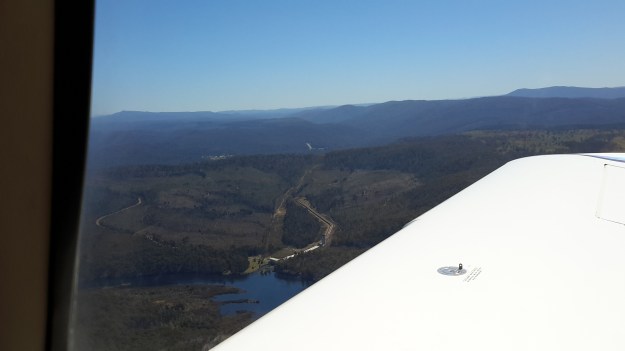
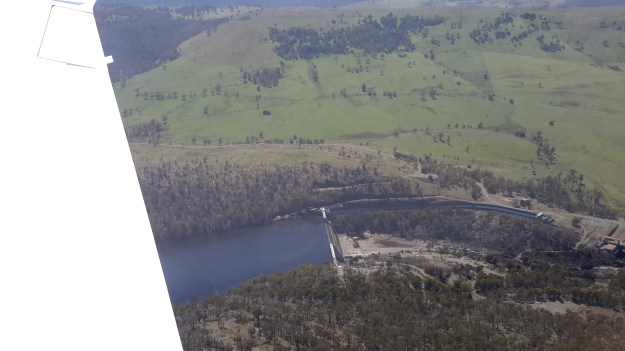
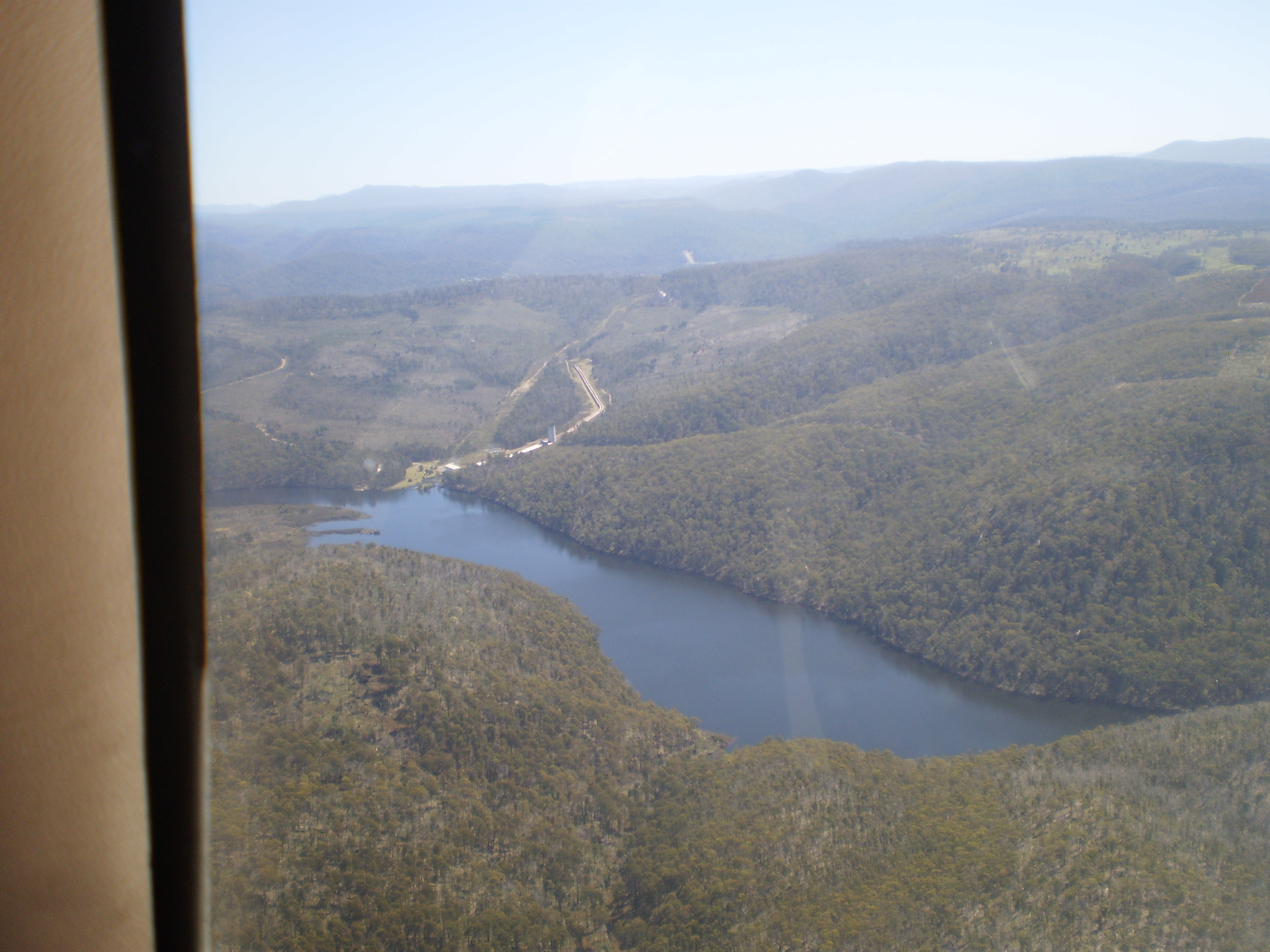
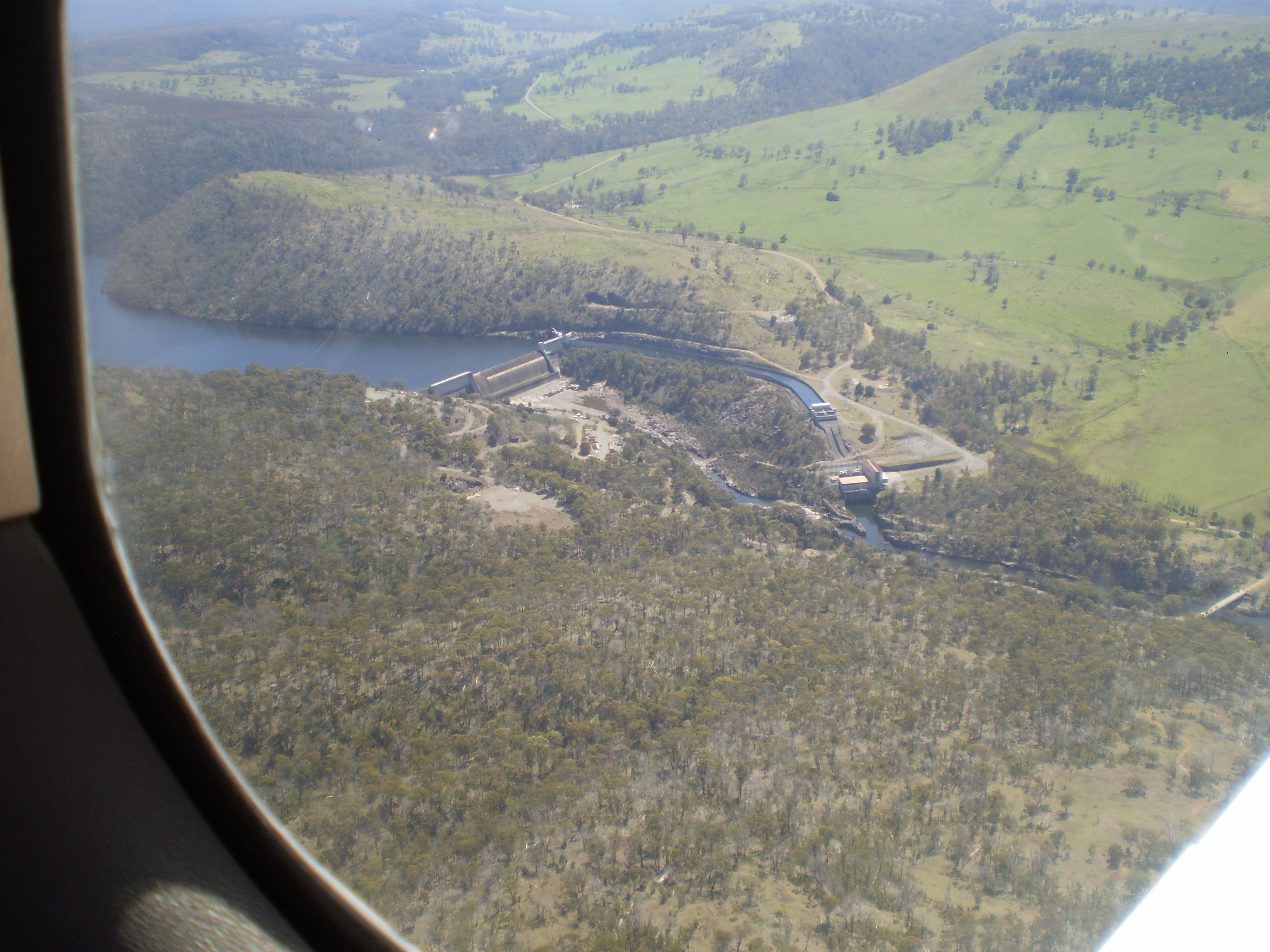
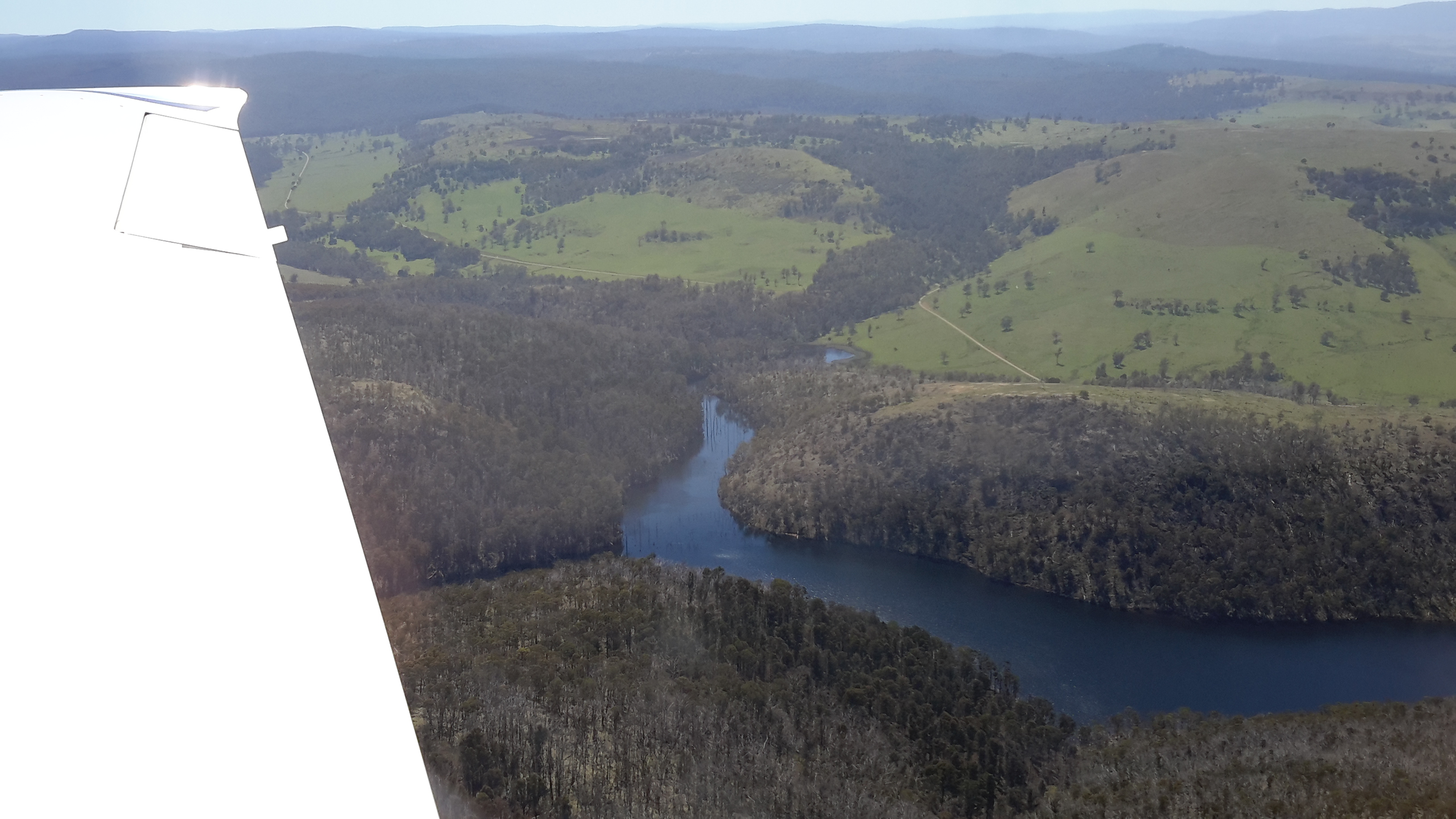
Michelle’s photos show Wayatinah Power Station in the distance near the western end of Lake Catagunya,  a section of the curved shape of the Lake, and Catagunya Dam and Power Station. Each photo clearly shows the incline from water level to the plateau above.

PA280092 Lake Catagunya with Wayatinah PS.JPG

PA280091Lake Catagunya.JPG

PA280090Catagunya Dam.JPG

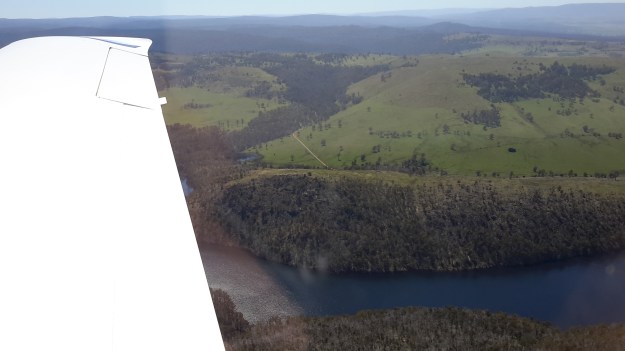
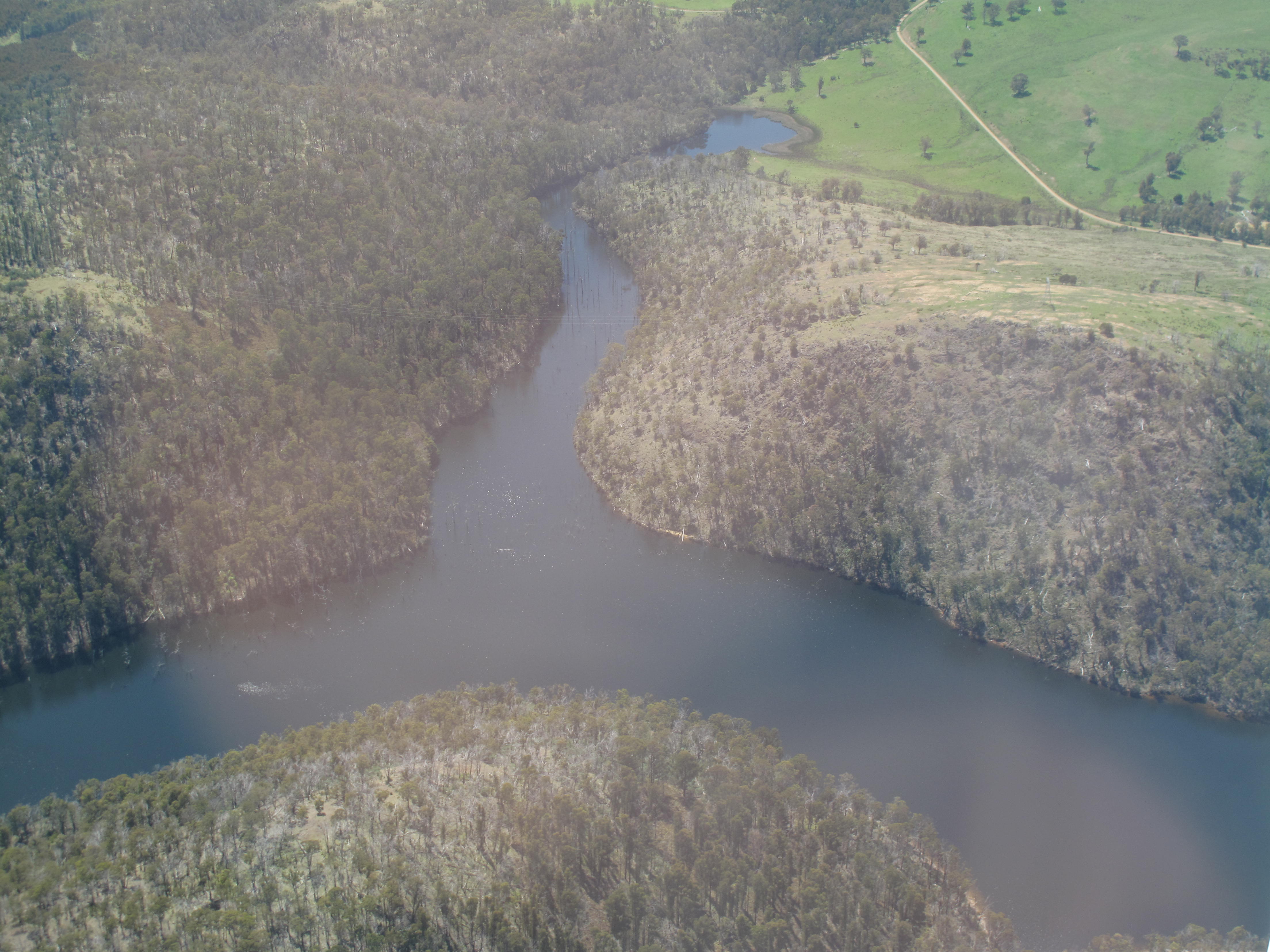
My aerial photos show  Wayatinah Power Station behind an expanse of Lake  Catagunya, the major inlet close to the eastern end of the Lake, and the Catagunya Dam and Power Station complex.  The density of the forests and the hilly terrain are clearly shown.
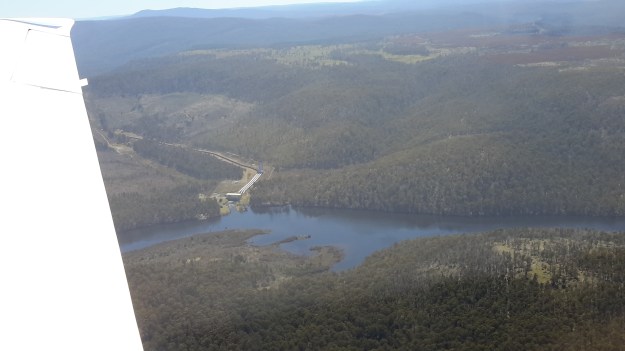
20151028_115220 Wayatinah PS.jpg

20151028_115159Wayatinah power station.jpg

20151028_115127.jpg

20151028_115121.jpg

20151028_115107.jpg

Chantale’s aerial photos show the inlet, fed by Black Bob’s Rivulet, near the eastern end of the Lake.

IMG_3888.JPG

What I had seen on the ground and in the air was not what maps showed. For example at the Catagunya end, massive comparatively new pine plantations had swept across hills where natural bush once grew.  This meant that a mesh of unmapped forestry roads would have been built and that these would make navigation confusing without a compass and/or GPS equipment.

Clearly the edges of the Lake were/are exceptionally steep and if my walks elsewhere in the region were used as a guide, the slopes would be a mixture of dense wet rainforest tangled around partially hidden rocky outcrops.  Both sides of the Lake have sections which rise over 200 metres within half a kilometre.  All indications are that walking at water level would be impossible. If Plan A to walk alongside the Lake wasn’t possible, what should be Plan B?

On the northern side, skyscraper-high electricity transmission structures with their connecting wires have been installed in a straight line from the Wayatinah to Catagunya Power Stations and located roughly at the top of the steep incline from the Lake. I felt this line would be the best option for progress. During construction, an area of less than hundred metres wide was cleared to create a pathway for vehicles to use. Perfect for easy walking?  Reflections on past experiences suggest not.  This is rainforest territory and as a constantly regenerating living organism, I realised that I should expect the forest to have begun to re-establish itself. I recalled walking along the ‘cleared’ transmission lines area through the most challenging vegetation on unseeable uneven ground at the northern end of Lake King William. It was slow, tedious work where a snapped ankle was always a possibility.

Thinking of the Wayatinah to Catagunya leg, I made a note to contact TasNetworks to see whether their clearing program had reached this transmission area, and whether I could hope for a reasonably straightforward walk along this line.  Google maps indicate a vehicular road leaves the Wayatinah Power Station area and continues eastwards for the first half a kilometre of the 7 km line of towers.  It seems to stops short of the first heavily forested gully that cuts deeply through the landscape and which contributes water downhill to Lake Catagunya.  400 metres past that obstacle is a new similar impediment to smooth walking.  A third such impasse waits a further 400 metres eastwards.  In advance of the walk, it was easy to imagine the vegetation would be slippery with dripping water from the plants, the light levels amidst the tightly packed vegetation in the ravine would be low, and the flow of water over the centuries would have exposed rocky outcrops that would make descent and then ascent on the other side of the creek time consuming and treacherous.  Until in the presence of each ravine,  judgements could not be made as to whether to walk inland to skirt around the worst of the cuttings or whether it might be possible to descend and ascend on the other side safely and with my backpack still attached to my back.

Approximately half way through the walk after the three creeks, an undulating plateau with a lower gradient should be a welcome change for a few minutes before the terrain drops down to Bushman’s Hill. I would expect this site to be seriously forested and not to offer grand views of the Lake, and I would expect a mesh of unexpected and unpredictable forestry and Hydro Tasmania roads across the land. Ahead the land drops away rapidly, is crossed by another deep creek cutting, until it reaches a significant inlet body of water that is more than 100 metres wide. This water extends inland for over one kilometre.  Into this length of water flows Black Bob’s Rivulet which extends for many kilometres north west of this area. There would be no choice but to walk around this obstacle and cross the Rivulet where possible, until a connection with Catagunya Road could be made.  The degree of deviation will depend on the nature, location and extent of the plantation and natural forests.

Once on the Road, an easy gravel surface leads to Catagunya Dam and Power Station; perhaps 4 to 6 kilometres of road will need to be walked depending on the difficulty getting around the inlet.  After panoramic photos are taken to record the Lake and it’s edges, then a 7-8 km walk to the locked gate at the Lyell Highway will conclude this leg of the walk along the Derwent.

20151029_144956.jpg

All up, and at the best, perhaps 18-22 km would be walked in this stage.  If substantial rerouting around the creeks was required then the distance would be much longer.  Fundamentally, I imagined this was a walk of clambering up and descending steep forested hills relentlessly. Depending on the density of vegetation in the ‘cleared’ transmission line area and then the difficulties crossing the creek cuttings, at best this walk might take 10 hours.  At worst, and probably realistically, it will require sleeping out overnight, and therefore I will walk with the full complement of camping gear.

Information update

Recently, blog followers alerted me to the fact that many pages under the heading Useful Additional Information on the home screen were incorrect.  I must confess embarrassment for forgetting these summaries – they have been out of sight and out of mind while I have been writing up the posts of the outstanding walks.  I am so sorry for anyone who has relied on the accuracy and currency of each of these pages.  I have now amended all and each is up-to-date.

Who am I?

USEFUL ADDITIONAL INFORMATION

FAQs Frequently Asked Questions

How far was the walk?

The inspiration for my walk along the Derwent River 

Buses in southern Tasmania- tips for their use


Revisiting Butlers Gorge for missing photos – posting 5 of 5

Bushes with native berries, cushion grasses and all manner of other small plants abounded.  20160425_111936.jpg

20160425_111421 cropped.JPG

Later we continued onto Lake King William and sat in the afternoon sun eating our packed lunch, looking at sparkling water backed up to Clark Dam, and enjoying the smells and sounds of the bush.  Thanks Jeanette for your help in driving me back to this area.

20160425_120952.jpg

20160425_121119.jpg


Revisiting Butlers Gorge for missing photos – posting 4 of 5


Long term blog followers will remember how impressed I have been with the engineering feats that have created the hydro electric power stations and the huge dam structures. Most particularly I love their large scale geometric shapes.The following photos show close ups of Clark Dam and the Butlers Gorge Power Station, neither of which are accessible to the public.  20160425_113937.jpg

20160425_114003.jpg

20160425_114009.jpg

20160425_114102.jpg

20160425_114131.jpg

20160425_114019.jpg

20160425_114039.jpg

20160425_114908.jpg

And let us not forget the Derwent River flowing ever so slightly way down below in the following images.

20160425_115100.jpg

20160425_115106.jpg

20160425_120620.jpg

20160425_120628.jpg


10/2/17

Revisiting Butlers Gorge for missing photos – posting 3 of 5

I continued along the gravel road towards the Clark Dam wall. 20160425_113519.jpg

20160425_113524.jpg

20160425_113607.jpg

20160425_113735.jpg

20160425_113759.jpg

20160425_113804.jpg


Revisiting Butlers Gorge for missing photos – posting 2 of 5

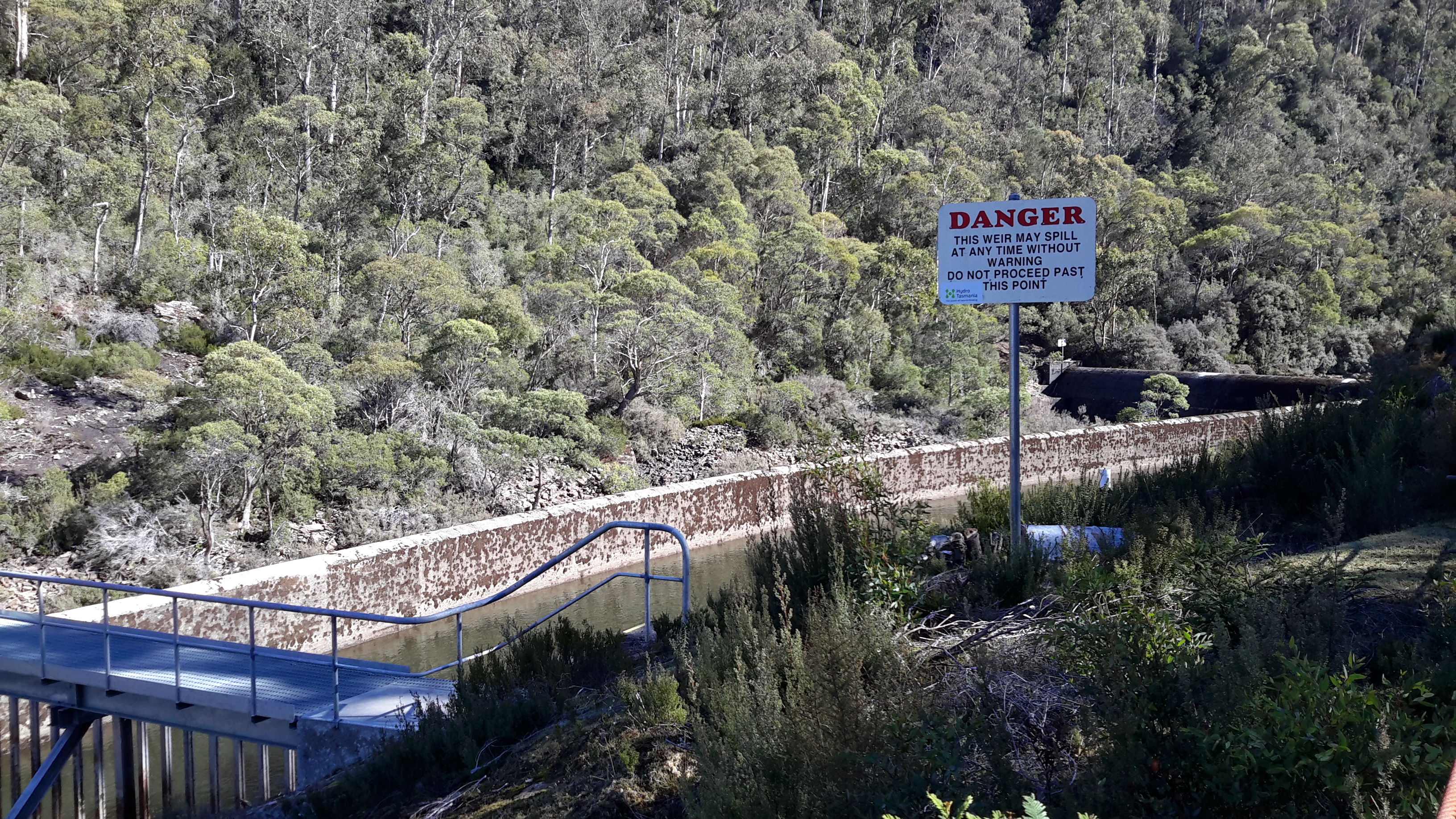
I was cautious AFTER reading this sign adjacent to a concrete structure where the water race starts.  “ DANGER This Weir may spill at any time without warning. DO NOT PROCEED PAST THIS POINT.”   20160425_113044.jpg

20160425_113016.jpg

20160425_113012.jpg

20160425_113021.jpg

20160425_113213.jpg


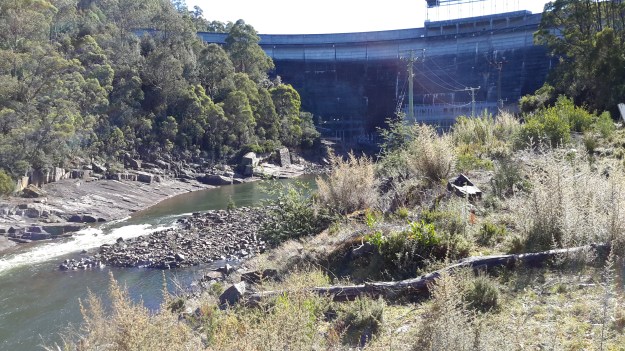
It was near this point the high wall of Clark Dam came into view.

20160425_113238.jpg

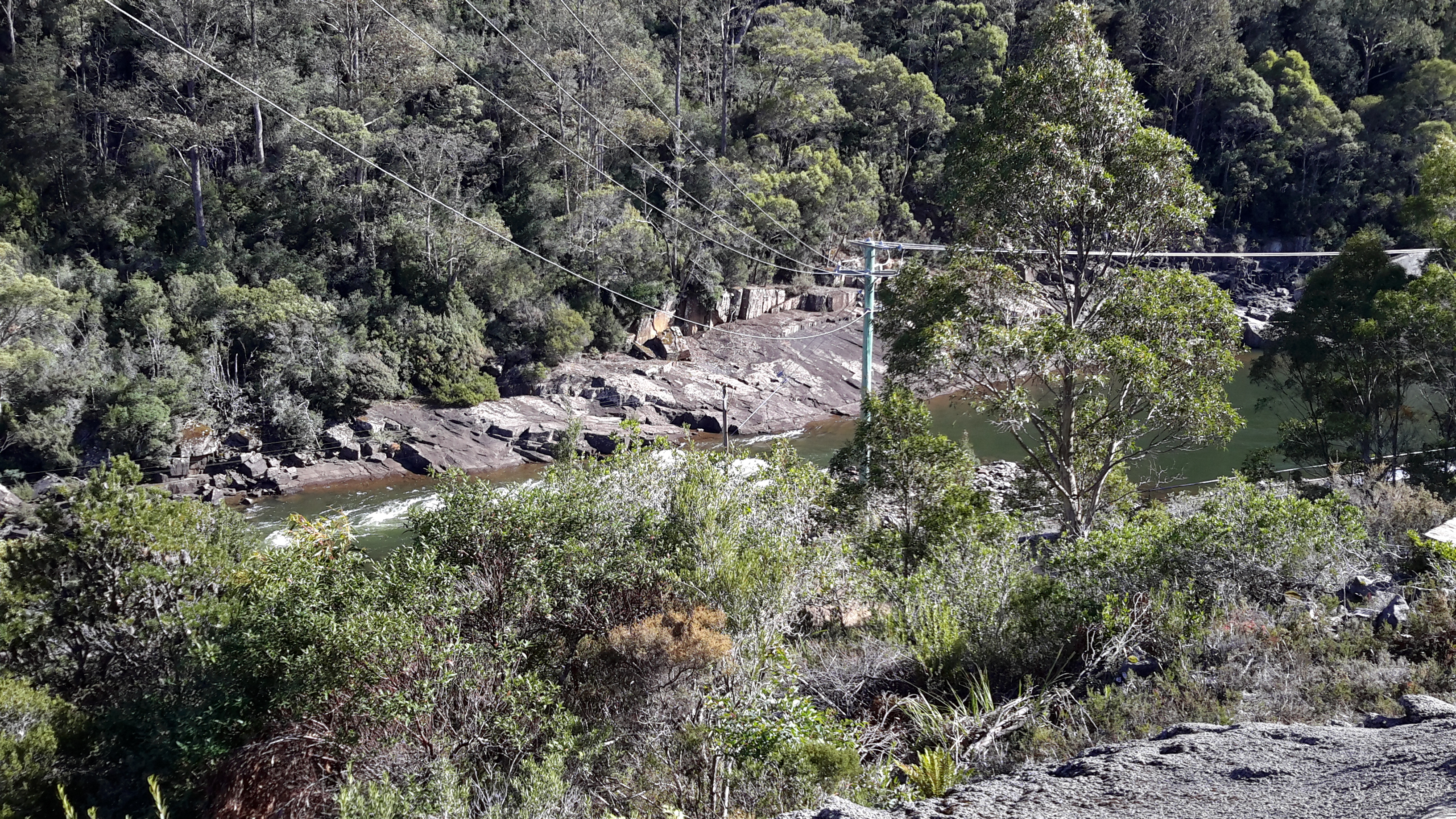
I wanted to be as close to the River bed as possible; I was curious to see the actual River bed.

20160425_113302.jpg

20160425_113313.jpg

20160425_113318.jpg

20160425_113328.jpg


Revisiting Butlers Gorge for missing photos – posting 1 of 5

After I walked from the Lyell Highway at the Butlers Gorge junction and then proceeded to follow Tarraleah Canal No 1 (which contained the bulk of Derwent River water) to Clark Dam holding back the waters of Lake King William, I returned home and checked my photos.  I found some key photos were absent.

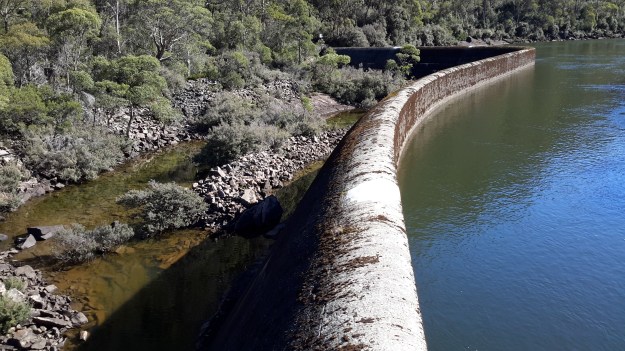
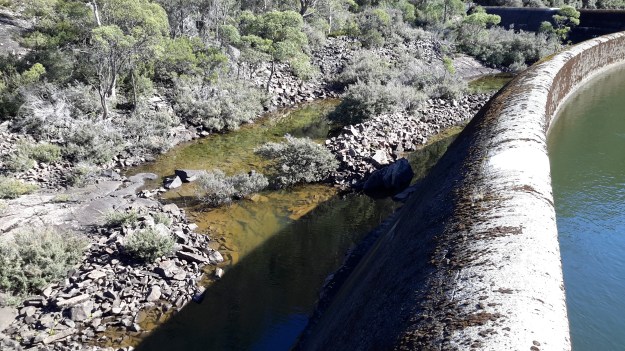
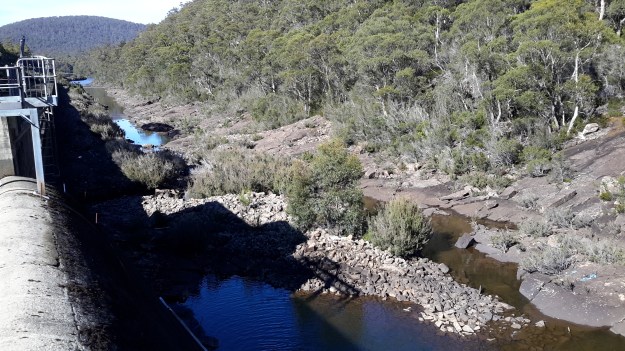
I realised that my feet must have been exceptionally painful and my sore knees crumbling so that I was unable to remember to keep taking photos in that last kilometre of the walk.  I had made no record of those last few hundred metres.  Thanks to blog reader Jeanette I returned to the spot one gorgeous morning, walked up and down the area and clicked lots of photos.

At one place we crossed the aqueduct and looked at the serene and clear Derwent River.   20160425_112018.jpg

20160425_112035.jpg

20160425_111710.jpg

The rush of the water through the Canal was recorded.  Watch this video.

20160425_111647.jpg

20160425_111652.jpg

20160425_111614.jpg

20160425_112103.jpg

I loved the views looking along the two strands of the river; the water in the original river bed, and the water in Tarraleah Canal No 1.

20160425_112613.jpg

20160425_112619.jpg

The rocky edges of the river shown above indicate that water is released from Clark Dam from time to time making the river wider.

The finish is in sight – towards Wayatinah post 9 of 9

Once walking on the hard and consistent surface of the Lyell Highway, good speed was made walking for approximately 8 kilometres, until Andrew reached the turnoff to the township of Wayatinah, pausing only for the passage of multiple camper vans, hire cars and enthusiastic motorcyclists making their winding way between Hobart and the West Coast. This was an extremely unpleasant piece of road for pedestrians.  The road was designed in remote central Tasmania with never an expectation people would walk along its edge.  The result is that verges are narrow or almost non-existent, and guard rails often sit at the top of a dramatic drop. I know elsewhere I have needed to hop over such guard rails when vehicles approach and hold on for dear life so as not to fall down a massive incline.  But Andrew survived the walk with care.  Earlier plans to walk with pleasure listening to music through ear phones had to be abandoned in order to listen for traffic speeding around tight corners in the winding road.

After walking to the Wayatinah township Andrew continued downhill to the bridge over the Derwent River where his vehicle was parked. A moment of concern flashed through his mind as he approached.  When walking towards his ute Andrew could see a couple of guys including a burly chap wearing a high-vis vest hovering around the vehicle and peering in the windows. Oh Oh. Was this someone about to break into the vehicle and steal it? Had he arrived just in time to prevent such a loss? As Andrew approached, the chap called out, “Is this your bus?” “Yes!”, Andrew replied, somewhat relieved.  “Thank God you’re alive!” The fellow was a SALTAS salmon hatchery employee and, rather than having an intent to interfere with the vehicle, he had been deciding whether to call the police. He had seen the ute parked unattended for over 24 hours and feared that a fisherman had fallen into the river and disappeared!

Andrew explained that he was not a fisherman but a bushwalker and then proceeded to describe the project to walk the Derwent. The employee emphatically declared it was not possible to walk the full length between Wayatinah and where Andrew has started the walk the day before. “The river can’t be walked, the country’s too steep!”  He felt the project to walk the Derwent was “nuts”. “You can’t walk down there’.  It was useful to have confirmation supporting Andrew’s experience.

After dropping off his pack at the ute, Andrew then wandered upstream for a few hundred metres to the weir where SALTAS has a water intake.

_DSC5821-1.jpg

He then continued on a track for a further few hundred metres until he reached a bend in the river where there is a flying fox for what looks like Hydro Tasmania equipment. Beyond that point familiar-looking scrub fringed a river bank which steepened quickly and dramatically.  Further walking on the river edge was clearly impossible from then on, and the volume of water in the river made walking in the river impractical.

_DSC5822-1.jpg

_DSC5823-1.jpg

With that, the Tarraleah to Wayatinah section was essentially complete – complete except for about 4-5 km of winding gorge which was undertaken higher up away from the river bed and its edge.

I am so very grateful for Andrew’s persistence with the walk, his notes and his wonderful graphic photos. From these I could ‘feel’ the journey.  I felt my heart soar when I saw the photos. I could feel the rush of the water, smell the freshness of the bush, and hear that clean ‘noisy’ atmosphere of the terrain. They took me out there.

As I had imagined, this was a walk compressed tightly into a narrow valley, over rocks and around water pools and flood debris for endless kms. With steep sided hills pressing in on both sides, there were no vistas or panoramas just the sight of the next corner ahead.  Never a chance to get a walking rhythm.  This was a walk which held both physical and mental challenges.  Other than where to put his feet next,  Andrew’s greatest ‘problem’ could well have been associated with ‘when will this relative sameness ever end’. While he saw snakes sunbaking on the river rocks, he was never in danger. He didn’t turn an ankle and he was able to walk out and live to tell the tale. Bushwalking always involves endless problem solving and I have always felt it is likely to be an activity that could stave off dementia.

One of my hopes was that there would be things to see or hear that are not normally seen – and that Andrew would experience completely new things which will thrill him.  Seeing the Counsel River gave him that excitement and he has planned to return, albeit getting there from the land on the other side of the Derwent River and not via the River.

This was a walk conducted safely.  Andrew used his maps and GPS constantly to be pinpoint his location and monitor progress. For example, walking through the plantation forests without this equipment could have been difficult because maps are out of date and endless new unsignposted roads and tracks exist which do not always follow contours. Getting lost would be easy.

That Andrew accepted having clothes ripped, and his body scratched and bruised in the quest to see if something was possible, is completely admirable. Even a week after the walk, one spectacular bruise on his shin (caused by slipping between two lumps of wood) was still working its way through the green and yellow stages of healing. This is not a walk which others should try; it was rough and the walk was mostly hard going. Regardless, the country was amazing and the rainforests sensationally beautiful – “there were heaps of interesting forests, and cascading waters from the hills”.  I still feel thrilled that he undertook the walk and that there has been a new story to tell and photographic evidence of the journey to walk along the Derwent.