Tag Archives: Bushy Park

A Swallows Nest

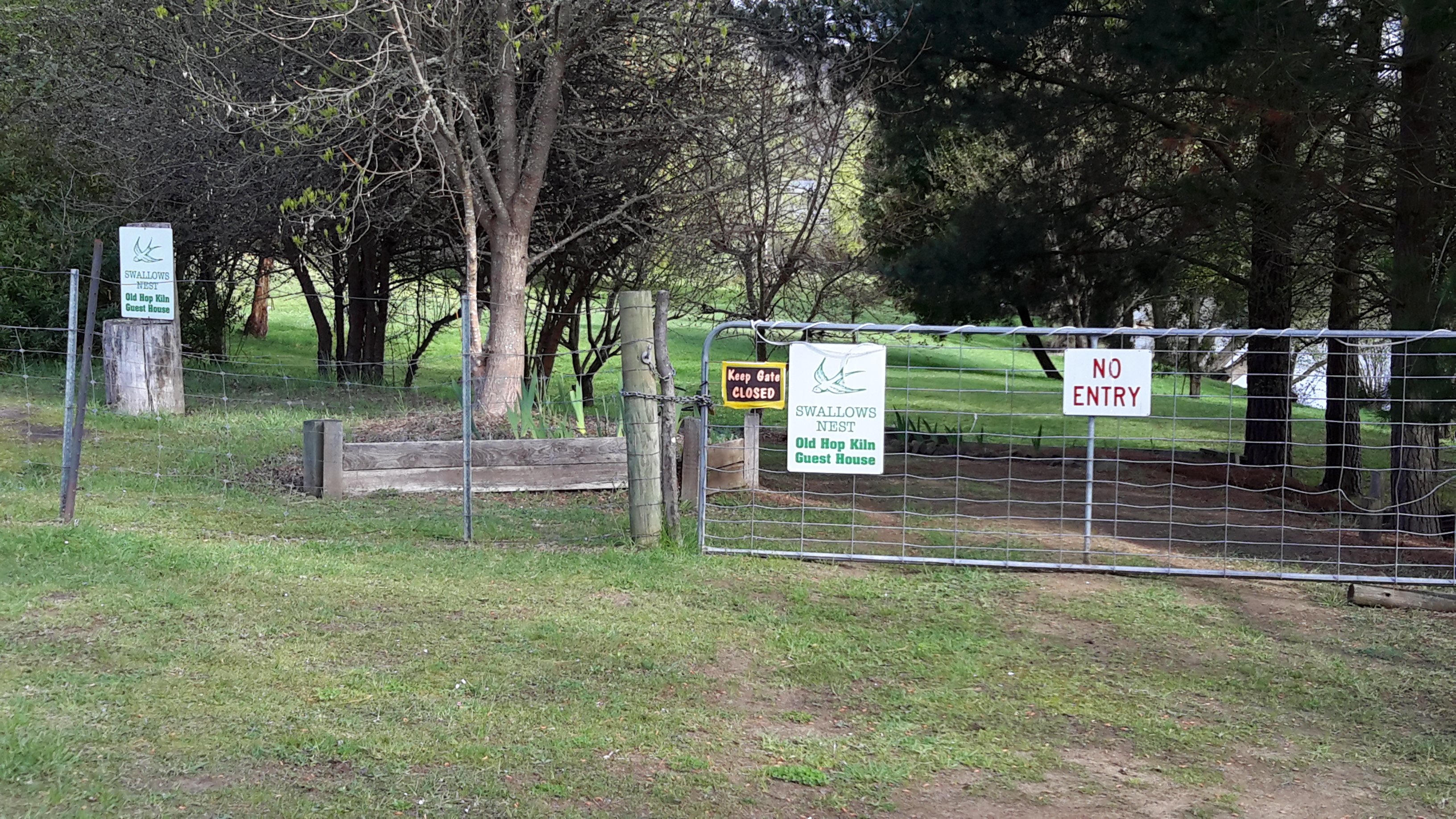
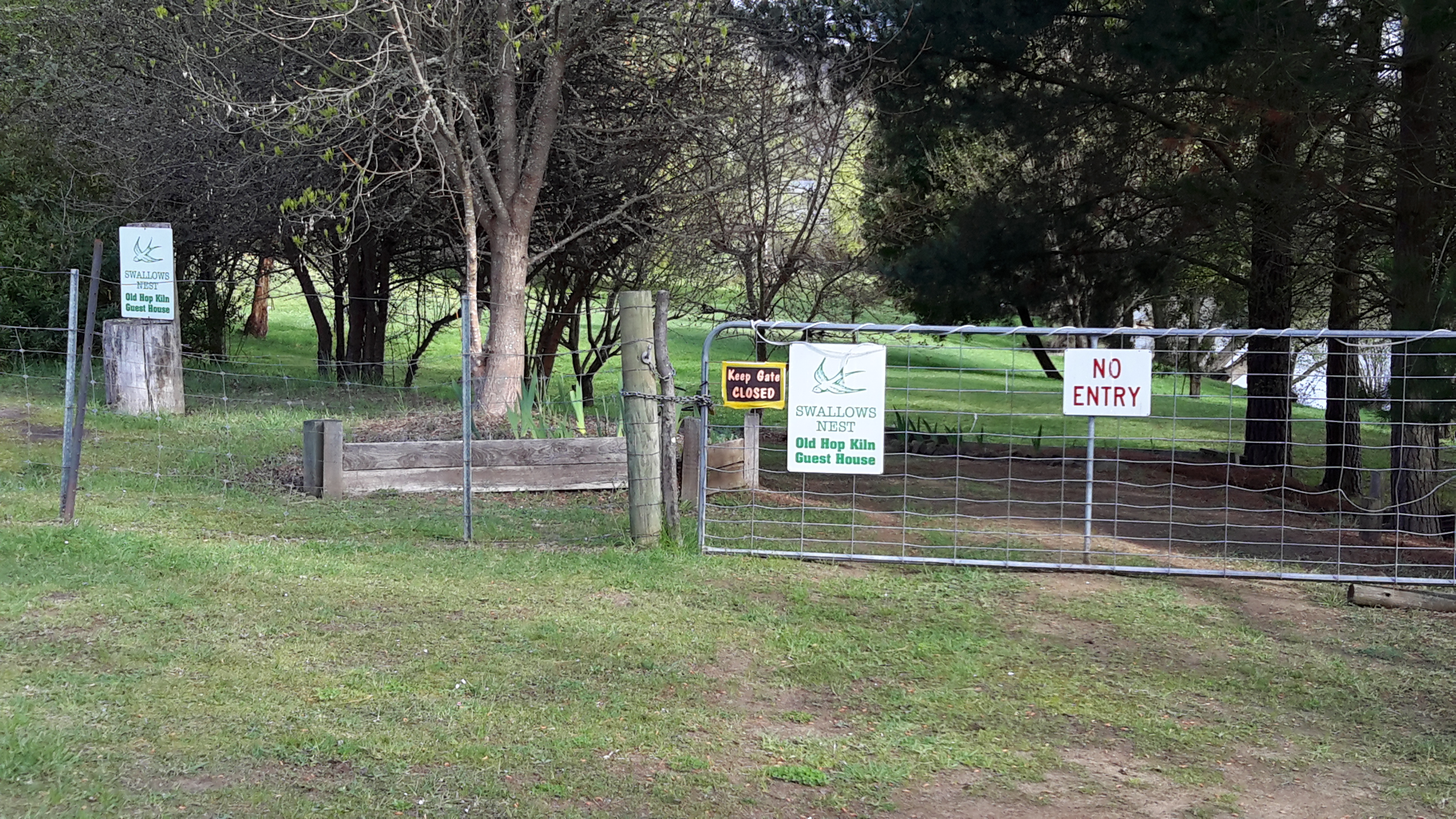
We have a saying, ‘one swallow does not a summer make’ indicating many of these birds need to be spotted before any declaration can be made that the seasons have changed to true summer.  So it is not surprising that I saw no sign of a swallow when I walked past the property titled Swallows Nest – I knew it was cool spring and so did those clever birds which must have been off somewhere much warmer at this time of year.  We have 6 swallows and martins that spend time in Tasmania, and depending on which is being considered, the birds may have migrated to Queensland, Indonesia or even to the Arctic Circle for our winters.

20150918_090514 20150918_090532

The property, Swallows Nest on the road to Bushy Park, seems to offer accommodation for people (but where were the swallows’ nests?) however the property was locked up and looked peopleless. When I read that an old Hop Kiln Guest House was ahead, I imagined seeing a fascinating historic building and therefore I looked forward to discovering it.

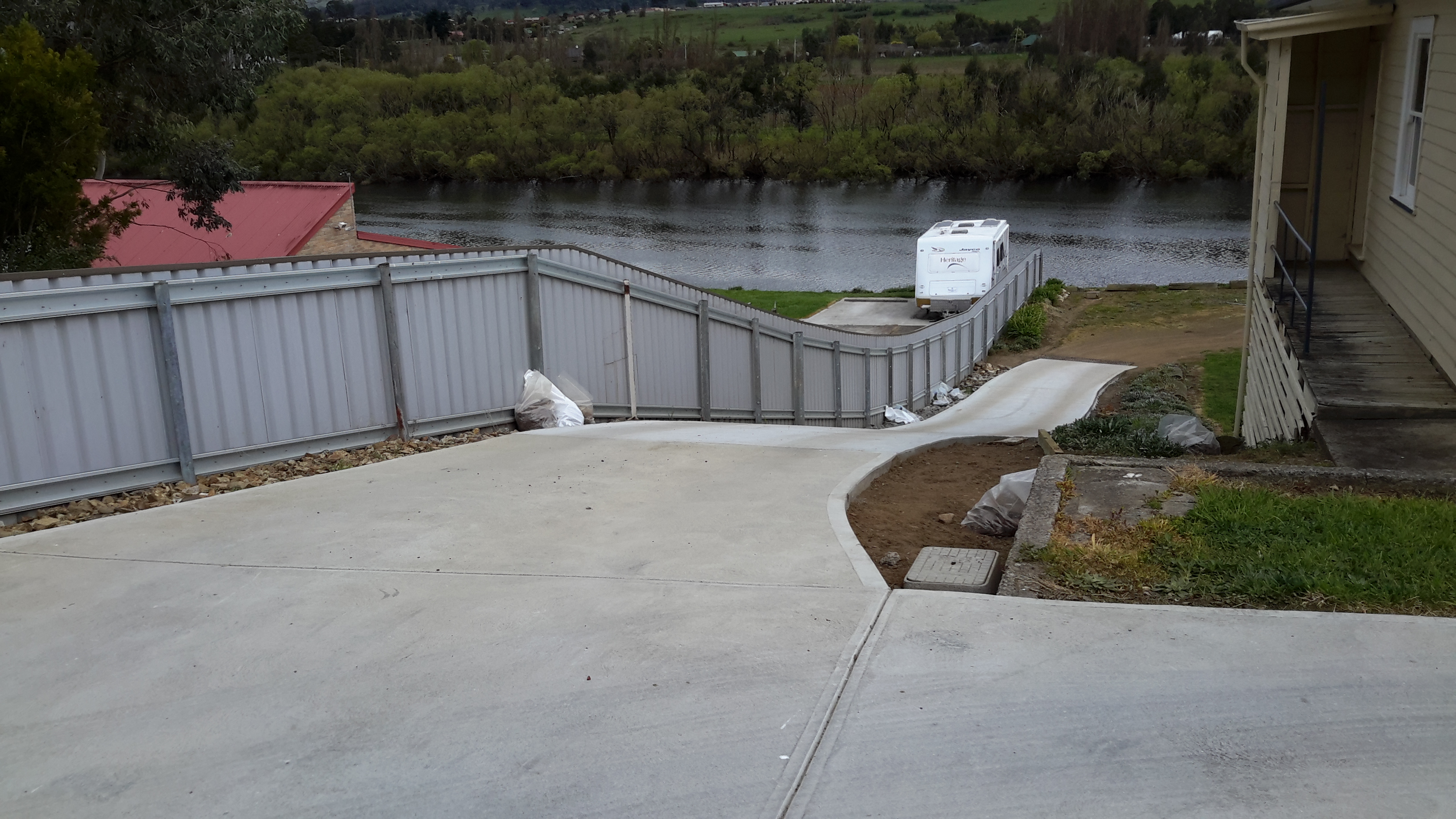
The renovated building below apparently first started its life as a Hop Kiln.

20150918_090742 20150918_091006

More information is located here.

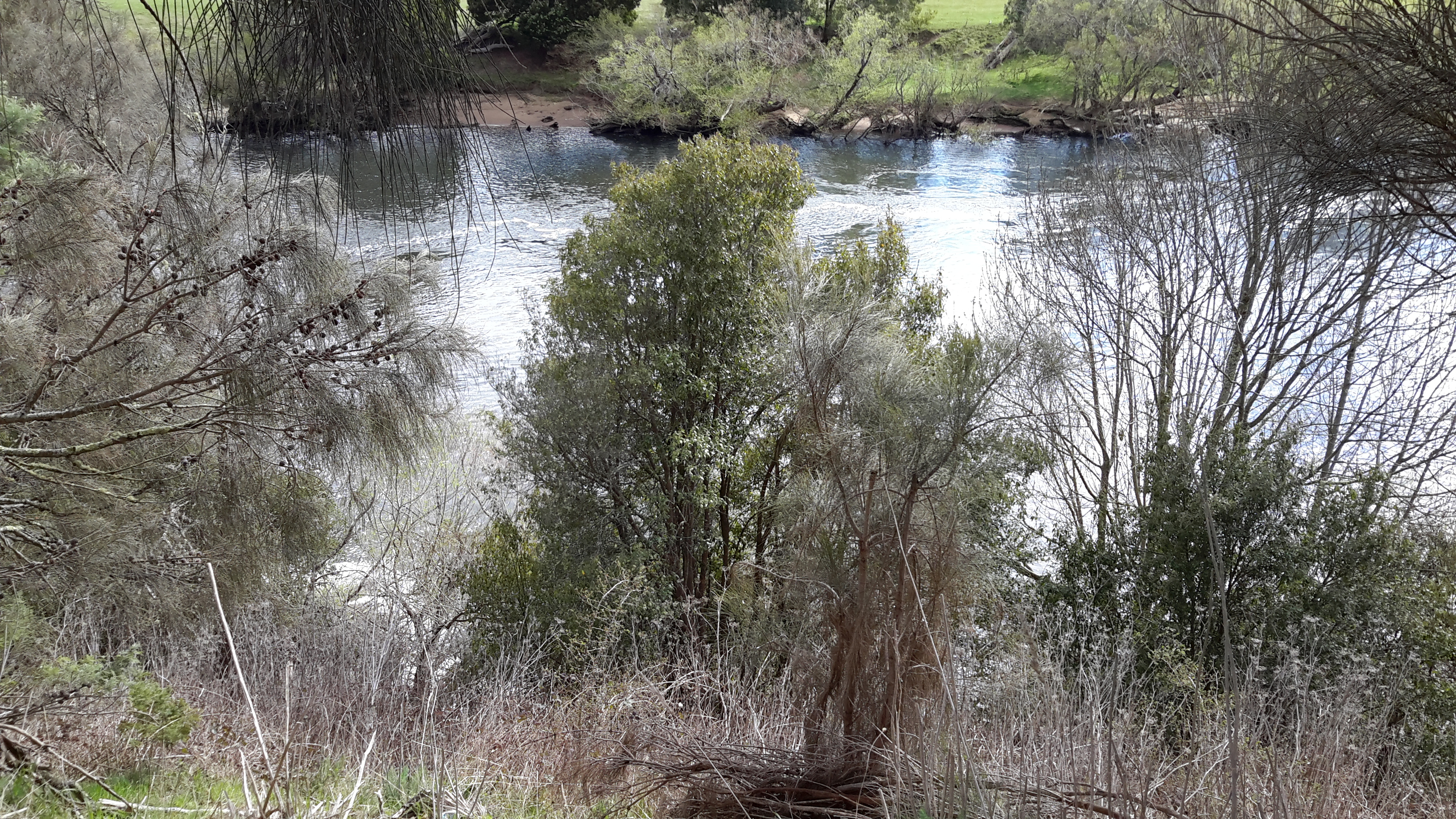
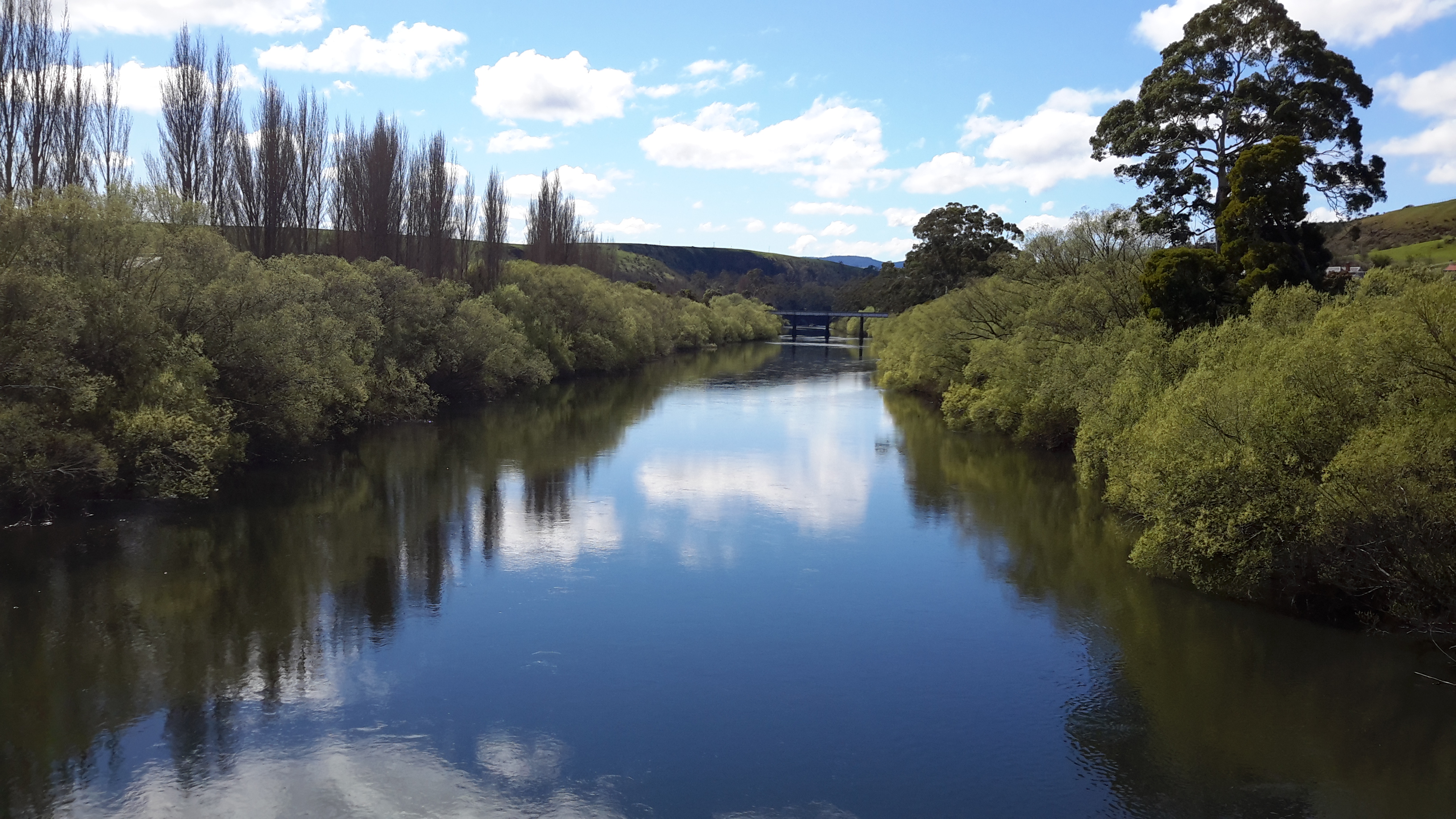
Not far below, the Derwent River poured by.

20150918_091924

Heading westwards

20150918_080020 20150918_081336 

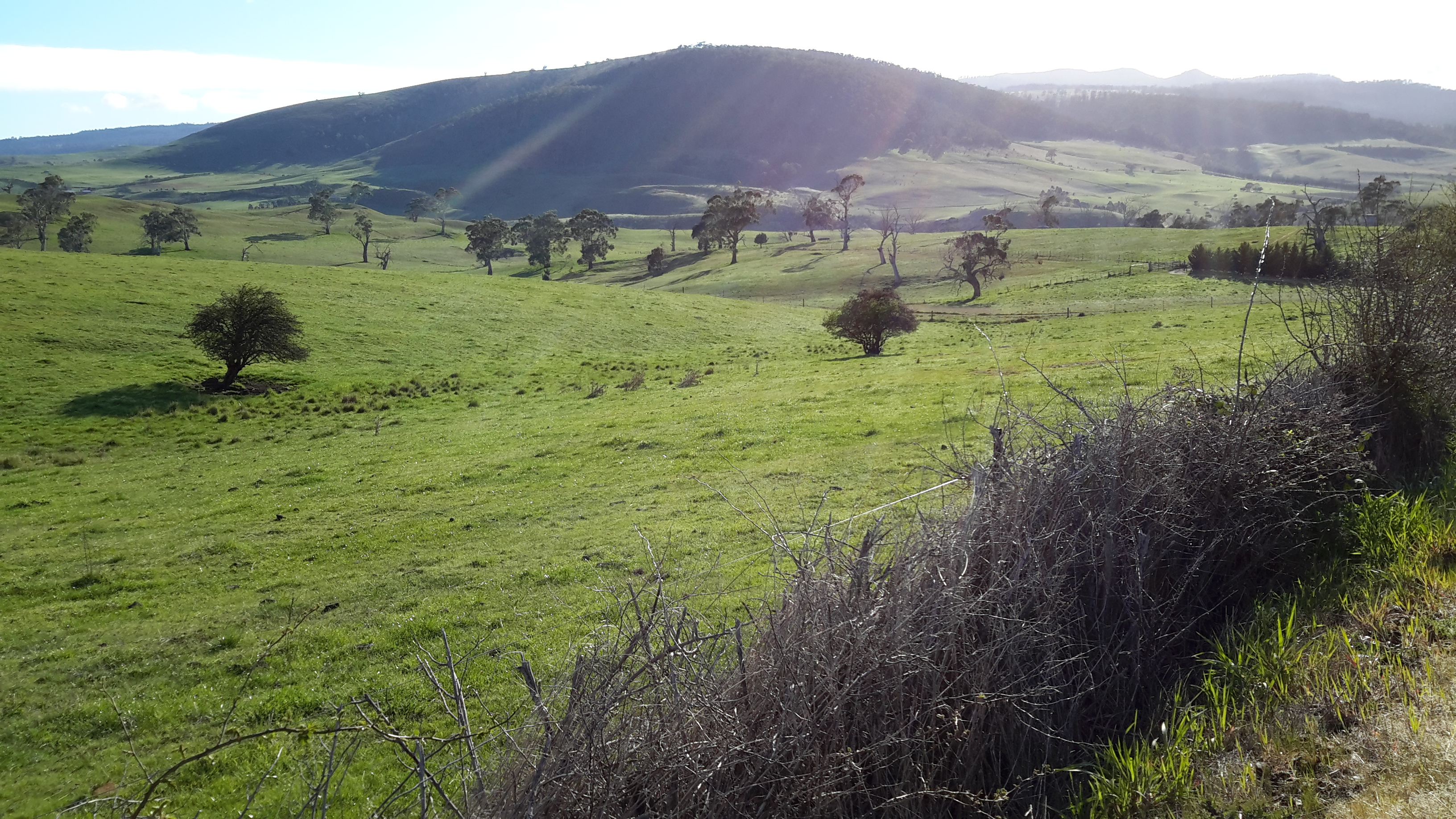
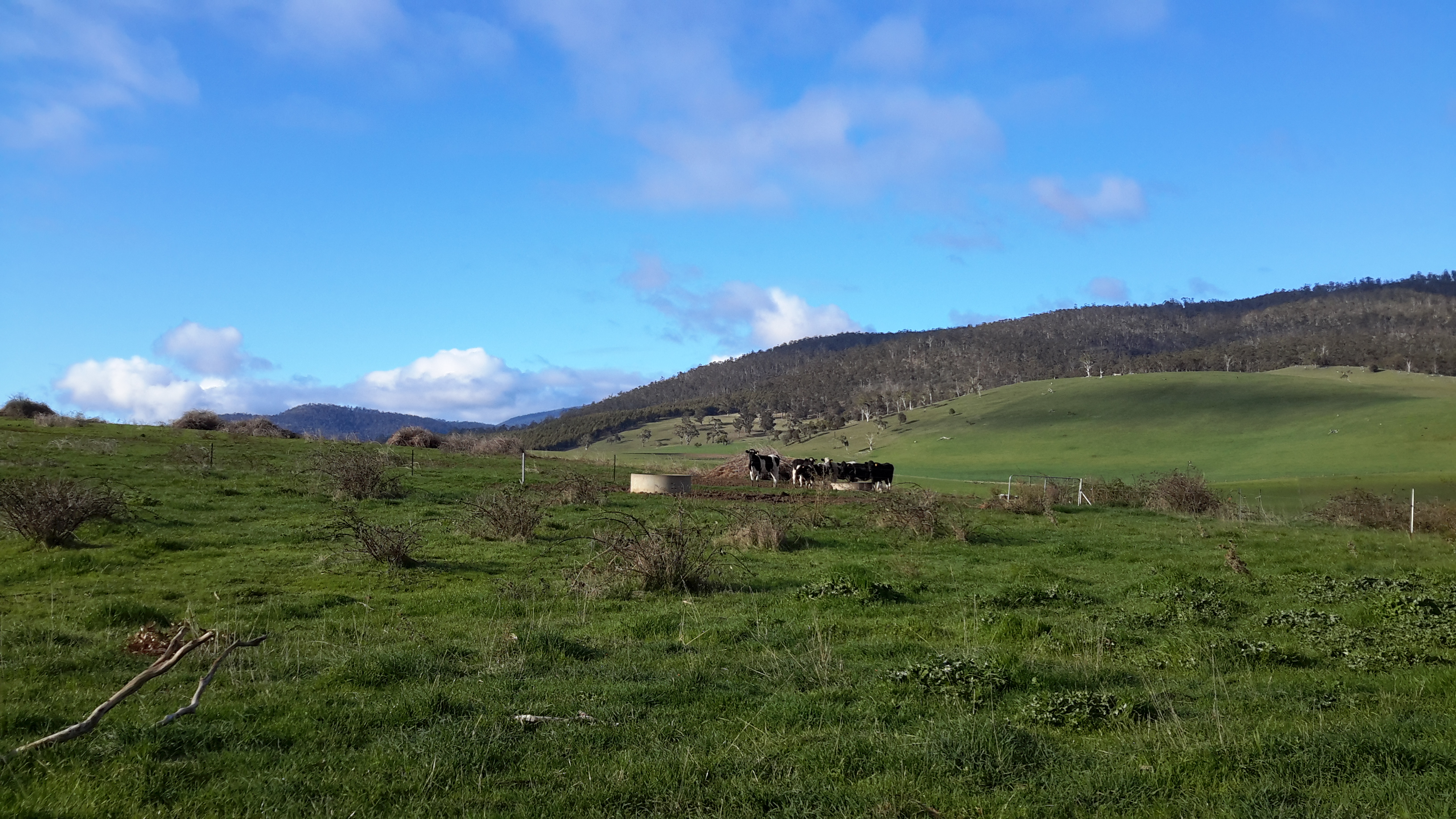
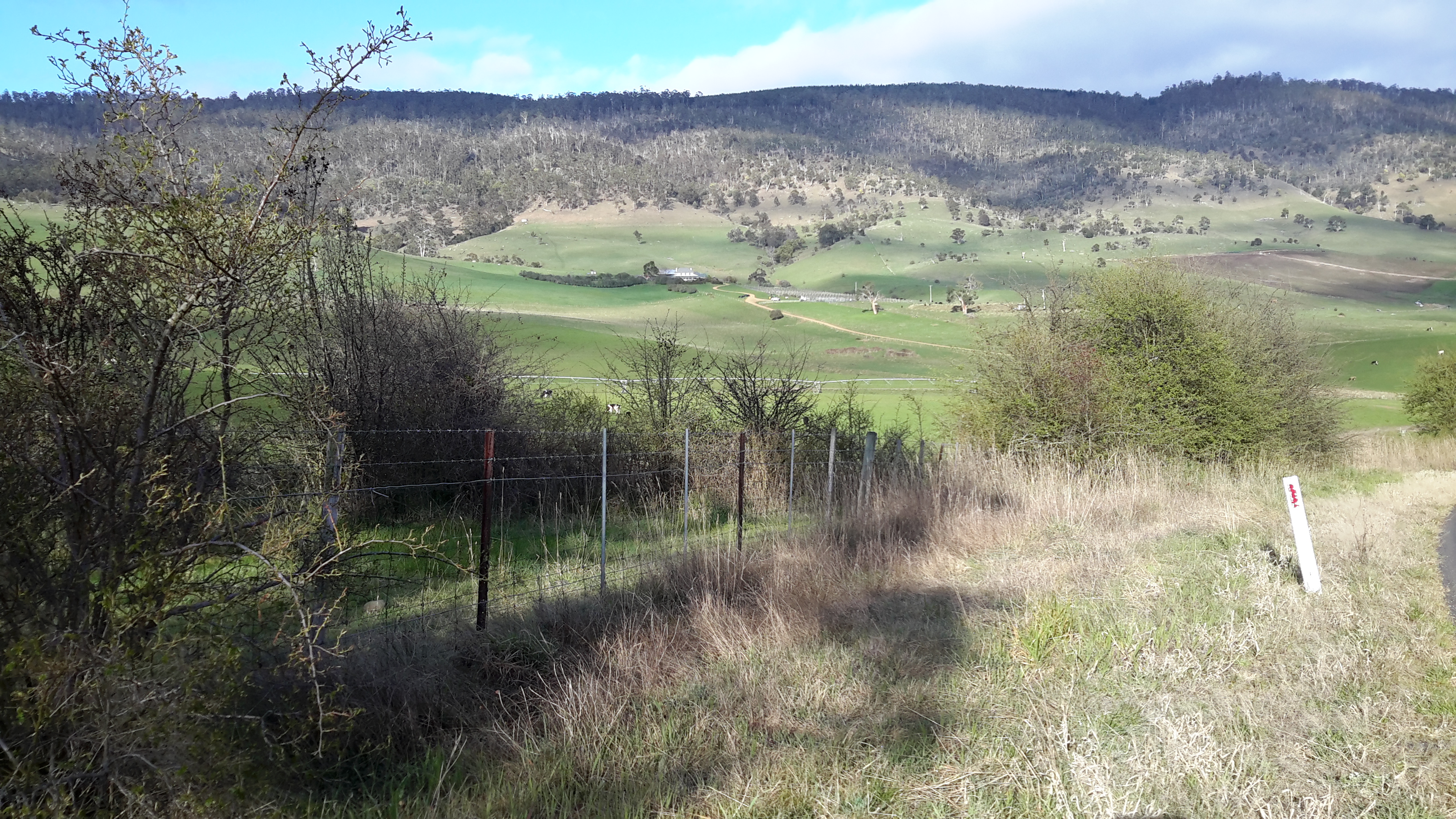
Back on Glenora Road, I loved the landscape in every direction. I am curious- have any city people slotted a green landscape view as background on their computers? When I open my computer and see green vistas it lifts my spirits particularly when I look out of my house window at bricks and mortar everywhere.

20150918_080350 20150918_080724 20150918_081256

Before long I was passing the expanses of Kinvarra Estate wines. My photos are quite tame compared to those taken by Alphaluma and presented on their website. His are sweeping and dramatic.

20150918_081851 20150918_081406  20150918_082213

A kilometre or so later I was surprised to see a lycra-clad man walking uphill around a corner and pushing his bicycle towards me.

20150918_082849

He looked exhausted and so I called out a friendly ‘hello’ and asked him where he had come from so early in the day.  ‘Bushy Park’, he replied.  Then he explained that for the past 12 days he had been on the comparatively new Tasmania Trail which extends from the north-west coast to the south-east margins of Tasmania. In addition, he offered that 13 days ago he hadn’t ridden a bike for years, had bought the new bike that day, then started out immediately. Now he was eager to get home and was headed for Hobart where he would finish his trek and family would pick him up.  This man, who looked like someone’s father, didn’t have the time or strength to continue to Dover much further south but I congratulated him on his achievement.  Whatever means of transport you take through central Tasmania, the challenges are great and he had overcome much to be close to his goal.  So I thought about my sore feet after only one day’s walking, and worked hard to dismiss any negative thoughts.

Lots of R&R on Stage 15

There was no rest although perhaps everything I did was recreation. The R&R’s I had in mind were quite different.

I had little choice but to walk on Roads and Railway lines for the majority of my experience from New Norfolk to Gretna. You can deduce from my previous posting this wasn’t where I wanted to walk.  I had hoped for soft ground directly next to the Derwent River as much as possible.

Roads

Over the first kilometres west of New Norfolk, the bitumen minor road towards the townships of Plenty and Bushy Park was narrow, and the road verges were tiny or non-existent.

20150917_093049 20150917_093104

To my right, initially house blocks got in the way of my ability to access the river directly. Before long it was metal guard rails, steep drop offs, and weedy tangles which provided a permanent separation. I walked patiently along the road edges changing sides every few minutes to try and get the safest side where I was least likely to be side-swiped by speeding vehicles. Natural gutters with stagnant green slime, or dry mini gulches below the road edges required me to be careful not to tip over when stepping off the road. Apart from not being knocked down by traffic, keeping my balance and not twisting an ankle were paramount concerns. Up and down, across and back.  These were the rhythms for many kilometres.

20150917_094301

In that early period I thought of owners walking their dogs; dogs off a lead. You know – the dog runs ahead then runs back to you then runs off and runs back etc etc.  In the end your dog has ‘walked’ two or three times as far as you. Similarly, as I stepped into and climbed out of gutters, the distance I covered seemed to double or triple.

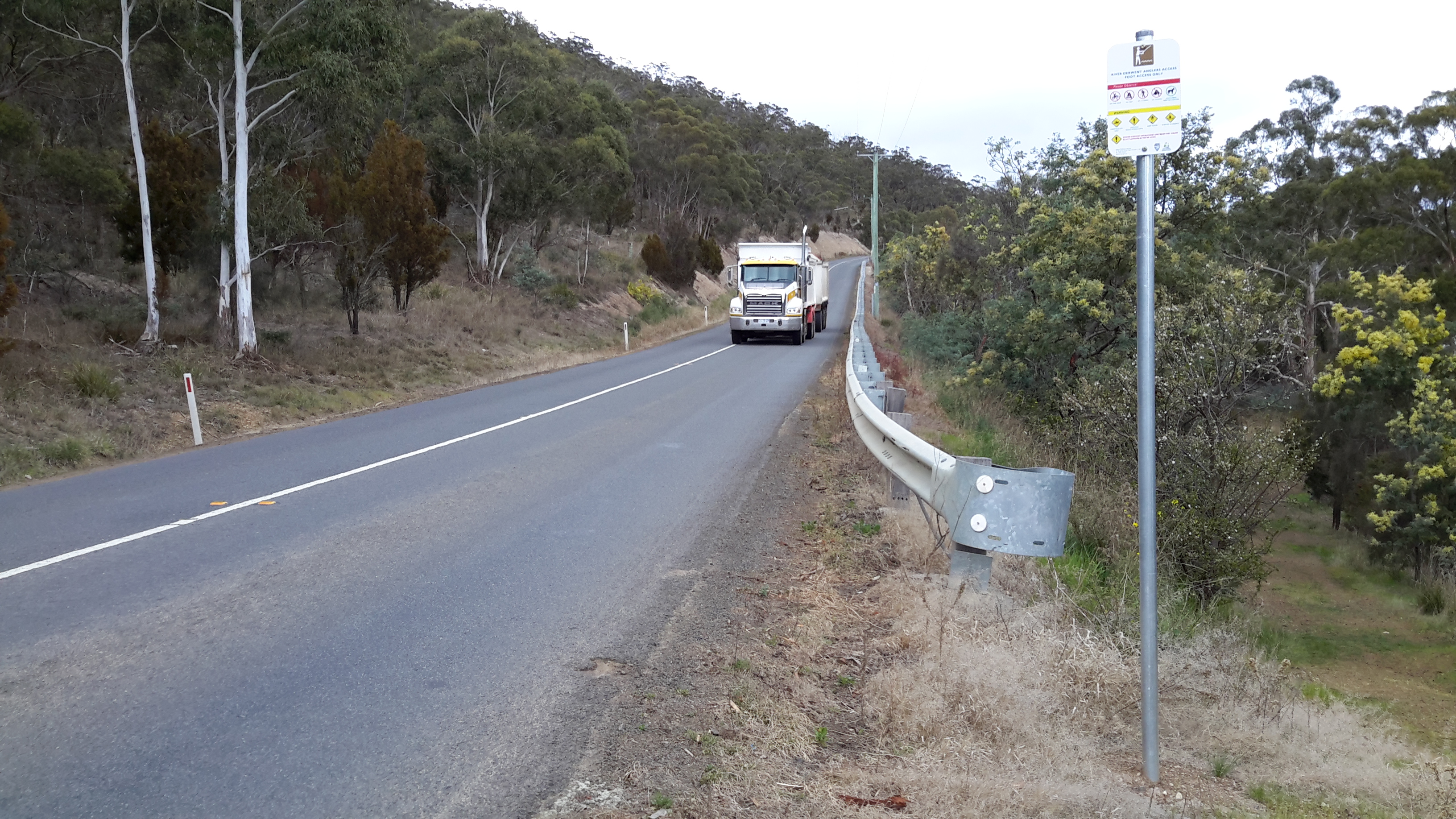
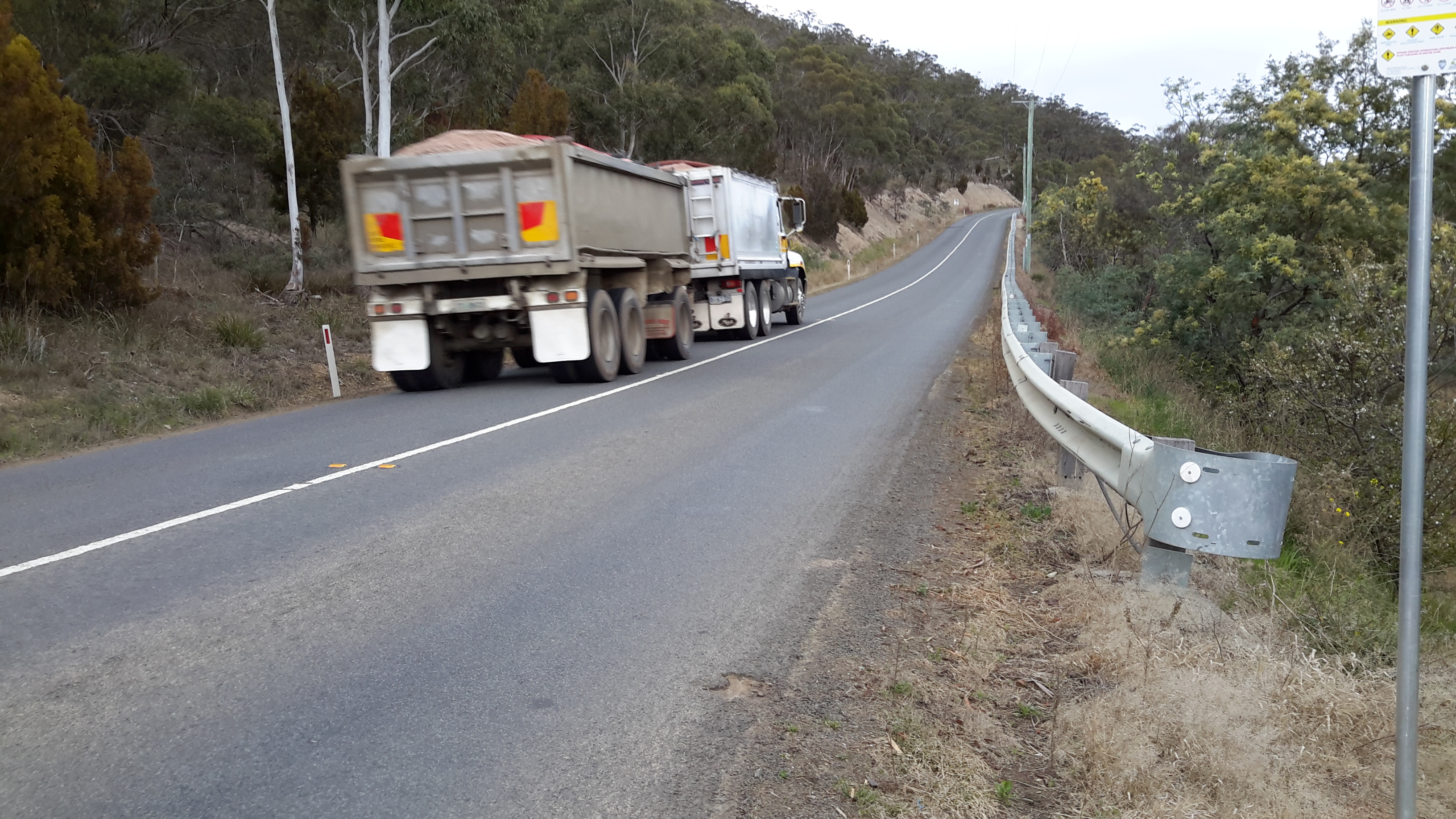
At some points along the road, the guard rail was only a foot / 30 or so centimetres from the road making it very dangerous to be walking such sections. To protect myself, when a stream of cars was approaching I stood with my back to the rail and backpack hanging over towards the river, and held myself tightly against the rail so that the whoosh of cars or their side mirrors wouldn’t catch me.  It was on one such section that a couple of cars approached and the front one slowed (with the second doing his best not to ram accidentally into the front car, and crash into me at the same time) and stopped in front of me.  The old fellow rolled down the window and asked if I needed a lift. I pointed out he was going in the direction I had walked from and that I was happy to continue in the other direction on foot. Thanks but no thanks.  As I moved on, he drove off.

Later a couple of people stopped and offered me a lift. I think all offers were genuine. But I accepted none. I stood out on the road as an oddball. People just don’t seem to walk much anymore; certainly not on highways and byways.  And road planners show no expectation of pedestrians in their designs.

Some of the road surfaces were rather special. I rather liked the green lichens gradually growing across the black bitumen; I guess there is simply insufficient traffic numbers to wear it down, in this part of the world.

20150917_104540 20150917_104533

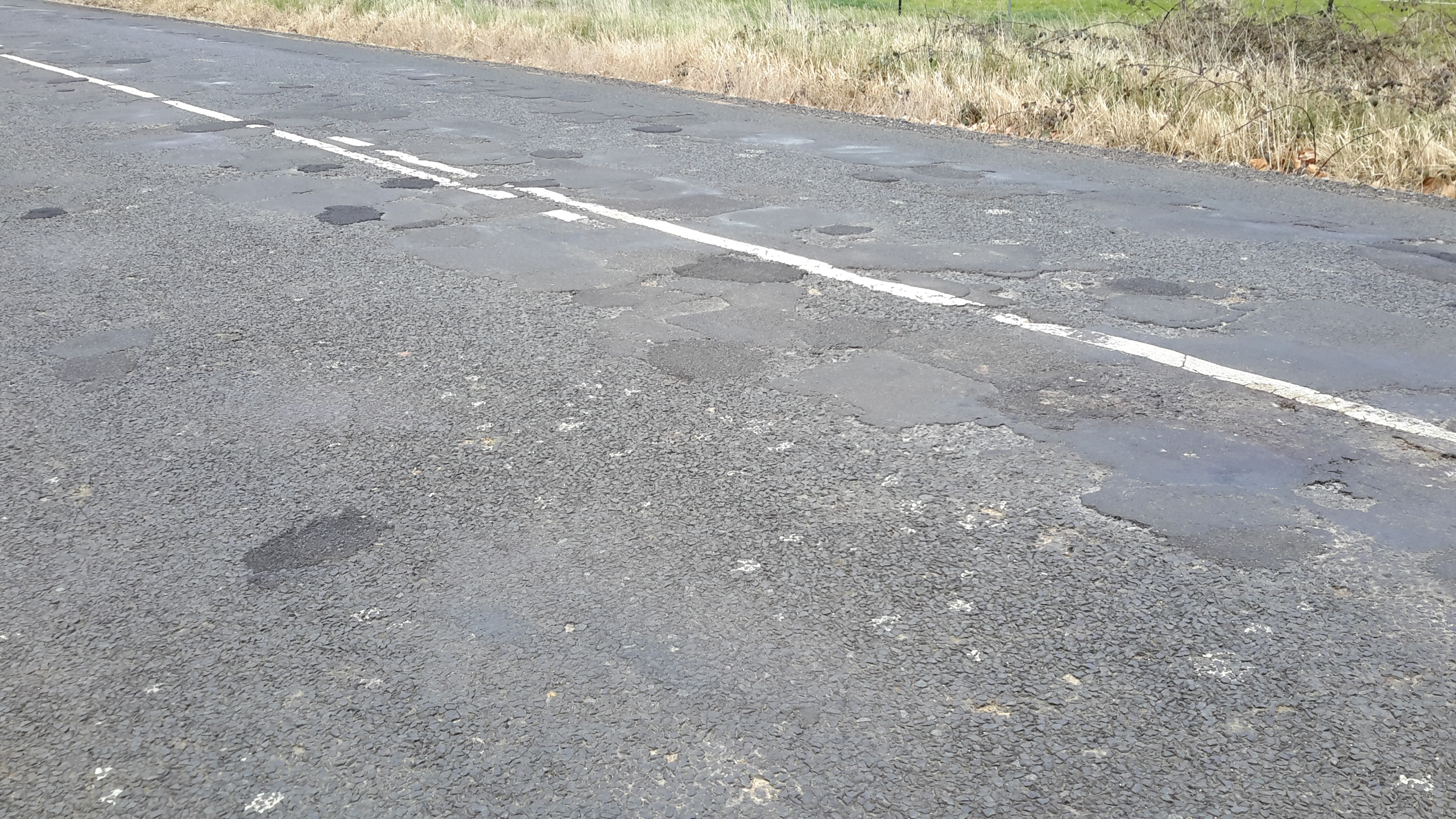
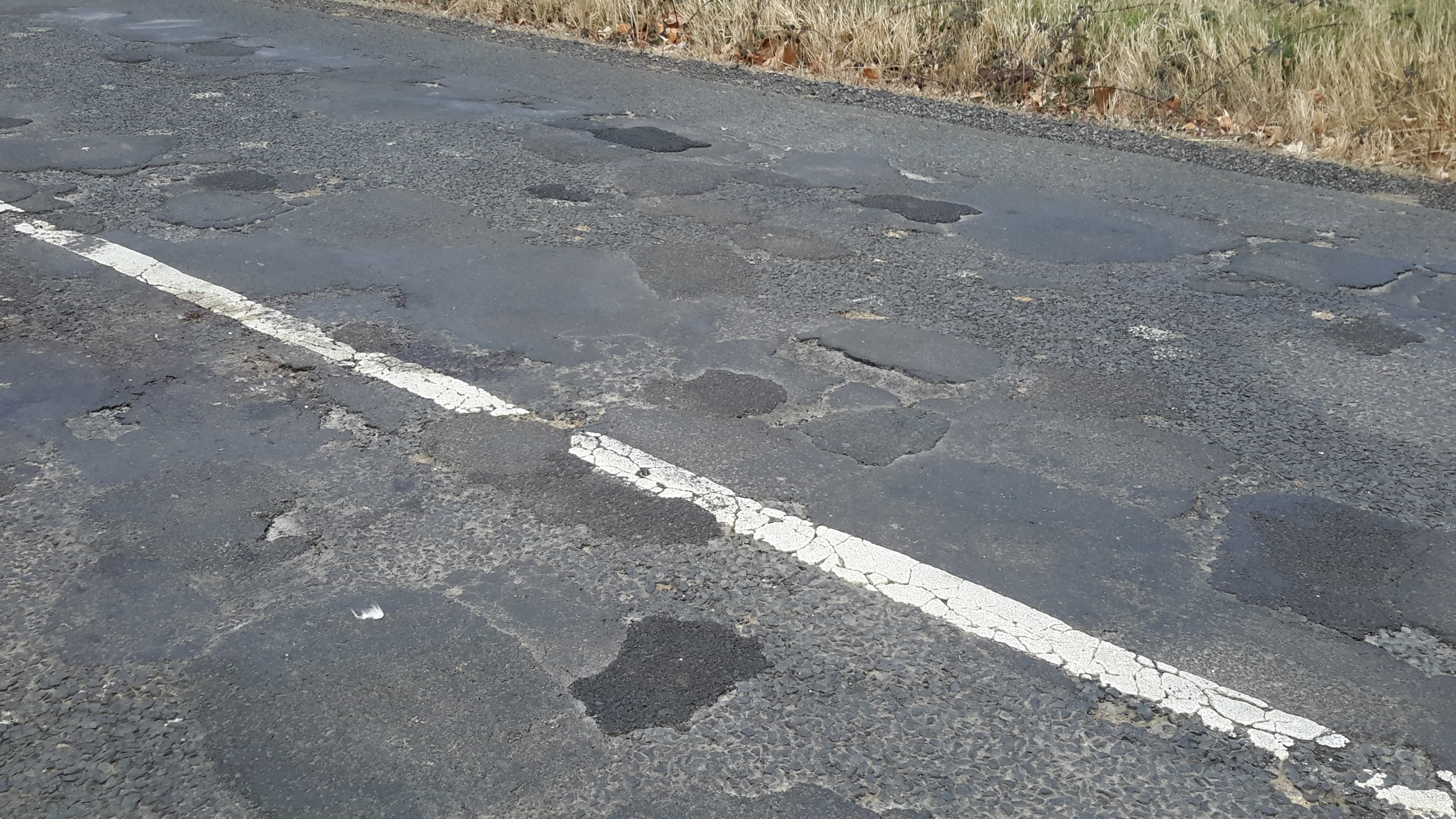
The special patchwork quilt of a road shown above made me wonder whether this bit was at the extremities of two local government areas. I suspected that both Councils might be thinking that repairing this road was the responsibility of the other.

Occasionally I had the bliss of walking on smooth green soft grasses away from potential close contact with traffic.

20150917_140331

On other occasions the green was deceptive with uneven ground hidden beneath, sometimes containing rabbit scratched holes.

20150918_080020 20150918_123816

Road bridges over rivers provided me with the greatest stress mostly because each was unavoidable and I needed to cross over them. Narrow with only two-lanes and without a pedestrian pathway, these were usually preceded or followed by sharp enough corners so drivers were onto the bridge before they could see what else was on the bridge.

Plenty River bridge

20150917_140323

Styx River bridge

20150918_114313

Towards the Derwent River bridge

20150918_121005

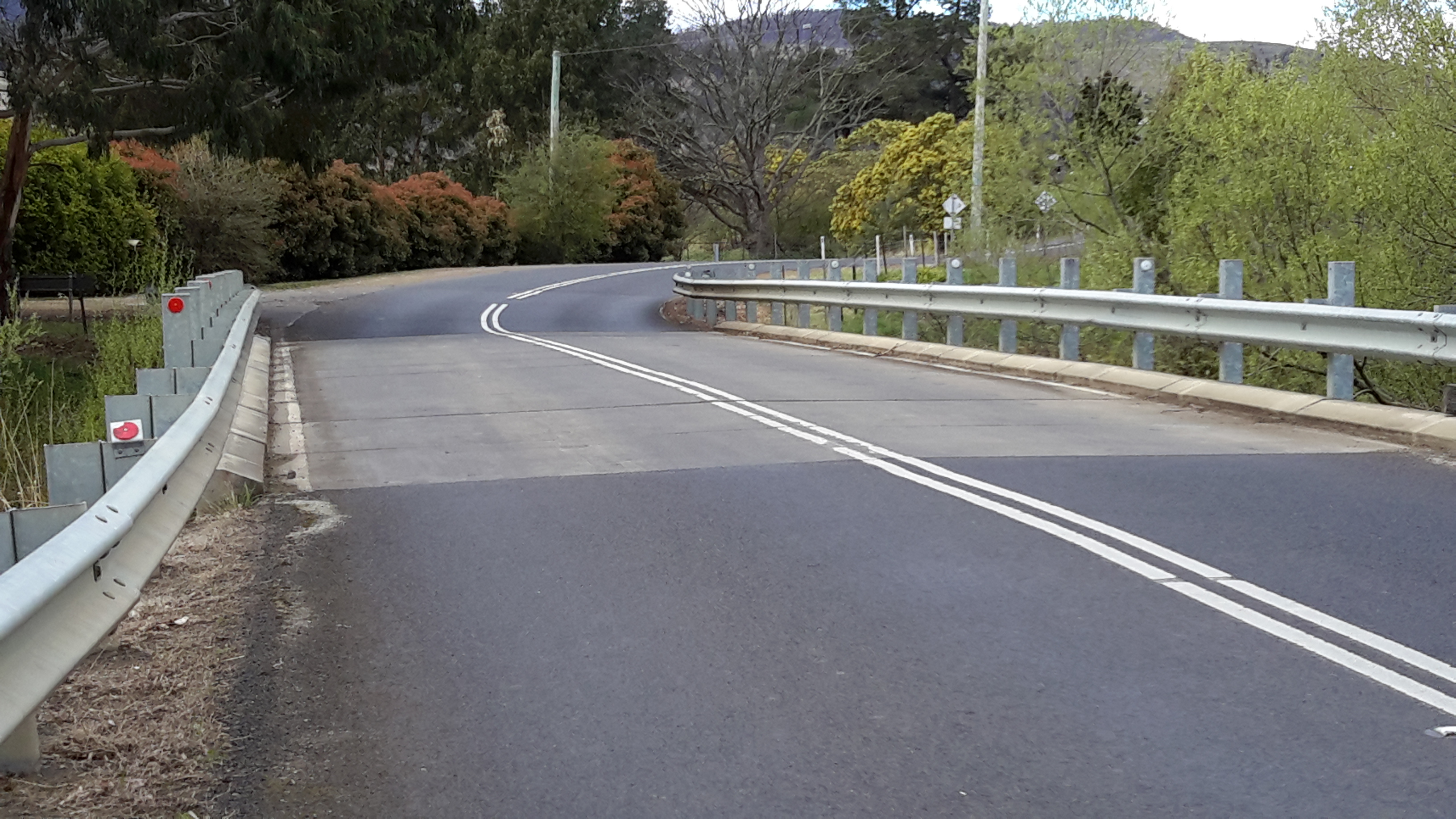
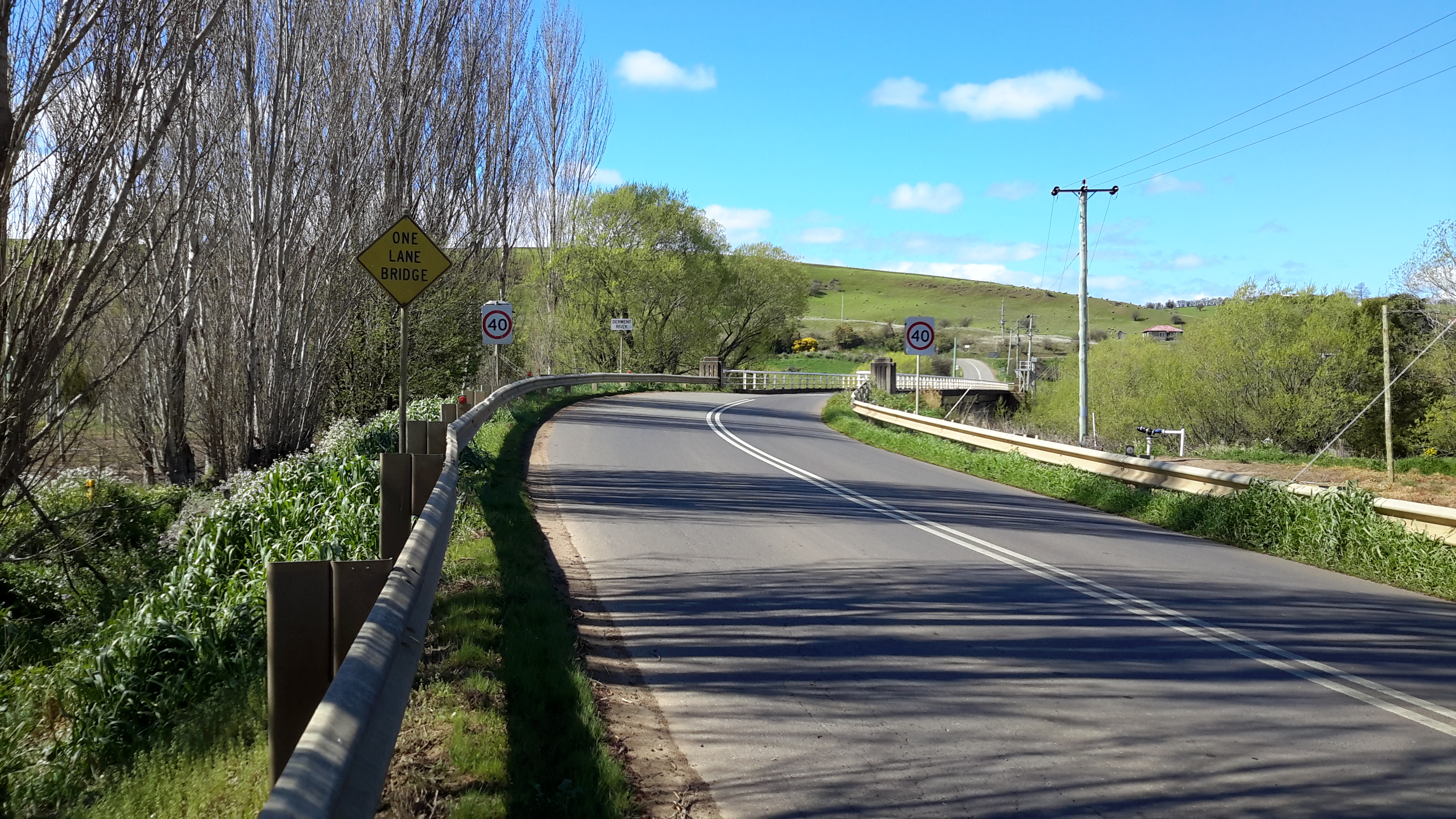
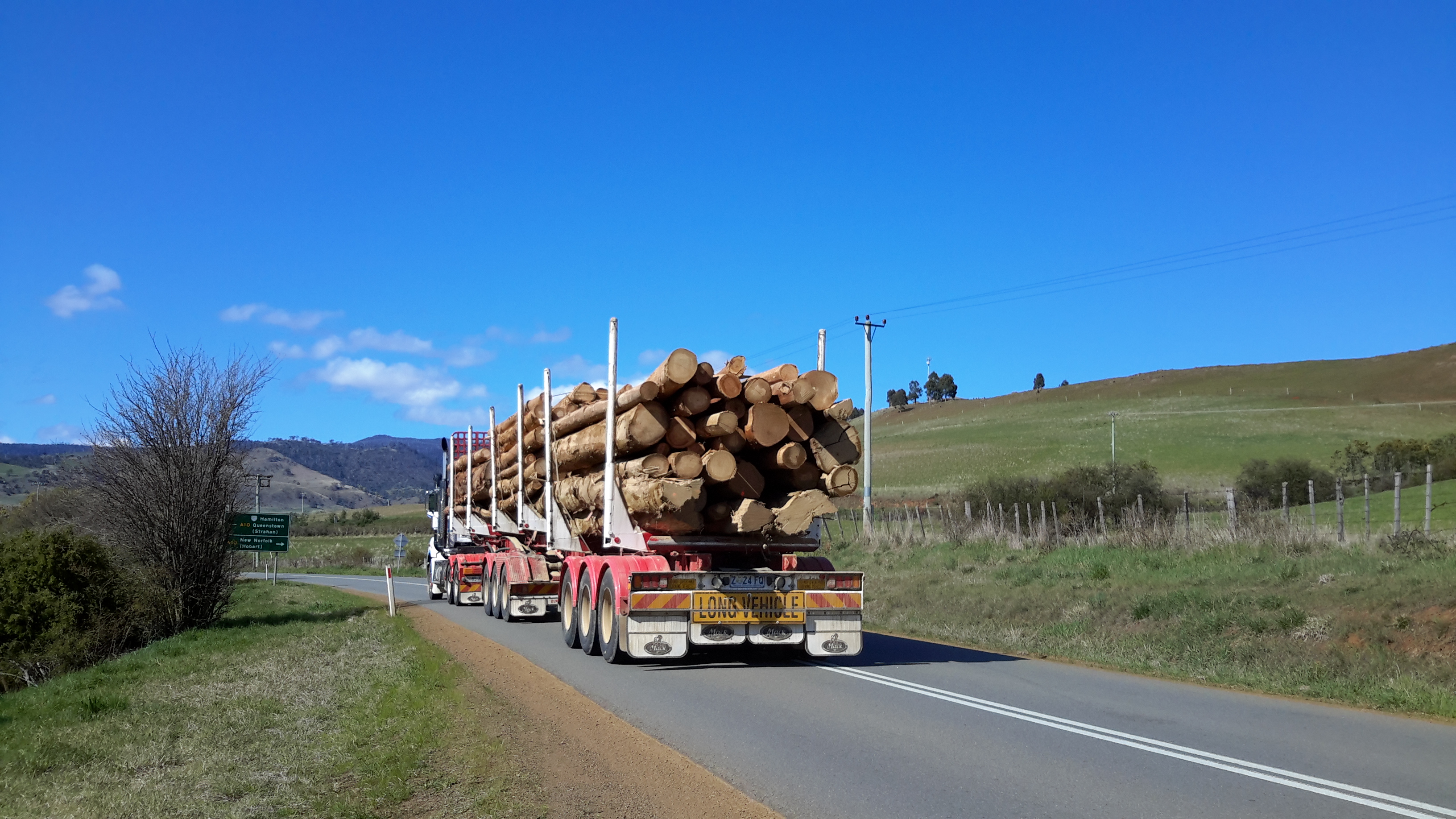
I gave the bridge over the Derwent between Bushy Park and Gretna a lot of thought, including considering whether to hitch a ride across it, before taking a deep breath and walking across. The bridge was long with a sweeping corner at one end. It had only one lane with signs at each end that indicated to drivers they should not enter the bridge if another vehicle was travelling across. I was aware that massive multiple-trailer log trucks were regularly on the road, as were other heavy and large transports, and of course locals who whizzed their way everywhere at high speed.

20150918_133413

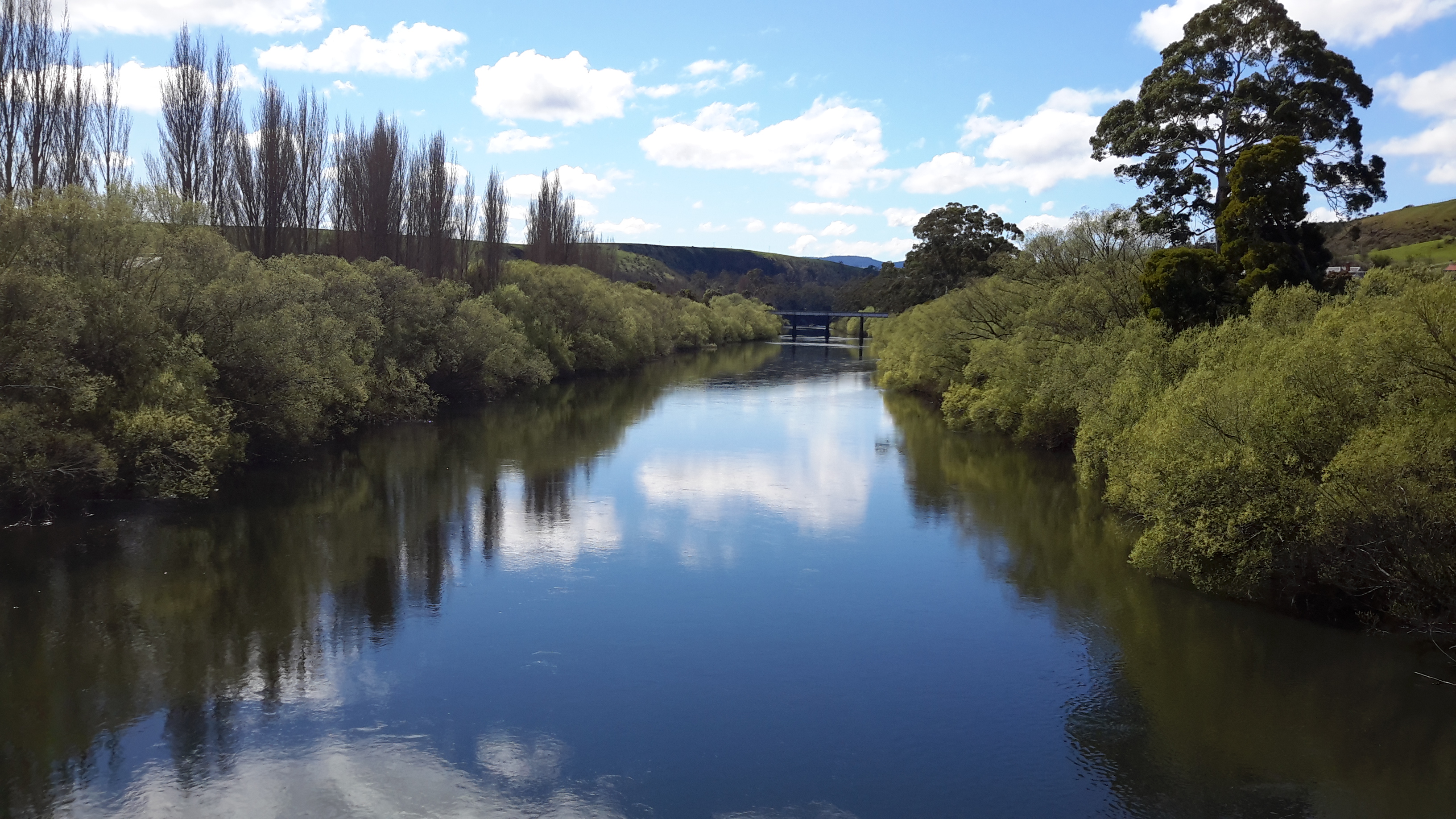
I wondered how much drivers could be trusted to follow the directions and to slow down. I waited until there was no sound of oncoming traffic from the two distances, and then I hastened across.  But the view distracted me; it was so wonderful looking up and down the river that I felt compelled to take a photo in both directions. I clicked quickly as a large 4wheel drive flashed onto the bridge. I held myself back against the rail as he sped past glowering all the way.

20150918_121215 20150918_121218

Railways

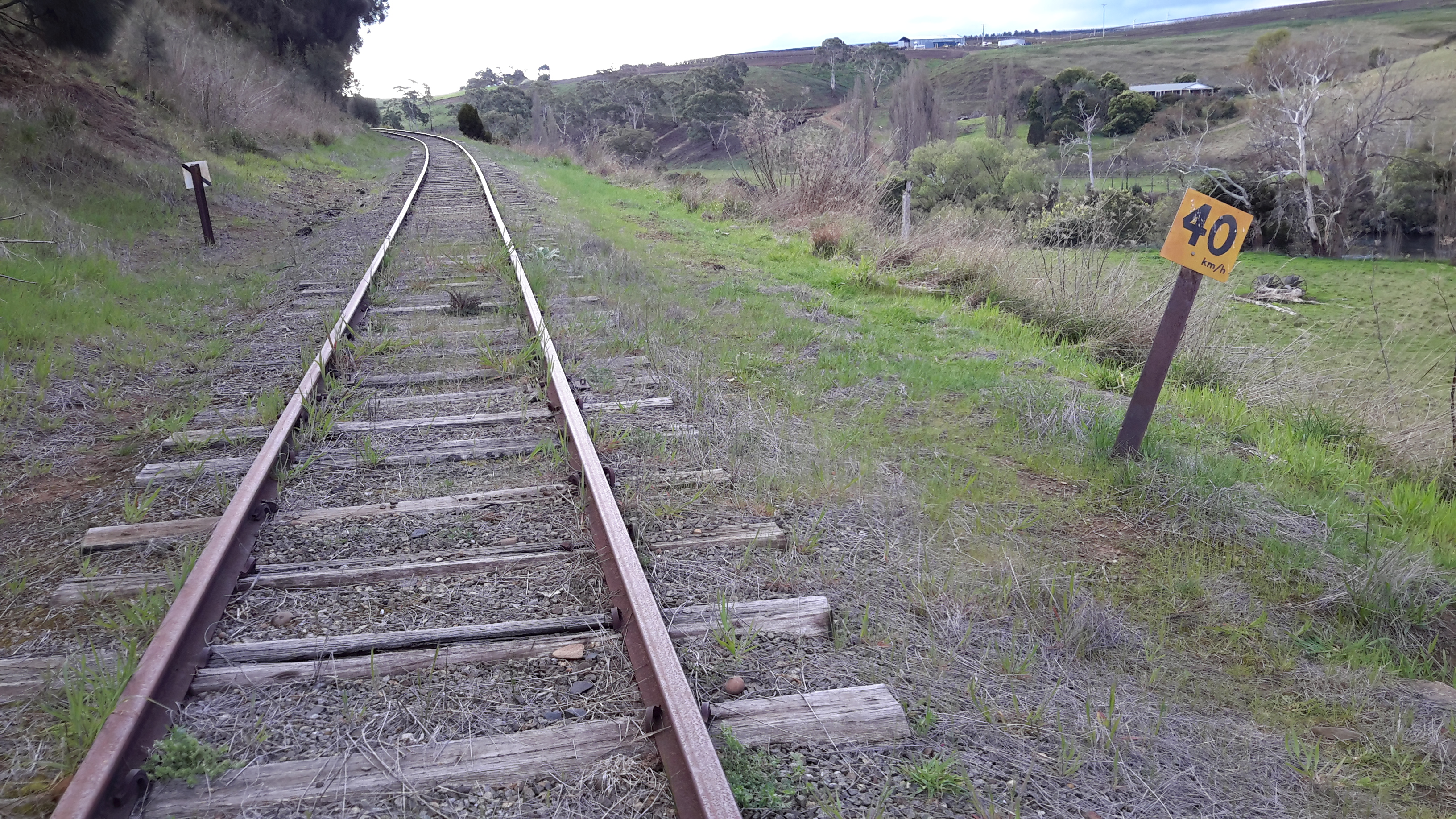
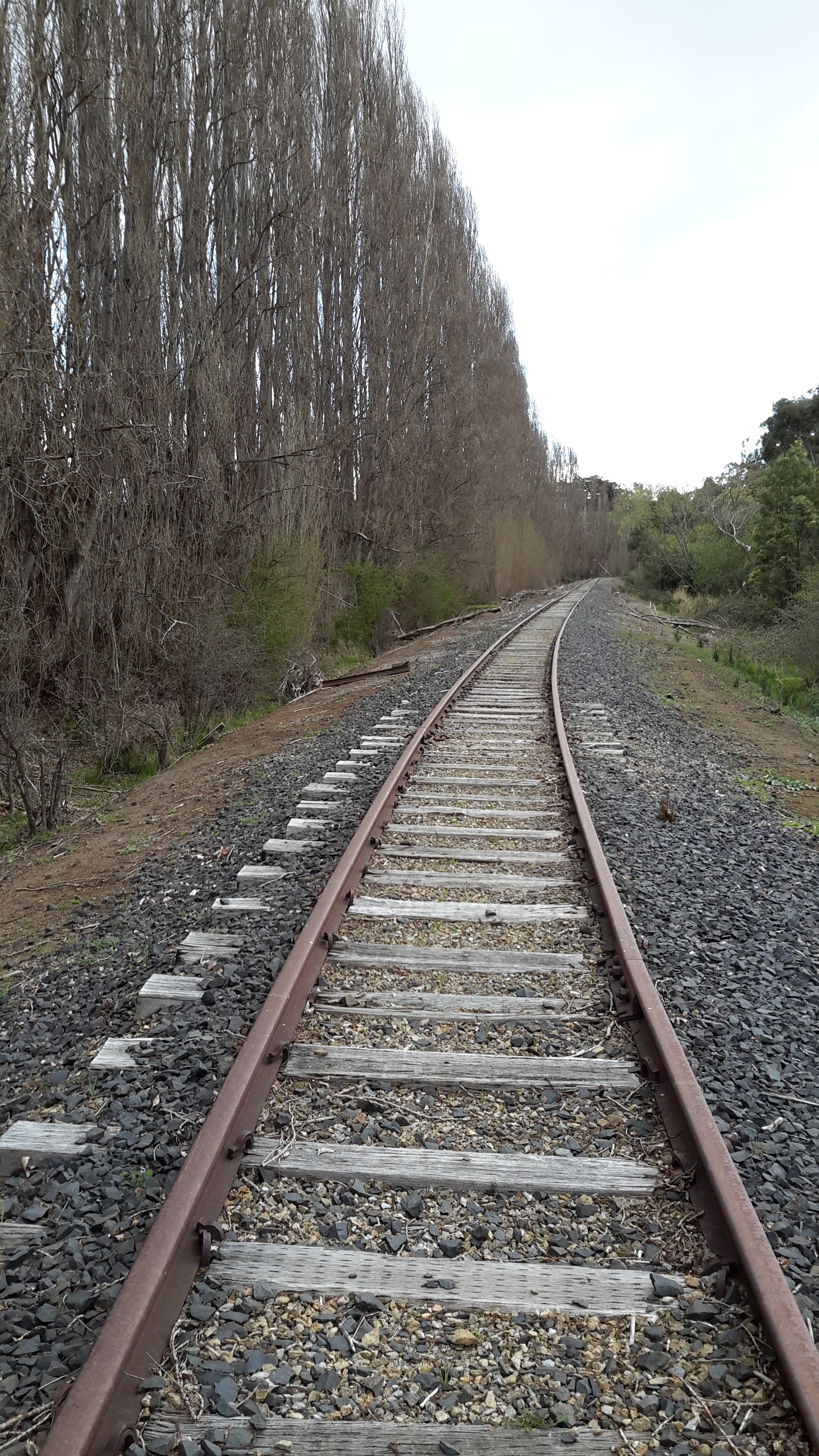
First and last I walked on main roads but in between I often had no alternative but to walk on the variously rotting sleepers of an unused railway line.  I couldn’t create a walking rhythm: the sleepers were irregularly spaced and irregularly sized and the spaces between each were filled with rocks, gravel, dirt or grass and weeds. Sometimes there was no fill.

20150917_154454

In this region, the railway line runs on the northern/eastern shore and then, about two thirds of the way from New Norfolk west to the district of Plenty, it makes a diagonal line crossing the Derwent River.  I met the railway on the southern/western side and was able to walk under the old sandstone supports on the river bank before proceeding westwards by following the river closely.

20150917_115135 20150917_115338 20150917_115354 20150917_115459

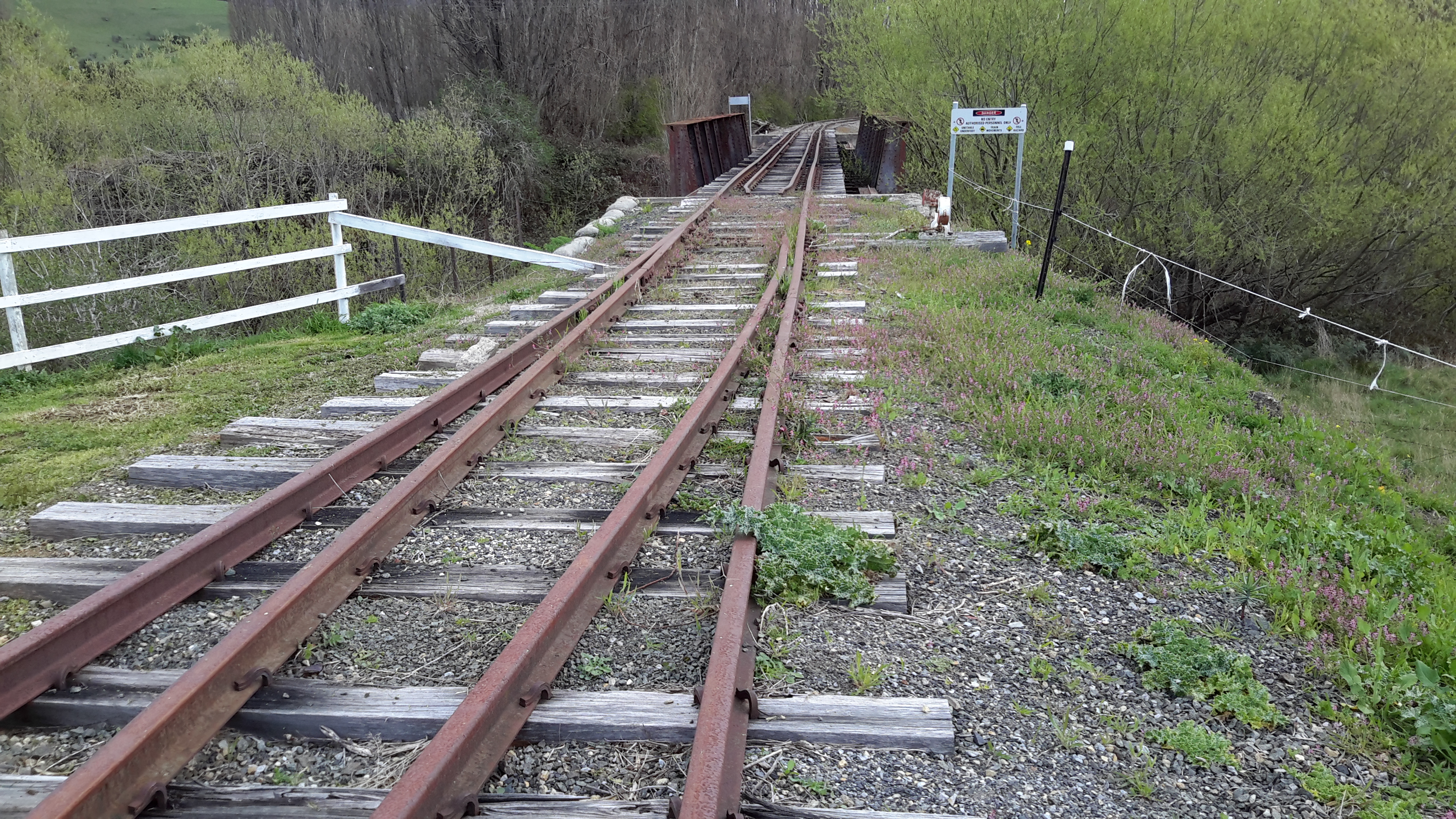
Later I reached the railway bridge over the Plenty River, where a quick reconnaissance indicated some sleepers were missing and others looked suspiciously like they might disintegrate under weight. My weight.

20150917_135821

For 30 seconds I thought about whether to cross the bridge. I decided that walking on the metal rail track could be safe enough for those experienced with walking on gymnastic balance equipment, but not for those carrying a backpack, nor those easily thrown by sporadic wind gusts. Instead I detoured onto Glenora Road crossed the road bridge and then made my way off the road and back to the railway line.  Thick impenetrable vegetation prevented me from walking closer to the river so I stayed on the railway line for many kilometres, with an occasional foray closer to the river. However, mostly I found it impossible to proceed and returned to walk on the railway line.

This railway line walk should be a stunning place in autumn especially where rows of well-established poplar trees marked the edges. I know the leaves of poplars turn gloriously yellow after summer.

20150917_141506

Towards the end of day one of Stage 15, an impending rainstorm seen at the end of one stretch of line prompted me to look for a suitable campsite.

20150917_160047

A while later I pitched my tent beside the line.

20150918_070950

Next morning the sun was shining, despite very low temperatures, and the glorious views lifted my spirits. I received a text from blog follower Ju that Rail Track Riders http://www.greatrailexperiencestasmania.com.au/event/rail-track-riders/?instance_id=485844 would be in motion along the line during the day. What I surprise for them it would have been to find my tent on the side of the line – but I was well gone before I suspect there was a movement at any station back up the track.

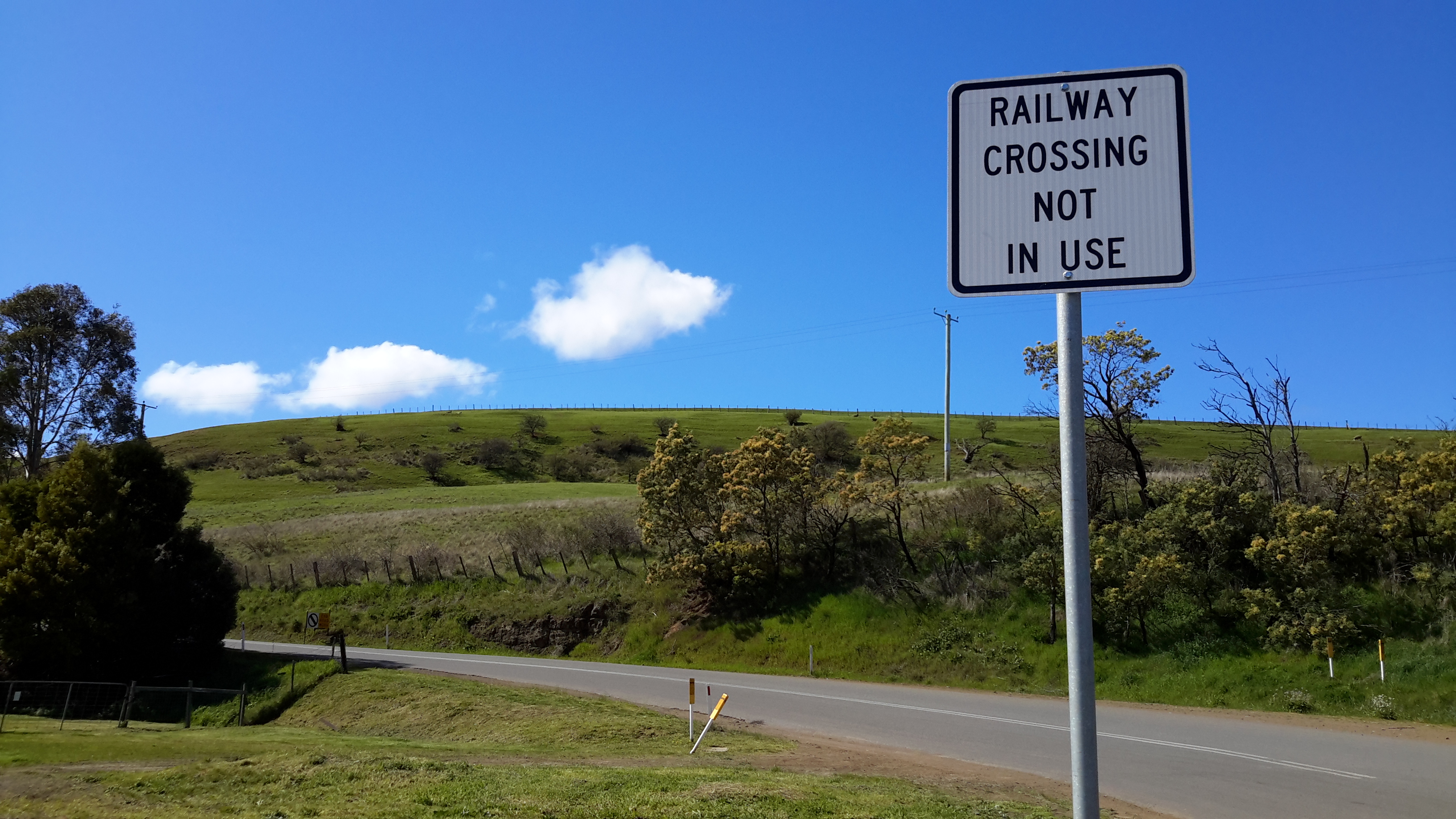
After Bushy Park and en route to Gretna I saw my first railway sign when the track crossed the road.

20150918_121809

Looking back, clearly no railway vehicles had travelled this way in a long time.

20150918_121827

Now cyclists and governments are discussing ways in which to turn this old railway track into a cycling corridor.  But no one is talking about edging closer to the Derwent River.

Thwarted by barriers

I am deeply dispirited. I have some sad news. My impulsive project to walk from the mouth to the source of the Derwent River will be thwarted by greed and other human characteristics of a negative nature. Despite this situation, I am working on a new plan to reach the source of the Derwent River at Lake St Clair Lagoon in a physical and meaningful way and, once I have fleshed out the details, a future post will offer an explanation.  Meanwhile, after you read the following, your suggestions will be most welcome.

During stages 1-14, from time to time I recorded how access to the actual river edge was sometimes denied me because properties were fenced and gated.  I bemoaned the fact that across Tasmania, in many instances the law provides that property owners own land and water to half way across rivers. While a ‘grace and favour access’ or by ‘a permission granted approval’ process exists in some places, much of our river edges cannot be walked freely.  Yet in so many European countries ‘right of way’ paths and walking trails across the land have been taken for granted for centuries so there is much more freedom to simply enjoy being outdoors.  Non-indigenous settlement is too recent in Tasmania so a criss-cross of ‘ancient’ walking paths has not been established, and the pathways of the inhabitants prior to settlement, the aborigines, either have been obliterated or knowledge of their location is not easily available to the non-indigenous population.

20150917_092218

Photo of the Derwent River taken through a house block on the western edge of the town of New Norfolk.

The damage is done and to repeal laws and ‘take away’ land from owners would be political suicide, and cries of unfairness and for expensive compensation would abound. I can imagine the legislation arose partly from consideration of the practicality as to who or which organisation would maintain the thousands of kilometres of river edges across Tasmania and keep them clear from bracken, blackberry brambles and exotic weeds.

20150918_092244 20150918_102532

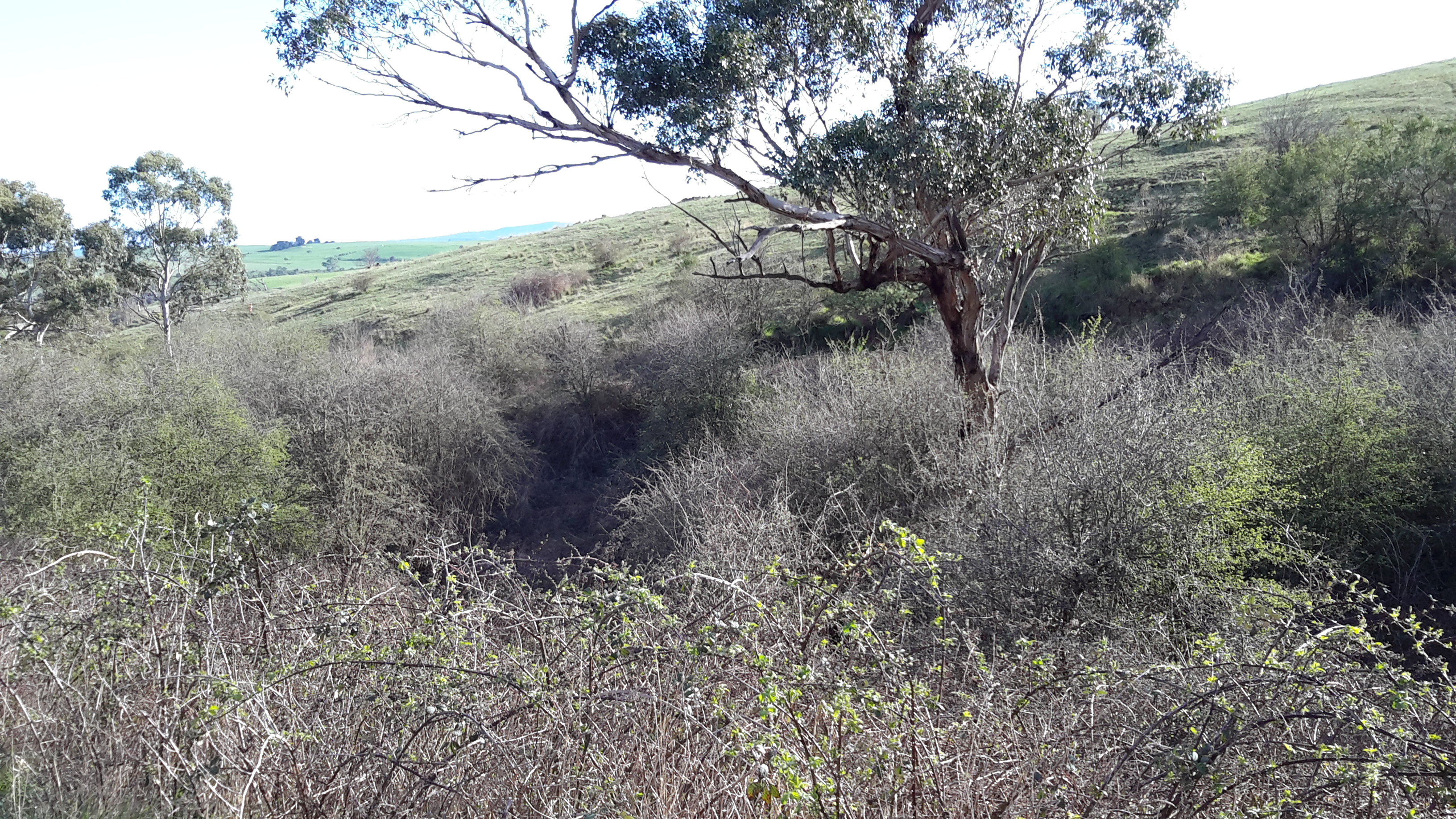
Can you spot the River through these profusely growing weeds?

While walking for leisure purposes has a history in Tasmania since the beginning of European settlement, our early legislators did not have a crystal ball to see that the 21st century is one in which many people want a healthy lifestyle that involves exploring and accessing our natural environment without barriers.

Unfortunately, a damaging minority of people are greedy, thoughtless, and cannot be trusted to meet their promises.  The consequence is what I found during Stage 15 and what I can foresee for Stage 16.  I soon realised that almost no free/public access to the River exists between New Norfolk and Gretna, and it seems this will also be true for any future inland push along the River.

After leaving New Norfolk on the westward proceeding Glenora Road on the southern/western side of the Derwent River, I soon registered paddocks and more paddocks had been recently re-fenced with fresh spiky barbed-wire.

20150917_104811

Note second fence line inside and parallel to the barbed wire fence line.

This year, the Australian Federal Government budget made a concession for small business owners and granted an immediate full tax deduction for expenses up to $20,000.  My conclusion was that farmers in the Derwent Valley grabbed this opportunity and used it to protect the limits of their properties.

As a child my father showed me how to pass through barbed wire fences. The process is best with two people but one can do it. You put your shoed foot on a lower strand of wire to hold it down, then pull the next one up and slip through the enlarged space hoping not to be spiked by the barbs.  But today’s farmers in the Derwent Valley know this trick. Since they don’t want people on their land, the wires are now extremely taut and the spacing between many lines of wire is only about 10-15cm.  If an adult expects to pass through the barbed wire fences of Derwent Valley farmers then Dad’s technique cannot work.

Barbed wire fences were not my only barrier to accessing the Derwent River.  Gates presented insurmountable challenges.  Almost all gates that I arrived at were padlocked. That hasn’t always stopped people accessing a property because the use of strong square wires or other metals in gate construction usually helps you with a footing to lift up and over the top.  Not so with many Derwent Valley farmers’ gates.  The new gates either are ringed in barbed wire or are wrought iron with high straight verticals which provide no place for feet.  For me these were unclimbable.

20150918_075938

Very occasionally I came across older fencing that had minimal or no barbed wire and seemed very climbable. But alas. These fences had an additional strand attached; an electrified line. Intended to keep the cattle in and from trampling fence lines, these electric fences were an absolute barrier for walkers like me.

20150918_091409

In places, farmers had cleverly left overgrown tangles of thorny blackberry canes that extended down paddocks and into the river, as an impossible barrier near their fence lines.

20150918_082523

I came across signs such as ‘Private Property’ and on one occasion the sign warned that ‘Trespassers would be prosecuted’.

20150917_140110 20150918_090514

Even access was limited to the very open Sports Ground at Bushy Park, one which contains almost no infrastructure. This Sports Ground edges the Styx River as it flows into the Derwent River.

20150918_114143

The sign pictured below was particularly annoying because it was suggesting that permission might be given if a request was made. However, I couldn’t get access to ask for permission to walk across the land.  Once on the spot, there was no way to discover who the landowner was and then to somehow connect with them using technology.

20150917_114101

On a particularly wonderful luscious green hill that wound around the Derwent heading for Gretna, one where walking close to the river would have been a great pleasure, the sign ‘Trespassers will be shot’ was a strong deterrent.

20150918_125443

During my walk I had decided that perhaps anglers had not respected the limited access they were given to the River at key points, via styles over fences. I mused that perhaps fishermen had strayed further than permitted, wrecked fences and generally not left the land as they found it.

20150918_083233

Blog follower Jo told me a story of how a few men had prearranged with a landowner to come and fish in his dam. After their weekend of fishing they emailed the landowner with thanks for the opportunity to take home 50kgs of fish. Needless to say, this greed was rewarded by the owner telling the fishing party never again to ask for permission to enter his land.

Later at the Gretna Green Hotel where I waited for the bus back to Hobart after completing the Stage 15 walk, I talked with a local about the reason for the impenetrable barriers to properties.  Apparently wood lifting, and cattle and sheep rustling used to be rife in the Derwent Valley until farmers closed their borders.  Not only would people drive onto properties to chop down trees and collect sufficient fire wood for their own personal needs, they would bring trucks in and take loads away to sell.  All without the permission of the land owner.  Similarly, whole cows and sheep would disappear in their droves overnight.  Regularly.  Modern day farmers’ costs are high, their income comparatively low for the hard work they put in, and so they were unprepared to subsidise the living of others. Their fences and gates have become good barriers – not perfect, because occasionally some unscrupulous wanderers bring bolt and fence cutters.  Nevertheless, as a walker with no intent to leave my mark on the land, I cannot proceed.

In my last steps walking into Gretna, I passed the two paddocks through which I envisaged Stage 16 would start. But both had impassable fences and gates with padlocks.  For the next stage, which was expected to cover the area from Gretna to Hamilton via the river, there are at least 4 property owners and who knows how many padlocked gates, bramble congested river edges, barbed wire and electric fences. It is not realistic to ask owners to come and unlock the padlocks and then relock them after I pass through.

While it is true, and you will read details in future posts, that I did access the river from time to time during Stage 15 and experienced some wonderful locations, for most of the walk I was deeply depressed about the limitations under which my project is being placed. I am pleased that writing this post has helped purge some of that anger and frustration. Now that the situation has been recorded, I feel much more ready to be positive again and determine a new way  to reach my goal.  The goal remains the same, but the process must be modified.

Stage 15 of the walk along the Derwent River has been completed!

On Thursday and Friday this past week, I followed the Derwent River and walked from New Norfolk to Gretna via Bushy Park.

Over the coming week I will write new posts detailing my experiences, presenting you with river and landscape vistas, introducing some of the people I met, providing information about aspects of Derwent Valley social and agricultural history as I found it, and showing you a range of animals. In addition, I hope to entertain you with instructions on how to pitch a light tent in a strong wind.

I have now covered approximately 230 kilometres in my quest to walk from the mouth to the source of the Derwent.  By simple measurement, I have passed approximately 87 kilometres of Derwent River.  Please refer to How Far Have I Walked for further information.   Please note that under Frequently Asked Questions I have added new information.

As a result of my findings on this Stage 15 walk (which I will detail in later postings), I believe insurmountable problems exist that will prevent me from proceeding along the River as planned. Therefore, I will need to modify my plan yet still achieve my aim to meet the source of the Derwent River at the southern end of Lake St Clair Lagoon. On this basis I cannot say when a new Stage will be walked.

The Derwent River a short distance west from New Norfolk

20150917_094036

Looking from the Bushy Park bridge north-eastwards towards Gretna

20150918_121215

Dams on the Derwent River

Maps

The Derwent River will always be your guide if you choose to walk along its length, but sometimes it is difficult to walk directly next to the river; for example structures may be built to the edge, steep drop down cliffs may raise you many metres above the water, and gates and fences may make access impossibly impassable.  In addition, when the terrain forces you away from the river, the vegetation may be sufficiently dense so that you can get lost (without map and compass – and GPS if your technology allows).

If you choose to walk the entire length of Tasmania’s Derwent River you might consult one or more of the 17 maps which cover the territory. One value is that you learn the name and shape of landmarks. Have a look at the list below:

Maps

Walking again – not yet

Regular blog readers know I am eager to restart my walk inland along the Derwent River, and that my next travel date is dependent on the weather being suitable.

Despite unexpected occasional snow flurries in the higher areas, Hobart’s rising temperature and minimal rainfall has become more agreeable by the day, so recently I decided that it was time to tackle the walk west from New Norfolk to Gretna at the end of this week.

Unfortunately, the long range weather forecasts in the Bushy Park area, where I will be camping overnight before passing through, indicate the mornings will be -3 degrees and the days only rising to 14 degrees maximum (I cannot see any pleasure in breaking the ice in the morning to make a cup of tea).  In addition, a few splashes of rain are forecast. In reading these projections, I am reminded that the climatic situation in Hobart is not the same as in areas located many kilometres inland.  So, regrettably I must let a few more weeks pass before continuing on.

For me the perfect walking environment includes a temperature of between 15 and 21 degrees Celsius, a sunny day preferably without a cloud in the sky, and almost no breeze (definitely no wind). Before each walk I hope rain has cleaned the air so that all the green vegetation sparkles – but that everything I stroll through is no longer wet. During the early walking stages, I had quite a few of such lucky days – and I am hoping for more.

Did I feel uneasy walking alone past Murphys Flat on Stage 14 of my walk along the Derwent River? Answers and extraordinary stories.

Yesterday one of my posts introduced Addington Lodge as a Haunted House and since then a few readers have wanted to know more.

Photo of Addington Lodge

The photograph above is of Addington Lodge, Granton, apparently a former residence of Governor Arthur – from the collection of Linc Tasmania

In Hobart’s The Mercury newspaper of Saturday 6 July 1935 (http://trove.nla.gov.au/ndp/del/article/30094484?searchTerm=Anthony+Geiss), J Moore-Robinson wrote his version of the history of the House and area (then not known as Murphys Flat rather as Marsh Farm). A few descriptions and some extraordinary stories of what happened to a hop picker and others, create a feeling of how the crumbling remains of Addington seemed at that time.

The author talked about people “who visit southern Tasmania who have not seen the Haunted House but have been intrigued by its shady reputation and shadowy tradition. Empty and forlorn it stands to-day near the road-side on the way to New Norfolk, a gaunt spectre of a vague past, a meet  and fitting rendezvous for apparitions which, if the poets speak truly, steal at the witching hour of midnight, from yawning graves and uneasy vaults, to curdle the blood of humans. Motorists roll by unthinking at all hours of the day and night, but pedestrians, I am told, walk warily, or walk not at all past the place.”

Did I walk warily? Well yes I did. But my caution was the result of the stream of traffic pouring down the highway a couple of feet next to me.  Sometimes, in some situations, my body can feel ’something’ about a location, but with the incessant roar of vehicles close to my left ear, the brittle wind in my face, and the chilly temperatures I was charging on northwards and gave no thought to ghosts of the past.  Perhaps the bright hard sunlight kept them at bay.

The newspaper article continued: “The existing owner, Mr. F. B. Rathbone of Mt. Nassau, tells me that the place has been rather a bane and an expense to him, and he will not be sorry when nothing remains but a heap of rubble foundations. I asked him why. ‘I have lived in the place myself for weeks at a time,’ he said. ‘My son lived in it for more than a year. Neither of us saw anything uncanny, yet nobody will take it. It has a bad name, and I think it better to let it fall to ruins’. It appears that long before the war, folk were apprehensive and the Haunted House, lacking regular tenants, frequently was empty. Mr. Rathbone said that there are no spectres, never were any and that the noises and apparitions came from a loose board in the roof and from rats, rolling-apples and potatoes in a cupboard.”

But is this true? The newspaper article continued and included a number of stories which might explain the haunting reputation, and which might even be factual.

The hop-picker story

“Shortly before the embers of discontent of South Africa burst into the flames of war, a hop-picker having drawn his cash at Bushy Park was ’Waltzing Matilda’ to Hobart.  He was weary with tramping the hot and dusty road but, doubtless he looked forward, with unfeigned pleasure to the flesh pots and foaming tankards, of the city. As the sun set, he came, unaware of its story, to the Haunted House.  Shadows deepened on the nearby river as the hop picker, pushed open an unfastened door, entered the fateful house, ate his cold mutton and bread, washed it down with part of a billy-can of beer purchased at New Norfolk, spread his blanket on the floor, and slept the sleep of the weary. Presently he stirred and rubbed his eyes and, as he looked, the very marrow froze in his bones. His hair stood on end and his heart seemed to stay its pulsing, for rising before him in the doorway he saw a ghastly thing. ‘Thing’ is the right word, for the hop-picker had not seen or dreamed of anything like it. Thin legs, curved, and bent, supported an enormous body which, though it seemed to be clothed, was still visible to the trembling mortal who saw the apparition’s internal organs hideously pulsing and distended. Its neck, gashed from ear to ear, was unable to support the head which sagged horribly from one side to the other. Blood dropped from the severed jugular and the baleful gleams from the staring eyes pierced the semi-darkness and seemed to impale the terrified watcher. A butcher’s knife was clasped tightly in the spectre’s right hand, and hand and knife were horribly red.

In a crouching pose, the creature swayed toward the ‘hopper’, whose limbs seemed fettered by unseen manacles, from which he writhed and struggled to free himself as the menacing and blood stained figure approached. A foul smelling breath stung his nostrils and the knife was within striking distance of his heart, when, with a wrench that would have done credit to Samson, the ‘hopper’ broke free, dodged the ghost, darted through the doorway and, looking neither right nor left, sped down the road, a white and terror-stricken figure clad only in a shirt. Feeling rather than seeing the ‘thing’ close behind him, he essayed a short cut over a bank, slipped on a stone, gashed his head on a sharp rock, and lapsed into blessed insensibility. When he came to, he found himself prone on the cold floor of the room in which he supped. His blanket lay in a disordered heap. His fingers bled where he had scratched and torn at the floorboards. A lump on the side of his head betokened a meeting with some foreign body. Looking around cautiously the ‘hopper’ could see nothing of his ghastly visitor but, thinking discretion the better part of valour, gathered his belongings, moved tremulously through the door to spend the remaining hours of darkness in vigil by the roadside.”

The hopper’s ghost

“It is said that the hopper’s ghost is the spiritual remnant of a whaler, who, wandering further afield than usual, met at the Golden Fleece (for that was the sign of the haunted house 100 years ago) a bushranger disguised as an honest man. The pair spent some happy hours until the Tasmanian Robin Hood, seeing his chance expertly slit the throat of his ‘friend’ and disappeared with his wallet.”

Lady with the broken heart

Another story has to do with a young and beautiful woman who, betrayed by the usual dashing cavalier, languished in spite of the kindly protection of the landlady until, with a broken heart and saying a prayer for bitter revenge, she stabbed herself, and so went away to brighter, and, I hope, happier fields.

The landlord and his landlady

Still another tale is told about the landlord and the landlady, when the place was the William the Fourth hostelry. This couple, having decided to essay life together without bothering the clergy lived happily for a while, but only for a while. Quarrel followed quarrel, and in these the woman usually came out on top for she was bigger, quicker and stronger, although the landlord had been a soldier and had seen wars, having been with that army which ‘swore terribly in Flanders’, he became tired of being the vanquished, and one day finding his ‘wife’ asleep, stabbed her.  Not content with that, he drove a spike into her head, cut out her tongue, slit her throat and not being quite sure at this stage that she was really dead, and poured some poison down her throat. He then tenderly buried her and was caught and duly hanged which seems to be the only really proper and moral part of the story.”

The Golden Fleece’s reputation as an Inn

“It was during Fitzgerald’s term as licensee that, according to legend and tradition, the place achieved its notoriety, which, considering the grounds on which he was later pilloried is not surprising. It is certain that the ‘Golden Fleece’ had an evil reputation, and that the name was truly descriptive of the ‘fleecing’ accomplished within its walls, and the ‘golden’ results which accrued to the enterprising landlord.”

Kelvin Markham (http://www.km.com.au/tasmania/ch14.htm) has a different view on why the House was haunted.

During the twenty one mile journey to New Norfolk, I had the company of a ghost – one Denis McCarty. To you who follow me along this road, the first made in Tasmania, I present this Irish ghost, ex-convict, constable, farmer and grazier, road-maker, Deputy Provost Marshal and much more. My assertion is that Denis, after all his troubles in constructing the road, drinking his share of the 500 gallons of rum that were to be part payment, and then dying whilst his claims for final settlement were being considered by Governor Sorell and Macquarie, perambulates this unpaid-for road, and, when he finds it necessary to take shelter, rests in the old Golden Fleece.  If you dive into the history of this road, you will learn a number of things. For example You will stand at his deathbed, seeing it only as through a glass darkly, and wonder what Jemott and Broadribb had to do with it – if anything. Contemporary records refer mysteriously to these persons as knowing more than they should of McCarty’s end.”

These background stories and reasons for Addington House or Lodge/Golden Fleece Inn/William the Fourth hostelry to be haunted make for wonderful fiction-writing and movie-making opportunities.  Anyone interested?

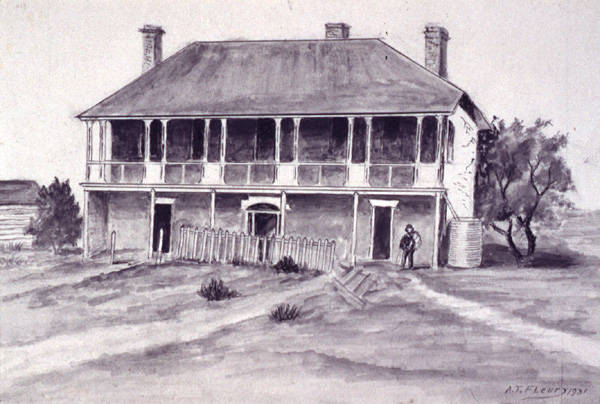
Add Lodge drawing -UTAS library

The image above is a drawing of ‘Addington Lodge Colonel Arthur’s Marsh Farm between Bridgewater and Sorell Creek Derwent Valley’/’The Haunted House on the Granton New-Norfolk Road’ by artist A. T. Fleury c1931 – from the collection of Linc Tasmania