Category Archives: Mount Wellington

22 Aug 2014 Via Fort Beach returning to South Arm road – Posting 6 of 8

I retraced my steps from Cape Direction and Pot Bay to the Lone Pine Memorial.

On the Pot Bay beach I passed an amazing driftwood ‘shack’ on the beach, as shown in the photo below. Are those underpants swinging from on high?

20140822_101716

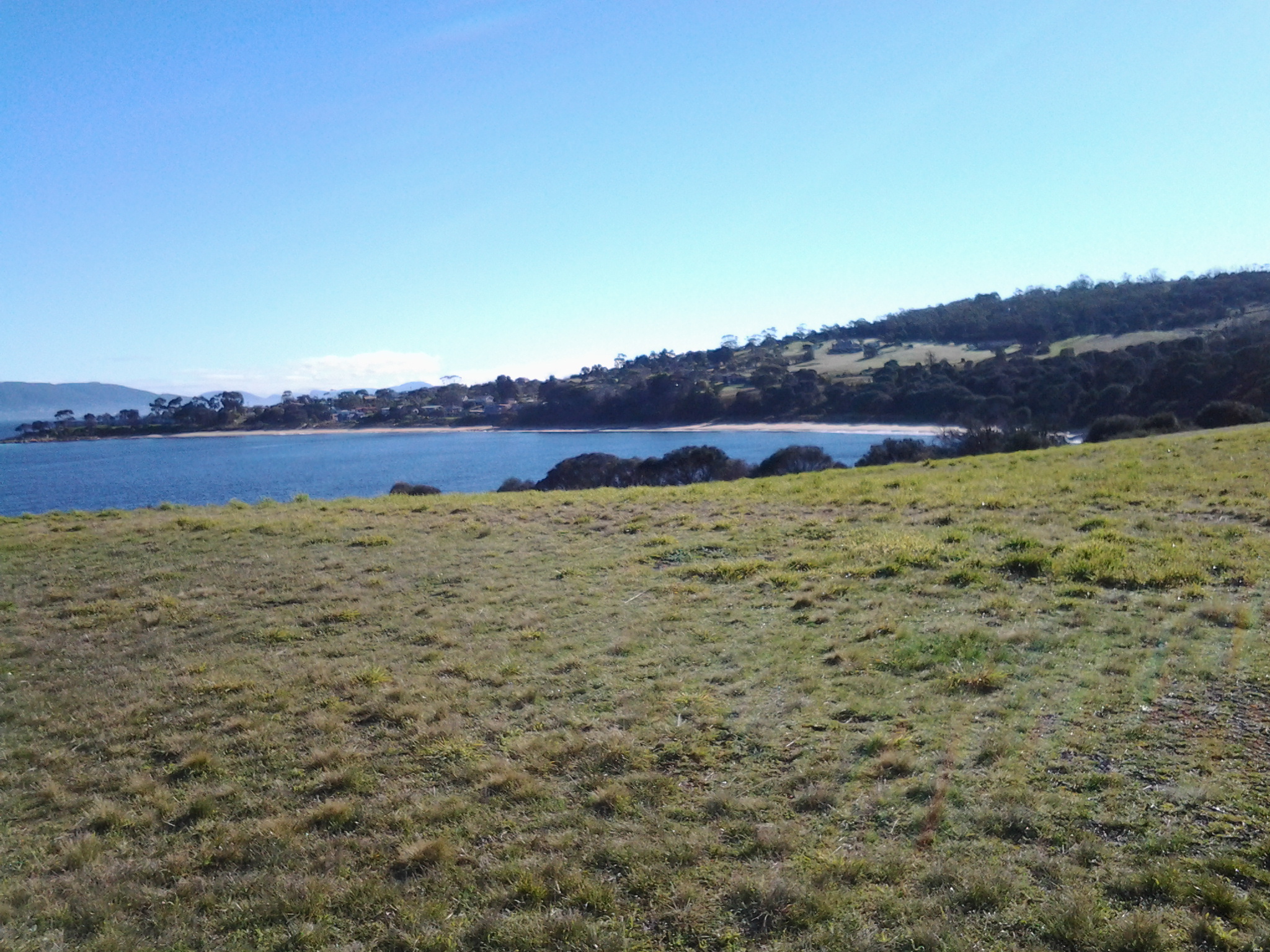
After a refreshed look at the Lone Pine Memorial, at 10.25 am (only 1 hour 20 mins since I had left the bus – yet, because I had seen and thought about so many things, the time felt much longer), I turned towards the point of Cape Deliverance. Before doing so, I clicked the photo below which scans Fort Beach towards Johns Point.

20140822_094334

The vehicle track, which wound down the hill towards the Derwent then switched back in the direction of Fort Direction seemed the perfect way to get myself down onto the sandy Fort Beach. Twenty or so minutes later I reached the western end of the beach and easily walked up onto Blessington Road.   The alternative would have been to round John’s Point and continue along to South Arm almost entirely by clambering over a rocky shore.  Of course this was possible however, I reasoned that it would take a lot longer to reach my destination. While walking on the very long Blessington Road, I noticed a couple of public walkways down to the shore, so that if a walker started at the river level they could come up to the road at a later time. A couple of empty house blocks with a water frontage made me consider whether these might provide a way to move from the shore to the road – but they are privately owned so careful thought would be needed before deciding to walk across these.

Half an hour later I reached the cross street Rosemount Lane, a short street which took me down to the South Arm Road.  I continued west towards the South Arm beach, passing by the prominent Cenotaph that remembered many wars including the more recent Iraqi war.

20140822_112246

22 Aug 2014 Heading for the start of the first walk at Cape Direction – Posting 5 of 8

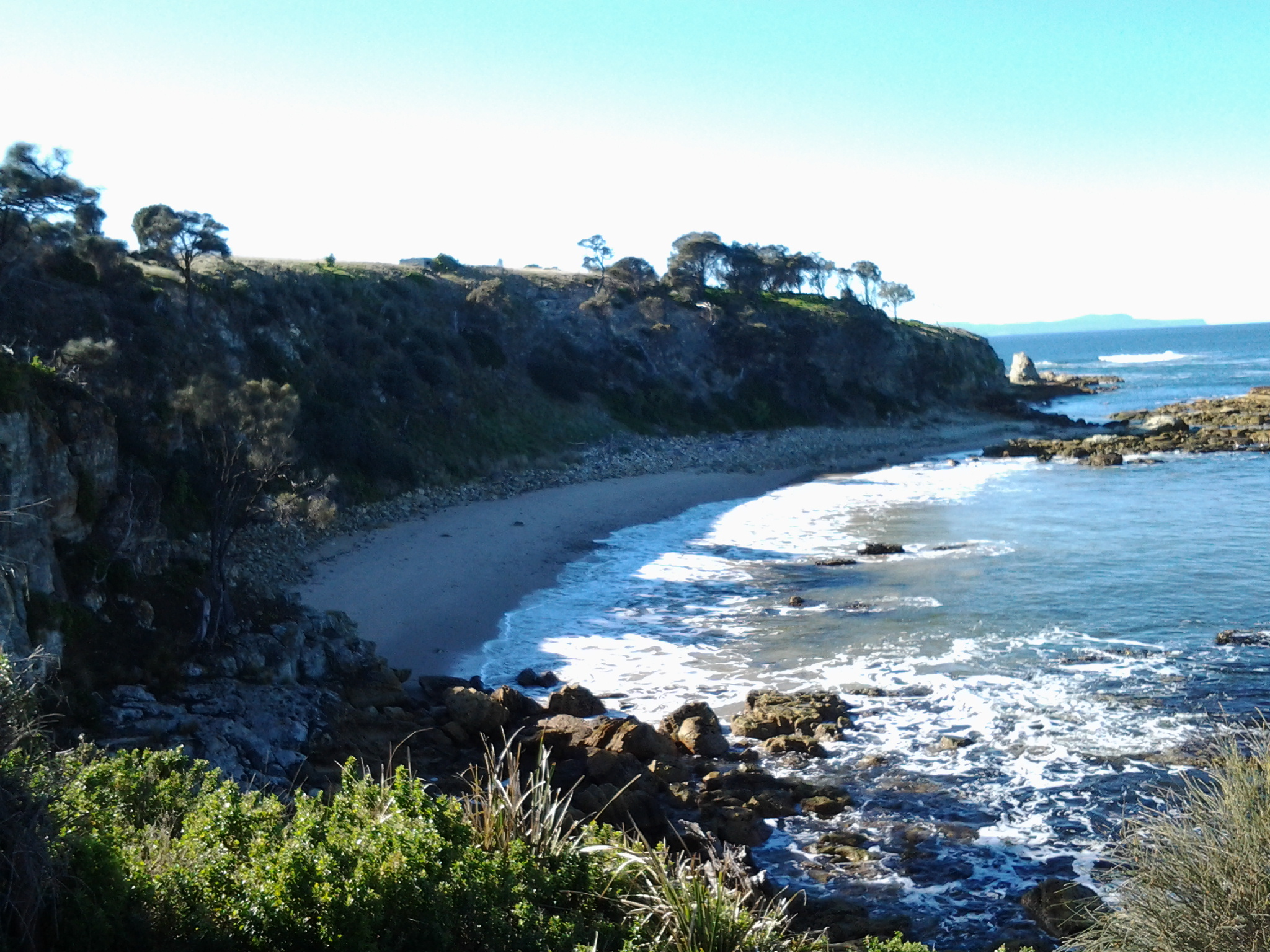
The photo below shows Cape Direction. To the left of the headland trees is a concrete bunker.

20140822_095939

Heading toward Cape Direction, I walked along a vehicular track eastwards and down onto the firm sand of the beach at Pot Bay.  Large Gulls either Pacific or Dominican patrolled the beach, letting a mix of Pied Oystercatcher and Sooty Oystercatcher birds have a run around.  The protruding flat sandstone rocks on the beach featured empty oyster shells.

 20140822_095103

20140822_095416

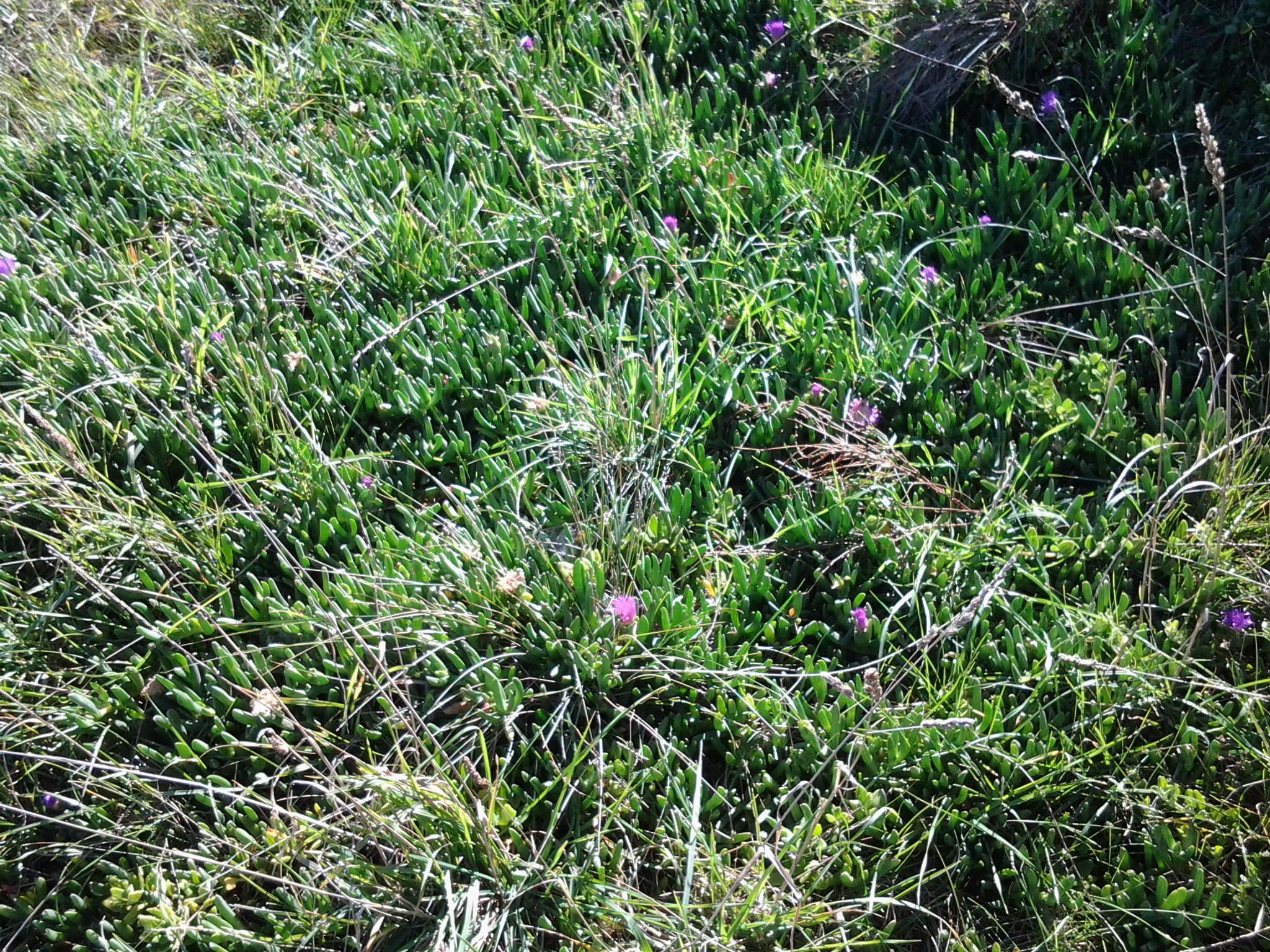
 At the end of the beach I clambered up the rocky earthy banks amidst a rich layer of fleshy vegetation that looked good enough to eat. I knew that the pigface plant with bright pink flowers open to the sun was edible, but what about the rest.

The photo below shows a swathe of blooming pig face on the Pot Bay side of Cape Direction.

20140822_095628 

What did the original aboriginal people eat? I would be very interested to learn whether some of the other plants could be used as food.

I had been warned that most of the old gun placements on Fort Hill were out of bounds, and again a high mesh perimeter fence made that clear.  But I was able to wander towards the one remaining structure outside this fence – one without tunnels. I waded on through high grass and onto another vehicle track that lead uphill to the remains of a massive concrete gun placement structure.

The photo below shows the concrete structure. The Iron Pot lighthouse can be seen in the distance.

20140822_100305

As I wandered inside the structure, it made no sense to me, and with no information to hand I was left puzzling as to why it was surrounded on all sides by rock and earth so the soldiers would not have been able to see an enemy coming towards the Derwent leave alone fire on such a ship.  Perhaps I am the first non-defence services visitor (can that really be true?) and everyone else who has visited perfectly understands how the building was used. 

From this structure it was a short distance east to open and exposed Cape Direction – the starting point for my walk along the Derwent.  Opposite, almost linked to the mainland at low tide by a series of rocky reefs, was the Iron Pot in all its glory.

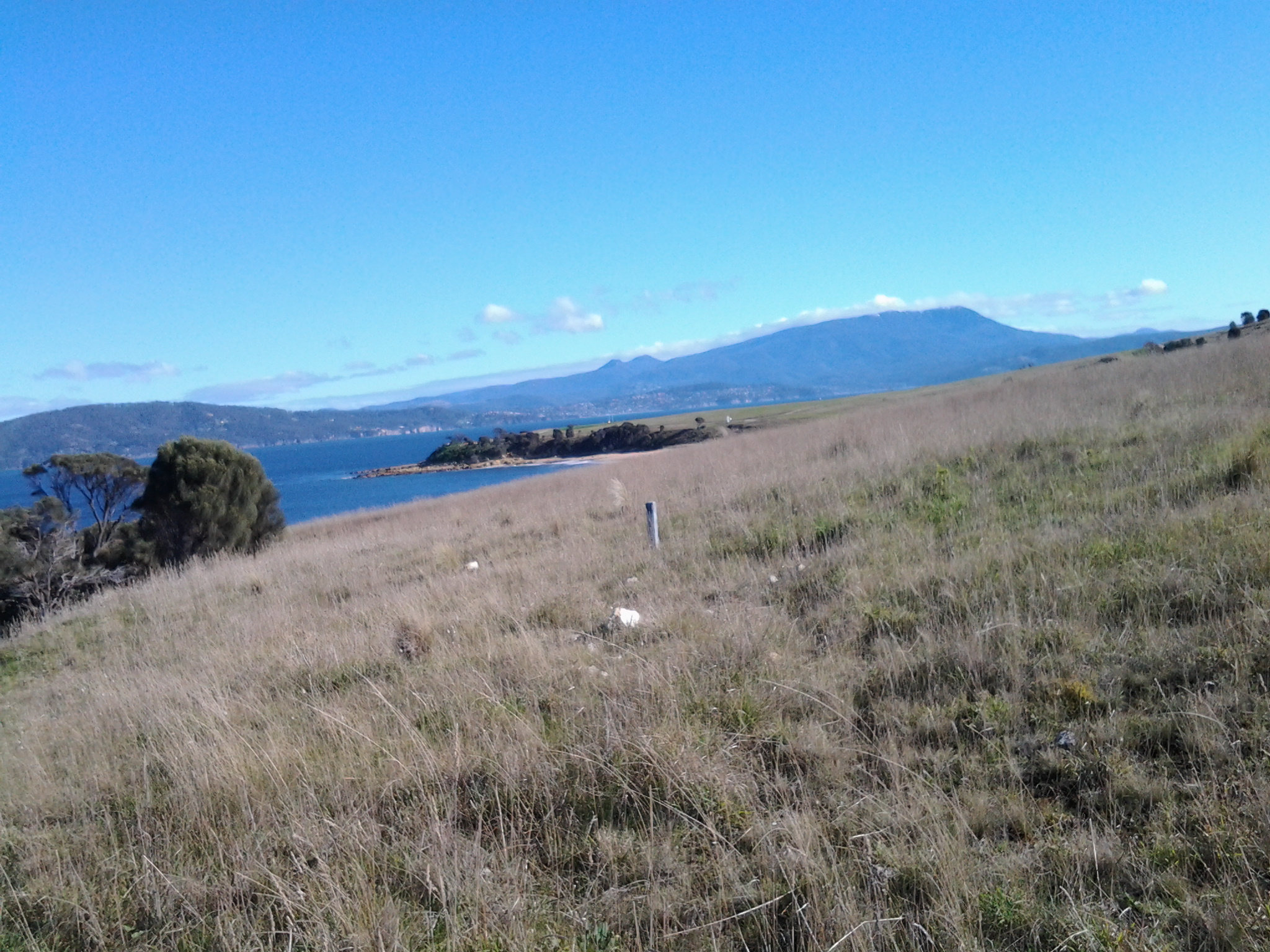
The photo below shows Mount Wellington above Hobart, past Cape Deliverance and taken from Cape Direction.

 Towards Cape Deliverance and Mt Wellington

The Bridgewater Jerry … or is it Gerry?

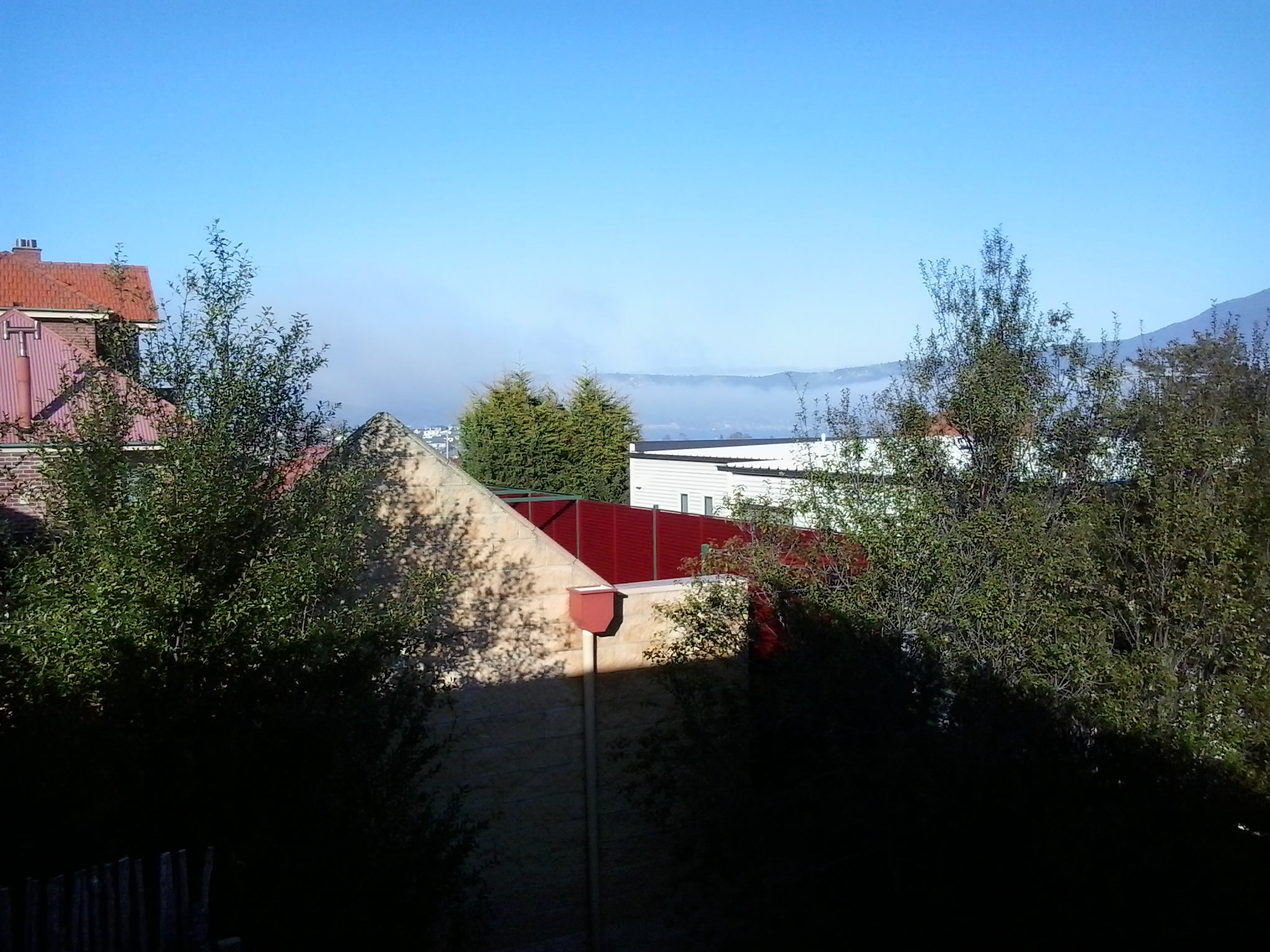
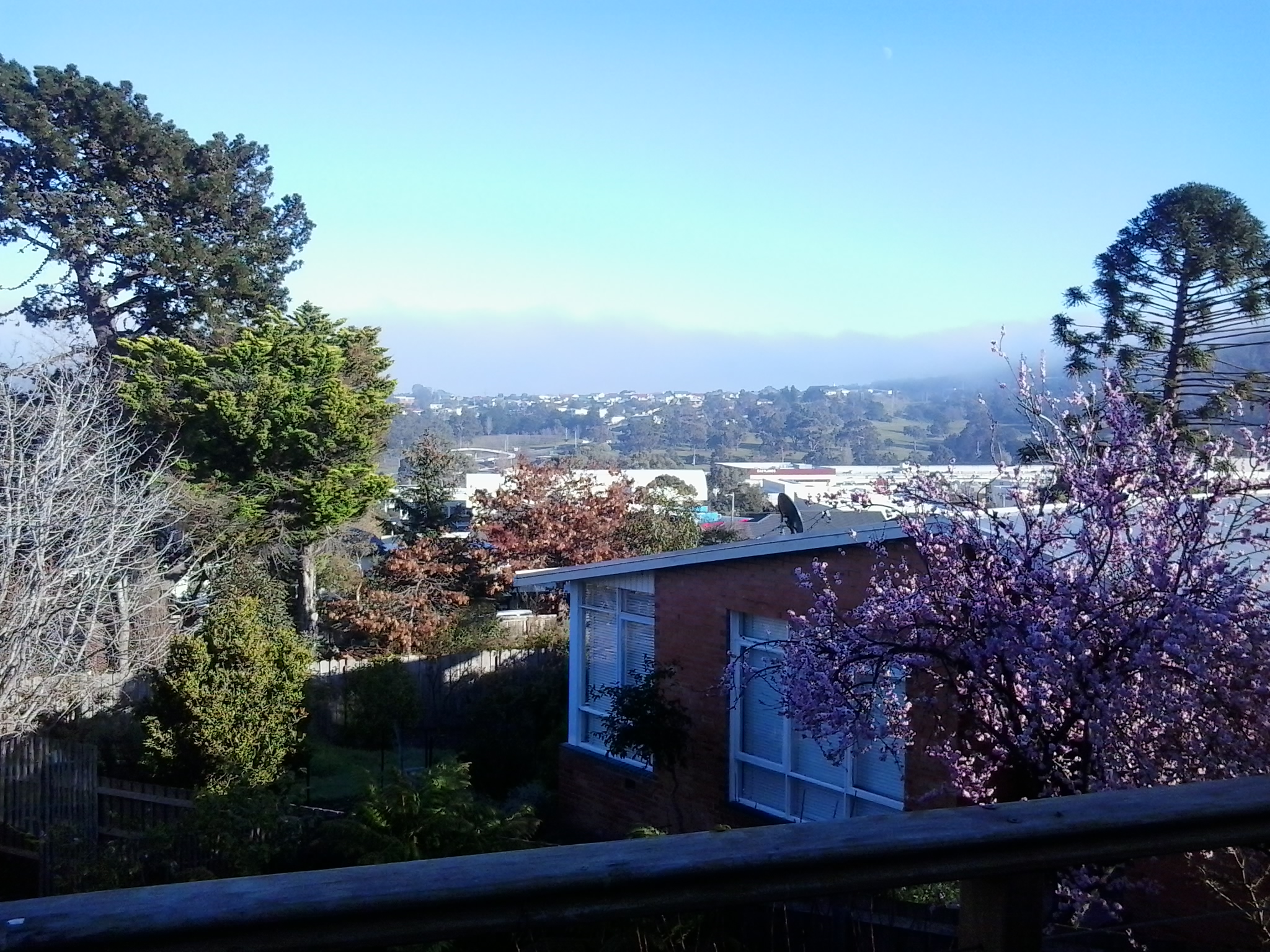
This morning the Bridgewater Jerry obliterated my view of much of Hobart from the eastern shore. The Derwent River stopped being visible. In the sunshine, its fast moving roll down the river towards the sea was spectacular.

The Bridgewater Jerry moving down the Derwent River with Mount Wellington in the background. Taken from the eastern shore 17 August 2014

The Bridgewater Jerry moving down the Derwent River with Mount Wellington in the background. Taken from the eastern shore 17 August 2014

2014-08-17 08.51.00 2014-08-17 08.51.29

The internet offers many sources of further images and information. Examples are listed below (I was surprised to learn the Jerry has its own website, a public sculpture has been created in its honour, and Australia’s premier dictionary contains an entry. That’s not all – have a look at the websites listed below).

http://www.bridgewaterjerry.com/  … The Jerry has its own site showing one glorious photo but with no identifiers, date or other information.

 http://prelive.themercury.com.au/article/2012/07/02/342041_tasmania-news.html … In 2012, the local newspaper The Mercury published a short story with a couple of views when “ ‘Ol Jerry rolled into town”.

 https://www.flickr.com/photos/esereth/9252562361/ … this Flickr site offers a sensational air view of the jerry

 https://www.youtube.com/watch?v=gDsVB5Nz3K8 … thanks to Damien Brockie’s time lapse video you can see the movement of the fog down the Derwent river heading towards the sea.

 http://trove.nla.gov.au/ndp/del/article/26190783

This site shows a scanned copy of a 1946 newspaper article which described the draught as keeping ‘the thermometer at freezing point’. The article pointed out that the township of Bridgewater has been libelled because the fog starts further up the valley. Apparently, at the inland town of Bushy Park the fog is known as the ‘Bushy Park Blizzard’.

 http://www.abc.net.au/local/stories/2009/05/13/2569108.htm  …..

In May 2009, Carol Raabus wondered where the name ‘Bridgewater Jerry’ came from.  She reflected that “It’s that time of year when the mornings are crisp and you just don’t want to get out of bed. You look out the window and see nothing but a thick fog, blanketing Hobart’s suburbs from the Hobart docks, up to Bridgewater and further up the Derwent Valley. But where did the fog get its name? And should it be spelt ‘Jerry’, or the less common, ‘Gerry’? One theory of the origin of the name is that word ‘jerry’ came from London, where it was thieves’ slang for mist or fog, and the term was transported to Tasmania with the convicts. David James writes in The Companion to Tasmanian History that the first written reference to the fog, although not using the name Jerry and not coming from Bridgewater, was in 1821 when Governor Macquarie wrote he couldn’t leave Austins Ferry for Hobart until 12.30 one day, due to the thick fog.”

 http://www.utas.edu.au/library/companion_to_tasmanian_history/B/Bridgewater%20Jerry.htm ….

David James (2006, Centre for Tasmanian Historical Studies) declared “the ‘Bridgewater Jerry’ is a fog which occasionally affects the Bridgewater Hobart area. At night, in cooler months, cold air drains down the mountains of southern Tasmania as katabatic winds and collects in the Derwent Valley. Fog will form if this invading air is moist and cool enough. It drains out of the valley in the mornings, blowing the fog with it. The fog mainly affects the Derwent and the northern and western suburbs of Hobart, but occasionally reaches the Eastern Shore.

https://www.macquariedictionary.com.au/resources/aus/word/map/search/word/Bridgewater%20Jerry/Tasmania/

The Bridgewater Jerry has an entry in Australia’s Macquarie Dictionary. “A dense, remarkably compact stream of fog which occasionally rolls down the western shore of the Derwent River (presumably from Bridgewater) into parts of Hobart.

  • Contributor’s comments:A front of fog Cold air drainage condensing. Usually ‘Bridgewater gerry’ describing the phenomena on the Derwent River from Bridgewater to Hobart but I have often heard it generalised in southern Tas. Not in any Tas lexicons. Suspect origin is post-WWI Gerry = German and looks like a gas cloud. The effect usually is that a bright clear and crisp Hobart morning swamped by cold fog flowing down the Derwent from Bridgewater: “Did you see the gerry running this morning? I was on the bridge when it hit.” Generalised: “Careful about buying a place in that valley, there might be a right old gerry running down there in the winter.”

  • Contributor’s comments:The Bridgewater Jerry gently rolls its way down the Derwent at the start of a winter day, often shrouding the low-lying riverside suburbs for most of the morning. Those people living in Hobart’s hillside suburbs would often be basking in brilliant warm sunshine before plunging into the dense, wet and cold on their way to work or school.

  • Contributor’s comments:I believe this term comes from the days when the Bridgewater Causeway was being built by the convicts – there was one named “Jerry” who was always smoking a pipe leaving a cloud behind him. Therefore when a fog was seen on the river it was associated with Jerry’s pipe.”

 http://www.arts.tas.gov.au/news_archive/unlikely_icon_celebrated_in_sculpture  … The Bridgewater Jerry, a unique fog that rolls down the Derwent Valley, has been immortalised in a public art project led by artist Tony Woodward.  Unfortunately all the links to an image of the sculpture, its location and other information do not work.  Where is this sculpture?  Does anyone know?

A new idea – starting out

A year or so ago, I read the true story of an English man who walked the length of the Thames River in England. He did not start one day at one end and continue walking until he reached the other end. Instead the walker fitted many stages of the walk around his normal working life. Through his eyes, and via his words on the page, I discovered a new way of seeing and understanding the everyday world one step at a time.

Half a world away in Hobart Tasmania Australia, the mighty river Derwent wends its way from further north moving south over approximately 249 kilometres past Hobart towards the sea. Last weekend, I realised that if I could walk the edges of the Derwent, then a wonderful adventure might unfold.

As I reread the above, my writing seemed unimpassioned and lacking the excitement I feel about this idea.  How fabulous to walk along our wonderful river with all its changing temperaments and colours; on some days to walk beside its ruffled surface or its mirror sheen. To look across at parts of the city, the hills and the mountain.  To enjoy the bobbing and sails of the yachts. To be reminded that I live in this marvellous place.

And when I walk, I want to share my discoveries. I will write the story of the walk firstly on a blog followed by a later publication in a hard copy format – complete with photos.  In addition, I will align the walk with the various set down and pick up points of commuter buses of the public transport system. In this way, I will make the walks accessible for anyone without a car.

Alive with the idea, I alerted Ju and Jo. I knew they would contribute valuable information. Already the ideas are flowing.  Immediately, Ju expected to walk some stages with me – an obvious and appropriate response.  I expect other friends may wish to join some stages.

It is unlikely the stages will be walked sequentially. Rather we agreed that I should buy detailed maps on which to mark out the length and track of distinct stages. Then, depending on the weather of a day or my mood, I can select the stage that best meets the situation.  Stages will not last more than a day, but the length of any stage may vary. In winter a stage may last a few hours.  However, during the long days of summer, a stage may last many hours.

The walks will not always be on the rocky or sandy foreshores of the Derwent river. Sometimes these river edges may be place for our footfalls. At other times we may cross grassy slopes over hills or pass along the concrete pavements or bitumen roads of suburban streets. On occasion, permissions may be needed to pass through private land.  But such possibilities are ahead.

Each walk will be an incremental path through unknowns. Only once the length on both sides of the river has been covered on foot, can the patchwork of stages be brought together and moulded to tell a story.

Today I purchased five maps: New Norfolk (5026); Richmond (5226), Hobart (5225), Taroona (5224) and Blackmans Bay (5223). Collectively these cover a small part of the length of the Derwent river.  The initial aim will be to determine the walks from the sea ends of the river at a point in the Blackmans Bay suburb (on the western side) and near the township of Opossum Bay (on the eastern side) then continuing upriver and finishing at some point in the vicinity of New Norfolk.  Further west then north some of the river flows through untracked wilderness so that serious bushwalking plans will need to be developed for those distances.  The aim is to walk the most easily accessible bits first.
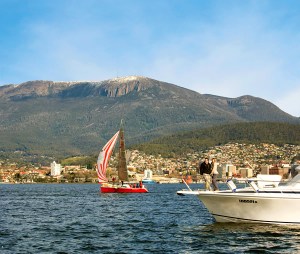
A wind ruffled Derwent River shows off the the pleasures of the water. being overlooked by snowcapped Mount Wellington

A wind ruffled Derwent River shows off the the pleasures of the water. being overlooked by snowcapped Mount Wellington