Tag Archives: Bridgewater

The Paredarerme people – the original indigenous owners of the land along the Derwent River

Prior to European settlement the district around Bridgewater and Herdsmans Cove was inhabited by the Paredarerme Aborigines, the largest indigenous tribe in Tasmania.  Geographical locations associated with this group include the Derwent estuary, Jordan River and New Norfolk and much further afield along the east coast and into central Tasmania. ‘Oyster Bay Tasmanian’ or ‘Paritarami’ is the aboriginal language of these people.

From http://www.heritage.tas.gov.au/media/pdf/September%202011.pdf , “the history of the Paredarerme (Oyster Bay) tribe, estimated to be the largest Tasmanian tribe at the time of European settlement with 10 bands totalling 700 to 800 people. Theirs was a nomadic, but complex society, with strong cultural traditions. The Paredarerme people constructed uniquely Tasmanian reed and bark boats. It is believed these vessels date back at least 4,000 years and were used to access offshore islands and traversing inland waterways.” The site, http://www.museumsaustralia.org.au/admin/email_templates_archive_message.php?id=428 continues with additional information: “Collecting the plant materials would have involved the whole tribe, with men collecting large pieces of bark and being responsible for the canoe’s construction. It would take considerable strength to lash the plant materials to form a strong and robust vessel.  These would have been used to collect shellfish, crayfish, and to hunt seals along the coast. They were also used to cross the stretch of water now known as Mercury Passage to Toarra-Marra-Monah (Maria Island), choosing good weather to cross from Rheban to Lachlan Island, then across to Maria Island.”

Paredarerme Tasmanian Aboriginals are now collectively referred to as Pungenna Culture. On http://pungennaart.wikifoundry.com/page/bush+tucker, I found photographs of traditional foods. I should not have been surprised to see pigface as one of the foods – in earlier postings I have included photos of this gorgeous pink flowering plant which grew by the Derwent River.

20140822_095628

Bridgewater

Tomorrow, on the 8th stage of my walk along the Derwent River, I expect to reach and walk through a second suburb. The suburb of Bridgewater is located within the Brighton Council municipality on the eastern shore of the Derwent River, adjacent to Herdsmans Cove the suburb of which is located slightly to the south. The original settlement was known as Green Point.

Bridgewater has four primary schools, one high school and a Trade Training Centre all linked into the Jordon River Learning Federation.  According to http://www.aussietowns.com.au/town/bridgewater-tas, “in the 1970s the area saw a public housing broad-acre estate which gave it a reputation. By 1997, Bridgewater was considered to have Australia’s lowest level of wellbeing. Whole streets of public housing stood vacant, houses smashed and torched. Housing Tasmania administrators remember people writing on their applications that they wouldn’t live in Bridgewater or Gagebrook – no matter how desperate they were.By 2003 Bridgewater was experiencing a housing boom and property prices, particularly for houses and land overlooking the Derwent River, tripled and quadrupled.”

I suspect Bridgewater has ‘grown up’ since those days and I look forward to seeing what it now offers.

A current profile of the suburb indicates the following: the median house price is $159,000; its population is 4024; its median household weekly income is $680; the median age of its residents is 32; the median housing loan repayment is $1036 monthly; 52% are not married and 14% are in a defacto relationship; 17% are under 14 years of age.  I wonder what this will all mean practically on the ground as I walk the paths along the Derwent River. Probably nothing at all.

From Risdon Cove walking towards Otago Bay along the Derwent River- part of the 7th stage of my walk

For safety’s sake I continued walking along on the Derwent River side rather than on the road side of the guard rail, although there were moments when the edge fell away and so I was forced temporarily back onto the road. This stage certainly would not be one that someone using crutches or a wheel chair could follow. There were no official paths and so I made do with whatever I could in terms of a suitable walking path.

I enjoyed this part of the walk observing more black swans in pairs and families of ducklings out for a paddle.  At the end of the bay of Risdon Cove, I exchanged friendly greetings with a couple of woman who were selling bunches of colourful flowers from the boot of their car on a set back on the other side of the road.

I continued up an incline still on the ‘safe’ side of the railing amidst blown and thrown rubbish, tall weeds, and native grasses.  Whispering casuarina trees separated me from the River. Clearly people have walked here before but it is a rough ‘non-path’.

At 9.54am I reached the turn off signposted to Bridgewater, began the left hand walk downhill, and passed the furry remains of dead possums (unfortunately ex- road-kill).  To my right, on the other side of the road, the 19th century heritage listed Cleburne Homestead and its scatter of old sandstone buildings popped occasionally into view through large trees and bushes.  The Homestead operates as a luxury bed and breakfast art hotel style establishment (http://www.visitcleburne.com.au/).

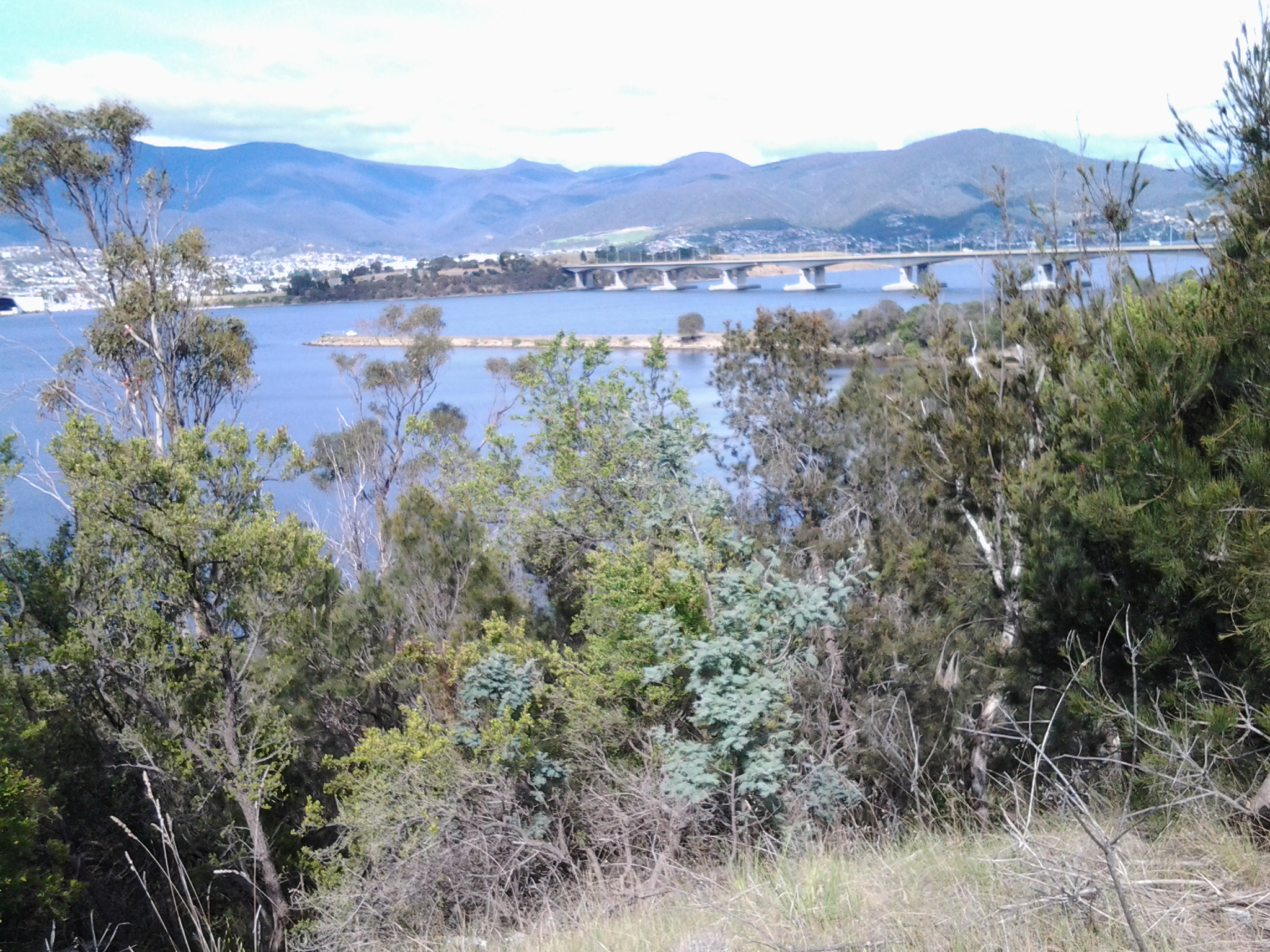
The photo below shows the Cleburne Spit which inserts itself into the Derwent River, with the Bowen Bridge crossing the River in the distance.
20141031_095246

At 10am I arrived at the junction road leading left to the Cleburne Spit. The Spit looked very much like a man made raised wall approximately one or two car widths wide that extends out in a straight line into the Derwent River.  Perhaps it was a series of rocks that once could be walked upon and then someone dropped filling rocks to create a breakwater to fish from or some other activity. I wonder what the real story is. My guess is that the Spit was named after 19th century settler Richard Cleburne.  He was an interesting character who had a property in the area and was suspected of smuggling. Did the Spit figure in such illegal activities I wonder? More information about Richard can be read at http://adb.anu.edu.au/biography/cleburne-richard-1903.

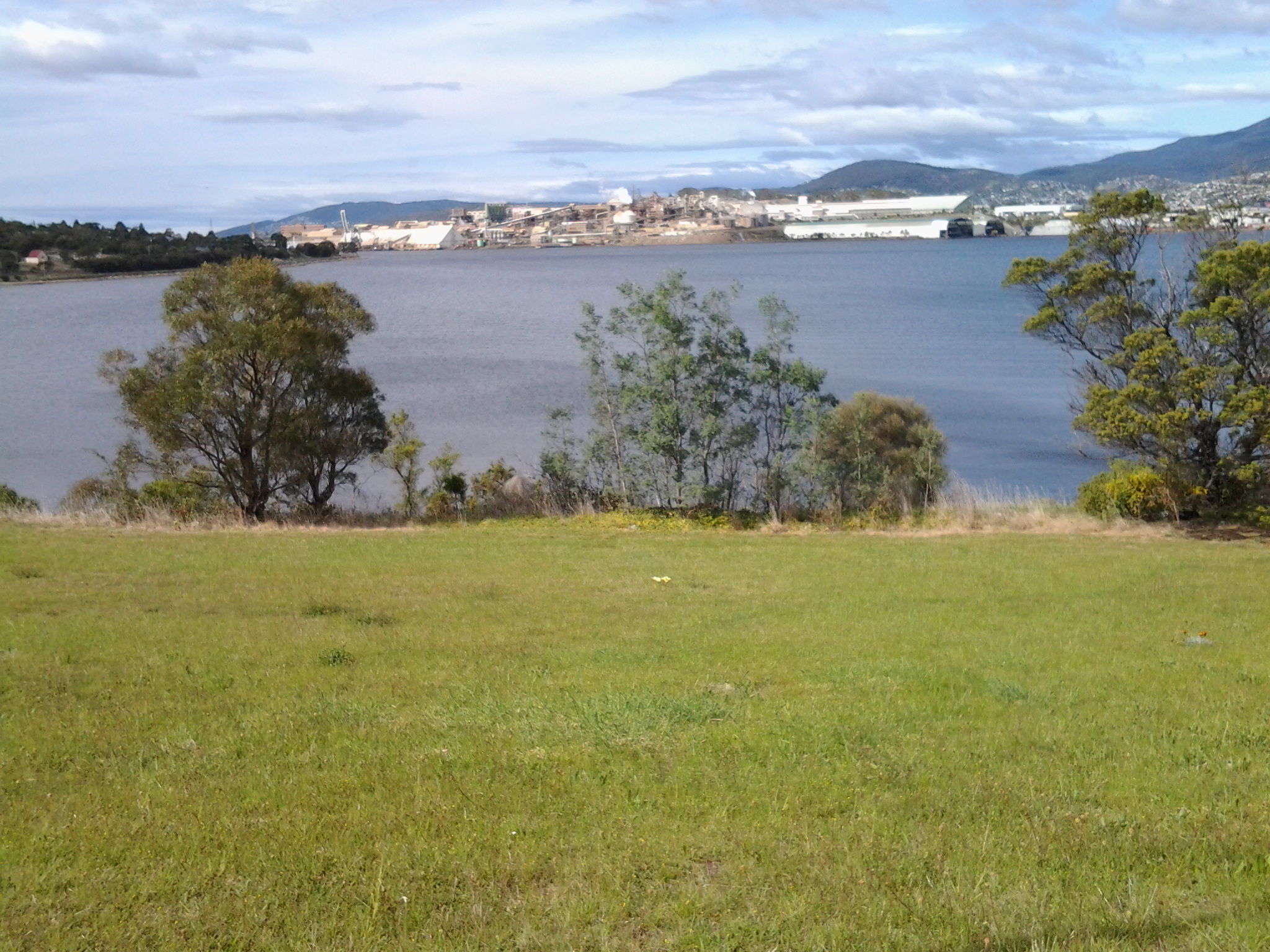
My view across the Derwent took in the noisy Nystar works previously seen and heard on Stage 6 of the walk.  Immediately next to Nystar and further north, I could see another major industrial site: Incat, a manufacturer of very large catamarans.  In the photo below, a massive white structure has two dark ends. Inside each of these spaces, a new catamaran is being built – usually for an overseas market.

20141031_095558

The East Derwent Highway curved in a sweeping right-hand bend from its junction with the road to Cleburne Spit. I walked straight ahead to the River and then curved around to the right keeping parallel with the Highway.  Amidst discarded rubbish, straggling weeds and under the casuarina trees I discovered two plaques: one commemorating the beginning of the building of the nearby Bowen Bridge and the second marking the official opening ceremony of the Bridge. On both occasions an Australian Prime Minister was given the honoured task. Two very strong and formidable men: Malcolm Fraser began the bridge and Bob Hawke opened the bridge.

20141031_100200

I followed a short bitumen pathway and stood underneath the Bowen Bridge a few minutes after 10am. Eventually I walked beside the guard rail and, depending on the safety of the ‘non-path’, I walked on one side or the other.  Sometimes there was a sandy rough drop to the water below, and sometimes I was walking next to the River at ‘sea level’.

By 10.07am I reached the sign indicating I had moved from the Risdon area into the Otago Bay suburb.  At 10.11am another sign gave me advance warning that Otago Bay Road was up ahead.

In a pull-off-the-road siding, a middle aged man wearing clean moleskin trousers and a sporting peaked cap advertised new season South Arm Pink Eye potatoes. The back of his truck was open and he sold his vegetables to people who, once their cars had skidded to a halt on the gravelly surface, climbed out of their vehicles for a stretch and then a leisurely meander over to check the goods. There was something slightly furtive about the way he wouldn’t meet my eyes which left me wondering why.

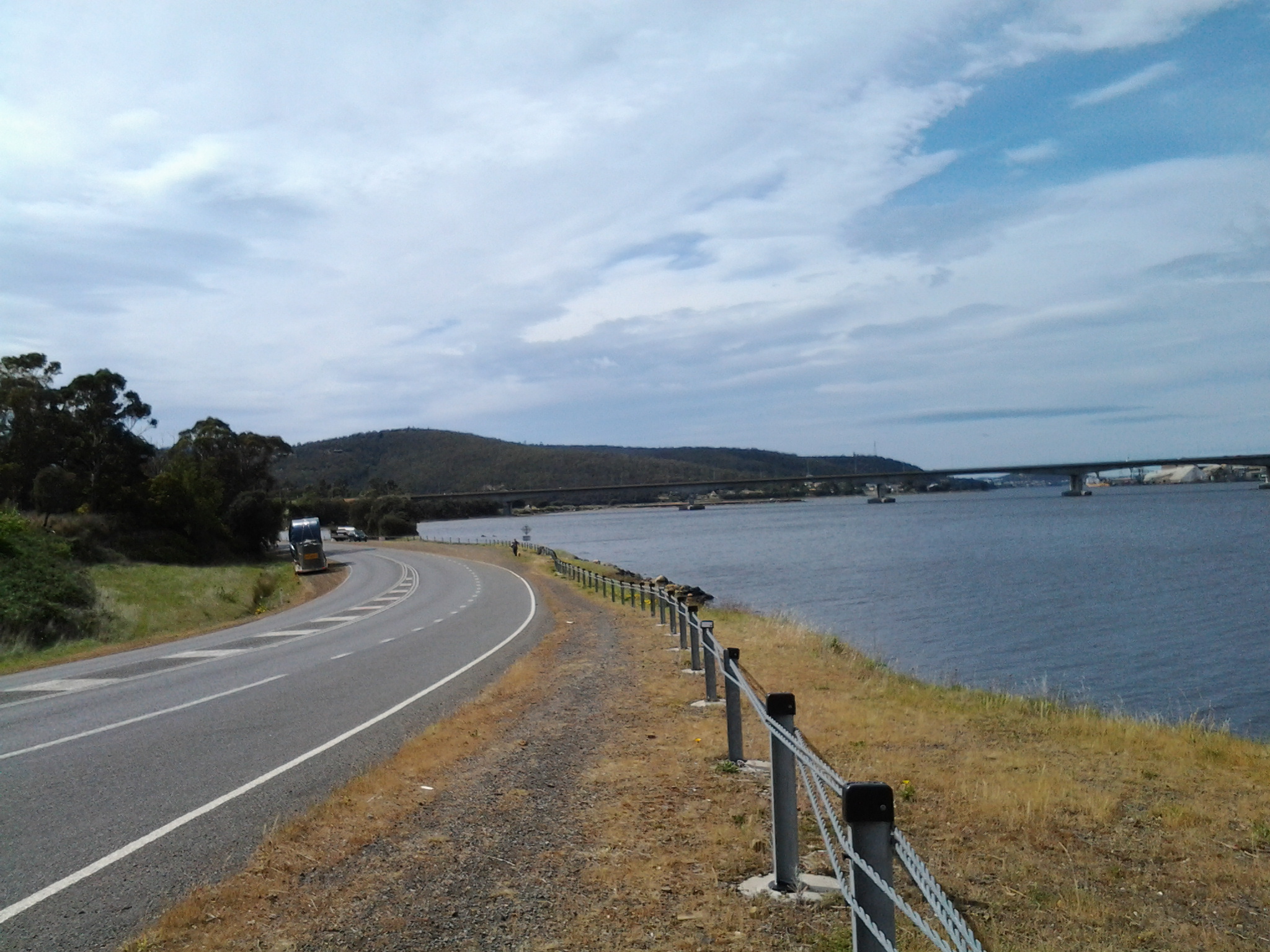
The photo below looks southward towards the Bowen Bridge. One of the vehicles in the distance on the right is the truck selling the potatoes.

20141031_101844

At 10.18am I turned left off the East Derwent Highway onto Otago Bay Road.  The sound of traffic in the distance as it poured along the Highway, and the way the wind boxed my ears, meant it was difficult to hear cars coming behind me. Constantly I was watching my back as I walked along non-existent road verges.  I did not discover a safer path for this part of the walk.

Earlier, near the Cleburne Spit, I had exchanged brief friendly words with a woman walking southwards with her dog.  When she caught up with me on her northward return journey, we found we had a great deal in common and spent some time walking together towards Otago Bay.

Reconnaissance trip to and from New Norfolk

Last Sunday, friend Me took me on a discovery drive from Bellerive to New Norfolk along the eastern shore of the Derwent River.

We were curious to see how closely I would be able to walk along the edge of the River, and the extent to which I would need to deviate or stay on main roads.  It was an eye opener giving me advance warning of the walking challenges ahead.

The main handicap will be the limited opportunities to walk directly beside the River up on banks and not be required to jump along the often rocky shoreline or get lost in tall watery grasses. Even accessing the rocky or soft shores will be problematic. For example in one area, where maps indicate public roads branch off main roads, landowners with 5 acre blocks have fenced their properties and the roads down to their houses are blocked by gates. I believe that some of these roads are those mapped for public access and as such the landowners do not have the right to restrict access for the public to connect with the River beyond.  More research required.

Clearly public bus routes travel from Hobart through eastern shore suburbs on the way to Bridgewater, however bus stops are widely dispersed and the timetables indicate less frequent services, all of which will constrain me in the length and timing of my walks between these two suburban areas.

The future walking stage between the Bridgewater Bridge and New Norfolk has been concerning me.  I doubted whether bus stops existed along the way. We found there were no public bus stops on either side of the River, and the distance whether walking the road on the eastern or western shores amounts to a day walk rather than a morning or afternoon walk to cover that length. New Norfolk is 35 kilometres from Hobart. The distance from the Bridgewater Bridge to New Norfolk along the road on the western shore is the shortest at 17 kilometres compared to around 20 kms on the eastern side.

As a result of Sunday’s research, I plan to continue on the eastern shore of the Derwent River and walk to the Bridgewater Bridge, cross it, then walk back towards Hobart and ultimately finish at the mouth of the Derwent River in the Tinderbox area. Once those stages are complete, then I will return to the Bridgewater Bridge and proceed towards New Norfolk and beyond.

Thanks Me for all the laughs we had during our discoveries. It was a fun excursion.